Latham Hi-Tech Seeds

(641) 692-3258

  • Home
  • Products
    • Corn
    • Soybeans
    • Soybean Blends
    • Alfalfa
    • Corn Silage
    • Seed Guide
  • Performance
  • Find a Rep
  • Media
    • Blog
    • News
    • Videos
    • Podcasts
    • TECHTalk
  • About Us
    • Company History
    • Our Mission
    • Careers
    • Become a Rep
    • Sowing Seeds of Hope
  • Contact Us
  • Latham Hi‑Tech Seeds

    Pull Up a Chair in The Farmer’s Kitchen

    FarmersKitchen 300x1691

    When the Iowa Beef Industry Council announced its Top 10 Finalists for the 2012 Best Burger Contest, I decided to take a “burger tour.”  I’m making a point to visit as many of these small town eateries as possible while traveling statewide to visit Latham® dealers and customers.
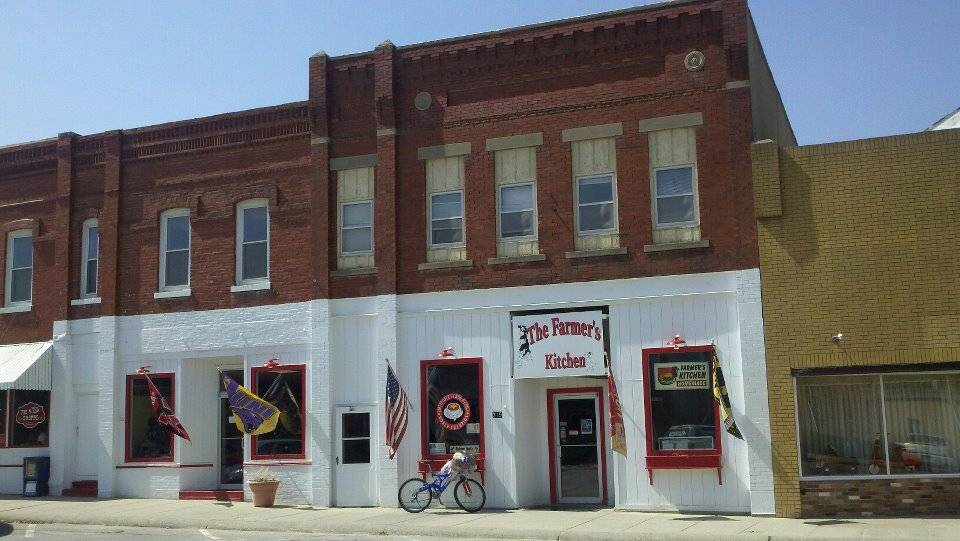
    Meat, delivered fresh from Henningsen’s Locker in Atlantic, is key to the quality of these burgers. Ciabatta buns are made special by Rotella’s Bakery. Check it out at The Farmer’s Kitchen!

    Recently I had the pleasure of joining a Latham customer for lunch at The Farmer’s Kitchen in Atlantic.  From the time I parked in front of the restaurant, I got a feeling that I was going to enjoy my lunch.  The flags waving on the building front are so welcoming, and there is one for every major collegiate team in the area including Cornhuskers, Cyclones and Hawkeyes.

    Since collegiate flags are flying on the outside, it’s fitting that the signature burger is the Cy-Hawk Burger.  It’s more than a five-napkin burger – It’s served with your own roll of paper towels.  I have no idea how many calories are in this burger, but it’s worth every one!  I justified it to myself by saying, “It’s not like I eat like this every day.”

    CJ’s “CY-HAWK” BURGER is the winner of the 2009 WHO Radio Burger contest.  It’s a 1/2-pound burger with 2 slices of smoked cheddar, crisp bacon, sautéed onion, leaf lettuce, tomato, fresh herb butter & roasted garlic BBQ chipotle mayo.

    But if I did eat like this daily, I could choose a different burger from the menu.  The Farmer’s Kitchen makes so many intriguing burgers including one with Coca-Cola Barbecue Sauce, which is especially fitting given that Atlantic is the Coca-Cola Capital of Iowa.  The menu also includes tried and true favorites like the Wisconsin Butter Burger and the Bleu’s Burger.

    It’s more than worth the drive to Atlantic for a meal at The Farmer’s Kitchen for award-winning chili, award-winning pie and award-winning burgers.  But, don’t just take my word for it.  Read this feature from the March 14, 2012, issue of Gourmet magazine:

    Let’s get right to the point: peanut butter chocolate explosion pie. Blue-ribbon winner in Crisco’s National Pie Championship, this multilevel marvel demarcates its layers of smooth peanut butter cream and chocolate cream with a stripe of dark, devilish fudge. The Farmer’s Kitchen baker Charlene Johnson is also renowned for sour cream raisin pie—a fave in Iowa dairy country—as well as for crumb-topped apple pie that is guaranteed to have a whole apple in every slice. Pre-pie, don’t miss Charlene’s son Mark’s chili, also a blue-ribbon winner—of the People’s Choice Award in the 2007 World Chili Championship. (319 Walnut St., Atlantic, IA; 712-243-2898)

    In addition to the menu, I love that The Farmer’s Kitchen is a mother-son partnership.  Charlene bakes award-winning pies; Mark makes award-winning chili.  Together they’ve created award-winning burgers.  So, of course, I just had to try one of everything!  The Peanut Butter Explosion is a wonderful mixture of peanut butter, chocolate and cream.  It’s rich, but oh so smooth.  I’d definitely recommend splitting it with someone, but it’s a great finale to a truly wonderful dining experience.

    Today Charlene has agreed to share one of her top-selling, award-wining pie recipes with us.
     

    Team Latham

    April 28, 2012
    Desserts, General, Recipes
  • Latham Hi‑Tech Seeds

    Start Squeaking about DOL’s New Rules

    Anyone who has spent time on a farm understands the meaning of greasing a squeaky wheel.  Well my farming friends, it’s time to squeak!  It’s time to contact your Congressman in an effort to put the heat on the Department of Labor (DOL) in regards to its new rules regarding child labor on farms.

    The DOL, in spite of having agreed to re-propose the “parental exemption” portion of the Fair Labor Standards Act (FLSA), has yet to commit itself to backing off of any of the other changes in the proposal. Roger McEowen, director of the Center for Agricultural Law and Taxation at Iowa State University, was quoted in the Wichita County Ag Outlooks as saying, “Ranchers and farmers should not be lulled into complacency believing the issue is in their rearview mirrors.”  DOL Child Labor Changes Will Hurt Farm Families.

    According to the proposal as it currently reads, the Outlook article states that a child employed on his or her parent’s farm is exempt from hazardous occupations (HOs) rules. The proposal does not address, however, whether a child of parents who operate a farm that is owned by a legal entity qualifies for the exemption.

    The Department of Labor should leave family farms alone, agrees State of Iowa Representative Annette Sweeney.  As Chair of the House Ag Committee, she co-signed a letter opposing the federal regulations.  She also sponsored HR107, a resolution opposing proposed federal regulations for agricultural child labor.  You can listen to her comments on 1040 WHO Radio regarding the federal government’s attack on family farms.

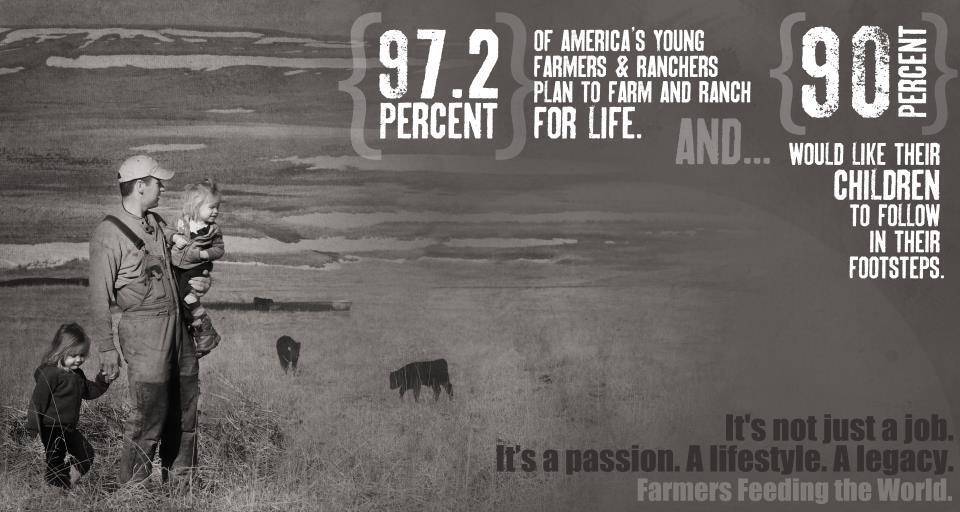
    Photo Courtesy of Erin Ehnle, Keeping it Real: Through the Lens of a Farm Girl

    No one has a stronger incentive to protect and preserve their farms and their families than today’s farmers and ranchers.  “Not only is the land and its resources a farmer’s lifeblood today, it represents the future for his family and its business,” reads a message that’s going viral.  On a Facebook post yesterday, agvocate Wag’n Tales wrote, “This is so very, very true… and I feel the exact same way. It’s why Wag’n Tales exists!”

    Even people who live in the city are seeing positive results that come when their youth learn what it means to get out on the range and work hard all day.  I thoroughly enjoyed reading this April 25th blog post by Alisa Lynn Valdes, New York Times and USA Today bestselling author.  Here’s an excerpt to whet your appetite:

    A year ago, if you’d asked me whether the U.S. Dept. of Labor should regulate child labor on farms and ranches, I would have stood up, done a big ole fist pump, and shouted, “Heck yes! Go git ‘em!” Visions of Dickensian exploitation would have swirled in my head. But that was before this (formerly) liberal city girl actually met a traditional cowboy and started spending most weekends on a 10,000-acre cattle and hunting ranch. Let me explain…

    After reading this post, I hope you’ll be inspired to take action.  (Yes, I know it’s planting season.  But I also know that if you want to get something done, you need to ask a busy person!)  Contact your elected officials and help them understand how this issue will detrimentally impact your livelihood and your legacy.  Ask Congress to turn up the heat on the DOL.

    Team Latham

    April 26, 2012
    Agriculture, General, Industry News
  • Latham Hi‑Tech Seeds

    Bacon Steals the Show at #140ConfDM

    Musings of a Pig Farmer by Larry Sailer

    Bacon – yes, bacon – took center stage yesterday at the 140 Conference in Des Moines. It’s interesting how sometimes the most off-handed comment becomes the one thing that “sticks.”  Nonetheless, I’m grateful for the shout-outs and accolades that were given to this pig farmer from Franklin County, Iowa.

    I have to admit that I really wasn’t sure how my message would be received by a group of bloggers whom primarily live in urban areas like Des Moines and even Chicago.  It turns out that it was really well received! Many people spoke up in support of me and of farmers in general.  They also reaffirmed people’s desire to reconnect with food and to learn how the food actually gets from the farm to their plate.

    This is the reason I was invited to speak.  It’s also why I’ve spoken to more than 70 civic and community groups throughout the state.   I want to help demystify agriculture by starting conversations with consumers, so they can ask questions of a “real Iowa farmer.”

    With less than 2% of the population engaged in production agriculture, it seems that fewer consumers have the opportunity to talk with local farmers and get their questions answered.  I guess that’s was also part of CNN’s fascination when they introduced me last winter as “a farmer who blogs.”

    It was during our trip to Des Moines last February to serve on a panel discussion from CNN’s “The Starting Point” when Deb Brown asked me to speak at the “local” State of NOW /140 Conference she coordinated in Des Moines.  “A local conference,” I thought.  “Surely, that wouldn’t be problem after appearing live on CNN.”

    Little did I realize how just big of an event this would turn out to be!  Unlike the approximately 20 seconds that I had to talk on CNN, I had 10 minutes to talk yesterday at the 140 conference.  I also overhead someone say yesterday that this conference was broadcast live to two million people in more than 20 countries.  WOW.  I’m so glad that I didn’t hear that before I took the stage.  I’m even happier that my wife, Janice, didn’t know how big the audience would be before we got there.

    For the past two weeks, Janice kept asking me when I was going to write my speech and start practicing.  I never did actually write one, which is just as well.  There were so many great agvocates that everything I would’ve said would’ve already been said by them any way.  Ag speakers yesterday included:

    • Shannon Latham – You already know her if you’re reading this blog!
    • Darcy Maulsby – Lifelong Iowan and farm girl from Calhoun County who writes mini blogs about agriculture, business, food and gardening.
    • Heather Lilienthal – As communications specialist for the Iowa Farm Bureau Federation, she fields media calls and develops relationships that help farmers tell the story of Iowa agriculture.
    • Janice Person – Although she was born and raised in Memphis, cotton communications became the major thrust of her career.
    • Chris Chinn – She and her husband, Kevin, are 5th generation farmers.  They live with their two children on their family’s hog farm in Missouri.

    Other speakers whom I greatly enjoyed were Michael Libbie, who talked about the ROI of social media, and Gigi Belmonico and her Bombshells, who collected Purses for Panama.  (Now they’re collecting reading glasses if you’d like to donate to their cause).  Liz Nead, an inspirational speaker, had an entertaining talk about 30-day trials.  For some reason, I can only remember one of them.  As soon as you watch a video of her presentation, you’ll understand why!  Angela Maiers and other teachers talked about how NOW technology is opening their classroom doors to international experiences.  Denise Bonewitz Passehl talked about her online community helped provide support for a rare type of cancer.

    It was also interesting to note that 5 of the speakers on yesterday’s panel were raised in Geneva, Iowa, my hometown.  Considering the town has a population of about 100, it was well represented!  You’ll be able to download each speaker’s presentation in about a week.  I’ll be sure to share that link as soon as it’s available.

    Because so many folks yesterday professed their love for bacon, I thought I’d close by sharing a link to the delicious sounding recipe for Bacon-Wrapped Pork Chops.  Think I’ll light the grill tonight!

    Larry Sailer, Musings of a Pig Farmer

    April 24, 2012
    Agriculture, General, Industry News
  • Latham Hi‑Tech Seeds

    Feeling "Pampered" in Pender

    Farming was Rory Allen’s first love.  His dad gave him a gilt when he was 9 years old.  And by the time he was age 14, Rory was farrowing 60 sows.  He first rented ground in 1974 as part of his high school FFA Supervised Agricultural Experience (SAE) and has continued to build his operation over the past 38 years.

    After a tornado took half of the hog barn in 1993, Rory was forced to make a decision.  He either needed to build new hog facilities or get out of the business.  He decided, given hog prices at the time, to focus his attention elsewhere.  The time and energy that Rory had devoted to raising hogs was then channeled into his seed business.

    “I started as a Latham® dealer 22 years ago, and the quality of the seed has always been excellent,” says Rory.  “We’ve had issues with lower germ with other companies in the past but never with Latham.  Plus, we enjoy the personal service we get from Latham.  It means a lot to have the company owners know you on a first-name basis, shake your hand as they greet you, and sit down and talk with you.”

    Sitting down with customers and helping them select the seed that best fits their farming style is one of the things Rory enjoys most about being a seed dealer.  He also likes being able to get a first look at new technology and is especially pleased with the results he’s been seeing with Latham® soybean genetics combined with the Genuity® Roundup Ready 2 Yield® trait technology.

    Pride in farming and a love for the country life is evident when you pull into the lane of Rory and Carol Allen’s beautiful farmstead just outside the village of Pender, Nebraska.  As newlyweds, the couple moved onto the farm where Rory was raised.   It’s also where they raised their son and two daughters:  Lance, 27; Courtney, 25; and Kayci, 21.  Now they’re also the proud grandparents of a 15-month-old grandson.

    “I’d never been on a farm before I met Rory, but I really enjoy living in the country,” says Carol, who has become adept at driving tractors and hauling grain.  She’s also been a Pampered Chef® consultant for 18 years, which has given her the flexibility to work around kids’ schedules and farming.  “Our kids enjoyed many freedoms by living here, yet we were close enough to town so they could be involved in many school activities and sports.”

    While both Rory and Carol enjoy operating their own businesses, they also like to make time for family meals.  Make-ahead meals are perfect for busy times of year like spring planting.  That’s why Runza Casserole is one of Carol’s go-to recipes.  Today she’s also sharing a recipe for Biscuits & Gravy Casserole that was a crowd pleaser at their church’s recent Easter breakfast.

    I have to admit that I was feeling a bit pampered myself after sitting down with the Allens and being treated to a piece of angel food cake topped with pineapple.  Perhaps that’s another recipe I can request from Carol…

    Biscuits and Gravy Breakfast Casserole

    Ingredients:

    • 1 lb pork sausage
    • 2 T butter
    • 2 packages Sausage Gravy Mix (makes 2 cups per package)
    • 12 eggs
    • 1 (5 oz) can evaporated milk
    • 1/2 tsp salt
    • 2 tubes refrigerated biscuits

    Directions:

    1. Cook sausage, set aside. In large saucepan, make gravy according to directions.
    2. Add sausage to gravy, set aside.
    3. In large bowl whisk eggs, evaporated milk and salt.
    4. Soft scramble eggs with the butter.
    5. In a 9×13 pan (or the Pampered Chef Stoneware Rectangle Baker) layer gravy, eggs, gravy, eggs, gravy, then top with biscuits.
    6. Bake for 20 to 25 minutes at 350° until biscuits are golden brown.

    Team Latham

    April 20, 2012
    Beef, General, Recipes
  • Latham Hi‑Tech Seeds

    Leave the Kids Alone!

    Musings of a Pig Farmer
    by Larry Sailer

    The U.S. Department of Labor (DOL) is apparently moving “full steam ahead” with its plan to implement new farm youth employment guidelines.  Under the proposed rules, simple tasks like using a hand-held flashlight or even a garden hose or unloading a truck are deemed far too dangerous for a teenager.

    While the DOL has pledged to take another look at the language pertaining to a parental exemption regarding youth employment for 14 and 15 year olds, this could just be a smoke screen or a distraction from the larger issues the DOL has yet to address.  The DOL fibbed about easing up on farm youth labor regs, according to an article published yesterday by the American Agriculturist.

    The DOL has not pledged to make any changes that would allow children to work on their grandparents’ farm, their aunt and uncle’s farm, or even that a family farm that is organized as a limited liability corporation, which is commonplace today.  As a grandpa who enjoys having his grandchildren help with farm work, I’m personally concerned about the DOL’s intent to regulate work my grandkids can do on the farm.

    Sailer's grandson Devin plays in ISU's Spring Football Game.

    The strong work ethic and the can-do attitude that is developed through farm work was evident last Saturday as I watched my grandson Devin play in Iowa State University’s spring football game in Ames.  Despite having an injury and tonsillitis, that boy played with heart!  I’m very proud of Devin, and I know that kind of “toughness” is what it takes to play Division 1 football.  But, I also believe a lot of that grit and determination on the gridiron was developed through farm work.

    Devin has enjoyed spending time on our farm and helping me with pig chores from the

    Working on the farm as a child builds a strong work ethic.

    time he was a tot.  He enjoys driving the four-wheeler and farm equipment.  He comes home from college on weekends to help with planting, harvesting, and even cleaning out the hog barns.

    While watching Devin play football last Saturday, I found myself thinking about a comment made during my recent visit with Senator Tom Harkin in Washington, D.C. Sen. Harkin said he thinks the DOL needs to protect farm kids.  And if Sen. Harkin and the DOL get their

    Larry Sailer watching his grandson play football.

    way, kids like Devin would never have a chance to experience farm life.  How do bureaucrats, living in urban areas where the only green space is a park, know more about keeping kids safe on a farm than farm families?

    We cannot let misled Washington bureaucrats destroy 4-H and FFA and the way our kids learn!  Farming friends, I urge you to contact your congressmen and the DOL, so the federal government doesn’t prohibit young people from participating in agriculture – and from carrying on your family traditions.

    Larry Sailer, Musings of a Pig Farmer

    April 17, 2012
    Agriculture, General, Industry News
  • Latham Hi‑Tech Seeds

    Fluctuating Spring Temps Create “Wild Ride” for Alfalfa

    by Corey Catt

    What our alfalfa plants have experienced this spring reminds me of my experience as a kid riding with my grandmother in a car.  She drove with both feet: one the gas pedal, the other on the brake.  Grandma would speed way up and then apply the brakes, continuing this pattern for the duration of the ride.

    Similarly to the wild ride I had with Grandma, alfalfa is getting “jerked around” this spring:

    1. Quick Speed Up –The abnormal early season warmth made the alfalfa want to grow, which broke winter dormancy early and began the seasonal growth cycle.  Fortunately, alfalfa’s unique growing style will initiate new buds from the crown to help recover from this event.
    2. Quick Slow Down – The freezing conditions experienced in areas last week may have caused some damage to the plants.  Some growers report that not all areas of the fields were affected.  Low lying areas, such as hollows and valleys, received the full effect of Mother Nature’s crispy spring chill.

    Although this type of cold injury event doesn’t occur often with alfalfa, universities have responded quickly.  Recent publications by the University of Wisconsin Extension and by Iowa State University Extension provide some good stand evaluators that will help growers make decisions in the days and weeks ahead.

    There will likely be leaf damage in areas where overnight temperatures dipped to 27 degrees Fahrenheit  or below for several hours.   Well established, developing forage plants have lost their winter cold hardiness, so exposed tissue is susceptible to cold temperature injury.  Alfalfa and most legume seedlings have good cold tolerance at emergence, but spring cold snaps can hurt new seedings.  Slope position, soil temperature, companion crop of oats, wind, snow cover, all will influence what occurs in a particular field or part of a field.

    We’ll have to take a “wait and see approach” for about a week before we can determine the extent of the damage.  The severity of damage with obviously effect yield and quality.  Be aware this may alter the PEAQ forage evaluation, as well, as it’s dependent on plant height.

    Team Latham

    April 16, 2012
    Alfalfa, Crop, General
  • Latham Hi‑Tech Seeds

    Growing Seed is a Coombs’ Family Tradition

    ChevyTruck11

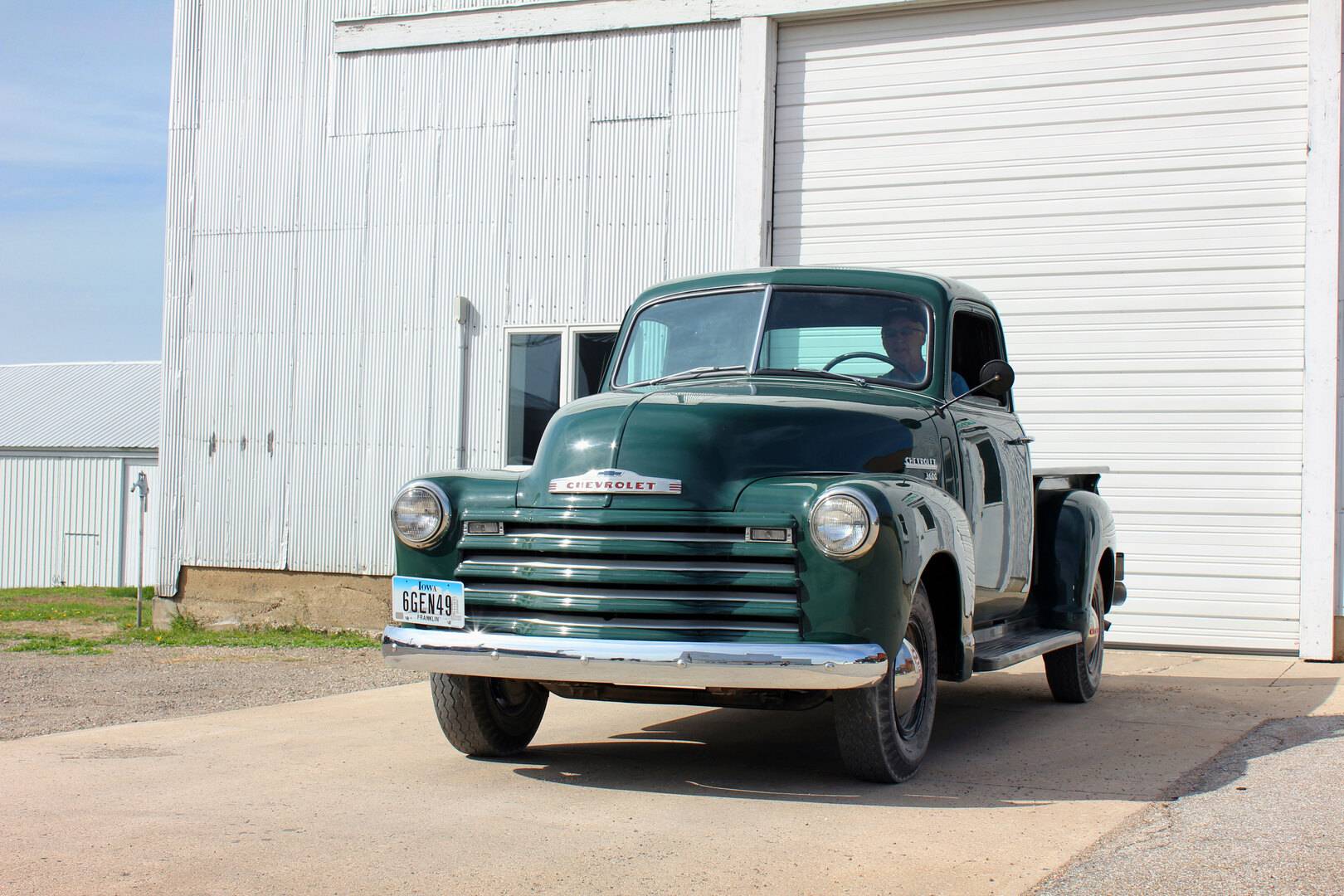
    Growing seed has been a family tradition for the Coombs family of Latimer for five generations, spanning 65 years.  Clara Coombs, along with her son Ralph, began raising seed oats for Willard Latham in 1947.  A few years later, Ralph’s son, Harold, began working with him.  And walking in their shadows, from the time he was old enough to toddle, was Harold’s son John.  Today the legacy lives on as John’s son, Andy, joins the operation.

    “My grandfather traded work with Willard,” said John Coombs, who’s been farming since 1973.  “They both had a nose for business:  Willard liked wholesale/retail end of the business.  My grandfather liked the details of production and getting a premium for his crop, so the partnership between the two really worked well.  I have lots of good memories.”

    John remembers how the two gentlemen’s relationship ran so deep that Willard even borrowed Ralph’s new 1949 Chevy pickup to Des Moines to pick up seed treatment.  That pickup could pull a wagon holding 100 bushels of oats, which is quite a contrast to the 950 bushels of soybeans they can haul today with their semi.

    “We still enjoy driving Grandpa’s Chevy and enter it in a couple of local parades each summer,” says John.  “While we’ve had lots of fun over the years, I appreciate how new technology helps us do our jobs better.  Soybean yields have doubled since I started raising seed.  And new harvesting equipment makes it much easier to combine whole beans in the fall.  Whole beans are key for quality seed; we pay particular attention to avoid splits.”

    “We’re fussy in what we do,” adds John.  “We like to get clearance before we go to the field in the spring.  We try to groom the crop through the summer and keep the weeds out.  We realize when we contract with Latham that “quality” is stamped on the bag, so we want to do all that we can to raise the highest quality beans.”

    As spring planting gets underway, John and Andy are looking forward to working together.  Andy graduated in 2007 from Iowa State University, where he majored in Ag Studies.  Upon graduation, he went on the wheat harvest with a crew of four ISU students.  They started in Frederick, Okla., on the Texas border, and combined their way through Kansas and Nebraska before heading to North Dakota.  In North Dakota, they would cut wheat by day and canola by night.  Andy says that he got more experience fixing equipment over the course of a few months than he ever would’ve imagined!

    Andy, the middle of the Coombs children, is engaged to be married on July 28 to Emily Carr.  John and his wife, Beverly, are also the proud parents of four daughters:

    1. Jennifer, their firstborn, works in human resources at Principle in Des Moines.  Her husband, Brian, is an architect and they have a daughter, Annabelle.
    2. Jill serves as activities director for Walnut Ridge Senior Living community in Des Moines, and her husband, Derek, works for Wells Fargo mortgage. They have a son, Elias.
    3. Amy lives in Salt Lake City, Utah.  She is Program Coordinator with the Internal Medicine Residency Program at the University of Utah.  Amy’s husband, Kyle, is attending the University of Utah where he is studying in computer science.
    4. Youngest daughter, Laura, is enrolled in the master’s program in higher education / student services at University of Nebraska at Lincoln. She is engaged to Nick, a business student at Iowa State University.

    With so many children to feed, John jokes that Beverly has had much practice honing her cooking skills.  The family’s favorite is home-grown sweet corn.  Another favorite is Almond Bars, so today Beverly is sharing her recipe with us.

    Team Latham

    April 13, 2012
    Desserts, General, Recipes
  • Latham Hi‑Tech Seeds

    Watch Your Speed!

    We’re reminded to watch our speed when we’re driving down the highway and see a speed limit sign posted.  We know there are “electronic eyes” watching up in major metro areas.  (Some us unfortunately have first-hand experience with receiving a ticket by mail.)  Without question, excessive speed can be costly.

    But how often do you think about the cost of excessive speed while you’re pulling a planter and making your way across farm fields?  There is definitely a price to be paid for speeding, although you may not notice the effects until emergence or even harvest.

    Proper planting speed can have one of the biggest impacts on performance. There are 1,000 variables that plants are subject to each growing season, so why not take control of one of these variables – speed?  Below is a chart that shows the differences of seed placement when traveling 5.5 mph and 6.5 mph.

    John Latham, President

    April 12, 2012
    General, Season, Spring
  • Latham Hi‑Tech Seeds

    Planting Season 2012 Gets Underway

    Throughout Latham Country, most early spring field work has involved anhydrous and dry fertilizer application. Manure also has been hauled and some tillage has been completed.  Sunshine and above normal temperatures have pushed planting.  Farmers have been eagerly awaiting the arrival of April 11, which is the earliest planting date for full crop insurance to go into effect.  Today is the day!

    With dry – even droughty – conditions, planters will likely be rolling in force today.  It’s important that farmers remember to check planter settings.  Even new planters may not be adjusted properly.

    Select a region from the drop-down menu for crop reports across Latham Country.


    Team Latham

    April 11, 2012
    General, Season, Spring
  • Latham Hi‑Tech Seeds

    Where Does Food Come From?

    Musings of a Pig Farmer
    by Larry Sailer

    Larry Sailer

    Over the last decade – most likely a result of fewer people being personally engaged in production agriculture – there has been a growing trend for consumers to know where their food comes from and how it was raised.  Recent food controversies have brought this issue to light once again.

    A headline in yesterday’s issue of The Des Moines Register read, “More consumers asking for details about their food.”  The article goes onto to state, “If it is meat, many want to know where the animal was raised and how it was fed. If it is produce, they want to know what, if any, chemicals were used to grow and ship it or whether a local farmer tended the fruits and vegetables on their plates.”

    As an Iowa pig farmer, I’m happy to meet with groups about how and why I raise livestock.  Talking with consumers to foster understanding is the primary reason I’m active in Operation Main Street, a speaker corps for National Pork Board, which controls pork check-off funds. Funds are raised when pork producers give a small portion of their income from selling hogs for three things: promotion, research and education.

    Operation Main Street speakers have given 5,352 speeches to 156,711 people in nearly every state. I’ve been a member of the group for five years and have given over 50 presentations to Iowa civic groups.  In just the past week, I’ve spoken with groups in Green Mountain and Waterloo, Iowa.  The folks have always been very receptive of the information and when I explain why I raise pigs the way I do they understand why I do what I do.

    It’s a lot of fun learning about many civic groups that I didn’t even know existed. (Yep, I need to get off the farm more!) A few of the groups I either have spoken or would like to speak to include: Lions Clubs International, Optimist Club, Rotary International, Kiwanis International, Civitan, Jaycees, Exchange Club, Ruritan National, Community Club, Sertoma, Ambucs, National Active and Retired Federal Employees Associations (NARFE), Chamber of Commerce, Masons, High 12 Club, Iowa Dietetic Association, veterinary schools, high school food classes.

    I’m impressed with the number of clubs that exist to do good deeds and want to hear me speak, but my job is not yet done.  As The Register says, more people than ever are taking an interest in learning where there food comes from and how it’s produced.  That means I must give a lot more speeches.  I’m looking forward to it because that also means I have more friends out there to discover!

    Larry Sailer, Musings of a Pig Farmer

    April 10, 2012
    Agriculture, General, Industry News
Previous Page
1 … 109 110 111 112 113 … 159
Next Page

Latham Hi‑Tech Seeds

131 180th Street | Alexander, IA 50420

(641) 692-3258

SIGNUP FOR OUR NEWSLETTER
  • Contact
  • Legal
  • Dealer Center
  • Seedware Login
  • Latham Gear

© 2025 Latham Hi‑Tech Seeds. All rights reserved. | Iowa Web Design by Webspec | Privacy Policy

Latham® Hi-Tech Seeds is a trademark of M.S. Technologies, L.L.C., 103 Avenue D, West Point, IA 52656.