Latham Hi-Tech Seeds

(641) 692-3258

  • Home
  • Performance
  • Products
    • Corn
    • Soybeans
    • Soybean Blends
    • Alfalfa
    • Corn Silage
    • Seed Guide
  • Find a Rep
  • Media
    • Blog
    • News
    • Videos
    • Podcasts
    • TECHTalk
  • About Us
    • Company History
    • Our Mission
    • Careers
    • Become a Rep
    • Sowing Seeds of Hope
  • Contact Us
  • Latham Hi‑Tech Seeds

    Burger Basics: Tips to Create Perfect Patties

    Guest blog post by
    Michelle Baumhover, Director of Consumer Marketing 
    Iowa Beef Industry Council

    Burgers sizzling on the grill is a classic sign of summer.  By following a few simple steps, it will be easy to enjoy juicy, flavorful burgers this summer.

    Selecting the beef:

    • Select an 80/20 lean to fat ratio for optimum flavor and juiciness.
    • If fat is of concern keep in mind excess fat drips away during grilling.  You can also blot cooked burgers with a paper towel to remove any excess fat.

    Preparation:

    • Lightly shape burgers to ¾ inch thickness.  Overworking ground beef will result in a compact firm textured burger that could be dry.
    • Gently indent or form a well in the center of the burger to keep the burger from swelling in the middle during cooking.  The burger will flatten during cooking.

    Grilling:

    • Cook patties over medium heat for even cooking. Burgers grilled over too high of heat could overcook or char on the exterior before the center reaches the desired doneness.
    • Use a spatula or tongs to turn burgers.  Don’t press or pierce patties during cooking as that will cause flavorful juices to escape!
    • Cook burgers to an internal temperature of 160°F. The most accurate way to determine doneness is by using an instant-read thermometer.

    Get good, quality ground beef from a local locker or from a retail shop you trust, advises Sutter Homes Chef Starr. “Make sure it’s cold and fresh.  We like to use an 80/20 mix with 20 percent fat.  Fat is flavor!”

    To make a juicy burger, Chef Starr cautions cooks to avoid over-handling the ground beef.  Try your hand at grilling this weekend and put a new twist on the classic American burger!  More recipes are available from www.beefitswhatsfordinner.com.

    Team Latham

    May 18, 2012
    Beef, General, Recipes
  • Latham Hi‑Tech Seeds

    Create a Domino’s Effect – Join the Party, May 18-20

    It’s truly a treat for our kids when our family spends the night in a hotel where Domino’s Pizza delivers pool-side.  One reason Domino’s is reserved for “special occasions” is because there isn’t one located nearby.  This weekend, however, I’ll drive 19.5 miles – or approximately 31 minutes – just for the principle of it.  I want to say, “Thank You, Domino’s” for supporting America’s farmers.  Why?

    Last month Domino’s shareholders had the fortitude to reject a request by the Humane Society of the United States (HSUS) to stop buying pork produced with the crates.  Domino’s spokesman Tim McIntyre said, “We rely on animal experts to determine what is the best way to raise an animal that’s being used for food.”

    Fifth generation Missouri farmer Chris Chinn was so encouraged to hear that the stockholders of Domino’s Pizza share her stand on animal care that she launched a grassroots movement on the Just Farmers blog.  “As a farmer, I respect Domino’s for its common sense decision and for trusting the experts in animal care,” she writes.  “Domino’s decision speaks volumes to me as a farmer.  It shows they trust the experts I trust.  It shows they trust me.  I appreciate that.”

    “We, in agriculture, need to make sure that we start showing appreciation to those companies that are willing to take some time to look into situations before jumping on a sensationalism bandwagon,” writes Mike Davelaar on The Truth About Agriculture blog.  “I’m going to pick up a couple pizzas and leave a note for the management of Domino’s.  I’d encourage all of you to do the same.”

    Order a pizza pie between May 18-20 and “pay it forward with pizza.”  Join the worldwide Ag Pizza Party.  You can bet it’s going to be a “special occasion” at the Latham house sometime this weekend.  And special occasions call for Domino’s!

    • A printable PDF flier for farmers & ranchers to give to their local Domino’s!
    • A printable PDF for any agvocate to give to Domino’s!
    • Mike Davelaar’s post on The Truth About Agriculture Blog
    • Chris Chinn’s Blog on Just Farmers

    Team Latham

    May 17, 2012
    Agriculture, General, Industry News
  • Latham Hi‑Tech Seeds

    Conservation, Compaction and Compliance: How the Farm Bill Influences Farm Management

    “Musing of a Pig Farmer”
    by Larry Sailer

    After getting a late start planting my crops, I pushed a little too fast and planted ground that was a little too wet. I thought about tilling the ground to work in the hog manure that I applied as fertilizer and to also help dry the soil. Wet soil at planting can cause a crusted layer to form, which may delay or prevent seedling emergence. Light tillage would’ve helped the seedlings break through the soil. However, I decided to stick with no-till to fight erosion. Now it looks like my yields are going to be reduced significantly because I didn’t work the ground and create a more suitable seedbed.

    The debate over whether to conserve soil and be in compliance or suffer a yield loss from compaction is taking center stage in this year’s Farm Bill debate. Politicians and activists insist on tying conservation efforts to farmer’s benefits, such as crop insurance. The government pushes us farmers to have this insurance and threaten to take it away if we fall “out of compliance.” If I would till my acres in an effort to produce more crops to feed a growing world, I would lose my crop insurance. Even though I’d be farming the most efficient, least risky way possible, tilling those acres is not allowed by the Farm Bill as it’s now written.

    Farmers have been producing food to feed the world since the beginning of the human race. The agricultural revolution of the 17th-19th centuries happened naturally and mostly without government intervention. Agriculture changed the world. Advances in technology and farming methods have allowed us to increase production while decreasing labor resources needed. For the first time in history, average income finally rose above subsistence level around the end of the 18th century.

    Just think what might’ve happened instead if the government had gotten involved around this time and mandated what farmers could and couldn’t do. I’m guessing we wouldn’t have the incredible quality of life that we do now. Regulations lead to less production, which leads to higher prices. So the government burden doesn’t just affect farmers. Government regulations on agriculture end up affecting consumers, local communities, and the world at large.

    Larry Sailer, Musings of a Pig Farmer

    May 15, 2012
    Agriculture, General, Industry News
  • Latham Hi‑Tech Seeds

    Take the Road Less Traveled

    As a kid, I loved seeing new sites but despised road trips.  I would’ve preferred to take an airplane to a single destination to enjoy five straight days in someplace like Orlando, Florida.  Meanwhile, my parents preferred to “see the country” through the windshield of their Ford extended cab.  I’m sure that I sighed loudly each time they ventured off the paved path.  I may have even rolled my eyes when they weren’t looking.  For sure, I cried when we were lost in the middle of Montana with our gas tank nearing “E.”  (I can still hear my mom saying, “We’re not lost, Honey.  We just don’t know where we are.”)

    But as an adult, I can truly appreciate the lessons my parents taught during our annual family vacations.  Some of the best memories happen when we take the road less traveled!

    We’ve munched on fresh cherries while traveling through Napa Valley, California.  We’ve sampled fresh crab from a shack in Maine.  We’ve eaten around a cowboy campfire in Wyoming.  We’ve enjoyed making s’mores and listening to crickets near the start of the Mississippi River in Itasca, Minnesota.

    My family and I have also traveled to big cities… I nearly got engaged in The Rainbow Room before attending a Broadway production in New York City.  I’ve shopped the Magnificent Mile and had tea at The Drake in Chicago.  I’ve enjoyed barbecue & blues on Beale Street in Memphis, Tenn.  Yes, I’ve even taken in the sights and sounds of Las Vegas including a $4.99 all-you-can-eat buffet with the most delicious Belgian waffles.

    But none of the glitz and glamour found in the big cities feeds my soul like quiet times spent in the Midwest’s rural areas!  That’s why one of the things I enjoy most about my job is traveling the countryside, visiting with Latham® dealers and farmer-customers.  I’ve gained an appreciation for the differences in the landscape across six states.  I enjoy the raw beauty of each area, whether I’m in the Loess Hills of Iowa or along the Mississippi River.

    Here are just a few of the fun stops that I’ve made in the 10 months:

    • New Ulm, Minnesota (celebrating my German heritage with bratwurst and potato salad)
    • Historic Tyden Farm No. 6 in North Central Iowa
    • J& J Hideaway in Northeast Iowa (for a tranquil getaway to fish and hunt – yummy morels!)
    • The Farmer’s Kitchen in western Iowa (award-winning pies, chili and burgers)
    • Hansen’s Farm Fresh Dairy near Waterloo, Iowa (the creamiest, homemade ice cream ever)
    • Iowa State Fair (nothing else compares to pork chop on a stick or beef sundaes)
    • Franklin County, Iowa  (Yes, I was a tourist in my home county last fall!)

    That’s why I’m inviting The Good Traveler, Aric S. Queen, to drive through “Latham Country” as he embarks on a Classic American Roadtrip for National Geographic.  After all, Midwesterners are as classic as baseball, hot dogs and apple pie!

    To get involved in our campaign to bring The Good Traveler to the Midwest, follow these easy steps outlined by Iowa Traveler Jody Halsted (@iatraveler):

    • Send a tweet to @GoodTravelerNG.  Tell him what he’s missing. Use the #TravelMidwest.
    • Leave a comment here.  Share your story of inspiring people and passionate communities.
    • If you have a blog, share your story there and link it back here.

    Team Latham

    May 14, 2012
    Agriculture, General, Industry News
  • Latham Hi‑Tech Seeds

    Time to Begin Early Crop Scouting in 2011

    Many Midwest farmers will wrap up the 2011 planting season this week, but there won’t be much rest for the weary.  As soon as seed is in the ground, it’s a good idea to start scouting fields.

    Post-planting is an ideal time to begin scouting one’s crops.  Many soilborne pathogens strike as soon as the seed begins to take on water; others strike young seedlings.  Because seeds can germinate quickly and emerge in 3 – 5 days, it’s not too soon to start walking your fields.

    Check plant populations, evaluate stands and be on the lookout for early summer diseases.  Is there a germination problem?  Do you see effects of chilling or crusting?

    Assessing your situation ASAP will allow you to formulate a plan while there’s still plenty of time to implement it.  You could replant in parts or in all of a field now, so you can attain the yields and returns you want this fall.  Information on corn replanting decisions is available from www.agronext.iastate.edu/corn. Click on the “Planting” topic, then click on the “Replant Decision Aid Calculator” tab and use that tool and related information to help make a replant decision. For a resource on soybean replanting decisions, go to www.extension.iastate.edu/publications/pm1851.pdf.

    Another benefit of evaluating current stands is to help you determine what adjustments should be made before planting next year’s crop:  Do you need to adjust your planter settings or your planting speed?

    Once you get past the mechanical issues, look at the disease pressure.  If soybeans are damping off, perhaps next season you should opt for seed-applied fungicides? Do you need to pay closer attention to a particular soybean brand or corn hybrid’s disease rating?  Seed selection is one of the most important decisions affecting yield. Click here for tips on selecting  soybean brands and selecting corn hybrids.

    Team Latham

    May 13, 2012
    General, Season, Spring
  • Latham Hi‑Tech Seeds

    Fun & Games on Mother’s Day

    Table setting1

    Mother’s Day is this Sunday, May 13, and treating mom to a special breakfast tops the list for how Americans will celebrate.  Another all-time American favorite is hosting a tea party, and that’s exactly what my troop of 10, fourth grade Junior Girl Scouts did last Saturday.

    Hosting our “Green Things” Tea Party for 40 special ladies was a great lesson in menu planning, meal preparation, table setting and floral decorating with a lot of giggles along the way.  Each girl took a turn helping me mix up a simple chicken and rice casserole, so we’re sharing this recipe today on TheFieldPosition.  (It’s seriously simple but totally delicious!)  They also made their moms a corsage from yellow roses, Girl Scouts’ signature flower.  (Thank, Mom, for leading this session!)  They also learned how to fold paper napkins and how to properly set a table.  (Thanks to Kaleah’s mom for leading this session!)

    At the end of our meal, we sang songs and then played BINGO the traditional way.  Given more time, I would have been all over Tea Party Bingo.  You make your own cards, filling them in with tea-related phrases.  You also use tea bag tags as the markers.  Another game idea is Tea Text, where you set a timer for two minutes.  Everyone writes down as many words as she can think of that begins with the letter T.  Extra points are given to those who have all three letters of t-e-a like team and steak.

    However you choose to honor your wife, mother and/or grandmother on Sunday, I hope you’ll enjoy a relaxing and fun day with your family. I’d also enjoy hearing from you.  What are your favorite party and/or family games?

    Team Latham

    May 11, 2012
    General, Poultry, Recipes
  • Latham Hi‑Tech Seeds

    Replant or Not?

    While many Midwest farmers have yet to get their corn in the ground, others are contemplating whether or not to till up their poor crop and try it again.  Poor stands have resulted in some fields where cool temperatures and wet soils put significant stress on seed germination and corn seedlings.

    There are three important steps farmers should take when deciding whether to replant:

    1. Evaluate the existing stand for population and uniformity.
    2. Compare yield potential of the existing stand with yield potential of the replant.
    3. If the decision is made to replant, consider various management practices to optimize yield by protecting your crop.

    When evaluating corn stands, only count plants that have a good chance of survival.  Observe the uniformity of the stand across the field to determine whether the entire field – or just portions of it – must be replanted.  Click here to watch Steve Bailie, Latham’s Regional Sales Manager in Wisconsin, explain how to do a stand count.  ISU Ag Economist William Edwards also has a developed a replant calculator, based on price expectations and the extra costs associated with replanting that might be helpful.

    A chart in a recent issue of Integrated Crop Management will also give you an idea of potential losses from later planting dates.  As Roger Elmore writes, however, this may be the kind of year where late planting has little or no penalty.

    Another factor to consider on replanted acres is pest management.  Most soil insecticides cannot be legally applied twice in the same growing season in the same field.  With this in mind, replanting with Latham® brand corn containing the Genuity® family of traits provides farmers with more options to combat insects.  Contact your local Latham representative or call 1-877-GO-LATHAM (1-877-465-2842) for assistance.

    Agronomic Spotlight: Assess Corn & Soybean Stands

    Webspec Admin

    May 10, 2012
    General, Season, Spring
  • Latham Hi‑Tech Seeds

    Old McDonald’s Farm and Disney Don’t Portray Modern Farmers

    Photo courtesy of AgriNews.com

    “Musings of a Pig Farmer”
    by Larry Sailer

    During my talk last month at the 140confDM / State of NOW Conference in Des Moines, I mentioned Old McDonald’s Farm.  Then conference founder Jeff Pulver (a city dude) asked Deb Brown (a country girl who lived for decades in Chicago) if today’s farms are really like Old McDonald’s Farm. Now I need to say that Deb does not farm, but even though she lives in the middle of farm country, she did not have an answer.  Deb’s speechlessness made me realize how important it is for farmers like me to share our stories with all consumers, even those who live in rural areas.

    Sharing my knowledge of modern farming with consumers, our customers, is the reason I agreed to speak at the 140 conference in the first place. As I stated in my talk, one of the things I try to do is first listen to what town folks have to say. I listened that day in Des Moines, and I learned that bacon is beloved!  After I mentioned Bacon Fest, bacon was talked about the rest of the day!

    Now back to Jeff’s question… Farming has changed greatly over the years. Unfortunately, people without a direct connection to farming often don’t see just how many improvements have been made.  They only know what they hear and see through the media.  Think of the images portrayed by Disney® cartoons.  As a result, two or three generations have been led to believe that animals are like humans:  They talk.  They walk.  And Porky the pig even hunts like a human.  Being the old grumpy pig farmer, I can’t help but think how these shows have skewed the perception of farming.

    The need is great to educate consumers about where their food comes from and how it is produced.  It takes a real effort for a busy farmer to leave his/her farm and drive to a school or civic group meeting – or to a 140 conference – where people can listen, ask questions and share experiences.

    There are many programs and groups in place to share the real story about farming and ranching, but we have a big job to do!  Unless we make a concerted effort to educate, people like a young Desmund Adams won’t know how food gets to a grocery store.  Desmund, who was raised in Chicago, commented during the 140confdm that he was 17 years old before he knew that meat came from an animal that was raised on a farm.  His point is well taken: agriculture needs to do a better job of sharing farmers’ stories.  You can help by sharing “Musings of a Pig Farmer” with your friends and family!  Ask them to send me their questions by posting comments.

    Larry Sailer, Musings of a Pig Farmer

    May 8, 2012
    Agriculture, General, Industry News
  • Latham Hi‑Tech Seeds

    Row, Row, Row Your Corn

    by Corey Catt, Forage Products Manager

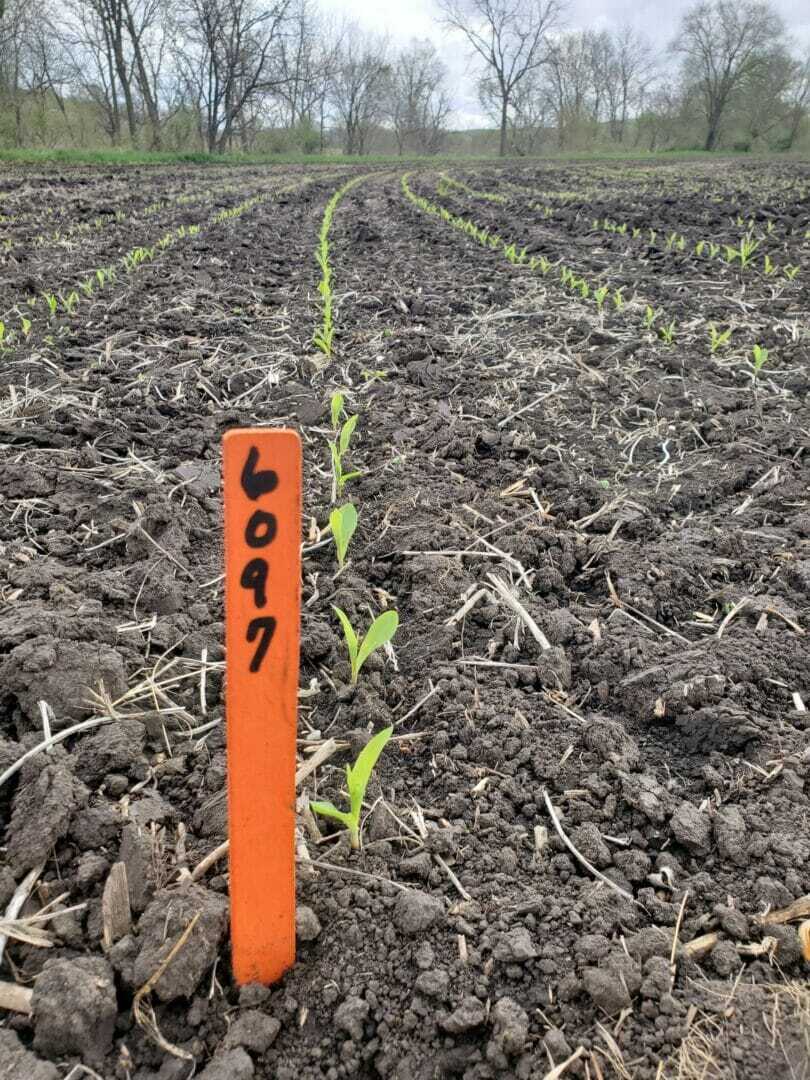
    Isn’t it exciting when you can finally “row your corn”?  It’s such a milestone.  It provides us with a sense of accomplishment.  It brings some relief as hopefully no replant will be needed.  And it makes us eager to see how the crop progresses throughout the growing season.
    The average corn plant needs approximately 100 heat units to emerge from the ground.  Depending on weather conditions, a seed/seedling will reach 100 heat units in 7 to 10 days.  Some hybrids emerge faster than others, while others are slower to emerge but may grow more rapidly.  These hybrid differences really depend on genetics.

    Raising a corn hybrids somewhat reminds me of horses racing like the Kentucky Derby.  Remember last Saturday how Bodemeister led the field around the first turn?  I’ll Have Another was in seventh place early but went on to win the race.  The same can be said for corn plants.  Some emerge from the ground like a rocket, while others make up for lost time as the heat rises.

    How quickly do you see hybrids emerging?  One of my favorite parts of the job is hearing “from the field” about what you learned during emergence time as you walk and row your fields.  I always enjoy hearing things from a farmer’s perspective and hope you’ll share this type of information with me as it adds to our pool of information about Latham® hybrids.

    This season Latham Hi‑Tech Seeds will be sharing more stories “From the Field.”  We’re following crop development from planting through harvest in several locations across Latham Country.  You’ll find our Growing Season Gallery on our Facebook page at www.facebook/LathamSeeds.  We also invite you to join us by sharing your own photos “From the Field.”  Simply e-mail your photos of Latham® brand corn, soybeans or alfalfa to lathamseeds.fromthefieldtour@gmail.com.

    Team Latham

    May 7, 2012
    Corn, Crop, General
  • Latham Hi‑Tech Seeds

    Celebrate Beef Month with Cream Cheese Burgers: Vote by May 7

    ValPlagge
    Val and Ian Plagge with their son Klayton.

    Farmers are known for wearing many caps, and Val Plagge is no exception.  She’s a farmer, a farm wife, mother, as well as an independent leadership development and event planner.

    Val met her husband, Ian, when they were students in the College of Agriculture at Iowa State University.  Upon graduating from ISU, they got married and moved near Ian’s home farm in Latimer, Iowa.  They began farming in 2005; today they raise corn, soybeans and finish hogs.

    Active in their community, both Val and Ian serve on the Franklin County Farm Bureau board and are members of the Farm Bureau Young Member Committee.  Ian is a member of the Franklin County Extension Council, and Val is the Franklin County 4-H Communications Project leader.  Val is also a volunteer and vice chairman of the North Iowa Make a Wish Foundation.  Together Val and Ian serve as youth sponsors for the Senior High youth group at their church, as well.  Plus, Val teaches high school Sunday School.

    When she has free time, Val enjoys experimenting with new recipes.  It’s no wonder that her most recent charity project combines many of her interests.  She developed a recipe for Cy’s Cook Off.  Here’s how Val describes the contest in her Corn, Beans, Pigs and Kids blog spot:

    I produced my “Cardinal & Gold Cream Cheese Burgers” by modifying and coupling other burger recipes together. I created the burger for a Pinterest contest for Iowa State Athletics. There contest is called Cy’s Cook Off, and whoever receives the most repins and likes wins a $100 gift card to Cy’s Locker Room and an autographed Coach Rhoades mini helmet. I’m planning on giving the helmet to Make A Wish North Iowa for the Wish Upon A Par auction on June 27, and I’m planning on decking out the family in new ISU gear for football if I win.

    Val does a fantastic job of showing each of the burger-making process in her blog post.  The color photography makes me wish I could sink my teeth right into one of those burgers right now!  From reading her post, I learned to place a thumbprint in the center of each patty to help them cook evenly.  Who knew?  You can bet I’ll give it a try now!

    You can try your hand at making Cardinal & Gold Cream Cheese Burgers, too.  In honor of May Beef Month, today we’re featuring Val’s recipe on TheFieldPosition.com.  Remember to also either “like” or “repin” this recipe by May 7 on Iowa State Athletics Pinterest page.

    UPDATE: Congratulations to Val Plagge on her WIN for ISU’s “Cy’s Cook Off Challenge”

    Team Latham

    May 4, 2012
    Beef, General, Recipes
Previous Page
1 … 108 109 110 111 112 … 160
Next Page

Latham Hi‑Tech Seeds

131 180th Street | Alexander, IA 50420

(641) 692-3258

SIGNUP FOR OUR NEWSLETTER
  • Contact
  • Legal
  • Dealer Center
  • Seedware Login
  • Latham Gear

© 2025 Latham Hi‑Tech Seeds. All rights reserved. | Iowa Web Design by Webspec | Privacy Policy

Latham® Hi-Tech Seeds is a trademark of M.S. Technologies, L.L.C., 103 Avenue D, West Point, IA 52656.