
Latham Hi-Tech Seeds

(641) 692-3258

  • Home
  • Products
    • Corn
    • Soybeans
    • Soybean Blends
    • Alfalfa
    • Corn Silage
    • Seed Guide
  • Performance
  • Find a Rep
  • Media
    • Blog
    • News
    • Videos
    • Podcasts
    • TECHTalk
  • About Us
    • Company History
    • Our Mission
    • Careers
    • Become a Rep
    • Sowing Seeds of Hope
  • Contact Us
  • Latham Hi‑Tech Seeds

    Fruit Pizza, Tailgating Style

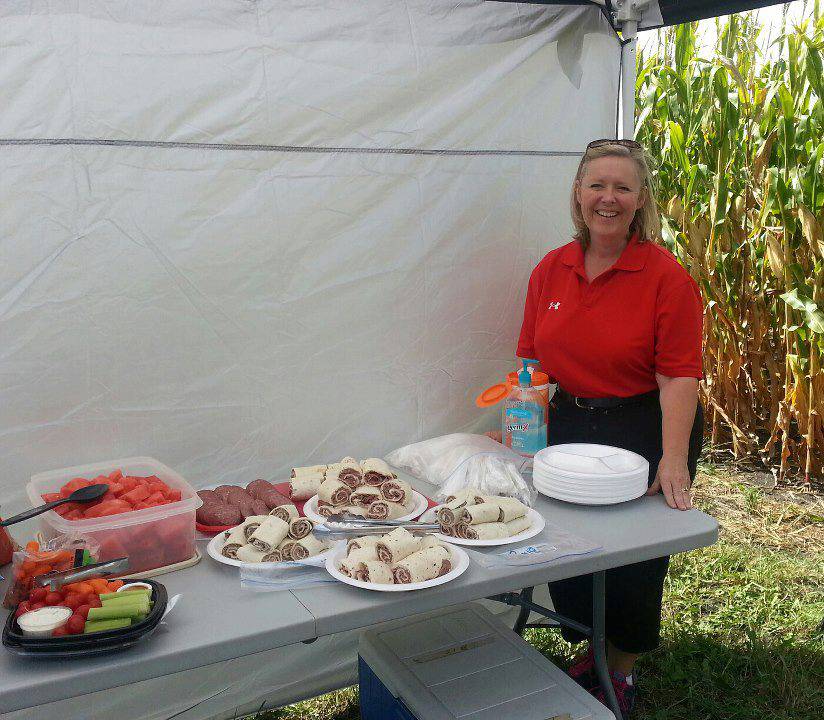
    Minifruitmizza

    by Kourtney Determan, Marketing Communications Intern

    Being an avid Iowa State football and tailgating fan can be especially tricky during harvest season. Our family is relatively new to this particular fall tradition, so we needed to find a way to make foods that were easy, tasty and fun.

    Fruit pizza is always a favorite at our tailgate, but it’s also a time-consuming dessert.  The time it took to make this dessert each home football weekend began to wear everyone down. We started looking for solutions. Instead of baking one large sugar cookie crust, I decided to bake individual sugar cookies. In the spirit of the season, I like to make the cookies in the shape of footballs. Other cookies are in the shape of pigs because we are such a pork promoting family. Pig-shaped cookies are especially appropriate this month since October is Pork Month.

    Making sugar cookies has turned from a chore into a fun time, thanks to “baking parties” with my college friends in Ames.  We  bake up a large batch of cookies and then freeze them in small freezer bags.  That way we can take out the number we need before each game, My mom, Barb Determan, makes the frosting and cuts the fruit. We make a simple frosting – cream cheese and Cool Whip. Whip these two ingredients together, put them in a sealed container, and throw it the cooler.

    Next we choosefive to six of our favorite fresh fruits that differ in color, taste and texture. The morning of the game, we cut the fruit into small pieces. One thing we learned with the smaller, personal version of fruit pizza is thatthe fruit pieces must be fairly small to allow each person to have a variety. We usually put them in a relish tray for easy transport. Fortunately, we found an economical tray that is deep enough for a good amount of each fruit yet small for the ease of transport in the cooler.

    At the tailgate, we set up an “assembly line” featuring a plate of cookies, the frosting and tray of fruit. Each person makes his or her own, selecting the varieties of fruit and putting as much as he or she wants on the personal pizza. We love this method for several reasons: no one now picks off the fruit he or she didn’t like;  we can offer a larger  selection of fruit choices (don’t have to leave something off one person doesn’t like); plus it divides the labor (one person bakes, one person brings the topping and fruit and everyone assembles).  It saves a huge amount of time!

    Of course, we always serve fruit pizza with a pork item that is grilled: pork chop on a stick, flavored brats and even bacon or sausage for the early morning games.
    Team Latham

    October 5, 2012
    General, Recipes, Sides
  • Latham Hi‑Tech Seeds

    Till Less for More Water in 2013

    Graph1

    guest blog post by Mark Licht, ISU Extension and Outreach

    Current weather pattern trends are causing some concern that moisture reserves will be depleted for the 2013 crop.  While we can’t control the weather, we can help manage soil moisture reserves by reducing tillage.

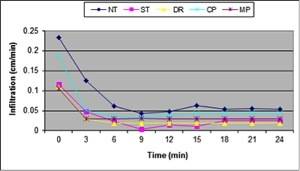
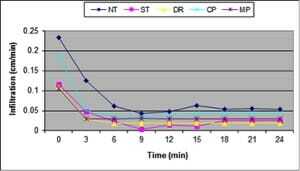
    Reducing fall tillage will help conserve soil moisture as each tillage pass can lead to ¾ of an inch of plant available water.  Tillage reduces water infiltration by breaking large pores, and the small pores are clogged by the dislocation of soil particles.  Raindrops break the soil aggregates, which clog soil pores leading to slow water infiltration and increases surface runoff.  Additionally, subsequent rains result in more runoff because of potential soil crusting.  Research has shown a significant decrease in water infiltration rate as the intensity of tillage increased as shown in the figure below.

    Figure 1. Water infiltration with five different tillage systems. NT=No-till, ST=Strip-tillage, DR=Deep Rip, CP=Chisel Plow and MP=Moldboard Plow. (Al-Kaisi, 2011). Note that strip-tillage infiltration rates were taken in the tilled zone.

    Three reasons why farmers should consider avoiding fall tillage this year include:

    1. Crop residue moderates soil temperature, leading to less soil moisture evaporation.
    2. Residue helps reduce the amount of wind at the soil surface, which helps further reduce soil moisture evaporation.
    3. Soil compaction due to equipment traffic was minimal due to dry conditions from planting through harvest 2012.

    There is no reason to allocate time and fuel for deep tillage; the normal freeze/thaw cycles should alleviate any mild compaction that resulted.

    Another benefit of leaving standing corn residue is that it can help catch snow that would otherwise blow across the surface and pile up somewhere else.  Eight to 16 inch corn stalks hold more snow than bare soil.  Additionally, corn stalks will help reduce runoff and increase infiltration of snow melt in the spring.  This could mean another 1 or 2 inches of soil moisture next spring.

    A final reason to forego tillage this fall is because Goss’s Wilt was not a large concern in 2012.  Goss’s Wilt survives the winter on corn residue, but because there was minimal presence this year, there is no need for tillage this fall to further reduce risk in 2013.

    Team Latham

    October 4, 2012
    Agronomics, Drought, General, Soil, Weather
  • Latham Hi‑Tech Seeds

    Part II: Farmers Recycled before “Green Efforts" Began

    LarrySailer AgriNews1
    Photo courtesy of AgriNews.com

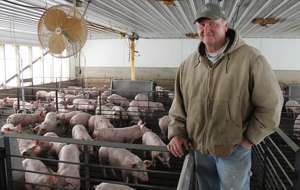
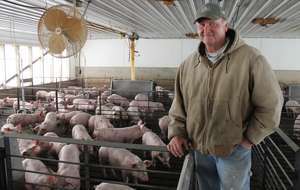
    Farmers raise corn and soybeans, which make the feed for our hogs.  By feeding grain to our hogs, we add value to the raw corn and soybeans.  The process of growing pigs and producing that great tasting bacon also generates “natural fertilizer.”

    Natural fertilizer is another name for manure, and it’s not waste – it’s a valuable asset!  A grain farmer thinks of manure as a valuable asset because it’s a very effective fertilizer, which is needed to produce high-yielding crops.  The natural fertilizer that my pigs produce is in high demand by area farmers, who put down it on their farm ground to serve as plant food for next year’s crop.  You might even say that farmers were recycling manure before the rest of society started adopting green efforts.

    One advantage of recycling manure is that it helps reduce the cost of crop inputs.  Commercial fertilizer is very expensive, so using manure helps reduce crop input costs.  Using this locally produced fertilizer is a win-win deal: crop farmers need fertilizer and livestock farmers must dispose of manure in an environmentally sound manner.

    Applying manure is heavily controlled by regulations.  I’m required to file a Manure Management Plan with county officials and the Iowa Department of Natural Resources.  This plan includes soil test results, crop rotation plans, soil types and the erodibility of the soil.  Every detail you can imagine needs to be spelled out in this document!  What it all boils down to is this: it’s against the law to pollute the surface or ground waters of the State of Iowa.

    While I support efforts to protect the environment, I also believe we need to exercise some common sense.  These laws, which prompt rules, often begin with the best of intentions.  Not all regulations produce the desired outcomes, however.  For example, all of the regulations that groups like Iowa Citizens for Community Improvement (ICCI) helped pass have resulted in many smaller producers calling it quits!

    Regulations can be extremely costly to farmers, and this is one reason I’ve become so active in trying to control regulations.  Lawmakers need to hear how laws and rules will impact farmers.  The general public, which largely influences those political votes, also has a need to be in the know.  That’s why I’m inviting you to watch my video blog series to learn more about how and why I raise pork.  Please contact me with any questions you have about modern day hog production.  I’ll look forward to some online dialogue!

    Larry Sailer, Musings of a Pig Farmer

    October 2, 2012
    Agriculture, General, Industry News
  • Latham Hi‑Tech Seeds

    Green Stem Syndrome in Soybeans

    Bean drought1
    Photo courtesy Shaun Casteel, Purdue University

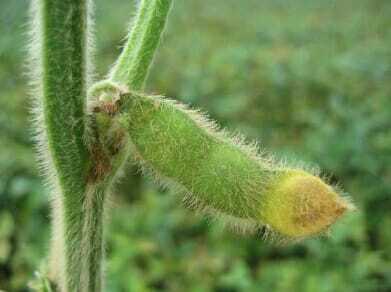
    Drought stress during the growing season contributed to the Green Stem Syndrome in Soybeans that’s apparent in certain fields this fall. In some areas, pods and/or seeds were aborted. Plants that abort pods or seeds then redistribute sugars and nutrients, thereby increasing the concentration of photosynthate in the stem and causing it to retain the green color longer.

    Harvesting soybeans with green stems can be a challenge. Green stems are difficult to cut and are known to plug up combines, so combine operators must proceed at slow speeds – and with caution. Combine must be properly adjusted, and the cutting knife must be sharp.

    Sometimes just certain areas of a field – mostly low-lying areas or areas protected by shelter belts, groves or buildings – may be affected by Green Stem Syndrome. In some cases, local soybean growers went around these areas and will come back to harvest them at a later date.

    Depending on the severity of the green stem syndrome, certain soybean fields may need a killing frost before they’re harvested. However, waiting for such a frost may lead to additional yield loss if pods shatter during harvest. Fields should be monitored and harvested according to moisture content.

    About 90% of the green stems I’ve seen in my lifetime are caused by some environmental issue. Diseases also can cause it. However, other factors like herbicide injury or nutrient deficiencies are not usually a major factor.

    Webspec Admin

    October 1, 2012
    Agronomics, Crop, Disease, General, Soybeans
  • Latham Hi‑Tech Seeds

    Blessed with a Bumper Crop of Squash

    Nov3Squash

    Weather like we’ve experienced this week is just one of the many reasons that autumn is my favorite season.  I love cool mornings followed by warm afternoons.  I really enjoy walking through the woods with our Black Lab, Bailey, as the foliage paints the skyline crimson and gold.  I also look forward to baking fall treats like apple crisp or pumpkin bars and trying new casseroles using fruits of the season.

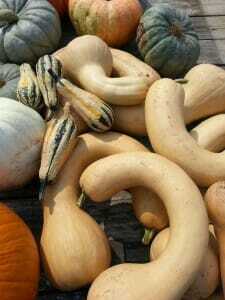
    This year I tried my hand at growing Amish, or neck squash.  We had such a good crop that I’m able to sell some at our newly opened Enchanted Acres Pumpkin Patch, plus I brought some home to try.  Because neck squash looks and tastes similar to butternut squash, I spent a few minutes searching online for a recipe that sounded quick, easy and delicious.  During my search, I came across this blog from Ohio’s Amish Country.  The author makes broiled veggies, even butternut squash, sound delicious!  Read this excerpt below and see if you agree:

    Something I discovered some time ago is broiling fresh vegetables. I simply wash and cut up whatever is in season, including broccoli, cauliflower, butternut squash and all kinds of peppers. I allow them to air dry and lightly coat them with olive oil. I season them with garlic salt, Lawry’s seasoning or just plain kosher salt. I also love to grind some fresh pepper across their delicious cut-up pieces. I pop a heavy gauge cookie sheet in the oven (on the top rack) and broil the veggies until they are a dark caramel color- sometimes the broccoli even appears burnt! But don’t let that fool you; it is rich, full-flavored and unbelievably tasty.

    Another recipe that caught my attention was Butternut Squash Soup.  While attending a business meeting earlier this week in Minneapolis, I taste tested a cup of “seasonal squash soup.”  It was unusual and I was surprised by how much I enjoyed it.

    Admittedly, I’m a bit of a traditionalist.  I just love baked squash topped with Real® butter and brown sugar with a slice of browned bacon on top.  (Bacon makes everything better!)  That’s why today I’m sharing with you  recipe that’s on the top of my “must try” list.  This Butternut Squash Bake sounds like the perfect complement to pork loin.  Mmmm… just thinking about it makes me want to head into the kitchen right now!

    What’s your favorite way to enjoy squash?

    Team Latham

    September 28, 2012
    Desserts, General, Recipes
  • Latham Hi‑Tech Seeds

    Dispelling Myths about Seed Treatments

    by John Toft, CCA in Nebraska and Iowa
    Latham’s Regional Sales Manager in Nebraska

    There is a common belief that seed treatments only pay when we experience colder, damper conditions at planting time. This past winter was mild with relatively little spring snowmelt. We also experienced unseasonably warm temperatures in March and April, which contributed to warmer, dryer conditions at planting time. As a result of weather and soil conditions at planting , many farmers opted not to treat their soybeans last spring.

    Today I’d like to encourage you to view seed treatments differently. Instead of viewing seed treatment as an input cost, consider seed treatment as an insurance policy.

    Why wouldn’t you want to protect a crop that’s worth more than $17 per bushel?

    Insect pressure across the nation is at an all-time high, and if we can prevent that early plant feeding, we can add multiple bushels. By design, seed treatments protect the seedling plants until they have a fairly well-established root system. Almost all seed treatment insecticides belong to the neo-nicotinoid family of products. They do a great job of controlling insects while the plant is in the seedling stage, the effect soybean treatments have on soybean aphids longer lasting. Aphids are such fragile insects that it doesn’t take much of the chemical to kill them, so we see aphid control last from 40 to 50 days after planting.

    Fungi are another factor hindering bean yields. Because producers are planting earlier each year, seed treatment provides added protection. Seed treatments also help protect against nematodes, which are becoming more prevalent. Many fully-loaded treatments may have innoculants, micronutrients or plant food.

    There are many new technologies that chemical companies are bringing forward. This offers the producer better controls, and more importantly more freedom within their operations.

    Latham Hi‑Tech Seeds has treatment packages that offer a broad spectrum of control. SoyShield is Latham’s fungicide-only package, and SoyShield Plus contains fungicide and insecticide. The best part is, it takes less than a bushel of soybeans to pay for the cost of treatment!

    Latham’s Early Order program makes seed treatment an even better value. Contact your local Latham® representative or contact the company directly at 1-877-GO-LATHAM (1.877.465.2842).

    Team Latham

    September 27, 2012
    Agronomics, General, Seed Treatment
  • Latham Hi‑Tech Seeds

    PART I: Cleanliness is Key to Good Animal Health

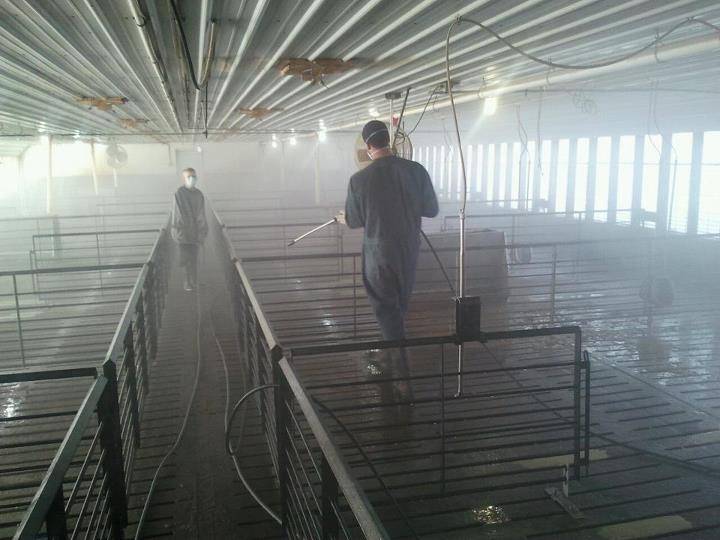
    Larry washing
    Photo courtesy of AgriNews.com

    Musings of a Pig Farmer
    by Larry Sailer

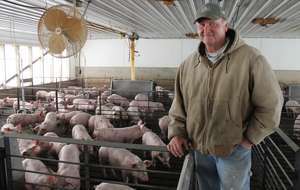
    In my September 11th column, I promised to give you an insider’s looks at modern hog production. Today I’m kicking off a blog series that will follow a group of pigs from about 50 pounds to 290 pounds. I’ll try to show just what these pigs have for shelter and what it takes for me to take care of them.

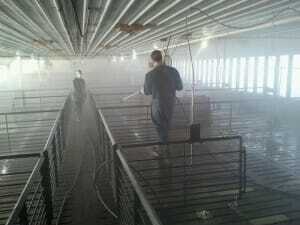
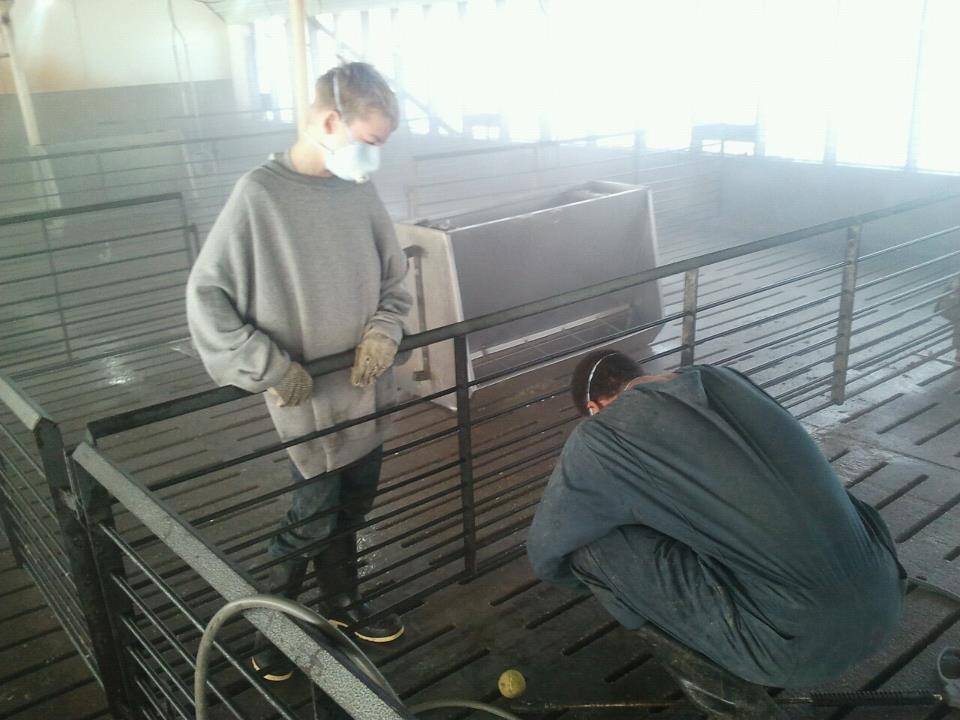
    We took delivery of our most recent group of pigs on Aug. 29.  Before they were delivered, however, we had a lot of work to do!  We get ready for a group of pigs by power washing the barns until every last speck of organic matter has been removed.  We then disinfect the barns with one of several disinfectants; we rotate the disinfectants to prevent immunity from building.

    Clean buildings are key to keeping animals as healthy as possible.  Healthy pigs grow better, reach market weight faster and require fewer vaccinations.  You can think of this process as “bringing pigs into a new world.”  When the first settlers to this country, they brought with them illnesses that were very deadly to the people already living here as they didn’t have any immunity to the new bacteria and viruses.  The same is true with animals:  We don’t want to expose pigs to anything for which they don’t have immunity.  This is why you see signs by livestock barns that read, “STAY OUT.”  Hog producers aren’t unfriendly!  They’re simply watching out for the pigs’ interests.  Limiting access to the barn is a very good way to control the health of those pigs.

    The pigs arrive at my site by semi, which is driven by a certified driver.  Truckers Quality Assurance (TQA) is a program developed by the National Pork Board to ensure that driver takes the best care of the pigs he’s delivering. Likewise, I am Pork Quality Assured (PQA) and take training courses to make sure that I understand how to best care for my animals.  There are many different ways to care for pigs, and most any system can do a good job IF there is good management.  Likewise, the very best designed system can fail if not properly managed!

    I receive the pigs from a nursery when they weigh about 50 pounds.  They are first farrowed, or born on a farm, where the sows are kept.  When the pigs are about 20 days old and weigh about 14 pounds, they’re taken to the nursery while they still have some natural immunity from the sow’s milk.  As they get older, the sow loses the ability to pass immunity through her milk.  By moving pigs to a disinfected nursery, the goal is to keep them as healthy as possible.  They stay in the nursery about seven weeks and are about 50 pounds when they are then shipped to my finish barns.  I will take care of them for about 120 days and the pigs should gain 240 pounds while I have them.

    In future blogs, I will explain about the buildings I use and why. If you have done the math, this group of pigs will be with me for about four months.  I’ll try to get into the different aspects of my operation.  If there are some questions you have, I will address them as we go along.  Please let me know what questions you have.  My goal is to help you understand how and why I do the things I do to take the very best care of these pigs.

    Related Posts:

    • Take a Walk through Time
    • Virtually Walk through Our Genetic Garden
    • Genetic Garden Shows How Different Types of Corn React to Drought
    • Corn as High as an Elephant’s Eye
    • History is growing in Alexander 

    Larry Sailer, Musings of a Pig Farmer

    September 25, 2012
    Agriculture, General, Industry News
  • Latham Hi‑Tech Seeds

    Corn Breeding: A Colorful Journey

    Through a series of weekly video blogs, Latham Forage Products Manager Corey Catt shows how corn has evolved through time. This week Corey shares how crossing dent and flint varieties has increased plant health over time. He shows how corn with purple husks and stalks is used as a marker in breeding plots, too.

    http://youtu.be/6C9cOIY3jOE

    Team Latham

    September 24, 2012
    Agriculture, Corn, Crop, General, Industry News
  • Latham Hi‑Tech Seeds

    Keep the Grill Fired Up this Fall!

    BeefRollups2

    Keep the grill fired up during football season. Whether you’re filling up the stadium parking lot with the aromas of grilled burgers and steaks or tempting guests with smoked beef brisket at home, beef is the perfect way to celebrate your team to victory!

    Tailgating Tips:

    1. Grill like a master:
      1. Grill burgers and steaks over medium heat.
        1. Check for medium heat by cautiously holding the palm of your hand above the grate at cooking height.  Count the number of seconds you can hold your hand in that position before the heat forces you to pull it away; it’s approximately four seconds for medium heat.
      2. Use a long-handled spatula to turn burgers and tongs to turn steaks.
        1. Don’t press, flatten or pierce the meat as flavorful juices will be lost.
      3. Remove beef from grill when temperature reaches 10° below desired doneness.
        1. Beef continues to cook when removed from grill; allow beef to “rest” by tenting loosely with foil for 10 minutes.
        2. Visit http://iabeef.org/grilling.aspx for more grilling tips including a timetable.
    2. Keep food out of danger zone – 40° – 140°.
      1. Never leave food out of refrigeration for more than 2 hours. If the temperature is above 90 °F, food should not be left out more than 1 hour.
        1. Keep hot food hot — at or above 140 °F.  Place cooked food in chafing dishes, preheated steam tables, warming trays, and/or slow cookers.
        2. Keep cold food cold — at or below 40 °F.  Place food in containers on ice.
    3. Plan your menu early.  Do prep work a day or two before the game.
      1. Chili, stew, meatballs, taco meat or brisket can be prepared the day before the game giving you more time to enjoy the tailgating festivities!

    If you don’t want to haul the grill, make these quick and easy Beef Rollups the night before.  They work great as an appetizer before or after the game or as a no-mess lunch.  For added flavor, stir in ranch dressing, blue cheese or horseradish to the cream cheese.

    Team Latham

    September 21, 2012
    Beef, General, Recipes
  • Latham Hi‑Tech Seeds

    Protect 2013 Corn Yields with Traits

    Since you can’t predict the weather, do what you can to minimize your risk.  Planting corn hybrids with a corn rootworm trait protect the corn plant’s root system better than soil insecticides do, particularly in a dry year.  It’s like having an extra insurance policy in place.  Beware, however, because not all traited hybrids are created equally!

    Genetics make yield but traits protect yield.  This season we certainly saw how different genetics handled stress from drought and wind.  Roots and stalk strength were put to the test.  That’s why genetic diversity is so important.  Plant a portfolio of 4 to 6 different Latham® numbers for added protection.

    As an independent, family-owned company, Latham Hi‑Tech Seeds is able to guarantee genetic diversity.  Our independence allows us to provide farmers with an industry-leading number of product choices from provides including:  Monsanto, Bayer, BASF, Syngenta, Dow AgroSciences and more.  In addition to planting different genetics, you can further minimize their risk by planting various maturities.

    In our 2013 product lineup, Latham Hi‑Tech Seeds offers 33 hybrid seed corn products with 6 different trait combinations for rootworm control in various maturities:

    • SmartStax, leading the industry with 2 modes of action against rootworm
    • VT Triple Pro
    • VT3
    • Herculex Xtra
    • Agrisure 3111 Viptera
    • Agrisure 3000 GT

    Not all traited products offer rootworm protection.  Herculex I, for example, has resistance/tolerance to Liberty, Roundup and corn borer.  Herc 1, however, does not protect against corn rootworm.  A person can’t just assume that a “Bt hybrid” will have rootworm protection.

    Rootworm control is a must in corn-on-corn protection.  You’ll see extended diapause in ground that has been rotated.  In an area with heavy rootworm pressure, plant Latham hybrids with Genuity® SmartStax® technology.  Look at dual modes of action and consider rotating crops in areas where rootworm pressure is extreme.

    Because corn-on-corn acres are more susceptible to challenges presented by weather, soil and pest pressure, Latham has introduced the Gladiator designation to help with 2013 seed selection.  They have the industry’s most advanced genetic foundation, offering powerful root and stalk strength and superior above- and below-ground insect protection.  Latham’s Gladiator hybrids are developed to battle your field’s continuous corn challenges and win.  Give them a try as part of your diversified 2013 crop plan!


    John Latham, President

    September 20, 2012
    General, Industry News, Seed Technology
Previous Page
1 … 100 101 102 103 104 … 159
Next Page

Latham Hi‑Tech Seeds

131 180th Street | Alexander, IA 50420

(641) 692-3258

SIGNUP FOR OUR NEWSLETTER
  • Contact
  • Legal
  • Dealer Center
  • Seedware Login
  • Latham Gear

© 2025 Latham Hi‑Tech Seeds. All rights reserved. | Iowa Web Design by Webspec | Privacy Policy

Latham® Hi-Tech Seeds is a trademark of M.S. Technologies, L.L.C., 103 Avenue D, West Point, IA 52656.