Latham Hi-Tech Seeds

(641) 692-3258

  • Home
  • Performance
  • Products
    • Corn
    • Soybeans
    • Soybean Blends
    • Alfalfa
    • Corn Silage
    • Seed Guide
  • Find a Rep
  • Media
    • Blog
    • News
    • Videos
    • Podcasts
    • TECHTalk
  • About Us
    • Company History
    • Our Mission
    • Careers
    • Become a Rep
    • Sowing Seeds of Hope
  • Contact Us
  • Latham Hi‑Tech Seeds

    Selling Seed, Canning Kraut and Racing Turtles are Brandt Family Tradition

    GregB Dad
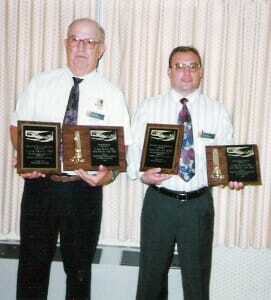
    First year that I got into seed business with dad. Together, we hired the most new Krueger dealers that year.

    Greg Brandt grew up in the seed business on a farm near Westbrook in southwestern Minnesota, but he took quite a different path before making it his career.

    Upon graduating from high school in 1985, Greg attended vocational school for electricity and electronics.  A job as an electrical inspector for Windings, Inc., took him to New Ulm.  He worked his way into a position as Quality Assurance manager and was involved with inspecting parts for NASA, as well aircraft instrumentation for President Regan’s helicopter.  He enjoyed his job immensely and switching careers wasn’t on his mind at the time.

    “One day my dad gave me a call said he’d grown his seed business to a point where he needed to divide the territory,” says Greg.  “He asked me to join him, and honestly, I couldn’t tell him ‘no.’  Dad had worked so hard to get his seed business to that point, so I decided to assist him.  Then in 1995, Krueger divided the state of Minnesota in half.  Dad covered half as a District Sales Manager, and I covered the other half. We worked together until 2004.”

    Now after working for nearly two decades in the seed business, Greg says he can’t imagine working in any other industry.  He really enjoys the strong relationships he has with his dealers.  Greg appreciates how, as an independent company, Latham Hi‑Tech Seeds keeps its focus on helping farmers.

    Makayla & Speedy. He really was speedy winning first place.

    Greg also appreciates how the company puts family first and looks for opportunities to bring families together.  His wife, Heather, and two daughters, Makayla (who will be 11 in two weeks) and Amber (age 9), have enjoyed attending Latham’s summer sales meetings.  They also greatly enjoy spending weekends at by the Boy River near Longville where they enjoy feeding the ducks and racing turtles.  It’s become their tradition to catch turtles in the spring and race them on Wednesday afternoons at the Longville Turtle Races.  Longville is just a short drive from Nisswa, where turtle racing originated 47 years ago.

    This coming Labor Day weekend Greg, Heather and their girls will be soaking up the final days of “summer vacation”.  The day after Labor Day school resumes. Heather will begin her thirteenth year as a special education teacher; both girls attend elementary school in New Ulm.

    Anyone who’s heard of New Ulm knows the community is deeply rooted in German heritage, so it really came as no surprise to me when Greg served brats and kraut at our From the Field spring planting broadcast.  What did surprise me is that the kraut was homemade – and that Greg had a hand in making it.  It was so good that I had to ask for his recipe!  Thankfully, his mother has agreed to share it with all of us on TheFieldPositon.

    For those of you needing directions on how to sterilize jars and seal lids, click here for Sauerkraut in a Mason jar.

    Team Latham

    August 31, 2012
    General, Recipes, Sides
  • Latham Hi‑Tech Seeds

    Best Management Practices for Drought

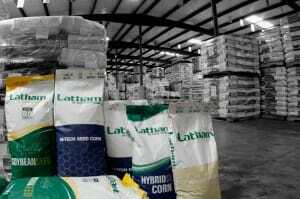
    LathamBags

    Dry growing conditions in 2012 are prompting questions this fall about soil fertility, herbicide carryover and seed product selection. Implementing best management practices this fall will help reduce stress for crops next spring.

    Conserve Soil Moisture
    When soils are dry, farmers must conserve remaining moisture. This may mean holding off on disking and cultivating, so as not to let moisture escape in the process. Keeping the harvested crop’s residue on the ground’s surface also will help conserve soil moisture.

    Test for Herbicide Carryover
    Herbicide breakdown may be slowed greatly in drought conditions. The best time to test for carryover is between late October and mid-November. By this time, soil temperatures remain below 50° F – a point at which herbicide breakdown is minimal. If you take residue samples before this time, herbicide levels could be greater than those that will be present at the time of 2013 planting.

    Select Seed Products
    Since dry conditions could increase the chances of herbicide carryover, farmers may want to select seed for 2013 with greater tolerance to the herbicide used during the 2012 drought year. Another option might be to alter your crop rotation to avoid planting a crop susceptible to the herbicide used.

    Whether you want to plant corn, soybeans or alfalfa – Genuity® Roundup Ready 2 Yield® or LiberyLink®, SmartStax® RIB Complete, Herculex® XTRA or Agrisure® GT – Latham Hi‑Tech Seeds has the products and our trait packages to fit your needs. Call your local Latham® rep or 1-877-GO-LATHAM (1-877-465-2842). The time is now to plan for the 2013 growing season!

    Webspec Admin

    August 30, 2012
    Agronomics, Drought, General, Weather
  • Latham Hi‑Tech Seeds

    The Quest for a “Balanced Diet": New School Lunch Regs, Part 2

    Balanced diet1

    Musings of a Pig Farmer
    by Larry Sailer

    Last week in “Musings of a Pig Farmer,” I shared how new school lunch regulations are limiting portions of certain types of food offered through the national school lunch program.  These regulations are a key component of the Healthy Hunger-Free Kids Act championed by First Lady as part of her “Let’s Move” initiative to help end childhood obesity.

    One reason given by proponents of the new school lunch rules is the need for children to have a “balanced diet.”  Balanced means that a diet meets your nutritional needs while not providing too much of any one nutrient. To achieve a balanced diet, you must eat a variety of foods from each of the food groups.

    Given my experience feeding livestock, I understand the need for “nutritionally balanced rations”:

    • A balanced ration is one that has all the nutrients the animal needs in the right proportions and amounts.
    • A ration is the amount of feed given to an animal to meet its needs during a 24-hour period.
    • Animals need proper nutrition to efficiently produce meat, milk, eggs and wool.

    Active kids, like active animals, have different nutritional requirements.  Performance athletes, like show animals, have different feed needs.  That’s why I’m opposed to the federal government’s “one size fits all approach” to school lunches.

    Through the years, I’ve learned that you can’t remove everything animals like to eat or they will simply refuse to touch everything in the feeder.  They “go off feed.”  Animals will not eat enough to grow bigger if they do not like the diet you feed them.

    This same concept may be applied to human diets.  As a parent and a grandparent, I’ve seen kids simply refuse to eat foods they do not like.  For example, Janice and I had a rule that our kids had to at least try the different types of food served at dinner.  They couldn’t be excused from the dinner table until they tried everything on their plates.  That rule didn’t work for tomatoes – but gagging did!  To this day, we have kids who will not eat tomatoes.

    Fact is, it doesn’t matter how good the food is for them (animals or humans) if you can’t get them to eat it!  It doesn’t matter if the federal government requires school-age children in the Midwest to take a serving of black-eye peas or collard greens.  Chances are, most of those foods are going to end up in the garbage disposal.  Lean proteins, however, are appealing to many children.  By setting a maximum allowance for Meat and Meat Substitutes (verses “minimum requirements” as stated under the former regulations), the U.S. government implies that meat isn’t healthy.  There’s also a new limit set for grain servings.  New regs, however, increase the amount of fruits and vegetables served.  Well, too much fruit isn’t good for you either because there is such a thing as consuming too much natural sugar.  Too much of “good thing” is still too much!

    Larry Sailer, Musings of a Pig Farmer

    August 28, 2012
    Agriculture, General, Industry News
  • Latham Hi‑Tech Seeds

    Prevention is Key to Avoiding Harvest Fires

    Smokey bear

    Guest Blog post by Mark Hanna,
    ISU Extension agricultural engineer with responsibilities in field machinery

    Extremely warm, dry and windy harvest conditions in 2011 were credited for the above-average number of combine and field fires we experienced last fall. Hot, dry conditions all summer long – plus the likelihood of warmer than normal temperatures at harvest time due to an early harvest – mean even more sparks could ignite during the 2012 harvest season.

    Prevention is a key to avoid personal and property damage.

    • Keep the machine clean, particularly around the engine and engine compartment. Use a high pressure washer or compressed air to remove caked-on oil, grease and crop residue.
    • Check coolant and oil levels daily.
    • Check the pressurized oil supply line to the turbocharger for wear areas that rub and may start an oil leak.
    • Frequently blow leaves, chaff and plant material from the engine area with compressed air or a portable leaf blower. Remove plant materials wrapped on or near bearings, belts or other moving parts.
    • Examine exhaust or hot bearing surfaces. Repair leaking fuel or oil hoses, fittings or metal lines immediately.
    • Inspect and clean ledges or recessed areas near fuel tanks and lines.

    Preparation is also key. Carry these items with you during harvest:

    • Cell phone to call the fire department (911).
    • Two ABC-type fire extinguishers: a smaller 10-pound unit in the cab and a larger 20-pound extinguisher at ground level on the combine.
    • A shovel to throw dirt on small flames.

    Since fires can start from plant materials that have smoldered unnoticed for 15 to 30 minutes or more, it just takes a gust of wind to literally blow it out of control. Hanna advises farmers to discuss a plan for emergency tillage in the event of a fire break, so harvest crews know what to do should the need arise. Remember, personal safety is more important than harvest loss.

    For more tips, click here.

    Team Latham

    August 27, 2012
    Agriculture, General, Industry News
  • Latham Hi‑Tech Seeds

    Hagie Shares Likenesses with Latham: 65th Anniverary, Corn Hybrids & Favorite Recipe

    Hagie
    Front Row (Left to Right): Christy Johnson-Lynch, ISU Head Volleyball Coach; Brandon Hagie and Kevin Jackson, ISU Head Wrestling Coach Second Row (Left to Right): Barb Hagie (Wife of John Hagie); Taylor Hagie; Alan Hagie and Lisa Hagie Third Row (Left to Right): Steve Dunker; Bill Fennelly, ISU Head Women’s Basketball Coach; Paul Rhoads, ISU Head Football Coach; Julie (Hagie) Dunker; John Hagie; Fred Hoiberg, ISU Head Men’s Basketball Coach; Jamie Pollard, ISU Director of Athletics; John Walters, Voice of the Cyclones and CY.

    Guest Blog by Hagie family of Clarion

    From one family-owned agribusiness to another, Hagie Manufacturing. congratulates Latham Seeds on 65 years of success! We look forward to celebrating with Latham supporters at the Country Fair and Fourth Annual Latham Freedom of Independence Ride, taking place in Alexander, Iowa, this Saturday, August 25!

    Hagie Manufacturing. is both proud and humbled by the fact that today, we continue 65 years of innovation and service to the agriculture industry. As a family owned, rural Iowa agribusinesses, Hagie Mfg. has many likenesses with Latham Seeds. Perhaps one of the most interesting commonalities ties back to Hagie’s history in the seed business. Ray Hagie never intended to build the world’s first self-propelled sprayer, as his intentions were to grow hybrid seed corn.

    The Hagie story began in 1933, when Ray Hagie graduated from Iowa State College and returned to his family farm, armed with a degree in animal husbandry and an entrepreneurial mindset. One of Ray’s first decisions on the farm post-college was to dedicate 1.5 acres of the farm to experiments with hybrid seed corn. Three years later, a drought hit. The hybrids withstood the challenge, and so did Ray, as the hybrid operation grew exponentially. In 1944, Hagie’s Hybrids opened a seed corn plant in Clarion, Iowa.

    Ray was born an innovator, and his wheels continued to turn as his hybrid operation grew. His desire to further improve his own operation and that of his neighboring farmers resulted in a vision. In 1946, to help reduce the painstaking time associated with detasseling, Ray developed a self-propelled “personnel mover.” Ray’s innovation continued as the release of 2-4Dow, known today as 2-4D, hit the market and he saw an opportunity for producers to increase application efficiencies by spraying with a self-propelled chassis. In 1947, Ray invented the world’s first self-propelled sprayer. The originality and efficiency of the product created high demand, and in 1948, Hagie Manufacturing was born.

    Three generations, millions of acres and over 65 years later, Hagie Mfg. provides the most innovative crop protection solutions in the industry and a superior customer experience, while building on the same family owned traditions and values. John Hagie, son of founder, Ray Hagie, served as the company President from 1981-2010. John’s committed to the growth of Hagie Mfg. has resulted in many innovations and successes. With great passion to grow the cattle side of the family farm operation, John’s dedication has resulted in Cyclone Trace today being a nationally recognized breeder of purebred Shorthorn cattle.  In 2010, Alan Hagie, grandson of founder, Ray Hagie, took over as the third generation President of Hagie Mfg., who is honored to also raise corn and soybeans on the same land that his grandfather and father once managed – Hagie Farms. “We are able to understand our customers’ needs because we are in the same business,” according to Alan Hagie.

    As a rural Iowa agribusiness, Ray grew Hagie Manufacturing around a core commitment to his community, his employees, and his industry. Today, Hagie Mfg. continues to have an incredible impact on our community, with over 350 Hagie employees, families, and vendors, along with thousands of community members and customers who rely on our continued support. We strive to be as innovative with our people as we are with our products by offering employees an invigorating environment that encourages innovation and instills a true sense of purpose.  We are more than co-workers, we are family.  Clarion, Iowa has been our home for over 65 years. We never lose sight of the fact that we are not members of a city, but of a community deserving dedicated resources, support and appreciation. According to Alan Hagie, “Solid, continuous growth is a non-negotiable aspect of our future so that we can continue to provide opportunities and support to our community.”

    “It is a privilege leading a company that my grandfather envisioned 65 years ago. Those philosophies that were present at our founding are still present today – whether we’re celebrating our individual and team successes, or facing challenges, we practice humility, listen with respect, have the courage to admit we don’t know everything, and the knowledge that accepting such is the only way we will improve and grow. Our intent has never to be the biggest. It has always been to be the best. Each day represents just one of the many chapters in the Hagie Manufacturing story; with eager anticipation, we turn the page – and together – continue the story,” says Alan Hagie.

    It is a privilege to work with Latham Seeds, as a family owned agribusiness that represents strong core values and is committed to sustaining and growing agricultural in rural Iowa. Congratulations to Latham Seeds for 65 stellar years in agriculture. Here’s to your next 65!

    Team Latham

    August 24, 2012
    Food & Family, General, Poultry, Recipes
  • Latham Hi‑Tech Seeds

    “Place Your Chips” for the Mark Pearson Endowment

    CowChipBingo1
    Mark Pearson and I at 2011 Iowa State Fair

    Today will be bittersweet.

    “The Big Show” will be broadcasting live from Latham headquarters to cover preparations underway for our company’s 65th anniversary celebration on Saturday, Aug. 23.  Unfortunately, we’ll be doing today’s broadcast without one of the ag community’s most-loved personalities.

    But Mark Pearson, longtime host of WHO Radio’s “The Big Show” and Iowa Public Television’s “Market to Market” program, will be with us in spirit!  That’s why today through Saturday we’ll be honoring Mark’s memory in a way that’s fitting of his fun-loving spirit.

    “The Big Show’s” Bob Quinn and me on location during our 2011 WHO Radio / Latham Crop Tour

    Tune into Newsradio 1040 WHO today between 11:30 a.m. and 1:00 p.m. CST to hear the details of our Cow Chip Bingo game.  WHO listeners and Mark Pearson fans even will have an opportunity to participate “virtually” through lathamseeds.com.  Visitors to the Latham Country Fair on Saturday can participate “in person.”

    Proceeds from our Cow Chip Bingo game will benefit the Mark Pearson Endowment, a scholarship program available to junior and senior students at Iowa colleges who have chosen to major in agriculture journalism.  (Side bar: This scholarships is also near and dear to my heart since I majored in agricultural journalism at Iowa State University.)

    How to “Place Your Chips” to Benefit the Mark Pearson Scholarship Endowment
    Those attending the event will select one of 64 Bingo squares. Those who cannot attend the event are invited to pledge online by visiting www.lathamseeds.com and selecting the “Cow Chip Bingo” icon at the bottom of the page or by mailing a check to:

    WHO Radio
    c/o Janine Van Vark
    Note: Cow Chip Bingo
    2141 Grand Ave.
    Des Moines, IA 50312
    Virtual and mail pledges will be put into a drawing for prizes, including $100 worth of beef certificates from the Iowa Beef Industry Council.

    Team Latham

    August 23, 2012
    Agriculture, General, Industry News
  • Latham Hi‑Tech Seeds

    New School Lunch Regs, One “Hot Potato”!

    Superintendents1

    The national school lunch program is becoming one “hot potato” of an issue!  I deliberately chose to use the word “one” as much of the changes revolve around limiting the portion size, especially of meat, offered through the school lunch program.  In her blog post this week, Missouri pork producer Chris Chinn describes it as a One Size, Fits All Lunch Program.

    Chris is not alone in her concern.  Even school hot lunch managers are concerned.  Here’s a comment one area hot lunch manager posted on my Facebook page:

    Oh, you sure hit a sore spot with me. It just me over two weeks to formulate a menu that usually takes less than two hours, and I have Middle School and Elementary ages to go.  The meat allowance for students in grades 9-12 is 2 ounces.  I can hardly wait until some of my older kids come through the lunch line on the first day and can’t find the meat on their sub sandwich!  Our schools have always served at least 1 fruit and 1 vegetable a day. We can serve it, but we can’t make them eat it!  And now I’m adding more fruits and vegetables, but I’m sure there won’t be a rush for Garbanzo beans, black beans and kidney beans.  Get this… lettuce and dressing must fit into the calorie ranges.

    Area superintendents met recently with the Franklin County Farm Bureau board. From left to right are: Darrin Strike, West Fork; Todd Lettow, Hampton-Dumont; Dwight Widen, CAL Community; and Bob Weber, AGWSR.

    How long will a 2-ounce portion of meat satisfy a 240-pound football player, who has already been at school for hours and has to attend practice right after school?  The above-mentioned hot lunch manager goes on to write that she’s concerned about the number kids that will go hungry thanks – ironically – in part to the Healthy, Hunger-Free Kids Act.  She encourages concerned citizens and interested parents to contact their congressman.  She emphatically writes, “School cooks need all the help they can get to get back to basic cooking!!!!”

    Even school administrators are concerned about the new regulations.  Last Thursday a group of area superintendents met with the Franklin County Board of Directors.  When talking about school food, one of the supers confessed that he takes his lunch break in his office where he can use his own “secret” salt shaker.  He said the food is so bland that he couldn’t tolerate to eat it otherwise.

    Another super said that the “Food Gestapo” stopped in and checked their food last year.  His school failed the inspection, and one reason was because that particular school added too much salt to the food.  They all agreed that there will be major problems with the program.

    As classes resume, I’m sure we’ll hear even more “school lunch stories.”  You can be sure that I haven’t written my last word about it either.  To be continued…

    Larry Sailer, Musings of a Pig Farmer

    August 21, 2012
    Agriculture, General, Industry News
  • Latham Hi‑Tech Seeds

    Kinze Has ISOBUS Electronics Capability

    KINZE Plugnplant closeup

    guest blog post by Rhett Schildroth, Product Manager at Kinze Manufacturing

    Kinze Has ISOBUS Electronics Capability
    Plug and play operation with ISOBUS-equipped tractors

    There is much confusion in the marketplace about the compatibility of monitor technology between tractors and planters of different brands. I’d like to offer some facts to farmers who have questions about compatibility.

    Kinze Manufacturing, Inc. now has ISOBUS compatibility. This capability allows easy “plug and play” operation with any ISO-compatible tractor, including those sold by John Deere with GreenStar™Displays. With this interconnectivity, farmers do not have to change monitors, displays, wiring harnesses, or electrical connectors with different implements.

    ISO monitor

    from different manufacturers. The vehicle and equipment electronics speak the same language, enabling simpler operation than ever before. With ISO compatibility, one monitor in the tractor cab can run both the planter and the tractor, saving room in the cab and money on a second monitor, not to mention the time it takes to install a second monitor.

    Kinze’s technology means any ISOBUS-equipped tractor can be quickly connected to our planters using the ISOBUS standard tractor/implement connectors. The user interface presented to the operator is the same, regardless of the brand of tractor or virtual terminal. Additionally, all planter settings are saved on the planter, so switching between tractors becomes a non-issue.

    This technology will make life easier for farmers. We understand the importance of enabling efficiency, and ISO-compatibility will make a difference in giving more time back to farmers.  We understand that electronics can be confusing, and ISO-compatibility will simplify vehicle and implement electronics.

    To find out more about this issue, please attend my presentation on Saturday, Aug. 25 at the Latham Country Fair.

    About the author:

    Rhett has been in the ag equipment industry for almost twenty years. A graduate of Iowa State University, he started his ag career as an engineering consultant with clientele that included CNH and John Deere. He joined John Deere fulltime in 1998 to help them grow their precision farming group. In 2006, Rhett left John Deere to join Topcon Positioning as their Director of Ag Engineering. Topcon is a provider of ag electronics to many large ag equipment manufacturers, including AGCO.

    Rhett Schildroth is currently the Product Manager at Kinze Manufacturing. In this role, he works closely with the Kinze management team to determine how Kinze products should evolve to meet the changing needs of farmers both in America and across the globe. As part of this work, he also leads the autonomous tractor project at Kinze.

    Team Latham

    August 20, 2012
    Agronomics, General, Precision Ag
  • Latham Hi‑Tech Seeds

    Litzau Drives the Countryside – with 580 Horsepower!

    Larry Litzau1

    Larry Litzau of Glencoe, Minnesota, drives the countryside in style.  Sports cars have been his passion since high school, and his newest sweetheart is a 2012 Camaro ZL1.  He has good reason to feel especially proud of this one as it took “Best in Class” on Aug. 5 at the Inver Grove Heights car show.

    Given his penchant for sports cars, it’s only natural for Larry to participate in a “field day on wheels.”  He’s planning to drive this Camaro on Saturday, Aug. 25, when Latham Hi‑Tech Seeds hosts its 4th Annual Freedom of Independence Ride in North Central Iowa.

    “There are field days, and then there is Latham’s Freedom of Independence Ride,” says Larry.  “Looking at plots is just so much more fun when you’re cruisin’ the countryside.”

    While participating in this year’s ride, Larry is especially looking forward to learning more about Latham’s new Gladiator hybrids and Ironclad soybeans.  “With more acres going to corn-on-corn, it will be helpful to have the Gladiator designation to help farmers select the best products for their situations.  I also like the way Latham’s true one-bag system for Refuge in Bag makes it simple for farmers to handle refuge requirements.  Latham’s new Ironclad designation will also help with product selection.  We’ve experienced more problems with Iron Deficiency Chlorosis, Soybean Cyst Nematode and Phytophthora Root Rot in recent years.  Because Latham is headquartered where these challenges are most prevalent, Latham® brand soybeans are bred to handle these situations better.”

    Larry is especially excited about Latham’s 2013 soybean lineup.  “I made the switch to Latham because I wanted to work with a regional seed company that offers corn hybrids and soybean brands specifically bred for our geography.  Latham’s Roundup Ready 2 Yield® out-yielded the competition 5 to 6 bushels in 2011. It’s the real deal!”

    Such an endorsement means a lot, coming from someone who has so much experience in the business.  Larry has represented other seed companies over the past 20 years, as well as farmed his own acres.  He had a farrow-to-finish hog operation for 30 years and was active in farm organizations including serving on the board for the McLeod County Corn and Soybean Growers.  In addition he served for eight years in the Naval Air Reserve, worked two years for 3M and 42 years for Telex as a tool and die maker.

    “I’ve learned to never take anything for granted,” says Larry, who suffered a stroke on May 4, 2010.  “While there is never a good time to be struck by illness or injury, my stroke happened at the absolute worst time for a farmer and seed salesman.  With customers scheduled to take delivery of seed that morning, I was on my way to the emergency room in Glencoe.”  Less than an hour later, Larry was being transported by helicopter to St. Paul. He spent three days in the hospital and then another month doing intensive therapy.  His son, Brian, with the help of Regional Sales Manager Greg Brandt, got all of the seed in the hands of customers.

    “You realize just how precious and fragile life is,” adds Larry’s wife, Eleanor, who has been battling cancer for nine years and is currently undergoing treatment.  “It really helps you put your priorities in order.”

    Family takes first priority for Larry and Eleanor, who have been married for 42 years.  They were married May 9, 1970, and moved to their farm on June 1.  It’s also where they raised their three children: oldest daughter, Jennifer, works as a psychologist in the Glencoe Silver Lake school district; son Brian is a tool and die maker at Eaton Corporation; and youngest daughter, Rebecca, is an elementary music teacher I n the Minnetonka school district.  The Litzaus are also proud of their very active grandchildren: Paige, 12, enjoys music; Nathan, 10, plays baseball; Miranda, 8, loves soccer and softball; Owen, 7, plays hockey, golf and baseball; and Ava, 5, is a gymnast.

    The one thing all five grandchildren enjoy is Grandma Ellie’s cooking!  Now that she’s recently retired after serving for 40 years as a Licensed Practical Nurse (LPN) at a long-term care facility in town, Eleanor has more time to enjoy life’s simple pleasures.  The Food Channel is one of her favorite channels, and Eleanor enjoys trying new recipes.  Today she’s sharing one of her favorite easy-to-make recipes for apple pie.  With harvest just around the corner, you’ll want to give this one a try!  I taste-tested it last fall and agree this recipe is a keeper!

    Team Latham

    August 17, 2012
    Desserts, General, Recipes
  • Latham Hi‑Tech Seeds

    Adjust Combines for Drought Conditions

    It’s going to be an early harvest – perhaps three to four weeks earlier than “normal.” As we posted in our Aug. 15 crop report, crop conditions are well ahead of the 5-year average with 94% of the corn crop already at the milk stage and 80% at dough stage. Third crop alfalfa is one month ahead of schedule.

    That means the time is now to prepare for harvest! Harvest, for both and soybeans, typically begins in the Midwest between Sept. 17-27. Soybean harvest is usually finished by Halloween. Corn harvest is most active Oct. 5 through Nov. 10 and usually ends before Thanksgiving.

    It’s certainly not going to be “harvest as usual” this fall. Harvest will begin sooner and most likely progress slower. With weak and/or lodged stalks and stems, slower combine travel speeds will help ensure the crop feeds into the combine as easily as possible. Finding the correct travel speed to balance machine field with crop quality requires checking both losses behind the combine and grain quality in the tank, says Iowa State University’s Mark Hanna with the Department of Agricultural and Biosystems Engineering.

    Be sure to adjust combine settings for drought conditions. The gap between snapping plates above the stalk rolls on a corn head should be adjusted this year. In normal years, a gap of 1.25 inches is used. Given the situation this year, however, that gap most likely should be narrowed to just over an inch to avoid butt shelling of smaller diameter ears. The use of a reel, cones or divider modifications on the corn head may also help pick up more of the lodged corn.

    To help reduce the amount of lodged corn at harvest time, assess crop progress now and identify potential problem areas. Focus first on harvesting fields that show signs of Stalk Rot or exhibit weakened stalks that could subsequently lead to Stalk Lodging. Secondary concerns include hybrid maturity, crop residue management and logistics.

    Prepare now for a safe and fruitful harvest!

    Webspec Admin

    August 16, 2012
    Drought, Fall, General, Season, Weather
Previous Page
1 … 102 103 104 105 106 … 160
Next Page

Latham Hi‑Tech Seeds

131 180th Street | Alexander, IA 50420

(641) 692-3258

SIGNUP FOR OUR NEWSLETTER
  • Contact
  • Legal
  • Dealer Center
  • Seedware Login
  • Latham Gear

© 2025 Latham Hi‑Tech Seeds. All rights reserved. | Iowa Web Design by Webspec | Privacy Policy

Latham® Hi-Tech Seeds is a trademark of M.S. Technologies, L.L.C., 103 Avenue D, West Point, IA 52656.