Latham Hi-Tech Seeds

(641) 692-3258

  • Home
  • Products
    • Corn
    • Soybeans
    • Soybean Blends
    • Alfalfa
    • Corn Silage
    • Seed Guide
  • Performance
  • Find a Rep
  • Media
    • Blog
    • News
    • Videos
    • Podcasts
    • TECHTalk
  • About Us
    • Company History
    • Our Mission
    • Careers
    • Become a Rep
    • Sowing Seeds of Hope
  • Contact Us
  • Latham Hi‑Tech Seeds

    Newlyweds Plan Future around Shared Love of Farming

    Cole Danner1

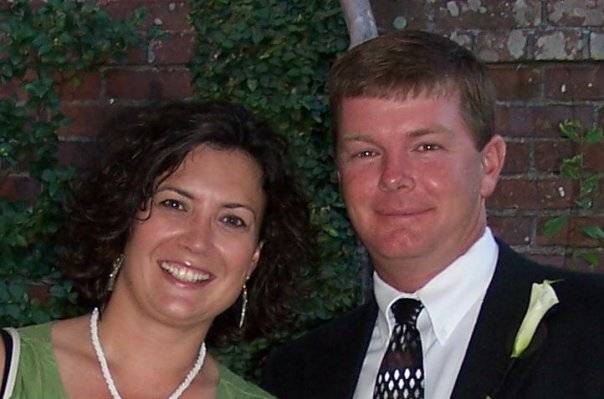
    It’s been a whirlwind seven months for Cole Danner.  After graduating in May 2012 from Iowa State University (ISU) with a degree in Animal Science, he moved to western Iowa to pursue his true loves: raising cattle, farming and planning a future with Mandy Maurer.

    He also recently joined the Latham Hi‑Tech Seeds team as a dealer from Curlew in Pocahontas County.

    “I joined Latham because it’s an independent, family-owned company,” says Cole.  “There’s a great support team in place, and I really enjoy working with people who have the same values.”

    Shared family values and common interests are what brought Cole and Mandy together.  The two met at a social event hosted by the Block & Bridle Club at Iowa State.  They soon learned they shared interests in raising and showing cattle.  Both had been active members of both 4-H and FFA:  Mandy showed club calves; and Cole started his herd as a result of his 4-H Beef project.

    Cole was also active on the 4-H Livestock Judging Team.  He competed in National 4-H Livestock Judging Contest at the National Western Stock Show and also at National FFA Convention.  He earned a college scholarship for livestock judging and also a spot on the ISU Livestock Judging Team.

    While wedding plans were underway during the summer of 2012, Cole and Mandy were also busy making plans for their future.  They remodeled the kitchen of their farm house and are in the process of converting an old farrowing barn into a cattle shed for their SimAngus seed stock operation.  Next, Cole plans to put the finishing touches on an office and warehouse space for his growing seed business.

    “Farming runs in both of our families, and we feel blessed to farm as a family,” says Mandy.  “It’s priceless to work side by side with the ones you love.  Cole and I both believe in the future of agriculture and look forward to carrying on our farming traditions.”

    Today the Danners are helping promote beef by sharing one of their favorite recipes for Ground Beef Stew, as well as another recipe for Caramel Pecan Bars.  It sounds like a winning combination for a chilly, fall evening.  Think I’ll mix up a batch now!

    Ground Beef Stew

    Ingredients:

    • 1 pound hamburger, browned and drained
    • 1/4 tsp. pepper
    • 1/2 tsp. salt
    • 1/4 tsp. oregano leaves
    • 1/4 tsp. basil leaves
    • 1/4 tsp. seasoning salt (Lawry’s)
    • 1 package of  dry onion soup mix (1 envelope)
    • 5 cups water
    • 1 quart tomato juice
    • 1 T. soy sauce
    • 1 cup sliced celery
    • 1 cup chopped carrots
    • 1 T. sugar
    • 1 cup frozen peas (add last)
    • 1 cup macaroni

    Directions:

    1. Cook all ingredients (except the peas) until celery and carrots are tender.
    2. Then add 1 cup macaroni.
    3. Cook until noodles are tender
    4. And then add peas.

    Team Latham

    November 16, 2012
    Beef, General, Recipes
  • Latham Hi‑Tech Seeds

    Extension to Host Meetings about Weed Resistance

    Iowa State University Extension, beginning next week, will host a series of meetings about weed resistance. The meetings will provide information about the causes of herbicide-resistant weed populations, as well as weed management programs.

    There is no cost to attend, but advanced registration would be appreciated. Registration at each location opens at 8:30 a.m. with the program beginning at 9 a.m. Each meeting will conclude with a noon meal.

    Meeting Schedule

    • November 20:  Decorah The Oaks Steakhouse
    • December 4:  Ottumwa Bridgeview Center
    • December 18:  Clear Lake – Best Western Holiday Lodge
    • December 19:  Wall Lake Community Center
    • December 20:  Red Oak Red Coach Inn

    Click here for additional information about the program or to register online.

    Team Latham

    November 15, 2012
    Agronomics, General, Weed Control
  • Latham Hi‑Tech Seeds

    Threats of New Regulations on the Horizon

    No till1
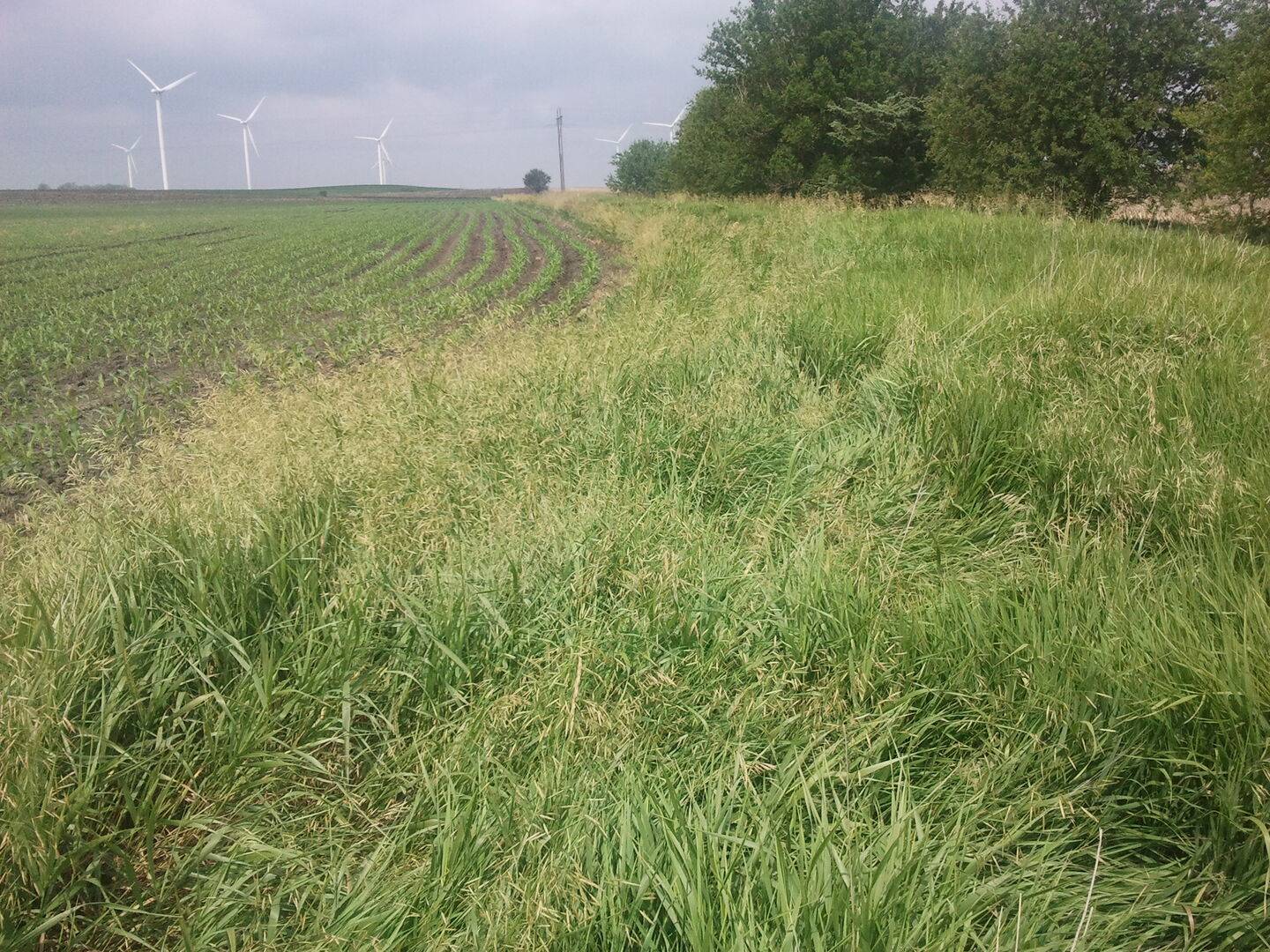
    This grass filter strip, planted between my corn field and a creek, traps and filters sediments and nutrients.  It prevents potential pollutants from entering the surface water.

    Now that the 2012 election is behind us and government officials are returning to work, new regulations are threatening agriculture.  I’m hearing the Farm Bill will be tied to something, perhaps conservation.  It’s as though farmers will destroy the world if we’re not threatened with something severe enough to make sure that we comply!

    Actually, I find it ironic that regulators believe the proverbial stick will be more effective than the carrot when most farmers take great pride in being stewards of the land.  This whole idea of tying any conservation practice to some type of support is not a threat to me – or the great majority of farmers and ranchers.  Conservation is one of our top priorities anyway.  If we don’t take care of our land and soil, it’s not going to produce for very long.

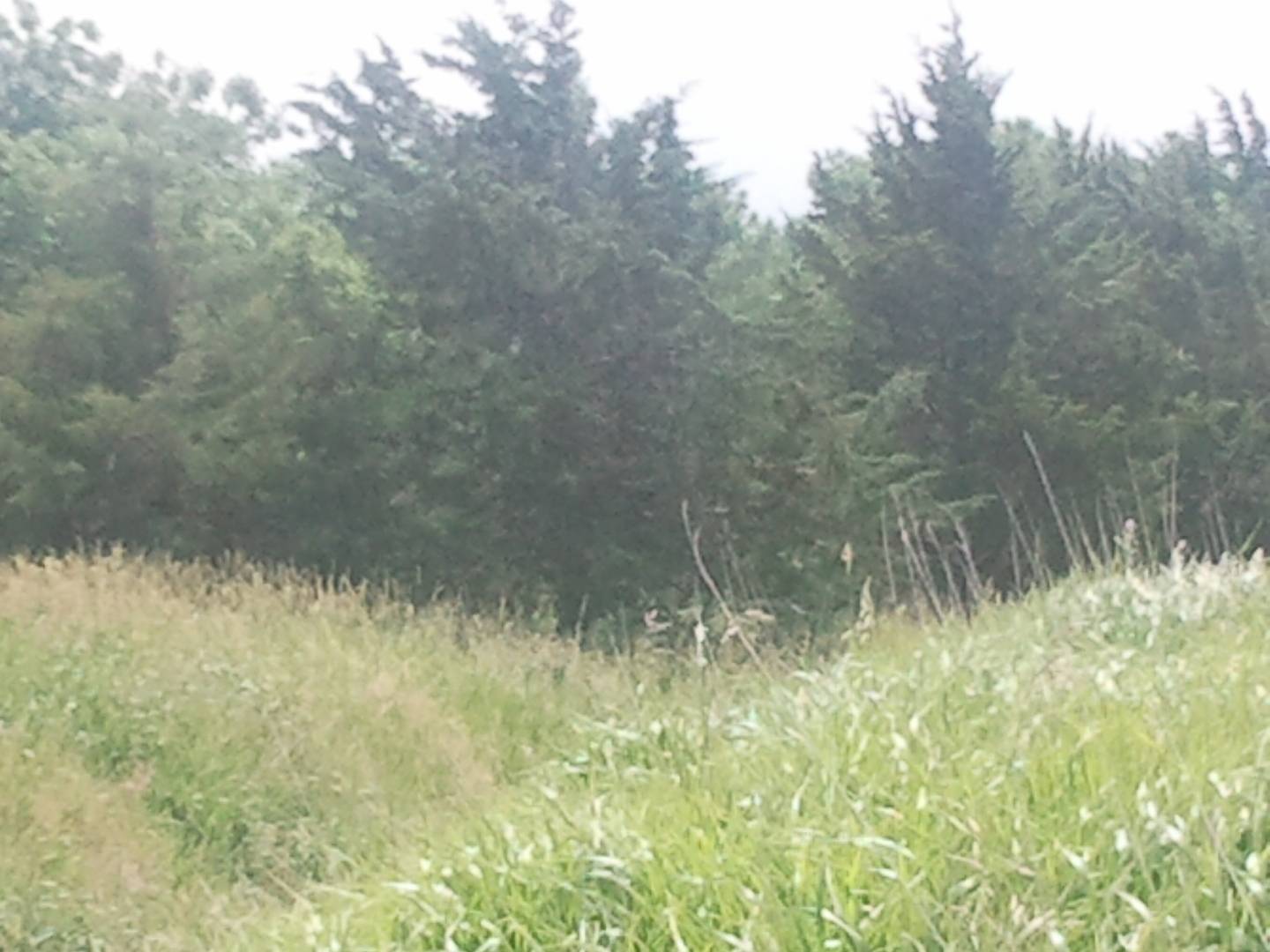
    Planted in 1980, this filter strip also serves as a wildlife refuge.  It creates food and cover for small birds and animals.

    I will admit that “back in the day” I did enjoy plowing the soil in the fall.  Plowing was a task where you could see what was getting done.  Turning the soil black and covering up corn stalks in preparation for next year’s crop was fun.  It was even fun 20 years ago, and the tractors we used then weren’t nearly as warm as those we use today.

    As much as I enjoyed farming, I also realized it was a practice that I needed to reconsider.  That’s why I first tried no-till farming in the 1970s.  At that time, the types of equipment and weed control options available didn’t favor no-till farming.  We also didn’t s today’s higher-yielding seed technology, so I kept different types of minimum tillage practices.

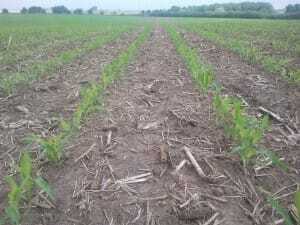
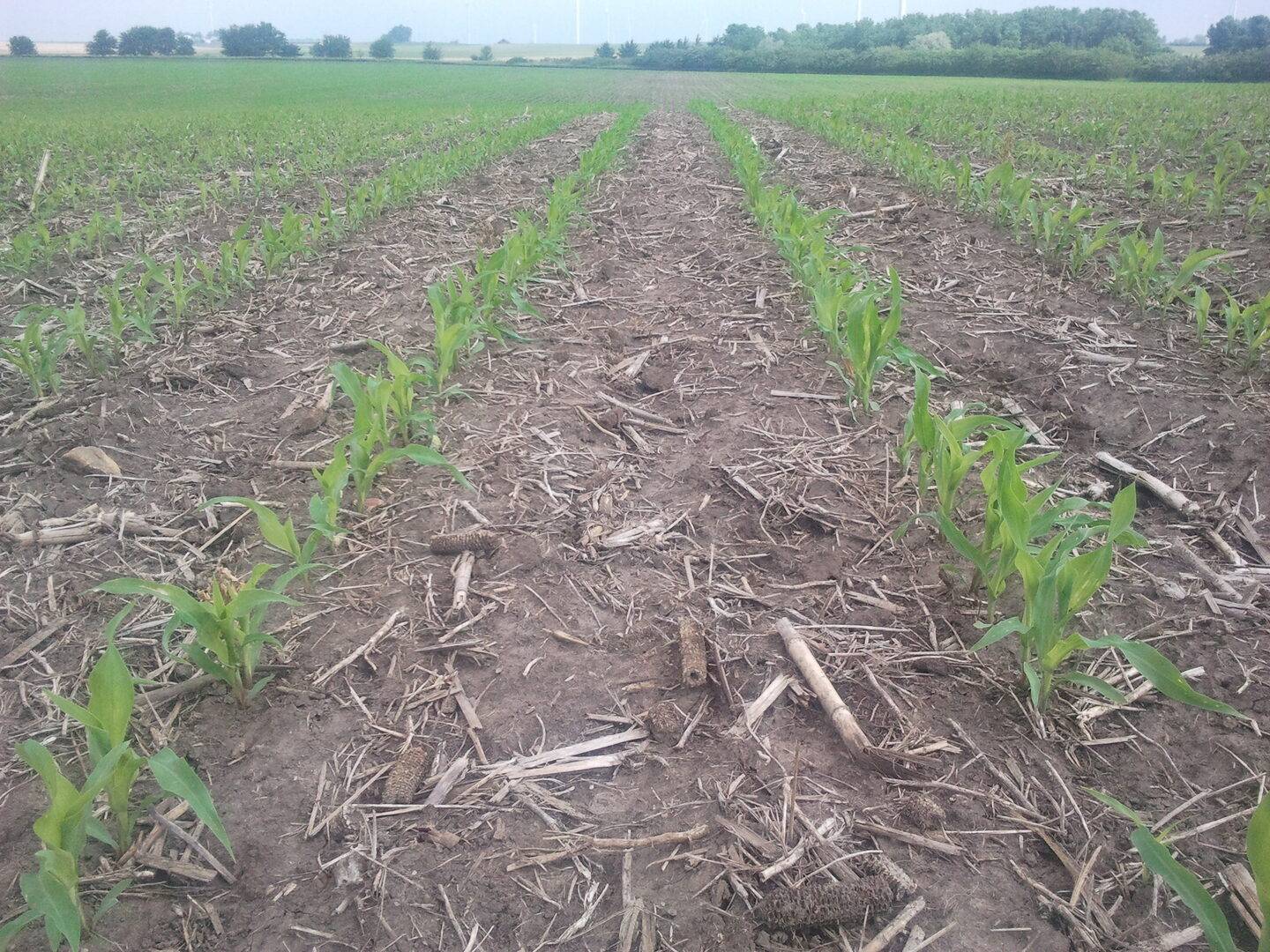
    In no-till farming, crop residue is left on the field.  Crop residue helps prevent erosion and can help conserve soil moisture.

    I switched to no till about 5 years ago, but this fall I had to do some deep tillage because of effects from the drought and the fact that I use a lot of natural manure.  But even with this tillage pass, the ground is covered by a thick layer of organic matter and is protected from wind and rain.

    Bottom line: It doesn’t take a government threat to make farmers do what is right.  Doing what’s right just comes naturally to farmers!

    Larry Sailer, Musings of a Pig Farmer

    November 13, 2012
    Agriculture, General, Industry News
  • Latham Hi‑Tech Seeds

    Battle Corn Rootworm with Gladiator Hybrids

    RIB logo1

    Managing corn rootworm has become increasingly important as the number of corn-on-corn (c-on-c) acres rises.  University research data confirms the real strategy for dealing with high corn rootworm pressure is to use rootworm-traited genetics in addition to other strategies.

    Yield is often lost in c-on-c situations due to increased pressure from insects and disease, plus issues related to residue management and soil drainage.  Farmers must manage continuous corn acres differently than corn-following-soybeans.

    Helping farmers better manage their c-on-c acres is the reason Latham Hi‑Tech Seeds developed the Gladiator group of products. These products combine the best genetics and traits available in the market today to help farmers maximize yields from corn-on-corn acres.

    Latham Hi‑Tech Seeds’ 2013 product guide features 33 hybrid seed corn products with 6 different trait combinations for rootworm control in various maturities.  Last year we sold out of nearly every bag of our best corn-on-corn products, so order now while supplies last!

    We’re also pleased to offer more refuge-in-a-bag (RIB Complete) options than ever before.  If you order a Latham® Genuity® SmartStax® hybrid, you’ll receive Poncho 500 and VOTiVO for free. This is a $20 per unit value and will only be offered while supplies last!

    Contact your local Latham® representative or call 1-877-GO-LATHAM (1.877.465.2842)

    Choose your region:Iowa- Central and Eastern: Kevin MeyerIowa- North Central: Latham HeadquartersIowa- Northeast: Nick BensonIowa- Northwest: Glenn FullerIowa- Central: Nick ColemanIowa- Western: Bart PetersonIowa- Southwest: Larry KrapflMinnesota- Southeast and Iowa Northeast: Craig HaalandMinnesota- South Central and Iowa- North Central: Ryan OhrtmanMinnesota- Southwest: Greg BrandtNebraska- Eastern: John ToftNorth Dakota- Southeast: Gary GeskeSouth Dakota- Notheast: Scott StadheimSouth Dakota- Southeast: Bill EichackerWisconsin- Southwest: Steve Bailie

    John Latham, President

    November 12, 2012
    Agronomics, Corn, Crop, General, Insects
  • Latham Hi‑Tech Seeds

    The 3 C’s of Farming: Cyclones, Cows and Children

    Sandven Family

    Tyler and Michelle Sandven are happy to make their home in rural Humboldt, Iowa, where’s plenty of wide, open space for their energetic girls to roam.  Their oldest daughter, Sydnie, is 9; Rylie is 8 years old.  Their twins, Kylan and Kynlie, are 18 months old.

    “We feel fortunate to raise our family on a farm where they’re sure to develop a good work ethic,” says Tyler.  “They really enjoy the animals and helping with chores.  Our older girls especially enjoy riding in the cab of the tractor while the cattle are being fed.  They also like helping bottle feed the calves.”

    Having a family who shares his love of agriculture makes this Iowa farmer proud.

    “Farming is all I ever wanted to do,” says Tyler, who was raised on a diversified farm in Humboldt County.  After graduating from Iowa State University with a degree in Ag Business, he was eager to return to the family’s farming operation.

    Together with his dad and his brother, Tyler raises cow-calf pairs and has a feeder to finish cattle operation.  The family also feed hogs and raise a few horses, which his father especially enjoys riding.  Tyler, on the other hand, prefers to ride something with a motor.  In his spare time, he especially enjoys riding motorcycles and snowmobiles.  Riding a Harley across the Hawaiian island of Maui is one of Tyler and Michelle’s favorite memories.

    Combining is passion for motorcycles with his love of farming are a few of the reasons Tyler enjoys his partnership with Latham Hi‑Tech Seeds.

    “I like working with a family-owned business whose owners share a lot of our same values,” says Tyler.  “Plus, no one else hosts an annual Freedom of Independence Ride.  Latham’s annual “field day on wheels” has become an annual tradition for our family, as well as for some of my customers.  While it’s not for everyone, it’s an especially good time for those of us who enjoy riding bikes and taking in the countryside.”

    Tyler has been a Latham® dealer for the past six years and appreciates having a solid lineup to sell of corn, soybeans and alfalfa.  For the second year in a row, Latham’s LH 5877 VT3 PRO was the Sandven’s top performer.  Even in extremely challenging conditions during the 2012 growing season, LH 5877 VT3 PRO produced a whole field average this fall of 190 bushels/acre, corn-on-corn.

    While Tyler is high on this hybrid, he also understands the importance of “planting a package.”  He encourages farmers to plant a minimum of three or four different Latham® corn or soybean products with a mixture of offensive and defensive traits.  He says farmers also will want to mix maturities to reduce your risk.

    Tyler will gladly visit with local farmers about the best products for their situations.  And if you’re lucky, Michelle might even treat you to a piece of her homemade Pumpkin Roll.  Today, just in time for the holidays, she’s sharing her recipe with us on TheFieldPosition.com.

    Team Latham

    November 9, 2012
    Desserts, General, Recipes
  • Latham Hi‑Tech Seeds

    Reduce Risk in 2013 with Rotation

    LathamBags

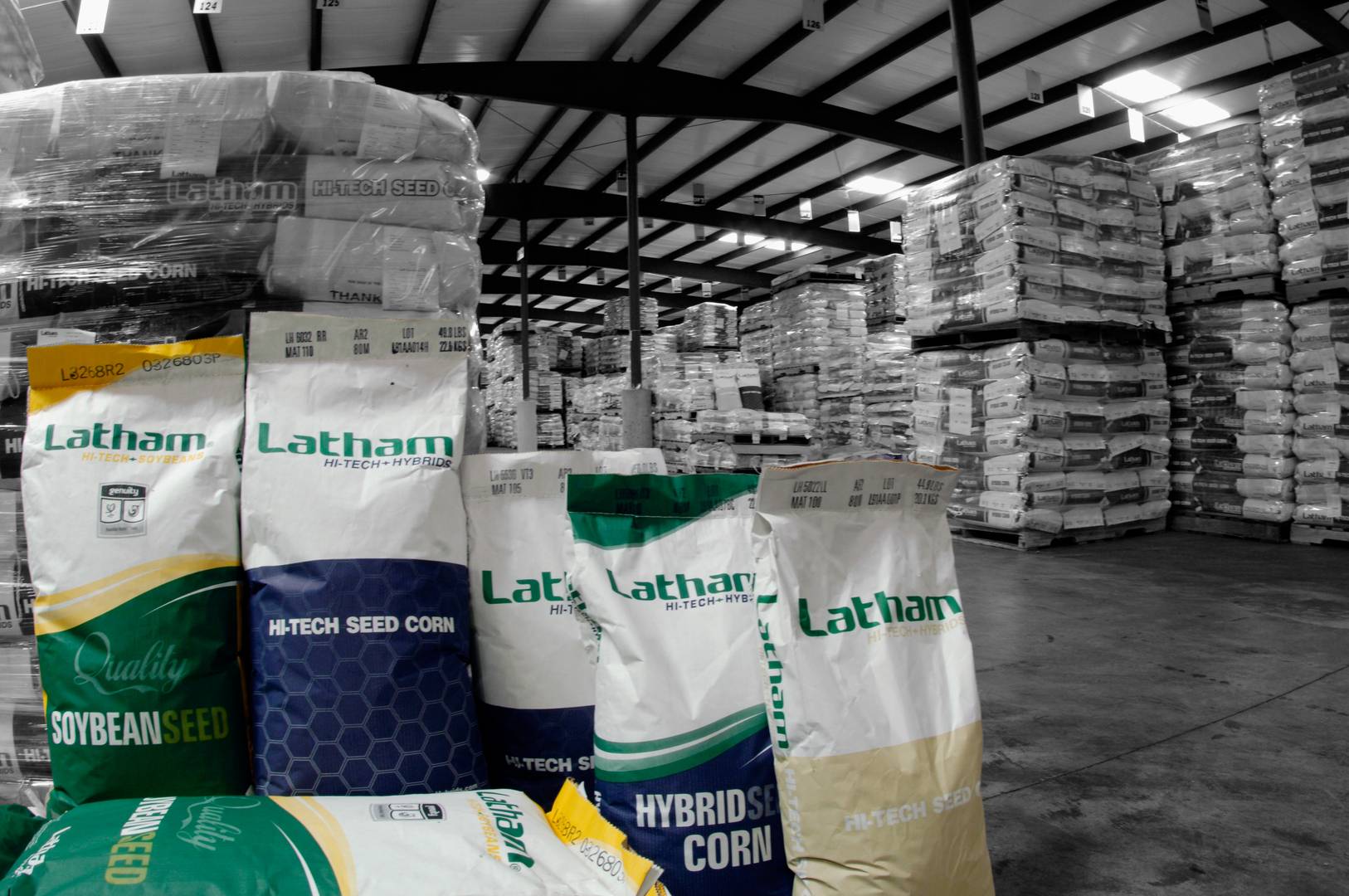
    Recently, I’ve received calls from concerned farmers on a wide range of topics from volunteer corn to weed resistance and corn rootworms. There is no simple solution to these problems, but rotation is one common management practice that can certainly help.

    Consider how rotation can help with these issues:

    1. Herbicide-Resistant Weeds. Resistance to glyphosate-based herbicides (e.g. Roundup®) is due to using herbicides as the only source of weed management. Weed resistance can be significantly slowed down or even averted altogether with careful crop and herbicide use plans. Bring LibertyLink® or conventional soybeans into your rotation. Likewise, when it comes time to plant corn, use conventional or straight LibertyLink hybrids. Using herbicides that have different modes of action is critical.
    2. Volunteer Corn. With careful crop planning and herbicide usage, volunteer corn can be controlled in both corn and soybeans. Several herbicides (e.g. Select, Fusion, Poast Plus, etc.) will take care of volunteer corn in soybean fields, but persistence is key as more than one application may be needed.Volunteer corn in continuous corn situations can be managed by understanding the herbicide tolerances of the traits involved. For example, most Monsanto-traited hybrids contain only the glyphosate-resistant trait for herbicide use. If you plant corn following one of those hybrids, choose a hybrid that incorporates the LibertyLink trait. If you plan to have many years of continuous corn, stay away from hybrids that contain both the LibertyLink and the glyphosate gene for herbicide resistance. Rotating to soybeans or alfalfa also can help break that cycle.
    3. Corn Rootworm. Continued use of the same rootworm resistant (Bt) trait in corn hybrids, coupled with the lack of required refuge acres, has caused rootworm resistance to become an issue. Rotation is key. Rotate traits between Monsanto, Agrisure and Dow products. They may also need to rotate to other crops (like soybean or alfalfa) if rootworms cannot be managed by rotating traits. Additionally, the use of hybrids with more than one rootworm trait (e.g. SmartStax) may need to be used. Refuge acres must be planted, and Refuge-In-the-Bag (RIB) hybrids make compliance simple. Respect the refuge® and it will greatly increase our likelihood of keeping rootworm traits viable for years to come.

    * Respect the refuge is a registered trademark of the National Corn Growers Association

    Webspec Admin

    November 8, 2012
    Agronomics, Corn, Crop, Disease, General, Soybeans, Weed Control
  • Latham Hi‑Tech Seeds

    Cast Your Vote for Agriculture

    ChineseLarry
    Larry Sailer with the crew in his home office

    Musings of a Pig Farmer
    by Larry Sailer

    It’s election day!  Hopefully, you’ve made a list of the issues are most important to you and have studied how each candidate stand on agriculture. The rural vote is extremely important given such a close election.  The Farm Bill, ethanol and estate taxes are just a few of the hot-button issues with farmers.

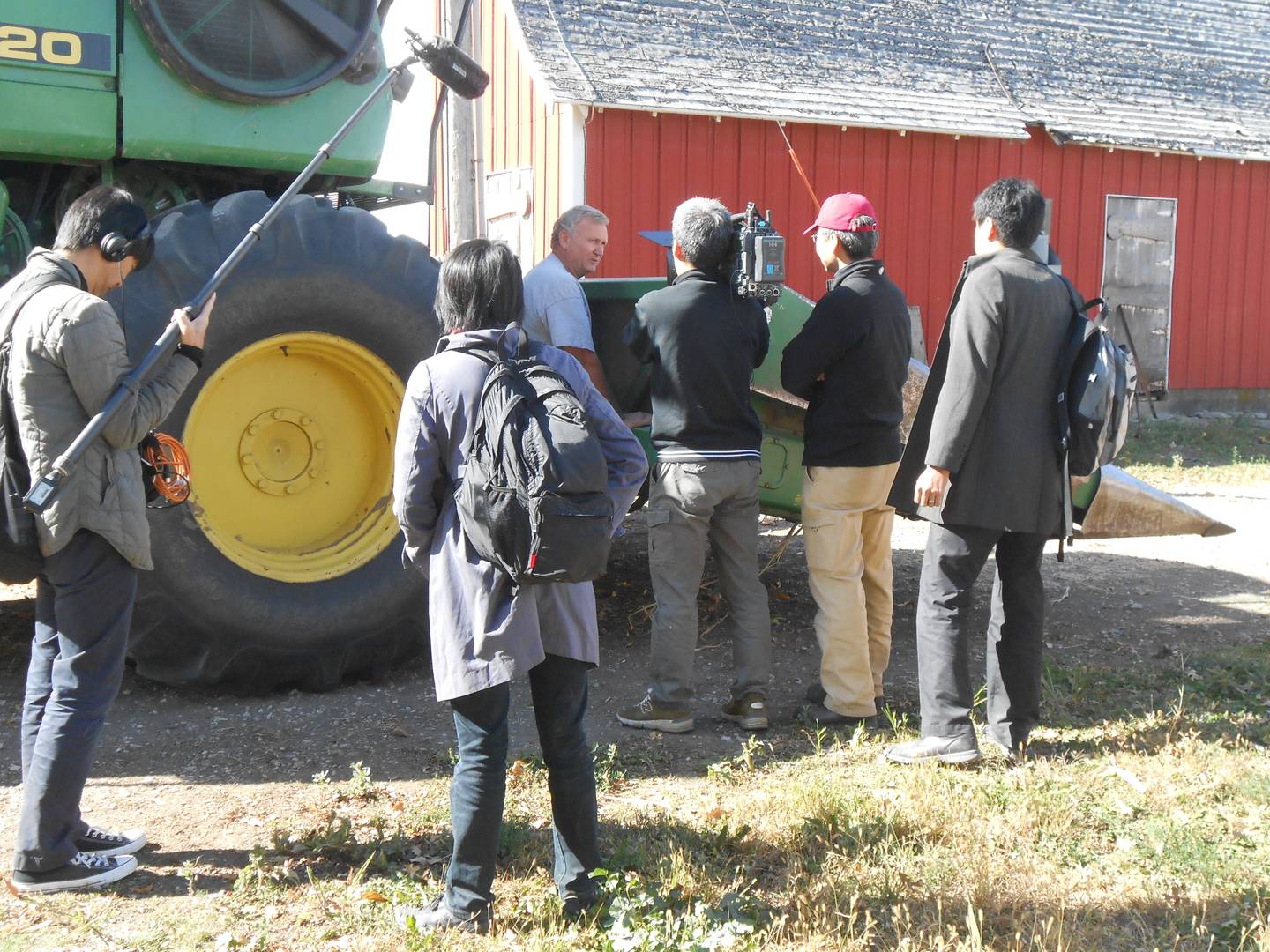
    Because I’m truly concerned about how the outcome of this election could affect my livelihood, I’ve spent quite a bit of time this fall answering questions from members of the media.  Reuters talked to me by phone. Fox News came to my farm during harvest.  I also spent parts of three day during fall harvest with a video crew from the NHK network from Japan, which I understand is comparable to our public TV.

    It amazed me how these media found an old hog farmer in North Central Iowa, so I asked.  A producer from New York said he listened to an interview I did with National Public Radio.  Fox Network said my name kept popping up during Google searches.  Oh, the power of the Internet!

    NHK collected hours of video for a documentary about our political process.  It seemed to me that these Japanese were more interested in the politics shaping our future than many of my fellow Americans!  They asked me about my concerns and why I believe there is a need for compromise.  Over the course of three days, I answered many of their questions.   They wanted to know how the Farm Bill affected my farming operation and how my crop insurance worked.

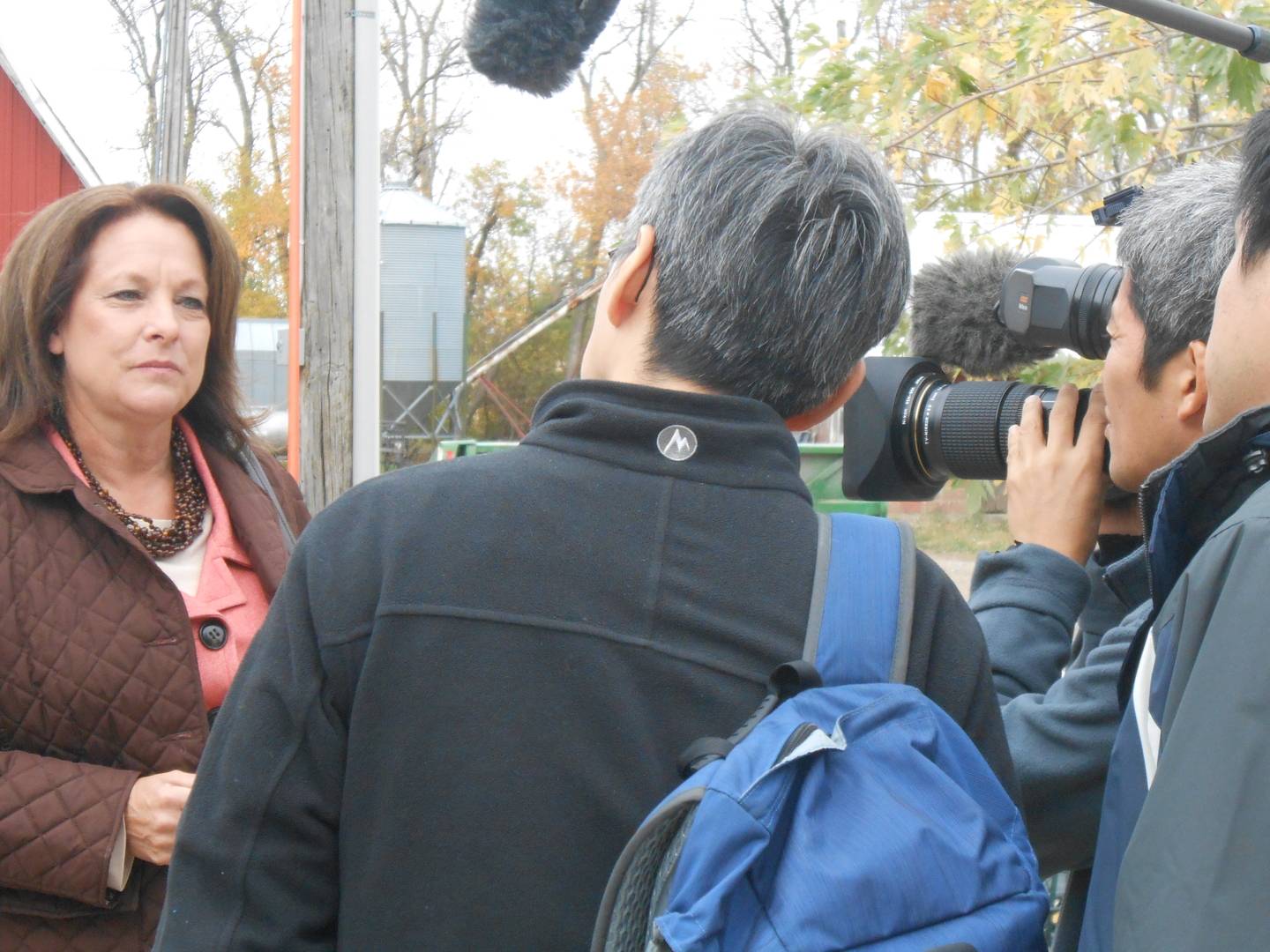
    House Ag Committee Chairwoman Annette Sweeney being interviewed by the Japanese TV crew

    The Japanese also wanted to know how I work with my elected officials, so I contacted Rep. Annette Sweeney.  Annette was very gracious and came to my farm, so she could be a part of this interview.  Annette’s farming experience, combined with her position as Iowa House Ag Committee Chair, made for some great discussion.

    As you can see in my video, we had a fun time.  This segment aired last Thursday on Japanese TV.  While I haven’t actually timed it, it appears they used about two minutes from the hours and hours of videotape.  So was it worth it? You bet!  It was a great experience talk with people from another part of the world, who had a totally different perspective than mine.  It also reminded me how fortunate American are to have the right to vote.  Remember, exercise your right to vote today!

    [youtube]http://youtu.be/L1OjHo2rF1o[/youtube]

    Larry Sailer, Musings of a Pig Farmer

    November 6, 2012
    Agriculture, General, Industry News
  • Latham Hi‑Tech Seeds

    Slow Down this Weekend with Pulled Pork

    Beth Bryce1
    Beth & Bryce Caple

    Although October is officially 4-H Month and National Pork Month, these two are celebrated daily by this Story County farm family.  Bryce and Beth Caple of Maxwell have been farming together since they both graduated from Iowa State University and were married in 1994.

    “We encouraged our kids to become involved in 4-H because we knew first-hand the benefits of the 4-H program,” says Beth.  “The skills they make will be invaluable to their futures, and the friends they make will last a life time.”

    Bryce and Beth were both nine-year 4-H members.  Bryce’s favorite 4-H project was swine and he especially enjoyed showing at the county and state fairs.  He also attended Citizenship Washington Focus as a high school student.  As a 4-H volunteer, Bryce has served as swine superintendent at the Story County Fair for about 15 years.  He also was in charge of county livestock judging contests for several years.

    Beth served three years as the president of her local 4-H Club.  She served on the Delaware County Council for two years and also was selected to serve on the Iowa State 4-H Council.  She also attended Citizenship Washington Focus and traveled to Switzerland through the International Four-H Youth Exchange (IFYE).  Beth’s favorite 4-H project areas were visual arts and foods, plus she enjoyed showing dairy cattle.  She continued being involved in the 4-H program as an adult volunteer, serving four years as a Clover Kid leader.  Beth is currently serving her second year as 4-H club leader and also serves on the Story County 4-H Foundation.

    The Caples

    With experiences like this, it’s no wonder all three of the Caple children are active in the 4-H program. Drake, 15, and Creighton, 14, have taken flower gardening and food plus hogs to the county fair. Hannah, 11, is involved with all three of those projects plus she takes visual arts and sewing projects. They’ve all received top awards and purple ribbons. Each child has also exhibited a champion flower garden, as well.

    These avid Iowa State fans enjoy their season tickets to Cyclone football and women’s basketball games.  When traveling to Ames, it’s a tradition to tailgate in the football stadium parking lot. That’s why today Beth is sharing a go-to tailgating recipe for Slow Cooked Texas Pulled Pork.  It’s also a perfect “fix it and forget it” recipe to serve during fall harvest – or anytime of the year!

    Team Latham

    November 2, 2012
    General, Pork, Recipes
  • Latham Hi‑Tech Seeds

    Singing the Praises of Autumn Rains

    Rainy21

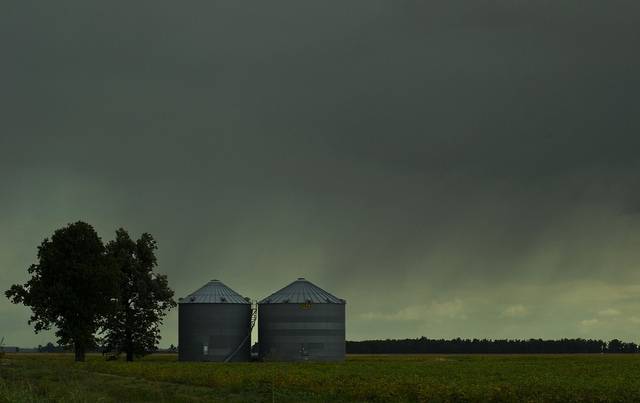
    Rainfall slowed harvest last week, but no one is complaining.  Ninety-five percent of the corn crop has already been harvested and soils statewide desperately need moisture.  As a result of the recent rainfall, topsoil moisture levels have improved to 31% very short, 38% short, 29% adequate, and 2% surplus.  Subsoil moisture improved and is now rated 60% very short, 34% short, 6% adequate, and 0% surplus.

    Subsoil moisture is the first indication of next year’s crop, says Iowa State Extension Climatologist Elwynn Taylor.  We’re still facing dry conditions, and there’s a 22% chance that next year’s growing conditions will be as bad those we faced in 2012.

    The good news is there’s a 60% chance that conditions will be better in spring 2013.  Autumn rainfalls can go a long ways toward replenishing soil moistures.  Taylor says 1 inch of rain equates to more soil storage in the fall and spring versus in the summer because (1) not as much moisture is being lost to warm soils and evaporation; and (2) no moisture is being taken up by growing plants.

    Another reason why fall rains “goes further” is there are fewer drying winds.  For example, the drying rate for April 15 was 0.2 inches and .14 of an inch for Oct 15.  It took 5 days to dry 1 inch of water in April and 7 days in October.

    Rainfall over a longer period of time, which allows the moisture to soak into the ground, is more advantageous than a hard rainfall that runs off the surface.  It takes 2 inches of soaking rain to replace the moisture in one foot of soil, although this varies slightly depending on soil type.  During the 2012 growing season, roots used the water down to 8 or even 10 feet in some places, so now we need 16 to 20 inches of soaking rain to replace those water levels.  Fortunately, the rainfall we’ve received over the past two weeks have been gentle rains for the most part.  We assume 70% of the rain soaks in, so 10 to 12 inches of rain over a long period could conceivably recharge 5 feet of soil.

    Thanks to Taylor’s insights, we’re singing the praises of autumn rain.  We’re also doing the rain dance because we’re still facing dry conditions here.  Hopefully, we’ll be singing the rain sometime soon!

    Team Latham

    November 1, 2012
    Fall, General, Season
  • Latham Hi‑Tech Seeds

    Part III: Foil Curtains Help Pigs Stay Warm

    LarryBlog11

    For the past few weeks, I had to move my “pork chronicles” to the proverbial back burner while corn and soybean harvest moved to the front burner. My priorities for the past eight weeks have been doing hog chores and combining row crops. I’ve managed to eat meals and conduct a few media interviews before catching a few hours of sleep each night.  Now that our crops are in the bin, I’m making blogging a priority.

    More videos will be forthcoming.  In the meantime, I’m posting a few photos to help give you an inside view of my operation. One photo shows the “foil curtains” we put inside our hog barns as insulation. The heater provides keeps the pigs more comfortable when temperatures dip like this week when overnight lows have been below freezing. You’ll also find a photo of the controller, which coordinates all of the fans, heaters, curtains and misters that add to the pigs’ comfort.

    The temperature outside was 28° when I did chores this morning, yet our pigs were snug and warm inside. When hail hit last Friday and snow showers fell throughout the northland, our pigs didn’t notice a difference. A consistent temperature allows our pigs to be comfortable regardless of the elements, and comforts such as dry and warm conditions keep them healthy.

    The picture of the empty pen is my hospital pen. Although it’s empty right now, the hospital pen allows me to isolate a sick pig to give it special care.  Sometimes healthy animals will try to kill a sick pig; it’s nature’s way of trying to control a disease by eliminating the threat.  “Survival of the fittest” happens whether pigs are inside or not. One of the advantages of my barns is that I can closely observe my livestock and help protect the weak. Modern facilities such as these have made huge improvements in animal welfare.

    Feel free to send me any questions you have about  modern pork production.

    Related blog posts:

    • Part I: Cleanliness is Key to Good Animal Health
    • Part II: Farmers Recycled before “Green Efforts” Began

    Larry Sailer, Musings of a Pig Farmer

    October 30, 2012
    Agriculture, General, Industry News
Previous Page
1 … 98 99 100 101 102 … 159
Next Page

Latham Hi‑Tech Seeds

131 180th Street | Alexander, IA 50420

(641) 692-3258

SIGNUP FOR OUR NEWSLETTER
  • Contact
  • Legal
  • Dealer Center
  • Seedware Login
  • Latham Gear

© 2025 Latham Hi‑Tech Seeds. All rights reserved. | Iowa Web Design by Webspec | Privacy Policy

Latham® Hi-Tech Seeds is a trademark of M.S. Technologies, L.L.C., 103 Avenue D, West Point, IA 52656.