Latham Hi-Tech Seeds

(641) 692-3258

  • Home
  • Performance
  • Products
    • Corn
    • Soybeans
    • Soybean Blends
    • Alfalfa
    • Corn Silage
    • Seed Guide
  • Find a Rep
  • Media
    • Blog
    • News
    • Videos
    • Podcasts
    • TECHTalk
  • About Us
    • Company History
    • Our Mission
    • Careers
    • Become a Rep
    • Sowing Seeds of Hope
  • Contact Us
  • Latham Hi‑Tech Seeds

    Wave a Flag, Sing Ag’s Praises

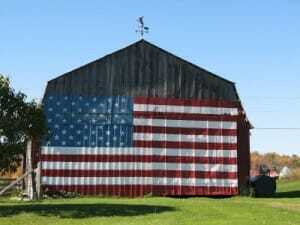
    Barn flag

    U.S. Secretary of Agriculture Tom Vilsack, while addressing attendees recently at the 2012 Farm Journal Forum, asked: “How are you going to encourage young people to want to be involved in rural America or farming if you don’t have a proactive message?”

    Touché!  Here are three proactive messages to communicate:

    • Rural America has never been more relevant.
    • Educated people of all ages are moving to rural areas.
    • Farmers are bridging the communications gap.

    Rural America is Relevant

    Thanks to highly productive farmers and a strong market for agricultural products, Farm Belt states haven’t been hit as hard by our nation’s financial woes.  The export of agricultural products is truly one of the brightest spots in the overall trade picture for our nation.

    Although rural America doesn’t have as many representatives as it once did in Congress, that alone doesn’t reflect its relevance to the world today.  You might even make the case that agriculture is more important than ever.  After all, the world population is growing and somehow – somewhere – more food must be grown.

    The decreasing number of farm acres due to urban sprawl and development means that farm productivity must increase; some experts say yields of major crops must even double to meet world food demand in 2050.

    Young People Are Returning to Rural America

    The ag landscape is changing. People who want jobs move to areas where there is opportunity, and today there is virtually limitless opportunity in agriculture.

    “Agriculture is a far different industry than it was 50, 30, or even 10 years ago…” writes Allen S. Levine, Dean of the College of Food, Agricultural and Natural Resource Sciences at the University of Minnesota, in a rebuttal printed Jan. 20, 2012, by the Huffington Post.  “To make assumptions based on outdated stereotypes about agriculture unfairly misleads young people.”

    There are many more majors under the umbrella of “agriculture” today including microbiology, horticulture, culinary science and global resource systems.  Indeed, agriculture is one of the most useful college majors.  Recruiting Trends show that no other sector appears stronger than agriculture/food processing with an increase in hires.

    That trend is evident on campus at Iowa State University where the College of Agriculture and Life Sciences (ISU CALS) has the highest placement rate of over 98%.  ISU CALS hosts the country’s largest career fair.  The 2012 Ag Career Day, held Oct. 16, was the largest on record with 200 companies exhibiting.

    There is unprecedented demand for college grads, and they’re commanding top starting salaries.  Corporate America is not alone in recognizing the value of a degree in agriculture.  As more farmers understand how business management relates to production management, more farm men – and women – are earning business degrees and even MBAs before returning to their family farms.

    Known as the Rural Brain Gain, highly skilled and highly educated people are returning to their roots.  They bring with them high skill sets and have a career path with outside connections.  One in four of these newcomers own a small business, and those who own businesses are heavily invested in their communities.

    Farmers are Bridging the Communications Gap

    Farmers are heavily invested in their communities, as well.  Farmers often hold leadership positions, from county supervisor and city mayor to school board president and church council.  While most of them are too modest to speak of their own actions, they’re getting more comfortable about telling others about their businesses.

    Farmers site a lack of public understanding about how food is produced as one of their greatest concerns, so they’re making “consumer awareness” a top priority.  Here are a few shining examples of how farmers are working to bridge the communications gap with consumers: 

    • Iowa Food and Family Project – Its mission is to “inspire positive relationships between farmers and consumers through personal engagement and advocacy to the benefit of human vitality, environmental quality and economic prosperity.”
    • Operation Main Street – Provides a means for pork producers to connect with consumers, so they know farmers are committed to producing good, safe food, and to caring for their animals and our environment.
    • AgChat Foundation – Its mission is to “empower farmers and ranchers to connect communities through social media platforms.”

    These groups have their work cut out for them!  According to a U.S. Farmers and Ranchers Alliance survey, 72% of consumers reported knowing nothing or very little about farming or ranching.

    Ag literacy and public perception are ag’s top challenges.  How could the USDA work with U.S. farmers and consumers together to promote a better understanding of agriculture today?

    “We need well-informed, practical decision-makers,” stated Larkin Martin of Martin Farm, during a panel discussion as part of Top Producers Executive Women in Agriculture event in Chicago.

    Ag literacy among American politicians is a grave concern.  In an article published March 2012 by the Council of State Governments, Dean Levine says, “Government invests in health care research because they know about illness, but few in America’s politics know about hunger.  If you were hungry, you would invest in food and understand the importance of agriculture.”

    Team Latham

    December 13, 2012
    Agriculture, General, Industry News
  • Latham Hi‑Tech Seeds

    10 Gift Ideas for Farmers for under $40

    Multimedia Editor for Agriculture.com at Meredith Corporation
    excerpted with permission from “Get Shopping for your Farmer” by Jeff Caldwell, Multimedia Editor for Agriculture.com and “Successful Farming” magazine
    © Meredith Corporation 2012

    The running joke by men in our family is, “I wonder how many black socks or jackknives I’ll unwrap this year.”  It can be a struggle to find something for the farmer on your Christmas list, especially when so many items they want or need come at a hefty price.

    Thanks to the editors at Agriculture.com and Successful Farming magazine, however, this year I have 10 affordable ideas for every male family member on my list.  Both of my nephews are new home owners, so several of the items listed below will be handy for them.  I’ll bet my brother could use the Stor-a-Hitch.  There are even a few items I’m going to add to my Wish List, like the Jab Saw, which would come in handy at my Enchanted Acres Pumpkin Patch.

    Regardless of whether you’re looking for something to give or receive, below is a list of this year’s hot gift ideas.  Even better, every item is priced between $4 and $40!

    1. Hyde Metal Can Pour & Roll

    Pour spout attaches to one-gallon paint can to avoid spills when pouring paint. Also acts as a brush wipe. Plastic grid attaches to rim for painting with a 4-inch roller right from the can. Grid has two positions for use with full and partially used cans. Price is $4.

    2. Painter’s Halo

    This economical product easily presses into the can rim and completely fills the recess, keeping it free of paint. It’s re-usable, long-lasting under normal use, and cleans with water or solvent. Available in quart ($4.99) and gallon ($8.99) sizes.

    3. Reference Guides

    The Weed, Disease and Bug and the Shop Reference Guides are the perfect size for the glove box and offer a wealth of information you can keep at your fingertips. Each book sells for $9.95.

    4. Mixing Mate by Rockler

    The Mixing Mate clamps onto a standard quart- or gallon-sized canister and a lid gasket provides a leak proof seal. The pouring spout has been spring-loaded to self-close and seal. The mixing paddle is designed in a shape similar to an auger so when you spin the handle it lifts the pigments that have settled to the bottom of the can. Price starts at $14.99.

    5. Stor-A-Hitch

    Store your two-inch trailer hitch ball mount when it’s not in use. It’s light-weight and can be hung up in the shop or attached to the bed of your pick up. Priced at $19.95, this device can hold most 3, 4, and 5 hitch ball mounts with varying shank lengths. And the inventor is already working on one for Class 1 and 2 hitches.

    6. Extendable Flash Light

    The EMF2 Extendable light is a telescoping, flex-necked light with three LED lights. It’s 6½ inches long in the tuck position and 21 inches long when extended. Also features a magnetic base and a pivoting mirror. Price is around $20.

    7. Savage Folding Jab Saw

    The Savage folding jab saw and utility knife combines a saw with a utility knife for added versatility. Works with any reciprocating saw blade. Blade locks in two cutting positions and folds for safe storage. Lock back utility knife locks when in the out position and must be released before closing. Comes with three blades and a belt case. Priced at $25.

    8. Radiator Genie

    The Radiator Genie is a 23-inch wand that can help you keep your radiator clear of debris. Fan head design allows it to fit into the engine’s cowl and between the fan blades. For $34.95 you get two wands – One hooks up to an air compressor hose; the other to a garden hose. Handle has adjustable pressure.

    9. WD-40 Specialist Line

    The WD-40 brand is extending its product line for the first time ever with a specialist line. The five products included in the line are Rust Release Penetrant spray ($7.69), Water resistant silicone lubricant ($7.69), Protective white lithium grease ($7.69), long-term corrosion inhibitor ($16.29) and Rust remover soak ($37.89).

    10. Bolt Locks

    Keep your tools and truck secure with Bolt Locks, which come in a variety of styles to lock trailers, equipment and more – all with your car or truck key. The 2-inch padlock is priced at $27.49. The 5/8-inch receiver lock priced at $38.99. The toolbox latch retrofit kit priced at $40.95.

    • Click here for great gift ideas from $50 to $200.
      an excerpt from “18 Christmas gifts for farmers,” by Lori Bedord on Agriculture.com 
    • Click here for: 16 Unique Gifts for Farm Families by Lisa Prater

    Team Latham

    December 12, 2012
    Agriculture, General, Industry News
  • Latham Hi‑Tech Seeds

    10 Ideas to Relieve Stress, Now and Always

    Larry catlett1
    Matt Rush, Dr. Lowell Catlett and Larry Sailer meet up at the Iowa Farm Bureau Convention on Dec. 5, 2012, in Des Moines

    Relieving stress may seem like a strange topic for this Iowa pig farmer to address since I’m not a psychologist, motivational speaker or a college professor.  Fortunately, I had the opportunity to listen to – and learn from – many esteemed experts last week at the Iowa Farm Bureau Federation’s (IFBF) convention in Des Moines.  Today I’d like to share some of my highlights with you.

    One person who spoke at the IFBF convention is Dr. Temple Grandin, who is such an inspiration to many people for many reasons.  Temple grew up in Boston, MA, and was diagnosed at age 4 with autism. She has taken what most people would consider a handicap and used it to transform the way livestock is handled.  Because she sees everything in pictures, Dr. Grandin says it’s easy for her to understand how animals think and react.  That’s why most cattle slaughtering plants have sought her help to either design or redesign their operations.

    Eugene Sukup of Sukup Manufacturing in Sheffield, Iowa, was awarded the Iowa Farm Bureau Distinguished Service to Agriculture Award

    Dr. Grandin has a very direct way of speaking, refusing to be politically correct.  For example, she’s not going to call a packing plant a harvest facility.  She says consumer need to know that they’re slaughter plants and see what happens inside.  On YouTube, she has posted video made while touring a slaughter plant.  I can’t say I agree with all her views, but she does share and educate!

    Another presenter was Jolene Brown, who farms with her husband near West Branch, Iowa.  Jolene is a very high energy act!  She often talks about how farm families can blend generations and pass on the operation but that wasn’t the case last week.  During the IFBF convention, Jolene was on a mission to tell busy farmers to find balance in their lives and shared 10 ideas how we all can relieve stress:

    1. Take mini breaks – Find small ways to relieve stress every day.
    2. Schedule and commit to vacations – It doesn’t have to be lavish or expensive but your mind, body and soul needs a break!
    3. Engage in worthy work – Donate time to a good cause.
    4. Demonstrate appreciation –.Thank people; let them know how much you appreciate them.
    5. Clarify necessary documents – Get important papers in order so you don’t worry about them.
    6. Grow your confidence – Set goals and seek feedback to reinforce your actions.
    7. Take two tests – Decide what is urgent and what is ethical.
    8. Build support – Build a group of people to sit on your “board” and advise you.
    9. Keep learning – Always strive to know more.
    10. Celebrate! –Look for humor around you. Laugh at yourself. Associate with positive people. Live with an attitude of gratitude. Always be grateful!

    One more speaker I’d like to highlight today is Dr. Lowell Catlett, Regent’s Professor in Agricultural Economics and Agricultural Business and Extension Economics and the Dean of the College of Agricultural, Consumer and Environmental Sciences at New Mexico State University… And he lived up to his long title!

    Iowa’s own Simon Estes sang during the Iowa Farm Bureau Federation’s Annual Meeting.

    Dr. Catlett’s presentation was “Food for a Smart Planet.”  While many believe the Golden Age of Ag was in the early 20th Century, Dr. Catlett’s says that’s wrong.  The Golden Age of Ag is now!  He then explained how this is the first time in the history of the world that Ag can produce enough food to feed everyone on earth a 3,000-calorie diet. In theory, no one should go hungry today.  The big hurdle is getting that food distributed to everyone who needs it.  However, we still need to double our ag output by 2050 to produce enough to feed 9 billion people.

    The annual Farm Bureau meeting provided me with so much valuable information and an opportunity to catch up with old friends.  I also had a great chat with Matt Rush, Executive Vice President of the New Mexico Farm and Livestock Bureau.  Matt and I have been friends on Facebook for years, so it was great to finally meet in person.

    Sharing thoughts and ideas with friends on Facebook is one way I continue to learn.  Facebook also is a way for me to build a support group, and to some extent, it serves as a “mini break” throughout the day.  Many of my Facebook friends are quick to celebrate agriculture, and several of them share jokes.

    The more I think about it, the more I realize social media can be a stress reliever for me – although there are plenty of days when it been a source of stress!  Nonetheless, please excuse me while I go update my status…

    Larry Sailer, Musings of a Pig Farmer

    December 11, 2012
    Agriculture, General, Industry News
  • Latham Hi‑Tech Seeds

    Women Are Changing the Ag Landscape

    ExecWomenInAg1

    Recently I had the opportunity to spend two, action-packed days attending Top Producer’s Executive Women in Agriculture (EWA) event in Chicago. It was a great opportunity for farm women to connect with others who have similar interests and to also attend many professional development seminars. Hats off to Top Producer magazine and Farm Journal companies for acknowledging – and celebrating – the fact that agriculture is a career path for women!

    The definition of “woman’s work” has evolved over the years as women became more involved in the decision-making process. “The percentage of farms now influenced by women is significant,” says Danny Klinefelter, Texas A&M economist and director of The Executive Program for Agricultural Producers (TEPAP). In an article posted by Top Producer editors on agweb.com, Klinefelter said more women than ever are graduating from TEPAP. They’re becoming key decision makers and often the point person for purchasing decisions.

    This trend is also apparent at Iowa State University where 47% of the students enrolled within the College of Agriculture are female. Majors most popular among the female students include: Animal Science, Dairy Science and Pre-Vet. Agronomy has risen in popularity and Ag Business remains strong. There also is a high percentage of women enrolled in Ag Education with the communications option. Food Science, Nutritional Science and Dietetics attract a high percentage of female students, as well.

    “It’s refreshing to see headway made on dissolving the stereotype that agriculture is a male-dominated industry,” says Mike Gaul, Director of Career Services for the ISU College of Ag. “Subsequent progress is being made to lower the ‘glass ceiling’.”

    Corporate America is not alone in recognizing the value of females in agriculture. As more farmers understand how business management relates to production management, Klinefelter says more women are earning business degrees and even MBAs before returning to their family farms.

    Women’s roles in agriculture have evolved. During the opening session of EWA, Klinefelter said women involved in farming operations today often have the following responsibilities:

    • CEO
    • General manager
    • Public relations
    • Marketing
    • Purchasing
    • Human resources
    • Risk management
    • Information technology
    • Sales
    • Landlord relations manager
    • Data analysis

    Team Latham

    December 10, 2012
    Agriculture, General, Industry News
  • Latham Hi‑Tech Seeds

    Avocation Makes Every Season One to Treasure

    Tree circles christmas craft 150x1501

    Committed… is the single word that might best describe Latham® customer Dennis Morgan of Ogden, Iowa. He’s a husband, father, grandfather classic organist, crop farmer, Christmas tree farmer, gardener, carpenter and carver.  He also loves to cook.

    “I love to farm. I love to sing. I love to play the pipe organ. I’ve combined all of these things into life, so there’s always a season to enjoy,” he says with a smile.

    Playing organ has been 47-year commitment for this Boone County native. Dennis has served as a church organist from the time he was 16 years old. He played in Ogden for 36 years and has been playing in Perry for the past 12 years. Through the years, he’s played for almost 4,000 funerals and 1,500 weddings.

    “I’ve played for classmates, then my classmates’ children and now for my classmates’ children’s children.”

    Dennis actively served as church organist even while attending Iowa State University. He drove home from Ames on Wednesday nights for choir practice and then again on Sunday to play for the church service. He also pursued his love of singing with voice training that led to a spot in the Iowa All-State Chorus through the high school vocal music department.

    Not only has Dennis been committed to music, but he was committed to farming and to earning his degree. He helped his father on the farm from planting through harvest, which left only the winter quarter open to attend college classes. As a result, it took seven years for Dennis to earn his Bachelors of Science degree in Farm Operations but he did it!

    “You can always make time to pursue your dreams and your passions,” says Dennis, who met his wife, Linda, when she was traveling as a contemporary Christian singer and performed in his community. Linda’s parents were caretakers for the Assembly of God campgrounds, just outside Ogden, for 25 years.

    After they were married, both Dennis and Linda helped cook on weekends for 50 to 500 guests. A quaint, gingerbread-esque cottage that used to be housed on the campgrounds has a place today on the Morgan’s farm. Linda used to teach piano lessons there, but she now works as a contractor for various organizations.

    In addition to serving his community, Dennis served his country. He retired in 2009 with 20 years of service in the Iowa National Guard. Today his son, Paul, and daughter-in-law Heather continue to serve. Paul also farms with Dennis, and he and Heather are the proud parents of daughter Mia.

    The Morgan’s oldest son, Luke, and their daughter, Anna, both help make wreaths during the Christmas season. Anna is married to Matt Haub and they have three sons: Carter, Gabriel, and Christian. Newlywed Luke and his wife, Tiffany, live in Boone. They’re expecting a child in June and have a son, Ben.

    In the midst of raising their family and following their varied career paths, Dennis and Linda managed to plant Christmas trees. Their first trees were planted in 1985.

    Tending a Christmas tree farm takes lots of time and energy. It takes five to six years for a tree to reach 5 to 6 feet in height. Seedlings are planted March and April. Trees are trimmed in June and July before new growth hardens; then tree farms are open for tagging and sales in early winter. The Morgan Tree Farm is open daily from Black Friday through Christmas Eve, from daylight to dark.

    Wreaths were added to the Morgans’ product lineup in 1995 and have gained in popularity each year. Dennis says they like to have 30 to 40 wreaths available when the tree farm opens from the season, so making and decorating wreaths has become a Thanksgiving Day tradition for family members who come to their farm for a turkey dinner.

    The opportunity to watch other families enjoy their own traditions has been a high point of his Christmas tree farm, says Dennis. Many of the same families come to his farm, year after year.

    “It’s fun to watch the kids grow. Some people started coming when they were 2 or 3 years old and now bring their children to the farm. Some parents, who brought their young children with them to pick out fresh trees, are now bringing their grandchildren to the farm. I really enjoy seeing families take their annual photos in ‘the spot’ or hear about their traditions like making ornaments by cutting off the bottom of the trunk and burning in the year.”

    One Christmas tradition the Morgan’s enjoy is making suet pudding. Dennis says the tradition began when he was a child. He “learned all the tricks of the trade” from his grandmothers, one of whom was German and the other who was Swedish.

    “My grandmothers were naturalists before there was a name for it,” says Dennis. “They made the most of their natural resources by canning and cooking from scratch. All I wanted when they passed away was their recipe boxes, and I got them!”

    Straight from one of those recipe boxes, today Dennis is sharing a time-tested recipe for Christmas Suet Pudding. He’s also sharing a recipe for Sloppy Joes that Santa himself taste-tested last weekend when he visited the Morgan Tree Farm to take photos with children and families.

    Guten Appetit! Smaklig måltid!

    FFA Barbecue

    Ingredients:

    • 1 pound hamburger
    • 1½ T brown sugar
    • ¼ c. chopped onion
    • ½ c. ketchup
    • 1 tsp. Worcestershire sauce
    • 1 tsp. salt
    • ½ tsp. pepper
    • 1 T. vinegar
    • 1 tsp. chili powder

    Directions:

    1. Brown hamburger with onion and add the rest of ingredients.  Serve on buns.  Recipe multiplied five times will serve 20-25 people.

    Sara Mohr was the photographer and she put us in touch with the Santa.  Santa had the most authentic looking reindeer.  When I looked out the reindeer, I would’ve sworn they were real!

    COOK’S TIP:   Don’t chintz on the ingredients!  This recipe is delicious just as it’s written.  Last Saturday Santa Clause visited our tree farm to take photos with families, so we treated him to these maid-rites for lunch.  He said, “What would it take to get this recipe?”  We sent him home with a copy of it to share with Mrs. C.

    Team Latham

    December 7, 2012
    Desserts, General, Recipes
  • Latham Hi‑Tech Seeds

    Items Topping a Fashionable Farm Girl’s Wish List

    CanonT3i1
    Celeste Settrini

    Guest Blog post by Celeste Settrini of Couture Cowgirl –n- Company

    For the last few years, I’ve posted my favorite things for the holidays on Facebook.  It’s been a hit because, as December approaches, I start getting notes from my favorite farm girl’s saying, “Celeste, are you going to post your favorite things again this year?”  Now I feel that if I don’t come up with at least a few things I’ll be letting my friend’s down – so let’s go!

    Joe Malone Fragrances – Yep, they are a bit pricey but they’re oh so lovely!  The array of citrus, spices and floral create an amazing mixture of really different scents in candles, colognes and lotions.  Admit it, who doesn’t love smelling nice?

    Fun, Hip, Cool, Trendy Rain Boots – All of us farm girls wear rubber boots from time to time.  Why look manly when there is a whole slew of feminine rubber boots available?  Show your own unique style with stars or stripes or swirls of fun color!  You will be the hit of the barn!

    Anything JCREW – I simply love the effortless look of JCrew – all of it! Ballerina flats, sweaters, t-shirts, capris, scarves, fun jewelry, coats and jammies… the list keeps going.  The one thing I love about this website is that it puts outfits together for a simple personal creation.  Just try it… I think you’ll love what it offers!

    Canon Rebel Camera – I’m the proud owner of a “big girl” camera, one that’s a bit above the little “Sure Shot” that I hauled around for years!  Photographers looking for an easy-to-use camera that will help them create their next masterpiece need look no further than the Canon EOS Rebel T3i.   I cannot say enough about mine – great photos and a great way to share your story on social media, too!

    Dean & Delucca Gourmet Food – From meats to shellfish to wines to gourmet deserts this site offers all sorts of wonderful high end treats. I personally love the fun cookies and cupcakes and cakes especially for the holidays. What a fun surprise to send one of these fancy yummies to a special friend or family member.

    Motivational and Inspirational Books – I love books and am still a fan of a REAL book, not on an electronic reader, but a real book that I can pickup and touch and turn the pages.  I enjoy motivational books and this one is a must read, Be the Miracle – 50 lessons for making the impossible possible by Regina Brett.  This book will motivate, inspire and make you just feel oh so good!  I love that it’s bound in my favorite “Tiffany blue color.”  Any book is a special gift, but you can make it ever more special by signing a personal note inside to a friend or loved one.

    Thanks for indulging me by letting me share a few of my most favorite things!  Above all, my most favorite holiday gift is the time spent on my family farm with loved ones.

    Team Latham

    December 6, 2012
    Agriculture, General, Industry News
  • Latham Hi‑Tech Seeds

    Choosing the “Smartest” Phone for Your Operation

    Ipad31
    Katy Flint

    Guest blog post by Katy Flint, Sales Manager / Team Leader for CellTech

    I was raised on a farm, belong to a Century Family farm, worked in the cooperative system for almost five years, and am married to an agronomist.  Now I’m putting my background and experiences to work at CellTech, a premium Verizon retailer, in Hampton, Iowa.

    I can’t count the number of times I’ve had someone say to me, “I don’t need anything fancy; I’m just a farmer”.  The first thing I think is, “JUST a farmer”?  The second thing that comes to mind is, “What makes a phone fancy?”  Is it a phone that you can only use if you’re in your Sunday best?  🙂

    What if picking a phone or tablet was about choosing something fancy?  Would you be more interested in a new phone if it could make your work easier and perhaps even make farming more profitable?

    I’ve never met a farmer who didn’t want to make more money, so let’s consider how a Smartphone or tablet could do just that!  The first place we typically look at is apps ,or applications.  While there are literally thousands to choose from, here are a few of my favorites:

    • Market Strategies by DTN will keep up-to-date on market prices.  Create a watch list based on the commodities you want to follow and the futures board on which you want to sell.  You can see both the futures and the cash bids around your area – no more having to call the co-op 4 or 5 times a day to see what the markets are doing! Get for your iPhone | Android
    • Accuweather and Weatherbug keep the weather at your fingertips.  You can also plan your day accordingly because these apps use GPS to follow your location. Get WeatherBug for your iPhone | Android. Get Accuweather for your iPhone | Android
    • Monsanto and Precision Planting recently launched a new app that is compatible with your variable rate (VR) planter.  Did you know that 90% of planters sold today have VR capabilities but only about 5% are being used because the people don’t know how to use them?  Simply plug your iPad into your VR planter.  Your planter will adjust as necessary so there isn’t any waste, which means more money in your pocket! Get for your iPhone | Android (not available)

    Technology today has never made it easier to optimize every dollar you spend.  At CellTech, we pride ourselves in being connected with farmers.  We would love an opportunity to show you how technology can help you!

    Team Latham

    December 5, 2012
    Agronomics, General, Precision Ag
  • Latham Hi‑Tech Seeds

    Tell your ag story or someone else will – and you may not like it!

    Larrymeeting
    Larry Sailer

    It’s hard to believe that 12 years have passed since I began telling others the story of pork production and crop farming.  I believe I even started talking to non-farming groups before the phrase agvocating was coined!  The reason I started making time to deliver free speeches across the state (and sometimes even out of state) is because it’s so important for us to share with others.

    Farmers have done a great job or taking care of our animals and crops, including soil and natural resources.  However, most farmers are also very modest and don’t go around telling others – especially non-farmers – all that we do or how we do it.  Other groups, like PETA and HSUS, have unfortunately filled the communication void for us by painting a picture based on misinformation and emotion.  By doing so, they’ve pushed their agendas and have gained widespread national media attention.

    Farmers are starting to make the headlines, too.  We’re gaining coverage in farm publications like Farm Talk, Agri-View and occasionally mainstream papers like The Des Moines Register.  It’s a start…

    Click Here to visit their Facebook Page

    We’re having more impact reaching consumers, one group at a time through speaker’s bureaus like Operation Main Street (OMS).  Formed in 2004 by the National Pork Board with 15 trained volunteer speakers, Operation Main Street grew to 250 trained speakers in 2005.  This group of speakers was formed because there was a need for farmers to not only talk with, but to listen to, our customers otherwise known as consumers.  With OMSspeakers trained and at the ready, pork producers have a force to spread the truth about how and why we have made changes to our farms.  The OMS program even started to address college classes and groups of dietitians and county commissioners.

    Shortly after the New Year 2012, a milestone 5,000th speech was delivered through Operation Main Street by Arcola, Ill., pork producer Pat Titus to the Ambucs Club.

    “The OMS program has allowed me to have a dialogue with consumers who rarely have any contact with agriculture,” said Titus, in an article posted Feb. 6 by Wallaces Farmer.  “It’s really up to us to tell our story and connect with consumers so they know that we are committed to producing good, safe food, and to caring for our animals and the environment.”

    I couldn’t have said it better!  I’ve made close to 50 presentations to civic groups like Rotary, Kiwanis, Lions, Optimists, Civitians and groups I had never heard of before they called me.  Last week I talked to a great group of Optimists from Marshalltown, Iowa.  These groups appreciate having a “real farmer” come and talk with them about what that farmer does.  I know why I’ve made certain changes to my operation, so I just explain “the why and how.”  The groups to which I have spoken have been very receptive to my presentations.

    With more consumers curious about where food comes from, there is a greater need for more farmers to share their stories.  If you’re a fellow farmer, I encourage you to take the leap and advocate!  If you’re a consumer, I encourage you to check out fact-based information and learn more about what farmers do through programs like Operation Main Street.

    Larry Sailer, Musings of a Pig Farmer

    December 4, 2012
    Agriculture, General, Industry News
  • Latham Hi‑Tech Seeds

    Why Use the Hammer if the Carrot Works?

    Recently, I have read many editorials that are very critical of farmers’ nutrient management practices.  One particular letter in The Des Moines Register likened farmers to the proverbial fox watching the hen house.  In this case, the author was referring to the environment (land) as a defenseless chicken being preyed upon by the farmer (fox).  I have always thought of myself more as the farmer who protects his chickens from the fox, and that’s why conservation has always been one of my top priorities.

    Farmers and ranchers are on the front lines, living and working with the soil every day.  As a result, we’ve changed our farming practices as new information and new technologies have become available.  I’ve seen several changes occur over the last 60 years.  In the 1950s and 60s, the soil was plowed black.  Today, however, we can no-till without disturbing the soil thanks to improvements in equipment and weed control systems.  These vast improvements have reduced soil loss, so we no longer have dust bowls or black snow in the ditches like when we plowed.

    Iowa’s “carrot on a stick approach” is working.  However, the federal Environmental Protection Agency (EPA) has accused the Iowa Department of Natural Resources (DNR) of being too soft on farmers and has threatened to take over enforcement here in Iowa.   Before we rush judgment, let’s take a look at past successes and give the new Nutrient Reduction Strategy time to work.  More than 16,000 new practices have been implemented on more than 220,000 acres by Iowa farmers since 2007.

    “Iowa farmers continue to aggressively implement new conservation practices,” said Iowa Secretary of Agriculture Bill Northey in an article posted Nov. 20 by farms.com about Iowa’s Nutrient Reduction Strategy.  “The driving force of this focused effort is best-management practices.  This also looks at new and emerging technologies… This is not about rules and regulations. This is about giving farmers tools.”

    Iowa’s farmers have made big improvements – without the threats of fines – and more improvements are sure to come as a result of the collaborative approach that’s being taken to further reduce nutrient losses.  To develop the Iowa Nutrient Reduction Strategy, input was gathered from13 point and non-point source groups plus the DNR, IDALS and ISU researchers.  Many points of view were studied, yet some folks are accusing the Iowa Farm Bureau of having too much influence.  It only makes sense for the Farm Bureau, “the voice of agriculture,” to be involved as we’re the experts and the ones charged with helping contain the Dead Zone in the Gulf of Mexico.

    This Dead Zone is mostly blamed on Midwest farmers.  What isn’t being talked about, however, is the fact the Dead Zone was around before there were Midwest farmers!  As long as the Mississippi has been a river, it has dumped sediment into the Gulf.  Changes to our watershed have compounded the situation; the Mississippi has changed from a sprinkle can to a fire hose.  Levies and flood control are in place.  Swamps and wetlands no longer filter out sediments before they’re carried downstream.  The place where the Mississippi dumps into the Gulf has also changed over time.

    Farmers’ involvement in the Iowa Nutrient Reduction Strategy is not enough; how the watershed and rivers are managed needs to be addressed.  You can bet that I’ll be sharing this thought with lawmakers and regulators!  I encourage you to do the same.  Everyone can share their thoughts on this plan and should.  You can review the strategy and provide feedback between now and January 4,2013, at www.nutrientstrategy.iastate.edu.


    Larry Sailer, Musings of a Pig Farmer

    November 27, 2012
    Agriculture, General, Industry News
  • Latham Hi‑Tech Seeds

    Iowan Talks “Pork” in the Big Apple

    BarbDeterman1
    Barb Determan

    Guest Blog by Barb Determan

    What is a small town Iowa farmwoman doing in New York City on a panel of experts about antibiotics with a moderator from CNN? That’s exactly what I was wondering Thursday, November 15!

    A few weeks ago I was asked to represent the pork industry in the New York City Food Dialogues sponsored by the US Farmers and Ranchers Alliance. The panel I was on centered around antibiotics in livestock, specifically pigs.  Two additional panels discussing GMOs and Marketing and the Media were also a part of the day. Here are my major take-aways from the experience.

    First, our consumers are woefully uneducated about food production. Now I have been aware of this for some time, but participating in the panel brought this fact home! Highly educated people have some real misconceptions and misunderstandings about where their food comes from. And to complicate matters, they don’t know where to find good information.

    Second, they believe antibiotics are fed to animals (especially pigs in my panel’s case) from birth to harvest. They think the antibiotics are added for no reason and at high levels. They don’t realize the use of antibiotics come with a veterinarian’s advice and are fed on a very limited and defined basis. Explaining our practices for meat production is a tedious process, but we must do it so we don’t have those assumptions circulating. This follows he age old public relations advice of you must tell your story, because if you don’t someone else will and you won’t like that version!

    Third, livestock production has changed and this group does not understand that better health, genetics, and environmental practices are the result of these changes. Modern buildings with controlled temperatures and nutrition designed for each day of the pig’s life help us provide the world’s safest food supply at a reasonable price. Efficient production does not mean bad production.

    Fourth, we have to be careful not to use what I call “ag-ese”, the words that only those of us in the agriculture production business use. Our ag slang only further complicates everyone’s understanding of what we do every day. We need to stop and think what those words mean and how we need to explain to a non-agriculture population.

    Fifth, some reporters really do want to learn more about our food production system and are not judgmental about that learning process. Our moderator, Ali Velshi, CNN’s Chief Business Correspondent, did an excellent job making sure all participants were involved answering questions. He asked some tough but fair questions as well as handled audience, Twitter and email questions. His genuine curiosity made it easy to explain farming practices, both crop and livestock. My favorite line from him throughout the day was, “Seedless watermelons are GMOs? I’m in! What’s the problem?”

    We as agricultural producers are proud of feeding our world but that doesn’t go far when the world doesn’t understand how we produce that food. We must participate in conversations with consumers at every opportunity. I am proud of the U.S. Farmers and Ranchers Alliance for starting these dialogues with both the pro and con sides represented. It’s the only way we can explain our story to others and not just ourselves.

    Useful Links

    • Click here for the Food Dialogues Website
    • Click here to read tweets from the Food Dialogues: New York


    Media, Marketing and Healthy Choices

    [youtube]http://www.youtube.com/watch?v=9C7PAsU5r_I&feature=player_embedded[/youtube]

    Antibiotics and Your Food

    [youtube]http://www.youtube.com/watch?v=NYQh-iCs9oQ&feature=player_embedded[/youtube]

    Biotechnology (GMOs) and Your Food

    http://www.youtube.com/watch?v=Vdle5PvTBrc&feature=player_embedded

    Team Latham

    November 26, 2012
    Agriculture, General, Industry News
Previous Page
1 … 97 98 99 100 101 … 160
Next Page

Latham Hi‑Tech Seeds

131 180th Street | Alexander, IA 50420

(641) 692-3258

SIGNUP FOR OUR NEWSLETTER
  • Contact
  • Legal
  • Dealer Center
  • Seedware Login
  • Latham Gear

© 2025 Latham Hi‑Tech Seeds. All rights reserved. | Iowa Web Design by Webspec | Privacy Policy

Latham® Hi-Tech Seeds is a trademark of M.S. Technologies, L.L.C., 103 Avenue D, West Point, IA 52656.