
Latham Hi-Tech Seeds

(641) 692-3258

  • Home
  • Products
    • Corn
    • Soybeans
    • Alfalfa
    • Corn Silage
    • Seed Guide
  • Performance
  • Find a Rep
  • Media
    • Blog
    • News
    • Videos
    • Podcasts
    • TECHTalk
  • About Us
    • Company History
    • Our Mission
    • Careers
    • Become a Rep
    • Sowing Seeds of Hope
  • Contact Us
  • Latham Hi‑Tech Seeds

    Don’t Pinch Pennies on Potassium!

    Graph SciMax

    PeterBixelby Peter Bixel, Seed-2-Soil

    With commodity prices lower, it’s certainly prudent for farmers to rethink each input expense. Crop inputs are certainly one big investment! I’m a farmer myself, so I understand the value in evaluating investments.

    Analyzing investments is really an exercise in managing expectations. We might settle for returns of 2 to 5% on our bank savings accounts and 401K, right? We don’t want to skimp on investments that will help us in the future. So why skimp on your Phosphorus (P) & Potassium (K) fertilizer investments? After all, an investment in P & K has the potential to return 100-700%!

    Phosphorus aids in healthy root growth, as well as flower and seed production. Potassium is responsible for improving overall health and disease.

    Local data is critical for analyzing where your fertilizer dollars are best spent. Our data shows that across 400,000 acres, phosphorous values continue to be in the High category of soil test values with an average of 28ppm. This is more than likely because of manure history, fertilizer application and soil types in our area. However, potassium levels continue to be an area that needs to be addressed in order for us to not mine what we have invested in building up. Potassium levels are in the medium category with an average of 160ppm, while we are trying to reach 200ppm and higher.

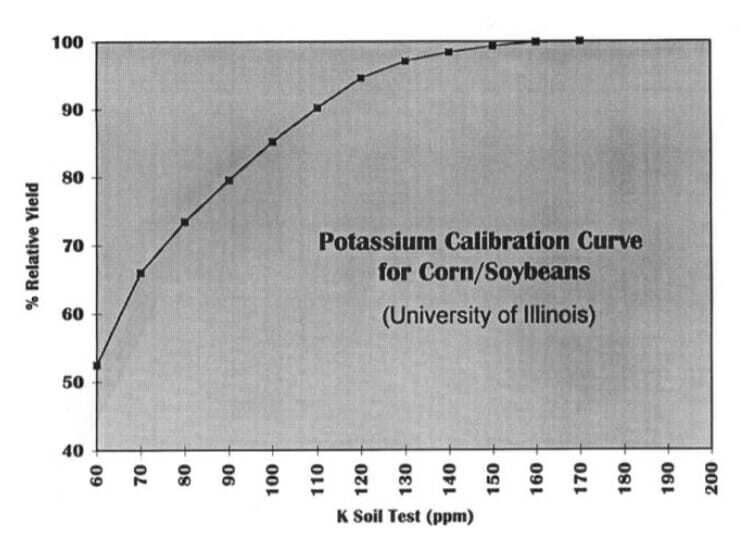
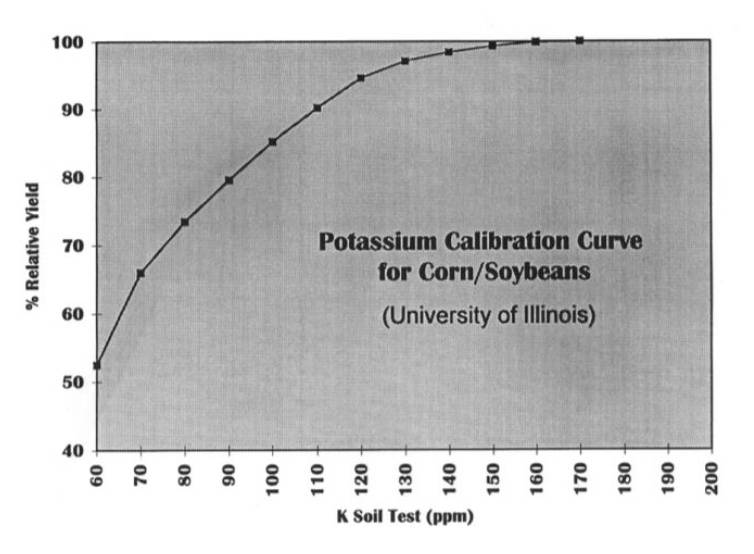
    Take a look at the Potassium Calibration Curve below. With low soil test K values, your potential for high yielding crops dramatically decreases. Take your 2013 Local Data, looking at Corn on Corn Yield to Soil Test K, as soil test levels go from Low to High categories, yield increased 20bu/ac. How do these returns look to you?

    Potassium plays an important role in the utilization and uptake of Nitrogen and in turn meaning improved N use and higher yields. Higher rates of K allow for efficient use of more N, which resulted in better early vegetative growth and higher yields. K fertility is another important piece of the puzzle for high yielding crops.

    With tighter margins moving into 2015 crop year, it is important to remember to use YOUR data to help make the best investment decisions and to make sure you don’t mine your soil fertility.

    Make sure you’re not losing a dollar by trying to save a penny!
    Graph-SciMax

    Team Latham

    October 16, 2014
    Agronomics, Corn, Crop, Fertility, General
  • Latham Hi‑Tech Seeds

    Tips to Maximize Bushels during Soybean Harvest

    GaryG 9 17beans


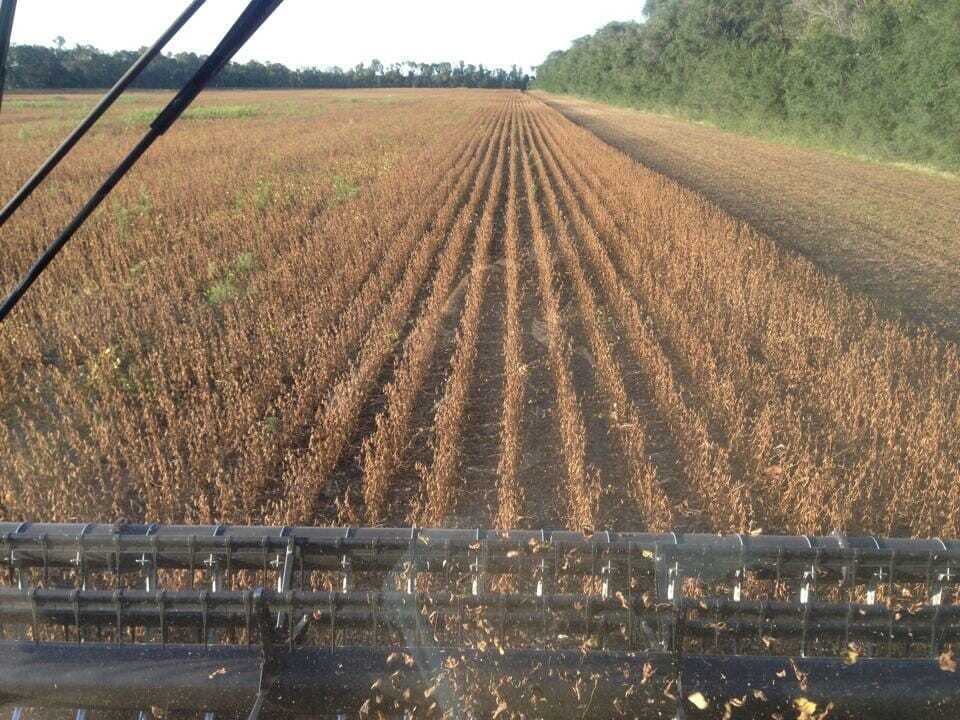
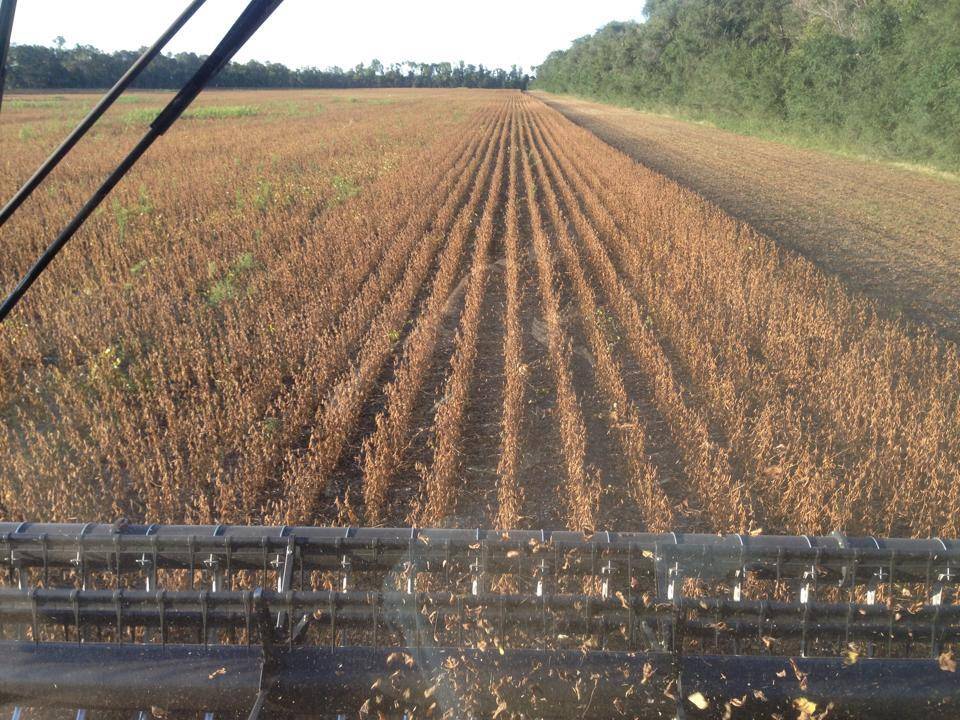
    Latham® dealer Kyle Geske starting harvest on Latham L00938RR soybeans
    Latham® dealer Kyle Geske starting harvest on Latham L00938RR soybeans

    Harvesting soybeans on a timely basis should be every farmer’s goal. Yields are maximized when each field is harvested at 13% moisture and combines are adjusted properly from the start. That being said, I’ve been asked numerous times just what the yield loss is when moisture falls below 13% and how to prevent soybeans from “shattering.”

    Let’s tackle the first part of the question right away: “What is my yield loss when soybeans come in below 13%?” A recent article published by Gary Zoubek and Chuck Burr from the University of Nebraska Extension states the following:

    Moisture at Harvest

    % Yield Lost

    12%

    1.14

    11%

    2.25

    10%

    3.30

    9%

    4.40

    8%

    5.43

    Using this information, a field yielding 75 bushels per acre harvested at 9% results in 3.3 fewer bushels per acre than if it would have been harvested at 13%. You will lose $33 per acre if the soybean market is at $10 per bushel!

    Because life isn’t always perfect and we sometimes are prohibited from harvesting exactly at 13% moisture, here are a few simple suggestions that can help you put more in the hopper:

      • Begin harvesting soybeans at 14% or even 15% moisture, depending on your plans for the grain. If you are taking it directly to the elevator at harvest, ask the maximum moisture they will accept. If you are storing the grain in a bin, make certain you have fans for adequate ventilation/drying.
      • When harvesting at higher moistures, you will most likely run into tougher or even green stems. Adjust your combine and operate at reduced speeds to match the conditions of your field. NOTE: You’ll probably need to adjust your combine and your speed several days each day!
      • When possible, harvest under optimum conditions. We all know that soybeans pick up moisture overnight, especially if there is a heavy dew. They also lose moisture as the day progresses, when the humidity is low, when daytime temperatures are warm and when there is even a slight breeze. Avoid harvesting during hot afternoons when you stand to lose the most moisture.

    Another tip for harvesting soybeans on a timely basis is to spread out the maturities. Keep this in mind now as when selecting your soybean seed for next year. Don’t place “all of your eggs in one basket” when it comes to selecting the maturity of soybean seed.

    Moving on to the second part of the question stated in the first paragraph: “How can I keep soybeans from shattering?” “Shattering” implies that something is wrong or abnormal. However, I truly believe it’s natural for a pod to split open and soybeans fall to the ground because these plants were created to spread their seeds and propagate! To prevent “shattering,” spread out your maturities so you may harvest your soybeans in a timely manner.

    Wishing you a safe and productive harvest!

    Webspec Admin

    October 2, 2014
    Crop, Fall, General, Season, Soybeans
  • Latham Hi‑Tech Seeds

    Late-Season Scouting Leads to Better Seed Decisions

    RootwormPressure
    RootwormPressure
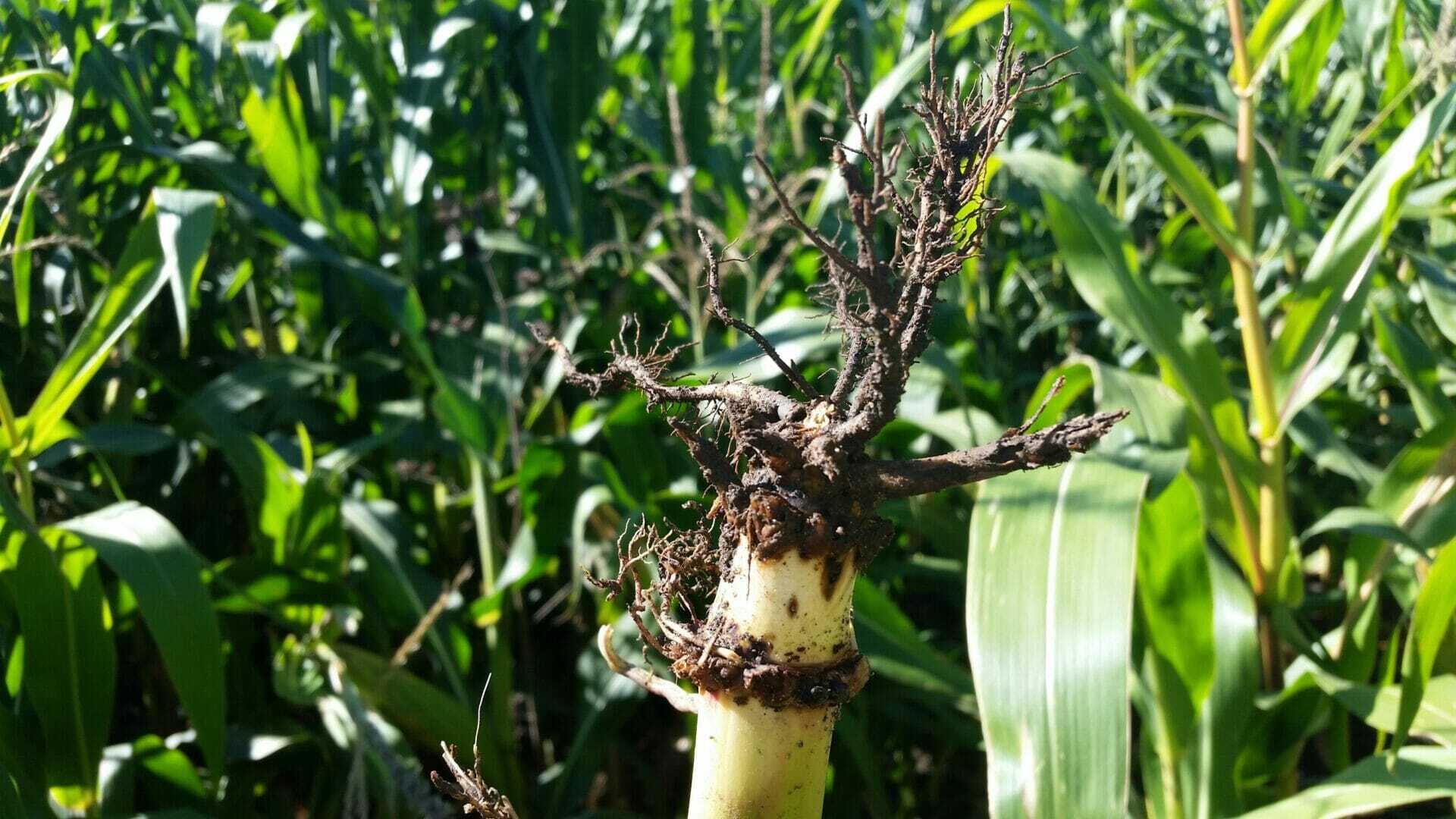
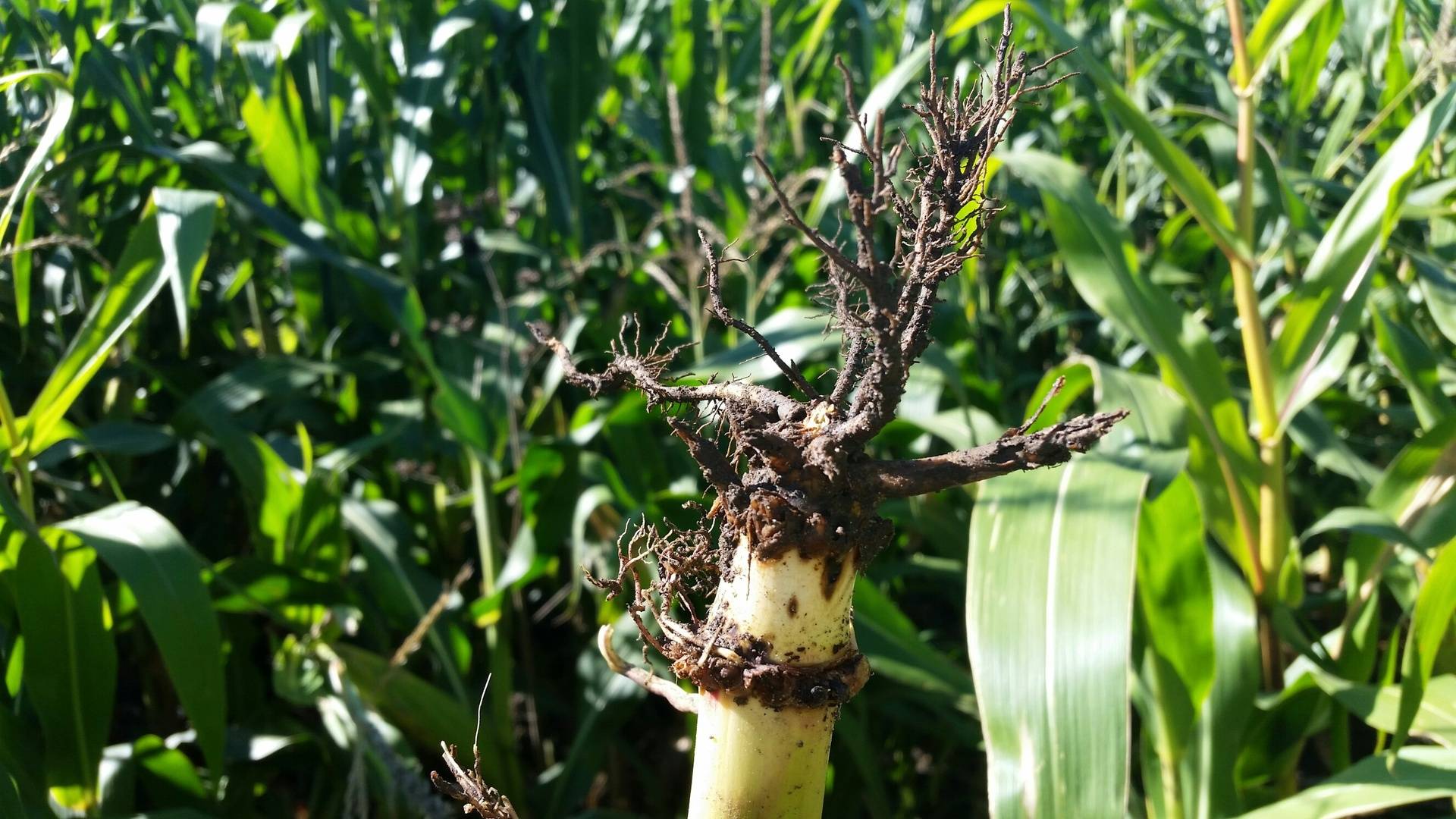
    Rootworm pressure may be low, but it’s present. Latham Corn Specialist Nick Benson (@LathamCornGuy) saw evident this week in a continuous corn field.

    The effects of our wet, cold planting season continue to surface. As one drives the back roads now, you’ll see where Sudden Death Syndrome (SDS) is affecting many soybean fields. You also may notice soybean fields turning yellow, which is a common symptom of Iron Deficiency Chlorosis (IDC).  IDC is a function of the soil type, so it’s most common in poorly-drained soils with higher-than-normal pH values.

    Plants under stress get taken advantage of by pests like Soybean Cyst Nematode (SCN). Doing a “drive by” or even walking through the fields may not be enough to detect SCN. Visual symptoms, such as above-ground stunting and/or yellowing, may not be evident for years. That’s why it’s best to check fields for the presence of SCN during the growing season by digging roots. You can also sample this fall for SCN by gently removing soil from the roots. Look for the egg-filled, round, white SCN females on the roots.

    While your shovel is at the ready, also be sure to conduct a few root digs in your corn fields. Latham Corn Product Specialist Nick Benson dug roots Sept. 2 in Fayette County Iowa, where he found evidence of rootworm feeding. In addition to looking for corn rootworm damage, note signs of sidewall compaction and hard pans. Also look at leaves and ears for signs of disease.

    It’s important to identify late-season corn and soybean diseases, as well as insect damage, so you can better manage them in the future. One way to control corn rootworms, for example, is to rotate rootworm-resistance traits developed by Monsanto, Syngenta and Dow.

    As an independent seed company, Latham Hi‑Tech Seeds has access to traits and technologies from all the major providers. We can work with you to develop a diverse crop plan that include Latham’s GladiatorTM Hybrids, which combine the best genetics and traits available to help maximize yields from corn-on-corn acres.

    To help simplify your soybean seed selection process, our website lists Latham® IRONCLAD™ Soybeans that include exceptional genetics and industry-leading protective traits to battle against yield-robbing threats from pests and diseases. Each IRONCLAD soybean brand must be Soybean Cyst Nematode resistant and carry an Iron Deficiency Chlorosis rating of 2.2 or better.  IRONCLAD brands must protect against either White Mold or Sudden Death Syndrome with a rating of 2.2 or higher.

    White Mold and SDS have both been an issue this season in different parts of our territory, so farmers will want to plant IRONCLAD soybeans on affected acres in the future. Plus, IRONCLAD products have strong defensive ratings against Phytophthora Root Rot and Brown Stem Rot.

    For more information about selecting the right seed for your situation, visit with your local Latham® representative. Also feel free to contact me at 1-877-GO-LATHAM (1.877.465.2842).

    Webspec Admin

    September 4, 2014
    Agronomics, Corn, Crop, Disease, General, Insects, Soybeans, Weed Control
  • Latham Hi‑Tech Seeds

    Combating Goss’s Wilt and SDS

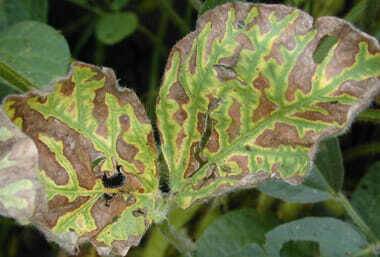
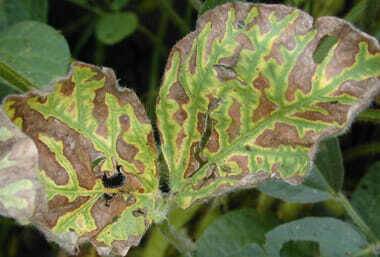
    Sudden Death Syndrome Credit ISU Extension

    Last year Goss’s Wilt and Sudden Death Syndrome (SDS) reared their ugly heads for many growers throughout the Midwest. Unfortunately for those farmers who had to deal with the effects first-hand, Latham Product Manager Mark Grundmeier says likelihood is they will present challenges for Midwest growers again this year. Below are some tips to keep top of mind to help battle these diseases.

    Tips to Manage Goss’s Wilt

    • Hybrid selection. One of the best ways to protect against Goss’s Wilt is hybrid selection. If you battled Goss last year, Mark recommends either rotating to soybeans or planting only highly resistant hybrids to help avoid significant yield loss.
    • Bacteria versus fungus. Mark says oftentimes farmers will spray fungicide and believe they’re taking care of diseases like Goss’s Wilt, but because Goss’s is bacterial, the fungicide has no effect. To help farmers identify corn diseases, Iowa State University Extension has compiled a helpful Scouting Guide available here.
    • Tillage. Because Goss’s overwinters in the previous year’s crop residue, tillage will help prevent spread. If a field was affected by Goss last year, Mark recommends aggressive tillage to help suppress the susceptibility for the coming year.

    Tips to Manage SDS

    When SDS spread last year, Mark compiled a video series with tips from variety selection to SDS management to help farmers in the field. Below is a video about how to prevent SDS prevention. If time allows, take just a few minutes to read Mark’s previous blog posts that offer tips to help you identify and manage SDS.

    Sudden Death Syndrome Credit ISU Extension
    Pictured above is Sudden Death Syndrome. Photo Credit to Iowa State University Extension


    Mark Grundmeier, Product Manager

    September 3, 2014
    Agronomics, Corn, Crop, Disease, Soybeans, Tech Tuesday
  • Latham Hi‑Tech Seeds

    Seed Selection is Key to Avoiding Sudden Death

    Nematode01
    Photo courtesy of Purdue University Extension
    Photo courtesy of Purdue University Extension

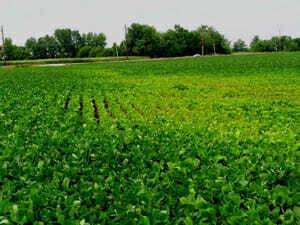
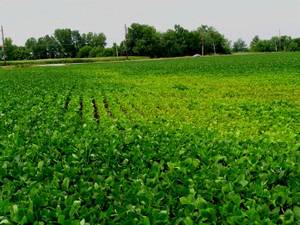
    The effects of our wet, cold planting season continue to surface. As one drives the back roads now, you’ll see where Sudden Death Syndrome (SDS) is affecting many soybean fields across Latham country.

    Although SDS infects soybean plants right after germination and emergence, symptoms generally do not appear until mid- to late summer. Leaf symptoms first appear as yellow spots between leaf veins. Eventually, the leaves turn yellow and brown streaks develop between the leaf veins while the veins remain green. Leaflets eventually drop but the petioles remain on the stem. Diseased plants may have rotted root systems.

    Understanding the extent of SDS infection in each field is key to effectively managing the disease. Future management tactics include: reducing soil compaction; planting fields with a history of SDS towards the end of a planting schedule when soils may be warmer and drier; and testing for the presence of Soybean Cyst Nematodes.

    Dont-Feed-the-NematodesSoybean Cyst Nematode (SCN) is usually associated with SDS. You may see more severe cases of SDS in soybean varieties that are SCN-susceptible. When selecting soybean seed, it’s best to read through the SDS score rather than judge a bean solely by SCN tolerance.

    Planting tolerant varieties, or avoiding very susceptible varieties, is the most effective way to reduce losses from SDS. Keeping good field records from year-to-year will help determine which characteristics are most crucial when selecting soybean varieties to plant in a given field in a given year.

    To help simplify your seed selection process, we’ve made a list of Latham® brand soybeans with Excellent and Good Tolerance to SDS. Our website includes more information about each product. Also feel free to contact your local Latham representative or call 1-877-GO-LATHAM (1.877.465.2842) for additional information.

    Latham® Soybeans with Excellent SDS Tolerance (1.6 – 1.9 ratings): 

    L1383R2 L1968R2 L2128R2 L2787L
    L2884R2 L2978L L3158L L3248R2


    Latham® Soybeans with Very Good SDS Tolerance (2.0 – 2.2 ratings):

    L1985R2 L2083L L2084R2 L21B53R2
    L2183R2 L2253R2 L2258L L2558L
    L2585R2 L2758R2 L2948R2 L3184R2


    Webspec Admin

    August 28, 2014
    Agronomics, Crop, Disease, General, Soybeans
  • Latham Hi‑Tech Seeds

    Moisture is Critical During Pod Fill

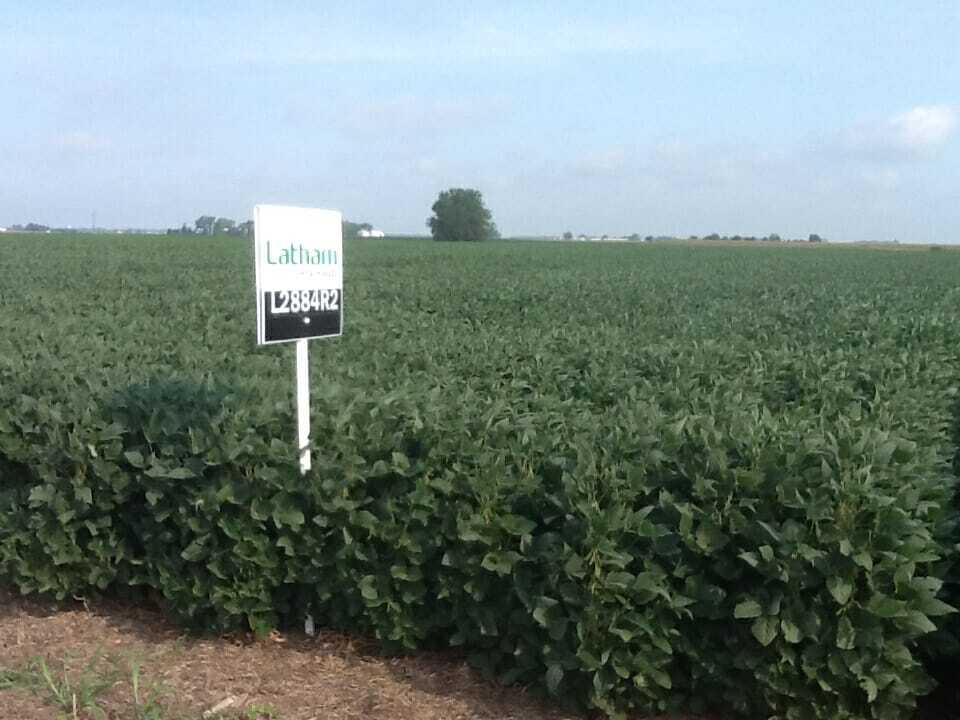
    L 2884 RR2

    Boeding soybean plotJuly makes corn and August makes soybeans, as the saying goes. That’s because adequate moisture levels are especially crucial during two key developmental stages: germination and reproduction-seed development. Having adequate moisture wasn’t an issue at germination time as record rain fell in Iowa after Easter. The Midwest experienced wet, cold weather in May and into June, yet some areas haven’t received a drop of moisture for the past three or four weeks.

    Moisture during the reproductive stages has a major impact on yield potential. When water is short during this growth stage, soybeans show signs of drought stress. Plants may abort flowers, and the numbers of pods set is reduced. Fewer seeds per pod are produced per pod, and smaller seed may result. Because dry conditions can slow or stop the nitrogen fixation needed by the plant to produce soybeans, yields will be lowered.

    Anytime you get this type of weather, other stress factors arise. You may notice soybean fields turning yellow, which is a common symptom of Iron Deficiency Chlorosis (IDC).  IDC is a function of the soil type, so it’s most common in poorly-drained soils with higher-than-normal pH values.

    Unfortunately, it’s too late to really manage IDC properly by the time it’s noticed in a field.  The best defense is a good offense.  Note trouble spots now, and then be proactive when choosing future soybean brands for these fields. In fact, Latham Hi‑Tech Seeds gives the IRONCLADTM designation only to those soybeans bred for high yields with a strong defensive package.

    There is no such thing as complete resistance to IDC, but some soybean brands (i.e. varieties) are better than others at handling this condition.  Because Latham Hi‑Tech Seeds is headquartered North Central Iowa – where Iron Chlorosis is a familiar challenge – we have always tried to choose soybean genetics that have the best possible scores against this condition.  Visit with your local Latham® dealer about specific products that would best fit your farm, or feel free to call our office directly at 1-877-GO-LATHAM.

    Webspec Admin

    August 21, 2014
    Agronomics, Crop, General, Growth Stages, Soybeans
  • Latham Hi‑Tech Seeds

    Intensify Scouting Efforts to Stay Ahead of Aphids

    Soybean Aphids
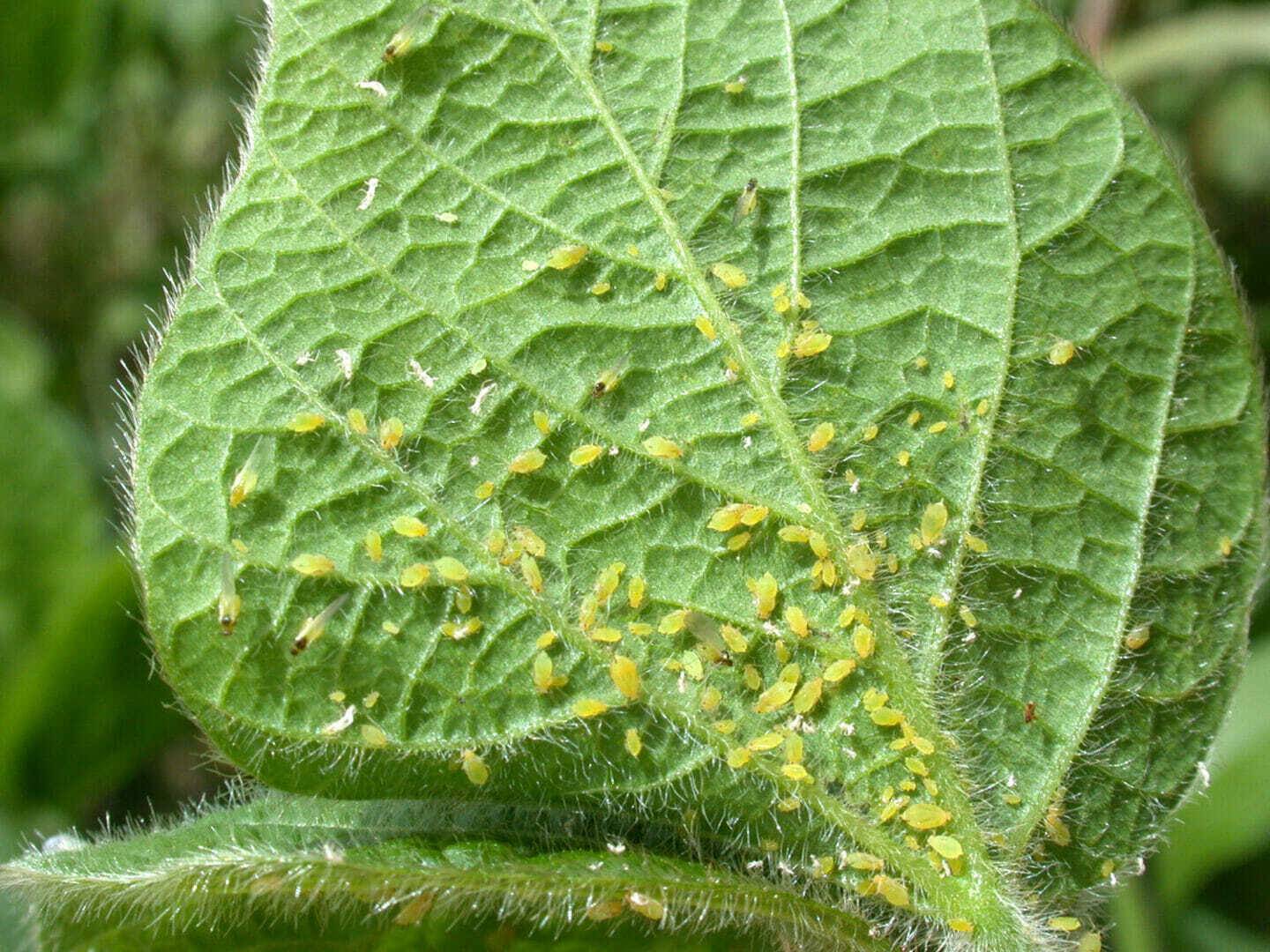
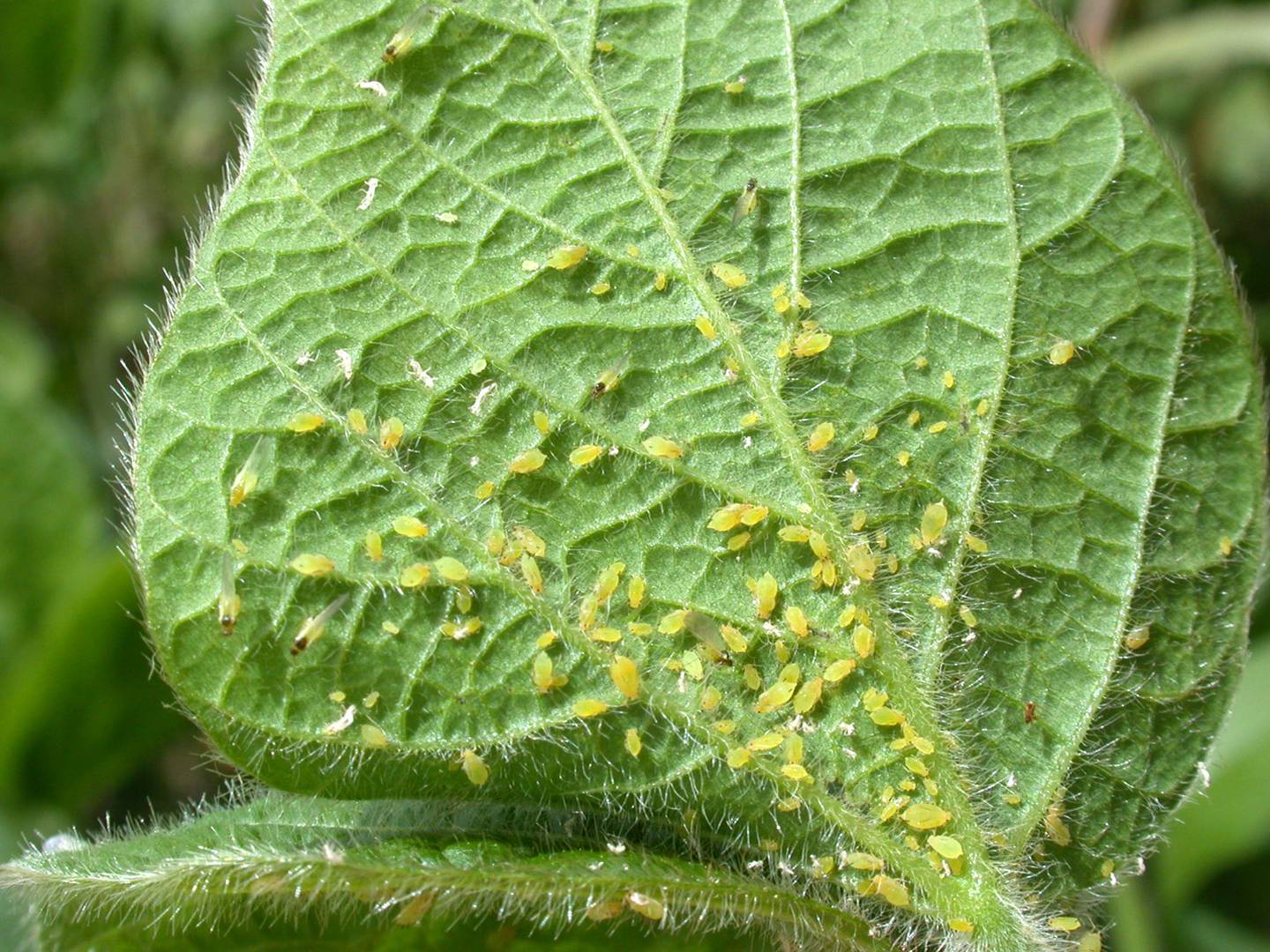
    More than 100 soybean aphids collect on the underside of a soybean leaf. Pest feeding can inhibit the plant's ability to make grain, or kill it outright.
    More than 100 soybean aphids collect on the underside of a soybean leaf. Pest feeding can inhibit the plant’s ability to make grain, or kill it outright.

    There are several yield-determining factors that are beyond a farmer’s control, but insect pressure can often be managed. Soybean fields are entering the critical reproductive stages and yields hang in the balance. Scout every field now to see if there is any type of pressure, and keep a watchful eye to see if conditions warrant treatment.

    With the varying stages of soybean growth and development due to an extended planting season and many late replants, 2019 should prove to be an interesting aphid year. The varying soybean growth stages throughout the state – and even your neighbor’s field – could mean more than one application of insecticide will be necessary. It’s important to continue scouting past your first insecticide application. We recommend applying insecticide at a threshold of 250 aphids per plant. Start scouting at the top of the plant, as aphids gravitate towards new growth. Remember to check fields thoroughly and identify consistency of insect pressure.

    Seed selection and soybean treatment are key to managing soybean aphids in the future. Our experience indicates that soybeans treated with Latham’s combined fungicide and insecticide seed treatment, SOYSHIELDTM PLUS, has experienced lower aphid populations along with delayed infestations.

    Talk with your local Latham® representative for more information about our products and services. Be sure to ask about our hallmark precision ag Seed-2-Soil® program that helps farmers determine the best products to place in their fields, as well as provides agronomic and management tips.


    Webspec Admin

    August 7, 2014
    Agronomics, Crop, Insects, Soybeans
  • Latham Hi‑Tech Seeds

    Prevent White Mold from Spreading

    Last Thursday I posted a blog with tips to scout soybean fields for Sclerotia Stem Rot.  Sclerotia, which encapsulate and protect the White Mold fungus, can lay dormant for years and then grow when the conditions are suitable. Keeping White Mold out of a field is the best way to prevent it from spreading.

    Tips for managing White Mold follow:

      • If White Mold is restricted to a portion of the field, that restricted area should be harvested last and independently from the rest of the field.
      • Avoid harvesting disease-infested fields before harvesting healthy fields.
      • Clean your combine thoroughly after a field with White Mold is harvested.
      • Rotations of 2 to 3 years between soybean crops can help reduce the level of the fungus causing White Mold in certain fields.
      • Wider row spacing allows air to circulate to the soil surface while the crop is starting to flower. Circulating air promotes a drier soil surface and lower humidity around the base of the plants, which interferes with sclerotia development. However, rows wider than 30 inches may actually increase spore dispersal by allowing more air movement near the soil surface.
      • Seed selection is also important. Some soybean brands are better than others at resisting White Mold.  Seed dealers provide ratings on the resistance levels, so be sure to check those ratings when making your soybean selections.

    To help simply the seed selection process for farmers, Latham® gives the IRONCLAD™ designation to its most defensive soybean products. Each IRONCLAD soybean brand must be Soybean Cyst Nematode resistant and carry an Iron Deficiency Chlorosis rating of 2.2 or better. IRONCLAD brands also must protect against either White Mold or Sudden Death Syndrome with a rating of 2.2 or higher.  Furthermore, these products must have strong defensive ratings against Phytophthora Root Rot and Brown Stem Rot.

    Latham Hi‑Tech Seeds is featuring 15 soybean brands with the IRONCLAD designation in its 2015 seed guide. Be sure to talk to your local Latham® representative about them or call 1-877-GO-LATHAM (1.877.465.2842) for more information!

    Webspec Admin

    August 4, 2014
    Agronomics, Crop, General, Soybeans
  • Latham Hi‑Tech Seeds

    Soybean Scouting Tips for Sclerotinia Stem Rot

    Weed seeds aren’t the only yield-robbers that can lurk below the soil surface and come back years later to haunt your fields. Sclerotia, which encapsulate and protect the White Mold fungus, can lay dormant for years and then grow when the conditions are suitable. Suitable conditions include cool, damp soils.

    Cool and damp certainly is one way to explain this growing season, but weather isn’t the only factor affecting the likelihood of White Mold. Be sure to keep a close watch on fields with a history White Mold as it may be more severe this year with the current weather trend.

    White Mold usually has a larger effect on a brand with a denser, faster-closing canopy.  Symptomsappear as single soybean plants within a generally healthy canopy thatwilt and die rapidly – usually in July and August – when plants are in the early reproductive stages. The fluffy white mycelium of the fungus then forms on the stem and/or pods, giving it the name White Mold.

    Applying Foliar Fungicide

    Foliar fungicides may be applied when you see White Mold starting to attack. Wisconsin research data indicates that fungicides applied up to growth stage R3 (early pod) may have some effect on White Mold severity, but later applications will likely not be as effective. Once symptoms of white mold are evident, fungicides will have no effect on reducing the disease.

    Only fungal pathogens can be controlled with a fungicide, so it’s important to first scout and determine the type of disease or diseases present in a field. Scouting should be done prior to the R3 growth stage of the soybean plants, especially if weather has been rainy and/or humid as these conditions favor foliar diseases.

    Please note that you can’t do anything for the plants already infected with the White Mold fungus. Keeping the fungus from spreading is really the most effective defense against White Mold.

    Webspec Admin

    July 31, 2014
    Agronomics, Crop, Disease, General, Soybeans
  • Latham Hi‑Tech Seeds

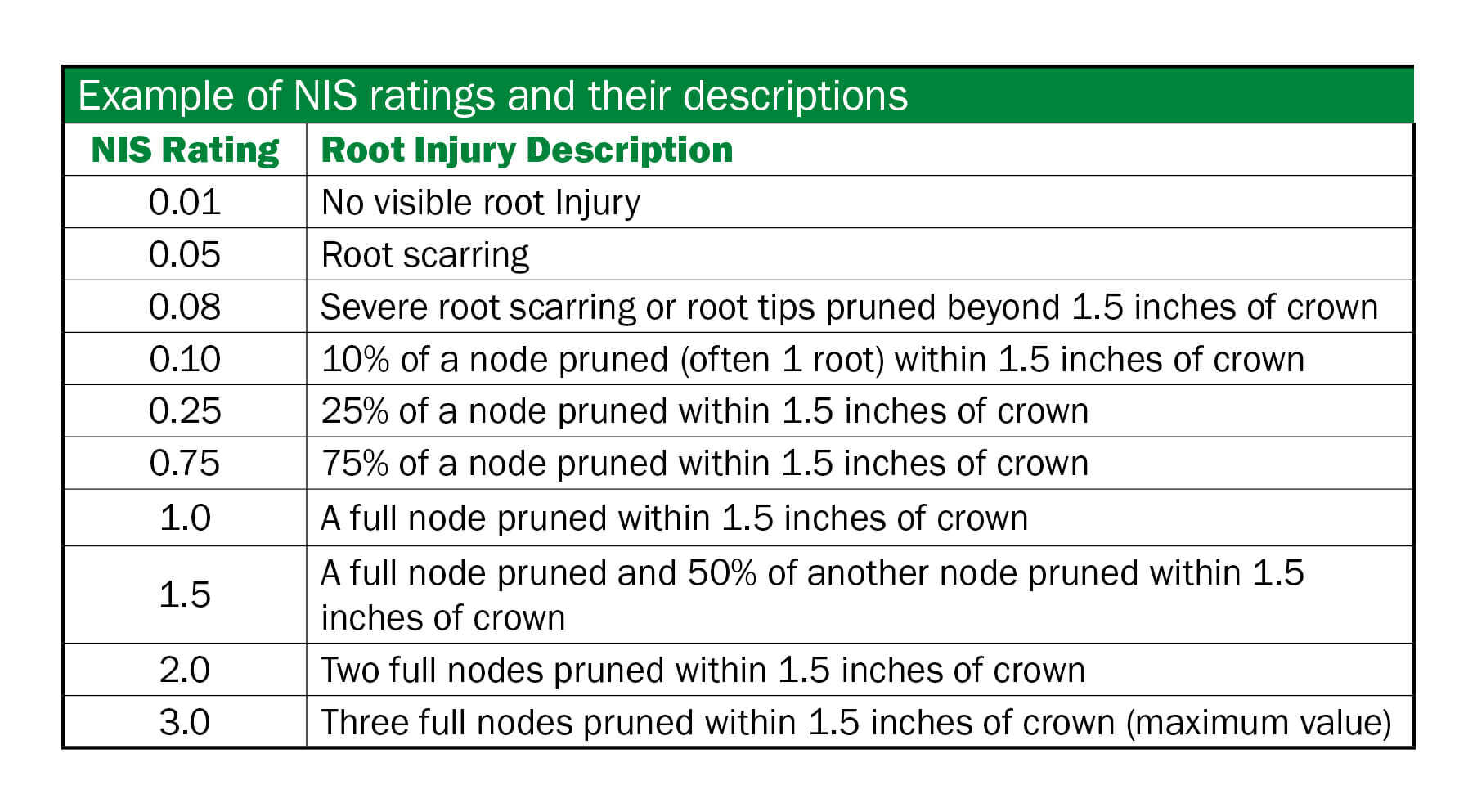
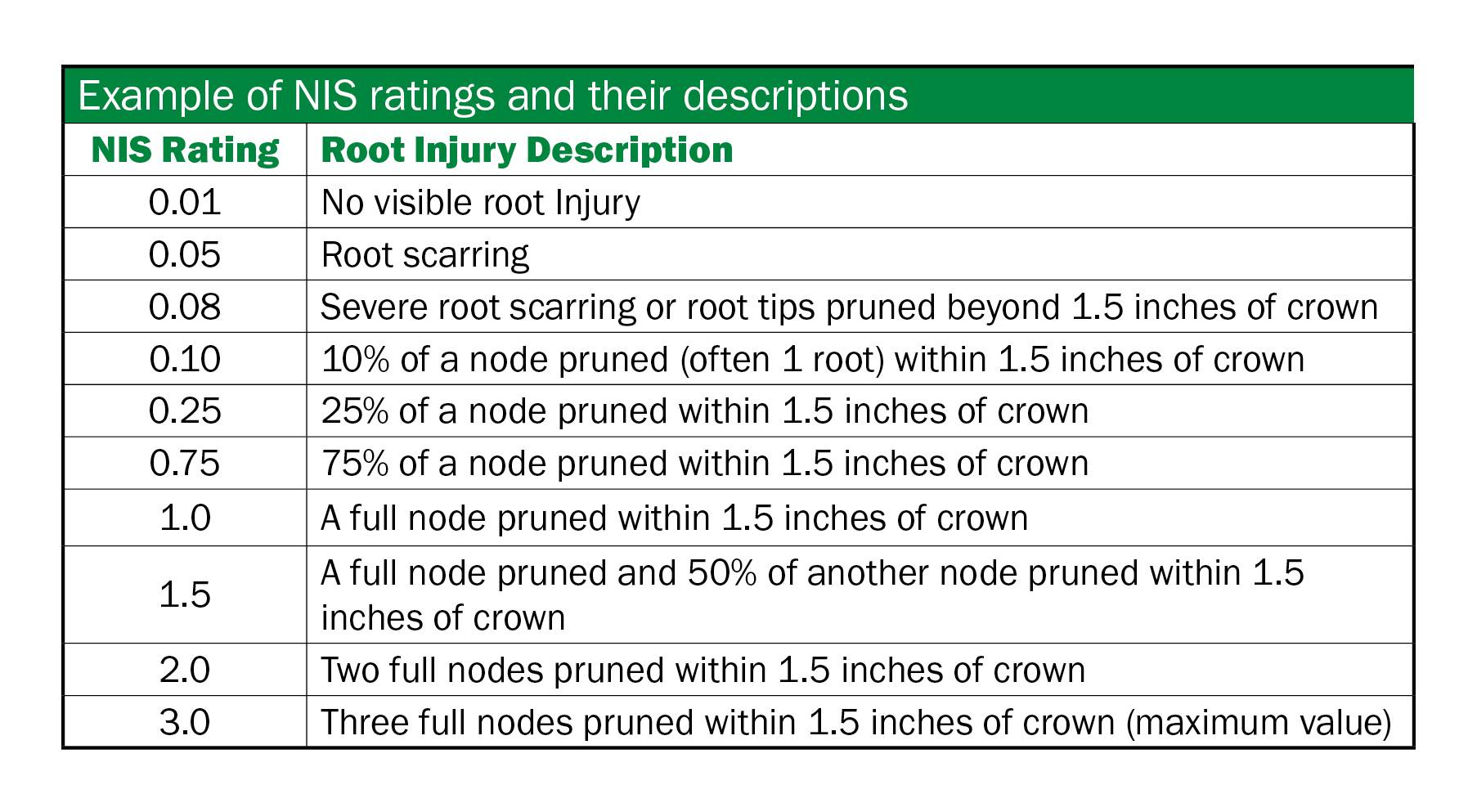
    Quick Tips for Root Digs

    NodeScale

    Walking corn fields is not always enough. Sometimes you just have to do a little digging to discover the root of a problem in your corn field. Conducting root digs may sound like a lot of work, but the results are totally worth the effort.

    Quick tips for conducting a root dig:

      1. While digging roots, note:
        • Insect pressure, in particular rootworm beetle feeding.
        • Disease pressure, paying special attention to the leaves above ear leaf.
        • Runt plants and uneven emergence.
        • Make note of root structure after you wash off roots; notice any compacted zones and if there was any sidewall compaction during planting.
        • Look at plant spacing.
      2. You can’t always see feeding unless you actually wash off the roots. Look for bottle brushing and signs of root regrowth. Look for scarring and nodes that have been chewed. To use the interactive node-injury scale, click here.
      3. Rootworms can have “hot pockets” in the field, so the more locations from which you dig samples, the better.

    While you’re walking through fields, take a close look at leaves and ears for signs of disease. Also be on the lookout for insects like western corn rootworm beetles and Japanese beetles. Under the ground, look for signs of sidewall compaction and hard pans.

    NodeScale


    http://youtu.be/-5xVFhsGRrA

    Webspec Admin

    July 24, 2014
    Agronomics, Corn, Crop, Disease, General, Insects
Previous Page
1 … 46 47 48 49 50 … 62
Next Page

Latham Hi‑Tech Seeds

131 180th Street | Alexander, IA 50420

(641) 692-3258

SIGNUP FOR OUR NEWSLETTER
  • Contact
  • Legal
  • Dealer Center
  • Seedware Login
  • Latham Gear

© 2025 Latham Hi‑Tech Seeds. All rights reserved. | Iowa Web Design by Webspec | Privacy Policy

Latham® Hi-Tech Seeds is a trademark of M.S. Technologies, L.L.C., 103 Avenue D, West Point, IA 52656.