Latham Hi-Tech Seeds

(641) 692-3258

  • Home
  • Performance
  • Products
    • Corn
    • Soybeans
    • Soybean Blends
    • Alfalfa
    • Corn Silage
    • Seed Guide
  • Find a Rep
  • Media
    • Blog
    • News
    • Videos
    • Podcasts
    • TECHTalk
  • About Us
    • Company History
    • Our Mission
    • Careers
    • Become a Rep
    • Sowing Seeds of Hope
  • Contact Us
  • Latham Hi‑Tech Seeds

    ASK THE AGRONOMIST: Foliar Diseases

    Ask the Agronomist Feature Photo 01

    Ask the Agronomist: Foliar Diseases

    Read this week’s Ask the Agronomist to learn about which foliar diseases you should be looking for in your fields at this point in the growing season.

    Q: Should I be thinking about spraying foliar insecticides yet?

    A: We’re about midway through the growing season, and it’s the time of year when leaf diseases and insect pressure prevails.  Watch for these three situations in your corn fields:

    • Northern Corn Leaf Blight
    • Western Corn Rootworm
    • Eye Spot

    Also check your soybean fields for Soybean Aphids, and all fields for redheaded flea beetles.

    Q: What can you tell us about Soybean Aphids?

    A: In last Wednesday’s weekly crop reports, none of our regional sales managers reported soybean aphids at threshold levels but aphid populations can double every two to three days! With the varying stages of soybean development due to an extended planting season and many late replants, continue scouting past your first insecticide application and all the way through pod development.

    Q: Soybean Cyst Nematodes are the #1 yield robber of soybeans; are we seeing signs of SCN damage yet?

    A: It’s a bit early for Soybean Cyst Nematodes to appear, especially for those late-planted fields and replants. However, farmers can dig roots to check for SCN presence before symptoms can be seen. Digging roots is the best way to monitor fields for SCN, and female SCN will be on soybean roots through early August.

    Q: If symptoms aren’t present, why do you recommend checking for Soybean Cyst Nematode females on the roots?

    A: Farmers should evaluate effectiveness of their seed treatments all throughout the growing season. The most effective way to manage SCN and many other diseases is by selecting quality soybean seed. At Latham, we urge our growers to consider selecting our unique IronClad™ Soybeans. To bear this brand, every variety must be SCN resistant and have an Iron Deficiency Chlorosis rating of 2.2 or better. It must also contain a Phytophthora-resistant gene as well as a 2.2 or better rating against Brown Stem Rot and either White Mold or Sudden Death Syndrome.

    Q: On the corn side, what leaf diseases should farmers be scouting for, especially considering the high-moisture spring and humid summer we have had?

    A: Plentiful moisture is ideal for fungal corn diseases. Check your fields weekly for these common diseases:

    • Gray Leaf Spot
    • Southern and Common Rust
    • Northern and Southern Leaf Blight
    • Eyespot

    There are confirmed cases of Northern Corn Leaf Blight (NCLB). Now is a critical time to scout fields, especially for fields planted with NCLB-susceptible hybrids. If the disease is present on 50 percent of the field (one or more lesions per plant) at tasseling, a fungicide application may be warranted to protect yield.

    Q: In the future, how can farmers lessen their chances of NCBL presence in their fields?

    A: To prevent NCLB from becoming a larger problem in the future, rotate to a non-host crop. A two year rotation away from corn may be necessary in no-till and reduced tillage fields with a history of NCBL. Hybrid selection is also key for reducing future threats of NCLB

    If you have a question about what you’re seeing in the fields, feel free to ask! Send your questions via Twitter to@LathamSeeds, in a private message on Facebook or call our office at 1-877-GO-LATHAM (1.877.465.2842).

    Also be sure to check out TheFieldPosition.com for timely agronomic information. Crop reports From the Field® across Latham’s six-state marketing area are published every Wednesday during the growing season by Latham’s regional sales managers in each of those locations. New articles are posted each week day on our blog. You can even search for “topics” by simply typing key words into the search bar on the upper right-hand corner.

    Thanks for tuning in to this week’s Ask the Agronomist. We’ll be back again next week to field all of your questions during #grow16.

    Gary Geske

    July 7, 2016
    Agronomics, Corn, Crop, Disease, General
  • Latham Hi‑Tech Seeds

    Stress Wheels Show Hybrid Response to Population

    DCIM100MEDIADJI 0113.JPG

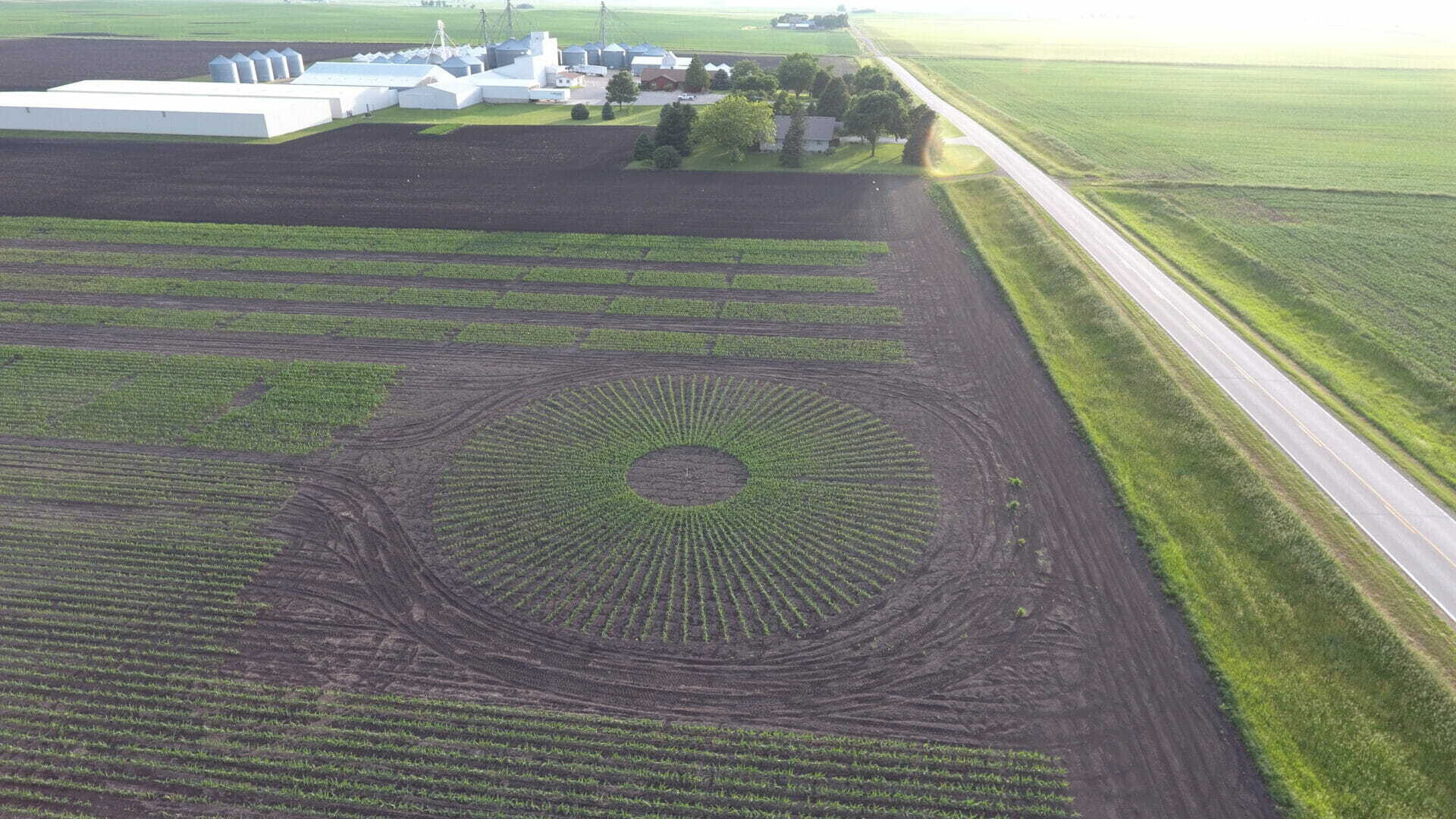
    We are officially in #grow16! Many farmers and the Latham Research Team are breathing a sigh of relief now that we’re seeing the crops take off. We’re especially seeing rapid growth in the stress wheel that was planted by the Latham Hi‑Tech Seeds Sales interns.

    (more…)

    Gary Geske

    June 20, 2016
    Agronomics, Corn, Crop, General
  • Latham Hi‑Tech Seeds

    Ask the Agronomist—Replanting Corn

    Ask the Agronomist Feature Photo 01

    Thanks for tuning into Week Five of our “Ask the Agronomist” Audiocasts. To listen to Mark’s response to this week’s question about replanting corn, play the audio file below.

    https://www.lathamseeds.com/app/uploads/2016/06/Latham-5_30.mp3


    Q: How late can I replant when I’m replanting my corn?

    A: Deciding whether or not to replant is never an easy decision. The cost of replanting is often the deciding factor. Many seed companies, like Latham Hi‑Tech Seeds, have shorter maturity hybrids available.

    There are several key factors that can determine a field’s overall yield potential. Iowa State University Extension has a publication called the Replant Checklist that will help you estimate the surviving plant stands, as well as estimate the yield based on planting dates and expected yield you could get.

    Estimating Yield Potential for a Replant

    If you have corn planted between May 25 and June 5, you can expect 65 to 70% of overall yield potential for that field. However, if the corn was planted more towards the middle of June, overall yield expectations go down to about 50% of normal yield.

    If a farmer decides to replant, make sure the fields are dry enough. There are still advantages to planting corn in the middle of June in certain areas, but each individual will have to define his/her own yield expectations. If corn is planted at the end of May, yield can be up to 65 to 70% of normal yield. If your field average is around 200 bushels per acre, you can expect to get 130 to 140 bushels per acre.

    Replanting Corn or Switching to Soybeans

    There are definitely situations where replanting is a no-brainer, such as small areas of a field that were drowned out or damaged by insects. When an entire field of corn is lost, it might be best in this stage of the planting season to replace the corn with soybeans. However, take into consideration what herbicides have been applied to the field so that your soybeans don’t die.

    There is certainly still time to receive good yields with soybeans. Most of the time in late May, we can achieve soybean yields of 85 to 90% of typical yields. June 20 to 25 is a target date for switching soybean maturities, depending on location. Soybeans can be planted into the beginning of July and still achieve decent yields.

    If you have a question about what you’re seeing in the fields, feel free to ask! Send your questions via Twitter to @LathamSeeds, in a private message on Facebook or call our office at 1-877-GO-LATHAM (1.877.465.2842).

    As always, you can access timely agronomic tips and information for your geographic location on TheFieldPosition.com. New articles are posted each week day on our blog.  You can even search for “topics” by simply typing key words into the search bar on the upper right-hand corner.

    Thanks for tuning in to this week’s Ask the Agronomist. We’ll be back again next week to field all of your questions during the 2016 growing season.

    Webspec Admin

    June 2, 2016
    Agronomics, Corn, Crop, General
  • Latham Hi‑Tech Seeds

    Tips for Increasing Corn Yields in 2016

    IMG 0445

    There are literally a thousand variables that affect how good of a crop you raise. Many of these variables, like the weather, are out of your control. So why not control the ones you can?

    The decisions you make now can influence yield beforeIMG_0445 any seed goes in the ground. That’s why I’m sharing the factors I believe you can control to produce the best corn yields in the year ahead:
    1. Hybrid Selection. Selecting the right hybrid for a given field / soil type is probably the most important decisions a farmer makes. That’s why at Latham Hi‑Tech Seeds, we have developed a FieldXFieldTM worksheet to guide our customers through a proven process.
    2. Seedbed Preparation / Planting Date. Remember that early planting dates only have the potential to out-yield later plantings if conditions are right. Wait to plant until soil temps are consistently above 50° F and are expected to rise. Don’t “mud it in” just to be the first one in the field! Yield doesn’t significantly decline until later in the planting season, so practice patience.
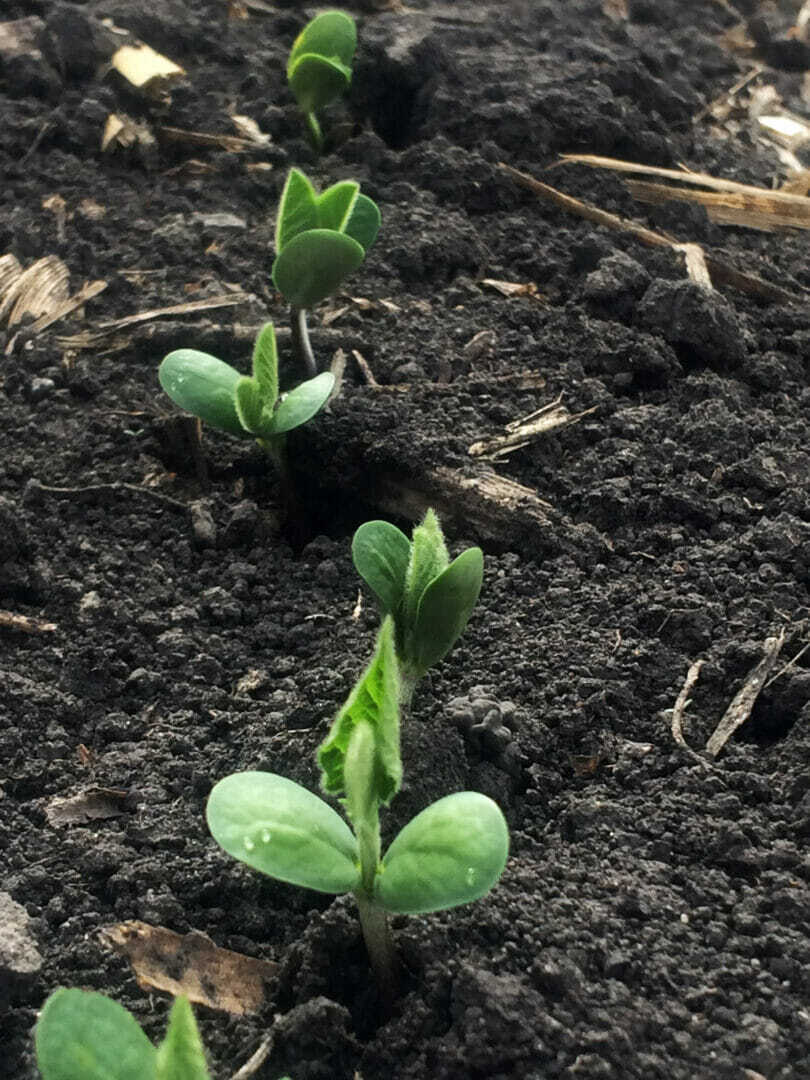
    3. Planting Depth.The optimal planting depth for corn is 2 inches – for good reasons. If you plant to shallow, corn plants may germinate too quickly and then shut down if ground temperatures drop. Shallow planting also prohibits plants from developing the root system needed for plant health or stalk strength. If you plant too deep, emergence may be delayed.
    4. Planting Speed. While racing against time, some farmers have a tendency to plant at too high of speed. Planting speed affects the accuracy of seed placement, so travel between 4 and 5 miles per hour to encourage the best seed-to-soil contact.
    5. Soil Fertility. Accurate soil samples are necessary, so you can be sure the plants are getting the food they need. There are 16 essential nutrients for plant development, and each one is important in various amounts. A proper balance of macro- and micro-nutrients is necessary for optimal performance. Keep in mind that starter fertilizer, put down at planting time, can help get the crop off a quick start.

    Webspec Admin

    March 30, 2016
    Agronomics, Corn, Crop, General
  • Latham Hi‑Tech Seeds

    Soybean Seed: To Inoculate or Not To Inoculate?

    Soybeans

    It’s that time of year again…  Harvest is over. The holidays are upon us, and once more, it’s time to turn our attention to the next crop year!  During this crop planning time, I am frequently asked if I recommend using an inoculant on soybean seed. The answer is more complicated than a simple “yes” or “no.”

    Proper nitrogen fixation is absolutely crucial to obtain high soybean yields. For this to happen, nitrogen-fixing bacteria (specifically Bradyrhizobia japonicum) must be present in sufficient quantities in the soil.  This bacteria stimulates plant roots to produce nodules that absorb nitrogen from the air and convert it into ammonia, which is a useable form that the plant can then take up through its root system. This nitrogen is then used to make amino acids, which are the building blocks for proteins, and also chlorophyll.  Chlorophyll is the molecule that converts sunlight, an energy source, into carbohydrates through the process of photosynthesis. Researchers estimate that between 50 and 80% of the nitrogen needed to produce a normal soybean crop can be provided in this way.

    Active fixation usually starts at the V2 stage.  From there on, more nodules develop and the amount of nitrogen that is fixed continues to increase.  The highest demand for nitrogen begins when seeds begin to form in the pods and continues through full maturity.

    So when should farmers use inoculants?  That’s always a tough question to answer since each crop year is different and there are literally a 1,000 variables that can factor into the decision.  Let’s start with the “no-brainers.” I would use an inoculant when:

    • Soybeans have NEVER been grown in this field.
    • Soybeans have not been in the field for three years.
    • You are planting into soils that have a pH of 6.0 or lower.
    • You are planting into high pH soils. I would use an inoculant at a pH of 8.3 and above.
    • Your soil has a high sand content. Rhizobia bacteria do not survive as well in sandy soils as they do in soils with high organic matter content.

    Times when an inoculant might be recommended include if a field was flooded the previous year for more than a week and also in cool, wet soils like no-till fields. The downside of not using an inoculant when one is needed can be as much as a 50% loss in yield! For the cost, inoculants can be a great insurance policy.

    Feel free to call me with any questions related to this or other crop production practices.

    Webspec Admin

    February 3, 2016
    Crop, General, Soybeans
  • Latham Hi‑Tech Seeds

    Top Ten Tips for Increasing Corn Yields

    IMG 0445

    As you know, there are about one thousand factors that determine the yield in any crop year. Continual crop improvement, including higher yield, is a common desire among farmers.

    IMG_0445Many of the decisions you make that influence yield the most are made before any seed goes in the ground, so today I’m sharing with you the Top 10 factors I believe are most critical to increasing corn yields in the year ahead:

    1. Hybrid Selection. Not all hybrids are created equal, so be sure to select the hybrids that are best suited to your need – and your ground. Some hybrids are better for suited for silage or grain. Some racehorse hybrids have different fertility requirements. Be sure to select the hybrid for each field in the correct maturity.
    2. Crop Rotation. Crop rotation requires more planning today. It’s not enough to rotate between crops. Remember to also rotate traits and chemistries. Consider management practices that include weed control and residue management.
    3. Planting Depth and Row Spacing. Planting depth should be between 1.5 and 2 inches but no shallower. Even planting depth with no seed bounce is imperative to a good stand and high yields. Uneven emergence can create uneven competition between plants that continues throughout the year. Plus, uneven tasseling can occur. The crop canopy should absorb about 95% of available sunlight so some hybrids with a more upright leaf angle may benefit from narrower rows.
    4. Soil testing and fertility. Accurate soil samples are necessary, so you can be sure the plants are getting the food they need. There are 16 essential nutrients for plant development, and each one is important in various amounts. A proper balance of macro- and micro-nutrients is necessary for the optimum use of applied fertilizers.
    5. Timely planting. Planting conditions greatly impact emergence and stand. Remember that early planting dates only have the potential to out-yield later plantings if conditions are right. Don’t “mud it in” just to be the first one in the field! Yield doesn’t significantly decline until later in the planting season, so practice patience. Plant when soil temps are consistently above 50° F and are expected to rise.
    6. Scouting Fields. Crop scouting begins at the planter. Check planting depth and then emergence. Mid-season crop scouting is especially important because different insect and disease pressures become evident. tissue sampling, fungicide application timing, and finally find out when the field is ready to harvest.
    7. Weed Pressure and Herbicide Selections. Manage troublesome weeds through crop rotation and other tactics. Know what weeds you are targeting, so you can apply the correct herbicide and rate. Follow up on applications for missed weeds or respray conditions.
    8. Fungicide applications. Some hybrids in some growing conditions will benefit from one or two applications of a fungicide to keep the plant growing and healthy. You’ll see in the Latham Hi‑Tech Seeds’ product guide that we recommend fungicide for certain hybrids. Remember, the application timing is key for maximum benefit.
    9. Timely Harvest. Everyone would like to harvest dry corn but sometimes that’s not practical for maximum yield. Scout your fields often to prioritize fields for harvest. Check for stalk lodging potential. Determine stalk integrity with the pinch and push tests. Are the plants getting “rooty,” or leaning and lodging from the root? Conduct a shake test to make sure the ears are still hanging on with less chance of ear droppage and plant health to allow for delayed harvest if necessary.
    10. Soil Prep for Next Year. Soil tillage or preparation for next year’s crop should help improve soil tilth. Avoid working wet soils to prevent compaction and to provide a consistent seed bed across the field to help achieve good seed-to-soil contact.

    Related Posts:

    • Resolving to Increase Soybean Yields
    • Increasing Your Bottom Line
    • Achieving Record-Setting Yields in 2015

    Webspec Admin

    January 27, 2016
    Agronomics, Corn, Crop, General
  • Latham Hi‑Tech Seeds

    High Quality Soybean Seed and Record-Setting Yields in 2015

    DSC 4644

    Although I’ve spent my career in agriculture, I don’t remember a harvest season in North Central Iowa where combines rolled almost non-stop for six weeks or more without a single rain day.  The hours were long for everyone involved, but it was such a rewarding year.

    We saw some of the best yields I’ve ever seen in the 19 years that I’ve worked at Latham Hi‑Tech Seeds. An all-time record yield of 77.21 bu/A from a 105-acre production field came in October 7. Two days later, that record was broken when a 137-acre field yielded 81.13 bu/A!  Both of these fields were Latham L 2228 R2 brand soybeans.

    Latham L2228R2s yield 80+ bushels per acre

    Not only were yields this fall impressive, but the quality is equally impressive. Once our growers deliver their soybeans to Alexander, our crew places each variety in a bin and takes a composite sample. We take samples from every one of our 50+ bins to check that seed for germination, and the germination percentage of all samples were in upper 90s! Keep in mind that these samples are the raw seed taken directly from the bin, and conditioned lots can be even better since we strive to remove all of the lower quality seeds before we bag them.

    You can count on our professionals in the conditioning plant to do their very best to keep with the tradition of producing top quality, Latham® soybean seed. “Hat’s off” to plant manager Greg Jaacks and the crew in Alexander for doing another outstanding job of keeping all the soybeans that came in separated and stored in the best possible condition.  They know that quality seed in the bag leads to high yields in the field.

    We believe quality seed, combined with industry-leading genetics and geographic selection, are key to Latham Seeds’ standings in the independent F.I.R.S.T. Trials. For the second year in a row, Latham’s L 1858 R2 was the highest yielding product across Minnesota, South Dakota and North Dakota!

    Latham brand soybean products won 36 times in 2014-2015 F.I.R.S.T. Trials, and Latham corn products won 29 times!  During this time period, our products earned 289 Top 10 finishes in soybeans and 291 in corn.

    Increase the odds of winning on your farm with Latham Seeds! Apply the rule of multiplicity. Contact your local Latham® representative or call 1-877-G0-LATHAM (1.877.465.2842).

    Webspec Admin

    December 30, 2015
    Crop, General, Soybeans
  • Latham Hi‑Tech Seeds

    TIPS FOR INTERPRETING CORN SILAGE DATA

    Now that most farmers have finished with harvest and fall tillage, it’s time to head inside and finalize plans for next season’s crop! Similar to corn and soybeans, YIELD IN THE FIELD IS IMPORTANT FOR CORN SILAGE. There are some additional metrics that help us compare corn silage varieties.

    Corn silage reports can get complicated, so I’ll try to simplify a few major elements:

    • Milk 2006 – an evaluation system that helps provide an energy score from a combination of Fat, Ash, Neutral Detergent Fiber (NDF), Neutral Detergent Fiber Digestibility (NDFD), Protein and Starch.
    • Milk/ Ton – The amount of milk or animal response is predicted per ton of corn silage, which directly reflects the quality of the corn silage. Higher numbers indicate better corn silage.
    • Milk / Acre – The amount of milk is predicted per acre of corn silage. It’s a combination of dry matter tons harvested and the quality of the corn silage. Higher numbers are better.

    Our goal is to provide quality information to help guide you, and your team of agronomy and nutrition professionals to help achieve best return on investment including:

    • Excellent Tonnage comes from top yields with top quality.
    • Excellent Quality is a result of hybrid selection and management. Corn Silage management practices are the most vital factor to achieving peak quality, from planting to harvest.
    • Prime harvest moisture of 65% to 70% whole-plant moisture helps ensure proper packing and fermentation, which helps reduce free oxygen and potential for mold and mycotoxin growth.

    Feel free to contact me if you need help discerning starch types or selecting the best trait package for each field. Top performance is a team effort at Latham Hi‑Tech Seeds!

    112415 Graphic copy

    Webspec Admin

    November 25, 2015
    Agronomics, Corn Silage, Crop, Tech Tuesday
  • Latham Hi‑Tech Seeds

    Order Early as Demand for LibertyLink® Soybeans May Exceed Supply

    20150811 083953 resized

    20150702_134739_resizedThroughout the growing season, we’ve talked about how keeping good field notes helps farmers select the best seed for each of their fields. One challenge that many farmers across the Upper Midwest have encountered this season is weed pressure. Waterhemp and ragweed, in particular, are showing resistance to glyphosate. That’s why it’s so important to put a weed management strategy in place.

    Weed specialists like Dr. Mike Owen at Iowa State University say that “diversity of tactics” is key to combatting weeds. One such tactic involves using different modes of action, or switching from glyphosate to glufonsinate herbicides. LibertyLink soybeans are the only non-selective option on the market to combat glyphosate-resistant weeds and break the cycle of continuous glyphosate use.

    Liberty is effective for control of many ALS- and glyphosate-resistant weeds, including waterhemp, marestail and common and giant ragweed. Using residual herbicides can reduce weed populations, slow weed growth and provide flexibility in the post-emergence application window. Make sure you apply Liberty post-emergence at the proper time, according to weed size, and use the full recommended rate.

    Many of our customers have achieved their best soybean yields ever with Latham’s Liberty soybeans. (Side bar: Latham Hi‑Tech Seeds released its first LibertyLink soybeans in 2009, so there’s no need to worry about yield drag!) Several customers have told us all growing season long that they’re impressed by the weed control they’ve seen this season and are eager to see yield results from #harvest15.

    With so much concern about weed resistance, an industry-wide shortage of LibertyLink soybeans is expected. We have seen demand double for LibertyLink Soybeans each of the past two sales years, so we increased production of our LibertyLink soybean brands for 2016 planting.

    Another major concern this growing season has been soybean diseases. Latham® IRONCLADTM offer the industry’s strongest defensive package to combat Soybean Cyst Nematodes (SCN), Iron Deficiency Chlorosis (IDC), Phytopthora Root Rot, Brown Stem Rot (BSR), Sudden Death Syndrome (SDS) or White Mold.

    Selecting seed is one of the single most important decisions a farmer makes each year. That’s why we work with farmers to get the right seed for each particular field. As an independent, family-owned company, Latham Seeds’ top priority is helping farmers select the best possible products – regardless of whether the traits came from Monsanto, Dow or Syngenta. Contact your local Latham® representative by October 15th for the best pricing and availability.


    Webspec Admin

    September 17, 2015
    Crop, General, Soybeans
  • Latham Hi‑Tech Seeds

    White Mold? Your Best Offense is a Good Defense!

    Kerr soybean plot

    Kerr soybean plotWeekly “From the Field” crop reports filed by Latham’s regional sales managers show that diseases from Iron Deficiency Chlorosis to Sudden Death Syndrome and White Mold are prevalent this season in soybean fields across the Upper Midwest. What can you do if your crops are suffering?


    The best thing you can do now is take good field notes. That way, if you practice a corn-soybean rotation, you’ll remember to plant more defensive soybean products on those fields in the future. Seed selection is key to reducing risk and minimizing damage.


    Be sure you note the rating given to each product in a seed catalog before you select it for a particular field. Plant tolerant varieties, or avoid very susceptible varieties, is to manage soybean disease. Also remember the seed treatments are effective insurance policies.


    Latham Hi‑Tech Seeds’ signature SoyShieldTM, a fungicide-only package, and SoyShield PlusTM with fungicide and insecticide, protect seeds from disease and insect damage for up to 30 days. This time frame is longer than many other seed treatments and is typically an adequate window of protection. SoyShield includes an exclusive fungicide combination that provides excellent protection against seed and soil borne diseases including: Pythium, Phytophthora, Fusarium and Rhizoctonia.  SoyShield Plus features that same fungicide combination with an imidacloprid insecticide that gives early season control of many seedling insects.  In addition, seed treatments can provide health benefits for more rapid and increased germination under certain conditions.


    Do what you can now to protect yield in 2016 and order Latham® IRONCLAD soybeans. To make seed selection easier, below is a list of products in our 2016 lineup with the best White Mold tolerance. Contact your local Latham dealer or the Latham Seeds’ office for help choosing the best product for each of your fields. FieldXFieldSM Yields!


    2016 Latham® Soybeans with the best White Mold tolerance:

    *rating score of 2.2 or better

    L 0256 R2

    L 0683 L

    L 0765R 2

    L 0836 L

    L 1156 R2

    L 1328 L

    L 1438 R2

    L 1548 L

    L 1673 R2

    L 1848 L
    L 1882 R2
    L 1968 R2
    L 1985 R2
    L2083L
    L2084R2
    L2128R2

    L2186L
    L2228R2

    L2358L
    L2482R2

    L2558L

    L2628L
    L2758R2

    L2787L
    L2884R2

    L2978L
    L3048R2
    L3158L

    L3384L


    Webspec Admin

    September 3, 2015
    Agronomics, Crop, General, Soybeans
Previous Page
1 … 44 45 46 47 48 … 62
Next Page

Latham Hi‑Tech Seeds

131 180th Street | Alexander, IA 50420

(641) 692-3258

SIGNUP FOR OUR NEWSLETTER
  • Contact
  • Legal
  • Dealer Center
  • Seedware Login
  • Latham Gear

© 2025 Latham Hi‑Tech Seeds. All rights reserved. | Iowa Web Design by Webspec | Privacy Policy

Latham® Hi-Tech Seeds is a trademark of M.S. Technologies, L.L.C., 103 Avenue D, West Point, IA 52656.