Latham Hi-Tech Seeds

(641) 692-3258

  • Home
  • Performance
  • Products
    • Corn
    • Soybeans
    • Soybean Blends
    • Alfalfa
    • Corn Silage
    • Seed Guide
  • Find a Rep
  • Media
    • Blog
    • News
    • Videos
    • Podcasts
    • TECHTalk
  • About Us
    • Company History
    • Our Mission
    • Careers
    • Become a Rep
    • Sowing Seeds of Hope
  • Contact Us
  • Latham Hi‑Tech Seeds

    Tips for Controlling Palmer Amaranth Across the Upper Midwest

    Weed

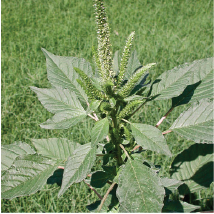
    weedPalmer Amaranth, called Palmer Pigweed, has been confirmed in 48 of Iowa’s 99 counties. When Bob Hartzler of Iowa State University Extension made this frightening announcement during a recent crop meeting that I attended in Ames, the atmosphere in the room changed — and for good reason.

    To say this weed is “aggressive” is an understatement. To win the battle, farmers must employ an aggressive weed management system. It’s important to start with a clean seedbed, and then integrate more than one herbicide to prevent weed escapes by:

    • Using full rates of a pre-emergence residual herbicide that kills Palmer Amaranth.
    • Applying post-emergence herbicide before pigweeds are 3 inches tall.
    • Tank mixing another residual herbicide to extend control.
    • Applying a second post-emerge application if needed.
    • Removing surviving plants by hand or mechanically.

    Every attempt must be made to completely eradicate it from fields, as Palmer Amaranth is truly “waterhemp on steroids.” Palmer is closely related­­­ to Common Waterhemp but is much more invasive. It can get so bad that literally entire fields must be tilled up to prevent further infestations.

    Both Palmar Amaranth and common Waterhemp are dioecious, meaning there are male and female plants, as opposed to most other pigweeds species that have male and female parts on the same plant. Many scientists believe this characteristic gives these weeds an advantage to developing herbicide resistance.

    Both Palmer Amaranth and Waterhemp have become resistant to numerous herbicide groups. Many populations are resistant to multiple groups — as many as five in one population has been documented in Illinois!

    Pollen spreading within fields and to neighboring fields spreads that resistance, so farmers must be even more diligent to control weeds in both corn and soybeans. Diversity of weed control tactics key. We won’t be able to rely on just Roundup Ready 2 Xtend®, Enlist™ or Balance™ GT — nor any other future trait system.

    Take some time now to attend some weed control meetings in your area, and learn how to identify and manage this potentially devastating pest.

    Webspec Admin

    March 1, 2017
    Agronomics, Crop, Weed Control
  • Latham Hi‑Tech Seeds

    Three Ways Latham Helps Farmers Reduce Risk

    IStock 000014734121XLarge

    Due to another down year of commodity prices, combined with uncertainty in the marketplace and the transition to a new presidential administration, many Midwest farmers are looking for ways to limit their risk exposure. Here are three key ways farmers can limit risk in 2017:

    1. LATHAM’S FREE REPLANT POLICY. Qualifying is simple: Purchase at least 60 units more of Latham® corn than was ordered in 2016 and/or a minimum of 120 units of treated soybeans, and you will qualify for free replant! This low-cost insurance policy offers a great options for our customers.
    2. SEED TREATMENTS. The old saying, “It’s hard to save your way to prosperity,” really holds true here! So much of a farmer’s money is invested in seed that it’s hard for me to understand why some people forego seed treatment. This is where the saying, “Penny wise but pound foolish” comes into play. Seed treatment is a good return on investment. Data shows a 3 – 5 bushel advantage on fungicides and insecticides that provide protection against diseases and insects in certain parts of our market. Last week, Mark Grundmeier wrote about how soybeans treated with ILeVO® yielded 8 – 18 bushels per acre, even where Sudden Death Syndrome wasn’t severe.
    3. FIELDXFIELD™ YIELDS. Crop planning, field by field, helps farmers reduce risk by placing the best products on given soil types and farming practices. It also takes into consideration disease, plant population and weed control. Determining the best population for both corn and soybeans also is a good way to reduce cost since many farmers plant soybeans too thick. Paying special attention to ear type (flex, semi-flex or determinate) makes a big difference in choosing the right population.
    One final point to make is the stability and proven performance of Latham Hi‑Tech Seeds and its products. Our family-owned, independent company will celebrate its 70th year of business in 2017. In addition, we set records (again) in 2016 with our F.I.R.S.T. Trials Seed Tests across the regions we serve. Go to lathamseeds.com to see the data.
    Feel free to also contact us at 1.877.GO.LATHAM. Also remember to “search” for specific agronomic topics like “risk management” on TheFieldPosition.com for more information.

    Webspec Admin

    February 15, 2017
    Agronomics, Crop, Soybeans
  • Latham Hi‑Tech Seeds

    Tips for Managing SDS in 2017 and Beyond

    LLeVO comparison

    Sudden Death Syndrome (SDS) in 2016 affected numerous soybean fields in the Upper Midwest. We saw SDS in fields where it had never been a problem, and some of that can be attributed to Mother Nature. Frequent or heavy rains can add to the severity of the disease, and irrigated fields are also at higher risk.

    While we cannot control the weather and it’s not possible to get rid of this soil-borne fungus, there are strategies you can implement to protect future yield:

    • Studies show SDS severity increases when high populations of Soybean Cyst Nematode (SCN) are present. Practices that lower the SCN population may also help decrease SDS, but note SDS and SCN can infect fields on their own.
    • Improving drainage and soil structure, as well as reducing compaction, can help reduce the severity of SDS.  Any movement of infected soil spreads both SCN and SDS within the field and to other fields.
    • Wait for fit soils. Working or planting into wet soils greatly enhances the disease. I spoke with farmers who rolled their fields in 2016 when conditions were too wet, which increased the severity and incidence of SDS in their fields.
    • Crop rotation. There have been reports of farmers using an oats and alfalfa/clover rotation in a third year that seemed to reduce SDS severity. However, crop rotation in general hasn’t been effective in managing SDS, as the SDS fungus readily invades corn roots. Legume crops like alfalfa, clovers, navy beans and pinto beans also can host the SDS fungus.
    • Plant soybean varieties that are tolerant to the disease. While no soybean brand is completely resistant, planting tolerant varieties can minimize yield loss. At Latham Hi‑Tech Seeds, we evaluate soybeans for a wide range of diseases, including SDS. Only those with the best defensive packages earn the IRONCLADTM distinction.
    • Delayed planting allows the soil to dry and warm. Because overall soybean yield research shows higher yield potential with early planting dates— even if SDS is present at moderate levels — I recommend delayed planting only when a field has a history of severe SDS and yields have been drastically reduced in past years.
    • Employ ILeVO®. The most exciting new tactic for SDS management is ILeVO seed treatment from Bayer CropScience. Numerous university trials have shown IleVO effectively reduces SDS severity and protects yield.  Latham’s own research across 26 locations in 2016 showed an average benefit of 3.64 bu/A, which easily pays for the cost of the treatment.(See the January 2017 issue of TECHtalk for more details.) Other seed treatments claim efficacy on SDS, but university research shows the level of effectiveness from thiabendazole products like Mertect® are not quite as good as what ILeVO shows.

    If Sudden Death Syndrome is a potential problem in your area for 2016, do all that you can to limit its effect in the future.  Feel free to call me if you have any questions.

    lLeVO comparison

    Webspec Admin

    February 8, 2017
    Agronomics, Crop, Disease, Soybeans
  • Latham Hi‑Tech Seeds

    Four Ways Latham Seeds Can Help You Maximize Yield in 2017

    LATHAM 0073 JAN17 TECHtalk WEB ARCHIVE

    While fighting blowing snow and bitter wind chills, it’s a welcome relief to think about spring! I know many farmers, including myself, are getting equipment ready for tillage and planting. It’s also a good time to review your seed order.

    I expect most orders were placed with thoughtful consideration of the 2016 results, including university, F.I.R.S.T. yield trials and dealer plots. While this is all important data, keep in mind it represents information that was recorded in one location during one growing season.

    Also keep in mind that on-farm plots might be impacted by variables you would be unaware of unless you walked the plot throughout the growing season. For example, if a sprayer wheel track accidentally ran over part or all of the plants in a row, the yield of that hybrid could be affected significantly. If the wheel track happens to run over part of a row on a check hybrid, that yield reduction would affect hybrids on both sides of the check.

    Two more areas to consider when selecting seed are soil type and disease. Plants respond differently in various growing conditions. It’s also important to know field history. For example, once you’ve had white mold or Sudden Death Syndrome (SDS) in a field, it has the potential to cause yield loss every time you plant soybeans there in the future. That’s why it’s especially important to know how well different brands handle SDS and white mold.

    Be sure to check out our performance in the 2016 F.I.R.S.T. Trials. Latham won a record-setting 42 trials! Our corn program produced 17 first place winners and 199 total Top 10 finishes; our soybean program produced 25 first place finishes and 185 total Top 10 finishes. These stats show just how deep and wide our product line is.

    Latham’s sales and product teams are at your service! Call us at 1.877.GO.LATHAM (1.877.465.2842), and we’ll gladly help you choose the right seed, field-by-field!

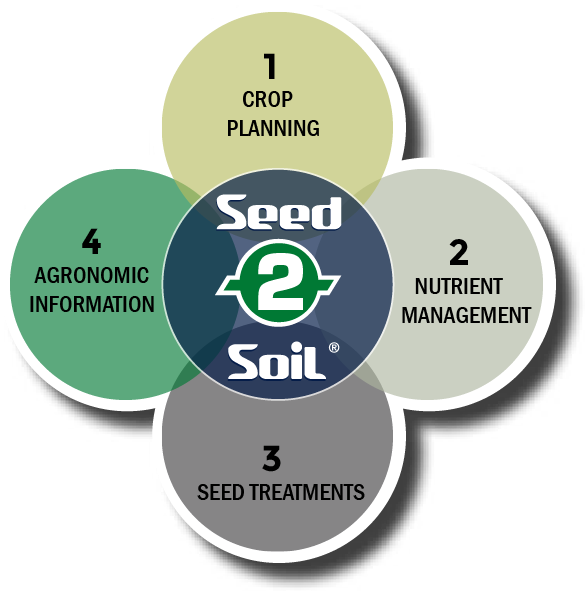
    LATHAM_0073 JAN17_TECHtalk_WEB ARCHIVELatham Hi‑Tech Seeds helps simplify the seed selection process through our Seed-2-Soil® agronomic services. We help maximize your yield potential by focusing on four key areas:

    1. FieldXField crop planning: Your farm management style, equipment and overall production goals, along with our research and performance data for each hybrid, is taken into account when we help you select the best Latham hybrid in each field. Seed placement helps reduce risk and increases your likelihood of top performance.
    2. Nutrient management: Research shows that fertility programs influence plant performance and yield by as much as 60%, so nutrient management includes the use of foliar leaf sampling to help manage micro and macro nutrients. There are 17 essential nutrients for plant development, and each one is important in various amounts. We also look at variable rate planting to help manage populations specific to field conditions and hybrid tendencies.
    3. Seed treatments: It’s important to treat seed with proper fungicides and insecticides to protect your growing crop from insects and diseases. Farmers who invested in seed treatments last year were very glad their crops had extra protection. (See Mark Grundmeier’s column in this issue for specific results.) Research shows that seed treatment is the best defense against disease. Choose a treatment like Latham’s SoyShield fungicide or SoyShield PLUS that is a fungicide-insecticide combination to help protect early-planted seed against the unexpected.
    4. Agronomic information: Latham Seeds provides agronomic tools to help choose the right hybrids. You’ll find loads of information on our blog, TheFieldPosition.com. On our website, lathamseeds.com, you’ll find product tech sheets, seed placement recommendations, and companion hybrid recommendations, as well as yield data from strip trials and unbiased independent third party trial results.

    Webspec Admin

    January 18, 2017
    Agronomics, Crop, Seed Treatment, Soil
  • Latham Hi‑Tech Seeds

    2016 Trials Results Show it Pays to Treat Soybean Seed with ILeVO®

    LLeVO comparison

    llevo-comparisonMany farmers in 2016 experienced yield loss from Sudden Death Syndrome (SDS) and Soybean Cyst Nematode (SCN). In fact, we saw SDS in areas where it’s never before been a problem! This situation left many farmers asking what can be done to protect yield in the future.

    Using new tools like lLeVO Seed Treatment, which received regulatory approval last winter, can help protect yield and add revenue for Upper Midwest soybean growers. ILeVO showed very good efficacy against SDS and also helps protect against SCN.

    Latham Hi‑Tech Seeds in 2016 sent 34 ILeVO trials to our dealers and their customers. Each trial consisted of a Latham® soybean product treated with SoyShield PLUS™ planted side-by-side with that same soybean treated with SoyShield PLUS and lLeVO. Yield data was received from 26 of the 34 trials and those results are in the table included below.

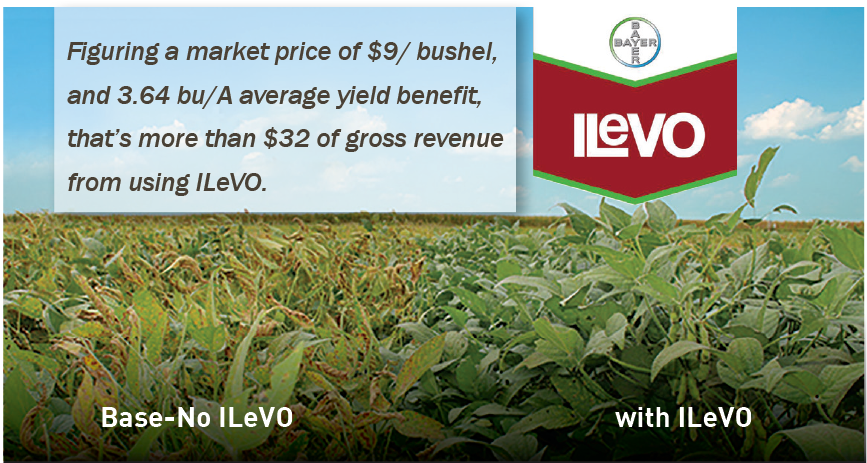
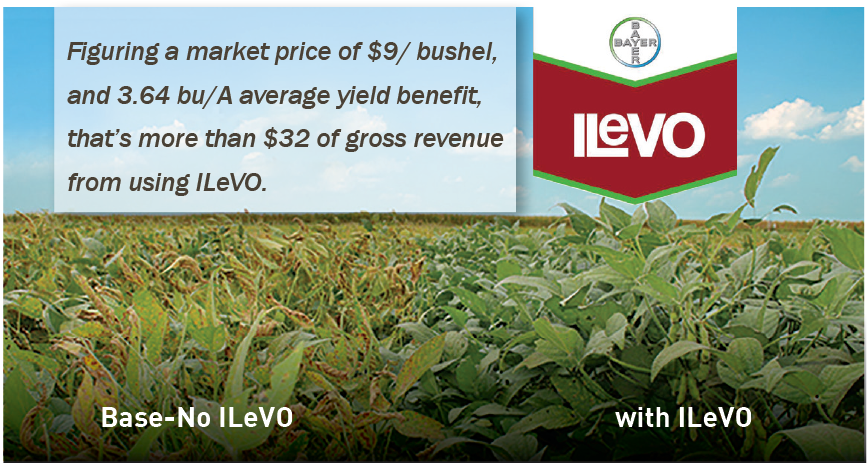
    Not every plot experienced a high degree of SDS severity, but many of these plots still showed a yield bump from using ILeVO. Plots where SDS was fairly severe showed the most yield benefit, ranging from 8 to 18 bushels per acre (bu/A).  Figuring soybeans at a market price of $9/ bushel, even at the 3.64 bu/A average yield benefit, that’s still more than $32 of gross revenue from using ILeVO. Our studies show the cost of this seed treatment easily paid for itself in 2016.

    We can’t predict the weather in 2017, however, using tools like ILeVO and other seed treatments helps protect your crops and yield. If you have questions about the results shown below or about ILeVO seed treatment, please call me at 1.877.GO.LATHAM (1.877.465.2842).

    llevo-graph

    Webspec Admin

    January 11, 2017
    Crop, Soybeans
  • Latham Hi‑Tech Seeds

    Latham Releases Three New Products for 2017 Planting

    DSC0735

    Christmas often comes early for the Latham Product Team. We don’t always know what our research will reveal until we take a close look at it, but just like kids who eagerly await to unwrap their presents, we know our data is going to be good!

    Our team analyzes third party research conducted throughout Latham Country, as well as our own proprietary trials including SuperStrips. Sometimes experimental products in these trials get advanced following promising results.

    After analyzing fall 2016 yield data, we’re pleased to announce the following corn and soybean products — which weren’t listed in our 2017 product guide — are now being offered for spring 2017 planting.

    Additional product information and yield data is available at lathamseeds.com. If you have questions about these new releases, feel free to contact your Latham Regional Sales Manager or me.

    CORN:

    LH 3117 VT2 PRO

    This new 81-day hybrid was tested in our 2016 SuperStrips as EX3217. It’s a medium-short plant with excellent late-season standability and very good early vigor. It flowers moderately early and has very good tolerance to Northern Corn Leaf Blight, Eyespot and Common Rust.

    LH 5339 SS RIB

    This SmartStax® version of LH 5335 VT2 PRO has the same features as LH 5335, which is listed on page 37 in our 2017 product guide and also under the “corn” “products” tabs on lathamseeds.com. It’s a very versatile product with excellent early vigor. Because this product is a better option for continuous corn acres, it has received Latham’s Gladiator™ designation.

    SOYBEANS:

    L1958L

    This 1.9 soybean was tested in our 2016 SuperStrips and research plots as E1958L. It compares to L1787L and L2186L. This fairly tall, bushy soybean has very good tolerance to Soybean Cyst Nematode, Iron Deficiency Chlorosis and stress. It is moderately resistant to Brown Stem Rot and carries the Rps1-c gene for Phytophthora Root Rot control. It performs best in wider rows (greater than 20 inches) and in those light-to-marginal soils; it can be planted on better soils if the seeding rate is lower. I recommend planting 135,000 to 140,000 seeds per acre in 30-inch rows.


    Webspec Admin

    January 4, 2017
    Corn, Crop, Soybeans
  • Latham Hi‑Tech Seeds

    “42” is a Record-Setting Number!

    FIRST Feature

    When most people hear the number 42, they think of Jackie Robinson and the fantastic baseball movie “42.” Jackie Robinson made history in 1947 by becoming the first African American Major League Baseball player. This movie tells the amazing story of his struggle to gain acceptance in the major leagues.

    The same year Robinson was making the news, Willard Latham made news of his own right here in Franklin County Iowa when he founded a seed company on his farm. Also “42” is an amazing number for Latham Hi‑Tech Seeds as it is the total number of F.I.R.S.T. Seed Tests that our corn and soybean products won this fall. Our corn program produced 17 wins and 199 total Top 10 finishes; our soybean program produced 25 wins and 185 total Top 10 finishes.

    The 42 overall 1st  place finishes in the 2016 F.I.R.S.T. trials validates Latham’s research program. It also is proof positive that accessing the best genetics and selecting products for specific geographies allows Latham to offer a deeper and broader corn and soybean line-up. View our corn and soybean F.I.R.S.T. trial results to see what products excelled in your area.

    Xtend Your Yield
    Our Roundup Ready 2 Xtend® soybeans also made their mark in the 2016 yield book. We entered Roundup Ready 2 Xtend® Soybean varieties in F.I.RS.T. trials in maturities ranging from 0.7 to 3.0. We won seven top 3 finishes in F.I.R.S.T. Trials and 28 Top 10 finishes! Look up area specific soybean data for your area here.

    Winning trials is fun, but we want to help you win on your farm. Contact your Latham representative for more information. He or she is here to help you choose the right seed for your farm, field by field.

    first-graphic

    John Latham, President

    December 28, 2016
    Crop, Soybeans
  • Latham Hi‑Tech Seeds

    Avoid the Temptation to Buy Only Based on Plots

    Screenshot 701

    It’s that time of the year when we reflect upon the decisions we made last year and make changes for 2017. Many farmers will base next year’s planting decisions based only off this year’s results, so please avoid making that huge mistake!

    Base your decisions on facts and results but also the odds. Odds are, the 2017 growing season isn’t going to be exactly like the 2016 growing season. We can’t control Mother Nature, so spread risk by planting packages of both corn hybrids and soybean varieties.

    Resist the urge to plant that racehorse hybrid or winning soybean variety on most of your acres! The breadth of Latham’s product strength is evident from our F.I.R.S.T. Trial performance. Multiple Latham brand products placed in the Top 10 at multiple trial locations.

    We have 25 wins in soybeans and 17 wins in corn. We also have 185 Top 10 performances in soybeans and 199 in corn so far. With such great harvest results, it’s easy to order the yield trial winners. It’s important, however, that you do NOT buy based exclusively on this year’s winning results.

    At Latham Hi‑Tech Seeds, we select products bred to perform in specific geographies. The Latham team also takes pride in making sure only the highest quality seeds go in the bag, which is evident with the yield results we saw again this year in the F.I.R.S.T. Trials seed tests!

    Take the time to review your farm, field- by- field, and place the product for every acre! Seed selection is one of the important decisions a farmer will make. It’s well documented that the ability to reach yield potential begins with the seed. At Latham Hi‑Tech Seeds, we want to work with you to reach new yield levels in 2017!

    screenshot-70


    Webspec Admin

    December 14, 2016
    Crop, Soybeans
  • Latham Hi‑Tech Seeds

    How Farmers Choose Corn Hybrids, Part III

    P1040488

    Nearly all the seed that Midwest farmers will plant next spring will be purchased by the end of December. It’s a busy time of year as we balance time spent attending commodity meetings and finalizing seed orders. Those not used to the practice may be surprised to learn how much time goes into selecting the seed we plant.

    One of my nephews, who wasn’t raised on a farm, recently asked me how I choose what type of corn to plant. While there are thousands of variables to consider, I developed a “Top Ten List.” Last week I shared part of my list and today I’m sharing the rest. As always, feel free to comment or send me a message with any questions!

    CornSeed_BagNumber 5 – tillage equipment
    To protect against soil loss, many farmers are practicing no-till. This means they plant next year’s crop into the old crop residue. Since the soil isn’t tilled, the crop residue helps protect against erosion and preserve water quality. Crop residue causes soils to remain wetter and colder in the spring, so farmers need to take this into consideration at planting time.

    According to Purdue University, these 3 steps are key for selecting seed in no-till situations: (1) List hybrids that yield well in more than one trial, in more than one year. (2) From that list, identify those hybrids with traits that are important to no-till corn production: cold tolerance, or ability to germinate and emerge in cool soils; seedling vigor, or the ability for strong root development in cool and dense soils; and tolerance to diseases like Gray Leaf Spot. (3) Buy only high quality seed. The best hybrid in the world may fall “fail” in no-till if seed quality is poor! Indicators of seed quality include warm germination ratings, cold germination ratings, and the seed company’s reputation for quality assurance.

    Number 4 – end use of the corn
    Farmers who plan to feed their crop to dairy, beef or hogs look for different characteristics than farmers who haul their corn to town. Corn kernel attributes can vary greatly, seed traits can affect the qualities of the end product. Starch, protein and digestible fiber are just as important to animal diets as they as to human diets.

    Latham Forage Products Manager Corey Catt says the availability of kernel starch and how it is digested is important for ethanol and livestock feed, however, a softer starch kernel is not preferable for export. When selecting corn hybrids for snaplage, Corey says it’s important to look for excellent fall plant intactness (or corn hybrids that strong stalk late in the season) plus a large ear and flared husk to facilitate a cleaner ear snap. Some hybrids have better fiber digestibility than others, but farmers must make sure those particular hybrids will work on their soils or have the desired trait package needed in a corn-on-corn situation.

    Number 3 – combinations of seed traits
    Crop rotation also impacts what type of traits farmers need to plant on my ground. I might be able to get by planting a hybrid with fewer traits (and thus is costs less) if I’m planting a field to corn in 2017 that was planted to soybeans in 2016. Fields that are planted to corn year after year, however, tend to experience heavier insect pressure. Yield is often lost in continuous corn scenarios due to increased pressure from insects and disease. That’s why Latham Hi‑Tech Seeds recommends its GladiatorTM corn hybrids for these acres.

    It’s important to note that yield comes from genetics and traits help protect the plant against the presence of stress or pests.  Without that pressure, however, non-traited varieties can also perform well especially in favorable weather. Since you can’t predict the weather, planting corn hybrids with a corn rootworm trait protect the corn plant’s root system, particularly in a dry year.  It’s like having an extra insurance policy in place.

    Number 2 – value
    There is a huge difference in the price of a bag of seed corn, depending on brand name and the trait package (Genuity® SmartStax® verses double stack). I’ve learned that cheaper seed doesn’t guarantee more profit at the end of the year. In fact, more than one Latham Seeds’ customer has said that the most expensive hybrid he ever planted was free seed from a competitor. Why? It all comes down to yield!

    Farmers get paid based on the number of bushels of grain they sell. The average corn yield in Iowa is 192 bushels per acre, but it’s not uncommon to see hybrids yield 200 bu/A or more. Sometimes we’ll experience 50-bushel difference in yield between hybrids, and that’s a big difference in income opportunity. Take 50 bushels times a $3.50/bu market prices and that’s a difference of $175/acre in additional revenue. (Markets are low now, so this could be even more.) Now take the average Iowa farm size of 345 acres times $175, which equals $60,375. See what I mean? More yield mean more income opportunity. The higher priced seed offers a better “value” because of the return on investment.

    Number 1 – brand loyalty
    Just as consumers choose brand name hotels and restaurant chains because of consistency and value, the same holds true for farmers and their seed brands. Family-owned Latham Hi‑Tech Seeds has a reputation for producing among the highest quality seed in the industry. It also has a history of performance. (Latham brand seeds earned 199 Top 10 corn placings in the 2016 F.I.R.S.T. 2016 with 17 first place finishes in corn.)

    Latham’s performance on each farm and in yield trials shows the breadth and depth of its product lineup. It also shows the strength of its product team. I enjoy knowing the people who pick the genetics I plant. Unlike larger companies that recognize economies of scale by selecting hybrids that are widely adapted throughout many regions across the Corn Belt, I know Latham chooses corn hybrids that are bred to perform in the specific conditions where I farm. That makes a world of difference to me. Not only are the products suited for my farm, but I appreciate doing business with a company that shares my values.

    If you’re interested in the other factors I consider when selecting seed, please click on the links below:

    • How I Choose Corn Hybrids, Part I
    • How I Choose Corn Hybrids, Part II

    Larry Sailer, Musings of a Pig Farmer

    December 14, 2016
    Corn, Crop
  • Latham Hi‑Tech Seeds

    Farmers Have More Options to Fight Weeds

    RRX Crop Syste email header

    Farmers looking for new tools to fight weed resistance across Latham Country now have another option to choose from. XtendiMax is a newly approved herbicide that can be worked into a rotation to help farmers fight weed year after year.

    Just a few short months ago, we received news that Roundup Ready 2 Xtend® Soybean technology was approved for the 2017 planting season and necessary export channels. We are happy to announce that XtendiMax™ Herbicide with VaporGrip™ Technology is now approved by the EPA for in-crop use.

    XtendiMax™ Herbicide with VaporGrip™ Technology can be described as a low volatile formulation of dicamba. This new tool assists in the fight against weeds, enabling the in-crop use of approved dicamba. However, the current EPA label approves the use of this dicamba-only formulation and does not allow for tank mixes with other herbicides or adjuvants, including glyphosate.  This may change as Monsanto and other chemical manufacturers plan to submit data to the EPA for tank mixes.  Growers can go to RoundupReadyXtend.com to view the latest developments.

    The XtendiMax® label has very specific regulations. It is important to read thoroughly and take note of these practices to mitigate migration. I can’t emphasize enough the importance to follow all of these instructions to allow farmers to continue using this tool. A few of the key points include:

    • No application from aircraft
    • No application when wind speed is over 15 mph
    • Application with only approved nozzles at specified pressures
    • Implementation of buffer areas
    • No tank mixes
    • Application timing up to and including the R1 stage of development for soybean.

    While the herbicide still warrants some caution, we are more excited than ever about our line of Latham® Roundup Ready 2 Xtend® soybean brands. Latham customers have come to expect strong genetics and disease packages from our company, and the 2016 F.I.R.S.T. trial tests have confirmed that our Xtend® soybean lineup is second to none!

    This year, we had a total of nine Roundup Ready 2 Xtend® Soybean varieties in F.I.RS.T. trials, with maturities ranging from 0.7 to 3.0. We have won seven Top 1, 2, and 3’s in F.I.R.S.T. Trials, and 28 Top 10’s! Look up area specific soybean data for your area here.

    The future for breaking yield barriers and building on current progress in soybean technology is bright. Latham Hi‑Tech Seeds is positioned to remain on the cutting edge of the newest and best the industry has to offer. While it’s fun winning yield trials, and showcasing new products, it’s more important that we win on your farm. Contact your Latham representative for information on which of these Xtend products might be the best fit for your farm.

    John Latham, President

    December 7, 2016
    Agronomics, Crop, Weed Control
Previous Page
1 … 42 43 44 45 46 … 62
Next Page

Latham Hi‑Tech Seeds

131 180th Street | Alexander, IA 50420

(641) 692-3258

SIGNUP FOR OUR NEWSLETTER
  • Contact
  • Legal
  • Dealer Center
  • Seedware Login
  • Latham Gear

© 2025 Latham Hi‑Tech Seeds. All rights reserved. | Iowa Web Design by Webspec | Privacy Policy

Latham® Hi-Tech Seeds is a trademark of M.S. Technologies, L.L.C., 103 Avenue D, West Point, IA 52656.