Latham Hi-Tech Seeds

(641) 692-3258

  • Home
  • Performance
  • Products
    • Corn
    • Soybeans
    • Soybean Blends
    • Alfalfa
    • Corn Silage
    • Seed Guide
  • Find a Rep
  • Media
    • Blog
    • News
    • Videos
    • Podcasts
    • TECHTalk
  • About Us
    • Company History
    • Our Mission
    • Careers
    • Become a Rep
    • Sowing Seeds of Hope
  • Contact Us
  • Latham Hi‑Tech Seeds

    It Pays to Watch Crops Pop Up in Rows

    Feature Tech Tuesday 01

    Tech Tuesday Header-01

    Plant15 row your cornThere are more than 1,000 variables that can affect crop development throughout the growing season. Soil conditions, planter settings, seed spacing and seed planting depth are of utmost importance at the time the crop goes into the ground.

    Frequent rain showers delayed planting longer than farmers across the Upper Midwest would like. Some are feeling additional pressure to get the seed in the ground as fast as possible. Keep in mind that haste makes waste! Take the time to:

    • Verify correct depth and kernel spacing at planting time.
    • Check germination and early seedling growth for problems.
    • Assess early emergence scores for adequate final stand numbers if soil conditions weren’t ideal.

    Also keep in mind that spring rains might have created crusting issues in some of the earlier planted fields, especially in fields without residue. To help break up the crust and improve seedling emergence, many farmers will use a rotary hoe.

    If you decide to till the soil, wait until soils have dried to avoid exacerbating the situation with soil compaction.  Use a quick field test to check soil moisture.

    Starting with clean fields, and keeping the fields clean, is most important. A pre-plant or pre-emerge herbicide application:

    • Aids in controlling resistant or tolerant weeds.
    • Helps keep the field clean all season long.
    • Helps your crops reach their maximum yield potential as they’re not competing with weeds for water, sunlight and nutrients.

    Once plants have emerged, it’s time to:

    • Identify any early season stresses on young plants.
    • Look at plants’ visual appearance for nitrogen or other nutrient deficiencies.
    • Look for weed escapes. Make a plan for a season long weed-free field!

    Watch for additional agronomic tips and tricks to be shared each Tuesday & Thursday during the growing season on TheFieldPosition.com

    Webspec Admin

    May 23, 2017
    Crop, Soil, Tech Tuesday
  • Latham Hi‑Tech Seeds

    From the Field Crop Report: Week of May 17

    Bart 12

    Eastern North Dakota

    Brain McNamee

    Brian photo 1

    This field of Latham Hi‑Tech Seeds’ LH 3877 VT2 PRO RIB was planted May 4. Planting depth and spacing looked good. It also emerged really well.

    Southeast North Dakota

    Gary Geske

    Gary

    A nice rain fell Tuesday morning, so moisture is reaching planting depth. Warm, moist soils will lead to quick germination and emergence. It’s important to get pre-emerge herbicide applied before the crop emerges in no-till and minimum-till fields.

    Southeast South Dakota

    Ramie Coughlin

    Ramie 1

    A lot of planting progress was made this past week. We got plots planted for Estelline Co-op Grain in Estelline and B&B Sales at Dell Rapids.

    Northeast South Dakota

    James Keltgen

    James

    Beautiful weather prevails! Crops are being planted at a record pace in Northeast South Dakota. Corn is all but finished, and soybeans are closing in on the finish line. Warm, sunny weather has given us a great window to get crops planted and moisture is expected this week to give them a drink.

    Northern Minnesota

    Ken Highness

    Ken

    Latham® Dealer Ray Beutz and his son, Matthew, planted a Latham corn SuperStrip plot on May 12 near Albany, Minnesota.

    Southern Minnesota

    Brandon Wendlandt

    Brandon

    This Latham Hybrid SuperStrip was planted Monday by Sanborn, Minnesota. While these plots are also good ways to promote local dealerships, SuperStrip plots are primarily used for in-house research. SuperStrips help us determine which products to keep, remove or add to our product lineup. Field notes are taken throughout the growing season and information is analyzed after harvest.

    Southern Wisconsin

    Greg Mair

    Greg 1

    Almost 50% of corn acres and 15% of soybean acres are planted in Wisconsin.  While we have a ways to go to finish #plant17, good weather should allow a lot of acres to be completed soon.

    Latham® corn and soybean SuperStrip plots went in on all corners of the region this past week. We also planted a Latham Corn Silage plot in Barron County.

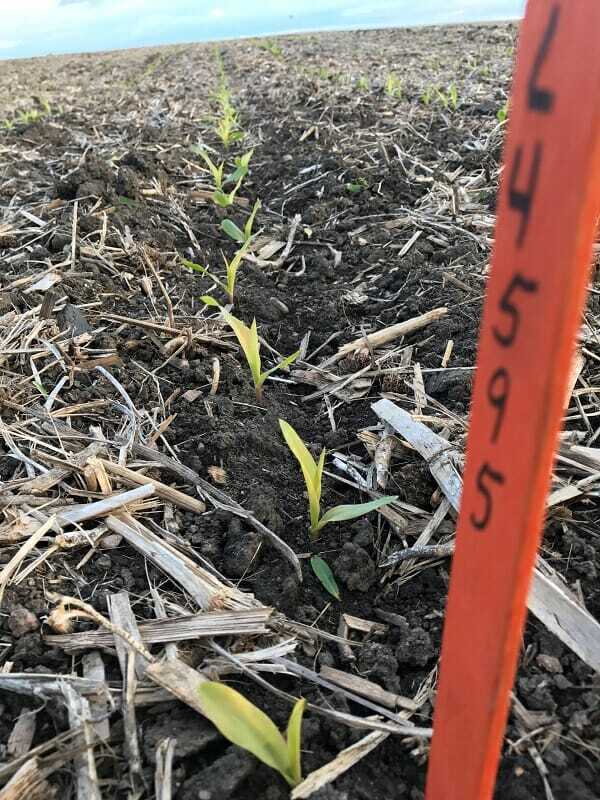
    Fields that were planted between April 20-27 have finally pushed through the soil surface after poor growing conditions delayed emergence.  This photo taken of LH 5885 VT2 PRO shows great emergence and early vigor when planted in a no-till situation.

    Northwest Iowa

    Darin Chapman

    Darin 1

    Other Brothers Inc. recently joined that Latham® dealer team, and we’re excited to see them hit the ground running! Here Matt Saboe is pictured getting their Latham Hi‑Tech Hybrids SuperStrip plot ready.

    South Central MN & North Central IA

    Cory Greiman

    We’re able to row this field of LH 5099 SS RIB. This SmartStax Refuge in the Bag hybrid has earned Latham’s designation as a Gladiator hybrid, which means it has dual modes of action for above-ground insects including: Corn Earworm, Fall Armyworm, European Corn Borer and Southwestern Corn Borer. This particular hybrid also is a boss on Goss’s Wilt.

    Southeast Minnesota & Northeast Iowa

    Craig Haaland

    Craig

    A Latham customer near Osage, Iowa, put LH 5509 SS in the ground on Friday, May 12. The weather was absolutely beautiful. It was one of those days when you’re glad to have a reason to spend it outside.

    Eastern Iowa

    Jerry Broders

    Latham® dealer Kevin Squires is passing on the farming tradition to his son, Adam. The duo worked Monday to plant a Latham plot.

    One advantage of working with family-owned, independent Latham Hi‑Tech Seeds is the variety of options we provide. Here a farmer cooperator puts in a Latham® SuperStrip plot, which showcases different traits and technologies including LibertyLink soybeans.

    West North Central Iowa

    Bart Peterson

    It’s been a crazy week of weather! Late Monday afternoon, May 15, storms moved across West Central and North Central Iowa. I was driving by the junction of Highways 3 and 17 just east of Goldfield when marble- to golf ball-sized hail began to fall. You could’ve snow plowed the hail because it was that heavy.

    Central Iowa

    Bryan Rohe

    It’s time to check emergence and stand. From what I have seen so far, the stand looks pretty good. Be sure to check all of your fields as recent rains may have caused some ponding and flooding in areas. Click here for tips on evaluating corn replant options.

    Western Iowa & Eastern Nebraska

    Larry Krapfl

    Look at all the technology going into this plot! We planted a Latham soybean plot near Friend, Nebraska, with the following:

    8 Roundup Ready 2 products
    4 Balance GT*
    6 R2 Xtend
    1 ILEVO

    **Balance™ GT Soybeans are not currently for sale by Latham Hi‑Tech Seeds until Balance Bean herbicide (Isoxaflutole) receives full regulatory approval.

    Webspec Admin

    May 17, 2017
    Corn, Crop, Season, Soybeans, Spring
  • Latham Hi‑Tech Seeds

    More Updates to XtendiMax® Herbicide Label

    Feature Tech Tuesday 01

    Tech Tuesday Header-01

    Last November the U.S. EPA approved the use of XtendiMax® with VaporGrip® technology on Roundup Ready 2 Xtend® soybeans. It didn’t take long for competitors and opponents of the Xtend technology to point out the limitations, but many of their talking points are now moot.

    The U.S. EPA, as promised, has allowed a number of significant changes to the XtendiMax herbicide label. First and foremost, Roundup PowerMAX® and WeatherMAX® formulations have been added. In addition, 34 (and counting) other herbicides are approved for tank-mixing with XtendiMax! There are now more than 110 approved adjuvants that may be added, plus the number of approved nozzles had grown to 26 as of early April.

    For farmers who intend to use XtendiMax herbicide, visit their website often to stay abreast of the latest developments.

    A section under the TANK MIX tab titled “REQUIRED DRIFT REDUCING ADJUVANTS (DRA’s)” lists products that minimize particle drift if used in combination with certain herbicides and other adjuvants.  Products needing DRA’s are clearly spelled out in the herbicide and adjuvant sections.

    Screenshot (145)

    Visit the XtendiMax website for the latest developments: http://www.xtendimaxapplicationrequirements.com

    Another very critical section of the website is “APPLICATION REQUIREMENTS.”  Here, farmers can learn what is needed to minimize drift, volatilization and off-target applications of this important herbicide technology.

    I’m excited to see so many early-adopters planning to use both Roundup Ready 2 Xtend soybeans, and the subsequent use of the XtendiMax with VaporGrip technology herbicide to help control tough-to-kill weeds in 2017.  At Latham Hi‑Tech Seeds, we believe this will be just one of the many new and exciting soybean technologies that farmers will need to combat resistant weeds in the future.

    Webspec Admin

    May 16, 2017
    Soybeans, Tech Tuesday
  • Latham Hi‑Tech Seeds

    From the Field Crop Report for May 10

    Mitch

    Northern Minnesota

    Ken Highness

    Ken

    When conditions aren’t fit, the equipment sits!

    Unfortunately, wet weather continues to plague my northern territory. Farmers here are eager to get seed in the ground but Mother Nature isn’t cooperating. This area experienced such a wet fall that some corn still needs to be harvested before planting can begin. About 0.5 inches of rain fell near Beltrami, Minnesota on Monday night. The good news is the extended weather forecast looks very favorable for timely spring planting!

    Southeast North Dakota

    Gary Geske

    Gary G

    LH 4242 has a nice sprout even in cooler fields with high residue east Enderlin, North Dakota. We are seeing good early vigor scores with Latham® seeds!

    Southeast South Dakota  

    Ramie Coughlin

    After a week of cold and wet weather, Mother Nature has done a 180! Farmers in Southeast South Dakota are now enjoying dry, warm conditions. Latham Dealers are busy loading both corn and beans this week. Lots of acres have been planted during the last seven days.  I have also seen lots of applications being done by both ground and aerial sprayers.

    Southern Wisconsin

    Greg Mair

    Wisconsin’s corn acres are 15% planted while the soybeans are slow to go in the ground.  Latham Corn SuperStrip plots were planted in Platteville and Ripon on Sunday and Monday, respectively.  Some planters are currently postponed due to overnight rains in southern Wisconsin.


    Northwest Iowa

    Darin Chapman

    Darin

    Soybean planting is starting to take off in Northwest Iowa. Perry Seeds is providing great customer service by delivering soybeans to a grower in Anthon, Iowa.


    South Central Minnesota & North Central Iowa

    Cory Greiman

    cory 1

    We’ve enjoyed about five straight days of clear skies and dry soils in North Central Iowa, but scattered showers starting falling Monday night across the area. Farmers raced against the clock to get as much seed in the ground before it got too wet. In the rain at 9:45 p.m. last night, I finished putting in my fourth Latham plot of the day.


    Southeast Minnesota & Northeast Iowa

    Craig Haaland

    Craig Haaland

    Significant planting progress has been made this past week across northern Iowa and southern Minnesota. Latham Dealer Andy Hemann Stacyville, Iowa, planted 13 Latham numbers May 5 in a corn SuperStrip plot.


    West North Central Iowa

    Bart Peterson

    All the sunshine and warm temps we’ve experienced recently have warmed the 4-inch soil temperatures from 60-66 degrees in western Iowa and from 62-71 in North Central Iowa. Lots of seed has gone in the ground this past week! The first Latham® soybean plot in my territory was planted May 6 by Jon and Jenna Ricklefs.

    Pictured second is corn that was planted before the cold front moved in is started to emerge. This field of Latham 5939 SmartStax was planted April 11 south of Hardy, Iowa.

    On the right is an awesome looking field of Latham 9700 that was planted last year. This particular variety is known for strong new stands and has a very strong disease resistance package.


    Eastern Iowa

    Jerry Broders

    Jerry 1

    Consistency is key for picket fence stands. Seed depth is just as important. Ideal planting depth for corn is 2 inches and for soybeans it is 1½ inches. Planting too deep can cause delayed emergence, uneven stands and possibly even stands that are crusted over if you would receive a hard, pounding rain right after planting. Planting too shallow will often result in poor root development and may affect the crop all the way to harvest. 

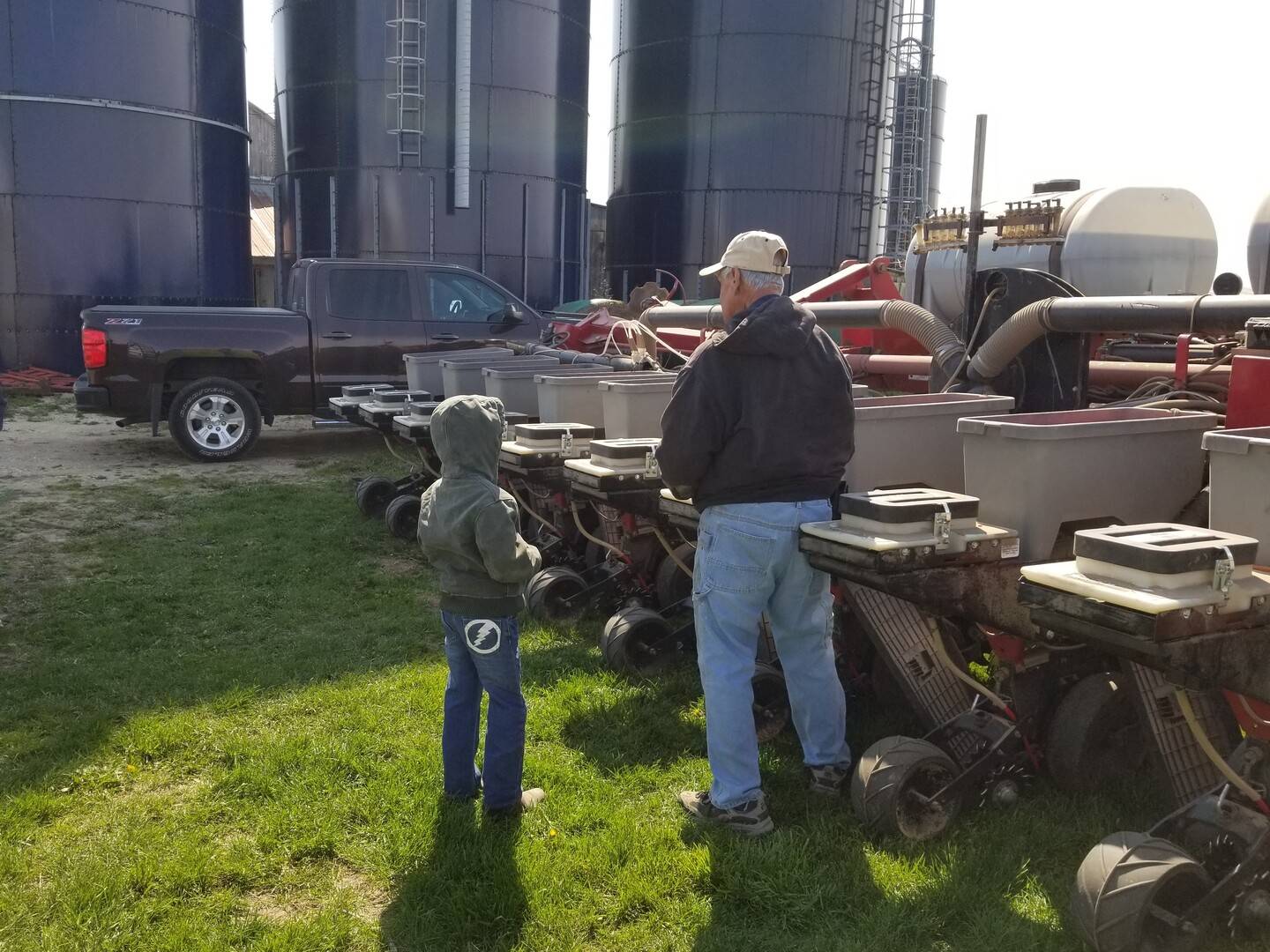
    At family-owned Latham Hi‑Tech Seeds, we enjoy doing business with farm families. Here Latham® dealer Rodney Bacon and his grandson are talking about how it’s time to get planting.


    Central Iowa

    Bryan Rohe

    Screenshot (141)

    Farmers have been burning the candle at both ends in an attempt to cover as much ground as possible while the weather cooperates. Our Latham Dealer near State Center has very few units left to deliver as planting in this area is about 90 percent complete.

    Northwest Iowa

    Larry Krapfl

    Larry 1

    LH 5885 VT2 PRO is practically jumping out of the ground six days after planting.

    Southern Minnesota

    Brandon Wendlandt

    brandon 1

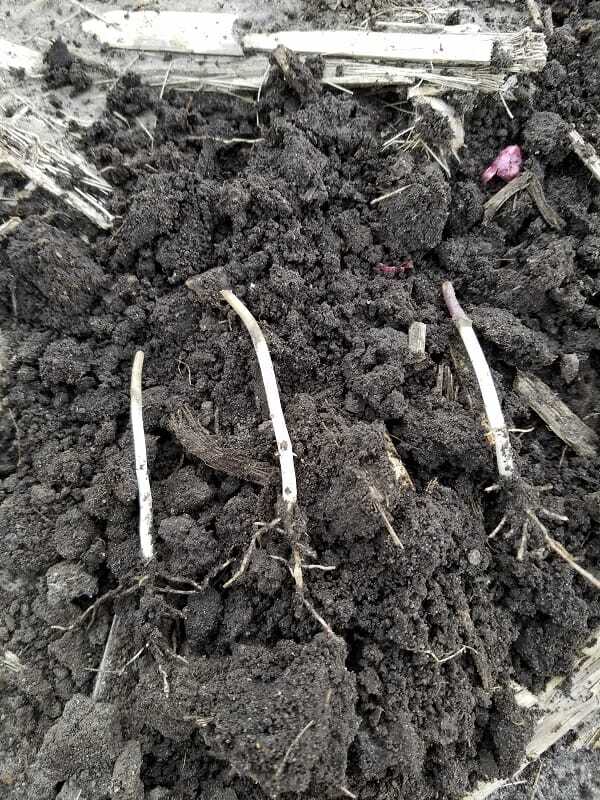
    Root development looks great on the LH 5095 VT2 that was planted on April 24.  Although it hasn’t yet emerged, it survived the cold weather. This corn will be popping up in rows after a few more days of sunshine.


    Webspec Admin

    May 10, 2017
    Corn, Crop, Season, Spring
  • Latham Hi‑Tech Seeds

    From the Field Crop Report for April 26

    Greg 3

    Eastern North Dakota

    Brain McNamee

    As part of our FieldxFieldSM crop planning for alfalfa, we test for electro conductivity in soils. As is the case in this particular field with a high reading, we will plant LH 9300 ST salt tolerant alfalfa.
    As part of our FieldxField crop planning for alfalfa, we test for electro conductivity in soils. As is the case in this particular field with a high reading, we will plant LH 9300 ST salt tolerant alfalfa.
    • LH 9300 ST salt tolerant alfalfa

    Southeast North Dakota

    Gary Geske

    Temperatures around Enderlin, North Dakota reached 50 degrees, but a cold front moved in Saturday night. Snow fell across parts of northern Minnesota and the Dakotas, so it’s not planting weather here now. Mostly small grains have been planted. Soil temperatures need to rise and fields need to dry before corn planting gets underway.

    Northeast South Dakota

    James Keltgen

    Very little progress in NESD this past week. Some fieldwork being done, small grains still being seeding and a handful of growers started on a little corn. Very cold this week and growers are waiting for warmer weather and soil temps. Current soil temps are lower 40's.
    Very little progress in Northeast South Dakota this past week. Some fieldwork being done, small grains still being seeding and a handful of growers started on a little corn. Very cold this week and growers are waiting for warmer weather and soil temps. Current soil temps are lower 40’s.

    Southeast South Dakota

    Ramie Coughlin

    When it 37 degrees and overcast on the prairie, the seed sits safely in the shed.

    Northern Minnesota

    Ken Highness

    Cloud cover is thick in Northern Minnesota as farmers wait for soil temps to rise and start #plant17
    Cloud cover is thick in Northern Minnesota as farmers wait for soil temps to rise and start #plant17

    Southern Minnesota

    Brandon Wendlandt

    A Latham corn SuperStrip plot went in the ground near Morgan, Minnesota this week. These tests, which are proprietary to our company, play a key role in helping us select our product lineup as existing and experimental products are tested across multiple locations each year.
    A Latham corn SuperStrip plot went in the ground near Morgan, Minnesota this week. These tests, which are proprietary to our company, play a key role in helping us select our product lineup as existing and experimental products are tested across multiple locations each year.

    Southern Wisconsin

    Greg Mair

    In northern Wisconsin, farmers are waiting for the cover crops to be sprayed before they begin planting. This farmer experimented with multiple ways to seed cover crops in 2016. He seeded this rye with an airplane into standing soybeans about 2-3 weeks prior to harvest. Now that the soil has dried, spring fieldwork is underway and the first Latham corn plot has been planted south of Monroe, WI!

    Northwest Iowa

    Darin Chapman

    One of our new dealers prepares to deliver seed and treat soybeans.
    One of our new dealers prepares to deliver seed and treat soybeans.

    South Central MN & North Central IA

    Cory Greiman

    Pictures above display soil temperatures dropping at a rapid pace.

    Southeast Minnesota & Northeast Iowa

    Craig Haaland

    Farmers across my territory are being cautious about planting because weather conditions could favor imbibitional chilling. Chilling effects are more severe when seeds are planted into soils 50 degrees F and then absorb colder water within the first 24 to 48 hours after planting.
    Farmers across my territory are being cautious about planting because weather conditions could favor imbibitional chilling. Chilling effects are more severe when seeds are planted into soils 50 degrees F and then absorb colder water within the first 24 to 48 hours after planting.

    Eastern Iowa

    Jerry Broders

    #Plant17 is taking place in Eastern Iowa! In addition to fieldwork, new this week is a 14 hybrid plot put in by Iowa City.

    West North Central Iowa

    Bart Peterson

    When the calendar pages turn toward the end of April and seed corn is sitting in the shed, many farmers feel anxious about getting seed in the ground. Yields will be better when seed is planted into warmer soil at a later planting date than they will be if soil temperatures drop and cold rains fall shortly after planting. The biggest threat of imbibitional chillingis 24 to 48 hours after planting. When seed absorbs water colder than 50 degree F, loss of seed vigor and death may result.

    Central Iowa

    Bryan Rohe

    Colder temps and forecasted rain has slowed corn planting across Central Iowa. You don't want that first drink to be a cold one! Imbibitional chilling can have a big impact on corn yield potential. Twenty four to 36 hours after planting is critical; a chilling effect can occur when seed imbibes, or absorbs, water colder than 50 degrees Fahrenheit.
    Colder temps and forecasted rain has slowed corn planting across Central Iowa. You don’t want that first drink to be a cold one! Imbibitional chilling can have a big impact on corn yield potential. 24 to 36 hours after planting is critical; a chilling effect can occur when seed imbibes, or absorbs, water colder than 50 degrees Fahrenheit.
    • Imbibitional chilling

    Western Iowa & Eastern Nebraska

    Larry Krapfl

    This plot cooperator finished corn #plant17 when this Latham plot went in the ground.
    This plot cooperator finished corn #plant17 when this Latham plot went in the ground.

    Webspec Admin

    April 26, 2017
    Alfalfa, Cover Crops, Crop, Season, Spring
  • Latham Hi‑Tech Seeds

    Control Planting Conditions to Maximize Yield Potential

    Bart W NC IA1

    The planters are ready to roll as this is coming to you! That’s why I’m reminding everyone how important the proper start to the season is.

    If the planting season gets off to a bad start, it’s only going to get worse throughout the growing season. That’s why it’s so important to plant into fit soil conditions, at the proper depth and at a slow enough speed.

    As a farmer, I understand the urgency to get seed in the ground. We’re so eager that sometimes we mud the crop into a less than desirable seed bed, and sometimes we plant at higher speeds to get more acres planted in a day. However, days on the calendar don’t make up for mistakes in the field. Keep in mind that haste makes waste.

    A few years ago, I conducted speed and planter depth testing on our farm. I found that our John Deere 7000 planter was most accurate at 4.5 to 4.8 miles per hour (mph), and our yields were the best at a depth of 1.75 to 2 inches. I saw as much as a 10-bushel difference at higher planting speeds and a 20-bushel difference when seed was planted at 1.25 to 1.5 inches deep. Root systems were considerably smaller where the seed was planted shallower and at faster speeds.

    Also remember to check depth and spacing each time you move to a different field to ensure depth and spacing works in that field’s soil type and texture. Wishing you all a safe and great planting season!

    Bart W NC IA


    Webspec Admin

    April 20, 2017
    Corn, Crop, Soybeans
  • Latham Hi‑Tech Seeds

    From the Field Crop Report for April 19

    Greg S WI 4 SeedPallet

    The time is here! #Plant17 has arrived, and farmers throughout the region are gearing up for the 2017 growing season. Pictures can often best portray what is happening in the world around us, so we have updated our weekly From the Field crop reports! We will be sharing #crop17 highlights throughout our marketing territory, with a photo or two to accompany it. These pictures are submitted from our Regional Sales Managers who are in the field every day with our dealers and customers. We hope you enjoy our first From the Field report for the 2017 planting season below!


    Eastern North Dakota

    Brain McNamee

    Brian M
    Spring fieldwork in underway. Farmers in western North Dakota are applying anhydrous and focusing on getting small grains planted.

    Southeast North Dakota

    Gary Geske

    Gary - SE ND
    There’s still snow in the ditches between Minot and Bismarck, so it’s evident that not all fields are fit for planting yet in North Dakota. Small grains are going in the ground in the southeast part of our state. One Latham® customer who lives north by Rolette said it might be mid-May before they’re able to get in the field.

    Northeast South Dakota

    James Keltgen

    James SESD
    Fog looms in Northeast South Dakota. Very little fieldwork and small grain seeding has been done here as soils are wet. Fieldwork is progressing in Central SD where moisture is lacking.

    Southeast South Dakota

    Ramie Coughlin

    Ramie 1
    A view of some spring prep work from the driver’s seat in South Dakota.


    Ramie 2
    Planting conditions have been ideal for small grains in South Dakota!! Corn will have to wait, but until then small grains are in full swing.

    Northern Minnesota

    Ken Highness

    Ken - N MN - 1
    Preventative maintenance is underway near Gilby, ND for spring planting.

    Ken - N MN - 2

    Southern Minnesota

    Brandon Wendlandt

    Brandon S MN
    Rain showers have been falling this week across southern Minnesota, but the seed I’m moving around is under cover and dry.

    Southern Wisconsin

    Greg Mair

    Greg - WI - Alfalfa
    Areas of the state were affected by winterkill on their alfalfa acres.  Pictured here is a good stand of alfalfa in southern Wisconsin.  It’s estimated that 75,000 to 100,000 acres of alfalfa in Wisconsin is suffering from some sort of winter damage.


    Greg - WI- 2 - TurkeyManure
    As farmers wait for fields to dry out, there are still many farms that need to haul manure before planting can begin.  A farmer is loaded up with turkey manure headed to the field, attempting to beat the rain.


    Greg - S WI - 3 - SeedDelivery
    A semi backs up to the seed shed of a dealer in Wisconsin.  As the last bit of corn arrives, dealers are making sure to deliver seed to the growers before they hit the fields.


    Greg - S WI - 4 - SeedPallet
    Seed sits in the shop awaiting dry weather to get planted.  Most of the state has been blanketed with rain over the past two weeks, and more rain on the way Wednesday afternoon.  Much of the state is waiting for the ground to dry out before working up any ground.  Depending on how much rain is received Wednesday evening, I expect tillage equipment and planters to be rolling this weekend.

    Northwest Iowa

    Darin Chapman

    Darin - NW IA - 1
    This season we’re looking forward to conducting a variable planting rate and multi-hybrid research study for Latham Hi‑Tech Seeds on our family farm near Spencer. Here my brother, Tim, and my six-year-old son and I are working on the multi-hybrid planter. Photo credit to my nephew, Dan, who’s studying Agricultural Systems Technology at Iowa State University.


    Darin - NW IA 2
    We’ve been busy preparing our new planter, which is color coordinated. Blue indicates one particular hybrid and orange is another.  Blue supplies the odd rows of the planter and orange supplies the even rows.

    South Central Minnesota & North Central Iowa

    Cory Greiman

    Cory NC IA
    Winter kill is evident in alfalfa fields across North Central Iowa due to ponding and ice cover. Check out these articles on The Field Position to help evaluate winter kill and to manage alfalfa based on winter injury.

    Southeast Minnesota & Northeast Iowa

    Craig Haaland

    Craig - SEMN NE IA
    A few units of seed has yet to be delivered as wet weather stalled planting progress here in North Iowa. Rain is in the forecast again this week for Wednesday and Thursday.

    West North Central Iowa

    Bart Peterson

    Bart W NC IA
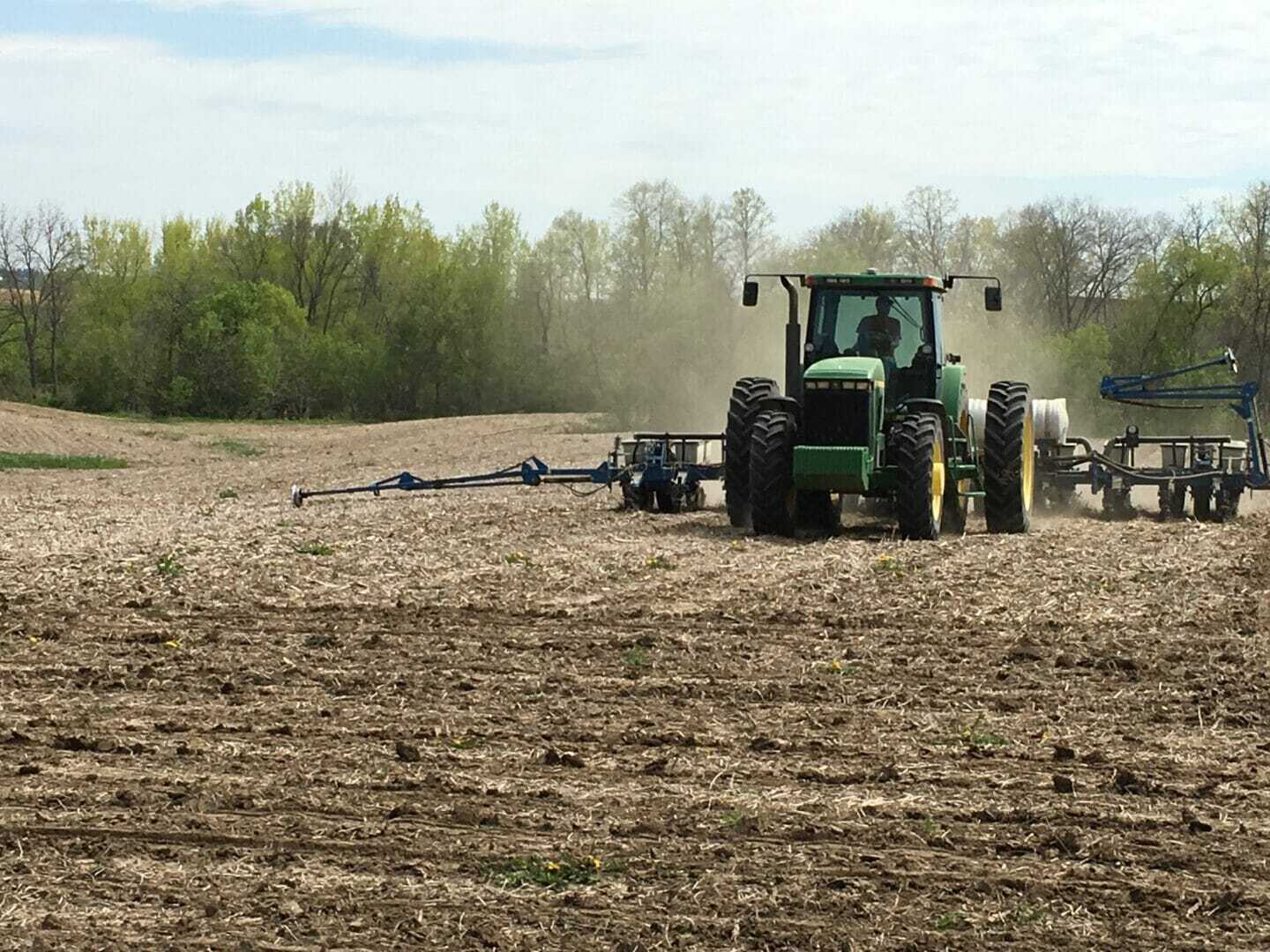
    Farmers across western Iowa worked around rain showers to get seed in the ground. In this photo, LH 5096 VT PRO was being planted near Rolfe on April 11.


    Bart WNCIA 2
    Latham® dealer Jenna Ricklefs making seed corn deliveries.

    Eastern Iowa

    Jerry Broders

    Jerry E IA 1
    Latham® seed sorted and ready for delivery.

    Jerry E IA 2

    Jerry E IA 3

    Central Iowa

    Bryan Rohe

    Latham dealer in Pella, IA discusses the benefits of using cover crops the last 3 years consecutive.
    Latham dealer in Pella, IA discusses the benefits of using cover crops the last 3 years consecutive.

    Western Iowa & Eastern Nebraska

    Larry Krapfl

    Pictured above is a great stand of alfalfa in western Iowa. Outstanding weather has contributed to the great stand is because of increased seeding populations. Research has shown a remarkable response to increased seeding populations.
    Pictured above is a great stand of alfalfa in western Iowa. Outstanding weather has contributed to the great stand is because of increased seeding populations. Research has shown a remarkable response to increased seeding populations.

    Webspec Admin

    April 19, 2017
    Corn, Crop, Season, Soybeans, Spring
  • Latham Hi‑Tech Seeds

    Quick Steps to Slow Spread of Soybean Aphid Resistance

    Soybean Aphids

    More than 100 soybean aphids collect on the underside of a soybean leaf. Pest feeding can inhibit the plant's ability to make grain, or kill it outright.

    The number one soybean insect pest is growing across the Upper Midwest. Recent reports indicate some aphid populations are developing resistance to insecticides, especially pyrethroid products.

    While we may not be able to stop the spread of this resistance, we can certainly slow it down by using these best management practices:

    • Avoid spraying any insecticide if the economic threshold has not been reached. The accepted economic threshold is 250 aphids per plant in 80% of the field as long as the aphid population is increasing. This should not be confused with the injury threshold, which ranges from 600 to 700 aphids per plant. The economic threshold is designed to give farmers time to apply insecticide before the field reaches the injury threshold.
    • Use insecticides with different modes of action just like we use herbicides with different modes of action to help control resistant weeds. Some common examples of pyrethroid products include Warrior®, Mustang®, Asana®, Baythroid® and Pounce®, as well as a host of generic products. Lorsban® is an example of an organophosphate insecticide that may be used for aphid control.
    • Avoid adding insecticide to herbicide application just as “insurance” or to save a trip across the field, as this can easily lead to resistance problems.
    • When applying insecticides, good coverage is essential. Higher spray volumes and pressure help to move the product down into the soybean canopy.
    • As with many potential threats, scouting early and often is crucial to overall success!Soybean aphids can greatly increase in numbers if the weather is cooler than normal and if natural predators are not present.

    First identified in Wisconsin during the summer of 2000, soybean aphids are found in 21 states and three Canadian provinces. Besides the damage they do by sucking sap from plants, aphids also are vectors of several viruses that attack soybeans.

    Scouting for aphids is key for maintaining the health of your soybean crop now… and in the future. Do what you can now to keep numbers down and to avoid insecticide resistance from building.

    Webspec Admin

    April 12, 2017
    Agronomics, Crop, Insects, Soybeans
  • Latham Hi‑Tech Seeds

    Xtend Soybeans: Frequently Asked Questions

    RRX Crop Syste email header

    rrx_crop_syste_email_header

    There are lots of questions with any new products, and that’s also the case with Xtend soybeans and the new herbicide  XtendiMax™ with  VaporGrip™  technology. Below are answers to frequently asked questions:

    Q. Do Xtend soybeans yield as well as other soybeans?

    A. The short answer is yes. Latham’s Xtend soybeans excelled in the 2016 F.I.R.S.T. Trials. Like any soybean variety, optimal yield is achieved by placing them in the correct environment.

    Q. Does VaporGrip control drift?

    A. VaporGrip does NOT control drift, but it does significantly reduces the potential of volatility.

    Q. How can I control drift?

    A. Here’s a summary of required application requirements:

    • Use nozzles and operating pressure listed on the herbicide product label to minimize driftable fines. These nozzles make bigger droplets that, when used with lower pressure and a minimum of 10 gallons of spray solution per acre, help minimize drift.
    • Use at the application rate of 22 fluid ounces per acre for any single, in-crop application.
    • Do not exceed a boom height of 24 inches above the target pest or soybean canopy.
    • Apply when wind speed is between 3-10 mph, and avoid application if there is no breeze at all.
    • Do not exceed 15 mph ground speed.
    • Do not apply when wind is blowing toward adjacent susceptible crops.

    Q. Do I have to put in a buffer strip?

    A. The label requires a buffer to protect sensitive areas. Read and follow the label instructions.

    Q. Can I apply Ammonium Sulfate (AMS) with XtendiMax with VaporGrip?

    A. Ammonium Sulfate and ammonium-based additives are prohibited in applications that include XtendiMax with VaporGrip Technology.

    Q. Can I tank mix any Roundup with XtendiMax herbicide?

    A. To find a list of approved products for tank mixing, click here. Before application, farmers and applicators should visit http://www.roundupreadyxtend.com/ to see if any new products have been approved for tank mixing.

    Q. Am I required to use a residual herbicide with XtendiMax with VaporGrip?

    A. You are not required to do so, but using a residual pre- and post-emergence strategy as outlined in the Roundup Ready Xtend Crop System for in-crop use will give better weed control and can net you $14/acre cash back.

    Q. Do I get any residual activity with XtendiMax Herbicide with Vapor Grip?

    A. You can get up to 14 days of soil activity from Dicamba on certain small-seeded broadleaf weeds to help other residual herbicides control weeds.

    Q. Do I have to spray XtendiMax Herbicide on Xtend soybeans.

    A. No, you can spray Xtend soybeans with any herbicide approved for Roundup Ready soybeans.

    This Q&A is not meant as a substitute for reading and following all product labeling. Find more insight below:

    • Farmers Have More Options to Fight Weeds
    • Latham Offers Xtend Products for 2017 Planting


    Webspec Admin

    March 29, 2017
    Crop, Seed Technology, Soybeans
  • Latham Hi‑Tech Seeds

    Balance™ GT Soybeans: One Step Closer to Commercialization

    A9R1tgi400 89emay 9t0
    Visitors to Latham headquarters last fall for our field day saw replicated tests of Balance GT along with EnlistTM, Roundup Ready 2 Xtend® and LibertyLink® soybeans. Plots conducted by Latham’s Research Team show there are good genetics to go with the Balance GT technology, so we’re eager for full approval to make them available.
    Visitors to Latham headquarters last fall for our field day saw replicated tests of Balance GT along with EnlistTM, Roundup Ready 2 Xtend® and LibertyLink® soybeans. Plots conducted by Latham’s Research Team show there are good genetics to go with the Balance GT technology, so we’re eager for full approval to make them available.

    February and March are key months for Latham’s product team as we focus on choosing next year’s product lineup. What we grow in 2017 becomes the seed we offer for 2018, so you might say our 2018 guide “hangs in the balance.”

    Last month, Balance™ GT soybeans received import approval from China. Balance™ GT has already received approval from these critical countries: Argentina, Brazil, Canada and the European Union. However, Balance® Bean herbicide is pending registration.

    Bayer has announced it won’t release the technology until the chemical is fully approved by the U.S. Environmental Protection Agency (EPA). Balance GT soybeans may be sprayed with glyphosate and with Balance Bean herbicide, which contains the same active ingredient as Balance herbicide for corn. Although the first generation of Balance GT products won’t have resistance to Liberty herbicide, Bayer plans to add Liberty resistance in the near future.

    Balance™ GT and Monsanto’s Xtend™ soybeans have both been approved in the past year, and we’re hopeful that Dow’s Enlist™ soybeans will be approved in 2017. We’re eager for this approval for two reasons:

    1. Farmers need new tools to win the fight against weed resistance.
    2. Increased competition helps keep seed prices down. With the Bayer/Monsanto merger pending; all of these technologies would be controlled by one company: RR1, RR2, RR2 Xtend, Liberty and Balance GT. There’s a good chance one of more of these technologies will be sold for the Justice Department to approve the merger. I believe it’s in farmers’ best interest for these technologies to be owned by competing companies.

    One benefit of our family-owned seed business is that we can access the industry’s latest and greatest technologies, regardless of which trait providers own them! That means Latham dealers can sell seed that best fits a customer’s situation.

    As well, stay tuned for updates on new approvals. You can be sure we will offer new products as soon as they become commercially available!

    John Latham, President

    March 22, 2017
    Agriculture, Crop, Industry News, Soybeans
Previous Page
1 … 41 42 43 44 45 … 62
Next Page

Latham Hi‑Tech Seeds

131 180th Street | Alexander, IA 50420

(641) 692-3258

SIGNUP FOR OUR NEWSLETTER
  • Contact
  • Legal
  • Dealer Center
  • Seedware Login
  • Latham Gear

© 2025 Latham Hi‑Tech Seeds. All rights reserved. | Iowa Web Design by Webspec | Privacy Policy

Latham® Hi-Tech Seeds is a trademark of M.S. Technologies, L.L.C., 103 Avenue D, West Point, IA 52656.