Latham Hi-Tech Seeds

(641) 692-3258

  • Home
  • Performance
  • Products
    • Corn
    • Soybeans
    • Soybean Blends
    • Alfalfa
    • Corn Silage
    • Seed Guide
  • Find a Rep
  • Media
    • Blog
    • News
    • Videos
    • Podcasts
    • TECHTalk
  • About Us
    • Company History
    • Our Mission
    • Careers
    • Become a Rep
    • Sowing Seeds of Hope
  • Contact Us
  • Latham Hi‑Tech Seeds

    From the Field Crop Report: August 9th

    Brian 11

    Eastern North Dakota 

    Brian McNamee

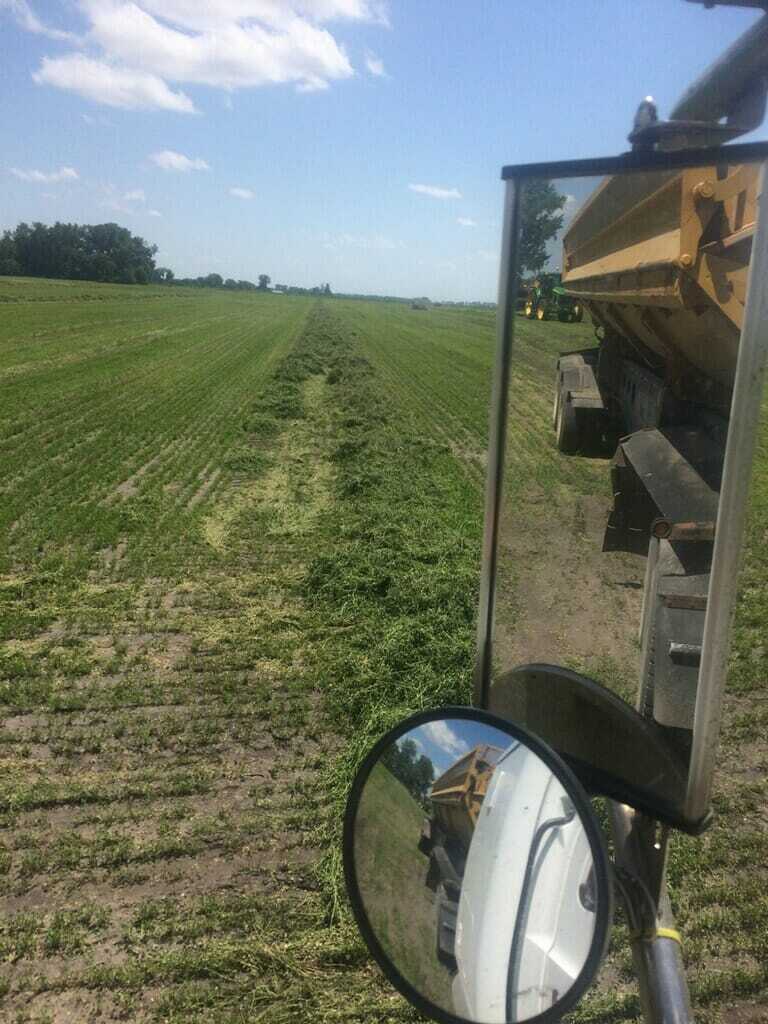
    Wow what a difference a week and 2.5 to 3 inches of rain makes. Phone calls went from customers calling asking about mycotoxins, poisonous nitrates and whether to bale or cut for silage to asking if they should now spend the extra money to push yield with all the lost fertility. Made the job way more enjoyable! I am amazed how much better these new corn hybrids and soybean varieties take adverse conditions.

    Southeast North Dakota

    Gary Geske

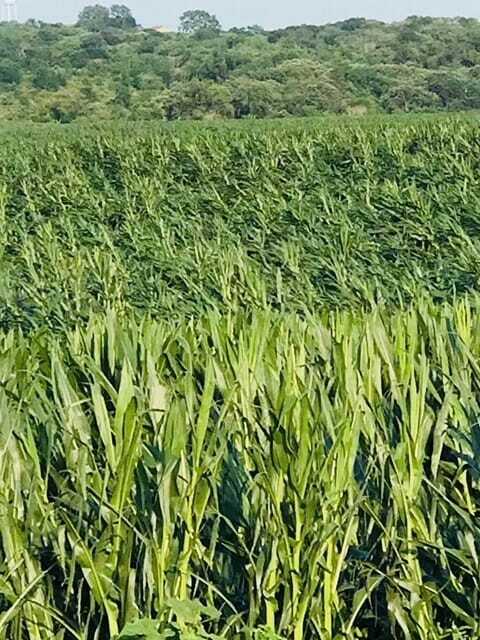
    This photo was taken yesterday of our experimental conventional silage hybrid. It’s 11 feet tall and green.

    Gary 1

    Northeast South Dakota 

    James Keltgen

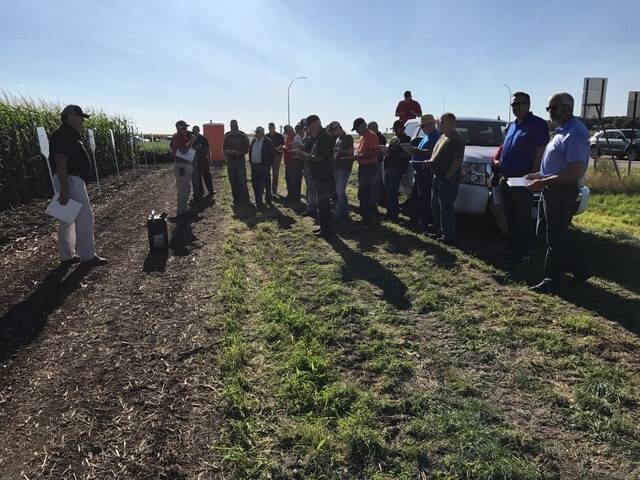
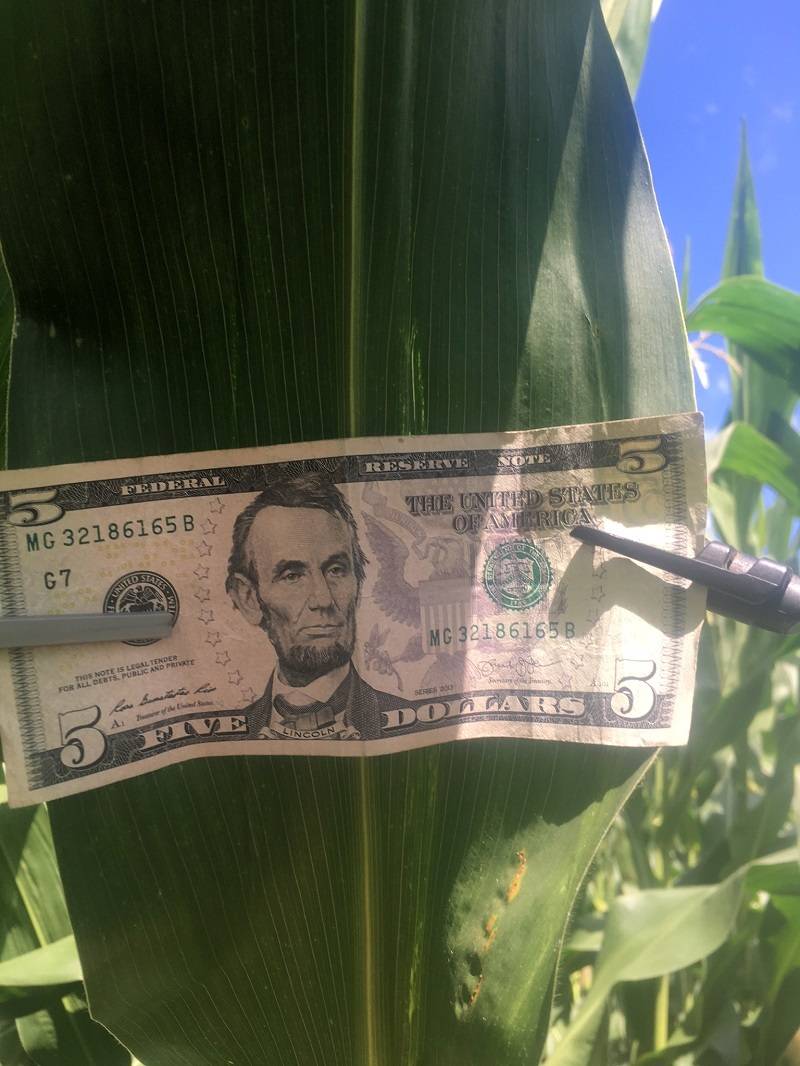
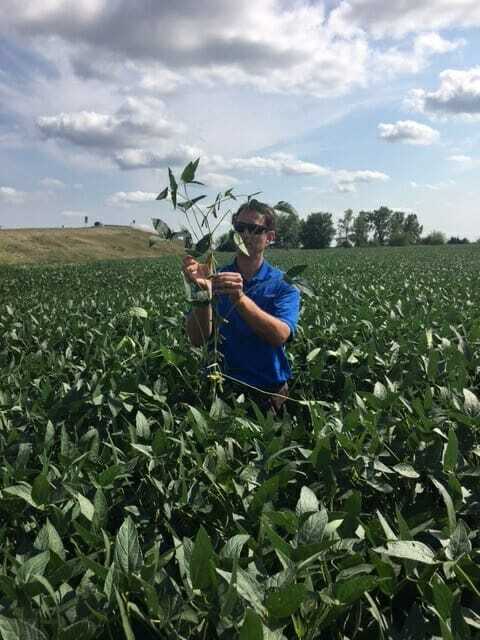
    Leaves are puckering from lack of moisture in this Enlist demonstration plot. Most of the corn in my territory is done pollinating and is in the milk stage. Soybeans rea beginning to fill pods with little to no insect pressure so far. Some rain has fallen in drought-stricken areas, however, the damage has already been done to crops.
    Southeast South Dakota

    Ramie Coughlin

    This week has been quiet in Southeast South Dakota. Recent rains and cooler temperatures have allowed the crops to do what they do best, produce. Some of those rains came very timely for many acres where others it was a bit to late already. This next week I look forward to visiting with many of you at Dakota Fest in Mitchell and learning about how your acres are looking.

    Ramie

    Northern Minnesota

    Ken Highness

    Latham’s corn and soybean research plots help us evaluate products to bring into the product lineup. Latham Seed Product Manager Mark Grundmeier and Gary Geske, our Northern Product Specialist, are pictured here evaluating potential products on August 8 in Grand Forks, ND.

    Ken

    Southern Minnesota

    Brandon Wendlandt

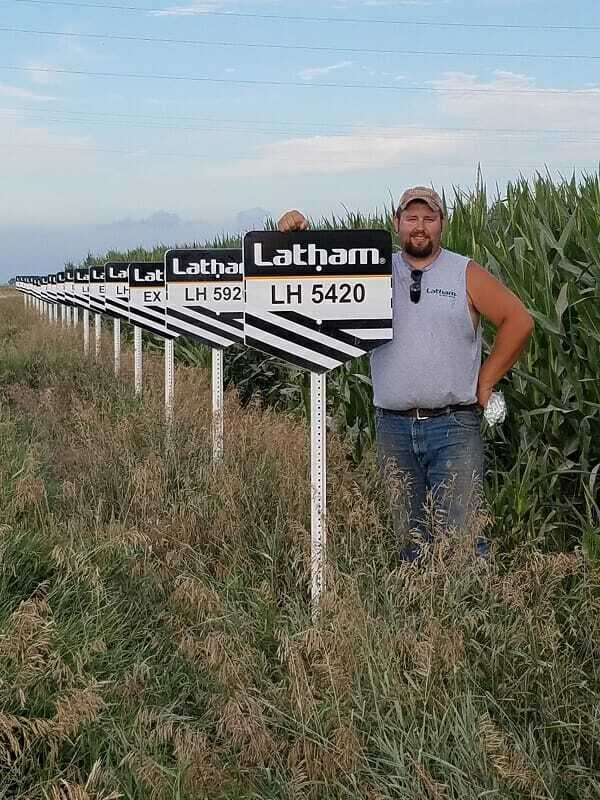
    The Latham regional plot in Minnesota is signed and ready to go! You’re welcome to join us in Mountain Lake on Tuesday August 22, at 5 PM.

    Brandon

    Southern Wisconsin

    Greg Mair

    Herbicide-resistant weeds becoming a growing problem in Wisconsin, so farmers and custom applicators have begun switching up herbicide programs.  With the changes in herbicide programs, come changes in the sprayer tank cleaning procedure. A rinse or flush with water may have worked in the past for glyphosate, but it does not work for all herbicides. I’ve seen numerous soybean fields this year affected by improper tank cleaning when switching chemistry or fields, such as this one showing affects of ALS-inhibiting herbicide damage.

    Northwest Iowa

    Darin Chapman

    Latham Hi‑Tech Seeds provides leadership to Upper Midwest farmers when choosing the right products for their specific geographies.  We understand that precision agriculture plays a big part in helping us make these decisions.  This is why we are doing research with our multi-hybrid planter to really micro-manage product placement.

    South Central Minnesota & North Central Iowa

    Cory Greiman

    Aerial view of our dealer’s super strip plot near Garner, IA.  It had some hail damage back on 7/10/17.

    Cory

    Southeast Minnesota & Northeast Iowa

    Craig Haaland

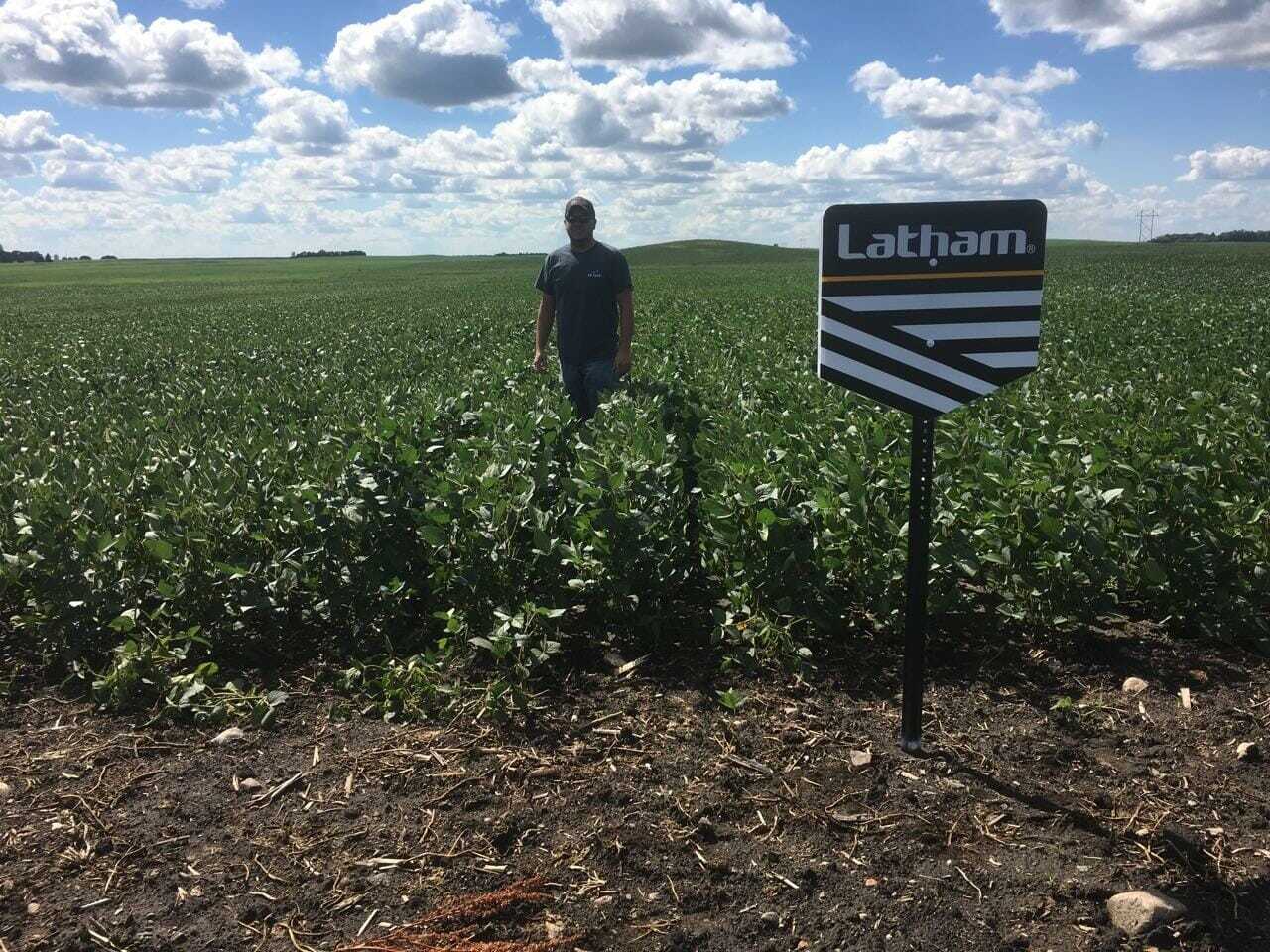
    Corn and soybean crops are looking really good throughout my territory. This picture of Latham’s 2358 Liberty soybeans was taken in Mitchell County.

    The Mitchell County cornfield was planted corn-on-corn in late April to our popular LH 5509 SS RIB. Fungicide was applied to this field about 10 days ago, and it’s looking extremely good.

    We could use a shot of rain this week, which is in the forecast. We also need to keep scouting fields to stay ahead of pest problems. At this point, I haven’t seen any aphids in soybean fields, but as we all know, they can move in quickly. Keep a watchful eye on them!

    West North Central Iowa

    Bart Peterson

    Latham Hi‑Tech Seeds has a strong lineup of IRONCLAD soybeans, which offer the toughest defensive package. These soybeans are selected for “defense,” but they still pack a yield punch. Click here to see why IRONCLAD is your best defense against Iron Deficiency Chlorosis (IDC).

    If you’re looking for a soybean with outstanding IDC tolerance, then L 1882 R2 is the product for you! This photo was taken of a field located 3 miles west of Gilmore City Iowa on Highway 3. Some areas in this field have a pH ranging from 8.0 to 8.3, but there’s no yellowing. High PH causes iron to be unavailable to plants, leading to stunted growth.


    Bart 1

    Eastern Iowa

    Jerry Broders

    Keep scouting soybean fields for aphids and Sudden Death Syndrome. Keep an eye on corn for diseases that can rob yield. Gray Leaf Spot starting to appear in some Eastern Iowa corn fields. Crop stage and amount of infection make a difference when making the decision to apply fungicide.

    Central Iowa

    Bryan Rohe

    Western Iowa & Eastern Nebraska 

    Larry Krapfl

    In spite of hot and dry weather there doesn’t appear to be any pollination issues!

    Webspec Admin

    August 9, 2017
    Corn, Crop, Season, Soybeans, Summer
  • Latham Hi‑Tech Seeds

    From the Field Crop Report: August 2nd

    Ken 2

    Eastern North Dakota 

    Brian McNamee

    Test plots are starting to show well. Varieties are starting to stand out and separate themselves. Some of the newer products, especially 0263 R2x, look exciting.

    Southeast North Dakota

    Gary Geske

    You can’t scroll through Facebook or Twitter or tune into the radio this summer without hearing talk about herbicide-damaged crops. The buzz has been so centered on dicamba that many people are quick to make assumptions.

    In this photo, dicamba was blamed for the damage when it actually resulted from an HPPD-inhibiting herbicide like Balance or Callisto.

    How can you tell the difference? Check out this injury summary from Penn State, and learn the four signs of dicamba drift from the Prairie Farmer.

    Crop consultants and college diagnostic labs can aid in proper diagnosis. Correct diagnosis is needed, so the correct actions may be taken to correct the problem in the future. Correct diagnosis is also important for insurance purposes.

    Northeast South Dakota 

    James Keltgen

    Milder temperatures prevailed this last week of July, which coincided with much of tasseling. Many farmers are still waiting on rain. Pastures and crops have been damaged due to lack of rain. Soybeans are beginning to fill pods as some are now waist high. August rains can make a soybean crop, so we’re hoping precipitation is on the way!

    Southeast South Dakota

    Ramie Coughlin

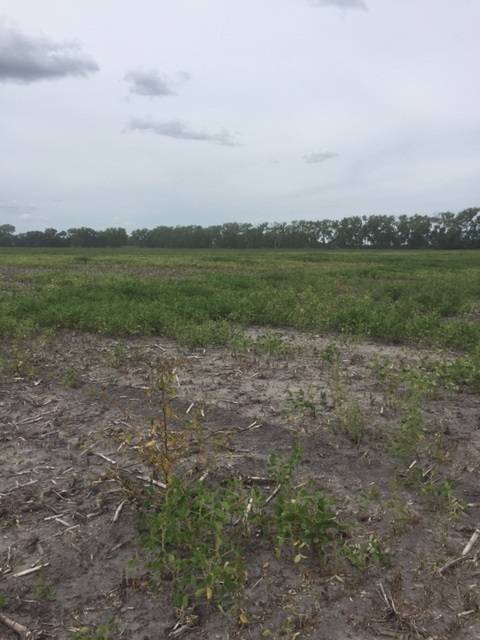
    The last two weeks have brought some much needed rain to South Dakota. Rain fall amounts ranged from one to 11 inches. These two photos were taken only a few miles away and 6 days apart. Wheat harvest is well under way, and yield reports are variable. Some wheat is coming out with good yields, test weight, and protein; other fields got hit by the drought. I have a feeling we’re going to see variable yields across the board this crop year, depending on where and when fields got rain.

    Northern Minnesota

    Ken Highness

    This is 160 acres of Latham’s LH 4242 VT PRO planted April 18 in Clay County near Moorhead, Minnesota. This field is currently in the R2 stage (blister stage) where the kernels are white on the outside, with clear liquid inside. This is a great looking field of corn, but we could use rain to finish out strong at harvest!

    Ken 2

    Southern Minnesota

    Brandon Wendlandt

    We’re having a great time at FarmFest! Be sure to stop by Latham Seeds’ booth (#4106) on Wednesday and Thursday to see the exciting new products we’re offering for 2018.

    Brandon


    Southern Wisconsin

    Greg Mair

    In Wisconsin, we have been spared the waterhemp resistance issues up until now.  Waterhemp is showing up in full force including the northwest, southwest, and northeast corners of the state.

    Latham® Seeds Rep Clinton Buss discusses weed escapes with a customer in Southwest Wisconsin.  Ignoring weed resistance issue will only create more resistant weeds.  Now is the time to evaluate your herbicide program and plan ahead for next season.  Keep in mind that Latham’s product lineup includes options such as LibertyLink and Xtend Soybeans.  Contact a Latham® Seeds rep to discuss the best option for your fields in 2018.

    Greg 1

    Northwest Iowa

    Darin Chapman

    These future Latham® Seed reps are excited to try flying the drone over their family farm! We took good look at our Northwest Iowa Regional Plot.

    South Central Minnesota & North Central Iowa

    Cory Greiman

    These photos remind us of the importance of properly rinsing sprayer lines and tanks.

    Southeast Minnesota & Northeast Iowa

    Craig Haaland

    August is a key time for soybean fields to receive moisture. Soybeans in southern Minnesota are really taking off and growing rapidly now. It’s important to keep scouting as aphid populations are growing.

    Managing your corn and soybean fields is critical now. Planes, helicopters and ground sprayers have been really busy this past week putting on fungicide.

    Haaland

    West North Central Iowa

    Bart Peterson

    This field of LH 5939 SS was planted April 12 near Humboldt, in a corn-on-corn situation at 33,000 plants per acre. This field had some pollination issues due to very little rain in the last month in a half. Corn ears don’t look too bad, considering the lack of rain during grain fill.

    Eastern Iowa

    Jerry Broders

    Japanese beetles have been a problem in Eastern Iowa this summer, and some farmers are spraying for them now.  The economic threshold is 20% defoliation a reproductive growth stage in soybeans and 30% for pre-bloom soybeans. Also check your corn for silk clipping by the Japanese beetles.

    Central Iowa

    Bryan Rohe

    Japanese Beatles are showing up in fields near Madrid, Iowa. It’s important to scout fields and note defoliation as treatment might be warranted. Also look in corn fields for leaf clipping.
    Lack of moisture has been a problem for many fields across my territory this season, and we’re seeing signs of heat stress. For example, this field of corn near Cambridge is showing little tip back.

    Western Iowa & Eastern Nebraska

    Larry Krapfl

    Just as Iowa Secretary of Agriculture Bill Northey states last week, much of the state is very dry. Farmers are hoping for a good soaking rain as we enter August, which is a critical time for soybeans. Pastures also are in desperate need of rain, and livestock producers hope much needed moisture will fall soon.


    Webspec Admin

    August 2, 2017
    Corn, Crop, Season, Soybeans, Summer
  • Latham Hi‑Tech Seeds

    Podcast: Corn Rootworm

    LIBSYN header 4

    LIBSYN header 2-01

    http://traffic.libsyn.com/fromthefield/Corn_Rootworm.mp3

    Welcome back to our Ask the Agronomist podcast! This week, Phil and Kilah discuss corn rootworm and how scouting now can help you plan for #crop18. Tune in for a 10-minute from the field agronomy update!

    Do you have #crop17 growing questions? Submit them to us on either Facebook, Twitter, Instagram or Snapchat. Thanks for tuning in!

    Webspec Admin

    July 27, 2017
    #AskTheAgronomist, Corn, Crop, General, Insects, Podcast
  • Latham Hi‑Tech Seeds

    From the Field Crop Report: July 26

    Bryan

    Northern Minnesota

    Ken Highness

    Despite the many growing challenges we’ve had this season, Latham® Dealer Wayne Niemi’s SuperStrip plot on corner of Highway 9 and County Road 26 near Felton, Minnesota, looks great!

    Ken

    Southern Wisconsin

    Greg Mair

    This field of Latham LH 5885 VT2 PRO RIB withstood recorded winds of 103 miles per hour on June 28 in Livingston, Wisconsin! This field is currently at R1 and has plenty of moisture for successful pollination.

    R1 stage corn is fully tasseled and beginning to green silk. The largest yield reductions occur at this time when it is under stress.  Applying a fungicide at R1 improves disease control and protects the plant through harvest, meaning now is the optimum time for application.

    South Central Minnesota & North Central Iowa

    Cory Greiman

    Weather challenges continue. This spring farmers in this area had a hard time finding a window of dry weather to get seed in the ground, and now they can’t buy a rain to make the crop grow. These photos show a drought-stressed field of corn near Emmetsburg.

    Eastern Iowa

    Jerry Broders

    Picture from the regional plot location in South English. Go to www.lathamseeds.com/events to learn more about regional plots this year!

    Jerry 1

    Central Iowa

    Bryan Rohe

    Pollination was good in Central Iowa despite the lack of rain most areas experienced. There is still potential for good yields as long as we don’t start seeing tip back.

    The ear in this photo is 36 kernels around and 18 kernels long.

    Areas in the fields with sand knobs are showing most stress in the bean fields.

    Western Iowa & Eastern Nebraska

    Larry Krapfl

    It’s that time of year for fungicide applications! My wife shot this video from our deck, so you might say we had a front row seat to the action.

    Due to weather events earlier this season that made some fields of corn more susceptible to disease, fungicides are being applied. Even without hail, some hybrids just perform better with fungicide. That’s why you’ll see fungicide recommendations for some products in Latham’s seed guide.

    Western Iowa Crop Report Video

    West North Central Iowa

    Bart Peterson

    Thanks to this father-son Latham® dealer team for helping me sign this test plot near Rembrandt, Iowa. Mike and Chuck Specketer planted hybrids, ranging from 107 to 111 days, in this SuperStrip plot on May 6. We also put up 12 other signs in Buena Vista County. It was a very hot job to say the least, so I really appreciate their dedication.

     Bart 1

    Southern Minnesota

    Brandon Wendlandt

    This Latham SuperStrip corn plot in Vernon Center, Minnesota, features hybrids in maturities from 94 day to 105. Everything has tasseled and looks great. I can’t wait to get into this one in the fall!

    Screenshot (185)

    Northeast Iowa & Southeast Minnesota

    Craig Haaland

    Pictured below is Latham’s popular L2084R2 is treated with SoyShield® Plus and the other half is treated with SoyShield® Plus with ILeVo.

    A few planes and helicopters have been spraying fungicide this week. We’ve had plenty of rain in the last week, totaling about 4 inches with some damage being done by 60-70 MPH winds.

    Keep scouting your fields to stay on top of issues and to try and keep every possible dollar in your pocket.

    Latham 5062 versus a competitors grain corn. We will be testing to see how a true leafy silage corn does at tons per acre versus a standard grain corn. This field like most of my region is under considerable drought stress. The grain corn is tasseling, and the leafy silage has a lot of growth still to come. We will be putting the natural drought stress of our leafy lineup to the test this year!

    Brian M

    Northeast South Dakota

    James Keltgen

    Storms rolled through Northeast South Dakota last Friday night and again on Tuesday. Although the rain was welcome, there was damage to crops both times. Some green snap and gooseneck was observed in corn due to 60- to 80-mph winds. Hail also fell in some areas. Much of the corn is now pollinating and normal temps are forecast for this week.

    LH 4454 VT2 PRO RIB at Big Stone City, SD is pollinating and looks tremendous. Precipitation has been perfect in this location.

    James k

    Southeast South Dakota

    Ramie Coughlin

    Pollination is very uneven this year due to many early season challenges. Excessively warm nights during silking and/or lack of pollen when the tip silks emerged could lead to poor kernel set symptoms. Combine settings will be important this fall.

    Webspec Admin

    July 26, 2017
    Corn, Crop, Season, Summer
  • Latham Hi‑Tech Seeds

    Podcast: Corn Diseases

    LIBSYN header 4

    LIBSYN header 2-01

    http://traffic.libsyn.com/fromthefield/Corn_Diseases.mp3

    Welcome back to our Ask the Agronomist podcast! This week, Phil and Kilah discuss corn diseases and the need to scout now. Tune in for a 10-minute from the field agronomy update!

    Do you have #crop17 growing questions? Submit them to us on either Facebook, Twitter, Instagram or Snapchat. Thanks for tuning in!

    Webspec Admin

    July 20, 2017
    #AskTheAgronomist, Corn, Disease, Podcast
  • Latham Hi‑Tech Seeds

    From the Field Crop Reports: July 19th

    Bart2

    Southeast North Dakota

    Gary Geske

    Does anyone know what this is? I haven’t seen one of these for over 2 months! We finally got ¾” rain overnight without a lot of hail and this was the only puddle.

    Gary

    Northeast South Dakota

    James Keltgen

    Scattered rain fell again in Northeast South Dakota, leaving from a trace to 2 inches. It wasn’t widespread but some was in areas that needed it. Corn is beginning to tassel and soybeans are gaining height and flowers

    Southeast South Dakota

    Ramie Coughlin

    Latham® Dealers Matt and Taylor Sinkie took a balloon ride over their South Dakota farm this past week.

    Northern Minnesota

    Ken Highness

    This is Latham’s SuperStrip plot in Morris, Minnesota. What a great looking plot by a new dealer here.

    Ken

    Southern Minnesota

    Brandon Wendlandt

    Unsatisfied with you weed control in soybeans? Well maybe it’s time to try a different trait! Contact me to find out more details on our Roundup Ready 2, Roundup Ready Xtend and Liberty lineup!

    Brandon

    Southern Wisconsin

    Greg Mair

    Today was a good day to take crop report pictures!

    The Latham Corn SuperStrip in Ripon, Wisconsin, is nearing the VT stage. Latham’s new 99-day SmartStax LH 4919 SS is showing off its excellent roots and stalks in this plot.

    Meanwhile, across town in Ripon, the L 2482 R2 Soybeans are flowering and look excellent.  Timely rains in this area, while missing most of the heavy rains, have the area farmers hoping for another bin-busting crop in 2017.

    Northwest Iowa

    Darin Chapman

    Maximum corn water usage occurs during tasseling, and we could use some rain in Northwest Iowa. Growers will be starting to think about fungicide application. I have heard a 20 bushel advantage the last couple of growing seasons!

    Darin

    South Central Minnesota & North Central Iowa

    Cory Greiman

    This field of LH 5505 VT2 PRO in Mitchell County Iowa, and many other local fields, are starting to tassel. Corn fields have really taken off the past 7-10 days. A few fields are being sprayed with fungicide. Soybean fields are starting to fill there rows.

    We actually could use a little moisture since we’ve been getting these hot and humid days.

    West North Central Iowa

    Bart Peterson

    Yesterday I put up field signs with Latham® dealer EJ Wolter from West Bend, Iowa. His plot looks very nice.

    Bart

    Eastern Iowa

    Jerry Broders

    One advantage of working with Latham Hi‑Tech Seeds is access to seed options. You can see in this one plot that our dealer is showcasing Latham®  soybean with these traits and technologies: Balance GT, Roundup Ready 2 and Roundup Ready Xtend. We also have seed treatment options including SoyShield, SoyShield Plus, SoyShield Plus + Ilevo treated soybeans and Nemastrike.

    Western Iowa & Eastern Nebraska

    Larry Krapfl

    Fields of Latham 5405 and 5509 are looking pretty good by Castana, Iowa.

    Larry


    Webspec Admin

    July 19, 2017
    Corn, Crop, Season, Soybeans, Summer
  • Latham Hi‑Tech Seeds

    Podcast: Insect Pressure in Corn & Soybeans

    LIBSYN header 4

    LIBSYN header 2-01

    Tune in below to this week’s podcast! Phil talks about key insects to watch for as your #crop17 progresses. Thanks for the topic submission! Find us on Facebook, Twitter, Instagram and Snapchat to continue submitting questions!

    https://www.lathamseeds.com/app/uploads/2017/07/ATA-Insects.mp3

    Webspec Admin

    July 6, 2017
    #AskTheAgronomist, Corn, Crop, Soybeans
  • Latham Hi‑Tech Seeds

    From the Field Crop Report: July 5

    Greg 2

    Eastern North Dakota 

    Brain McNamee

    We have had a very troubling spring with the dry planting conditions, hail, and all the replants and now the widespread drought in North Dakota.  There is a lot to feel down about, so let’s just focus on the end result and the not-so-distant past with terrific results. Here are a couple of my favorites pics from last fall.

    Southeast North Dakota

    Gary Geske

    We had a slim chance of rain Tuesday evening, but unfortunately it went around us. It would sure be nice to pick up an inch or two before this week of extremely high temps. Corn is already under significant stress.

    Geske

    Northeast South Dakota

    James Keltgen

    Hotter weather has moved in to our region, which is both a blessing and a curse. Crops are behind normal pace and need heat units, but many areas are extremely dry and need moisture. Damage already has been done to small grains and will likely incur to row crops this week if the needed rain doesn’t fall.

    Southeast South Dakota

    Ramie Coughlin

    Corn was well past knee-high this Fourth of July. While much of South Dakota is in a slight to moderate drought, there are still some areas in the southeast where moisture is not yet a limiting factor. The last couple weeks of June helped catch us up on GDUs. Although we’re just a little behind last year’s GDUs, we’re ahead of the 10-year average.

    Ramie

    Northern Minnesota

    Ken Highness

    Twisted whorl, also called buggy whipped corn, is evident in the northern part of my sales region. I took these photos July 3 near Beltrami, Minnesota.

    Although this syndrome is not fully understood by scientists, there is a correlation between its presence and weather patterns. Twisted whorl is often present when there has been a sharp transition from periods of slow corn to periods of rapid corn development, or from cool and cloudy weather to warm and sunny weather plus ample moisture.

    Southern Minnesota

    Brandon Wendlandt

    In last week’s crop report, I mentioned that I’d be eager to see the results after spraying Xtendimax on Latham brand soybeans L 2184 R2X. This picture was take three days after application. The giant ragweed is taking more time, but the waterhemp has keeled over!

    Brandon

    Southern Wisconsin

    Greg Mair

    We have had excessive moisture in Wisconsin since planting began, causing many areas of fields to be drowned out or never planted.  Due to the wet spring, these Latham Seed-2-Soil Technology and Soybean SuperStrip plots were not planted until June 1 along Highway 73 near Cambridge.  With this week’s projected forecast calling for high temps, we should see significant growth in the coming days.

    Now that spraying has been completed, it is a great time to scout your fields.  Identifying pests and determining a course of action now can potentially increase profits at harvest.

    Northwest Iowa

    Darin Chapman

    It was a great looking day at BA Farms! Hope you all enjoyed the holiday!
    Darin

    South Central Minnesota & North Central Iowa

    Cory Greiman

    Infection and disease is more likely after crops are damaged. To help protect their injured crop, farmers often apply herbicide after a hail event. Some foliar diseases, however, do not require wounds for infection. Foliar diseases favor rainy and/or humid weather like we’ve been experiencing here in North Iowa.

    Southeast Minnesota & Northeast Iowa

    Craig Haaland

    This plot conventional hybrids from of Latham Hi‑Tech Seeds is planted May 9 west of Chatfield, Minnesota. Corn around this area is really starting to take off thanks to the warm temps and rainfall we’ve been getting. Remember, it’s important to keep walking your fields to stay ahead of disease and pest pressure.

    West North Central Iowa

    Bart Peterson

    Potassium (Potash) deficiency appears as a firing or drying along the tips and edges of leaves.

    Eastern Iowa

    Jerry Broders

    The picture below shows some of the damage from a tornado near Prarieburg.

    Broders

    Central Iowa

    Bryan Rohe


    Western Iowa & Eastern Nebraska

    Larry Krapfl


    barn_flag_400


    Webspec Admin

    July 5, 2017
    Corn, Crop, Season, Soybeans, Summer
  • Latham Hi‑Tech Seeds

    China Approves Enlist™ Corn Trait

    Feature Tech Tuesday 01

    Tech Tuesday Header-01

    Dow AgroSciences on June 14 announced that corn stacked with the Enlist™ trait had been approved for import into China. This clears the road for U.S. farmers to plant hybrids with the Enlist trait in 2018. It’s especially good news for Latham® dealers and customers because they’ll soon have another tool to fight herbicide-resistant weeds!

    The enlist system is based on tolerance to Dow AgroSciences’ new formulation of 2,4-D with Colex-D® technology. The herbicide used is called Enlist Duo®, which is a premix of this new 2,4-D compound and glyphosate. Enlist Duo herbicide may be sprayed on PowerCore® Enlist hybrids and also Enlist soybeans once that trait has been approved. PowerCore hybrids will contain the Enlist herbicide tolerance trait, as well as a VT Double PRO® and Herculex® 1 stack. These hybrids are poised to provide the best above ground control on the market!

    Latham Corn Team members have been anticipating the approval of Enlist corn for several years and have identified several hybrids that can be added to our lineup under the PowerCore designation. We’re excited about adding this trait to hybrids with proven genetics, like LH 5402 RR and LH 5742 RR. We also plan to bring in new hybrids to complement our existing products.

    When Enlist Duo is used with Colex-D, it minimizes drift and has almost zero volatility. This has already been proven by U.S. cotton farmers, who have been able to grow the PhytoGen® brand of Enlist cotton since it was launched in 2016. A select group of Upper Midwest corn farmers also have tested the Enlist system on carefully controlled, stewarded acres during the past couple years. In addition, the Latham Corn Team has tested Enlist hybrids in other regulated fields.

    We’re optimistic that the approval of Enlist corn by China will soon lead to the approval of Enlist soybeans. As part of a trade deal with the United States, China has pledged to speed up its review of eight biotech products (including Enlist soybeans) that are pending approval. More information about PowerCore and Enlist hybrids, as well as Enlist soybeans, will be shared during our Seed-2-Soil® Technology Tour this fall. Make plans to join us in a field near you!

    Webspec Admin

    July 4, 2017
    Agriculture, Corn, Industry News
  • Latham Hi‑Tech Seeds

    Podcast: Ask the Agronomist About IDC

    LIBSYN header 4


    LIBSYN header 2-01

    http://traffic.libsyn.com/fromthefield/IDC.mp3

    Welcome back to our Ask the Agronomist! Today Phil talks about IDC in fields and how to plan for it next year. Tune in for some helpful hints and to learn more about IDC.

    Webspec Admin

    June 29, 2017
    #AskTheAgronomist, Disease, Podcast, Soybeans
Previous Page
1 … 39 40 41 42 43 … 62
Next Page

Latham Hi‑Tech Seeds

131 180th Street | Alexander, IA 50420

(641) 692-3258

SIGNUP FOR OUR NEWSLETTER
  • Contact
  • Legal
  • Dealer Center
  • Seedware Login
  • Latham Gear

© 2025 Latham Hi‑Tech Seeds. All rights reserved. | Iowa Web Design by Webspec | Privacy Policy

Latham® Hi-Tech Seeds is a trademark of M.S. Technologies, L.L.C., 103 Avenue D, West Point, IA 52656.