Latham Hi-Tech Seeds

(641) 692-3258

  • Home
  • Products
    • Corn
    • Soybeans
    • Alfalfa
    • Corn Silage
    • Seed Guide
  • Performance
  • Find a Rep
  • Media
    • Blog
    • News
    • Videos
    • Podcasts
    • TECHTalk
  • About Us
    • Company History
    • Our Mission
    • Careers
    • Become a Rep
    • Sowing Seeds of Hope
  • Contact Us
  • Latham Hi‑Tech Seeds

    Avoid Rushing Into Unfit Fields

    Soiltemp march14

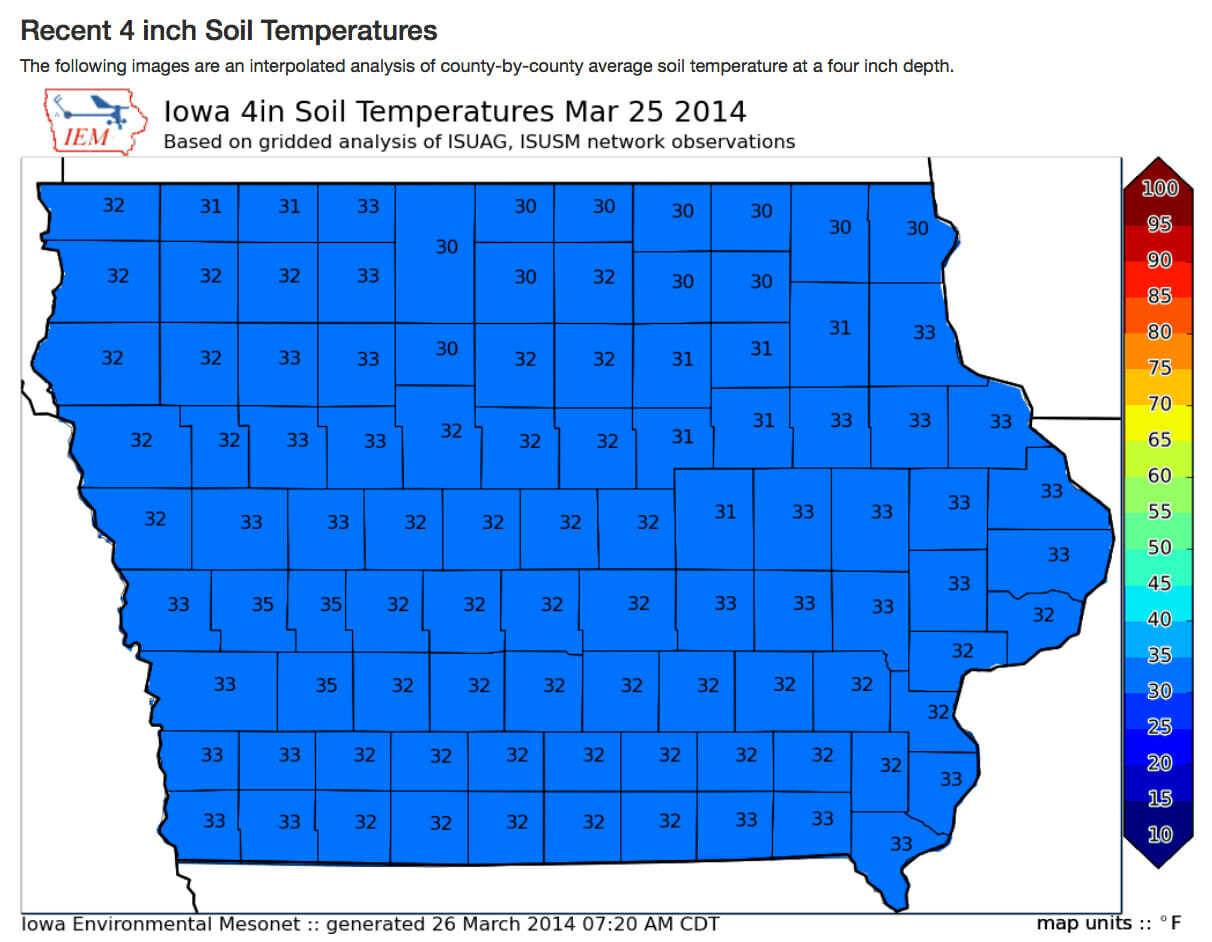
    soiltemp-march14It’s been a long, cold winter. With temperatures averaging 20° below normal last month and snowfall averaging 2 feet above normal across many areas in Latham Country, we’re all eager for spring. The date on the calendar shows that spring has arrived, but it’s in name only!

    March continues to be a battle between seasons with wintery in the short-term forecast. Frost ran deep, and it’s going to be a while before conditions are fit for planting. Remember to let soil temperatures and soil conditions – not the calendar – dictate your planting date. Wait until soil temperatures in a region reach at least 50° before you plant corn and somewhere between 55° to 60° before you plant soybeans.

    Soil temperature for soybean planting is more critical than for corn because soybeans can germinate in a soil environment of about 55° Fahrenheit. If the air temperature after germination hits 28 degrees Fahrenheit or less, however, the young seedling can be killed with the growing point of the plant right at emergence. Adversely for corn, the growing point stays under the surface until much later.

    Webspec Admin

    March 26, 2014
    General, Season, Spring
  • Latham Hi‑Tech Seeds

    Minimize Risk through Crop Planning

    No two crop years are exactly alike, so why base next year’s potential off last year’s results? In 2010, we received excessive rainfall. In 2011, we experienced three weeks of 100-plus degree heat. In 2012, we experienced the most severe drought since 1956. 2013 appeared to be a combination with widespread flooding and prevented planting in early spring following by long spans of extreme temps and little rain later in the growing season.

    We can’t predict the weather, but we can minimize risk from weather events through crop planning. Farmers, who planted both defensive and offensive products, will see higher yields overall. Make sure these numbers have varying maturities, too.

    Consider traits to help combat growing season risk (4) balance offensive and defensive characteristics. Keep your refuge strategy in mind as you crop plan. Latham’s Refuge in a Bag (RIB) is making the complex world of refuge simple with a broad list of options including Genuity SmartStax RIB, VT Triple PRO RIB, VT Double PRO RIB and Agrisure’s brand new 3122 E-Z Refuge option.

    Farmers in dry or light soil conditions may consider a strategy including moisture management products like the new Agrisure Artesian and Genuity DroughtGard traits newly available in the Latham product lineup this year. These products have proven to save yield in dry weather while boosting yield in those years when moisture is adequate.

    Rootworm control is a must in corn-on-corn protection, so it’s important to determine which trait is right for your situation. In an area with heavy rootworm pressure or multiple years of corn-on-corn, plant Latham hybrids with two modes of action against CRW like Genuity® SmartStax®, or the brand new Agrisure Duracade or 3122 dual mode of action.

    It’s all about balance… No matter how good a particular football team is, it can’t win on the gridiron by having a strong offense or a strong defense. It takes both! And the same is true whether you’re planting in a corn field or a soybean field. Remember to plant a minimum or three different seed numbers, with a mixture of offensive and defensive traits.

    Webspec Admin

    October 3, 2013
    Corn, Crop, General, Season, Soybeans, Winter
  • Latham Hi‑Tech Seeds

    Ease Your Worries with Pre-Harvest Prep

    Harvest Checklist1

    Ever since the cicadas began to sing in mass, folks have been predicting when the first frost will hit. More than one Midwest farmer is worried about how frost will impact late developing corn.  While it may give us something to talk about, the first frost is beyond our control.

    “Worry is not preparation,” so let’s instead channel our energies into preparing for harvest.  Make a pre-harvest check list to ensure you’re ready, regardless of when harvest begins.  To preserve maximum yield, you may need to harvest at higher moisture levels this fall.  In addition to having combines and other equipment in tip-top condition, it’s important that drying facilities are clean and ready for use.

    You can also prepare now by prioritizing corn fields for harvest.  Fields under stress from either too much water this spring or a lack of rain this summer will warrant special harvest considerations.  Closely watch those fields that show nitrogen deficiencies as the potential for stalk rot increases when nitrogen leaches.  Plants need enough nitrogen to fill the kernels plus maintain plant health.

    Check stalk strengHarvest_Checklistth by pinching the lower internodes on the plant and feel for weakness.  The root mass can affect the plant’s ability to stand up against late-season winds.  Late-season heat may also affect the ear shank.  If the shank gets weak from heat, it usually kinks or has a sharp bend.  A high-yielding hybrid may also cannibalize itself to maximize yield.  To check for these issues, walk into a field and shake the plants.  Watch to see if ears fall.

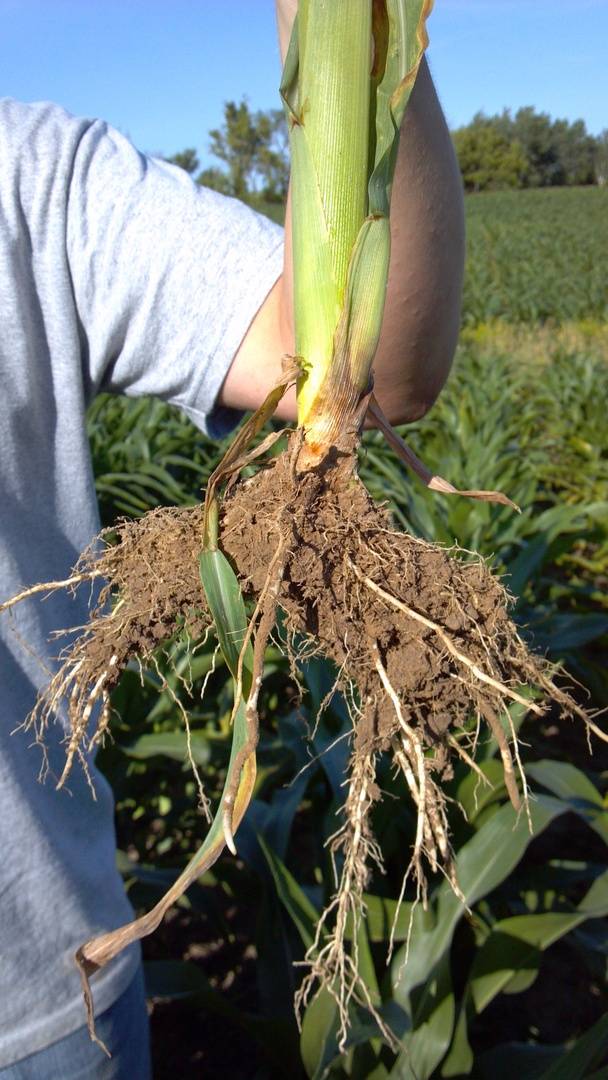
    Roots can be more of an issue than stalks in a wet spring like we experienced.  Saturated soils limit the growth of root hairs and brace roots, making the total root mass much smaller.  If those plants grow close to full size, that puts a lot of stress on the plant later in the year –either it may not have the ability to take up enough nutrients or the plants may lodge if there is a late-season wind or wind and rain event.

    Plan for the worst and hope for the best, as the old saying goes.  With so many consecutive days of excessively high temperatures, it’s hard to imagine it being cool enough frost anytime soon.  Hopefully mild temperatures are on their way – and will last well into October.  If the weather should take a turn for the worse, however, at least you won’t be caught off guard.

    Webspec Admin

    August 29, 2013
    Fall, General, Season
  • Latham Hi‑Tech Seeds

    Optimal Planting Conditions for Soybeans

    Small Soybean1

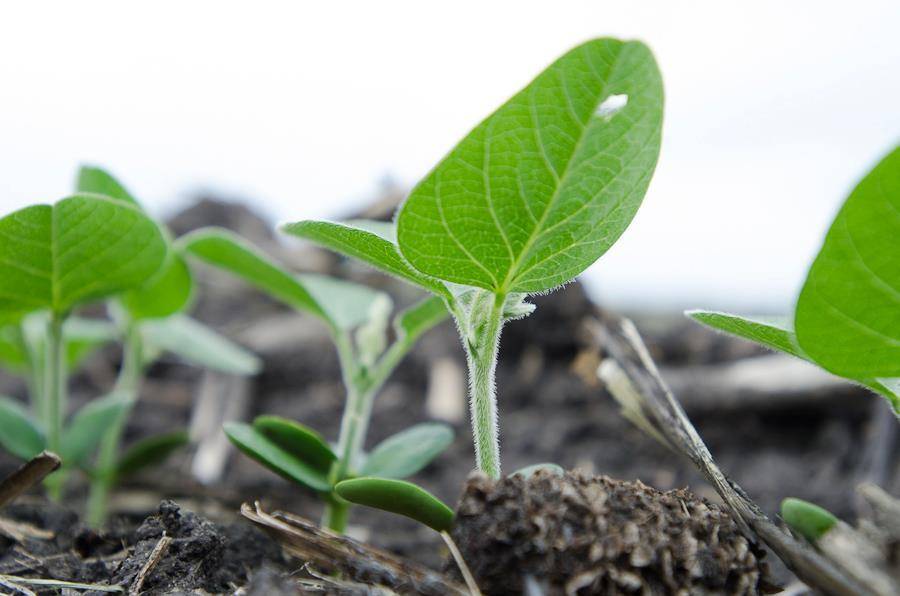
    Better planting equipment, improved soybean genetics and technology advancements such as seed treatments and weed control systems have moved soybean planting dates earlier in recent years.  Last year 34% of Iowa’s soybean crop was planted by early May; this year only 1% of Iowa’s soybean acres are planted as of May 13.

    Although there is a correlation to higher yield potential with earlier planting dates, it’s important to remember that soybeans respond favorably to early-planting dates if soil conditions are ideal for planting.  Conditions weren’t fit for planting soybeans in late April or early May.

    One silver lining in the delayed soybean planting is that soil temperatures have warmed.  We recommend planting soybeans when soil temperatures are about 60 degrees, and soil temperatures were averaging only in the low 60s around May 15.

    Planting into a field that is too wet or too cold early in the season will reduce emergence and plant population, which most often leads to reduced yield.  Remember, planting soybeans in warm but wet soils can also have a detrimental impact on yield.  Patience will continue to be key this planting season!

    Webspec Admin

    May 16, 2013
    Agronomics, Corn, Crop, General, Season, Soybeans, Spring
  • Latham Hi‑Tech Seeds

    Tips for Proper Seed Depth and Spacing

    Among the thousand variables crops are subject to each growing season, planting is the most crucial. Corn Product Specialist, Nick Benson offers these tips for proper depth and spacing as planters hit the ground rolling this spring.

    http://www.youtube.com/watch?v=d7W-IO7AvD4

    Webspec Admin

    May 9, 2013
    Agronomics, Emergence, General, Season, Spring
  • Latham Hi‑Tech Seeds

    Seeing is Believing: See Why It’s So Important to Avoid Wet Soils!

    Compation

    After being cooped up for the better part of the past month, I’m as eager as any farmer is for the spring planting season to begin.  Cold and wet weather in April has delayed planting, but we must remember that all of this moisture helped recharge the soil – and farmland across the Midwest desperately needed that!

    The hardest part is going to be waiting to enter fields once the skies clear.  Clear skies and sunshine don’t necessary mean that conditions are fit for planting.  That’s why today I want to take a few minutes to remind you that it’s “worth the wait” to let fields dry before doing any work.

    You’ll cause yourself headaches – and your crop problems – throughout the growing season if you try to plant in unfit conditions.  The top 10 reasons to avoid soil compaction include, but are not limited to,: stunted plant growth; slow infiltration of water and/or ponding; high surface runoff and soil erosion under normal or light rainfall; poor root system establishment; and nutrient deficiency.

    Compacted fields may experience yield losses of 10% to 20%, according to Iowa State University researchers.

    It literally pays to understand and manage soil compaction.  The #1 way to avoid soil compaction now is to wait for the fields to dry.  In a video I made this week, you’ll see how to use a quick field test to check the soil moisture.  You just mold a length of soil between your index finger and thumb, or roll it into a ball in your hand.  Observe whether the soil breaks apart as you work it.  If you toss the ball of soil into the air and it shatters or cracks upon falling to the ground, then conditions are likely suitable for tillage or planting.

    For additional tips on how and why to avoid soil compaction, take a few minutes to read these related posts:

    • 3 steps to reduce or minimize soil compaction
    • Compaction after a wet fall
    http://youtu.be/F3oo8d6s2Nk
    http://youtu.be/1FHtMT7D75M

    Mark Grundmeier, Product Manager

    April 25, 2013
    Agronomics, General, Season, Soil, Spring
  • Latham Hi‑Tech Seeds

    Don’t Push the “Panic” Button!

    Ken 2

    Even though spring planting has been delayed by unseasonably wet and cold weather, there’s no need for corn farmers within the Upper Midwest to push the “panic” button.  We’re still within the ideal planting window, so work your crop plan.

    Research shows that hybrids adjust to planting dates.  Adapted full season corn hybrids can compensate somewhat for later plantings.  As planting is delayed, hybrids shorten the time between planting and silking.  Full-season hybrids almost always outperform short season hybrids, so farmers really don’t need to consider switching maturities until May 25.

    Let soil temperatures and soil conditions – not the calendar – dictate planting dates.  At this point, fields are not yet fit for planting. Your yield potential will be more negatively affected by planting in wet soils than waiting even a couple of weeks for better conditions. On average, farmers will lose about half of a bushel/acre per day due to delayed planting. Research shows farmers will lose more yield if crop is planted into less than ideal conditions, so we encourage you to wait for soils to warm up and dry out.

    Corn planted into wet soils will be prone to problems throughout the growing season such as: stunted plant growth; slow infiltration of water and/or ponding; high surface runoff under normal or light rainfall; poor root system development, or rootless corn; and even nutrient deficiency. Potassium deficiency is caused by corn roots not being able to take up potassium from compacted soils.

    REMEMBER:  The majority of yield is determined during planting. “Patience” is key right now. Good things come to those who wait for the right seedbed conditions!

    Ken 2

    Phil Long

    April 24, 2013
    Agronomics, Corn, Crop, Season, Soybeans, Spring, Tech Tuesday
  • Latham Hi‑Tech Seeds

    Fields Not Yet Fit for Planting

    Weather update
    With temperatures hovering around freezing and more snow flurries in the forecast, the only place planters are “rolling” now is down the road.

    Daytime highs during the month of April haven’t been much warmer than the average lows for this time of year.  As a result, soil temperatures haven’t warmed much during the last week.  Plus, many fields are too wet to work after nearly a weeks’ worth of rains.

    As eager as everyone is to get corn planted early, we need to let soil temperatures and soil conditions – not the calendar – dictate planting dates.  Early planting dates lead to higher yield only when conditions are fit for planting.

    Optimal planting conditions include warm, moist soils.  Right now our soils are cold and wet.  We recommend soil temperatures of 50 to 55 degrees at corn planting time.  But current 4-inch soil temperatures in Northwest Iowa are only averaging 39 degrees; they’re averaging 42 degrees in North Central Iowa.

    Soil temperature isn’t the only factor delaying the planting this spring.  Iowa experienced its wettest week since July 2010 with a statewide average of 2.90 inches of rain, according to the April 15th crop report by the Iowa Department of Agriculture and Land Stewardship.  We need soils to dry before fieldwork can begin, but more rain is in the forecast.  The forecast for the area surrounding Latham headquarters calls for a 100 percent chance of thunderstorms today with total rainfall of one inch.  There’s a 60 percent chance for another quarter to a half inch of rain tomorrow with snow in the forecast for Friday.

    From the sounds of it, field work isn’t likely to begin anytime soon.  Be sure to wait for “fit conditions” before getting your planter out of the shed.  To avoid working soils that aren’t fit, there are 3 things for Midwest farmers to consider:

    1. Be sure soil temperatures are at least 50 degrees before planting corn.
    2. Check the moderately long-range and long range weather forecast to ensure ambient air temperatures won’t freeze seedlings.
    3. Reduce or minimize soil compaction by:
      1. Avoiding wet soils,
      2. Reducing tillage, and
      3. Using the right implements.

    Working soils that are too wet leads to yield loss and more problems during the growing season from soil compaction.  Restricted root development, nutrient deficiency and reduced infiltration rate are among the top 10 reasons to avoid soil compaction.  For ways to reduce soil compaction, click here.

    Select a territory in the drop-down menu below to view your region’s most recent crop updates.

    Choose your region:Iowa- Central and Eastern: Kevin MeyerIowa- North Central: Latham HeadquartersIowa- Northeast: Nick BensonIowa- Northwest: Glenn FullerIowa- Central: Nick ColemanIowa- Western: Bart PetersonIowa- Southwest: Larry KrapflMinnesota- Southeast and Iowa Northeast: Craig HaalandMinnesota- Southwest: Greg BrandtNorth Dakota- Southeast: Gary GeskeSouth Dakota- Notheast: Scott StadheimSouth Dakota- Southeast: Bill EichackerWisconsin- Southwest: Steve Bailie

    Webspec Admin

    April 17, 2013
    General, Season, Summer
  • Latham Hi‑Tech Seeds

    Standard Planting Guidelines Might Not Apply in 2013

    The main objective at planting time is to provide seed with an environment that promotes rapid germination and vigorous early growth.  Corn needs water, aeration and temperature – all in the right portions – as well as seed-to-soil contact to germinate and emerge.  Obviously, soil temperature and soil moisture are key to germination.  If the soil is too dry or too cold, the seed will just lay in the ground without germinating.

    When soil moisture is at field capacity, the optimum planting depth is 2” deep for corn and 1.5” deep for soybeans.  We know current field conditions in some areas across Latham Country aren’t “optimal.”  In dry conditions, seeding depth can differ.  If we receive the rain that’s forecast in the next 10 days, however, soil moisture could be more than adequate at planting time.

    Three factors affect corn’s response to seeding depth: (1) soil texture; (2) tillage system; and (3) residue cover.  Knowing the soil texture will help dictate how deep seeds need to be placed for adequate available moisture for successful germination.  No-till fields should retain adequate soil moisture at a reasonable planting depth in most years.  Minimum-till also helps conserve moisture.

    Planting too deep just may have the opposite effect of what you’d like.  There are two major problems that can result from planting too deep: (1) delayed emergence and (2) uneven stands.  Stands may become uneven due to crusting, too.  If a hard, pounding rain falls shortly after planting, seedlings can have a very hard time breaking through crusted soils.

    Also keep in mind that planting too shallow can also provide negative results.  Corn seed planted too shallow most often results in poor root development and may affect the crop all the way to harvest.  Seeds that are planted too shallow have a tendency to develop “rootless corn syndrome,” causing plants to fall over because they lack nodal root development.

    There are “best management practices” farmers can implement this spring.  Keep the conservation of moisture in mind, and make the most of the good field conditions.  Fewer passes across the field with disks or field cultivators will help conserve moisture.  Also bear in mind how the amount of residue may affect planting conditions. Take notice of debris in the field.  Too many stalks or root balls can inhibit seed emergence.

    Related Posts:

    • Corn Seed Depth: Back to the Basics
    • Soil and Management Factors Affect Planting Depth
    • Adjusting Down Pressure
    • Soil Capillary Action
    • 4-Inch Soil Temperature Map
    • Till Less for More Water

    Webspec Admin

    April 10, 2013
    General, Season, Spring
  • Latham Hi‑Tech Seeds

    Bring On Those April Showers!

    Waf April Showers1

    The arrival of spring weather is something everyone in the Midwest awaits, especially farmers.  Now that we’ve turned our calendars to April, it seems that folks are more eager than ever for warmer temperatures – and spring rainfall.

    Farmers with whom I’ve visited recently are anxious for the spring planting season to begin, but they’re also being realistic.  It’s going to be a few weeks before field work begins.  We really need those soil temperatures to warm up before any seed goes into the ground.  It would also be great if we’d receive some rainfall.  The snowmelt will help provide moisture at planting time, but we still have a moisture deficit.

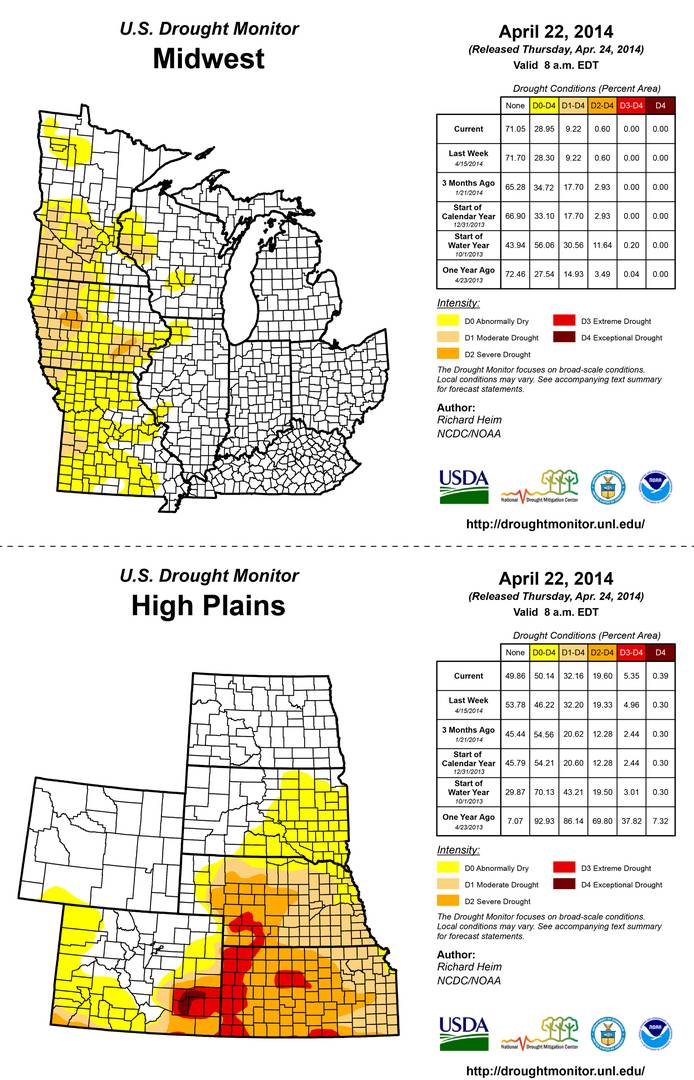
    In a recent blog post, April Hemmes said her farm in southern Franklin County received a total of 5 inches of rain between May and October 2012.  Normal annual rainfall is 23 inches, which means fields here in North Central Iowa are suffering from a moisture shortfall.  The U.S. Drought Monitor shows we’re not alone.  Conditions through many areas across the Upper Midwest range from severe to extreme drought.  Many western areas are suffering from an exceptional drought.  Bring on those April showers!

    A moist, warm seed bed really help seeds germinate since the soil serves as a blanket for the seeds.  We need soil temperatures to warm up by about 20 degrees or so.  Current soil temperatures are averaging in the mid-30s, and we need those temps to be 50 to 55 degrees at corn planting time.

    Even when the soil temperatures warm, farmers must be certain that warmer air temperatures are in the forecast.  Warmer air temperatures are especially critical to protect the seedlings.  If the air temperature hits 20 degrees Fahrenheit or less after germination, the young seedling can be killed with the growing point of the plant right at emergence.

    The good news is that time is on our side.  Research by Iowa State University shows the optimal planting date for corn is between April 12 and May 8, depending on the region where you farm.  A lot of seed can go in the ground just in two or three good days, so there’s no need for farmers to sacrifice yield by rushing Mother Nature.

    There are 3 important factors farmers should take into consideration before planting this spring:

    1. Avoid soil compaction.  Avoid planting in cold, wet soils.
    2. Monitor soil temperature.  It’s best to plant when soil temperatures are 50 degrees and those temperatures can be sustained.
    3. Be aware of crop insurance deadlines.  Check your policy and talk to your crop insurance agent to make sure you understand the possible consequences before planting that early.  Replants may not be covered.  Plus, the seed in farmers’ sheds now is most likely their first choice. If farmers have to replant, they may be planting their third or fourth choice for seed corn as supplies are tight across the industry.

    Webspec Admin

    April 3, 2013
    General, Season, Spring
Previous Page
1 … 33 34 35 36 37 … 46
Next Page

Latham Hi‑Tech Seeds

131 180th Street | Alexander, IA 50420

(641) 692-3258

SIGNUP FOR OUR NEWSLETTER
  • Contact
  • Legal
  • Dealer Center
  • Seedware Login
  • Latham Gear

© 2025 Latham Hi‑Tech Seeds. All rights reserved. | Iowa Web Design by Webspec | Privacy Policy

Latham® Hi-Tech Seeds is a trademark of M.S. Technologies, L.L.C., 103 Avenue D, West Point, IA 52656.