
Skip to content
Latham Hi-Tech Seeds

(641) 692-3258

  • Home
  • Performance
  • Products
    • Corn
    • Soybeans
    • Alfalfa
    • Corn Silage
    • Seed Guide
  • Find a Rep
  • Media
    • Blog
    • News
    • Videos
    • Podcasts
    • TECHTalk
  • About Us
    • Company History
    • Our Mission
    • Careers
    • Become a Rep
    • Sowing Seeds of Hope
  • Contact Us
  • Latham Hi‑Tech Seeds

    Weekly Field Report

    Central Iowa
    Bart Peterson reports that corn is 100% planted in his area, with seedlings ranging from the V1 to V4 stage of growth. Soybeans are 98% planted, with seedlings ranging from the VE to V1 stage. He hasn’t seen any insect pressure at this time.

    Northeast Iowa
    Tom Larson says that planting finished last week in the western part of his territory, while planting is just getting underway in the eastern part. Plots went in fast and furious. By the end of the weekend, there were just a few areas that still have beans to plant. A few acres of corn were replanted in areas where the ground was wet to start with and then developed a crust on top. Frost also set back some corn acres. He also has noticed some Pythium in soybean acres where seeds were planted in less than ideal conditions; a seed treatment on those early-planted acres would have helped.

    Central Iowa
    Bob Collins reports that planting is almost finished in his area. Most of the corn is up and looking good.  A few early planted bean fields are up, too. He’s not aware of any insect problems yet, but some of the corn needs to be sprayed to control the grasses.

    Northwest Iowa
    Bruce Anderson says planting is 99% complete with corn coming up well with good stand. The soil has a good amount of moisture accumulated, which will help in July.  Spraying will begin soon with as some grass is growing at the end of corn rows.

    West Central Iowa
    Planting is pretty much complete in Travis Slusher’s territory.  Corn is looking good and he hasn’t yet seen any insect pressure. In the southern part of his territory, fields received about an inch of rain this past week.  Those in the northern part received about three inches of rain.

    Eastern Iowa
    Corn planting is 99% complete and beans are 95% complete in Brad Beatty’s territory. Emergence has been good for both corn and soybeans. He hasn’t noticed any insect pressure yet, but he says they’re probably a week out from seeing cut worm. He also says it’s time to get out and start scouting for weeds, so you can keep them under control.

    East Central Iowa
    Wayde McNeil’s territory of Jasper, Poweshiek, Marshall, and Tama counties has received anywhere from one to three inches of rain this past week. Planting is complete, and the corn and beans are growing well. He hasn’t yet noticed any insect pressure.

    South Dakota
    Bill Eichacker says the southeastern part of the state is pretty much finished with planting while  the northern part is struggling to get seeds in the ground because due to the wet spring and flood waters from North Dakota.  For those farmers who have been able to plant, it’s time to scout for black cut worm and take care of any weed problems.

    Minnesota
    Jason Obermeyer reports that corn planting is done. He says that emergence is good on most fields, though the fields with high amounts of trash look a little more uneven due to cooler soils. Soybean planting is nearly finished. The cold snap about 10 days ago dinged some soybean fields that were emerged, mostly in areas of lower elevations, so sporadic replants may need to be done. Post emerge spraying on corn will begin in earnest this week.

    Nebraska
    Brian Banks reports that corn is up to 4 leaf in areas.  Some post herbicide applications are under way. Soybeans are up to unifoliate, but most are just emerging.  There may have to be some replanting of soybeans this year, but definitely not for the reasons we had last year.  Some beans had enough moisture to sprout but then the high temps and 40 mph winds last week dried them out so bad that stands are thin. Rains have continued to be spotty. Isolated areas get some rain but overall eastern Nebraska is well below average for rainfall. Many growers are running pivots to get the beans up and to keep the corn from drying up already.

    Larry Sailer, Musings of a Pig Farmer

    May 29, 2009
    Season, Spring
  • Latham Hi‑Tech Seeds

    Weekly Weather and Crop Bulletin- Week Ending May 24

    Here’s the latest planting update excerpted from the May 27 USDA’s National Agricultural Statistics Service (for week ending May 24):

    Corn: By week’s end, 82 percent of this year’s corn acreage was planted, 4 points behind last year and 11 points behind the 5-year average. The largest push in progress was made in Illinois, where producers took advantage of warm, sunny conditions and planted 42 percent of their crop during the week. Emergence advanced to 52 percent complete, 4 points ahead of the previous year, but 19 points behind normal. Under favorable growing conditions, the most development was seen in Minnesota and Nebraska, with 31 percent of the crop emerging in both States.

    Soybeans: Forty-eight percent of the Nation’s soybean crop was planted by May 24, one point slower than last year and 17 points behind normal. The most rapid progress was made in Iowa and Wisconsin, where producers planted 39 and 32 percent of their acreage during the week, respectively. By week’s end, 17 percent of this year’s crop had emerged, compared with 12 percent a year ago and 31 percent for the 5-year average. The most development was evident in the Delta States of Mississippi and Louisiana, where emergence had reached 73 and 64 percent, respectively.

    Team Latham

    May 28, 2009
    Season, Spring
  • Latham Hi‑Tech Seeds

    Planting report from our new intern

    Hi all. I want to introduce our intern for this summer, Andrew Kilburg. We look forward to Andrew’s weekly reports from the field.  —  Shannon

    I am Andrew Kilburg and I just completed my sophomore year at Iowa State. I am majoring in Agronomy andcorn-planting Agriculture Systems Technology, and this summer I will be an intern at Latham Hi‑Tech Seeds. One of my duties will be posting weekly blog updates on planting progress for corn and beans, stages of growth, and any weed or pest issues.
    It sounds like central Iowa is pretty close to completing corn planting, and has a good start on getting the beans planted. Travis Slusher says “they need a day or two to finish up with planting corn.” Central Iowa has received rain this past week which has kept farmers from the fields.

    In northwest Iowa, progress sounds good. Bruce Anderson says“95% of corn is in the ground and 80% of beans are planted.” Growth of corn also looks good in NW Iowa with 75% of the corn up and able to be rowed. Sounds like there isn’t any insect problem yet, but Bruce has heard there is a possibility of cut worms that could hatch around the 22nd of May. He also says that alfalfa and pastures are growing great. He said the forecast for next week looks to be in the 70’s with a couple days is in the lower 80’s.

    Jeff Weier in Western Iowa has reported that planting progress is coming along great. He says “99% of corn is planted with 30-40% of the corn being in the V2 stage of growth”. He also said “the beans are about 50-60% planted, and if the weather holds out this week farmers could begin to finish up with beans.” He hasn’t seen any bug or disease issues yet.

    In Wayde McNeil’s territory of Jasper, Poweshiek, Marshall, and Tama counties in Iowa, corn planting is pretty much 100% done with most of the corn in the V1 stage and some in the V2 stage. The beans in his territory are 80% planted. He hasn’t seen any bug or disease problems yet. On Sunday May, 17 he said there was a slight frost, but didn’t cause any damage.

    In Eastern Nebraska Brian Banks is saying the bean planting is coming along good with a few spotty rain showers keeping some farmers out of the fields. He says “that some beans are starting to emerge this week, and if things go well most farmers will be finishing up this week. Most of the corn is in the V2 stage.” He hasn’t seen any bug, disease, or weather related issues yet. He did say “they are a little behind average with GDD’s at this time.

    In South Dakota Bill Eichacker is reporting that planting is happening earlier than previous years, although the northern part of the state is lagging behind due to flooding and rains.

    Bob Colins in Central Iowa reported that corn is pretty much all in the ground and beans will be finishing up in 2-3 days. He hasn’t seen any bug or disease issues at this time.

    Brad Beatty around Benton County reported that 95% of corn is planted and 60% of beans are planted. The biggest issue in his territory is the cold soil temperatures. He said “some of the corn is rotting instead of growing, so farmers will have to evaluate to see if they need to replant.” With the cold weekend we just had he thought that most of the corn should be fine, but the few beans that have already emerged will also have to be evaluated to see if replanting is necessary.

    Jason Obermeyer in Minnesota reported that all corn planting is done and beans should be finishing up this week. He hasn’t noticed any widespread bug or disease issues. Most of the corn has emerged, and all they need is some warmer temperatures to help with growth.

    Team Latham

    May 19, 2009
    Season, Spring
  • Latham Hi‑Tech Seeds

    Planting is underway… but the gardeners begin harvest!

    Planting season is well underway for most farmers, but those of us who enjoy gardening are about to begin harvesting—rhubarb, that is. Rhubarb is one of the first garden offerings to ripen, so this recipe from Latham Hi‑Tech Seeds own Joy Bonin is just in time to enjoy the first “tastes” of spring. We’d love for you to share your own favorite rhubarb recipes.  Leave them for us in the comment box below!

    FUN FACT: Rhubarb is officially a vegetable because it is the red stalk that is eaten.

    bonnie-harris

    May 15, 2009
    General, Season, Spring
  • Latham Hi‑Tech Seeds

    Showcase plots: Let the planting begin

    Planter montage1

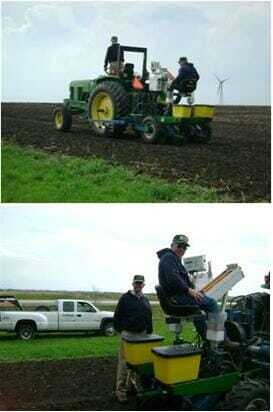
    In between showers, our research team has been getting our corn showcase plots planted. These pictures show Bill planter-montageLatham and Gary Bennett planting our Latham® corn showcase plot near Alta, Iowa. True to the season, this photo was taken after Bill and Gary got wet from a brief shower.
    Latham Hi‑Tech Seeds planted six corn showcase plots between May 4-6. Four more plots were planted between May 11-13. The seeds were planted with the company’s new corn plot air planter, complete with computer equipment that controls the drop rate and length of row per plot.

    Team Latham

    May 13, 2009
    Crop, Season, Spring
  • Latham Hi‑Tech Seeds

    Check your fields, not just your calendar!

    That time of year has finally arrived when farmers are beginning to take to the fields for planting. Before heading out to the field, make sure you do some checks on soil temperatures and conditions. The right conditions combined with the right hybrid is key to ensuring maximum yield from your field. Here’s a link from the University of Nebraska Lincoln soil temperature guide.  Check this site for other useful resources to help plan your operation this season.

    http://citnews.unl.edu/cropWatch/soilTemperature.html

    Larry Sailer, Musings of a Pig Farmer

    April 18, 2009
    Season, Spring
  • Latham Hi‑Tech Seeds

    Planting season FAQ

    March is the time of year we start getting questions as planting season approaches.  The most common questions are:

    • How thick should I plant the new bio-tech seeds?
    • How early should I plant?
    • Do I need stronger emergence for my soil type?
    • Should I use a seed-applied insecticide?
    • Should I use fungicide?
    • Which technology trait do I need for each farm?

    At Latham, we’ve geared up our agronomy testing to help answer these questions. This season we will be conducting new yield trials that should provide some compelling data. These trials will help provide guidance on:

    • Optimum corn populations
    • Fungicides for early planted corn
    • Twin row vs. conventional row spacing
    • Seed applied nematicides for corn
    • Corn hybrid yield performance for different soil types

    There is no shortage of questions when it comes to producing higher yields. The best approach is to work with a knowledgeable seed representative that can help you learn more about the products.  In turn, you will have a positive and more productive experience with your Latham® brand seed.

    Do you have a question that comes to mind as planting season approaches?  Want some advice from a Latham Seed2Soil® specialist?  Share it with us in the comment box below!

    John Latham, President

    March 18, 2009
    Season, Spring
  • Latham Hi‑Tech Seeds

    The Real Price of Ignoring Quality

    IMG 8888

    Not only is Latham the best industry source for the latest technologies, our team exhaustively searches every avenue seeking the best genetics to go with these technologies. If a product has earned the right to be in a Latham bag, rest assured the seed is the “cream of the crop”.

    Growers are still weighing the best options for spring. Facing high fertilizer prices and lower-than-expected commodity prices means some options, which may seem more appealing at the time, are actually poor choices in the long run. While it may be tempting to purchase seed purely on price alone, other factors should be taken into consideration. A issue of SeedWorld magazine provides a couple examples:

    1. Buying an inexpensive, unproven corn seed could mean giving up 10 bushels in a crop at $3.50 per bushel. For illustration purposes, planting 32,000 corn seeds per acre at $87.50 per bag on 1,000 acres could result in a loss of $87,500.
    2. The same scenario is true for soybeans. An 11 percent lower yielding soybean could mean a difference of up to 6.5 bushels less yield per acre. With soybeans near $9, that is a whopping $58.50 per acre each grower is giving up by not planting the highest yielding soybeans.

    Someone once said that paying for quality means you only have to wince once. Fortunately with Latham, you don’t have to wince at all. The technology and performance record behind your investment, coupled with our agronomic consulting expertise and our Farm Plan financing access, assures a confident, satisfying experience from start to finish.

    John Latham, President

    January 16, 2009
    Agronomics, Corn, Crop, Industry News, Season, Seed Technology, Soybeans, Spring, Tech Tuesday, Winter
  • Latham Hi‑Tech Seeds

    Determining optimum plant population

    In the past, optimum plant population was determined by increasing population each year to the point where the ear began to tip back. A corn plant has the ability to sense when it has enough nutrients and moisture to put grain on, so just looking at grain development was a good way to determine if plant populations were over the optimal line. After generations of using roughly the same seed, plant population was pretty nailed down.

    To help adjust to the new plant population realities, we’ve ramped up our research to try to give Latham customers a more informed starting point. This growing season we’ll evaluate two triple-stack hybrids: one with more ear flex capability than the other. We’ll also be capturing the yield-ability across different soil types. We know that each soil type has inherent natural fertility and water holding capacity, which are two important components of yield when considering plant population. Many seed technology developers have also launched research into the plant population area, so we plan to also collaborate closely with those studies.

    The goal of all this research and investigation is always the same: to help customers realize more profit per acre. That means we’re always considering the math of yield revenue minus input costs. The development of seed technology has made plant population one of the variables in that equation and, as with everything associated with high-tech products, Latham Hybrids will continue to invest in finding ways to use PPA to make our customers more money.

    John Latham, President

    June 28, 2008
    Season, Spring
  • Latham Hi‑Tech Seeds

    Seed Treatments Prove to be Good Investment in Cold, Wet Spring

    Latham Hi‑Tech Hybrids’ practice of treating all of its triple-stack seeds with combination of Trilex™ fungicide and Poncho® insecticide proved its value during the recent cold, wet spring.

    The cold, wet soil that dominated most of the Cornbelt meant the seed laid in the soil longer before germinating. That made for ideal conditions for a host of fungus and insects.

    While the technology within the corn protects it from multiple threats once the plant is growing, the seeds are still vulnerable in their very early stages of development. Trilex offers a unique combination of two systemic fungicides to protect against a wide spectrum of threats including pythium, rhizoctonia, and early season phytophthora. Poncho delivers early season protection against wireworm, white grub, seed corn maggot, flea beetle, grape colaspis, chinch bug and black cutworm.

    Poncho’s protection against wireworms, seed corn maggots and grubs especially proved invaluable this season when those pests were out in force. Poncho offers two-stage protection by putting a barrier around the seed to kill approaching insects, and also imbedding insecticide into the seed to kill any pests that manage to take a bite.

    This year, when conditions really slowed down the growth of corn plants, Poncho’s two-pronged protection was incredibly important. By offering protection around the seed, and within the seedling itself, the seed-applied insecticide was really critical to give uniform, healthy stands.

    Latham Hybrids has adopted the practice of using seed-applied fungicide and insecticide to help customers protect their high-tech seed investments. The treatments also make it possible to plant corn earlier in the spring, when it’s usually cooler and wetter, to capitalize on the yield potential of a longer growing season.

    President John Latham makes a priority for our business to do everything we can to give farmers the best payback for the investment they’re making. Given market conditions and the value of the technology being built into seeds, the price of seed corn is going to continue to increase. Latham is determined to provide maximum protection for seeds to make sure those higher seed investments generate higher return.

    Larry Sailer, Musings of a Pig Farmer

    June 28, 2008
    Agronomics, Disease, Season, Seed Treatment, Spring
Previous Page
1 … 44 45 46

Latham Hi‑Tech Seeds

131 180th Street | Alexander, IA 50420

(641) 692-3258

SIGNUP FOR OUR NEWSLETTER
  • Contact
  • Legal
  • Seedware Login
  • Latham Gear

© 2026 Latham Hi‑Tech Seeds. All rights reserved. | Privacy Policy

Latham® Hi-Tech Seeds is a trademark of M.S. Technologies, L.L.C., 103 Avenue D, West Point, IA 52656.