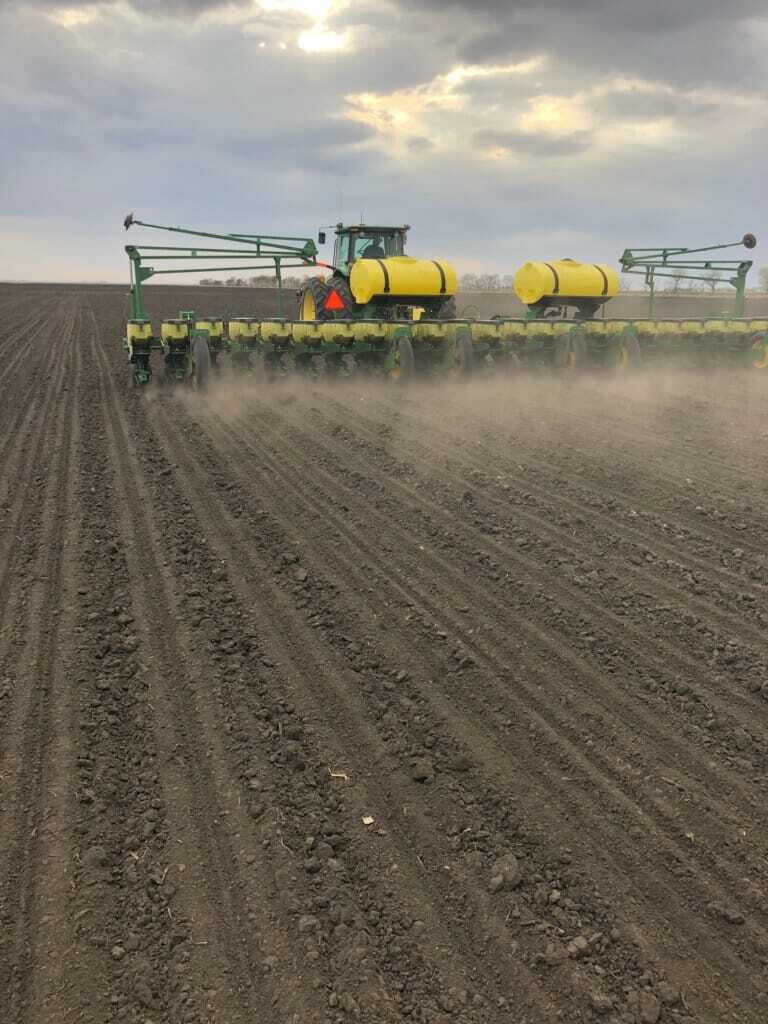
Better planting equipment, improved soybean genetics and technology advancements such as seed treatments and weed control systems have moved soybean planting dates earlier in recent years. Last year 34% of Iowa’s soybean crop was planted by early May; this year only 1% of Iowa’s soybean acres are planted as of May 13.
Although there is a correlation to higher yield potential with earlier planting dates, it’s important to remember that soybeans respond favorably to early-planting datesif soil conditions are ideal for planting. Conditions weren’t fit for planting soybeans in late April or early May.
One silver lining in the delayed soybean planting is that soil temperatures have warmed. We recommend planting soybeans when soil temperatures are about 60 degrees, and soil temperatures were averaging only in the low 60s around May 15.
Planting into a field that is too wet or too cold early in the season will reduce emergence and plant population, which most often leads to reduced yield. Remember, planting soybeans in warm but wet soils can also have a detrimental impact on yield. Patience will continue to be key this planting season!
Among the thousand variables crops are subject to each growing season, planting is the most crucial. Corn Product Specialist, Nick Benson offers these tips for proper depth and spacing as planters hit the ground rolling this spring.
Seeing is Believing: See Why It’s So Important to Avoid Wet Soils!
After being cooped up for the better part of the past month, I’m as eager as any farmer is for the spring planting season to begin. Cold and wet weather in April has delayed planting, but we must remember that all of this moisture helped recharge the soil – and farmland across the Midwest desperately needed that!
The hardest part is going to be waiting to enter fields once the skies clear. Clear skies and sunshine don’t necessary mean that conditions are fit for planting. That’s why today I want to take a few minutes to remind you that it’s “worth the wait” to let fields dry before doing any work.
You’ll cause yourself headaches – and your crop problems – throughout the growing season if you try to plant in unfit conditions. The top 10 reasons to avoid soil compaction include, but are not limited to,: stunted plant growth; slow infiltration of water and/or ponding; high surface runoff and soil erosion under normal or light rainfall; poor root system establishment; and nutrient deficiency.
Compacted fields may experience yield losses of 10% to 20%, according to Iowa State University researchers.
It literally pays to understand and manage soil compaction. The #1 way to avoid soil compaction now is to wait for the fields to dry. In a video I made this week, you’ll see how to use a quick field test to check the soil moisture. You just mold a length of soil between your index finger and thumb, or roll it into a ball in your hand. Observe whether the soil breaks apart as you work it. If you toss the ball of soil into the air and it shatters or cracks upon falling to the ground, then conditions are likely suitable for tillage or planting.
For additional tips on how and why to avoid soil compaction, take a few minutes to read these related posts:
Even though spring planting has been delayed by unseasonably wet and cold weather, there’s no need for corn farmers within the Upper Midwest to push the “panic” button. We’re still within the ideal planting window, so work your crop plan.
Research shows that hybrids adjust to planting dates.Adapted full season corn hybrids can compensate somewhat for later plantings. As planting is delayed, hybrids shorten the time between planting and silking. Full-season hybrids almost always outperform short season hybrids, so farmers really don’t need to consider switching maturities until May 25.
Let soil temperatures and soil conditions – not the calendar – dictate planting dates. At this point, fields are not yet fit for planting. Your yield potential will be more negatively affected by planting in wet soils than waiting even a couple of weeks for better conditions. On average, farmers will lose about half of a bushel/acre per day due to delayed planting. Research shows farmers will lose more yield if crop is planted into less than ideal conditions, so we encourage you to wait for soils to warm up and dry out.
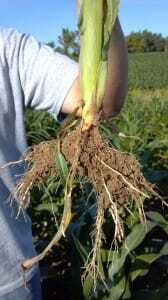
Corn planted into wet soils will be prone to problems throughout the growing season such as: stunted plant growth; slow infiltration of water and/or ponding; high surface runoff under normal or light rainfall; poor root system development, or rootless corn; and even nutrient deficiency. Potassium deficiency is caused by corn roots not being able to take up potassium from compacted soils.
REMEMBER: The majority of yield is determined during planting. “Patience” is key right now. Good things come to those who wait for the right seedbed conditions!
With temperatures hovering around freezing and more snow flurries in the forecast, the only place planters are “rolling” now is down the road.
Daytime highs during the month of April haven’t been much warmer than the average lows for this time of year. As a result, soil temperatures haven’t warmed much during the last week. Plus, many fields are too wet to work after nearly a weeks’ worth of rains.
As eager as everyone is to get corn planted early, we need to let soil temperatures and soil conditions – not the calendar – dictate planting dates. Early planting dates lead to higher yield only when conditions are fit for planting.
Optimal planting conditions include warm, moist soils. Right now our soils are cold and wet. We recommend soil temperatures of 50 to 55 degrees at corn planting time. But current 4-inch soil temperatures in Northwest Iowa are only averaging 39 degrees; they’re averaging 42 degrees in North Central Iowa.
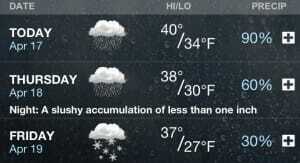
Soil temperature isn’t the only factor delaying the planting this spring. Iowa experienced its wettest week since July 2010 with a statewide average of 2.90 inches of rain, according to the April 15th crop report by the Iowa Department of Agriculture and Land Stewardship. We need soils to dry before fieldwork can begin, but more rain is in the forecast. The forecast for the area surrounding Latham headquarters calls for a 100 percent chance of thunderstorms today with total rainfall of one inch. There’s a 60 percent chance for another quarter to a half inch of rain tomorrow with snow in the forecast for Friday.
From the sounds of it, field work isn’t likely to begin anytime soon. Be sure to wait for “fit conditions” before getting your planter out of the shed. To avoid working soils that aren’t fit, there are 3 things for Midwest farmers to consider:
Be sure soil temperatures are at least 50 degrees before planting corn.
Check the moderately long-range and long range weather forecast to ensure ambient air temperatures won’t freeze seedlings.
Reduce or minimize soil compaction by:
Avoiding wet soils,
Reducing tillage, and
Using the right implements.
Working soils that are too wet leads to yield loss and more problems during the growing season from soil compaction. Restricted root development, nutrient deficiency and reduced infiltration rate are among the top 10 reasons to avoid soil compaction. For ways to reduce soil compaction, click here.
Select a territory in the drop-down menu below to view your region’s most recent crop updates.
Choose your region:Iowa- Central and Eastern: Kevin MeyerIowa- North Central: Latham HeadquartersIowa- Northeast: Nick BensonIowa- Northwest: Glenn FullerIowa- Central: Nick ColemanIowa- Western: Bart PetersonIowa- Southwest: Larry KrapflMinnesota- Southeast and Iowa Northeast: Craig HaalandMinnesota- Southwest: Greg BrandtNorth Dakota- Southeast: Gary GeskeSouth Dakota- Notheast: Scott StadheimSouth Dakota- Southeast: Bill EichackerWisconsin- Southwest: Steve Bailie
Standard Planting Guidelines Might Not Apply in 2013
The main objective at planting time is to provide seed with an environment that promotes rapid germination and vigorous early growth. Corn needs water, aeration and temperature – all in the right portions – as well as seed-to-soil contact to germinate and emerge. Obviously, soil temperature and soil moisture are key to germination. If the soil is too dry or too cold, the seed will just lay in the ground without germinating.
When soil moisture is at field capacity, the optimum planting depth is 2” deep for corn and 1.5” deep for soybeans. We know current field conditions in some areas across Latham Country aren’t “optimal.” In dry conditions, seeding depth can differ. If we receive the rain that’s forecast in the next 10 days, however, soil moisture could be more than adequate at planting time.
Three factors affect corn’s response to seeding depth: (1) soil texture; (2) tillage system; and (3) residue cover. Knowing the soil texture will help dictate how deep seeds need to be placed for adequate available moisture for successful germination. No-till fields should retain adequate soil moisture at a reasonable planting depthin most years. Minimum-till also helps conserve moisture.
Planting too deep just may have the opposite effect of what you’d like. There are two major problems that can result from planting too deep: (1) delayed emergence and (2) uneven stands. Stands may become uneven due to crusting, too. If a hard, pounding rain falls shortly after planting, seedlings can have a very hard time breaking through crusted soils.
Also keep in mind that planting too shallow can also provide negative results. Corn seed planted too shallow most often results in poor root development and may affect the crop all the way to harvest. Seeds that are planted too shallow have a tendency to develop “rootless corn syndrome,” causing plants to fall over because they lack nodal root development.
There are “best management practices” farmers can implement this spring. Keep the conservation of moisture in mind, and make the most of the good field conditions. Fewer passes across the field with disks or field cultivators will help conserve moisture. Also bear in mind how the amount of residue may affect planting conditions. Take notice of debris in the field. Too many stalks or root balls can inhibit seed emergence.
The arrival of spring weather is something everyone in the Midwest awaits, especially farmers. Now that we’ve turned our calendars to April, it seems that folks are more eager than ever for warmer temperatures – and spring rainfall.
Farmers with whom I’ve visited recently are anxious for the spring planting season to begin, but they’re also being realistic. It’s going to be a few weeks before field work begins. We really need those soil temperatures to warm up before any seed goes into the ground. It would also be great if we’d receive some rainfall. The snowmelt will help provide moisture at planting time, but we still have a moisture deficit.
In a recent blog post, April Hemmes said her farm in southern Franklin County received a total of 5 inches of rain between May and October 2012. Normal annual rainfall is 23 inches, which means fields here in North Central Iowa are suffering from a moisture shortfall. The U.S. Drought Monitor shows we’re not alone. Conditions through many areas across the Upper Midwest range from severe to extreme drought. Many western areas are suffering from an exceptional drought. Bring on those April showers!
A moist, warm seed bed really help seeds germinate since the soil serves as a blanket for the seeds.We need soil temperatures to warm up by about 20 degrees or so. Current soil temperatures are averaging in the mid-30s, and we need those temps to be 50 to 55 degrees at corn planting time.
Even when the soil temperatures warm, farmers must be certain that warmer air temperatures are in the forecast. Warmer air temperatures are especially critical to protect the seedlings. If the air temperature hits 20 degrees Fahrenheit or less after germination, the young seedling can be killed with the growing point of the plant right at emergence.
The good news is that time is on our side. Research by Iowa State University shows the optimal planting date for corn is between April 12 and May 8, depending on the region where you farm. A lot of seed can go in the ground just in two or three good days, so there’s no need for farmers to sacrifice yield by rushing Mother Nature.
There are 3 important factors farmers should take into consideration before planting this spring:
Monitor soil temperature. It’s best to plant when soil temperatures are 50 degrees and those temperatures can be sustained.
Be aware of crop insurance deadlines. Check your policy and talk to your crop insurance agent to make sure you understand the possible consequences before planting that early. Replants may not be covered. Plus, the seed in farmers’ sheds now is most likely their first choice. If farmers have to replant, they may be planting their third or fourth choice for seed corn as supplies are tight across the industry.
Literally, at this time last year, there were reports that some Iowa farmers had already planted corn. I was busy writing a blog post answering the question, “How Early Is Too Early to Plant?”
With late-season snowfall accumulating more than it did in December, many farmers this spring are wondering how long it will be before spring fieldwork can begin.
Midwest weather is unpredictable, especially during the spring months. Although we’re experiencing temperatures in the 40s this week, there’s no guarantee this warm up will continue. An April Fool’s Day Snowstorm is no joke! And let’s not forget what happened in April 19, 2011… rain, snow, and hail fell upon areas of Iowa, Minnesota and Wisconsin.
We may be tired of snow, but at least we’re receiving some much needed precipitation that will provide topsoil moisture once the planters start rolling. “We’re starting the 2013 growing season with a moisture shortfall,” says April Hemmes, who farms south of Hampton in Franklin County, Iowa. “My farm received a total of 5 inches of rain between May and October 2012; normal annual rainfall is 23 inches. As much as I dislike late season snowfall, I’m thankful for it this year.”
Midwest farmers are eagerly awaiting the start of the spring corn planting season, but there’s no need to fret yet about getting in “late.” Time is on our side right now. Years of field research by Iowa State University shows the highest yield potential is with corn planting dates between April 12 and May 8.
For those wanting to head into the fields first this spring, consider planting some Latham® Hi‑Tech Alfalfa! Our 2013 alfalfa lineup includes many exciting new products for disease resistance, traffic tolerance, and regrowth patterns.
Farmers throughout history have raised corn yielding 300 bushels per acre (bu/A). In 1985, Illinois farmer Herman Warsaw produced corn yields of 370 bu/A. Warsaw spent years working toward his goal. He patiently built up soil nutrition and tilth for better plant health.
So what do we need to do to raise 300-bushel corn? Like Warsaw, we must commit to plan. Our plan must involve soil fertility, which takes into account nitrogen and micronutrients. Weather dictates when nitrogen (N) can be applied, its availability to the plant and its usability by the crop.
Nitrogen loss can occur immediately after application, and leaching can occur after N has been incorporated into the soil. That’s why renowned corn yield researcher Dr. Fred Below uses a stabilizer when applying his nitrogen. His fertility program also includes aggressive rates of Phosphorus (P) and Potassium (K) to push for higher yields. Potassium is very important but is often lacking, especially in a drought year like 2012.
“As growers, we need to look at agronomy first. It’s important to build a good database for each field, understand interactions of nutrients and use the tools to apply the agronomy,” said Ron Olson, who was one of the first consultants nationwide to use GPS/GIS tools to assist farmers in managing Precision Ag databases. From 1974 to 1996, Ron owned an independent agronomic consulting company based in Illinois.
Today Ron serves as Research and Development Manager – New Products for the Mosaic Company. During a recent presentation in Des Moines to Seed-2-Soil and SciMax client, Ron admitted that a lot of work must be done to consistently achieve 300-bushel corn yields. However, he says taking incremental steps will lead to higher yields overall.
Nutrient management is key to increasing yield, according to research done in cooperation with Dr. Below and the University of Illinois. This research uses “omission plots” that compare corn both with and without fertilizer, fungicide, insecticide and seed treatments. While yields increase with each of these additions, fertility has the most impact.
In addition nutrient management, other factors influence yield. Click here to see Dr. Below’s 7 Wonders of the Corn World, which are the seven factors that have the most influence on yield.
The Iowa Legislature convened last week, and along with that, came talk that Iowa’s drought law may get a closer look this year. “Water restrictions” isn’t a typical topic of conversation in the north, but it looks as though it might become commonplace across the Upper Midwest in 2013 if weather patterns don’t change.
It’s safe to say we’ll be planting the 2013 crop in dry soils. The 2012 drought caused most soils here to be depleted of moisture in the upper 7 to 8 feet, so it will take at least two growing seasons to recharge those soils.
Seed selection will certainly be critical for 2013 due to the extremely dry conditions. That’s why we’re recommending that most of our corn customers plant hybrids at least double- or triple-stack hybrids this spring.
A hybrid’s genetics will be the biggest factor in whether a hybrid can handle drought. Plot data shows that multiple-trait stacks, like Latham® hybrids with the Genuity® SmartStax® technology, can really help protect yield. REMEMBER: Traits protect yield. Genetics make yield. Seed products carrying the Latham brand name combine the industry’s best genetics with the latest traits and technologies.
While corn genetics have come a long ways over the past decade and are much better at handling drought stress than ever, soybeans historically perform even better in dry weather. Farmers will need to consider whether they can manage corn-on-corn in another extremely dry year or whether the economics favor soybeans. Other factors to consider when finalizing your 2013 crop plans are outlined in this recent article posted on agriculture.com: Six Take-Home Lessons from the 2012 Drought.
Regardless of whether you choose to plant corn, soybeans or alfalfa, Latham has the products you need! Our seed portfolio contains products that were bred specifically to thrive in specific areas of the Upper Midwest. Call your local Latham rep to learn more about the products best suited for your growing conditions, or feel free to call our office directly at 1.877.GO.LATHAM (1.877.465.2842).

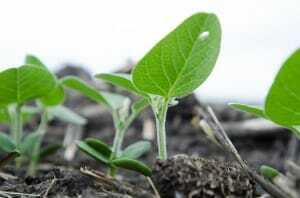
 Better planting equipment, improved soybean genetics and technology advancements such as seed treatments and weed control systems have moved soybean planting dates earlier in recent years. Last year 34% of Iowa’s soybean crop was planted by early May; this year only 1% of Iowa’s soybean acres are planted as of May 13.