Latham Hi-Tech Seeds

(641) 692-3258

  • Home
  • Products
    • Corn
    • Soybeans
    • Alfalfa
    • Corn Silage
    • Seed Guide
  • Performance
  • Find a Rep
  • Media
    • Blog
    • News
    • Videos
    • Podcasts
    • TECHTalk
  • About Us
    • Company History
    • Our Mission
    • Careers
    • Become a Rep
    • Sowing Seeds of Hope
  • Contact Us
  • Latham Hi‑Tech Seeds

    Check Those Soybean Stands!

    PythiumSoybeans

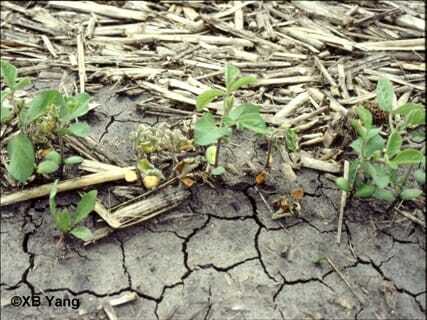
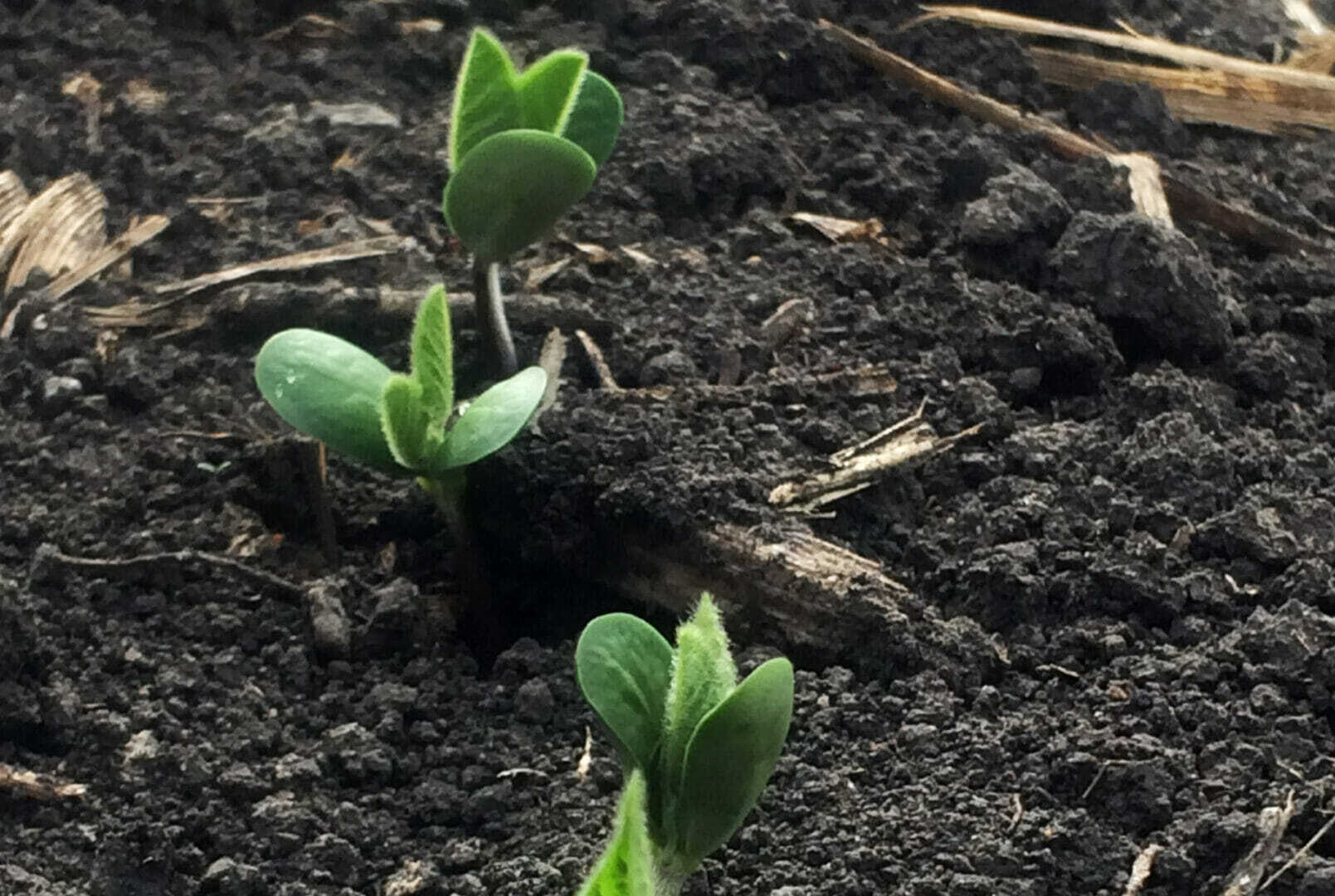
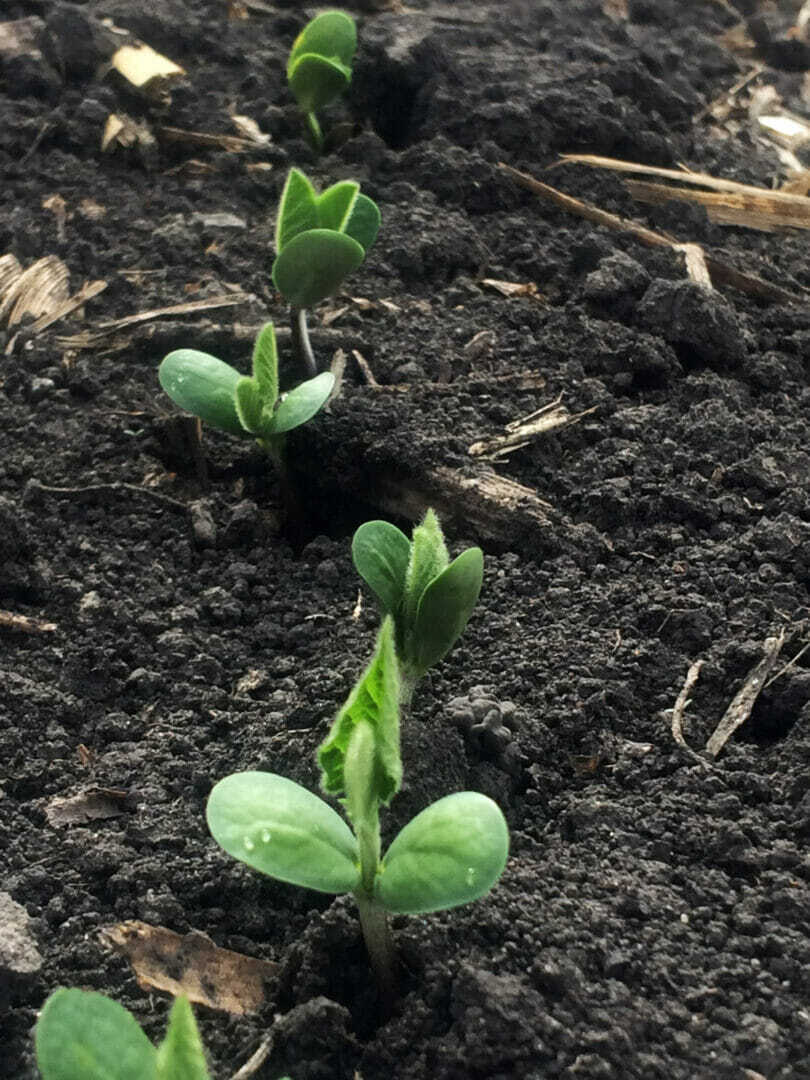
    Soybean stands can suffer from a wide variety of problems that will reduce population. Hail, diseases, insects, cold soil temperatures at planting, compaction, and planter failures can all affect the stand individually and in combination.

    Stand reductions almost never occur evenly across the field. Here are some basic steps to help evaluate soybean stands and decide if re-planting is necessary.

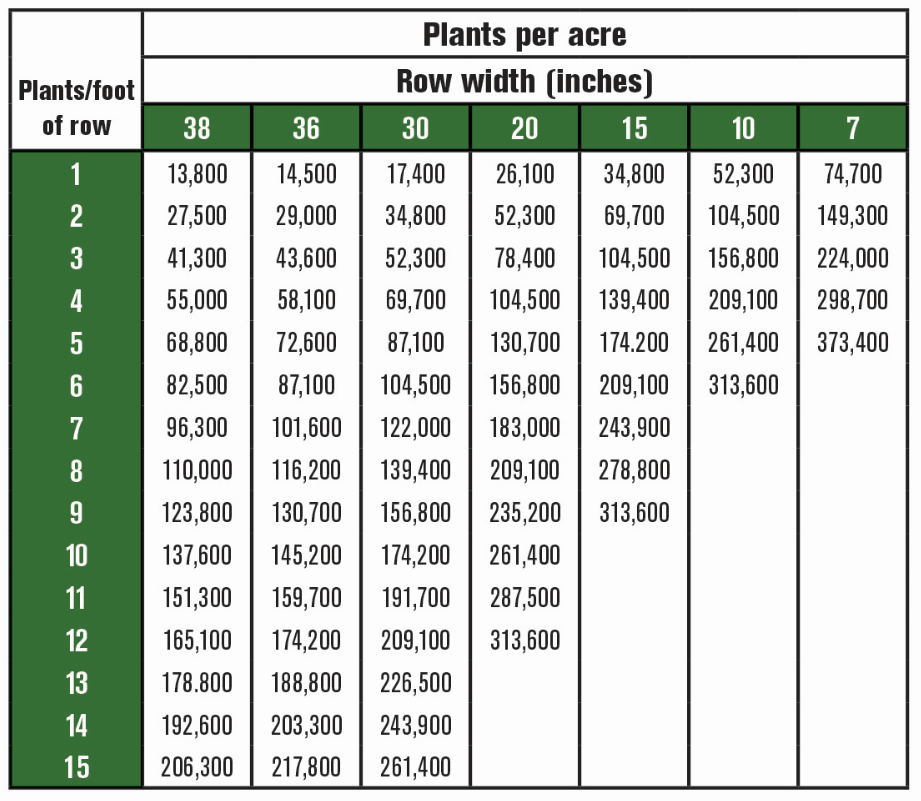
    Take 10 stand counts in the area with the worst damage and 10 counts in the part of the field that was not affected or affected just slightly. At each point, measure off 10 feet of row and count the number of live, viable plants. Then calculate the average of your 10 points and compare them to the table below to see how many plants per acre you have remaining.

    A stand of 100,000 evenly distributed plants generally gives you optimum yield. As the growing season progresses, however, it is much more difficult to establish a good stand. A stand of 75,000 on May 15 is inadequate, but you might be better off leaving a stand of 75,000 plants if it is July 1.

    Plants per acre

    Planting soybeans on or before June 1 averages 95% of expected yield. In a five-year Latham Seeds’ study, there was no significant yield difference in soybeans planted before May 15. Planting dates included late April, early May and mid-May. We did not see yields drop to 85% or lower until after June 15.

    Our results are similar to studies done by university researchers. If you farm below the line from Watertown, SD through the Twin Cities and over toward Green Bay, Wisc., I recommend staying with soybeans in your normal maturity until mid-June. After June 15, consider the precipitation expected in late June and early July because the biggest threat to establishing a late soybean crop is lack of rainfall. If you are north of that line, you may need to switch to an earlier variety a week or so sooner.

    Webspec Admin

    May 12, 2021
    #AskTheAgronomist, Agronomics, Crop, Soybeans, Spring, Summer
  • Latham Hi‑Tech Seeds

    Gathering Planting Data Sets You Up for Success All Season Long

    Soybeans LauraC

    Planting really is the most important operation in terms of seeing your best yield potential. We have tools at our fingertips that can make farming a little easier during the rest of the season.

    Use planter maps on-the-go to your advantage. Some of the best maps to watch as you’re planting are the singulation/spacing or downforce maps. Tracking spacing and downforce per row is a huge asset in the cab. Although it doesn’t replace routine checks, it helps you focus on trouble rows or on certain parts of the planter. Load these maps into your iPad, so you can go back to those areas throughout the season and note the impact planter issues or upgrades have.

    Maintaining uniform seed depth and spacing is crucial. Uniform emergence can impact yields by up to 8 to 10 percent! Poor spacing creates unequal competition, so little corn plants can account for another 1 to 5 percent of your yield at the end of the season. Track how your planter performs. If you don’t have a monitor, you can still gather this information. Check your seed depth throughout the field. Stop in different soil types or areas where you know there may be some compaction. This will help you monitor the impact of seed depth and spacing throughout the season. Then next year you can plan how to adjust your planter for challenging conditions.

    Monitor corn/corn fields for depth but also for seed-to-soil contact. Heavy residue with corn/corn fields can cause seed to be in contact with residue and create delayed emergence. Seeds absorb water much better from soil than from plant residue, so row cleaners and tillage preparation are crucial.

    Pinpoint where the issues are. Today’s technology makes it easy to drop a pin where you are, so you can revisit that spot in the field. You can drop a pin on most any planter monitor, your phone, or an app like Data Forward™ that allows you to track your fields all season long. A pin also will let you make a late-season yield estimate or determine how much yield was lost or gained by fixing the specific issue that caused this problem area in your field.

    None of us likes to learn the hard way. We certainly don’t want to make the same mistake twice! Take the time this planting season, or as you spray post-emerge herbicides, to make notes that can help you make better planting or management decisions next year.

    Phil Long

    May 7, 2021
    Agronomics, Emergence, Fall, Precision Ag, Tech Tuesday
  • Latham Hi‑Tech Seeds

    Raising Cattle, Building Character

    Moretz Calf

    When Melissa (Bisbee) Moretz was 5 years old, she went into business with her brother and sister. Their father purchased a few ewes for them to raise. They were in charge of feeding and lambing them. As they grew older, they accepted more responsibility, including the finances.

    “This is where my farming background began. It was an effort made by my parents to help my siblings and I save money for college, but it developed into much more. As we grew older and became 4-H members, we decided to sell the sheep and get into cattle and swine,” says Melissa, who served as a high school ag instructor and FFA advisor before becoming a senior portfolio manager in 2017 at a local bank. “I showed breeding beef at the county fair along with market swine at the county and state fair. I farrowed swine for my Supervised Agricultural Experience (SAE) program in FFA. I participated in many career development events (CDE), met many people, served as a chapter officer for two years, and learned what hard work really was.”

    Moretz Family Photo_1
    The Moretz Family

    With so many life lessons learned, it’s no wonder that Melissa and her husband, Nate, desire to raise their family on a farm. She says she loves coming home from work and taking their children to the barn.

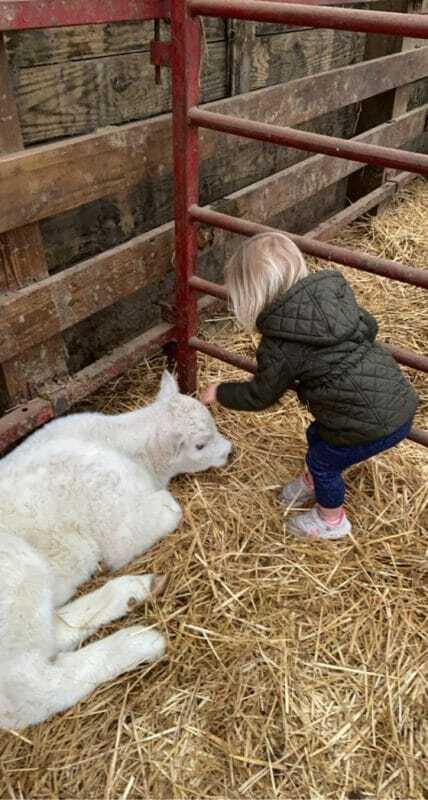
    “Raising our children on a livestock and grain farm has already begun to instill a strong work ethic within both of them,” says Melissa. “Having livestock gives my children an opportunity to learn about the circle of life at a very young age. They have also learned how to care for any bucket bottle calf that ends up on our farm, and they get so comfortable with them that they are more pets than cattle by the time they are weaned from the bottle.”

    Moretz Calf
    The Moretz’s two-year-old daughter enjoys chasing her brother around the farm and checking on the family’s calves.

    Their five-year-old son is in preschool. He loves to farm any chance he gets. His two favorite things about the farm are spring calving season and riding in the planter or combine with his papa (Nate’s father).

    “This year for Kole’s class show-and-tell, we were able to do a Zoom meeting with his class. Kole shared a new calf that was born the day before our Zoom meeting. Kole explained to his class how to take care of calves and why we raise them. The class even got to name the baby. Rainbow is now happily out in our pasture with her momma.”

    The Moretz’s two-year-old daughter wants to keep up with her brother. When she isn’t chasing her brother around the farm, she helps her mom deliver meals to the field. She enjoys a good picnic in the tractor. She also loves playing outside on the swing set and going for bike rides.

    Nate and Melissa also farm with Nate’s parents, calving about 120 cows/heifers each spring. As young farmers easing their way into the operation, Nate and Melissa began to purchase market steers and heifers to finish out. Melissa says they care for each animal in the best way possible with two goals in mind: (1) keep our animals safe and healthy; and (2) produce quality offspring.

    “A special bond forms between people who are working together to accomplish a common goal,” says Melissa. “Both Nate and I were raised on farms and want to teach our children the life lessons that, in our opinion, are learned best on the farm. Responsibility, hard work, life/death, and teamwork are a few of the valuable lessons I have learned on the farm and want to share with our family.”

    In addition to raising kids, crops and cattle, the Moretz family has been Latham® seed dealers since 2015.

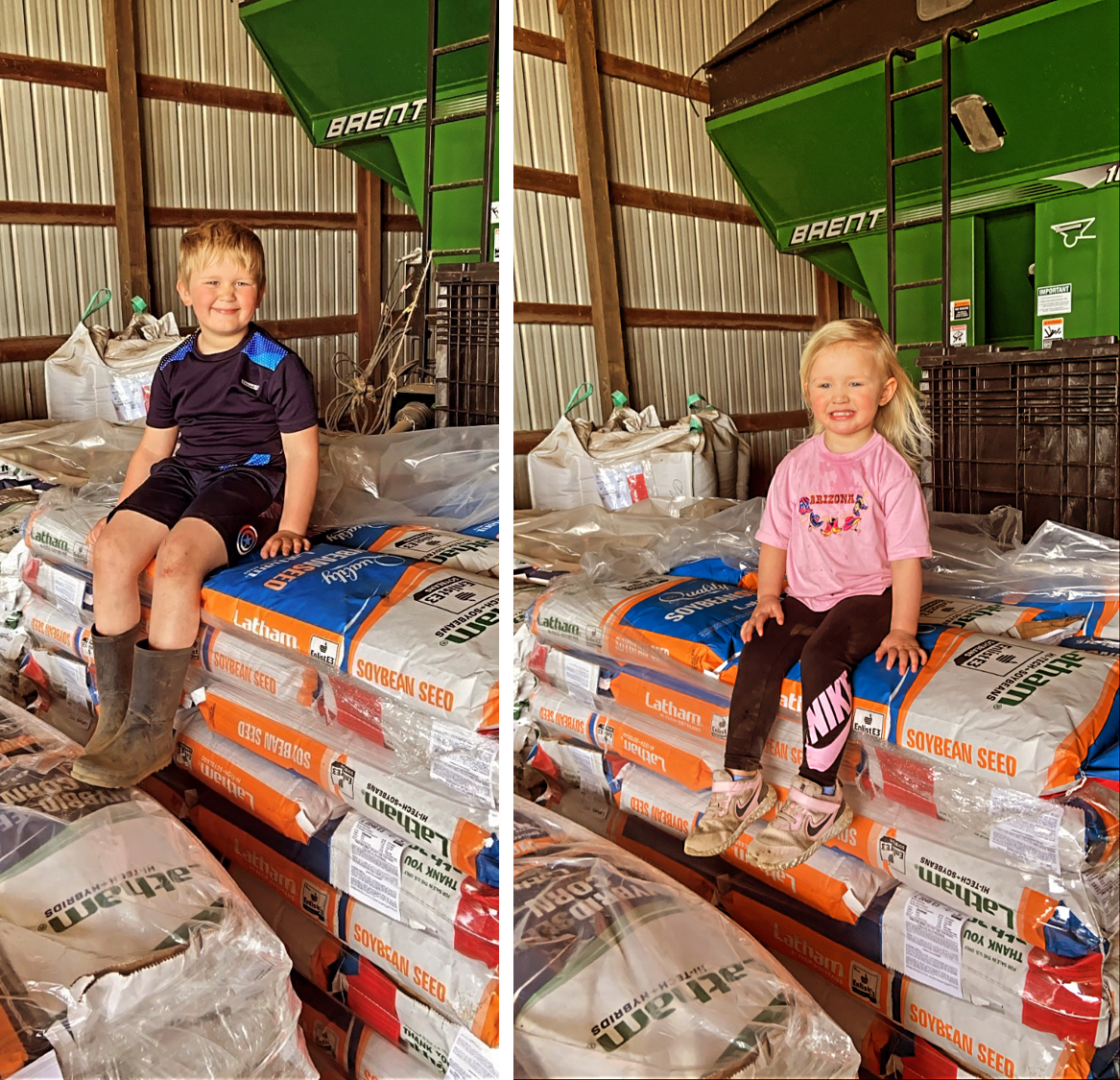
    Moretz Children Seed
    The Moretz children pose for a photo on a pallet of Latham seed. The family has been Latham seed dealers since 2015.

    “Our Latham Hi‑Tech Seed dealership has really taken off in the past couple of years. This has been a great side business for us and a supplemental income,” says Melissa. “Many customers continue to be impressed each year by the products they purchase. They show their appreciation by ordering larger volumes the next year and/or referring us to other farmers in the area. There’s nothing better than word-of-mouth advertising! We are very excited to sell for Latham and can’t wait to see what the future holds.”

    In celebration of May Beef Month and the season of tractor picnics, today we’re sharing one of the Moretz family’s favorite recipes for pizza burgers.

    Shannon Latham

    May 7, 2021
    #RootsInBoots, Beef, Food & Family, Pork, Recipes, Spring
  • Latham Hi‑Tech Seeds

    Warm, Dry Winter Could Cause More Insect Pressure

    Soybeans LauraC (Phil Long's conflicted copy 2020 02 04)
    by Phil Long, Precision Agronomy Advisor 

    Phil Long, Precision Agronomy Specialist

    Many farmers are wondering about spring 2021 after the dry year we had in 2020 and lack of moisture so far this winter across Latham Country. Fall 2020 brought little relief in terms of additional moisture and this winter has been mild in terms of snowfall. What repercussions will we see as we head into this spring? An increase in insect pressure is one thing we will need to keep an eye out for going into spring, especially if we don’t see low enough temperatures to help winter mortality rates in those that overwinter.

    Let’s begin by dividing insects into two groups:

    1. Survivors, or insects whose life cycle is directly affected by the weather patterns.
    2. Opportunists, or insects that can take advantage of warmer, drier weather pattern like we are experiencing.

    Group 1 – Survivors

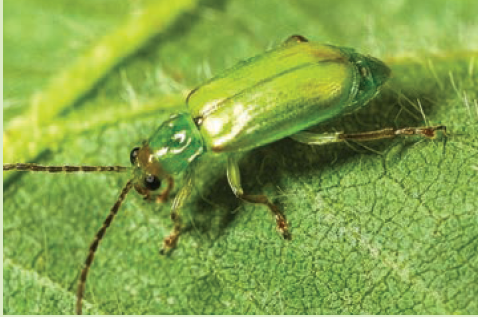
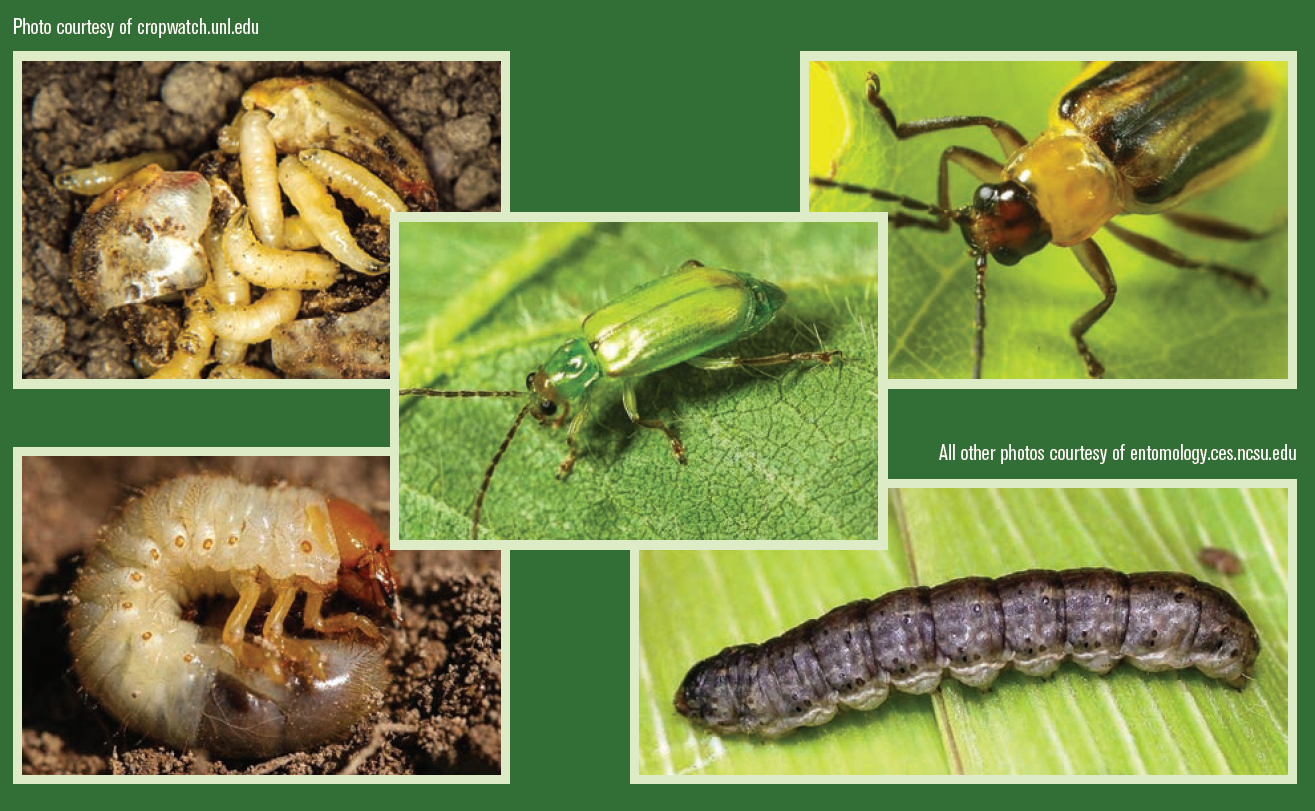
    Corn Flea Beetles belong in the first group because the warmer-than-normal weather might allow for more of these pests to survive.  They typically overwinter in our area, and their survival rate depends on the temperatures in December, January and February.  When the mean temperatures for these three months add up to over 90 degrees Fahrenheit, then there will be a greater number of survivors that will be ready to attack corn fields in the spring.

    Likewise, overwintering Bean Leaf Beetles can become an economic pest in soybeans when there is a larger-than-normal percentage of survivors.  Both types of beetles will feed directly on young plants just as soon as they emerge.  And adding to the degree of injury, both beetles have been known to infest the young seedlings with diseases while feeding on them.  Corn Flea Beetles have been known to vector Stewart’s Wilt, and Bean Leaf Beetles have been known to vector Bean Pod Mottle Virus.

    Seed treatments that include an insecticide like Cruiser®, Poncho® or Gaucho® can help prevent these insects from attacking young plants and seeds.  We know seed treatments prove to be a good investment during a cold, wet spring.  Just because it looks to be a dry spring, don’t be fooled into thinking seed treatments won’t pay for themselves this season!

    Group 2 – Opportunists

    The second group of insects includes all species that can or will eventually feed on the crop.  If we have a dry spring and early summer, then crops may suffer moisture stress.  ANY kind of stress can be greatly enhanced by insects (or any diseases for that matter) that feed upon those plants, including, but not limited to:  Corn rootworms, corn aphids, stalk borers, European corn borer, cutworms and armyworm for corn.  In soybeans, there would be the 1st and 2nd generation Bean Leaf Beetles, soybean aphids, two-spotted spider mites, Japanese Beetles and Soybean Cyst Nematode (even though they are not an insect).

    Most of the pests mentioned above can be controlled by applications of insecticides if done at the proper time; the exceptions to this are rootworms (because they are below-ground) and SCN (also below-ground and not an insect.)

    The good news is that although it takes months for evaporation and evapotranspiration to deplete our heavy prairie soils, it only takes a few weeks to replenish it. With adequate snowfall and early spring rains we should see the rest of those dry regions be back at field capacity and ready for 2021 planting. As we approach the planting season keep in mind which of your fields may be at a higher risk to insect pressure due to minimum tillage, cover crops, or past management practices, and plan ahead with seed treatments, insecticide options, or simply plan to walk your fields a little more to stay on top of insects or other pests.


    Webspec Admin

    January 13, 2021
    Agronomics, General, Insects, Season, Winter
  • Latham Hi‑Tech Seeds

    A Picnic Epiphany

    Winter PIcnic 2

    Guest post by Anita McVey of Picnic Life Foodie

    Tis the season for bundling up in coats and hats to go outside and build a snowman, sled down the hill or have a snowball fight. Suggesting a winter picnic might cause even the most amiable of midwesterners to question your sanity. Make that same suggestion to kids and watch their eyes light up! Everyone will be happy to learn a winter picnic can be warm and cozy, right inside your home.

    Calling this idea an “epiphany” may be a bit of an exaggeration. If, however, the rejuvenation and relaxation typically associated with an outdoor picnic can be achieved indoors when the weather is frightful, it’s not just an epiphany … it’s a miracle!

    Set the Stage 

    Winter Picnic 4The only prop needed to create an indoor picnic is a blanket. Choose one that is easy to wash (especially if kids are involved) so the inevitable spills cause minimal concern. An old quilt urges people to sit and relax. Seldom used seasonal tablecloths make family feel like the special guests they are.

    Place the blanket, quilt or tablecloth near a fireplace or in an unusual room of the house. Turn off the overhead lights and add candles (monitored closely, of course) or a string of lights on or near the blanket.

    Choose a Menu

    As with any picnic, choose simple foods that are easy to transport and eat. Here are a few suggestions:

    1. Sliders (like these Ham and Cheese Sandwiches): can be made ahead, kept warm and require no utensils to eat;
    2. Wraps: easy to customize, packaged individually and secure the meat, cheese and veggies in one tortilla;
    3. Skewers/Kabobs: meatballs (like these Buffalo Chicken Meatballs), lunch meat, cheese, fruit and even desserts are more fun on a stick!;
    4. Pizza: fresh from the oven or delivered to your door.

    Pack a Basket or Tray

    Just as the sight of a blanket on the floor will draw attention, the approach of a picnic basket or tray is sure to pique curiosity. Pack extra napkins (or a roll of paper towels), any required plates/utensils, drinks (individual servings can be poured into Mason jars with lids for easy transport) and a trash bag for easy clean up.

    Winter PIcnic 2Encourage Conversation

    Think of a few questions to encourage conversation and extend the occasion. If the picnic happens around Christmas, ask everyone about their favorite moments or the best things they ate. Ask about goals for the New Year. Find a list of trivia questions or conversation starters online and choose a few that relate to your family/guests. Ask each person to share memories of a favorite picnic or ideas for a future one.

    Be Creative

    During those cooped up winter days when time outside is limited, engage the imagination and create a summer oasis. Turn up the furnace a little, spread out beach blankets or towels, and tell everyone to put on swimsuits (or shorts and t-shirts). Pick up some fried chicken from the grocery store or a restaurant, add some potato salad and drink lemonade! Start dreaming about an ideal summer vacation (in detail) and finish with some ice cream or a S’more snack mix (honey graham cereal, marshmallows, chocolate chips).

    Who doesn’t love to hang out in their pajamas? A breakfast picnic would be a great way to start a day. Some excellent options for food would include: muffins and fruit, breakfast burritos, egg casseroles, and yogurt parfaits. Ask each other questions about dreams (literal and figurative), look up information on constellations, or watch some old cartoons.

    Please do not assume a winter picnic is for children. Couples can have a quiet meal together with some adult beverages and charcuterie, fondue or a favorite pizza.

    Warm and Cozy Winter Picnic

    Winter Picnic 5The picnic in these photos features the comfort food of winter: tomato soup. Poured into individual containers, the soup can be eaten with a spoon or sipped right out of the cup. Breadsticks, cheese rounds and clementines are all easy finger foods, requiring no additional utensils. Some cranberry sparkling water with a few fresh cranberries makes a festive drink. For dessert, leftover frosted sugar cookies were crumbled and layered into plastic cups with pudding, raspberry jam and fresh raspberries. A trifle like this can be made with any leftover cake, brownie, cookie or bar. Whipped cream or vanilla yogurt can be used instead of pudding and some fruit will add texture and freshness.

    A New Tradition

    This could be the start of a new tradition. Once a year, on January 6th, have a winter picnic … an Epiphany picnic. Celebrate the close of the Christmas season. Pack up some good bread, grapes, olives, cheese and wine (or sparkling grape juice). Read about the arrival of the Wise Men in Matthew 2:1-12. Talk about the significance of gift giving. Say a prayer asking for guidance and protection in the New Year.




    Shannon Latham

    January 6, 2021
    Appetizers, Poultry, Recipes, Season, Winter
  • Latham Hi‑Tech Seeds

    2020 Yield Highlights

    Soybean 5 winner graphic

    Soybean 5 winner graphic

    South Dakota 4669 brookings graphic

    4937 codington graphic

    5635 yankton graphic2894 SD summary graphic


    North Dakota

    3932 cass graphic


    Minnesota

    5725 olmsted graphic

    Made to win MN graphic

    5725 dodge graphic

    2193 mower graphic

    1858 MN summary graphic

    1995 jackson graphic

    2193 jackson graphic4937 redwood graphic


    Wisconsin4375 dodge graphic


    Red River Valley

    3827 richland graphic


    Iowa

    5487 winneshiek graphic

    2549 o brien graphic

    2638 pocahontas graphic

    5487 2nd place graphic

    2228 humboldt graphic

    1883 osceola graphic

    2682 marion graphic2193 cerro gordo graphic

    6187 mahaska graphic

    5249 clinton graphic

    6289 mahaska graphic


    Nebraska

    2995 pierce graphic

    2995 dodge graphic

    Webspec Admin

    December 8, 2020
    Agronomics, Corn, Crop, Fall, Season, Soybeans
  • Latham Hi‑Tech Seeds

    #MadetoWin Video Series Recap

    Made to win with john latham
    #MadetoWin Week 1

    John Latham for the first #MadetoWin video of the harvest season! John will discuss the recent XtendFlex approval, preview Latham seed quality for next year and discuss products that are winning in the field throughout Latham Country!


    #MadetoWin Week 2

    Join us for the second #MadetoWin update with John Latham! John highlights products performing well throughout Latham Country.  #LathamSeeds


    #MadetoWin Week 3

    Join us for week 3 of our #MadetoWin video series! John Latham covers his Power 10 hybrids based on yield results. Tune in the learn more! #LathamSeeds


    #MadetoWin Week 4

    Join us with John Latham! John discusses his Power 10 soybean varieties covering our entire marketing territory. Tune in to learn more! #LathamSeeds


    #MadetoWin Week 5

    Join John Latham for this week’s #MadetoWin video series! John will discuss our 2020 F.I.R.S.T. Trial winners. #LathamSeeds


    #MadetoWin Week 6

    John highlights our top 10 products based on F.I.R.S.T. trial wins. #LathamSeeds


    #MadetoWin Week 7

    John Latham talks soybeans! Tune in to hear a run down of the multiple F.I.R.S.T. Trial soybean wins throughout Latham Country! #MadetoWin #LathamSeeds


    #MadetoWin Week 8

    Join us for the final episode of our #MadetoWin series with John Latham! John discusses our new XtendFlex options and what it means for farmers across Latham country. #LathamSeeds

    Webspec Admin

    December 7, 2020
    Agronomics, Corn, Crop, Fall, Season, Soybeans
  • Latham Hi‑Tech Seeds

    Ask the Agronomist: Will 2020 be an Early Harvest?

    Feature image for ATA 8.27

    Will 2020 bring an early Harvest? Phil Long talks about 3 different examples of how corn is maturing. Learn about what is in your field and the impacts of an early harvest.

    :30 — Topic introduction

    1:45 — Impact of lack of moisture

    2:45 — Example 1: Corn plant dying from the top

    4:15 — Example 2: Corn plant firing from the bottom

    5:20 — Example 3: Corn plant with red streaking

    7:30 — Impacts of an early harvest

    10:10 — Final thoughts

    Laura Cunningham

    August 27, 2020
    Agronomics, Corn, Crop, Fall, Growth Stages, Season
  • Latham Hi‑Tech Seeds

    Thistle Caterpillars 

    Screen Shot 2020 04 28 at 5.46.11 PM
    Screen Shot 2020 04 28 at 5.46.11 PM
    Credit: University of Nebraska

    Soybeans are a common host of thistle caterpillars – an insect that is able to feed on over 300 different plants. Damage from the thistle caterpillar can be minor leaf feeding or in large infestations, total defoliation.  In higher infestations action may be needed, but typically thistle caterpillars don’t cause enough damage to reduce yield or warrant chemical control.

    In adult form, thistle caterpillars are known as painted lady butterflies and have a wingspan of 2 to 3 inches. The wings are orange, pink or brown with four eyespots near the tips of the wings. Caterpillars have a yellow stripe that runs the length of the body. Their spiky hairs make the insect distinguishable from other look-a-like insects.

    The insect is typically unable to overwinter in the Midwest. Butterflies migrate from southern portions of North America to the Midwest and lay their eggs in June. The eggs are lime green and oblong with a ribbed texture.

    Thistle caterpillars can produce one to two generations per year and feed primarily during July and August. Caterpillar feeding takes place over the course of 2 to 6 weeks until the insects reach pupation. The second generation of the insect is known to feed at the topmost layer of the canopy and causes leaves to stick together from excreting silk.

    Thistle Caterpillar ISU
    Credit: Iowa State University
    Scouting and Treatment 

    Thistle caterpillars are known to cause the most harm to soybeans during V3 and V4. When scouting for signs of caterpillar feeding, examine leaves from each level of the soybean plant. Select 100 different plants from across the field and check for feeding injuries at the top, middle and bottom third of the plant.

    Treatment is advised when defoliation is exhibited in 30% of plants during vegetation or 20% in plants undergoing reproduction. Insecticide application can be used to control the insect’s population. Be sure to consult with your local Latham representative to determine the best treatment plan for managing thistle caterpillars.

    Latham Seeds Agronomy Team

    June 8, 2020
    Agronomics, Crop, Fall, Insects, Season, Soybeans, Summer
  • Latham Hi‑Tech Seeds

    Frost Damage in Corn & Soybeans

    IMG 9552
    Phil Long discusses the implications of an early-season frost in both corn and soybeans. Tune in to learn if your crop was affected. #LathamSeeds
    :15 — Welcome
    :35 — Topic introduction & indicating factors
    3:30 — Frost damage in corn
    8:50 — Frost damage in soybeans

    Laura Cunningham

    May 12, 2020
    #AskTheAgronomist, Agronomics, Corn, Crop, Emergence, Frost, Season, Soybeans, Spring, Weather
Previous Page
1 … 11 12 13 14 15 … 46
Next Page

Latham Hi‑Tech Seeds

131 180th Street | Alexander, IA 50420

(641) 692-3258

SIGNUP FOR OUR NEWSLETTER
  • Contact
  • Legal
  • Dealer Center
  • Seedware Login
  • Latham Gear

© 2025 Latham Hi‑Tech Seeds. All rights reserved. | Iowa Web Design by Webspec | Privacy Policy

Latham® Hi-Tech Seeds is a trademark of M.S. Technologies, L.L.C., 103 Avenue D, West Point, IA 52656.