Skip to content
Latham Hi-Tech Seeds

(641) 692-3258

  • Home
  • Performance
  • Products
    • Corn
    • Soybeans
    • Alfalfa
    • Corn Silage
    • Seed Guide
  • Find a Rep
  • Media
    • Blog
    • News
    • Videos
    • Podcasts
    • TECHTalk
  • About Us
    • Company History
    • Our Mission
    • Careers
    • Become a Rep
    • Sowing Seeds of Hope
  • Contact Us
  • Latham Hi‑Tech Seeds

    Turkey Producers Serve Up Tasty State Fair Traditions

    7

    “Fun, delicious, unique and healthy” aren’t usually the words fairgoers associate with food on a stick, but that’s exactly what Iowa’s turkey producers serve up at the “Turkey Grill.” You can get a taste of it at the 2021 Iowa State Fair (ISF) from Thursday, August 12, through Sunday, August 22, 2022.

    “The Turkey Grill started with the goal to promote turkey and to provide a healthy, delicious alternative for fair-goers, and it continues to do so today, 38 years later,” says Gretta Irwin, Executive Director & Home Economist for the Iowa Turkey Federation / Iowa Turkey Marketing Council.Turkey Grill

    The Turkey Grill is located east of the Varied Industries Building on the Iowa State Fairgrounds. To learn more about the fair or to get answers to frequently asked questions, visit IowaStateFair.org. There’s also an official Iowa State Fair app.

    We strive to serve fun, delicious, unique and HEALTHY turkey items.

    NEW!  Breakfast Poppers

    Breakfast Poppers
    The Turkey Grill’s new Breakfast Poppers.
    • $2
    • Breakfast in a meatball! Turkey, scrambled eggs, cheddar cheese, onion, green pepper, red peppers.
    • 5 meatballs per serving
    • Guests can put their favorite condiment (ketchup, salsa, hot sauce) with the meatballs.

    Turkey Tenderloin

    • $7
    • Marinated breast meat and slow grilled (recipe below)
    • On the Iowa State Fair “Healthy Choices” list
    • 166 calories, 25 grams of protein and only 1 gram of saturated fat
    • We will serve it in a bun or on a stick
    • No allergens. Marinated in lemon juice, soy sauce alternative so gluten free, vegetable oil, red wine, onion, ginger, pepper and garlic powder

    Not Your Momma’s Taco

    • $6
    • Deep-fried flour tortilla, Mexican-seasoned shredded turkey, homemade veggie slaw, mango salsa
    • On the Iowa State Fair “Healthy Choices” list
    • The meat is made exclusively for us by West Liberty Foods, the same turkey is featured on our shredded turkey sandwich, without the Mexican seasoning
    • People’s Choice ­ Best New Fair Food of 2016

      IMG 2878
      The Turkey Grill’s grilled Turkey Tenderloin on a bun.
    • Sold almost 17,000 turkey tacos at the 2016 Iowa State Fair

    Pulled Turkey Sandwich

    • $6
    • Shredded Turkey Sandwich (all white meat)
    • Will remind you of that perfect turkey sandwich the day after Thanksgiving
    • 120 calories, 1-gram saturated fat and 26 grams protein
    • No allergens. Ingredients: Breast meat, natural turkey broth, salt, sodium phosphate and natural flavorings.

    Turkey Drumstick 

    • $10
    • Brined, smoked and slow grilled to perfection
    • Only 140 calories per 3 ounce serving and 1 gram of saturated fat, this perfect-to-share fair item since it is about 16 ounces of meat.
    • No allergens, no wheat gluten or milk products, gluten free

    Griddle Sticks

    • $2
    • pancake batter covering a turkey sausage on a stick, served in a tray with syrup
    • 160 calories, 1.5 grams of saturated fat and 7 grams of protein
    • Contains egg, milk, soy and wheat

    “We hope that our guests enjoy this powerful protein year-round!” adds Irwin.

    To help encourage you to eat turkey year-round, below are links to a few of our favorite blog posts about Iowa turkey producers with links to turkey recipes:

    • Talk Turkey with Iowa Farm Tim Graber
    • Life Has Been a Series of Opportunities for This Turkey Farmer
    • Meet the Farmers Behind Your Thanksgiving Turkey

    How delicious does Lemon Garlic Rotini with Zucchini sound? This recipe, which features a pound of turkey breast meat, is included in a link within a blog post above. Because it’s zucchini season, I wanted to be sure you check it out.

    The Iowa Turkey Federation also is sharing its recipe for Grilled Turkey Tenderloin Marinade. Trust me, it’s incredibly delicious. Better yet, try it yourself!
    Shannon Latham

    July 30, 2021
    Food & Family, Poultry, Recipes, Season, Summer
  • Latham Hi‑Tech Seeds

    #AskTheAgronomist: Corn Rootworm Pressure Now and Into the Future

    Maxresdefault

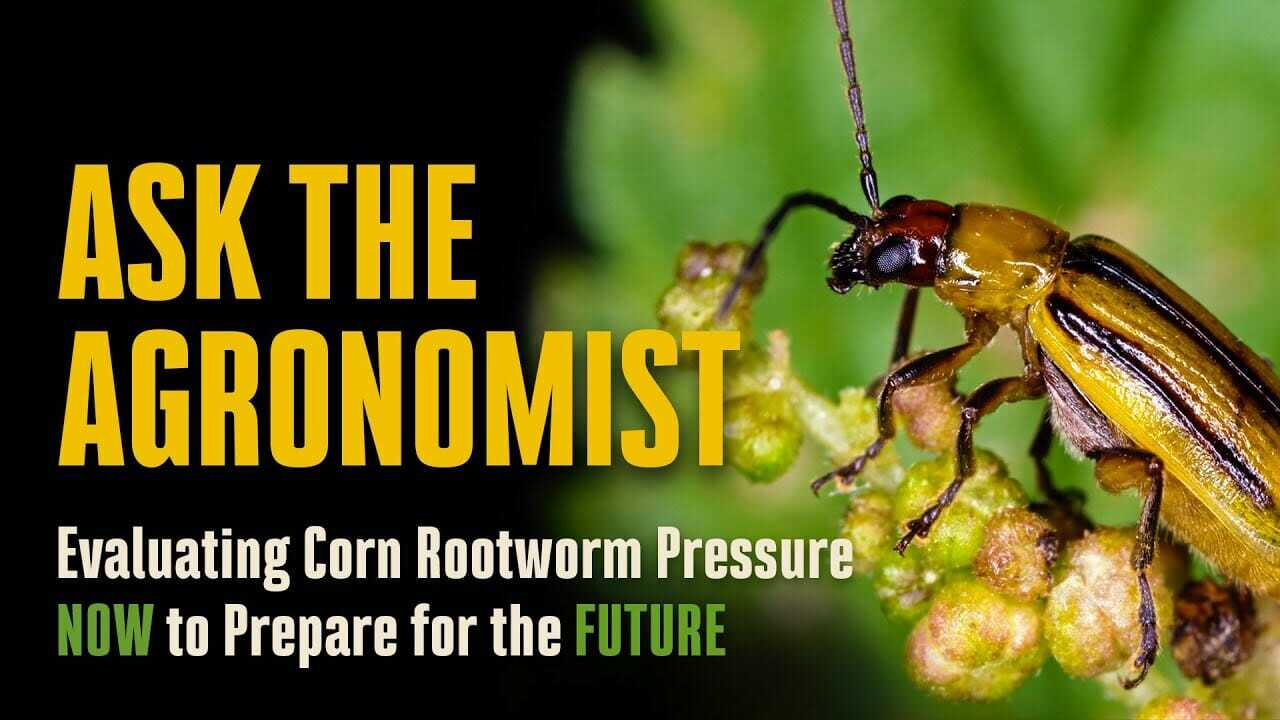
    Corn rootworm pressure has been steadily increasing over the past few years across the Midwest. Precision Agronomy Advisor Phil Long discusses how to identify and gauge pest pressure in your fields and plan for the future.

    July 28, 2021
    #AskTheAgronomist, Agronomics, Corn, Crop, Insects, Season, Summer
  • Latham Hi‑Tech Seeds

    #AskTheAgronomist: Soybean Cupping and Recovery

    Capture

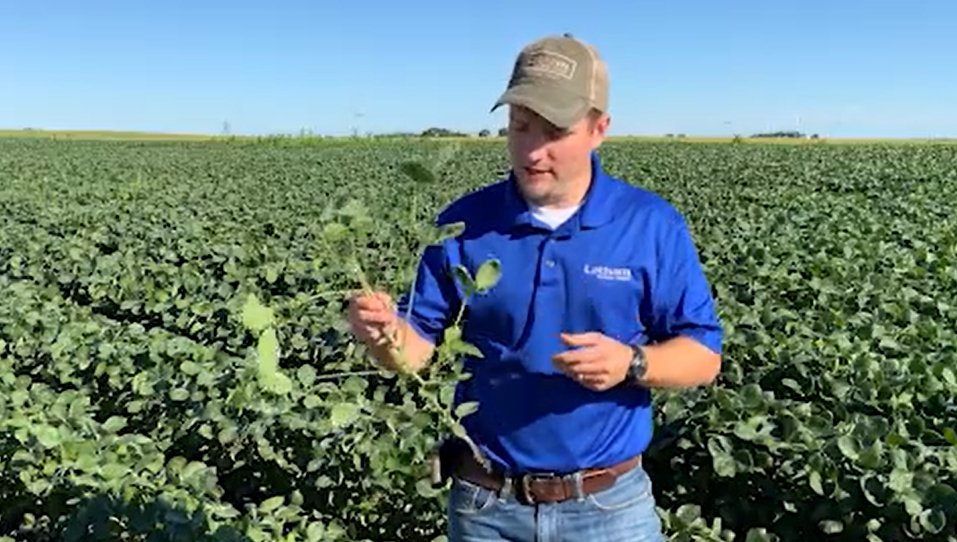
    Each year, many farmers observe cupping in soybeans for a variety of reasons ranging from herbicide drift to environmental factors. Precision Agronomist Phil Long covers how to stage damage and evaluate recovery potential.

    July 15, 2021
    #AskTheAgronomist, Agronomics, Crop, Season, Soybeans, Summer, Weed Control
  • Latham Hi‑Tech Seeds

    Scout Alfalfa for These Damaging Pests

    Alfalfa pest

    As with all crops, scouting alfalfa acres is key to controlling pests. Each pest has a different life cycle based on different variables, such as heat and moisture. While weather plays a key role, there are still cyclical patterns in which pests are more common. Below is a chart showing the most damaging pests to scout for according to season.

    Pest calendar

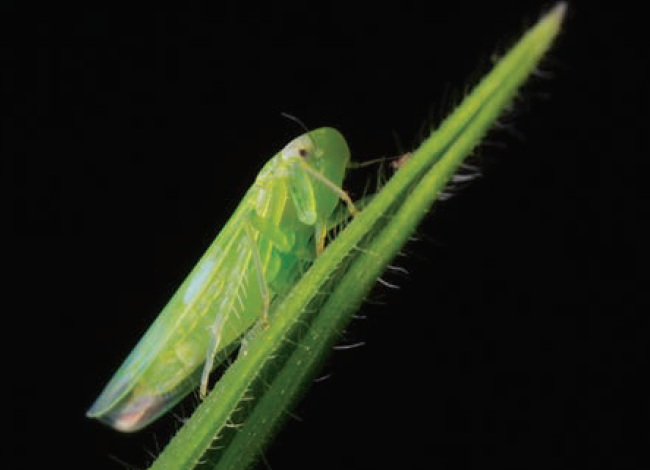
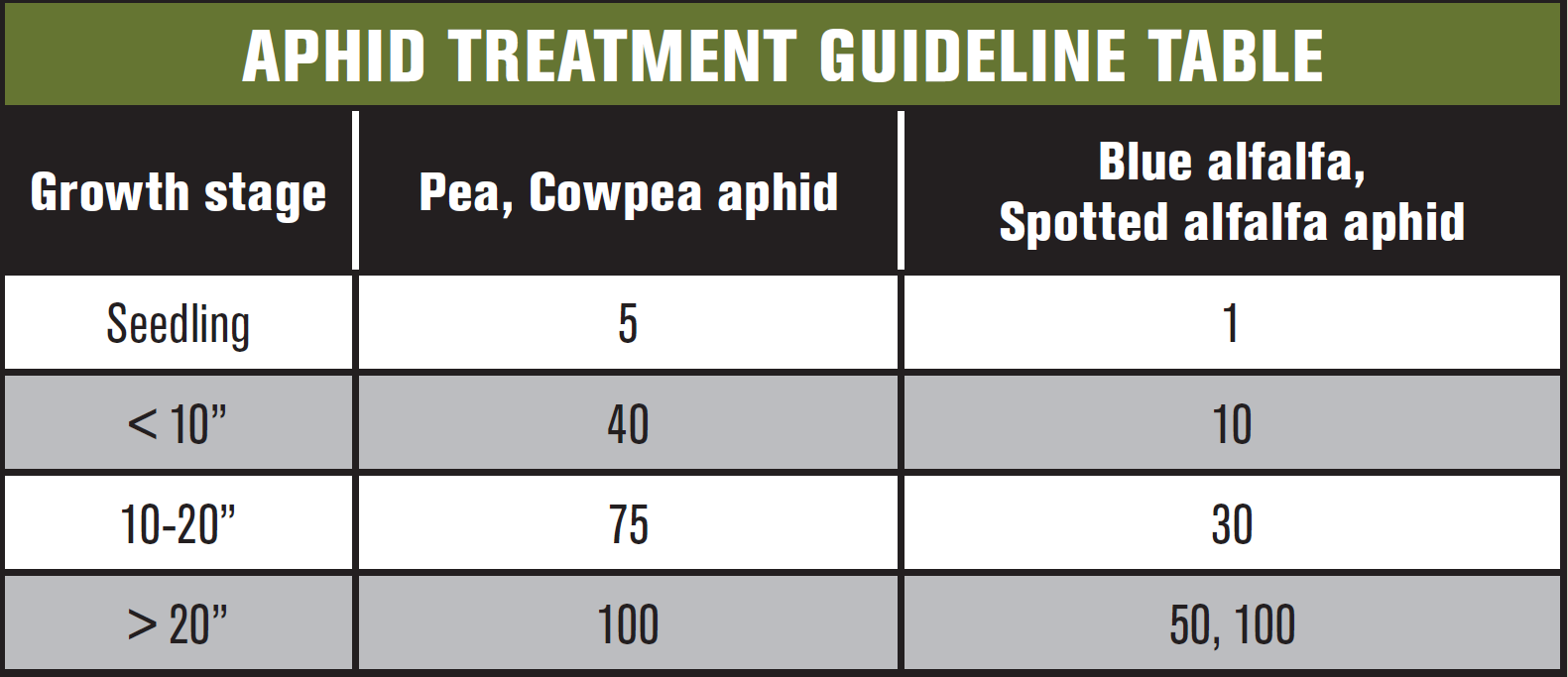
    Potato Leafhopper and Pea Aphids are the two pests that cause the most damage annually across Latham Country. Many farmers question how to judge when spraying an insecticide is a wise choice. Below are some tips to help you scout fields and arrive at a decision.

    1. WHAT TO LOOK FOR. Scouting should begin five to seven days after the first cutting is taken and should continue weekly or bi-weekly if population counts reach close to threshold on a particular day. When scouting for Potato Leafhoppers, look for stunted plants, yellowing leaves in a v-shaped pattern beginning at the leaf tip, as well as “hopperburn,” or a red edge found on the leaf. This red burn can be easily confused for Boron deficiency. Pea Aphids will cause plants to lose their green color and wilt.
    2. HOW TO TAKE SWEEP SAMPLES. The easiest way to scout for these insects is to use a small sweep net. Walk a W-shaped pattern in the field, taking samples from five randomly selected areas. Leafhopper infestations generally begin on the edges of the field, so include these areas in your checks. Tips for Taking Sweep Samples:
      •  Swing the sweep net in a 180-degree arc, so the net rim strikes the top 6 to 8 inches of growth. Each 180-degree arc is one “sweep.”
      • Take a sweep from right to left, walk a step, take another sweep from left to right, and so on.
      • After taking five sweeps, quickly close the net and count the number of each insect.
      • Divide this number by five to get the average for that area; record the average for each of the five areas in the field.
    3. THRESHOLDS AND TREATMENT. A plant’s immune system tends to handle more pressure as alfalfa matures, however, the harmful compounds that each insect species injects while feeding can reduce yields. When left unmanaged, severe cases can shorten the life cycle. Treatment for Potato Leafhoppers and Pea Aphids can follow these guidelines.Leafhopper1Leafhopper2

    Early harvests often can be used to control both leafhoppers and aphids. Insecticides are a tool to help alter the life cycle of a pest and are especially helpful if thresholds are reached when alfalfa is small. Several insecticides are labeled for alfalfa with different classes and modes of action. Most have a harvest wait period depending on class and rate used. Be sure to follow the label guidelines closely. As with herbicides, alternating modes of action reduces the risk of resistant pests.

    July 14, 2021
    Agronomics, Alfalfa, Crop, Insects, Season, Summer, Tech Tuesday
  • Latham Hi‑Tech Seeds

    Finding the Right Products for Your Farm

    13661816 10154399657832138 1325590968138902139 o

    At Latham Hi‑Tech Seeds, we take pride in our ability to identify the best corn hybrids and soybean varieties to match our customers’ needs. We take time to listen to our sales team, which includes our dealers, talk about the needs of farmers across Latham Country. Their information about desired characteristics helps direct our research and testing efforts.

    The journey to finding new products begins with our robust collaborative access to germplasm. Latham’s Product Team works in conjunction with many germplasm sources, including our own, to fuel our search to find the best products for the specific geographic regions we serve. We also have great relationships with trait providers to bring needed traits into our products. After we either find or create the desired genetic combinations, we move into the evaluation stage of our process.

    Our Elite Trial program continues to grow with additional test locations across our sales footprint. We are testing in every corner of Latham Country. This means that we test products where they would be sold, which allows us to find unique niche products that excel in a local environment.

    To help position products to fulfill our needs assessment, our regional sales managers (RSMs) get an early look at the products we’re considering for our lineup. Having “in-trial” conversations about products with our sales team is a tremendous benefit to Latham’s Product Teams. In addition, conversations about products in trials helps builds confidence with our sales team to position products. We have consolidated both our corn and soybean evaluation processes into one Elite Trial system, which allows our product teams to assess data more easily.

    Once we identify products from the Elite Trials that meet Latham Hi‑Tech Seeds’ standards and fulfill our customers’ needs, we release them for sale. We also place these new products in our Latham Showcase plots, as well as in the independent F.I.R.S.T. Trials program, to once again showcase the performance of these new products and to provide opportunities for our customers to gain confidence in their performance.

    Latham’s track record of performance in our Showcase plots and F.I.R.S.T. Trials proves the system we have built works! Our process of beginning with a large diverse pool of genetics; testing potential new products thoroughly in all parts of our footprint; and proving our performance in our final stages of Latham Showcase and F.I.R.S.T. Trial plots complete our journey in finding outstanding products.

    I’m so excited about the products we’re testing this summer and look forward to talking about them in more detail at our upcoming field days. Watch your mail and social media for more details coming soon!

    Latham Seeds Precision Agronomy Advisors

    July 14, 2021
    Agronomics, Corn, Crop, Season, Seed Technology, Summer, Tech Tuesday
  • Latham Hi‑Tech Seeds

    Get an “Early Look” at New Products

    Soybean Plant

    We have an exciting product lineup in store for 2022!

    In September 2020, Bayer CropScience announced the approval of XtendFlex® soybeans for the 2021 growing season. Latham Hi‑Tech Seeds was prepared and launched seven new soybeans in this exciting new technology. We believe this new trait gives farmers an extra tool for battling the ever-increasing problem of herbicide-resistant weeds.

    Soybean Plant

    For the 2022 season, we are introducing these six new XtendFlex products:

    • L 0254 XF – This 0.2 soybean carries the C-gene for Phytophthora, full resistance to Brown Stem Rot and excellent tolerance to Iron Chlorosis. Avoid SCN-infested fields.
    • L 0984 XF – Featuring the Rps3-a gene for Phytophthora, this new 0.9 product also has strong tolerance to SCN, Brown Stem Rot, White Mold and Iron Chlorosis.
    • L 1383 XF – This new Ironclad has L 0982 R2 as a parent! It has the Rps-3a gene, full resistance to Brown Stem Rot and good scores for White Mold, IDC, SCN and Stress.
    • L 1784 XF – L 1858 R2 is a parent of this new 1.7 soybean! It features strong SCN, full resistance to Brown Stem Rot with very good scores for Iron Chlorosis and Stress.
    • L 2786 XF – This new line has the Rps1-c gene for Phytophthora, full resistance to Brown Stem Rot and strong tolerance to SCN, White Mold, Iron Chlorosis and Stress.
    • L 3086 XF – Replacing L 3058 XF, this SCN bean features the Rps1-c gene, full resistance to BSR and great tolerance to White Mold & Stress. It’s a fantastic Ironclad for no-till acres.

    On the Enlist E3® side, we are adding four new soybeans:

    • L 1219 E3 – This 1.2 bean carries the Rps1-c gene for Phytophthora and strong tolerance to SCN, SDS, Stress and Iron Chlorosis. It also has the Excluder gene for high-salt soils.
    • L 1558 E3 – Here’s a 1.5 Ironclad that features the Rps3-a gene for Phytophthora, full resistance to BSR and great scores for SCN, Sudden Death, Iron Chlorosis and Stress.
    • L 2458 E3 – This new E3 line has the Rps1-k gene, full resistance to BSR and strong scores for SCN, Sudden Death, Frogeye, Charcoal Rot, Stress and Iron Chlorosis.
    • L 3479 E3 – Highlights of this new 3.4 bean K-gene for Phytophthora include complete BSR resistance, great SCN tolerance and strong scores for Sudden Death, IDC and Stress.

    Our Product Development Teams have really done their homework for next year! Be sure to check out next month’s blog when we will highlight new corn products for 2022.

    The legacy that we build our product decisions on is based on a foundation of quality and performance. We believe this foundation benefits Latham® dealers and their customers because we provide seed that is bred specifically for their geographies. Rest assured WHY we do what we do will never waiver!

    Mark Grundmeier, Product Manager

    July 14, 2021
    Crop, Season, Soybeans, Summer, Tech Tuesday
  • Latham Hi‑Tech Seeds

    Keep Track of the Little Details

    DSC 0185

    How often do you make the same mistake?

    Repeat mistakes happen when we don’t record exactly where we saw an issue in a particular field. Every year has its curveballs, and 2021 is no different. Planting progressed quickly, but then we experienced cold soils followed by really hot temps. Some areas also received a late frost and hail. Now, most of Latham Country is experiencing extremely dry conditions.

    One of the best ways I’ve found to track environmental conditions and a crop’s response to it is Latham’s Data Forward™ app. I use this app to take specific field notes as I’m walking fields. This year IDC and other deficiencies made a big appearance once we received some rain and the soybeans started growing. You can use the Data Forward app to outline these areas. You can even create a management zone, using your phone, to make a map for spreading fertilizer or applying a product with your planter only in those areas.

    Data Forward also can be used to drop a pin in tough areas, so you can take tissue samples to the lab. When the lab results come back, they will show up in the Data Forward app. How cool is that? You will never lose results this way. All of the details help you can really dial in your management. The first management step for IDC is selecting a top IDC-rated, Ironclad™ soybean variety. Only the toughest Latham® soybeans earn this designation. If IDC is a recurring problem, you could invest in a planter set up to apply a chelated iron product close to the roots. Another option is to invest in tile to help drain those lower areas with high pH or salt issues.

    One unique tool on the premium version of our Data Forward app is satellite imagery. While sipping your morning coffee, you can discover problem areas in a field. Imagery is like that torque wrench in your toolbox… If you know how to use it, it can save you from breaking a lot of bolts. If you don’t, it’s just another ratchet in the toolbox.

    By tracking what happens and where,  we can make these changes to address agronomic challenges. Talk to your Latham dealer, Regional Sales Manager (RSM) or give me a call to learn more about how Data Forward can help you move your farm’s data forward with confidence!

    Team Latham

    July 14, 2021
    Agronomics, Precision Ag, Season, Summer, Tech Tuesday
  • Latham Hi‑Tech Seeds

    Planting Depth Matters

    Planting Depth 1

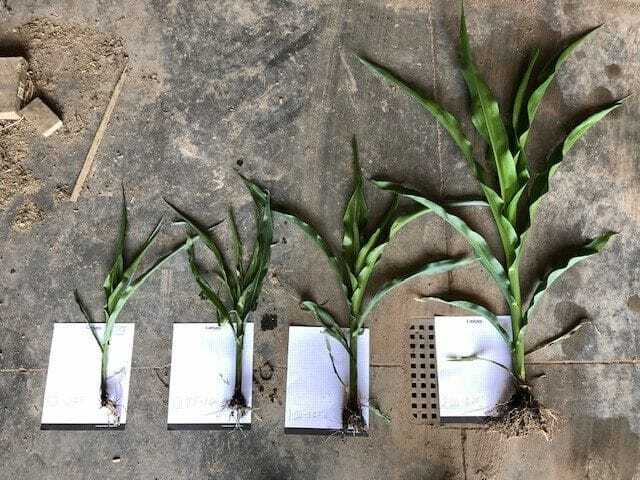
    The below is a look at an on-farm planting depth study conducted by our sales representative from southeast Iowa. Photos were taken in the same field, the same location, planted the same day with the same hybrid. The only variation between each is planting depth. The hybrid shown is LH 6477 VT2 PRO planted on May 12 and the photos are from the last week of June.

    Planting depths are as follows:

    1. On top of the ground to ¼-inch planting depth
    2. ¾ to 1-inch planting depth
    3. 1 to 1 ¼-inch planting depth
    4. 2 to 2 ¼-inch planting depth

    Those planted at optimal depth have much better nodal roots and root mass to anchor that plant into the rapid growth stages we’re observing now.

    Planting Depth 1
    Comparison of planting depth using hybrid LH 6477 VT2 PRO planted May 12 at the same field and location.
    Planting Depth 2
    On top of the ground to ¼-inch planting depth
    Planting Depth 3
    ¾ to 1-inch planting depth
    Planting Depth 4
    1 to 1 ¼-inch planting depth
    Planting Depth 5
    2 to 2 ¼-inch planting depth

    July 14, 2021
    Agronomics, Corn, Crop, From the Field, Season, Summer
  • Latham Hi‑Tech Seeds

    #AskTheAgronomist: Pollination and Silk Growth, Part 2

    Hqdefault (1)

    In Part 2 of this series on pollination and silk growth, Latham’s Pre-Commercial Product Manager Bob Foley further explains how the silk to pollen interaction translates into final yield. Watch Part 1 of the series here.

    July 14, 2021
    #AskTheAgronomist, Agronomics, Corn, Crop, Season, Summer
  • Latham Hi‑Tech Seeds

    #AskTheAgronomist: Pollination and Silk Growth, Part 1

    Hqdefault

    Latham Pre-Commercial Manager Bob Foley explains silking and pollen growth with a look at development over a multiday time frame. Knowing the stages of growth can help you understand how various stressors affect your crop. Watch Part 2 of the series here.

    July 14, 2021
    #AskTheAgronomist, Agronomics, Corn, Crop, Season, Summer
Previous Page
1 … 9 10 11 12 13 … 46
Next Page

Latham Hi‑Tech Seeds

131 180th Street | Alexander, IA 50420

(641) 692-3258

SIGNUP FOR OUR NEWSLETTER
  • Contact
  • Legal
  • Seedware Login
  • Latham Gear

© 2026 Latham Hi‑Tech Seeds. All rights reserved. | Privacy Policy

Latham® Hi-Tech Seeds is a trademark of M.S. Technologies, L.L.C., 103 Avenue D, West Point, IA 52656.