Latham Hi-Tech Seeds

(641) 692-3258

  • Home
  • Products
    • Corn
    • Soybeans
    • Alfalfa
    • Corn Silage
    • Seed Guide
  • Performance
  • Find a Rep
  • Media
    • Blog
    • News
    • Videos
    • Podcasts
    • TECHTalk
  • About Us
    • Company History
    • Our Mission
    • Careers
    • Become a Rep
    • Sowing Seeds of Hope
  • Contact Us
  • Latham Hi‑Tech Seeds

    Celebrating the Freedom of Independence at Latham Dealer Kickoff

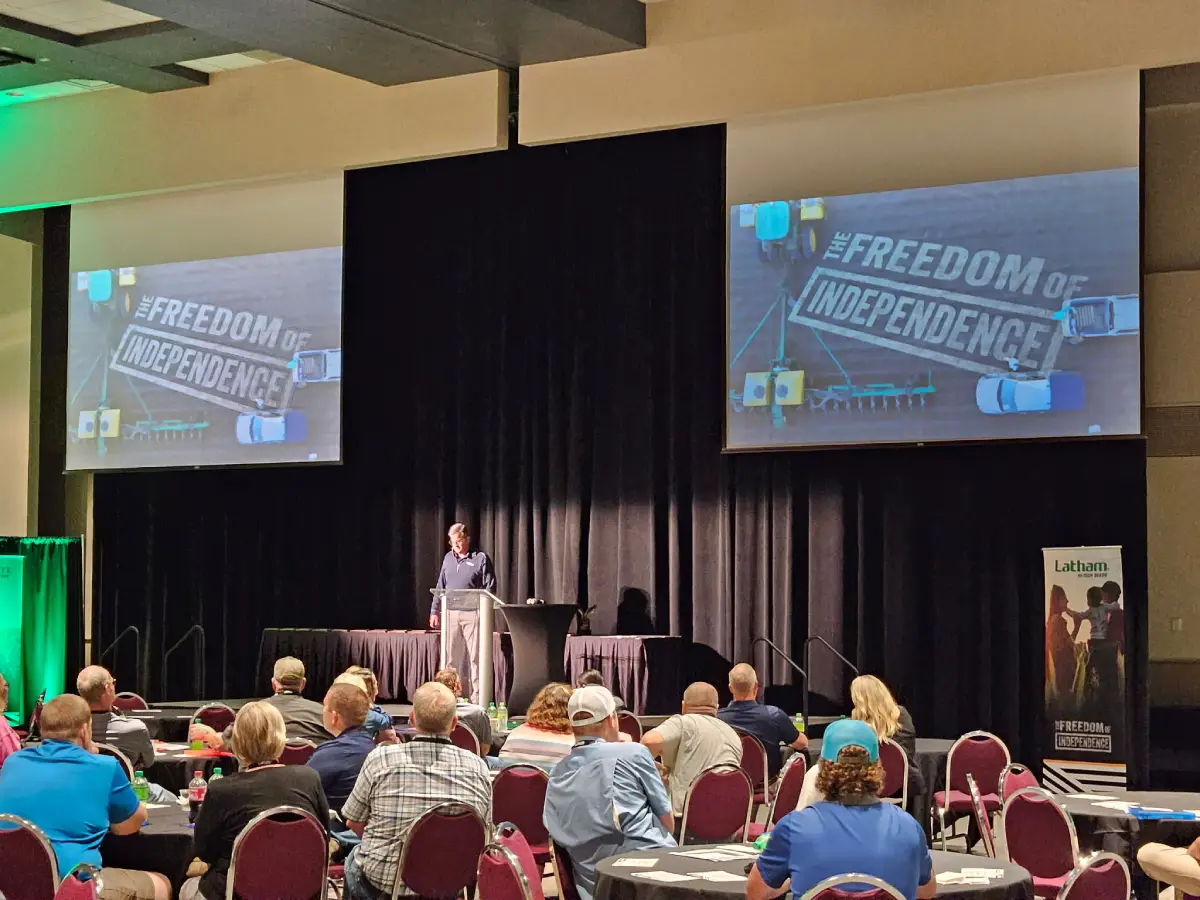
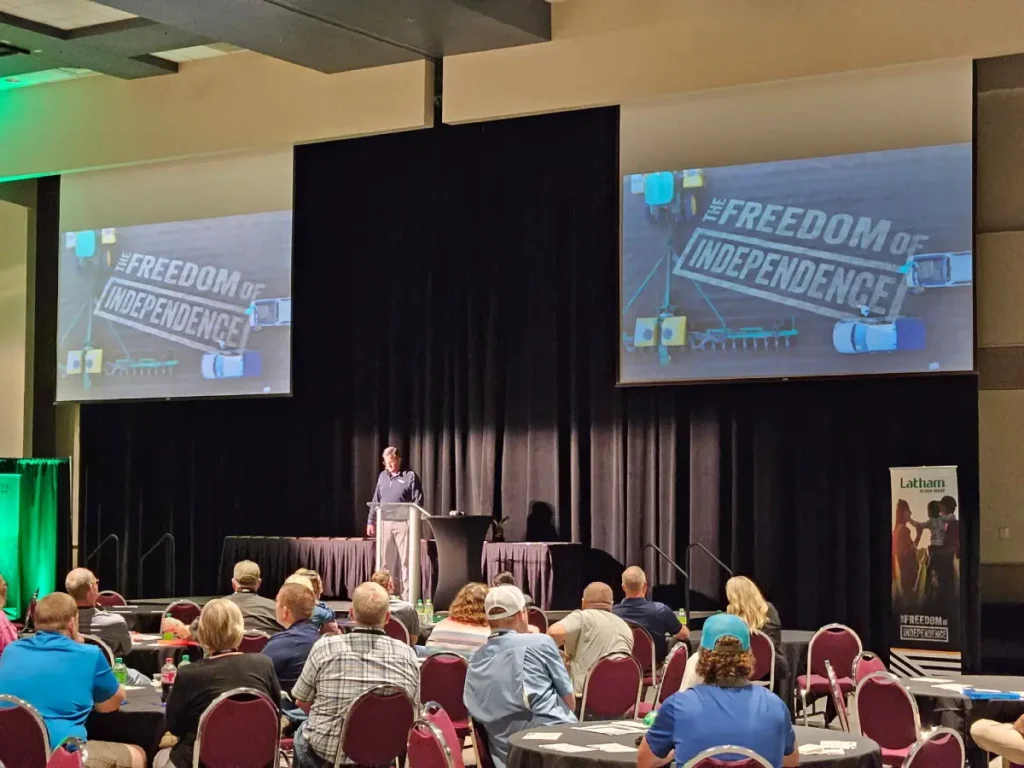
    Latham® Dealers gathered this week in Mankato, Minnesota, for our annual sales kickoff meeting. We celebrated two days of connection and prepared for what promises to be one of our most exciting sales years yet.

    This year’s event introduced our Freedom of Independence theme — a rallying cry that reflects exactly who we are and how we operate. As an independent seed company, Latham Hi-Tech Seeds is free to select the very best genetics and trait packages for the fields across our footprint. We answer to farmers and dealers, not shareholders or Wall Street. That freedom allows us to focus on what truly matters: helping you succeed!


    J-Class Soybeans Take Center Stage

    One of the most talked-about moments of Latham Dealer Kickoff was the debut of our J-Class Soybeans. Designed to give our dealers and customers an edge on every acre, Latham’s J-Class Soybeans are so good they’re in a class by themselves.

    We’re introducing 32 new J-Class varieties for 2026 planting, 12 of which carry our Ironclad™ protection for superior disease resistance and standability. With yield potential and agronomic strength like this, we’re confident J-Class will be a game-changer for farmers across Latham Country.

    Learning from the Experts

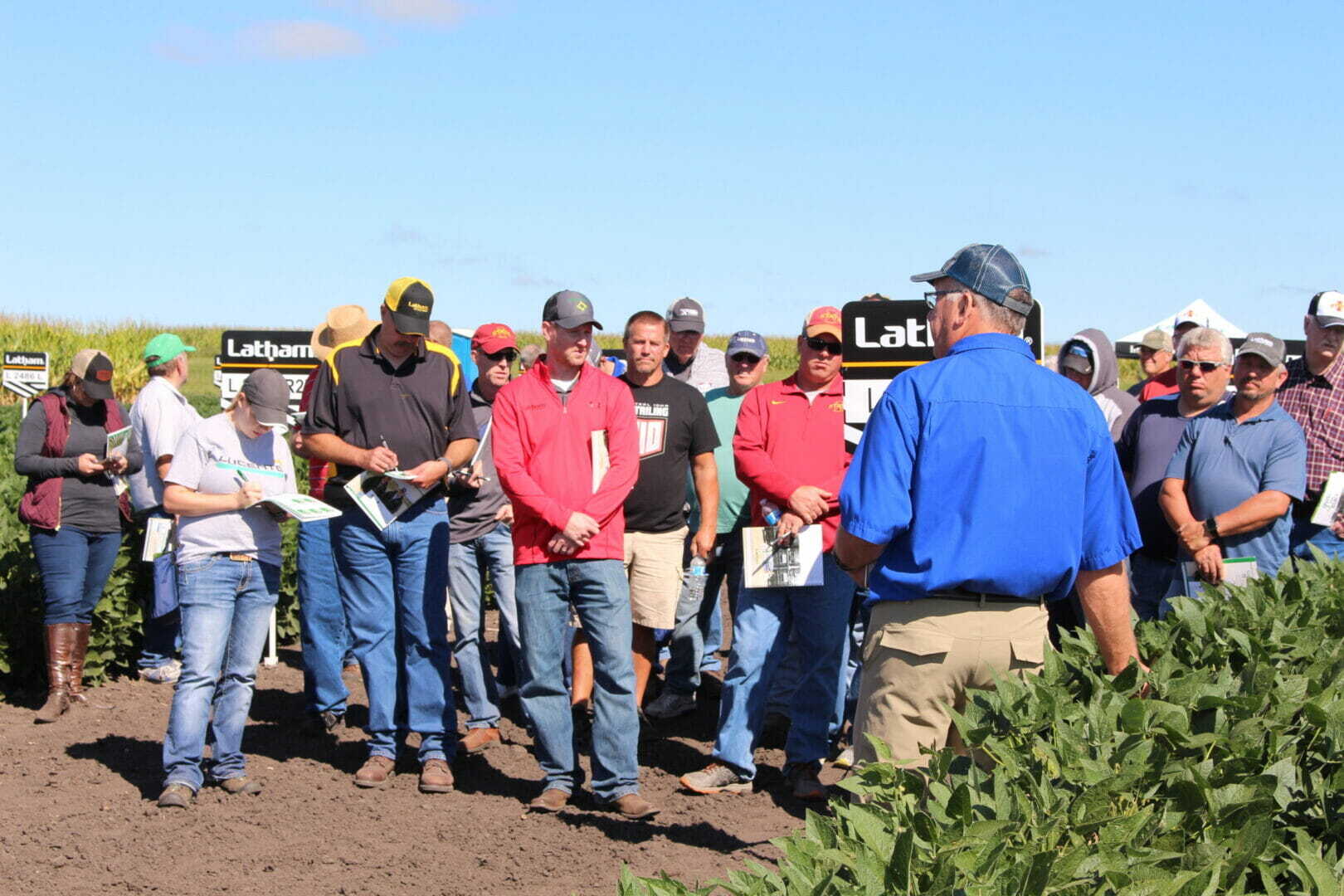
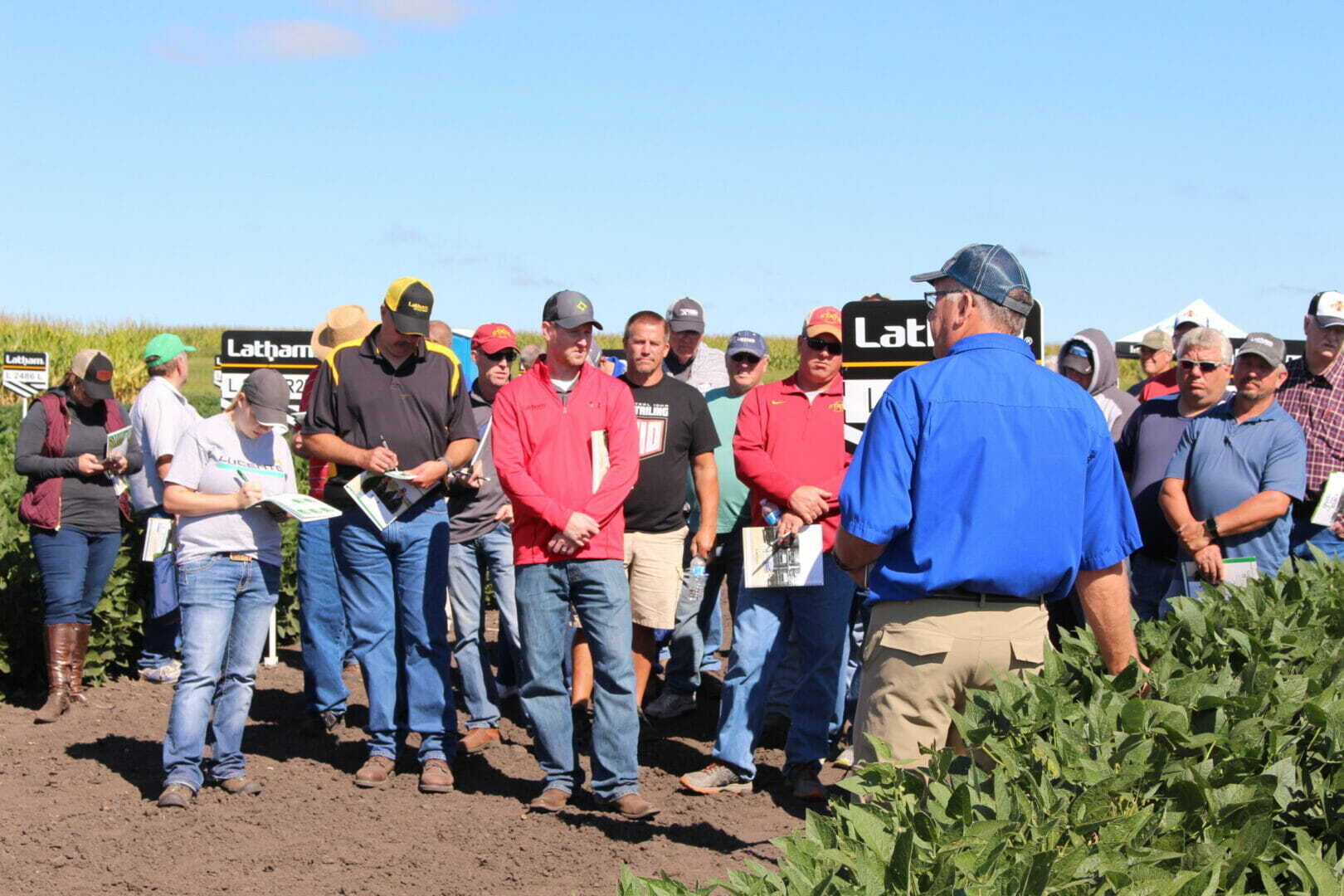
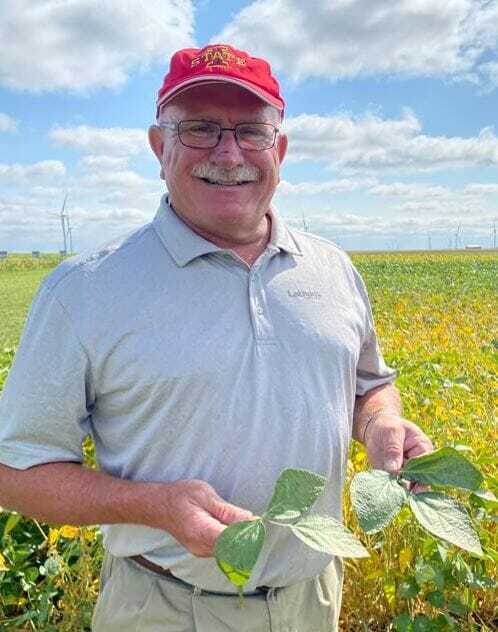
    Dealer Kickoff also featured an engaging presentation from Dr. Greg Tylka of Iowa State University, a leading authority on soybean cyst nematode (SCN) management. Dr. Tylka shared the latest research on SCN-resistant soybean varieties, how resistance is changing over time and the critical role of field scouting in protecting yields. His insights reinforced the importance of pairing top-tier genetics — like J-Class — with proactive SCN management strategies.
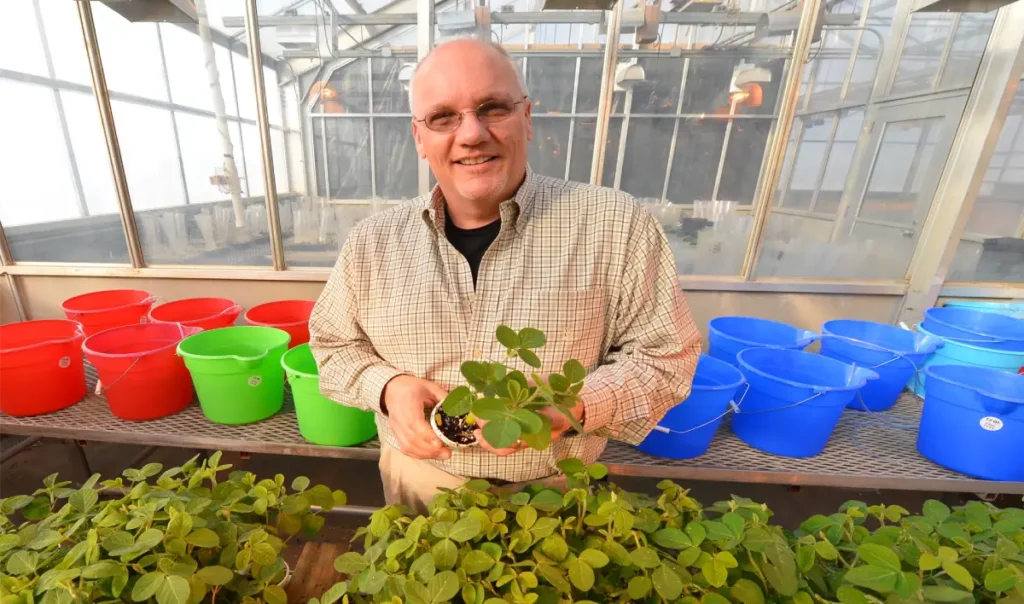
    Dr. Greg Tylka, Iowa State University

    Raising Money for Cancer Research

    Midwesterners mark celebrations with special foods, and Latham Dealer Kickoff is no exception. This year we held a dessert auction to raise money for our Seeds of Hope campaign and raised more than $4,600. Special thanks to Tony Friesen of 2 Pins Bakery in Mankato for working with us to provide 15 different types of delicious cakes and pies including Whopper, Reece’s, Andes Mint, Snickerdoodle, French Silk and more!

    During our annual banquet, we feasted on pork loin. Special thanks to Iowa Pork for sharing the following recipe with us! 

    Building Momentum for 2026

    Dealer Kickoff isn’t just about new products. It’s about building relationships, sharing strategies and setting the tone for the year ahead. From networking with fellow dealers to learning about programs designed to drive early orders, every conversation pointed toward one goal: helping farmers make the most of every field, every season.

    With the Freedom of Independence guiding our decisions and the unmatched performance of J-Class Soybeans in our lineup, we’re ready to make the 2026 sales year one for the record books.

    Thank you to every dealer who made the trip to Mankato. Your dedication is the reason we can remain independent, innovative and focused on what matters most.
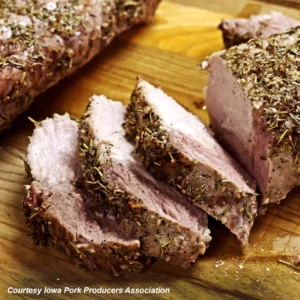
    Pork Loin

    Print Recipe Pin Recipe
    Prep Time 1 day d
    Cook Time 1 hour hr

    Equipment

    • 1 Bowl
    • 1 Large resealable plastic bag
    • 1 Roasting pan, rimmed cookie sheet, or 9×13 pan
    • Aluminum foil

    Ingredients
      

    • 1/4 cup extra-virgin olive oil
    • 8 large garlic cloves chopped
    • 1 bunch of rosemary 1/2 cup, leaves only, coarsely chopped OR 2 1/2 Tablespoons dried rosemary
    • 2 teaspoons salt
    • 1/2 teaspoon ground black pepper
    • 2 pounds center-cut pork loin

    Instructions
     

    • Preheat the oven to 400 F.
    • In a small bowl, mix olive oil with the garlic, rosemary, salt and pepper.
    • Rub the mixture all over the pork. Transfer the pork and marinade to a large, resealable plastic bag and refrigerate overnight.
    • Spray oil in a roasting pan if you have one. If not, use a rimmed cookie sheet or 9×13 pan. To re-create the roasting rack, place a metal cooling rack in the bottom or use aluminum foil. Tear off approximately 12” of foil; form it into a snake and then into a ring. Make as many rings as you need to keep the pork loin off the bottom of the pan. This promotes circulation of the heat underneath and around your loin, which helps the meat to cook evenly.
    • Place your seasoned pork, fat side up, in your prepared pan.
    • Add oiled/seasoned vegetables around your pork loin to make it a complete meal. Use vegetables that require longer cook times like potatoes, squash, sweet potatoes, brussels sprouts, and carrots.
    • Roast in a 400 F oven for 15 minutes. This gives you that nice crispy crust that everyone loves!
    • Turn your oven temperature down to 325 F (no need to open the oven) and continue cooking until pork reaches an internal temperature of 145 F. The time will vary based on the size of your loin and what you are cooking with it. Check it after 30 minutes with a meat thermometer and add small time increments as needed. Do not exceed 145 F with any pork loin recipe! Pork is very lean, so overcooking it will result in a dry and tough product.
    • Once your pork loin has reach 145 F, remove it from the oven and cover it loosely with aluminum foil. A 3-minute rest will redistribute the juices throughout the meat before you cut into it. This is key to succulent pork!
    Shannon Latham

    August 8, 2025
    Food & Family, Latham News, Seed Technology, Seeds of Hope, Soybeans
  • Latham Hi‑Tech Seeds

    Proof Points – Episode 15

    Proof points video graphic

    Shannon Latham

    December 13, 2023
    Corn, Crop, Industry News, Seed Technology, Seed Treatment, Soybeans
  • Latham Hi‑Tech Seeds

    Multiplex Gene Editing: How It’s Transforming the Future of Farming

    Steve Resized #3

    Steve ResizedAt a time when the world’s population is increasing, cropland is decreasing and climates are changing, it’s more important than ever to equip farmers with new technology and tools to take the guesswork out of planting decisions. One such tool is multiplex gene editing, which quickly adjusts a plant’s DNA to improve its resiliency and to use fewer natural resources like land and water.


    Multiplex gene editing turns up the volume on regular gene editing by implementing multiple types of edits to plant genomes. For example, vegetables such as broccoli, brussels sprouts and kale all started from different parts of the same wild mustard plant — but didn’t fully develop into their own varieties until breeders chose to amplify certain traits. Today’s corn is no different, having been bred from a plant that looks nothing like corn looks to us now.

    Farmers recognize benefits from multiplex gene editing more quickly because no government agencies are involved. Additional benefits include:

    • More uniform seed size, which increases planting efficiency.
    • Increased water utilization.
    • Changing the leaf shape, which allows for better light interception and photosynthesis to improve yields.

    With a high-performing lineup designed specifically for your field, Latham Hi‑Tech Seeds is well-positioned to increase yields — year after year.

    Contact Latham’s product team or your RSM/DSM for more details on multiplex gene editing and other pioneering advancements that we’re working on for your future!

    steve-sick

    October 12, 2023
    Agronomics, Corn, Crop, General, Industry News, Seed Technology, Soybeans, Tech Tuesday
  • Latham Hi‑Tech Seeds

    Breeding Tech Tools

    Young green corn growing on the field. Young Corn Plants.

    Like our planting and harvest monitors, corn breeding technologies today improve the speed, accuracy (reliability) and cost of identifying, developing and delivering improved genetics to your farm gate. In this article, I’ll try to briefly describe a few of the most widely used tech tools in developing Latham Hybrids. Like electronic tools, they can be a distraction standing alone, but when linked together into a systematic process they create a powerful platform for continuous improvement.

    Young green corn growing on the field. Young Corn Plants.

    Unlike traditional methods, “Dihaploid Breeding” (DH) creates homozygous (genetically fixed) male or female corn inbreds quickly. What once took five generations of manual self-pollination can now be created in just two or three generations. Not only do DH’s speed the creation of new inbreds but because they are uniform, they improve and speed field testing required to identify performance. DH delivers inbreds faster (commonly called “instant inbreds”), with near-perfect genetic uniformity at a moderate cost.

    Sorting all those new inbreds can become a bottleneck in finding commercially viable candidates. Similar to trying to find NFL players among thousands of college athletes, corn breeding also requires a large pool of candidate inbreds — as quickly as possible. Thankfully, selecting for inbreds with “Favorable DNA” (genes with proven performance) has never been easier or cheaper. Breeders used to spend thousands of dollars to identify a few genetic markers on a single inbred to make associations with key traits such as yield or disease tolerance. Today, we are fast approaching a capability to sequence an entire corn inbred genome (all genes) for less than a dollar. Considering that corn has more genes than humans (on fewer chromosomes), detailed genetic data can enable breeders to quickly select best “candidate” inbreds.

    To speed development even further, “Predictive Breeding” can now use genetic data to now simulate some field performance prior to testing in the field. While this will never replace actual field testing predictions, it enables breeders to discard the “chaff” from the wheat — inbreds with low probability of good performance before they’re ever field tested.

    Lastly, once commercial lines are identified, “Embryo Rescue” can cycle four generations of trait conversion in the lab and greenhouse in a single year, to deliver trait conversions in two years instead of what used to take four to five years.

    None of these tools stand alone, but when paired together they create a powerful process to speed development, improve uniformity and reduce developmental cost of delivering improved Latham genetics to your farm.

    Did you enjoy this article? We want to (TECH)talk with you! Sign up for our newsletter to receive agronomy articles (and delicious recipes) in your inbox! We’ll talk soon.

    Doug Barker

    March 24, 2023
    #AskTheAgronomist, Corn, General, Industry News, Seed Technology, Tech Tuesday
  • Latham Hi‑Tech Seeds

    #AsktheAgronomist – Latham Adds Vayantis

    Ask the agronomist latham adds vayantis

    Latham Seeds adds new Vayantis® to SoyShield® Plus! On this week’s #AsktheAgronomist, Phil Long, precision agronomy advisor, and Matt Moore, soybean product manager, discuss soybean treatments and how the addition of Vayantis is really exciting going into the 2022 planting season! Learn more about Vayantis fungicide. 

    Webspec Admin

    March 8, 2022
    #AskTheAgronomist, Agronomics, Corn, Crop, Disease, Fungicide, General, Industry News, Seed Technology, Seed Treatment, Soybeans
  • Latham Hi‑Tech Seeds

    2021 Research Trials Show Seed Treatment Pays

    IStock 528984664 Reszied

    Advertisements and magazine headlines tout the opportunity to enhance yields through plant protection and the use of biologicals or naturals, but does it pay to use these products? Our research once again confirms that seed treatments are an investment that provides a return.

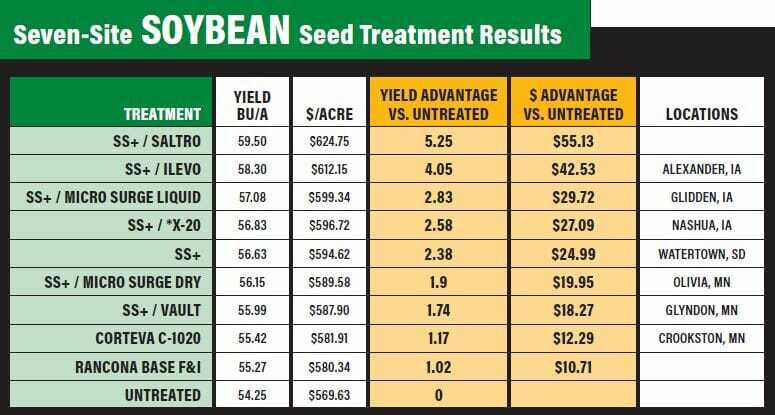
    Latham Hi‑Tech Seeds expanded its 2021 research trials to include seed treatments and biologicals. We wanted to determine whether the performance of the seed products we offer could be improved by seed protection and biologicals. Soybeans treated with Latham brand SoyShield® Plus had a 2.38-bushel yield advantage over untreated seed and a 1.2-bushel advantage over other leading fungicide and insecticide (F&I) seed treatments.

    Latham Seeds’ signature SoyShield Plus seed treatment is effective in protecting seedlings from early plant diseases for approximately 30 days, which is a longer window of protection than most seed treatments offered. SoyShield Plus includes an exclusive fungicide combination that provides excellent protection against seed and soil borne diseases including: Pythium, Phytophthora, Fusarium and Rhizoctonia.

    The addition of Saltro to SoyShield Plus increased protection against Sudden Death Syndrome (SDS) and soybean cyst nematodes. In fact, this treatment combination produced the highest yield in research trials across seven locations in multiple states. The SoyShield Plus / Saltro treatment had a 5.25-bushel yield advantage over untreated seed and provides Best-in-Class protection across environments. Soybean cyst nematodes are one of the largest yield-robbing pests and SDS is a growing concern for more areas, so it makes sense to order the Latham SoyShield+ / Saltro combination for 2022.

    Inoculants with biologicals continue to show increased yields over inoculants alone. Latham SoyShield Plus with Talc USA’s MicroSurge had a 2.83-bushel per acre advantage over untreated seed and more than one bushel per acre advantage over other premium inoculants.

    Soybeans

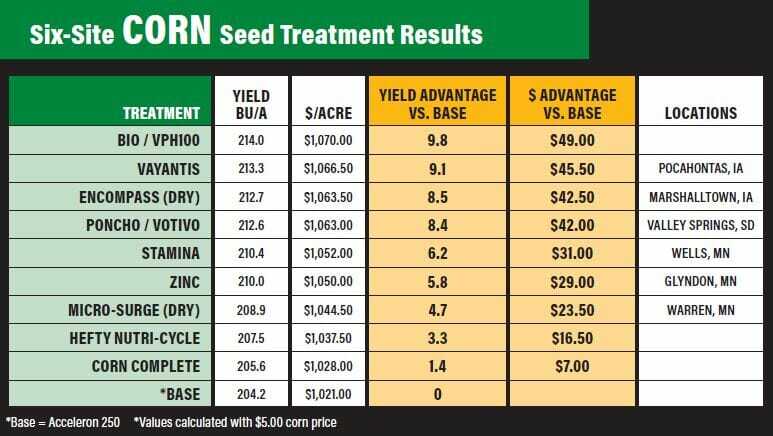
    Corn trials conducted at six locations in multiple states also showed significant yield increases over the base seed treatments with various applications of seed applied or planter box treatments. Talc USA’s MicroSurge dry corn inoculant is easy to apply with talc. With two strains of Azospirillum, MicroSurge produced a 4.7-bushel yield advantage over the base seed treatment.

    Encompass also was tested as a planter box treatment. It contains nitrogen-fixing microbials and helps mobilize phosphorous in the soils for easier nutrient uptake into the plant. Encompass showed an 8.5-bushel increase over base treatments in our 2021 trials. Now that’s a return on investment!

    Corn

    Contact your local Latham rep for more information about these and other products to protect your seeds and seedlings, so you can improve yields in your fields in 2022.

    Gary Geske

    February 16, 2022
    Agronomics, Corn, Disease, Emergence, General, Industry News, Seed Technology, Seed Treatment, Soybeans, Tech Tuesday
  • Latham Hi‑Tech Seeds

    Start the Season Right by Planting the Right Genetics

    Wooden block with GOAL, PLAN and ACTION on table background

    With the 2022 planting season right around the corner, it’s time to focus on the one thing that will help you capture the most ROI in each field.

    Field-by-field product placement is key to maximizing yield – and in turn – profit. Research shows plant genetics account for a 20% difference in yield. This means you could raise 12 more bushels of soybeans and 40 more bushels of corn PER ACRE simply by paying closer attention to your crop placement.

    Below are three factors to consider when double-checking your crop placement for 2022:

    • Study Field x Field® Ratings. Look at the Field x Field Ratings in the Latham® Product Guide for corn and soybeans. These charts simplify where you should place hybrids and varieties. A “1” rating means it’s a great fit for a particular environment; a “3” rating means you should not plant that product if your field conditions match that description. Your Latham Dealer has seen most of our products in environments, so call him or her if you have additional questions about where to place a particular product.
    • Stick to the plan. If your seed dealer has provided you with a Field x Field plan, organize your seed shed so you can stick to the plan. Subscribers to Latham Seeds’ Data Forward® program receive a crop plan book, which you can keep in your planter tractor. It’s a good practice to double check that the right seed gets in the planter. If planting conditions change in a particular field, then take the time to move products. It will be worth an hour of your time to capture the extra $150 to 200 per acre in profit potential.
    • Match Genetics to Management. If a certain corn product is described as “likes high management,” then you should not place that product in a field with poor fertility levels. Your seed dealer may not know your fields’ fertility levels unless you share it. That information is critical for accurate product placement as some genetics can handle tough fertility situations and others will fall apart in those environments. Also make sure you aren’t overplanting or underplanting each hybrid. Look at the “suggested populations” in our Product Guide, as well as the “Ear Type” rating and our stress wheel poster. We want to help you capture yield!

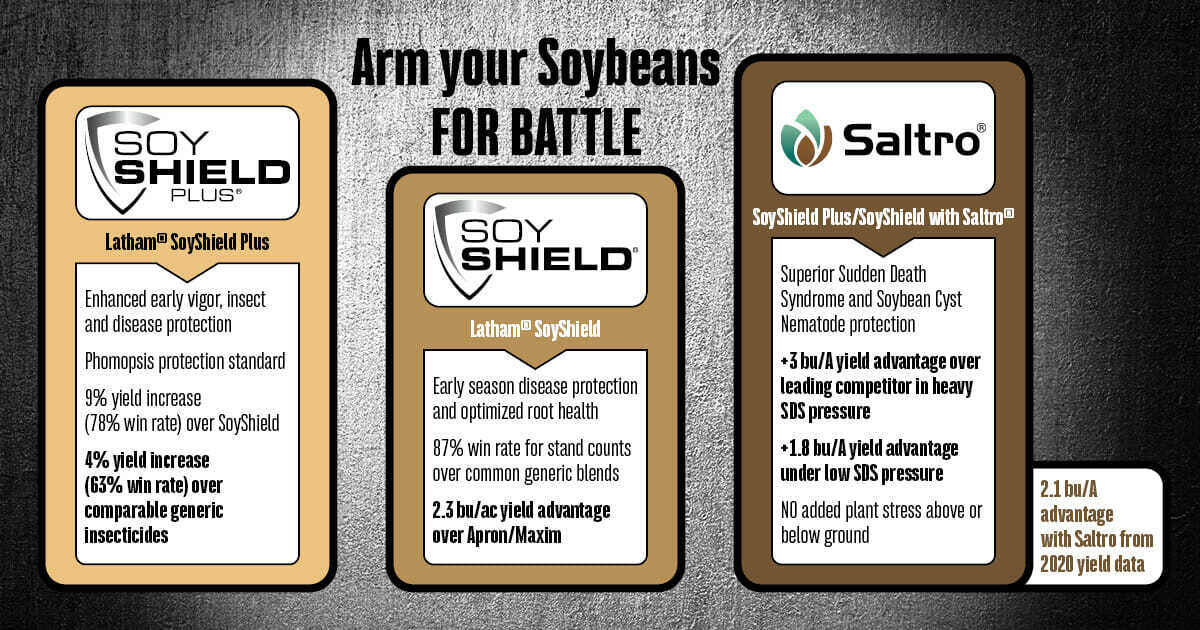
    If you’re planting soybeans early or at the same time your planting corn, treat the seed with SoyShield® to protect it from early season fungal diseases. Seed treatment also gives seedings an early advantage. Even when using a quality seed treatment, plant fields with the heavy soils that remain wet and cold last or at least the soils have warmed. This will help your soybeans better ward off root diseases all season long.

    SoyShield Seed treatment infographic

    A successful 2022 crop year begins with having a plan and sticking to it! Take the time now to double-check that you properly matched plant genetics with soil conditions. Our dealers are also happy to talk through field placement as well. If you have further questions or want to chat with our agronomists call: 1.877.GO.LATHAM (1.877.465.2842).

    Phil Long

    February 9, 2022
    Agronomics, Alfalfa, Corn, Corn Silage, Cover Crops, Crop, Disease, Emergence, Fertility, General, Precision Ag, Seed Technology, Seed Treatment, Soil, Soybeans
  • Latham Hi‑Tech Seeds

    Changes to Soybean Research Program a Resounding Success!

    Latham Soybeans

    Latham Soybeans
    Latham Soybean Research Plot

    I’m pleased to inform you that the changes we made to our soybean research program were a resounding success! The decision to hire other companies to plant and harvest our Latham Elite trials allowed our Product Team members to observe and take notes at a greater number of locations and across a wider geographic area. In previous years, our own crew could only plant and harvest 11 or 12 locations in Iowa and southern Minnesota. We would then hire another company to do the same at about five or six locations in northern Minnesota and North Dakota. This year we were able to plant and harvest 33 locations in Iowa, Minnesota, Nebraska, Wisconsin, North Dakota and South Dakota!

    Latham Seeds’ Product Team will evaluate the yield data and correlate notes taken to see which products are a good fit for Latham Country. During that same time, Latham’s Regional Sales Managers (RSMs) and Dealers will be surveyed to determine what products are needed based on input they receive from our customers. Then, and only then, will new products be added to our 2023 lineup.

    Once we identify products from the Elite Trials that meet Latham Hi‑Tech Seeds’ standards and fulfill our customers’ needs, we release them for sale. We also place these new products in our Latham Showcase plots, as well as in the independent F.I.R.S.T. Trials program, to again showcase the performance of these new products and to provide opportunities for our customers to gain confidence in their performance.

    Mark Grundmeier Headshot
    Mark Grundmeier, Product Manager

    It has been my great honor and pleasure working for the Latham family for more than 25 years – first, as an agronomist, then as Soybean Product Manager and, for a dozen or so years as overall Product Manager. When Bill and Don Latham hired me in 1996, I had high hopes this would eventually lead to this being my dream job. I was looking for an opportunity to work in Research and Product Development.  It certainly was everything I had hoped it would be. I can honestly say that I’ve never regretted the decision – not even once!

    Along the way, I’ve met farmers, dealers, sales personnel, fellow employees and colleagues from numerous areas. I am proud to call many of you my friends. I’d like to thank the Latham family for placing their trust in me. I especially want to thank John, Shannon and Chris for allowing me to “spread my wings,” so I could be more involved in all of the products we handle. As for the future, I know that I’m leaving the company in the best of hands.

    This is the final article I will write for TECHtalk as I am retiring at the end of 2021. I’m looking forward to spending more time with my family, traveling and pursuing some hobbies that I’ve put on hold for a few years. I wish you all the best as you continue to work in this great business of agriculture. May God richly bless you always!

    Mark Grundmeier, Product Manager

    December 1, 2021
    Agronomics, Crop, Disease, Fall, Industry News, Season, Seed Technology, Soybeans, Weed Control
  • Latham Hi‑Tech Seeds

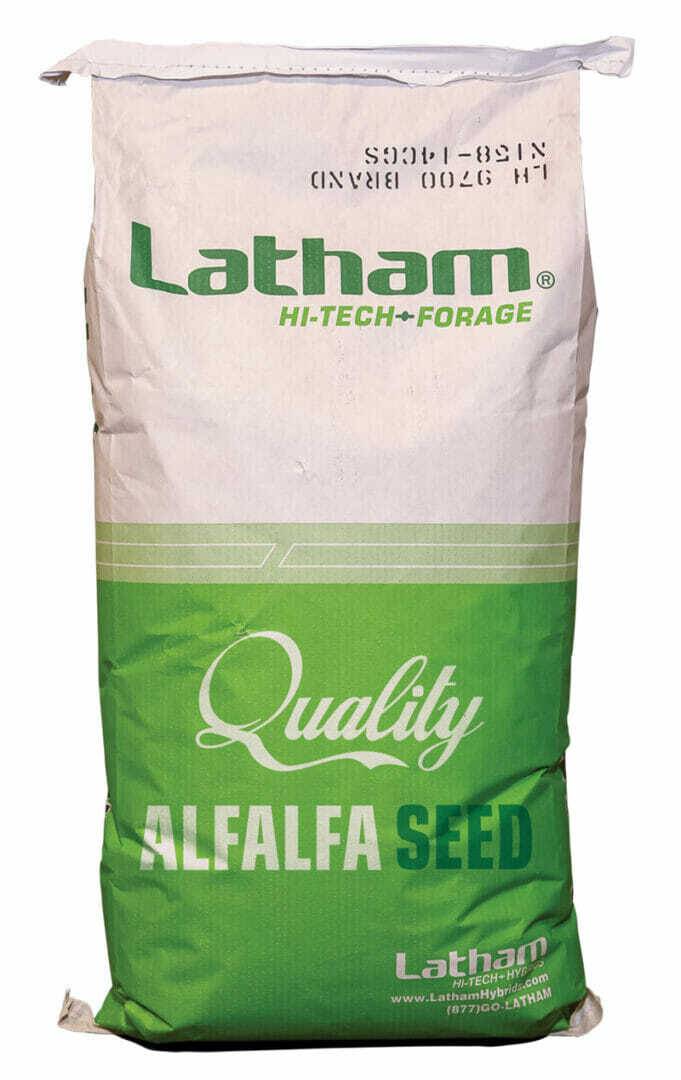
    Latham Hi‑Tech Alfalfa: Higher Quality. Greater Yield. Better Nutrition.

    Alfalfa bag clipped new

    Farming is like dancing with Mother Nature, and Mother Nature always leads. We can’t control the weather, but we can manage around the risk.

    Understanding a seed product’s features and benefits is powerful tool to help reduce production risks. Alfalfa from Latham Hi‑Tech Seeds provides growers with options to better place the best genetics for certain soils to enable a product to perform at its best.

    With this in mind, let’s review some of Latham’s top alfalfa products:

    • Features of LH 9120: branch root expression and finer stems.Branch root pic
      Benefits: LH 9120 can be planted on wetter soils. If conditions remain wet, the plant will respond with several branching roots instead of one major tap root. NOTE: Alfalfa usually has a singular tap root. In a water-logged situation, alfalfa with a tap root will not survive as long alfalfa with a branch root. Branch rooting give additional support by bringing several roots closer to the surface of the soil, allowing for better respiration. Additionally, 9120 has a finer stem.  Finer stemmed alfalfas tend to dry quicker for baling.
    • Features of LH 9700: disease resistance, unparalleled recovery after cutting and multi-foliate expression.
      Benefits: LH 9700 is a very powerful, high horsepower type of alfalfa protected with disease resistance. It protects the plant, giving it the best chance of long-term stand. Quick recovery after cutting means the crown buds produce new leaves quickly. Leaves catch the sun, build essential carbohydrates for the crown, and generate more yield and better quality. I relate each leaf to a cylinder in an engine. As we add cylinders to an engine, it adds more horsepower for better performance. It’s the same with alfalfa; more leaves equal more energy to produce top yields and superior quality.
    • Features of America’s Alfalfa AA 481 RR/HarvXtra: low lignin, Roundup® resistance, and high disease resistance.
      Benefits: Reduced lignin helps AA 481 RR/HarvXtra achieve better fiber digestibility. When compared to conventional alfalfa, research has shown to deliver 14 to 18 % relative forage quality (RFQ). Higher quality forage nourishes the animal, so it gains valuable feed efficiency and that leads to higher profitability. Additional benefits include harvest flexibility of seven to 10 days while maintaining excellence in quality and producing as much as 20% more yield. This is helpful to help manage around weather events. Roundup Ready benefits include keeping fields clean, improving forage quality, reducing weed competition, and extending stand life. This alfalfa product also has high resistance to anthracnose, which can damage stands. HVXRR 481 has HR rating for Race 1 and R rating for Race 5. This product is one of the newest commercial selections for HarvXtra alfalfa with top yield capacity. It also boasts extra yield and stand life, protecting benefits to reduce risks of anthracnose disease.

    Latham Hi‑Tech Seeds offers a variety of products, each with special features and benefits. Remember, each seed is treated with Latham’s AlfashieldTM, which gives our seed a competitive advantage by emerging faster, growing strong, and yielding more!

    Webspec Admin

    November 1, 2021
    Agronomics, Alfalfa, Crop, Industry News, Seed Technology
  • Latham Hi‑Tech Seeds

    How to Hand Make a Hybrid

    Maxresdefault

    Pre-Commercial Manager Bob Foley and President John Latham demonstrate the steps to create new crosses and “hand make a hybrid” in Latham’s Central Iowa Corn Nursery.

    Webspec Admin

    August 25, 2021
    Agronomics, Corn, Crop, Industry News, Season, Seed Technology, Summer
1 2 3 … 8
Next Page

Latham Hi‑Tech Seeds

131 180th Street | Alexander, IA 50420

(641) 692-3258

SIGNUP FOR OUR NEWSLETTER
  • Contact
  • Legal
  • Dealer Center
  • Seedware Login
  • Latham Gear

© 2025 Latham Hi‑Tech Seeds. All rights reserved. | Iowa Web Design by Webspec | Privacy Policy

Latham® Hi-Tech Seeds is a trademark of M.S. Technologies, L.L.C., 103 Avenue D, West Point, IA 52656.