Tune in for the top three practices to remember when planting continuous corn. #AskTheAgronomist
1:25 — Insect protection
3:20 — Agronomist traits
5:30 — Fertility and nitrogen rates
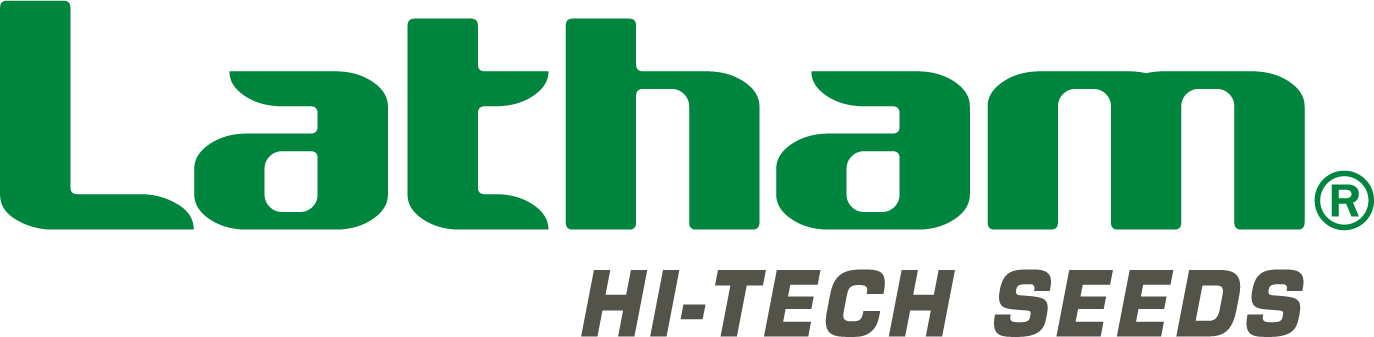


Are you ready for the next new soybean technology? XtendFlex® from Bayer is expected to attain full global approval by mid-spring of 2020.
These soybeans will be the next triple-stack option for farmers, who continue to battle weed resistance. XtendFlex soybeans will be tolerant to glyphosate (Roundup), dicamba (XtendiMax, Engenia, etc.) and gluphosinate (Liberty®) herbicides.
The last hurdle for Bayer to clear is the European Union (EU). All other major soybean importing countries, including China and the Philippines, have granted their approval for this technology. Bayer has recently received a positive opinion from the European Food Safety Authority (EFSA), which is a key milestone in preparation for full commercialization in all markets.
Bayer has XtendFlex Ground Breaker Field Trials in place this growing season. In fact, Latham Seeds has an EPA-stewarded trial at our research farm near Alexander, Iowa.
Join us to learn about all the exciting new traits and genetics that Latham offers in corn, soybeans and alfalfa! If you can’t make it to Alexander on September 6, contact your Latham® representative to set up a personal tour. You’re welcome to bring other farmers with you either to our field day or to a personalized tour. Load up the truck and head our way! We look forward to seeing you soon.

 As prices have dropped over the last two months, farmers are second guessing planting intentions. They are looking to cut costs, and often times cost cutting starts at cutting seed costs. Keeping the hybrids with top yield and proven performance versus picking up a cheaper option is key to end-of-year profit. Cheap seed options can be older genetics, poor performing genetics or even discontinued genetics reaching the end of their life and viability.
It doesn’t take much to make up for inferior genetics as in perceived seed savings. Cutting $50 a bag is only saving $20 an acre, or roughly seven bushels. One cost savings that may be applicable to North Dakota farmers would be changing from a VT2 PRO to a Roundup Ready 2 trait. Keep the genetic that performs on that particular field and save the difference in trait costs. However, It may require more attention to pests throughout the growing season and an additional cost of an aerial application with insecticide. Check with your Latham® dealer on availability and your agronomist about the rising potential for future pest issues in your area.
Farmers can add fertility after the crop is established. They can also add weed control after the crop. However, there’s only once chance to place the right seed on the right acre. Seed is truly the foundation for every successful crop. Why limit net farm profitability from the onset?

 Webster’s Dictionary defines “risk” in many ways, including a chance that an investment will lose value or something that creates a hazard.
No matter how one defines risk, it’s a reality of production agriculture. Each decision farmers make comes with varying degrees of risk. That’s why it’s helpful to take an annual inventory of details in your own crop production. Bottom line: Check your production-limiting factors to set yourself up for success.
“Trust but verify,” is a famous quote by President Ronald Regan that appeals to my data-driven personality. This quote applies to crop production because now is a good time to verify that the seed corn you ordered early is the right hybrid for the majority soil type on the field in which you will plant it. Now is also a good time to ensure you have enough genetic diversity in your crop plan. On page 12 of Latham Seeds 2019 Product Guide, there is a corn placement chart to help you verify that the genetics you have selected for that soil type is the best fit.
Margins are super tight, and we’re looking for ways to cut costs. If we cut fertility, we risk losing potential yield. Many researchers suggest that up to 60% of yield is dependent upon fertility. If we plant inferior genetics, or place the genetics on the wrong soil type, we run the risk of yield reduction. While this is a review for most, my point is that plant genetics are critical to managing risk.
Understanding – and acknowledging – the depth of the genetics will pay dividends. I’m a very big believer in planting agronomically-stable products on a percentage of your acres. As margins thin, I look for hybrids with proven stability. I know each farmer has his or her own beliefs, but one thing we have in common is that we’re all trying to manage risk.
My hope is that you go into the spring planting season with a sense of confidence, knowing you have done the best job you could with product selection, product placement, fertility and planting conditions. Have a little fun this season and remember to take care of yourself, too!
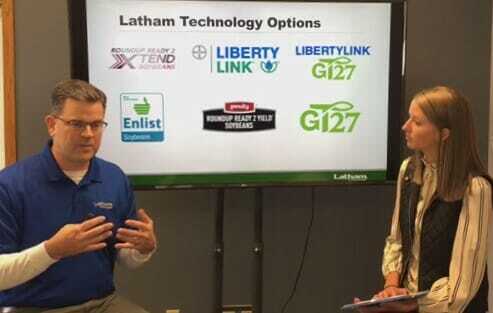
Join us with John Latham this morning as we talk about NEW Latham Seeds soybean technology available for the 2019 growing season!!
https://www.facebook.com/LathamSeeds/videos/293804974620148?sfns=mo

As product manager for Latham Hi‑Tech Seeds, I get the pleasure of working with our various product lines from cover crops and forages to soybeans and corn hybrids. There have been so many exciting announcements recently, such as China’s approval of Enlist E3™ soybeans for import. We will have Latham brand soybeans with the Enlist E3 technology for sale as soon as Corteva receives final approval from the Philippines. In the meantime, we’re excited to announce the addition of LH 9670 IQ with Hi-Gest® Alfalfa Technology to Latham’s current alfalfa offering.
Latham 9670 IQ helps improve quality while maintaining yield and providing resistance to multiple diseases. Improving fiber digestibility helps improve feed intake, which leads to better production. In fact, studies show cows eating LH 9670 IQ are producing up to 2.5 more pounds of milk daily. See the full tech sheet on our website at www.LathamSeeds.com.
The news gets even better for those who are looking for flexibility in the field as LH 9670 IQ is widely adapted across a broad range of geographies and soil types. LH 9670 IQ does not require special stewardship management considerations as it was produced through conventional plant breeding.
If you have an interest in high-quality alfalfa with Roundup technology, we also have a special rebate on our previously launched 480 HVXRR (HarvXtra) product. Field-proven benefits of this technology are shown in detail in the graphic below.
There are so many reasons for dairy and beef producers to plant LH 9670 IQ and 480 HVXRR this spring! Contact your Latham representative to learn more. Be sure to ask about our special programs and pricing, which are in effect until March 15!


Join us as Phil Long discusses the new XTENDIMAX™ label!
https://www.facebook.com/LathamSeeds/videos/379348692818689/


The LLGT27 portfolio features the first, fully-approved triple-herbicide-stacked soybean trait available to U.S. farmers. Previously referred to as “Balance GT/LL,” the LLGT27 soybeans feature tolerance to Liberty® herbicide, glyphosate herbicide (e.g. Roundup®, Glyphos®, etc.) and a new formulation of isoxaflutole (possibly to be named Balance Bean), which is going through the EPA registration process. IMPORTANT NOTE: All current formulations of isoxaflutole herbicides have not been cleared for over-the-top application on soybeans.
We learned the LLGT27 products were approved on July 3 — just days before Latham® Dealer Kickoff in Minneapolis — and we quickly pulled together what information we had on those products.Latham Soybean Product Team members will continue to evaluate these lines and will share results at our post-harvest meetings. We know farmers will have questions about handling herbicide applications to optimize weed control, and we plan to answer those questions at that time, as well.
Feel free to call with any questions about this exciting new technology, which will be available for spring 2019 planting! Some of our production growers planted their acres to LLGT27 products in 2018, but we expect demand could be larger than supply this year. If you’re interested in trying some of these products, place your order early!


It’s hard to believe something so amazing can originate from something so small! A tiny alfalfa seed holds unmatched genetic potential. It also harnesses so much potential for a return on your investment.
To help you see how this investment in seed more that pays, HarvXtra® has created a value calculator. See where the value lies: https://www.foragegenetics.com/harvxtra-Calculator.
There are many benefits to planting HarvXtra. The ability to increase yield capacity while taking one less cutting per season saves you time and labor. Making fewer passes across the field leads to less compaction and helps increase winter hardiness. Even better, HarvXtra produces outstanding forage quality. These dividends can get completely eclipsed by the initial investment.
As a grower, you can unleash that potential by seeding the alfalfa into fertile soil. Use the best seeding methods available. Manage weed pressure using the advantage of the Roundup Ready gene, and let the genetics work for you!

During the past several years, Latham’s Research Team has conducted EPA-regulated and EPA-stewarded trials in Alexander.
A regulated trial includes that contain traits that have not been fully approved in the United States. In stewarded trials, all traits have U.S. approval but may not have full global approval. In both cases, great care is taken to ensure the harvested soybeans do not enter the grain channel.
This year we’re planning to conduct a stewarded trial with Liberty® GT 27 soybeans. Formerly called “Balance GTLL,” this technology provides soybeans tolerant to three herbicide classes: (1) glyphosate (e.g. Roundup®); (2) gluphosinate (e.g. Liberty®); and (3) isoxaflutole.
No herbicides containing isoxaflutole have been approved by the EPA for use in soybeans during the 2018 growing season. However, the ability to spray both glyphosate and gluphosinate post-emergence has some farmers very excited.
I’m especially looking forward to testing our current Liberty lineup against these new cultivars. Liberty GT 27 soybeans looked excellent in the 2017 breeder trials we observed. At press time, the Philippines is the only country that has not yet approved this technology.
Enlist E3™ soybeans also have tolerance tothree herbicides: glyphosate, gluphosinate and the new 2,4-D choline. The European Union (E.U.) approved this technology last December but we’re still waiting approval from China and the Philippines. Depending on available space and restrictions, we may also have a stewarded E3 plot this year. We’re eager to see how it performs, as farmers in the South have been planting Enlist cotton since 2016 and are reporting tremendous success with both the herbicide and the yields.
These EPA-regulated or EPA stewarded plots are only planned for Latham headquarters. Other corn, cover crops and alfalfa plots that are unique to Alexander are also planned for 2018, and you’re welcome to stop by any time during the growing season. Make “visit Alexander in North Central Iowa” part of your 2018 Summer Bucket List! If need be, we can give you ideas to see a few sights along the way.