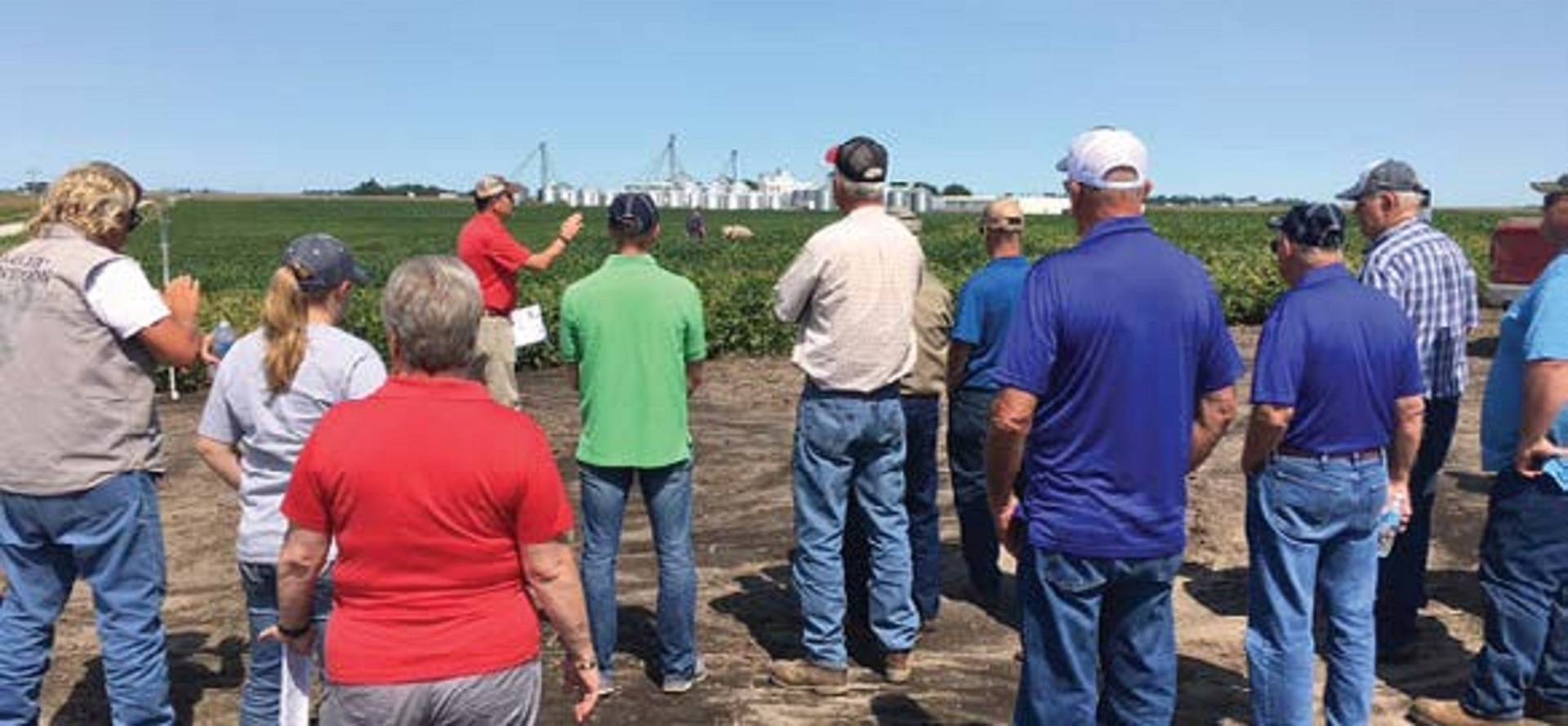
Dow AgroSciences on June 14 announced that corn stacked with the Enlist™ trait had been approved for import into China. This clears the road for U.S. farmers to plant hybrids with the Enlist trait in 2018. It’s especially good news for Latham® dealers and customers because they’ll soon have another tool to fight herbicide-resistant weeds!
The enlist system is based on tolerance to Dow AgroSciences’ new formulation of 2,4-D with Colex-D® technology. The herbicide used is called Enlist Duo®, which is a premix of this new 2,4-D compound and glyphosate. Enlist Duo herbicide may be sprayed on PowerCore® Enlist hybrids and also Enlist soybeans once that trait has been approved. PowerCore hybrids will contain the Enlist herbicide tolerance trait, as well as a VT Double PRO® and Herculex® 1 stack. These hybrids are poised to provide the best above ground control on the market!
Latham Corn Team members have been anticipating the approval of Enlist corn for several years and have identified several hybrids that can be added to our lineup under the PowerCore designation. We’re excited about adding this trait to hybrids with proven genetics, like LH 5402 RR and LH 5742 RR. We also plan to bring in new hybrids to complement our existing products.
When Enlist Duo is used with Colex-D, it minimizes drift and has almost zero volatility. This has already been proven by U.S. cotton farmers, who have been able to grow the PhytoGen® brand of Enlist cotton since it was launched in 2016. A select group of Upper Midwest corn farmers also have tested the Enlist system on carefully controlled, stewarded acres during the past couple years. In addition, the Latham Corn Team has tested Enlist hybrids in other regulated fields.
We’re optimistic that the approval of Enlist corn by China will soon lead to the approval of Enlist soybeans. As part of a trade deal with the United States, China has pledged to speed up its review of eight biotech products (including Enlist soybeans) that are pending approval. More information about PowerCore and Enlist hybrids, as well as Enlist soybeans, will be shared during our Seed-2-Soil® Technology Tour this fall. Make plans to join us in a field near you!
SuperStrip Cooperators Play Key Role in Latham Research
Every planting season has its challenges and this year was no exception. After fit planting conditions early in the spring, North Iowa faced extremely wet and cold soil conditions. Nearly 17 inches of precipitation fell from the beginning of the year through the month of May, which is about double our average precipitation.
You can imagine how eager farmers were to resume planting! To compound the situation, we were waiting for a few new products to arrive on a slow boat from the winter nurseries so we could test them in our SuperStrip plots.
SuperStrips are an integral part of Latham’s research program as the same group of products is planted within a given maturity range, including: products currently being offered; products we plan to add to next year’s lineup; and “experimentals” that are being tested to see if they meet our standards.
This same group of corn and soybean products is tested on several farms throughout Latham Country in the same year. We collect data on how they perform by soil type and under various environmental conditions. Hybrids and varieties are evaluated throughout the growing season for their overall characteristics and then taken to yield at harvest as a final comparison.
Watch for growing season updates on TheFieldPosition.com blog. Harvest results will be posted this fall at lathamseeds.com. I’m positive the information we will gain from our research plots will reap big rewards for our product portfolio now and in the future!
Many of us have heard of “painting the town red.” Chances are “plant it pink” isn’t a phrase you’re familiar with ––at least not yet. That could soon change thanks to the Garden Clubs of America and local organizations, like the Swaledale Federated Garden Club in North Iowa. These groups are encouraging communities to make a statement this spring by planting pink flowers for breast cancer awareness.
Other club activities include the annual plant sale, which is held in May and is the club’s only fundraiser. Every year, they visit the garden of a club member. The gather at least one each year to learn about another North Iowa organization or business, Such as Trees Forever, Lime Creek Nature Center or a CSA. The club also hosts a public flower show each year around fall. In December, the club decorates the Christmas Tree at the Sheffield nursing home. The club also has planted trees in Swaledale, as well as flowers at libraries and other places throughout North Iowa.
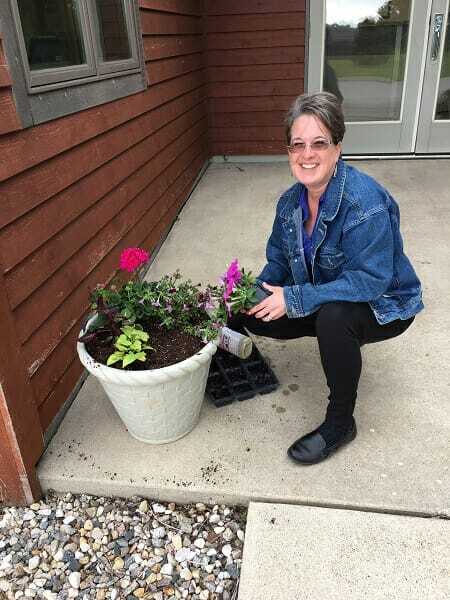
Because Latham Hi‑Tech Seeds is a proud supporter of the American Cancer Society and related organizations like the Franklin County Relay for Life, we’re pleased to promote breast cancer awareness by planting pink flowers in containers outside our office doors. These containers are maintained each season by Julie Kaduce, our customer service representative, who has been a member of the Swaledale gardening club for the past five years.
“What I enjoy most about belonging to a garden club is visiting with people who have similar interests,” says Julie. “Gardeners tend to be curious and have creative thoughts. I learn something new or discover a new appreciation for something each time I attend a meeting or an outing or help with a club project.”
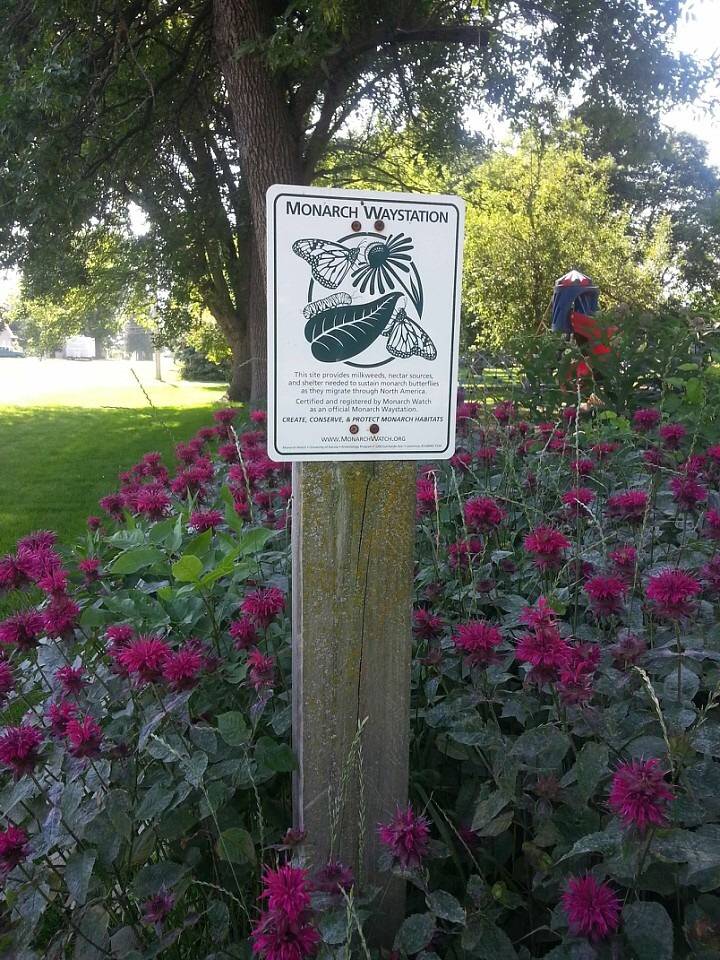
One of the Swaledale Garden Club’s project is this butterfly garden in Swaledale City Park.
Julie’s appreciation for gardening stems from the time spent as a child with her mom in Iowa, her grandmother in southeast Nebraska and her aunts in Minnesota.
“We moved around when I was growing up because my dad is a pastor and was called to other churches. My mom always managed to make each new place more beautiful than when we first arrived by planting flowers,” says Julie. “We always had big vegetable garden, too. My younger brothers and I learned how to plant seeds and how to harvest what was ready. We learned how to cook what was raised and how to preserve it for the winter months—it all tasted so good!”
Although Julie loves eating fresh vegetables, she prefers to grow flowers. Time is committed differently when raising, tending to, harvesting, and preserving produce. Instead she joined a local CSA (community supported ag) to provide her with garden-fresh produce, which frees up her time for taking care of flowers.
“When I’m taking care of the plants, the rest of the world disappears. My eyes and thoughts are totally focused on what’s before me,” says Julie. “I just like to have fun and allow others to enjoy our pretty corner of the world. My husband and I enjoy caring for the trees and bushes we have planted over the years, as well as for the flower beds and containers we put together each year.”
To promote a passion for pink, plant pink flowers and share photos via social media using the hashtag #plantitpink.
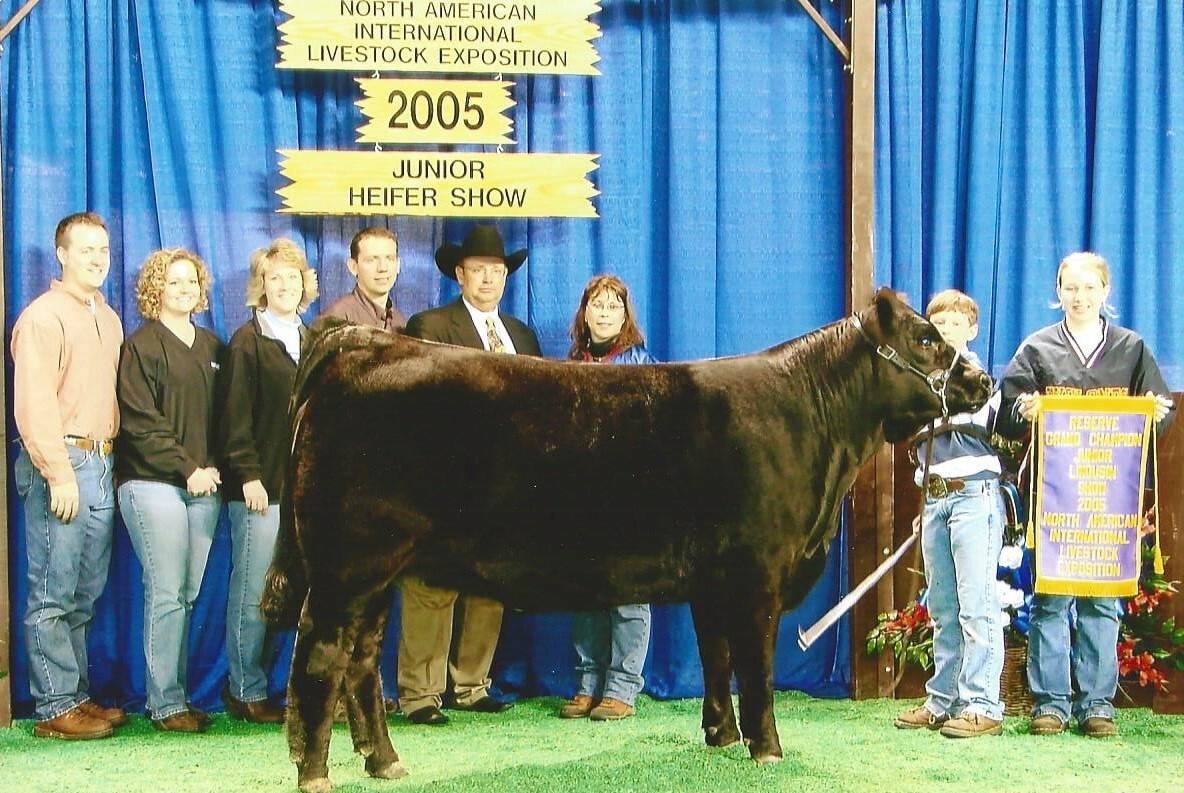
Zach Greiman is pictured here with his Limousin heifer that was also Reserve Champion in the Jr Show at the North American International Livestock Exposition in Louisville, KY.
Zach was born on a Monday, weighing 10 pounds, 11 ounces. His mom, Sis, jokes that he was a good gainer because he weighed 12 pounds by that Saturday. Sis had responsibilities as a member of the Sale of Champions Board at the Iowa State Fair, so the new family of four hit the road that weekend and met other family members in Des Moines at the fairgrounds.
“It’s like showing gets in your blood,” says Zach. “My Grandpa Cliff passed away when I was five, but Uncle Don was always at my shows. He usually had some great advice but even better stories.”
In fact, Don Greiman has so many stories to tell that he’s literally written a book about living “A Blue Ribbon Life.”
Times have changed since Don and his brother, Cliff, showed cattle. At first, they took trains to shows. Later, they could haul their own cattle. Even showing and fitting standards have changed through the years. Don and Cliff just washed and brushed the hair to fit their cattle; very little clipping was done. By the time Cliff’s son, Cory, started to show, higher powered cattle blowers and better fitting products had been developed. Cory, who is Zach’s dad, also had more shows to attend than the generation before him.
“My dad grew up showing cattle and working on the farm. He couldn’t wait to get out of school to farm and work on his show cattle. He traveled the county like I do clipping cattle. Our fitting products and clippers just keep getting better as do our choices in feed rations. AI (artificial insemination) and embryos have improved genetics. As a result, cattle today look much different than those in the photos of Uncle Don and Grandpa at shows.”
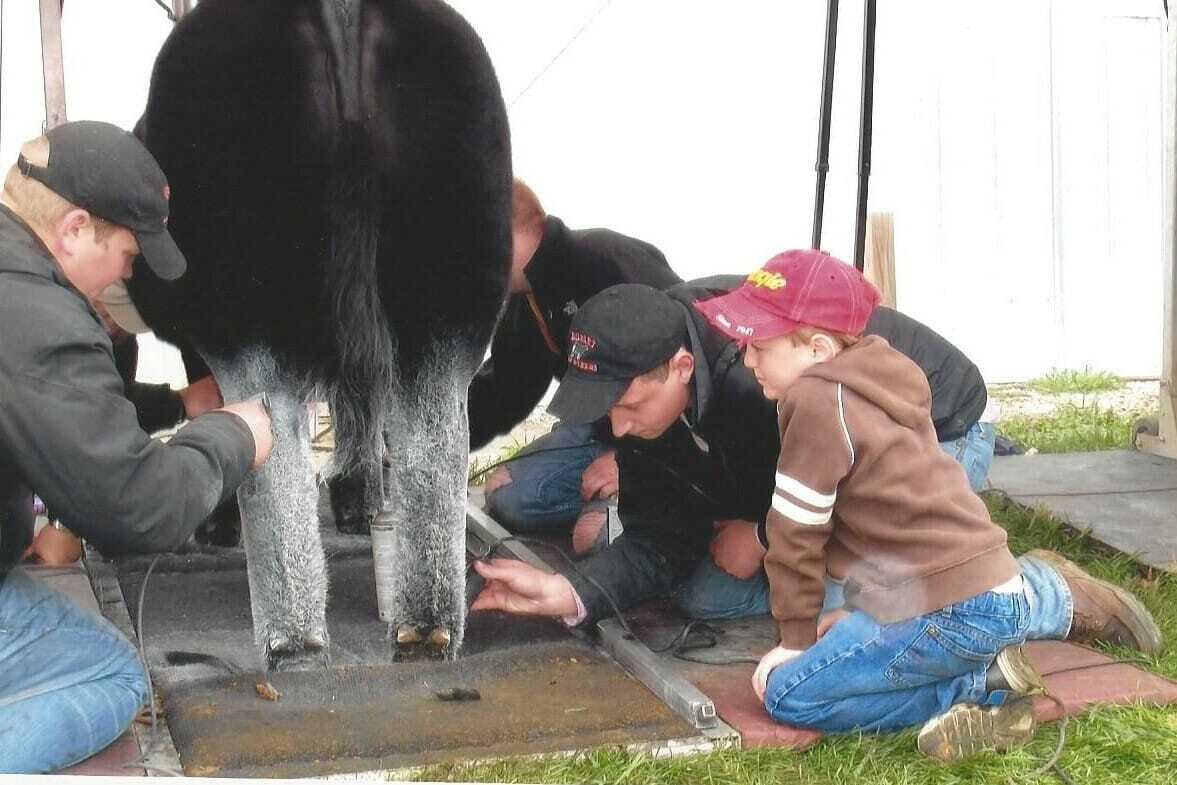
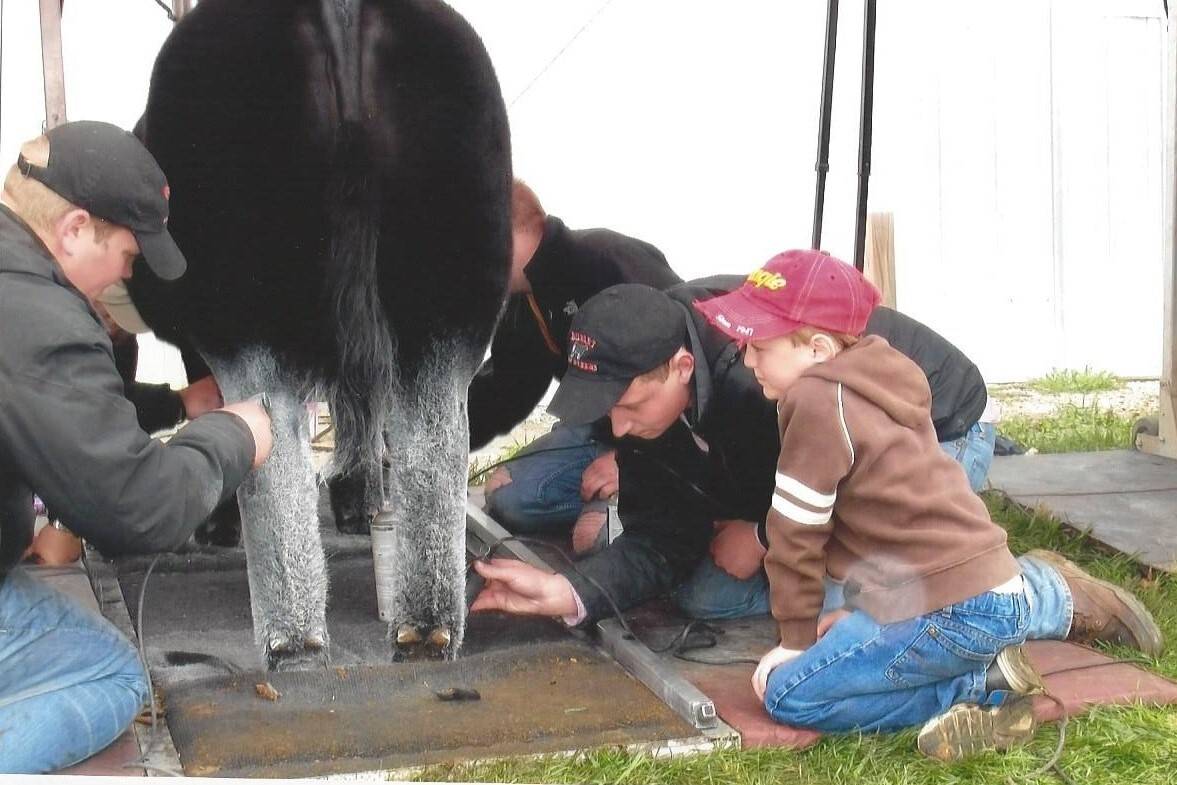
Zach fitting the right hind leg at a show and instructing a young 4-Her on how to do it right.
Just as cattle shows have changed through the years, cattle sales have changed. Today a growing number of livestock is bought and sold online, which is a far cry from the way auctions were conducted when Zach Greiman’s dad was a 4-H member. It’s an even further departure from the way his great great grandfather began his Angus herd by corresponding via U.S. mail in the late 1800s.
“When dad was my age, he put an ad in a magazine,” explains Zach. “When my parents were first married, they started an annual club calf sale that continued all the while I was growing up. We don’t have an annual club calf sale on our farm anymore because the Internet has totally changed how people buy and sell cattle.”
Both on-farm and live auctions are promoted today through social media and Internet marketing. Some producers start promoting newborn calves as soon as they hit the ground.
“Many producers are on Facebook, so potential buyers watch videos there or on YouTube,” says Zach. “Videos help me decide if I want to make the drive to a farm or ranch. If I like the video, I want to look at the calves before I buy them. I also sell cattle all year long by posting videos on Facebook and YouTube.”
Zach helps fit other producers’ cattle for online auctions, and he also sells some of his own calves online. Firms that host online sales post the sale dates, send out email reminders, and post the sale including videos. A buyer scrolls through the lots and can bid on whichever one they like. The cattle can be viewed anytime once the page is up.
“I have mixed emotions about online sales,” says Zach. “One advantage is that buyers and sellers can participate in multiple sales on the same day without leaving home. Buyers and sellers alike save on travel time and expenses. Another advantage is that I can take my time clipping and videotaping the animals for sale. However, the work is about the same for a live auction and an online sale because the calves still must be fed and clipped. Sometimes a sale is a combination live sale and online auction. A firm sends a rep who videos the cattle going through the sale ring and bids are taken from the stands, on the phone or via computer.”
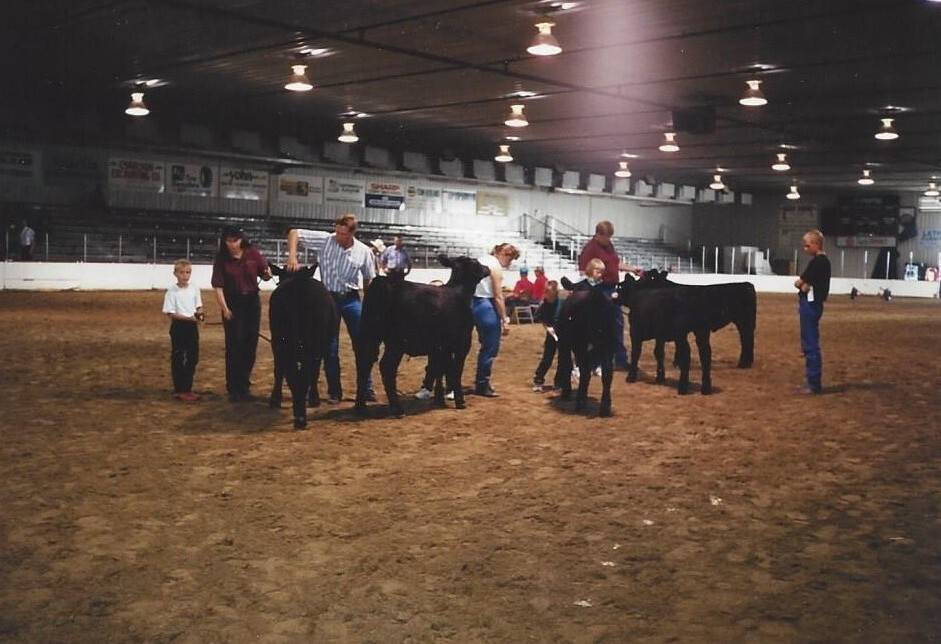
Zach was about five years old when he showed for the first time at the North Iowa Fair, joining his sister and cousins in the showring. His mom, Sis, is in the ring giving him instructions.
Regardless of how a sale is made, raising show cattle is a year-long business. Zach travels most of January, and the largest event he attends that month is the National Western Stock Show. February is a busy month with the week-long Winter Beef Expo in Iowa. March and April are filled with Iowa Junior Beef Breeds Association (IJBBA) shows on weekends. The IJBBA show season is February through September. All breeds are shown, points are collected and it concludes with an awards program.
Also during the spring months, Zach travels to several shows and sales in the southern states. He’s home most of May to help plant his family’s crops, but he attends an occasional weekend show as time allows. Then he’s gone three or four days at a time in June and July to attend field days and regional shows. July is filled with county fairs and national shows, which last a week at a time. August and September are filled with state fairs last for one to two weeks, depending on how many breeds a person shows.
Fall is especially busy. Calf sales start in September, so Zach spends his “free time” clipping entries for those. He focuses primarily on sale cattle in October, although Ak-Sar-Ben and the Kansas City Royal also are held that month. November is spent at sales and at the North American International Livestock Exposition (NAILE) in Louisville, Kentucky. Zach finds himself home more in December, but that’s also when he gets ready for his cows to begin calving.
“I’m gone fitting other people’s cattle at least half, if not three-fourths, of my year,” says Zach. “I try to work my travel schedule around field work and seed sales.”
To learn more about the Greiman family’s cattle operation, click on the links below:
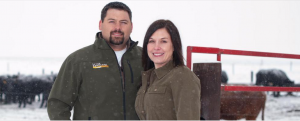
Last Friday on The Field Position, we introduced you to beef producer Amber Kohlhaas and her husband, Jason, of Lu Verne, Iowa. Amber is a kindred spirit to those of us, who are passionate about the quality of crops and livestock we produce. Keep reading to learn why she believes it’s so important for all of us to share our stories with our urban friends.
“From my experience, opening your mind to new opportunities can help to identify and reaffirm your passions,” says Amber. “All my life, I was around agriculture. It was all I knew. There came a moment that I questioned if agriculture was truly my passion or whether it was my passion because it is all I had ever known. I originally set out to obtain a degree in Marketing from Iowa State’s College of Business. Then I experienced a lightbulb moment that reaffirmed where my heart and true passions truly lied. It didn’t take me long in business school to recognize that I am most engaged and passionate about agriculture, which led me to switch to the College of Agriculture.”
Amber knew she wanted to major in Agriculture but needed to find a focus, so she took an array of Agronomy, Animal Science, Ag Business classes to help identify the best fit.
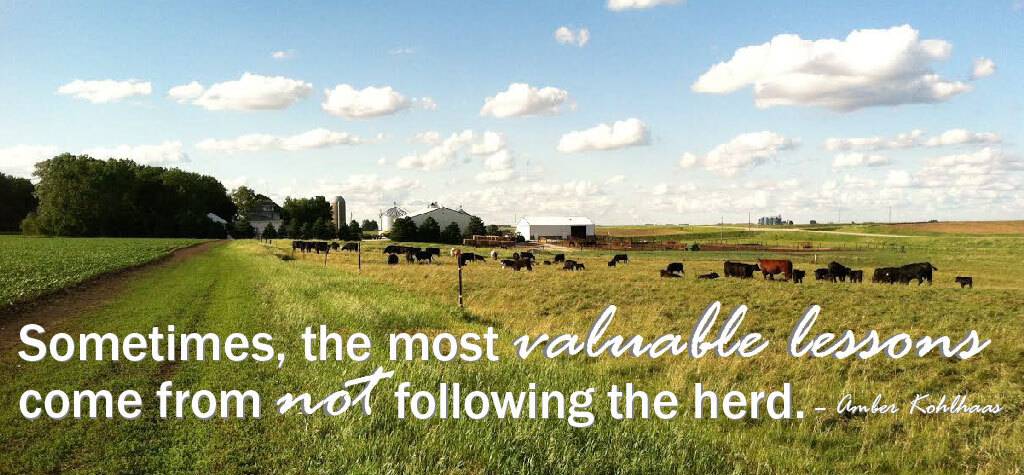
“I never expected to enjoy Livestock Judging and Meat Lab classes. Eventually, I finished with an Agricultural Business degree in the College of Agriculture,” says Amber. “Don’t be afraid to think outside the box and to try new things. Get engaged, network, job shadow, and be proactive to immerse yourself in new experiences and opportunities. Sometimes the most valuable lessons come from not following the herd. You might unlock new passions.”
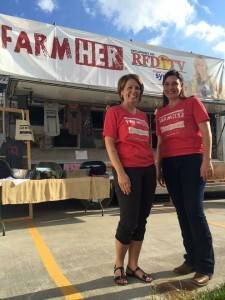
To help others discover their passions, Amber and Jason enjoy providing on-farm opportunities.
“We employ a young neighbor, who grew up on a grain and swine farm but had no experience or knowledge of cattle. It’s been an amazing experience to work alongside him and to help him develop skills and knowledge of the show cattle industry. We also are privileged to host a young FFA student on our farm, whom also was raised on a grain and swine farm. She has an interest in cattle but was lacking the knowledge and opportunities to grow in that field. We welcome her help on our farm often and it’s been gratifying for us to watch as she builds her confidence in an area of agriculture that she otherwise may not have had the opportunity to get engaged with.”
Amber embraces opportunities to share her knowledge and passion with people both inside and outside of ag circles.
“As an advocate, I strongly believe in the importance and power of telling agriculture’s story,” she says. “Not only do we welcome guests to experience our farm first-hand, I have also found social media to be an effective tool allowing me to invite people into our lives for an opportunity to follow along and experience the day-to-day aspects of life on an Iowa farm. It’s pretty impactful to not only share positive best practices and experiences but also to be open and honest with your audience about the challenges and loss that producers also face on our operations. While there are days that are rewarding, unfortunately, there are also some days that are heart wrenching on a farm. “
“If you didn’t see much for Christmas lights around our farm this season, it’s because I put all my energy into making the inside of the barn festive instead! Priorities! 😉(Such a great day brightener doing chores everyday in a barn lit up for the holidays!) My four-legged friends are wishing you good times & amazing adventures in 2017! From our farm to yours…Happy New Year! 💛 — at Kohlhaas Cattle Company.”
As urban areas expand, the number of farms continues to diminish. Fewer people being raised on farms means the overall knowledge base shrinks. That’s why Amber says it’s more important than ever for people in agriculture to share their stories.
“From water quality, GMOs or antibiotic-free meat, we have all heard about controversial topics surrounding agriculture in the media that are contributing to public confusion and a general misconception,” says Amber. “As a grower and livestock producer, it is not only our responsibility but it is our privilege to share our stories in effort to bridge the gap and drive awareness for the agriculture industry as a whole.”
Amber says she shares snippets from farm life to help consumers understand:
As producers, we opt to treat our livestock with compassionate care. We do what we believe is right and what is in the best interest of the well-being and quality of life for our animals. It’s no different than if we have a sick or injured family member or pet; we feel empathy and want to help ease their symptoms and speed up the healing process. We vaccinate our livestock in the most responsible manner possible. We work closely with our veterinarians for treatment recommendations, read the labels, understand the residuals, and are diligent in our responsibility to manage all product and ensure it is safe to go to market.
We eat the same food consumers do. That’s why we take a great deal of pride in performing responsible best practices and producing a quality product that not only feeds consumers, but also feeds our own families.
Gain a deeper understanding for what it truly takes to put food on your table. There are so many consumer choices on the market today; food labels don’t tell a complete story. Please take initiative to educate yourself, visit a farm, talk with producers, or do anything you can to make the best, most informed decisions about what is right for your needs and values as a consumer.
There are so many options in the market for consumers. Rather than a one-size-fits-all option, there are choices for consumers to make. My wish as a producer is that consumers would take initiative and arm themselves with the knowledge to make educated, informed choices about what they are choosing to, or in many cases, choosing not to consume.
Behind every meal, there are hard-working, passionate farmers who make it possible. Farm families gather around their dinner tables every day with plates containing the same food that consumers are feeding their own families. There is no one that has more money or time invested in the farm-to-fork progression than the people that are producing it. You will not find anyone more passionate about responsibly performing best practices and providing a quality product to consumers than the farmers themselves.
(article originally published in the March edition of the Iowa Soybean Review magazine)
Every farmer can remember the excitement of Christmas morning. The rush of running to the living room and unwrapping a shiny new model tractor with a matching gravity box or the classic old-fashion wood barn complete with fences and plastic cows.
The truth is the excitement never really fades. Farmers’ toys just get bigger and the technology becomes a tad more tantalizing.
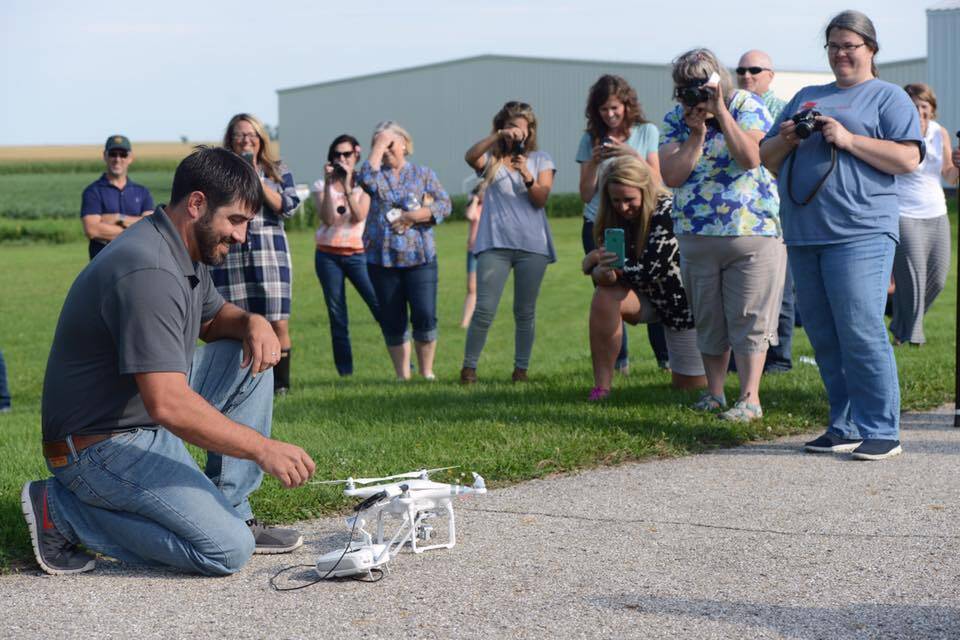
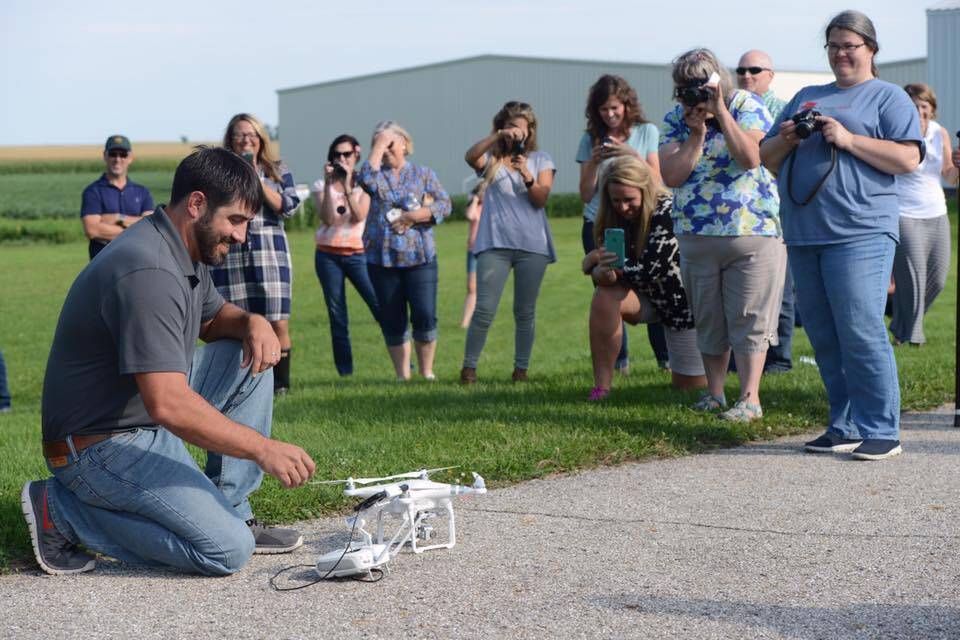
In recent years, unmanned aerial vehicles (UAVs), commonly called “drones,” have literally taken off as one of these new toys. But within this high-flying tech lies an opportunity for farmers to improve profitability.
“It’s not going to fix a problem immediately, but drones can help you make adjustments next season,” says Phil Pitzenberger, Iowa Soybean Association (ISA) farmer-member from Greene. “For me, it’s been identifying management changes for the future — that’s been the biggest value.”
Pitzenberger has always been fascinated by technology. When drones came on the agriculture scene, it was natural he’d find a way to incorporate them into his corn-soybean and custom spraying operation.
“When I first got started, I knew I was just going to be flying it over fields looking for problem areas,” says Pitzenberger. “I wasn’t sure what it was going to show me, but the results came really quick.”
Pitzenberger noticed patterns perpendicular to his corn rows. The birds-eye view revealed an aerial fungicide application was poorly done, covering only 50 percent of the field.
“When it came to harvest I watched the yield monitor just to compare — it was like driving through waves,” Pitzenberger says. “I learned I need to improve how I apply fungicide.”
As a result, Pitzenberger and his family bought a Hagie, which also turned into a custom spraying business. He laughs saying, “It’s funny, but I trace it all back to that one look from the drone.”
Pitzenberger also has used his drone to identify compaction, anhydrous and manure application issues.
“Once I was up in the air, it was easy to tell but from the road you couldn’t make rhyme or reason out of it,” he adds.
Abnormal patterns are also a key insight gleaned by Dennis Bogaards, ISA farmer-member from Pella.
“I always tell farmers Mother Nature rarely works in patterns,” Bogaards says. “One of the first times I flew a drone, I noticed patterns in my fields and from the drones I couldn’t tell what it was. So I started walking through my field and realized it was a nitrogen issue.”
Earlier that spring, Bogaards had applied anhydrous at a ten-degree angle to his intended corn rows. The drone revealed a pattern of varying plant sizes and stages of root development across the field. Seeds planted at the intersection of the row and the knifed-in nitrogen application were much healthier than those planted between the rows, which were as much as 15 inches away.
The next planting season, Bogaards offset his nitrogen application 5 inches and ran parallel with the rows using GPS — a small change that payed dividends at harvest.
“It makes a big difference in evaluating and understanding the problems in your fields,” Bogaards says. You’re going to see a different view of your field and be able to ask questions on how to improve.
Getting Started with Drones
Both Bogaards and Pitzenberger insist getting started with drones is not as difficult as farmers think. In most cases, it just takes trying it out.
“It’s really about getting your hands on the equipment,” Bogaards says. “Drones three years ago were easy to fly — today, they’re even easier.”
Bogaards has been flying for four years. He now serves as a drone coach and consultant for farmers, and dealer for FlyingAg, a drone service and retailing company.
“Most guys starting out just want to have something that’s easy to get out and up in the air to take a few pictures,” Bogaards says. “That’s a great place to start. Then after you get really comfortable with the controls and maneuverability, start looking at the more advanced things you can do.”
Both Bogaards and Pitzenberger fly DJI brand drones. Pitzenberger has owned the Phantom II and Phantom III Advanced. Recently, he bought an Inspire II.
“We’re just beginning to see what we’re going to be able to do with these things,” Pitzenberger says. “They’re already telling us a lot of information but I can’t even imagine what’s going to come over the next 10 or 20 years.
Photo credit to Joseph L. Murphy / Iowa Soybean Association
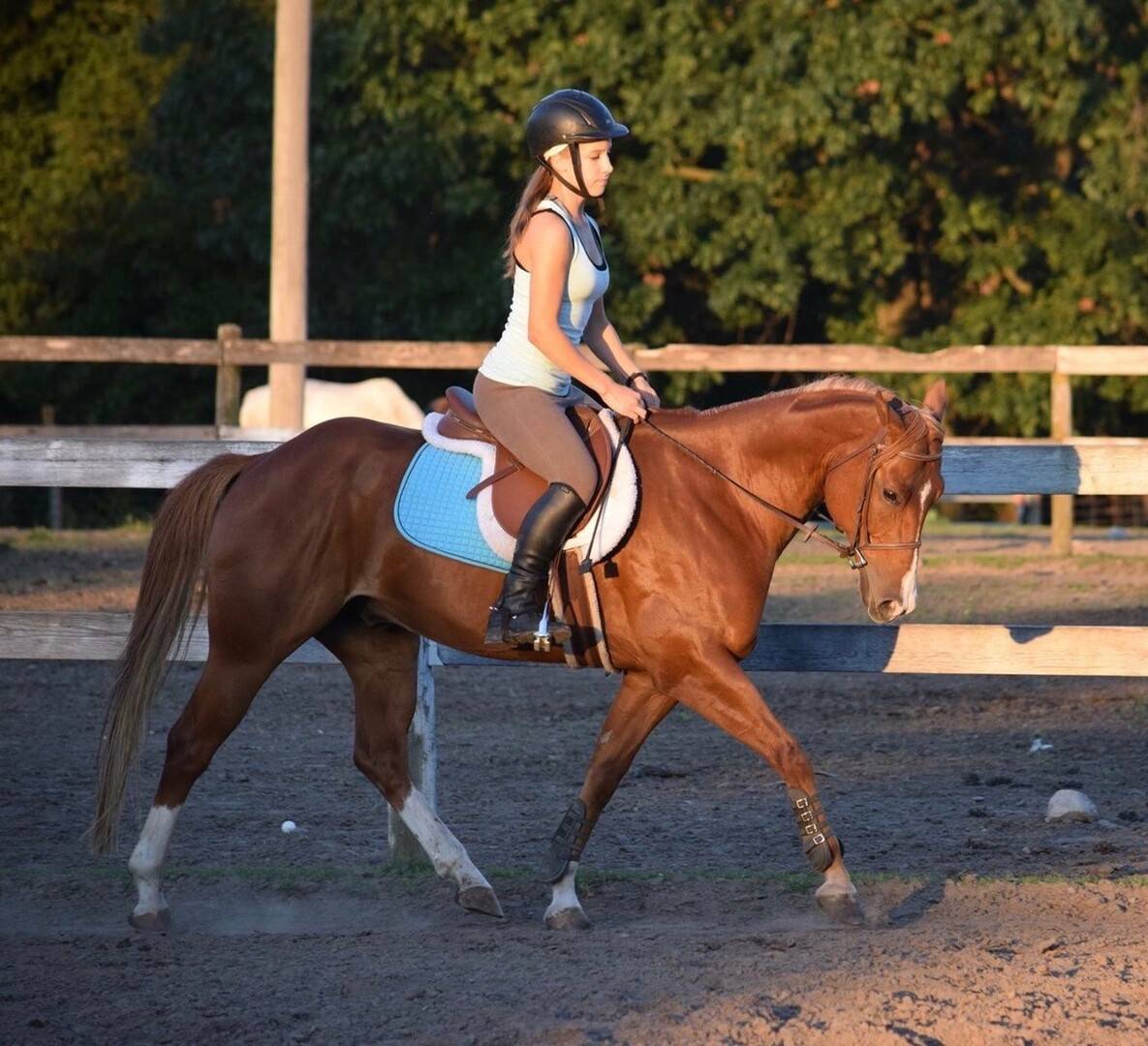
When you hear someone has 10 years’ worth of experience showing and training horses, you probably imagine a male millennial wearing Wranglers and tipping his Stetson. Caitlin Sanderman, however, defies stereotypes. This 16-year-old FarmHer from Waverly, Iowa, balances two FFA Supervised Agricultural Experience (SAE) projects, works at a dog kennel, spends at least 20 hours weekly training horses, as well as competes in horse shows.
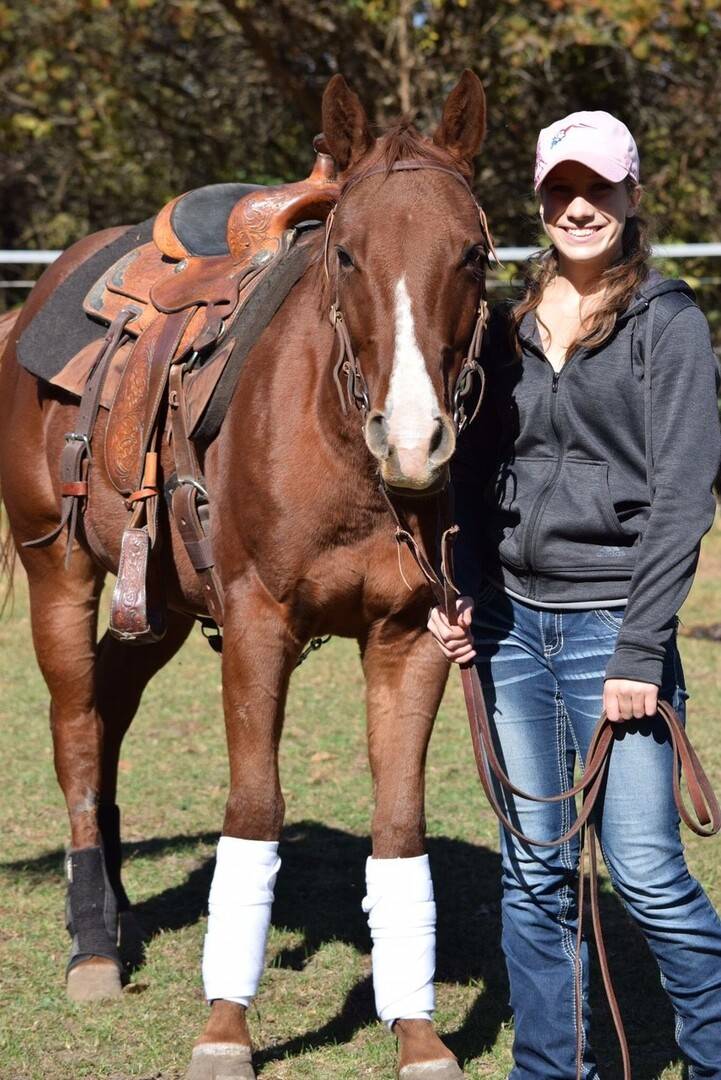
Two strong female role models have sparked Caitlin’s love of horses. Her godmother, Noel Maier, taught her to ride at age 5. After Noel moved, Caitlin began taking lessons from Jenna Kyhl at Kyhlwood Training.
“Much of what I know about horse training came either from Noel or Jenna,” says Caitlin. “The first horse I trained was a gift from Noel. That horse, as well as a second horse named Chief, helped me experiment with training. I began to understand more about how a horse thinks. The third horse I bought was a running Quarter Horse named Indiana. Jenna helped me fine-tune my training skills with Indiana.”
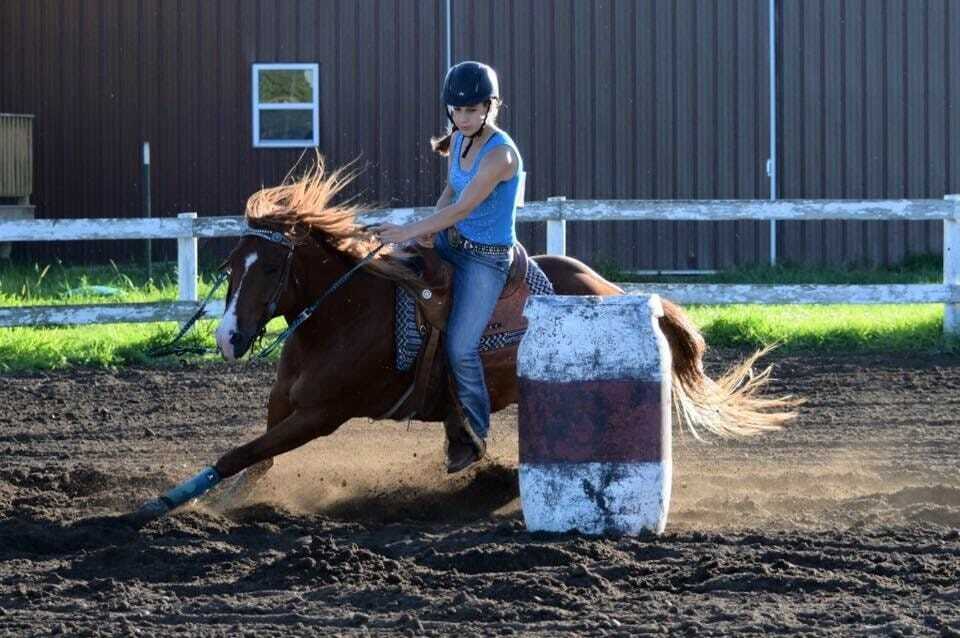
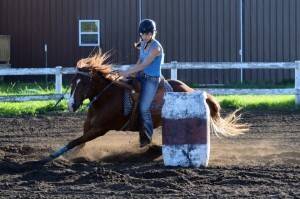
The more Caitlin learned, the more she taught her permanent horse Colorado. Caitlin got Colorado from Noel when the gelding was 3, and she’s had him for 7 years. She taught him how to clear a three-foot jump and run a barrel pattern in 17 seconds. They’ve worked on everything from basic groundwork to advanced maneuvers such as half passes, flying lead changes, and sliding stops. Colorado also places well in Western Pleasure and English classes.
“After taking years of lessons on Colorado, training three horses, and gaining a lot of knowledge about riding and horse care from Jenna, I began getting serious about training,” says Caitlin, who started Sanderman Horsemanship at age 14 and aspires to become a full-time horse trainer after she graduates from high school and college.
Caitlin is extremely hard working and extremely passionate about working with horses, says her mom Mandie Sanderman. “She has an amazing ability to communicate with animals. We have seen this time and again through her training of horses and dogs. She has a compassionate nature and a love for all creatures. “ Having that connection with an animal is what Caitlin says she enjoys most about training animals. “They do not speak words, but they are easy to understand. If they are scared, they show it. If they are angry, they show it. If they are calm, they show it,” explains Caitlin. “Horse training also teaches patience. Sometimes progress is slower than I would like it to be, but speed doesn’t matter as long as the horse is moving forward. The only thing that matters is that you do not stop or give up.”
In addition to her horse training business, Caitlin has a second FFA SAE as a stable hand at Fox Ridge Stables. Her SAE project work requires her to record income and expenses as she buys and sells horses, training equipment and feed. She also records the hours she works as a stable hand the wages she receives.
“This type of record keeping will help me run my business more efficiently,” says Caitlin. “I track everything from vaccination schedules, to training rides, feed and supplements.”
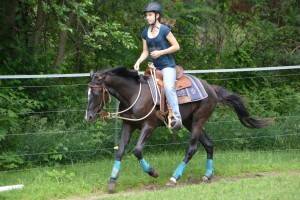
In her spare time, Caitlin enjoys playing tennis and showing horses. She caught “show fever” when Noel took her to a fun show in Allison hosted by the Butler County Young Riders, which is the saddle club to which she still belongs. The second show Caitlin participated in was the Big Four Fair, where she and Colorado placed in every class they entered. That day the dynamic duo took home fourth, third, second, and first place ribbons.
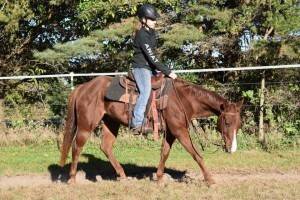
Rewards in the show ring require hard work and dedication. Caitlin spends about four hours each day working with her horses. On a week there’s a horse show, she spends close to 30 hours with the extra grooming and fine tuning needed. She shows horses both at the local and state level through the Waverly Shell Rock FFA chapter where she serves as chair of the Relations Committee that works to increase the FFA’s influence throughout our school and community.
“Exerting influence in her community.” As I thought about Caitlin’s response to my interview question, I couldn’t help but recall words from the FFA Creed: “… I believe that rural America can and will hold true to the best traditions in our national life and that I can exert an influence in my home and community which will stand solid for my part in that aspiring task.”
The Iowa FFA Convention will convene April 9, so it seems only fitting to recognize such an outstanding Iowa FFA member. The more I learned about Caitlin Sanderman’s passion and ambition, the more I am convinced the future of rural America is in good hands!”
There are lots of questions with any new products, and that’s also the case with Xtend soybeans and the new herbicide XtendiMax™ with VaporGrip™ technology. Below are answers to frequently asked questions:
Q. Do Xtend soybeans yield as well as other soybeans?
A. The short answer is yes. Latham’s Xtend soybeans excelled in the 2016 F.I.R.S.T. Trials. Like any soybean variety, optimal yield is achieved by placing them in the correct environment.
Q. Does VaporGrip control drift?
A. VaporGrip does NOT control drift, but it does significantly reduces the potential of volatility.
Q. How can I control drift?
A. Here’s a summary of required application requirements:
Use nozzles and operating pressure listed on the herbicide product label to minimize driftable fines. These nozzles make bigger droplets that, when used with lower pressure and a minimum of 10 gallons of spray solution per acre, help minimize drift.
Use at the application rate of 22 fluid ounces per acre for any single, in-crop application.
Do not exceed a boom height of 24 inches above the target pest or soybean canopy.
Apply when wind speed is between 3-10 mph, and avoid application if there is no breeze at all.
Do not exceed 15 mph ground speed.
Do not apply when wind is blowing toward adjacent susceptible crops.
Q. Do I have to put in a buffer strip?
A. The label requires a buffer to protect sensitive areas. Read and follow the label instructions.
Q. Can I apply Ammonium Sulfate (AMS) with XtendiMax with VaporGrip?
A. Ammonium Sulfate and ammonium-based additives are prohibited in applications that include XtendiMax with VaporGrip Technology.
Q. Can I tank mix any Roundup with XtendiMax herbicide?
A. To find a list of approved products for tank mixing, click here. Before application, farmers and applicators should visit http://www.roundupreadyxtend.com/ to see if any new products have been approved for tank mixing.
Q. Am I required to use a residual herbicide with XtendiMax with VaporGrip?
A. You are not required to do so, but using a residual pre- and post-emergence strategy as outlined in the Roundup Ready Xtend Crop System for in-crop use will give better weed control and can net you $14/acre cash back.
Q. Do I get any residual activity with XtendiMax Herbicide with Vapor Grip?
A. You can get up to 14 days of soil activity from Dicamba on certain small-seeded broadleaf weeds to help other residual herbicides control weeds.
Q. Do I have to spray XtendiMax Herbicide on Xtend soybeans.
A. No, you can spray Xtend soybeans with any herbicide approved for Roundup Ready soybeans.
This Q&A is not meant as a substitute for reading and following all product labeling. Find more insight below:
Agvocate through Candid Photos, Create Treasured Memories
Connecting with your audience on an emotional level can lead to an informative conversation that bridges the gap between producers and consumers. Photographing an everyday moment on your farm and sharing your personal experiences helps non-farmers find common ground with you.
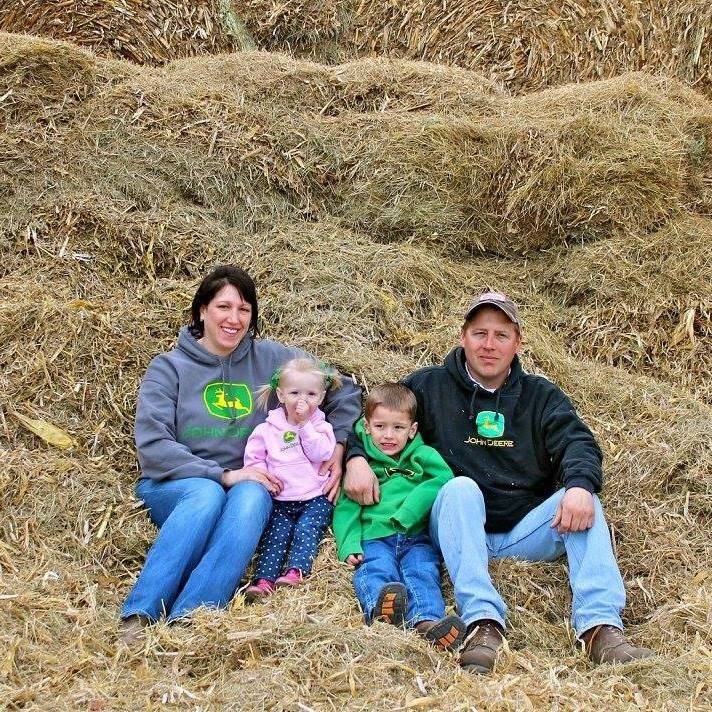
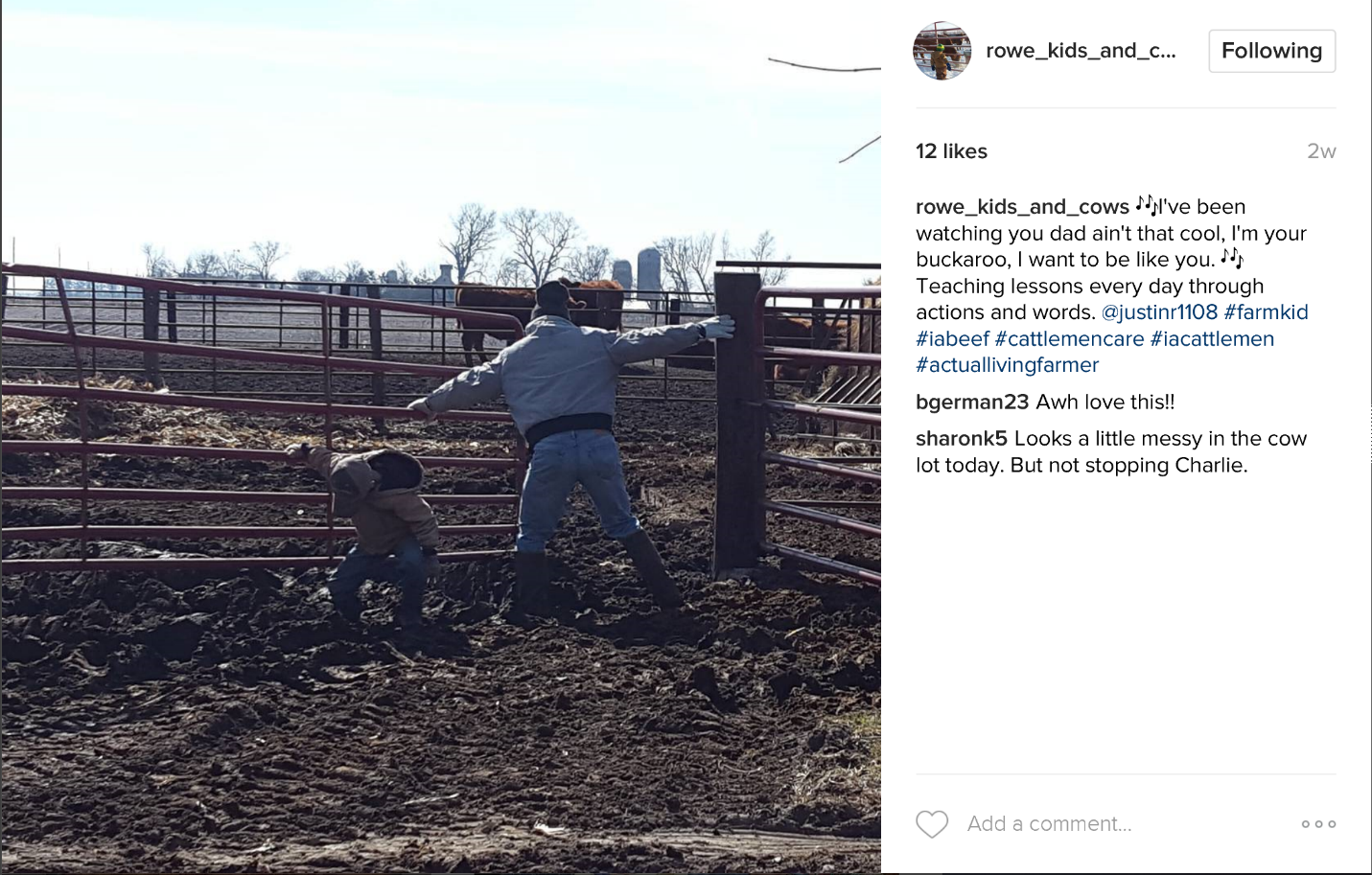
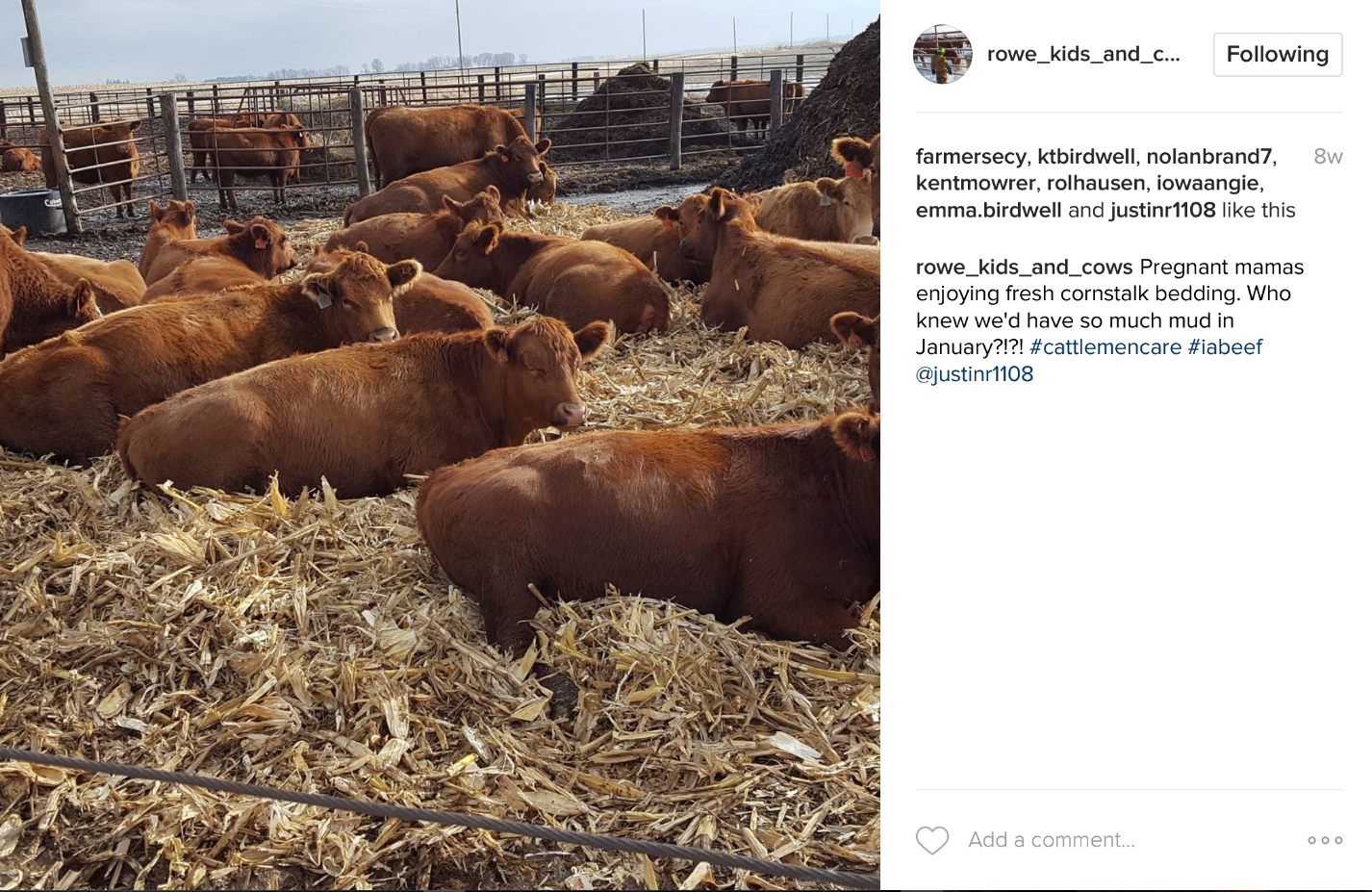
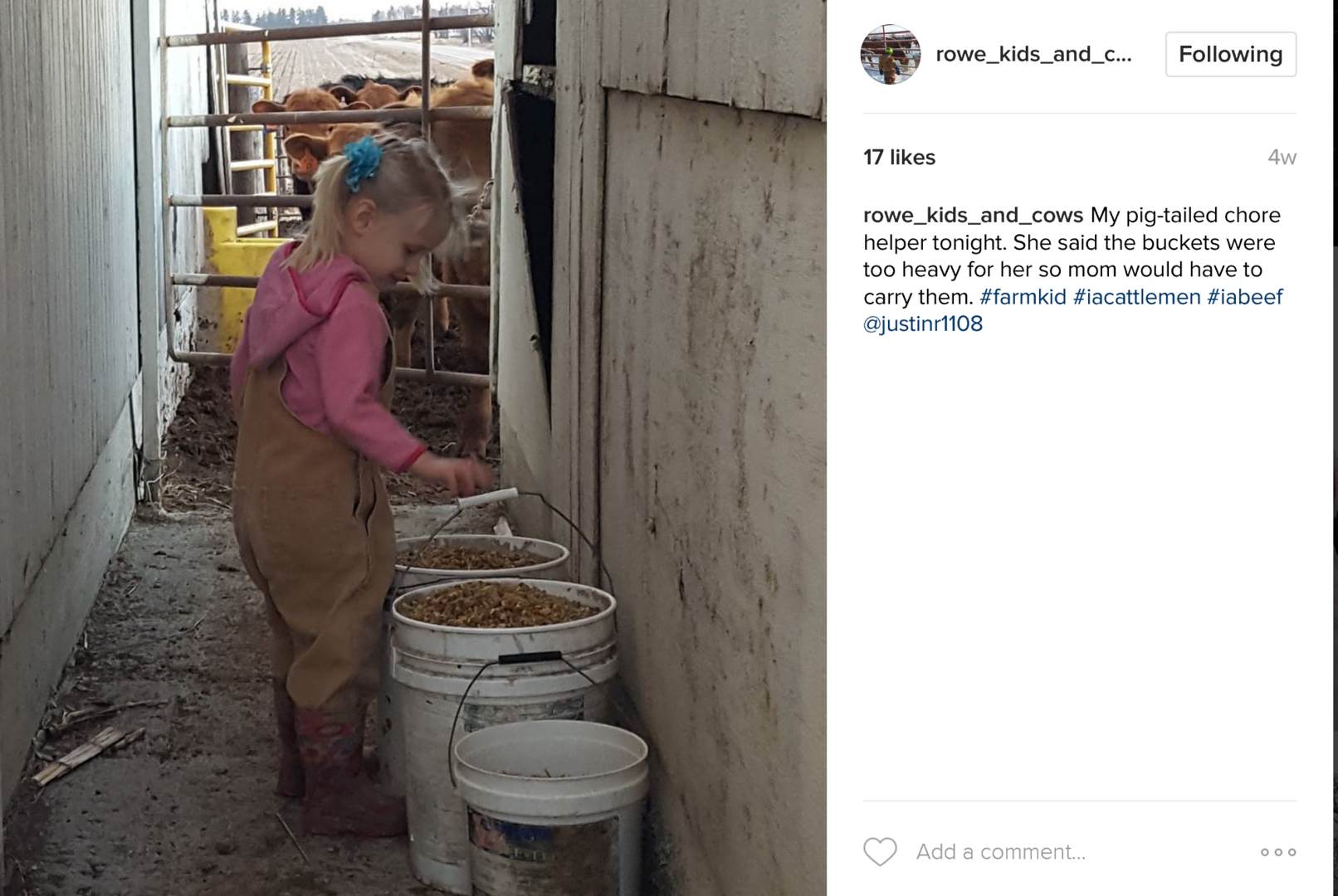
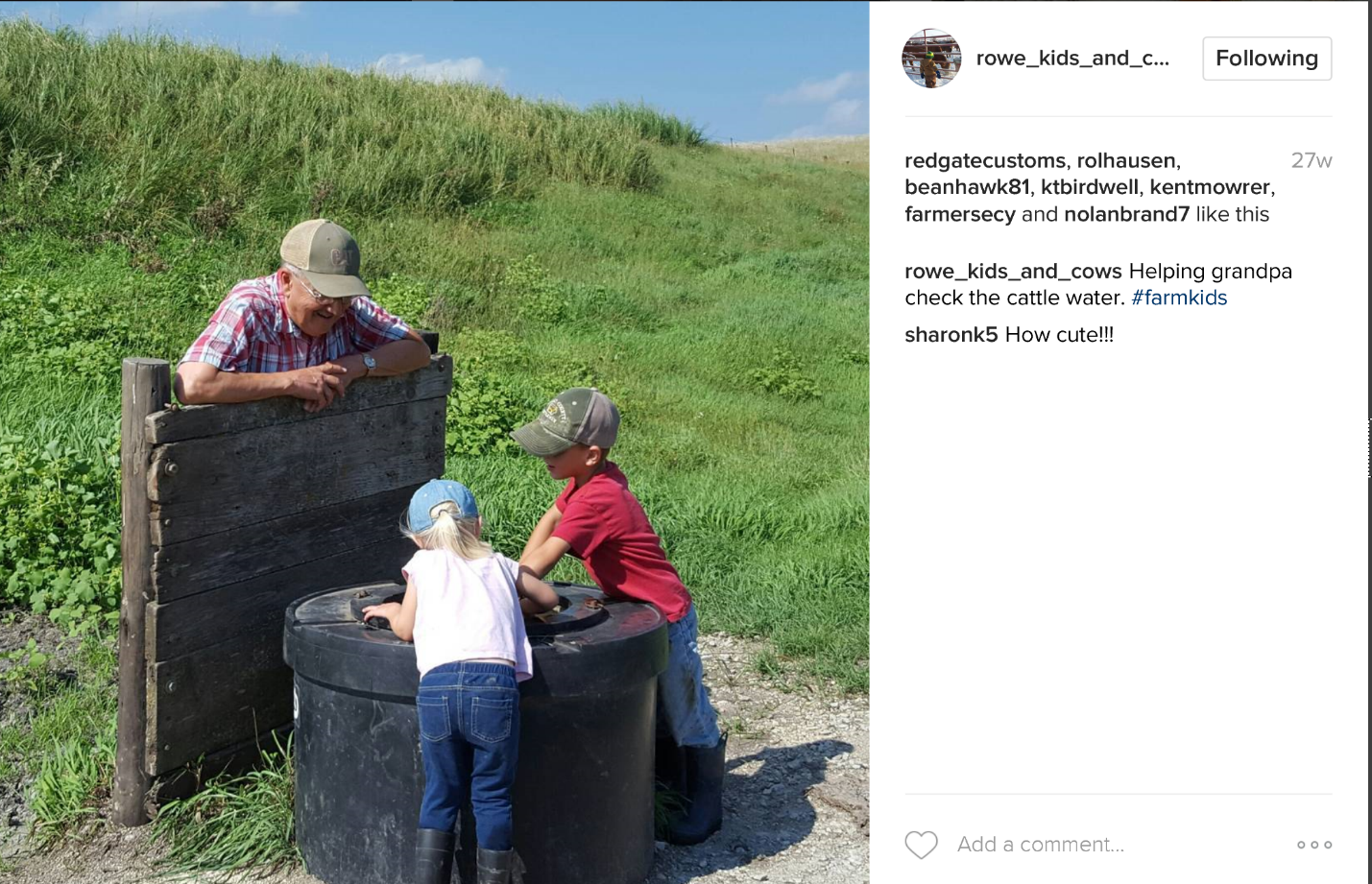
Under the social media handle of “Rowe Kids and Cows,” Corinne Rowe of Dallas Center, Iowa shares her family’s farming story through the eyes of a mother. Follow her efforts on social media, and it will quickly become obvious that everyone in her family plays a specific role. Corinne’s husband, Justin, is the farmer that runs everything. Their 6-year-old little boy, Charlie, assumes the role of “Little Farmer.” Their 3-year-old daughter, Anna, transitions from the pretty princess to the little farm girl.
Corinne has a knack for giving us a glimpse of farm life while communicating the importance of family time. We see what her family values: spending quality time together and taking care of their livestock. At the same time, she’s capturing everyday moments that are sure to become treasured memories.
I’ve included some of my favorite posts from the Rowe’s Kids & Cows Instagram page to help inspire you to share your story!
Balance™ GT Soybeans: One Step Closer to Commercialization
Visitors to Latham headquarters last fall for our field day saw replicated tests of Balance GT along with EnlistTM, Roundup Ready 2 Xtend® and LibertyLink® soybeans. Plots conducted by Latham’s Research Team show there are good genetics to go with the Balance GT technology, so we’re eager for full approval to make them available.
February and March are key months for Latham’s product team as we focus on choosing next year’s product lineup. What we grow in 2017 becomes the seed we offer for 2018, so you might say our 2018 guide “hangs in the balance.”
Last month, Balance™ GT soybeans received import approval from China. Balance™ GT has already received approval from these critical countries: Argentina, Brazil, Canada and the European Union. However, Balance® Bean herbicide is pending registration.
Bayer has announced it won’t release the technology until the chemical is fully approved by the U.S. Environmental Protection Agency (EPA). Balance GT soybeans may be sprayed with glyphosate and with Balance Bean herbicide, which contains the same active ingredient as Balance herbicide for corn. Although the first generation of Balance GT products won’t have resistance to Liberty herbicide, Bayer plans to add Liberty resistance in the near future.
Balance™ GT and Monsanto’s Xtend™ soybeans have both been approved in the past year, and we’re hopeful that Dow’s Enlist™ soybeans will be approved in 2017. We’re eager for this approval for two reasons:
Farmers need new tools to win the fight against weed resistance.
Increased competition helps keep seed prices down. With the Bayer/Monsanto merger pending; all of these technologies would be controlled by one company: RR1, RR2, RR2 Xtend, Liberty and Balance GT. There’s a good chance one of more of these technologies will be sold for the Justice Department to approve the merger. I believe it’s in farmers’ best interest for these technologies to be owned by competing companies.
One benefit of our family-owned seed business is that we can access the industry’s latest and greatest technologies, regardless of which trait providers own them! That means Latham dealers can sell seed that best fits a customer’s situation.
As well, stay tuned for updates on new approvals. You can be sure we will offer new products as soon as they become commercially available!







 Amber knew she wanted to major in Agriculture but needed to find a focus, so she took an array of Agronomy, Animal Science, Ag Business classes to help identify the best fit.
 To help others discover their passions, Amber and Jason enjoy providing on-farm opportunities.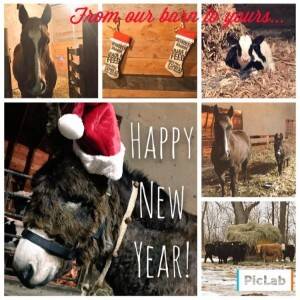
 what Caitlin says she enjoys most about training animals. “They do not speak words, but they are easy to understand. If they are scared, they show it. If they are angry, they show it. If they are calm, they show it,” explains Caitlin. “Horse training also teaches patience. Sometimes progress is slower than I would like it to be, but speed doesn’t matter as long as the horse is moving forward. The only thing that matters is that you do not stop or give up.”
 In her spare time, Caitlin enjoys playing tennis and showing horses. She caught “show fever” when Noel took her to a fun show in Allison hosted by the Butler County Young Riders, which is the saddle club to which she still belongs. The second show Caitlin participated in was the Big Four Fair, where she and Colorado placed in every class they entered. That day the dynamic duo took home fourth, third, second, and first place ribbons.
 “Exerting influence in her community.” As I thought about Caitlin’s response to my interview question, I couldn’t help but recall words from the FFA Creed: “… I believe that rural America can and will hold true to the best traditions in our national life and that I can exert an influence in my home and community which will stand solid for my part in that aspiring task.”