Skip to content
Latham Hi-Tech Seeds

(641) 692-3258

  • Home
  • Performance
  • Products
    • Corn
    • Soybeans
    • Alfalfa
    • Corn Silage
    • Seed Guide
  • Find a Rep
  • Media
    • Blog
    • News
    • Videos
    • Podcasts
    • TECHTalk
  • About Us
    • Company History
    • Our Mission
    • Careers
    • Become a Rep
    • Sowing Seeds of Hope
  • Contact Us
  • Latham Hi‑Tech Seeds

    Ding. Dong. Avon calling…

    SmeltzerLearningFarm2 Otho 5.3.16 JodyKorthaus

    Soil Sampling[3]Twenty-eight years ago when Angela Rieck-Hinz went door-to-door introducing herself to farmers, the men didn’t think she was calling on them.

    “On the first field call I made as a soil conservationist, the farmer answered the door. Before saying anything to me, he turned to his wife and said, ‘The Avon lady is here’,” she recalls. “I just laughed and turned what could have been an awkward situation into an opportunity. I completed his conservation plan, and we became friends.”

    Nearly three decades later, Angie still encounters situations where people are surprised to learn their Extension field agronomist is a woman. She says women can’t take it personally nor let it bother them. She takes the time to listen, ask questions and learn about each farmer’s situation. Then she asks about his or her goals and challenges before offering suggestions or solutions.

    Setting goals and striving to achieve them is something Angie learned through 4-H. Originally from Benton County in eastern Iowan, the Rieck family moved to southwestern Wisconsin when Angie was 11. Her mother took a job in town, which provided a steady income and health insurance. Her father bought a farm where he raised about 100 acres of crops plus ran a cow-calf herd and raised hogs farrow-to-finish. He also sold seed.  Angie remembers her dad returning from “seed corn school” sometime around 1980 with a book entitled “Modern Corn Production.” Fourteen-year-old Angie was so fascinated with the content that she read the book cover to cover.

    SmeltzerLearningFarm2_Otho_5.3.16_JodyKorthaus“At that time, I didn’t know it was possible for a girl to become an agronomist,” says Angie, who is in her fourth year as an ISU Extension Field Agronomist serving 9 counties in north central Iowa. She served as a manure management specialist for nearly 20 years on campus at ISU before changing positions. “All my friends were interested in becoming teachers or accountants. During my first semester of college at UW-Platteville, I met two girls who begged me to be on the soil judging team with them.  I started taking agronomy classes and enjoyed them so much that I became an agronomist.” 

    Throughout her career, Angie says she’s had the pleasure of working with many people who wanted to see her succeed. They provided her opportunities to grow professionally and encouraged her to take on some challenging aspects of programming that wasn’t popular at the time. 

    “What I enjoy most about my job is the people I meet,” says Angie. “Every day I meet new people and talk with those whom I have developed long-standing relationships. I’m glad to see so many women engaged in agriculture as retailers, seed sales professionals, agronomists, veterinarians, commodity analysts, livestock specialists and more. I’m also willing to help them in any way I can. The Avon lady may no longer call, but don’t be surprised when your female ag professional comes knocking.”  

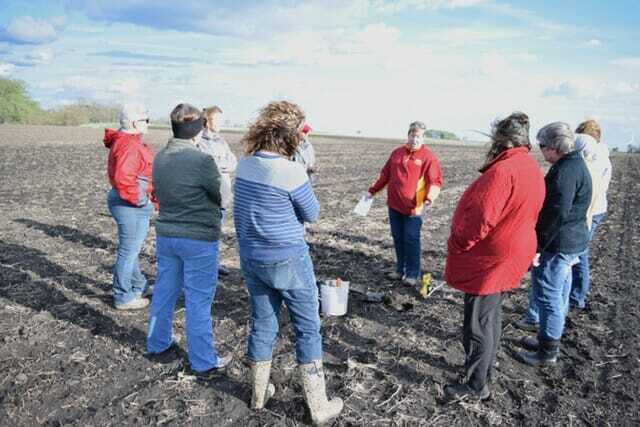
    IMG_0562[2][1] copyThree years ago Angie started a women’s cohort with the goal of reaching more women landowners, farm women, female retailers and others who wanted to learn more about agronomic principles, crop production, water quality and conservation practices. 

    “There are many female landowners who want more knowledge to be able to better communicate with tenants.  There are women who farm and women who are married to farmers, who want access to more information so they can increase their skills and improve communications,” says Angie. “We look at planting practices, crop growth and development; we talk about making replant decisions; we identify weeds, insects and disease; we discuss pest management principles and how to scout to make treatment decisions; and we talk about different conservation practices and impacts on water quality.  We learn about soil fertility, soil sampling, how to make your own fertilizer recommendations, GMO crops and what that means for our food supply. It’s really a lot of fun! 

    Angie will start a  new cohort in April 2017. The group will meet at the ISU Field Extension Education Laboratory (FEEL) between Ames and Boone every other week throughout the growing season for about an hour.  Her colleagues, Meaghan Anderson and Rebecca Vittetoe, will also host new cohorts in Iowa County and the McNay Research Farm. For more information about any of these cohorts, contact Angie at 515-231-2830 or amrieck@iastate.edu. 
    Team Latham

    January 30, 2017
    Agriculture, Industry News
  • Latham Hi‑Tech Seeds

    7 Tips to Cover More Ground

    Easton blog

    Easton Kuboushek-1Guest post by Easton Kuboushek, Communication Specialist, Iowa Soybean Association
    (article originally published in the January edition of the Iowa Soybean Review magazine)

    Inventors and entrepreneurs are some of the most fascinating and creative people on earth. They have an uncanny way of looking at problems as opportunities and derive solutions through innovation.

    Successful entrepreneurs say the key to success doesn’t come from a massive leap or stroke of luck. It comes from planning, hard work and most importantly — taking small practical steps.

    Farmers are arguably some of the best entrepreneurs and creative problem solvers in the world. And they are certainly hard workers. Iowa Soybean Association (ISA) believes it’s time to put that tenacity to work and take small practical steps to improving Iowa’s water quality.

    “Whether we like to admit it or not, everything we do affects somebody downstream,” says Rob Stout, farmer from Washington, Iowa. “We as farmers are part of the problem and I feel very strongly that we all have a role to play — we all need to step up to the plate.”

    Stout and his stepson are conservation farmers operating 1,100 acres of corn and soybeans and raising 10,000 head of hogs in southeast Iowa. He implements a number of conservation practices — no-till, cover crops, terraces, buffer strips and a bioreactor — but it didn’t happen overnight.

    Stouts journey to conservation success began in the early 1980s with some heavy rain and a little heartache.

    “We saw some heavy spring rains and had some soil washout,” Stout recalls. “You know, it hurts to see that. I knew that even though we were doing conservation tillage at the time that it wasn’t enough.”

    Photo credit to Joe Murphy, Iowa Soybean Association
    Photo credit to Joe Murphy, Iowa Soybean Association

    Stout took the first small step to solving his problem: learning about potential solutions. At the time, the practice of no-till was just coming into the farming scene.

    “Washington County was really on board with no-till,” Stout says. “I went to a couple field days and liked what I saw.”

    Stout switched his farm to no-till in 1983 and a few years later, was hosting no-till field days of his own. He continues to implement the practice today.

    After starting with one practice, Stout built on his success with additional ones. He built terraces, waterways and buffer strips in the late 1980’s and nearly a decade ago began dabbling with cover crops.

    “I think we started with 10 acres the first year,” Stout recalls. “Now we cover all but 20 acres with cereal rye, peas and radishes.”

    Stout is in the eighth year of a 10-year cover crop study with Practical Farmers of Iowa (PFI) and Iowa Learning Farms. The remaining 20 acres are reserved as check strips to establish a baseline for the study.

    Cover crops required more than just education for Stout. He recommends finding a trusted expert and other farmers to increase the chances of success.

    Stout utilized his local Natural Resources Conservation Service (NRCS) office as a “one stop shop” for information on practices, projects and cost-share opportunities.

    “Some counties are different but it’s important to find a partner you trust,” Stout says. “There are people who have successfully done it so don’t be afraid to ask questions — you don’t have to make every mistake other farmers have made.”

    Iowa State University Extension and experts at the ISA also make excellent resources. Heath Ellison, operations manager of agriculture and natural resources on the ISA Environmental Programs and Services (EPS) team, emphasizes another set of eyes can be very beneficial. 

    “Try to find someone who can come in and help you see where you’re at,” Ellison says. “Start with that baseline assessment and get a third party looking at the operation— it’s always a beneficial conversation.”

    Ellison and the EPS team work on water quality projects, many in collaboration with the NRCS, across the state.

    “Often times, I’ll talk with farmers and we’ll find something we’re not ready to act upon — but at least we know where we stand,” Ellison says. “From there, we can build a plan and start organizing resources.”

    Stout added working with neighbors can be a good solution to organizing the necessary resources, especially equipment. He rents out his drill to a few local farmers so they can plant cover crops.

    “You don’t have to invest $50,000 dollars to get started. Hire somebody to do a field for you or do what you can,” Stout says. “There’s somebody who will be willing to do that — it just might take a little effort to find them.”

    Stout’s work in conservation earned him the ISA Environmental Leader Award for 2017. And while his success and scope of sustainable practices is notable, he believes it’s nothing other farmers can’t replicate. In fact, he encourages it.

    “These are things any farmer can do to save our soil and make the water cleaner,” Stout says. “Start small and work your way into it — we’ve got to do our part.”

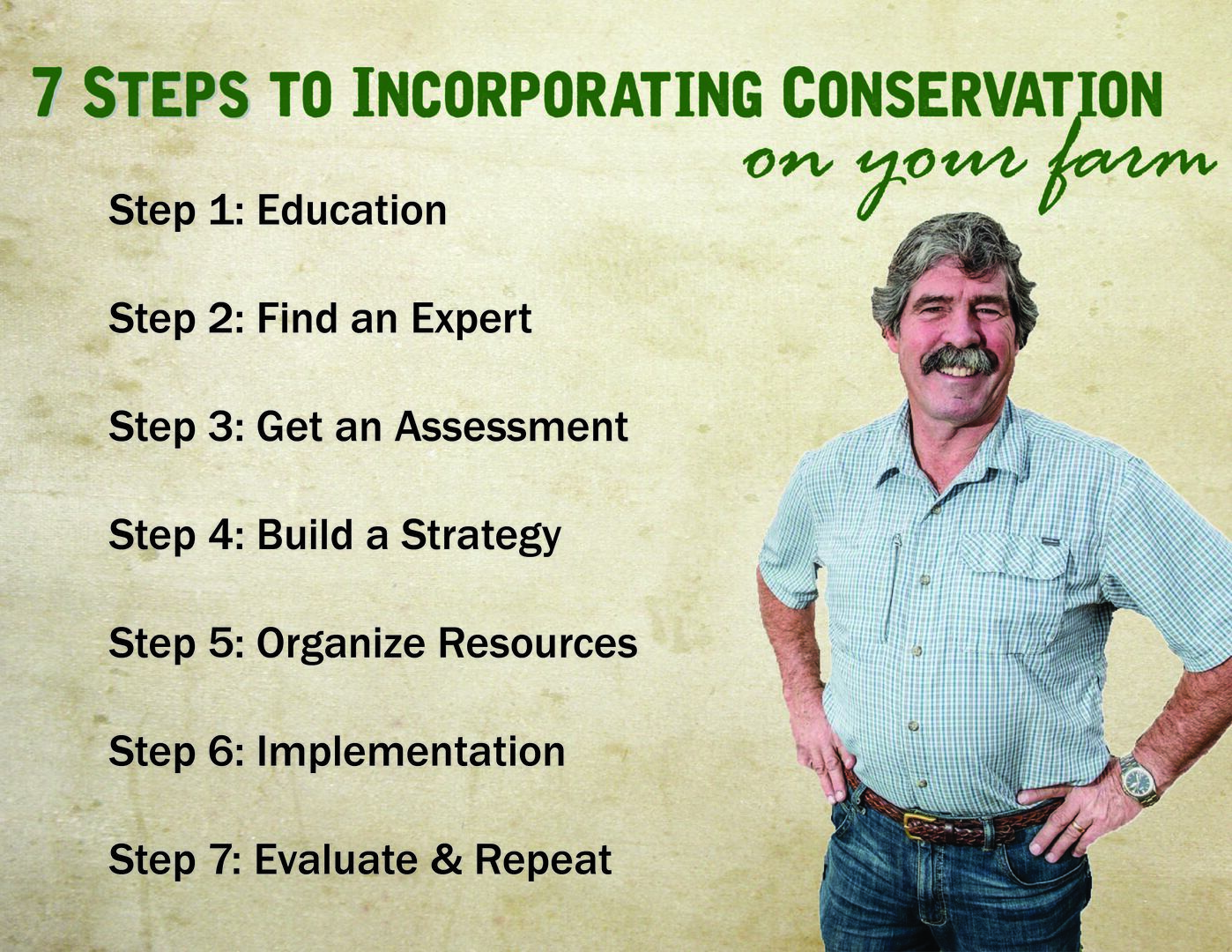
    Conservation Graphic-017 Steps to Incorporating Conservation

    STEP 1: Education

    • Attend field days or the ISA Research Conference

    • Read and research through trusted resources

    • Visit county Extension, NRCS or Soil and Water Conservation District offices

    STEP 2: Find an Expert

    • Who can help me be successful? Are there farmers near me?

    • Identify and connect with a third-party expert

    • Don’t be afraid to ask questions

    STEP 3: Get an Assessment

    • What practices will work on my farm?

    • Have your expert look at your operation and identify which practices will work best

    • Set a baseline to build upon

    STEP 4: Build a strategy

    • What’s the first small, practical step? How can I get there?

    • What barriers do I have to adoption? How can I overcome them?

    • Establish short term and long term goals

    STEP 5: Organize Resources

    • What resources do I need for implementation?

    • Identify equipment, financial, seed and other resources

    • Identify cost-share opportunities

    STEP 6: Implementation

    • Time to take action and implement your strategy

    • Take small practical steps

    • How will you measure progress? (i.e. water monitoring or stalk sampling)

    • Track what works and what doesn’t work

    STEP 7: Evaluate & Repeat

    • What worked well? What didn’t?

    • What adjustments do I need to make next year?

    • Repeat and grow one small step at a time


    Originally published in the January edition of the Iowa Soybean Review magazine

    Team Latham

    January 24, 2017
    Agriculture, Industry News
  • Latham Hi‑Tech Seeds

    Pass the Raw Octopus but Hold the USDA-Certified Meat… Say What?

    LarryEatingBacon 300x300

    LarryEatingBacon-300x300It’s been a few weeks since I’ve written a blog. Truthfully, it was a nice break. The issues keep coming, however, so our work as advocates is not done! Sometimes I question whether my blogs make a difference. Then I think about all the misinformation being distributed and all the misperceptions out there, and I realize that farmers must keep telling their sides of the story!

    Shortly after the new year began, I received a link to CNBC article about the six things you’ll be eating in 2017. I was expecting my favorite food – BACON – would make the list. Instead the first food listed was poke (pronounced po-kay), which is made traditionally made with raw octopus and tuna. After visiting Japan last year, I knew this wouldn’t make my list for 2017!

    I was beginning to wonder why my friend sent me this link until I read further… number 5 on the list is “organic, antibiotic-free and hormone-free food.” As I read this segment of the article, I knew this reporter had never even talked to a farmer nor anyone who knows what’s in food.

    It’s time to set the record straight: All food is antibiotic-free. The term “antibiotic-free” has become a food label to differentiate meat from animals treated with antibiotics and meat from animals who were not given antibiotics, but such food marketing is misleading.

    The Food and Drug Administration (FDA) does NOT allow retailers to sell meat with unsafe levels of antibiotics. The FDA and U.S. Department of Agriculture’s Food Safety and Inspection Service (FSIS) regulations require a withdrawal period from the last antibiotic treatment until the animal enters the food supply. Even 4-H members who raise livestock are required to take a course to learn how to correctly administer antibiotics, as well as to learn about withdrawal requirements. The FSIS also performs random meat tests nationwide to ensure no antibiotics are present above the limits set by the FDA.

    Furthermore, the FDA’s Center for Veterinary Medicine reports that the appropriate use of antibiotics reduces the risk of unhealthy animals entering our food supply. When restaurants like Panera tout they serve only meat from animals that have been raised without antibiotics, it’s not a selling point to me. I’m not unnecessarily concerned with eating animals that have been given antibiotics, but I am concerned about eating unhealthy animals!

    You’d think Americans would understand the importance of keeping farm animals healthy as the vast majority has no qualms about giving their pets antibiotics. People and their pets use 10 times more antibiotics than animals in livestock production, according to the Animal Health Institute (AHI). Perhaps this is the very reason consumers mistrust the use of antibiotics in animal agriculture!

    It’s a myth that using antibiotics for animal health makes antibiotics less effective on human bacterial infections. Apparently so many people believe the myth that very strict regulations went into effect on January 1 of this year. ALL uses of antibiotics in feed and water for food animals must be prescribed by a veterinarian, and every use must be documented. Once again, farmers’ production costs go up unnecessarily. More paperwork is required, and more time is spent inside our office that could be spent outside taking care of our animals.

    Let’s also set the record straight about hormone-free food products here today. Hormones are naturally present in all milk, whether it comes from a cow or a goat. Even plants need estrogen to grow. There’s no need to buy chickens or turkey with the “hormone-free” label as U.S. federal regulations do not permit the use of hormones in poultry production. I could go into more detail here, but why belabor the point?

    Bottom line: Americans enjoy the safest, most cost-effective food supply in the world. Enjoy your food, even those trendy foods if you so desire. That reminds me…

    The last food trend listed by CNBC is cold brewed coffee. Oh. My. Goodness. Now I’m offended! I’ll take a cup that’s hot and black. Make that a double! 😉

    Larry Sailer, Musings of a Pig Farmer

    January 17, 2017
    Agriculture, Industry News
  • Latham Hi‑Tech Seeds

    Eastern Iowan FarmHer Shows It’s Never Too Late to Realize Your Dream

    Kathy Audrey

    Growing up on a farm in rural Cedar County in eastern Iowa, Kathy Wagner believed the “lucky” kids lived in town. They got to spend time each other’s houses while Kathy felt stuck in the country.

    “It wasn’t until I grew older that I realized I was the lucky one,” says Kathy. “If you have roots in farming, hang on for dear life! There’s nothing better than breathing in the fresh morning air, experiencing the birth of a new calf, smelling newly baled hay, or watching beautiful crops grow in the field. It’s priceless being able to farm the same fields as your parents or grandparents did.”

    Kathy grew up on a farm only about three miles from where she and her husband, Mike, have farmed together for the past 25 years. As a young child, she was responsible for giving a scoop of feed to each cow as it entered the stanchion to be milked and to feed her family’s two dogs. Her parents milked Holsteins, as well as raised row crops, stock cows, sheep, hogs and chickens. When she was five years old, her parents divorced. In the settlement, Kathy’s mother received part of the land and continued to raise sheep, beef cows, hogs and chickens. She rented out her farm ground.

    “Much later in life I realized what an undertaking that was!” says Kathy. “My mom had chores and bookkeeping to do plus she raised five kids, so there wasn’t time for me to be involved in 4-H or FFA. I would have liked to have shown animals.”

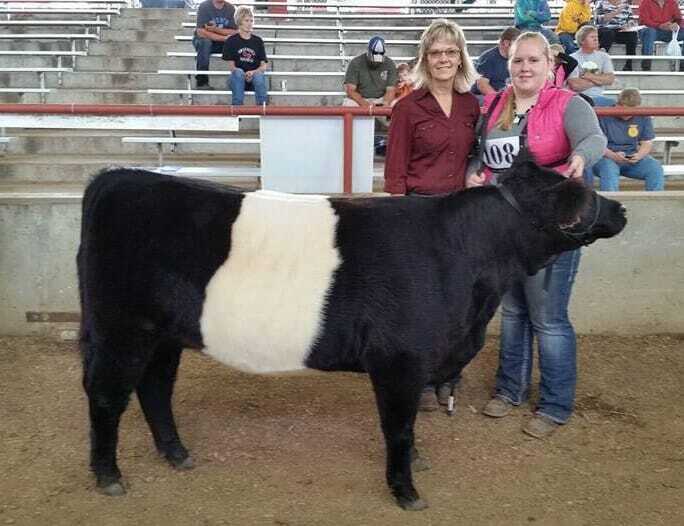
    Kathy Wagner and her daughter Audrey show Belted Galoway cattle around the Midwest. Here they are at the 2015 World Beef Expo in Milwaukee, Wisconsin.
    Kathy Wagner and her daughter Audrey show Belted Galoway cattle around the Midwest. Here they are at the 2015 World Beef Expo in Milwaukee, Wisconsin.

    Kathy’s dream of showing livestock was realized years later when daughter, Audrey, started 4-H.

    “Audrey begged for a Beltie (Belted Galloway), so we finally got one. By the time she graduated high school, Audrey had six cows,” says Kathy. “I was left with the cattle chores after Audrey graduated. I decided that if I was going to do chores that I might as well have a cow of my own. I got one. Six years later, we have about 35 purebred registered Belted Galloways between our two herds.”

    Audrey and Kathy attend two or three shows each year in Iowa, Illinois and Wisconsin. They’ve also started to sell some breeding stock. There’s a sense of pride that comes along with building a herd and raising quality stock. Their bulls have gone to Texas, Oklahoma and Minnesota.

    “I love the cows. I like taming the calves and breaking them to lead on a halter,” says Kathy. “Most of our cows have been in the show ring, so they are very tame. I love that they each have different personalities. Belties tend to be smaller and more docile than other breeds, and I like that, too.”

    Showing Belties is becoming a family tradition. Kathy’s granddaughter, Tiffany, shows Belties at the Cedar County Fair in 4-H.

    “Children learn responsibility from working with and caring for animals by being in charge of the their food, water, shelter, as well as some of the costs. It’s life lessons that aren’t as easily learned on the couch,” says Kathy, who has five children, two stepchildren and a grandma to 16 (going on 17).

    20160709_130639-1-1
    Kathy Wagner’s granddaughter Tiffany showed a Belted Galoway at the 2016 Cedar County Fair

    In addition to raising cattle, Kathy farms in partnership with her husband. She says they’re co-bosses and pretty much consult on everything. She appreciates the opportunity to farm the same ground her father farmed.

    “My dad passed away nine years ago, so we rent ground from my stepmom. She’s one of the strongest women I know,” says Kathy. “My stepmom continues to manage all the farms and properties that she and my dad owned.”

    Kathy was blessed by strong female role models while growing up. As a result, she didn’t think twice about doing chores or running farm equipment. She ran the field cultivator until she and Mike started practicing no-till methods of farming. She also used to haul corn and soybeans from the field to the grain bins until Mike convinced her to run the combine. Now Kathy operates the S660 JD combine while Mike hauls the grain.

    Kathy steps down from the combine to check on cows that are calving as most of their cows calve in the fall; just a few calves are born between February and March. She also does the bookwork and keeps the cattle records; she and Mike both do chores.

    Active in her community, Kathy has served as church organist since she was in fifth grade. She also accompanies the concert choir at the Tipton High School.

    FarmHers across rural America are the heart of their homes and communities. Kathy says she’s seen even more women become involved in agriculture in recent years.

    “Farming is a great occupation but it’s not easy. There are days when you spend long hours in a cab and there are days when all the animals need clean pens. You must do chores in 20-below wind chill, on days when the mud is up to your knees, and when it’s 95 degrees in the shade. There are days you will envy those 9-to-5’ers! But when you look around at your land, animals and crops, you feel a sense of pride and it’s all worth it.”

    Team Latham

    January 16, 2017
    Agriculture, Industry News
  • Latham Hi‑Tech Seeds

    Ramie Coughlin Blazing Her Trail in South Dakota

    IMG 0696
    img_0696
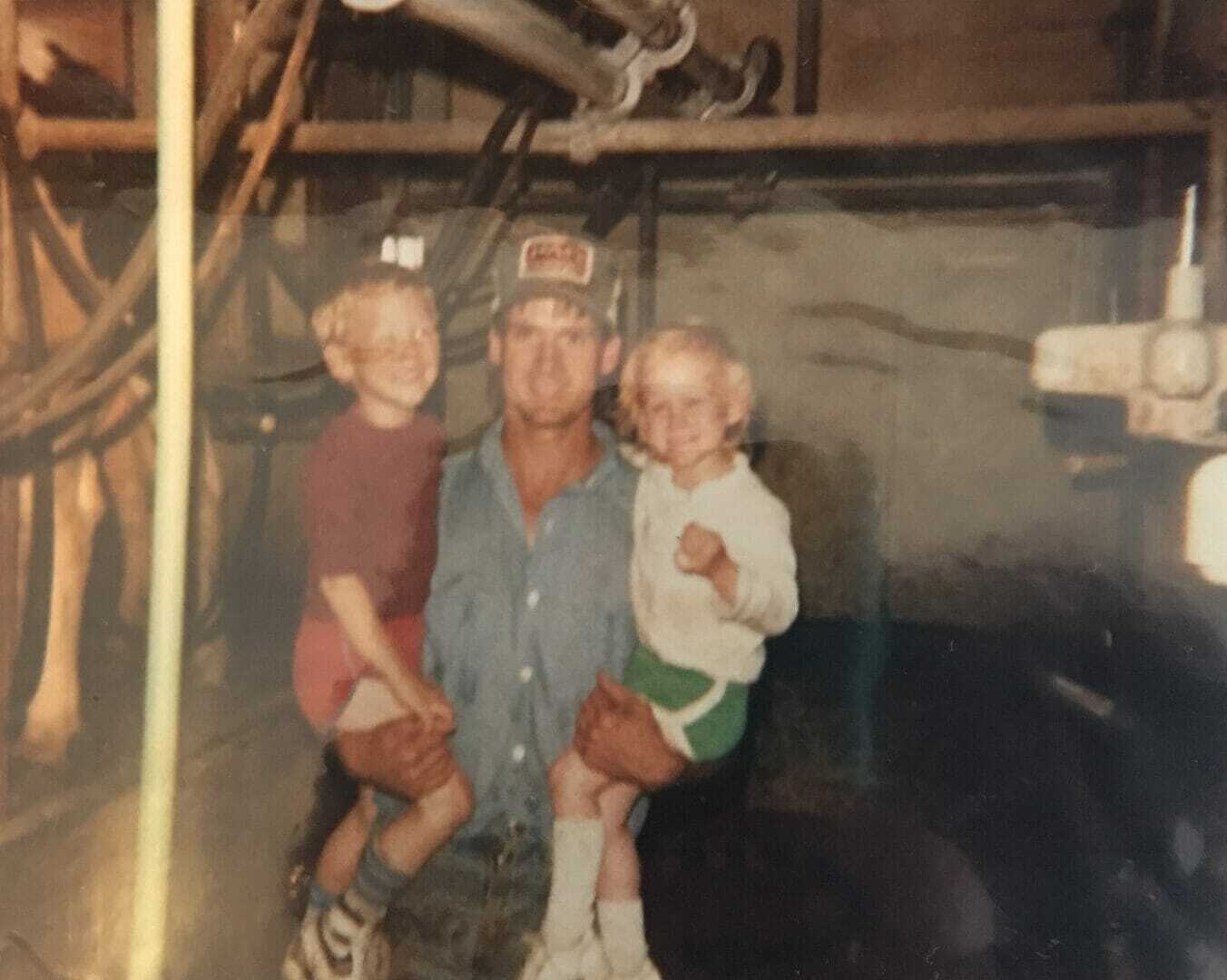
    Ramie with her dad and brother in their dairy barn when she was young.

    Many people visit De Smet, South Dakota to get a glimpse inside the life Laura Ingalls Wilder’s family and to learn about the prairie. Others, like Latham Hi‑Tech Seeds’ own Ramie Coughlin, have lived it.

    Ramie (pronounced Ray-me) grew up on a farm near De Smet and always enjoyed working outside. Her family raised a lot of livestock including dairy cattle, stock cows and horses. She showed dairy and horse projects in 4-H and competed in 4-H Rodeo. She also competed in FFA contests, including Parliamentary Procedure, Land Judging, Job Interview, Horse Judging and Dairy Judging at the district, regional and state levels. She participated in the 4-H Queen contest, as well.

    Beef cattle were her FFA supervised ag experience (SAE), and her outstanding SAE project work led Ramie to earn the American FFA Degree. Each year to less than 1% of FFA members earn the American Degree, making it one of the organization’s highest honors.

    img_0698
    Ramie barrel racing

    “In high school, I was very undecided about what I wanted to do. I considered going into the medical field,” says Ramie. “A couple weeks after graduation I realized there was no way I could go to a job where I would sit inside all day, every day, listening to music on low volume. I immediately switched schools and changed my major to Ag Business. Years later I still feel it was one of the best decisions I ever made.”

    Ramie naturally leaned toward animal agriculture while attending Lake Area Technical Institute in Watertown, which is one of the nation’s Top 4 technical schools. She was introduced to agronomy through a college internship and ended up working for four different agronomy centers during college and following graduation. Her jobs after college evolved into more specific product sales, and in 2009, she moved into her full-time seed sales position. Ramie has been the first female seed seller hired by two of her employers.

    “Sales is challenging no matter who you are or what you sell,” says Ramie. “I’ve learned that I really need to know what I’m talking about, proving to my customers that I’m someone worth working with. As a woman, you must work hard and stay strong. It’s important to never make assumptions. Ask questions, and if you don’t know the answer to a grower’s question, research it.

    Most of the challenges I have encountered are the same that all sales people face: getting appointments without cancellations; getting growers to make a buying decision; overcoming objections; and battling the competition.”

    13584870_10153510721350518_6697308124946766876_oOne reason Ramie says she decided to join Latham Seeds is because she really enjoys working for a family-owned company with access to the industry’s best genetics and technology. She says the Latham brand is known for quality, and the company has a great reputation.

    With a one-year-old daughter and a baby on the way, Ramie appreciates the flexibility that comes with the territory. She says she also appreciates the opportunity to grow a relatively undeveloped sales region and looks forward to the opportunities she has with Latham Seeds. She also hopes to set an example for her children like her mother did for her.

    “My mom is my biggest role model and one of my biggest supporters. She has always pushed me to do my very best no matter the situation. She has always lived her life for her family and the farm/cattle. That woman could out work me any day of the week! I really admire her,” says Ramie.

    “My advice for girls interested in an ag career or in ag sales is ‘Go for it!’,” says Ramie. “The marketplace is very welcoming to women in ag, and you will find much less push back in the country than I saw 10 years ago when I started.”

    Team Latham

    January 9, 2017
    Agriculture, Industry News
  • Latham Hi‑Tech Seeds

    Dream Big… You Can Be Anything!

    Amy Barbie

    “What do you want to be when you grow up?”

    That’s a question kids are asked practically from the time they’re able to talk. When my daughter was in preschool, she answered the question by saying she wanted to be a gymnast. That really came as no surprise since she started taking tumbling lessons when she was two years old.

    If you would have asked me what I wanted to be when I grew up, I would have said a veterinarian. Going to the sale barn and buying bottle lambs with my dad was a highlight of my days before I started kindergarten. As I got bigger and stronger, I accepted with more responsibilities like docking tails and giving vaccinations.

    When I was in either upper elementary or junior high school, I remember my dad asking a local vet about what I should study if I wanted to be a vet. I was standing by the two of them as the vet was on a service call for a distressed ewe in labor. He told my dad that girls shouldn’t be vets. Although my dad refrained from giving him the boot right then and there, “Dr. X” never again got called when we had a sick animal.

    Dr. X most likely couldn’t fathom a female large animal veterinarian because he’d never met one! He only knew what he had experienced. The dreams of many young children also are shaped by the world around them. I remember my young nephew telling me, “I know I don’t want to work in the post office. I know I don’t want to run a restaurant. I don’t really know what you do, so I don’t know if I would want to do your job.”

    How can we get kids to dream bigger? How can we provide role models where there aren’t any?

    Mattel is trying to encourage girls to dream about the future by recreating the Barbie® doll. They’re using social media to show little girls pretending to be a college professor, a soccer coach, a veterinarian, a businesswoman and a museum guide. (These advertisements are so well done! It’s worth two minutes of your time to clink on this video link.) With more than 150 careers, Barbie is sending a message to little girls that they can be anything.

    How empowering! I wonder how many little girls are spending their Christmas vacation from school playing with their new career Barbies.

    Christmas brings back great childhood memories. Santa often brought my cousin Angie and me similar gifts. We received matching or coordinating clothing, as well as toys. Then our working moms would take us to one house or the other where we’d spend the day together playing with all of our gifts. One year we got the most amazing telephones! We could call one another in different rooms of the house, so we spent countless hours over that winter vacation playing office. We also spent countless hours playing school. Fast forward 40 years and my cousin is a special education teacher, and I enjoy hosting fall field trips to my little pumpkin patch.

    One thing’s for certain, if there would have been a Barbie veterinarian back when I was writing letters to Santa, that doll would have been on my list! I probably would’ve asked for Farmer Barbie, too. She definitely would’ve made my list if she came with a flock of Suffolk sheep!

    Creators of Barbie and makers for Mattel say the new career dolls provide role models where none existed. That’s why I’m such a proponent of the Farmher movement because young women in agriculture today are growing up with role models who are making a living in agriculture.

    In last week’s Women in Agriculture post, Julianne Johnston shared how having three strong female role models made all the difference to her career success. We want to help inspire boys and girls of all ages to pursue agricultural careers, including farming and selling seed. Watch for new and exciting announcements from us in 2017!

    amy-barbie

    Team Latham

    January 2, 2017
    Agriculture, Industry News
  • Latham Hi‑Tech Seeds

    “Auld Lang Syne,” Reminiscing about Events & Friendships

    Larry I believe

    It’s hard to think about the New Year or New Year’s Eve without the song “Auld Lang Syne” coming to mind. larry-i-believeThe song title roughly translates to “for old times’ sake,” and its lyrics speak of reminiscing about past events and preserving friendships.

    The last week of December seems like an appropriate time to reflect upon blog posts that I have written and think about what the future holds. It’s hard to believe that my first weekly guest blog post for “Musings of a Pig Farmer” was published February 7, 2012. I’ve written more than 250 posts over the course of five years!

    While enjoying some time off work for Christmas, I looked through the “Musings” archives. I really wanted to put together a Top 10 list that I could share with you today, but I got sidetracked and started reminiscing.

    My weekly blog really got started because CNN visited Des Moines on Jan. 2, 2012, to cover the Iowa Caucus. I was invited to be part of a panel during a taping of CNN’s “Starting Point” with Soledad O’Brien. (Click here to read a related post entitled, “Social Media is New Party Line during Iowa Caucus.”) The panel discussion turned to how Iowa farmers use the Internet, and CNN introduced me as “a real Iowa farmer who blogged” like I was an apparition!

    It was rare combination at that time for farmers to be bloggers. I remember telling Shannon Latham how “CNN got it wrong,” and then she convinced me to start my own blog and make it reality. I want to thank Shannon for encouraging me to share my story online. I think she only censored me a couple times. With some of the things going on during the last five years – from HSUS and school lunch rules to the Farm Bill – I think that’s pretty good!

    Larry Sailer visits with his good friend and great advocate Rhonda Ross, who performs the "Thank a Farmer" magic show at the Iowa State Fair
    Larry Sailer visits with his good friend and great advocate Rhonda Ross, who performs the “Thank a Farmer” magic show at the Iowa State Fair

    I also want to thank Latham Hi‑Tech Seeds for allowing me to share some aspects of my life and maybe make a point or two that either helped others understand farming better or prompted some farmers to action when regulations impact their livelihoods. I’ve also enjoyed sharing my passions through this blog.

    One of the organizations that I’m most passionate about is Ag in the Classroom, which helps kids learn what really happens on our farms. This organization is so important because key messages also reach their parents. As more people become even further removed from the farm, it’s so important for people to understand where their food comes from.

    Ag literacy is more important than ever because public perception seems to turn into regulation! I hope I have convinced some of you to engage with our elected officials – once you’ve done your research. Passing information simply gleaned from the internet or from activist groups will do more harm than just sticking your head in the sand. Listening must be a two-way street.

    As much as I enjoy writing this blog weekly, I must admit that it’s time to make a change. Having a seven-hour drive to the construction site where I’m supervising limits the amount of time I spend in front of a computer, as well as the amount of time I have available to volunteer in my community. I’m serving on four boards and several committees plus my church consistory. However, I miss speaking to audiences that I visited through the National Pork Board’s speaker bureau, and I miss attending local chamber meetings and social media clubs.

    One of my New Year’s Resolutions is to prioritize my passions. Family and faith must always come first. That’s why I’m taking a closer look at how I’m spending my free time. Although I’ll no longer be writing a weekly blog post, I’ll remain active on Facebook. Keep following my Musings of a Pig Farmer page on Facebook as there might be something posted to discuss. As always, I promise to listen to understand and not to merely reply!

    Larry Sailer, Musings of a Pig Farmer

    December 27, 2016
    Agriculture, Industry News
  • Latham Hi‑Tech Seeds

    3 Tips for Young FarmHers Pursing Ag Careers

    EWApanel

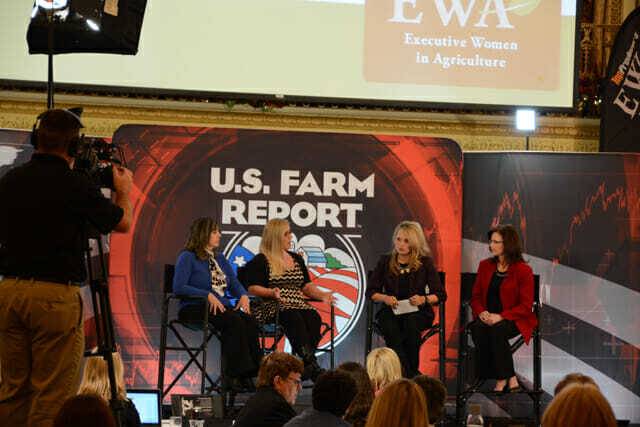
    Julianne Johnston, digital managing editor for Pro Farmer, didn’t realize how unique it was being a female in the ag commodity world was until she spoke at Farm JournaI’s Executive Women in Ag (EWA) conference five years ago.

    “I realized I was in a male-dominated field, but I didn’t think it was a big deal until a young lady came up to me and said she was excited to finally meet me because she’s been following my career,” says Julianne. “That shocked me but also made me realize how important mentoring – even from a distance – truly is. The women who attend EWA are eager to learn and ask amazing questions. The excitement from that event is hard to explain, but it energizes me.”

    Naomi Blohm of Stewart- Peterson; Angie Setzer of Citizens LLC; Tyne Morgan, host of “U.S. Farm Report”; and Julianne Johnston, digital managing editor for “Pro Farmer”; take the stage at Farm Journal’s Executive Women in Ag.” Photo courtesy of AgWeb.com
    Naomi Blohm of Stewart- Peterson; Angie Setzer of Citizens LLC; Tyne Morgan, host of “U.S. Farm Report”; and Julianne Johnston, digital managing editor for “Pro Farmer”; take the stage at Farm Journal’s Executive Women in Ag.”
    Photo courtesy of AgWeb.com

    Each year Julianne has been part of a female roundtable during EWA for a live taping of “U.S. Farm Report” that also includes Naomi Blohm of Stewart-Peterson and Angie Setzer of Citizens LLC. J views her fellow roundtable members as friends rather than competitors. They challenge and encourage once another because they’re all professionals and mothers.

    In fact, surrounding herself with positive role models has been key to Julianne’s success.

    “Early in my career I was focused on learning as much as I could from the established Pro Farmer editors. At the same time, I was newly married. Not long after that, we were starting a family,” says Julianne. “It’s a good thing I was raised by a hard-working farmer, because I look back and realize I didn’t know anything different than working hard and juggling everything I was blessed with.

    I remember a moment when I had a baby in one arm, was on a press conference call with Senator Grassley, and was on deadline for on a story. I hadn’t yet had time to shower for the day when my doorbell rang. It was then I realized I had hit maximum capacity!”

    Fortunately, Julianne was part of a corporate culture that allowed her to shift jobs after her second daughter was born. She worked fulltime from home for AgWeb.com when it launched in 2000.

    “It was exciting to be the first and only editor for AgWeb.com when it launched. I was on my own very and it was make it or break it time,” says Julianne. “As the growing season began, I wrote a headline, ‘How are Your Crops?’ hoping to get a few emails that would generate story ideas. My inbox was quickly flooded with emails, and ‘Crop Comments’ was born!”

    Based on her 25-year career in agriculture, Julianne offers this advice to young FarmHers:

    1. “Don’t let fear keep you from following your dreams! On the other side of fear is freedom from fear. We all must face our fears at some point if we want to conquer them, so my advice is to be prepared. When I attended Iowa State, just 25% of the students in the College of Ag were female. Now it’s split evenly, as it should be, and young women should find that encouraging

    Julianne Johnston, pictured here presenting at the 1983 Iowa State Fair, says her involvement in 4-H and FFA provided a baseline for her career. “My mom made me practice in front of a mirror. That was good advice! By the time I joined FFA in high school I wasn’t intimidated by the process of putting a speech together. Obviously, that laid a lot of the groundwork for my career.”
    Julianne Johnston, pictured here presenting at the 1983 Iowa State Fair, says her involvement in 4-H and FFA provided a baseline for her career. “My mom made me practice in front of a mirror. That was good advice! By the time I joined FFA in high school I wasn’t intimidated by the process of putting a speech together. Obviously, that laid a lot of the groundwork for my career.”

    2. Surround yourself with good people. Form your tribes early in your career. Having strong female role models has made all the difference in the world. It reassured me that a career, in whatever field I wanted, was possible. Make friends with people who will cheer you on, and choose your spouse wisely. I’m blessed with a supportive husband. He wants the best for me and I want the best for him. My sister-in-law Linda Haywood, who was one of the first female ag instructors in Iowa, made sure my speeches for FFA competitions were written and practiced. I remember having long conversations at my county fair with Annette Sweeney, who later became the first female Iowa House Ag Committee chair. Annette made me feel special because she saw something in me. And I’m forever grateful to Carol Balvanz, who’s now with the Iowa Soybean Association, because she gave me my first “real” ag communications job at the Iowa Cattlemen’s Association. I have stayed connected with these women through my career and am grateful for the time they have spent mentoring and encouraging me.

    4H and FFA also taught me the importance of networking. I leaned to meet new people. That’s one area that I hear from young people they don’t look forward to, but it’s so important. I enjoy talking to young professionals about their education, career and goals. I enjoy networking with farmers, women in ag, people in the commodity world and ag communicators.”

    3. Be open to trying new things and honing new skills. In my 40s, I have learned the importance of being adaptable and learning new tricks. I’ve been part of several website redesigns and builds and have enjoyed the challenge of learning new technology. You must remain adaptable to maintain a presence in the digital world. Because technology is important to all of agriculture, I believe it’s important to watch trends and to learn continually.”


    Team Latham

    December 26, 2016
    Agriculture, Industry News
  • Latham Hi‑Tech Seeds

    Happy Holidays from Latham Hi‑Tech Seeds!

    Social Media Post 2016

    social-media-post-2016

    December 25, 2016
    Agriculture, Industry News
  • Latham Hi‑Tech Seeds

    Give Back Now and Always

    Larry Volunteering
    Larry taking part of a farmer panel that shared bits of wisdom to the ISU Corn Growers Association. This ISU Association began to immerse students in the real-world issues that they will face when they graduate from college.
    Larry taking part of a farmer panel that shared bits of wisdom to the ISU Corn Growers Association. This ISU Association began to immerse students in the real-world issues that they will face when they graduate from college.

    Let’s talk passion! No not the kind in romance novels, although some of that is desirable. I want to talk about having passion in your life to give it meaning.

    What are you passionate about? I could do a Top 10 list here again, but my passions are not what I want to focus on. Some of us have too many, and I will readily admit to my addiction. It’s difficult for me to say “no” when I’m asked to serve on a committee.

    Last Sunday my church, which is a small country church, decided to call off our Sunday service due to weather. Minus 20 degrees would be too dangerous for some of our members. Instead, Janice and I watched a service broadcast by a former minister of ours. The topic of his sermon was “passions.”

    I’ll admit that our slow Internet connection made it difficult for me to keep my attention focused on the church broadcast, so I found my mind wandering. (The reminds me… did you know that the average adult attention span is now eight seconds? We have a shorter attention span than the notoriously unfocused goldfish!)

    As my mind wandered off the sermon to a related topic, I started thinking many people could use more passion in their life. Farmers are passionate about their soils, their animals and their crops. But we’re even more passionate about our communities! Active residents contribute to the strength of our schools, the wellbeing of our kids, and the prosperity of our towns.  

    Volunteering – freely giving of our time and talents – in all shapes strengthens our communities, unites people, and provides us with valuable experiences. I’m very passionate about all the organizations that I volunteer with. It’s what makes our communities our hometowns. 

    One thing I have noticed is that it’s getting very difficult to find volunteers. People are so busy with their jobs, kids’ activities and other responsibilities that they’re using it as an excuse to not get involved with their church, their school board, commodity organizations or local civic groups. No wonder chronic loneliness is a modern-day epidemic!

    Scientific research shows us that we are hard-wired to give. “When we give to others, it makes us feel better. With the release of more endorphins, we become happier and our immunity even gets a boost,” writes Maria Shriver in a blog post entitled, “5 Important Reasons To Give Back This Holiday Season (& Always).”

    To be a robust society, we need people with passion. Whether it’s putting together the local little league ball team or being on the local political county central committee, get involved! The more you give, the more you get back. People who lead from their heart are more joyful and motivated. If you’re involved with the local 4-H club or Girl Scout troop, you will enjoy it more if you put more effort into it. And your passion will make that group all the better!

    Passions + Action = Purposeful Life

    We need to get away from awarding every child with a participation ribbon and start teaching our kids the satisfaction that comes from putting passion into whatever our activity is. Find your passion, and go for the trophy!


    Larry Sailer, Musings of a Pig Farmer

    December 20, 2016
    Agriculture, Industry News
Previous Page
1 … 15 16 17 18 19 … 95
Next Page

Latham Hi‑Tech Seeds

131 180th Street | Alexander, IA 50420

(641) 692-3258

SIGNUP FOR OUR NEWSLETTER
  • Contact
  • Legal
  • Seedware Login
  • Latham Gear

© 2026 Latham Hi‑Tech Seeds. All rights reserved. | Privacy Policy

Latham® Hi-Tech Seeds is a trademark of M.S. Technologies, L.L.C., 103 Avenue D, West Point, IA 52656.