President’s Day: a Celebration of American Agriculture
While many government offices, financial institutions and schools close annually on the third Monday of February, President’s Day seems to get little attention. Since this holiday began as a way to honor the life and work of our first U.S. president, it seems only fitting today on TheFieldPosition to highlight some of George Washington’s contributions to agriculture.
Washington was called the “foremost farmer.”He began keeping records of his planting activities as early as 1760. In fact, precise records was one of his first steps on the path to agricultural improvement and innovation. Washington believed America should become a “granary to the world,” so he was interested in improving productivity. He pioneered many aspects of farming including advanced crop rotations, the use of fertilizers, crop experimentation, and farm equipment.
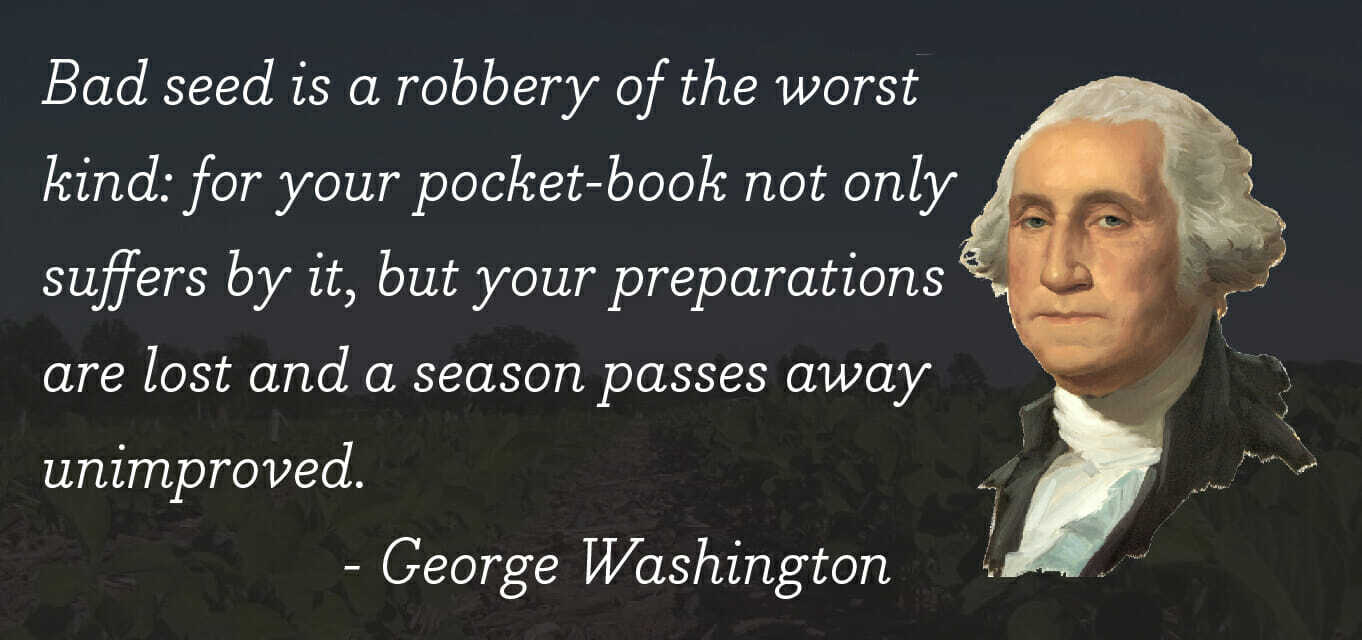
“Bad seed is robbery of the worst kind for your pocketbook not only suffers, but your preparations are lost and a season passes away unimproved,” said Washington.
At Latham Hi‑Tech Seeds, we find this particular quote by Washington to be especially fitting for our business. We understand the hard work and hope that goes into the ground with each new crop year. As a third generation family-owned business – founded on what is today an Iowa Century farm – we understand the desire to create a legacy for future generations.
We’re proud to carry on the tradition of producing quality seed, which was started in 1947 by our founder Willard Latham. In fact, seed production is something we take so seriously that the word “quality” is stamped on every bag of Latham® soybeans. Our hands-on production process allows for less handling, which leads to higher germination rates. Be assured there’s quality in the bag when you open a bag from Latham!
As vice president of American Seed Trade Association’s (ASTA) North Central region, I was invited to speak yesterday during the Iowa Seed Association’s annual meeting in Des Moines. This was somewhat of a daunting task since I was asked to address my industry colleagues about issues that ultimately affect everyone involved with agriculture.
Fortunately, I was joined on stage by ASTA Vice President of Government and Regulatory Affairs Jane DeMarchi. Jane gave a federal update on a vast number of topics including food safety, intellectual property rights, seed testing and biotech. She then ended our presentation with this call to action:
Legislative Advocacy – Become a Seed Advocate
Regulatory Advocacy – Be a good steward
Public Opinion Advocacy – Listen and learn how to respond
Advocates are needed for the seed industry, so we can continue to access the seeds that make today’s farmers more productive and efficient than ever before. As Annie Dee writes in a blog for Common Ground, “Make Food Choices Based on Facts Not Fear.” She goes onto to write:
On our family farm, for instance, we use varieties of biotech-enhanced corn that are resistant to a common Alabama pest called the southwestern corn borer. Similar varieties help farmers manage pests, diseases and environmental stresses in soybeans, corn and many other crops. These varieties help us increase our yields and provide an abundant supply of food, feed, fuel and fiber to the world.
The use of GMO crops has also reduced the number of chemical applications needed to produce the crop. This is beneficial for the environment because we’re conserving fuel, reducing emissions from our tractors as well as reducing the amount of actual chemicals being applied. Overall, our carbon footprint is being reduced because of GMOs.
There are numerous reasons for using GMOs, but the final one I’ll mention is because I know the seeds went through a rigorous safety-approval process. Not one, not two, but three government entities — the U.S. Department of Agriculture, the U.S. Food and Drug Administration and the Environmental Protection Agency — work together to inspect and approve each and every genetically altered seed variety and plant brought to the market. This process is thorough and time-intensive, lasting between 10-15 years. What is really reassuring is that in the 12-plus years modern biotech crops have been commercially grown, there has not been a single ecosystem disrupted or person made ill.
Other activist groups are pushing to label GMO foods. A compulsory GM label would encourage consumers to think that GM foods should be avoided, writes Cass R. Sunstein, the Robert Walmsley university professor at Harvard Law School and “Bloomberg View”columnist. He also writes:
The American Medical Association has similarly proclaimed, “The main conclusion to be drawn from the efforts of more than 130 research projects, covering a period of more than 25 years of research and involving more than 500 independent research groups, is that biotechnology, and in particular GMOs, are not per se more risky than e.g. conventional plant breeding technologies.”
It’s important for farmers and seed company executives alike to be good stewardship of not only the land but of the technologies. It’s also our responsibility to listen to the public and learn how to respond to their concerns.
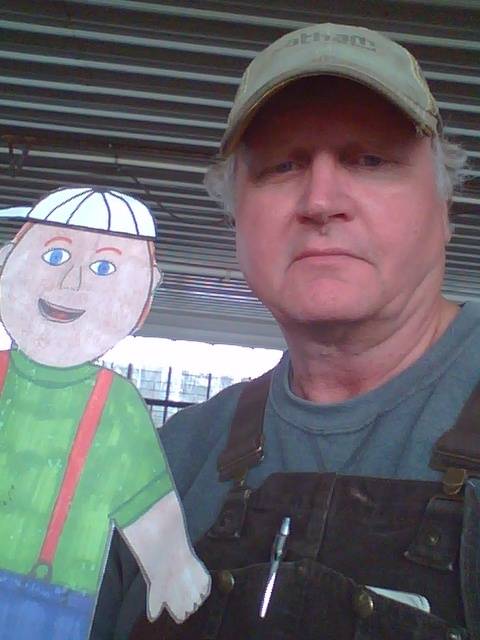
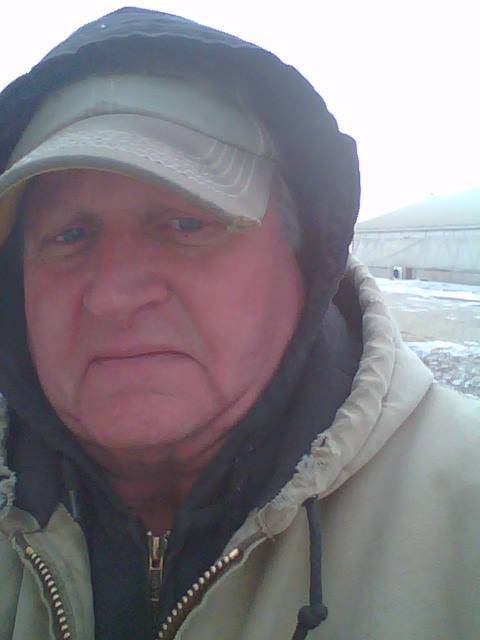
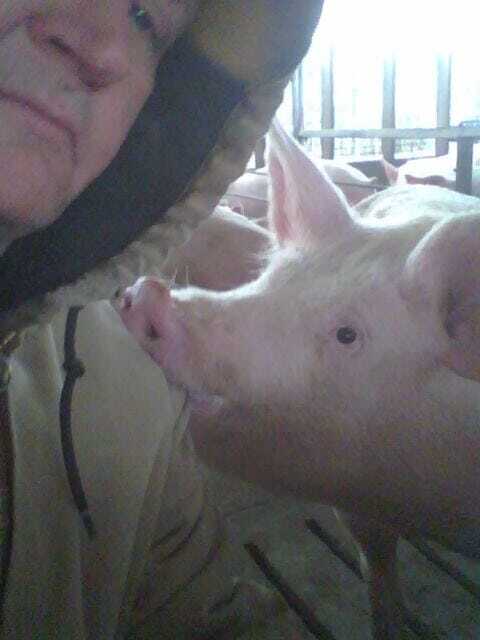
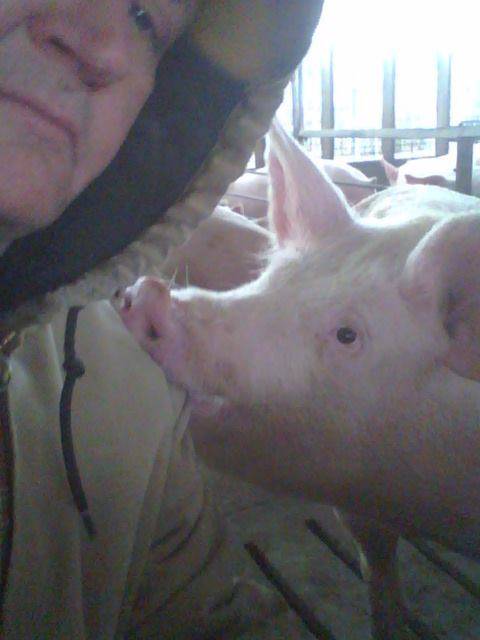
Since farmer selfies (#felfies) are all the rage right now, we couldn’t resist snapping one while we were loading out hogs for market.
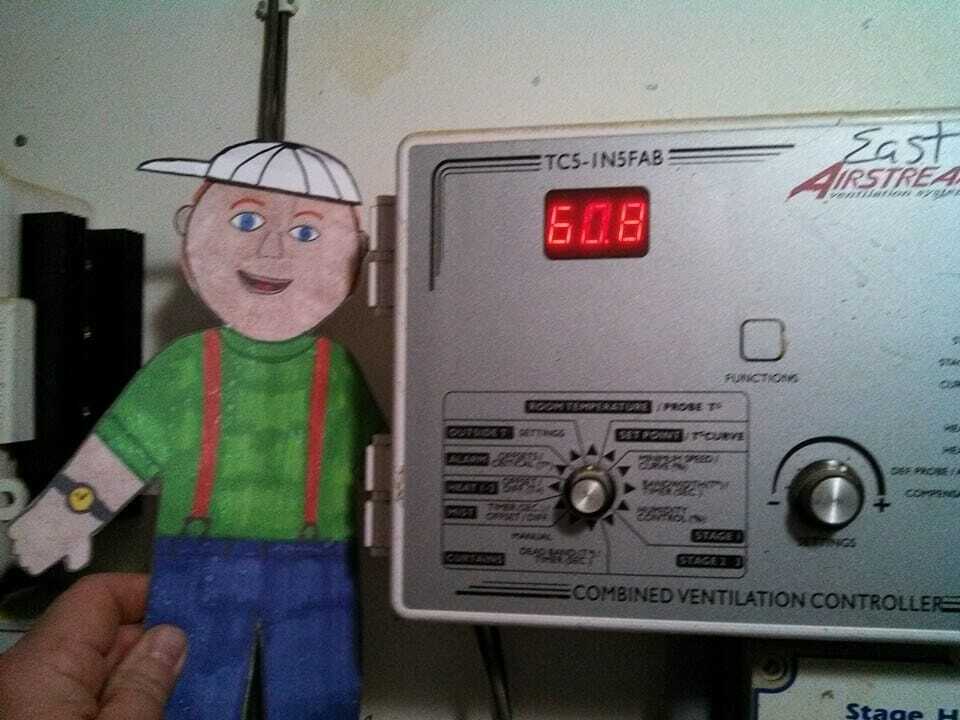
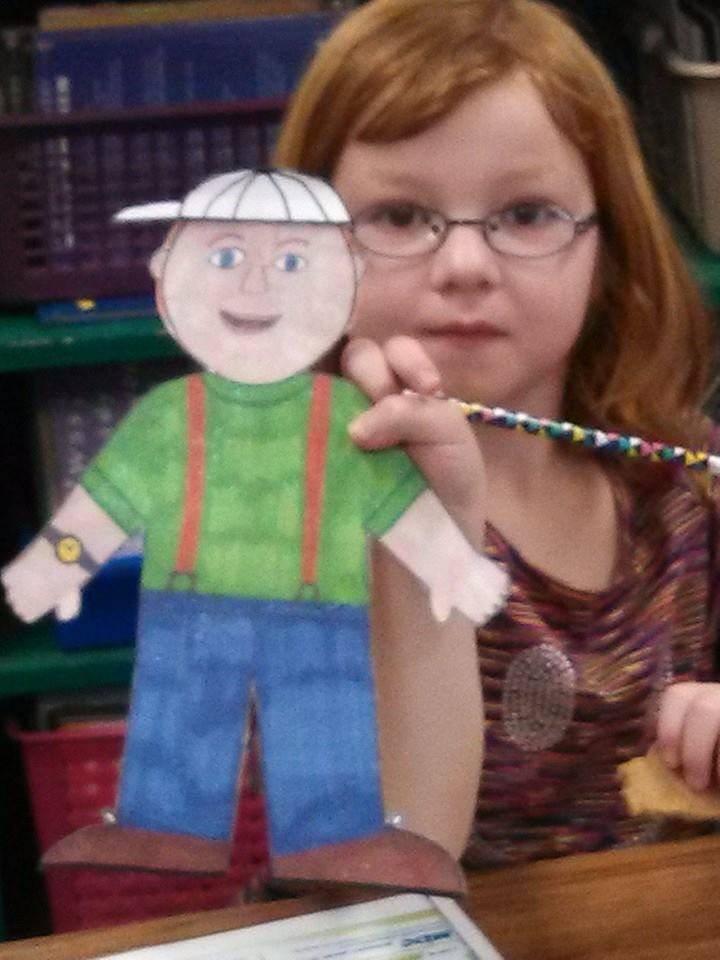
Move over, Flat Stanley! There’s a new kid in the country, and he’s been enjoying daily adventures on a North Central Iowa Farm for nearly one month.
Flat Aggie came to me Jan. 13 from a classroom in Southeast Kansas at the request of Nicole Small, who blogs at Tales of a Kansas Farm Mom. She asked me to show Flat Aggie my farming operation since crops and even livestock operations vary by state. Getting to know other kids from different farming operations and schools around the country is a great experience and learning opportunity.
For new pigs, the thermostat inside the barn is set at 80 degrees. Because it was well below zero outside, the barn didn’t warm up to temperature until the pigs were inside. Pigs give off a huge amount of heat and moisture. That’s why we need fans running at all times to exhaust this moisture.
What a great experience for Aggie to learn just what it takes to grow food! Aggie and I have had a lot of fun, but we’ve also had some challenges due inclement weather. We did chores inside a warm hog barn (thermostat is set at 80 degrees), and talked about how much better it felt to be out of the negative 40- degree wind chill that stung our faces as we ran from the truck to the barn. I told Aggie that years ago I did chores outside, and he couldn’t believe we used to raise our pigs outdoors in this harsh weather.
Aggie has visited me at a time when there was so much going on with my operation. During a snowstorm, we loaded big pigs into semi trailers for market. Then we cleaned out the barns, disinfected them and made a few repairs before new small pigs were delivered.
Flat Aggie also learned that winter is the meeting season. He went with me to Des Moines, our capitol city, for the Iowa Pork Congress and to Speaker Corps training at the Iowa Farm Bureau Federation’s office. Aggie also joined me on visits to several North Central Iowa schools as part of Ag in the Classroom. Along with the school children, Aggie learned about dairy operations and how to make butter. He also learned the difference between comic book animals and real animals.
Flat Aggie visited West Fork Schools in Sheffield to talk about where milk comes from and how it’s used to make butter
It’s so important for our kids – and I don’t mean just farm kids – to understand how food is raised. Every day the news is filled with examples of how people, who are disconnected from food production, are pushing for the control of the food industry. Just last week PETA distributed a pamphlet entitled, “A Cow’s Life,” at Calabash Elementary school in Woodland Hills, California. The comic book drawing of a cow on the cover was harmless enough, but the illustrations of mutilated cows inside the publication were so horrendous that some outraged parents are considering legal action.
People have the right to know how their food is grown but they deserve the facts, not some propaganda spread by an activist group trying to scare them away from one type of food. Americans are blessed to have an abundance of good, nutritious food available at affordable prices. We all have the right to choose the food we want, but food choices should be based on facts not fear.
The need is great to educate consumers about where their food comes from and how it is produced. I’m seriously concerned about ag illiteracy, a so I’m doing things like hosting Flat Aggie, blogging and speaking when invited. A couple years ago, I spoke at a 140 conference in Des Moines about our Ag in the Classroom program. A young man, who grew up in Chicago, asked why we didn’t have programs like this in Chicago. He claimed to not know where meat came from until he was 18 years old.
It takes a real effort for a busy farmer to leave his/her farm and drive to a school or civic group meeting – or to a 140 conference – where people can listen, ask questions and share experiences. But if we don’t tell agriculture’s story, who will?
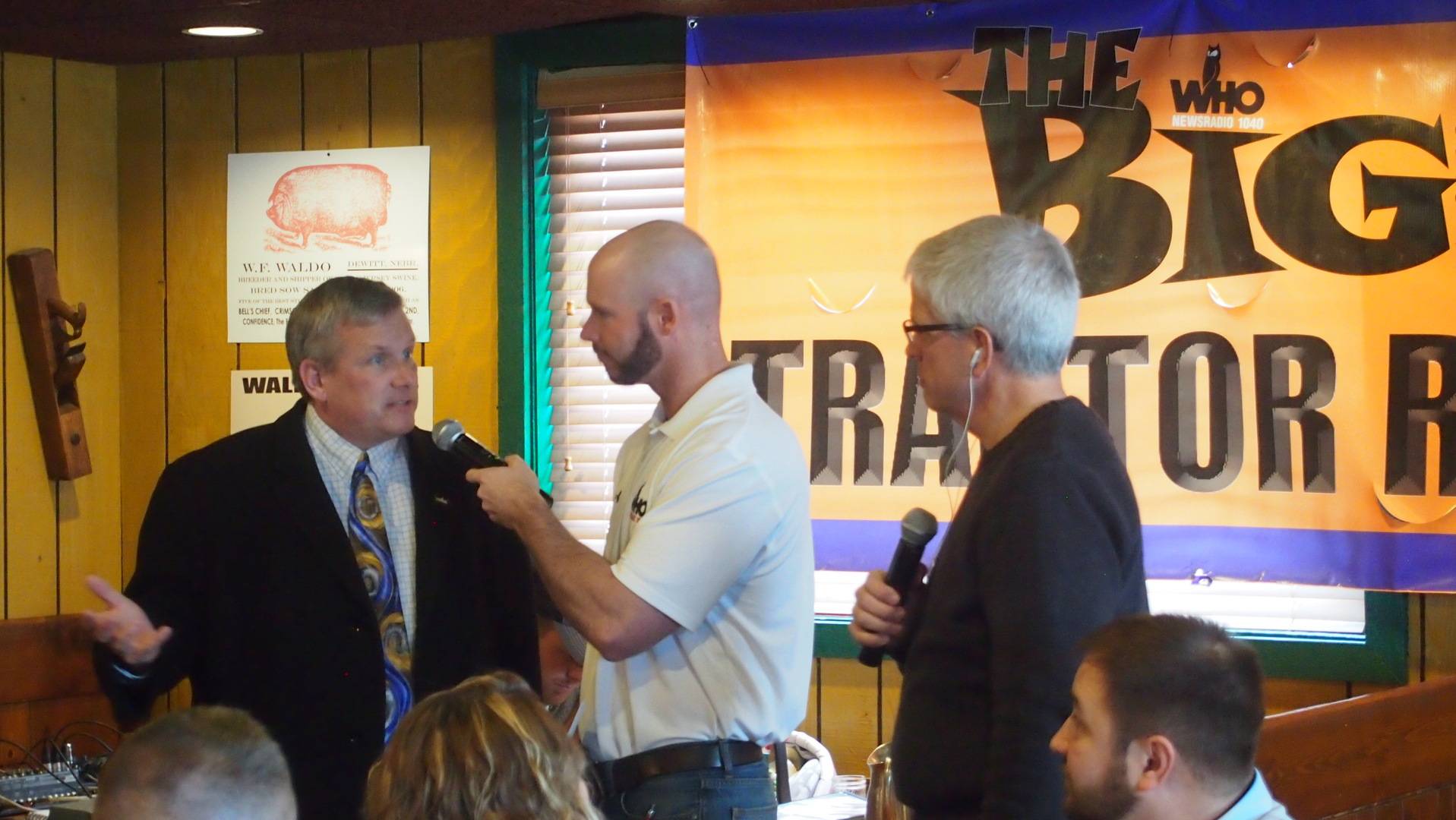
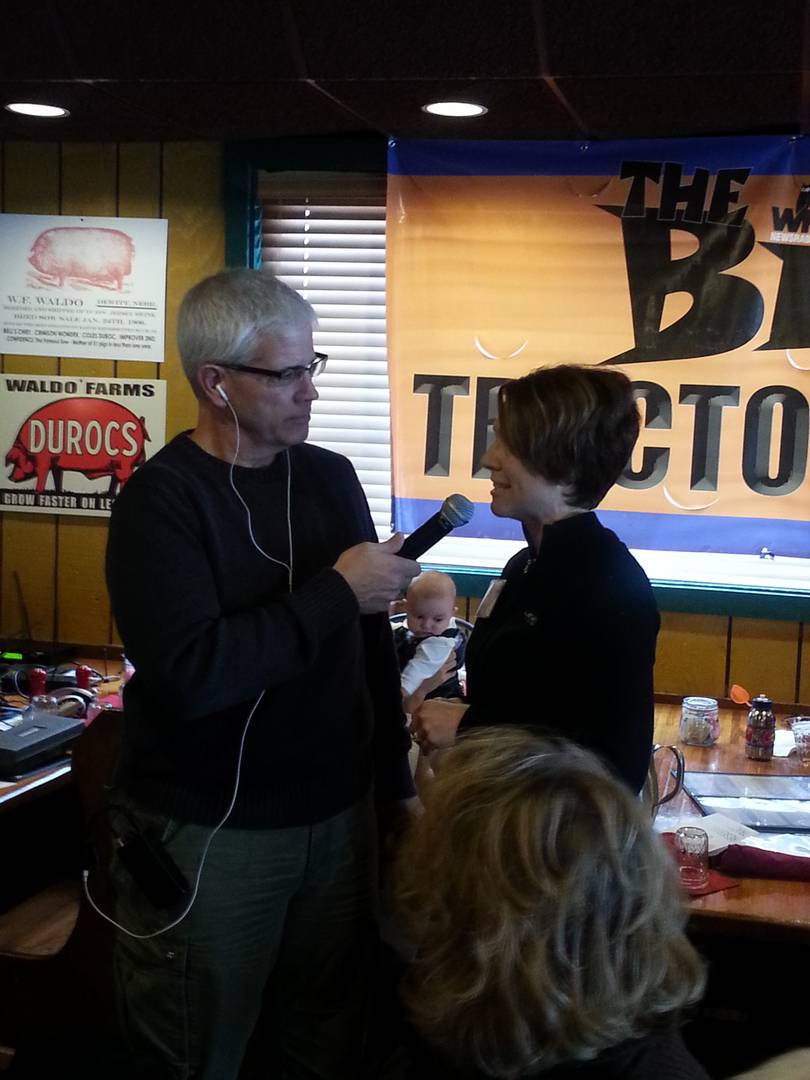
Join Iowa Secretary of Agriculture Bill Northey on WHO Radio’s 2014 Tractor Ride
March to the beat of the drums and sound the 76 trombones… 1040 WHO Radio has announced its 18th Annual Tractor Ride will be based out of historic River City! Latham Hi‑Tech Seeds is a proud sponsor, so make plans to join us June 22-25 as we traverse the beautiful North Iowa countryside.
Latham Hi‑Tech Seeds will host lunch June 25 for 2014 Tractor Ride participants
When visiting North Iowa, be sure to include a visit to Latham Hi‑Tech Seeds. We’re looking forward to hosting lunch Wednesday, June 25, on our family’s Century Farm which now serves as our company headquarters. Stay tuned to the Tractor Ride blog for more announcements and updates. In the meantime, click here for more information about local accommodations including hotels and camping.
Farmers gathered inside the Iowa Machine Shed Restaurant last Friday for the route announcement of the 2014 Tractor Ride
Last Sunday was a big day, beginning with our local church service and ending with The Big Game. (The Super Bowl showcased good defense, and I like defense. I also enjoyed watching many of the TV commercials. While none of them quite struck an emotional cord nationwide like last year’s God Made a Farmer spot, America’s farmers and ranchers were well represented on a regional level by the Blythe family of Kansas in Begins with a Farmer – A Mother’s Love.
Farming and ranching is certainly a labor of love. It’s also a cyclical business: Good prices, bad prices. Good weather, bad weather. The Polar Vortex and seasonably cold temperatures have created a few more challenges for Midwest farmers, especially livestock producers, this season.
Farmers and ranchers in the West are plagued with problems of their own as zero rain fell in many areas throughout the entire month of January, which is typically California’s wettest month of the year. The drought in southern California is turning into one of the worst in history. No wonder my friend Celeste Settrini on Sunday spearheaded the event, Harvesting Faith, a day of reflection, prayer and fasting.
During our local church service on Sunday, we lifted up the West in prayer and asked God to bring rain to drought-stricken areas. That’s why it seemed, at first, to be complete irony when Pastor Scott delivered a sermon about job happiness. He reminded us that Adam and Eve’s lives in the Garden of Eden were meant to be joyful. Before the serpent and apple, they were happy taking care of God’s creations.
Similarly, sin has caused all of difficulties. Thinking of difficulties makes me think of farming. (Yes, my mind tends to wander during sermons!) Through all of the hardships and risk, there are still folks like me who enjoy farming. I love watching small pigs when they first come into my hog barns. They scuffle and jockey for position, making a new pecking order. I watch for a sick pig, treat it with the right medicine because “it’s the right thing to do,” and am happy when it makes a full recovery. I enjoy my pigs, even watching Houdini, who jumps out of her pen every day.
I love smells in the spring like freshly planted ground and even the aroma of the natural fertilizer my pigs make, which gets recycled back into the ground to grow feed the pigs will eat and then promptly turn back into natural fertilizer again.
I love watching crops grow from the small seeds I plant in the ground. I wonder how such a tender little plant has the power to break through a crusted soil after a hard rain. Last summer I was amazed how six-foot-tall corn could stand back up after getting pounded by a heavy wind that beat it flat to the ground.
I also enjoy watching wildlife. I see deer play in the field as I combine. Bald eagles have made a great come back, and I enjoy watching them circle overhead as I work in the field and wonder if my little dog, Tucker, is safe outside the tractor.
I have watched baby colts be born after what seemed like an eternity. I have watched my young son’s pet goat get killed by the neighbor’s dog and felt my heart break by from his anguish. But I also experienced the joy of watching my kids grow up to understand how and why we farm; they learned to understand the cycles of life and the meaning of hard work. I enjoy my grandkids’ long stays on the farm where they, too, enjoy playing with livestock.
I have operated new, big machinery, when times were good. I have farmed with junk machinery discarded by other farmers. And I must admit, I’ve been happier to get my farming done with the old junk than I was with new machinery during good times. Tough times can make you appreciate what you have gone through. Sometimes the toughest lessons are the best ones to learn!
While many other occupations can be very fulfilling, I’m glad to be a farmer. The job of growing food, fuel and fiber just takes me back to thinking of the Bible, creation and that Garden of Eden. Yes, there’s still joy in living!
“I love dressing up and painting my nails, but when need be, I can wrestle a calf or fix fence.” — Celeste Settrini, 4th generation rancher from Salinas, Calif.
California experienced its driest year on record in 2013. The New Year brought hope of much needed moisture, but those hopes have diminished with each passing day.
“In 135 years of record-keeping, this has been the driest,” said climatologist Bill Patzert of NASA’s Jet Propulsion Laboratory in a January 27 VOA report. “Since July 1, we’ve had less than an inch of rain. In January, which is historically our wettest month, we’ve had zero rainfall.”
So what’s a rancher to do when pastures turn brown and water supplies dry up? Celeste Settrini, a fourth generation rancher from Salinas, California, is drawing on the strength of those who have gone before her. Her ancestors moved to southern California 100 years ago, started dairying and then built a commercial Hereford herd. When Celeste’s father took over the family ranch, he switched to Red Angus beef.
“We’ve spent years building our herd and investing in genetics,” says Celeste, who lives in the same house her grandfather called home. Her father passed away suddenly last June, so now she and her brother manage the cow herd while their mother does the books. “Ranching is our legacy, and we’re committed to it.”
In an interview January 28 with Trent Loos on Rural Route Radio, Celeste described the dire situation facing farmers and ranchers in the west.
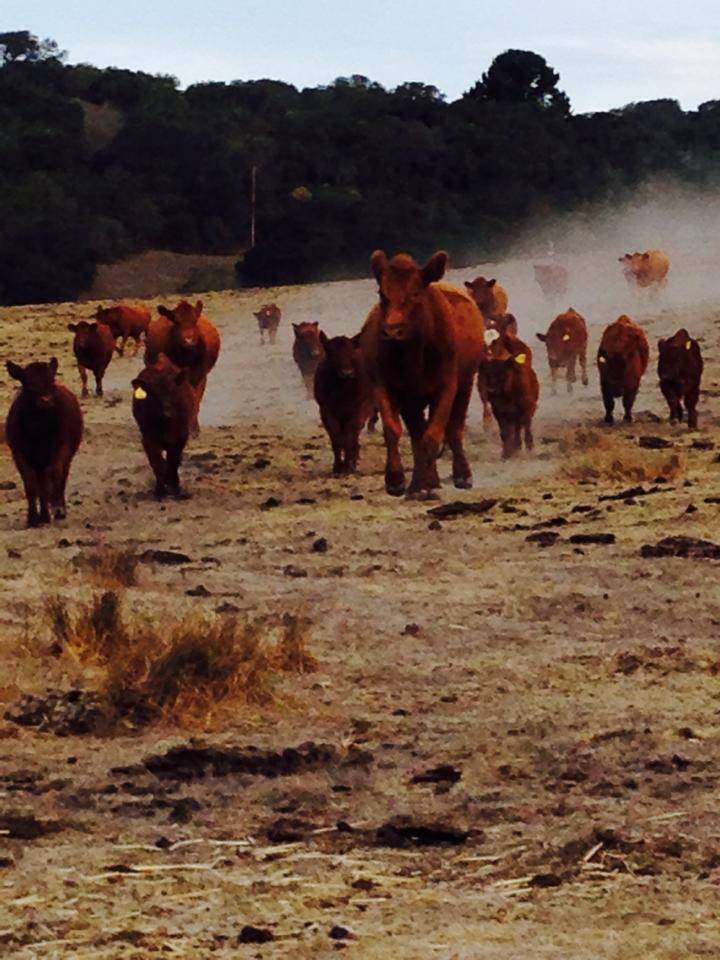
“… I was throwing hay off the back of our truck and saw our cows coming over the hill,” she says. “It was so warm out, and there was so much dust following them. I just sat there and cried because I’m so anxious and so worried about this drought we’re going through.”
That day was a turning point for Celeste. She realized it was time to do something. With encouragement from a friend, Celeste decided to share her faith and invite others to ask God in unity for help. She created an event called Harvesting Faith – a day of reflection, prayer and fasting and scheduled it for Sunday, February 2. She asked all of her friends on social media to pull together to support friends in need by praying for rain.
Winter is normally the time that California ranchers rely on the rain to turn the grass green and restock their water supplies. Without rain, there’s no grass for the cattle. Many ranchers are purchasing hay, and some fear their production costs will triple.
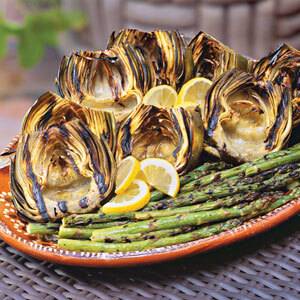
Photo Source: MyRecipes.com Photo: Ralph Anderson; Styling: Mindi Shapiro Levine
California ranchers won’t be the only ones feeling the economic impact of this drought, however. Drought in Southern California could impact world food prices as this area produces 400 different crops. Volumes of fruits, vegetables and cattle are sold throughout the U.S., as well as exported.
This week I was fortunate enough to get to taste test a few of this region’s specialties firsthand during a trip to southern California. Celeste introduced me to grilled artichoke in Monterey, and I taste-tested some of state’s freshest extra virgin olive oils and artisan vinegars at the Quail and Olive in Carmel Valley. Celeste says she LOVES grilled cauliflower (which I’m looking forward to trying soon) and believes chunky blue cheese dip makes fresh vegetables all the more enjoyable.
Because strawberries also are grown on the Settrini Ranch, today Celeste is sharing with us one of her “guilty pleasures.” She says this strawberry treat is simple but heavenly. Try her recipe below or click on the links above to add some new flavors to your Super Bowl Party. If you chose to fast as part of the Harvesting Faith event this Sunday, keep these recipes in mind for another day soon to enjoy some of California’s finest produce.
Me, a foodie? I almost spewed my coffee as I read that one of my friends had called me a “foodie” on Facebook. After all, I’m an agriculturist! I’m pro-GMOs but I’m not anti-organic. I believe in food choice. I also support locally grown foods. I support all types of animal agriculture and believe farmers should choose the practices that best fit their operation. I want to help children understand where their food comes from and how it’s produced. I want to plant my own veggies and harvest my own pumpkin crop.
Then I looked up the definition online and realized, indeed, I resemble a foodie!
Culinary tourism is something I’d love to pursue, beyond taking a pie making class from the American Gothic Pie Lady and enjoying a cooking demonstration in Branson. I’ve been known to hike for miles just to savor the popovers at Jordan Creek Pond House in Acadia National Park, and I made my husband circle the same block in Key West until – at last – we found the Blonde Giraffe for Key Lime Pie. I’ve also been known to reroute while traveling to visit customers just so I can try another one of Iowa’s Best Burgers, and I’m a little obsessed with posting new recipes each Friday on TheFieldPosition.com.
Admittedly, I really appreciate good food and good drinks. I believe calories are a terrible thing to waste. Since we all need to eat to live, why shouldn’t we enjoy our food?
Yes, I might just be a foodie! But I’m not alone. Consumer surveys shows that Iowans are becoming increasingly interested in the foods they serve – and more and more Iowans are following a trend to produce more home cooked meals. Interest in cooking, baking and canning classes is on the rise! Instead of being called “old fashioned,” now me and all of my cooking / farmer friends are trendy!
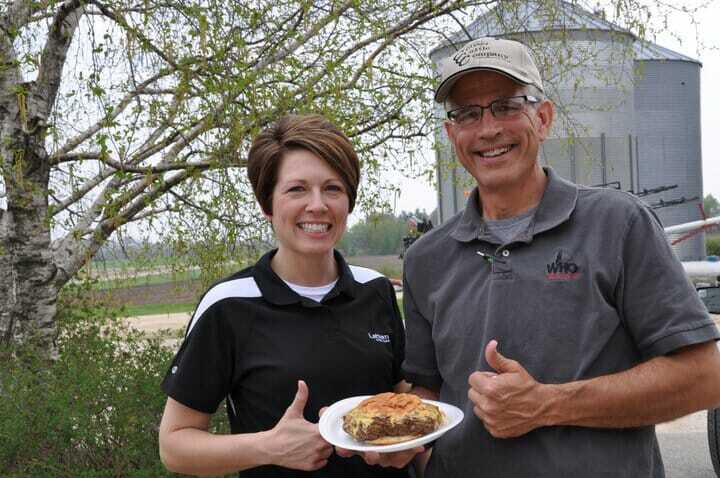
Agriculture is trendy… And that’s cause for celebration! It’s also just one more reason that Latham Hi‑Tech Seeds is hosting a virtual Super Bowl Party from now through Sunday at kickoff. Have a little fun on another cold Midwest winter’s day… Join us for Felfies, Foodies & Football! Click here for contest details.
As I write this, North Central Iowa is experiencing absolutely frigid conditions again! The sunshine is very deceiving. Once I step outside a warm building, the raw wind gives me an instant ice cream-headache. This winter’s unseasonably cold temps makes me believe in my hog barns more and more!
With a true temp of -9 F & wind chills nearing 30 below, this weather isn’t fit for man nor beast!
Not everyone believes hogs should be raised indoors. Misperceptions run rampant, especially on the Internet. That’s one reason I’m so gung ho about advocating. Others don’t know what we’re experiencing unless we share it with them, so I post #felfies of myself while working outdoors and videos of my hogs all toasty warm in their barns.
People involved with agriculture must explain why we farm the way we do because just doing it right doesn’t cut it anymore. If we’re not careful, farmers will be legislated into farming the way a small minority of well-fed people think it should be done.
“We’re allowing 5% of consumers who are very vocal to appear to represent the majority,” radio personality Trent Loos said last week during a presentation at the Iowa Pork Congress. “Very clearly, there are people who have questions. And we should be as transparent as possible… But we need to lead and drive that discussion.”
Trent did a great job firing up the crowd, encouraging pork producers to speak out and get involved. So, the next day I expected to see a nice crowd of farmers wanting to learn how to communicate with consumers. But I was greatly disappointed! More than 200 people listened to Trent; fewer than 10 listened to the social media class.
Ag folks want to listen to Trent, but Trent cannot tell consumers about their operations! Each farmer, each rancher must share how he or she farms and why. The non-farming grocery shopper wants to hear from a farmer who raises their food. The foodie mommy wants and needs to hear from unpaid #agvocates!
Operation Main Street (OMS) a National Pork Board Speaker Corps, formed in 2005 because there was a need for farmers to truthfully talk with consumers about how and why we have made changes to our farms. The OMS program even started to address college classes and groups of dietitians and county commissioners. I’ve been active in OMS for about 8 years, but last week was the first time I was asked to be one of the teachers for a culinary class. Besides sharing tips for cooking pork, I’ll talk about how many people live on our planet.
Did you know 50 percent of the world’s 7 billion try to survive on $2 a day? Three and a half billion people live on $730 per year… and that humbles me greatly!
Unfortunately, this week’s Operation Main Street training session was postponed due to inclement weather. I will look forward to presenting these stats and sharing my passion for advocating on the next go round.
Weather is certainly creating hardships from the Polar Vortex extending across the Midwest to the drought in California. Farmers and ranchers depend on the weather to make a living raising the food that we all take for granted.
Food is so readily available and relatively cheap that many people really do take it for granted. But 3.5 billion people worldwide do not have that luxury! More than 49 million Americans, including kids and adults, are food insecure. It’s so important that food plentiful and affordable for everyone! But, regulations only increase food costs.
We must look for regulations hiding in new legislation – not just the Farm Bill – that force costly restrictions on food and fiber producers. Talk to your elected officials about the bills they will vote on! New legislation must be read and understood. Amendments must be read and understood. Our government has become so burdensome and restrictive, that even the courts are legislating. And the back door presidential legislating by executive order seems to be unrestricted!
Farmers are passionate about what we do, but we must take that passion beyond the “choir!” Grocery shoppers, including foodie mommies, want to hear from a farmer. Consumers are increasing interested in how their food is grown, according to survey results released earlier this month.
It’s time for more farmers to jump in and advocate! I know how intimidating social media seems at first, but I promise there are resources there to guide you along the way. I’ve learned that the hardest part is taking the first step. I’ve found that the more active I’ve become, the more interest I attract from media and legislators who are interested in hearing a “real farmer’s” point of view. Think one person can’t make a difference? Think again. YOU can make a lasting impact… Agriculture needs YOU!
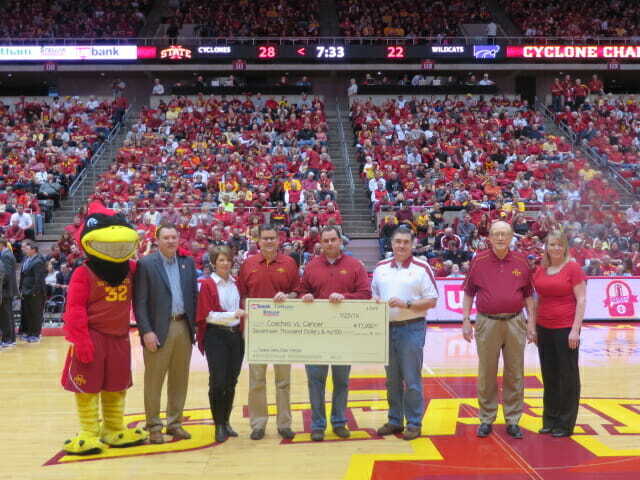
Representatives from Latham Hi‑Tech Seeds took to center court Saturday in James H. Hilton Coliseum in Ames, Iowa, as we were one of three Iowa-based companies being recognized for supporting the Cyclone Charity Stripe. This promotion raises money for every free throw the Iowa State Cyclones Men’s Basketball team makes during the 2013-14 basketball season; donations benefit the American Cancer Society through Coaches vs. Cancer.
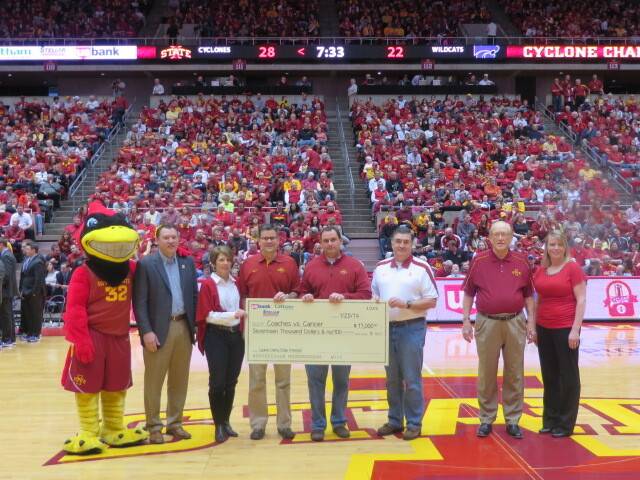
Latham Hi‑Tech Seeds is proud to support the Cyclone Charity Stripe, which raises money for Coaches vs. Cancer with every free throw the ISU Men’s Basketball team makes during the 2013-14 season
Coaches vs. Cancer evolved from a concept championed by Norm Stewart, former head coach of the University of Missouri men’s basketball program. As a cancer survivor and member of the National Association of Basketball Coaches (NABC), Coach Stewart challenged fans to pledge a dollar amount for points made by his team. The American Cancer Society and the NABC adopted that concept in 1993, transforming it into a nationwide effort “to provide help and hope to people facing cancer.”
Providing support for the American Cancer Society and helping raise awareness for cancer prevention and early detection is a cause that’s near and dear to our family. John’s mother and his paternal grandmother, Evelyn Latham, are both breast cancer survivors. John’s dad and our company’s past president, Bill Latham, is about to celebrate the four-year anniversary of his stem cell transplant.
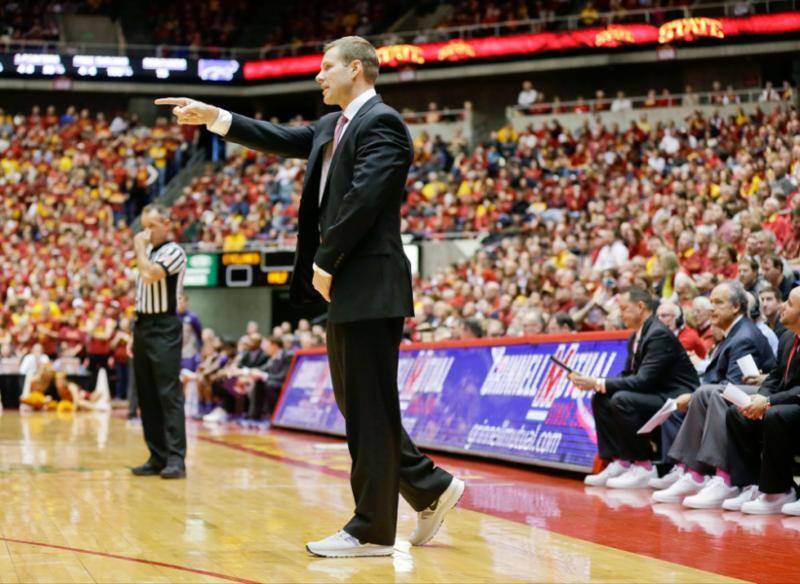
ISU Men’s Head Basketball Coach Fred Hoiberg sports tennis shoes in support of Coaches vs. Cancer during Saturday’s game in Hilton Coliseum. Iowa State defeated #22 Kansas State, 81-75.
Because we know first-hand what a gift “hope” can be, we’re glad to help support the American Cancer Society and Iowa State University’s Cyclone Charity Stripe Promotion.
Free throws this season have net $17,000 for the American Cancer Society, and points in the charity stripe helped the Cyclones defeat the Kansas State Wildcats. Now that’s what I call a “win, win situation”! Click here to see video highlights of Saturday’s game in Hilton.
Super Bowl Sunday XLVII had us reaching for a tissue and wiping our eyes as the nation was overcome with emotion when Dodge Ram’s God Made a Farmer television spot aired. That commercial, featuring a poem recited by Paul Harvey during the 1978 FFA annual convention, paid tribute to Americans farmers.
Dodge’s “Year of the Farmer” commercial made those, who tend to livestock and nurture the land, feel rightfully proud. It made those who aren’t farmers wish they had such a noble calling.
We believe farmers deserve to be in the spotlight once again, so we’re proclaiming Super Bowl 2014 as “Year of the Felfie.”Join Latham Hi‑Tech Seeds as we host a virtual Super Bowl party! Enter for a chance to win freebies by participating in Felfies, Foodies & Football:
Between now and the kickoff on Sunday, Feb. 2, take time to take a #felfie. They say a photo is worth a thousand words. In this case, it could be worth a stadium blanket and chairs! Plus, your felfie could help non-farmers gain a better understanding how their food is produced.
Speaking of food… Everyone knows the key to hosting a good party is having ample quantities of wonderful food. That’s why, beginning tomorrow, we’ll post simple yet delicious “Game Day” recipes on our company’s Facebook page. We hope you’ll join us throughout the week as we prepare for Super Bowl 2014!

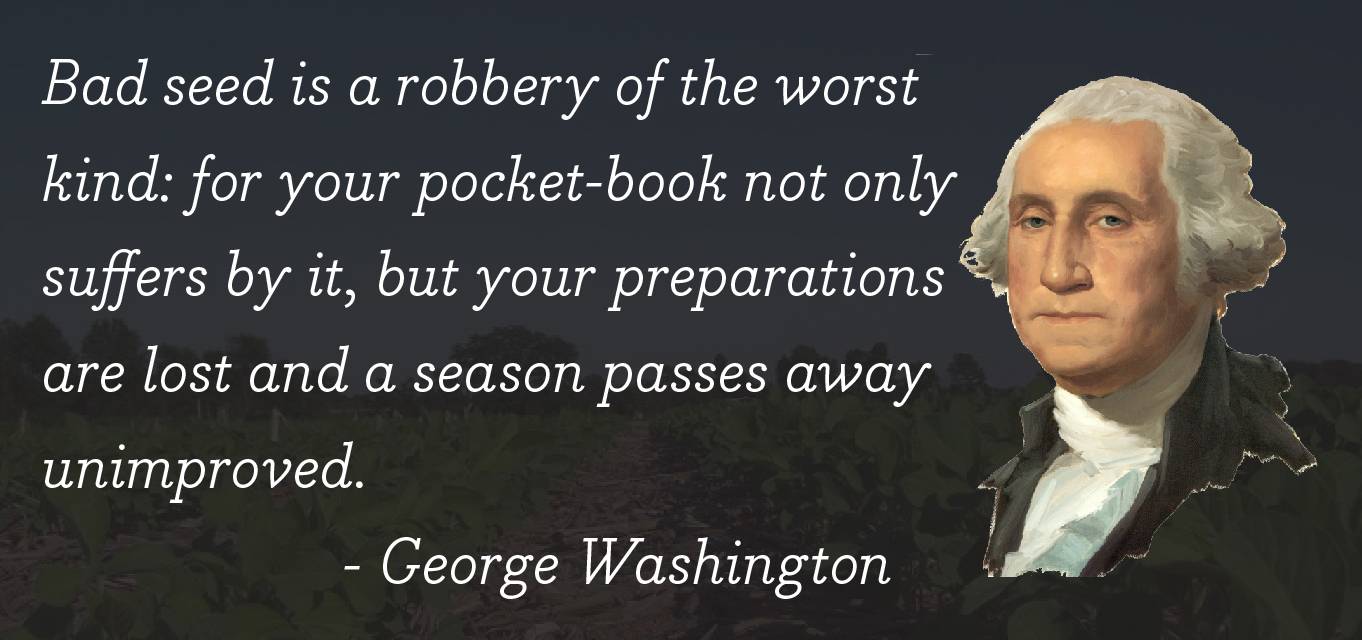 “Bad seed is robbery of the worst kind for your pocketbook not only suffers, but your preparations are lost and a season passes away unimproved,” said Washington.