Latham Hi-Tech Seeds

(641) 692-3258

  • Home
  • Performance
  • Products
    • Corn
    • Soybeans
    • Soybean Blends
    • Alfalfa
    • Corn Silage
    • Seed Guide
  • Find a Rep
  • Media
    • Blog
    • News
    • Videos
    • Podcasts
    • TECHTalk
  • About Us
    • Company History
    • Our Mission
    • Careers
    • Become a Rep
    • Sowing Seeds of Hope
  • Contact Us
  • Latham Hi‑Tech Seeds

    Farm Kids on Snowbound Days—The Cabin Fever App

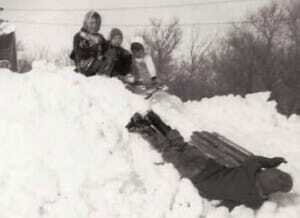
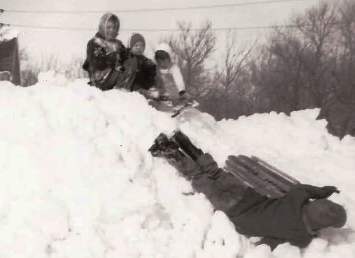
    Snow sled pic

    Guest Blog from Dan Gogerty, Communications Editor for CAST

    Dad, my uncle, and my grandparents farmed together and lived on three homesteads that were spittin’ distance from each other. The combined kid-count for the families eventually reached fourteen, so we could move like a swarm of locusts from house to house–playing in the yards, spilling kool-aid in the kitchens, and tracking in enough mud to start small indoor gardens.

    Before we were old enough to chore and drive tractors, the adults tolerated this mayhem. As Mom recalls, “On a snowbound day, you kids could wreck my house in the morning and then move on to Aunt Ruth’s place for a second shift in the afternoon.” With no video games, cartoon networks, or battery-driven toys, we built pillow forts, played hide-n-seek, and concocted games with marbles, plastic army men, and knicked-up Lincoln Logs. When cabin fever reached a certain point, the folks would relent and let us brave the snow and cold. Even in the dead of winter, a Midwest farm in the 60s could be a vibrant playground.

    (photo from dhochwender.tumblr.com)

    We might start in the yard with snowball fights, snow angel designs, and our own kamikaze version of duck-duck-goose. With Mom’s home-sewn snow suits on, we survived tumbles on the ice and wrestling matches with the dogs, but as we grew a bit older, our boundaries expanded. Red plastic saucer sleds worked well on snow drifts and short inclines, but large runner sleds gave us more speed. We’d take off down the lane, often with brothers or cousins jumping on until a sled might look like a shaky pile of logs with a boy at the bottom groaning in pain until all three or four of the bobsledders crashed in a heap.

    The creeks and pastures called us further afield even when they looked like silver arctic zones. The two streams on our farm provided a Jack London setting, and we would walk on the ice looking for muskrat trails and rare beaver dams. As in London’s famous story “To Build a Fire,” one of us would occasionally break through the ice and fill a boot with frigid water. Unlike the story’s main character, we all survived, although I’m sure we entertained the shivering victim on the fast walk home with tales of frozen fingers and amputated toes.

    Survival was tougher when we became old enough to skate and play hockey on the creek. We’d make holes in the ice for goals and the pucks were rocks, clods, or maybe a frozen “road apple” from an old cow pie on the bank. Scores were low but wet clothes and near concussions came regularly from our awkward falls and lack of skating ability.

    When cold winds started to numb our cheeks, we might seek refuge in one of the barns. Hogs and cattle provided a type of bio-heat that came from warm animal bodies and the steamy straw-manure bedding they lay on. The heat rose into the haymow where we’d make tunnels and play some type of king-on-the-hill turf war. It was a bonus if we found a nest of baby kittens and a bummer if someone crawled through a tunnel that the raccoons had used for a litter box.

    A classic winter day on the farm ended with a peel-and-pain routine. We’d peel off wet gloves, four-buckle boots, and ice-laden coveralls and then complain as our fingers and noses burned with the stinging pain of the thawing-out process. We then huddled in front of the furnace vent and got warm with the help of fresh-baked rolls. Mom knew how to cure frostbite. She also knew how to acquire some sanity on snowbound days. In an era long before smartphones, Mom had an app for kid cabin fever: it was an aperture called the front door, and she knew how to download it—you dressed the kids in warm clothing, turned the door handle, and let them access the winter wonderland that came already installed on a Midwest farm.

    Team Latham

    February 4, 2013
    Agriculture, General, Industry News
  • Latham Hi‑Tech Seeds

    Gary Bennett Retires After Nearly 28 Years

    GaryB21
    It is only the farmer who faithfully plants seeds in the spring, who reaps a harvest in the autumn. — B C Forbes

    Trips to Oregon and Alaska top the “top do” list for Gary Bennett, who retired in December after serving nearly 28 years as a research coordinator for Latham Hi‑Tech Seeds.  Then like any other Iowa farmer, he’ll look forward to spring when he can till the soil and plant the 2013 crop.

    “I’m not sure how I ever had time to work!” says Gary with his signature easygoing smile.  He’s stayed busy this past month by insulating and paneling the garage, as well as remodeling barn stalls.  He’s getting everything in order for the spring arrival of bucket calves, which his grandkids will break to lead and exhibit at the 2013 Franklin County Fair.  Then they finish out the steers and sell the beef by the quarter.  This tradition started 10 years ago when his first grandchild was old enough to show in the open class.

    “I really believe it’s important for kids to have responsibility,” says Bennett.  “Raising livestock teaches them every living thing has its purpose.  They learn the importance or completing a task and the feeling of accomplishment when a job is well done.”

    Raising livestock is something Gary has enjoyed since he was a child himself.  He grew up on a farm in Howard County where he was a member of both 4-H and the FFA.  He had the honor and pleasure of attending state and national conventions.  During his junior year of high school, he earned the Iowa Farmer degree and was also runner up to the Star Dairy Farmer.  When his kids were old enough to join 4-H, Gary served as their Northwest Franklin club leader.

    Gary and his wife, Diane, moved to Franklin County in 1975 when he accepted a position as Dairy Herd Improvement Association (DHIA) supervisor.  After working five years for DHIA, milked his own herd of dairy cows for five years before joining Latham Hi‑Tech Seeds.

    “I really enjoyed my career with the company,” says Gary.  “It was always fun to plant the new varieties and see which ones made the cut.  Technology continued to change and genetics improved – many changes happened over the years.”

    Although Gary said he’ll miss seeing his colleagues, he’s looking forward to spending more time with family.  Oldest son, Kelly and his wife, Lisa, live in Ankeny, Iowa, with their son and daughter.  Middle son, Eric, and his wife, Peggy, live in a suburb of Portland, Oregon, with their son and daughter.  Youngest daughter, Karianne, and her husband, Scott, live in Altoona, Iowa, with their two boys.

    Gary’s also looking forward to doing some landscaping around his farm this spring.  He’ll also enter a few tractor rides with his restored 1953 Super M Farmall.  We wish Gary many enjoyable days relaxing in the great outdoors this spring and summer.

    There are still a few winter months that all Midwesterners must endure before we can turn our attention to gardening and farming.  To help get us through a few more weeks of wintry weather, today Diane shares with us a few of the Bennett family’s favorite recipes for soup & cookies.  Enjoy!

    World’s Greatest Cookies (Gary’s Favorite):

    Ingredients:

    • 1 cup of peanut butter
    • 1 cup of softened butter
    • 1 cup of white sugar
    • 1 cup of brown sugar
    • 2 eggs
    • 2 cups of flour
    • 1 tsp of baking soda
    • 1/2 bag of chocolate chips

    Directions:

    1. Mix in order given.
    2.  Bake for 12 minutes at 350°.

    Team Latham

    February 1, 2013
    Agriculture, General, Industry News
  • Latham Hi‑Tech Seeds

    To Inoculate, or Not to Inoculate?

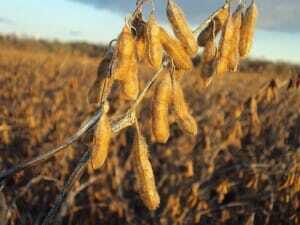
    Soybeans harvest

    With the extremely stressful weather conditions we experienced last year, growers are starting to inquire about using soybean inoculants going into the 2013 planting season. While there is no definitive answer to this question, here are a few tips to keep in mind:

    1. Soybean inoculant is comprised of living bacteria (Bradyrhizobia japonicum), which is necessary for the establishment of the nitrogen nodules on the roots of young soybean plants. Soybeans can require more than 300 pounds of nitrogen per acre and most of it is needed during the initial flowering through seed-set stages. Living organisms do need adequate moisture to thrive.
    2. Inoculate the seed if soybeans haven’t been grown in your field for four or five years. If the field is sandy or in the event of severe weather problems (e.g., flood or drought), you might consider inoculating if the field has not been in soybeans for as little as three years.
    3. Nitrogen is essential to photosynthesis. Nitrogen is usually supplied to soybean plants by a process called nitrogen fixation, which is associated with Rhizobia bacteria in the soil. It’s important to note, however, these bacteria are not always present – especially if soybeans haven’t been grown in a field for a few years. In this case, consider adding an inoculant to your soybean seed.
    4. Scouting your fields and digging up plants to assure proper nodulation is crucial for achieving top-end yields. If you decide to use inoculants in your own fields, be sure to study whether the inoculants benefitted your production levels.
    5. Get to know your local Latham sales representative, who can introduce you to our Seed-2-Soil program. This program helps determine the best varieties to plant in your fields, giving you the best possible chance to achieve high yield.


    Webspec Admin

    January 31, 2013
    Agronomics, Corn, Crop, General, Soybeans
  • Latham Hi‑Tech Seeds

    Pig Ties and All Things Pork

    PigTie1

    “Musings of a Pig Farmer”
    by Larry Sailer

    This past week was loaded with pork – not the kind that you hear about when Congress is discussed but really everything related to pork production.

    Last week I had planned to spend three days in Des Moines at the Iowa Pork Congress.  Between uncooperative weather and farm chores, I was only able to attend on Thursday.  That morning I did hog chores in sub- zero temps, and it warmed all the way up to zero by the time I was ready to leave home!  I donned my favorite tie, snapped a photo for Facebook and headed out the door.  Turns out, my pig tie was a hit – my phone kept buzzing with comments about it during my entire two-hour drive.

    The walk across the parking lot to the convention hall was bitterly cold, and the bone-chilling wind felt like it was coming directly off an iceberg.  I was relieved to get inside the climate-controlled auditorium, which made me think about how I now raise inside a climate-controlled building where their warm and dry with all the feed and water they could want.

    A walk through the show site was a stark reminder of just how sophisticated pork production has become.  The amount of equipment and technology on display was amazing!  It’s really mind boggling when you consider everything that goes into building a new site for hog production today.  One day wasn’t enough time to take it all in, so I started looking at exhibits along the outside corridor.  I stopped at the booth for the Coalition to Support Iowa’s Farmers and learned some older hog buildings are being used to raise fish in Iowa.  Since I have an old site that’s not suitable for raising pigs, this tidbit gave me all the more reason to be at this show!

    Next I ran into Jeff Hansen and and Jen Sorenson.  Jeff owns Iowa Select Farms and Jen makes people aware of the great things that company does.  Since Jeff grew up on a farm near me, we shared concerns about the lack of moisture and rising feed costs in our area.  Then I stopped to talk with Rodney Dykstra, a recent past president of IPPA.  Because he lives in northwest Iowa, we talked about how farmland prices have topped $20,000 per acre in his area.

    Time passed too quickly and before I knew it, I had to make my way to the seminars.  I listened to Laurie Johns with the Iowa Farm Bureau share insights on how pork producers can deal with the media.  Following her presentation, I sought Laurie’s professional opinion on how to handle some of my projects.

    Next I attended a seminar about federal policies.  It’s important for farmers to understand how their operations might be impacted.  Former Iowa House of Representatives Agriculture Committee Chair Annette Sweeney provided valuable information and thought-provoking comments during this session.  Annette introduced HF 589, a bill making it illegal to apply for a job in a farming operation under false pretenses is close to becoming law in one of the nation’s largest livestock and commodity production states.  Thanks to Annette’s passion for animal agriculture and her tenacity, this bill was signed into law by Gov. Terry E. Branstad in March 2, 2012.

    Honestly, the policy session gave me another wakeup call!  Hearing what folks in the Beltway are considering reaffirmed the importance of advocating for agriculture and the need to bridge the communication gap between farmers and consumers.  We must help them understand how their decisions impact our livelihoods.  #tellyourstory

    Larry Sailer, Musings of a Pig Farmer

    January 29, 2013
    Agriculture, General, Industry News
  • Latham Hi‑Tech Seeds

    Life Skills Are “Caught” through 4-H

    State fair1

    After graduating in 1980 from Iowa State University, this Union County native moved north when she accepted the position of Livestock Feed Sales with Farmer’s Cooperative in Iowa Falls.  One of her livestock feed customer, Roger Dohlman, soon captured her attention and the two were happily married in 1982.

    Today Roger and Jackie Dohlman live on an acreage just south of Hampton where they raise corn and soybeans, as well as a small flock of sheep.  It’s also where they raised three kids:  Becky, age 30, lives with her husband, Jeremy Vietor, in Arizona with their daughters, 6-year-old Madison and 3-month old Gabriella; Nathan, age 28, lives with wife, Lili, near Hampton with their three children, 5-year-old Natalie, 4-year-old Eva and 2-year-old Matthew; and youngest daughter Danielle, age 23, lives in West Des Moines.

    “My kids will tell you they had no choice but to belong to 4-H because I’ve been the county youth coordinator in Franklin County Extension for the past 16 years,” says Jackie with a smile.  “But I they would tell you they got a lot out of the 4-H program!  They enjoyed getting to know other youth in their local club, and as they grew older, they made lifelong friends from across the county and state.  Their 4-H projects allowed them to learn some skills from Mom & Dad that we probably wouldn’t have taken the time to teach otherwise.  Eventually they got over the jitters every time they had to stand in front of the club to give a presentation and took pride in their community after hours of doing things like picking up trash along the highway or painting buildings on the fairgrounds.  They also gained skills that helped them prepare for their careers.”

    Oldest daughter, Becky, is an instructional assistant for the Dysart Unified School District in El Mirage, Arizona.  She’s also taking courses to finish her degree in psychology.  Son Nathan served as a squad leader in the U.S. Army from July 2003 to August 2010.  He’s currently taking ag classes at Ellsworth Community College and helps his dad farm.  Danielle graduated from Wartburg College and works for Barnes & Noble in West Des Moines.

    Through 4-H, the Dohlman children had the opportunity to try many different projects over the years.  They choose to develop their skills in a few projects as they got older.  Becky showed hogs plus exhibited clothing and home improvement projects.  Her passion became Food & Nutrition, and she won the State 4-H Project award in that area.  Nathan showed sheep all through 4-H and also tried his hand at wood working and welding, which he stills enjoys and uses today.  Dani’s real passion was horticulture and food & nutrition.  She had a lot of fun taking horticulture exhibits to the Iowa State Fair and earned the State 4-H Project award in that area.  Dani also discovered her talents in performing before an audience at Share-The-Fun during the county fair, which led to a degree in Theatre Arts.

    “I never had to worry about where my kids were, who they were with, and what they were doing – at least not until they got their driver’s license!” says Jackie.  “They learned what the word ‘work’ meant as we spent a lot of time as a family in the fields, walking beans, picking up rocks, working with livestock projects, and helping around the house.”

    One reason Jackie decided to become the youth coordinator for Franklin County Extension is because she had such a positive experience with the 4-H program during her formative years.  She showed hogs and took exhibits in food & nutrition and sewing.  She also served on the Union County 4-H Council, went on trips to 4-H Conference in Ames and Kansas City, plus attended Citizenship Washington Focus(CWF) in Washington, D.C.

    In her spare time, Jackie enjoys putting her sewing skills to use by making clothing and costumes for her grandchildren.  She also enjoys gardening and baking.  Jackie sells produce and baked goods at local farmers’ markets, so she’s sharing one of her favorite sweet bread recipes with us today.

    Team Latham

    January 25, 2013
    Desserts, General, Recipes
  • Latham Hi‑Tech Seeds

    Be Assured “Quality” is in the Bag

    Trays1

    High heat and low moisture levels created several production challenges – for farmers and seed suppliers alike – in 2012.  Dry growing conditions have affected seed germinations, seed size and seed quality nationwide.

    Not all seed brands will be able to offer top quality products for 2013 planting. Be sure to read the bag tag and consider switching product numbers or adjusting plant populations accordingly.

    Rest assured when you plant Latham®, you’re planting quality. Latham Hi‑Tech Seeds’ hands-on production process allows for less handling, which leads to higher germination rates.

    The vast majority of our seed beans are brought to Latham’s production facility in Alexander, Iowa, immediately upon harvest.  Bringing the soybeans directly to our plant allows Latham to control the seed from the production field to our customer’s shed.

    The trays we use to bring soybeans from the cleaner to the bagging system are so gentle they’re used to make corn flakes!

    We also don’t bag in extremely cold conditions, which can lead to splits and cracks and further reduce the chances of having that seed germinate. Our bagging line was shut down most of this week due to cold temperatures.

    We take great pride in producing soybeans that contain the industry’s top genetics with leading technologies like Genuity® Roundup Ready to Yield® and LibertyLink.  We’re also proud to offer top hybrids featuring the industry’s top genetics – and one of the broadest, deepest trait lineups in the country.

    As a family-owned company, Latham Hi‑Tech Seeds can offer hybrids with the following technologies: Genuity® SmartStax® and RIB Complete™; Agrisure Viptera 3111 and 3000GT; and Herculex Xtra™.  (Click here for our full hybrid lineup.)

    Contact your Latham® representative or call 1-877-GO-LATHAM for more information about top-shelf Latham brand products on inventory that will meet your needs for spring 2013 planting.

    [youtube]http://youtu.be/6IyB97uF2nI[/youtube]
    “The gentle handling of Latham® seed through each part of the bagging and delivery process helps preserve seed quality.”

    John Latham, President

    January 24, 2013
    Agriculture, Corn, Crop, General, Industry News, Soybeans
  • Latham Hi‑Tech Seeds

    Seed Selection is Even More Critical in Dry Years

    The Iowa Legislature convened last week, and along with that, came talk that Iowa’s drought law may get a closer look this year.  “Water restrictions” isn’t a typical topic of conversation in the north, but it looks as though it might become commonplace across the Upper Midwest in 2013 if weather patterns don’t change.

    It’s safe to say we’ll be planting the 2013 crop in dry soils.  The 2012 drought caused most soils here to be depleted of moisture in the upper 7 to 8 feet, so it will take at least two growing seasons to recharge those soils.

    Seed selection will certainly be critical for 2013 due to the extremely dry conditions.  That’s why we’re recommending that most of our corn customers plant hybrids at least double- or triple-stack hybrids this spring.

    A hybrid’s genetics will be the biggest factor in whether a hybrid can handle drought.  Plot data shows that multiple-trait stacks, like Latham® hybrids with the Genuity® SmartStax® technology, can really help protect yield.  REMEMBER:  Traits protect yield.  Genetics make yield.  Seed products carrying the Latham brand name combine the industry’s best genetics with the latest traits and technologies.

    While corn genetics have come a long ways over the past decade and are much better at handling drought stress than ever, soybeans historically perform even better in dry weather.  Farmers will need to consider whether they can manage corn-on-corn in another extremely dry year or whether the economics favor soybeans.  Other factors to consider when finalizing your 2013 crop plans are outlined in this recent article posted on agriculture.com: Six Take-Home Lessons from the 2012 Drought.

    Regardless of whether you choose to plant corn, soybeans or alfalfa, Latham has the products you need! Our seed portfolio contains products that were bred specifically to thrive in specific areas of the Upper Midwest. Call your local Latham rep to learn more about the products best suited for your growing conditions, or feel free to call our office directly at 1.877.GO.LATHAM (1.877.465.2842).

    John Latham, President

    January 23, 2013
    Agronomics, Drought, General, Precision Ag, Season, Spring, Weather
  • Latham Hi‑Tech Seeds

    We Should Sit Down with HSUS?

    U.S. Secretary of Agriculture Tom Vilsack, during a speech Jan. 14 at the American Farm Bureau Federation’s annual meeting, encouraged farm leaders to create strategic alliances and reach out to groups that might have differing opinions.  Here’s an excerpt from that speech:

    Now I know that there are not too many fans of the Humane Society in this room. But egg producers thought it was in their best interest to avoid 50 different referendums, 50 different sets of rules.  So they sat down with folks and they reached common ground. After all, isn’t that what we’re asking our Congress to do?  Isn’t that what we’re asking our political leaders to do – to sit down and make common cause?  I think the egg producers have the right idea.  Now, the issues may be different for different types of producers but we need to be constructively engaged at all times and conversations. We may not find agreement.  But I think we will substantially reduce those who oppose farming and substantially reduce the reach of those and hopefully be able to get enough proactive activity that results in a five year bill.

    If you follow what I preach, you know that I insist we listen to all sides.  As much as I agree that farmers must engage in conversation with non-farm groups, I honestly don’t believe sitting down with the Humane Society of the United States would be constructive.

    Vilsack sites the chicken and egg folks as a textbook example of how ag groups can find “common ground” with HSUS.  Say what?  How can we find “common ground” with a special interest group that wants to put livestock producers out of business?  Animal rights activities don’t really care what we do because they’re only concerned with pushing their twisted agendas.

    HSUS has teamed with some cattle producers to file suit against the Beef Checkoff, and now HSUS is going after the National Pork Checkoff.  Here’s where I’m going with this: the U.S. Secretary of Ag oversees all checkoff programs.  As a pork producer, I vote on whom I want on the commodity checkoff board but Secretary Vilsack actually decides who gets a seat on that board.  Now Vilsack says we must listen to extreme animal right group, and herein lies the problem!

    A few of this administration’s moves in recent months cause me great concern:

    • Calling rural America less relevant while addressing the 2012 Farm Journal Forum
    • Proposing to stop farm kids from helping with livestock or crop production
    • USDA Memo in Support of Meatless Mondays
    • Promoting less meat consumption by replacing the food pyramid with the” food plate”
    • Limiting meat proteins available through new school lunch rules

    Because some farmers and advocates of the agricultural community made their voices heard, the USDA retracted its memo in support of Meatless Mondays.  The new school lunch rules have been relaxed, and the U.S. Department of Labor put new child labor laws on hold.  That doesn’t mean these issues won’t resurface sometime over the next four years, so we must remain vigilant in our agvocating efforts.

    The U.S. agriculture community must spend as much time advocating for agriculture within the U.S. Department of Agriculture – which should be a natural ally – as it does with consumers and anti-farming groups.  Now the U.S. Secretary of Ag is trying to convince the mainstream that groups like HSUS are best buds with the small farmer—it’ more than I can handle!

    I must admit that I’m extremely concerned about our new administration, and some of the people who are serving and their beliefs.  We already know there are former HSUS employees high in the ranks of the USDA.  Now I’m reading that Raú Grijalva is being considered for U.S. Secretary of the Interior, and he’s being heavily backed by groups that want to eliminate animal ag!

    When governmental agencies are infiltrated by this type of fanatics, they’re in place to make policy.  We can’t afford to let this happen!  Speak up.  Write emails.  Contact your elected officials.  It’s important that people in office understand what we do on the farm.

    Larry Sailer, Musings of a Pig Farmer

    January 22, 2013
    Agriculture, General, Industry News
  • Latham Hi‑Tech Seeds

    Pin It to Win It!

    Choc strawberries1
    Visit our “Super Bowl Party” board on Pinterest for inspiring ideas like these chocolate-covered strawberries. Picture from Sharis Berries.

    “Field position” is commonly used to describe a team’s position on the gridiron, so it seems only fitting for TheFieldPosition.com to celebrate the Super Bowl by hosting a competition.  All you have to do is “pin it to win it.”

    You could win a 6-quart locking crock-pot simply by submitting your favorite crock pot or soup recipes by posting your recipe on TheFieldPosition.com blog; posting your recipe to Latham Seeds’ Facebook page; sending your recipe to shannonl@lathamseeds.com; or tagging @LathamSeeds to a recipe via Twitter or tagging @LathamSeeds #LathamSuperBowl on Pinterest.

    There are so many ways to play!  Be sure to tell your family and farming friends to “like” Latham Hi‑Tech Seeds on Facebook, too.  Contest entries are due on or before Friday, Jan. 25, 2013.

    To help kickoff this contest, today I’m sharing a few recipes that I recently pinned from the January/February 2013 issue of Midwest Living magazine.  The Lemon Rosemary Pork Loin calls for a roasting pan, but you can bet I’ll be placing mine in a crock pot instead.  I’ll spread spices over the pork in the morning, pour a little water into the bottom of the crock, and forget it about it until it’s time to make the sauce and set the table for supper.

    What are your favorite crock pot and soup recipes? Share them with me for a chance to win!

    Other Related Posts:

    • Sharing Never Tasted So Good
    • Take it to the House with Pork
    • Game Day Food
    • Bring the Tailgate Indoors

    Team Latham

    January 18, 2013
    General, Pork, Recipes
  • Latham Hi‑Tech Seeds

    Latham Competes in Paint-A-Pig Fundraiser

    Paint a pig1
    This little piggy is going to market, and you could take it home! Visit booth #100 at Iowa Pork Congress on Wed., Jan. 23.

    Iowa State University NAMA, challenge accepted!

    Latham Hi‑Tech Seeds is excited to announce that our entry for the ISU NAMA Paint-A-Pig Fundraiser is complete!  This 2’X2’ metal pig will travel to Des Moines, Iowa, on Wednesday, January 23, for the Iowa Pork Congress where it will compete for top bid against entries from across the agriculture industry in a silent auction.

    Our theme for this year’s entry features a Grant Wood-inspired painting by one of Latham’s own employees and ISU NAMA Marketing team alum, Laura Cunningham.  Our entry also includes a quote by Ryan Goodman of the I Am Agriculture Proud website and blog: “AGRICULTURE.  It’s a passion, a lifestyle, a resilient community that works hard to feed the world.”

    This quote attests to a shared goal we have as agriculturists.  Be it a seed company or a pork producer, we all work together to feed the world.

    We invite all Iowa Pork Congress attendees to visit the auction and check out our entry in booth 100.  Thank you ISU NAMA for the opportunity to participate!

    Gary Geske

    January 17, 2013
    Agriculture, General, Industry News
Previous Page
1 … 94 95 96 97 98 … 160
Next Page

Latham Hi‑Tech Seeds

131 180th Street | Alexander, IA 50420

(641) 692-3258

SIGNUP FOR OUR NEWSLETTER
  • Contact
  • Legal
  • Dealer Center
  • Seedware Login
  • Latham Gear

© 2025 Latham Hi‑Tech Seeds. All rights reserved. | Iowa Web Design by Webspec | Privacy Policy

Latham® Hi-Tech Seeds is a trademark of M.S. Technologies, L.L.C., 103 Avenue D, West Point, IA 52656.