Skip to content
Latham Hi-Tech Seeds

(641) 692-3258

  • Home
  • Performance
  • Products
    • Corn
    • Soybeans
    • Soybean Blends
    • Alfalfa
    • Corn Silage
    • Seed Guide
  • Find a Rep
  • Media
    • Blog
    • News
    • Videos
    • Podcasts
    • TECHTalk
  • About Us
    • Company History
    • Our Mission
    • Careers
    • Become a Rep
    • Sowing Seeds of Hope
  • Contact Us
  • Latham Hi‑Tech Seeds

    Pursuing Season-Long Protection from Nematodes

    Map1
    Average Nematode Risk in the U.S.

    While perusing some ag chat sites this week, we came across the following questions posted by a Midwest farmer.  Today Latham Product Manager Mark Grundmeier answers questions that are top-of-mind with farmers.

    Q:  Is treating seed corn with VOTiVO® enough to protect the crop from nematodes throughout the growing season?  Extremely high numbers of nematodes have been confirmed on one of our farms.  We have ordered our corn seed for 2013 treated with VOTiVO.  What else should we do to eliminate nematodes, if possible?  This is by far the biggest yield robbing problem I have ever seen.  I thought Gray Leaf Spot was a big yield robber, but it’s nothing compared to the damage done last year by nematodes.  It was deceiving because symptoms all showed signs of drought, even under full irrigation and compaction.

    A:  One reason nematodes are difficult to control is because stunted, yellowing, wilting corn is often mistaken for something else, such as drought in this case.  Therefore, nematodes often go undetected and the yield-robbing situation multiples – literally.

    Nematodes are a growing problem across the Midwest, most likely due to trends of no-till farming.  Nematodes are sensitive to soil disturbance, so they tend to thrive in no-till situations.  Crop rotation isn’t an effective form of management as corn nematodes also feed on soybeans and grasses.  So what is an effective way to manage corn nematodes?

    A new management option is using a seed treatment that moves onto the roots to provide early season protection against nematode feeding, says Dr. Greg Tylka from Iowa State University.  Poncho®/VOTiVO® seed treatment protects young plants from pests during critical early development stages, leading to healthier root development and stronger stands.

    VOTiVO seed treatments act like a barrier, preventing nematodes from attaching to corn roots.  Applied directly to the seed, it helps prevent damage to early-season seedlings and roots before pests can strike.  Nematicides on the other hand, actually kill the nematodes on contact.  Avicta® from Syngenta Seedcare is a nematicide seed treatment that moves on the surface of the root.

    Key benefits of Poncho®/VOTiVO® seed treatment:

    • Immediate Protection – Systemic agent protects valuable seed from the moment it’s planted
    • Pest Control – Biological agent creates a living barrier of protection against a wide range of nematodes, including Soybean Cyst, Root Knot and Reniform nematodes
    • Yield Potential – Promotes healthier root systems and a more vigorous and uniform crop, positively impacting yield

    Benefits of Avicta® Brand Seed Treatments:

    • Avicta Complete Corn is a combination of Avicta nematicide and CruiserMaxx® Corn 250 (Cruiser® 5FS insecticide & Maxim® Quattro fungicide). It is also available with a higher rate of thiamethoxam for enhanced insect protection (0.5 mg ai/seed and 1.25 mg ai/seed respectively).
    • Provide instant protection against a wide variety of damaging nematode species
    • Consistently protect against a broad range of early-season insects and disease pathogens
    • Proven to help increase plant stand, vigor and yield potential
    • Much of the corn plant’s yield potential is determined in the early growth stages. Avicta Complete Corn provides immediate protection from day one.

    The higher the population of nematodes, the greater the chances are that nematodes will break the barrier created by VOTivO.  So when extremely high populations of various species of corn nematodes are present, it may be beneficial to use both a seed treatment and a planter-applied nematicide.

    Studies by Iowa State University show nematode management products may have a more pronounced beneficial effect in fields with very damaging nematode species and in fields with much greater plant-parasitic nematode population densities.

    February 14, 2013
    Agronomics, Corn, Crop, General, Insects, Soybeans
  • Latham Hi‑Tech Seeds

    Seed Quality: How Long is Germ Viable?

    Trays1

    While perusing some ag chat sites this week, we came across the following questions posted by a Midwest farmer. Today, Latham Product Manager Mark Grundmeier answers the questions that are top-of-mind with farmers.

    Q: How long will seed corn hold its quality/germ? A lot of seed is in warehouses already, and I presumed tested and determined “good quality” before it was shipped. Is it possible that the condition of any of this seed will deteriorate before spring planting?

    A: You’re right in that state and federal guidelines require seed companies to test – and tag – all seed before it ships to dealers and farmers. We must perform germination tests no sooner than December 2012 for spring 2013 delivery/planting.

    The germ on seed corn is quite stable and is largely dependent on heat and moisture. Since it’s unlikely that we’ll experience excessive heat and humidity before this seed corn gets planted, it’s very unlikely that the condition of this seed corn will deteriorate before spring planting.

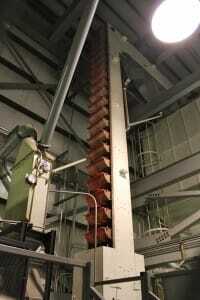
    The trays we use to bring soybeans from the cleaner to the bagging system are so gentle they’re used to make corn flakes!

    On a side note, soybean seed is much more delicate and how it’s handled can greatly impact the germination rate. Extremely dry conditions in 2012 produced seed beans that were drier than optimal when harvested. Because the seed coat is so fragile, rough handling can crack the seed coat and deteriorate the quality. To preserve seed quality, Latham Hi‑Tech Seeds “babies its beans.” The majority of our seed beans are brought to our Alexander, Iowa, facility where it’s hand-tested before its stored on site.

    Our equipment is specially designed to treat the soybean seed as gently as possible. The trays we use to bring soybeans from the cleaner to the bagging system are so gentle they’re identical to those that are used to make corn flakes! We also don’t bag in extremely cold conditions, which can lead to splits and cracks and further reduce the chances of having that seed germinate. But the care doesn’t stop there… dealers and farmers must also handle soybean seed with care. Dropping bags of soybeans can damage the seed coat and lead to a lower germination rate than appears on the bag tag.

    Unlike corn, soybean seed can fall out of quality quite rapidly. Look for the germ rate on the seed tag. Anything above 90 percent indicates high quality soybeans; germ rates of 95% indicate high quality seed corn. If your soybeans are tagged at 80%, seed quality is most likely on a downward spiral. You’ll definitely need to increase your seeding rate to account for lower germination rates. You might even be better off to switch soybean brands.

    Don’t assume that all soybean seed is tagged at the highest quality. Be sure to read the tags on all products that get delivered to your farm.

    February 13, 2013
    Agronomics, Emergence, General
  • Latham Hi‑Tech Seeds

    What Does a Farmer Do in Winter?

    Congressman King1

    On his Facebook page, I Am Agriculture Proud, Ryan Goodman recently asked his farming and ranching friends to share they spend their winter months.  My winter months are filled with so many different activities that I decided to devote today’s blog post to answering Ryan’s question more in depth.

    There isn’t any field work for Midwest farmers from about Thanksgiving to Easter, but I still manage to stay quite busy during “the slow winter season” by (1) planning next season’s crop (2) attending meetings and completing continuing education; and (3) communicating with consumers.

    Once harvest is complete and the machinery is back in the shed, I finalize plans for next season’s crop.  I buy inputs and fix machinery.  I also care for 4,000 head of hogs.  Winter farm chores and moving snow seems to keep me as busy as ever.  I haven’t had to move as much snow this winter as I have in past years, but it seems the snow always falls when I’m either loading out hogs or bringing in a new group.  Murphy’s Law, right?

    Congressman King

    Winter also is the “meeting season,” which I consider my continuing education time.  To farm in this era of government regulation, I need to keep up with the current laws.  The commodity groups to which I belong are very active with programs to make me a better farmer.  For example, PQA Plus was developed by the Iowa Pork Producers Association (IPPA), the National Pork Board (NPB) and National Pork Producers Council (NPPC). This is such a great program, teaching pork producers the latest and best known techniques to raise pigs.  Most pork processors require pork producers to be PQA certified in order to sell hogs to them.

    In addition to attending the commodity group’s annual meetings and continuing ed programs, winter is the season for machinery shows like the Iowa Power and Machinery Show that was held recently in Des Moines.  There is also a show on fertilizer and herbicides. In addition, Extension offers many regional and statewide winter programs on everything from pork production to crop production and insect identification.

    Yesterday I participated in a meeting in our county seat that was sponsored by the Franklin County Farm Bureau.  We were honored that U.S. Congressman Steve King visited a local school system (CAL) in the morning where he watched our Ag in the Classroom program in action.  At noon, Congressman King shared his thoughts about the current session of Congress and then we had the opportunity to talk about issues that concerned us.

    Another area that I work on more during the winter months is the art of communicating with non-farmers.  Yep, the commodity groups even teach that!  I’m even going to do some teaching myself on Feb. 23 when the AgChat Foundation hosts a regional conference in Rochester, Minn.  This group has done an amazing job helping me to understand that the way I talk may be a foreign language to someone not familiar with farming.  Terms that are familiar to farmers like me aren’t always the same slang used in the city.  Who knew?

    Off season? Yeah, right. I didn’t even mention all the desk time required to get our tax returns ready. Off to the office I go!

    Larry Sailer, Musings of a Pig Farmer

    February 12, 2013
    Agriculture, General, Industry News
  • Latham Hi‑Tech Seeds

    4-H Brought This Couple Together and Binds Their Family

    Sunkten family
    The Sunkten family of Belmond, Iowa, gathered in May 2012 for Kellen’s high school graduation. They’re looking forward to being recognized during the 2013 Iowa State Fair for their Century Farm. Front row, from left, is Kirsten, Katelyn and Katelyn’s husband, Ryan Borcherding. Back row, from left, is Jon, Kendrick, Kellen and Tami.

    Jon Suntken and Tami Pralle’s shared passion for 4-H brought them together in 1979 when they were selected to serve on the Franklin County 4-H Council. Nearly 30 years later, they’re still preparing for the annual county fair and trekking to the Iowa State Fair.

    “All of our children began showing bucket calves at the Franklin County Fair when they turned 5, and it’ something we did for 17 consecutive years,” says Tami. “This helped them develop a passion for showing and judging livestock. Our boys also have been involved in woodworking. Both of our boys entered the Franklin County Fair livestock judging contest in 4th grade, and two years ago they were on a team that placed second in the state for 4-H Livestock Judging. The girls have been involved in Food & Nutrition, Sewing, Clothing, Clothing Selection, Challenge, Working Exhibits, Photography, Needle Arts, as well as showing sheep and cattle.

    4-H teaches and allows our children to experience many things that are important in life: work ethic, responsibility, how to start and finish projects, character development, meeting new people, public speaking, helping others and developing new friendships.”

    Raising livestock and being active in 4-H are important to the Suntkens, who had the honor of earning second place in the 2011 Iowa 4-H Livestock Judging circuit. From left to right: Kellen Suntken, Joe DeVries, Kendrick Suntken, and Drew Abbas.

    The Sunktens have four children. Their 23-year-old daughter, Katelyn, is married to Ryan Borcherding. They live in Davenport where Katelyn is a teacher’s assistant at a daycare, and Ryan is employed with John Deere Information Systems as a Dealer Advisor. Oldest son Kellen, 19, is a freshman at Iowa State University, with a major in Ag Studies and a minor in Animal Science. He’s a member of Alpha Gamma Rho fraternity, serves on the ISU Freshman Council and is a member of the Veisha Tournaments Committee. Kendrick, 16, is a sophomore at Hampton-Dumont Community High School. He’s involved in football, wrestling, track, 4-H, FFA and RCYF at church. Kirsten, 11, is a fifth grader at Hampton-Dumont Community Middle School. She is involved in basketball, softball, band, 4-H, and dance.

    “We enjoy raising our children on a farm,” says Tami. “They have the freedom to play in wide, open spaces. They learn to get along while playing and working with their siblings. They learn responsibility from doing chores. They get to experience nature and gain an appreciation for God’s creation through the birthing of animals, as well as smelling fresh cut hay, silage and fresh tilled soil in the spring.”

    The family resides on the Sunkten home farm, which will be recognized in 2013 as a Century Farm. Jon started farming full-time upon graduating from high school and worked winters for 12 years at Latham Hi‑Tech Seeds. Their diversified operation includes corn and soybeans plus a cow-calf herd and a custom hog finishing operation. For the past 16 years, he and Tami have worked side-by-side with the crops and livestock. They’re proud their children also are actively involved in the day-to-day operations.

    Livestock judging helped the boy develop confidence when selecting their own calves, says Tami. They spend a lot of time researching genetics and sale cattle. They A.I. their own cows, and recently started doing embryo transfers to improve cattle genetics. All of the Suntken kids wash, clip, fit and groom their own cattle. In 2012, they were able to sell some of the calves they produced to other 4-H members.

    Today Kirsten helps promote Iowa beef by sharing with us one of her favorite recipes for pot roast in a crock pot. Tami also shares a recipe for grape salad with an Irish twist.

    Pot Roast in the Crock-Pot

    Ingredients:

    • 3-4 lb. boneless chuck roast (lean)
    • 1/2 cup flour
    • 1 pkg. dry brown gravy mix
    • 1 pkg. onion soup mix
    • 2 cups ginger ale

    Directions:

    1. Put flour in a Ziploc bag, add meat and shake.
    2. Put floured meat in a crockpot, keeping the extra flour in the bag.
    3. Next add the package of gravy mix and the onion soup t to the remaining flour; shake together.
    4. Pour the flour mixture into a batter bowl and add the 2 cups of ginger ale; pour all over meat in crockpot. Cook on low for 8 hours.

    Team Latham

    February 8, 2013
    General, Recipes, Sides
  • Latham Hi‑Tech Seeds

    Dal Grooms: First Lady Chris Brandstad’s Oven Beef Stew

    Team Latham

    February 7, 2013
    Beef, General, Recipes
  • Latham Hi‑Tech Seeds

    Kaitlyn Bartling: Stuffed Meatballs

    Team Latham

    February 7, 2013
    Beef, General, Recipes
  • Latham Hi‑Tech Seeds

    Kaitlyn Bartling: Shredded Beef French Dip

    Team Latham

    February 7, 2013
    Beef, General, Recipes
  • Latham Hi‑Tech Seeds

    Kathi Johnson: Artichoke Dip

    Team Latham

    February 7, 2013
    General, Recipes, Sides
  • Latham Hi‑Tech Seeds

    Kathi Johnson: Loaded French Loaf

    Team Latham

    February 7, 2013
    General, Recipes, Sides
  • Latham Hi‑Tech Seeds

    Janet Kunde: Oreo Truffle Balls

    Team Latham

    February 7, 2013
    Desserts, General, Recipes
Previous Page
1 … 92 93 94 95 96 … 160
Next Page

Latham Hi‑Tech Seeds

131 180th Street | Alexander, IA 50420

(641) 692-3258

SIGNUP FOR OUR NEWSLETTER
  • Contact
  • Legal
  • Dealer Center
  • Seedware Login
  • Latham Gear

© 2025 Latham Hi‑Tech Seeds. All rights reserved. | Privacy Policy

Latham® Hi-Tech Seeds is a trademark of M.S. Technologies, L.L.C., 103 Avenue D, West Point, IA 52656.