Literally, at this time last year, there were reports that some Iowa farmers had already planted corn. I was busy writing a blog post answering the question, “How Early Is Too Early to Plant?”
With late-season snowfall accumulating more than it did in December, many farmers this spring are wondering how long it will be before spring fieldwork can begin.
Midwest weather is unpredictable, especially during the spring months. Although we’re experiencing temperatures in the 40s this week, there’s no guarantee this warm up will continue. An April Fool’s Day Snowstorm is no joke! And let’s not forget what happened in April 19, 2011… rain, snow, and hail fell upon areas of Iowa, Minnesota and Wisconsin.
We may be tired of snow, but at least we’re receiving some much needed precipitation that will provide topsoil moisture once the planters start rolling. “We’re starting the 2013 growing season with a moisture shortfall,” says April Hemmes, who farms south of Hampton in Franklin County, Iowa. “My farm received a total of 5 inches of rain between May and October 2012; normal annual rainfall is 23 inches. As much as I dislike late season snowfall, I’m thankful for it this year.”
Midwest farmers are eagerly awaiting the start of the spring corn planting season, but there’s no need to fret yet about getting in “late.” Time is on our side right now. Years of field research by Iowa State University shows the highest yield potential is with corn planting dates between April 12 and May 8.
For those wanting to head into the fields first this spring, consider planting some Latham® Hi‑Tech Alfalfa! Our 2013 alfalfa lineup includes many exciting new products for disease resistance, traffic tolerance, and regrowth patterns.
Franklin County was well represented at the Iowa Agriculture Leadership Forum, March 15-16, 2013, in Des Moines. Larry Sailer is back row, second from the left. From row, from left to right: Shannon Latham, April Hemmes and Val Plagge.
If you follow my posts, you know that winter is “meeting season” for Midwest farmers. Many of the meetings I attend are a two-hour drive from my farm, so I have plenty of windshield time – alone with my thoughts. I spent a lot of time (probably too much time!), analyzing what I’ve learned from these meetings and thinking about how I can apply this new knowledge to my operation. I also spend a lot of time in the winter months reading ag-related articles and blog posts.
Yesterday, Shannon Latham’s blog post about how members of the ag community define “technology” differently made me think about the stark contrast between two meetings I’ve recently attended. Midwest farm leaders gathered at both of these meetings, but their use of technology was totally different.
The AgChat Upper Midwest Regional Conference in February was all about technology, so it was “socially acceptable” for attendees to send Tweets and update their Facebook status throughout the conference. In fact, it was encouraged! Sponsors announced the hashtag (#ACFR13), and many speakers began their presentation by telling audience members their Twitter handle. Presentation topics ranged from how to set up a Twitter account to creating a fan page on Facebook for your farm, and even fine-tuning your blogging skills. As fellow Franklin County farmer Val Plagge says, “The Upper Midwest Regional Conference was set-up to empower farmers and ranchers to connect communities through social media platforms.” And that’s really what that did!
Then about two weeks ago I attended the Iowa Ag Leadership Forum, which was really a reunion for alumni of training programs from several groups including: the Iowa Farm Bureau Federation, Iowa Cattlemen’s Association, Iowa Corn Growers Association and Iowa Soybean Association. The one thing everyone in the room had in common was a desire to share what he/she knows about farming with folks who don’t understand it… or so I thought!
Erika Poppelreiter
I was proved wrong during a question and answer session led by Erika Poppelreiter (@poppel), a Kansas farmer and representative for the U.S. Farmers & Ranchers Alliance (@USFRA). Erika had just given a presentation about the USFRA’s The Food Dialogues: New York, where farmers, ranchers, industry experts, pundits and media tackled some of today’s toughest questions on biotechnology (GMOs), antibiotic use on farms and ranches, and how media and marketing influence “healthy” food choices.
It was then that an Iowa farmer stood up and asked Ericka, “Why should I give a damn about what customers think?” A brief moment of silence followed.
Most of us were a little slow to come up with the answer for that person, but Erika did respond with an example of what happened with caged layers and the impact that could on of the use of gestation crates. The end product is still pork (bacon), and it should be up to the producer to determine the best way for him to produce that pork.
If only I would’ve been quicker on my feet! I would’ve shared this quote with that farmer:
“We as agricultural producers are proud of feeding our world, but that doesn’t go far when the world doesn’t understand how we produce that food. We must participate in conversations with consumers at every opportunity. I am proud of the U.S. Farmers and Ranchers Alliance for starting these dialogues with both the pro and con sides represented. It’s the only way we can explain our story to others and not just ourselves.” – Barb Determan, a Sioux County Iowa farmer and pork advocate, who served on a panel at The Food Dialogues: New York
Barb Determan
Barb mentions that farmers need to share their stories with others besides like-minded individuals. While I thought farmers were pretty good about preaching to the choir, it appears our work is not done! Perhaps we need to fine-tune our message, so our fellow producers understand “why” it’s so important for us to share our stories with consumers.
I have given that farmer’s some thought since the Ag Leadership Forum. In an ideal world, his way of thinking would be great. It’s just not acceptable today because there are so many groups opposed to certain farming practices. There is no simple answer. We must take our message to the rest of the congregation if we want to continue to raise our products in a way that allows us to make a living, free from unnecessary rules and regulations.
“How do we share with consumers what we want them to know?” asked another attendee at the Ag Leaders Forum. I believe we need to take AgChat to the state level. Each state’s ag leaders much understand how to communicate, effectively, using today’s technology. For example, there were only 20 tweets total from the two-day Ag Leader Forum. I would guess (and this literally a guess because I can’t count them all) there were way more than 20 per hour coming out of the AgChat Convention!
Iowa Farmers lead the nation in production, yet they’re slow to adopt social media for advocacy.
Farmers and ranchers are always looking for a way to do something better. It is what we do! Technology has been used from the time early settlers learned from the natives the value of using fish to fertilize crops to farming with smartphones. It’s time for the masses to adopt communications technology. I’m not saying social media is the only way. Face-to-face visits go a long ways toward sharing and communicating, but social media really allows us to have a broader reach.
With more consumers curious about where their food comes from and how it’s raised, there is a greater need for more farmers to share their stories. If you’re a fellow farmer, I encourage you to share your story!
tech·nol·o·gy noun tek-?nä-l?-j? 1a:> the practical application of knowledge especially in a particular area b: a capability given by the practical application of knowledge 2: a manner of accomplishing a task especially using technical processes, methods, or knowledge <new technologies for information storage> 3: the specialized aspects of a particular field of endeavor
Despite what Webster says, every person at Latham Hi‑Tech Seeds most likely would define “technology” as it relates to his/her job. Mention “technology” to company president John Latham and he’s apt to engage you in a conversation about Agrisure Durcade, which should receive approval soon, to fight corn rootworm. Product Manager Mark Grundmeier might have XtendTM soybeans on his mind since new stacked brands are in the pipeline, featuring Genuity® Roundup Ready 2 Yield® technology with Dicamba resistance.
Kathy Rogotzke, math instructor at North Iowa Area Community College, visits with Dani Young, a sophomore at CWL, during the Women in Science, Technology, Engineering and Math (STEM) Conference Friday at NIACC. PHOTO COURTESY OF MARY PIEPER/The Globe Gazette
I hadn’t really stopped to think about how technology advancements – many that we’ve made within the last four years – have changed the way we do business until I sat down to write a speech. I looked at our business in a different light after Dr. Kathy Rogotzke, math instructor at North Iowa Area Community College (NIACC), contacted me to be a speaker for NIACC’s WOMEN in STEM (Science, technology, engineering and math) careers event.
My charge was to inspire high school students to consider careers in technology and to help open their eyes to career opportunities. Instead of talking only about how new media technology has changed Latham Seeds’ approach to marketing and public relations, I decided to give high school students an idea of just how broad the technology field is and how many jobs are affected by it.
Today I’d like to share with you, our readers, a brief overview of how technology impacts every facet of our business:
Smartphones for up-to-the-minute markets and real-time weather
Bottom line: Even if a person wasn’t raised on a farm, chances are he or she could find a fulfilling career in a technology field that’s somehow affiliated with agriculture. With a job placement rate of 98% for Iowa State University’s College of Agriculture graduates, it’s certainly worth considering!
Not only are placement rates great, but starting salaries are among the highest for new grads since careers in agriculture encompass science, technology, engineering and math. People who want jobs move to areas where there is opportunity, and today there is virtually limitless opportunity in agriculture. There’s never been a better time for young people to enter the industry!
Everly is best known for its cattlefeeders, but Keith and Joyce Kruse are proud to produce pork in this Northwest Iowa farming town with a population of approximately 600. Keith started farming by the neighboring town of Royal in 1976; Joyce joined the partnership in 1981 after the two married. This husband-wife team raises corn, soybeans, oats and are part owners of a farrowing unit.
Farming has been a tradition in the Kruse family for generations. The “home farm” located southwest of Royal, has been in the family for 118 years and is still home to Keith’s parents.
Keith and Joyce’s kids have fond memories of playing catch with their dad while waiting for the bus to come pick them up for school. They learned how to accept responsibility by growing crops and caring for livestock. Both kids showed pigs at the Clay County Fair through 4-H and FFA. They learned how to accept responsibility and work with others by growing crops and caring for livestock. Many family trips were anticipated while riding on the bean bar the night before leaving on vacation!
“We feel blessed to have raised our kids on a farm,” says Joyce. “Farming gives us the freedom to set our own hours, which was a real benefit when we were juggling farming with kids’ activities. Many nights, after coming home from the kids’ ballgames and track meets, Keith would head outside to care for the pigs or climb back in the combine. Now we appreciate the flexibility to be active in our church and farm organizations and spend time with our family.”
The Kruse’s 27-year-old son, Javan, graduated from Iowa State University and joined the family’s farming operation in 2007. He and his new bride, Danielle, live nearby. Danielle graduated from Northwestern and Mercy College of Health Sciences and works as a sonographer at the Orange City hospital. The Kruse’s 23-year-old daughter, Alecia, also graduated from Iowa State University. Although Alecia lives in Des Moines where she works in accounting and human resources for Garner Printing, she still tries to make it home every fall to run the combine on the weekends.
Family, faith, friends and farming are the heart strings that bind the Kruse family. In addition to farming full time, Keith and Joyce serve on the Clay County Pork Producers board. The Clay County Fair is an extremely busy one for them. Keith and Joyce help run The Iowa Chop Shop restaurant, volunteer in the 4-H building and give tours to 3rd and 4th graders through Ag-Citing, a program to educate and excite students about agriculture and its importance to individuals, communities, and our state.
In their spare time, Keith and Joyce enjoy cheering for the Iowa State Cyclones and the Minnesota Twins. They also enjoy traveling and say their most memorable trip by far was to Ireland for a visit while their daughter was studying abroad there. They also enjoy gardening and are eagerly awaiting the spring planting season.
In anticipation of May Strawberry Month, today Joyce is sharing one of their family’s favorite recipes for Strawberry Crunch Cake. And like any dedicated pork producer, they look for opportunities to promote their products. Joyce is also sharing a recipe for shredded pork loin, which she made for Alecia’s high school graduation party. This recipe was such a hit that she hasn’t bothered trying another one. Try it and see what you think. I, for one, am certainly looking forward to giving it a personal taste-test!
Shredded Savory Pork
This well-seasoned pork filling is used to prepare tacos or hearty sandwiches.
Hamburger buns or Kaiser rolls, split and toasted (optional)
Directions:
Trim far from meat. In a small bowl combine garlic, coriander, cumin, oregano, onion powder, salt, black pepper and red pepper; rub into the meat. Please meat in a roasting pan that has a cover; add beef broth. Cover and roast in a 325° over for 2 ½ to 3 hours or until very tender.
Remove meat from liquid with a slotted spoon; discard excess fat from cooking liquid, reserving the liquid. When meat is cool enough to handle, shred it using 2 forks to pull through it in opposite directions. Stir in ¼ cup of the reserved cooking liquid to use as taco filling or stir in enough cooking liquid to moisten; reheat in a saucepan over medium heat, stirring frequently, and serve on toasted buns.
Crock-Pot Directions: Prepare meat as told to in Step 1 above. Place meat in a 3½ to 5-quart crock-pot; add beef broth. Cover and cook on low for 8-10 hours or on high for 4-5 hours. Continue as left.
As a family-owned company, Latham Hi‑Tech Seeds has one major advantage over our competitors: We have the freedom to help our farmer-customers choose the traits and technologies that will work best for their given farming situations. That’s why we’re especially excited about Latham’s pipeline of soybean products!
Strategic alliances with the world’s leading technology providers means Latham is testing soybean products with three of the industry’s newest trait packages. Here’s a summary of the emerging soybean technologies that farmers in the Upper Midwest could access in the near future from Latham Hi‑Tech Seeds:
Enlist E3 – Developed and produced by Dow Agrosciences, Enlist E3 soybeans will be tolerant to new 2,4-D choline, glyphosate and glufosinate. Dow AgroSciences is working to introduce Enlist Duo™ herbicide with Colex-D™ Technology. Enlist Duo is a proprietary blend of new 2,4-D choline and glyphosate that will offer growers minimized potential for drift and near-zero volatility. We’re expecting the first E3 soybean products to hit the market for the 2014-2015 sales season.
The Balance Bean – This new soybean product from Bayer® has the working name of “FG72” and will be a double stack for resistance to isoxaflutole and glyphosate. Isoxaflutole is the active ingredient in Balance® Flexx and in Corvus® corn herbicides. Eventually this product will be stacked with Liberty®, making it a three-way stack.
Roundup Ready® Xtend Crop System – Monsanto continues to advance its stacked product featuring Genuity® Roundup Ready 2 Yield® technology with Dicamba resistance. Known as Xtend, this product will help extend the life of glyphosate. This technology appears to be slightly ahead of the other two now, depending on regulatory approvals.
We’re hopeful regulatory approval will be received in time for at least limited supplies to be planted in 2014. Although 2014 may seem like a distant future, the truth is, we’re working on our 2014 seed guide right now. Latham must grow seed beans a full season ahead to produce products that farmers will plant the following year.
Weed resistance is a growing problem – literally. Diversity of tactics is the key to consistent weed management and high crop yields. That’s why, at Latham Hi‑Tech Seeds, we couldn’t be more excited about the new traits that will soon be available to diversify modes of action and help farmers fight weed resistance!
Each year on March 22 the United Nations’ (UN) World Water Day is held to increase people’s awareness of water’s importance in environment, agriculture, health and trade.
Farmers are always aware of the crucial water plays in crop development, and after experiencing the 2012 Drought, we really don’t need to be reminded how a lack of water can impeded crop development. World Water Day, however, does provide us with a platform to share our story with others outside agriculture.
April Hemmes combining on her North Central Iowa farm
“My farm received a total of 5 inches of rain between May and October 2012. Normal annual rainfall is 23 inches, so we’re starting the 2013 growing season with a moisture shortfall,” said April Hemmes, who is speaking today in Washington, D.C., as part of a panel discussion sponsored by the Daugherty Water for Food Institute and the Global Harvest Initiative. Other panelists include: Dr. Cathie Woteki, USDA Under Secretary for Research, Education, and Economics; Mark Svoboda, National Drought Mitigation Center Climatologist, University of Nebraska-Lincoln; and Joel Lipsitch, John Deere Director of Business Integration and Strategy;
Soybean yields averaged 6 bushels per acre (bu/A) lower in 2012 for Hemmes, who has farmed for nearly 30 years just south of Hampton in Franklin County, Iowa. Her corn yields were reduced by 10 percent, or approximately a net loss of $70 per acre. When you consider that the average size of an Iowa farm is 333 acres, it’s feasible that each Iowa farm family lost between $11,000 and $23,000 of income due to the 2012 Drought!
“It scares me to think we’re going into the 2013 crop year with almost nothing for moisture,” says Hemmes. “Moisture is especially important to farmers in my area because we don’t irrigate. As much as I dislike late season snowfall, I’m thankful for it this year because now we will at least have topsoil moisture to get the crop planted. If we don’t receive adequate spring rains, however, young plants will suffer more quickly due to a lack of subsoil moisture.”
To help preserve soil moisture last fall, many experts were reminding famers to till less for more water. Seed selection is even more critical in dry conditions as genetics are the most determining factor in whether or not a corn hybrid can handle drought. While corn genetics have come a long way over the past decade and are much better at handling drought stress than ever, soybeans historically perform even better in dry weather.
Current weather patterns are likely to play a role in farmers who have yet to finalize their 2013 seed purchases. Trait packages will likely be especially important this growing season as the 2012 Drought might impact 2013 crops in regard to pressure from weeds, insects and plant disease. Once the seed is selected, and planters have been calibrated, Iowa State University Corn Specialist Roger Elmore says farmers must go “back to the basics” for seeding depth.
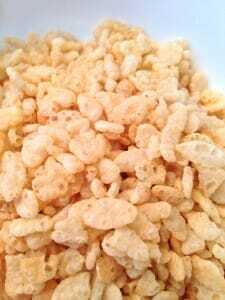
The proposed ban on Rice Krispies® in schools is just one more example of unrealistic rules being created by the Obama administration. Because Rice Krispies aren’t sugar coated, I had to do some digging to find out what makes them so disagreeable to rule makers. Here’s what I uncovered:
… the cereal’s first ingredient, refined rice, is neither a vegetable nor a whole grain. Items have to be one of those categories — or a fruit, dairy product or protein food or a combination that contains at least 1/4 cup of fruit or vegetables. If it’s not one of those, it can slip by if it contains at least 10% of the recommended daily value of calcium, potassium, vitamin D or fiber. But those nutrients have to be naturally occurring. Rice Krispies doesn’t meet that standard either because it’s fortified with vitamins and minerals… But Baked Lays would pass the test because potatoes are considered vegetables. Fried chips, however, wouldn’t because of their higher percentage of calories from fat.
So, “crisp rice” is neither a whole grain nor a vegetable. Even though Rice Krispies rates a 57 on the completeness score for nutrition – which I might add is pretty good for a breakfast cereal – new school rules would make Baked Lays a better choice than Rice Krispies for breakfast.
It’s also interesting to note that it will take an additional 926,935 hours per year for local and state administrators to comply with the proposed new school lunch rules. That’s more than 100 years’ of time! If these rules get implemented, adding this many more hours to payroll would create even more pressure on belts that have been tightened by budget cuts.
This leads me to the subject that I really want to dig into, which is the federal budget and Sequestration. My mind is filled with questions: Where did the USDA get money to research and then propose all these school lunch rules or was a study even conducted? How were these proposed changed decided and by whom! From the facts I found through a quick Internet search on “school lunch rules,” and “meat inspector furlough,” I’m also questioning whether USDA officials have even heard of a search engine!
U.S. Secretary of Agriculture Tom Vilsack was quizzed last week by U.S. congressmen. They asked why he would furlough certain needed workers but not others. Sec. Vilsack answered that his hands are tied, and he claims the law was written in such a way to make it as drastic as possible. No leeway? Really. I’m not believing it! If that were the case, Congressmen wouldn’t be questioning Vilsack’s decisions.
Potentially shutting down the meat industry and threating a meat shortages this summer is certainly drastic! Yet, there are all kinds of other USDA program that seem to be unaffected by sequestration.
In AgriNews on Jan. 23, 2013, Sec. Vilsack talked about the USDA Rural Development’s investments in job creation, businesses, infrastructure and housing in rural communities. This one arm of the USDA has a portfolio of $176 billion dollars in loans and grants. Most likely, this budget includes some unessential programs that could be eliminated and a few other programs that could be downsized, so the USDA could cut spending without shutting down the meat industry or causing food safety concerns.
The Inspectors General, a Washington-based watchdog group, points out there is an easy $67 billion to be saved in government spending. This $67 billion in “rampant waste, fraud and abuse” would cover most of the $85 billion being cut by the sequestration, which is making extremely painful cuts. Even this cut is such a small part of the yearly spending, that it does not even make a dent in the deficit.
“Constituents give truth to what lobbyists are working on and saying,” said Dale Moore, Executive Director of Public Policy for the American Farm Bureau. Together, we can make a difference!
As moms, the worldly pressures to feed ourselves and our families the healthiest, most nutritious meals seem to be everywhere: Meals should be homemade. Ingredients should be local. Or is it natural? Organic? These food “buzz” terms may confuse us.
That’s why I have chosen to rid myself of the food guilt mantra and adopted a food choice mantra. Food choice gives me the ability to buy at the grocery store while having a garden. Digging in the dirt clears my mind while teaching our kids a little about raising food, but I don’t want to go back to when my great-great grandma had to produce food in her garden in harsh weather conditions to feed her seven children. Unlike my great-great grandmother, if I don’t get the canning or freezing done, I can go to my local grocery store where a plethora of luscious food awaits.
The food in our grocery store is seasonal. It’s not always local, as in grown in my community or even in my state. But “local” is relative. We will never grow strawberries in the winter in North Dakota, and I don’t know any American banana farmers. But supporting different types of farmers gives us food choices. Food choices mean I can buy any food that fits the latest trend word, but I don’t have to.
Through ridding myself of mommy food guilt, I have developed guidelines for my food choices. Not rules, only guidelines, as I cannot always follow them. I support local options first. But when I need a mango, I buy it. I purchase the mango at my local grocery store and know supporting a locally-owned business impacts my small town. I also buy some local meat from state inspected meat processors.
Where I am located, deep in the prairies of North Dakota, supporting food choice means helping support 32,000 farm and ranch families. Agriculture is North Dakota’s number one industry, employing roughly 25% of our state. North Dakota produces 46 different crops and livestock from honey to canola to beef to potatoes; North Dakota leads the nation in the production of 14 of the crops grown.
North Dakota is the number one producer of dry edible beans. Throw a few cans of beans into chili. It’s local. It’s nutritious. It’s a fast, easy solution to a family meal. Plus, you are supporting North Dakota farmers. Not only are you supporting local farmers, you are supporting a local grocery store and feeding your family. What a gift we have of food grown and raised in our own backyard!
The Upper Midwest is the foundation of food choices. That’s why I am not advocating for any particular food choice. I am advocating for choice. Period. Food choice is a beautiful freedom and luxury we have and one that billions globally never see. Rid yourself of mommy food guilt and relish in the choices you have to give you and your family the most nutritious, healthy and often easy food choices!
Copyright Erin Ehnle/ Keeping it Real: Through the Lens of a Farm Girl
As North Central Iowans were digging out from the 10 inches of snow on Monday morning, I couldn’t help but notice the irony. You see Monday was the start of our kids’ Spring Break, but it felt more like Winter Break!
The view from the top of Lookout Mountain was worth the trek through the muck and the mud!
This time last year, however, our family was hoping for fresh powder as we loaded our SUV and headed to Lutsen, Minnesota. We were looking forward to meeting friends for a few days in the Caribou Highlands where we could literally ski out the back of our rented condo and catch a gondola to the slopes.
Each morning we hit the trails early and were able to enjoy two or three hours of ski time before warm temperatures turned the slopes into slop; conditions were better suited for building snowmen and tossing snowballs than boarding or skiing.
On the third day, we totally abandoned our skiing plans and took a hike. The sun shined brightly overhead, and temperatures reached the low 70s. Conditions were nearly ideal for a 2.25-mile trek to the top of Lookout Mountain in the beautiful Cascade River State Park. Although melting snow made for muddy trails – and we hadn’t really packed gear fit for this expedition– the view from the top was worth it!
Last year our family enjoyed Spring Break in Lutsen, Minn., where we hiked through the beautiful Cascade River State Park.
Lutsen ranks as one of my favorite family vacation spots. I know our experience was enhanced because of the company we kept. Our family has fond memories of playing board games and eating at Sven & Ole’s Pizza in Grand Marais with the Luchsinger family.
It’s funny how we often associate good memories with good food… That’s why I headed to the kitchen when my heart was yearning for northern Minnesota. This week I literally got a taste of the North Shore, using the wild rice and maple syrup that I had purchased during our visit there. I also served homemade bread topped with strawberry rhubarb jam, which I had purchased in Grand Marais. Today I’m sharing not only sharing my North Shore menu, but I’m sharing my recipes on TheFieldPosition.com. I hope you enjoy this meal as much as my family did!
What’s your favorite family vacation spot? I’d love it if you’d share a related recipe with me at shannonl@lathamseeds.com.
Continued use of the same rootworm-resistant trait in corn hybrids, an increase of corn-on-corn areas, plus a lack of refuge acres, has caused rootworm resistance to become an issue in some areas. Best management practices, including rotation, are key to effectively controlling corn rootworm populations.
Northern Corn Rootworm
However, rotation isn’t as simple as it used to be. Farmers can no longer merely rotate between corn and soybeans asthe only effective management strategy. Both the Northern Corn Rootworm and the Western Corn Rootworm have developed methods to counteract the effects of rotation on their life cycles. The Northern species uses a tactic called Extended Diapause that allows its eggs to lay dormant during the time fields are in soybeans. The eggs will then hatch after the field is planted to corn, and the young worms will feed on the corn roots. Adult females of the Western species have actually learned to lay their eggs in soybean fields, thereby allowing them to hatch the following spring when the field is planted to corn. With these changes in what used to be considered the “normal” life cycles of rootworms, managing CRW today requires increased diligence.
Western Corn Rootworm Beetle
Rotating rootworm-resistance traits developed by Monsanto, Syngenta and Dow will help CRW resistance from developing if farmers actually rotate modes of action. One advantage of working with family-owned and independent Latham Hi‑Tech Seeds is that we can help you select the trait packages needed to change up your modes of action. Latham offers the industry’s broadest, deepest seed lineup – which makes it more convenient for farmers to get all their seed needs met.
Using hybrids with more than one rootworm trait like Genuity® SmartStax® may offer another line of defense against CRW. The recent approval of Agrisure Duracade from Syngenta provides another trait in the arsenal to fight CRW; hybrids with Agrisure Duracade are expected to be commercially available in 2014.
Additionally, refuge acres must be planted. Refuge-In-the-Bag (RIB) hybrids available from Latham Hi‑Tech Seeds make compliance simple. Respect the refuge® and it will greatly increase our likelihood of keeping rootworm traits viable for years to come. Rotation helps reduce the risk of resistance. However, planting refuge alone is not enough.
Corn rootworm management is a complex issue and the solution is more than just traits. There are many factors and management options that must be considered:


 Literally, at this time last year, there were reports that some Iowa farmers had already planted corn. I was busy writing a blog post answering the question, “How Early Is Too Early to Plant?”