Latham Hi-Tech Seeds

(641) 692-3258

  • Home
  • Performance
  • Products
    • Corn
    • Soybeans
    • Soybean Blends
    • Alfalfa
    • Corn Silage
    • Seed Guide
  • Find a Rep
  • Media
    • Blog
    • News
    • Videos
    • Podcasts
    • TECHTalk
  • About Us
    • Company History
    • Our Mission
    • Careers
    • Become a Rep
    • Sowing Seeds of Hope
  • Contact Us
  • Latham Hi‑Tech Seeds

    Latham Employees “Do Battle” to Support Local Food Pantries

    Breakfast Battle 20131
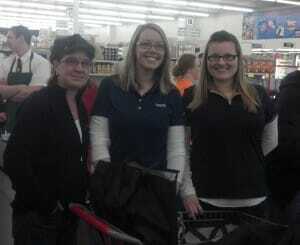
    Julie, Laura, & Amy at the end of the “Breakfast Battle”

    Just yesterday, Latham Hi‑Tech Seeds participated in the 2nd Annual Franklin County Farm Bureau Breakfast Battle.  This event, held in honor of National Food Check-Out Week, promotes the abundance and safety of our country’s food supply.  One interesting fact shared during the event was that each year National Food Check-Out Week is celebrated at the time that most Americans have earned enough of their annual income to purchase all the food they will need in a year.  How fortunate we are to have an abundance of safe and affordable food to be able to pay for it in two months’ time!

    National Food Check-Out Week celebrates the time when most Americans have earned enough of their annual income to purchase enough food for one year.

    Latham Seeds was one of 9 businesses participating in this event.  Battle began early last week with a “Facebook Fan Favorite” poll on Facebook.  Many of you may have seen our calls for help in voting, and we THANK YOU for the great response!  Latham Hi‑Tech Seeds was voted “fan favorite” of the event – an honor we’ve captured for the second year in a row.  Team Latham edged out the number two team this year by almost 10 votes, receiving 10 seconds off our total time.

    Yesterday at 8 AM teams met at Fareway in Hampton, Iowa, to compete in additional events including a challenging round of Ag Trivia.  Each correctly answered question was worth 10 seconds off your grocery shopping time for the latter part of the competition.  While the questions were tough, the Latham team brought down one correct answer for an additional 10 seconds off our total time.

    The next step of the competition required each team to draw a menu from the stack.  Our menu consisted of Chewy Granola bake for breakfast; lunch was a Creamy Egg Salad sandwich; and supper was Creamy Chicken and Vegetables.  The challenge then was to race through the store selecting each of the required ingredients while spending between $45 and $50.

    This year’s competition was even more intense than last year!  While we didn’t come in first place, we did a great job of selecting items with a total of $46.66.  Nine families will receive groceries and additional monetary donations collected through this event will go to neighboring food banks.

    Having another battle under our belt, team Latham is feeling experienced and has already begun training to “do battle” again in 2014!

    Team Latham

    February 28, 2013
    Agriculture, General, Industry News
  • Latham Hi‑Tech Seeds

    Will March 1 be Armageddon for Agriculture?

    The countdown is on… just three days remain until the “world ends” due to sequestration.  Who knows what will really happen on Friday, March 1?  There have been so many threats made about the Federal budget; half-truths and mistruths abound.

    Reading the White House fact sheet on how the sequester would impact the middle class, jobs and economic security could make a person question whether anyone will be able to survive.  The last news release I read talks about cuts to education, small business, food safety, mental health, and the list goes on – and on!

    U.S. Secretary of Agriculture Tom Vilsack, in an article posted Feb. 21 on agweb, said the USDA might be forced to make big cuts to its budgets that will disrupt service to farmers and consumers including:

    1. Food safety;
    2. The Farm Bill; and
    3. Small businesses, which could have a negative impact especially on rural communities.

    What troubles me the most is that all of the areas on the chopping block are vital to some American or some U.S. industry.  Meantime, expenditures like aid to foreign countries and less vital programs, are never mentioned.

    There are claims that we will have food shortages and many problems with food safety due to a lack of Federal workers.  A potential furlough requiring every meat and poultry inspector nationwide to stay home for two weeks could effectively shut down the meat industry.  These particular claims concern me since my livelihood is based on producing pork.

    Consumers must be able to purchase food from the meat counter with confidence, so that we’ll continue to have strong markets for our products.  But wait… Some have said that Americans would be healthier with less meat in their diets.

    “A meat industry shutdown would actually give consumers — and their bodies — a much-needed break from the foods that are causing our nation’s worst health problems,” writes Susan Levin on thecalifornian.com.

    Talk about misleading!  It’s clear from reading Levin curse “factory farms” that she’s never visited with a family farmer like myself.

    Why can’t we just agree that eating healthy can include meat as a very good source of protein and vitamins?  Eating fruits and vegetables play an important role in a healthy, and getting enough exercise should always be one’s goal.  “Balance” and “moderation” are often overlooked in favor of self-interest and special interests groups.

    This whole process of “working on the federal budget” has turned into a publicity stunt.  There will be disruption and hardships for many people as a result, but it’s doubtful that we’ll starve.  Food is still being produced by farmers like me.  Grocery stores will remain open. This country will eventually move ahead.  But, the next few days will be telling as to whom and what floats to the top!

    Larry Sailer, Musings of a Pig Farmer

    February 26, 2013
    Agriculture, General, Industry News
  • Latham Hi‑Tech Seeds

    Goal: To Consistently Raise 300-Bushel Corn

    PeterBixel1
    Peter Bixel

    Farmers throughout history have raised corn yielding 300 bushels per acre (bu/A).  In 1985, Illinois farmer Herman Warsaw produced corn yields of 370 bu/A.  Warsaw spent years working toward his goal.  He patiently built up soil nutrition and tilth for better plant health.

    So what do we need to do to raise 300-bushel corn?  Like Warsaw, we must commit to plan.  Our plan must involve soil fertility, which takes into account nitrogen and micronutrients.  Weather dictates when nitrogen (N) can be applied, its availability to the plant and its usability by the crop.

    Nitrogen loss can occur immediately after application, and leaching can occur after N has been incorporated into the soil.  That’s why renowned corn yield researcher Dr. Fred Below uses a stabilizer when applying his nitrogen.  His fertility program also includes aggressive rates of Phosphorus (P) and Potassium (K) to push for higher yields. Potassium is very important but is often lacking, especially in a drought year like 2012.

    “As growers, we need to look at agronomy first.  It’s important to build a good database for each field, understand interactions of nutrients and use the tools to apply the agronomy,” said Ron Olson, who was one of the first consultants nationwide to use GPS/GIS tools to assist farmers in managing Precision Ag databases.  From 1974 to 1996, Ron owned an independent agronomic consulting company based in Illinois.

    Today Ron serves as Research and Development Manager – New Products for the Mosaic Company.  During a recent presentation in Des Moines to Seed-2-Soil and SciMax client, Ron admitted that a lot of work must be done to consistently achieve 300-bushel corn yields.  However, he says taking incremental steps will lead to higher yields overall.

    Nutrient management is key to increasing yield, according to research done in cooperation with Dr. Below and the University of Illinois.  This research uses “omission plots” that compare corn both with and without fertilizer, fungicide, insecticide and seed treatments.  While yields increase with each of these additions, fertility has the most impact.

    In addition nutrient management, other factors influence yield.  Click here to see Dr. Below’s 7 Wonders of the Corn World, which are the seven factors that have the most influence on yield.

    Team Latham

    February 25, 2013
    Corn, Crop, Fall, General, Season
  • Latham Hi‑Tech Seeds

    Living the Dream on a South Dakota Farm

    Marc and Michelle Mack

    Whoever said, “You can’t always get what you want,” hasn’t met Michelle Mack of Watertown, South Dakota.  The daughter of a Naval officer, Michelle and her brother lived many places throughout their childhood.  Michelle dreamed of living in one house, with a big yard, and lots of playmates.

    Fast forward a few decades and today Michelle is living her dream along with her husband of 25 years.

    The happy couple has lived on the Mack home place since Marc’s father, Lon, retired about 15 years ago.  Marc and his brother Leon have owned and operated Mack Farms since 1998, but like most “retired farmers,” Lon is still active with the family’s operation.

    Mack Farms grows wheat, corn, soybeans and alfalfa.  The family also raise stock cows and finish cattle.  Marc takes the most active role with the crop side of their operation, and Leon is more involved with the cattle.  They have two full-time employees, Marc’s brother Leroy and Marc’s son Aaron.  They also rely on help after school and during breaks from Marc’s third son, Alex, and Leon’s third son, Seth.

    Marc and Michelle have 11 children, ranging in age from 25 to 5:

    1. Aleigha, 25, married Jordan Hallberg on the first of February.  She graduated from South Dakota State University (SDSU) last December and works for the Clark School District.
    2. Ashlynn, 22, is student teaching in Watertown.  She will graduate in May from Mount Marty College.  “She has blessed us with two beautiful grandchildren, Mya and Isaac,” says Michelle. Mya is 3½ years old and Isaac is 2.
    3. Austin, 21, is finishing his sophomore year at SDSU where he’s majoring in construction management.  He took off a year from college to attend basic training and Advanced Individual Training (A.I.T.) upon joining the National Guard.
    4. Aaron, 20, enrolled at SDSU but decided to instead pursue his passion for farming.  He now works full time on the family farm.
    5. Alex, 17, is a high school senior.  He plans to attend Lake Area Tech next year agriculture.
    6. Arica, 15, is a sophomore.  Michelle says Arica is her right-hand in the home and often cares for her younger siblings.
    7. Aydan, 14, is an 8th grader at Watertown Middle School.  He just finished his second wrestling season 15-3.
    8. Aspen, 9, is a fourth grader.
    9. Autumn, 8, is a third grader.
    10. Ava, 7, is a first grader.
    11. Addison, 5, attends pre-K classes.

    “I don’t think I was ever on a farm until I met Marc, but I love being able to raise our kids here,” says Michelle, who lived in town and taught preschool before she was married.  Now she teaches Religion three days a week at Holy Rosary Catholic School.  When she’s not busy teaching or chauffeuring kids to school, sporting events, Girl Scout meetings or 4-H activities, Michelle can be found in the kitchen.

    Each family member has a favorite meal, but the one they all agree on is Prime Rib.  Today Michelle is sharing that beef recipe, plus recipes for her favorite salad and dessert, with TheFieldPosition.com.

    Perfect Prime Rib Roast

    • 1 prime rib roast (any size)
    • season roast with Spicecraft Prime Steak & Beefburger Seasoning

    Place roast, uncovered, in a 375° oven.  Leave the oven on for 1 hour only.  Turn off the over but DO NOT open the oven door under any circumstances!!!  Leave in for 2-3 hours.  Before serving, turn oven to 300°.  Cook an additional 45 minutes for rare, 50 minutes for medium, or 55 minutes for well done.  Take meat out immediately as it will continue to cook.  Enjoy!


    Cherry Pie Bars

    Cream:

    • 1 cup butter
    • 1½ cups sugar
    • 4 eggs
    • ½ teaspoon salt
    • ½ teaspoon vanilla
    • ½ teaspoon almond extract

    Blend:

    • 1½ teaspoons baking powder
    • 3 cups flour

    Additional Directions:

    • Add dry ingredients to the creamed mixture.
    • Spread 2/3 of this mixture in a greased 11×15 pan.
    • Spoon one can of cherry pie filling over mixture in
    • Then spread (spoon) remaining dough randomly over the top
    • Bake at 350° for 20 minutes.

    After the bars cook, drizzle them with this icing:

    • ½ cup melted butter
    • 2 teaspoons vanilla
    • 1½ to 2 cups powdered sugar

    COOK’S NOTE:  Mix all three ingredients together.  If icing is too thick, add a bit of Half & Half or milk to thin it.  My kids love these!

    Team Latham

    February 22, 2013
    Desserts, General, Recipes, Sides
  • Latham Hi‑Tech Seeds

    “The Accord” Shows How Group of Committed Citizens Can Impact Policy

    There are so many political issues that impact not only the seed industry, but agriculture in general, that it’s important to engage in the political process.  We must let legislators and rule makers know how proposed laws and rules could and do impact our business.  Sometimes they have good intentions, but their laws or rules have unintended consequences.

    We can become so involved with the day-to-day tasks involved with running our businesses and farms that it can be difficult to follow issues and anticipate how they might impact our livelihoods.  However, we must make time!  We can’t just rely on paid lobbyists to represent our best interests.  While lobbyists play an important role, they can’t entirely replace a constituent’s voice – or vote.

    Remember these famous, wise words of Margaret Mead:

    Never doubt that a small group of thoughtful, committed citizens can change the world; indeed, it’s the only thing that ever has.

    During the Iowa Seed Association’s (ISA) annual meeting last Wednesday in Des Moines, John Latham spoke about several issues of interest to seed professionals in attendance.  Three issues that could have the largest and/or most immediate impact on the seed industry are: (1) the Accord; (2) food labeling; and (3) seed treatment stewardship.

    Today I’ll focus on the Accord, which will allow access to seed technologies after a patent on technology expires.  The Accord went into effect on Nov. 15, 2012.  A news release announcing this landmark agreement opens by stating:

    The Biotechnology Industry Organization (BIO) and the American Seed Trade Association (ASTA) announced today that the Generic Event Marketability and Access Agreement (GEMAA) is now effective. Following its launch on October 31, five BIO and ASTA member companies and agriculture biotech providers – BASF Plant Science, Bayer Crop Science, Dow Agro Sciences, DuPont Pioneer and Monsanto Company – have all signed on as signatories.

    Why does this matter?  Here’s my personal take…Roundup Ready® soybeans, the world’s most widely adopted biotech trait, is set to go off patent soon in the United States.  Monsanto, which first development this technology, in 2009 introduced second-generation Roundup Ready soybean technology.  This means Monsanto is developing new soybean products based off the Genuity® Roundup Ready 2 Yield® technology platform, and Monsanto is licensing this next-generation technology to companies like Latham Hi‑Tech Seeds.  Companies like Pioneer and several universities have breeding programs based off the original Roundup Ready platform, so the Accord allows them to continue offering soybean brands containing the original Roundup Ready trait.

    The Accord creates a process based on binding contractual relationships, so regulatory and stewardship obligations are maintained.  It encourages innovation among biotech providers as they invest in product development.  It provides technology choices to seed companies like Latham.  And, it means farmers will be able to purchase soybeans with some form of the Roundup Ready trait even after the patent expires.  Win, win, win!

    Team Latham

    February 21, 2013
    Agriculture, General, Industry News
  • Latham Hi‑Tech Seeds

    Bidding for a Cause

    ISU Bid Tix1

    Today through Friday, you can bid for your chance to get tickets to the Iowa State Men’s Basketball Game which is next Monday. All the proceedes will go to the American Cancer Society. The Bid is now up to $125 so make sure you click on the picture to bid. (comments on this post will not count towards the bidding)

    On your marks… Get set… BID!

    Team Latham

    February 20, 2013
    Agriculture, General, Industry News
  • Latham Hi‑Tech Seeds

    For the Love of Food: Farmers & Consumers Must Bridge the Communications Gap

    MichaelLibbe1

    “Musings of a Pig Farmer”
    By Larry Sailer

    Michele Payn-Knoper, Michael Libbe and Larry Sailer share “food love” on Valentine’s Day. Michele is author of “No More Food Fights!” and Larry is one of 35 contributing writers. Michael is host of “Insight on Business.”

    Last Tuesday I wrote a blog about how farmers spend their time when there aren’t any crops in the fields.  I mentioned that winter is the “meeting season,” and today I want to share highlights of one particular meeting I had on Valentine’s Day in Des Moines.  I got to share some “food love” while making media visits with Michele Payn-Knoper (pronounced “Pain – Ka-nope-r”).

    A food and farm advocate, Michele wrote No More Food Fights! Growing a Productive Farm & Food Conversation.  This is the first-ever book to speak to all sides of the food movement in an attempt to bridge the divide between farmers and consumers.  I had the honor and privilege of being one of 35 contributing editors.  Chefs, registered dieticians and Olympic athletes also share their stories.

    “Food and farming seem to have become the new politics and religion,” says Michele during an interview last Thursday with Michael Libbe, host of Insight on Business.  “You don’t dare talk about it with people because you don’t want to get your friends upset with you.  That’s really unfortunate.”

    More than 98% of Americans are several generations removed from first-hand farming experiences and very few have even visited a farm.  Most are very disconnected from and distrusting of modern agriculture, writes Michele in a No More Food Fights! news release.  At the same time, Michele says many farmers have done a poor job of talking about today’s farming practices.  Not enough farmers are taking advantage of tools like social media that could help facilitate connections to the farm that food buyers crave.

    To satisfy your own craving for knowledge, check out No More Food Fights!  It’s providing me with great insight as I work to bridge the communication gap with consumers through social media and presentations.

    That reminds me… I’m looking forward to getting together Friday evening and all day Saturday with fellow #agnerds and #agvocates at the AFC Upper Midwest Regional Conference.

    Before I head north to that conference in Minnesota, I must head south for another meeting.  Today I’m making about a 90-minute trip south to the Statehouse in Des Moines where Iowa Farm Bureau members will visit elected officials.  Side note: Anyone can be a member of Farm Bureau.  You don’t need to be a farmer to become part of the IFBF’s grassroots efforts either.  Members can sit in on board meetings or even go to the member section of the web site and voice your opinions on topics ranging from education to what our kids (or grandkids in my case) eat in school. #Schoollunchrules

    Thursday, in the middle of a forecasted blizzard, I’m planning to attend a PQA Plus continuous improvement program for pork producers.  Although I’m not due to renew my CEU’s, this class is being held right within 10 minutes of my farm.  That’s too good to pass up!  I can always learn something.

    This busy week is sure to be disrupted by weather, but we’ll “play the hand that Mother Nature deals us.”  How’s your week looking?

    Larry Sailer, Musings of a Pig Farmer

    February 19, 2013
    Agriculture, General, Industry News
  • Latham Hi‑Tech Seeds

    Maximize Yield on Every Acre with Integrated Systems

    IFS logo1
    Peter Bixel

    by Peter Bixel, Seed-to-Soil® Lead

    Dale Sorenson, Commercial Breeding Lead for Monsanto, last week talked with a group of Seed-to-Soil and SciMax clients about maximizing yield potential on every acre through integrated farming systems. Integrated Farming Systems include:  improved weed management, pest protection, disease protection, stress tolerance, and increased yield potential.

    One technology to help maximum yield potential is Roundup Ready® Xtend Crop System for soybeans.  Also in Monsanto’s pipeline is Corn Rootworm III Technology, designed to complement current commercial traits.  This “next generation corn rootworm technology” will attack corn rootworm through a new mode of action using a natural process different than Bt.

    New programs for Goss’s Wilt protection and Gray Leaf Spot resistance also are in the pipeline.  . Monsanto’s Ag Biologicals Platform is focusing on BioDirect™, which is designed to target glyphosate-resistant weeds for better control.  BioDirect™ was also seen to provide protection against insect pests and reduce symptoms of viruses.

    While weed management and pest protection are certainly two important factors when maximizing yield potential on each acre, seed selection is perhaps the single most important factor.  Traited products from Latham Hi‑Tech Seeds combine industry-leading genetics with industry-leading traits from technology providers like Monsanto.

    NOTE:  Not all traited products offer rootworm protection. Herculex I, for example, has resistance/tolerance to Liberty, Roundup and corn borer. Herc 1, however, does not protect against corn rootworm. A person can’t just assume that a “Bt hybrid” will have rootworm protection.

    Take some time now to review what seed you’re planning to plant in which fields.  Planning pays!  Seed can have a 700% return on investment… What else does?

    Webspec Admin

    February 18, 2013
    General, Herbicide Technology, Industry News, Seed Technology
  • Latham Hi‑Tech Seeds

    Celebrate Any Holiday with Kourtney’s Cupcakes

    Kourtney Determan, Latham Seeds’ 2012 summer intern, loves experimenting with cupcake recipes. Photo by Darcy Dougherty Maulsby for “Farm News.”

    Name a holiday or a special occasion and chances are, Kourtney Determan can bake a cupcake that’s perfectly fitting for the occasion.  She’s been baking people happy since she was 8 years old and completed a 4-H cooking project.  Her mom, Barb Determan, served as club leader for the Early Achievers 4-H club in Sac County, and the tradition continues.  Today Kourtney helps her mom lead the 4-H club, and she’s still crazy about cupcakes.

    A senior at Iowa State University majoring in ag communications, Kourtney has literally made friends and raised money with her baking talents.  Her homemade cupcakes and cookies have helped raise money for ISU’s Relay for Life cancer research fundraiser, and co-eds who have helped shovel snow have been rewarded with sweet treats.

    “I wanted to thank the fraternity guys who helped shovel snow and ice away from our (sorority) house, so I baked them some of my family’s famous chocolate cookies,” says Kourtney in a recent Farm News article.  “The guys were so thankful, and it’s the first time it clicked with me that homemade food is a big deal.”

    Kourtney’s friends have compared her to the top competitors on the Food Network’s “Cupcake Wars.”  Now you can be the judge!  Follow Kourtney’s “Cupcake Galore” board on Pinterest.  Then try your own hand at baking someone happy!

    Since Valentine’s Day was just yesterday, I couldn’t help but notice all of the ideas Kourtney has filed on Pinterest: recipes for Sweetheart Cupcakes, tips to making heart-shaped cupcakes, ideas to make heart-filled cupcakes with fresh strawberries, Red Velvet cupcakes, cupcake bouquets, and the list goes on!  I’m looking forward to trying S’more Cupcakes.  You can bet I’ll also try her trick for “edible glitter” at an upcoming Girl Scout meeting.  The hardest part will be deciding which recipe to try first!

    Today on TheFieldPosition.com, we’re featuring one of the recipes Kourtney has pinned for Cherry Pie Dark Chocolate Cupcakes.  Bake up a batch of these in honor of President’s Day on Monday, Feb. 18, and George Washington’s birthday on Friday, Feb. 22.

    Also feel free to share your own cupcake recipes with us.  You can post them to our Latham Seeds’ Facebook page or e-mail them to me at shannonl@lathamseeds.com.

    Team Latham

    February 15, 2013
    Desserts, General, Recipes
  • Latham Hi‑Tech Seeds

    Pursuing Season-Long Protection from Nematodes

    Map1
    Average Nematode Risk in the U.S.

    While perusing some ag chat sites this week, we came across the following questions posted by a Midwest farmer.  Today Latham Product Manager Mark Grundmeier answers questions that are top-of-mind with farmers.

    Q:  Is treating seed corn with VOTiVO® enough to protect the crop from nematodes throughout the growing season?  Extremely high numbers of nematodes have been confirmed on one of our farms.  We have ordered our corn seed for 2013 treated with VOTiVO.  What else should we do to eliminate nematodes, if possible?  This is by far the biggest yield robbing problem I have ever seen.  I thought Gray Leaf Spot was a big yield robber, but it’s nothing compared to the damage done last year by nematodes.  It was deceiving because symptoms all showed signs of drought, even under full irrigation and compaction.

    A:  One reason nematodes are difficult to control is because stunted, yellowing, wilting corn is often mistaken for something else, such as drought in this case.  Therefore, nematodes often go undetected and the yield-robbing situation multiples – literally.

    Nematodes are a growing problem across the Midwest, most likely due to trends of no-till farming.  Nematodes are sensitive to soil disturbance, so they tend to thrive in no-till situations.  Crop rotation isn’t an effective form of management as corn nematodes also feed on soybeans and grasses.  So what is an effective way to manage corn nematodes?

    A new management option is using a seed treatment that moves onto the roots to provide early season protection against nematode feeding, says Dr. Greg Tylka from Iowa State University.  Poncho®/VOTiVO® seed treatment protects young plants from pests during critical early development stages, leading to healthier root development and stronger stands.

    VOTiVO seed treatments act like a barrier, preventing nematodes from attaching to corn roots.  Applied directly to the seed, it helps prevent damage to early-season seedlings and roots before pests can strike.  Nematicides on the other hand, actually kill the nematodes on contact.  Avicta® from Syngenta Seedcare is a nematicide seed treatment that moves on the surface of the root.

    Key benefits of Poncho®/VOTiVO® seed treatment:

    • Immediate Protection – Systemic agent protects valuable seed from the moment it’s planted
    • Pest Control – Biological agent creates a living barrier of protection against a wide range of nematodes, including Soybean Cyst, Root Knot and Reniform nematodes
    • Yield Potential – Promotes healthier root systems and a more vigorous and uniform crop, positively impacting yield

    Benefits of Avicta® Brand Seed Treatments:

    • Avicta Complete Corn is a combination of Avicta nematicide and CruiserMaxx® Corn 250 (Cruiser® 5FS insecticide & Maxim® Quattro fungicide). It is also available with a higher rate of thiamethoxam for enhanced insect protection (0.5 mg ai/seed and 1.25 mg ai/seed respectively).
    • Provide instant protection against a wide variety of damaging nematode species
    • Consistently protect against a broad range of early-season insects and disease pathogens
    • Proven to help increase plant stand, vigor and yield potential
    • Much of the corn plant’s yield potential is determined in the early growth stages. Avicta Complete Corn provides immediate protection from day one.

    The higher the population of nematodes, the greater the chances are that nematodes will break the barrier created by VOTivO.  So when extremely high populations of various species of corn nematodes are present, it may be beneficial to use both a seed treatment and a planter-applied nematicide.

    Studies by Iowa State University show nematode management products may have a more pronounced beneficial effect in fields with very damaging nematode species and in fields with much greater plant-parasitic nematode population densities.

    Webspec Admin

    February 14, 2013
    Agronomics, Corn, Crop, General, Insects, Soybeans
Previous Page
1 … 91 92 93 94 95 … 160
Next Page

Latham Hi‑Tech Seeds

131 180th Street | Alexander, IA 50420

(641) 692-3258

SIGNUP FOR OUR NEWSLETTER
  • Contact
  • Legal
  • Dealer Center
  • Seedware Login
  • Latham Gear

© 2025 Latham Hi‑Tech Seeds. All rights reserved. | Iowa Web Design by Webspec | Privacy Policy

Latham® Hi-Tech Seeds is a trademark of M.S. Technologies, L.L.C., 103 Avenue D, West Point, IA 52656.