Latham Hi-Tech Seeds

(641) 692-3258

  • Home
  • Products
    • Corn
    • Soybeans
    • Soybean Blends
    • Alfalfa
    • Corn Silage
    • Seed Guide
  • Performance
  • Find a Rep
  • Media
    • Blog
    • News
    • Videos
    • Podcasts
    • TECHTalk
  • About Us
    • Company History
    • Our Mission
    • Careers
    • Become a Rep
    • Sowing Seeds of Hope
  • Contact Us
  • Latham Hi‑Tech Seeds

    10 Ways to Fight Cabin Fever

    SpringBackground2Last week my kids had three Snow Days. Fortunately, the temperatures were warm enough that they could actually go ahead and enjoy the snow. They built a snowman. They made a snow fort in large drifts. They also played King of the Hill with our energetic Black Lab. Plus, they spent quite a bit of time at the local sledding hill.

    But what’s a person to do when you wake up to wind chills of 35° below zero?

    This week I decided Mother Nature might dictate the weather outside but she wasn’t going to control my mood – at least anymore! Instead of plopping on the couch in front of the television after supper on Monday, I grabbed a bucket of Murphy’s oil soap and scrubbed my kitchen cupboards. The next morning I awoke extra early to take down all of our light fixtures and wash them before work. It’s amazing how much better I felt after seeing my kitchen sparkle!

    When I posted my “spring cleaning status” on Facebook, many of my friends posted their ideas.

    1. Update Facebook cover photo with a beach scene. There are few things more beautiful (in December and January) than a fresh blanket of snow on farm fields and barn roofs. After pushing snow and doing chores in the cold for weeks on end, however, white sand beaches now sound more appealing! I updated my Facebook cover photo, so I’m virtually transported to a beach each morning. 🙂
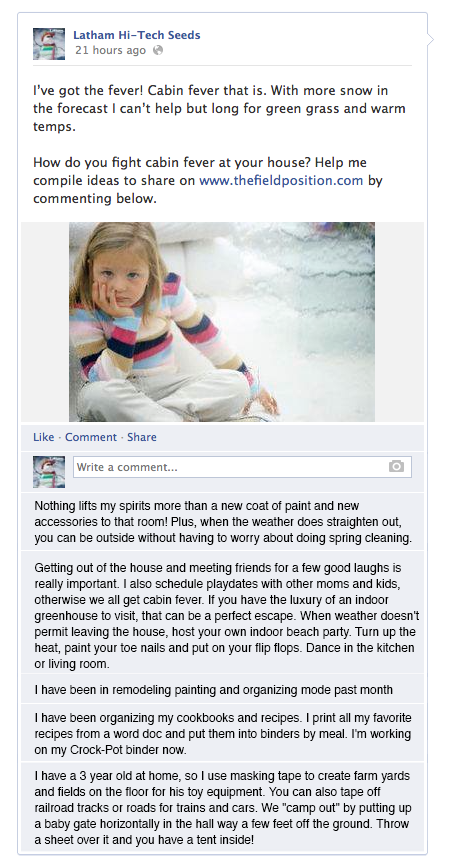
    2. FacebookCommentsPaint yourself happy. A few weeks ago, I picked out a beautiful blue color palette for a room in our house. The walls are now light and airy, plus I’ve brought nature inside by decorating with bird nests and pussy willow.
    3. Lighten the fare. Usually, I look forward to snow days so I can bake and cook for our kids and their friends. Cheeseburger Chowder, baked tacos, brownies and chocolate chip cookies are among their favorites. But after numerous snow days this winter, I’m starting to feel heavy! That’s why I’m searching for new recipes that are full of color like Sunshine Chopped Salad and Mediterranean Chicken Skillet by Iowa Girl Eats.
    4. Accessorize.  I recently read an article that “Radiant Orchid” is one of the top Pantone® colors for spring. Feeling as though the four walls were enclosing around me, last night I visited a nearby mall to get a color fix. I tried on a Celosia orange shirt and admired a Kelly green Michael Kors purse. (I should have bought this very purse last Saturday night at the Iowa 4-H Foundation auction.)
    5. Lather up with lotion. Last night I was momentarily transported to Oahu and Maui, Hawaii, by  three new signature lotions from Bath & Body. 
    6. Get creative with cosmetics. Buy new lipstick in a soft pastel or a bright color inspired by spring flowers. I didn’t have time to set down at the cosmetic bar last night, but I plan to do sometime within the next 30 days.
    7. Buy a bouquet. I always look forward to the arrival of tulips and daffodils, but it’s going to be a while before the snow melts and these little beauties peek their heads above the ground. I’m thinking about buying myself a bouquet just to brighten my day! Why should fresh flowers be reserved for occasions like Mother’s Day and anniversaries?
    8. Treat yourself to a spa pedicure and/or manicure.  I’ve been known to schedule customer visits around a trip to Faust Institute of Cosmetology in Spirit Lake. It’s been far too long since I’ve had “happy toes.” Northwest Iowa, here I come!
    9. Order flower and vegetable seeds. April is national gardening month, so it’s time to plot what gets planted. Not only do I need to plot, I need to buy seeds. (I need a lot of seeds since my pumpkin patch will be close to 7 acres this year!)
    10. Haircut and highlights. My mom was a cosmetologist, so she taught me that “highlights in your hair puts spring in your step.” 🙂 Even my 13-year-old daughter finds it fun to get a few highlights.

    How do you fight cabin fever? I’d love to hear your thoughts and suggestions. For more ideas, click on the related posts below.
    Related Posts

    • Fighting Cabin Fever with Fun
    • Fighting Cabin Fever with Food
    • The Cabin Fever App

    Team Latham

    February 27, 2014
    Agriculture, General, Industry News
  • Latham Hi‑Tech Seeds

    Is Big Brother Watching You?

    Watching the Winter Olympics’ closing ceremonies Sunday and hearing some good news from the Ukraine, made me reflect more upon speakers from our recent policy meeting at Farm Bureau headquarters in Des Moines. All of pondering also heightened my concern about how much access to farm data the U.S. has and how it could be used. It’s no secret that Big Brother keeps a close eye on farmers, but recent meetings have unveiled to me that today’s technology is giving government officials access to more farm data than ever.

    “I’m from the government and I’m here to help you.” That was the opening statement made by the first speaker at our recent Iowa Farm Bureau policy meeting. At first, I thought the man was joking. Then I realized he was dead serious.

    Bill Bing, Policy Administration Branch Chief for the United States Department of Agriculture, explained how the new Farm Bill ties crop insurance to conservation. I’m thinking, “No big deal. I farm in a very conscience manner about my soil. I no till when possible, and I try to not waste any resources.”

    But fear started to run like ice through my veins as Mr. Bing explained the power our new Farm Bill gives government employees. Google maps allows government officials to zoom in on particular farming operations, and the level of detail that can be viewed has this old farm boy concerned about “the facilities” behind the barn anymore! If something catches an official’s eye, the government can come on to my property and investigate. (Will the government view that I am polluting the environment by using “facilities” behind the barn? Is this just cause for a search?)

    Bing even went so far as to say that the government wants information from yield monitors in our combines directly linked to their databases! Years of information will be fed into computer and analyzed, so officials can find reason to investigate. And I thought their budget was being reduced!!

    Another speaker at the policy conference was Matt Bechdol, president of GeoSilos, who talked about how data is collected by companies. GPS can enable a vast amount of information to be collected, down to where your tractor is operating, what it’s doing and for how long. New planters can transmit how many kernels of corn is being planted and at what depth. Where does this information go and who has access to it? If a company or entity collects enough of this information about planted acres and yields, it can play the markets or even influence them! (How scary is that?)

    Day 2 of the policy conference delivered the same message by Vickie Friedow, Ag Program Specialist for Iowa Farm Service, and Soil Conservationist Don Carrington from the Iowa Natural Resources Conservation Service: Government pretty much has free access to check out your operation for something they think they have found odd. And while they are there, you can bet the farm they’ll look at any storage tank, piles of spare parts, and your burn pile. What can and can’t be burned on a farm has personally been read to me, and it’s baffling. Don’t try using any common sense to guess what can and can’t be in that pile!

    Yep, today I’m reflecting on Ukraine and Russia. I’m hoping and praying for freedom the Ukrainians have the freedom to farm and sell their products in a way that makes sense, so they can improve their future. There is much potential in the Breadbasket of Europe… Potential I’m hoping and praying we Americans can maintain!

    Larry Sailer, Musings of a Pig Farmer

    February 25, 2014
    Agriculture, General, Industry News
  • Latham Hi‑Tech Seeds

    Be Prepared to Survive Winter Weather

    Photo Source: Ready Wisconsin
    Photo Source: Ready Wisconsin

    Earlier this winter Polar Vortex blanketed the Midwest, followed by subsequent days of below-zero temperatures and dangerous wind chills. Most recently, our region has been hit by a serious of blizzards. These winter weather events remind us just how important it is to carry a Winter Weather Emergency Kit.

    You might think, “I’m just driving 10 miles down the road to check on pigs at another farm.” or “I’ll just run into town for a few supplies.” During inclement weather, it doesn’t matter if you’re whether you’re one mile or 100 miles from home. You can get stranded anywhere, particular in the rural areas many of us travel.

    Whiteout conditions are disorienting. Vehicles have been accidentally hit when motorists have lost their bearings and stopped in the middle of the road. Sometimes we decide we can’t go on, but other times our vehicles simply can’t make it through the extreme weather. Whatever happens, it’s best to be prepared to handle the most extreme circumstances.

    Photo Source: Preppers Warehouse | Sold for $6
    Photo Source: Preppers Warehouse | Sold for $6

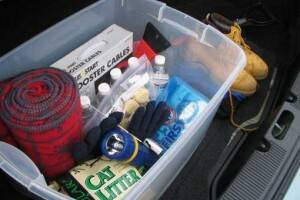
    Keeping a thermal blanket (the one that looks like aluminum foil), as well as a heavy wool blanket plus wool socks in your vehicle is a smart winter survival tactic. Wool helps keep you warm and dry. In fact, wool blankets are commonly used in our ambulances and for winter rescues.

    Not only can winter weather be a hazard for travelers, but we also have to watch our bodies for signs of stress while we’re removing snow. Weather like we experienced last week is literally a heart-attack snow because it’s so heavy and wet. Be extremely careful, so you don’t overexert yourself!

    I recall hearing a story of a stoic, elderly farmer was determined to shovel to his mailbox to get mail after a heavy wet spring snow. He overexerted himself and passed out on a snowbank. The snowfall that day was extremely heavy, and the wind was blowing fiercely. By the time the ambulance arrived, he was covered with snow. He was wet and hypothermic. Fortunately, this story had a happy ending but not all do. Please take precautions to avoid frost bite and hypothermia situations, even in spring.

    March 1 may be just around the corner, but chances are, we’ll experience more snowfall before the grass turns green. Historically in Wisconsin, March is heavy snowfall month. Eleven inches of snow fell here March 7 last year, and snow was on the ground through the end of the month. Watch out for snowdrifts, too.

    Be prepared to survive winter until the final flake falls! Throw extra blankets, matches, snacks and other survival tools into your vehicle if you must travel.

    Shannon Latham

    February 24, 2014
    Agriculture, General, Industry News
  • Latham Hi‑Tech Seeds

    Former FFA Officers “Exert an Influence” by Coming Home

    LisaPetersonFamily

    FFA-Quote

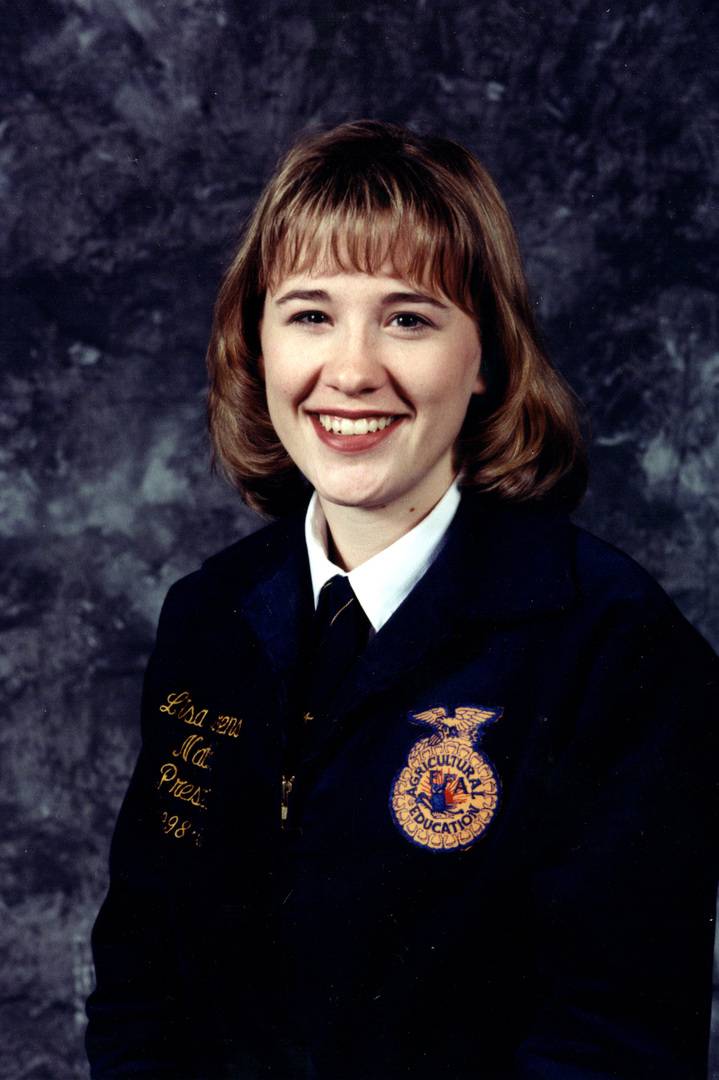
    Lisa Ahrens Peterson as National FFA President, 1988-89
    Lisa Ahrens Peterson as National FFA President, 1988-89

    Lisa Ahrens Peterson and her husband, J.R., didn’t merely recite The Creed as FFA members. They’ve been living each day, for more than a decade, according these very words.

    As a member of the Osage FFA Chapter, Lisa served her local chapter as reporter and president.  She also served as: District Vice President, 1995-96; North Central State Vice President, 1996-97; State President, 1997-98; and National FFA President from 1998-99.

    “All of my job opportunities were as a result of my FFA experiences, and the network of individuals I met through the years. I also believe that I advanced in my career faster because of the skill set I gained through FFA including leadership, public speaking and teamwork.”

    “FFA helped me in college, as well,” adds Lisa. “As a result of my FFA experiences, I was selected for Iowa State University’s President’s Leadership Class. Approximately 30 incoming freshman were chosen and met weekly with President Jischke at his house. I got to know President Jischke very well, and he eventually recommended me for the State Board of Regents. Governor Branstad knew me from my State FFA officer days and recommended me to the Iowa Senate for confirmation. I spent the next 5 years serving on the board. It all began with FFA!”

    FFA is a tremendous vehicle to teach leadership, provide personal growth opportunities, and prepare young people for a career in one of over 300 ag-related careers. Lisa said she’s amazed at the number of people she’s met who credit FFA to their success. One such individual is ISU’s Dr. Neil Harl, a nationally recognized expert on taxation, estate planning, business planning and agricultural law. Dr. Harl credits FFA public speaking contests for helping him cure his stutter.

    LisaPetersonFamily
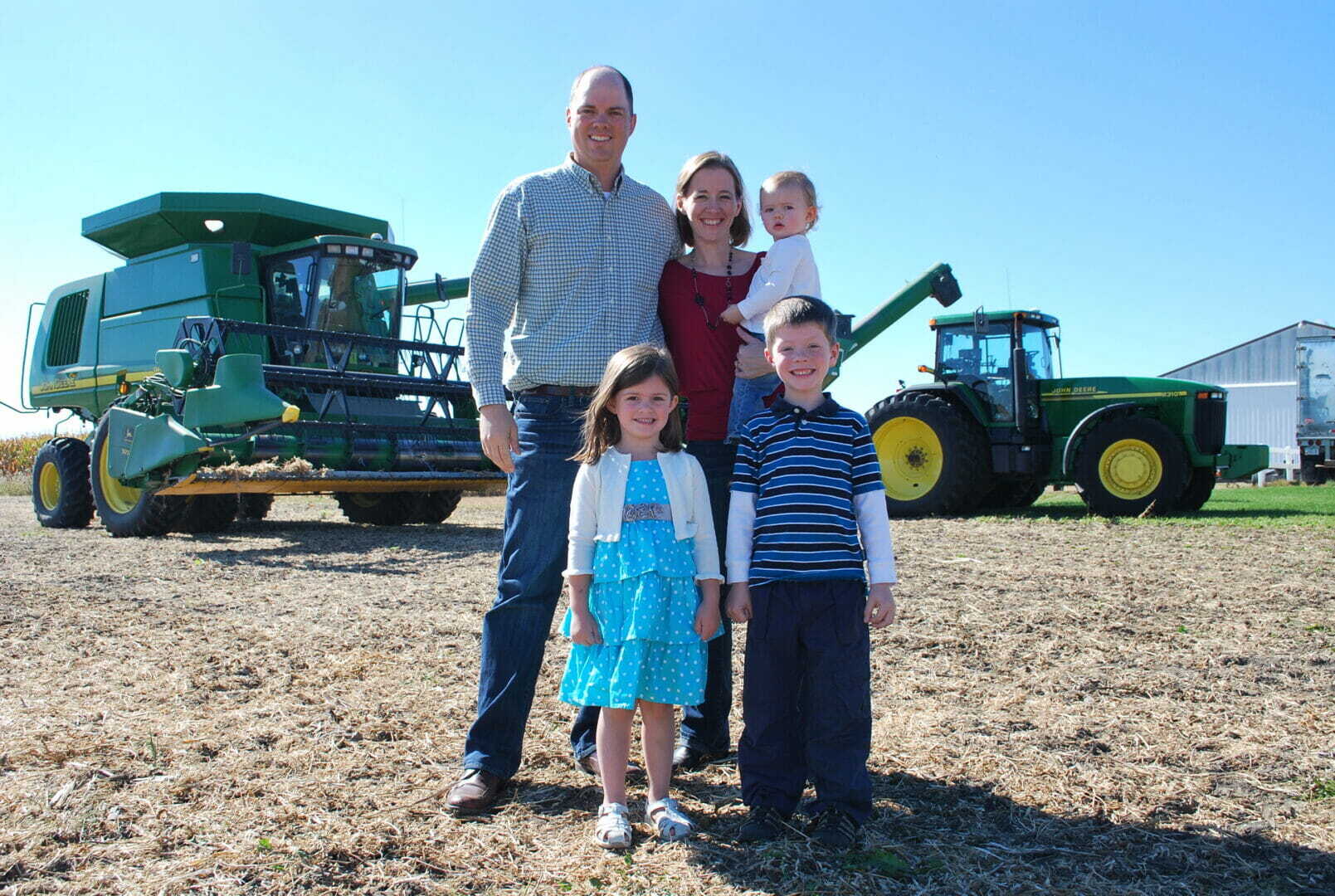
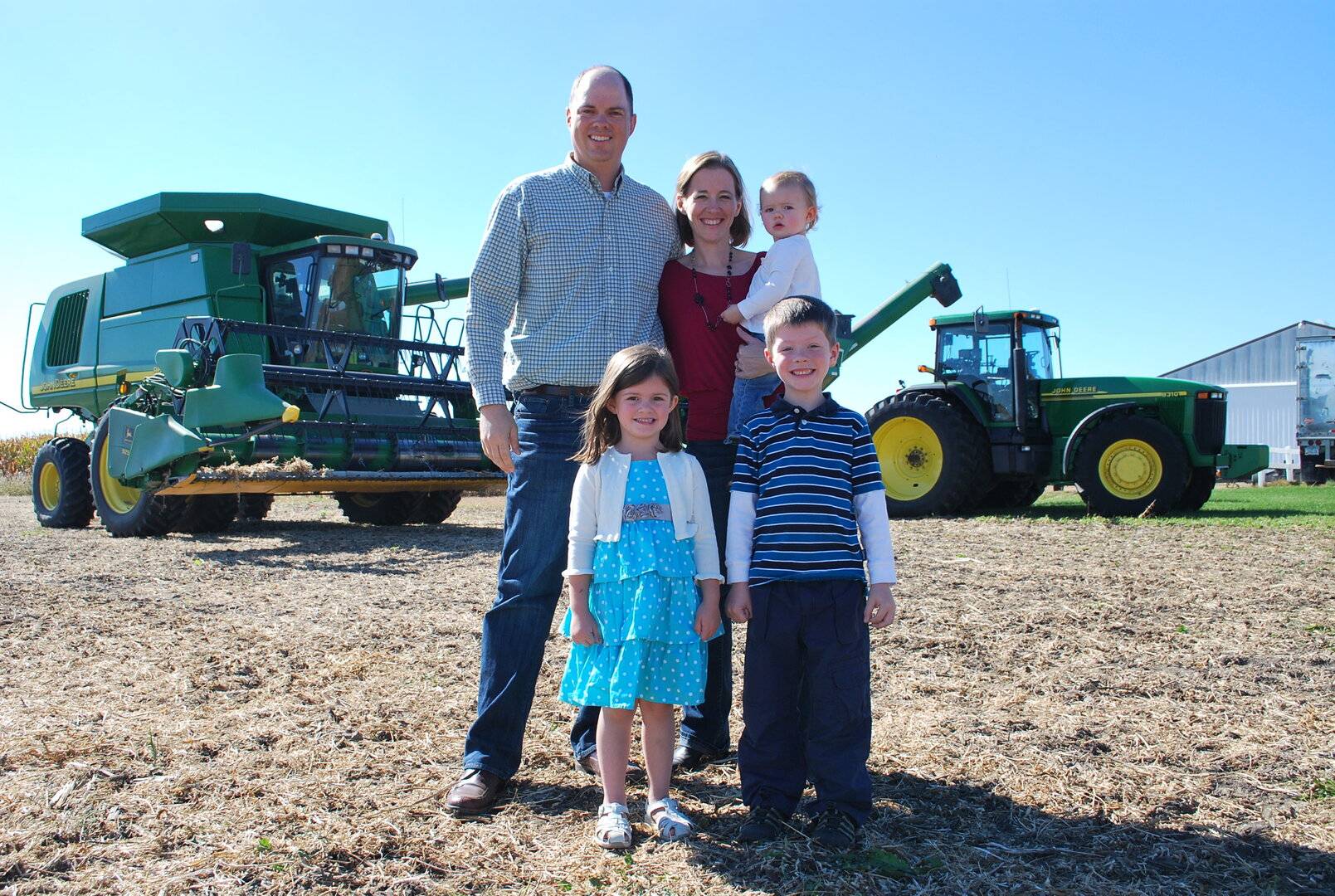
    J.R. and Lisa Peterson are excited about the opportunity to return to their family farm near Osage, Iowa

    Another individual Lisa met through FFA became her husband. She and J.R. met when they were both candidates for national office. Lisa was elected national president, and the National FFA Organization hired J.R. to staff Made for Excellence and the Washington Leadership Conferences. A few years after they were married, J.R. went to work for the National FFA Foundation as Director of Corporate Contributions. Lisa worked for Dow AgroSciences for one year, and then joined the Agri Business Group (ABG) as a senior business analyst. ABG became part of Adayana, and Lisa worked there for nine years.

    After her children were born, Lisa chose to work part-time for Adayana as special projects manager. Today Lisa is proud to have the title of “stay at home mom” for three: Ethan, 6; Anna, 4; and Elise, 18 months. She also feels blessed to return to the farm where she was raised.

    “I am now the third generation to live on this farmstead and in this house!” says Lisa with excitement. “I love the freedom we have to let kids go outside and play. I also love the opportunity to teach them the value of hard working and working together as a family to get the job done. I also cherish the ability to foster their love of agriculture and provide them with an understanding of where their food comes from. “

    In addition to agriculture, J.R. and Lisa share a passion for travel. Lisa’s hobbies also include reading, exercising and gardening. She enjoys the fruits of her labor all year-long through canning and freezing. Today Lisa is sharing with us one of her new favorite recipes because it’s quick, easy, and healthy!

    Team Latham

    February 21, 2014
    General, Poultry, Recipes
  • Latham Hi‑Tech Seeds

    Corn. Soybeans. Corn. Soybeans.

    Soybeans harvest

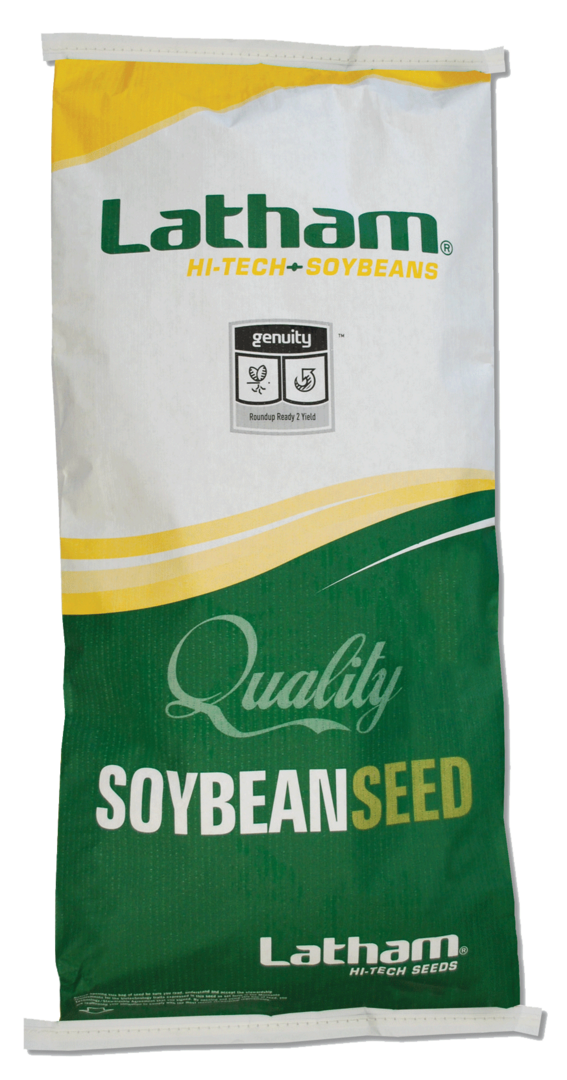
    Soybean_BagLike a pendulum swinging on a clock, many farmers are still going back and forth about which crop to plant this spring.

    Unlike corn, which has seen large price declines in recent months, soybean prices have held stronger. That’s why some experts say continuous corn ground will go back to soybeans this spring. Other experts says there is a potential for 9 million acres of farmland that didn’t get planted in 2013 to be planted to corn in 2014.

    Regardless of which crop Midwest farmers choose to plant, Latham Hi‑Tech Seeds has a full lineup of products available to meet your needs for 2014 planting. The quality of Latham® products has never been better – and it’s a difference you can literally see! Latham’s production facility doesn’t operate when the weather is below 10 degrees and that leads to higher germinating soybeans. As a result, Latham soybeans had 10 to 15 percent higher germinations in 2013. We expect to see similar results in 2014 since there have been so many days with temperatures below zero this winter.

    “Quality” in the bag leads to performance in the field. We believe it so strongly that we print the word “quality” on every bag of Latham Hi‑Tech Soybeans! Rest assured you can count on Latham to deliver the highest quality seed products. During changing and uncertain times like this, you can find comfort in working with a family-owned company that’s been in business for nearly 70 years.

    John Latham, President

    February 20, 2014
    Corn, Crop, General, Soybeans
  • Latham Hi‑Tech Seeds

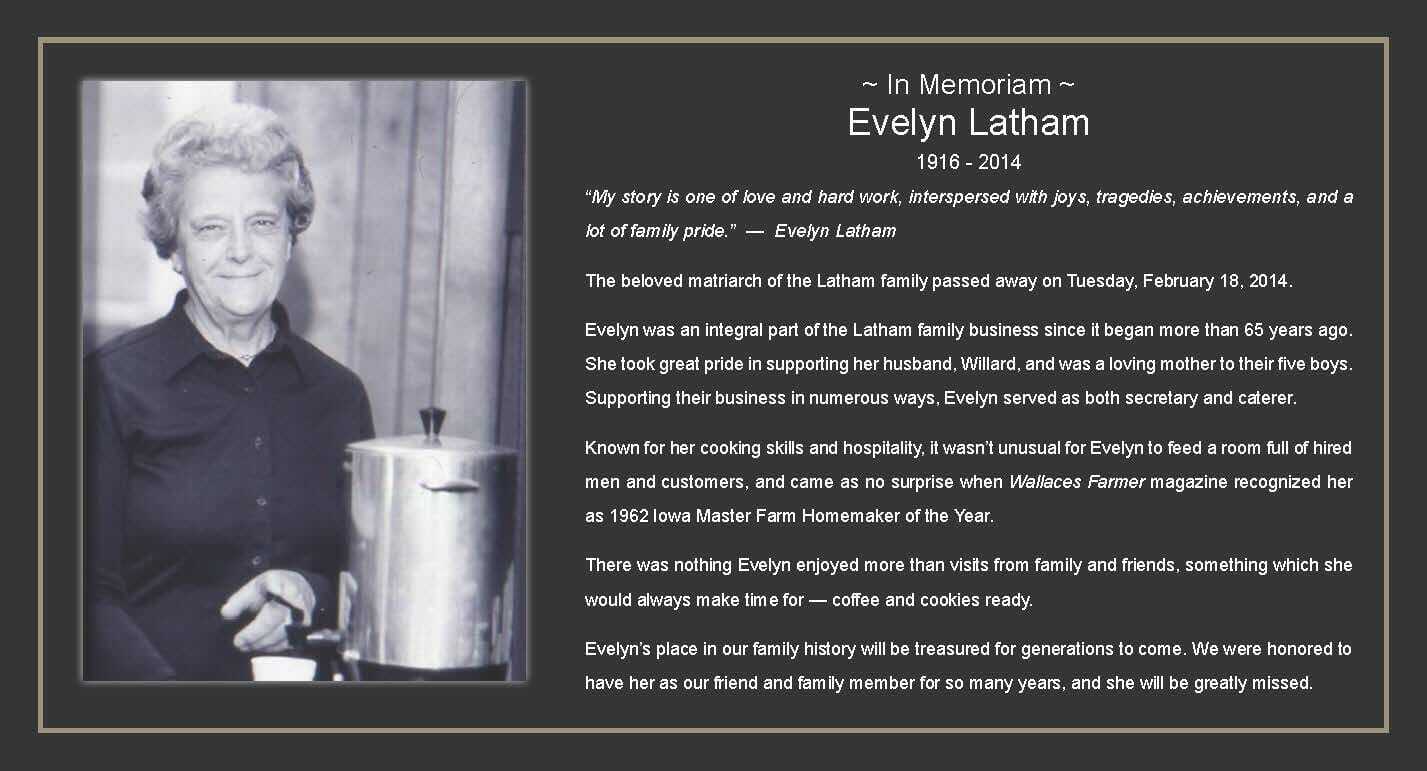
    A Story of Love and Hard Work

    LATHAM EvelynLatham Memorial F HiR

    Evelyn Latham Passes Away

    Team Latham

    February 19, 2014
    Corn, Crop, General, Soybeans
  • Latham Hi‑Tech Seeds

    Grassroots Efforts Lead to Better Representation

    IFBF policy
    IFBF policy
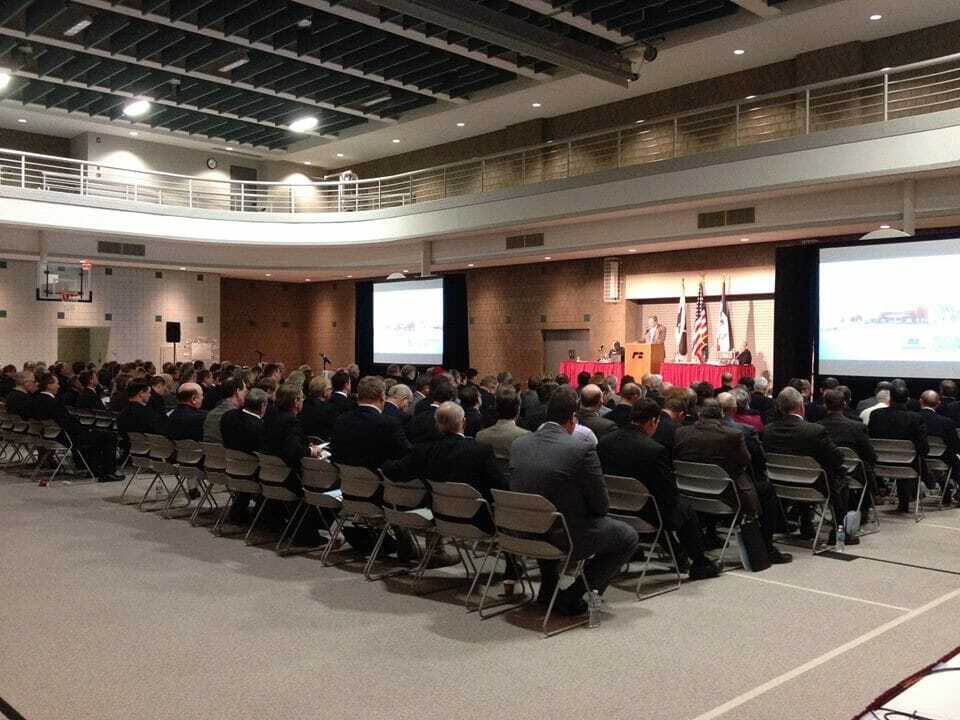
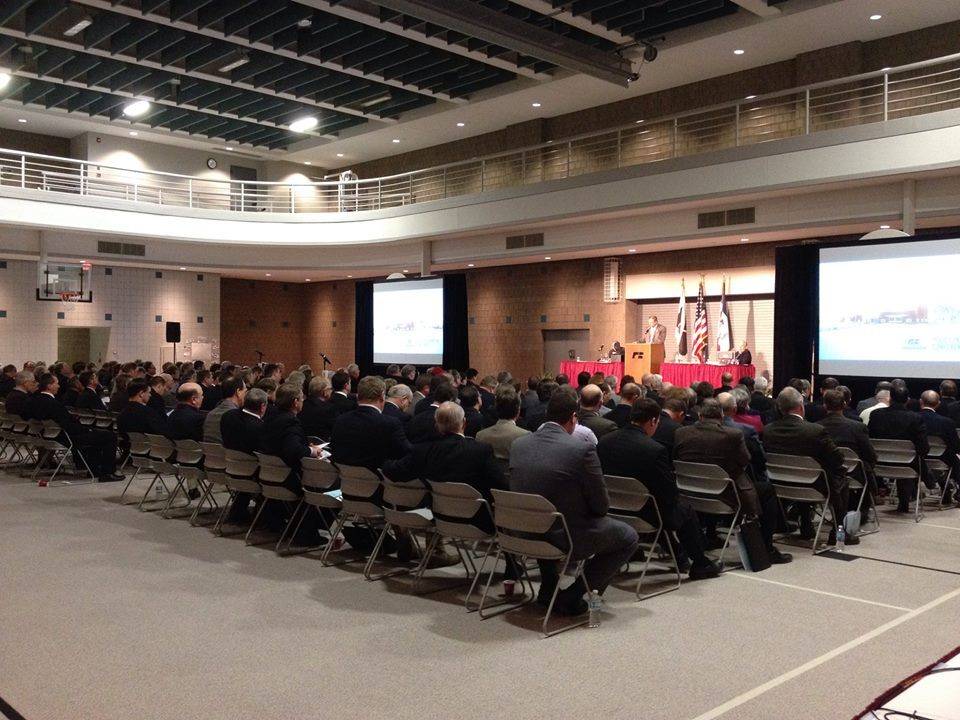
    Iowa Farm Bureau delegates, who attended last week’s meeting in Des Moines, to help set policy.

    Every year the Iowa Farm Bureau Federation hosts a grassroots policy conference in Des Moines for voting delegates, president and vice presidents from each county. Issues that have been brought up by county organizations and individual members are discussed. In fact, the opportunity for each and every person to voice concerns about issues that impact his or her livelihood and family is one advantage of Farm Bureau membership.

    Last week I had the privilege of attending this two-day policy meeting in Des Moines where we discussed all sides of these issues. There are many sides to these issues because Farm Bureau has such a diverse membership: small farmers, large farmers, non-farmers, farmers who raise about every crop they possibly can grow in Iowa, plus those who have tried growing crops and found out the hard way that they won’t grow here. Yes, our members are very diverse!

    Yet, we all come together to develop policy. After this meeting, the draft state policy goes the county level where it is discussed by members there. Any IFBF member can attend these local meetings plus each member can also submit their policy comments online. This lengthy process is great for anybody who wants to be heard.

    Engaging in the lawmaking process is one of the most important privileges – and responsibilities – we have in a free society. (I’ll cover free society in another blog. Some of what was discussed by government employees at this conference do not fit in to a free society!) Often times I hear people make comments like, “I’m too busy to make a trip to the State House. I wouldn’t know how to contact my elected officials. One person can’t possibly make a difference.”

    Here’s my response to that…  If you’re not representing your interests, who will? You have a legislator’s ear because he or she wants your vote. There are several ways to contact your elected official: (1) phone; (2) email; (3) standard mail; (4) Town Hall meetings within their district or (5) a personal visit to The Hill.

    Anyone can go to the second floor of the State House. All you have to do is fill out a little slip of paper requesting to visit with a member of the General Assembly, and then hand that paper to one of the door keepers outside the House or Senate chambers. These messengers will tell you if your official is present or not, and they will go inside the chambers to find them.

    Last week I was able to talk to House Majority Leader Linda Upmeyer, my elected representative. A group of us from my district inquired what was being discussed by the Legislature and shared our concerns with her. On the Senate side, we talked with Amanda Ragan. I also visited briefly with Senator Sandy Greiner.

    One of the biggest issues facing our state is worn out bridges, which were designed for little wagons and trucks used back in the 1950s. The high cost of maintaining our roads is also a concern. How do we find the money to fix them without bonding, which puts counties into debt?

    Other concerns we discussed are mental health services, property taxes and education. How do we get Iowa back into the lead of education where we were for decades? We also had a conversation about the need to keep our soil and nutrients in place, and this is a topic that everyone seems to interest everyone. We talked about the state budget, as well. Our state’s budget is once again on solid ground, and we must keep it there!

    As you can see, many of the issues we discussed are important to Iowans whether or not they farm. One of the reasons we feel strongly that farmers need to make their voices heard is because ag literacy is a real concern.  Too many individuals in places of power have never set foot on a farm, yet their making laws and rules that greatly impact our businesses and livelihoods. Engage in the lawmaking and rule-making processes because there are fewer people who understand the day-to-day workings. These lawmakers need to hear from you!

    Larry Sailer, Musings of a Pig Farmer

    February 18, 2014
    Agriculture, General, Industry News
  • Latham Hi‑Tech Seeds

    President’s Day: a Celebration of American Agriculture

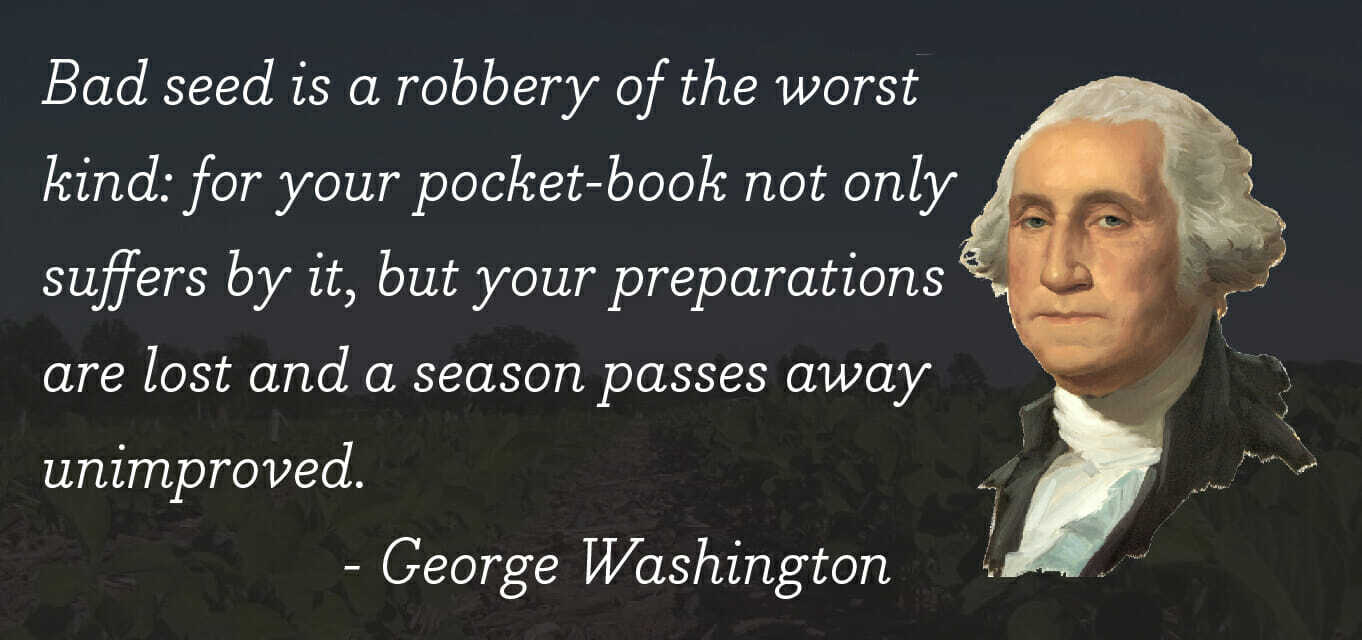
    Bad seed

    While many government offices, financial institutions and schools close annually on the third Monday of February, President’s Day seems to get little attention. Since this holiday began as a way to honor the life and work of our first U.S. president, it seems only fitting today on TheFieldPosition to highlight some of George Washington’s contributions to agriculture.

    Washington was called the “foremost farmer.”  He began keeping records of his planting activities as early as 1760. In fact, precise records was one of his first steps on the path to agricultural improvement and innovation. Washington believed America should become a “granary to the world,” so he was interested in improving productivity. He pioneered many aspects of farming including advanced crop rotations, the use of fertilizers, crop experimentation, and farm equipment.

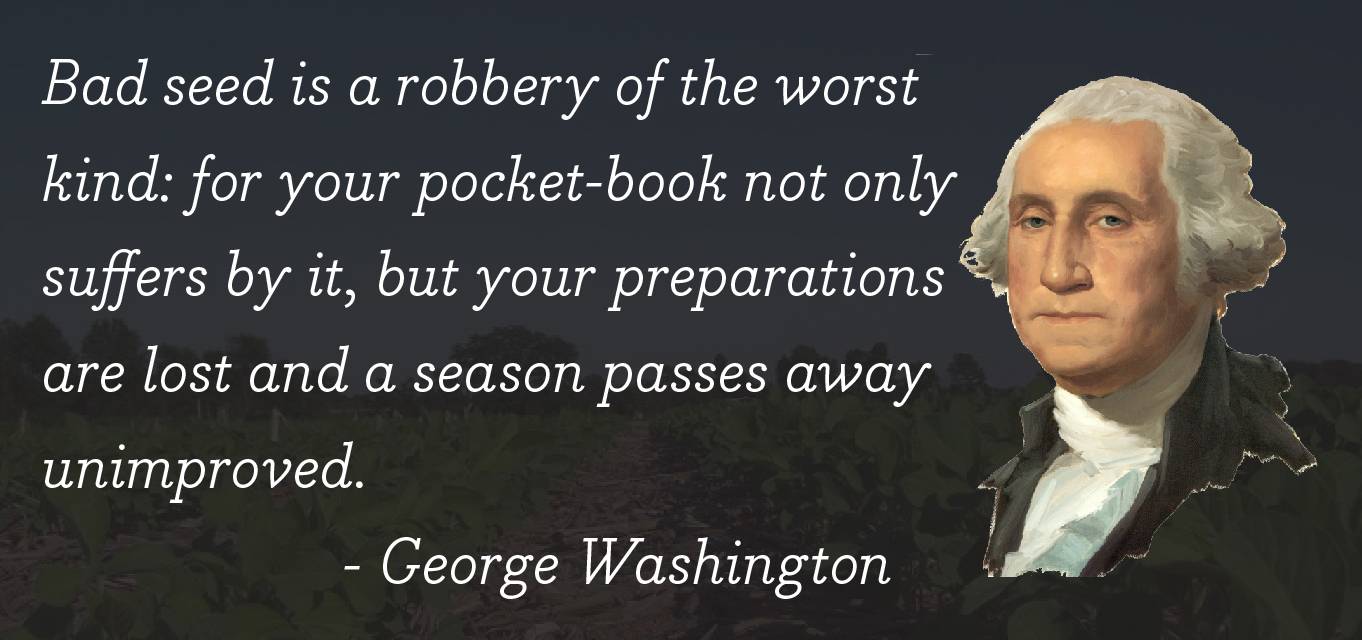
    Bad seed“Bad seed is robbery of the worst kind for your pocketbook not only suffers, but your preparations are lost and a season passes away unimproved,” said Washington.

    At Latham Hi‑Tech Seeds, we find this particular quote by Washington to be especially fitting for our business. We understand the hard work and hope that goes into the ground with each new crop year. As a third generation family-owned business – founded on what is today an Iowa Century farm – we understand the desire to create a legacy for future generations.

    We’re proud to carry on the tradition of producing quality seed, which was started in 1947 by our founder Willard Latham. In fact, seed production is something we take so seriously that the word “quality” is stamped on every bag of Latham® soybeans. Our hands-on production process allows for less handling, which leads to higher germination rates.  Be assured there’s quality in the bag when you open a bag from Latham!


    Team Latham

    February 17, 2014
    Agriculture, General, Industry News
  • Latham Hi‑Tech Seeds

    Get into a Relationship with Your Farmer

    JennieSchmidt
    Photo from Talbotspy.org
    Photo from Talbotspy.org

    Food is about relationships, says Jennie Schmidt, a registered dietitian who works full-time farming in Maryland with her family. “Food is nourishing to our bodies. Conversation is nourishment for our souls.”

    Because many of the food dialogues have been driven by people who know little or nothing about farming, Jennie says it’s more important than ever for farmers to advocate for agriculture. We must correct misinformation and point out when statements have been taken out of context. We also must allow consumers to get to know farmers, so their confidence increases about the food they eat.

    Many Americans take their food for granted, says Jennie.  Because they’ve never seen empty grocery shelves, they assume the food is industrial and easy to produce. Some Americans can afford to be arrogant about their food, so they try to dictate to the rest of the population. They want to regulate some foods and ban others. Mostly, they criticize others’ food choices when they don’t align with their own.

    The need for farmers to connect and help educate consumers became more apparent to Jennie when she was selected as the 2011 Northeast Region Farm Mom of the Year. She then joined Common Ground, a grassroots movement that encourages conversations between the women who grow food and the women who buy it. Today, Jennie blogs at The Foodie Farmer and many of her posts are also shared on Stone Soup, a guest blog written by members of the Academy of Nutrition and Dietetics.

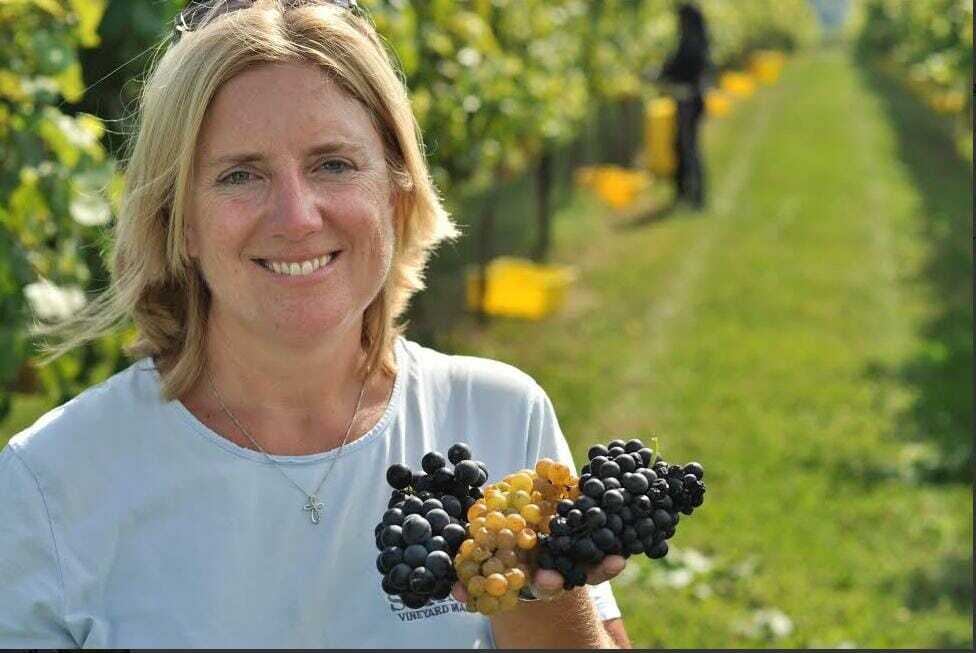
    In addition to blogging and farming, Jennie also manages vineyards. Farming is all about nutrition for animals, soil and plants after all. Because Jennie was a registered dietician when she married Hans, who was raising hogs and cattle with his brother and their father, she decided to put her nutrition degree to use on the farm.

    The Schmidt family has always tried new ventures, and Jennie became interested in growing grapes to further diversify the farm plus make a “niche” for herself. From there, she launched a vineyard management company that is expanding to new areas including Delaware.

    Farmers can diversify into grape production if they have a good understanding of crop load and pest management, says Jennie. Unlike commodities, grapes are grown for quality and crop reduction is often necessary. It’s not necessarily a good thing to have high tonnage when the result is poor quality.

    Growing grapes is as labor intensive as tobacco, says Jennie whose first job was working tobacco in the fields of western Massachusetts. Her best friend’s dad was a dairy farmer, and Jennie loved helping him haul hay. Although she wasn’t raised on a farm, time spent on her friends’ farms prompted her to minor in International Agriculture.

    After college, Jennie spent two years working in Botswana, Africa helping the Ministry of Agriculture develop a 4­-H program. Her master’s thesis was about food and agricultural biotechnology, so it’s no wonder that agriculture and food production are so near and dear to Jennie’s heart.

    As a tribute to Maryland where she farms, today we’re featuring a recipe for Crab Cakes with Lemon Dill Sauce. We’re also linking to the Taste of Home website where you can download a recipe to make a side of Chesapeake Slaw.

    Be sure to also check out the Stone Soup website for a modern twist on American classics like Blueberry Chipotle Ketchup and Coffee-Rubbed Pork Tenderloin. Guests RD’s also offer tips for pairing oils with foods including this recipe for Warm Asparagus Salad with Walnut Oil Vinaigrette.

    Team Latham

    February 14, 2014
    General, Recipes, Seafood
  • Latham Hi‑Tech Seeds

    Needed: Advocates for Seed

    John-SciMaxMtgAs vice president of American Seed Trade Association’s (ASTA) North Central region, I was invited to speak yesterday during the Iowa Seed Association’s annual meeting in Des Moines. This was somewhat of a daunting task since I was asked to address my industry colleagues about issues that ultimately affect everyone involved with agriculture.

    Fortunately, I was joined on stage by ASTA Vice President of Government and Regulatory Affairs Jane DeMarchi. Jane gave a federal update on a vast number of topics including food safety, intellectual property rights, seed testing and biotech. She then ended our presentation with this call to action:

    • Legislative Advocacy – Become a Seed Advocate
    • Regulatory Advocacy – Be a good steward
    • Public Opinion Advocacy – Listen and learn how to respond

    Advocates are needed for the seed industry, so we can continue to access the seeds that make today’s farmers more productive and efficient than ever before.  As Annie Dee writes in a blog for Common Ground, “Make Food Choices Based on Facts Not Fear.” She goes onto to write:

    On our family farm, for instance, we use varieties of biotech-enhanced corn that are resistant to a common Alabama pest called the southwestern corn borer. Similar varieties help farmers manage pests, diseases and environmental stresses in soybeans, corn and many other crops. These varieties help us increase our yields and provide an abundant supply of food, feed, fuel and fiber to the world.

    The use of GMO crops has also reduced the number of chemical applications needed to produce the crop.  This is beneficial for the environment because we’re conserving fuel, reducing emissions from our tractors as well as reducing the amount of actual chemicals being applied. Overall, our carbon footprint is being reduced because of GMOs.

    There are numerous reasons for using GMOs, but the final one I’ll mention is because I know the seeds went through a rigorous safety-approval process. Not one, not two, but three government entities — the U.S. Department of Agriculture, the U.S. Food and Drug Administration and the Environmental Protection Agency — work together to inspect and approve each and every genetically altered seed variety and plant brought to the market. This process is thorough and time-intensive, lasting between 10-15 years. What is really reassuring is that in the 12-plus years modern biotech crops have been commercially grown, there has not been a single ecosystem disrupted or person made ill.

    Even though the fear is unfounded, there is opposition to GMOs that is causing a clear and present danger to the seed industry. Fear of the unknown is causing agriculture to come under attack on the Hawaiian Island of Kauai, known as the Garden Island. Activists from the mainland are funding a campaign against four seed and technology companies in Kauai.

    Other activist groups are pushing to label GMO foods. A compulsory GM label would encourage consumers to think that GM foods should be avoided, writes Cass R. Sunstein, the Robert Walmsley university professor at Harvard Law School and “Bloomberg View” columnist. He also writes:

    The American Medical Association has similarly proclaimed, “The main conclusion to be drawn from the efforts of more than 130 research projects, covering a period of more than 25 years of research and involving more than 500 independent research groups, is that biotechnology, and in particular GMOs, are not per se more risky than e.g. conventional plant breeding technologies.”

    It’s important for farmers and seed company executives alike to be good stewardship of not only the land but of the technologies. It’s also our responsibility to listen to the public and learn how to respond to their concerns.

    John Latham, President

    February 13, 2014
    Agriculture, General, Industry News
Previous Page
1 … 71 72 73 74 75 … 159
Next Page

Latham Hi‑Tech Seeds

131 180th Street | Alexander, IA 50420

(641) 692-3258

SIGNUP FOR OUR NEWSLETTER
  • Contact
  • Legal
  • Dealer Center
  • Seedware Login
  • Latham Gear

© 2025 Latham Hi‑Tech Seeds. All rights reserved. | Iowa Web Design by Webspec | Privacy Policy

Latham® Hi-Tech Seeds is a trademark of M.S. Technologies, L.L.C., 103 Avenue D, West Point, IA 52656.