Ag Engineer Puts Designs on His Future in North Central Iowa
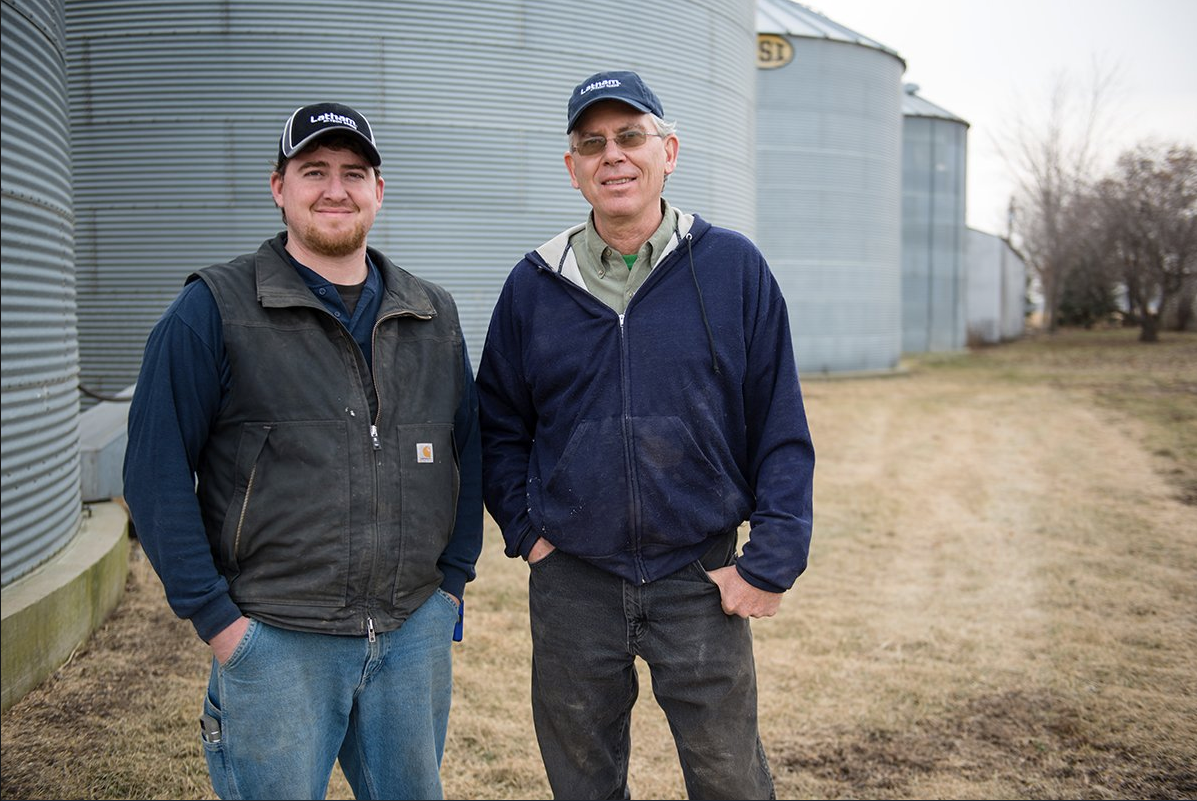
Like many boys who grow up on a farm, Landon Aldinger was fascinated with equipment. He enjoyed it so much that he earned a bachelor’s degree in Ag Engineering from Iowa State University and then worked nearly seven years, as a Senior Design Engineer, for the Toro Company in Minneapolis.
“I really enjoyed my time and my career in the cities,” says Landon. “But when I turned 30, my priorities started to shift. I was ready to head home and become more involved in the farming operation.”
Since 2008, Landon had been assisting his father with their seed, chemical and consulting business. He was driving “home” as much as possible to assist with planting, harvesting, tillage and consulting. Landon and his father, Mike Aldinger, are growing the services they offer through Precision Farm Management business by continuing and implementing more precision agricultural services like variable rate seeding and variable rate fertilizer, including variable rate nitrogen.
“We’ve been proponents of variable rate (VR) fertilizer and nitrogen applications,” says Landon. “For the past eight-plus years, we’ve been big on VR corn, so we vary the planting rate depending on soil type, hybrid tendencies and other factors. The past three years we’ve been planting soybeans at variable rates, as well.”
“Variable nitrogen is also a large part of our expansion on precision agriculture,” adds Landon. “We plan our nitrogen applications on corn hybrids, taking into account the organic piece that soils produce. We’re getting positive results from writing prescriptions like we would for plant population.”
Once all their crops are harvested, the 2018 crop has been planned and the seed orders have been written, Landon will spend more hours working on projects related to his Aldinger Engineering LLC consulting business. He’s currently working on creating 3-D images to give his client an online equipment parts presence.
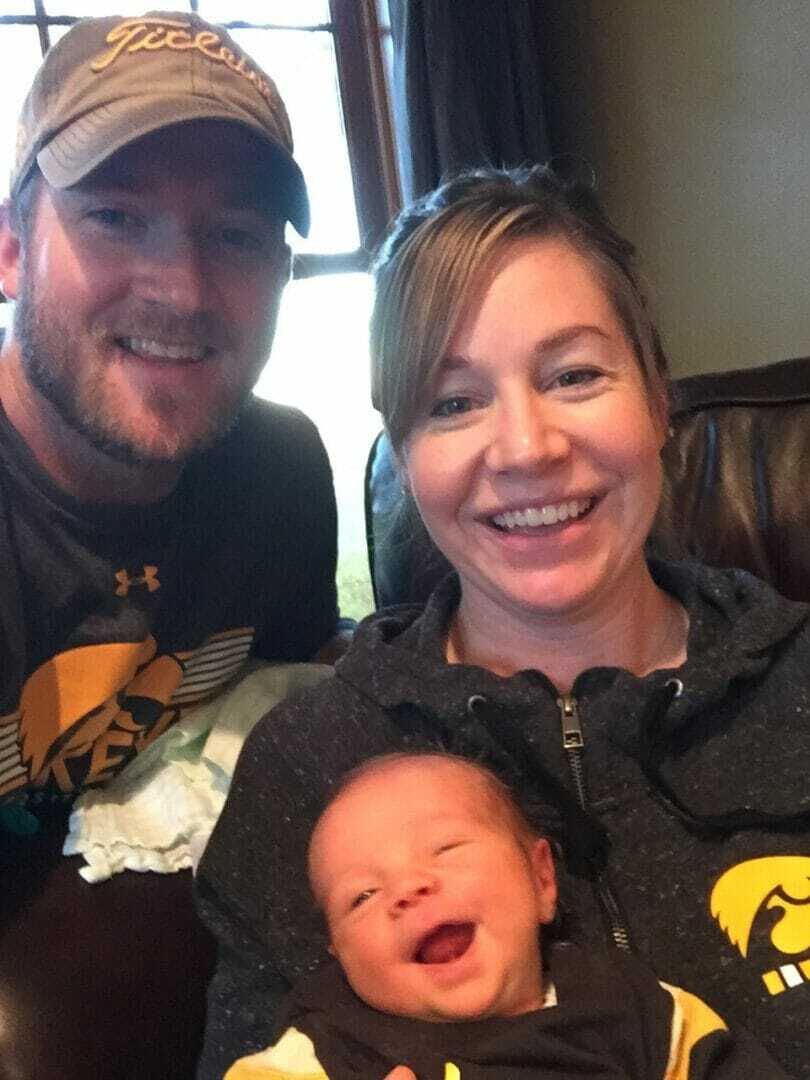
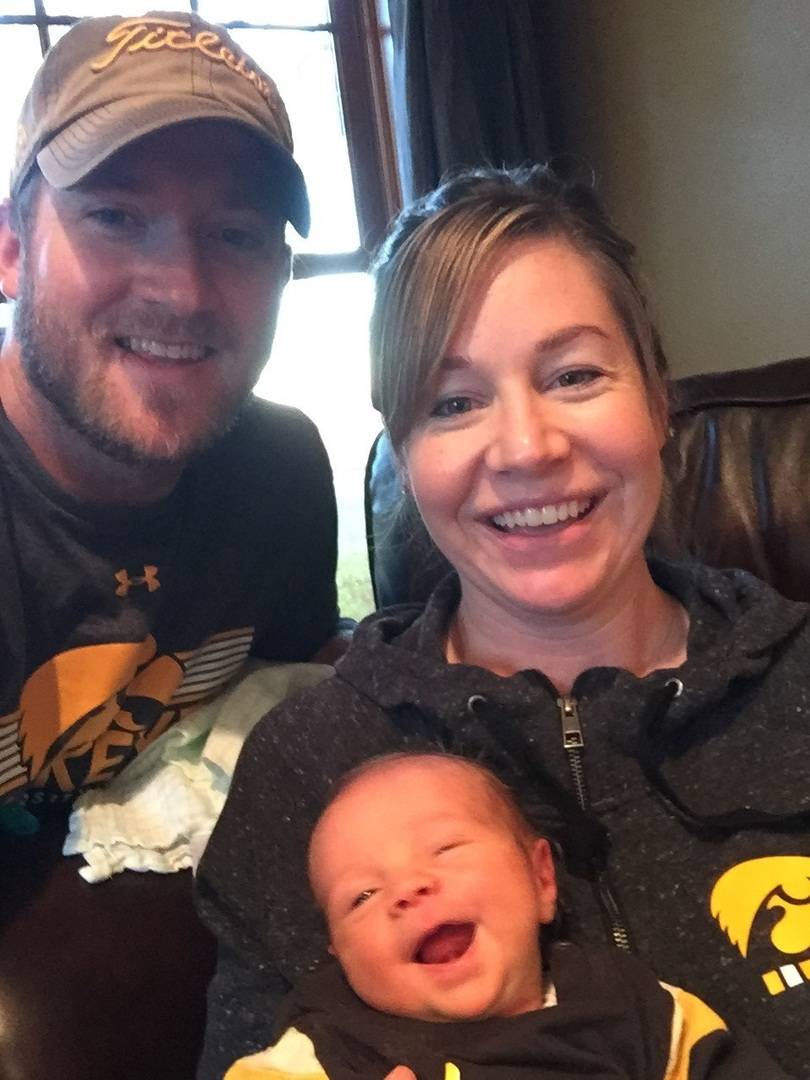
This fall has been an especially busy one for Landon. He and his wife, Kinsey, welcomed their first child, Grady Michael Aldinger, on September 29. In addition, the first group of pigs were delivered to their new wean-to-finish hog building the first of October.
“My parents built the first hog barns 11 years ago with the intent of building another one since the property was zoned as a two-barn site,” says Landon. “It just made sense for me and Kinsey to build the second hog barn now. Our goal to diversity our farm income. Producing cattle and pork, the seed dealership, chemical sales, plus consulting helps us diversify.”
The coming year is all about watching Grady grow and experience so many “firsts” like holidays. You can bet the family celebration will be featured around either the meat the Aldinger family produces. In honor of October Pork Month, today they’re sharing one of their favorite pork recipes on The Field Position.
Selling Seed and Producing Pork Helps Bosma Brothers Come Home
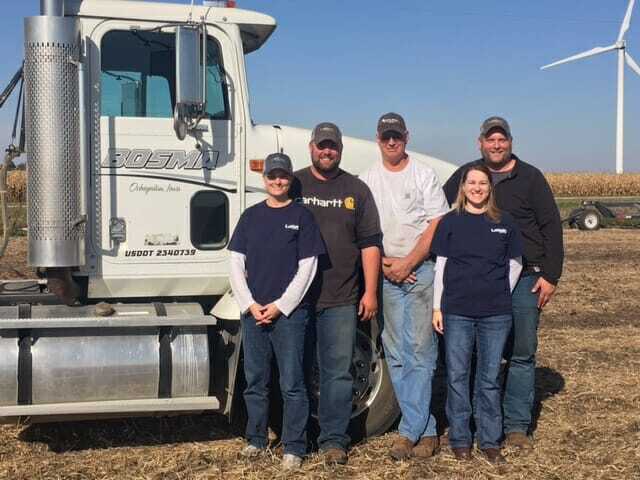
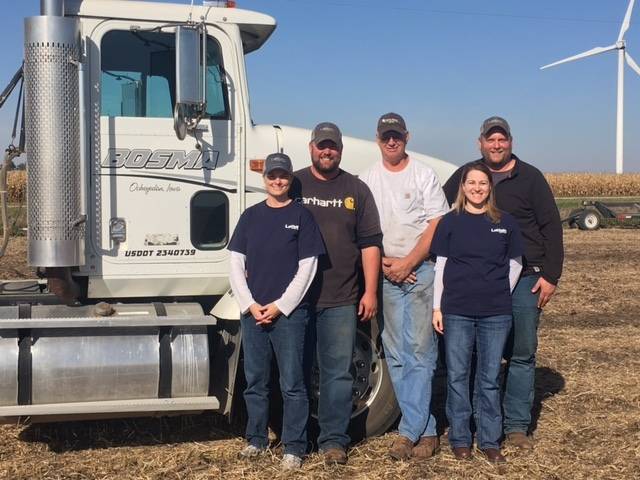
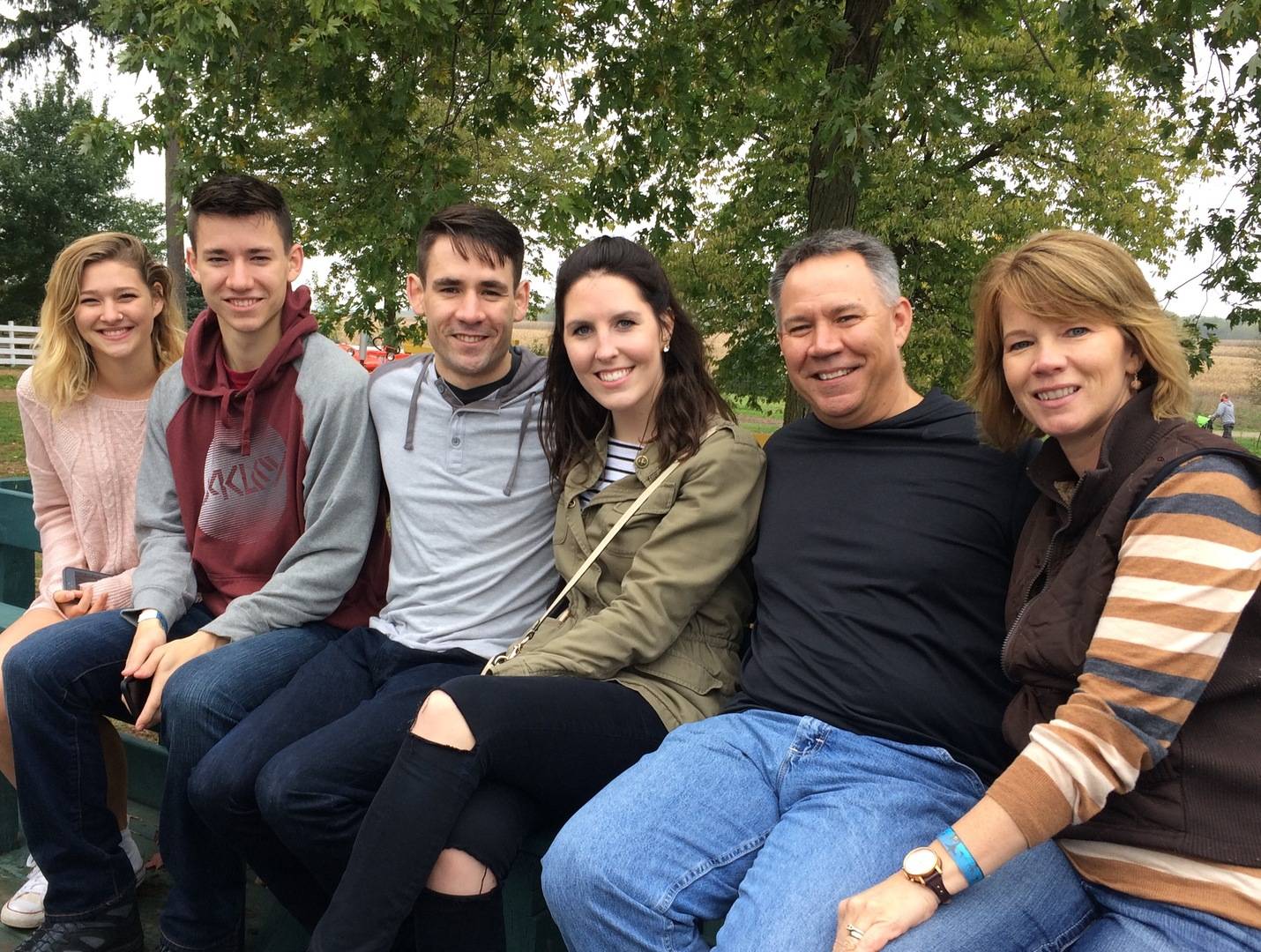
From left to right: Amy, Thad, Steve, Rachelle and Noah Bosma work together to bring in the crop near Lake Park in Northwest Iowa. Like their father and grandfather before them, Thad and Noah operate a seed dealership.
LaDonna Bosma raised her three sons in the same house where she and her brother were raised in Ocheyedan, just about 30 minutes west of Iowa’s famed Lake Okoboji. LaDonna’s dad, Erwin Schubert, was a seed dealer for more than 30 years. LaDonna’s husband, Steve, helped with the seed business and took it over upon her dad’s retirement.
Like many farm kids, the Bosma brothers grew up helping on the farm and with the seed business. At the time, no one realized a legacy was being created.
“My boys are the third generation to operate a seed dealership,” says LaDonna proudly. She’s also quick to credit her sons for choosing such wonderful women as their wives.
Thad met Amy when they were both attending college in Sioux Falls where he studied landscaping and she studied business. Amy started working full-time for Wells Fargo while attending college. After graduating, Thad took a job managing a hardware store in Sioux Falls until there was an opportunity for him to move home and farm.
Amy grew up on a dairy farm in Parkston, South Dakota. Noah’s wife, Rachelle, grew up on a grain and livestock farm in nearby Dimock. The two have been best friends from grade school and graduated from the same high school.
“I couldn’t have picked a better sister-in-law,” says Amy with a smile. “Now our kids are growing up together just like we did and that’s so awesome.”
Thad and Amy are the proud parents of two daughters, 8-year-old Lillian and 4-year old Madison. Noah and Rachelle are the proud parents of 3-year-old twins Halle and Jase, and 1-year-old daughter Kinley.
“We try to be as involved on the farm as we can,” says Rachelle, who has worked for the past 18 years as a certified medical assistant for Sanford Medical Center. “I love that our kids are making memories on the farm. They’re making memories by riding in the combine with Grandpa, in the semi with Daddy or in the tractor with Uncle Thad. And when they’re not in the field, they’re still farming. I moved Jase’s (play) combine to vacuum the carpet and he noticed it wasn’t in the same spot. He’s only three, but he pays attentions to those details.”
Amy adds that she’s glad their kids can watch crops go full circle from planting the seed through harvest. It gives them an appreciation that others don’t get. There’s a sense of accomplishment that comes from nurturing crops and livestock as most farmers will tell you.
“I really like the variety that comes from farming,” says Noah, who began raising hogs in 2007 and grain in 2009. “Diversity helps with the cash flow, plus pigs produce nutrients that our crops need to grow. I love seeing the results. I like watching the pigs and the crops grow.”
Like his younger brother, Thad says he always wanted to farm. Four years ago, he had the opportunity to buy a farm with hog buildings just five miles from Noah and Rachelle. Both of their farms are within five miles of their home place.
To lower their own input costs as well as to further diversify their farming incomes, Thad and Noah started to explore options for a seed dealership. A variety of timely events led them to Latham Hi‑Tech Seeds. One of Thad’s friends posted on Facebook that he had become a Latham® dealer. Then a Latham seed representative made a cold call to their farm. Soon thereafter, Thad contacted Darin Chapman, Latham’s regional sales manager in Spencer. Thad and Noah met with Darin and signed as dealers.
“We really liked that Latham is family-owned and family-orientated,” says Thad. “When we attended our first Latham Dealer Kickoff meeting, we were impressed that John Latham himself sat down at our table for lunch. Then John delivered the product training, and we were like, ‘This is the real deal’! We can talk directly to the owners of this company.”
The Bosma family clearly values working together as a family. While the brothers own and manage their own pork operations, they farm together. They work on equipment together, and they work in the same field together to bring in the crop. Their dad enjoys operating the combine, and their mom enjoys driving the grain cart during harvest.
“When you’re working in the field and responsible for making meals, you get creative,” says LaDonna. “I’m always looking for a quick fix that tastes delicious.”
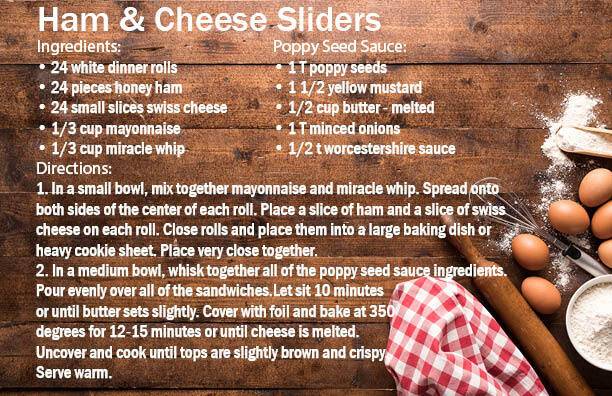
Amy and Rachelle take turns bringing the evening meal to the field, which allows them to have supper as a family. When I was visiting, Amy had fixed Ham Sliders and agreed to share her recipe on TheFieldPosition.com.
One of the family’s favorite field lunches is submarine sandwiches piled high with sliced pork loin, deli turkey, sliced tomato, lettuce, slices of both Provolone and Co-Jack cheese with a spread of mayonnaise and mustard. Bacon Cheeseburger flat brats from the Forbes Locker are always a hit, too.
Another family favorite is Swedish Meatball Sandwiches. Note LaDonna’s tips to make this recipe quick and easy with minimal cleanup!
Pork-a-Palooza! San Antonio Inspires Cubano Iowa Sandwich
By: Darcy Maulsby
When you grow up on a swine farm and are taught that chicken is an “inferior meat,” you learn to love all things pork. Of course I love bacon like just about everyone else, yet there are so many more options available to make a great meal.
Two of the most simple—and versatile—pork favorites in my kitchen are ham and pork shoulder. Nothing’s faster than ham to bring plenty of flavor to the party, while pork shoulder is a creative cook’s dream. Just round up your favorite marinade, herbs and spices, pull out your slow cooker, and voila! Dinner is served.
I was thinking about this when I ate my way through downtown San Antonio, Texas, earlier this year with my good friend Shannon Latham. We joined a group of other Iowans who were in town for the 2017 Commodity Classic and broke away from the ag meetings to sample a taste of the city. As a farmer, ag journalist and author of the book “A Culinary History of Iowa,” there’s no way I was going to turn down an invitation like this.
Sure, there were Latin flavors galore, along with fresh guacamole prepared right at our table, yet there are so many more the global dining options to sample in San Antonio.
Like the rest of the group, Shannon and I ooohed and ahhhed over the pastries and other delicacies at a downtown French bakery run by skilled bakers who moved to San Antonio from France. Our creative culinary minds got the biggest shot of inspiration, though, at Ocho at the Hotel Havana.
Sandwich showcases pork with Cuban flair
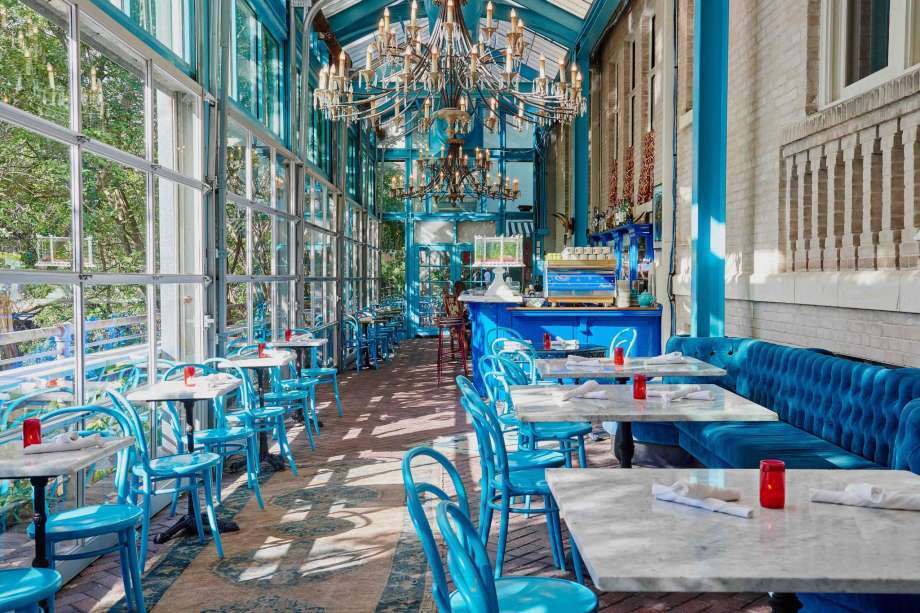
If you haven’t been to Ocho, you must visit. Architectural Digest has named his dazzling destination one of the world’s “Most Gorgeous Glass Restaurants.” Intrigued yet?
Situated in a glass conservatory overlooking San Antonio’s famous River Walk, Ocho serves breakfast, lunch, dinner and late-night snacks. Ocho’s menu is rooted in the hotel’s pan-Latin cultural influences from Mexico, Cuba and Texas. This was reflected in the unforgettable Cuban sandwiches our tour group enjoyed al fresco, after we were seated at vibrant turquois café tables outside the conservatory.
Undeniably delicious, Cuban sandwiches are the Latin version of the classic ham and cheese sandwich. If you’re a pork lover, few sandwiches compare to a Cuban. While the basics of Cuban sandwiches include sliced ham, Swiss cheese and pickles, the Cuban provides the perfect palette to showcase the flavors you prefer.
In honor of October Pork Month, I like to load my Cubano Iowa up with not only ham, cheese and pickles, but shredded pork slow-cooked in a citrus-and-garlic infused marinade. (If there’s a more helpful appliance in a kitchen than a slow cooker, I don’t know what it is.) Don’t skip the mayonnaise and Dijon mustard for extra flavor. Then slip the sandwich into a hot panini press (or fry it in a skillet), cook and savor the flavors of pork in all its glory, complete with a Midwestern-Latin twist.
One more thing–these sandwiches aren’t gonna stop until the pork runs out!
Editor’s note: If you’re hungry for more farm-tested recipes, along with stories of agriculture, Midwest history, communication tips and more, visit Darcy online at www.darcymaulsby.com, and sign up for her free e-newsletter.
Try Pork Like Never Before with Recipes from Picnic Life Foodie
Food connects people, so it’s probably only natural that Iowans would connect around pork. There are six pigs for every person living in our state, and Iowa is the top pork producing state.
One of my Bucket List items is attending the Taste of Elegance. When I heard Anita McVey won tickets to the 2017 tasting event, I had to learn more! So I went up and introduced myself to her at the start of a bus tour to Southeast Iowa farms sponsored by the Iowa Food & Family Project.
There’s nothing I enjoy more than touring farms and meeting farmers, but I quickly learned this road trip was going to become infinitely more enjoyable from the company I was in. (Click here for Anita’s wonderful recap of that two-day event.)
Anita is warm and welcoming, and when you read her blog, it’s like she invites you right into her kitchen. In the intro to her blog, Anita writes:
“My mom was one of those power-house-wives who cooked three complete meals a day, plus snacks, fed whomever pulled on the yard, had a massive garden, and did whatever was needed whenever she was asked. She never complained. EVER. The lady makes THE best apple fritters, but that was a treat saved for hay-baling day!”
It seems Anita’s family had a way of turning ordinary, every day experiences into wonderful memories.
She writes, “Picnics were special times but they were not glamorous. My dad’s idea of the perfect picnic was to have sandwiches, fruit and a cold drink on the tailgate of his truck out in the field during or after a long day of planting or harvesting. What made it perfect was the fact that my mom made it, delivered it and ate with him, often watching the sun set.”
Anita is not alone in her appreciation of wide open spaces, as well as spectacular sunsets and sun rises. Just follow farmers on social media and your news feed will be filled with posts like, “My reward for harvesting tonight was this sunset.” You’re also bound to see a few moon rises, as well as sun rises, too.
Like many farm kids, Anita says she had to leave home to realize how “spoiled” she was. She went away to college. She graduated from Iowa State University with B.S. degree in Statistics and a Math minor. She also earned a master’s degree in Statistics, and her thesis involved heritability errors in corn research. She met her husband, Marty, in Stat class. He holds a Ph.D. from ISU in Economics with an Ag emphasis.
While Marty completed his degree, Anita worked in the Survey Section of the Statistics department as a Research Analyst where she says she helped with many amazing survey projects. When the couple moved to the Des Moines area, Anita found a part time job at Pioneer Hi-Bred International. After a few years, Anita and Marty saw the value of her being home with their boys full-time.
Anita says her priorities shifted quickly. “Within a few years, I found myself at home full-time with my kids and back in the kitchen … and the garden … and addicted to ‘Food Network’.”
Staying home with her boys allowed Anita to return to her roots.
“I was raised on a steady diet of faith, family and farming. We had pork and chicken directly from the farm, to the butcher, back to the farm and into the oven. We ate eggs from the hens in the coop and drank milk from my uncle’s dairy cows. The garden we planted and harvested was enormous and we didn’t waste a thing. Canning and freezing were core classes.”
To preserve these family memories, Anita says she wanted to put together a cookbook.
“When I would make a recipe, it seemed there was almost always a memory or story behind it. I knew I wanted to combine the recipe with the story for my boys, and a blog seemed to be the platform. But I knew NOTHING about starting a blog. Our oldest son was home from his internship and interviewing for jobs, so he sat down with his laptop one day and dug in. (Isn’t that the greatest part about that generation? They just watch videos, read articles, try this, try that, and figure it out.) It has been a massive learning experience ever since. I have discovered that I enjoy the writing process much more than I expected and have found a creative outlet that just keeps expanding.”
One of the things I enjoy most about Anita’s blog is the beautiful food photography. (Getting food to look beautiful in a photo is art!) I was looking for some tips, and Anita responded with this, “I upgraded my cell phone to an iPhone 7+ and have had lots of lessons, instruction and advice from my boys. The oldest works for a Social Media/PR firm in Minneapolis and the youngest is finishing his degree in graphic design at ISU. How lucky am I?!”
Yes, she is lucky! And her readers are lucky she shares tips, tricks and stories with them. In honor of October Pork Month, today we’re featuring a few of Anita’s pork recipes with you. Click on the blog posts below:
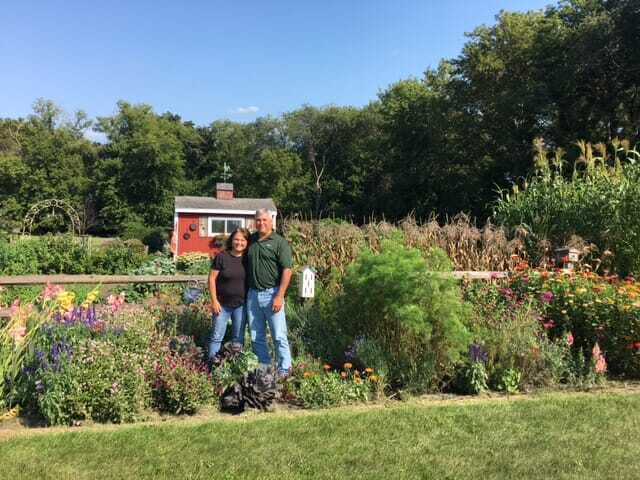
Steve and Jodi Roelofs live in a garden spot of Minnesota.
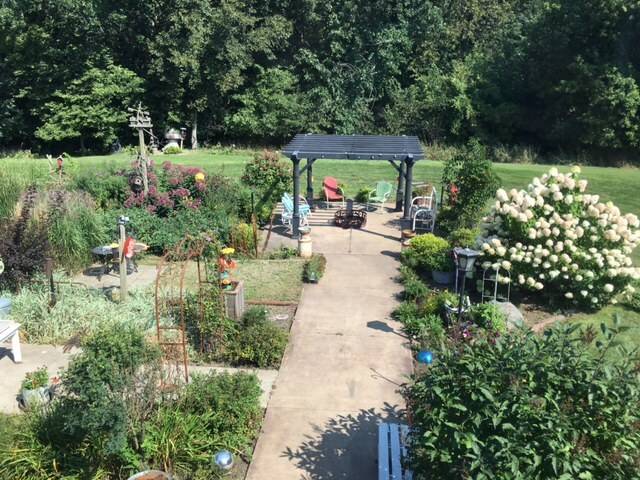
Jodi’s passion for gardening and re-purposing vintage furniture and equipment is evident from the moment one pulls into their yard. Pots and gardens filled with lush, color flowers look inviting. Her vegetable garden is a work of art. The backyard looks like something from a Country Living or Better Homes & Gardens photo shoot. It’s the type of setting that makes a book worm like me want to curl up with a novel, sip on a glass of cold lemonade and read while the water feature provides a calming effect.
The couple raised their family in the farmhouse next door, where Steve grew up and still raises hogs. That house serves as Steve’s farm office and Jodi’s workshop. The former kitchen and living room are filled projects in various stages of re-purposing. Chalk-painted chairs will be sold at Hilltop Florist and Greenhouse in Mankato, where Jodi has worked for more than 20 years. She retired from managing the greenhouses and special planting projects.
Jodi studied graphic arts at South Central College in Mankato where she met Steve, who studied ag production. She says she began working part-time at flower shops when her kids were small because it allowed her to enjoy adult conversation and provided her with a creative outlet. The scale of Jodi’s gardens has grown as her children grew.
The Roelofs are the proud parents of four sons:
Tony, 31, worked at ADM. He started in Lloydminster, Canada, and then moved to Red Wing, Minnesota, before getting transferred to Valdosta, Georgia. He’s moved several other times. Tony now works for Columbia Grain and calls Portland, Oregon, home.
Christopher, 30, works the night shift for UPS. When the trucks come in, he repairs them before the next day. He also has his own shop to work on cars.
Bryant, 26, has farmed for six years with Steve.
Matthew, 19, is a freshman at South Dakota State in Brookings where he’s studying history and political science.
Jody also served as a 4-H leader from the time their oldest son was 10 years old until their youngest son graduated in May 2017. During her tenure as a 4-H leader, she shared her passion with New Horizon 4-H Club members. They won an award from the Minnesota Department of Natural Resources for the bird feeding station they built on the Blue Earth County Fairgrounds in Garden City, Minnesota.
“We had so much fun at the fair with our kids,” said Jody, who grew up on a Minnesota dairy farm and belonged to 4-H.
Steve and Jody say they particularly enjoyed staying at the state fair with their kids, who showed pigs. Adults stayed in camper, while the kids slept in tents or in the hog barn.
“Last year it started to rain, so we had 11 of us in a 27-foot camper,” Steve says with a laugh. “We had to make room for everyone. We had people sleeping everywhere!”
While that night of sleep might not have been best, it made for great memories. Another highlight of the annual affair is playing State Fair Bingo. Cards are available online, and the Roelofs says they’ve had hours of enjoyment. Kids would take photos of items on the Bingo card like a triple stroller, a guy with an eye patch and a woman wearing a country music t-shirt.
Instead of attending the 2017 Minnesota State Fair, Steve and Jodi moved their youngest son to South Dakota State University. These empty nesters are embracing this new chapter of life. They’ve learned to adjust and adapt through the years.
When Steve and Jodi’s oldest son went to college, the family stopped farrowing. Jodi had been working in the farrowing barns, so this change gave her the opportunity to return to working in a floral shop. Steve and his brother, who had been farming together in a family corporation, decided to split the operation. Steve raised feeders and his brother raised the finishers.
A market crash prompted Steve to reevaluate the pork operation. For the past seven years, he has leased his pig barns. Steve and his middle son do the daily hog chores.
“This arrangement works well for us,” says Steve. “We’re responsible for the day-to-day care of the feeder pigs but we don’t have to assume any of the risk. Each month we know exactly what we’ll make.”
Raising pigs, as well as selling Latham® brand seed, complement the family’s grain operation. Both enterprises allowed the Roelofs to cut expenses while increasing income to allow their son an opportunity to farm.
“We went to FarmFest and spoke with a few different seed companies about dealerships,” says Steve. “We really liked the idea of working with a family-owned seed company. When we realized one of our neighbors was a regional sales manager for Latham, that helped us make the decision.”
Steve and Jodi look forward to fall harvest. In addition to bringing in the corn and soybeans, Jodi will be harvesting fall produce. She sells pumpkins, squash, gourds, broom corn and other items through Hilltop Florists.
Once the fall field work is done and the season changes, the couple looks forward to snowmobiling. They enjoy outdoor activities all year long from driving around and looking at crops to spending time at their cabin where they enjoy pontooning, water skiing and jet skiing with their kids.
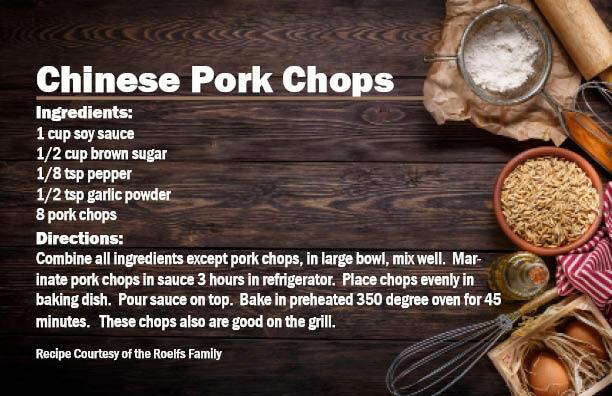
The Roelofs family also enjoys family dinners. In celebration of National Pork Month in October, today they’re sharing with us one of their favorite recipes for Chinese Pork Chops.
After growing up together on a farm near Good Thunder, Minnesota, twins Aaron and Adam Knewtson went their separate ways upon graduating from high school. Aaron enrolled in Ag Business at Iowa State University in Ames, Iowa. Adam headed west to Southern Illinois University in Carbondale, Illinois, where he pursued his dream of becoming a pilot.
Fast forward 23 years and the brothers are engaged in ag business near their hometown. Aaron works for Compeer Financial, and Adam works with their father in the family’s seed business.
“When I left home, I never thought I’d return and work for our family’s seed business. I dreamed of being a pilot and flying amazing aircrafts, but instead I found myself working 12-hour shifts. When I wasn’t at work, I was dealing with big city traffic. I really longed for open spaces where I could fish and hunt,” explains Adam.
Moving home to South Central Minnesota held more appeal as time went on. He worked at the airport in Minneapolis. After college, he also worked at an agricultural cooperative. He earned less at the co-op but realized he enjoyed working in agriculture. He decided that if he was going to work in agriculture, he might as well go home to the family business.
Today Adam serves as vice president and his father, Wayne, serves as president of Knewtson Soy Products, a soybean production and export company owned by Wayne. They produce and export food-grade soybeans primarily to Japan, Viet Nam, Israel, Taiwan and China.
Many hats are worn by this father-son team. Wayne farms, as well as oversees the production of soybeans. Adam handles the operations side of the business by working with contract growers to produce food-grade soybeans and managing the export logistics. Adam also owns Advantage Seed, Inc., a retail soybean seed production company.
Knewtson Soy Products and Advantage Seed are both located on the farm where Adam’s grandparents made their home for 63 years. His grandfather, Ellsworth Knewtson, didn’t start the family seed business, but he greatly influenced his son’s and grandson’s business aspirations.
Ellsworth grew soybeans marketed under Minnesota Public Seed and has the distinct honor of being the first farmer in Blue Earth County to grow soybeans. In 1966, he won the Blue Earth County Fair Grand Prize for producing a soybean plant with 405 pods!
To put this feat into perspective, soybean plants averaged about 160 pods per plant when Missouri farmer Kip Cullers raised 139-bushel soybeans in 2006 and 156 bushels in 2007. Culler’s soybeans produce quadruple the number of pods on an “average” soybean plant.
Like an avid golfer shooting for the illustrious hole in one or the fisherman going after a trophy walleye, those involved in the seed industry keep working toward record-setting goals.
“The seed industry can be competitive, yet we’re all still friends,” says Adam. “I really like the comradery that exists among seed company owners and managers, but what I enjoy most about my job is working with farmers. I really like the farmers who produce for us and work with us.”
When Adam can get away from the seed business, he prefers to get away from it all. He’s part of an outdoor club that has gone turkey hunting in Missouri, fishing in the Chesapeake Bay, crabbing in Georgia, and duck hunting in Arkansas. He also purchased a Conservation Reserve Enhancement Program (CREP) farm where he’s made many memories hunting with friends and sharing his love of “gaming” with the younger generation.
Adam enjoys gardening, as well. He likes to experiment in the kitchen or on the grill to turn fresh produce and meat into delicious homecooked meals. Today he’s sharing one of his favorite recipes with us on TheFieldPosition.com.
To celebrate Latham Hi‑Tech Seeds’ 65th anniversary in 2012, we printed some of Evelyn Latham’s favorite recipes. She and Willard lived in the house that today serves as company headquarters. In fact, my office is where their kitchen once was.
Evelyn was known for her gracious hospitality and for a smile that reached her eyes. She was always sure to invite family, friends, neighbors and customers to sit down at the table and enjoy a fresh cup of coffee and plate full of homemade cookies. It’s no wonder she was named Master Farm Homemaker in 1962 by Wallaces Farmer!
Little did we know then that one of our family traditions would spark a tradition for one of our seed dealer’s families. Earlier this summer Kathi Johnson of Odebolt, Iowa, sent me e-mail saying how excited her oldest daughter was because her Monster Cookies had been selected to advance from the county competition to the Iowa State Fair. This Monster Cookie recipe was one of Evelyn’s favorites!
I can only imagine how delighted Evelyn would have been, knowing this 4-H member and her mother are creating great memories in their kitchen. Some of my favorite childhood memories were formed as I stood on a chair to reach the countertop, so I could cut homemade noodles in my great grandma’s kitchen. My great grandma had a way of making me feel like I was such a great helper! She even made me a pint-sized apron with a small doll in the pocket. I had to leave the apron at her house, so I could wear it on baking day. Just thinking about Grandma Fowler’s delicious homemade chicken and noodles puts a smile on my face!
Treasured memories of baking with her grandma inspired Cristen Clark of Runnells, Iowa, to develop award-winning recipes. She started the Food and Swine blog to capture those recipes for her children, as well as to help consumers understand the care that goes into raising crops and livestock.
Cristen started baking with her children when they were just tots. One great thing about baking with family is that duties can be assigned based on a child’s age. Youngsters can pour pre-measured ingredients into a bowl, help stir and press cookie cutters into dough. Older kids can measure the ingredients. (Honestly, I credit measuring cups for helping me understand how to add fractions.) People of all ages can help decorate. Colored frosting, sprinkles and other toppings can spark creativity.
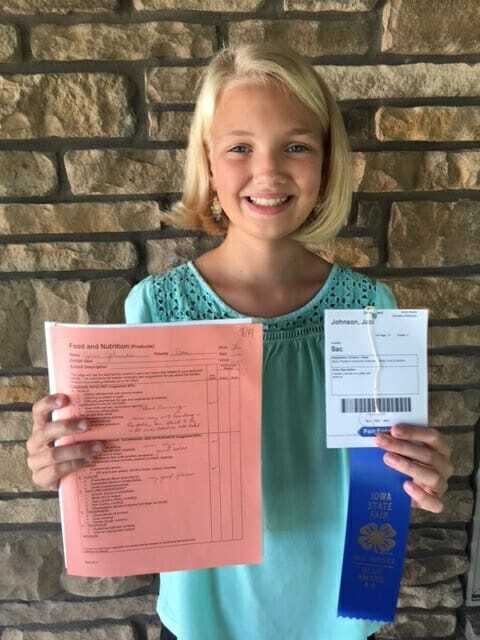
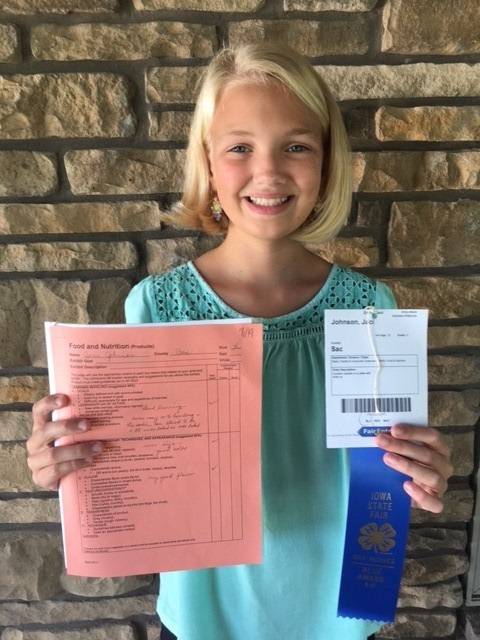
Watching her mom and grandma bake inspired 11-year-old Jaci Johnson to learn how to bake, too. She’s in her second year as a member of the Richland Robins 4-H Club, but 2017 was the first time she exhibited baked goods at the Sac County Fair. Success is sweet for 4-H members who have the honor of taking baked goods to the state fair.
“It’s an awesome honor to have my cookies selected to go to state,” says Jaci. “I was not expecting this since it’s my first year exhibiting 4-H projects at the fair.”
Every good home cook knows that using quality ingredients is the first step to creating delicious food items. Not everyone has the knack for mixing the dough just so or baking it to the proper doneness. It appears that Jaci has the knack!
Special thanks to Jaci for helping us celebrate the 70th anniversary of Latham Seeds today by sharing her Iowa State Fair blue ribbon winning recipe!
Tractors are more than Machinery at the Toppen Farm
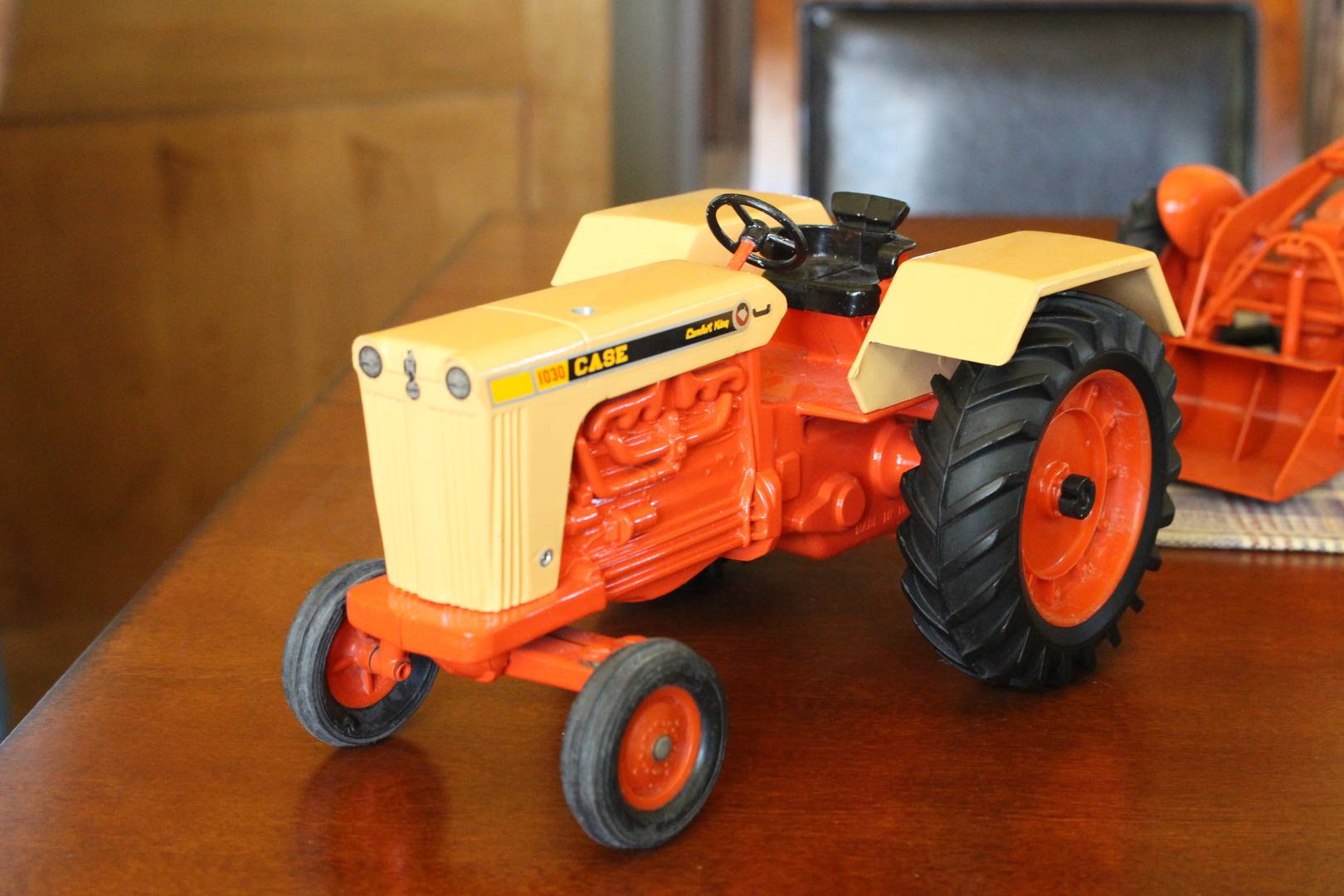
Every tractor has a story! That is why Todd Toppen collects model toy tractors that tell the story of his family’s farm over the years.
Todd enjoys restoring model toy tractors. His goal was to find all the tractors he had when he was growing up and he is close to achieving this goal. He has the first tractor that he ever drove, the first tractor his dad purchased, and many more to represent monumental moments on their farm. It was great to hear the stories behind each one and how he customized them to tell a story about their family history.
The Toppen family has been farming for more than 100 years in Horace, North Dakota. Todd and his family farm the same ground that his parents purchased in 1958. They raise wheat and soybeans on their farm.
“There was never any question I wanted to farm when I got older,” said Todd.
Todd farms with his wife, LeAnn, and their son, Kyle. LeAnn and Todd met in high school. They went to their high school homecoming dance and have been together ever since. LeAnn also grew up in North Dakota in a family involved in agriculture. Her grandparents and her dad was Case tractor dealer and diesel mechanic. In addition to working on the farm, Leanne works at a local church.
Kyle, who graduated from the University of North Dakota with a degree in accounting, is active in the day-to-day farming operation. Once the crop is harvested, Kyle spends the winter months working as a farm tax accountant. Kyle says he has three busy seasons throughout the year planting, harvest, and tax season!
While Todd, LeAnn, and Kyle are the primary operators on the farm, their two daughters, husbands and children live in the area and often visit the farm to pitch in. “Farming is what brings our family together,” says LeAnn.
By talking with the family, you can hear the passion in their voices they have for farming but it hasn’t always been easy.
“Not everyone can be a farmer, it takes a very special person.” says LeAnn.
In North Dakota a wide variety of crops including wheat, barley, corn, soybeans, sugar beets, and sunflowers are grown. The Toppens have raised all of these crops over the years which makes seed sales a challenging part of their operation.
When they aren’t working on the farm, the Toppens enjoy spending time at the lake with their children and their five grandchildren. The entire family goes to Pelican Lake almost every weekend during the summer.
Todd and LeAnn really enjoy having their family close to spend time with their grandkids.
Todd stated, “There isn’t much you don’t like about being a grandparent!”
They also enjoy attending their grandkids’ school and sporting activities.
Todd became a Latham® dealer three years ago and grows soybeans for our company. He became familiar with Latham through a local seed company and then decided to become a dealer. Todd says he chose Latham Hi‑Tech Seeds because the company is known for producing quality products, respects their employees, and provides valuable customer service. He also really enjoys how accessible the staff and owners are too!
Family is very important to the Toppens and keeps them moving forward on their operation. We are lucky to have them as a part of our Latham family!
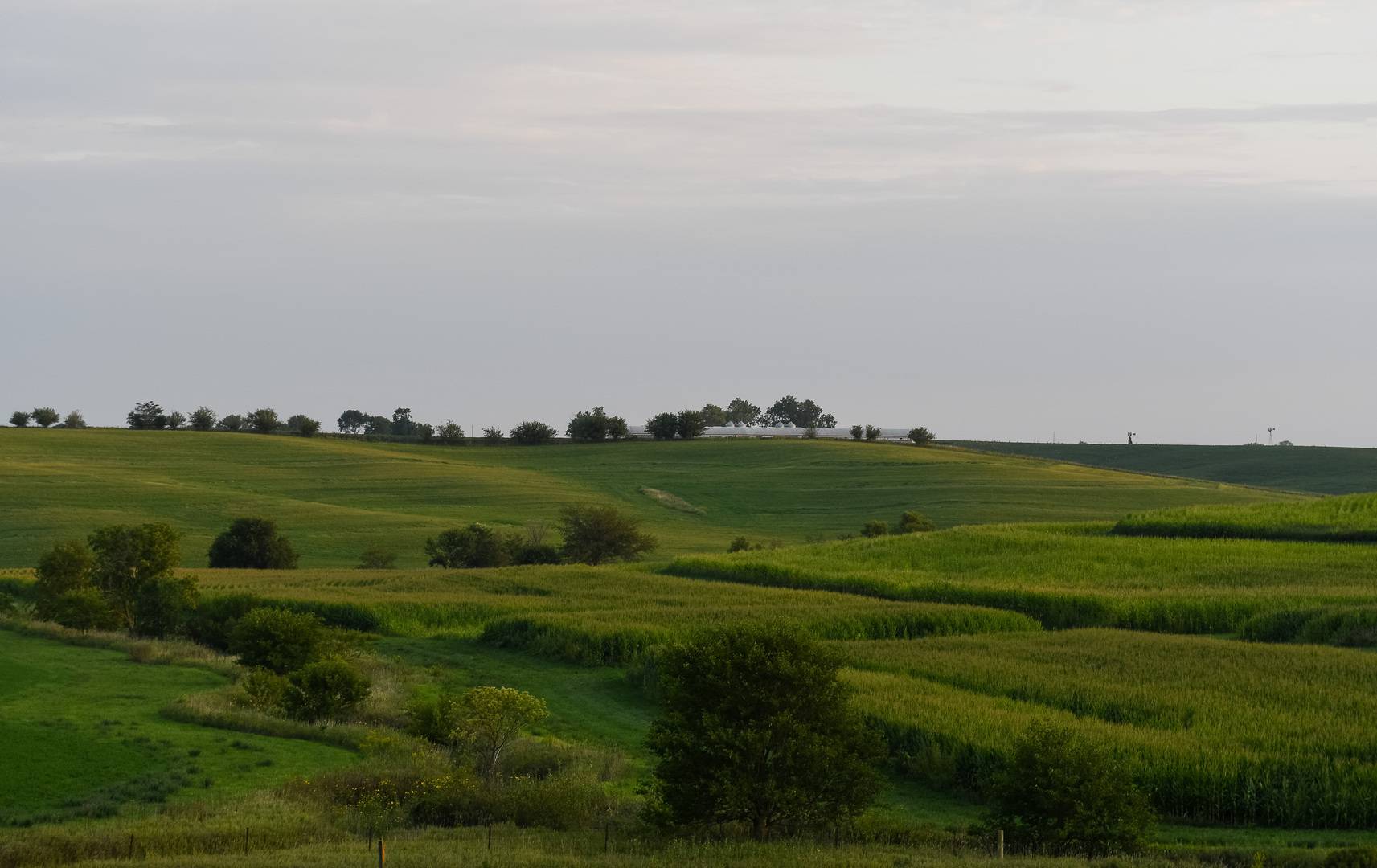
It’s amazing what comes to mind when you find yourself traveling mile after mile – for hours on end over the course of two days – through lush green hills in the southeastern Iowa countryside. The scenery is so picturesque that it’s a wonder I didn’t get off the bus and break into song. “The hills are alive with the sound of music…”
Instead my mind raced with lyrics to Frank Sinatra’s Love and Marriage… “Love and marriage. Go together like a horse and carriage… Dad was told by mother that you can’t have one without the other.”
While it may seem a bit corny, these lyrics reminded of the connection between food and farming. “Try, try, try to separate them, it’s an illusion. Try, try, try and you only come to this conclusion: You can’t have one without the other.”
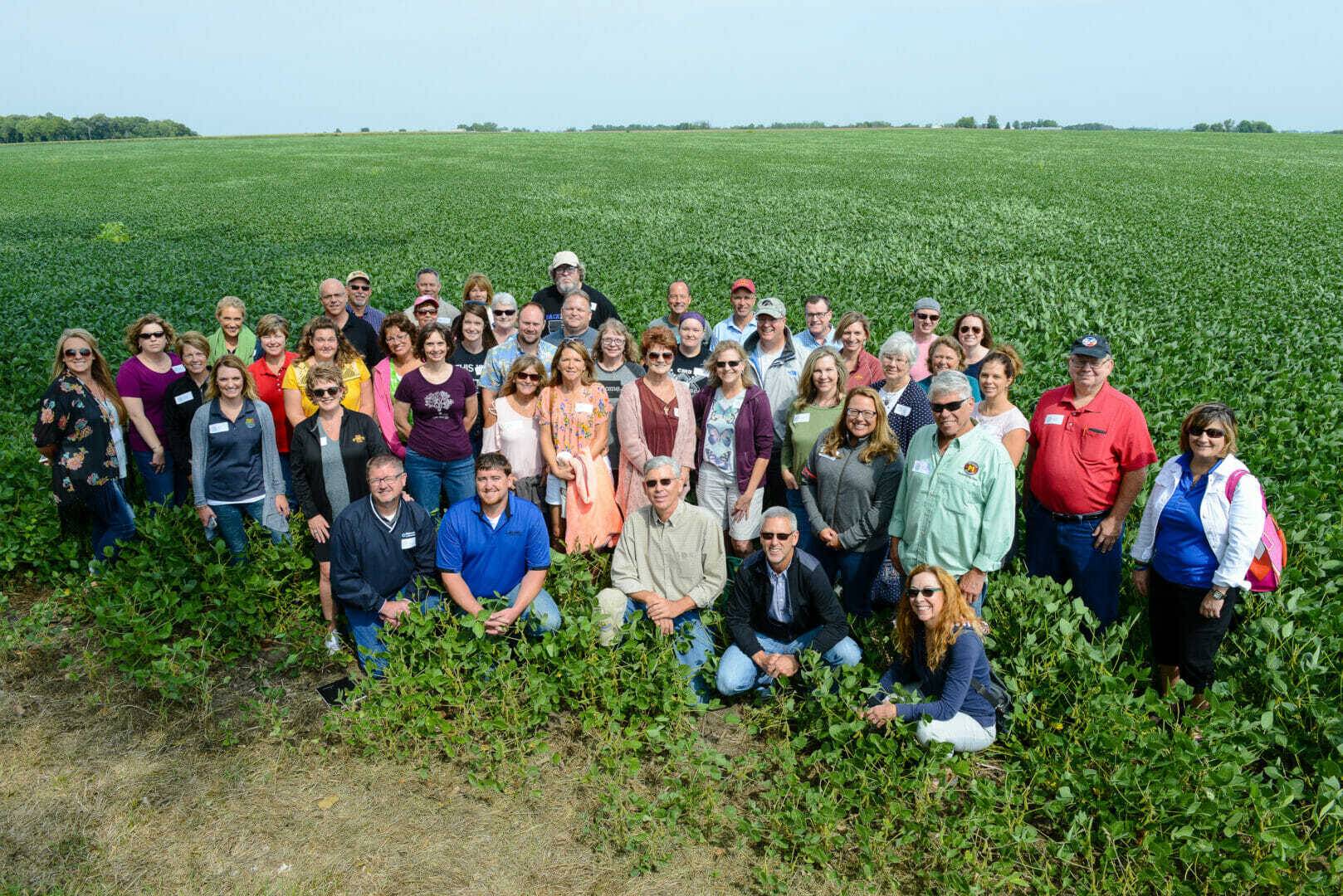
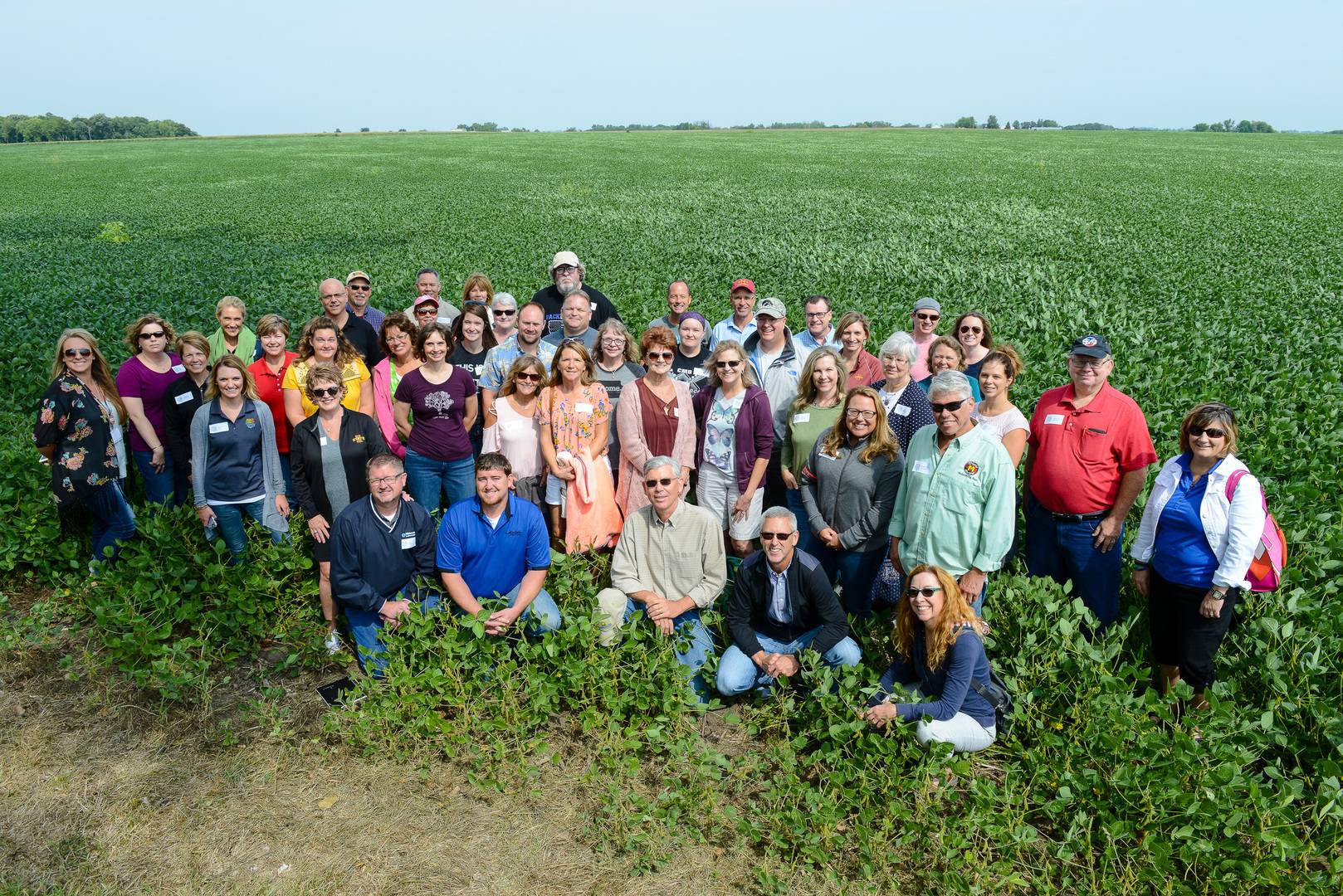
The participants of the two-day tour pose in a soybean field at the farm of Mark Jackson. Photo by: Joe Murphy
Even more frightening is this statistic from an article published June 15, 2017, by The Washington Post: 7% of all American adults believe that chocolate milk comes from brown cows. If you do the math, there are 16.4 million misinformed people who drink milk but don’t know that chocolate milk is made from milk, cocoa and sugar. (Side bar: Chocolate milk is such a powerhouse of nutrition that many athletes drink a cold glass to provide the fluids, carbohydrates, proteins and electrolytes their bodies need to recover.)
One Department of Agriculture study, commissioned in the early 1990s, found that nearly 1 in 5 adults did not know that hamburgers are made from beef. And an increasing number of Americans who know where their food comes from wants to dictate how it’s produced.
Many of the environmental and stewardship practices being advocated for are already in place on farms across the country. Consumers participating last Friday and Saturday in Expedition Farm Country, a two-day bus tour hosted by the Iowa Food & Family Project and sponsored in part by Latham Hi‑Tech Seeds, got to see first-hand what conservation and environmental practices in place, including bioreactors that help prevent nitrogen from entering streams and waterways.
Michael (left) and Mark (right) Jackson hosted the first stop on the tour! Photo by: Iowa Food & Family Project
Conservation of the land and environmental stewardship is true passion for Mark and Michael Jackson. Michael, who raises crops and livestock as well as sells Latham® seed, is a sixth generation Iowa farmer. He’s the fifth generation to live in his family’s farmhouse. He farms with his father, Mark, who authors the monthly Farm Life Journal for the Iowa Food & Family Project.
In 2014, Mark Jackson was a featured speaker at a TED event in New York City. He says he’s motivated to leave the land better than he found it, so his grandchildren and future generations will have the opportunity to continue farming. Mark’s TED talk highlighted the technology used on his farm to aid in conservation, as well as to decrease pesticides while saving fuel costs.
Sustainability and responsibility were key messages shared by the farmers who hosted our tour. One Iowa dairy farmer explained that when he started farming regulations mandated many of his practices, while today consumers are making demands on how he treats cows and how his dairy processes milk. Unlike some of the other sectors of production agriculture, Dane Lang of Yarrabee Farms in Brooklyn, Iowa, says the practices he was asked to follow are best management practices that his family’s dairy already had in place.
Yarrabee Farms was founded in 1860, and the original farmhouse still stands and remains in use. This farming operation also is unique in that it still is managed by three generations: Maynard; Maynard’s son Craig and Craig’s wife, Mary; as well as two of Craig and Mary’s four children, Dane and Cade.
Another unique aspect of Yarrabee Farms it involves both beef and dairy herds. To stay in compliance with livestock regulations, cattle are kept on different farms. The milk cows are housed on the farm where Dane lives. Calves are taken to a nearby farm where someone else specializes in their care. Dairy heifers, as well as the beef cattle, are housed on the farm where Dane’s brother, Cade, lives. Cade’s wife, veterinarian Dr. Katie Lang, helps ensure all livestock stays healthy.
Consumers on the trip were reassured by the Langs, as well as by every livestock producer along the way including turkey producers, that they use antibiotics sparingly and responsibly. Withdrawal periods are required for antibiotics before any milk or meat animals leave the farm. In addition, all dairy and meat products are inspected to ensure the withdrawal periods are followed.
Tim Graber, a fourth generation turkey farmer from Wayland, says he employs antibiotics when needed. He also raises antibiotic-free turkeys, using natural remedies to nurse his birds back to health.
Let’s talk turkey for a minute… Iowa’s turkey growers are the number one supplier of turkey to Subway and Jimmy Johns. West Liberty Foods, a farmer-owned processing plant, also sources deli meats for Costco. The Graber’s turkeys are processed by West Liberty Foods. Tim also is a member of the local farmer-owned cooperative that focuses on producing high-quality feed for turkey growers.
New hatchlings arrive on the Graber farm weighing just one ounce. Expedition participants had the chance to hold 6-day poults, which weighed about 10 ounces. It takes about 18 weeks to get these toms to a market weight of 42 to 45 pounds.
The final farm visit of the Expedition was to Brenneman Pork in Washington County where animal care and research are top priority so “no pig ever has a bad day.”
Rob Brenneman’s pork operation began with nine pigs when he was just 9 years old. He and his wife, Char, started their operation in 1980. Today their fully-integrated operation, family-run operation includes a 29,000-sow farrow-to-finish operation. Their daughter-in-law Erin is one of the farrowing specialists. She actively shares “the beautiful world of farming” through SnapChat and Twitter as @sowmama.
In addition to meeting some of the world’s best farmers who also were the most gracious hosts, I’m confident that participants in Expedition Farm Country will feel more confident in the safety and quality of America’s food supply after meeting such caring farmers. I’m confident these participants now have a better understanding of how food products get from the farm gate to the dinner plate as each farm stop featured some of the area’s best foods: Subway sandwiches; Stone Wall Brick Oven Pizza and Wooden Wheel Winery; as well as koalches and ice cream sandwiches from Kalona, which is the largest Amish settlement west of the Mississippi River.
You can get a taste of farm-raised goodness with Quick & Easy Apple, Cheddar and Turkey Bacon Omelets. The recipe was printed in the “Cooking with Turkey” cookbook that participants on the 2017 Expedition Farm Country tour received, compliments of the Iowa Turkey Federation.
Also check out the Federation’s website for tailgating ideas, such as Breakfast Deviled Eggs, to main dishes like Crock Pot Cordon Bleu Turkey. (Crock Pot cooking makes it easier to eat well during the busy harvest season IMO. Did you know we have a whole section of Slow Cooker recipes on TheFieldPosition.com)
International Fare Flavors the Minnesota State Fair
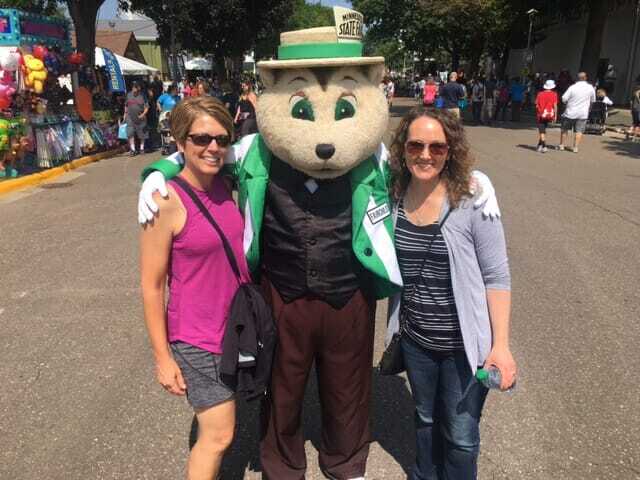
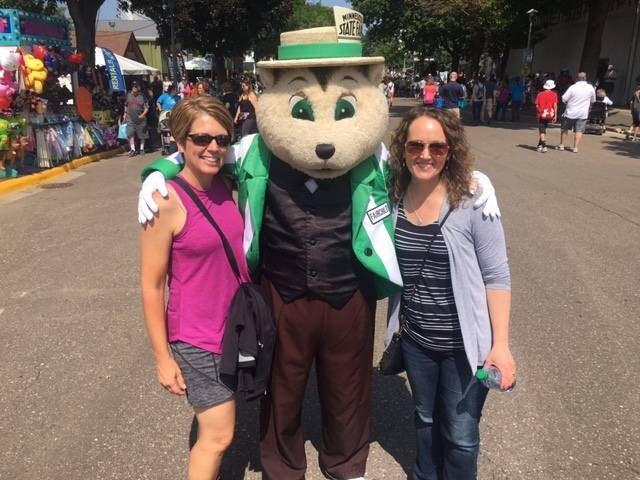
Fairchild is the original MN State Fair mascot.
I grew up believing “nothing else compares to the Iowa State Fair,” which is our great state fair’s marketing slogan. I also know that our State Fair is a great state fair because there’s a Broadway musical that tells us, “It’s dollars to donuts that our state fair is the best state fair…”
Or is it? Recently I read a special to The Des Moines Register about how the Iowa State Fair Compares to the Minnesota State Fair. Quite honestly, that article prompted me to visit the 2017 Minnesota State Fair on its opening day on August 24 to find out for myself.
One of my best friends, Kristina, who has lived in the Minneapolis area for more than 10 years with her family, agreed to join me for this adventure. Both former Iowa 4-H members, we visited the 4-H exhibits building. The displays were so visually appealing!
The Iowa State Fair has an amazing 4-H exhibits building, too. It’s always an honor for 4-H’ers to have their projects selected for state. This is one of the many similarities I noticed between the two fairs. Each of these state fairs has “agriculture interaction” for children: Iowa State Fair is home to Little Hands on the Farm; Minnesota is home to Little Farm Hands. You’ll also find a corn dog stand practically on every street corner. Both fairs also have a giant slide, a sky glider, and a predominant grand stand plus several small stages throughout the grounds.
Both fairs reflect the identify of their respective states, and I really enjoy attending both fairs for different reasons. The Iowa State Fair is known for its Butter Cow, while the Minnesota State Fair known for Crop Art. The Iowa State Fair fare is what I’d call “authentically Iowan” and Midwest home cooking at its best.
Iowa’s commodity groups showcase the best products and introduce new menu items each year, like last year’s winning Nacho Mama’s Tacos and this year’s Thanksgiving Balls. The Minnesota State Fair fare had more of an international flair, at least from what I saw and experienced yesterday.
Kris and I literally ate our way around the fairgrounds, starting with Walleye on a Stick and Walleye Balls, which were a new fair food in 2016. (I’d give 5 stars to the Walleye on a Stick, which is lightly seasoned with lemon pepper. Everyone should try this IMO. Seriously, what could be a more authentic food in the Land of 10,000 Lakes than Fish on a Stick? After all, Baudette in the Lake of the Woods is the Walleye Capital of the World.)
Next, we had by Key Lime Pie on a Stick made by Kermit’s Key Lime Shoppe in Key West, Florida. I honestly don’t know how Key Lime relates to Minnesota, but that pie on a stick was delish! I’ve visited Kermit’s in Key West, and one bite into that refreshing dessert took me on a walk down memory lane.
I also had fun reminiscing about past vacations while walking around the International Bazaar, which showcases merchandise and foods from around the world. There were so many options, but I decided to stick with the “food on a stick” theme and ordered a Gyro on a Stick.
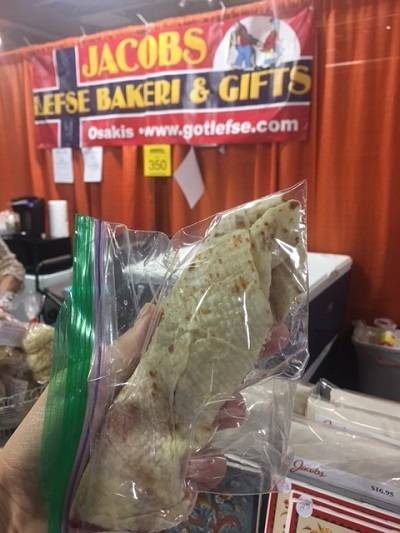
MN State Fair is known for lefse. We sampled the Lingonberry Lefse. YUM!
“Gyro on a stick” was a little misleading. I envisioned it be more like a kabob or the Iowa State Fair’s “salad on a stick” where there would be an alternating pattern of Greek-seasoned meat, grape tomatoes and a few lettuce leaves. Instead the Gyro on a Stick is more akin to Iowa’s Famous Pork Chop on a Stick because it’s a solid chunk of meat. (Side note: Pork Chop on a Stick is so famous that presidential candidates Hillary Clinton and Donald Trump were both photographed eating one at the 2015 Iowa State Fair.)
Pork Chop on a Stick is one of my all-time favorite Iowa State Fair Foods. It ranks at the top of my “must eat list” along with the Hot Beef Sundae from the Cattlemen’s Beef Quarters and lamb gyros outside the sheep building.
In my opinion, just because you can put food on a stick, doesn’t mean you should! My trip to the Minnesota State Fair confirmed (for me) that gyros belong in a pita topped with Tzatziki sauce. (That sauce is magical!)
If you’re an Iowan, you might prefer Pork Gyros. (Did you know there are more pigs than people in Iowa? There are six times more pigs than people in the Hawkeye state!) If you’re a native Minnesotan like food blogger Jeni Eats, you’ll consider Demtri’s Gyros a classic fair food. If you grew up raising and showing sheep like I did, you know the best gyros are made with American lamb. Taste for yourself! Enjoy fair fare all year long with this recipe for Lamb Gyros.

 Like many boys who grow up on a farm, Landon Aldinger was fascinated with equipment. He enjoyed it so much that he earned a bachelor’s degree in Ag Engineering from Iowa State University and then worked nearly seven years, as a Senior Design Engineer, for the Toro Company in Minneapolis.
 This fall has been an especially busy one for Landon. He and his wife, Kinsey, welcomed their first child, Grady Michael Aldinger, on September 29. In addition, the first group of pigs were delivered to their new wean-to-finish hog building the first of October.