On this week’s #AsktheAgronomist, Phil Long, precision agronomy advisor, unpacks chelated fertilizers and why they are important. Learn how they are absorbed and how it can benefit soils with high pH in Latham Country.

On this week’s #AsktheAgronomist, Phil Long, precision agronomy advisor, unpacks chelated fertilizers and why they are important. Learn how they are absorbed and how it can benefit soils with high pH in Latham Country.

Advertisements and magazine headlines tout the opportunity to enhance yields through plant protection and the use of biologicals or naturals, but does it pay to use these products? Our research once again confirms that seed treatments are an investment that provides a return.
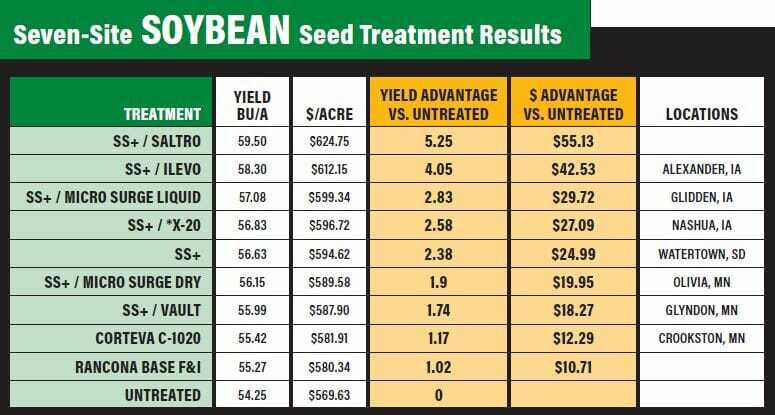
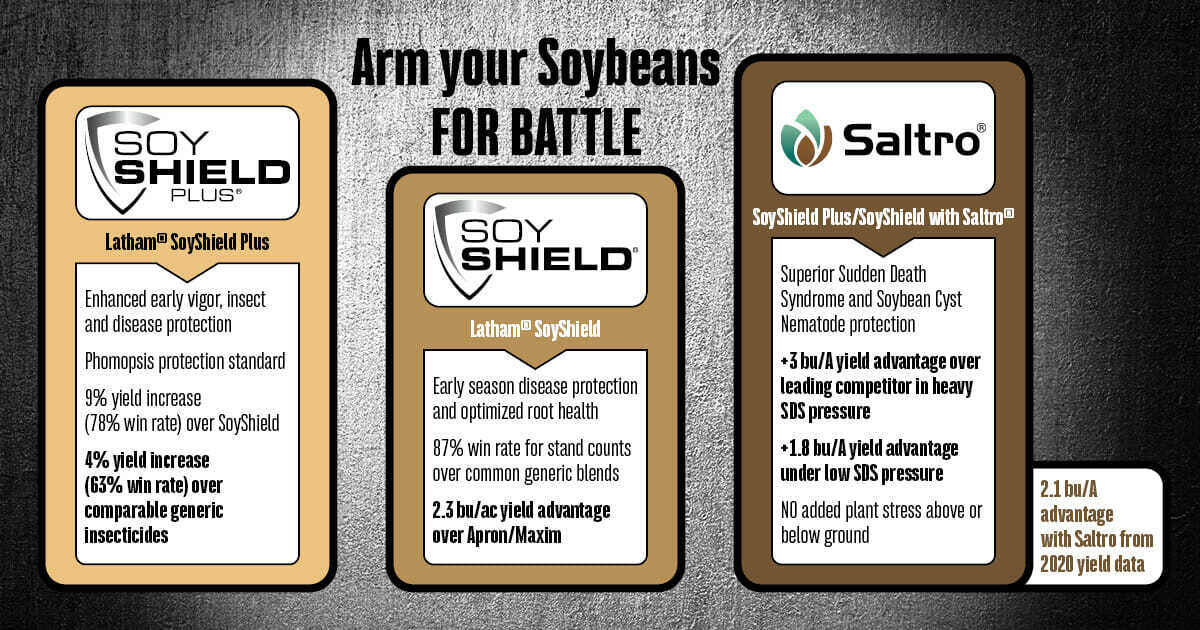
Latham Hi‑Tech Seeds expanded its 2021 research trials to include seed treatments and biologicals. We wanted to determine whether the performance of the seed products we offer could be improved by seed protection and biologicals. Soybeans treated with Latham brand SoyShield® Plus had a 2.38-bushel yield advantage over untreated seed and a 1.2-bushel advantage over other leading fungicide and insecticide (F&I) seed treatments.
Latham Seeds’ signature SoyShield Plus seed treatment is effective in protecting seedlings from early plant diseases for approximately 30 days, which is a longer window of protection than most seed treatments offered. SoyShield Plus includes an exclusive fungicide combination that provides excellent protection against seed and soil borne diseases including: Pythium, Phytophthora, Fusarium and Rhizoctonia.
The addition of Saltro to SoyShield Plus increased protection against Sudden Death Syndrome (SDS) and soybean cyst nematodes. In fact, this treatment combination produced the highest yield in research trials across seven locations in multiple states. The SoyShield Plus / Saltro treatment had a 5.25-bushel yield advantage over untreated seed and provides Best-in-Class protection across environments. Soybean cyst nematodes are one of the largest yield-robbing pests and SDS is a growing concern for more areas, so it makes sense to order the Latham SoyShield+ / Saltro combination for 2022.
Inoculants with biologicals continue to show increased yields over inoculants alone. Latham SoyShield Plus with Talc USA’s MicroSurge had a 2.83-bushel per acre advantage over untreated seed and more than one bushel per acre advantage over other premium inoculants.
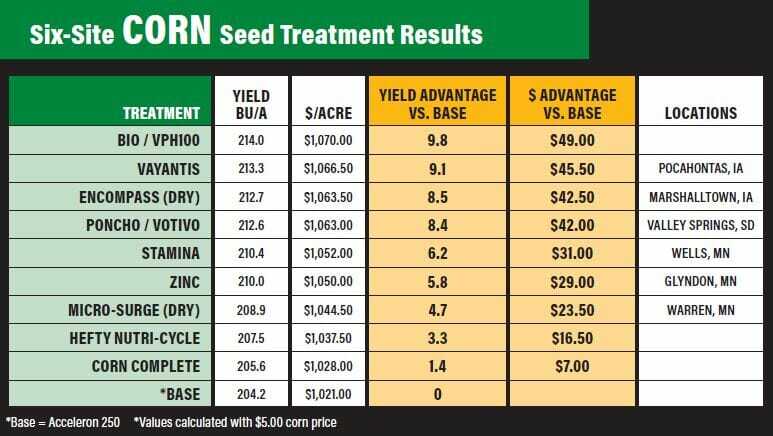
Corn trials conducted at six locations in multiple states also showed significant yield increases over the base seed treatments with various applications of seed applied or planter box treatments. Talc USA’s MicroSurge dry corn inoculant is easy to apply with talc. With two strains of Azospirillum, MicroSurge produced a 4.7-bushel yield advantage over the base seed treatment.
Encompass also was tested as a planter box treatment. It contains nitrogen-fixing microbials and helps mobilize phosphorous in the soils for easier nutrient uptake into the plant. Encompass showed an 8.5-bushel increase over base treatments in our 2021 trials. Now that’s a return on investment!
Contact your local Latham rep for more information about these and other products to protect your seeds and seedlings, so you can improve yields in your fields in 2022.
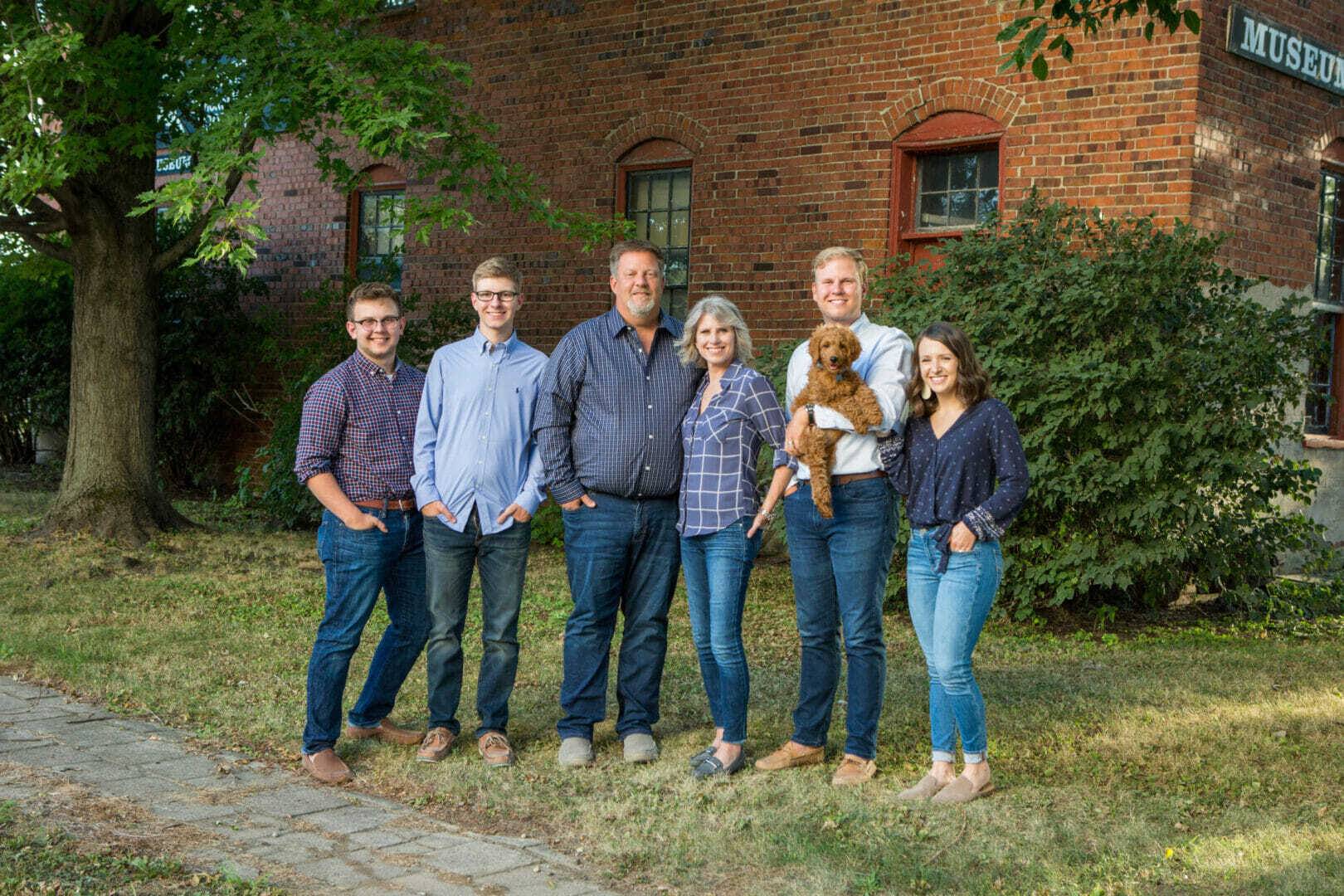
Producing corn, soybeans and pork on a farm is commonplace in Iowa, where livestock feed has been the primary use of grain crops throughout that state’s 175-year history. Families, like the Jacobsens of Dows in Franklin County, are proud of their farming legacy.
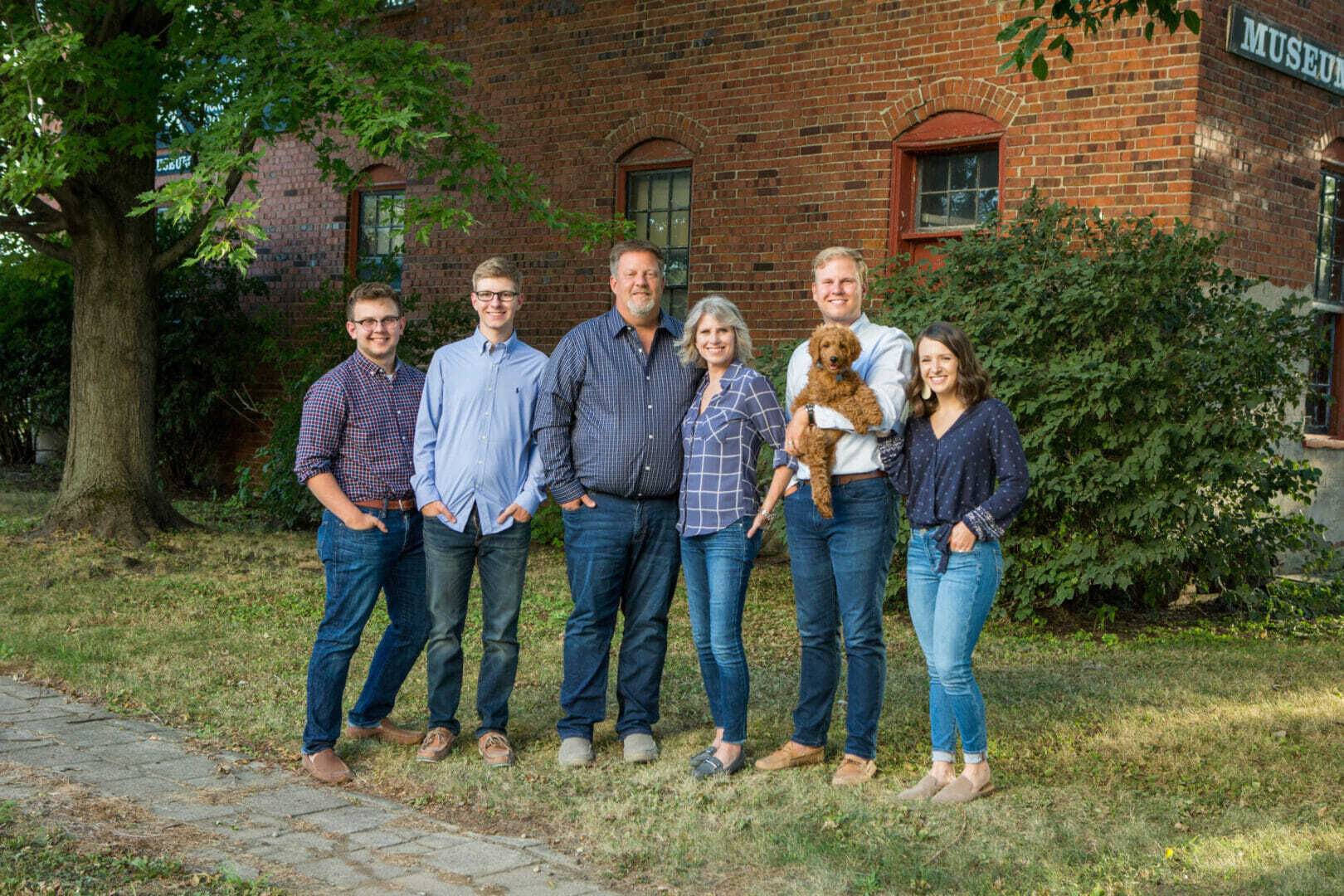
Doug and Carolyn Jacobsen began growing seed beans for Latham Seeds in the 1970s. Their Iowa Century Farm is located one mile from where their son, Corey, and his wife, Kim, farm. Corey began growing seed beans in 1986 when he rented his first farm. Corey and Kim’s oldest son, a fifth generation Iowa farmer, began growing Latham seed beans in 2018.
“I appreciate the opportunity to raise Latham seed beans because most years we get access to newer genetics a year earlier than if we raised soybeans just commercially. I like seeing what’s new in the lineup,” says Corey. “It’s fun visiting with everybody in the fall when we deliver beans to the plant. Plus, it’s nice to know we can pick up the phone or stop by the office whenever we have questions about production or want input.”
Corey has been working toward his goal of farming since he graduated from high school. While studying ag business at Iowa State University (ISU), he helped plant four crops and maintained his breeding-to-finish swine operation. Corey traveled home each weekend to do chores and made countless other trips whenever needed for breeding or farrowing.
“I met Corey at the 1985 Franklin County Fair where he was showing pigs and I was working in the Extension office,” says Kim, who grew up on a farm south of Coulter and enjoyed showing horses in 4-H. It’s only natural their three sons would become showmen.
When Corey graduated from ISU in 1990, he began working at Brenton Bank in Clarion. One year later he started at Dows United Bank & Trust. Corey retired as bank president in 2000, and then he and Kim began farming full time. Kim also retired after teaching high school math and coaching volleyball and track for 10 years at Clarion-Goldfield Dows. Their more flexible schedules allowed their family to spend more time on their pork operation.
“Pork is truly a family project that we all enjoy,” says Kim. She and Corey custom-finished pigs for years and raised show pigs. Now they run an independent wean-to-finish operation. “Raising livestock taught our boys day-to-day responsibility that many other activities can’t provide. They learned that it takes teamwork to be successful and to accomplish what needs to be done.”
When their boys were in middle and high school, the Jacobsen family participated several livestock shows annually including: the Iowa State Fair, Ak-Sar-Ben, World Pork Expo, National Barrow Show, Sioux Empire in South Dakota, Iowa State University’s Block & Bridle, as well as numerous county and state 4-H and FFA shows. Ben had the honor of showing the Reserve Champion FFA Market Hog at the 2013 Iowa State Fair.
“Through 4-H, our boys learned skills they use on the farm also such as welding, woodworking, small engines, along with the communication and record keeping,” says Kim. “Now that they’ve all graduated from high school, I love to see our sons use their skills and continue to educate others about agriculture. Caleb won the Outstanding Agriculture Exhibit by ISU College of Agriculture and Life Science at the Iowa State Fair for his project teaching the truth of GMO’s. Matt is known as the ‘farm kid’ and go-to resource at college. He has skills in welding, woodworking, painting and general carpentry that most other students do not have. He laughs at all of this, especially the time he was a hero changing a gas tank on a gas grill, much to the amazement and awe of others. He also educates classmates and others in the city about livestock and agriculture.”
Matthew will graduate in May 2022 from Harvard College in Cambridge, Massachusetts, with a degree in Molecular and Neurological Biology. He has been a part of the Harvard Curling Club, John Adams debate society and Harvard Pro-Life while keeping up with research projects. Matthew plans to continue research for another year and then attend medical school.
The Jacobsen’s youngest son, Caleb, is a freshman majoring in Ag business at Iowa State University. He enjoys being active in the Ag Business Club and the SALT network through Cornerstone Church. Caleb is following the steps of his oldest brother, Ben, who graduated from ISU in 2018 with a degree in ag business. Ben farms with Corey and Kim. Frances is a Talent and Acquisition Specialist for Boston Scientific, working from their home in Ames. They are expecting their first child in June.
“We feel blessed to have our children grow up on the farm learning the value of honesty, hard work and sacrifice to accomplish goals,” says Kim. “Now the next generation will grow up farming in a community that has been so supportive. We couldn’t ask for anything more.”
During this time of transition, Corey and Kim are freeing up their schedules to make more time for travel. Corey had served on the Dows school board for 20 years and retired when the school district merged. Kim has relinquished most of her off-farm obligations but continues to serve on the Iowa Specialty Hospital Board. They enjoy following the Iowa State Cyclones to Bowl games and other destinations. They have greatly enjoyed making spontaneous trips and have especially enjoyed visiting Matt in Boston.
“We love traveling, trying restaurants, experiencing other cultures and visiting farming operations in other places,” says Kim. Today they’re sharing with us one of their favorite game day recipes of Sausage and Cheese Egg Roll Wraps.

With the 2022 planting season right around the corner, it’s time to focus on the one thing that will help you capture the most ROI in each field.
Field-by-field product placement is key to maximizing yield – and in turn – profit. Research shows plant genetics account for a 20% difference in yield. This means you could raise 12 more bushels of soybeans and 40 more bushels of corn PER ACRE simply by paying closer attention to your crop placement.
Below are three factors to consider when double-checking your crop placement for 2022:
If you’re planting soybeans early or at the same time your planting corn, treat the seed with SoyShield® to protect it from early season fungal diseases. Seed treatment also gives seedings an early advantage. Even when using a quality seed treatment, plant fields with the heavy soils that remain wet and cold last or at least the soils have warmed. This will help your soybeans better ward off root diseases all season long.
A successful 2022 crop year begins with having a plan and sticking to it! Take the time now to double-check that you properly matched plant genetics with soil conditions. Our dealers are also happy to talk through field placement as well. If you have further questions or want to chat with our agronomists call: 1.877.GO.LATHAM (1.877.465.2842).

Precision Agronomy Advisor Phil Long weighs in on where the soybean yield came from in 2021 and what to look for in 2022.

In this week’s #AskTheAgronomist, Precision Agronomy Advisor Phil Long addresses common questions related to foliar feeding soybeans and what he learned from this past growing season.
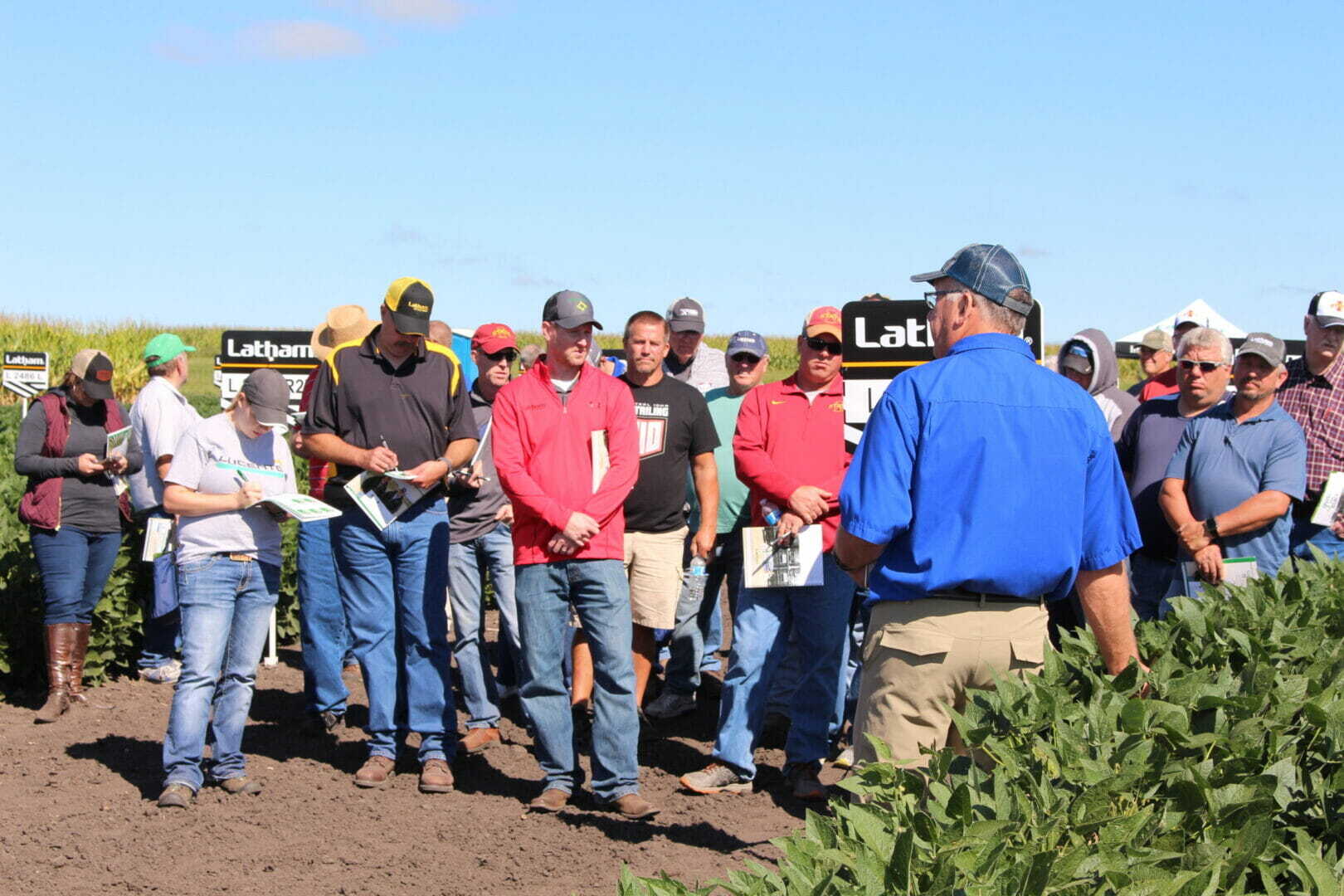
I’m pleased to inform you that the changes we made to our soybean research program were a resounding success! The decision to hire other companies to plant and harvest our Latham Elite trials allowed our Product Team members to observe and take notes at a greater number of locations and across a wider geographic area. In previous years, our own crew could only plant and harvest 11 or 12 locations in Iowa and southern Minnesota. We would then hire another company to do the same at about five or six locations in northern Minnesota and North Dakota. This year we were able to plant and harvest 33 locations in Iowa, Minnesota, Nebraska, Wisconsin, North Dakota and South Dakota!
Latham Seeds’ Product Team will evaluate the yield data and correlate notes taken to see which products are a good fit for Latham Country. During that same time, Latham’s Regional Sales Managers (RSMs) and Dealers will be surveyed to determine what products are needed based on input they receive from our customers. Then, and only then, will new products be added to our 2023 lineup.
Once we identify products from the Elite Trials that meet Latham Hi‑Tech Seeds’ standards and fulfill our customers’ needs, we release them for sale. We also place these new products in our Latham Showcase plots, as well as in the independent F.I.R.S.T. Trials program, to again showcase the performance of these new products and to provide opportunities for our customers to gain confidence in their performance.
It has been my great honor and pleasure working for the Latham family for more than 25 years – first, as an agronomist, then as Soybean Product Manager and, for a dozen or so years as overall Product Manager. When Bill and Don Latham hired me in 1996, I had high hopes this would eventually lead to this being my dream job. I was looking for an opportunity to work in Research and Product Development. It certainly was everything I had hoped it would be. I can honestly say that I’ve never regretted the decision – not even once!
Along the way, I’ve met farmers, dealers, sales personnel, fellow employees and colleagues from numerous areas. I am proud to call many of you my friends. I’d like to thank the Latham family for placing their trust in me. I especially want to thank John, Shannon and Chris for allowing me to “spread my wings,” so I could be more involved in all of the products we handle. As for the future, I know that I’m leaving the company in the best of hands.
This is the final article I will write for TECHtalk as I am retiring at the end of 2021. I’m looking forward to spending more time with my family, traveling and pursuing some hobbies that I’ve put on hold for a few years. I wish you all the best as you continue to work in this great business of agriculture. May God richly bless you always!
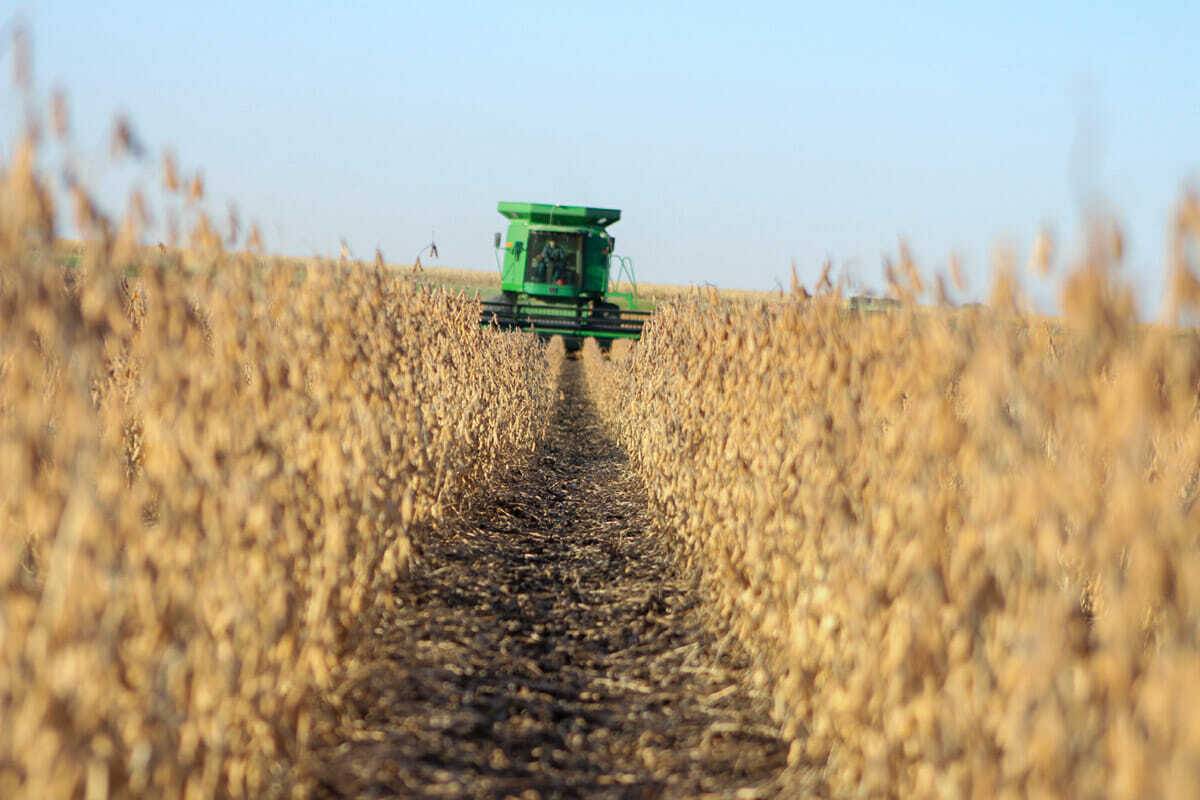
As we were conducting our pre-harvest field inspections, many production growers said they’d be happy with 40-bushel yields due to the early cold spell followed by drought. I’m happy to report that most of our growers’ yields were in the mid-50s to the mid-60s, and some even saw yields of 70 bushels per acre (bu/A) or more!
It seems that a few timely rains in August made the difference between having a decent crop and having a poor one. Below are raw yield results from some soybean Latham® Showcase plots and Latham Elite trials harvested this fall:

Keep checking lathamseeds.com for updated yield results from plots around Latham Country.
Soybean diseases such as soybean sudden death syndrome, white mold and soybean cyst nematode (SCN) negatively impacted yields in parts of Latham Country in 2021. In this week’s #AskTheAgronomist, Precision Agronomy Advisor Phil Long discusses how to identify and select soybean varieties that will address disease pressure in your fields.
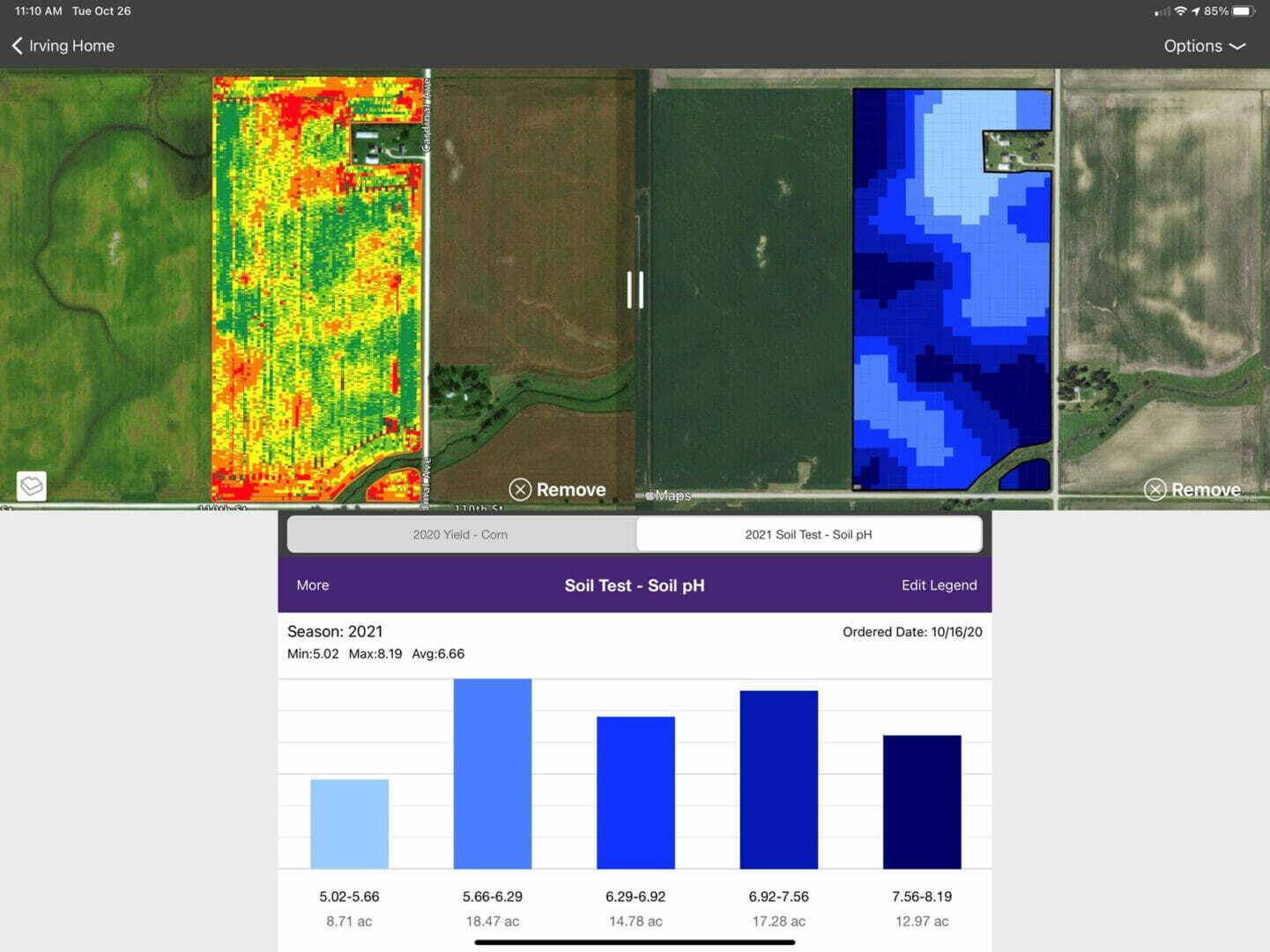
To save the most money on inputs, we must plan earlier and earlier every year. A current soil test is the best way to evaluate your fertility and ultimately your yield potential. Besides the normal evaluation of the main nutrients, a soil test pays for itself.
Let’s look at three ways to use your soil test to its full potential:
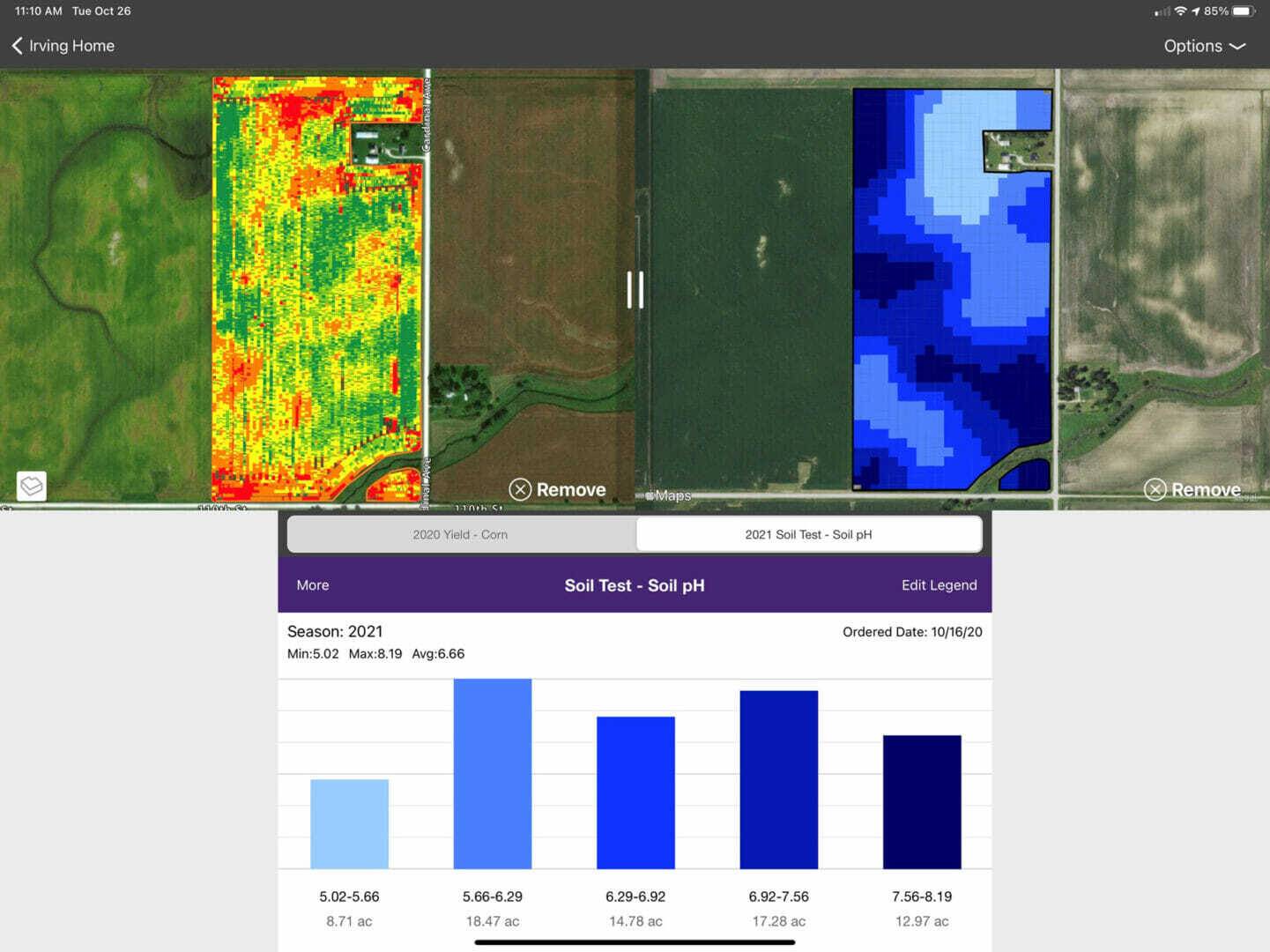 These comparisons and maps can be done in Latham’s Data ForwardTM app with a simple soil sample taken and yield map to start seeing value out of the information that you capture every year. If you’d like to learn how to start putting these things to work on your farm give me a call!