Latham Hi-Tech Seeds

(641) 692-3258

  • Home
  • Products
    • Corn
    • Soybeans
    • Alfalfa
    • Corn Silage
    • Seed Guide
  • Performance
  • Find a Rep
  • Media
    • Blog
    • News
    • Videos
    • Podcasts
    • TECHTalk
  • About Us
    • Company History
    • Our Mission
    • Careers
    • Become a Rep
    • Sowing Seeds of Hope
  • Contact Us
  • Latham Hi‑Tech Seeds

    The Importance of Corn Planting Date and Depth

    LPAC Picture Resized

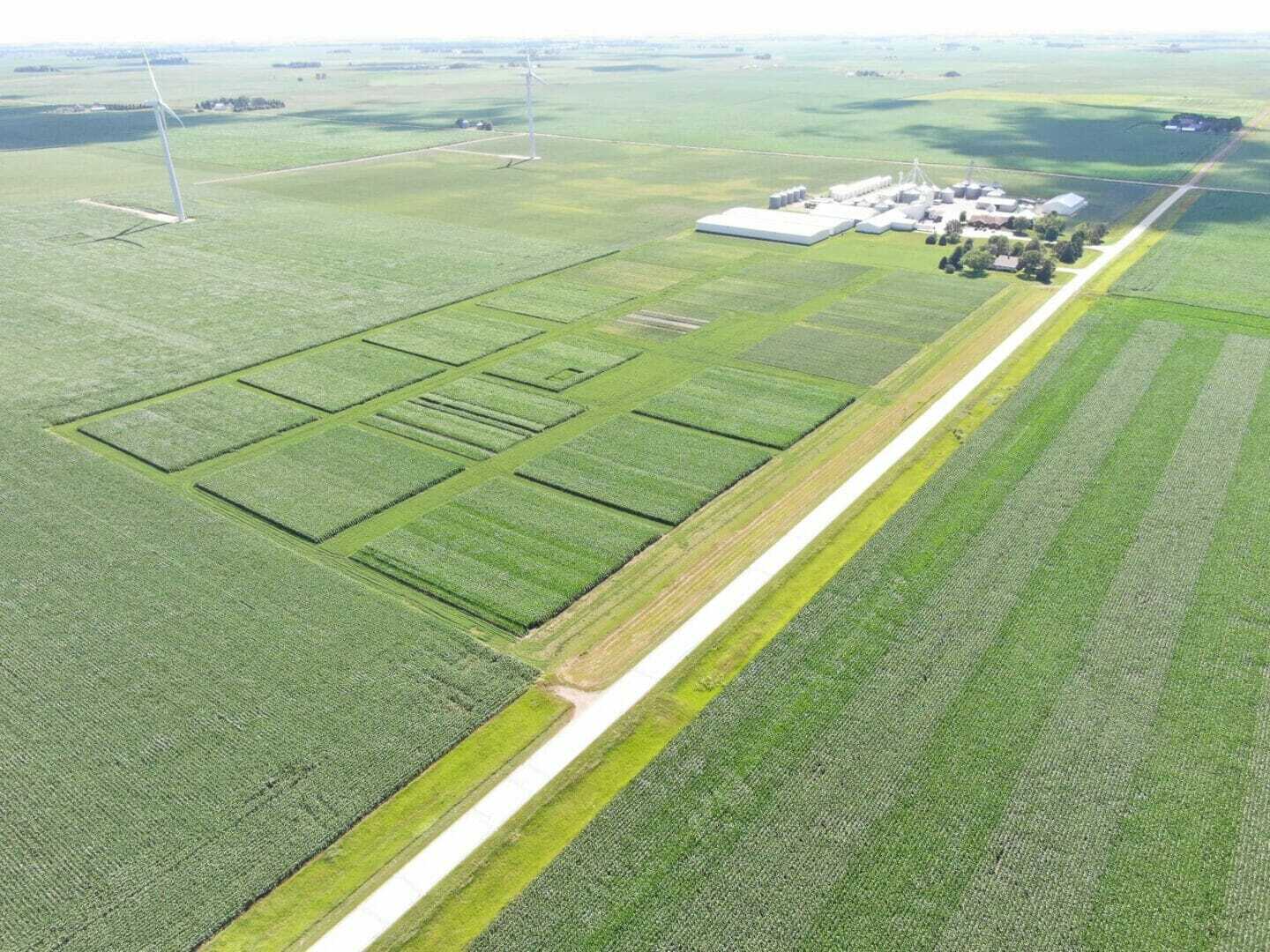
    At the Latham Premier Agronomy Center, we have many demonstrations including different corn planting dates and planting depths to show how these two important factors influence yield year after year. Research shows that 50 to 75% of corn yield increases during the past 70 years came from genetic advancements, which leaves 25 to 50% of that yield increase to changes we’ve made to our farming practices.

    Planting date and planting depth are cultural practices that have led to increased corn yield. Fifty years ago, farmers were talking about planting earlier than mid-May. Today we talk about planting earlier than April 15!

    Our adapted hybrids produce the best yields when planted in the first week to 10 days of May. This is usually due to disease, stand loss or slow growth early in the corn life cycle. This is something we know well, and it’s why Latham Hi‑Tech Seeds includes emergence and early vigor scores in our product guide.

    Matching the right hybrid to the right field and planting it at the right time can lead to outstanding yields – but only if you also plant at the proper depth. Planting corn at the proper depth allows the crown to establish approximately three-fourths of an inch below the soil surface.

    Why is crown development so crucial? If the crown is pushed to the soil surface due to shallow planting, at least one set of nodal roots typically establishes above ground. We want nodal roots to develop below ground to anchor the plant and to also increase the corn plant’s drought tolerance. Corn should be planted about 2.5 inches deep, which allows it to establish the crown just below the soil surface. Shallow planting depth causes issues with germination due to dry soils.

    We look forward to harvesting our demo plots at Latham’s Premier Agronomy Center and sharing results with you throughout the summer. Have a safe spring season!

    Did you enjoy this article? We want to (TECH)talk with you! Sign up for our newsletter to receive agronomy articles (and delicious recipes) in your inbox! We’ll talk soon.
    Webspec Admin

    September 15, 2022
    Agronomics, Corn, Crop, Emergence, From the Field, General, Growth Stages
  • Latham Hi‑Tech Seeds

    Latham Seeds Celebrates 75th Anniversary on Family’s Iowa Century Farm

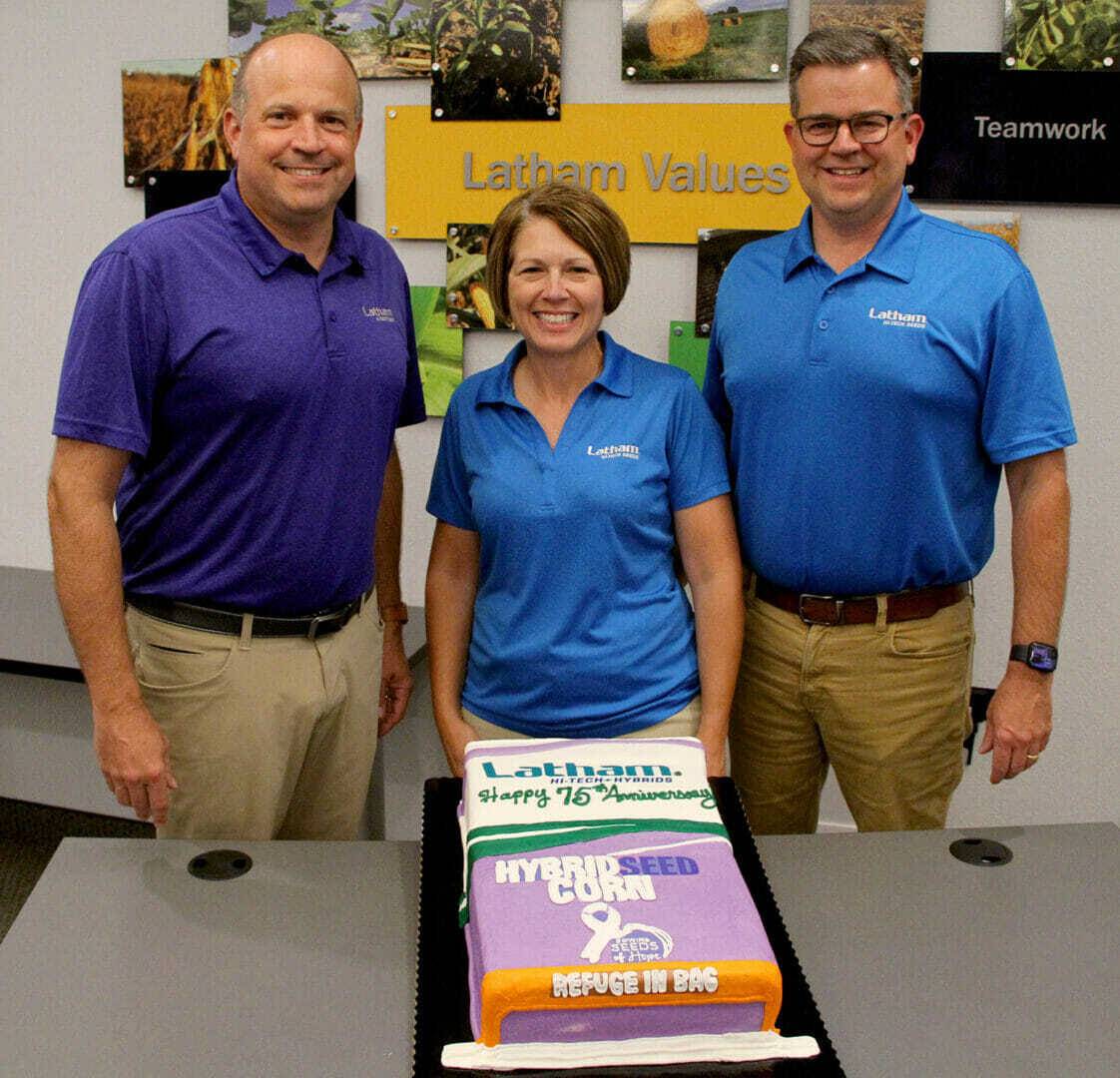
    Chris Shannon John with cake

    From a build-your-own bouquet bar to bouncy houses and in-field demonstrations, the 75th anniversary party for Latham Hi‑Tech Seeds was packed with education and entertainment for the entire family.

    “We feel blessed to be the third generation of Lathams to own and manage our family-owned seed company with headquarters on our Century Farm in North Central Iowa,” says John Latham, president, Latham Hi‑Tech Seeds. “We know that keeping a farm in the family for generations is challenging. That’s one reason we’re proud to sell through a farmer-dealer network. We appreciate working with multi-generational farmers, who plant our seed across the Upper Midwest.”

    Chris Shannon John with cake
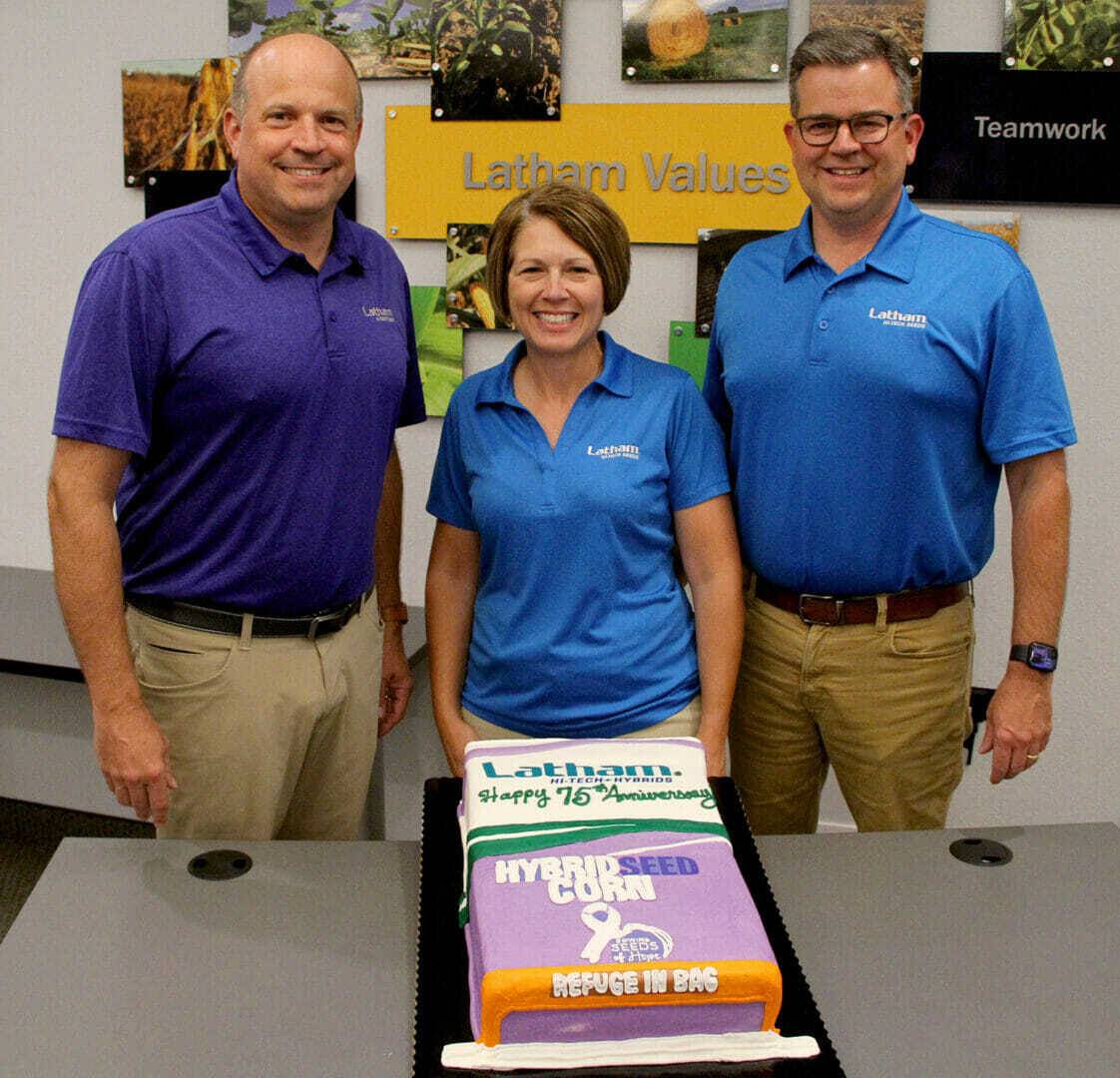
    Chris Latham, Shannon Latham and John Latham (Third Generation)

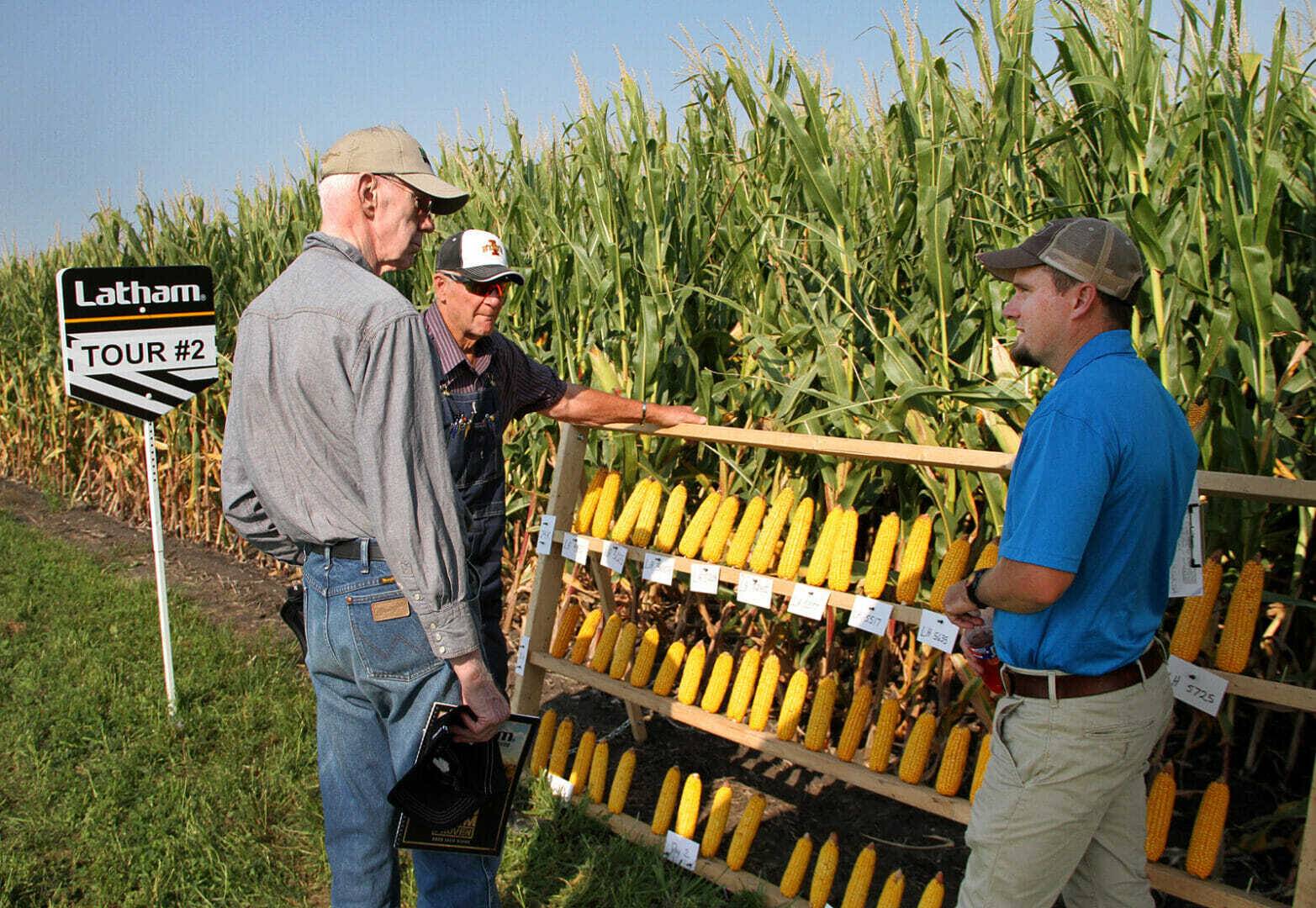
    Last night’s celebration allowed Latham Seeds to showcase the latest seed traits and technologies during the grand opening of the Latham Premier Agronomy Center. There are more than 20 demo plots located within the Premier Agronomy Center, and guests got to choose which four they wanted to attend.

    One of the more popular presentations featured two new trait platforms that protect against corn rootworm (CRW) that many farms are experiencing this season. The first corn hybrid trait platform is SmartStax® PRO, which combines “BT” traits with RNA structure. When eaten by the pest, this package interferes with an “essential-to-life protein” in the insects RNA (thus RNAi) and leads to insect control. This non-BT-based development will help control CRW in a new way plus extend the usefulness of BT-based controls. You will see the SmartStax PRO Trait package in LH 5008 SS PRO and LH 5668 SS PRO hybrids.

    The second trait platform to control CRW is Duracade Viptera™. This package combines BT traits with another BT rootworm trait that attaches uniquely to the insect’s gut when it’s eaten. It also provides above-ground protection from the Viptera trait. You will see the Agrisure Duracade Viptera trait package in LH 5209 DV hybrid. Latham® hybrids with Duracade Viptera and SmartStax PRO traits provide multiple modes of insect control for both above and below ground.

    Phil field tour 2

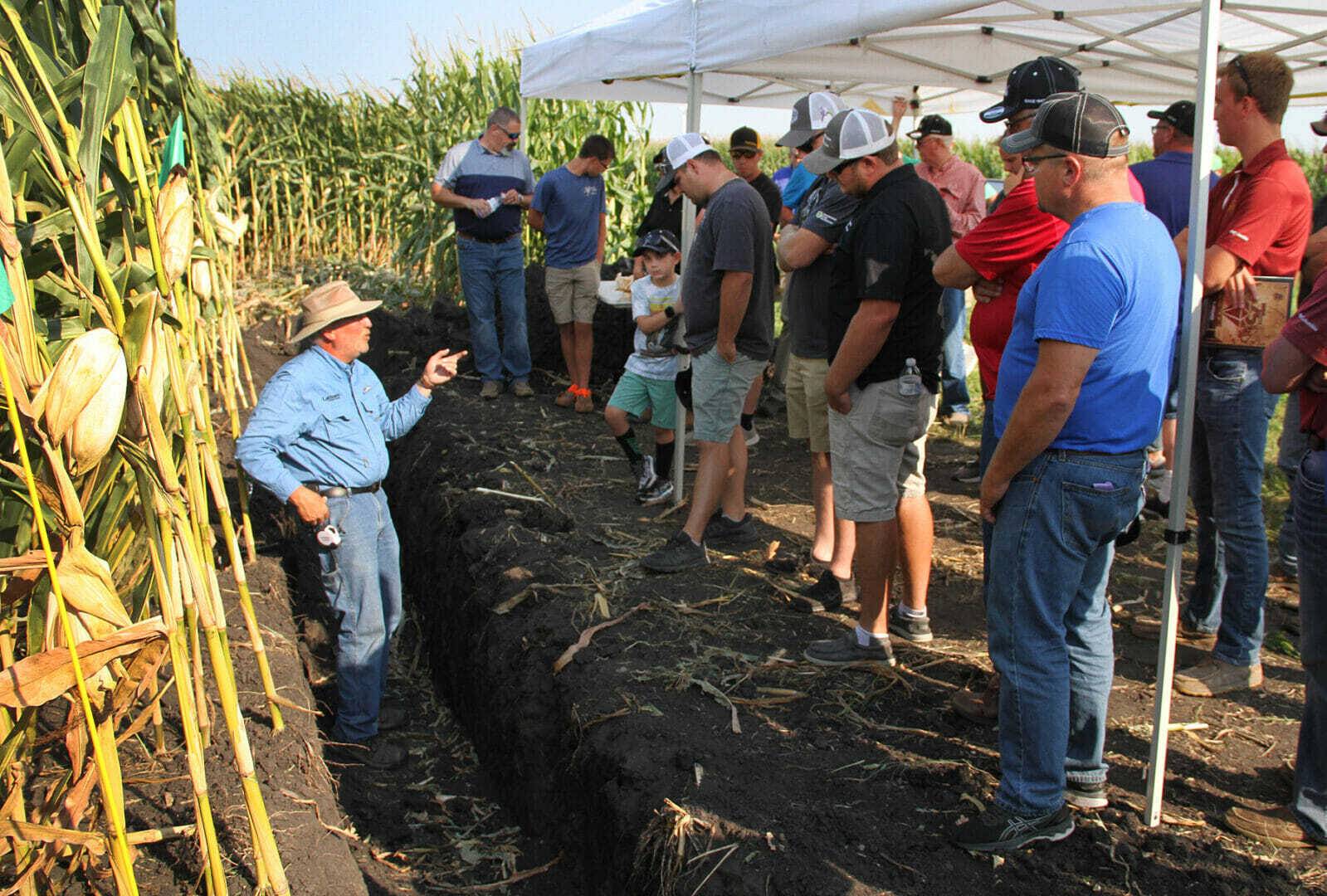
    Another popular tour stop at the Premier Agronomy Center Grand Opening was the root and soil pit. While you can learn a lot from a root dig, you can learn even more when you dig deeper! Corn roots, night crawlers, compaction layers, earthworm channels and even water during a drought can be seen at the three to five-foot depth. Soil that is healthy deep down holds more water, has less run-off and supports plants during challenging weather. Healthy soil is also filled with microbes and worms.

    Lyle root dig pit tour

    Latham’s Agronomy Center field day went from 4 to 8 p.m. Following the field presentations, guests enjoyed Wholly Smoke BBQ, birthday cake and soft serve ice cream cones plus a live performance by Neil Hewitt.

    Wholly Smoke BBQ from Dow, Iowa, had delicious smoked meats along with mac ‘n cheese. Such divine food reminded me of my favorite mac ‘n cheese recipe. Check it out below (courtesy of Cristen Clark, Food & Swine and Iowa Food and Family Project.)

    If you’d like to schedule your own tour of the Premier Agronomy Center, contact your local Latham Seeds rep or call our office at 877-GO-LATHAM (877-465-2842). All growing season long, Latham Seeds provides opportunities to learn from demonstrations in the Premier Agronomy Center. Follow @LathamSeeds on Facebook, Twitter, Instagram and YouTube – and watch Latham’s weekly “Ask the Agronomist” videos.

    Shannon Latham

    September 9, 2022
    Agriculture, Agronomics, Corn, Crop, Food & Family, General, Industry News, Insects, Latham News, Recipes
  • Latham Hi‑Tech Seeds

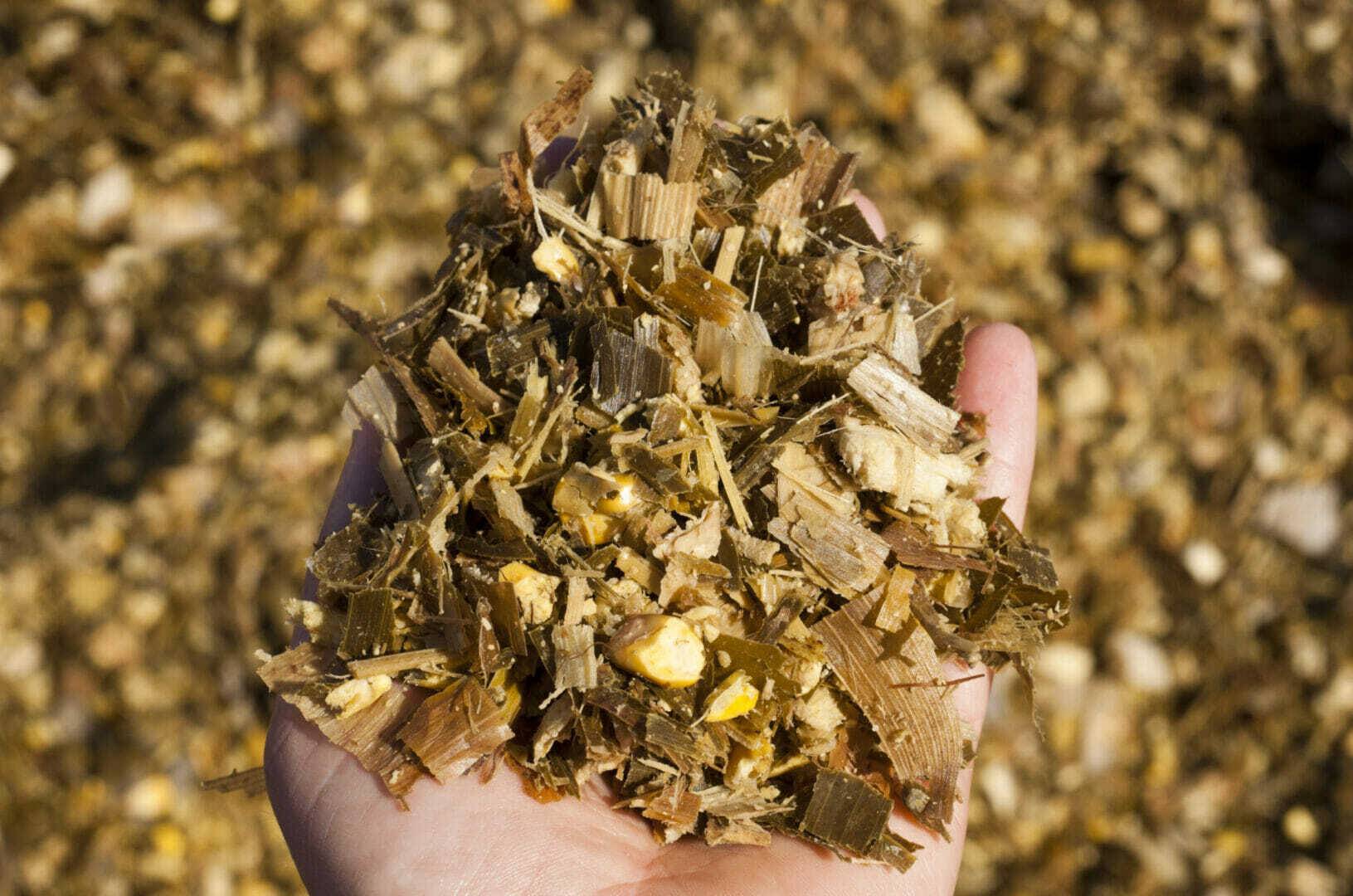
    3 Important Factors to Evaluate Corn Silage

    Silage
    Corey Headshot PNG
    Core Catt, Forage Product Manager

    “Price is what you pay, but value is what you get.”

    This adage holds true for corn silage research, too. That’s why Latham Hi‑Tech Seeds builds knowledge from previous years of corn silage research.

    Latham Seeds has several locations across the Midwest where we evaluate corn silage grain yield plus these three important factors:

    1. Economic impact to the livestock producers. Corn silage and alfalfa are more complex than cash grain crops as we look for high value in the fields and at the feed bunk. Research continually refines the impacts on beef and dairy on tonnage, fiber digestibility and starch digestibility.

    Tonnage Fiber Digestability

    • Tonnage. Corn silage dry matter is comprised of about 50% grain
      and 50% stover. Modern dual-purpose hybrid genetics tend to have a lot of grain yield capacity, which contributes favorably to overall yield. Additionally, we look for hybrids that are robust in plant structure to provide additional tonnage benefits.
    • Economic Benefit to yield. Corn silage price per ton at 65% whole-plant moisture (WPM) is about 10 times the market price of corn. At $6 per bushel for corn, that’s $60 per ton for corn silage. There are many pricing variations. Depending on the growing season and location, tonnage can range from 20 to more than 30 tons per acre. A typical acre will gross $1,200 to $1,800 per
      acre. Truly, every ton counts.
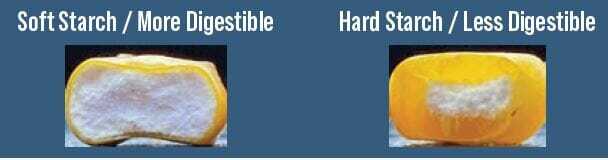
    • Starch digestibility. This can be a bit complex, which is why most seed companies don’t consider this factor. This is a high priority at Latham Seeds as starch is 50% of the plant’s dry matter. Indeed, it’s complex. When the plant stores starch in the kernel, there is a relationship between genetics, growing season and fertility. Drought, years with low heat units and soils with low fertility can contribute to lighter test weights, but starch tends to be more digestible vs. heavy test weights. Our goal is to index our hybrids over multiple years and multiple environments to help maximize the energy from every molecule of starch, so it doesn’t pass unused through the animal in manure.

    Economic Benefit to Starch Digestibility. There is a lot of research about starch digestibility in beef and dairy. Less than 3% fecal starch is optimum. A study at University of Pennsylvania revealed a 0.72 pounds of milk/day decrease for every 1% increase of fecal starch. This equate to about $65,000 annually for a 1,000-cow dairy.

    Soft and Hard Starch

    • Fiber Digestibility. Imagine the structure a corn plant must have to keep the plant upright and stand through high winds. The base of the corn plant contains a high amount of lignin, a structural component that keeps the plant upright. We can measure how much is in the corn silage, as well how much is digestible. The goal is to have as much as the fiber digestible as possible. Generally, a cow that consumes more and uses more of what is consumed is more productive. Some studies show that cows that use more of what is consumed also produce less manure.

    Economic Benefit to Fiber Digestibility. Generally, every point increase in fiber digestibility on a feed report is neutral detergent fiber digestibility (NDFD). A dairy cow can produce up to one-half pound more milk per day. When you factor that across 1,000 cows in a dairy for 365 days, having 1 point better digestion can have an economic impact of approximately $45,000 per year!

    In review, consider factors beyond raw grain yield when evaluating corn silage hybrids. Selecting hybrids that have demonstrated better digestibility can be helpful to a livestock producer’s bottom line. Feel free to contact me if I can be of assistance as you’re writing early orders.

    Webspec Admin

    September 7, 2022
    Corn Silage, Crop, From the Field, General, Tech Tuesday
  • Latham Hi‑Tech Seeds

    Harvest Corn Silage at Optimal Milkline to Add to Your Bottom Line

    Corey catt kernel graphic flat

    Corn silage season is approaching quickly, so it’s a good time to review basics like how to determine when to harvest.

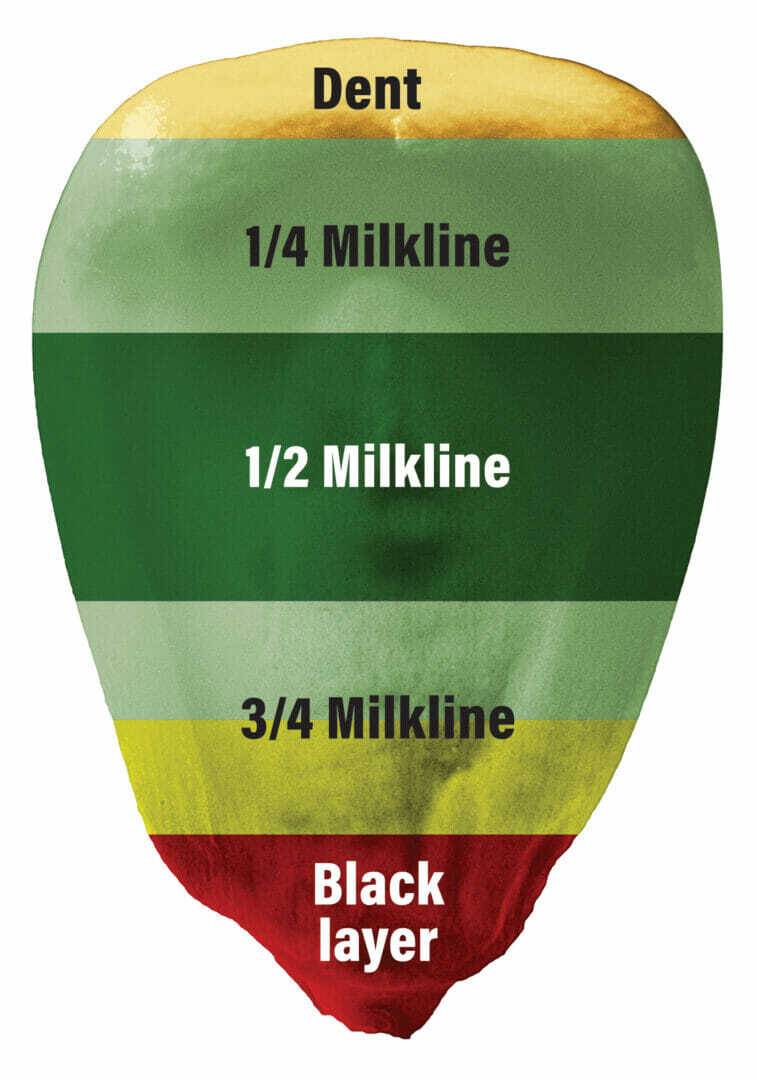
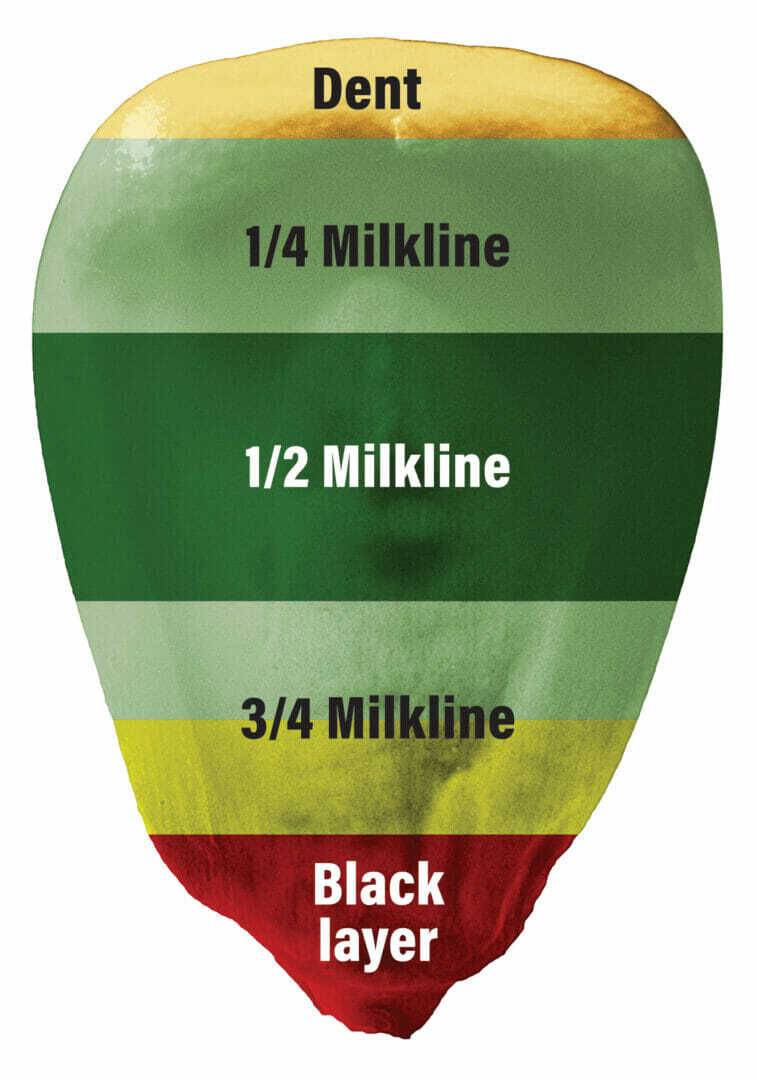
    As the kernel matures from the dented cap, the milkline moves toward the kernel tip where it attaches to the cob. Harvesting at 50% milkline generally achieves approximately 65% whole-plant moisture. Optimal harvest for bunks/bags is 65 to 70% whole-plant moisture, or one-half to one-fourth milkline. Optimal harvest for stave upright silos is 63 to 65% whole-plant moisture, or three-fourths to one-half milkline.

    Corey catt kernel graphic flat

    Think of the kernel as a sponge. As the milkline develops, the kernel absorbs more moisture from the chopped residue. If you harvest silage corn that is too wet, juicing can occur. Inadequate fermentation and mold development also may result. It is advantageous to do a formal moisture check using a koster crop tester, for example.

    One of the biggest drivers for milkline development is weather. Moisture, fertility, heat and plant health are four big drivers affecting milk line movement. When the plant is at full photosynthetic capacity, the corn silage whole-plant moisture can decline daily from 0.5 to one percent. Photosynthetic activity slows when the weather is cold, wet or cloudy, causing the corn plant to mature slower. Look at the forecast as harvest approaches because many changes can occur in five days.

    Another way to improve the quality of corn silage is by raising the chopping height as most lignin accumulates in the lower portion of the stalk. Lignin is the structural component that helps plants stand. It’s a tradeoff to find the correct cutting height to maximize forage quality and to capture the most tonnage.

    Some forage producers increase cutting height to help reduce moisture, so they can get started earlier. Raising the chop height 12 inches in a Penn State study left about 0.6 ton in the field but forage quality improved. Improved quality produces more milk for dairy farmers!

    If you have any questions feel free to reach out at coreyc@lathamseeds.com.

    Webspec Admin

    August 25, 2022
    Corn Silage, Crop, Fall, General, Season, Summer, Tech Tuesday
  • Latham Hi‑Tech Seeds

    #AsktheAgronimst – Corn Rootworm

    Ask the agronomist what to know about corn rootworm

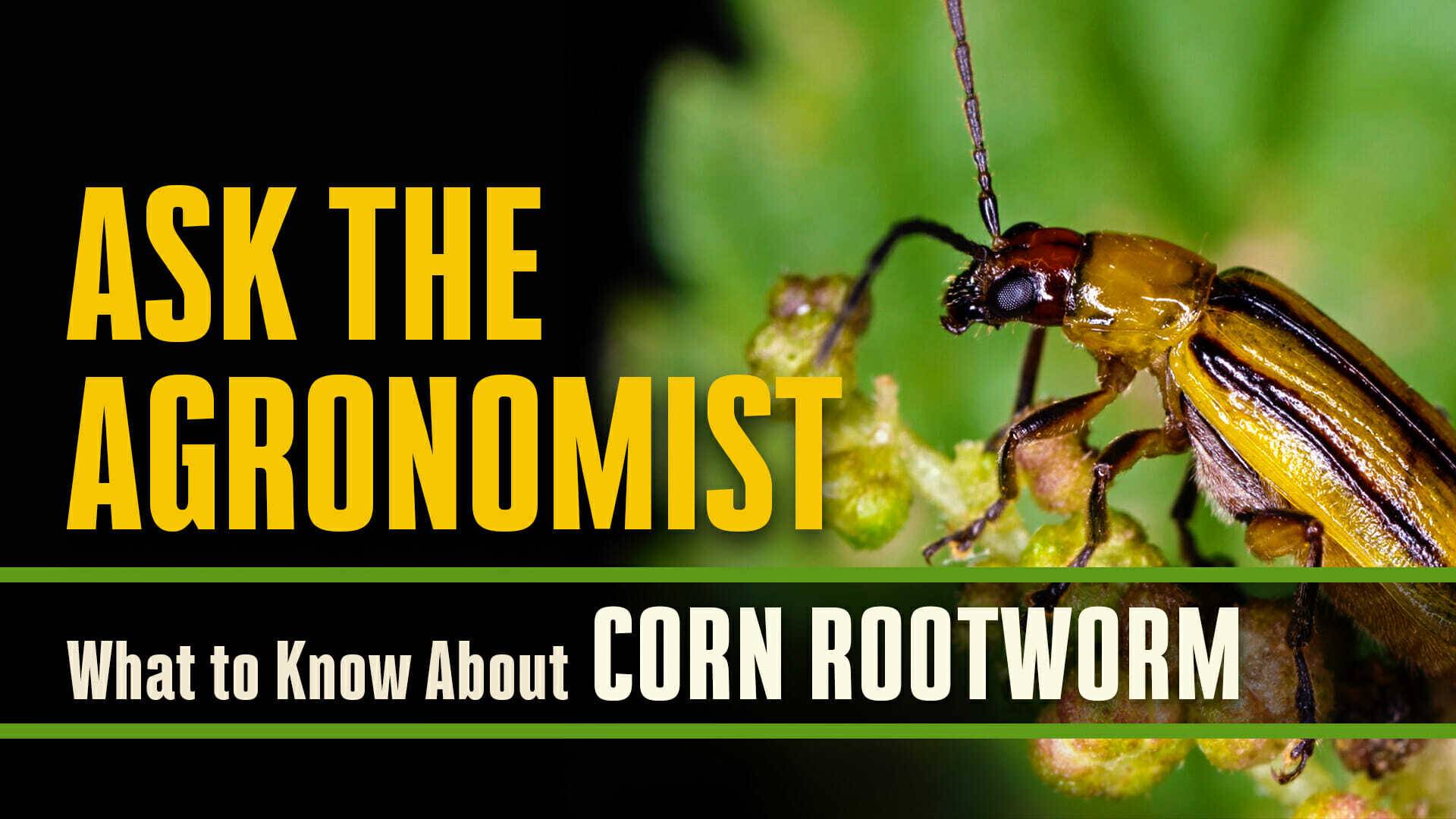
    Phil Long, precision agronomy advisor, is scouting in the corn field. He highlights unique characteristics you could see with corn rootworm damage. You may be looking for the wrong thing!

    Shannon Latham

    August 11, 2022
    #AskTheAgronomist, Agronomics, Corn, Crop, From the Field, General, Insects
  • Latham Hi‑Tech Seeds

    Latham’s Premier Agronomy Center Opens for Tours

    LPAC Picture Resized

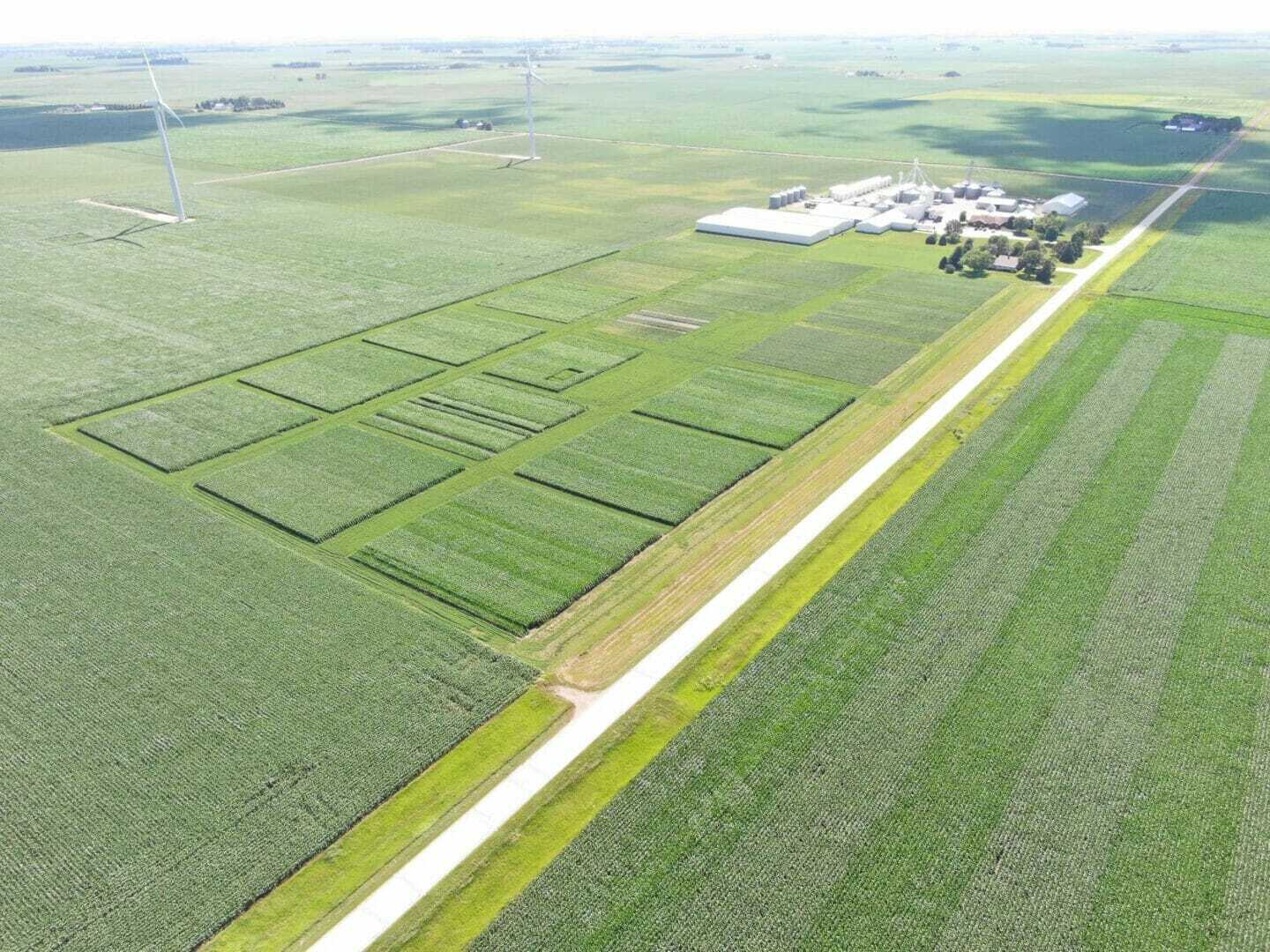
    Latham Hi‑Tech Seeds’ Premier Agronomy Center at our company headquarters in North Iowa provides us with opportunities to collect data on real-world challenges. It also provides us with an opportunity to talk about the exciting new Latham® products, as well as management practices, that help you raise more bushels. This year we have 18 different plots (10 corn and 8 soybean) to demonstrate different techniques.LPAC Picture Resized

    Interested in seeing Latham’s Premier Agronomy Center? Plan a visit! Latham Dealers are encouraged to make arrangements with their regional sales manager (RSM), so they can bring their customers throughout the growing season. We will be open for public tours on Thursday, Sept. 8, at 4 p.m.

    Here’s what you can see inside Latham’s Premier Agronomy Center… As you drive west on 180th Street in Alexander, Iowa, you will see our Latham Showcase plots featuring our top corn and soybean products. Next to that are corn and soybean seed treatment demonstration plots. I also planted my hybrid stress research up front. Twenty different Latham hybrids were planted from 22,000 to 36,000 plants per acre, so we can pinpoint when each hybrid flexes and how we can better manage them in-season.

    The second tier of plots contains high-yield plots (corn/beans) where we “throw the kitchen sink at it,” so to speak, to try to add some extra bushels. Our soybean Iron Deficiency Chlorosis (IDC) plot uses tactics like in-furrow chelated iron products with increasing population to overcome the challenges IDC can bring. We have a silage demonstration plot with a planting date demonstration. You’ll also see a sneak peak of Latham’s corn breeding program alongside some great observation plots featuring planting depth.

    The third tier of plots are “long-term plots” that include cover crops, no-till and continuous corn. These practices come with many challenges, so we have several different products/treatments including in-furrow fertilizer, biologicals, in-furrow fungicide, and biological products for providing nitrogen to corn. We also have included herbicide demonstrations, showing how cover crops can increase water infiltration during pounding rains, as well as also reduce herbicide costs and improve weed control in soybeans.

    All growing season long we’re providing opportunities to learn from our demonstrations in the Premier Agronomy Center. Follow @LathamSeeds on Facebook, Twitter, Instagram and YouTube. We share our weekly “Ask the Agronomist” videos, as well as season-specific information.

    Phil Long

    July 27, 2022
    #FromTheField Crop Reports, Agronomics, Corn, Crop, Fertility, From the Field, Fungicide, General, Growth Stages, Insects, Precision Ag, Season, Seed Treatment, Soil, Soybeans, Summer, Weed Control
  • Latham Hi‑Tech Seeds

    Summer Fertilizer Increases Alfalfa Winterhardiness

    Alfalfa3
    Corey Headshot PNG
    Core Catt, Forage Product Manager

    With everything from groceries to gas on the rise, we understand the need to question whether expenses are necessary or justifiable. Below is information to support why fertilizing alfalfa in summer and applying fungicide to silage hybrids warrants your attention.

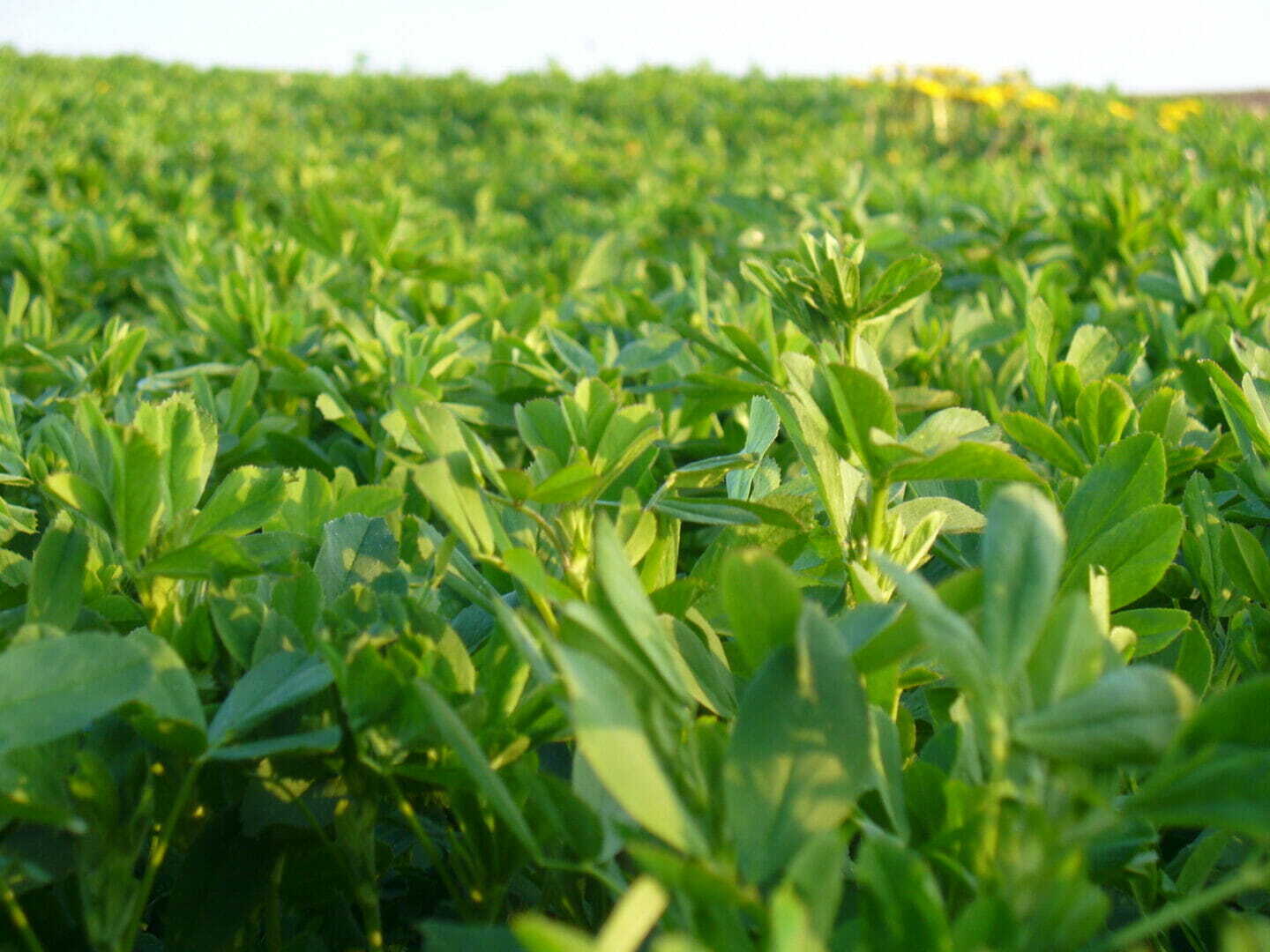
    Fertilizing alfalfa in the summer helps fill the cellular gas tank of the plant’s crown, which helps increase its yield potential for the current growing season, as well as increases its potential for winterhardiness. All alfalfa benefits from in-season fertility, regardless of cutting schedule or strategy.

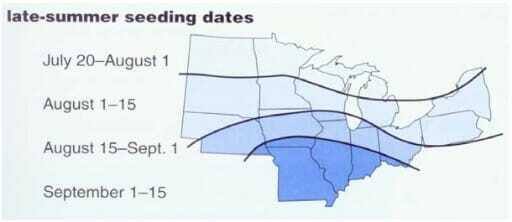
    Summer seeding is fast approaching. July 20 through August 1 are key seeding dates for Latham Hi‑Tech Seeds’ northern territory, which includes North Dakota, as well as northern Minnesota and northern Wisconsin. August 1-15 is the range of recommended alfalfa seeding dates for southern Minnesota and southern Wisconsin while most alfalfa growers in Iowa typically seed in mid-August. Look at this graph.

    Corey Graph
    Sourced from University of Wisconsin – Extension

    Due to our late spring, many Midwest alfalfa growers have moved seeding alfalfa to this fall. The success of fall seeding depends on moisture. It’s important that alfalfa germinates quickly, develops a crown, and builds enough crown carbohydrates to overwinter.

    Latham® AlfaShieldTM is a great seed treatment to help facilitate quick emergence. Think of AlfaShield as wrapping your alfalfa seed in a sponge. It helps protect the fragile germ of the seed. It also helps draw moisture to the seed, which is particularly important when seeding into moisture-stressed soils. Summers-seeded alfalfa is up against the time clock; approximately four to six weeks of significant growth needed to develop the crown before frost. The 2022 and 2023 Latham product guides include a dry matter (DM) ton advantage of AlfaShield compared to the old industry standard. AlfaShield has a bigger advantage in moisture-stressed soils.

    Summer Considerations for Corn Silage

    When I walk fields and test plots in the fall, I note a hybrid’s stay-green ability. I believe this observation relates to plant health. Healthy plants tend to have a lower probability of developing infection, which can create the environment for molds and mycotoxins to grow.  Fungicide application promotes plant health and can boost yield and corn silage quality. Healthy, dark green, disease-free leaves are like solar panels capturing more sunlight for more photosynthesis. Healthy leaves also build more yield, as well as reduce chances for mold and mycotoxins to develop.

    There are a variety of fungicides to select from, all of which inspire improved plant health. I have the most experience with BASF fungicide corn silage research relating to improved corn silage tonnage and forage quality. Several of the studies have resulted in two to three more tons of corn silage per acre plus the potential of reduced molds and mycotoxins is encouraging. With current commodity prices, that’s around an extra $140 to $210/acre in corn silage tonnage!

    Investing fungicide is worth consideration for livestock producers, who raise their own forages. Molds and mycotoxins can be more challenging to quantify. When fed to livestock, however, they can severely impair animal performance. In severe instances, it can lead to mortality.

    Feel free to contact your local Latham rep with any questions about summer fertilizing or fungicide application. You’re also welcome to email me at coreyc@lathamseeds.com. I’m always happy to visit with Midwest farmers who are interested in raising better meat, milk and eggs!

    Webspec Admin

    July 14, 2022
    Agronomics, Alfalfa, Crop, Disease, Fungicide, General, Seed Treatment, Tech Tuesday
  • Latham Hi‑Tech Seeds

    Tissue Test for Better Yields

    Phil Corn in late June

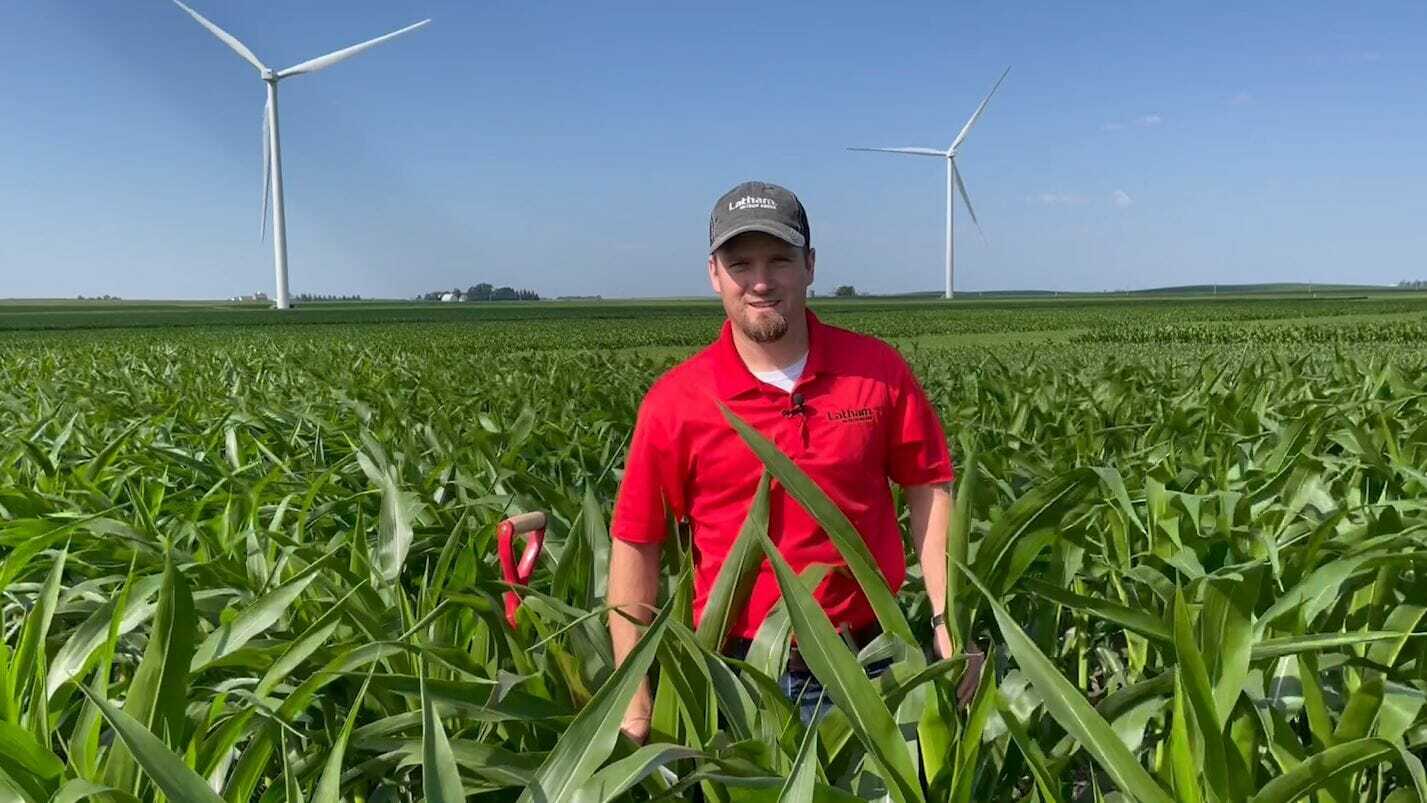
    Phil Long is in the field this week looking at the rapid growth phase of corn. He also shares what to scout for this time of year and how to send in a proper tissue test. Check out the video or read the article below to learn more.

    With current input and commodity prices, we must get the most from each crop. To help your crop reach its potential, start with fertility. Regular soil tests are great, but the next step is in-season tissue testing.

    Tissue testing supplements your soil test. You shouldn’t take a tissue test without a current soil test in hand. Once you take the tissue test, compare it to your soil test. See where the two tests match. Then make plans to address those needs either this season or next season.

    Tissue testing every two weeks shows how your crop is developing throughout the season. If you only can tissue test once or twice, I recommend pulling a sample early (V4 for corn or soybeans) and before grain fill (R1 for corn and R3 for soybeans). This will give you a good understanding of what needs are not being met during crucial development stages.

    Here are some tips on how to use tissue testing to your advantage this season:

    1. Sample whole plant (above ground) when shorter than eight inches. Once a plant gets to reproduction, use the leaf below and opposite the ear leaf for corn. For soybeans, use the most recently matured leaf (usually the 2nd or 3rd leaf from top of the plant). Take at least 15 leaves/plants per sample.
    2. Take multiple samples to compare locations in the field and to look for consistencies. If you are looking at a trouble spot, be sure to also take a sample from a good spot in the field. Send samples in a breathable bag (not a plastic Ziploc bag), or your results may not be good.
    3. Compare back to your soil test. Keep environmental conditions in mind at the time of sampling. Most labs will categorize the nutrient levels based on what growth stage the plant was in when sampled. Tissue testing is like taking your temperature; the tissue test can reveal consistencies in a field that must be addressed to break that next yield barrier.

    Check out other corn videos and articles on The Field Position.

    Phil Long

    June 29, 2022
    #AskTheAgronomist, Corn, Crop, Disease, From the Field, Growth Stages, Soil, Summer, Tech Tuesday
  • Latham Hi‑Tech Seeds

    Alfalfa Threats

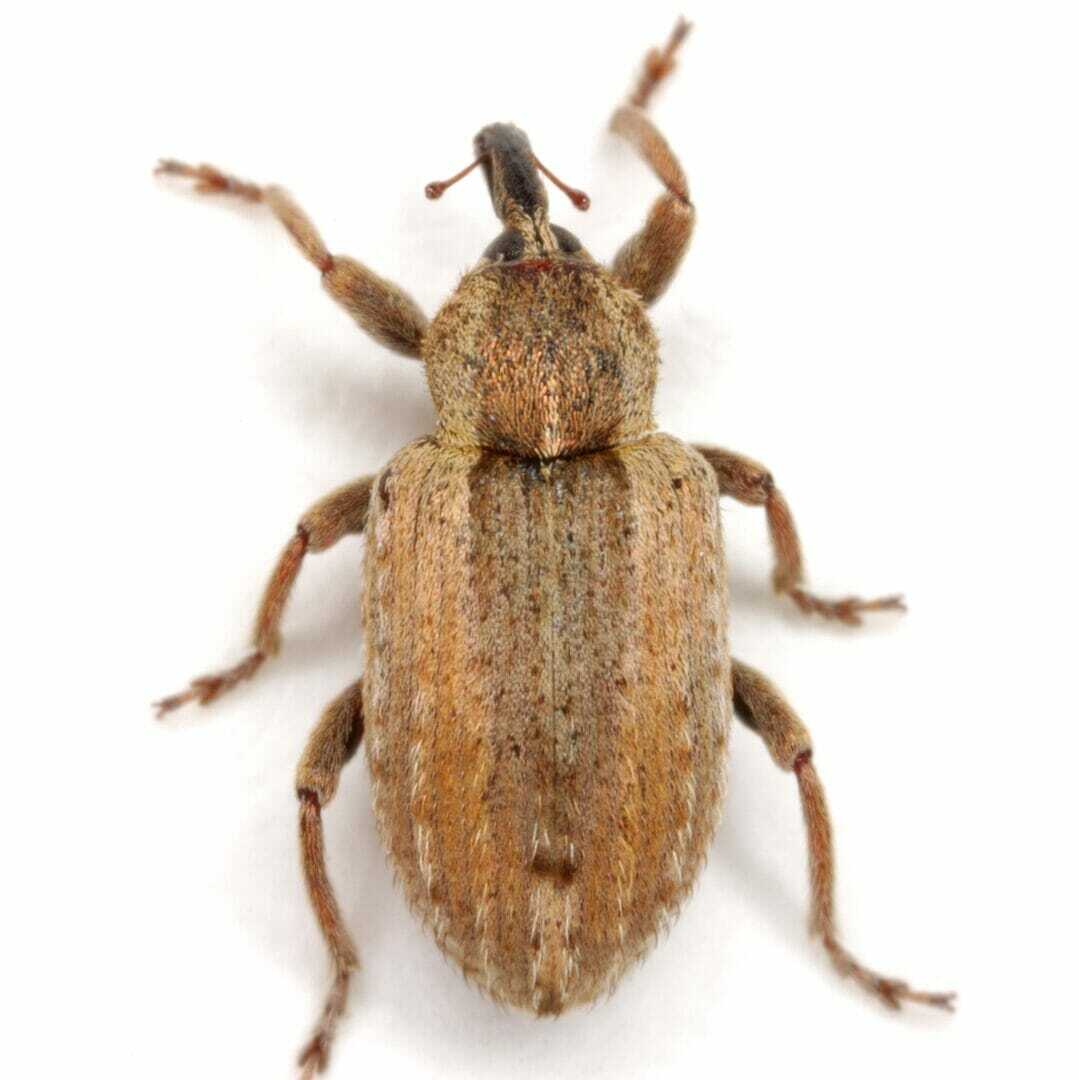
    Alfalfa weevil
    Corey Headshot PNG
    Corey Catt, Forage Product Manager

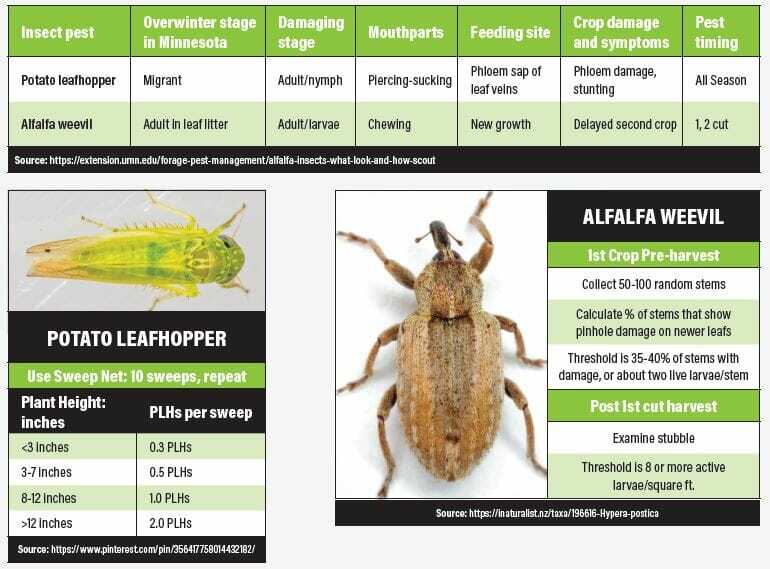
    Like other crops, high-quality alfalfa is commanding a good price. Strong market prices can change the economic thresholds, making it easier to justify investing in pest control. Below are some charts to help guide you.

    Many insects can damage alfalfa, so it’s important to build a plan that keeps alfalfa healthy. Insects can damage the plant so much that the plant can acquire a disease and die.

    Each alfalfa plant is like a factory. Crop scouting, spraying and fertilizing is like providing critical maintenance to keep the factory operating efficiently, as well as to optimize yield and quality.

    Controlling alfalfa insects generally involves two things: (1) spraying insecticide; and (2) cutting alfalfa early. Check out these two articles for more insight.

    Alfalfa insects: What to look for and how to scout

    Alfalfa Weevil

    Weevil and leafhopper


    Check out other alfalfa articles and videos from our experts.


    Webspec Admin

    June 22, 2022
    Agronomics, Alfalfa, Crop, Disease, Fungicide, General, Growth Stages, Insects, Season, Spring, Summer, Tech Tuesday
  • Latham Hi‑Tech Seeds

    #AsktheAgronomist – Tough Start

    Ask the agronomist tough starte

    It’s been a tough start to the 2022 season with delayed planting and cool weather. Phil Long, precision agronomy advisor, unpacks GDUs across Latham Country and when corn and soybean stands will really take off. Check out more agronomy videos.


    Phil Long

    June 7, 2022
    #AskTheAgronomist, Agronomics, Corn, Crop, Emergence, From the Field, Growth Stages, Soil, Soybeans
Previous Page
1 … 4 5 6 7 8 … 62
Next Page

Latham Hi‑Tech Seeds

131 180th Street | Alexander, IA 50420

(641) 692-3258

SIGNUP FOR OUR NEWSLETTER
  • Contact
  • Legal
  • Dealer Center
  • Seedware Login
  • Latham Gear

© 2025 Latham Hi‑Tech Seeds. All rights reserved. | Iowa Web Design by Webspec | Privacy Policy

Latham® Hi-Tech Seeds is a trademark of M.S. Technologies, L.L.C., 103 Avenue D, West Point, IA 52656.