
Latham Hi-Tech Seeds

(641) 692-3258

  • Home
  • Products
    • Corn
    • Soybeans
    • Alfalfa
    • Corn Silage
    • Seed Guide
  • Performance
  • Find a Rep
  • Media
    • Blog
    • News
    • Videos
    • Podcasts
    • TECHTalk
  • About Us
    • Company History
    • Our Mission
    • Careers
    • Become a Rep
    • Sowing Seeds of Hope
  • Contact Us
  • Latham Hi‑Tech Seeds

    Post-Harvest Soil Tests Can Yield Results Next Season

    Splash screen with logo

    by Darin Chapman, Precision Agronomy Advisor

    Splash screen with logo

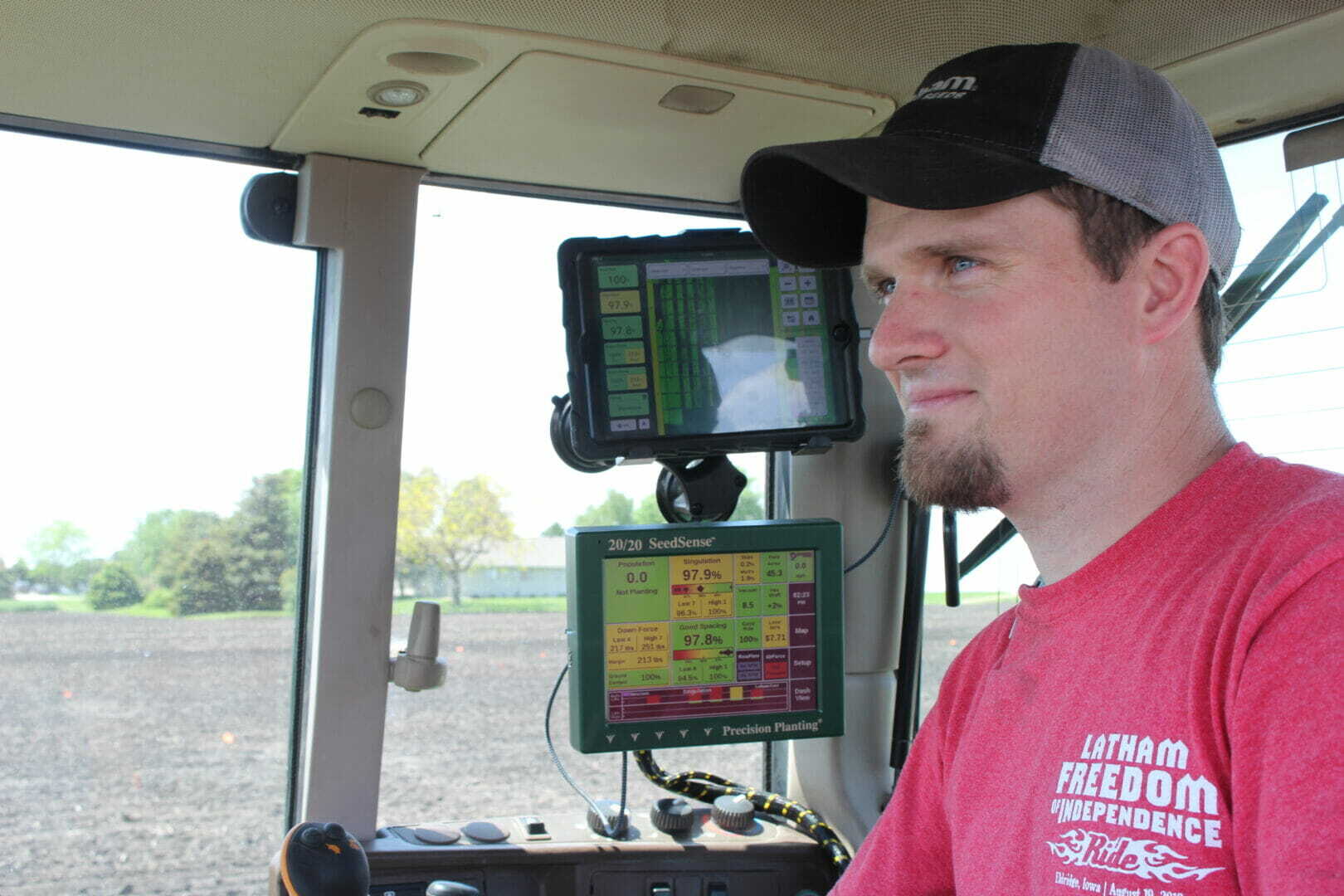
    Soil sampling and soil testing are best management practices to produce the highest yields. As margins narrow, farmers often look to reduce fertilizer as a way to reduce costs of producing a crop. Soil tests and precision ag technology can be the catalyst for reducing costs of fertilizer inputs without sacrificing yield or soil health.

    The basic principles of soil sampling haven’t changed much over the years. Advancements in cropping practices, machinery and technology, new crop genetics and fertilizer application have resulted in advanced strategies for using that data.

    Fertilizer recommendations historically have been based on average soil tests, area conditions and target yields. This method is good for the acres that align with the average, but it also means too little or too much fertilizer is applied to other areas impacting yield and profitability. It’s good practice to take soil samples every three years to monitor phosphorus and potassium. Soil sampling for nitrogen is imperative, particularly in years with unusual weather.

    If reducing fertilizer costs is the goal, here are a few steps to consider:

    1. Reduce broadcast applications in areas where soil tests show optimal levels. Routine soil tests in the years following with help make sure those nutrients are remaining at optimal level with this new practice.
    2. Use Latham Hi‑Tech Seeds’ Data Forward™ App to make grids that fit your operation whether it be 2.5-acre grids or zone sampling. Try to avoid these sampling areas: lime, sludge, or manure piles, animal droppings, areas near fences or roads, banded fertilizer rows, eroded knolls and low spots to ensure good data is included in your results.
    3. Sample fields at the same time every year, so your analyses are more comparable over time. Post-harvest is a good time to sample for many crops. Taking samples three to six months prior to the next crop will allow enough time for any pH or nutrient adjustments.
    4. Establish a dollar amount to spend on potassium, phosphorous, lime and nitrogen. Review the soil test grids to identify low producing areas and high producing areas of your fields. These newly identified zones can be a map for where to place more or less fertilizer for best return.

    Low fertility and PH levels play a huge factor in your crop yields. We need to take advantage of the current technology to make crucial decisions on variable rate applications across the field. If we are not using our soil test results, yield monitors and yield maps to their full ability we are missing big opportunities to increase income.

    Contact Latham Seed’s Precision Agronomy Advisors to perform a Needs Assessment. Phil Long and I can help you decide what is the best fit for your operations.
    Webspec Admin

    October 15, 2019
    Agronomics, Fall, Season, Soil, Tech Tuesday
  • Latham Hi‑Tech Seeds

    Reap More Than Grain: Tips for Gathering Harvest Data

    IMG 5287

    Precision agriculture is all about more accurately understanding each field you farm. The yield monitor can help you increase profit by calculating ROI from different management practices.

    Calibrate. Calibrate. Calibrate! The importance of calibrating combine monitors can’t be stressed enough. For those who run a yield monitor, that screen can take your operation to the next level. Accurate yield data can be compared from year to year and across different crops to establish areas within each field that must be treated/managed differently.

    Yield maps may be used to create zones for applying fertilizer, lime, seed, nitrogen and many other inputs. It’s important to place inputs in the right spots to provide the best return per acre. Even if you’re not implementing variable rate technologies today, you might someday. That’s why it’s so important to calibrate more than once and always when switching crops.

    Our goal with DataForward® is to place the best hybrid or variety on each field based on the information available. Seed selection can add 40 bushels per acre (bu/A) on corn and 15 bu/A on soybeans! Placing the best genetics for a given environment pays.

    Evaluate those products on your farm. How are they standing? How are they coming into the combine? What is the moisture? How is late-season crop health where you sprayed fungicide? What is plant stature? Ear height? Take notes on how each hybrid physically responds to your field environment. Each field has a different overall environment from fertility and soils to disease pressures and climate conditions.

    Another advantageous feature of precision ag equipment is dropping pins and taking notes. If you’re noticing more tip back on your corn, drop a pin and make a note or drop a pin and take a picture using your phone. Perhaps the plant population was a little too high or maybe too much nitrogen was lost in that area, or maybe the problem stems from a deeper fertility issue that only a diagnostic soil sample can find. Grid sampling may be too coarse to catch a particular spot, but using precision ag tools allows you to plot what you’re seeing. Then you can go back later, when you have more time, and evaluate the data. When harvest ends, planning for the next crop begins.

    Keep diagnosing problem areas after the combine has been put away. Turn Precision Ag tools into profit! Feel free to contact me at the Latham office if I may be of assistance.

    Phil Long

    October 7, 2019
    Agronomics, Fall, Precision Ag, Season, Tech Tuesday
  • Latham Hi‑Tech Seeds

    Adjust Your Harvest Plan to Address Stalk Rot

    Stalk Rot

    Many Latham sales managers, dealers and customers have shared their concerns about the excessive rainfall received. Most of Latham Country in the last few weeks have been wetter than normal.

    Wet weather brings to mind diseases, and too often we see corn fields with some leaf and stalk quality issues late in the season. I’ve personally seen a lot of Common Rust, Northern Corn Leaf Blight, Gray Leaf Spot and Eyespot this year.

    Even with harvest underway, it’s important to continue checking fields and assessing stalk integrity as weather conditions can cause crop conditions to change. Ideally, farmers harvest the driest fields first so crops can dry naturally. This obviously saves time and money, but those plans must be revised if stalk rot shows up.

    There are two primary ways to check corn plants for stalk rot: (1) Pinch the stalk at the base of the plant, usually below the first and second nodes. If the stalk pinches easily between your fingers, stalk rot is likely. (2) Take the entire stalk and bend it to a 45-degree angle. If stalk rot is present, the plant usually breaks at the lower part. Do this with at least 10 plants from different areas of your field to provide a good sampling. If stalk rot is present, harvest that field as quickly as possible regardless of the moisture content. The yield that could potentially be lost during high winds or complete rot will far outweigh the extra cost of drying grain.

    Weather will, of course, dictate how corn stalks hold up to disease and normal decay. Adjust your harvest plan if needed to harvest the worst first.

    Stalk Rot

    Webspec Admin

    September 30, 2019
    Agronomics, Corn, Crop, Disease, Fall, Season, Tech Tuesday
  • Latham Hi‑Tech Seeds

    Getting to the Root of Hybrid Performance

    File5

    by Bob Foley of RFS Global

    This fall will go down in history as one of the most anticipated harvest seasons ever. Never have we experienced such widely varied circumstances. It doesn’t seem to matter if we are discussing conditions regionally, state to state, farm to farm, or as we have seen way too much of this year, plant to plant.

    Walk into almost any field in Latham Country and you’ll notice the variability in studying just one row. The huge difference in ear sizes, plant maturity, and ear-to-ear kernel maturity with a 50-foot circle of plants seems to be widening. Overall, it is apparent that the extremes of the 2019 planting season seem to be widening. There are yellowing patches that we didn’t notice in July or random bunches of plants simply folding up but surrounded by much better plants. While driving down the road and looking in through the lower canopy, suddenly we can see six rows in because the bottom canopy is disintegrating in a matter of a few days.

    We might say these things goes back to the spring weather, and for the most part, we would be correct – partially. Depending on where you farm, the conditions we’re seeing now probably stretch back to last fall before most of the harvest took place. Remember when that beautiful crop was 26 to 28% and many of us held off for drier corn before harvesting? Remember the 3+ weeks of rainfall across most of Latham Country?

    Much of what we faced this spring, as well as what is occurring in our fields now, started last fall during field activities. Compaction resulted when combines, carts, trucks, spreaders and tractors rolled across wet fields. This spring just added to it. We were beyond wet, so we invented ways to cut corners to plant when the window opened. How many of us know of a field where the headlands pollinated 3 weeks before most of the field?

    In 2019, 51% of the U.S. corn crop was planted after May 25. Much of this acreage was planted because time was simply running out. For the most part, we experienced a gentle July and August, which probably has given many of us alarm as we see parts of this crop folding up.

    File5
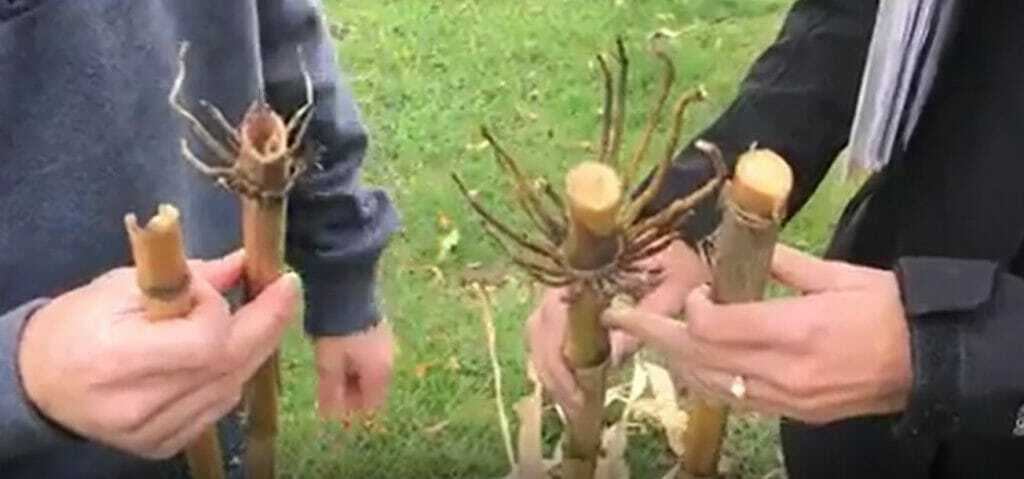
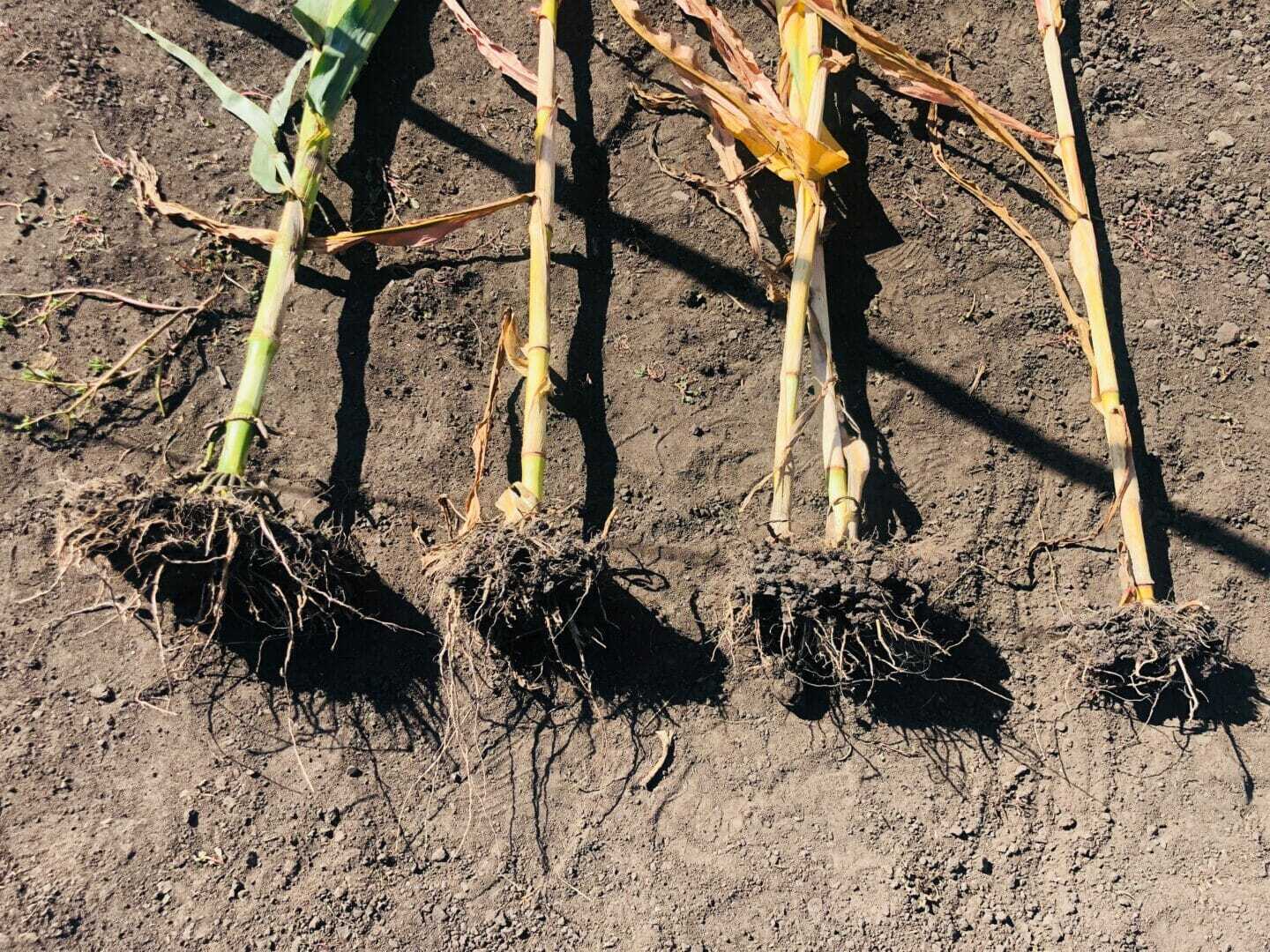
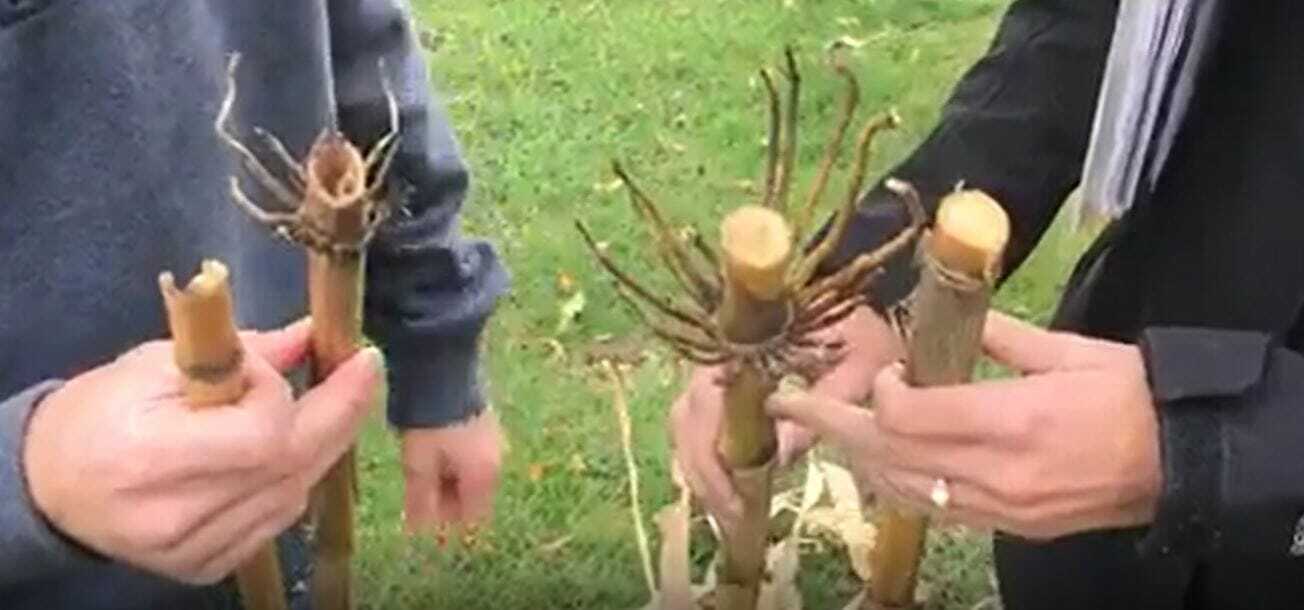
    Roots don’t stay shallow because there is water available.  Roots stay shallow because they’re blocked from growing deeper.

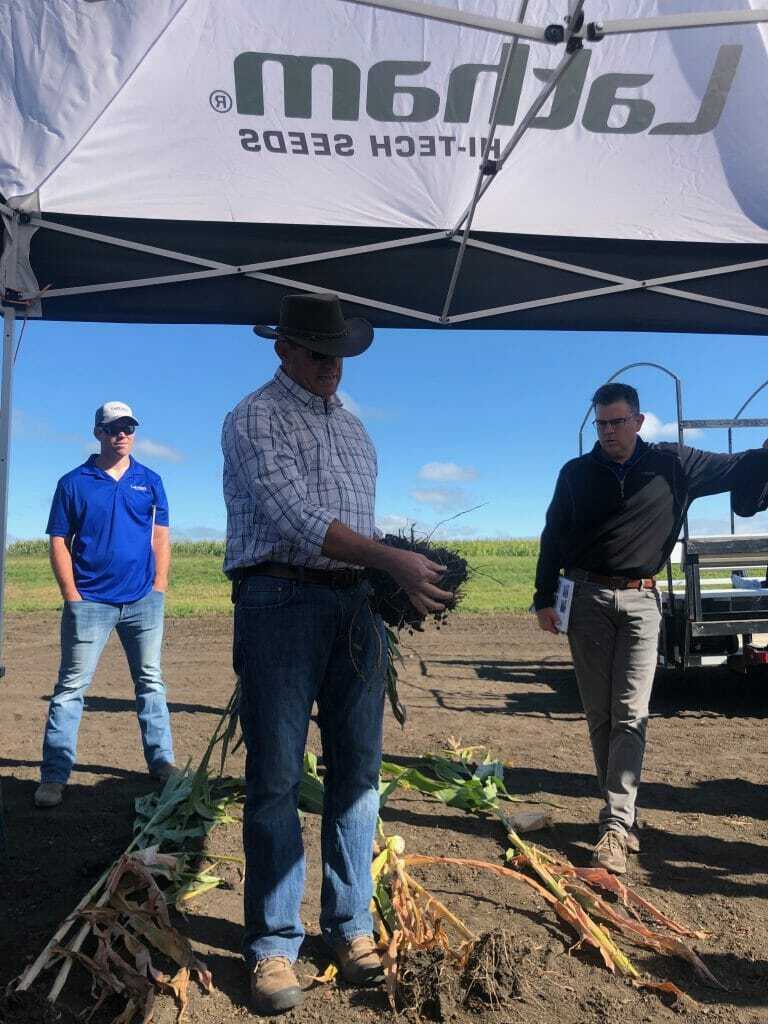
    By and large, most of this variability and early death is coming from the culmination of factors that we’ve discussed at Latham field days, meetings, and in this article. Contrary to the coffee shop discussion,roots don’t stay shallow because there is water available.  Roots stay shallow because they’re blocked from growing deeper. Roots don’t grow deep in some “hunt and search” mission. They grow down because of gravity. Furthermore, when plants pollinate well but have sub-par roots, the plant withers early, ears hang, field get spotty, and we notice the crop maturating in spots.


    The short answer to this “my field has more weak spots than I thought” boils down to a two basics: roots and compaction.  For the most part, compaction could not be avoided.  Last fall and this spring simply didn’t allow for the best stewardship practices.


    However, I would like to consider what we might have done or what we may be thinking of doing next year in the way of roots (besides a good field ripping). I have spoken often on the strength of later hybrids (relative maturity or RM) versus earlier hybrids. Without question, later is better in most agronomic factors. In general, later RM hybrids genetically have higher yield capabilities, are better in heat, are better in stress, provide more leaf area for sugar production, are typically healthier, have better standing in the fall, are easier to harvest, have higher test weights, etc.

    And this year, I would support the idea that later hybrids generally handled some of the compaction issues better. They might have improved root growth/penetration, but I think it is more practical to assume that they just start out with a better toolbox to take the pressures of a season vs the early RM hybrid. I hear the discussion about “wetter corn” and “drying cost” and I won’t argue with each man’s economies. However…

    Let’s consider the huge data set against switching to earlier hybrids in late-planting situations (later wins). The cheapest water to remove from a kernel is the 30% to 20% moisture. Here are a few things to consider:

    1. We probably need to rip more acres due to compaction. A deep frost would be on order, as well.
    2. Don’t jump to earlier RM products. The drier harvest will not outweigh the performance.
    3. It’s always about the roots. Roots are the plant’s radiator and the foundation for your next successful crop.

    File8

    Webspec Admin

    September 24, 2019
    Agronomics, Corn, Crop, Growth Stages, Tech Tuesday
  • Latham Hi‑Tech Seeds

    Our “Secret Sauce” is Saltro® Fungicide

    9.17.19 Tech Tuesday Image

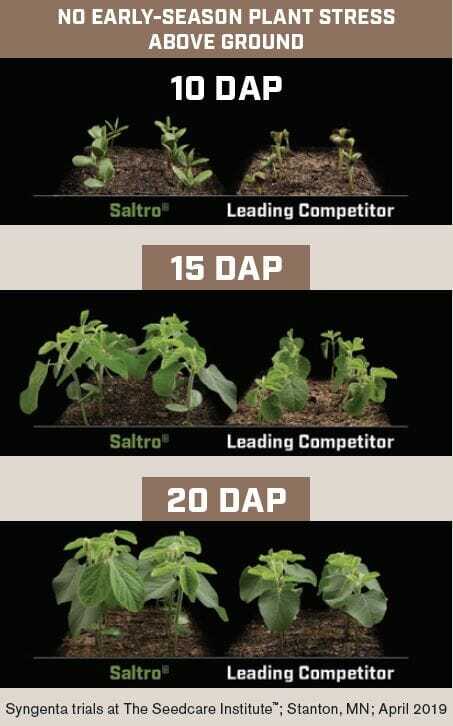
    One of the reasons we use Saltro is because it protects early-season plant health, plus protects plants against Soybean Cyst Nematode (SCN) and Sudden Death Syndrome (SDS). Soybeans treated with Saltro have strong emergence, better stands, healthier leaves and develop more robust early-season root mass. As a result, soybean plants treated with Saltro can reach their full genetic and yield potential.

    Saltro also doesn’t cause additional plant stress, like the halo effect we’ve seen with older chemistries. Soybeans can outgrow the side effects from early-season, above-ground stress, but they may not fully recover from the lower yield potential caused by below-ground stress.

    While touring the Syngenta Seedcare Institute in Minnesota, a group of Latham representatives were told Saltro is safer and more effective than the current standard seed treatment. More than three years of research shows that soybeans treated with Saltro have a 3-bushel per acre yield advantage over the leading SDS competitor in heavy SDS pressure and a 1.8-bushel yield improvement under low SDS pressure.

    Another advantage we saw first-hand on our tour is that Saltro has 22% better wet seed flow than its leading competitor. Saltro has a much lower use rate. In addition, the leading competitor creates 63% more buildup and 100% more dust than Saltro.

    Improved handling and treatment efficiency, higher yields, no plant stress, as well as superior SDS and SCN protection are the reasons why Latham Seeds is making our unique Saltro blend available for the products we’re selling for next planting season. Ask your Latham® representative for more information!

    9.17.19 Tech Tuesday Image

    Mark Grundmeier, Product Manager

    September 17, 2019
    Agronomics, Cover Crops, Crop, Season, Seed Treatment, Spring, Tech Tuesday, Winter
  • Latham Hi‑Tech Seeds

    Product Observations Can Identify Seed Needs

    IMG 6543

    Latham product team members have been busy traveling to our SuperStrip™ and other research plot locations across the Upper Midwest.

    It’s our job to take notes to help our company offer the best possible product lineup, as well as to assist our customers in choosing the best products for their given situations.

    IMG 6543

    We also encourage you to take notes on your own fields to help identify your seed needs for next year. We recommend keeping an eye out for the following:

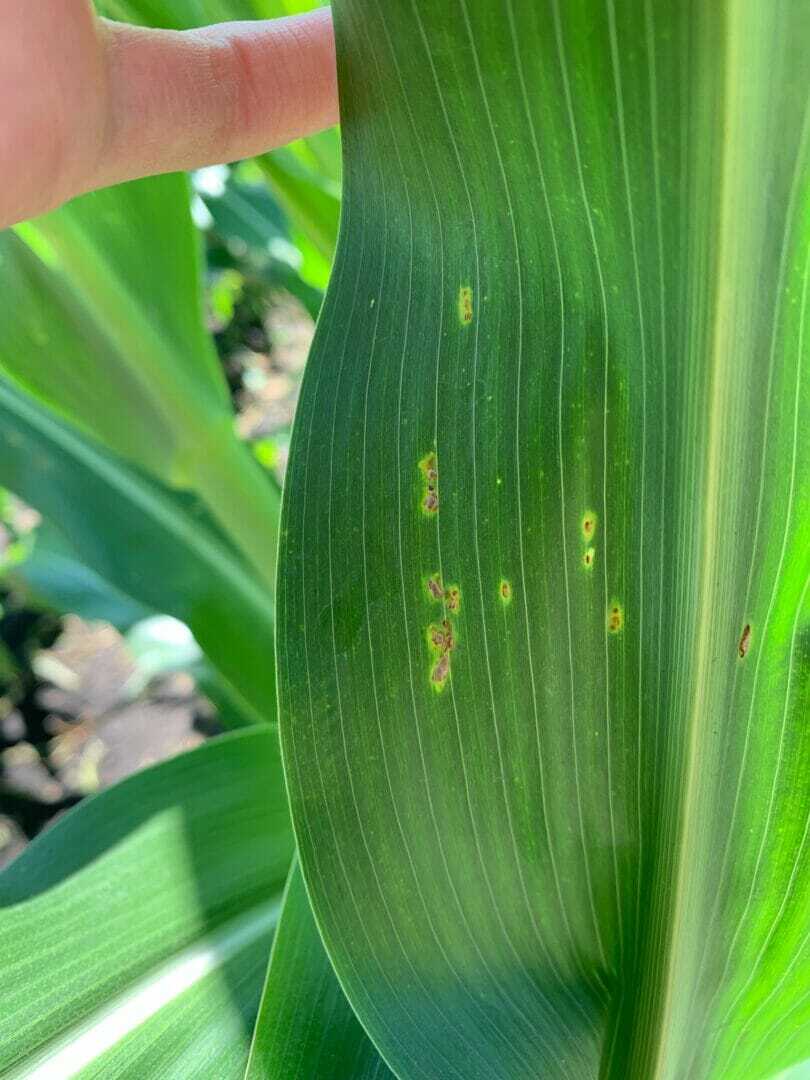
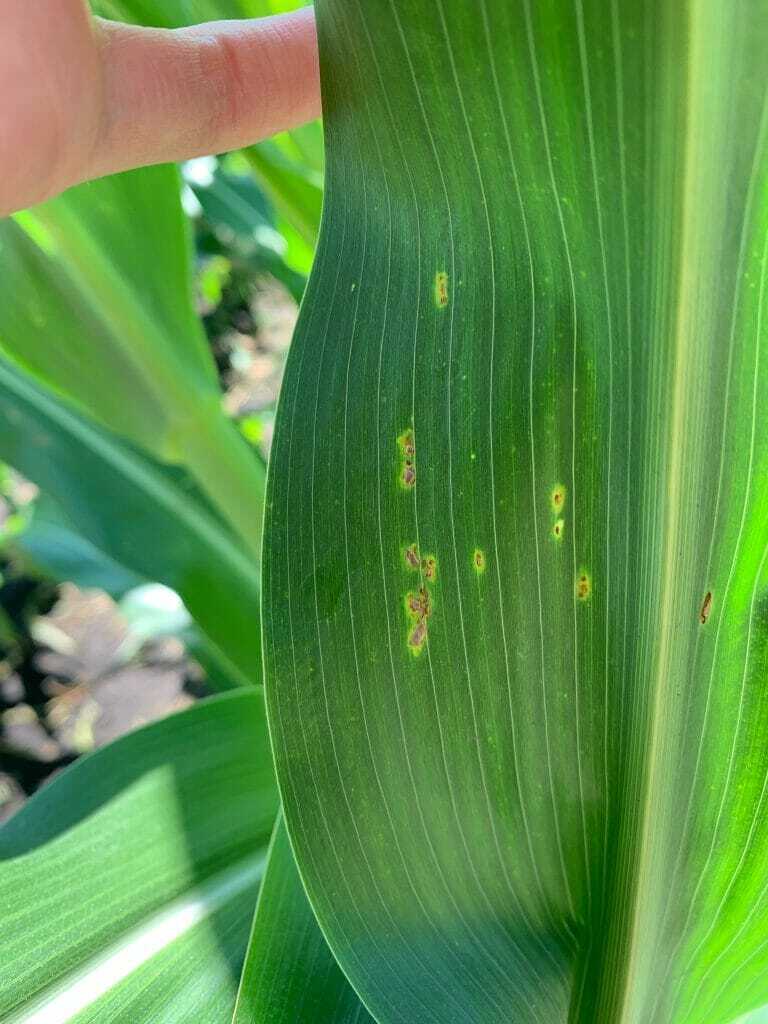
    Physoderma in corn: While this isn’t a new disease, it’s been getting more publicity recently because some fields have suffered economic damage. Physoderma is a soil-borne fungus that seems to surface when there are warm early season temperatures followed by rainy periods, causing water to sit in the whorls during the v5 to v9 stage. Sporangia release huge amounts of zoospores that can literally swim their way to attack plant cells. Leaf symptoms include yellow-to-brown spots on the leaves and dark purple oval spots along the midrib. The real damage happens on the lower nodes of the plant that become weak and thus susceptible to breakage. Look for a brown to black ring of decay around the node. I’ve heard reports of fields in Illinois where 75% of the plants have broken. While physoderma seems to be more of a problem on the eastern side of our area, it has been identified in Nebraska.

    Soybean Gall Midge: This insect pest is so new that entomologists aren’t entirely certain what species it is. It was reported in Nebraska in 2011 and South Dakota in 2015. Just last fall SGM was recorded in 69 counties of Nebraska, Iowa, Minnesota and South Dakota.

    Sudden Death Syndrome and White Mold: Scout your fields all the way to maturity, So you don’t have any big surprises come harvest. Also remember to plant Latham® IRONCLAD™ products in these affected areas in the future. I’ve heard of some areas In southern Iowa and northern Illinois that are showing signs of Frogeye Leaf Spot, but I haven’t seen any of those myself – yet!

    Weed resistance continues to be a growing issue. Last year I noticed serious problem fields in Wisconsin. Previously, Wisconsin farmers controlled weeds with glyphosate and some tank mix combinations. It’s becoming very obvious that weed resistance in Wisconsin is catching up quickly with the rest of the Upper Midwest. Exercise your weed control options in 2019 with Independent Latham Hi-tech Seeds.

    Mark Grundmeier, Product Manager

    September 8, 2019
    Agronomics, Corn, Crop, Disease, Fungicide, Insects, Soybeans, Tech Tuesday
  • Latham Hi‑Tech Seeds

    Reducing Harvest Loss Begins at the Header

    GaryG 9 17beans

    Half of corn harvest loss and a whopping 80% of soybean harvest loss can occur at the header. It’s easy to overlook adjustments to the header because there aren’t any sensors to tell us what’s wrong. That’s why a relatively quick inspection is well worth your time.

    A combine performs five key operations during harvest: cuts the crop; threshes the crop (first part of the rotor); separates the grain from the chaff (back part of the rotor); cleans the grain with fans and the cleaning shoe; and handles the crop to move it through the combine and into the grain cart or wagon. We all do our best to adjust our combines for each of these five areas.

    Harvest loss can add up in a hurry as 1 bushel/acre of harvest loss is only 2 kernels of corn or just 4 soybeans per square foot.

    Be sure to check the following two areas, which are often overlooked when making adjustments at harvest time:

    • Reel speed is typically set automatically based on tire speed in modern combines. However, you can adjust reel speed on-the-go and stop loss due to changing field conditions. The reel should be hitting soybeans about one-half to 3/4 of the way up the plant and at a speed that lays them back onto the platform. If your reel speed is too fast, it will cause premature shatter losses.
    • Corn harvest loss typically comes from whole ear loss or “butt-shelling” at the deck plates. Whole ear loss can be minimized by installing different things like ear savers for over the throat and at the front of the gathering chains. Upgrades that extend the height of each end of the header help when corn is down. “Butt-shelling” should be adjusted for by adjusting deck plates to stalk size and by making sure there is not extra wear where the ears continually snap.

    Adjusting monitors in your combine cab is another area that can have a significant impact on your data collection. Following are a few noteworthy areas for your consideration:

    • Don’t lag behind. Inaccurate Flow Delay is the most common issue with yield mapping. Are you noticing red streaks or a gap at the beginning and ending of each pass? This means the flow delay is not set appropriately. The delay is typically between 10 and 20 seconds. If you see lots of red as you start a pass, increase that time. If you see a gap of data points between the end of a pass and the headlands, you need to decrease the delay.
    • Calibrate. Yield monitors can be off as much as 100%. Even if you diligently calibrated your monitor in corn last year, you must calibrate it again this year in corn. Make sure the moisture sensor is accurate because that calibration also impacts yield calibration. Electronic sensors are especially prone to needing adjustments.
    • Do you run Auto Steer? If you don’t run auto-steer on your combine, you’ll need to adjust the swath width for soybeans if you’re running at an angle or harvesting drilled beans. For example, if you’re leaving about a two-foot gap on a 35-foot header, your swath width should be changed to 33 feet.

    Focus on making the adjustments that can have a significant impact on the quality of your data, but don’t sweat the small stuff. For example, if you must stop on a dime for a tile blowout that would swallow your combine or if you skirt around a waterway, that data can be cleaned up later. Feel free to call me if you have any questions or need assistance.

    Phil Long

    September 3, 2019
    Agronomics, Corn, Crop, Fall, Precision Ag, Season, Soybeans, Tech Tuesday
  • Latham Hi‑Tech Seeds

    See XtendFlex® Soybeans at Sept. 6 Field Day

    XF

    Field Day event cover

    Are you ready for the next new soybean technology?  XtendFlex® from Bayer is expected to attain full global approval by mid-spring of 2020.

    These soybeans will be the next triple-stack option for farmers, who continue to battle weed resistance.  XtendFlex soybeans will be tolerant to glyphosate (Roundup), dicamba (XtendiMax, Engenia, etc.) and gluphosinate (Liberty®) herbicides.

    The last hurdle for Bayer to clear is the European Union (EU). All other major soybean importing countries, including China and the Philippines, have granted their approval for this technology.  Bayer has recently received a positive opinion from the European Food Safety Authority (EFSA), which is a key milestone in preparation for full commercialization in all markets.

    Bayer has XtendFlex Ground Breaker Field Trials in place this growing season. In fact, Latham Seeds has an EPA-stewarded trial at our research farm near Alexander, Iowa.

    Get a first-hand look at XtendFlex soybeans during our annual field day on Friday, September 6!

    Join us to learn about all the exciting new traits and genetics that Latham offers in corn, soybeans and alfalfa! If you can’t make it to Alexander on September 6, contact your Latham® representative to set up a personal tour. You’re welcome to bring other farmers with you either to our field day or to a personalized tour. Load up the truck and head our way! We look forward to seeing you soon.


    Mark Grundmeier, Product Manager

    August 27, 2019
    Crop, Industry News, Seed Technology, Soybeans, Tech Tuesday
  • Latham Hi‑Tech Seeds

    Scout for Soybean Gall Midge

    Gall midge larvae credit Dr. Bruce Potter
    Gall midge larvae credit Dr. Bruce Potter
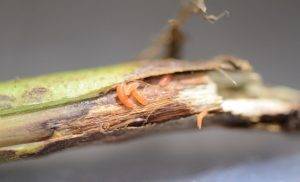
    Gall midge larvae and damage under the soybean stem epidermis. Photo by Dr. Bruce Potter, University of Minnesota

    Soybean Gall Midge (SGM) caused extensive damage in 2018. It already has been reported in Iowa, Minnesota, Nebraska and South Dakota this season.

    Scout around the edges of your soybean fields, especially those areas that are closest to fields where SGM was spotted last year.  The adult stage of this pest is a fly from the genus Resseliella. The adult insects are so small that they go unnoticed in everyday scouting activities. Other midge flies are the Hessian Fly and the Wheat Blossom Midge.

    The SGM may be spotted in the larval stages as they feed on a variety of items like decaying organic matter, fungi and, of course, galls on the stems of plants. Affected plants will appear wilted and eventually die.

    Wilting also is symptom of Phytophthora Root Rot and Fusarium Wilt, so you’ll need to split the base of the soybean stem to know if the problem is an insect or disease. Once you split the stem, look for orange or white larvae.

    You can see in this photo by Dr. Bruce Potter from the University of Minnesota that the larvae look like maggots. If find larvae, contact your local Extension Service immediately!  While SGM larvae are almost impossible to control once they have colonized plants, Extension personnel want to learn more about this pest’s lifecycle.  Any information you can give on how your field may have been infested will help all of us combat this pest in future years.

    Because so many soybeans across Latham Country were planted later this spring than in 2018, the concern is SGM might be even more problematic this year. Last fall SGM was recorded in 69 counties of Nebraska, Iowa, Minnesota and South Dakota.

    Very little is known about the biology of the Soybean Gall Midge and even less is known about methods to control it.  With your help, we can begin to know and understand more about this potential threat to soybean production.

    Mark Grundmeier, Product Manager

    August 13, 2019
    Agronomics, Crop, Insects, Season, Soybeans, Summer, Tech Tuesday
  • Latham Hi‑Tech Seeds

    Mid-Season Foliar Fungicide Application

    Corn rust

    With the hot, humid weather that has made its way into Latham Country this summer, conditions are prime for foliar diseases. Fields considered to be high risk are continuous corn fields, fields with conservation tillage and susceptible hybrids. Watch for Gray Leaf Spot, Southern Rust, Common Rust, Northern Leaf Blight, Goss’s Wilt, Tarspot and Eyespot.

    When it comes to weighing the costs and benefits of fungicide, there are many factors to consider. Price of corn, product, application and drying cost can all seem like daunting costs that would scare any farmer away from going the extra mile. However, investing in a fungicide could be a small tradeoff when it comes to protecting your yield potential. When scouting, look for disease on the third leaf below the ear. If 50 percent or more of the field is infected at tassel, we recommend spraying fungicide.

    The highest return on investment is going to be around VT to R2 time period because you will be able to suppress diseases that may be present on the leaves and protect them for a few weeks of any diseases trying to get into the plant. Corn is also done putting on new leaves at this point. Typically, a 5-8 bu/A yield increase will pay for the investment depending on grain price and application costs. If you are facing heavy disease pressure, be sure to select the right fungicide for the diseases you have. Fungicides with dual modes of action in the Group 3 (Triazoles) and 11 (QoI) will provide suppression and some lasting protection. Look for the active ingredients that end in “ole” (Triozoles) and “in” (QoI).

    We recommend doing your homework before applying fungicide. Scout fields to determine disease pressure, consider high susceptibility hybrids and the disease history of the field.

    Corn rust
    Shown above is common rust. To identify this in your fields, look for raised, brick-red pustules.


    Phil Long

    July 29, 2019
    Agronomics, Corn, Crop, Fungicide, Season, Summer, Tech Tuesday
Previous Page
1 … 5 6 7 8 9 … 15
Next Page

Latham Hi‑Tech Seeds

131 180th Street | Alexander, IA 50420

(641) 692-3258

SIGNUP FOR OUR NEWSLETTER
  • Contact
  • Legal
  • Dealer Center
  • Seedware Login
  • Latham Gear

© 2025 Latham Hi‑Tech Seeds. All rights reserved. | Iowa Web Design by Webspec | Privacy Policy

Latham® Hi-Tech Seeds is a trademark of M.S. Technologies, L.L.C., 103 Avenue D, West Point, IA 52656.