Latham Hi-Tech Seeds

(641) 692-3258

  • Home
  • Products
    • Corn
    • Soybeans
    • Alfalfa
    • Corn Silage
    • Seed Guide
  • Performance
  • Find a Rep
  • Media
    • Blog
    • News
    • Videos
    • Podcasts
    • TECHTalk
  • About Us
    • Company History
    • Our Mission
    • Careers
    • Become a Rep
    • Sowing Seeds of Hope
  • Contact Us
  • Latham Hi‑Tech Seeds

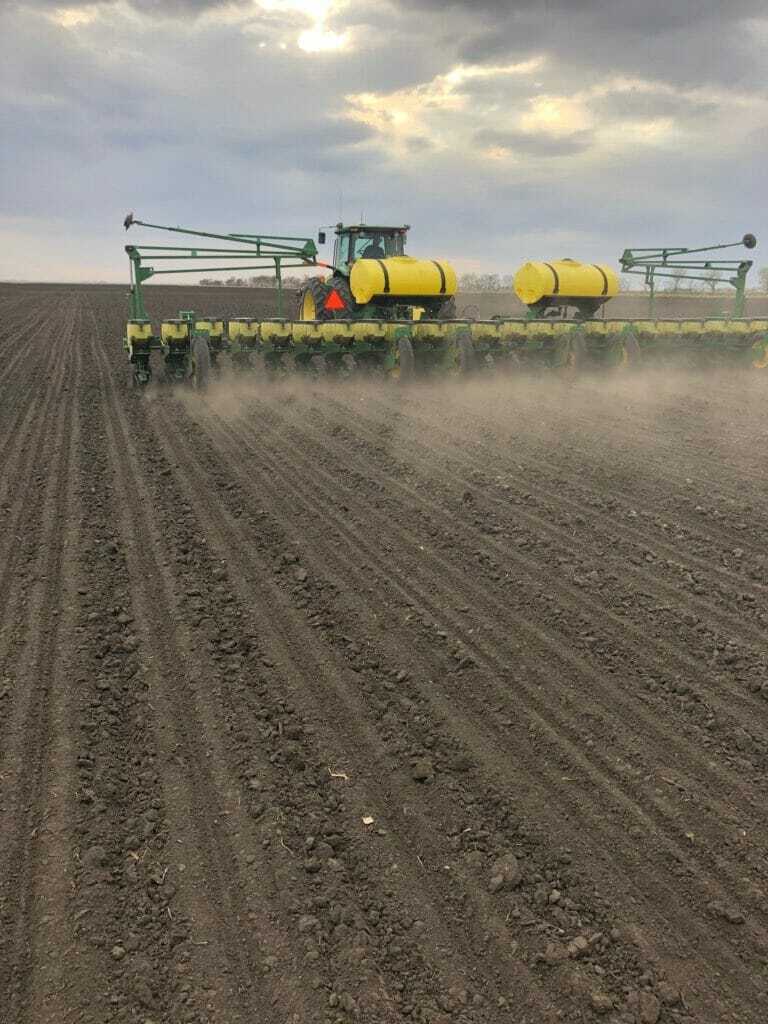
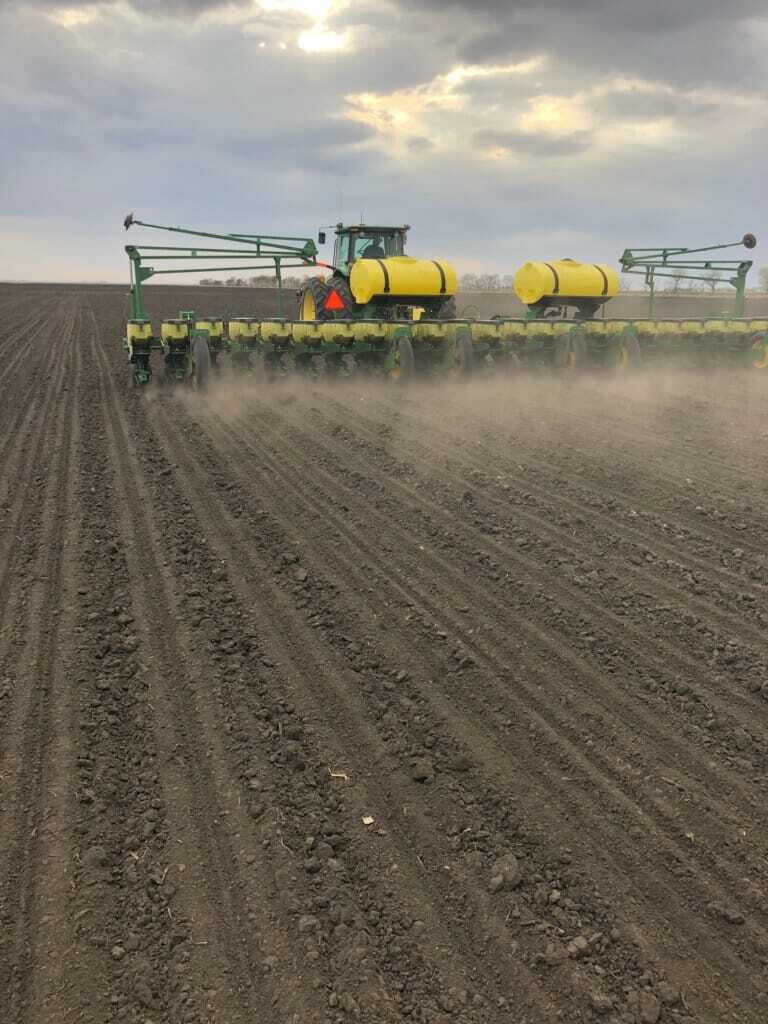
    How Soon Can We Plant?

    Tire swing

    Literally, at this time last year, there were reports that some Iowa farmers had already planted corn.  I was busy writing a blog post answering the question, “How Early Is Too Early to Plant?”

    With late-season snowfall accumulating more than it did in December, many farmers this spring are wondering how long it will be before spring fieldwork can begin.

    Midwest weather is unpredictable, especially during the spring months.  Although we’re experiencing temperatures in the 40s this week, there’s no guarantee this warm up will continue.  An April Fool’s Day Snowstorm is no joke!  And let’s not forget what happened in April 19, 2011… rain, snow, and hail fell upon areas of Iowa, Minnesota and Wisconsin.

    We may be tired of snow, but at least we’re receiving some much needed precipitation that will provide topsoil moisture once the planters start rolling.  “We’re starting the 2013 growing season with a moisture shortfall,” says April Hemmes, who farms south of Hampton in Franklin County, Iowa.  “My farm received a total of 5 inches of rain between May and October 2012; normal annual rainfall is 23 inches. As much as I dislike late season snowfall, I’m thankful for it this year.”

    Midwest farmers are eagerly awaiting the start of the spring corn planting season, but there’s no need to fret yet about getting in “late.”  Time is on our side right now.  Years of field research by Iowa State University shows the highest yield potential is with corn planting dates between April 12 and May 8.

    For those wanting to head into the fields first this spring, consider planting some Latham® Hi‑Tech Alfalfa!  Our 2013 alfalfa lineup includes many exciting new products for disease resistance, traffic tolerance, and regrowth patterns.

    Team Latham

    March 27, 2013
    General, Season, Spring
  • Latham Hi‑Tech Seeds

    Goal: To Consistently Raise 300-Bushel Corn

    PeterBixel1
    Peter Bixel

    Farmers throughout history have raised corn yielding 300 bushels per acre (bu/A).  In 1985, Illinois farmer Herman Warsaw produced corn yields of 370 bu/A.  Warsaw spent years working toward his goal.  He patiently built up soil nutrition and tilth for better plant health.

    So what do we need to do to raise 300-bushel corn?  Like Warsaw, we must commit to plan.  Our plan must involve soil fertility, which takes into account nitrogen and micronutrients.  Weather dictates when nitrogen (N) can be applied, its availability to the plant and its usability by the crop.

    Nitrogen loss can occur immediately after application, and leaching can occur after N has been incorporated into the soil.  That’s why renowned corn yield researcher Dr. Fred Below uses a stabilizer when applying his nitrogen.  His fertility program also includes aggressive rates of Phosphorus (P) and Potassium (K) to push for higher yields. Potassium is very important but is often lacking, especially in a drought year like 2012.

    “As growers, we need to look at agronomy first.  It’s important to build a good database for each field, understand interactions of nutrients and use the tools to apply the agronomy,” said Ron Olson, who was one of the first consultants nationwide to use GPS/GIS tools to assist farmers in managing Precision Ag databases.  From 1974 to 1996, Ron owned an independent agronomic consulting company based in Illinois.

    Today Ron serves as Research and Development Manager – New Products for the Mosaic Company.  During a recent presentation in Des Moines to Seed-2-Soil and SciMax client, Ron admitted that a lot of work must be done to consistently achieve 300-bushel corn yields.  However, he says taking incremental steps will lead to higher yields overall.

    Nutrient management is key to increasing yield, according to research done in cooperation with Dr. Below and the University of Illinois.  This research uses “omission plots” that compare corn both with and without fertilizer, fungicide, insecticide and seed treatments.  While yields increase with each of these additions, fertility has the most impact.

    In addition nutrient management, other factors influence yield.  Click here to see Dr. Below’s 7 Wonders of the Corn World, which are the seven factors that have the most influence on yield.

    Team Latham

    February 25, 2013
    Corn, Crop, Fall, General, Season
  • Latham Hi‑Tech Seeds

    Seed Selection is Even More Critical in Dry Years

    The Iowa Legislature convened last week, and along with that, came talk that Iowa’s drought law may get a closer look this year.  “Water restrictions” isn’t a typical topic of conversation in the north, but it looks as though it might become commonplace across the Upper Midwest in 2013 if weather patterns don’t change.

    It’s safe to say we’ll be planting the 2013 crop in dry soils.  The 2012 drought caused most soils here to be depleted of moisture in the upper 7 to 8 feet, so it will take at least two growing seasons to recharge those soils.

    Seed selection will certainly be critical for 2013 due to the extremely dry conditions.  That’s why we’re recommending that most of our corn customers plant hybrids at least double- or triple-stack hybrids this spring.

    A hybrid’s genetics will be the biggest factor in whether a hybrid can handle drought.  Plot data shows that multiple-trait stacks, like Latham® hybrids with the Genuity® SmartStax® technology, can really help protect yield.  REMEMBER:  Traits protect yield.  Genetics make yield.  Seed products carrying the Latham brand name combine the industry’s best genetics with the latest traits and technologies.

    While corn genetics have come a long ways over the past decade and are much better at handling drought stress than ever, soybeans historically perform even better in dry weather.  Farmers will need to consider whether they can manage corn-on-corn in another extremely dry year or whether the economics favor soybeans.  Other factors to consider when finalizing your 2013 crop plans are outlined in this recent article posted on agriculture.com: Six Take-Home Lessons from the 2012 Drought.

    Regardless of whether you choose to plant corn, soybeans or alfalfa, Latham has the products you need! Our seed portfolio contains products that were bred specifically to thrive in specific areas of the Upper Midwest. Call your local Latham rep to learn more about the products best suited for your growing conditions, or feel free to call our office directly at 1.877.GO.LATHAM (1.877.465.2842).

    John Latham, President

    January 23, 2013
    Agronomics, Drought, General, Precision Ag, Season, Spring, Weather
  • Latham Hi‑Tech Seeds

    Singing the Praises of Autumn Rains

    Rainy21

    Rainfall slowed harvest last week, but no one is complaining.  Ninety-five percent of the corn crop has already been harvested and soils statewide desperately need moisture.  As a result of the recent rainfall, topsoil moisture levels have improved to 31% very short, 38% short, 29% adequate, and 2% surplus.  Subsoil moisture improved and is now rated 60% very short, 34% short, 6% adequate, and 0% surplus.

    Subsoil moisture is the first indication of next year’s crop, says Iowa State Extension Climatologist Elwynn Taylor.  We’re still facing dry conditions, and there’s a 22% chance that next year’s growing conditions will be as bad those we faced in 2012.

    The good news is there’s a 60% chance that conditions will be better in spring 2013.  Autumn rainfalls can go a long ways toward replenishing soil moistures.  Taylor says 1 inch of rain equates to more soil storage in the fall and spring versus in the summer because (1) not as much moisture is being lost to warm soils and evaporation; and (2) no moisture is being taken up by growing plants.

    Another reason why fall rains “goes further” is there are fewer drying winds.  For example, the drying rate for April 15 was 0.2 inches and .14 of an inch for Oct 15.  It took 5 days to dry 1 inch of water in April and 7 days in October.

    Rainfall over a longer period of time, which allows the moisture to soak into the ground, is more advantageous than a hard rainfall that runs off the surface.  It takes 2 inches of soaking rain to replace the moisture in one foot of soil, although this varies slightly depending on soil type.  During the 2012 growing season, roots used the water down to 8 or even 10 feet in some places, so now we need 16 to 20 inches of soaking rain to replace those water levels.  Fortunately, the rainfall we’ve received over the past two weeks have been gentle rains for the most part.  We assume 70% of the rain soaks in, so 10 to 12 inches of rain over a long period could conceivably recharge 5 feet of soil.

    Thanks to Taylor’s insights, we’re singing the praises of autumn rain.  We’re also doing the rain dance because we’re still facing dry conditions here.  Hopefully, we’ll be singing the rain sometime soon!

    Team Latham

    November 1, 2012
    Fall, General, Season
  • Latham Hi‑Tech Seeds

    Adjust Combines for Drought Conditions

    It’s going to be an early harvest – perhaps three to four weeks earlier than “normal.” As we posted in our Aug. 15 crop report, crop conditions are well ahead of the 5-year average with 94% of the corn crop already at the milk stage and 80% at dough stage. Third crop alfalfa is one month ahead of schedule.

    That means the time is now to prepare for harvest! Harvest, for both and soybeans, typically begins in the Midwest between Sept. 17-27. Soybean harvest is usually finished by Halloween. Corn harvest is most active Oct. 5 through Nov. 10 and usually ends before Thanksgiving.

    It’s certainly not going to be “harvest as usual” this fall. Harvest will begin sooner and most likely progress slower. With weak and/or lodged stalks and stems, slower combine travel speeds will help ensure the crop feeds into the combine as easily as possible. Finding the correct travel speed to balance machine field with crop quality requires checking both losses behind the combine and grain quality in the tank, says Iowa State University’s Mark Hanna with the Department of Agricultural and Biosystems Engineering.

    Be sure to adjust combine settings for drought conditions. The gap between snapping plates above the stalk rolls on a corn head should be adjusted this year. In normal years, a gap of 1.25 inches is used. Given the situation this year, however, that gap most likely should be narrowed to just over an inch to avoid butt shelling of smaller diameter ears. The use of a reel, cones or divider modifications on the corn head may also help pick up more of the lodged corn.

    To help reduce the amount of lodged corn at harvest time, assess crop progress now and identify potential problem areas. Focus first on harvesting fields that show signs of Stalk Rot or exhibit weakened stalks that could subsequently lead to Stalk Lodging. Secondary concerns include hybrid maturity, crop residue management and logistics.

    Prepare now for a safe and fruitful harvest!

    Webspec Admin

    August 16, 2012
    Drought, Fall, General, Season, Weather
  • Latham Hi‑Tech Seeds

    Soybean Wind Damage

    Recent strong wind events have also taken their toll on soybean seedlings. Shown below is damage post-storm. While it may appear to be bean leaf beetle feeding, it is in fact wind damage. No course of action is needed at this time, but farmers should be vigilant is scouting for potential disease invasion later on in the growing season.

    Webspec Admin

    May 29, 2012
    Crop, General, Season, Soybeans, Weather
  • Latham Hi‑Tech Seeds

    Time to Begin Early Crop Scouting in 2011

    Many Midwest farmers will wrap up the 2011 planting season this week, but there won’t be much rest for the weary.  As soon as seed is in the ground, it’s a good idea to start scouting fields.

    Post-planting is an ideal time to begin scouting one’s crops.  Many soilborne pathogens strike as soon as the seed begins to take on water; others strike young seedlings.  Because seeds can germinate quickly and emerge in 3 – 5 days, it’s not too soon to start walking your fields.

    Check plant populations, evaluate stands and be on the lookout for early summer diseases.  Is there a germination problem?  Do you see effects of chilling or crusting?

    Assessing your situation ASAP will allow you to formulate a plan while there’s still plenty of time to implement it.  You could replant in parts or in all of a field now, so you can attain the yields and returns you want this fall.  Information on corn replanting decisions is available from www.agronext.iastate.edu/corn. Click on the “Planting” topic, then click on the “Replant Decision Aid Calculator” tab and use that tool and related information to help make a replant decision. For a resource on soybean replanting decisions, go to www.extension.iastate.edu/publications/pm1851.pdf.

    Another benefit of evaluating current stands is to help you determine what adjustments should be made before planting next year’s crop:  Do you need to adjust your planter settings or your planting speed?

    Once you get past the mechanical issues, look at the disease pressure.  If soybeans are damping off, perhaps next season you should opt for seed-applied fungicides? Do you need to pay closer attention to a particular soybean brand or corn hybrid’s disease rating?  Seed selection is one of the most important decisions affecting yield. Click here for tips on selecting  soybean brands and selecting corn hybrids.

    Team Latham

    May 13, 2012
    General, Season, Spring
  • Latham Hi‑Tech Seeds

    Replant or Not?

    While many Midwest farmers have yet to get their corn in the ground, others are contemplating whether or not to till up their poor crop and try it again.  Poor stands have resulted in some fields where cool temperatures and wet soils put significant stress on seed germination and corn seedlings.

    There are three important steps farmers should take when deciding whether to replant:

    1. Evaluate the existing stand for population and uniformity.
    2. Compare yield potential of the existing stand with yield potential of the replant.
    3. If the decision is made to replant, consider various management practices to optimize yield by protecting your crop.

    When evaluating corn stands, only count plants that have a good chance of survival.  Observe the uniformity of the stand across the field to determine whether the entire field – or just portions of it – must be replanted.  Click here to watch Steve Bailie, Latham’s Regional Sales Manager in Wisconsin, explain how to do a stand count.  ISU Ag Economist William Edwards also has a developed a replant calculator, based on price expectations and the extra costs associated with replanting that might be helpful.

    A chart in a recent issue of Integrated Crop Management will also give you an idea of potential losses from later planting dates.  As Roger Elmore writes, however, this may be the kind of year where late planting has little or no penalty.

    Another factor to consider on replanted acres is pest management.  Most soil insecticides cannot be legally applied twice in the same growing season in the same field.  With this in mind, replanting with Latham® brand corn containing the Genuity® family of traits provides farmers with more options to combat insects.  Contact your local Latham representative or call 1-877-GO-LATHAM (1-877-465-2842) for assistance.

    Agronomic Spotlight: Assess Corn & Soybean Stands

    Webspec Admin

    May 10, 2012
    General, Season, Spring
  • Latham Hi‑Tech Seeds

    SOYBEAN PLANTING CONDITIONS ARE MARGINAL, AT BEST!

    Seed Product Manager

    It was another wet, rainy and cold weekend in North Central Iowa, and it looks to be another wet week ahead.  There is about a 50% chance of rain every day in the 5-day forecast, so chances are we won’t get back in the field any time soon.  The good news, however, is that this week’s rains looks like it will be warmer than the icy cold rains we received last week.

    Time is also on our side.  There’s no need to worry about the dates on the calendar and feel pressed for time to achieve those optimal soybean yields.  For most of Iowa, I’ve always considered the optimal soybean planting dates as the last week of April to mid-May.  That means farmers normally will not lose yield if they wait until May 15th to plant soybeans.  Plus, that extra time will give soil temperatures a chance to warm up again.

    Cooler soils tend to bring out the worst in Sudden Death Syndrome (SDS) as early-planted soybean fields are historically more prone to it.  There is also some evidence that early planted soybeans are also more prone to iron deficiency chlorosis (IDC).  To lessen the risk of IDC symptoms, delay planting soybeans by a week to 10 days on soils with a high PH or with high levels of salts.  Years of experience has proven the later you plant soybeans on some of these tougher soils, the better root system these plants will develop.  Better root systems will help ward off some of these diseases.

    Bottom line:  you will likely be better off waiting until conditions improve before planting.  Continue to work your crop plan; be vigilant about planting each hybrid and variety in the field where it was intended.  (Yes, there is still time to plant corn without worry about switching maturities or switching from corn to soybeans.)

    There’s a chance that many farmers will go straight from planting corn to soybeans this year.  But given the field conditions, no one should even consider planting soybeans now.  Current soil and weather conditions are marginal for planting soybean – at best!

    Webspec Admin

    April 30, 2012
    General, Season, Spring
  • Latham Hi‑Tech Seeds

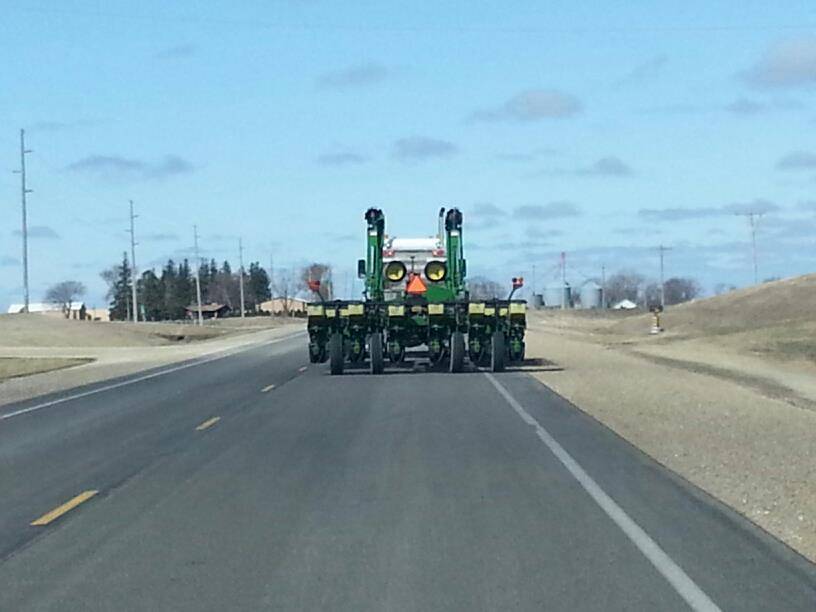
    Watch Your Speed!

    We’re reminded to watch our speed when we’re driving down the highway and see a speed limit sign posted.  We know there are “electronic eyes” watching up in major metro areas.  (Some us unfortunately have first-hand experience with receiving a ticket by mail.)  Without question, excessive speed can be costly.

    But how often do you think about the cost of excessive speed while you’re pulling a planter and making your way across farm fields?  There is definitely a price to be paid for speeding, although you may not notice the effects until emergence or even harvest.

    Proper planting speed can have one of the biggest impacts on performance. There are 1,000 variables that plants are subject to each growing season, so why not take control of one of these variables – speed?  Below is a chart that shows the differences of seed placement when traveling 5.5 mph and 6.5 mph.

    John Latham, President

    April 12, 2012
    General, Season, Spring
Previous Page
1 … 34 35 36 37 38 … 46
Next Page

Latham Hi‑Tech Seeds

131 180th Street | Alexander, IA 50420

(641) 692-3258

SIGNUP FOR OUR NEWSLETTER
  • Contact
  • Legal
  • Dealer Center
  • Seedware Login
  • Latham Gear

© 2025 Latham Hi‑Tech Seeds. All rights reserved. | Iowa Web Design by Webspec | Privacy Policy

Latham® Hi-Tech Seeds is a trademark of M.S. Technologies, L.L.C., 103 Avenue D, West Point, IA 52656.