Latham Hi-Tech Seeds

(641) 692-3258

  • Home
  • Products
    • Corn
    • Soybeans
    • Alfalfa
    • Corn Silage
    • Seed Guide
  • Performance
  • Find a Rep
  • Media
    • Blog
    • News
    • Videos
    • Podcasts
    • TECHTalk
  • About Us
    • Company History
    • Our Mission
    • Careers
    • Become a Rep
    • Sowing Seeds of Hope
  • Contact Us
  • Latham Hi‑Tech Seeds

    Fall Alfalfa Seeding – What You Need to Know

    Alfalfa3

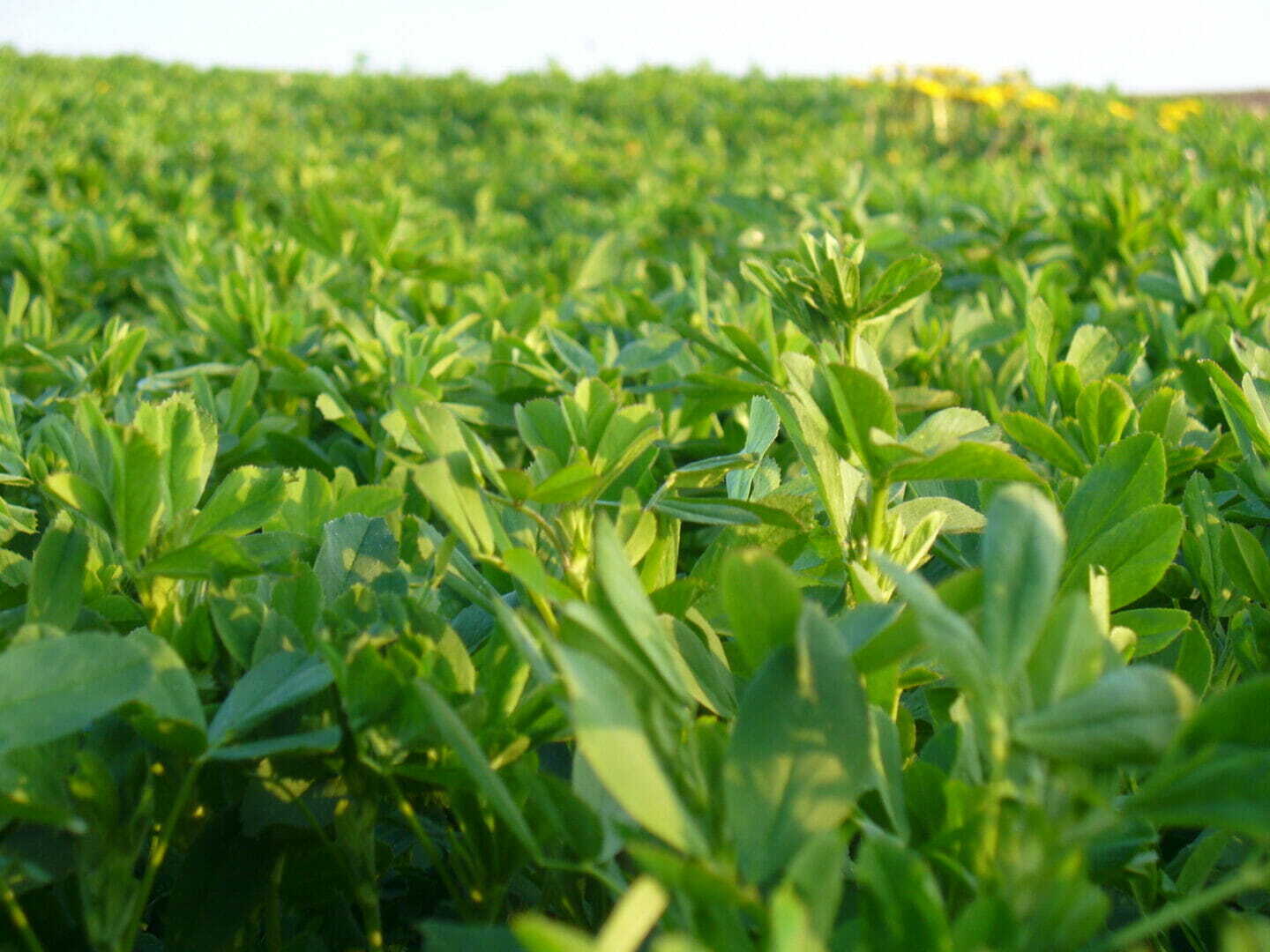
    Fall Seeding Alfalfa

    While we are rapidly approaching the optimal time to begin fall seeding alfalfa, there’s still time to get the crop established before a killing frost. Newly-seeded alfalfa requires five to six weeks after seeding before a killing frost or freeze.

    A major key to successful forage production is a good soil testing and fertilization program. It’s best to apply needed amendments to the soil prior to seeding establishment. If the soil analysis indicates a need for liming materials, apply agricultural lime in amounts called for by the soil test. If the soil will be tilled prior to seeding, till the lime into the soil.

    Applying Lime Takes Time

    If the seeding must be established no-till and the test calls for large quantities of lime (four or five tons per acre or more), care must be taken to not create a very high pH zone at the surface with a low pH zone just below. In this case, it might be best to apply the lime in equal annual amounts over a period of three or four years.

    Phosphorus and potassium are the two most critical fertilizer materials for establishing and maintaining alfalfa stands. An initial application may be tilled into the soil prior to planting. Fertilizer must be top-dressed in succeeding years. Band application of a starter fertilizer at seeding time may help ensure stands on soils testing low or very low in phosphorus.

    Get the Foundation Right for Planting

    Preparing a firm seedbed for planting is essential. This can be accomplished by firming the soil with a corrugated roller or cultipacker before seeding. After seeding, firm the soil again to cover the seed and obtain necessary seed-soil contact. Final seed placement should be no deeper than ½-inch in heavy soils and ¾-inch in light soils.

    If stands established in the spring are inadequate, they may be reseeded or inter-seeded the following late summer. For alfalfa, stand counts per square foot should be +25 for a good stand, 15 to 25 for a marginal stand, and less than 15 for a poor stand in the establishment year. Poor stands should probably be reseeded or inter-seeded.

    Evaluating Stand Quality

    The difficult decision comes with a stand of 10-15 plants per square foot, where, if the plants remain healthy, additional seeding and fertility operations under less-than-ideal conditions may damage the stand, ultimately doing more harm than good.

    Under those circumstances, producers should consider weather and soil conditions carefully. Reseeding marginal stands largely depends on the producer’s immediate need for forage and the resulting management of the stand going into fall and winter. A reseeded or inter-seeded area would not be harvested after the seeding to improve the chances for good stand survival through the winter.

    Interseeding a poor stand of newly-established alfalfa plants will likely be more successful than attempting to thicken an old, established alfalfa stand. In either case, the alfalfa stand achieved will probably not be uniformly thick.

    Finally, a general rule of thumb is to plant 12-15 pounds per acre of high-quality seed per acre. Products like LH 9400 and LH 9120 BR are ideal choices to plant this fall and will provide years of high-quality forage.

    Did you enjoy this article? We want to (TECH)talk with you! Sign up for our newsletter to receive agronomy videos, articles (and delicious recipes) in your inbox! We’ll TALK soon.

    steve-sick

    August 23, 2023
    Alfalfa, Crop, Fall, General
  • Latham Hi‑Tech Seeds

    Proof Points Podcast – Episode 9

    Proof Points Snip
    Ken has a “Basket of Factors” to share with us from Northern Latham Country right now. Take a listen on this week’s Proof Points Podcast.
     
    #LathamSeeds #FamilyOwnedFarmProven #LathamCountry
    Proof Points Snip
    https://www.youtube.com/watch?v=AQi2XobIsOE

    Webspec Admin

    July 18, 2023
    Disease, Fungicide, Podcast, Proof Points Podcast, Summer
  • Latham Hi‑Tech Seeds

    #FromtheField – Week of June 12, 2023

    Ramie from the field graphic

    Take a look across Latham Country! We’re coming to you every week.

    How important is planting depth? Aaron shows us first-hand from the field in Central Iowa.

    Ramie from the field graphic

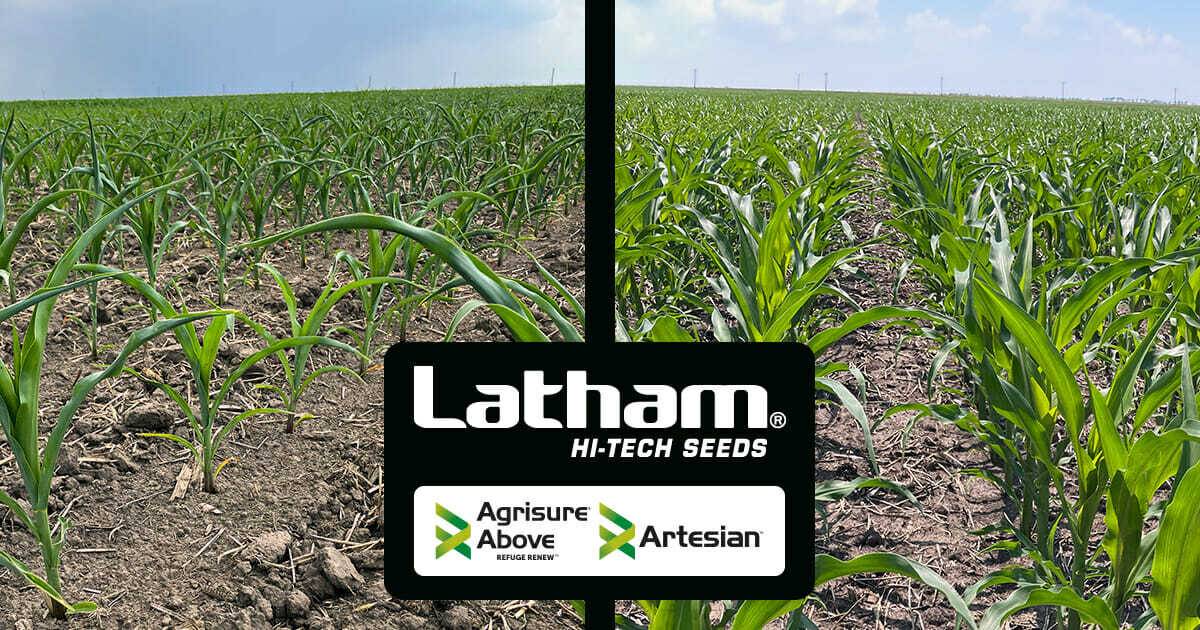
    See the difference! On the left is LH 5034 AA after getting no rain for 35 days in super-hot weather. On the right shows the same hybrid after 1.2” of rain. This product has impressive heat and drought resistance in South Dakota! Learn more about our unmatched lineup: https://www.lathamseeds.com/products/?crop=377

    Did you enjoy these videos? We want to (TECH)talk with you! Sign up for our newsletter to receive agronomy videos (and delicious recipes) in your inbox! We’ll TALK soon.


    Webspec Admin

    June 15, 2023
    #FromTheField Crop Reports, Agronomics, Corn, Crop, Emergence, From the Field, Growth Stages, Season, Soil, Summer
  • Latham Hi‑Tech Seeds

    Early Scouting For Prevention

    Young green corn growing on the field. Young Corn Plants.

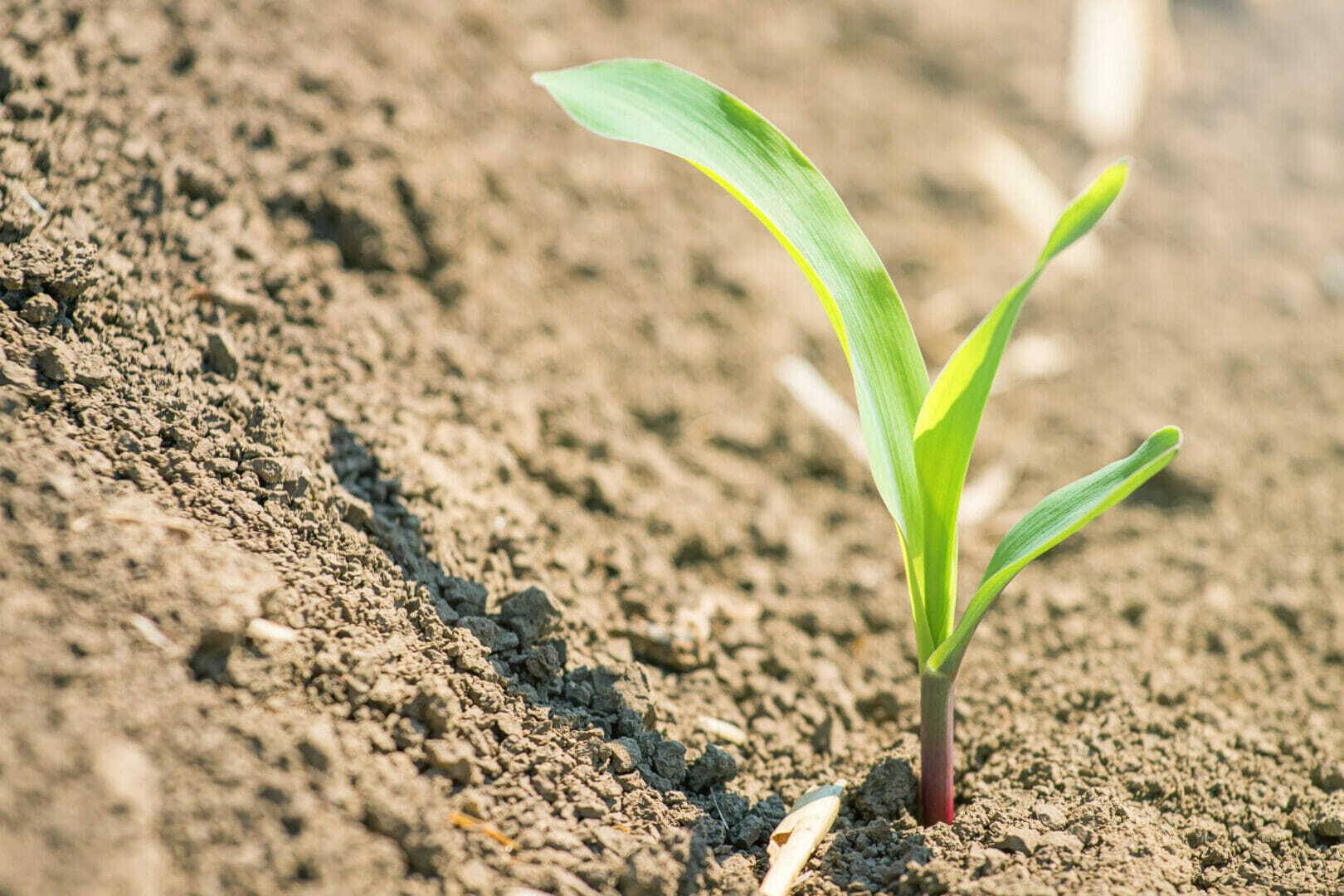
    The first principle of crop scouting is to determine what is normal and what is not normal. Knowing what a healthy plant looks like is key to identifying seedling disease. When scouting for seedling diseases, look for yellowing, wilted, stunted, dead or missing plants.

    • In corn, look for discolored or rotten mesocotyls, seminal roots and nodal roots.
    • In soybeans, look for seedlings that pull easily from the soil, discolored or rotting root tissue, and lesions that form on the taproot or hypocotyl.

    Before you head out to the field, there are several tools that are must-haves for early-season crop scouting:

    • A tape measure to take stand counts
    • A seed digger, trowel, or spade to dig up seeds or plants to evaluate planting depth, seedling diseases and below-ground feeding insects, like seed corn maggots.

    Remember that certain weather and soil conditions favor specific pathogens. Cool and wet soils favor Fusarium and Pythium, warm and wet soils favor Phytophthora, and warm and moist soils favor Rhizoctonia.

    It should be noted that a lab diagnosis is needed to confirm what pathogen is causing the symptoms. Knowing what disease(s) are present can help you choose hybrids and varieties that have good disease scores in the future and can guide decisions on the use of fungicide treated seed.

    Did you enjoy this article? We want to (TECH)talk with you! Sign up for our newsletter to receive agronomy videos (and delicious recipes) in your inbox! We’ll TALK soon.

    steve-sick

    June 8, 2023
    Corn, Crop, Disease, Emergence, Growth Stages, Soybeans, Summer, Tech Tuesday
  • Latham Hi‑Tech Seeds

    #FromtheField – Week of June 5, 2023

    YouTube 1

    Take a look across Latham Country! We’re coming to you every week.

    Did you enjoy these videos? We want to (TECH)talk with you! Sign up for our newsletter to receive agronomy videos (and delicious recipes) in your inbox! We’ll TALK soon.

    Webspec Admin

    June 8, 2023
    #FromTheField Crop Reports, Corn, Crop, Emergence, From the Field, Growth Stages, Soil, Soybeans, Summer
  • Latham Hi‑Tech Seeds

    Latham Proof Points – Episode 5

    Proof Points Snip

    This week, Ken talks about what’s happening in the Red River Valley — and changes he’s seen in the industry that are relevant today.

    Enjoyed listening? Check out other podcasts on Latham’s YouTube Channel. 

    Webspec Admin

    June 6, 2023
    Podcast, Proof Points Podcast, Spring, Summer
  • Latham Hi‑Tech Seeds

    Milestone Memories Mark This Family’s Legacy with Latham Seeds

    The Payne's with John Latham copy

    It’s not often that couples celebrate golden anniversaries, especially with their seed companies. Loren and Marianne Payne of Belmond, Iowa, were Latham® seed growers for more than 50 years — and they clearly remember the day Willard Latham came by to ask if they’d be willing to raise some soybeans for him. They Paynes had been taking their oats to get cleaned at Willard’s company, and they knew each other well.

    “We told him we would try that,” says Marianne, who farmed with her husband from 1962 until 2019. “Pretty soon every field was planted to Latham seed beans.”

    Marianne says raising seed beans worked out well for them. They were able to combine the crop and deliver it directly to the Latham plant, with Marianne herself driving the tractor and wagons. Not having to worry about storage allowed the Paynes to save on seed costs — and their landlords also agreed to raise seed beans.

    “We would plant different varieties, so our fields would mature at different times,” she says. “It went well for us.”

    Now that they’ve retired and moved to town, Marianne says she misses running the tractors. Not only did she haul their grain, she ran their tillage equipment too. For many years, the Paynes raised cattle and hogs, and had a few sheep early on. Marianne was raised on a farm between Thornton and Alexander; Loran was on a farm three miles away. They went to different country schools and met through friends.

    Loren and Marianne Payne, who have five grown children, were honored in 2019 for having served as Latham® seed growers for 51 years. It’s a milestone memory that they, and we, hold fondly.

    The Payne's with John Latham copy
    Loren and Marianne Payne with John Latham Celebrating Over 50 Years of Service

    “Latham Seeds has always been easy to work with,” Marianne says. “I really enjoyed working with each generation. We never worried because we knew we could trust them.”

    Shannon Latham

    June 1, 2023
    Food & Family, From the Field, Recipes, Salads, Summer
  • Latham Hi‑Tech Seeds

    #FromtheField – Week of May 29, 2023

    Kody Snip

    Take a look across Latham Country! We’re coming to you every week.

    Did you enjoy these videos? We want to (TECH)talk with you! Sign up for our newsletter to receive agronomy videos (and delicious recipes) in your inbox! We’ll TALK soon.

    Webspec Admin

    June 1, 2023
    #FromTheField Crop Reports, Agronomics, Corn, Crop, Emergence, Growth Stages, Season, Soybeans, Spring, Summer, Weed Control
  • Latham Hi‑Tech Seeds

    #FromtheField – Week of May 15

    Corn emergence 1

    Take a look across Latham Country! We’re coming to you every week.

    Did you enjoy these videos? We want to (TECH)talk with you! Sign up for our newsletter to receive agronomy videos (and delicious recipes) in your inbox! We’ll TALK soon.

    Team Latham

    May 18, 2023
    #FromTheField Crop Reports, Spring
  • Latham Hi‑Tech Seeds

    Seed Treatment Pays

    Seedware

    Benefits of seed treatment include protecting seed from rot, seedling blights and insects, as well as improved germination. Seed treatments also help prevent the spread of plant diseases and reduce the risk of replant.

    Seed treatments are one of the most efficient crop protection technologies as they reduce farmers’ need for foliar spray applications. They also offer some certainty because field and weather conditions can prevent farmers from entering the field to apply fungicide and/or insecticide after seeding.

    Applying treatment directly on the seed before planting protects seeds and young plants, regardless of field conditions. Because seed treatment is a targeted, one-time application of pesticides to seeds, seedlings are protected during their most vulnerable stages of growth. Spraying fungicides or insecticides during these early growth stages is unlikely to be as effective because sprays are less targeted.

    Treated seeds carry a precise amount of pesticide that protects the seed during early growth, which is the critical growth period before and during germination. Seed treatments also are a “curative treatment,” protecting plants against seed-borne diseases.

    Research shows that seed treatments deliver more robust seedlings to farmers, protect plant stands and maximize yield potential. Conversely, farmers not using seed treatments in high pest pressure areas can see yield losses of 50% or more.

    Help secure a return on your seed investment with seed treatment! But don’t just take our word for it… take crop notes this growing season and compare data from multiple years. The Latham Team is here to answer your questions at 1-877-GO-LATHAM (877-465-2842).

    Did you enjoy this article? We want to (TECH)talk with you! Sign up for our newsletter to receive agronomy articles (and delicious recipes) in your inbox! We’ll TALK soon.

    steve-sick

    May 11, 2023
    Agronomics, Corn, Crop, Seed Treatment, Soybeans, Spring
Previous Page
1 2 3 4 5 … 46
Next Page

Latham Hi‑Tech Seeds

131 180th Street | Alexander, IA 50420

(641) 692-3258

SIGNUP FOR OUR NEWSLETTER
  • Contact
  • Legal
  • Dealer Center
  • Seedware Login
  • Latham Gear

© 2025 Latham Hi‑Tech Seeds. All rights reserved. | Iowa Web Design by Webspec | Privacy Policy

Latham® Hi-Tech Seeds is a trademark of M.S. Technologies, L.L.C., 103 Avenue D, West Point, IA 52656.