
Latham Hi-Tech Seeds

(641) 692-3258

  • Home
  • Performance
  • Products
    • Corn
    • Soybeans
    • Soybean Blends
    • Alfalfa
    • Corn Silage
    • Seed Guide
  • Find a Rep
  • Media
    • Blog
    • News
    • Videos
    • Podcasts
    • TECHTalk
  • About Us
    • Company History
    • Our Mission
    • Careers
    • Become a Rep
    • Sowing Seeds of Hope
  • Contact Us
  • Latham Hi‑Tech Seeds

    From seed beginnings to growing leaders: Shannon Latham’s agriculture journey

    For more than two decades, Shannon Latham has helped guide the marketing vision of Latham Hi-Tech Seeds. Now she is bringing that same passion for agriculture, communication and leadership to her new role as Executive Director of the Iowa FFA Foundation. For her, the move feels like a natural extension of the work she has always loved.
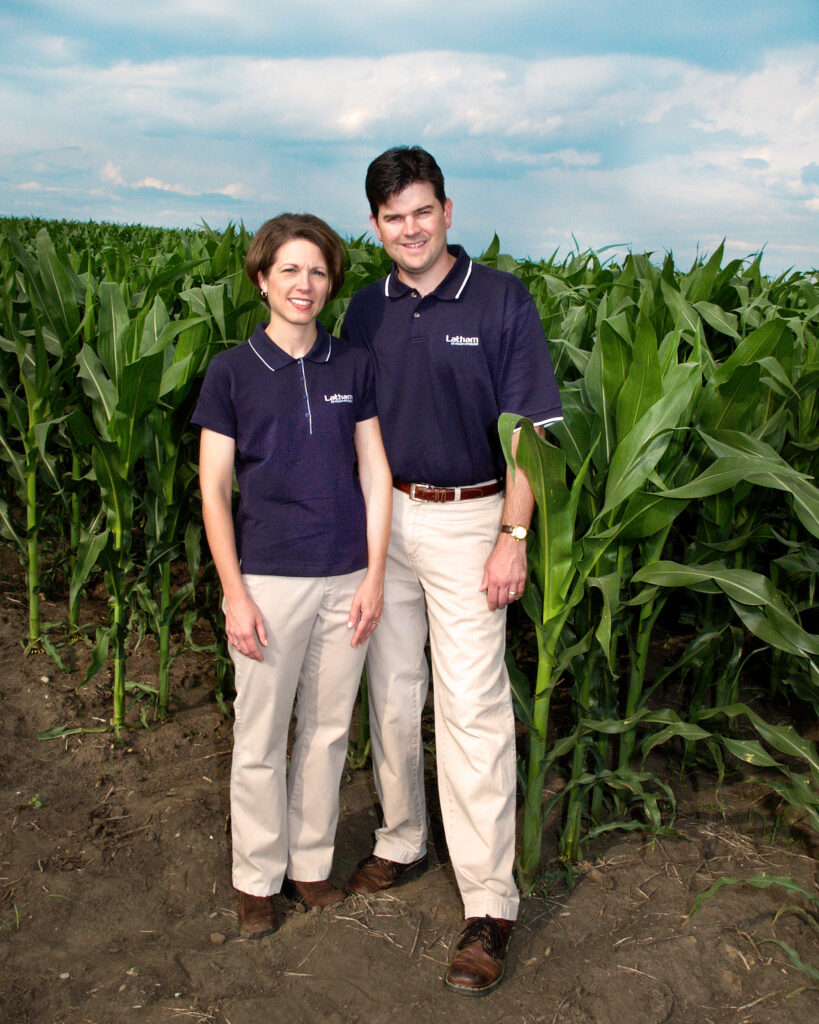
    “It has been quite a journey,” Shannon said during a recent episode of Beyond the Bushel. “When I look back at the pictures from when John and I started Latham Hi-Tech Hybrids back 2004, you can tell it’s been a year or two. We look a little different than we do now.”

    Her path began at Iowa State University, where she and John were both majoring in agriculture. After college, she worked in public relations and marketing before returning to Iowa to join the Agribusiness Association of Iowa. That role sparked something important.

    “That really planted that seed for me to be in public service,” she said. “I always knew that I want to be a state representative if I could.”

    Her early career also shaped her leadership philosophy. She recalled advice from her first boss: “People support what they help create.” That lesson stayed with her as she grew into leadership roles.

    When John started the corn company in 2004, Shannon stepped naturally into marketing. 

    “ Maybe it was God’s plan,” she said. “John had that background in sales. I had that background in marketing, communications and writing. Chris had the finance background, so it just all came together.” 

    Over the years, she found joy in leading the team. 

    “I absolutely love leading the marketing team here,” she said. “Nothing can replace hard work. Nothing replaces relationships.”

    Leaving the family business was not a decision she made lightly. But FFA and 4-H shaped her life from a young age, and she felt called to give back.

    “At this point in my life, I’m looking for an opportunity to give back,” she said. “I feel so blessed that I also get an opportunity to give back to the Iowa FFA organization.”

    Her time at the FFA Enrichment Center has brought a renewed sense of excitement.

    “It has been so fun working for the foundation since September of 2025, and it’s like homecoming every week,” she said. “There’s always people every week at the enrichment center popping into my office to say hi.”

    She also sees clear parallels between her work at Latham Seeds and her new role. 

    “In the nonprofit world, we are working really hard to convince people why they should part with their hard-earned money,” she said. “Your brand needs to be distinct. It needs to be relevant. It needs to be consistent.”

    Her focus now is helping prepare Iowa’s youth for the future. 

    “We are really preparing the workforce,” she said. “Regardless of what they go into, they are going to be prepared because of their workforce development and their premier leadership skills that they develop in the FFA.”

    To hear more of Shannon’s insights and stories from her career path, listen to the full Beyond the Bushel episode.
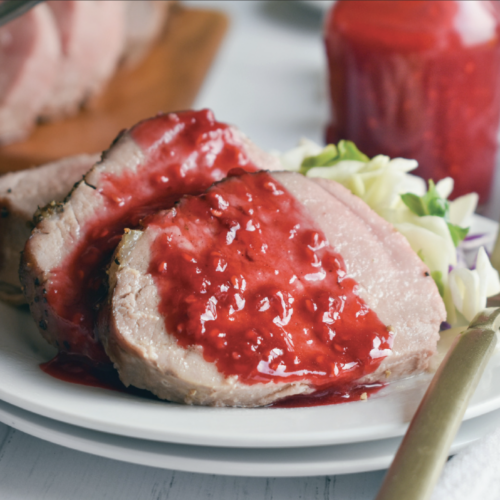
    Pork Roast with Raspberry Sauce

    Print Recipe Pin Recipe
    Prep Time 20 minutes mins
    Cook Time 9 hours hrs
    Course Main Course
    Servings 8

    Equipment

    • 1 Slow cooker

    Ingredients
      

    • 3 pound boneless pork roast
    • 3/4 tsp salt
    • 1 tsp sage
    • 1/2 tsp pepper
    • 12 ounces frozen unsweetened raspberries (thawed)
    • 3/4 cup sugar
    • 1 tablespoons cornstarch
    • 1/4 tsp nutmeg
    • 1/4 teaspoon cloves
    • 1/4 cup white vinegar
    • 1 tablespoons lemon juice
    • 1 tablespoons butter

    Instructions
     

    Directions for Pork Roast:

    • Grease a six-quart crockpot with cooking spray.
    • Place roast in crockpot; pat top and sides of roast with salt, sage and pepper.
    • Pour about 1 cup of water or chicken broth around the bottom of the roast.
    • Cook on LOW for 9 hours or until the roast pulls apart easily with a fork.
    • Set raspberries in the refrigerator to thaw.

    Directions for Raspberry Sauce:

    • In a large saucepan, combine: sugar, cornstarch, ginger, nutmeg, and cloves.
    • Stir in the vinegar, reserved raspberry juice, and raspberries.
    • Bring to a boil; cook and stir for 2 minutes or until thickened.
    • Remove from heat; add lemon juice and butter.
    • Stir until butter is melted.

    Notes

    Let pork stand for 10 minutes before slicing.
    Serve with the raspberry sauce.
    Cook’s Tip: We always have leftover raspberry sauce, and it’s too good to toss! Transfer the cooled raspberry sauce into a freezer-safe container. Then heat and serve another day. This sauce is delicious with grilled pork chops or chicken breasts.

    Team Latham

    January 30, 2026
    Food & Family, Latham News, Recipes, Winter
  • Latham Hi‑Tech Seeds

    Meet Our New RSM For Eastern Iowa: Levi Graver

    Latham Hi-Tech Seeds welcomes Levi Graver as the new regional sales manager for eastern Iowa. With a lifelong connection to agriculture, a strong relationship-driven mindset and deep respect for family-owned values, Levi brings both experience and authenticity to the Latham team. 

    Levi grew up on a family farm near Lisbon, Iowa, where he was actively involved in day-to-day operations, including caring for livestock and working with row-crop production. 

    “Those early mornings and long days helped shape my work ethic and gave me a deep appreciation for the commitment it takes to succeed in agriculture,” Levi says. 

    That farm-first mindset continues today as Levi and his wife raise their family. The two have known each other since childhood and have been married for seven years. 

    Together, they are raising two young children and enjoy sharing the values of hard work and togetherness that come from a rural upbringing. Their household also includes three dogs: a Blue Heeler and two miniature dachshunds.

    “I love having my kids be a part of the farming lifestyle, even though we don’t live on the farm,” he says. 

    Levi attended Iowa State University and has built a career that blends hands-on farming with professional sales experience. After spending a decade in automotive sales, he returned to farming while continuing to pursue his passion for working with people and helping them make confident decisions. 

    That combination of production agriculture and sales gives Levi a strong ability to understand both the operational and financial sides of farming — allowing him to relate to growers while also helping them identify opportunities to improve their operations. 

    Outside of work, Levi enjoys spending time outdoors with his family.

    “I love going fishing — especially for trout — and I also enjoy camping with my family,” he says. “There’s nothing better than sitting around a campfire together.”

    What drew Levi to Latham Hi-Tech Seeds is the company’s commitment to integrity and family ownership.

    “It is a family-owned company, and our word means something,” Levi says.

    In his new role, Levi is focused on building strong relationships with farmers across eastern Iowa while helping them get more out of every acre. 

    “I’m looking forward to working with farmers, learning how their operations are unique and helping improve their return on investment,” Levi says. 

    Please join us in welcoming Levi Graver to the Latham Hi-Tech Seeds team. We’re excited to see how his experience, work ethic and passion for agriculture will support growers throughout eastern Iowa.

    Smoked Prime Rib

    Print Recipe Pin Recipe
    Prep Time 15 minutes mins
    Cook Time 2 hours hrs 30 minutes mins
    Course Main Course

    Equipment

    • 1 smoker

    Ingredients
      

    • 1 6-8lb prime rib
    • 6-8 cloves fresh garlic, peeled and sliced
    • 3-4 sprigs fresh rosemary
    • 2 tbsp kosher salt
    • 1 1/2 tbsp freshly ground black pepper
    • 1/2 cup beef baste
    • 2 cups red wine
    • 1 cup unsalted butter, melted (2 sticks)

    Instructions
     

    • Pat the prime rib dry. Cut small slits all over the meat and insert garlic. Add rosemary, then season generously with salt and pepper. Mix melted butter, beef baste, and red wine.
    • Preheat smoker to 525°F. Smoke the prime rib for 30 minutes, basting once or twice. Remove from smoker and loosely tent with foil while the smoker cools to 225°F, about 20–30 minutes.
    • Return the roast to the smoker and cook at 225°F until internal temperature reaches 125°F, about 1½–2½ hours. Remove, rest 20–30 minutes, then slice and serve.

    Team Latham

    January 23, 2026
    Beef, Food & Family, Winter
  • Latham Hi‑Tech Seeds

    Meet Our New RSM For West Central Minnesota: Daniel Williamson

    Latham Hi-Tech Seeds is excited to welcome Daniel Williamson as the new regional sales manager for west central Minnesota, bringing with him deep agricultural roots and a wide range of hands-on experience.

    Daniel grew up on a small farm near Spicer, Minnesota, where his family raised certified organic seed soybeans, corn, oats, barley and alfalfa hay. They also managed a flock of sheep, raising and selling feeder lambs. Agriculture has long been a family affair.

    His father, Donnel, is a farmer and township clerk in Irving Township, while his mother, Christa, is a high school agriculture teacher at KMS High School. Daniel said growing up in that environment shaped his passion for farming and leadership.

    “I grew up on a small farm near Spicer, MN,” Daniel said. “We raised certified organic seed soybeans, corn, oats, barley, and alfalfa hay. We also have a herd of sheep that we raise and sell feeder lambs from.”

    Daniel attended South Dakota State University, earning a degree in agronomy with a minor in precision agriculture. He also spent two and a half years working at a cooperative as a crop advisor, gaining experience working directly with growers and their operations.

    “I attended South Dakota State University for Agronomy with a minor in Precision Agriculture,” he said. “I also spent two and a half years working at a coop as a crop advisor.”

    Beyond crop production, Daniel’s background includes experience with livestock operations, working with beef cattle and hogs. While in college, he also worked part time for SGS, assisting with seed planting for germination testing.

    Leadership and service played a major role in Daniel’s youth. He was actively involved in FFA and 4-H, serving as a regional officer and earning his American FFA Degree.

    “I was very involved in FFA and 4-H growing up,” Daniel said. “I had served as a region officer and have obtained my American degree.”

    Daniel said his interest in Latham Hi-Tech Seeds grew as he learned more about the company’s values and approach.

    “I wasn’t to familiar with Latham but became interested the more I looked into them,” he said. “I was attracted to Latham because they are a family run company and talk with their farmers and sales staff to see what is missing from our seed portfolio and what can be improved.”

    As regional sales manager, Daniel is focused on building strong relationships with dealers and supporting their success.

    “I am looking forward to meeting and working with our dealers and helping them grow their business,” he said.

    Outside of work, Daniel enjoys ice fishing, deer hunting and turkey hunting, staying connected to the outdoors and the land that shaped his agricultural journey.

    Welcome to the Latham family, Daniel! We’re excited to see how your strong agricultural roots and agronomy education will support farmers and dealers across west central Minnesota.

    Spinach Sausage Ravioli Bake

    Print Recipe Pin Recipe
    Prep Time 15 minutes mins
    Cook Time 25 minutes mins
    Course Main Course
    Servings 6

    Equipment

    • baking dish
    • skillet

    Ingredients
      

    • 10 oz cheese ravioli
    • 4 cups spinnach
    • 24 oz jar vodka sauce
    • 2 cups shredded mozzare
    • 5 oz pesto
    • 1 lb Italian sausage

    Instructions
     

    • Add seasonings to taste. Season with salt, pepper, garlic powder, onion powder, red pepper flakes and Italian seasoning.
    • Brown the sausage in a skillet, seasoning as it cooks. Drain any excess grease.
    • Layer ravioli in a baking dish while the sausage is cooking.
    • Add the cooked sausage over the ravioli, then top with spinach.
    • Pour vodka sauce over the top, making sure everything is fully covered.
    • Sprinkle mozzarella evenly over the sauce, then dollop pesto on top.
    • Bake at 400 degrees for 25–30 minutes. Broil on low for a few minutes if desired to crisp the mozzarella.

    Team Latham

    January 16, 2026
    Beef, Food & Family, Uncategorized, Winter
  • Latham Hi‑Tech Seeds

    How to Assess Winterkill in Alfalfa

    Alfalfa3

    It’s time to start thinking about getting your alfalfa orders in for the upcoming season. As spring approaches and fields begin to green up, now is the right time to evaluate winter survival and plan ahead in case stand replacement or improvement is needed.

    When soils thaw in early spring, we can see how our alfalfa crop fared. You can get a pretty good indication of your alfalfa crop’s health from the road. If your field is still brown and the neighbor’s field is green, check for injury or death.

    The best way to diagnose winter injury is by digging four to six inches deep and then examining the plants’ roots. Healthy roots should be firm and white in color with little evidence of root rot. Winter-killed roots will have a gray, water-soaked appearance early.

    If your alfalfa stand has suffered winter injury, assess the field’s yield potential by determining the number of stems per square foot:

    Yield (tons/acre) = (Stems/ft2 x 0.1) + 0.38

    This calculation should only be used as a guideline as many factors determine yield. Factors that influence winter injury and yield in alfalfa stands include:

    • Stand age. Older stands are more likely to winterkill than younger ones.
    • Variety. Varieties with superior winter-hardiness ratings and a high disease resistance index are less likely to experience winter injury.
    • Soil pH. Stands growing on soil with a pH about 6.6 are less likely to experience winter injury.
    • Soil Fertility. Stands with high fertility, particularly potassium, are less likely to experience winter injury than those with low fertility.
    • Soil moisture. Alfalfa grown on well-drained soils is less prone to winter injury.
    • Fall soil moisture status. As dehydration is the primary means of tolerating freezing temperatures, stands that go into winter with low soil moisture are better able to lose moisture and are less likely to winterkill.
    • Cutting management. Both harvest frequency and timing of fall cutting affect alfalfa winter hardiness. The shorter the interval between cuttings, the greater the risk of winter injury. Stands where the last cutting was taken between Sept. 1 and Oct. 15 are at greater risk, as plants are unable to replenish root carbohydrate reserves before winter.
    • Snow cover. Snow is an excellent insulator. Four inches of snow can result in a 10°F difference in soil temperatures. Stands that were not cut after Sept. 1 or that have at least six inches of stubble retain more snow cover and are less susceptible to winter injury.

    While we cannot control what Mother Nature delivers during the winter months, we can take steps to control or reduce alfalfa winter injury. Now is the time to think about getting your alfalfa orders in so you are ready for the seasons ahead.

    Contact your local Latham® dealer or call our office at 877-GO-LATHAM (877-465-2842); we’d love to assist you with any questions you may have.

    Did you enjoy this article? We want to (TECH)talk with you! Sign up for our newsletter to receive agronomy articles (and delicious recipes) in your inbox! We’ll talk soon.

    Team Latham

    January 14, 2026
    #AskTheAgronomist, Agronomics, Alfalfa, Crop, From the Field, Growth Stages, Season, Spring, Tech Tuesday, Winter
  • Latham Hi‑Tech Seeds

    Answers to Your Planting Questions

    It’s hard to believe that spring is right around the corner, and planters will be rolling in two months’ time. There are many questions to consider before that first seed goes in the ground. Let’s take a closer look at three of them:

    1. How early is too early?
    2. Is the soil temperature warm enough to start planting?
    3. What depth should I be planting?

    Q1: Generally, farmers maximize corn yield when they plant in late April or early May.
    This holds true IF conditions are fit for planting. A mid-April planting date produces similar yield if young plants are not damaged by a freeze in May. In years with few growing degree days in late April and the first half of May, farmers can maximize corn yield when planting in mid-May.

    When spring arrives early, farmers should weigh the risks and benefits of planting earlier than usual. Farmers with federal crop insurance will lose replant coverage if they plant before the earliest allowable planting dates specified by the United States Department of Agriculture (USDA) Risk Management Agency — even if they must replant due to factors other than freeze damage or poor emergence.

    Seed treatments and planting high quality seed are a must with early planting.

    Q2: Before planting, check the weather forecast and soil temperatures for your area.

    It’s wise to check the soil temperature early in the morning of each field that you intend to plant. Wet soils and fields with more crop residue tend to have lower soil temperatures relative to drier soils or fields with less crop residue. Check the seed tag or talk to your seed dealer about the cold tolerance of your corn hybrids. Be aware that hybrids vary in cold tolerance.

    Certainly, plant hybrids that have more tolerance for colder temperatures first. However, be aware that “imbibitional chilling” is a physical phenomenon that can override genetics. Imbibitional water uptake occurs within the first 48 hours after a seed is planted.

    Once planted, corn seeds need a two-day (48-hour) window when the soil temperature at planting depth does not drop much below 50°F. When soil temperatures drop much lower than 50°F within that 48-hour time frame, chilling injury may affect seed germination and subsequent seedling growth.

    During the osmotic phase of water uptake, which starts about 48 hours after the initial imbibitional phase of water uptake ends, the risk of chilling injury approaches zero. Thereafter, temperatures below 50°F can slow germination and delay seedling emergence. This can result in a longer exposure to soil-borne pathogens, particularly in soggy wet soils. If you expect the latter, use fungicide seed treatment for at least your earliest planted corn fields.

    When corn seeds imbibe (take up) water, cell membranes stretch and cells expand. When a damaged cell membrane rehydrates, it may not return to its normal shape and size. This can create a “leaky” cell. Water is at its densest at about 39°F, so when cold water is imbibed additional membrane damage occurs. These ruptured membranes may occur in the cell walls and in the mitochondria. In the plant, this action may disrupt the embryo/endosperm enzymatic conversion to energy. It likely interferes with the emerging seedling’s development and reduces the plant’s growth rate.

    • Debate exists about what specific temperature and timing causes imbibitional chilling. However, corn seeds that imbibe cold water (in the low 40s) in the first 48 hours after planting undoubtedly are affected.
    • Planting when soil temperatures are above 50°F — and are not anticipated to drop much below this during the following 48 hours — alleviates concerns of imbibitional chilling affecting corn emergence.

    Q3: Check seed depth and seed depth consistency across your planter units.

    The “set it and forget it” approach to seed depth isn’t the best idea. To get corn off to the best start, it is important to achieve both rapid and consistent emergence following planting.

    Planting 4

    One aspect of achieving rapid and consistent plant emergence is by choosing the correct seeding depth and ensuring there is adequate and uniform moisture at the chosen seeding depth. The most common seeding depths recommended for corn range between 2.0 and 2.5 inches deep, and these planting depths can work very well within most conditions. However, certain soil moisture conditions at planting may warrant further examination/change in seeding depth.

    A corn seed imbibes soil moisture within the first 24 to 48 hours after planting, therefore maintaining both adequate and uniform moisture at seeding depth (not too wet and not too dry) within the first 48 hours is important. If the soil remains too dry, then the seed may be delayed in emergence until precipitation occurs. Furthermore, if the soil remains saturated after planting, the seed may rot and die.

    Contact your local Latham® representative to find out more information about ideal planting depth for your area, or call 1.877.GO.LATHAM.

    Team Latham

    January 8, 2026
    Agronomics, Corn, Crop, Emergence, General, Growth Stages, Soybeans, Spring
  • Latham Hi‑Tech Seeds

    The Value of Seed Treatment

    Seedware

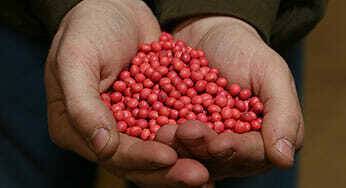
    Benefits of seed treatment include protecting seed from rot, seedling blights and insects, as well as improved germination. Seed treatments also help prevent the spread of plant diseases and reduce the risk of replant.

    Seed treatments are one of the most efficient crop protection technologies as they reduce farmers’ need for foliar spray applications. They also offer some certainty because field and weather conditions can prevent farmers from entering the field to apply fungicide and/or insecticide after seeding.

    Applying treatment directly on the seed before planting protects seeds and young plants, regardless of field conditions. Because seed treatment is a targeted, one-time application of pesticides to seeds, seedlings are protected during their most vulnerable stages of growth. Spraying fungicides or insecticides during these early growth stages is unlikely to be as effective because sprays are less targeted.

    Treated seeds carry a precise amount of pesticide that protects the seed during early growth, which is the critical growth period before and during germination. Seed treatments also are a “curative treatment,” protecting plants against seed-borne diseases.

    Research shows that seed treatments deliver more robust seedlings to farmers, protect plant stands and maximize yield potential. Conversely, farmers not using seed treatments in high pest pressure areas can see yield losses of 50% or more.

    Help secure a return on your seed investment with seed treatment! But don’t just take our word for it… take crop notes this growing season and compare data from multiple years. The Latham Team is here to answer your questions at 1-877-GO-LATHAM (877-465-2842).

    If you liked this article, watch this episode of Beyond the Bushel. John Latham and Justin Prokosch break down Latham’s three new soybean blends, what makes each unique, how they can help boost results this season and why they are exited to be apart of Victrato® with TYMIRIUM® technology, a new seed treatment from Syngenta. 


    Did you enjoy this article? We want to (TECH)talk with you! Sign up for our newsletter to receive agronomy article in your inbox! We’ll TALK soon.

    Victrato®, TYMIRIUM®, and the Syngenta logo are trademarks of a Syngenta Group Company. 

    Team Latham

    January 6, 2026
    Agronomics, Corn, Crop, Seed Treatment, Soybeans, Spring
  • Latham Hi‑Tech Seeds

    Strength in Community: One Latham Dealer’s Story of Resilience and Support

    In the summer of 2025, Latham® dealer Jason Youngkrantz faced a health challenge that stopped him in his tracks. After experiencing persistent chest pain, vision changes and unstable blood pressure, Jason was rushed to the ER, where doctors discovered a large mass in his chest and neck. Medical testing confirmed it was a schwannoma, a rare but non-cancerous tumor pressing against major arteries and affecting his daily life. 

    The tumor made even simple tasks — walking, holding his daughter or working on the farm — difficult, and doctors estimated Jason would be out of work for months as he pursued treatment. The physical strain was only one part of the challenge; the family also faced mounting medical bills, travel costs and financial pressure that came with extended time away from work. 

    To support Jason and his family during this difficult season, friends and neighbors organized a GoFundMe campaign, meals, childcare help and chores — easing day-to-day burdens so the family could focus on healing. The community’s generosity brought encouragement and strength when it was needed most. 

    Before this health crisis, Jason was a familiar face across western Minnesota farmland. A third-generation grower from Lake Lillian, he learned the values of hard work and rural community from his father, uncles and grandfather. As soon as he was old enough to drive, Jason was hauling corn and sugar beets — early experiences that shaped his lifelong commitment to agriculture.

    He and his wife have built a small hobby farm where they’re raising their children, Hunter and Parker, with hopes of growing their operation over time. His family’s roots in farming extend back four generations with Youngkrantz Family Farms, founded by his great-grandfather Carl and later led by his grandfather Earl.

    Jason first connected with Latham Seeds through social media and became a dealer to expand his agronomic knowledge and serve the growers in his community.

    “The chance to learn more about seed products and support local farmers was really exciting to me,” he says.

    From the beginning, Jason felt welcomed by the Latham team.

    “It has been incredibly welcoming,” he says. “Having (Sales Manager Amy Rohe) and my former seed representative visit my home to help me get started showed me firsthand the supportive culture Latham strives for.”

    When Jason was unable to visit customers due to his health, the Latham team stepped in. Dealer Development Lead Bryan Rohe helped by visiting customers on Jason’s behalf — a gesture that meant the world to him.

    “It has meant everything,” Jason says. “Their willingness to help shows how much they go above and beyond for their dealers.”

    On December 10, 2025, Jason underwent a successful surgery to remove the tumor through a single incision, avoiding more invasive procedures and giving him a hopeful path forward. 

    As he continues to recover, Jason looks forward to returning to the farm and reconnecting with customers.

    “I’m excited to get back to the work I love,” he says.

    Latham Hi-Tech Seeds is proud to support Jason Youngkrantz through challenges and triumphs. We celebrate his courage and the strength of his community.

    Cheesesteak Tortellini

    The ultimate comfort food!
    Print Recipe Pin Recipe
    Prep Time 15 minutes mins
    Cook Time 15 minutes mins
    Course Main Course

    Equipment

    • 1 pot to cook the tortellini
    • 1 large skillet
    • 1 spatula

    Ingredients
      

    • 1 lb Beef sirloin
    • 2 cloves Garlic freshly minced or garlic powder
    • 1 Green bell pepper medium
    • 1 Onion medium
    • 12 oz Cheese tortellini
    • 3 tbsp All-purpose flour
    • 1 Pepper
    • 1 Salt
    • 1 tbsp Olive oil
    • 3 tbsp Butter
    • 1/2 cup Parmesan cheese
    • 2 cups Whole milk

    Instructions
     

    • Cook the tortellini according to package directions, drain, and set aside.
    • In a large skillet, sauté onions, bell peppers, and mushrooms in olive oil until tender.
    • Add sliced beef, season with salt and pepper, and cook until browned.
    • Stir in beef broth and Worcestershire sauce and simmer for about 5 minutes.
    • Add the tortellini and toss to coat.
    • Top with provolone, cover, and cook until the cheese is melted. And ready to serve!

    Team Latham

    December 19, 2025
    Beef, Food & Family, Uncategorized, Winter
  • Latham Hi‑Tech Seeds

    Deep Roots, Bright Future: Welcoming Dealer Ryan Knobbe

    For as long as he can remember, farming has been at the center of Ryan Knobbe’s life. Growing up on his family’s diversified operation, he spent his days around cattle, corn, soybeans and alfalfa — and watching his dad run a custom spraying business. Those early experiences shaped not just his work ethic, but his appreciation for the relationships and responsibilities that come with agriculture.

    “I’ve been around farming ever since I could walk,” Ryan says. “It’s always been my main priority.”

    After graduating from Kuemper Catholic School, where he was active in FFA and football, Ryan attended DMACC in Ankeny before returning home to build his future. Today, he and his wife, Taylor, are preparing to welcome their first child at the beginning of the new year — the start of a new chapter for their growing family.

    Family is also a big part of Ryan’s work life. One of five siblings, he now partners with his youngest brother, Ross, as a Latham dealer.

    “Working with my brother and watching us grow something we started from the ground up means a lot,” he says.

    Ryan’s connection to Latham Seeds goes back to childhood.

    “I’ve honestly known about Latham since I was a kid,” he said. “When (a Latham RSM) called and asked if I’d be interested in becoming a dealer, it just felt right.”

    What stood out most was the culture that feels more like family than corporate.

    “The family atmosphere with Latham is what attracted me,” Ryan says. “I’ve never heard a negative thing about them. It’s not big corporate, and that really stood out to me.”

    When he’s not helping farmers find the right products for their acres, Ryan enjoys spending time with family and friends or relaxing on the golf course. But whether he’s on the farm or off it, his passion for helping growers succeed remains constant.

    “Working with other farmers makes it easy to start conversations because we share the same challenges and goals,” he says. “At the end of the day, it’s about relationships and helping each other grow.”

    As Ryan and Ross continue building their seed business, they’re doing more than offering hybrids and varieties. They’re carrying forward the values their family has lived by for generations: hard work, commitment and the belief that farming is stronger when you grow together.

    Ham Balls

    Can be frozen!
    Print Recipe Pin Recipe
    Prep Time 25 minutes mins
    Cook Time 1 hour hr
    Course Main Course, Side Dish

    Equipment

    • 2 mixing bowls
    • 1 baking dish

    Ingredients
      

    Ham Balls

    • 5 lb ham loaf
    • 3 eggs
    • 3 cups graham crackers, crushed
    • 2 cups milk

    Sauce

    • 2 1/2 cups brown sugar
    • 2 tsp mustard
    • 2 cans tomato soup
    • 3/4 cup vinegar

    Instructions
     

    • Combine ham ball ingredients well and make into balls.
    • Place in baking dish
    • Pour sauce on top of ham balls
    • Bake for 1 hour at 325 degrees.

    Team Latham

    December 3, 2025
    Appetizers, Fall, Food & Family, General, Pork, Uncategorized, Winter
  • Latham Hi‑Tech Seeds

    Meet Jodi Lundt: Bringing Experience and Enthusiasm to Latham Hi-Tech Seeds

    Latham Hi-Tech Seeds is excited to welcome Jodi Lundt as the newest member of our accounting team. Jodi joins us as our accounts payable specialist, bringing more than a decade of experience in agriculture and a passion for helping others.

    Born and raised in Mason City, Jodi grew up as the youngest of three children. Her roots run deep in North Iowa, where family has always been a big part of her story.

    “My dad is one of 16 kids and my mom was an only child,” Jodi says. “So, family gatherings were always a mix of big and small!”

    An active athlete growing up, Jodi played volleyball and softball through high school and graduated from Newman Catholic High School. Today, she and her husband Doug live on a farm southeast of Rockwell, where they’re raising their two children, Kaylie and Cash. The Lundts stay busy on weekends, traveling to cattle shows or sports tournaments. Their farm is also home to two corgis, Ty and Trixie, who Jodi says are “definitely spoiled.”

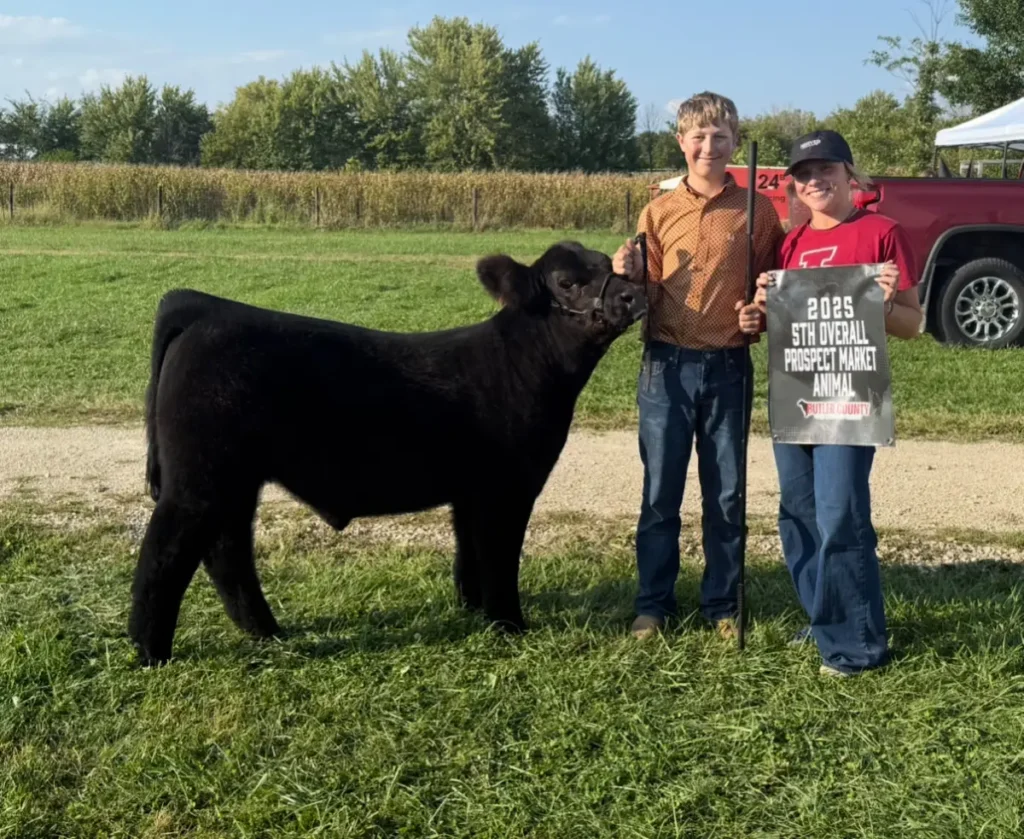
    “Both of our kids are involved in showing cattle and love sports,” Jodi says. “We have a few cows, along with their show cattle, so there’s always something going on.”

    Although Jodi didn’t grow up in agriculture, she quickly found a love for the industry after meeting her husband.

    “I honestly had no ag background until I met Doug, who farms,” she says. “After a few years together, I started working at Five Star Cooperative in the agronomy department.”

    During her 12 years there, Jodi learned the ins and outs of fertilizer, chemicals and seed — and discovered her favorite part of the job was building relationships with growers, saying she loves getting to work with farmers and learning from them.

    Outside of work, Jodi enjoys spending time outdoors, especially when it involves the beach. She also loves traveling, side-by-side rides with family and friends, reading and relaxing with a good Netflix series.

    When asked what drew her to Latham Seeds, Jodi says it was the company’s reputation and culture.

    “I had heard good things after a friend of mine started working here. I was super excited to join a family-owned business where you’re more than just a number.”

    Now, Jodi looks forward to expanding her skill set in a new role.

    “I’ve always worked on the other side of things — doing billing and accounts receivable,” Jodi says. “I’m excited to learn more about accounts payable and keep growing.”

    Please join us in welcoming Jodi Lundt to the Latham Seeds family!

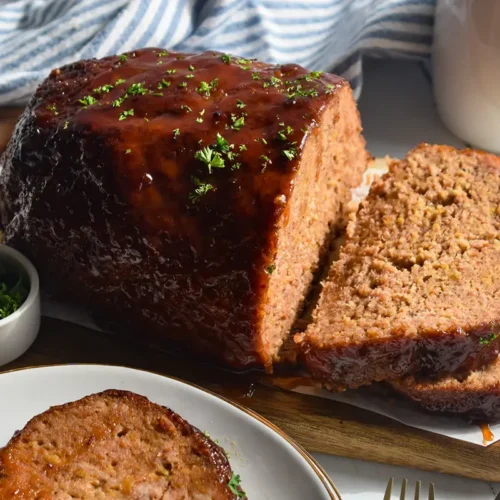
    Copycat Cracker Barrel Meatloaf

    This is a perfect replica of the original, with a tender meat mixture and flavorful topping the family will love!
    Print Recipe Pin Recipe
    Prep Time 15 minutes mins
    Cook Time 1 hour hr 10 minutes mins
    Rest Time 15 minutes mins
    Total Time 1 hour hr 40 minutes mins

    Equipment

    • 1 sauté pan
    • 1 whisk
    • 1 Large bowl
    • 1 Loaf pan
    • 1 sauce brush
    • 1 knife

    Ingredients
      

    • 1/2 tablespoon olive oil
    • 1/2 cup yellow onion finely diced
    • 1/2 cup bell pepper finely diced
    • 2 pounds 80% lean ground beef
    • 1 cup crushed Ritz crackers
    • 2 eggs whisked
    • 1 cup sharp cheddar cheese shredded
    • 1/2 cup whole milk
    • 1 tsp. salt
    • 1/4 tsp. black pepper

    For the topping:

    • 1/2-3/4 cup ketchup
    • 2 tbsp. brown sugar
    • 1 tsp. yellow mustard

    Instructions
     

    • Preheat oven 350 degrees F.
    • Sauté the diced peppers and onions in a small pan with the olive oil until softened, about 5 minutes. This gives them a more subtle flavor and texture. Set aside and let cool.
    • Combined the whisked eggs, crushed crackers, onions, bell peppers, cheese, milk, and salt/pepper in a large bowl.
    • Add ground beef and mix until just combined. Don’t overwork the meat, we want tender results.
    • Form it in a loaf and place it into a loaf pan. Not using a loaf pan can result in the loaf falling apart. It also takes much longer to cook, which causes it to dry out.
    • Bake for 30 minutes.
    • Combine the topping ingredients while it bakes and set aside.
    • Remove the meatloaf and brush on the topping. Bake for an additional 30-40 minutes. (Pull it once it reaches 155 degrees.)
    • Let it rest for 15 minutes in the loaf pan prior to slicing in. It will increase 8-10 degrees in temperature during this time. Slicing in too early also causes the juices to leak out. Ensure the middle is 160 degrees before you slice it.
    • Serve with creamy mashed potatoes and enjoy!

    Team Latham

    November 11, 2025
    Beef, Fall, Food & Family, General, Uncategorized
  • Latham Hi‑Tech Seeds

    Greg Jaacks Retires After 50 Years As Latham’s ‘Boy Next Door’

    The house where the Jaacks family lived next door to Willard Evelyn Latham.

    Greg Jaacks was literally the boy next door. He and his three siblings – Jeff, Kim and Steve – grew up in the little house beside Willard and Evelyn Latham, who employed Greg’s dad at Latham Seeds. 

    Marvin had moved his family to a larger house a few miles away and rented his own ground to farm. To accommodate the growing Jaacks (pronounced “Jakes”) family, Willard offered to add on two bedrooms to the small house next to his own. That was just the incentive Marvin needed to return to Latham Seeds.

    The connections run deep between the Jaacks and Latham families. 

    “Willard gave me my first haircut as a little boy in their basement,” Greg recalls. Willard and Evelyn’s oldest son, Bill, held baby Greg during the haircut. 

    Greg getting his first haircut by Willard Latham (Bill Latham is holding him).

    Greg helped at Latham Seeds as needed while he was in high school. Upon graduating in May 1975, Greg took a full-time job with a local farmer. He loved everything about the job from tilling soil and baling hay to shelling corn and feeding cattle. One thing he didn’t like was the pay. Greg worked 10 hours a day, six days a week for $75 flat. He wanted his own place but needed to make more money first. 

    “I asked my dad if I could get on his crew at the (Latham) plant,” Greg says. “He told me I’d have to find out for myself. He said I’d better go talk to Willard.”

    Greg mustered up the nerve to knock on Willard’s front door. Evelyn answered and welcomed him inside. Willard told Greg he could start work the following Monday if he got a haircut and shaved his beard — which he promptly did.

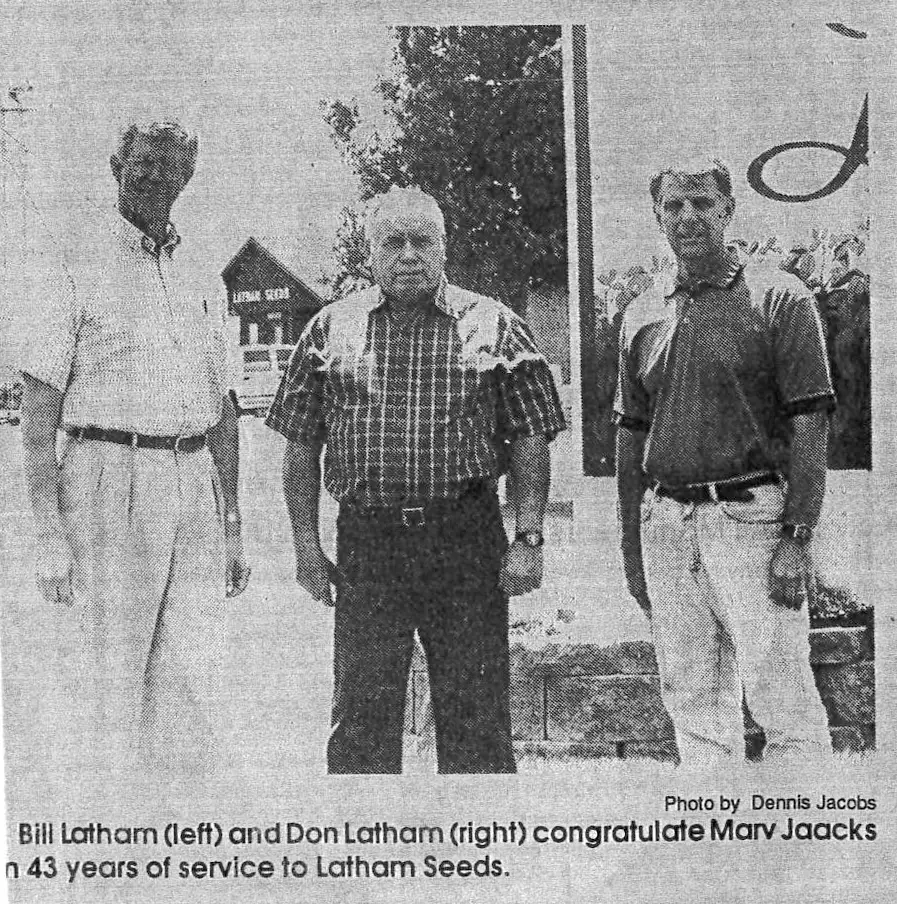
    Greg’s dad, Marvin, with Bill and Don Latham. Marvin worked for 43 years at Latham Seeds.

    “As long as you gave Willard what he was expecting, as long as you kept your promise and did your job, he was good to you,” Greg says. 

    Greg is grateful he got to work beside his dad for nearly 22 years at Latham Seeds. 

    “He really was my best friend,” Greg says of his dad. “It’s been a good, solid job here at Latham. When I started here, that’s what my grandpa said: Latham’s a good solid place to work.” Greg’s grandpa was a local farmer, who also worked on Marvin’s crew during the winter months.

    Greg and his wife, Donna, have two daughters, Trisha and Sandy. They enjoy attending their two grandchildren’s activities and watching them play sports. In his spare time, Greg likes to fish, ride his Harley and watch NASCAR. 

    Ham Loaf

    Greg also enjoys his mom’s Ham Loaf recipe, which reminds him of his childhood on the farm. He is sharing that cherished recipe here.
    Print Recipe Pin Recipe
    Prep Time 15 minutes mins
    Cook Time 1 hour hr
    Resting Time 7 minutes mins
    Total Time 1 hour hr 22 minutes mins
    Course Main Course

    Equipment

    • 1 knife
    • 1 mixing bowl
    • 1 Baking Sheet
    • Parchment Paper

    Ingredients
      

    Meat Loaf

    • 1-1/4 pounds ham
    • 1 pound fresh pork burger
    • 1/2 pound ground beef
    • 2 eggs beaten
    • 1 cup milk
    • 1/2 cups graham cracker crumbs

    Sauce

    • 1 can tomato soup
    • 1-3/4 cup brown sugar
    • ½ cup vinegar scant
    • 1 teaspoon dry mustard

    Optional

    • ½ onion finely diced
    • ⅛ teaspoon black pepper

    Instructions
     

    • Preheat oven to 350 degrees.
    • Combine all meat ingredients; form into loaf.
    • Line baking sheet with parchment paper or use loaf pan.
    • Pour sauce over meat and bake for 1 hour, or until the inside of loaf reaches 160.
    • Rest for 5 to 7 minutes before slicing.

    Cook's Tip

    • To freeze leftovers, slice into individual portions and tightly wrap with plastic. Place in an airtight container or Ziploc® freezer bag. Leftovers can easily be made into “do-over” sandwiches.

    Team Latham

    October 22, 2025
    Fall, Food & Family, General, Pork, Uncategorized
1 2 3 … 46
Next Page

Latham Hi‑Tech Seeds

131 180th Street | Alexander, IA 50420

(641) 692-3258

SIGNUP FOR OUR NEWSLETTER
  • Contact
  • Legal
  • Dealer Center
  • Seedware Login
  • Latham Gear

© 2025 Latham Hi‑Tech Seeds. All rights reserved. | Iowa Web Design by Webspec | Privacy Policy

Latham® Hi-Tech Seeds is a trademark of M.S. Technologies, L.L.C., 103 Avenue D, West Point, IA 52656.