
Latham Hi-Tech Seeds

(641) 692-3258

  • Home
  • Products
    • Corn
    • Soybeans
    • Alfalfa
    • Corn Silage
    • Seed Guide
  • Performance
  • Find a Rep
  • Media
    • Blog
    • News
    • Videos
    • Podcasts
    • TECHTalk
  • About Us
    • Company History
    • Our Mission
    • Careers
    • Become a Rep
    • Sowing Seeds of Hope
  • Contact Us
  • Latham Hi‑Tech Seeds

    Young North Iowa Farmers Take Beef Herd to New Heights

    92345763 10107326838049780 3690714291360497664 o

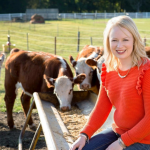
    Laura and Aaron Cunningham have been taking care of calves and helping with chores since they were young. The two grew up just five miles apart, but it wasn’t until their senior year of high school that they met in an ag class.

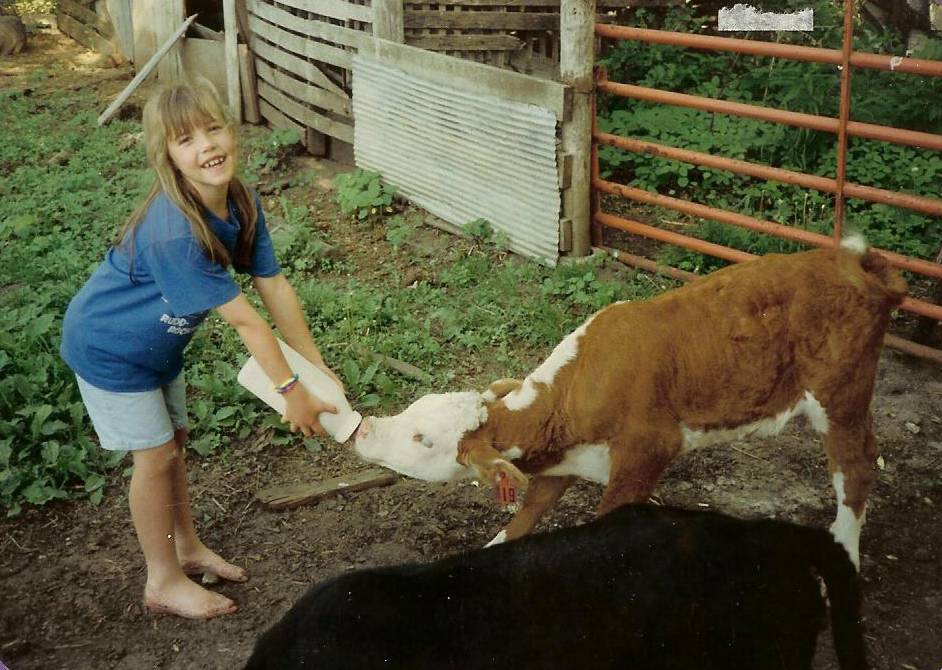
    Laura Bottle Feeding Age 5
    Laura Bottle Feeding Age 5

    With sights set on careers in agriculture, Aaron set off for North Iowa Area Community College (NIACC) for a two-year degree in Ag Operations Management while Laura attended Iowa State University and majored in Agricultural Business. The couple married in 2010 and established SkyView Farms Inc.

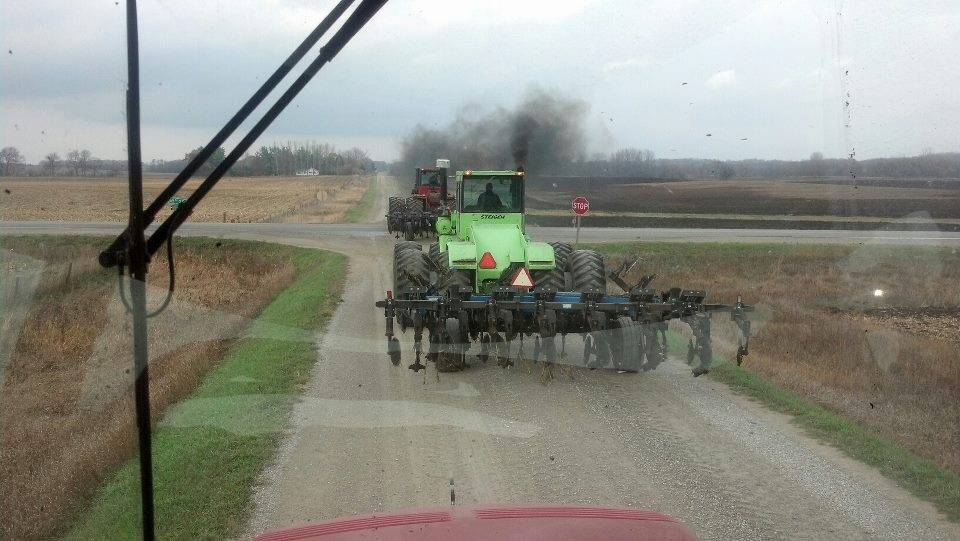
    Farming is family affair ripping with Dad and Brother
    Farming is family affair ripping with Dad and Brother

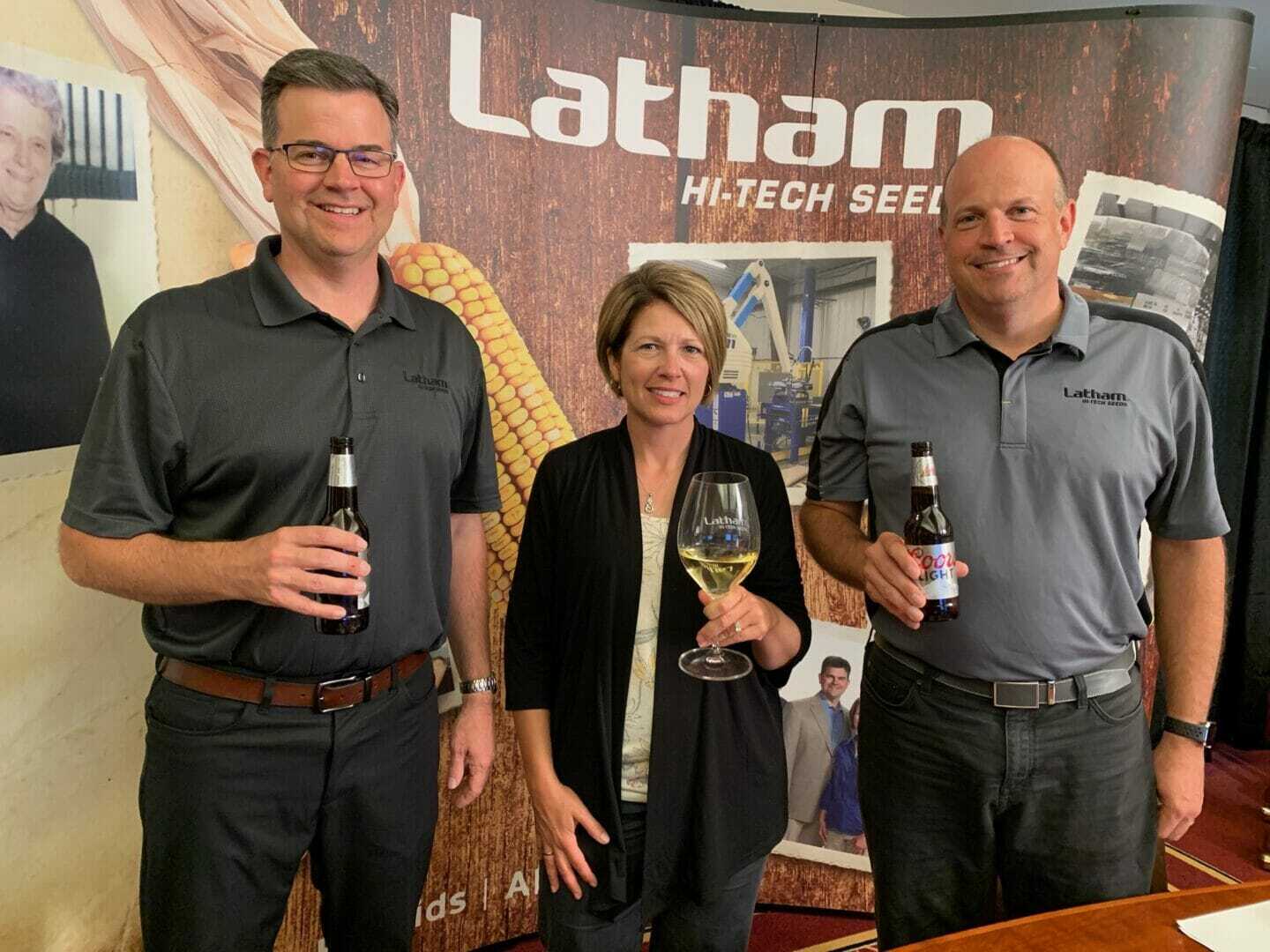
    cunningham-engagement“One of the most common questions we’re asked is, ‘Where did you name SkyView Farms?’ Our farm name stems from Aaron’s love of flying,” says Laura. “When he’s not caring for the crops or feeding cattle, you’ll find Aaron in the clouds. We look forward to jetting out on new adventures.”

    The Cunninghams care for a herd of Angus cow/calves and also feed out all the calves born on the farm each year. They began direct marketing their beef to end users and through local food hubs about seven years ago because it allows them to focus on producing a high-quality product to consumers who appreciate locally produced beef.

    Laura had already booked locker appointments before the COVID-19 pandemic closed packing plants and created more demand than local lockers can handle. Her phone was ringing off the hook in March and April, so Laura helped connect consumers with fellow beef producers. She also helped producers who had been interested in direct sales understand what steps to take.

    In addition to the SkyView Farms beef enterprise, the couple raises corn, soybeans, rye and alfalfa. They operate a custom application business, and a custom forage chopping and grain harvesting business. Laura also serves as marketing director for Latham Hi‑Tech Seeds where she started as a college marketing intern and has continued to accept new responsibilities for more than a decade.

    Laura shares her love of agriculture by advocating online at SkyView Farms on Facebook and @SkyViewBeef on Twitter. She enjoys any opportunity to share agriculture in the classroom through virtual spring farm tours during calving season, or visiting STEM classrooms to talk about careers and technology in agriculture.

    92345763 10107326838049780 3690714291360497664 oRecently, Aaron and Laura made a very special announcement that their “herd is expanding.” We couldn’t be more excited for them. The Latham Team looks forward to hosting a baby shower where we’ll celebrate the special occasion with beef, of course!

    There’s a cut of beef to celebrate every occasion and every day of the week! It’s no surprise the Cunningham’s favorite recipes feature beef. It’s been a rainy week across the Upper Midwest, so Laura is sharing a fool-proof recipe for Beef Stew. She likes this recipe because it uses staple ingredients most people already would have on hand be it frozen, canned or fresh they will all work. It’s also a great way to bring out the flavor in some of the lower-priced cuts in your quarter beef.

    Team Latham

    May 29, 2020
    Beef, General, Recipes
  • Latham Hi‑Tech Seeds

    Celebrate May Beef Month with Weekly Meal Plan

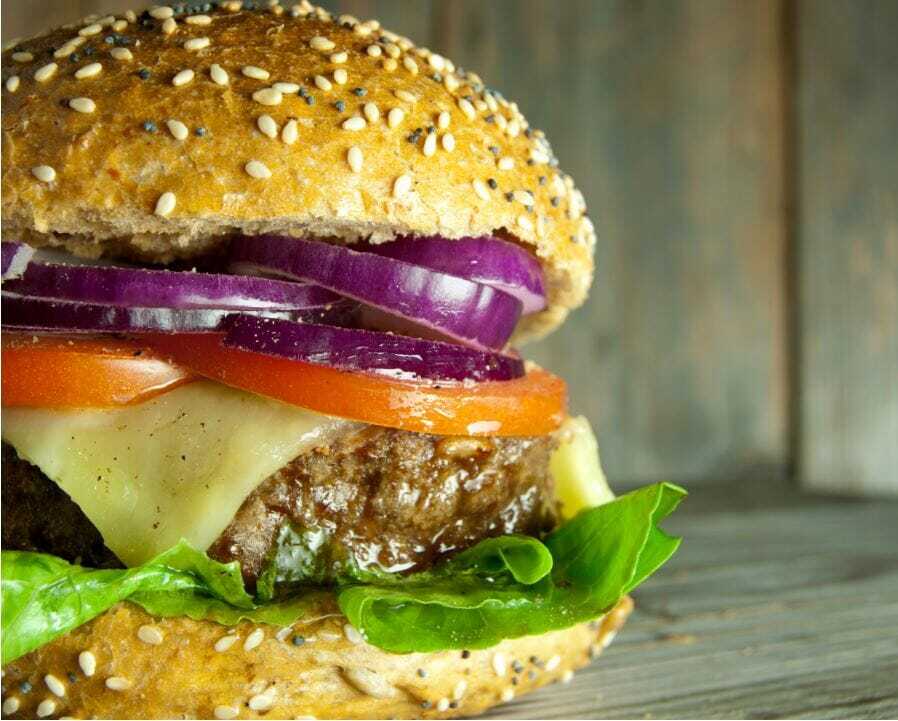
    Hamburger

    Beef Stew

    Many of us who live in rural areas probably were “meal planning” without even realizing it and before it was trending! After all, we aren’t going to drive five to 10 miles for one missing ingredient. We either plan ahead or make do with what we have on hand by substituting ingredients.

    Some of my friends make elaborate monthly menus like what my school printed in the newspaper when I was a kid. (I’m dating myself, but I remember my mom cutting out the school lunch menu and posting it on the refrigerator. Each morning I would look at the school lunch menu to see if I wanted to pack my lunch.) My friends who make these elaborate menus are very much about sticking with what’s on the menu for each specific date. They’ve learned what works best for them. I’ve also learned that I can’t stick to a strict schedule.

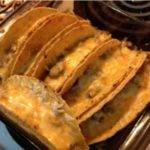
    Baked Tacos

    Because my husband travels frequently and our kids’ activities often take us away from home, I make a list of seven meals and side dishes before I do my weekly grocery shopping. I have a general idea of when I plan to serve each of the meals, but we can flex our meals when the situation arises.

    I typically make sure we have a variety of dishes that use pork, beef and poultry with an occasional meal of fresh catch or grilled salmon. In celebration of May Beef Month, this week I put together a week’s worth of beef recipes based on recipes we’ve featured on “The Field Position” blog:

    1. LasagnaMonday – Prime Rib Roast (in the crockpot), steamed green beans and peaches with cottage cheese. I once read on a food blog you should make Monday’s supper the easiest meal of the week. After all, “it’s a Monday!” (Please tell me you’ve had “one of those days,” so you understand what I’m talking about.) Mondays are a great time for crockpot meals or freezer meals, so you can start the week off right.
    2. Tuesday – Beef Stew or Beef & Noodles, using leftover roast and the broth/juice in the crockpot from the Mock Prime Rib. Consider serving stew with fresh beer bread topped with homemade jam. We like beef & noodles served over the Best Dang Mashed Potatoes with a side of steamed peas and canned pears. (Val, who blogs at “Corn, Beans, Pigs & Kids, suggests using frozen veggies to save time. Click here for more of her time-saving tips.)
    3. Crystal with CattleWednesday – Baked Tacos. This recipe makes it easy to make quick and delicious supper. Since the homemade taco season recipe makes enough for two pounds, I brown two pounds of hamburger right away. You can always freeze the other pound for later. Consider serving these tacos with sides of frozen corn and fresh fruit with Mexican Fruit Dip.
    4. Thursday – Lasagna with garlic bread and a tossed salad. (Please don’t dismiss this meal idea without reading the recipe. It’s as easy as it is delicious!)
    5. Amber LonnaFriday – Fire up the grill! Hamburgers on the grill are one of our family’s favorite meals. I particularly enjoy grilling on Fridays because it’s a good way to wind down at the end of a work week. That means fewer dishes, less time cleaning up and more time chilling out. Consider serving grilled burgers with sides of Sweet & Spicy Hog Wild Baked Beans or Calico Beans and slices of fresh melon.
    6. Saturday lunch – Farmer Favorite Maid Rites with skillet mac and cheese. Sometimes a person just needs some good comfort foods! I would serve this with apple crisp or apple-rhubarb crisp.
    7. MaidritesSaturday dinner – Sour Cream Meatballs. You can serve it over rice with a side dish of fresh asparagus or steamed broccoli.

    We knew we had a winner on our team the first time Kurt Ludwig, graphic designer for Latham Hi‑Tech Seeds, brought Bourbon & Bacon Meatballs to our company’s holiday potluck. This recipe takes meatballs to a whole new level! You could even serve this as appetizers for a Derby-themed party… once the Kentucky Derby and other large group gatherings are allowed again.

    Sour Cream Meatballs

    While the COVID-19 pandemic has altered many a plans and cancelled many events, it’s not stopping us from celebrating May Beef Month. Go ahead and have a ball this weekend!

    Shannon Latham

    May 15, 2020
    Beef, Recipes
  • Latham Hi‑Tech Seeds

    2020 I-LEAD Mission Trip Reiterates Importance of Steady Trade Partners

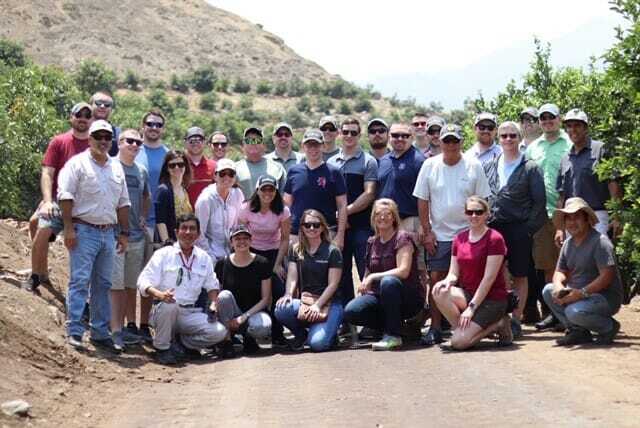
    Group Photo

    guest blog post by Emily Peters, Sales Manager of Agricultural Products for Union Pacific Railroad

    Group PhotoIf you watch the news or read the headlines in the paper about all the trade disruptions, you would wonder if there’s a place in this world where U.S. agriculturists are welcome. The truth is every day many people share the story of American agriculture.

    Earlier this spring I had the opportunity to attend a trade mission with the Iowa Corn Growers’ Iowa Leadership Enhancement and Development (I-LEAD) program. About a year and a half ago, my I-LEAD classmates and I debated where to go for our trade mission. Our final two options were (1) China; and (2) Peru, Colombia, and Panama.

    Option 2 won by a slim margin because we thought it was important to meet with steady trade partners, even if they weren’t as large.” Our I-LEAD class departed Des Moines on March 2, 2020, with the mission of learning about, strengthening and growing important trade partnerships for U.S. agriculture.

    Class at CanalThroughout the trip, we visited with local representatives of the U.S. Grains Council (USGC), USDA’s Foreign Agricultural Service (FAS), U.S. Meat Export Federation (USMEF) and the U.S. Embassy in both Peru and Colombia. Maintaining these relationships was a key theme.

    One representative from the USGC said it best, “Latin America is a constant and consistent consumer as long as you don’t ignore her.”

    I was impressed by the great talent working in our foreign Ag sectors. They are doing important work. For example, they work with local politicians to structure and implement price-band systems that make U.S. corn more price competitive with grain from other countries. A tour of the National Institute of Agriculture queued us into the growing interest among Peru’s science community to understand how GMOs could help their populations. While Peru does not allow local growth of GMO crops, importing GMO corn is critical to feeding its growing poultry market.

    We met with large customers of U.S. corn. Not only did they express appreciation for our corn, but they also showed us how much U.S. corn supports their businesses. We toured the production facility of Huevos Kikes, the largest egg production company in Colombia. It produces five million eggs daily, and egg production is expected to grow to six million eggs daily by the end of 2020!

    Eighty percent of the corn used by Huevos Kikes for feed rations comes from the United States. We reassured company representatives that we have plenty of corn available to meet their growth expectations. We also visited an Ingredion corn processing facility, which produces germ, gluten/feed, syrup, gluten meal, modified starch, and slurry-suspended starch. This facility imports 385,000 tons of #2 yellow corn annually, and 100% of that comes from the United States!

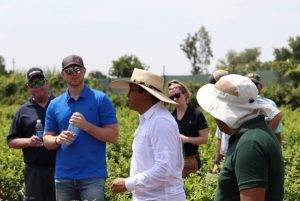
    Field MeetingThe farms we toured were amazing! They were vast in size. They also were diverse and faced unique challenges to what we see in the Midwest. One farm we visited raises 30 different fruits, accounting for more than 1 billion pieces of fruit annually. This same farm also grows avocados and feeds seven million chickens.

    Geography determines where citrus can be planted. We toured a 4,000-acre piece of ground in a narrow mountain valley that is devoted to mandarins and avocados. The area south of Peru is extremely dry, requiring costly irrigation for all production ground. It costs $80,000 to drill a well 100 meters deep.

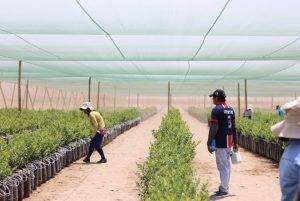
    BlueberriesAnother farm we visited raises asparagus, papaya, and blueberries. I found blueberry production extremely interesting. This farm was in the middle of a desert. All its blueberries are grown in bags of soil, so they can be immediately certified organic. Nearly all the blueberries raised here are exported, as local Peruvian consumers are not yet accustomed to the taste.

    Just as Midwestern bankers are reserved about lending to specialty crop farms, Peruvian bankers are not yet comfortable providing loans for blueberry farms despite the crop’s enormous margins. Lenders in Peru are more familiar and, therefore, more willing to lend for asparagus and papaya production.

    Class at CanalOur last stop before heading home to America the Panama Canal. I’m so glad we made the stop because its immensity is something you can’t grasp from pictures. The Canal spans 50 miles with three lock-steps on each side, and Lake Gatun is in the center. The ships passing through the locks were HUGE.

    Two-thirds of all vessels going through the Panama Canal are either going to or coming from the United States. One hundred percent of U.S. corn going to Peru and 50% of U.S. corn going to Colombia travels through the Panama Canal. Without this canal, ships would have to travel an additional 8,000 miles around Cape Horn.

    Our trip reiterated the importance of maintaining relationships with steady trade partners. During this uncertain time with China, our largest trading partner, it was refreshing to meet with trade partners like Peru and Columbia who WANT to buy U.S. products.

    In addition, my eyes were opened to how important it is to understand what is valuable to various sectors within the agricultural industry. For example, some critics of our trade agreements will argue the volume of corn exported from the United States to their countries far outpaces the volume of crops they export to us, therefore, creating an unfair trade imbalance. However, their specialty crops are more valuable per unit. Although we don’t produce citrus, avocados, or commercial flowers here in the Midwest, those producers are important allies in defending trade agreements that make U.S. producers preferred suppliers.

    Finally, this incredible opportunity reminded me of how blessed we are. A HUGE thanks to Iowa Corn, and all the generous sponsors like Latham Hi‑Tech Seeds, for granting the trip of a lifetime to 25 of us aspiring Ag leaders.

    Today I’m sharing with you a recipe for empanadas from Food & Wine as this is a delicious meal that is often served in Peru.

    Group Photo

    Shannon Latham

    May 1, 2020
    Agriculture, Beef, Industry News, Recipes
  • Latham Hi‑Tech Seeds

    Soyfoods Connect with Some of 2020’s Food Trends

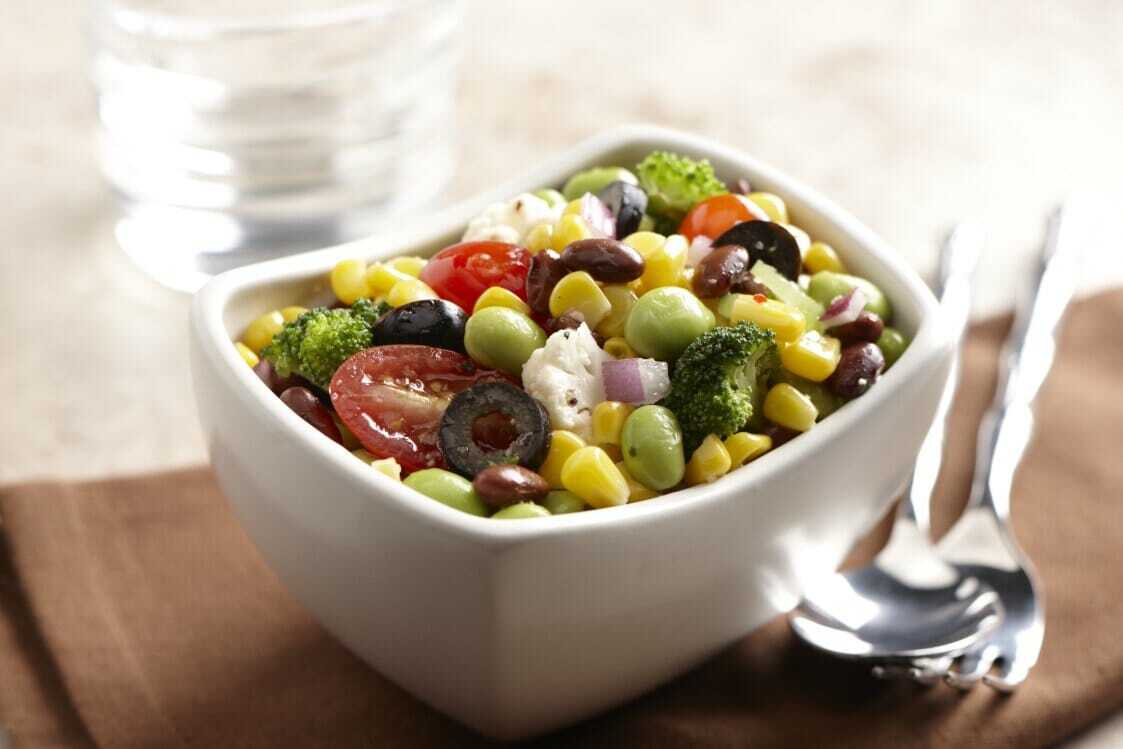
    Mexican Veggie Salad

    Mexican Veggie SaladSoybeans are most often associated with seeds that farmers plant or commodities they market. Soy is not often something those of us living in rural America associate with healthy, power-packed diets – unless we’re developing a livestock ration.

    However, soybeans offer many nutritional benefits for human diets. Soy provides heart-healthy fat and is cholesterol-free. Soyfoods such as tofu and TSP, textured soy protein, or TVP, textured vegetable protein, are ideal for adapting recipes for chili, soups, spaghetti sauce, tacos, salad dressings and desserts.

    “Soyfoods easily add protein to trendy foods,” says Linda Funk, executive director of The Soyfoods Council. “Enhance avocado toast or hummus by incorporating edamame. One cup of edamame contains 188 calories and offers approximately 18 grams of protein, as well as 8 grams of fiber. Shelled edamame can be blended with fresh avocado for guacamole or made into Edamame Hummus with added ingredients such as garlic, lemon juice and fresh herbs.”

    A quarter cup of shelf-stable granules of TSP/TVP contains about 12 grams of protein. Use it to extend ground turkey or beef. Add TSP to chili, pasta sauces.

    “At breakfast, combine TSP half-and-half with oatmeal to start your day in a trendy way,” adds Funk. “Fermented soybeans are made into a tender soybean cake called tempeh, which offers 15 grams of protein per 3-ounce serving. You can boost the protein level of a meal by adding tempeh to sandwiches, pizza or salads. Baste it with barbecue sauce and grill it for an easy entrée.”

    Tofu is made from soymilk curds and is made firm using a coagulant, such as nigari flakes or calcium sulfate, which is the mineral used in craft brewing.

    “Firm, water-packed tofu can be marinated in your favorite sauce. Then add it to curries, pasta dishes, or Asian noodle bowls,” says Funk. “Silken tofu is perfect for smoothies, soups, dips and desserts. A half-cup serving of tofu can provide approximately 10 grams of protein. Cut the fat and increase the protein in your favorite dips by substituting silken tofu for part of the mayonnaise when using salad dressing mixes.”

    To help you incorporate soy into your diet, here are links to the most popular soy recipes from “The Field Position” blog:

    • Key Lime Pie
    • Soy Good Chocolate Chip Cookies
    • Chocolate Chip Cookie Dough

    Today we’re sharing with you a recipe from The Soyfoods Council for Mexican Veggie Salad, which is complement to grilled meats and deli sandwiches. For more recipes, visit www.thesoyfoodscouncil.com. The Soyfoods Council’s website also includes nutrition information, cooking tips, and recent research about soyfoods and your health.

    Team Latham

    April 24, 2020
    Food & Family, General, Recipes, Sides
  • Latham Hi‑Tech Seeds

    Not All Heroes Wear Capes… Some Donate Life-Saving Organs

    49847

    20191103 151605It runs in the family.

    Marianne (Squires) Nielsen of Greene, Iowa, is as good of a cook as her mother. They share the same color of hair and eyes. Marianne also inherited her mother’s Polycystic Kidney Disease (PKD).

    “I found out that I had PKD during an ultrasound when I was pregnant with our oldest son,” says Marianne, who is a registered nurse at MercyOne Cancer Center in Mason City. Her husband, Chad, is an electrician at Sukup Manufacturing in Sheffield. They’re the proud parents of three active sons: Sean, 14; Cain, 12; and Will, 11. The boys attend North Butler Community School where they are active in sports and Boy Scouts.

    Because she been treated for hypertension since she was in her early 20’s, it was one indication that Marianne probably had inherited polycystic kidney disease. Other risk factors for PKD, according to the Center for Disease Control, are high blood sugar levels and being overweight.

    Doctors carefully monitor people with a history of PKD. Marianne’s maternal grandmother was on dialysis for about 14 years. Her mom also has PKD, although she hasn’t needed dialysis or a transplant. Two of Marianne’s first cousins have had kidney transplants. One of her aunts and a great aunt have multiple children and grandchildren with PKD and have had transplants.

    Marianne’s kidney function was monitored every 6 months for about 13 years. As her kidney function decreased, her creatinine levels steadily rose. She was referred to Mayo Clinic’s transplant team in April 2019, but she wasn’t placed on the organ waiting list until later that summer. After being told it would be a three- to five-year wait for a cadaver kidney, Marianne appealed to the public for help.

    A large pool of family members and friends signed up to help Marianne via Mayo’s website. Many of them requested to be tested to see if they were a match to be her donor. Marianne’s oldest sister, Jennifer, was tested first because the two have the same blood type. She was declined, but Marianne’s youngest sister was accepted.

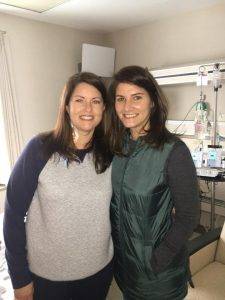
    49847“Due to her excellent health, Becky was approved to be an organ donor. We were placed on the Mayo Paired Donor program on August 31. On January 2, 2020 – exactly one year after my first appointment at Mayo and on my middle son’s 12th birthday – I received the call that a match had been found for both Becky and me!”

    Marianne received her new kidney on January 23, 2020. After three days in the hospital, Marianne was discharged to the Gift of Life transplant house. This non-profit, which runs completely on donations, provides a clean and affordable living environment for transplant patients and their caregivers to stay locally while they’re receiving follow-up care.

    “There are no words to describe what Becky’s gift means to me,” says Marianne. “Becky told me that it wasn’t a hard decision for her. I will never forget that moment, and I get tearful every time I think about it. Her gift and that of the Good Samaritan, the living donor whose kidney I received, have changed my future.”

    Without a kidney transplant, Marianne says her life would have been planned around the eight to 10 hours each day of peritoneal dialysis at home or trips to the hemodialysis center three days each week. Between driving to Mason City, working and dialysis, she would have had very little time to spend with her husband and their sons. She would have missed attending many of their activities. Plus, visits away from home would have been very restrictive as she would’ve had to take all the boxes of equipment and machine with her

    20190826 063536“I watched my grandmother faithfully go to dialysis three times a week for 14 years. My sister and my donor have saved me from that future! I will not have to miss activities like my sons’ ballgames, Boy Scout events, date night with my husband, or time spent with friends due to my sister and my donor’s generosity. It is literally life-changing!

    As they say, not all heroes wear capes… some have a kidney they are willing to spare.

    “You can live with one kidney, so ‘share your spare’!” encourages Marianne. “I would like people, who have been diagnosed with kidney disease, to know there is hope. I would like others to know that you don’t have to be a match to donate a kidney to a friend, a loved one or even to a stranger. Transplant programs can develop chains of matching people. After all, my kidney came from a Good Samaritan!”

    The actual kidney surgery is generally covered by the recipient’s insurance. If you have other financial worries, the National Kidney Foundation will reimburse lost wages and cover the cost of meals, mileage and hotels.

    After being on a restricted diet for so long, Marianne said she looks forward to once again enjoying pizza and popcorn night with her family. She still tries to limit her sodium intake to 2,000 milligram daily, and she doesn’t add salt to food.

    In celebration of her successful kidney transplant and National Donate Life Month, today Marianne is sharing with us a favorite recipe for Creamy Chicken Wild Rice Soup.

    Shannon Latham

    April 17, 2020
    Poultry, Recipes
  • Latham Hi‑Tech Seeds

    CAL School Farm “Goes Green” with Gardening

    Students at hog area

    One advantage a rural school has is acres for learning. CAL’s Go Green Learning Garden was established 2017 in Latimer, Iowa, as part of the Farm to School program for elementary students.  After nine months of planning and constructing buildings, a school farm was added.

    “Our Children’s Acres for Learning, or CAL School Farm, is something that we are very proud of and our students are excited about what they can learn from the farm,” says Steve Lane, who served as superintendent of C-A-L, a public school for the communities of Coulter, Alexander and Latimer. CAL Middle School and High School became shared as part of the Hampton-Dumont School District (H-D CAL) beginning in 2018.

    Greenhouse 1The Go Green Learning Garden is comprised of five raised garden beds in which radishes, onions, tomatoes, zucchinis, peppers, potatoes and strawberries are grown. Vined plants need room to spread, so this spring CAL will till a new land garden for potatoes, tomatoes and vine plants such as zucchini, cucumbers and squash. In addition, the greenhouse has been renovated recently. The plan is to sell plants and flower arrangements in May, just in time for Mother’s Day.

    “School Board Member Cathy Carlson attended the Iowa Association of School Boards Annual Convention in November 2017 where she listened to a presentation by students from Hamburg Community School, who had begun a school farm on their property,” explains Mr. Lane. “We believed our students had the capability to construct farm buildings and be involved in operating a farm similar to Hamburg’s. We also felt that we needed to educate our students as to where their food comes from, and that a hands-on approach would be the best way for students to learn about agriculture and the food chain.”

    Mr. Dave Harms, who taught at H-D High School and also worked as a Building Trades instructor for North Iowa Area Community College (NIACC), designed several farm buildings. He presented three different roof designs and each of our buildings have a different roof design. In early October 2018, Mr. Harms and Mr. Lane supervised elementary students from CAL to begin building the hog barn. It was finished just prior to Christmas break. Shortly after break, they began building the chicken coop and finished it in March.

    While the buildings were under construction, elementary students were cutting, measuring and painting the boards to create a picket fence. Elementary students also painted all of the buildings red with white trim. In April and May of 2019, the students were hard at work completing the goat barn. The goat barn is the largest of the three buildings. It was completed as school got out in June.

    ChickensChickens were added to the farm in early July 2019. The 12 pullets began laying eggs in August about the time the students started back to school. Other animals that make their home on the CAL farm include pygmy goats named Blizzard and Chip, a.k.a. Chocolate Chip, which the students named after ice cream flavors. Two pigs also were raised. The pork was processed Nov. 19, 2019, by LeWright Meats of Eagle Grove and the entire student body recently were served ham for school lunch.

    Students learn where their food comes from because it’s served on their plates and taught in both the indoor and outdoor classroom.

    Blizzard and Chip“Teachers plan lessons around what students learn at the farm in the way of Math, Reading, Science and Social Studies and even Art and Music,” says Mr. Lane. “Students sign up by the week to help with chores at 8 A.M., after lunch, and then again at 2:45 P.M. Each group consists of four or five students, who help with chores and gathering the eggs. Teachers also bring their classes to the farm when it is possible. All grades from 3-year-old pre-school to sixth grade have been learning about the farm.”

    Mr. Lane would like to acknowledge the following for making the CAL school possible: the CAL Board of Education; Forest and Evelyn Barkema Charitable Trust; Ag Venture Alliance; Lohrback Insurance; Olive Avenue Feed, LLC.; Hampton Veterinary Clinic; DeBour Electric; Niman Ranch (Delbert Hamilton); North Iowa Food Coalition; Val Plagge for the CAL Facebook Page; Roy Plagge, Donna Tidman (who donated the goats) and many others who have given us support and encouragement throughout the past year.

    To support the school garden, stay tuned to local Franklin County news for more information about how you can purchase plants and greenhouse items from the CAL Go Green Learning Garden.  Today we’re sharing with you a recipe for zucchini bread because in 2017 students got to turn the zucchini they grew into bread.

    Shannon Latham

    April 10, 2020
    Agriculture, Desserts, Industry News, Recipes, Sides
  • Latham Hi‑Tech Seeds

    Boldness and Humility: A True Leadership Trait

    IMG 3276

    Chris Latham, chief financial officer of Latham Hi‑Tech Seeds, recently stepped into his new role as president of the Independent Seed Association (IPSA). At its recent annual conference in Tucson, Arizona, IPSA recognized Chris for his unwavering support of independent seed companies and welcomed him to the table.

    FullSizeR
    John, Ian and Chris Latham at the 2023 IPSA Conference in Arizona

    “IPSA is such a great organization, with great innovators,” says Chris, who previously served as president of the Iowa Seed Association. His older brother John was president of the American Seed Trade Association; both brothers followed their father’s example as a steward in the industry. “My dad and my brother have served in this same capacity. I’m proud to be here and I’m excited about the future of this industry.”

    Chris credits his dad for instilling within him a passion for the seed industry.

    “I always admired Dad’s desire to learn about things and to apply it to whatever he did,” says Chris, who recalls summer vacations spent road tripping across the United States, taking in the sights on their way to the latest seed industry convention. “I literally grew up in the seed business.”

    After graduating from CAL High School in Latimer, Chris majored in Finance at Drake University. He graduated in May 1995 and worked full-time in the banking industry. On Saturdays, he attended classes at Iowa State University in Ames to earn a Master of Business Administration.

    Chris, John and Shannon Latham purchased the family’s flagship soybean seed company as the third-generation owners in 2009. That’s when Chris came onboard full-time as CFO of Latham Hi‑Tech Seeds.

    “While my background was not in agronomy, I felt I was in the right place and time to help grow the business,” Chris says. “John and Shannon have backgrounds in sales and marketing respectively. We each have unique roles, so we can contribute in our own way.”

    Chris says his goal as IPSA president is stay connected with customers through communication that is both humble and bold.

    “We can stand up to tell our story and advocate for innovations and the free market,” he says. “We want viability for the future, but if we’re not active in helping to tell that story, we’re not doing ourselves justice and we’re not doing our customers justice.”

    Chris’s wife, Ann, is a family and child psychologist. She specializes in helping kids with learning challenges. They live in Urbandale, Iowa, and have three children: Will, Courtney and Morgan.

    Today the Latham family is sharing with us a family favorite recipe for turkey tetrazzini.

    Shannon Latham

    April 3, 2020
    Agriculture, Industry News, Poultry, Recipes
  • Latham Hi‑Tech Seeds

    Grounded in Grit: How the “Farmer Way” Cultivates Timeless Principles for Success

    Iowa Agriculture book cover
    Darcy.Maulsby.molasses.cookies.Feb .2015.2
    Darcy Dougherty Maulsby

    By Darcy Dougherty Maulsby

    “Unprecedented” is a word that gets tossed around today when we face massive changes, like the swift outbreak of the coronavirus. It’s easy to get wrapped up in the moment during these unnerving times. When we pause to take the long view, however, we can gain valuable perspectives by considering the four essentials— family, farming, food and faith —that have guided and sustained us in the past.

    Iowa Agriculture book coverThose four themes kept emerging as I wrote my latest book, Iowa Agriculture: A History of Farming, Family and Food. I call them the “farmer way.” For generations, American farmers have lived by an unwritten code centered around hard work, courage, perseverance, teamwork, personal responsibility and concern for the community. If you could sum up the farmer way in one word, it’s grit.

    Tough times don’t last; tough people do

    Farmers 100 years ago needed this grit more than ever. I think of my grandfather Glenn Dougherty, who was born in 1897 on the family farm north of Lake City, Iowa. He came of age during “long depression” that started in the 1920s, a decade before the Great Depression engulfed America.

    1928 Farm Bureau magazine
    1928 Farm Bureau magazine

    What a swift, shocking change this was from the Golden Era of Agriculture that started in the early 1900s and culminated with World War I. By then, all sectors of the American economy were producing as much as possible to help the war effort, and ag exports boomed. In the years just after World War I, however, prices for farm goods fell by half, as did farmer income. Banks did not renew notes, but mortgages and bills still came due.

    Farm income fell from $17.7 billion in 1919 to $10.5 million in 1921—nearly a 41 percent drop. In Iowa, farm values that had almost tripled between 1910 and 1920 plunged during the 1920s. A rural depopulation took hold as families, especially the younger generation, left the farms to seek more opportunity in America’s cities.

    In response to these troubling developments, some farmers began organizing with their neighbors so their shared concerns could be heard at the county, state and national level. Farmers like my grandfather Glenn could turn to new groups like the Iowa Farm Bureau Federation (IFBF), which had formed on December 27, 1918, to help farmers harness the power of grassroots support. By working together with their family and friends, farmers had faith they could accomplish big goals that no individual could achieve alone, especially in tough times.

    Farm women embrace grit

    The powerful influences of family, farming, food and faith that have guided the farmer way for generations also shaped the lives of rural women like Evelyn Latham, who grew up on a farm near Latimer, Iowa.

    “My story is one of love and hard work, interspersed with joys, tragedies, achievements, and a lot of family pride,” said Latham (1916-2014), who taught in Franklin County’s rural schools, played a key role in the Latham family’s seed business for years and was named an Iowa Master Farm Homemaker of the Year in the early 1960s.

    Evelyn and her husband, Willard, founded Latham Seeds near Alexander, Iowa, in 1947. Evelyn ran the “office” from the family’s kitchen table in addition to raising the couple’s five sons. Evelyn was known for her cooking skills and hospitality, and it wasn’t unusual for her to feed a room full of hired men and customers.

    Changing for the better

    Even though much has changed in agriculture through the years, as reflected in the stories, photos and recipes in Iowa Agriculture: A History of Farming, Family and Food, the farmer way still thrives in rural America, thanks to people like Evelyn and my grandfather who lived these principles daily and passed them on. The touchstones of family, farming and faith are values we can all share today, no matter our role in life, to help us succeed together. Gaining a better understanding of our rich agricultural heritage gives us a solid place to start.

    One upside to this coronavirus pandemic is that everyone is spend more time with their families. From the looks of my Facebook feed, many families are spending more time gathered around the table. People are making do with the food that’s in their freezer and the ingredients in their pantries. “Make do” has been the farm cooks for generations, so today we’re sharing a classic dessert recipe that uses common food items.

    Shannon Latham

    March 27, 2020
    Desserts, Recipes
  • Latham Hi‑Tech Seeds

    An Attitude of Gratitude Helps Chase the Blues Away

    Goat pic 1

    CB9ADD49 DAB5 4C73 868D E47784BD407EWe’re living in unprecedented times due to the coronavirus, but our attitude about this situation can be the difference maker! Some folks online are posting Chicken Little comments. Others are looking for opportunities to get involved by helping others in their community. They’re finding reasons to stay positive by giving thanks daily.

    Ever since I read a book by Debbie Macomber, I’ve made a conscious effort to begin my day with gratitude. Two of her books that have inspired me the most are “One Simple Act: Discovering the Generosity of Gratitude” and “Be a Blessing: A Journal for Cultivating Kindness, Joy, and Inspiration.”

    Here’s an example of what I’m grateful for today:

    1. New beginnings and fresh starts, including spring cleaning. I always feel better when my windows and floors sparkle in the sunlight. Why not embrace the additional spring cleaning warranted by COVID-19? I’m choosing to give thanks for Clorox wipes.
    2. A talented friend who’s willing to help me choose new paint colors and is excited about helping me redecorate. (We’ve had the same paint color for 17 years! It’s time for a change.)
    3. IMG 0246Pets that offer unconditional love and faithful companionship.
    4. The birth of baby animals. (Follow me on Facebook @EnchantedAcres for videos of newborn goats.) Every baby provides hope and promise for the future.
    5. A freezer filled with homegrown chicken, locally raised beef and pork. Thanks to all the hours I’ve spent watching “The Food Network” while suffering from insomnia, I’m inspired to make do with what I have on hand. This is the perfect time to enjoy more meals together as a family. (Every Friday we share a recipe on “The Field Position.” Every Saturday I share a breakfast recipe on Enchanted Acres’ Facebook page; every Sunday I share a supper idea.)
    6. Women who have blazed new trails, so I can enjoy a fulfilling career.
    7. The Audible app, which allows me to “read” while I’m driving. I love books! Because libraries have closed, this week I downloaded my first e-book. Your first download is free! (I’ve been on a World War II history kick lately. If that topic interests you, here are my top picks: “The Nightingale” and “Winter Garden” both by Kristen Hannah; “The Tattooist of Auschwitz” and “Cilka’s Journey: by Heather Morris; and “The Paris Orphan” and The Paris Seamstress” by Natasha Lester.)
    8. Technology that allows us to stay connected and remain productive. When I was a kid, my mom set a timer to alert me when I had to get off a long-distance call. Now we have unlimited long-distance calling, so I can talk (and talk!) with friends and family. Facetime allows us to see their faces when we can’t visit in person. We also can conduct virtual meetings, too. Since it’s one of the busiest times of the year at Latham Hi‑Tech Seeds, I’m thankful for the technology that allows us to remain productive even if we’re working from virtual offices.

    While I’ve been working from home this week, our family has been enjoying more meals together. My mom baked chocolate chip bars. She and my son also baked banana bread. I must increase my workouts while we’re all homebound during the COVID-19 pandemic, or I’m going to need bigger jeans! Fortunately, I have an online subscription to BeachBody on Demand®. I need to get motivated to use it! Can anyone else relate to this? Now that spring has sprung, I’m looking forward to walking outside.

    1
    While most Americans were busy stocking up on staples at the grocery store, I confess that I put a few books in my cart. Like mother, like daughter. My mom literally filled a cloth bag with library books before it closed its doors this week.

    Happy spring! Here’s to an early spring filled with quality family time around the table. Today I’m sharing with you Debbie Macomber’s recipe for Gratitude Bread. Like my favorite author, I bake and cook to show those around me how much I care for them. Go ahead and bake someone happy!

    Shannon Latham

    March 20, 2020
    Recipes, Sides
  • Latham Hi‑Tech Seeds

    Spring is a Fresh Start, so Try Something New in the Field

    Harvest

    HarvestWhen the sun shines, the snow melts slowly and temperatures are above normal on a late Midwest winter’s day, folks across the Upper Midwest start thinking about the hope that comes from the changing of the seasons. No crop would ever get planted without optimism.

    “South Dakota farmers came off an unprecedented in 2019 and then faced our hardest fall ever,” says Dustin Leiseth of Hazel, SD, who has farmed since 1999 with his father, Paul. “I was in Aberdeen for township meetings last fall, so I called Dad to ask how harvest was going. He said, ‘Well, nothing has broken down yet today.’ So… that’s how we were measuring success.”

    Both final drives and the cleaning fan went out in the last 500 acres of combining. The Leiseth family finished the harvest on December 6, 2019. To commemorate the occasion, Dustin took a selfie in the field. Pictured with him are his father and Roger Adams, who has been one of Paul’s best friends since kindergarten. Roger has helped with harvest for years, taking vacation days to help the Leiseth family before he retired in 2014.

    “I’ve never been so happy to be done,” says Dustin. “I told my dad, ‘You’re the only person I would want to do this with. I can’t see myself farming if one of my sons doesn’t farm with me. I’m going to tell my son, ‘This is our legacy. My grandpa moved here. Your grandpa and I have fought to keep this land in our family.  I want you to farm with me and for this farm to be yours someday, if that’s what you want. Farming must be someone’s passion. No operation can truly be successful if the person who is running it doesn’t have a strong desire and passion for it.’  I just want us both to have open and honest communication when that day comes.  It is, and always will be, about his passion in this life, not mine.”

    Dustin and Bridget have two sons, 12 year old Preston and 7 year old Caleb

    Dustin is the third generation who felt called to farm this land, and he says he never wanted to do anything else. Like his father did upon graduating from high school, Dustin attended Lake Area Tech in Watertown where he learned many useful skills from electrical wiring to welding and carpentry.

    “I was fortunate that my parents said they wanted me to come back to the farm,” says Dustin. “My wife understands this life comes with sacrifices. Bridget is very supportive. She makes my life even better, and she’s great with our sons. I make the farm go, and she keeps our family whole. Together we unify.”

    Dustin and Bridget have two sons, 12-year old Preston and 7-year old Caleb.

    IMG 0621

    “I get to raise my sons on the farm where they have the freedom to be who they are,” says Dustin, who enjoys fishing and boating with his family. He also enjoys hunting pheasants and white tail deer. “The boys ride bikes down the back-country roads and the 4-wheeler across the home section. They just experience good country living.”

    Huntin’, fishin’, and lovin’ every day… That’s the prayer that a country boy prays.

    Like the lyrics to a good country music song, Dustin is thankful that God blessed him this way.

    “There are several things I enjoy about farming. Every day is different. Days may be similar, but no two days are ever the same,” says Dustin. “Spring is a fresh start and time to try a few new things like new seed varieties, increasing seed populations, or applying fertilizer at varying rates and application timing. I strive to try one or two new things each year. The good Lord only gives us a finite number of chances to plant and harvest on this earth, so I try to make each one better than the last.”

    IMG 20181021 194305 339Rebuilding Roads & Roadways

    Flooding washed away gravel and washed out culverts in 2019. Large amounts of snowfall this winter has many South Dakota residents concerned that snowmelt combined with spring rains will cause more flooding in 2020.

    While many farmers are aware of how flooding in 2019 left their farm-to-market roads in disrepair, Dustin is aware of how much damage was caused statewide. He has been a township clerk for the past 10 years. He has served as

    a director for the South Dakota Association of Towns & Townships for the past four years and as its president for the past two years.

    “South Dakota has experienced two disasters in the past eight years that have involved FEMA,” explains Dustin, who started attending township meetings as a 17-year-old with his dad. “Our last disaster started at the end of March 2019, and 11 months later we haven’t received a check. Our township was the second out of 13 to complete all of our documents, but we’re still waiting for the money to arrive.”

    IMG 1436
    Dustin Leiseth and his son, Preston, in February participated in the Polar Plunge on Lake Kampeska. The event raises approximately $45,000 annually for Special Olympics South Dakota and the Special Olympics Watertown.

    Flood repairs push South Dakota townships to financial brink. As president of the state’s Towns & Townships association, Dustin attends meetings for the joint committee of Appropriations in Pierre. He meets with the Secretary of Transportation and the Association of Counties. Five entities have been meeting throughout the winter because they were supporting a bill to help fund large culverts.

    There is a push from the hunting and gaming commission for township roads to be repaired and maintained, so hunters and fishermen can get to the sloughs. The problem is that neither the county nor state wants to pay townships to rebuild these roads. More money is needed for infrastructure repair at a time when statewide revenue is lower due to fewer hunting and fishing licenses.

    “Hunting and fishing has been a large part of South Dakota’s tourism, so there is a push underway to engage the next generation. If kids don’t have a parent to go with, they grab their phones instead of a pole. When we were kids, we’d call one another and go fishing. That’s not happening today.”

    Spring is on the horizon, so there is renewed hope that families will return to the great outdoors to enjoy camping, fishing and riding bicycles. To help power through these remaining late winter days and those damp, early spring days, Dustin is sharing with us one of his family’s favorite recipe for a hearty stew.

    Shannon Latham

    March 13, 2020
    Beef, Food & Family, Recipes
Previous Page
1 … 19 20 21 22 23 … 71
Next Page

Latham Hi‑Tech Seeds

131 180th Street | Alexander, IA 50420

(641) 692-3258

SIGNUP FOR OUR NEWSLETTER
  • Contact
  • Legal
  • Dealer Center
  • Seedware Login
  • Latham Gear

© 2025 Latham Hi‑Tech Seeds. All rights reserved. | Iowa Web Design by Webspec | Privacy Policy

Latham® Hi-Tech Seeds is a trademark of M.S. Technologies, L.L.C., 103 Avenue D, West Point, IA 52656.