Why is USDA Expanding StrikeForce While Cutting Other Programs?
Isn’t it ironic that new programs are being created – government is expanding – at the same time our nation’s politicians are stumping about our need to balance the federal budget?
The U.S. Department of Agriculture this past week announced plans to expand its StrikeForce program, which was launched in 2010 to promote economic growth in rural areas. It began as a pilot program in Arkansas, Georgia and Mississippi. In 2011, StrikeForce expanded to Colorado, New Mexico and Nevada. New efforts would bring StrikeForce to poverty-stricken areas in Alabama, Alaska, Arizona, North Carolina, North Dakota, South Dakota, Texas, Utah and Virginia.
I have mixed emotions about this program for many reasons. StrikeForce spends tax dollars we don’t have. It will grow government since additional “rural partnerships” will require additional governmental administration. Plus, I don’t understand reasoning behind axing some existing programs only to create new programs or expand others. The Sequester is supposedly taking money away from current programs, some which are required by laws already on the books! Yet, it appears dollars can be found for the current administration’s pet projects.
Eleven new states will be added to the StrikeForce program. When I heard this reported on 1040 WHO radio early Monday morning, I googled the program to be sure that I heard the announcement correctly. My search yielded a Huffington Post article in which an embedded USDA video explains some of the success that StrikeForce has had to date including “tackling food insecurity in Arkansas and improving access to farm programs in Nevada.”
The Huffington Post article also states: “Every day the U.S. Department of Agriculture provides assistance to help grow American agriculture and increase opportunity for rural communities. Unfortunately, 90% of America’s persistent poverty counties are in rural American – and we can’t allow these areas to be left behind.” One question I have is, “Does the 90% of the poverty counties refer to the number of people or are we just looking of area size?”
I’m conflicted. Watching the USDA video, one can be persuaded to believe StrikeForce is a great program. But, how’s it being funded? Is the program focused only on minorities? (Sidebar: The deadline was just extended on a big settlement of discrimination cases for minorities… Why?) Rules to apply loans of over $30,000 look simple, which raises more questions about how this program is run.
StrikeForce could be a fantastic program, but I’m pessimistic when it comes to bigger government as a whole. Take a look for yourself. Do some checking. And of course, let your elected officials know what you think. It’s our government, our money, and our program!
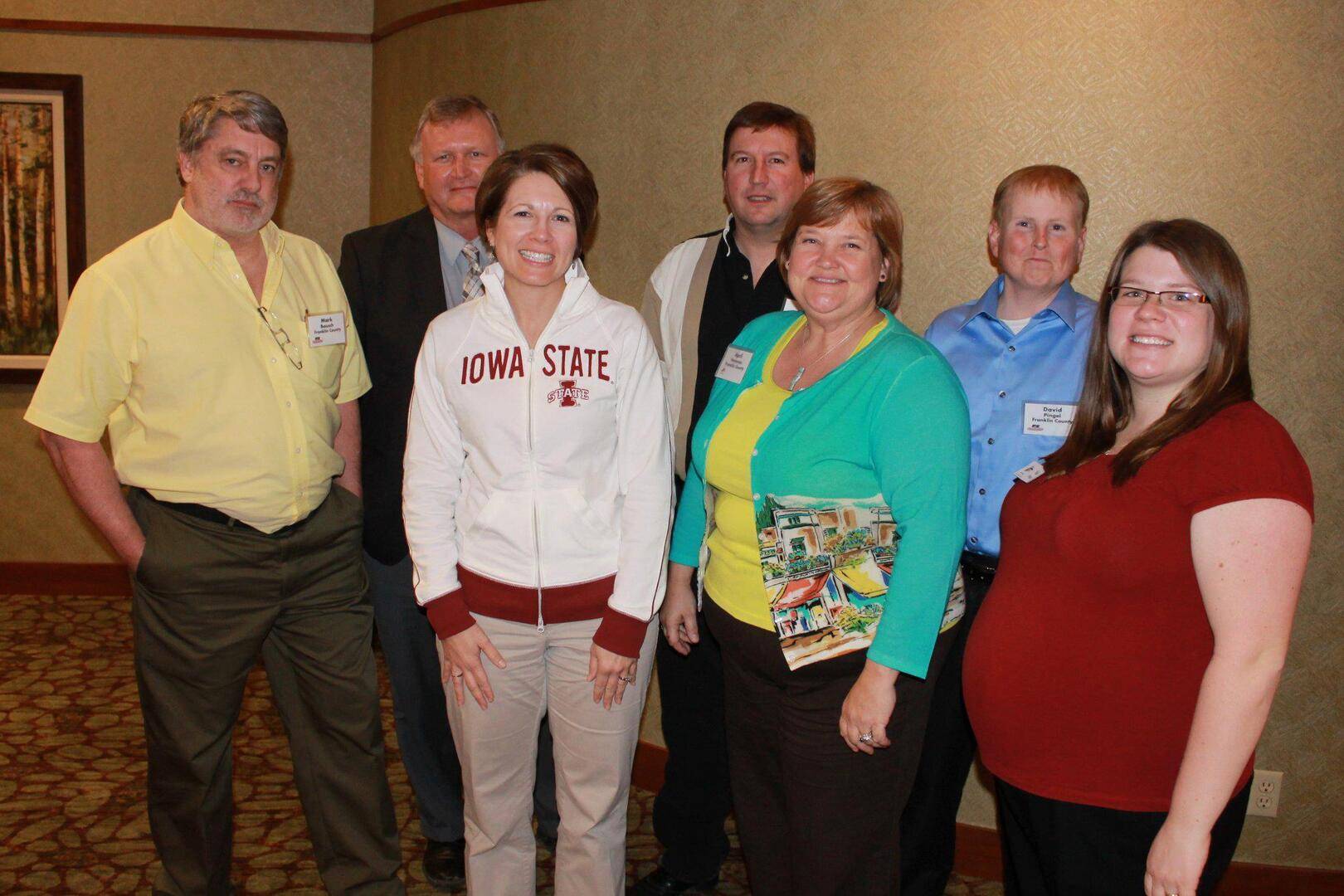
Franklin County was well represented at the Iowa Agriculture Leadership Forum, March 15-16, 2013, in Des Moines. Larry Sailer is back row, second from the left. From row, from left to right: Shannon Latham, April Hemmes and Val Plagge.
If you follow my posts, you know that winter is “meeting season” for Midwest farmers. Many of the meetings I attend are a two-hour drive from my farm, so I have plenty of windshield time – alone with my thoughts. I spent a lot of time (probably too much time!), analyzing what I’ve learned from these meetings and thinking about how I can apply this new knowledge to my operation. I also spend a lot of time in the winter months reading ag-related articles and blog posts.
Yesterday, Shannon Latham’s blog post about how members of the ag community define “technology” differently made me think about the stark contrast between two meetings I’ve recently attended. Midwest farm leaders gathered at both of these meetings, but their use of technology was totally different.
The AgChat Upper Midwest Regional Conference in February was all about technology, so it was “socially acceptable” for attendees to send Tweets and update their Facebook status throughout the conference. In fact, it was encouraged! Sponsors announced the hashtag (#ACFR13), and many speakers began their presentation by telling audience members their Twitter handle. Presentation topics ranged from how to set up a Twitter account to creating a fan page on Facebook for your farm, and even fine-tuning your blogging skills. As fellow Franklin County farmer Val Plagge says, “The Upper Midwest Regional Conference was set-up to empower farmers and ranchers to connect communities through social media platforms.” And that’s really what that did!
Then about two weeks ago I attended the Iowa Ag Leadership Forum, which was really a reunion for alumni of training programs from several groups including: the Iowa Farm Bureau Federation, Iowa Cattlemen’s Association, Iowa Corn Growers Association and Iowa Soybean Association. The one thing everyone in the room had in common was a desire to share what he/she knows about farming with folks who don’t understand it… or so I thought!
Erika Poppelreiter
I was proved wrong during a question and answer session led by Erika Poppelreiter (@poppel), a Kansas farmer and representative for the U.S. Farmers & Ranchers Alliance (@USFRA). Erika had just given a presentation about the USFRA’s The Food Dialogues: New York, where farmers, ranchers, industry experts, pundits and media tackled some of today’s toughest questions on biotechnology (GMOs), antibiotic use on farms and ranches, and how media and marketing influence “healthy” food choices.
It was then that an Iowa farmer stood up and asked Ericka, “Why should I give a damn about what customers think?” A brief moment of silence followed.
Most of us were a little slow to come up with the answer for that person, but Erika did respond with an example of what happened with caged layers and the impact that could on of the use of gestation crates. The end product is still pork (bacon), and it should be up to the producer to determine the best way for him to produce that pork.
If only I would’ve been quicker on my feet! I would’ve shared this quote with that farmer:
“We as agricultural producers are proud of feeding our world, but that doesn’t go far when the world doesn’t understand how we produce that food. We must participate in conversations with consumers at every opportunity. I am proud of the U.S. Farmers and Ranchers Alliance for starting these dialogues with both the pro and con sides represented. It’s the only way we can explain our story to others and not just ourselves.” – Barb Determan, a Sioux County Iowa farmer and pork advocate, who served on a panel at The Food Dialogues: New York
Barb Determan
Barb mentions that farmers need to share their stories with others besides like-minded individuals. While I thought farmers were pretty good about preaching to the choir, it appears our work is not done! Perhaps we need to fine-tune our message, so our fellow producers understand “why” it’s so important for us to share our stories with consumers.
I have given that farmer’s some thought since the Ag Leadership Forum. In an ideal world, his way of thinking would be great. It’s just not acceptable today because there are so many groups opposed to certain farming practices. There is no simple answer. We must take our message to the rest of the congregation if we want to continue to raise our products in a way that allows us to make a living, free from unnecessary rules and regulations.
“How do we share with consumers what we want them to know?” asked another attendee at the Ag Leaders Forum. I believe we need to take AgChat to the state level. Each state’s ag leaders much understand how to communicate, effectively, using today’s technology. For example, there were only 20 tweets total from the two-day Ag Leader Forum. I would guess (and this literally a guess because I can’t count them all) there were way more than 20 per hour coming out of the AgChat Convention!
Iowa Farmers lead the nation in production, yet they’re slow to adopt social media for advocacy.
Farmers and ranchers are always looking for a way to do something better. It is what we do! Technology has been used from the time early settlers learned from the natives the value of using fish to fertilize crops to farming with smartphones. It’s time for the masses to adopt communications technology. I’m not saying social media is the only way. Face-to-face visits go a long ways toward sharing and communicating, but social media really allows us to have a broader reach.
With more consumers curious about where their food comes from and how it’s raised, there is a greater need for more farmers to share their stories. If you’re a fellow farmer, I encourage you to share your story!
As a family-owned company, Latham Hi‑Tech Seeds has one major advantage over our competitors: We have the freedom to help our farmer-customers choose the traits and technologies that will work best for their given farming situations. That’s why we’re especially excited about Latham’s pipeline of soybean products!
Strategic alliances with the world’s leading technology providers means Latham is testing soybean products with three of the industry’s newest trait packages. Here’s a summary of the emerging soybean technologies that farmers in the Upper Midwest could access in the near future from Latham Hi‑Tech Seeds:
Enlist E3 – Developed and produced by Dow Agrosciences, Enlist E3 soybeans will be tolerant to new 2,4-D choline, glyphosate and glufosinate. Dow AgroSciences is working to introduce Enlist Duo™ herbicide with Colex-D™ Technology. Enlist Duo is a proprietary blend of new 2,4-D choline and glyphosate that will offer growers minimized potential for drift and near-zero volatility. We’re expecting the first E3 soybean products to hit the market for the 2014-2015 sales season.
The Balance Bean – This new soybean product from Bayer® has the working name of “FG72” and will be a double stack for resistance to isoxaflutole and glyphosate. Isoxaflutole is the active ingredient in Balance® Flexx and in Corvus® corn herbicides. Eventually this product will be stacked with Liberty®, making it a three-way stack.
Roundup Ready® Xtend Crop System – Monsanto continues to advance its stacked product featuring Genuity® Roundup Ready 2 Yield® technology with Dicamba resistance. Known as Xtend, this product will help extend the life of glyphosate. This technology appears to be slightly ahead of the other two now, depending on regulatory approvals.
We’re hopeful regulatory approval will be received in time for at least limited supplies to be planted in 2014. Although 2014 may seem like a distant future, the truth is, we’re working on our 2014 seed guide right now. Latham must grow seed beans a full season ahead to produce products that farmers will plant the following year.
Weed resistance is a growing problem – literally. Diversity of tactics is the key to consistent weed management and high crop yields. That’s why, at Latham Hi‑Tech Seeds, we couldn’t be more excited about the new traits that will soon be available to diversify modes of action and help farmers fight weed resistance!
Each year on March 22 the United Nations’ (UN) World Water Day is held to increase people’s awareness of water’s importance in environment, agriculture, health and trade.
Farmers are always aware of the crucial water plays in crop development, and after experiencing the 2012 Drought, we really don’t need to be reminded how a lack of water can impeded crop development. World Water Day, however, does provide us with a platform to share our story with others outside agriculture.
April Hemmes combining on her North Central Iowa farm
“My farm received a total of 5 inches of rain between May and October 2012. Normal annual rainfall is 23 inches, so we’re starting the 2013 growing season with a moisture shortfall,” said April Hemmes, who is speaking today in Washington, D.C., as part of a panel discussion sponsored by the Daugherty Water for Food Institute and the Global Harvest Initiative. Other panelists include: Dr. Cathie Woteki, USDA Under Secretary for Research, Education, and Economics; Mark Svoboda, National Drought Mitigation Center Climatologist, University of Nebraska-Lincoln; and Joel Lipsitch, John Deere Director of Business Integration and Strategy;
Soybean yields averaged 6 bushels per acre (bu/A) lower in 2012 for Hemmes, who has farmed for nearly 30 years just south of Hampton in Franklin County, Iowa. Her corn yields were reduced by 10 percent, or approximately a net loss of $70 per acre. When you consider that the average size of an Iowa farm is 333 acres, it’s feasible that each Iowa farm family lost between $11,000 and $23,000 of income due to the 2012 Drought!
“It scares me to think we’re going into the 2013 crop year with almost nothing for moisture,” says Hemmes. “Moisture is especially important to farmers in my area because we don’t irrigate. As much as I dislike late season snowfall, I’m thankful for it this year because now we will at least have topsoil moisture to get the crop planted. If we don’t receive adequate spring rains, however, young plants will suffer more quickly due to a lack of subsoil moisture.”
To help preserve soil moisture last fall, many experts were reminding famers to till less for more water. Seed selection is even more critical in dry conditions as genetics are the most determining factor in whether or not a corn hybrid can handle drought. While corn genetics have come a long way over the past decade and are much better at handling drought stress than ever, soybeans historically perform even better in dry weather.
Current weather patterns are likely to play a role in farmers who have yet to finalize their 2013 seed purchases. Trait packages will likely be especially important this growing season as the 2012 Drought might impact 2013 crops in regard to pressure from weeds, insects and plant disease. Once the seed is selected, and planters have been calibrated, Iowa State University Corn Specialist Roger Elmore says farmers must go “back to the basics” for seeding depth.
The proposed ban on Rice Krispies® in schools is just one more example of unrealistic rules being created by the Obama administration. Because Rice Krispies aren’t sugar coated, I had to do some digging to find out what makes them so disagreeable to rule makers. Here’s what I uncovered:
… the cereal’s first ingredient, refined rice, is neither a vegetable nor a whole grain. Items have to be one of those categories — or a fruit, dairy product or protein food or a combination that contains at least 1/4 cup of fruit or vegetables. If it’s not one of those, it can slip by if it contains at least 10% of the recommended daily value of calcium, potassium, vitamin D or fiber. But those nutrients have to be naturally occurring. Rice Krispies doesn’t meet that standard either because it’s fortified with vitamins and minerals… But Baked Lays would pass the test because potatoes are considered vegetables. Fried chips, however, wouldn’t because of their higher percentage of calories from fat.
So, “crisp rice” is neither a whole grain nor a vegetable. Even though Rice Krispies rates a 57 on the completeness score for nutrition – which I might add is pretty good for a breakfast cereal – new school rules would make Baked Lays a better choice than Rice Krispies for breakfast.
It’s also interesting to note that it will take an additional 926,935 hours per year for local and state administrators to comply with the proposed new school lunch rules. That’s more than 100 years’ of time! If these rules get implemented, adding this many more hours to payroll would create even more pressure on belts that have been tightened by budget cuts.
This leads me to the subject that I really want to dig into, which is the federal budget and Sequestration. My mind is filled with questions: Where did the USDA get money to research and then propose all these school lunch rules or was a study even conducted? How were these proposed changed decided and by whom! From the facts I found through a quick Internet search on “school lunch rules,” and “meat inspector furlough,” I’m also questioning whether USDA officials have even heard of a search engine!
U.S. Secretary of Agriculture Tom Vilsack was quizzed last week by U.S. congressmen. They asked why he would furlough certain needed workers but not others. Sec. Vilsack answered that his hands are tied, and he claims the law was written in such a way to make it as drastic as possible. No leeway? Really. I’m not believing it! If that were the case, Congressmen wouldn’t be questioning Vilsack’s decisions.
Potentially shutting down the meat industry and threating a meat shortages this summer is certainly drastic! Yet, there are all kinds of other USDA program that seem to be unaffected by sequestration.
In AgriNews on Jan. 23, 2013, Sec. Vilsack talked about the USDA Rural Development’s investments in job creation, businesses, infrastructure and housing in rural communities. This one arm of the USDA has a portfolio of $176 billion dollars in loans and grants. Most likely, this budget includes some unessential programs that could be eliminated and a few other programs that could be downsized, so the USDA could cut spending without shutting down the meat industry or causing food safety concerns.
The Inspectors General, a Washington-based watchdog group, points out there is an easy $67 billion to be saved in government spending. This $67 billion in “rampant waste, fraud and abuse” would cover most of the $85 billion being cut by the sequestration, which is making extremely painful cuts. Even this cut is such a small part of the yearly spending, that it does not even make a dent in the deficit.
“Constituents give truth to what lobbyists are working on and saying,” said Dale Moore, Executive Director of Public Policy for the American Farm Bureau. Together, we can make a difference!
As moms, the worldly pressures to feed ourselves and our families the healthiest, most nutritious meals seem to be everywhere: Meals should be homemade. Ingredients should be local. Or is it natural? Organic? These food “buzz” terms may confuse us.
That’s why I have chosen to rid myself of the food guilt mantra and adopted a food choice mantra. Food choice gives me the ability to buy at the grocery store while having a garden. Digging in the dirt clears my mind while teaching our kids a little about raising food, but I don’t want to go back to when my great-great grandma had to produce food in her garden in harsh weather conditions to feed her seven children. Unlike my great-great grandmother, if I don’t get the canning or freezing done, I can go to my local grocery store where a plethora of luscious food awaits.
The food in our grocery store is seasonal. It’s not always local, as in grown in my community or even in my state. But “local” is relative. We will never grow strawberries in the winter in North Dakota, and I don’t know any American banana farmers. But supporting different types of farmers gives us food choices. Food choices mean I can buy any food that fits the latest trend word, but I don’t have to.
Through ridding myself of mommy food guilt, I have developed guidelines for my food choices. Not rules, only guidelines, as I cannot always follow them. I support local options first. But when I need a mango, I buy it. I purchase the mango at my local grocery store and know supporting a locally-owned business impacts my small town. I also buy some local meat from state inspected meat processors.
Where I am located, deep in the prairies of North Dakota, supporting food choice means helping support 32,000 farm and ranch families. Agriculture is North Dakota’s number one industry, employing roughly 25% of our state. North Dakota produces 46 different crops and livestock from honey to canola to beef to potatoes; North Dakota leads the nation in the production of 14 of the crops grown.
North Dakota is the number one producer of dry edible beans. Throw a few cans of beans into chili. It’s local. It’s nutritious. It’s a fast, easy solution to a family meal. Plus, you are supporting North Dakota farmers. Not only are you supporting local farmers, you are supporting a local grocery store and feeding your family. What a gift we have of food grown and raised in our own backyard!
The Upper Midwest is the foundation of food choices. That’s why I am not advocating for any particular food choice. I am advocating for choice. Period. Food choice is a beautiful freedom and luxury we have and one that billions globally never see. Rid yourself of mommy food guilt and relish in the choices you have to give you and your family the most nutritious, healthy and often easy food choices!
Copyright Erin Ehnle/ Keeping it Real: Through the Lens of a Farm Girl
Two weeks ago, I stayed with my son Corey and his kids in Pleasant Hill because they live close to Des Moines where I was attending meetings. I had barely settled into his home when Corey turned to me and said, “You have to do something about the school lunches!”
The U.S. Department of Agriculture backed the Healthy, Hunger-Free Kids Act of 2010 to “make real reforms to the school lunch and breakfast programs by improving the critical nutrition and hunger safety net for millions of children.” Unintended consequences resulted, however. Many school children were starving by the end of the school day, and schools nationwide were burdened with $75 million in implementation costs.
Public outcry led to the USDA relaxing the rules in December, but the federal government still regulates how our kids are fed. Kids in our schools are about as diverse as farmers! Some kids have higher metabolism rates. Other kids are very active in sports. There are differences between kids and their nutritional needs: you have skinny kids, muscular kids, tall kids, short kids – kind of like snowflakes, no two kids are alike. So how can a one-size-fits-all school lunch program be right for all of our kids?
The Administration needs to remember that most kids eat one third of their calories in school. Quite a few kids are eating two thirds of their calories in school. And if we were entirely honest, we’d have to admit that some kids consume all of their daily calories within the walls of the school building because parents no longer bear all the responsibility for providing for their children.
(Photo courtesy of Kelsie Jenkins – Featured on Wag ‘n Tales blog)
How did it get to this point? School programs have evolved. As nuclear families and religion went by the wayside, schools began to take on additional responsibilities. We have come to depend on our schools to not only teach our kids but to feed them, as well. With this trend in mind, I believe more emphasis needs to be put on teaching nutrition rather than shoving certain menu items down kids’ throats (pun intended). All kids are different, so what they eat needs to be different! It’s just common sense.
The good news is that parents and grandparents have another opportunity to help restore common sense to the school lunch program. The Sensible School Lunch Act, introduced on March 1, would ensurethat school lunch regulations are both effective and reasonable. It would permanently lift the cap on proteins and grains in school lunches while continuing to promote increased amounts of fruits and vegetables.
This bill was introduced by Sen. John Hoeven, R-N.D., and co-sponsored by a bipartisan group of senators including: Mark Pryor, D-Ark.; Jerry Moran, R-Kan.; James Inhofe, R-Okla.; John Thune, R-S.D., Dan Coats, R-Ind.; Pat Roberts, R-Kan.; Tim Johnson, D-S.D.; and Mary Landrieu, D-La. A companion bill is expected to be introduced soon in. the U.S. House of Representatives.
Jason Aldean’s hit single, “1994,” is prompting country fans like me to reminisce about the year when musicians like Billy Ray Cyrus made a fashion statement with a mullet, Justin Bieber was born, the OJ Simpson trial was headline news and a gallon of gas cost $1.09. Also during that time, Joe Diffie was a platinum recording artist.
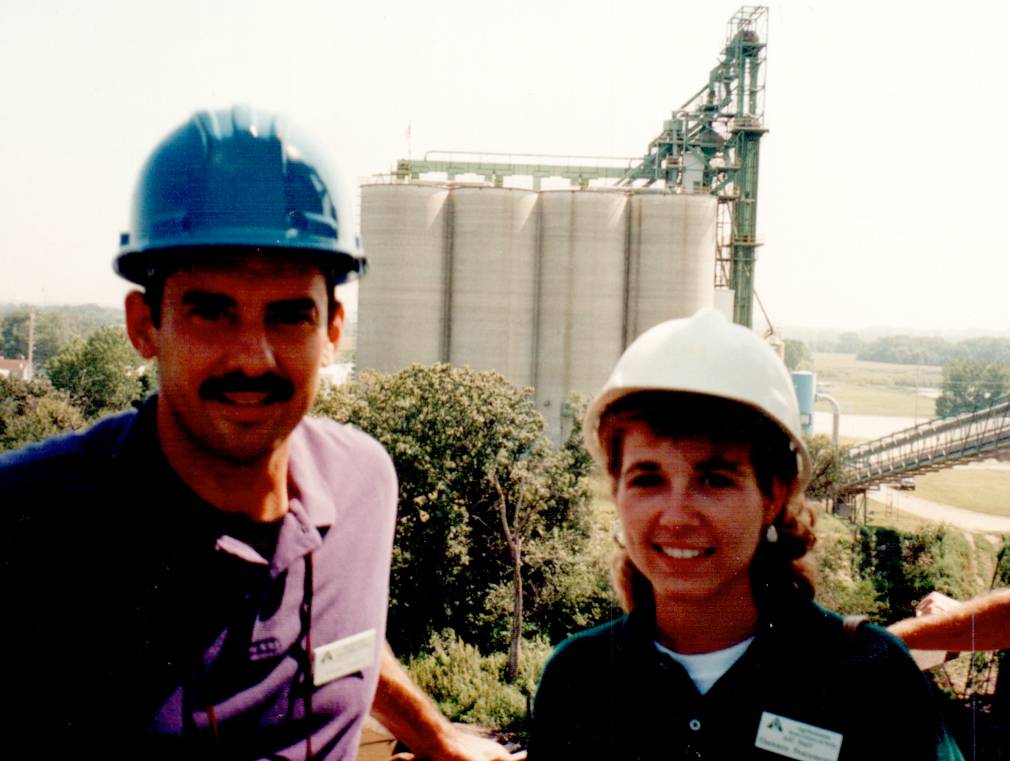
Shannon was serving as a lobbyist for the Agribusiness Association of Iowa. One highlight that year was coordinating barge tours to help legislators understand how altering water flows would impact getting farmers’ crop to market.
Country music stars like Luke Bryan, Keith Urban and Dierks Bently have joined in the fun by posting photos of themselves, circa 1994. Although these musicians are in a class of their own, I thought it would be fun to share a few photos from the Latham family album today on TheFieldPosition.com.
I also wanted to highlight a few historical events that greatly shaped the agricultural community including the seed industry:
Amendments to the Plant Variety Protection Act strengthened intellectual property rights, which provided more protection for companies to develop new seed varieties.
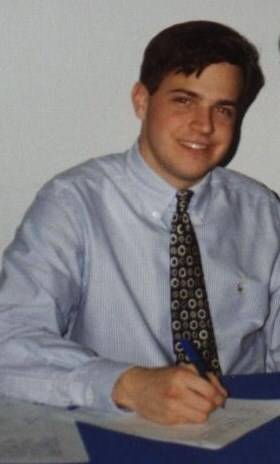
In 1994, Chris Latham was a junior at Drake University in Des Moines.
Fast forward nearly two decades, farming practices are still coming under scrutiny and some people are still debating the merits of biotech seeds. But you can’t dispute the fact that today’s farmers grow more food, using barely half the energy and fewer resources for every bushel of grain, gallon of milk, egg and pound of meat.
No-till acreage for corn in 2010 was 30% and as more acres in the United States are planted to corn than any other crop, more corn is in no-till production than any other crop.
No-till acreage in the U.S. has increased for corn, cotton, rice and soybeans by about 1.5% per year since 2000.
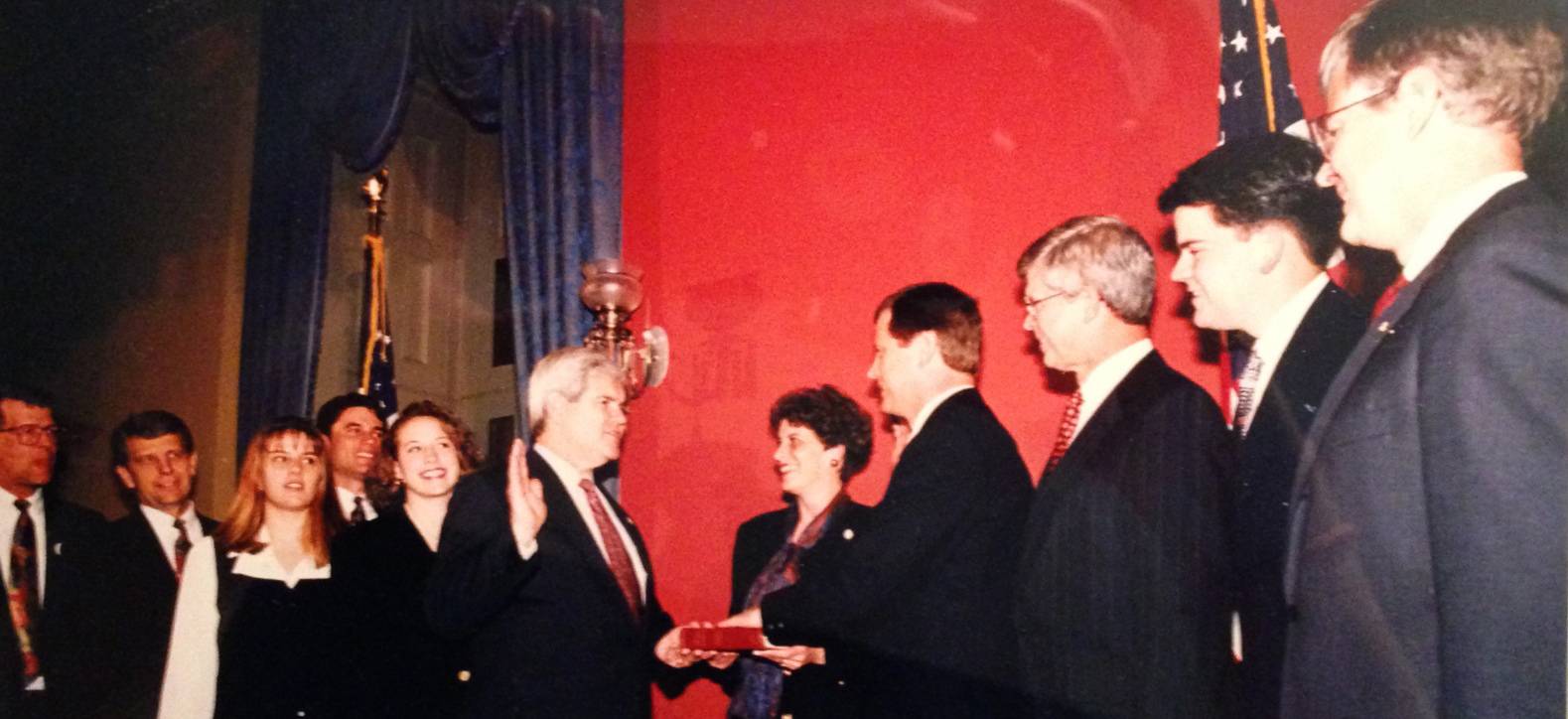
The year 1994 is significant to John Latham because that’s the year Tom Latham was elected as a U.S. Congressman. Tom’s absence from day-to-day operations with the family’s seed business created an opportunity for John to come onboard as a salesman. (John is pictured second from the right.)
Your Story May Seem Ordinary, but to Someone It’s Extraordinary
Recently, my Latham Hi‑Tech Seeds marketing colleagues and I traveled to Rochester, Minnesota, for the first ever AgChat Upper Midwest Regional Conference. The goal of the conference was to teach participating farmers and industry contributors how to communicate with consumers by using social media platforms to tell our agriculture stories.
I have to admit, when I signed up for this conference, I was wearing my “seed company hat.” I wasn’t thinking about how I could tell an ag story from the voice of SkyView Farms, which my husband and I own. We plant crops and raise cows, and honestly, I couldn’t see any of our friends or family members wanting to read about that since they’re also engaged in farming. And then I had a light bulb moment…
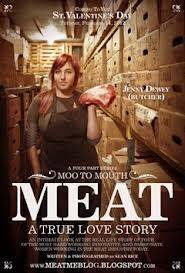
Jenny Dewey
“Your story may seem ordinary to you, but it’s extraordinary to someone else,” said conference speaker Jenny Dewey, whose family operates the Chico Locker & Sausage Co. She pointed out that day-to-day operations are interesting to the majority of Americans who don’t experience it daily. It’s so important for those of us who understand food and fiber production to tell our stories.
“Social media fires” break out often when it comes to hot agricultural issues, said keynote speaker Katie Pinke (pronounced ‘pink-e’), author of the Pinke Post. As she spoke these words, my mind was immediately filled of thoughts about biotech crops and antibiotic use in livestock production.
Katie Pinke
Katie said that when it comes to ag issues, we all must work together to put these fires out with “social media water.” Uh… what? Simply put, the more voices there are telling the truth about agriculture, the better the chances of debunking the misconception.
Think of it this way… When you’re skeptical about an issue, you Google it, right? If a person Googles a topic or key phrase related to farming or agriculture and the only results are from people writing mistruths, it gives more credibility to that side of the story. However, if people are blogging, posting and pinning true stories, then consumers have more sources for correct information that will put their minds at ease on the issue.
Now that you understand why it’s so important to make your voice heard, the big question lingers… where does one start?
The first step is to listen. What is your audience talking about? Where do they spend their time online? What are they asking about? This will fuel your topics and can also set a tone for how to respond.
Pick a platform. How do you want to communicate? This could be a blog, Facebook, Twitter, YouTube, Pinterest, the list goes on. We all love TheFieldPosition, so let’s use a blog as an example. There are several blog hosting sites out there with pros and cons. It just comes down to personal preference and will take practice to learn the ins and outs. Here’s a good article on options.
Create content. Katie Pinke advised us to think of our content like pages in a magazine. Topics may vary but should focus on a common theme, so your audience knows what to expect.
As you write your stories, be leery of industry jargon or how your story is perceived by consumers. Kristie Swenson of FindOurCommonGround.com shared some eye opening facts from the most recent U.S. Farmers and Ranchers Alliance Consumer Perception study. One example from the study is the word “abundant”. In agriculture, we might say, “We need to strive to provide an abundant source of food for our growing population.” This is intended to convey that we will soon have more people on the planet than we can feed, so we must be proactive. The average consumer thinks, “We have an obesity problem, we have enough food already.” Two totally different perceptions of one sentence and there are more like it in the study.
Be conversational and don’t be afraid to take a stand on issues. Do you have an opinion on the changes to school lunch programs or use of antibiotics on farms? Blog about how you handle it at home or on your farm. It’s a non-defensive way to share an opinion on an issue in a relatable way.
Reach out. Find 20 non-ag blogs and comment on those blogs. This will help draw people “beyond the choir” to hear about your positive agriculture messages. Find a few more blogs that are related to ag topics you have in common and get involved on them. This can help build your group of “Ag Ninjas” that can help reinforce your content through comments and sharing.
Agvocating overall is a very simple process. It’s taking your day-to-day and putting it “out there” for people to learn. It can be as simple as writing a story about your first newborn calf of the spring or as bold as to stand up to proposed changes in legislature. The important take-home message is that consumers need our help understanding the “how and why” of food production. Tell your farm story so the news reporters don’t tell it for you! As KatiePinke says, her mom blogs about their family farm story so Katie Couric doesn’t!
It’s been a week filled with highs and lows, and I’m not talking about the commodity markets! I’ve been experiencing a roller coaster of emotions, and the “heartline roll” began with continued talks about the Sequester.
After reading about nine U.S. senators asking USDA Secretary Tom Vilsack to explain therationale for furloughing meat and poultry inspectors, I had all intentions of writing a follow up piece to my post last Tuesday. I wanted to hammer on all the essential programs being cut. There are many non-essential programs that could’ve been cut, but then again, those wouldn’t have gained the politicos nearly as much attention. I also wanted to shed some light on new programs in the works while everyone’s attention is diverted by budget cuts.
Saturday was another good day. Grandson Devin came up from Iowa State to help me with farm work. Devin moved snow while I did chores, and then we put together an old pool table my grandfather gave me years ago.
The next two days were emotional. We had planned to attend church on Sunday morning, but instead, I ended up driving Janice to the emergency room. She’s still in the hospital, but thankfully she is getting better. Then Monday morning I received word that my Aunt Cleva had passed away. When I was in college, I lived with Cleva and her husband, Carl. I helped them farm because Carl had had back surgery the previous winter, and Cleva treated me like the son she had never had. Great memories!
After all the emotion of the last few days, ups and downs, I received this message on my Facebook page:
You are an amazing Iowan. I appreciate how you represent rural Iowa and farmers. I find your articles interesting. Thanks for putting farmers in a positive light. Thanks for your hard work, your passion for agriculture and for being a great friend.
Thanks, Tammy Sneller, for making my day! You gave my spirits a big lift just when I needed it.
In my circles of agriculture and social media, we don’t often say “thank you” or “nice job.” I know I should thank more people for having conversations with those who do not understand what farming and ranching is about, but perhaps we take one another for granted. Thank you, Tammy, for reminding me about the things I take for granted every day! And to all my fellow advocates out there, thank you for also putting farmers in a positive light!