Latham Hi-Tech Seeds

(641) 692-3258

  • Home
  • Products
    • Corn
    • Soybeans
    • Alfalfa
    • Corn Silage
    • Seed Guide
  • Performance
  • Find a Rep
  • Media
    • Blog
    • News
    • Videos
    • Podcasts
    • TECHTalk
  • About Us
    • Company History
    • Our Mission
    • Careers
    • Become a Rep
    • Sowing Seeds of Hope
  • Contact Us
  • Latham Hi‑Tech Seeds

    “Continual Improvement” is Our Mantra

    Planter2013

    planter2013Companies evolve and business practices change, but the one thing that stands the test of time is Latham’s commitment to continual improvement. Willard Latham started cleaning oats for other area farmers and started providing certified oat seed to meet customer needs. He later added soybean seed. In recent years, we’ve extended our product lines to offer a wider range of alfalfa, corn and soybean products.

    When soybeans became the main focus of Latham’s business, greater emphasis was placed on breeding and developing new cultivars. This was done in cooperation with various genetic suppliers so our research testing program would incorporate Latham’s own genetics and germplasm as well as other providers. Tremendous resources were made available, so Latham’s research program could test thousands of new soybeans annually.  Our goal is to bring the best possible genetics to our customers across our marketing area no matter where the genetics originated.

    Techniques were developed, and trials were arranged in Alexander, Iowa, and at out-lying locations. Personnel was trained and when computers became available, they were quickly integrated into the research system. While our basic philosophy has not changed, there have been some necessary modifications over the years to our research system including:

    • Soybean Breeding and Testing: All cultivar crossing used to be done at the Latham Research Farm near Alexander. Because of the many advancements in genome testing and the advent of gene-marker technologies, this work has been outsourced to companies with advanced equipment and expertise.
    • Preliminary Trials: Once new lines make it through observation trials, they’re tested in either 2- or 4-row replicated plots. Entries in these trials are limited to products from each specific breeder and advancement out of these trials is determined by yield. Also during this time, maturities and plant characteristics are noted.
    • Secondary Trials: The next step after Preliminary Trials is Secondary Trails. These plots are mostly limited to products by each specific breeder but will also include some well-known checks. Advancement is determined by yield plus plant characteristics such as disease tolerances, maturity, Soybean Cyst Nematode (SCN) and Iron Deficiency Chlorosis (IDC) tolerance and plant types.
    • Latham Elite Trials: While all of the above practices are common to many seed companies, Elite Trials are unique to Latham. We take the very best products from our various genetic suppliers (including our own) and tests them against each other and against common competitive checks. Products in these trials are tested for yield and other characteristics similar to the secondary trials with an emphasis on overall yield within Latham’s marketing region.
    • Super Strip Plots: These side-by-side plots are managed by Latham RSM’s and the Research Team. Planted and harvested by farmer cooperators, Super Strips are another way of testing products in varying environments. Groups are separated by maturity and always include products we’re currently marketing, products that will be marketed the following year plus experimentals that have “graduated” from the Latham Elite trials.

    On-farm research conducted in cooperation with our dealers and customers continues to play an important role in our product selection. Latham’s Product Team, comprised of members who live in the areas where these products are being tested, has been working diligently since harvest data became available to analyze and carefully select products. We recently finalized our 2015 product lineup because, as you plant your 2014 crop, we’re growing your 2015 seed. Like you, we’re hoping for warmer and drier soils in the short-term forecast!
    Webspec Admin

    April 17, 2014
    Agriculture, General, Industry News
  • Latham Hi‑Tech Seeds

    This Land is Your Land… or Is It?

    5531131 m

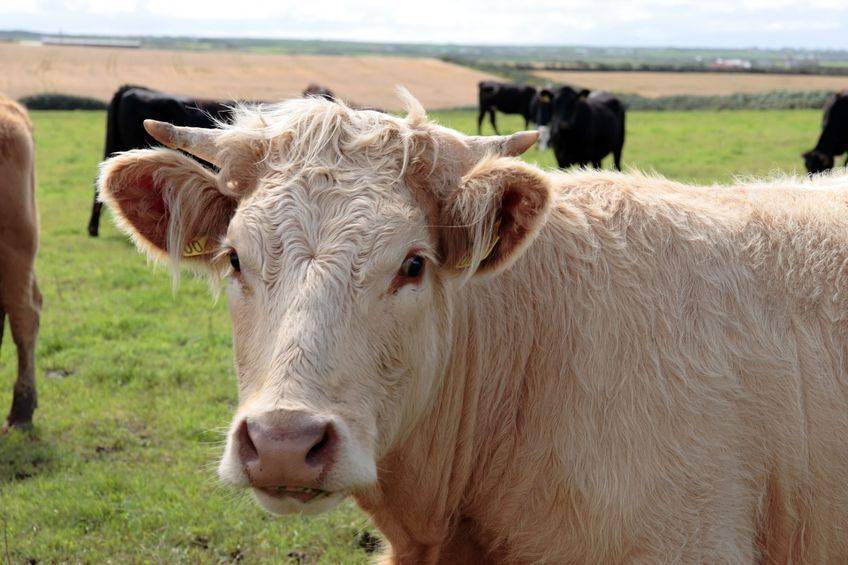
    5531131_mThere has been a Wild West standoff in Nevada over the rights to graze cattle on public lands between a rancher named Cliven Bundy and the Bureau of Land Management (BLM).

    Last week I posted a comment on my Facebook page, likening this situation to an old western movie and asked what characters John Wayne and Dick Martin would play. When I made that comment, I had no idea how serious the situation was! Fortunately, over the weekend, a standoff ended peacefully when the BLM stood down and released Bundy’s cattle.

    The mainstream press has been very quiet about this dispute, so I’ll attempt to summarize the situation. (It’s really pretty long and involved.)  The Bundy family has been grazing their cattle herds for more than a century in Nevada. Under the Desert Land Act passed in 1877 by the U.S. Congress, the Bundy family acquired the rights to land in Nevada.

    The Desert Land Act was intended to promote the development of arid and semi-arid lands. The Act allowed anyone to purchase 640 acres of land for 25 cents per acre if the land was irrigated within three years of filing. A rancher could receive title to the land upon proof of compliance with the law and payment of one additional dollar per acre.

    Over the years, ranchers passed down what was supposed to be “rights in perpetuity.” They paid a fee when they acquired the ground, and we’re responsible for improvements such as water and road infrastructure. One definition I read of perpetuity is “eternity.”

    Bottom line: the Bundy case is really a dispute over property rights. Bundy’s defense is that the federal government doesn’t own the land in question and therefore has no authority to regulate grazing. He doesn’t pay federal grazing fees, like other ranchers do, because he says the government is supposed to be charging him for managing the land. In reality, the government is trying to manage him out of business – and he doesn’t believe he should pay for that.

    While Bundy’s viewpoint may seem extreme at first, I believe it merits a closer look. Here’s why… The BLM now controls of much of the western half of this country. In the government’s broad wisdom, it limits the number of cattle grazing a certain amount of acres under the auspices of saving the desert tortoise. Yet, there is no threat that a cow will eat a tortoise.

    Cattle graze on grass, but there is no threat the cattle will destroy the tortoise environment. On the contrary, there is evidence of a symbiotic relationship. Tortoise populations increase where cattle are grazing because the tortoise feasts on cow pies. Cow manure is loaded with undigested nutrients, proteins, and minerals.

    By eating cow dung, a tortoise consumes far more calories and proteins than grazing on its own. I’m no expert on tortoise diets, so I’ll let you do your own research. There are many myths and half-truths being spread around the Internet that I’ll let you draw your own conclusions.  Some reports say the desert has made such a comeback in some areas that the government is euthanizing them to control the population growth.

    Regardless of what’s happening with tortoise populations, I do know that government regulations impede business including farming and ranching. The standoff that unfolded in Nevada late last week cost taxpayers millions of dollars, plus caused stress to a rancher’s family and his stock. Between Saturday and Wednesday, CNN reported that contracted wranglers impounded a total of 352 cattle out of 900 grazing in the area. Reports say these cattle were spread over 600,000 acres, with at least some of the cows with calves.

    Horses, helicopters, four wheel drive vehicles, ATVs and even backhoes were brought in for the roundup. Militia groups gathered. Verbal confrontations occurred between the Bundy family and Federal officers. Pictures and a video went viral that shows a lady, who says she’s a cancer survivor, being tased with attack dogs at the ready.

    The story even gets bigger with reported behind-the-scene deals by U.S. Senators. Several reports suggest Senator Reid was making a sweet heart deal with a Chinese company to put a solar panel farm on this land. Others report the Senator is working on a deal to provide water to Las Vegas. Water is a big deal in arid regions as Will Rogers once said:

    “They have been hunting water in the West much longer than they have gold. If a wonderful spring come out of a mountainside, men left gold, silver and copper mines to come and grab that spring. Water ain’t gold in the West, water is diamonds and platinum.”

    Bundy vs. the BLM could be a precedent-setting case. One rancher stood up for his convictions for 20 years because he wanted to make a difference to regulations impacting his livelihood. What difference can you make in your own backyard?

    Larry Sailer, Musings of a Pig Farmer

    April 15, 2014
    Agriculture, General, Industry News
  • Latham Hi‑Tech Seeds

    Supporting Safe & Accurate Food Labeling

    Whitehouseblossoms
    The weather in D.C. last week was a beautiful sunny and 74 degrees. The cherry blossoms were in full bloom and, fortunately, I was able to get take a few pictures during our walk to Capitol Hill.
    The weather in D.C. last week was a beautiful sunny and 74 degrees. The cherry blossoms were in full bloom and, fortunately, I was able to get take a few pictures during our walk to Capitol Hill.

    Last week about 20 of my industry colleagues and I, who serve on the American Seed Trade Association (ASTA) Executive Committee, met for three intense days in Washington D.C.  Each spring we meet to discuss issues and lobby for or against legislative bills that impact our industry and our livelihoods.

    One of the issues we discussed with members of Congress is the Safe and Accurate Food Labeling Act. On April 9, a bi-partisan group of legislators introduced this piece of legislation that would ensure accurate and consistent labeling of foods made with GM ingredients and formalize FDA’s safety review of new biotech traits.

    What I like most about the Safe and Accurate Food Labeling Act is that it would provide consistent reporting nationwide and help restore some common sense to food labeling. The federal legislation would provide consumers with accurate, consistent information about their food without implying that GM ingredients are less nutritious or less safe.

    We support the Safe and Accurate Food Labeling Act because it:

    • Eliminates confusion. The bill addresses the confusion and uncertainty that would result if each state in the union passed its own GMO food labeling laws. Just imagine the problems this could cause for food companies and restaurants doing business in multiple states!
    • Informs consumers. The bill helps consumers make sense of GM labeling claims by asking the FDA to establish federal standards for companies that want to voluntarily label their product regarding the absence-of or presence-of GMO food ingredients. This will aid consumers in understanding food choices when they shop.
    • Provides consistency:  The bill requires FDA to define the term “natural” for use on food and beverage products.
    • Further advances food safety:  The bill mandates that any company introducing GM traits work extensively with FDA to ensure an extensive safety review is completed before the trait is commercialized, which is standard industry practice today.

    We hope you’ll join us in support the Safe and Accurate Food Labeling Act. Send a letter to the editor of your local paper and set the record straight on GMOs and the Safe and Accurate Food Labeling Act. Learn more about this legislation from the Coalition for Safe Affordable Food.

    John Latham, President

    April 14, 2014
    Agriculture, General, Industry News
  • Latham Hi‑Tech Seeds

    Connect Farming to Food in the Classroom

    PorkFactoid
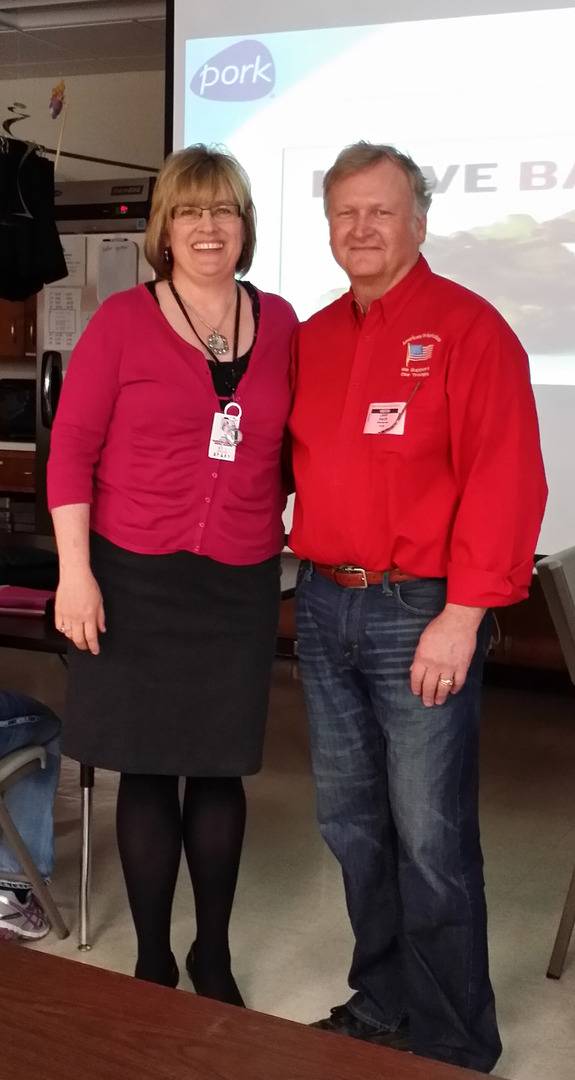
    Larry and Mrs. Hoegh
    Larry and Mrs. Hoegh

    Last week I had the pleasure of serving as a guest teacher for one day in the Hampton-Dumont High School. It’s been 44 years since I graduated from Hampton, which wasn’t part of a consolidated school system at that time. While many changes have occurred over the years, I found the students to be engaging and interested in the facts I shared with them.

    I certainly enjoyed my time “at the head of the class,” teaching two of Jane Hoegh’s Food and Nutrition classes and had three of Sara DeBour’s Vo Ag classes as part of the National Pork Board’s Operation Main Street program. I’ve given about 50 presentations to civic groups as part of this group, but last week was the first time I spoke to young students in a classroom setting. In fact, I spoke to 95 kids in just one day!

    Although we live in a rural county, many kids in that classroom had never visited a farm. I gave them a virtual tour by showing videos and explaining how we’ve improved our pig operations from the time I started farming 50 years ago. We have become much more efficient in producing pigs. We use much less ground and water per pig, and we have changed the pork we produce to be much healthier.

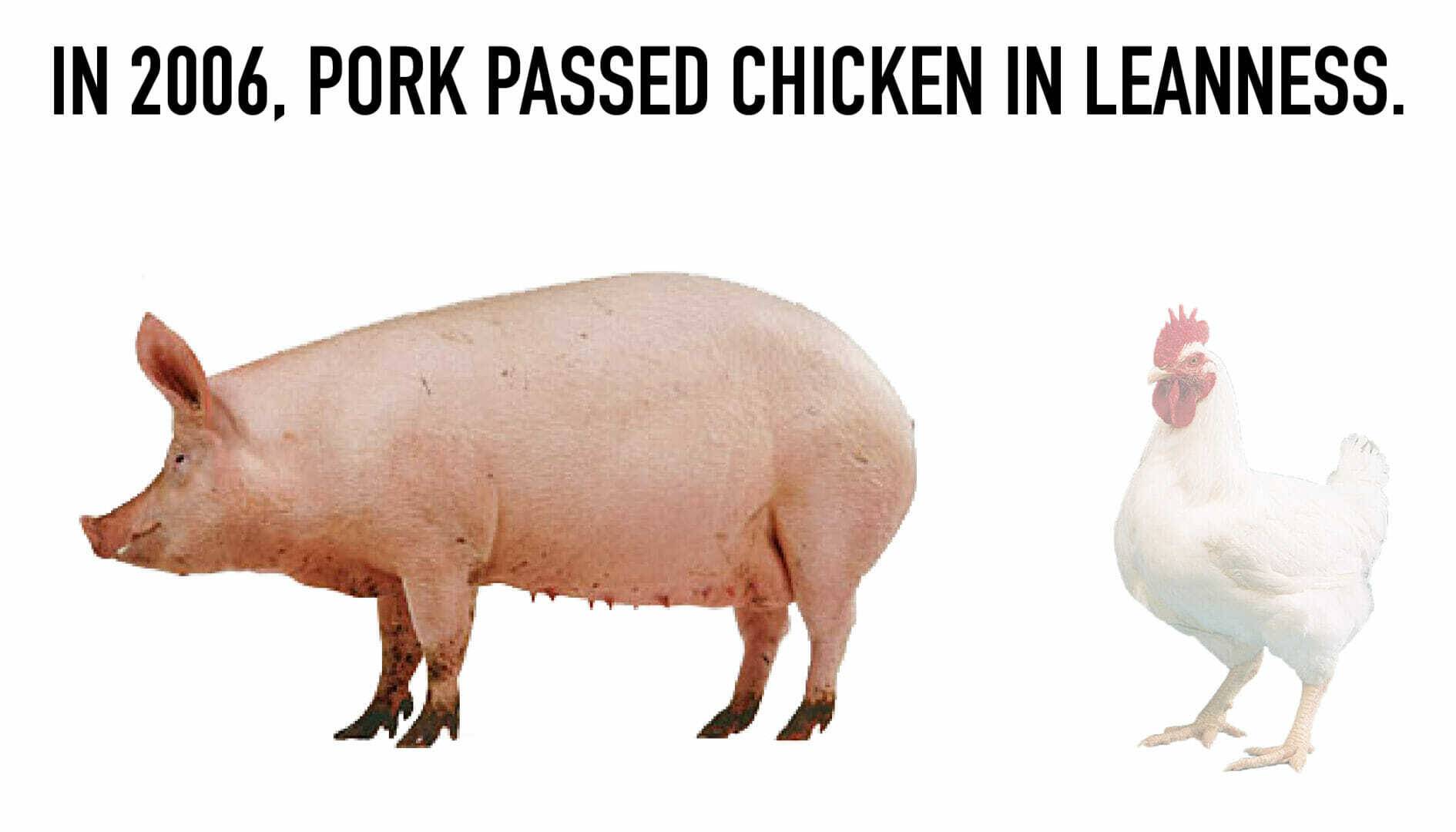
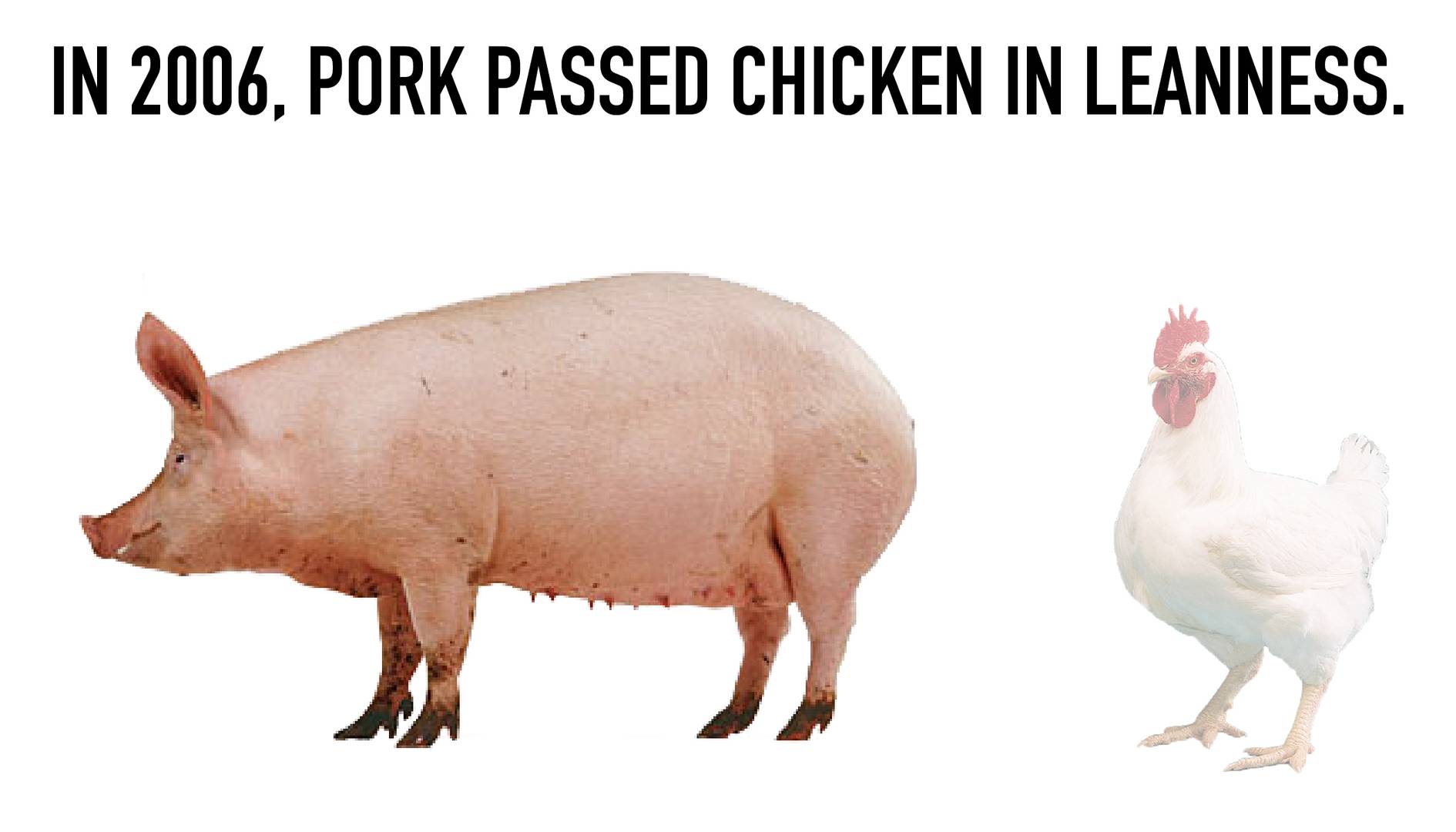
    The food classes learned how many nutrients are in pork, making it a very nutritious food. Easy to prepare and very versatile. In 2006, pork passed chicken in leanness.

    PorkFactoidIn both classes, I shared that there are 7 billion (with a “b”) people in the world today. Half of those seven billion live on less than $2 dollars per day. Then we talked about what it’s going to take to grow enough food – on the same amount of ground we have now – as the population gains another 2.3 billion people by 2050. U.S. farmers will need to grow 100% more food by 2050 because these people will want to eat better as they acquire better incomes. (Click here to watch a short video explaining this.)

    Specifically in the Vo Ag classes, I went more into detail about how the hog buildings work.  I explained the We CareTM initiative and how pig farmers work hard to do the right things for our pigs every day. We talked about how pork producers use medicines according to our veterinary recommendations, making sure all withdrawal times are met. Antibiotics leave the pigs bodies just like they do in humans, so there is no residue in the meat at the time of market.

    Mrs. Sara DeBour talks with her Vo Ag class following Larry’s presentation
    Mrs. Sara DeBour talks with her Vo Ag class following Larry’s presentation

    Antibiotics are used to keeps our pigs healthy. We have other precautions in place, such as posted warning signs, to help prevent diseases from spreading through our herds. I explained to the students that these signs aren’t posted to hide anything. Instead, signs like “STOP Authorized Personnel Only Beyond This Point” are in place to protect pigs from disease. We had a good discussion on how cleanliness is key to animal health. I explained that pigs are raised on different sites as they grow to break the disease cycle, and I shared photos of how my barns are cleaned and sanitized before a new group of pigs arrive.

    From the photos I shared of my hog barns, these students saw all of the technology involved to regulate temperatures and regulate fans. Kids understand technology since they’re growing up in the age of iPads, iPods, and things I can’t even name. Yes, today’s kids understand new ways to raise pigs!

    I had a great time being “back” in school. I’m hopeful these kids will explain to their parents what I do every day and why I do it! I also hope they’ll be able to shop the grocery store and buy food for themselves with confidence.

    Larry Sailer, Musings of a Pig Farmer

    April 8, 2014
    Agriculture, General, Industry News
  • Latham Hi‑Tech Seeds

    5 New Ways to “Feed Your Curiosity” About Food and Farming

    JMJ Latham Seeds 18

    JMJ_Latham_Seeds-9Finding unbiased information about food and farming is, at times, a quest. Instead of leaving Iowans feeling like they’re lost on a road trip without a compass, the Iowa Food & Family Project and trusted blogger Kristin Porter (aka “Iowa Girl Eats”) are taking people on a journey to feed their curiosity.

    “Join My Journey” started last year when Kristin visited several Iowa farms, meeting the families who grow the products she features on her popular blog. This season, Kristin is bringing those experiences along with her to new locations including restaurants, grocery stores and the “kitchen table.”

    Recently, I had the opportunity to cook up a storm with Kristin in my own kitchen where she showed me how easy it is to cook with tofu. (Confession time… I’m a meat and potatoes kind of girl, whose parents and grandparents took great pride in raising their own meat and potatoes for our dinner table. I wasn’t too keen on trying on tofu. Since I married into a family whose primary business was raising soybeans – even some food grade beans for the Japanese market – I decided it was time to give it a try.)

    JMJ_Latham_Seeds-18Kristin’s visit forced me to literally eat my words. Why? Because I often say to my kids, “It’s good to try new things.” I couldn’t expect them to eat something I wouldn’t eat myself, right? Fortunately, I was pleasantly surprised when I took my first bite of Tofu and Vegetable Stir Fry. It was like taking my taste buds on spring break after a long winter of feasting on comfort foods.

    Cooking with Kristin was more fun than a person should have on a work day! Click on this link to see how colorful and fresh the ingredients were that we used. Imagine hearing them sizzle in the wok. It all smelled so tantalizing and tasted even better. Truly, this meal was a journey for my five senses.

    Like me and Kristin, many moms and food purchasers are on a journey to gain confidence in the safety and quality of the food they provide for their family. Greater confidence comes from knowing how and why foods are grown. To help feed that curiosity, Kristin is working with farm families, food safety experts and chefs to take a closer look at actual food products, ranging from tofu to tenderloins.

    IFFFeed your curiosity! Here are the top five ways you can enjoy the journey:

    1. Follow along at iowafoodandfamily.com.  Each month Iowa Girl Eats and several guest bloggers will document their adventures with new stories, voices and info nuggets each month.
    2. Face(book) the facts. Track the trip at the IFFP’s Facebook page where friends can find facts about food, ranging from riveting data such as identifying five JELL-O flavors that flopped to discussions about GMO safety.
    3. Ready-to-go recipes. ‘Iowa Girl Eats’ is known for her no-nonsense, easy-to-prepare-and-source, healthy recipes and she’ll feature some with each visit whether it’s preparing pork at one of Iowa’s hottest new restaurants, to enjoying beef at one of Iowa’s most popular summer attractions to dishing about dairy at a grocery store.
    4. FREE STUFF! Each month, IFFP will offer fun, food-related giveaways to enhance any kitchen.
    5. Join the journey in person. Come along and experience the journey for yourself. Several stops are open to the public and feature giveaways, samplings and more. Watch online for upcoming visits.

    “Join My Journey” is an activity of the Iowa Food & Family Project, funded in part by the soybean checkoff and involving nearly 35 partners including Latham Hi‑Tech Seeds. The IFFP sponsors innovative and engaging activities providing Iowans with the real scoop on food from the people who best know it and grow it — Iowa farm families.

    Team Latham

    April 3, 2014
    Agriculture, General, Industry News
  • Latham Hi‑Tech Seeds

    What’s Your Perception of Farming?

    I like to pick a word to blog around, and this week I’ve chosen “perception.” Recently, I have been having some conversations about what people think a farm is. To my surprise, people have the perception that a farm in North Central Iowa must have crops.

    Interestingly enough, even my wife, Janice, told me in no uncertain terms that “farming is crops.” She said I wasn’t going to get her to change her mind about that either! While I love raising crops, I think of crops as more of a hobby. I’ve been raising hogs for more than 50 years, and that’s what I think of as my on-farm job. My perception of farming includes livestock. After all, I titled my blog “Musings of a Pig Farmer.”

    What is your perception of a rancher… do you think he or she must raise cows? Ranchers are farmers, too. They often raise cows, sheep, goats and chickens.

    Do you think of farmers raising fruits and vegetables? I sure do because I know some vegetable farmers! Tyson Roberts grows fresh produce including garlic, potatoes, Spanish onions, sweet corn, watermelon and pumpkins on his family’s 6th generation farm in Layton, Utah.

    Let’s think broader about perceptions. What do you suppose is the perception of a 20-something Mom shopping for her two-year-old daughter? Is her perception of food the same as mine? What is her background? It’s certainly not the same as mine. If she grew up in downtown Chicago, her perceptions were formed differently. She reads different articles than I read. She has not experienced the birth of baby farm animals like I have. She may not understand my thoughts as to what the purpose of farm animals should be. She may have watched Charlotte’s Web and Babe. Her perception of farming may be Old McDonald’s Farm!

    Now think worldwide… what are the perceptions of farming in India, China, Africa and the Ukraine? After visiting Ukraine last summer, I know their perception of a farm differs from my Iowa hog farm!

    Just as the perception of farming is diverse, so is the perception of food. There are day and night, black and white differences in what people believe about food! Instead of fighting over food, let’s celebrate those differences. Relish food choice.

    Everyone’s perception is right for him or her. This is a key point… your perception is right for you! Don’t force your perceptions on others. Buy what’s right for your family, and I’ll buy what’s right for mine!

    Larry Sailer, Musings of a Pig Farmer

    April 1, 2014
    Agriculture, General, Industry News
  • Latham Hi‑Tech Seeds

    The American Farmer, the Ultimate Entrepreneur

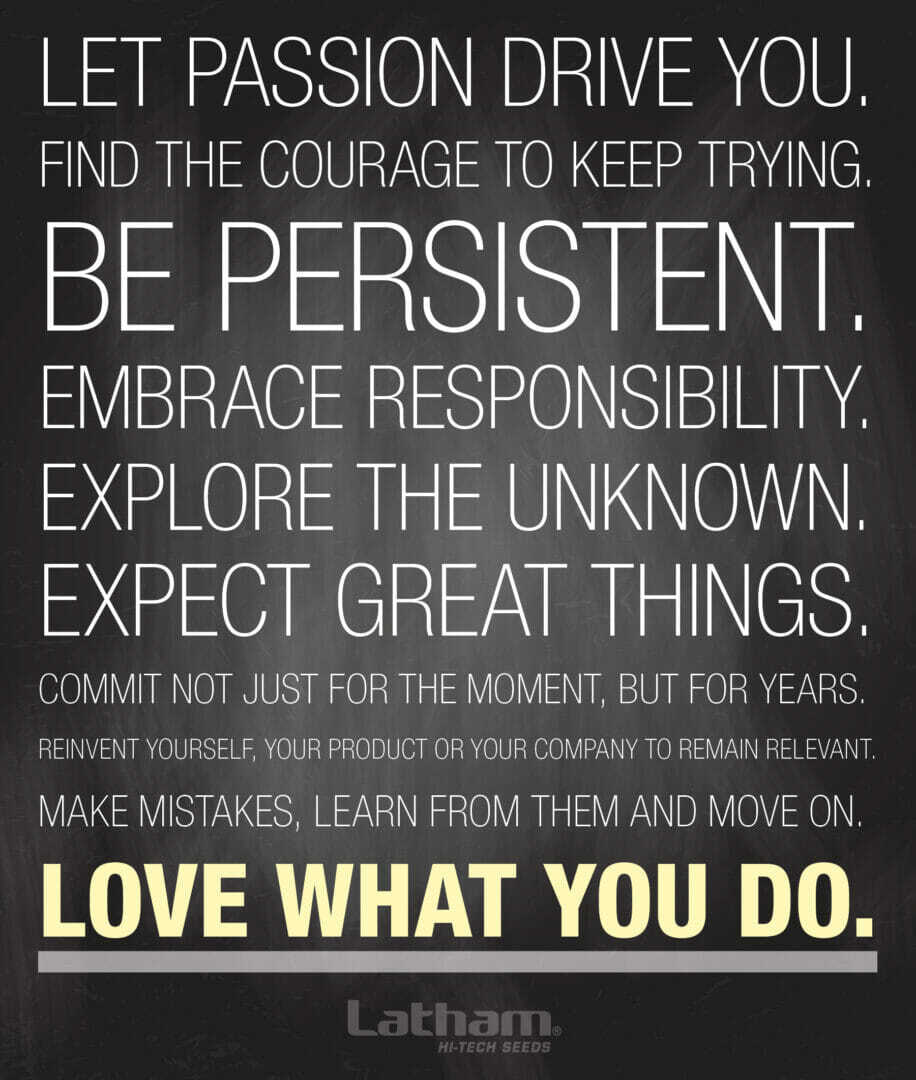
    LoveWhatYouDo

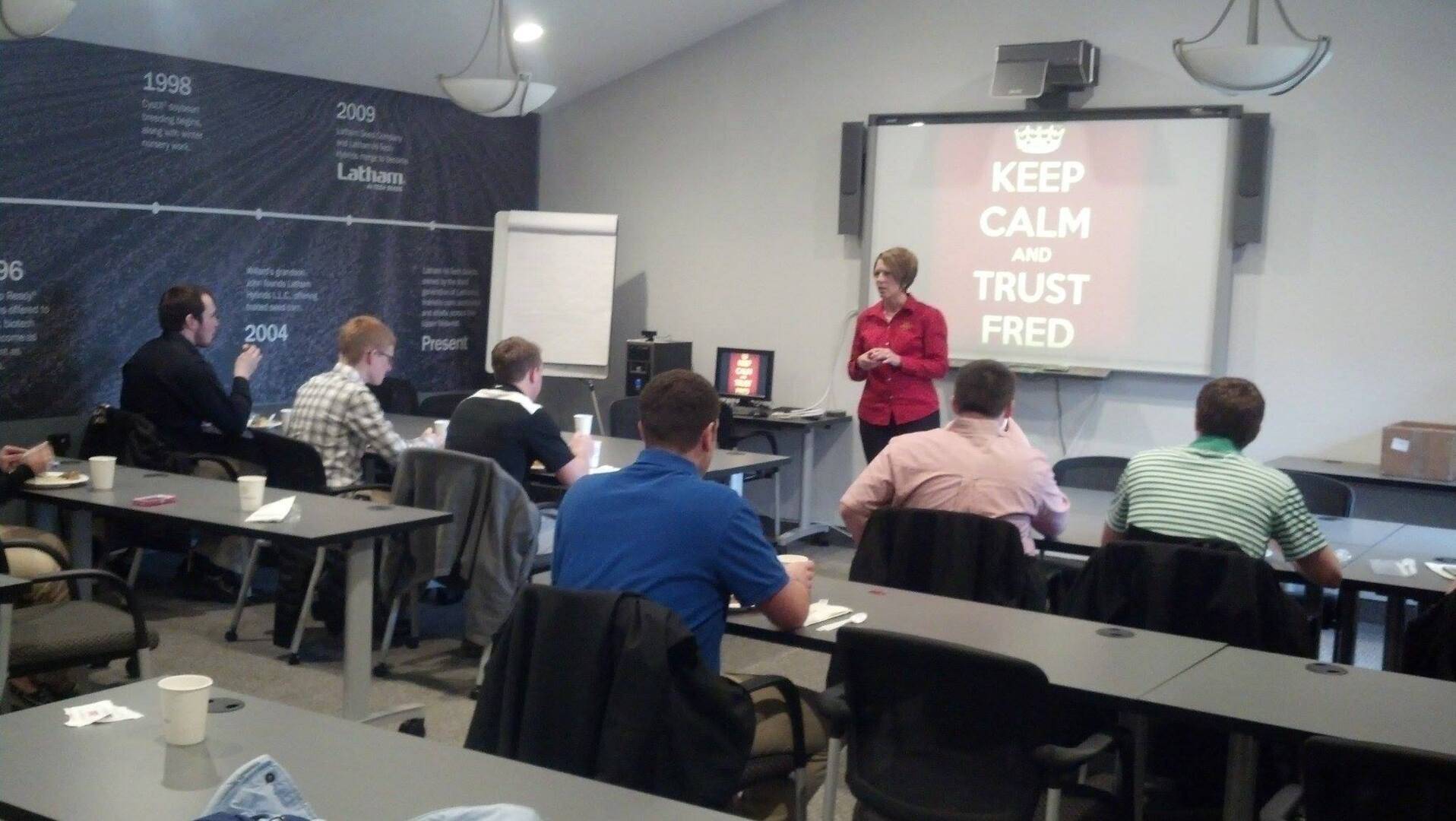
    ISUAgEI-2014Last Friday a group of Iowa State Ag Entrepreneurship Initiative spent the day visiting three family-owned companies in North Central Iowa: Sukup Manufacturing, Hagie Manufacturing and Latham Hi‑Tech Seeds.

    These industry tours gave student an opportunity to go “behind the scenes” and meet with owners about what it’s like to start a business and how to strike a balance between work and family life.  Students also asked us to share some best practices for aspiring entrepreneurs.

    If only I would’ve known that Harry Stine’s “7 Insights for Entrepreneurs” was going to be published March 28 by Forbes, I could have saved myself some prep time! Many of the insights that Stine shared in this article are similar to my beliefs:

    • Entrepreneurs don’t work traditional hours. Business hours may be posted as 8 AM to 5 PM, but you’re never really “off the clock.”
    • Any industry is constantly changing. You either need to adapt and change or get out of the way.
    • Always be mentally and emotionally prepared to walk away from any deal. Desperation leads to bad decisions.

    LoveWhatYouDoWhether you’re engaged in a farming operation or operating a retail outlet, chances are you exhibit these characteristics. You’re doing what you love. You’re a planner. You’re using technology to your advantage. You’re accessible. You’re getting involved. You’re part of a team. You’re making a difference. You’re persistent, and you’re also an eternal optimist.

    Sometimes entrepreneurs, including farmers, find themselves working another job in order to support their hopes for the future. If you dream of farming full-time but don’t have the opportunity to do so right now because your resources are limited or the timing isn’t yet right, the team at Latham Hi‑Tech Seeds might be able to help you plant seeds for the future!

    By operating your own Latham® seeds dealership, you could earn the equivalent of full-time employment. Some benefits of a Latham dealership include:

    • Accessing new seed traits and technology before they’re widely available.
    • Gaining first-hand knowledge of the industry’s broadest, deepest product lineup through product training and Hi‑Tech crop planning / management tools.
    • Belonging to a group of people who share your passion for farming and value honesty, integrity and family.

    To learn more about farmer-dealer opportunities available with Latham Hi‑Tech Seeds, talk with your local Latham representative or call 1-877-GO-LATHAM (1.877.465.2842).

    Team Latham

    March 31, 2014
    Agriculture, General, Industry News
  • Latham Hi‑Tech Seeds

    “Breakfast Battle” Benefits Local Food Bank

    IowaFactsFeatured
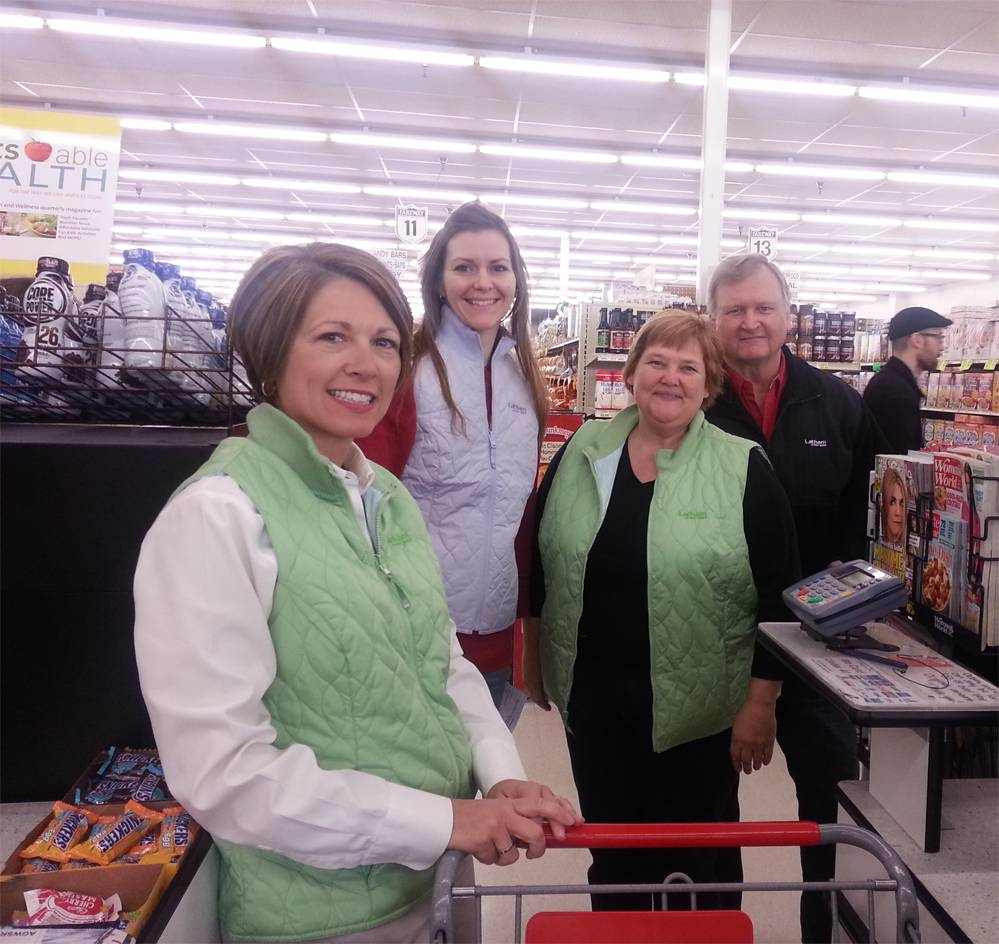
    Special thanks to our dealers and customers, who represented Team Latham in the 3rd Annual Breakfast Battle sponsored by the Franklin County Farm Bureau. From left to right are Shannon Latham, April Hemmes, Kari Subbert and Larry Sailer.
    Special thanks to our dealers and customers, who represented Team Latham in the 3rd Annual Breakfast Battle sponsored by the Franklin County Farm Bureau. From left to right are Shannon Latham, April Hemmes, Kari Subbert and Larry Sailer.

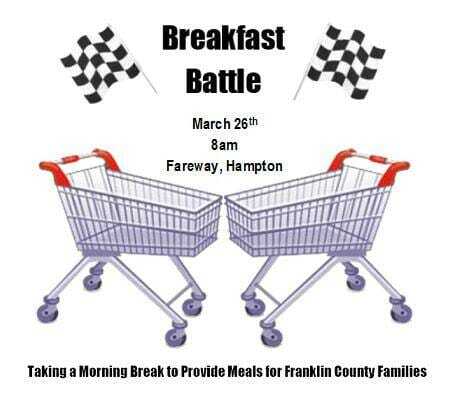
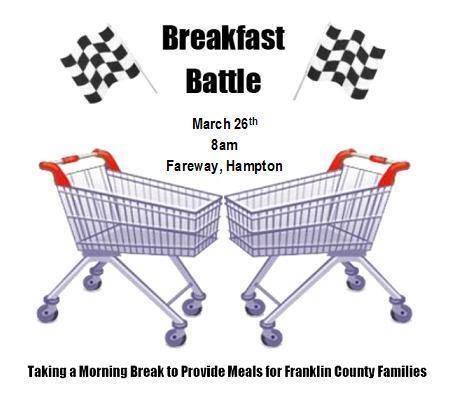
    In a race against the clock, nine local businesses and civic organizations “fought over food” on Wednesday morning during the 3rd annual Breakfast Battle sponsored by the Franklin County Farm Bureau.

    “This event helped raise understanding of finding solutions to eating healthy on a stretched budget plus raised awareness of food insecurity in Franklin County,” says Val Plagge, public relations chairman for Franklin County Farm Bureau.

    Food insecurity isn’t unique to Franklin County. One in eight Iowans – approximately 400,000 – is food insecure, meaning they lack the resources to live an active and healthy lifestyle. One out of 5 Iowa children does not know where his next meal will come from. Many of these individuals have been faced with a job loss or unforeseen expense that has brought on the burden of wondering how they will put food on their tables.

    Ten local families will have food on the table for at least three meals, thanks to groceries gathered during Wednesday’s event. These bags of groceries included perishable items like butter, milk, meat and vegetables, so families could make three well-balanced meals. Each family also was given the Healthy Homemade Cookbook published by Iowa State University Extension.

    During National Ag Week – and every day of the year – Latham Hi‑Tech Seeds is proud to help farmers throughout the Midwest feed and fuel the world!
    During National Ag Week – and every day of the year – Latham Hi‑Tech Seeds is proud to help farmers throughout the Midwest feed and fuel the world!

    Trying to buy enough groceries for three meals in less than 3 minutes is an experience to be sure! Breakfast Battle team members raced around the grocery store – in an organized frenzy – to feed breakfast, dinner and supper for a family of four between $45 and $50. Teams were timed from the moment they left the cart area until they reached the checkout lane.

    Time bonuses were given to those that answered ag trivia questions correctly before the race, and Latham Hi‑Tech Seeds received a time bonus for having the most votes on the Franklin County Farm Bureau’s Facebook “Fan Favorite” team poll.

    Time penalties were given for every dollar over or under the $45 to $50 cart total range. Coming in $18 over budget, Team Latham incurred some stiff penalties! We bought entire bags of onions and potatoes even though our shopping list only listed 1 onion or 2 potatoes. We also bought a full gallon of milk and 18 eggs plus a bag of dinner rolls.

    Although Team Latham didn’t win a plaque for winning the competition, we can feel good knowing that one family will receive additional perishable items. Following the race, grocery items were delivered to the Franklin County Food Pantry in Hampton and the Immanuel UCC Food Pantry in Latimer.

    “The Breakfast Battle is for a great cause, providing for those in need here in Franklin County and also reminding folks that our groceries came from a farm,” said Jackie Dohlman, Franklin County Extension Youth Coordinator, who was a member of the winning Breakfast Battle team. “In one way or another, the products we all buy at the grocery store came from a farm.  It’s important to remember that only 2% of our nation’s population is feeding U.S. consumers and also helping feed people all over the world.”

    In honor of this week’s Breakfast Battle – and the winning team – today we’re sharing a recipe from the Healthy Homemade Cookbook.

    Larry Sailer, Musings of a Pig Farmer

    March 28, 2014
    Agriculture, General, Industry News
  • Latham Hi‑Tech Seeds

    Celebrate Ag Day in a Big Borlaug Way

    Ears of wheat on wooden background. Vector.

    guest blog post by Larry Sailer

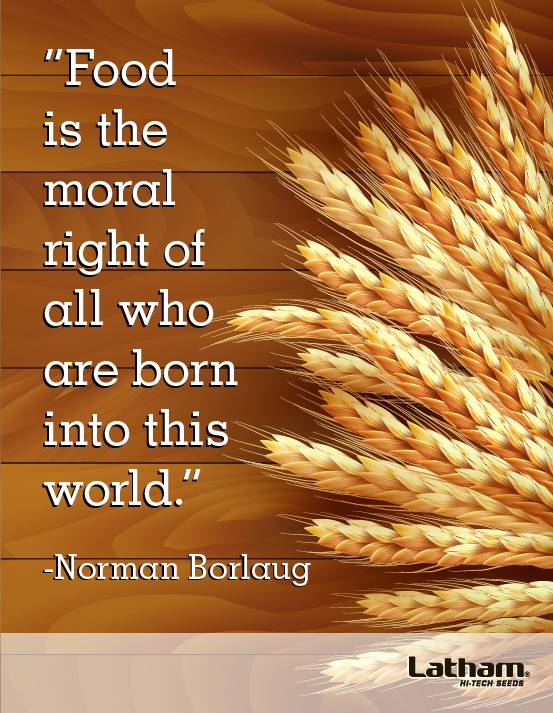
    Today is the 100th birthday of Norman Borlaug, an Iowa farm boy who went on to father the Green Revolution. How fitting that this momentous occasion coincides with National Ag Day on March 25!

    How fitting that also today a statue of this pioneering Iowan will be dedicated in Washington, D.C., where it will inspire lawmakers and visitors alike for the next 100 years or so. The 7-foot bronze likeness of Borlaug will be one of two statues representing Iowa in the National Statuary Hall. To help put the magnitude of today’s event into perspective, note that statues of Civil War-era Statesmen Samuel Kirkwood and James Harlan have represented Iowa in the U.S. Capitol for more than 100 years. Borlaug’s statue will replace one of James Harlan, secretary of the interior under President Andrew Johnson.

    “Feeding the world” is Dr. Norman Borlaug’s legacy as he is known as the man that saved a billion people worldwide from starvation.  He spent his life’s work developing grain varieties that would help farmers in mostly lesser developed countries like India and Mexico produce more food.

    “My grandfather focused on talking to, training, and investing in the young scientists, researchers and farmers,” says Julie Borlaug, associate director of external relations at the Borlaug Institute. “His guiding philosophy was ‘take it to the farmer’ and he truly believed everything started by going to the field.”

    Dr. Borlaug realized the importance of encouraging other researchers and scientists to share their findings with farmers, who could benefit from it. That’s why the Borlaug International Scholars Fund, international field internships, and the World Food Prize Global Youth Institute help inspire and finance the next generation of people who will make great contributions to feed the world’s people.

    Ken Quinn, president of the World Food Prize Foundation, is helping carry on Dr. Borlaug’s legacy by increasing awareness of The World Food Prize. Headquartered in Des Moines, each fall the World Food Prize Foundation recognizes people for making huge contributions in the fight against hunger. Last October, I had the pleasure of meeting with the 2013 World Food Prize Laureate Dr. Robb Fraley of Monsanto. Often referred to as the Father of Biotechnology, Dr. Fraley has literally changed the world of agriculture.  Yet, he and others in the industry are constantly being asked to defend what they do.

    Ears of wheat on wooden background. Vector.When asked what her grandfather would think about all the “food fights” today, Julie Borlaug acknowledges that GMO PR falls short. She is quoted in a March 21 Des Moines Register article as saying, “He would be angry … (about) this anti-GMO, anti-big ag, anti-technology (movement). And how there seems to be so much ignorance and so much of a backslide of where people think we should be going.”

    Isn’t it ironic that well-fed people try to dictate how food is raised across the globe? People with full bellies are trying to tell farmers and ranchers how to grow food. Scare tactics and fear mongering –powerful emotions – limit biotechnology and the very technology that Dr. Borlaug proves can help save lives.

    Isn’t ironic that well-fed people in developed nations want to “say ‘no’ to starving people” who could benefit from increased yields and large foods supplies provided by seeds with built-in resistance to insects, disease, weeds and even drought? But don’t just take my word for it. Take it from a Zambia native who says, “Protesting GMOs condemns millions to poverty.”

    Growing food around the world can vary drastically. What grows on my farm, with my technology, may not grow sustainably in a neighboring state. It’s hard to understand what seed technology works on the far side of the world, but Dr. Borlaug understood this. He developed wheat that could withstand pests to feed hungry people.

    Believe it or not, many people and companies still have this goal in mind! Yes, a profit needs to be made but profit is not the root of evil. After all, no practice is sustainable if you can’t afford to keep doing it! Profit can be a huge motivator, just like eliminating hunger motivated Dr. Borlaug.

    Please join me this National Ag Week by putting behind us the silly arguments that prevent safe and proven technology from feeding the world. Buy what you think are the best products for your family, but allow the same right to all other families!

    Shannon Latham

    March 25, 2014
    Agriculture, General, Industry News
  • Latham Hi‑Tech Seeds

    Help Us Celebrate National Ag Week, March 19-26

    Battle

    BreakfastBattleIt can be challenge feeding a family of four, three square meals, on a budget between $45-50. Now trying buying all those groceries in less than 1 minutes and 30 seconds!

    Every second counts when you’re one of 10 teams participating in the Annual Breakfast Battle. It’s definitely a fast-paced shopping mission. That’s why Latham Hi‑Tech Seeds hopes to take 10 seconds off the clock by receiving the most number of votes in a Facebook poll being sponsored by Franklin County Farm Bureau.

    Please vote in the Farm Bureau Facebook poll – and encourage your friends & family to vote – from now until 8 a.m. on March 26. Latham wants to be the fan favorite! Our Team has won this portion of the contest in the past, and honestly, that’s the only real bragging right we have.

    Other teams are faster shoppers. Franklin County Extension rocks the ag trivia portion of this contest. For the past three years, I have vowed to train our team like we’re preparing for the 4-H Quiz Bowl. In reality, I’m still assembling our team about 24 hours prior to the event!

    Regardless of how we place next Wednesday, we’re happy to be a part of the Farm Bureau’s National Ag Week activities. The 3rd Annual Breakfast Battle is sure to be a few hours well spent! The Breakfast Battle helps fill local pantries as all food purchased by the teams will be donated to the Franklin County Food Pantry and Immanuel UCC Food Pantry.

    Team Latham

    March 19, 2014
    Agriculture, General, Industry News
Previous Page
1 … 38 39 40 41 42 … 85
Next Page

Latham Hi‑Tech Seeds

131 180th Street | Alexander, IA 50420

(641) 692-3258

SIGNUP FOR OUR NEWSLETTER
  • Contact
  • Legal
  • Dealer Center
  • Seedware Login
  • Latham Gear

© 2025 Latham Hi‑Tech Seeds. All rights reserved. | Iowa Web Design by Webspec | Privacy Policy

Latham® Hi-Tech Seeds is a trademark of M.S. Technologies, L.L.C., 103 Avenue D, West Point, IA 52656.