Latham Hi-Tech Seeds

(641) 692-3258

  • Home
  • Products
    • Corn
    • Soybeans
    • Alfalfa
    • Corn Silage
    • Seed Guide
  • Performance
  • Find a Rep
  • Media
    • Blog
    • News
    • Videos
    • Podcasts
    • TECHTalk
  • About Us
    • Company History
    • Our Mission
    • Careers
    • Become a Rep
    • Sowing Seeds of Hope
  • Contact Us
  • Latham Hi‑Tech Seeds

    Harvest Tour is Learning Opportunity for Farmers & Consumers Alike

    DCIM102GOPRO

    Harvest is underway in North Central Iowa, however, I’ve been spending as much talking about combining as I have actually spent in the field during the past two weeks.

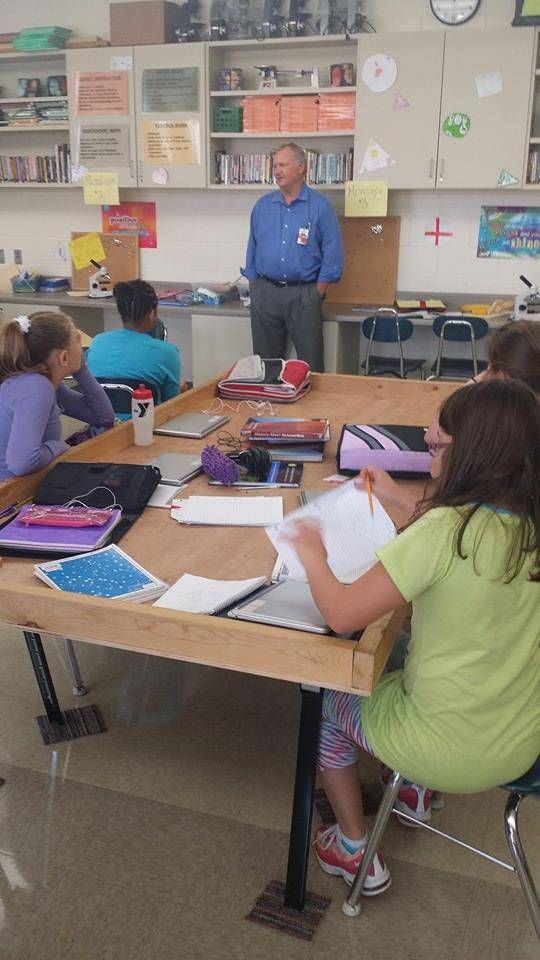
    In last week’s blog, I wrote about the opportunity I had to visit Mason City schools and answer some great questions from sixth graders about #RealPigFarming and crops. My main message was to remind these middle school students, who are like sponges absorbing information, to keep an open mind when reading information. I reminded them to consider the source of information and to not take all printed material as fact.

    Over the weekend, I had the opportunity to spend time hosting a group of bloggers on our 4th Annual Franklin County Harvest Blogger’s Tour. Honestly, this is one event that I always look forward to as its main purpose is to showcase our county’s rich agricultural heritage and to help bridge the gap between farmers and consumers.

    This event has been held the first weekend of October since 2011. This year, bloggers begin arriving at the Country Heritage B&B on Friday afternoon. We then took them on a tour of the first farmer-owned, rural electricity generating plant. In the 1930s, only 10 percent of U.S. farms had electricity. Interestingly enough, this electric utility plant in rural Hampton was the first rural electric utility plant west of the Mississippi. We made history right here in our own backyard – and this was the first time I’d actually visited the museum myself! I had a great time walking through the REA Museum, which is full of fascinating things from the beginnings of electricity.
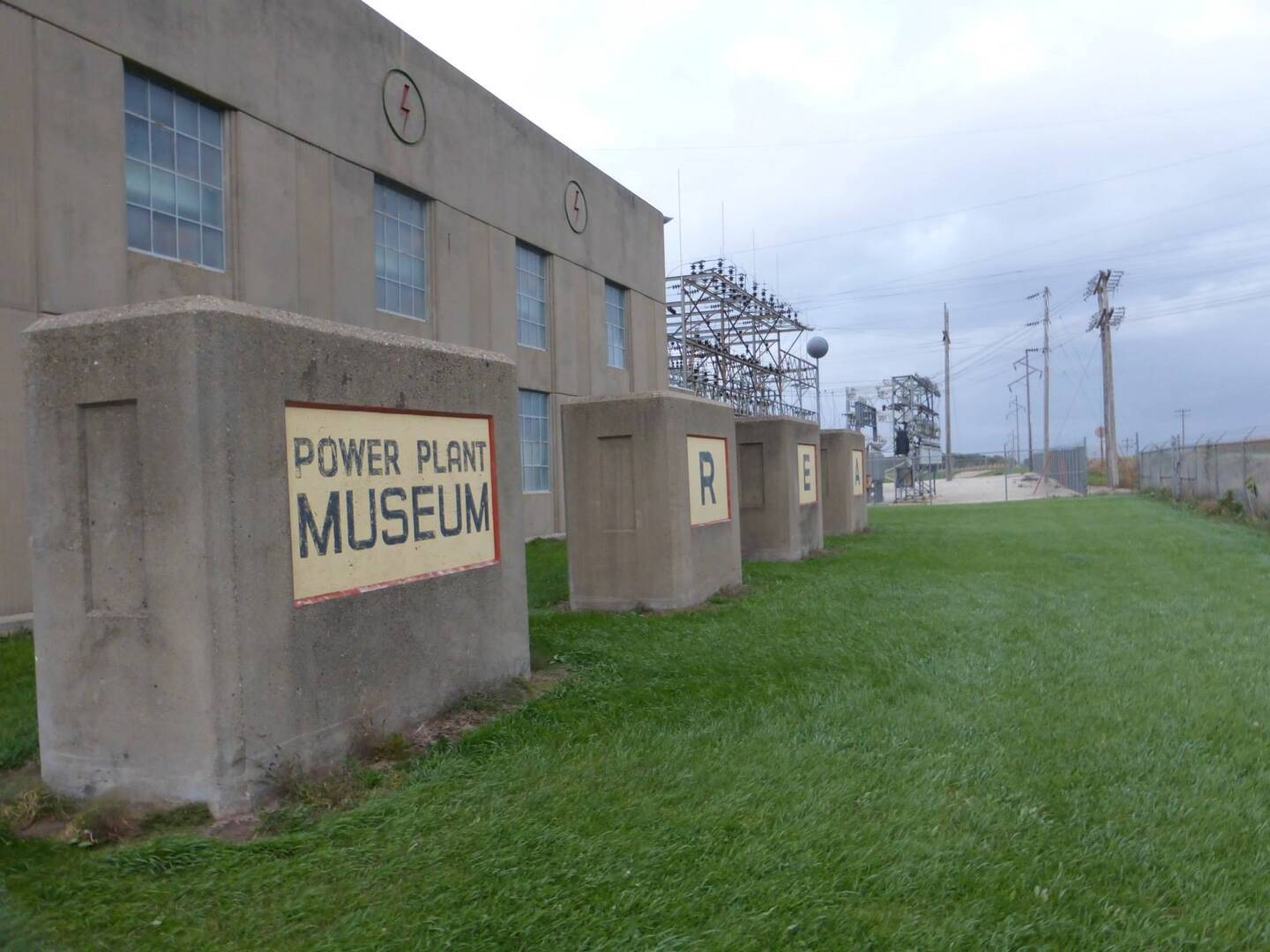
    Photo Credit to: BethAnnChiles.com
    Photo Credit to: BethAnnChiles.com

    From the REA Museum, the bloggers toured Beeds Lake State Park. This lake was constructed by manual labor during the Great Depression. One focal point of the park is the 170 foot-long spillway – built by the Civilian Conservation Corps in the 1930s – that consists of horizontal layers of limestone that abruptly drops 40 feet. Another unique feature of Beeds Lake is the causeway near the lodge, providing more than one-third mile of shoreline fishing, as well as a convenient pathway for hikers and joggers.
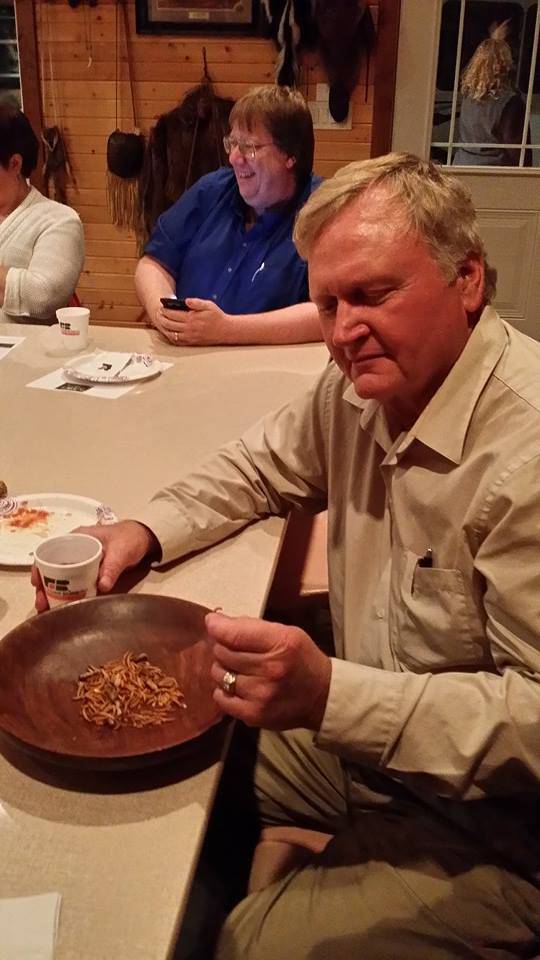
    Larry_CarlsonTreeOur final stop on Friday evening was the Learning Tree Lodge at the Carlson Tree Farm. The Carlsons have built a very nice retreat in rural Franklin County, and there is no charge to use their comfortable learning center. Great food and wine tasting was combined with the entertainment Dennis has a reputation of providing. As a former county conservation officer, he always teaches us something new about nature. We had the the opportunity to taste roasted meal worms… did I mention the wine tasting? Yes, Franklin County is home to Townsend Winery!

    Saturday morning started early. We arrived on the Franklin County Fairgrounds at 8 AM where we toured our county’s farm museum. Many questions were asked and answered about the history of farming while we looked at old farm equipment. Every time I go through this building, I see something I had not noticed before. There’s such so much to see! It was a great stop.

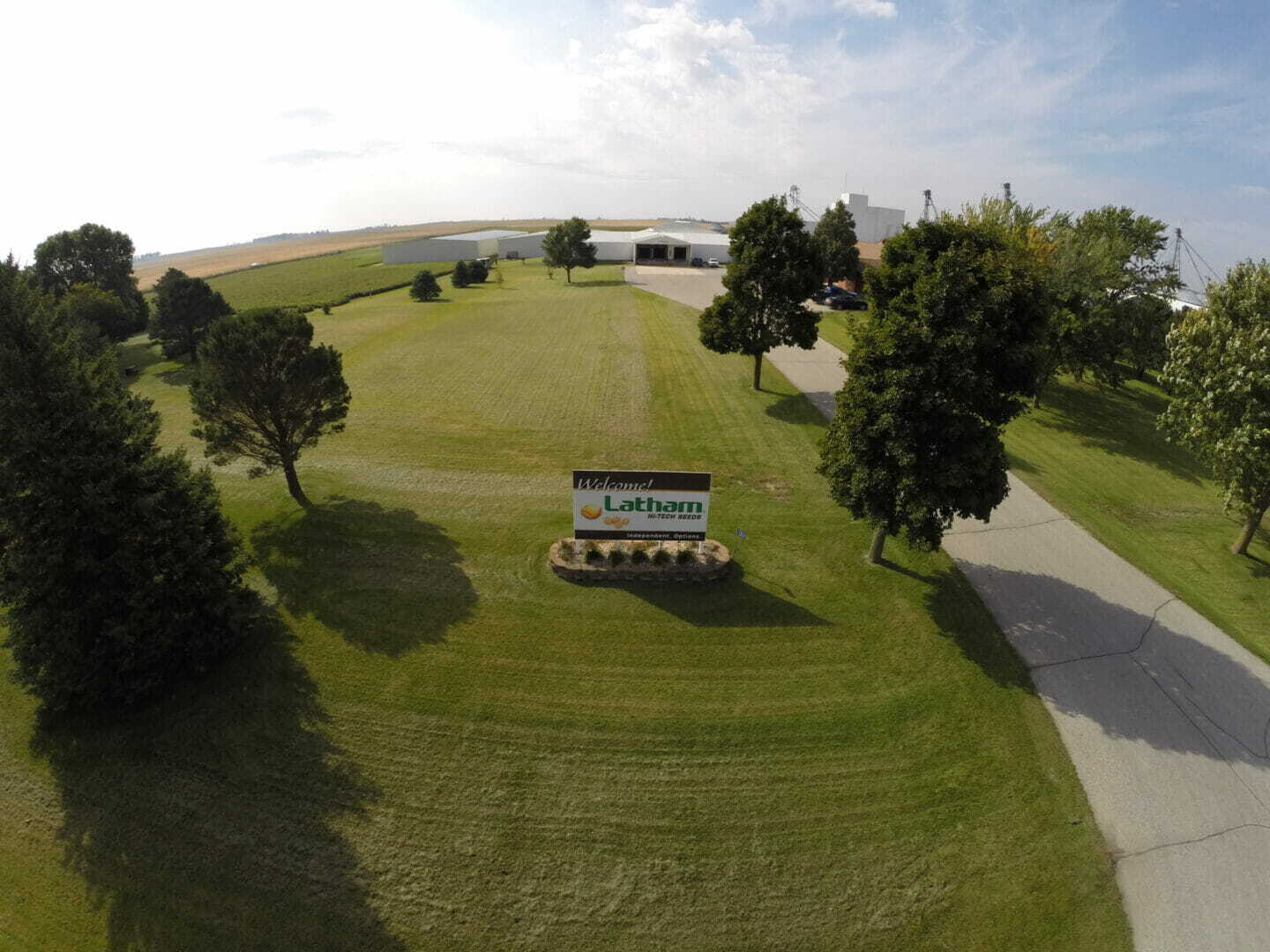
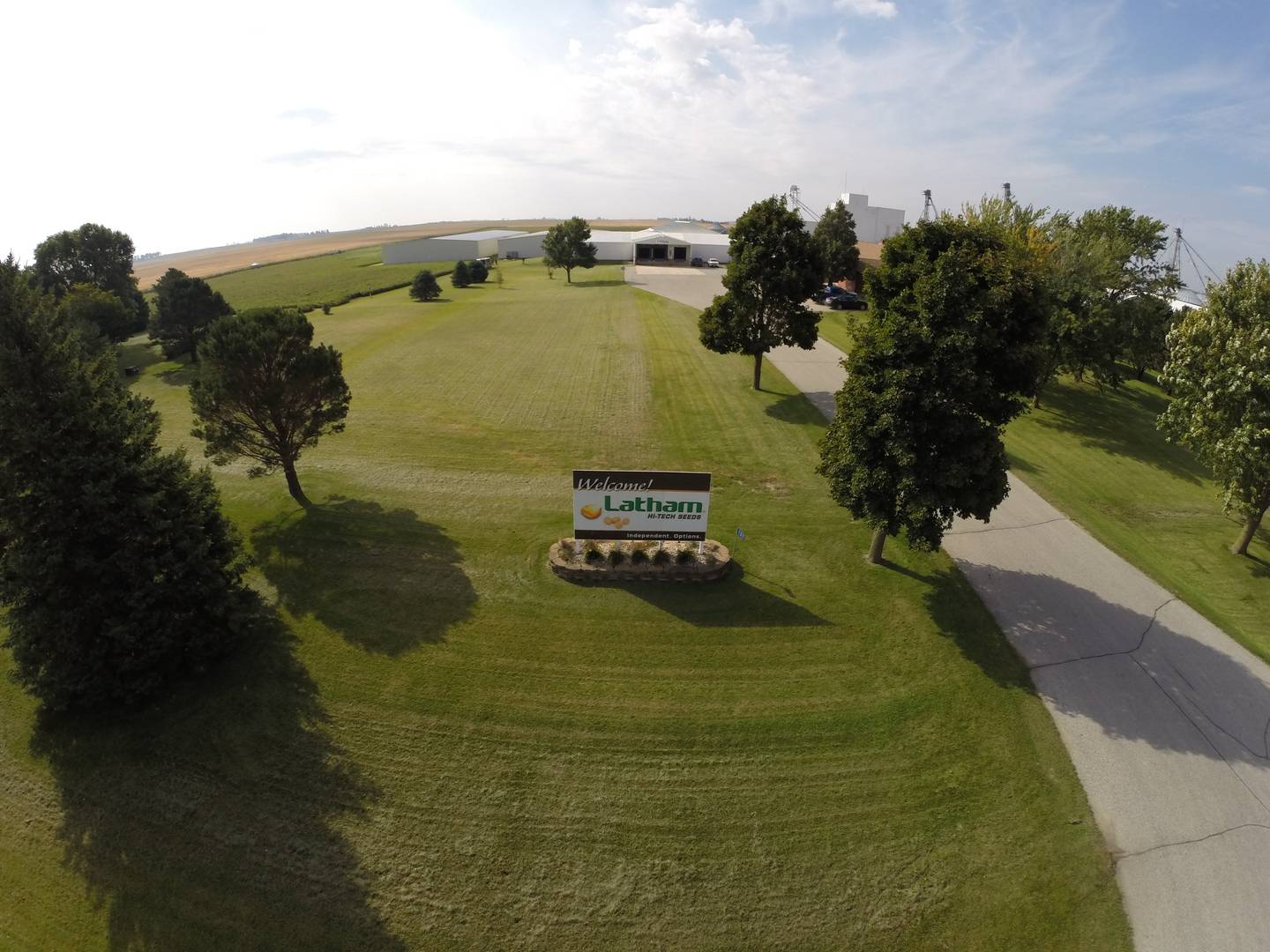
    From the fairgrounds, our busload of bloggers went downtown to shop the Hampton specialty stores. I had to head out to do my chores, but from the pictures posted, it looks like the shoppers had a good time. With shopping bags in hand, they boarded the buses for a trip to Latham Hi‑Tech Seeds, with headquarters on a Franklin County Century Farm.
    DCIM102GOPRO

    John and Shannon are the third generation of Lathams to manage the family-owned seed business. They have added hybrid seed corn and Hi‑Tech forage to the product lineup, providing farmers with even more choices for their fields. Bloggers enjoyed learning how the Lathams contract with local farmers to produce seed beans, which are then brought to their plant in Alexander upon harvest. Controlling the handling of the soybeans from harvest through conditioning and bagging is what the Latham believes is key to their reputation for quality seed.

    Following a soybean facility tour, we all enjoyed celebrating October #Pork Month with succulent loin sandwiches and Val Plagge’s Sweet & Spicy Hog Wild Baked Beans. While we enjoyed our delicious lunch, we also enjoyed a presentation about the North Iowa Ag in the Classroom group. Just four women talk to 10,000 kids a year about farming! Even though we live in a rural state, we learned that some North Iowa school kids believe corn stalks are bamboo. These ladies provide classroom materials about #RealPigFarming, ethanol production and soil conservation to name a few. All are important topics – topics that are greatly misunderstood by many adults.
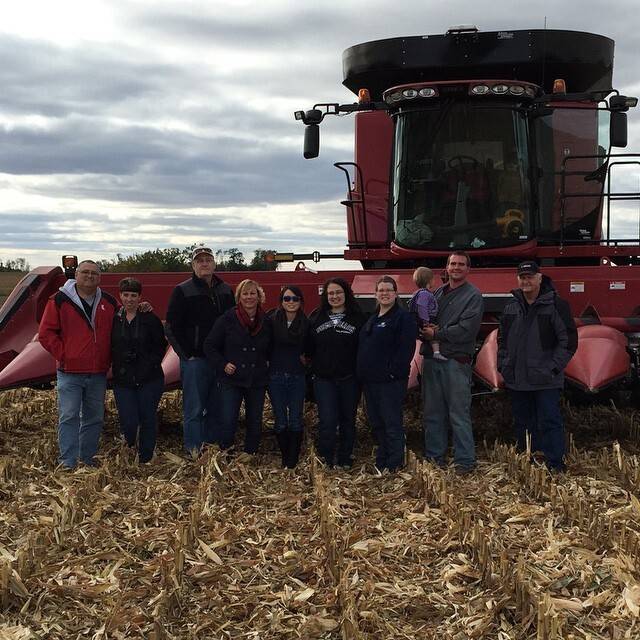
    Photo Credit to DonnaHup.com
    Photo Credit to DonnaHup.com

    As enjoyable as all of these tours were, the highlight of the weekend was definitely the combine rides! Saturday afternoon we traveled to Roy and Jeanie Arends’ farm. Although the soybeans were a little wet from all the rain we’ve had, Roy used it as an opportunity to explain why his ground needed to be tiled. This turned in to quite a question and answer session! Roy’s son, Andrew, even explained about GMOs.

    Half of the blogger group stayed at the Arend’s farmer and half went to Ian and Val Plagge’s farm to combine some corn. Val even gave bloggers the chance to visit their pigs.

    All of these tours and visits led to great understanding and some really interesting blog posts! Follow along with the hashtag #FranklinCoHarvest on Twitter and Facebook for a great recap from these bloggers:

    • Corn, Beans, Pigs and Kids
    • Donna Hup
    • It’s Just Life – Finding the Extraordinary in the Ordinary
    • Jeni Eats
    • Sawdust and Embryos
    • The Walking Tourists

    Thanks to everyone who participated this year! It was an honor to help host this group of enthusiastic bloggers. Not only do they share their experiences here in Franklin County with many more people, but we have an opportunity to learn from them, too. It was another successful weekend, and I’m proud to have been a part of it.
    Related Links:

    • Field Fare & Family Fun Abound in Franklin County
    • Bloggers Tour Proves the Power of Internet
    • Small Steps Lead to Amazing Journey

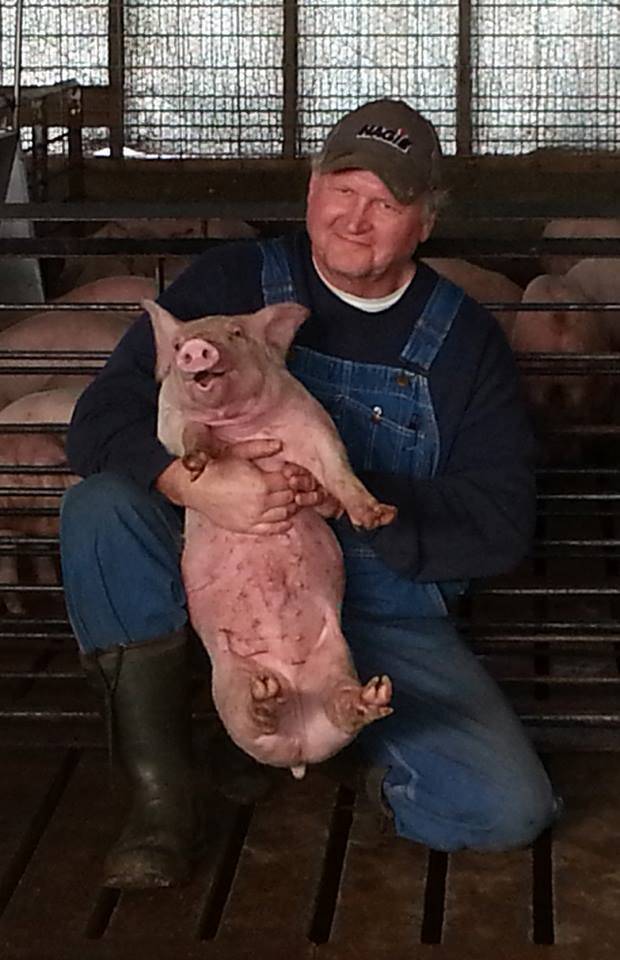
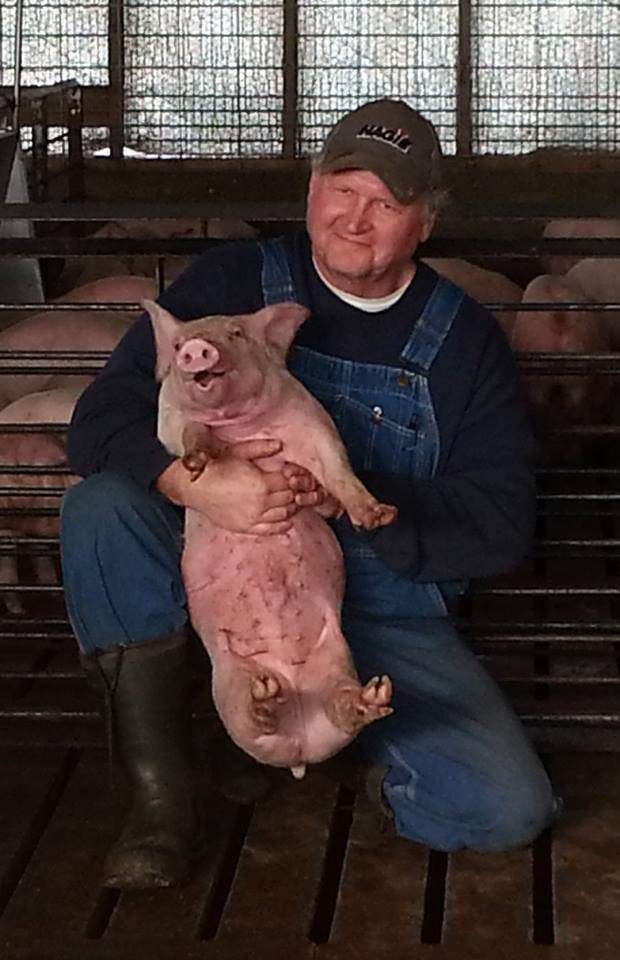
    Larry Sailer, Musings of a Pig Farmer

    October 7, 2014
    Agriculture, General, Industry News
  • Latham Hi‑Tech Seeds

    Brown Bag Lunch Funds County 4-H Scholarships

    4Hmeal flyer

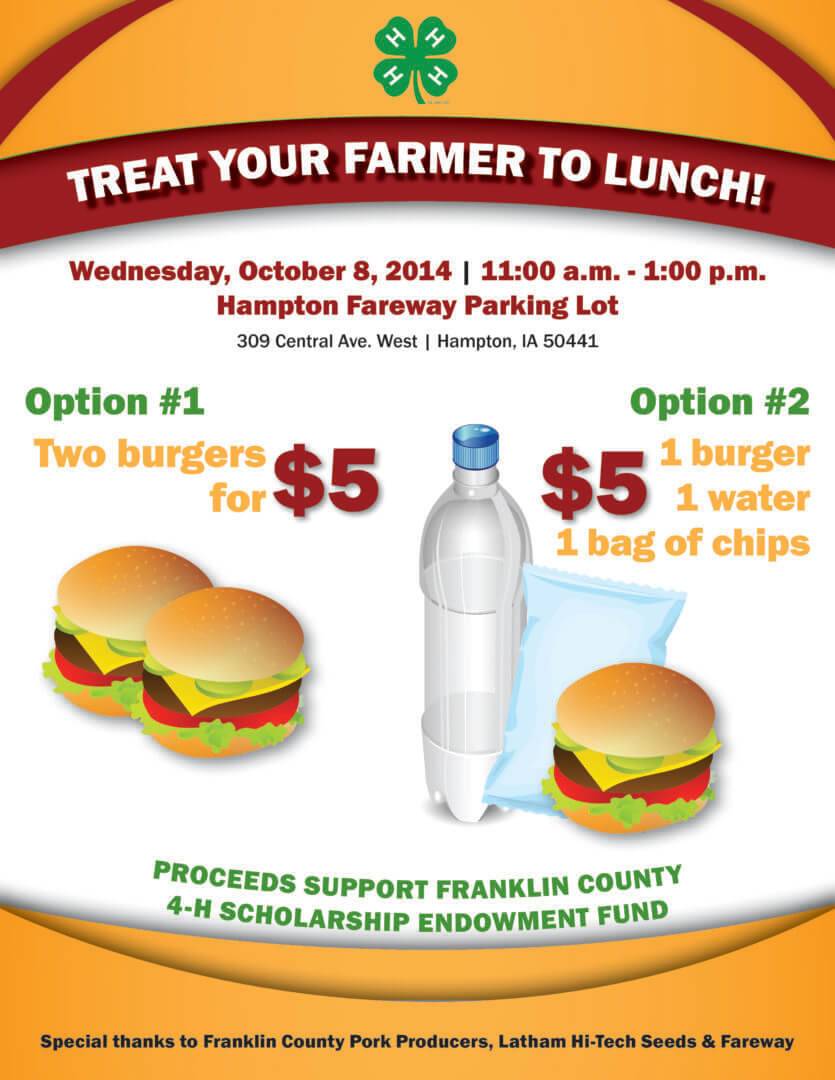
    October 5-11 is National 4-H Week, so club members and alumni across the U.S. will be sharing their success stories and encouraging others to “join the club.” Even if you were never in 4-H – and you’re past the age of joining – you can still get involved locally.

    Join us Wednesday, Oct. 8, for a $5 lunch at the Fareway parking lot. Our goal is to have burgers grilled and ready for pickup almost as fast as any fast food drive-thru! Special thanks to the Franklin County Pork Producers and Latham Hi‑Tech Seeds, as well as Fareway grocery store, for their support of this fundraising event that supports scholarships in our county. We’ll start serving at 11 AM and will serve until 1 PM – or until we run out!

    We’ve guaranteed 600 burgers with the option to purchase more, so I’m praying that Mother Nature cooperates and we have another strong turnout to support this important cause.

    While there are many important causes being celebrated this month, 4-H is near and dear to my heart. (Yes, I’m still pledging my hands to larger service for my community and my world.) I have first-hand experience with the program as a 10-year member of the Coldwater Country Cousins 4-H Club in Butler County; as a state 4-H award winner; as a former member of the Iowa 4-H Council; as a former trustee for the Iowa 4-H Foundation; and as a current member of the Franklin County 4-H Foundation.

    Through 4-H, I made friends with other 4-Hers who shared my same interests. Twenty-five years later, I’m still networking with 4-H friends from across the state! 4-H made a positive impact on my life and help me discover my love for journalism. Because of that, I’ve been lucky enough to enjoy every job I’ve ever held.

    I want others to have the opportunity to discover their passions through 4-H. I also want them to let 4-H lead them to career success. For example, recently I had the opportunity to serve on a panel with other distinguished 4-H alumni and area business owners. We talked about how 4-H helps you prepare for the future. Business owners shared what they’re looking for in employees, and students were encouraged to ask questions. Following our discussion, students participated in mock interviews. Putting yourself in an interview situation takes you out of your comfort zone, so I commend the students who participated in this event. Experiences like this are also why I’m proud that both of our children are 4-H members, too.

    Join @LathamSeeds in showing pride and support of the 4-H program this week through social media using the hash tags #Iam4H and #4HWeek.

    4Hmeal-flyer

    Team Latham

    October 6, 2014
    Agriculture, General, Industry News
  • Latham Hi‑Tech Seeds

    Today’s Kids Must Develop Critical Thinking Skills

    Larry in the classroom.jpg
    Yesterday Larry Sailer shared his farm story with 6 classes of sixth graders. Today he’s heading back into the classroom!
    Yesterday Larry Sailer shared his farm story with 6 classes of sixth graders. Today he’s heading back into the classroom!

    Late last week I was contacted by our Ag in the Classroom staff from North Iowa Ag in the Classroom about a book being used in the Mason City sixth grade as a textbook. This nonfiction book by Micheal Pollan, entitled Omnivore’s Dilemma, is being used for every class – even art!

    At first blush, it sounds like this book would be about all the food choices available in America. But that’s not the case! Omnivore’s Dilemma is filled with half-truths and misinformation. For example, Pollan implies that government subsidies force farmers to grow corn and Americans are becoming obese because corn is “hidden” in so many food products.

    Pollen’s book also states that people are half made up of corn. Now this simply isn’t true! Using basic math, one can deduce this isn’t possible since the average human body is composed 60 percent of water. And that’s a fact! (Let fact, no fear, determine food acceptance. I support agriculture that improves the quality and quantity of food available.)

    Thanks to Pollan’s nonfiction writing and the concern this “textbook” has caused among farmers and those who work with North Iowa’s Ag in the Classroom program, I found myself facing a dilemma… Should I combine my soybeans or head into the classroom?

    Because I whole-heartedly believe we must connect farming and food to the classroomx, yesterday I found myself getting behind the wheel of my pickup rather than my combine. It honestly felt privileged to talk with six classes of sixth graders yesterday. My main message was to remind these middle school students, who are like a sponge absorbing information, to keep an open mind when reading information. I reminded them to consider the source of information and to not take all printed material as fact.

    I also encouraged them to ask farmers question about why they do what they do. As you might expect, I got a lot of questions from them! These kids asked really thoughtful and engaging questions.

    One young person asked, “If you think you’re going to lose money, why do you go ahead and plant your crops?”

    “How do farmers get such big equipment?”

    What kind of education does it take to become a farmer?

    These kids had so many good questions! Another girl asked if I name my pigs. That opened up a conversation about the difference between pets and food production. We talk about the cycle of life and how some animal’s purpose in life is to become food. That’s natural. It happens in nature, too.

    Conversations like this with non-farmers help us find common ground. I consider telling my farm’s story and educating consumers – even future consumers – to be a very important part of my operation. That’s why today I’ll be getting my pickup truck again, driving about 45 minutes north, and spending another full day talking to more students.

    We all must keep sharing our farm story. It’s quite apparent other sources of information are getting into our schools, and that information might not be accurate!

    Larry Sailer, Musings of a Pig Farmer

    September 30, 2014
    Agriculture, General, Industry News
  • Latham Hi‑Tech Seeds

    What’s the Price of Income Equality?

    Larrypigfarmer

    LarrypigfarmerI’ve been reading articles about income inequality, covering a wide array of topics, since the economy crashed in 2008. Wall Street has been picketed. The minimum wage is too low. Rich people are simply hoarding all the money. But in The Des Moines Register on Tuesday, Sept. 16, a front page-article by Mike Kilen explained how the Ag economy has contributed to growth in the rich-poor gap.

    The story doesn’t out right blame farmers for causing this gap, but I did take it to be the underlying theme of the story. Admittedly, that’s my perception of the article. Kilen includes information from Iowa State University sociologist David Peters that three Iowa counties are in the nation’s top 10 for inequality of income growth. That’s not surprising as farming had a pretty good run from 2000-2012 while the economy, as a whole, did not. Logic tells me that this would make a spread.

    Is it the farmers’ fault? Should the farmers be “fair” and share the gains made?

    Before you answer “yes,” remember that farming goes in cycles. Farming was great in the 1970s, and then in the 1980s, we experienced a farm depression that took out many farmers. Those who survived were usually ended up farming more ground. Do the math: There are fewer farmers but the same amount of land is being farmed. Of course, the farmers are “bigger.” Is it their fault? Of course not! That’s how a capitalistic society functions.

    These farmers took a risk by taking on more land, and they’ve enjoyed some good times. The last five years have been probably some of the best ever for farmers who were raising crops or livestock with strong market prices and were doing a decent job of controlling their business expenses.

    Now, however, the cycle has turned. The price I can sell my soybeans and field corn for today is below the cost of production. My income this year will be well below minimum wage. It probably will be a negative income! Does anyone who stands to make a profit this year want to share his income with me? I’m sure there will be people standing in line, waiting to give their money to me, right? Not!

    “It’s difficult to imagine the economic mindset of those who consider that government forcing an increase in the minimum wage can bring about improved prosperity,” was posted today on one of my friend’s Facebook pages yesterday.

    Let’s ask ourselves if question: If economic prosperity through minimum wage levels promises such an advantage, why not mandate a minimum wage of $100 per hour or higher?

    Those who see government as the great provider can’t seem to grasp the emptiness of their vision! Numerous attempts have been made to for the U.S. government to become all-powerful, the end-all and be-all. The results have been devastating, yet so many Americans continue to promote these failed beliefs.

    Our country is headed in the direction of socialism. We want everyone to be equal… I see this in kids’ contests where every kid gets a ribbon or prize. I see it in this article in The Register article, indicating that all Iowans should have equal net worth.

    Let’s examine why the net worth gap is spreading in Iowa. First of all, land values have increased significantly. The incomes of some farmers have followed, but not nearly as much as one might think because a lot of this value is only on paper.

    Commodity prices, on the other hand, greatly impact the amount of disposable income farmers have to purchase new machinery and equipment and to build buildings or buy land. The more money there is made in farming, the more money gets released into the U.S. economy. But it takes more than that.

    We must find the will for everyone to achieve. We need better jobs. We need to get people trained and educated to do those jobs! When I was running my construction business, one of my biggest constraints was finding people with the skills and “will” to work. Even the social fabric of our society played a role. Many employees would work until the state paperwork for child support caught up with them, and then they did not show up to work. I visited with a friend last week who is still involved in the construction, and his biggest challenge is finding people willing to do the work.

    The spread in wealth brings to mind the story of Jack Ma, an entrepreneur from China. His company, Alibaba, went public last week. He worked hard and took a chance. He also had the knowledge and talent. Jack is now worth billions. Should we take away his incentive to dream big?

    I know… Let’s allow tax policy to level the playing field as Senator Tom Harkin likes to say. After all, the Government is here to help you! I keep reading about all the programs USDA has to help the disadvantaged farmers get started.

    Half of the people in this country are being subsidized by the other half! Keep this up, and we will take away even the most energetic worker’s will to succeed. If you take from one who is working and give to the one who isn’t working, doesn’t that limit the amount of work being done by both groups?

    “When everybody owns something, nobody owns it, and nobody has a direct interest in maintaining or improving its condition. That is why buildings in the Soviet Union — like public housing in the United States — look decrepit within a year or two of their construction.”

    Larry Sailer, Musings of a Pig Farmer

    September 23, 2014
    Agriculture, General, Industry News
  • Latham Hi‑Tech Seeds

    Does Food Come Too Cheaply in America?

    Larrypigfarmer

    LarrypigfarmerThough Americans are famous for their healthy appetites, their food bill is proportionally low. In fact, Americans spend less for groceries than any other country in the world. The main reason food is so inexpensive here is because U.S. farmers are so productive.

    Think of all the agricultural innovations in this country that have allowed 98% of our people to move off the farm and creating all creature comforts we enjoy in this modern age. If 70 or 80% of the populace were still needed to grow food, what would this country look like? Look no further than Uganda, Ukraine or any number of third world countries and you’d have an idea!

    Not only do U.S. farmers grow enough food to make the USA the cheapest place to eat, we also grow energy and fiber. Without agriculture, everyone would be naked and hungry. Farming and ranching goes beyond providing food… It also provides more than ¼ of our workforce with steady employment. Twenty-three million jobs are associated with modern day agriculture.

    So why is there almost this romantic back-to-nature obsession with organic farming? It all goes back to money. That’s why I’m beginning to wonder if our food in this country has become too cheap. Organic has long since become an ideology… it’s almost as though the food movement become a cult. A reported $63 billion is spent worldwide on organic foods.

    There are those in the upper middle class that can obviously afford to pay for organic foods, but what about those who can’t? Think of those with lower incomes and the poor, who can get a lot more nutrients in their body from buying two regular carrots than they can for the price of one organic carrot. This is the type of challenge we face to feed planet that’s population will surge to 9 billion before the middle of the century!

    Literally millions of people in poverty are starving to death or have serious health problems, yet some solutions are so simple. Severe Vitamin A deficiency results in blindness, and nearly 50% of the half-million children who are blinded by it die within a year. A new variety of rice can cure many of these problems, yet we’re letting fear of the unknown prohibit us from helping these poor people.

    I know most people don’t give a rip whether people are starving in Africa because the American public has become so self-centered with little concern for anyone else. One in six Americans goes to bed, worrying if they’ll have enough to eat tomorrow.

    People go hungry because abundant food, which has been proven over and over again to be safe, gets the same old fears thrown at it. There are no real real health benefits to organic and non-GMO foods. Studies prove it. A Stanford study found that organic foods were considerably less likely than conventional foods to have pesticide residues, although organic foods were higher in e. coli. Shouldn’t we be just as concerned by that?

    Maybe I’m getting to emotionally involved, but I’m starting to get offended every time GMOs and “normal” agriculture. I’m not even sure what “normal” is anymore! And if I’m getting confused, what about people not involved in farming?

    Larrys-NewsClipBut back to my point… I read an article September 13 in my local newspaper about a local produce company. Locally grown. Certified organic. But the locally producer is quoted as saying, “When you see certified organic, that means no chemicals, no pesticides and no GMOs are used.”

    I have a hard time believing this producer can make that statement. Plus, she’s asking for special treatment to be allowed to sell her produce in a city park on Main Street instead of at the local farmer’s market. Maybe my skin is just getting to thin, but I don’t understand why this producer should have special treatment.

    As Rob Wallbridge, an organic farmer and consultant based in Western Quebec says, “If we haven’t already, we’re about to split into sects and factions, driven apart by ideological dogmas that have nothing to do with reality.”

    Reality is that it’s going to take every farmer to feed the world by 2030. I’m in support of agriculture that improves the quality and quantity of food available throughout the world. Instead of splitting into factions and calling names, why not let the free market – instead of government regulations – decide what people want to buy?

    Larry Sailer, Musings of a Pig Farmer

    September 16, 2014
    Agriculture, General, Industry News
  • Latham Hi‑Tech Seeds

    High Tech Will Go “Sky High” on Sept. 19

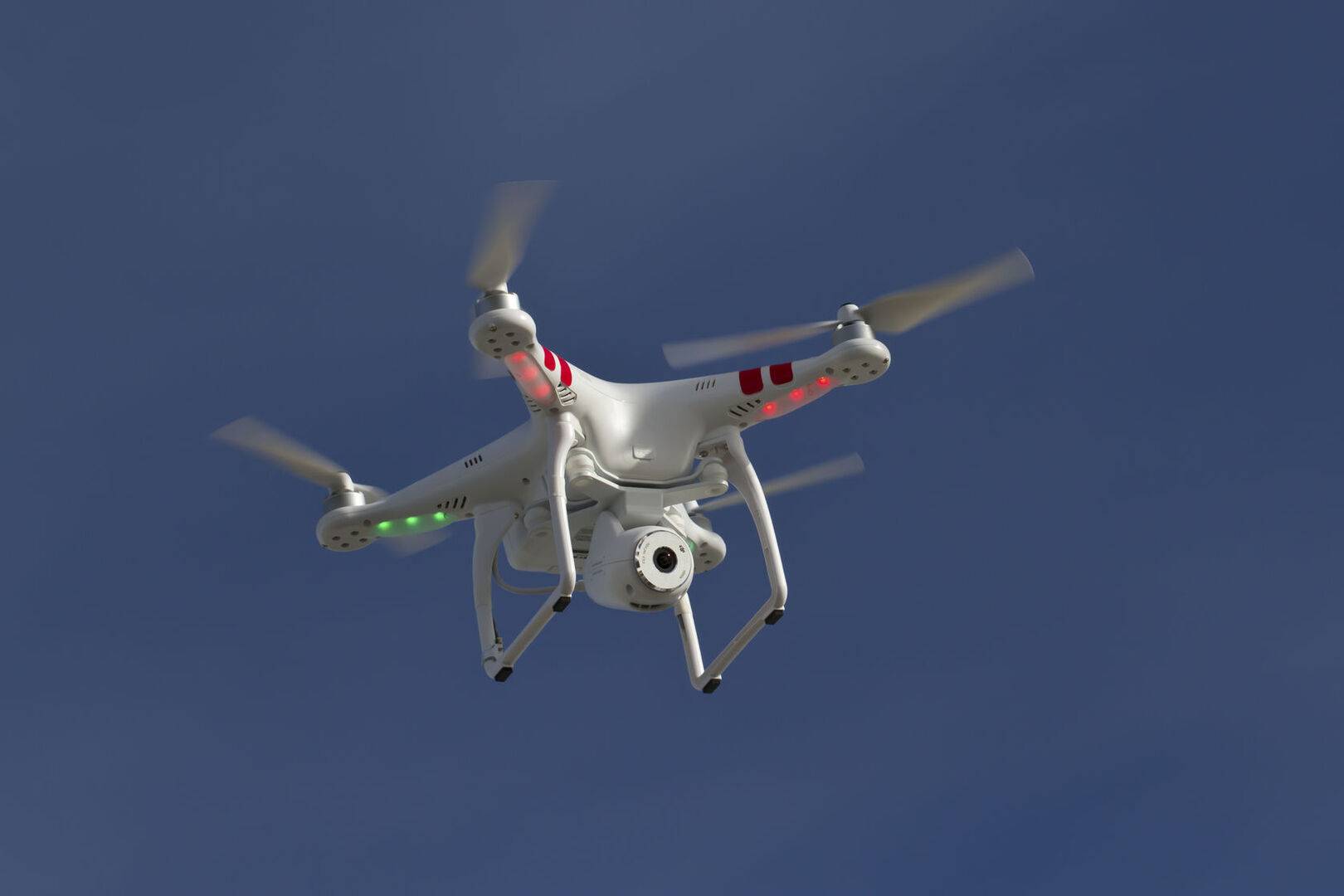
    Drone

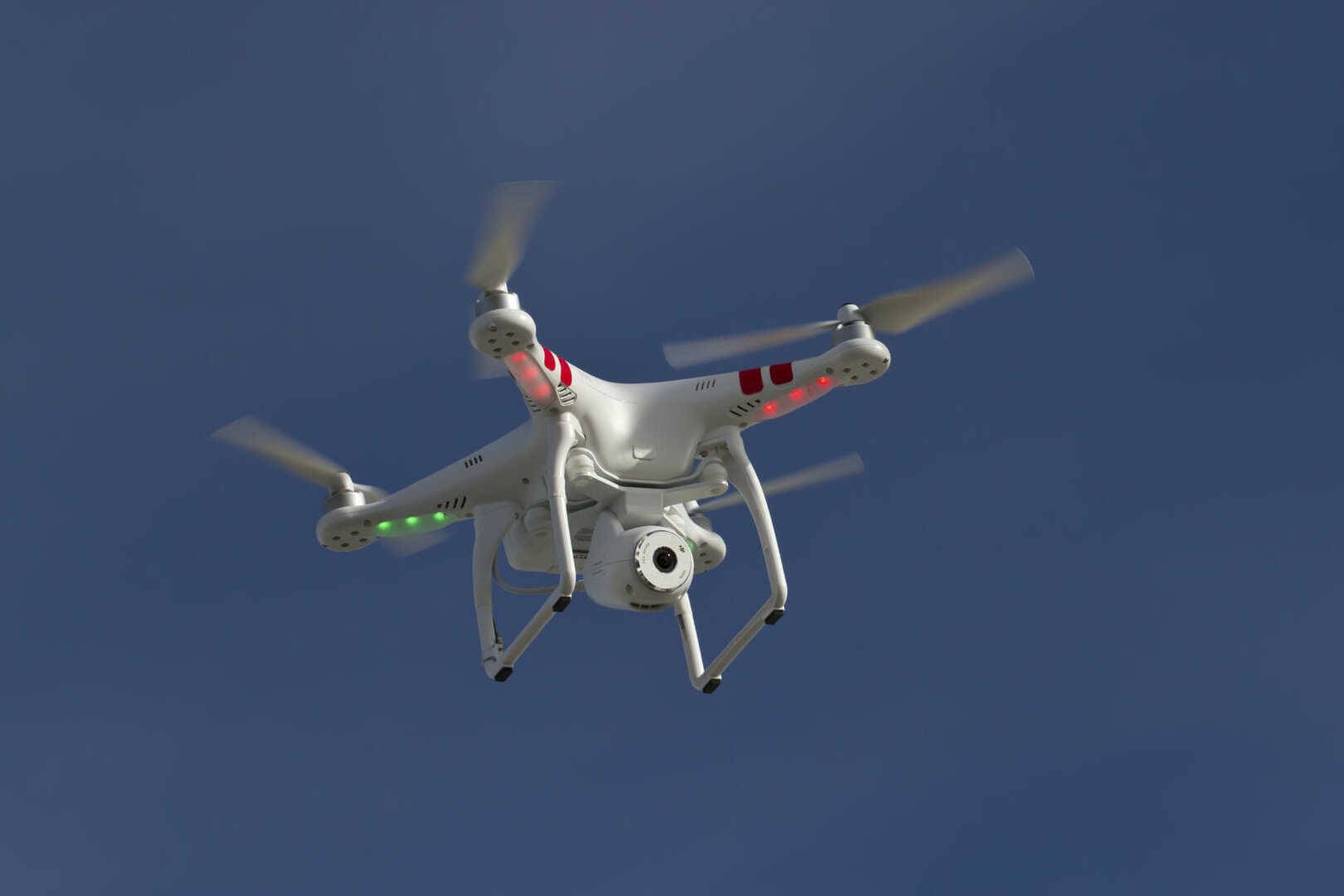
    DroneTo fully appreciate the capabilities of today’s 8-stack hybrids, we believe you must see how far corn breeding has come. The story of corn starts with wild teosinte, which doesn’t resemble today’s plants. Come see for yourself! At Latham’s Seed-2-Soil® Field Day in Alexander on Friday, September 19, you can walk through the history of corn, get a sneak peek of our 2015 product lineup plus watch a high-flying drone demonstration.

    The Seed-to-Soil field day begins at 9 AM with field tours including a technology showcase plot with 40+ of the industry’s most innovative hybrids and varieties. See the unique interactions of 30+ corn hybrids with row spacing, population and stress wheel studies.

    Chad Colby of AgTechTalk, one of the most respected and well-versed individuals in the UAV field, will demonstrate several types of drone technology. He will also share his experiences applying the technology to the farm.  Following the high-flying drone presentation, a drone sponsored by Greenleaf Genetics will be awarded to one lucky attendee.

    Also at our field day on September 19, you’ll see how you can benefit from the 4 main components of Latham’s Seed-2-Soil program: (1) Crop Planning; (2) Nutrient Management; (3) Agronomic support; and (4) Seed Treatments.

    Put September 19th on your calendar for the Latham Hi‑Tech Seeds Field Day in Alexander, beginning at 9 AM. To RSVP, call your local Latham® representative or dial 1-877-GO-LATHAM (1-877-465-2842).

    Team Latham

    September 15, 2014
    Agriculture, General, Industry News
  • Latham Hi‑Tech Seeds

    Follow the Money & Find the Motive

    LarrySailer Kickoff

    LarrySailer_KickoffThe fight over food this past week seems to have stepped it up a notch! The Food Babe is all over my news feed for her views on some type of food or another. Last week she posted her findings from an “investigation” into Starbucks Pumpkin Spice Latte. That post went viral and continues to be a hot topic.

    Food fights have reached a new level, which brings to mind why I try so hard to listen and bridge the communication gap between consumers and producers. In Michele Payn-Knoper’s (pronounced “Pain – Ka-nope-r”) book, No More Food Fights, I’m quoted as saying, “A conversation must include listening. I need to know the concerns of people and to learn how they view what I do.”

    While I listen to promote greater understanding of farming to consumers, many celebrities and well-known “experts” like Dr. Oz and influential businesses don’t. They knock different foods to promote ideas that get attention. The Food Babe would lose her fan base if she actually listened and understood. Stores like Whole Foods wouldn’t be in business unless some consumers could be persuaded to believe that ” mainstream products are bad for you.

    The food conversation is no longer about the truth. It is about making money!

    Wayne Pacelle, President and Chief Executive Officer (CEO) of the Humane Society of the United States (HSUS), is another good example of someone who uses emotions to sway others’ thoughts and actions. His organization shows pictures of scared little kitties and abused dogs on late-night TV, and then asks you to donate $19/month. The truth is, HSUS uses emotion to raise money to pad retirement funds and to hire lobbyists.  Only one half of one percent of funds raised by HSUS goes toward animal care!

    Now Pacelle is trying to impact how I raise pigs. He’s painting a picture of how horrible farmers like me treat pigs just so his organization is able to raise funds. For 50 years, I have continually tried to improve how I raise pigs. If it were as bad as Pacelle claims, I’d be out of business!

    GMO is another buzzword. How many people have ever been harmed by GMOs? None! How many people are harmed every day because they don’t have access to GMOs? Literally millions… People who live in poverty suffer from Vitamin A deficiency resulting in compromised immune systems. Yet activists have let “fear of the unknown” trump pure facts. Somehow we must learn how to use science-based information with emotion!

    We also must uncover scams. If we follow the money trail, we’ll find the activists’ motives. Not only is this true as it relates to food, but it also applies to the environment. There is so much misinformation about conservation and water quality. For example, CEO and General Manager of the Des Moines Water Works Bill Stowe seems to know all about how farmers are polluting the drinking water for Greater Des Moines. Just ask him! He can show you “proof” with all kinds of charts and graphs. Why? His objective is to secure more money for his operations. The worse he can make the water quality look, the more funds he can acquire!

    Americans must read, listen and analyze. Question the “experts.” Examine multiple sources. Uncover the truth.  Don’t assume something you read on the internet is actually true. Consider the source — and the motive behind the source. Follow the money trail!

    P.S. Farmers must enter the food conversation.

    Larry Sailer, Musings of a Pig Farmer

    September 9, 2014
    Agriculture, General, Industry News
  • Latham Hi‑Tech Seeds

    Breaking Down Walls in China

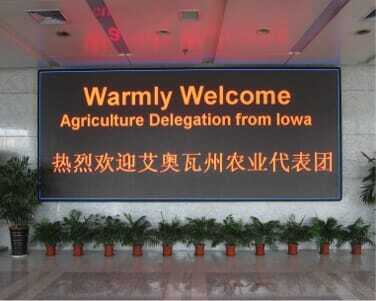
    Welcome
    April Hemmes in China
    April Hemmes in China

    Guest blog by April Hemmes, who farms south of Hampton in Franklin County Iowa

    World traveling farmer reporting in to The Field Position! My latest adventure took me to China.

    It all started back in January when my husband brought me the Farm Bureau Spokesman and said, “They’re taking a trip to China, and you need to apply for it. All they want you to do is talk about the trip when you get home. I think they would get their money’s worth out of you!”

    I applied, never thinking in a million years they would pick me. Then in late February, I got the news that I was one of 18 farmers chosen! The trip was sponsored by Iowa Farm Bureau, and we paid a portion of our own way.

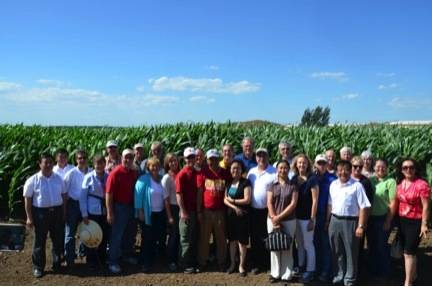
    In late June, 11 men, 7 women and 2 Farm Bureau staff members took off for China. We ranged in age from 26 – 74. It was a pretty diverse group, but like I say, when you put a bunch of farmers together you always have a good time.

    Group_China

    We flew into Beijing with stops at a wholesale produce and a meat market, plus the U.S. Embassy, U.S. Grains Council and Meats Council. Our last day in Beijing started with a meeting at the Ministry of Science and Technology. Teachers and researchers of Agricultural subjects met with us and we spoke about agriculture in China and how they inform farmers of research they have done. The quote I came away with was that they don’t tell farmers what to plant but they “ spare no effort” to suggest what crops would be best for the farmers to plant. I know what I would think if anyone “strongly suggested” what I should plant!

    A few take-away from our visit include:

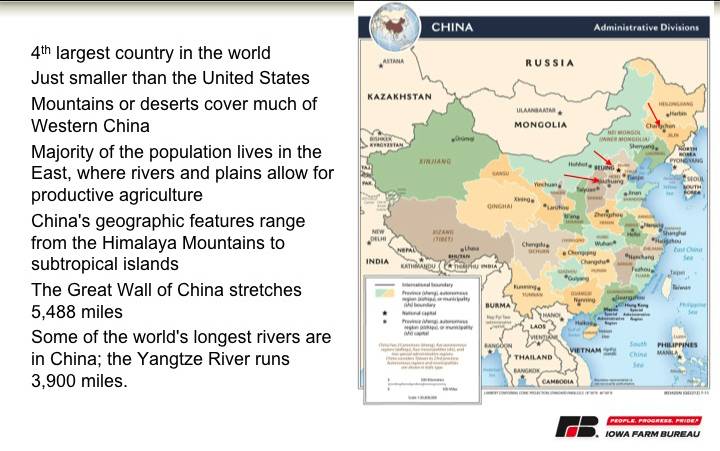
    • Nearly 90% of the crops are still grown on small farms. A little more than half an acre is the average farm size.
    • A large farm is thought to be 25 acres. The Chinese Government wants to increase the size of farms, so there is a need to move the farmers into the city. We saw high-rise apartment complexes being built in the middle of nowhere. I had heard about this but seeing it with my own eyes just confirmed it for me.

    ChinaFacts1

    Good to see family that lives far away!  With my sister in law Jackie!
    Good to see family that lives far away! With my sister in law
    Jackie!

    My favorite part of visiting Beijing was getting to see my brother-in-law and sister-in-law! My husbands’ brother, Jim, lives in Beijing and has for 7 years. His wife, Jackie, was born in Shanghai. She went to school at Arizona State University and is now an American citizen. Jackie works in finance and is very involved in a group of women leaders in China. They organized a night where we had a panel of Americans and others doing business in China, telling us what that involved. We also had a panel of women leaders in different areas telling about their experiences and what it was like for women working in China. I was very fortunate to be involved in that panel!

    From Beijing, we set off for Heibei Province. Heibei is the sister state to Iowa. Our final destination in the province is Shijiazhuang, which is the sister city of Des Moines. Iowa and Heibei Province have had leaders visiting for over 30 years. The President of China , Xi Jinping, has been to Iowa several times. We were treated like dignitaries here and had several interesting stops including a corn processing plant, dairy and milk processing plant along with the local agriculture college.

    One of our formal dinners in the Sister State of Iowa.  Hebei Province.
    One of our formal dinners in the Sister State of Iowa. Hebei Province.

    Our last stop was the province of Jilin. It is in the North East part of China, but it reminded us all of home with a lot of cornfields and a climate much like ours. Local dignitaries met us here, too, and followed us throughout our stay. One of our visits was to a farm where 5 producers went together and farm 1,500 acres.


    Remember, each landowner has around a ½ to 1 acre of ground, so they worked with a lot of owners! They also hire 36 employees for the farm. They couldn’t believe it when we said we would have about 2 or three people to work that amount of ground. They still pick in ear corn and store it that way. The government pays them $9.50 a bushel for their corn. This is a communist state, so there is no open market for grain trading. It is $2/bushel cheaper for the livestock feeders there to import corn from America than it is to feed the lower quality corn stored in China.

    Because it is a communist state, we only saw what they wanted us to see. No random stops were made along the way. Our group quickly realized that the nature of the trip was a market study tour and had changed to a networking /diplomatic trip. But that was just fine with all of us and we made the best of it.

    There was never a dull moment or lack of discussion during our meetings and banquets. As a result of the contact we made, three Chinese groups have contacted the Iowa Farm Bureau about visiting our state! This is great news and makes for a successful trip.

    It wasn’t all work on our trip, however. We did some cultural sightseeing: Tiananmen Square, Forbidden City, the Great Wall, Olympic Table Tennis center, ancient monasteries, silk and pearl markets and one of the largest shopping malls in the world. All of which were amazing and wonderful to experience!


    It was truly an honor to go on this trip and I would highly recommend anyone to apply for this trip next year. Look in your Farm Bureau Spokesman around January for details. I made life-long friends, not only with the Iowa farmers with whom I shared this wonderful adventure, but in China as well.

    Team Latham

    September 8, 2014
    Agriculture, General, Industry News
  • Latham Hi‑Tech Seeds

    Threshing Days are Stark Contrast to Today’s Harvest

    20140830 145823

    20140830_144039“To appreciate farming today, one must understand history” was the main point I made in last week’s blog post. A few days after I posted that blog, I had the opportunity for a hands-on history lesson at the 3rd Annual Norris Threshing Day northwest of Mason City, Iowa.

    It was a beautiful, late summer, Saturday afternoon. Some clouds floated by, giving a little shade once in a while, and a nice breeze was blowing. It was just one of those days when you’re thankful to be alive and able to enjoy the great outdoors.

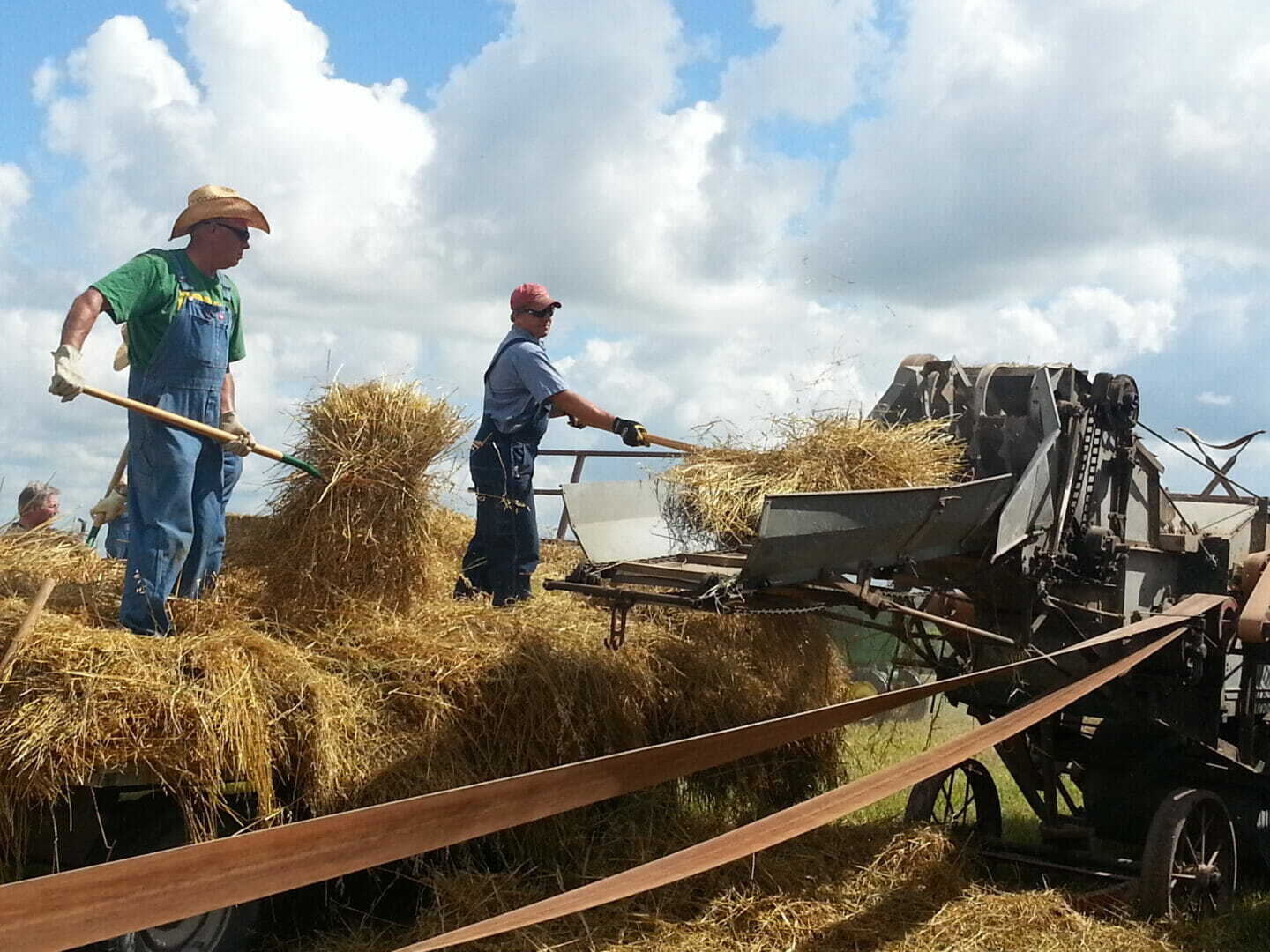
    As my wife, Janice, and I drove to into the lane, a nice A John Deere was popping away and singing on two cylinders. It was attached by a long belt to a threshing machine. This machine is like a stationary combine, separating the grain from the rest of the oat plant. The difference is that oats must be fed into the threshing machine, by hand, from a flat rack.

    20140830_145823

    Preparing for threshing requires advanced preparation. The oats are first cut and put into shocks, which are bundles of plants tied together, days before. The shocks are then picked up by hand and put on flat racks, which are four-wheeled wagons that are pulled beside the thresher. The bundles are then thrown onto a conveyer with a pitch fork and conveyed into the thresher to be separated.

    In the three hours that I was watching the threshers, less than 100 bushels of oats went into the wagon. Remember, this was just the threshing part. Hours were spent in advance, cutting and shocking the oats. Consider this… A modern combine can do ALL of these steps and harvest about the same amount of grain in 10 minutes!

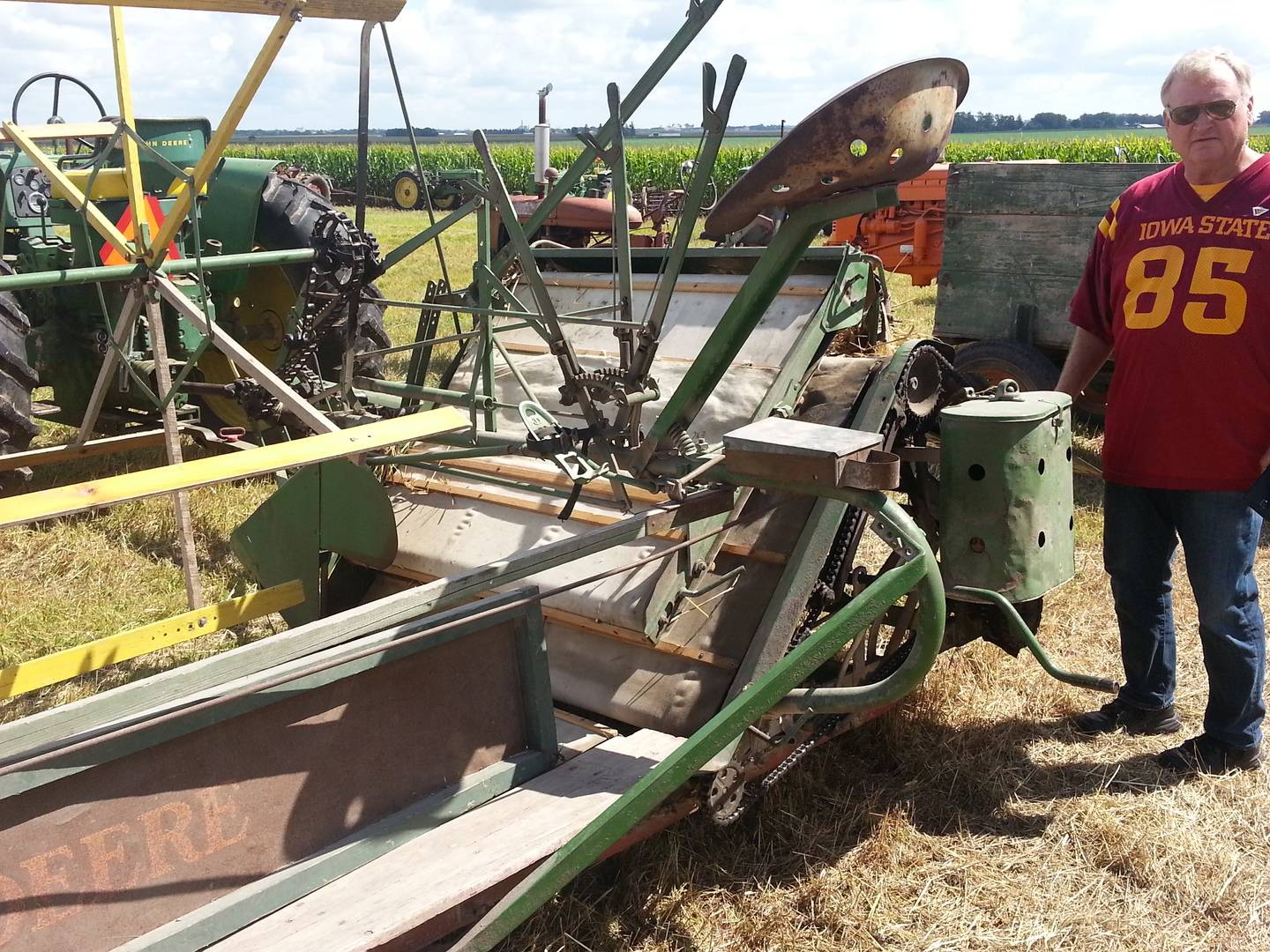
    Charlie Norris and his family had some other older machinery lined up around the field. Janice and I took a nice trip down memory lane, reminiscing about the “good old days.” We looked at outdated equipment like moldboard plows and small field cultivators, which were used to turn the soil black when I was a kid. (Today we leave crop residue on top of the soil to keep it from blowing away or washing away.)

    I also saw many older John Deere tractors like the ones I used when I started farming in the 1970s and couldn’t help but think of all the advancements that have been made. The technology we use today has made farming so much less labor intensive – and safer. The hard labor and dangerous equipment used in the “good old days” played a large role in many farm kids getting an education and moving to the city for better pay, better hours, and not all the manual labor!

    Thanks to new technology, many 30- to 45-years-old and are either returning to their rural roots or moving to rural areas for the first time. They’re bring high skill sets, such as college degrees and master’s degrees, and have a career path in place with outside connections.

    Why the rural rebirth? Come see for yourself! A fall harvest bloggers tour, like we host in Franklin County, is a great way to see modern day farming in action. I’m on the planning committee for it this fall, so let me know if you’re interested in attending, even if you don’t blog. You can also learn more about modern farming by following along daily with the Iowa Food & Family Project. And, of course, you can always ask me questions!

    Larry Sailer, Musings of a Pig Farmer

    September 2, 2014
    Agriculture, General, Industry News
  • Latham Hi‑Tech Seeds

    To Appreciate Farming Today, You Must Know History

    Loaded corn 1939
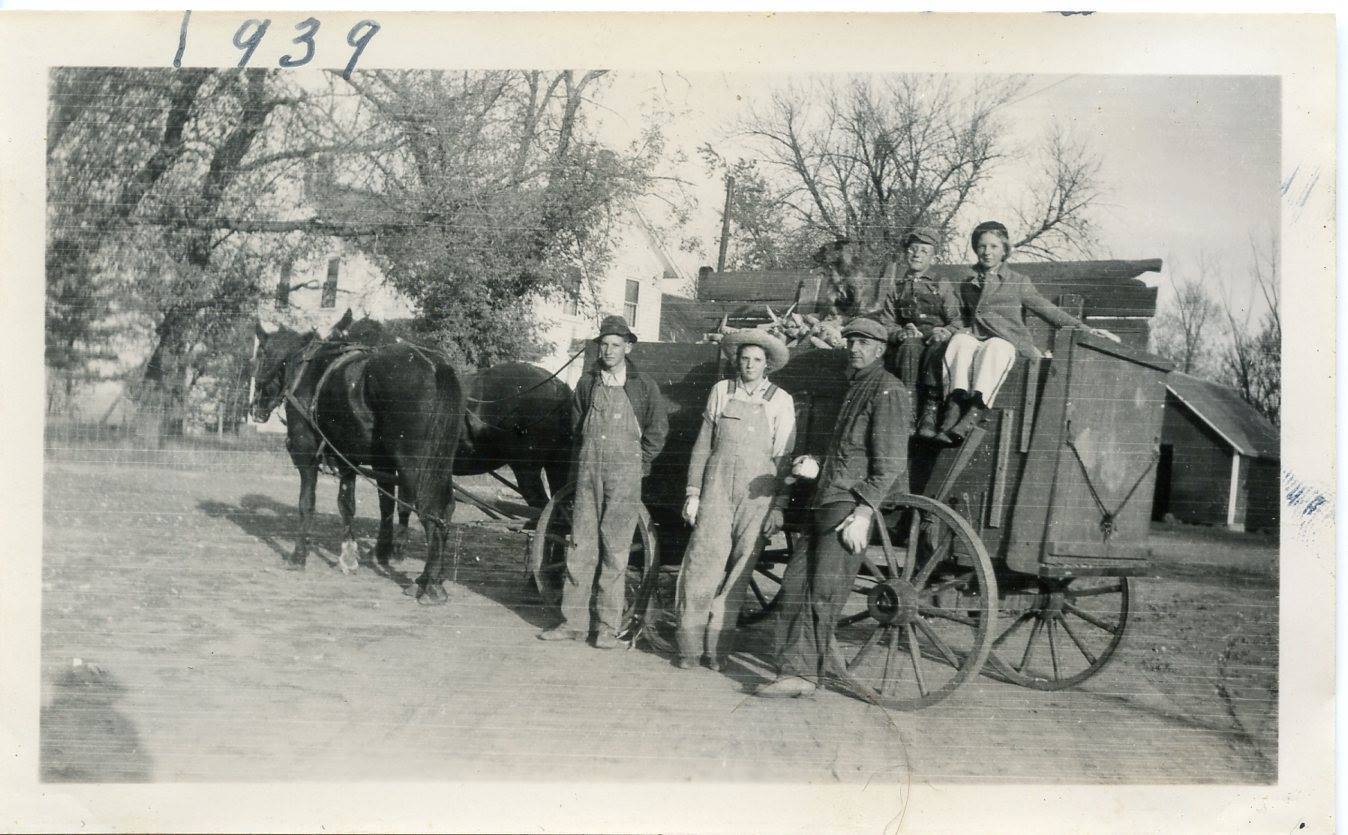
    It took an entire family to bring in a load of corn back in 1939. Janice’s grandpa, Fred, is leaning against wheel. Her father is pictured next to him. Just imagine the manual labor involved!
    It took an entire family to bring in a load of corn back in 1939. Janice’s grandpa, Fred, is leaning against wheel. Her father is pictured next to him. Just imagine the manual labor involved!

    Have you ever wondered what farming and our food system would look like if we farmed the way we did in “the good old days“? I found myself thinking about this topic as I had lots of windshield time to reflect while driving to the 7 meetings I attended last week. (So much for winter being the farmers’ meeting season!)

    Every time I tried to decide how others would perceive farming in the good old days, I got hung up. When were the good old days?

    Many folks believe farming was simpler before technology… but which technology? Technology has a different definition, depending on a person’s occupation or personal experience. Some might define the “good old days” as the time before we planted genetically modified crops. Others might define it before the advent of equipment like GPS and tractors with tracks instead of tires.

    no-tillYet today’s equipment allows us to better manage our land, reduce soil compaction and implement practices like minimum tillage. Today’s farming advances, such as herbicide application and genetically modified seeds, are the most talked about today. But why? What people do not understand, they often fear. Those oppose new technology capitalize on “fear of the unknown.” Fear is used to discredit new technology.

    To understand agriculture today, we must know where it has evolved from. In 1790, 93% of the population of the United States was rural, most of them farmers. By 1990, barely 2% of our population farmed.

    “The agriculture we have today in the United States is unique,” writes J. Paul Lilly, Associate Professor Emeritus, Department of Soil Science, North Carolina State University. “No nation has ever had so few people actively farming. This is a profound social change that has isolated most people from rural life and from an appreciation of the complexities and uncertainties of food production.”

    As a young farm boy, I remember the many different types of crops and livestock we raised that provided food for our own family. We had dairy cows, beef cattle, hogs and chickens. I’ll never forget that goose that chased me and bit me in the belly or the sheep buck that nailed me in the rear as I carried two, 5-gallon pails of feed!

    I remember farrowing pigs under flat racks in the pasture. (I could have been a track star because I had plenty of “training” as I ran to jump on the hay rack before a sow, protecting her baby pigs, could catch me!) I trekked several miles, walking soybean through fields and pulling weeds before the advent of Roundup Ready Soybeans. I learned to drive the “70” John Deere on the hay baler when I was six!

    I could go on and on about “the good old days,” but I think you get the picture. Farming was a lot of hard, manual work back then. I’m still not sure how or why I survived, except maybe I was still needed to write this blog! I’m not saying that farming is not hard work today, but it’s a different type of work. We farm in a way that is safer and smarter. We also know a lot more about the need to fertilize (feed) plants, as well as protect the water and soil.

    In the “good old days,” we plowed the fields until they were black. Farmers took pride in the fact that you couldn’t see a corn stalk when they had finished field work. Why was this a source of pride? The herbicides available then didn’t work if they were diluted by organic matter, or corn stalks. The equipment used then to make a seedbed plugged if the corn stalks were not completely buried. Planters at that time couldn’t plant uniformly if there were stalks, dirt clods or if the ground was uneven. We plowed, disked and field cultivated until that ground was powder.

    This was back before we had terraces, buffer strips, or practiced contour farming. As a result, it was common to see road ditches full of black soil and streams full of silt. With black tillage, there wasn’t much room for wildlife to hide. I remember only seeing a deer one time as a young boy. That’s not the case today as wildlife has made a huge comeback. Every time I drive home after dark now, I’m watching for the next deer on the road. It’s not uncommon to see eagles soaring either.

    The chemicals we use today are so much more environment friendly, too. When I started farming, it was a problem getting rid of all the pails the chemicals came in because we measured chemicals in gallons. Now we measure in ounces!

    Minimum tillage and no till, made possible by new technology including Roundup Ready corn and soybeans, have made this comeback possible. New seed genetics allow crops to withstand conditions that the crops of my youth wouldn’t survive. They have better stalks and better roots. Today’s crops can withstand dry weather, insects, disease and just plain yield better.

    When I think of all the new technology being developed today (drones, GPS, crop genetics), I’m even more confused about how to define “good old days.” Perhaps the best answer is the original garden… but even then, there was that darned old apple tree!

    Larry Sailer, Musings of a Pig Farmer

    August 26, 2014
    Agriculture, General, Industry News
Previous Page
1 … 34 35 36 37 38 … 85
Next Page

Latham Hi‑Tech Seeds

131 180th Street | Alexander, IA 50420

(641) 692-3258

SIGNUP FOR OUR NEWSLETTER
  • Contact
  • Legal
  • Dealer Center
  • Seedware Login
  • Latham Gear

© 2025 Latham Hi‑Tech Seeds. All rights reserved. | Iowa Web Design by Webspec | Privacy Policy

Latham® Hi-Tech Seeds is a trademark of M.S. Technologies, L.L.C., 103 Avenue D, West Point, IA 52656.