Latham Hi-Tech Seeds

(641) 692-3258

  • Home
  • Products
    • Corn
    • Soybeans
    • Alfalfa
    • Corn Silage
    • Seed Guide
  • Performance
  • Find a Rep
  • Media
    • Blog
    • News
    • Videos
    • Podcasts
    • TECHTalk
  • About Us
    • Company History
    • Our Mission
    • Careers
    • Become a Rep
    • Sowing Seeds of Hope
  • Contact Us
  • Latham Hi‑Tech Seeds

    Patience is Key at this Point in the Planting Season

    IMG 0302 e1431660505547

    Mid-May is here but there’s no need for farmers to rush into their fields to finish planting. Farmers across the Midwest are still within the time period for great yields, so there’s no need to switch crops or maturities now.

    Due to the shorter growing seasons in northern Minnesota, as well as in North and South Dakotas, farmers try to get their crops in the ground as early as possible. May 6-13 are considered optimal soybean planting dates for much of Northeast South Dakota, while early May dates are recommended for the southern areas of the state. Optimal planting dates in North Dakota range from late April to mid-May.

    Planting corn through May 15 is considered ideal in Iowa, but it sounds like almost all of the corn acres are planted across the state. For those farmers who still have some corn in the shed, there’s no need to even think about switching hybrids yet. Research shows that hybrids adjust to planting dates, so full-season corn hybrids can compensate somewhat for later plantings.

    As planting is delayed, hybrids shorten the time between planting and silking. Full-season hybrids almost always outperform short season hybrids, so Iowa State University Extension Corn Specialist Dr. Roger Elmore has said farmers really don’t need to consider switching maturities until May 25.

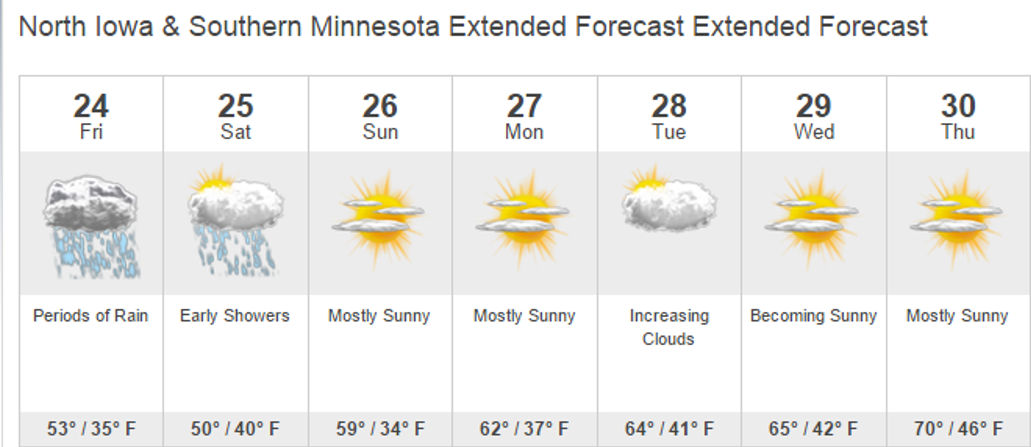
    Many planters are parked across much of Latham Country as measurable precipitation fell over the weekend, and rain clouds continue to hover this week. Moisture was needed to get many crops off to a good start, as well as to activate herbicides, in the north. It’s just too bad some of this precip came in the form of snow! It looks like fields will remain wet across much of the Upper Midwest this week, but sunshine and warmer temperatures are on the horizon.

    As hard as it is, be patient and wait for soils to dry before planting resumes. Planting into unfit conditions can cause lower yields than delaying planting by a few more days. Working soils that are too wet now could lead to soil compaction and have negative impacts on your crops during the growing season including: stunted plant growth; slow infiltration of water and/or ponding; high surface runoff and soil erosion under normal or light rainfall; poor root system establishment; and nutrient deficiency.

    The best rule of thumb is to let the field dry before doing fieldwork. Use a quick field test to check the soil moisture: mold a length of soil between your index finger and thumb, or roll it into a ball in your hand. Observe whether the soil breaks apart as you work it.  If you toss the ball of soil into the air and it shatters or cracks upon falling to the ground, then conditions are likely suitable for tillage or planting.

     

    Webspec Admin

    May 14, 2015
    General, Season, Spring
  • Latham Hi‑Tech Seeds

    Feds Spend Billions of Taxpayer Dollars to Battle Mother Nature

    Darcy patriotic farm

    Can man really control the weather? Apparently the government thinks so and is willing to spend your money to do it!

    Last August I attended a conference on resilient agriculture where I heard a presentation by William Hohenstein, director of the U.S. Department of Agriculture (USDA) Climate Change Program Office. One year ago this month, he released a “new” report stating that “climate change is already happening across the United States.”

    Apparently that sensational headline didn’t spark enough attention so now the USDA announces it is building a program to respond to climate change. An article in the May 1 edition of the Illinois Farmer Today states: “This [new program] will utilize voluntary, incentive-based conservation, forestry, and energy programs to reduce greenhouse gas emissions, increase carbon sequestration and expand renewable energy production in the agricultural and forestry sectors.”

    Mr. Hohenstein’s job is to ensure every government agency considers climate change before any project is undertaken! He has been given a lot of power, and money seems to be no object. It seems every week I read about another muti-million program from my “favorite government agency,” but apparently the USDA doesn’t have to prove whether the expenditure will lead to the desired results.

    When are Americans going to start questioning whether centralized government is the best route? This week I read an article in The Daily Signal entitled, “The Death of the Green Energy Movement,” where author Stephen Moore concludes:

    We don’t know if renewables will ever play a significant role in America’s energy mix. But if it does ever happen, it will be a result of market forces, not central planning.

    When taxpayer money is thrown at green projects, there is going to be waste. Why are we continuing to throw money into a sink hole as big as “climate change”?

    Undoubtedly, weather changes. Weather cycles even repeat themselves… Remember what we learned about the Ice Ages? That climatic change occurred without man’s interference! Throughout history, weather events like meteors, volcanoes, earthquakes have occurred that affect our weather.

    Climate change is real, but government bureaucracy is also real. Our Founding Fathers believed in less government control and more free enterprise. The United States, and let me repeat STATES, was built by private business owners coming up with solutions to problems. Private business owners have skin in the game. Let’s let real, true ingenuity from our private business come up with solutions that will work!

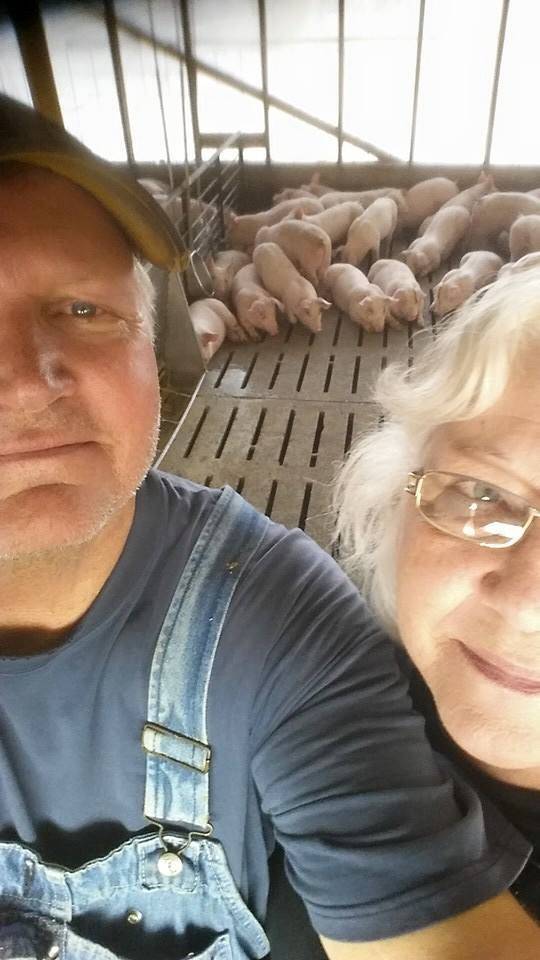
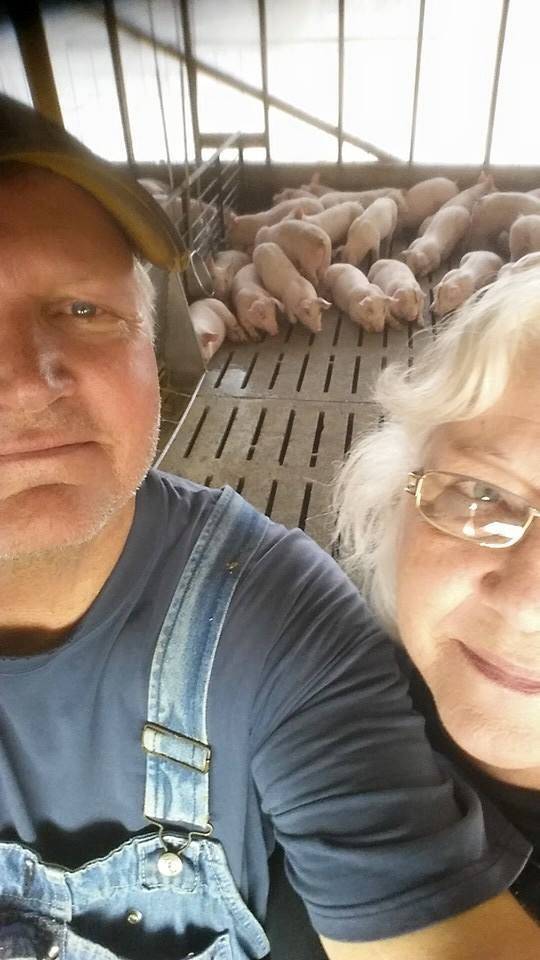
    Larry Sailer, Musings of a Pig Farmer

    May 12, 2015
    Agriculture, General, Industry News
  • Latham Hi‑Tech Seeds

    Protein Packed Day with Beef

    NCBA PC AppetiteControl 300x250

    DSC_0720guest blog post by Brooke Young, Iowa Beef Industry Council

    The weather is warming up, and Americans are firing up their grills. There is no better time to celebrate all the great benefits of beef than during May Beef Month!

    As a young female who has recently found a hobby in running and fitness, I’ve realized first-hand all of the benefits of lean beef. Beef is one powerful protein. In fact, one serving of lean beef (3 ounces) contains 25 grams of protein with only 154 calories!

    Research has shown there are health and wellness benefits to consuming protein in balanced amounts at each meal. Protein is beneficial for anyone looking to maintain/build muscle, looking for weight or appetite control, or simply striving for better overall nutrition.

    With this information, the beef checkoff in April launched a 30 Day Protein Challenge. This is a fun, step-by-step program to incorporate more protein into the everyday diet. Join the conversation using #ProteinChallenge on Twitter and Facebook.

    NCBA_PC_AppetiteControl_300x250I compare the 30 Day Protein Challenge to training for a 5k or marathon. You’re not going to get up off the couch one day and run a marathon. You’re going to follow a step-by-step training guide to build strength and endurance. The same is true for the 30 Day Protein Challenge. In fact, the first 5 days are spent journaling and reviewing, then slowly building the “endurance” to consume 25-30 grams of protein three times a day. The best part? Trying new recipes and incorporating beef into breakfast, lunch and dinner!

    Throughout the challenge, it was obvious to me that I was not consuming enough protein for breakfast, the most important meal of the day. I would often times grab a granola bar on my way out for work, but then I’d find myself reaching for snacks mid-morning. By incorporating a protein-packed breakfast into my day, I was able to take control of my appetite and stop the urge for mid-morning snacking.

    Below is a quick, easy recipe to put your protein into your morning. For more cooking tip, recipes, or to find out more about the Iowa Beef Industry Council, visit www.iabeef.org


    Team Latham

    May 8, 2015
    Beef, General, Recipes
  • Latham Hi‑Tech Seeds

    Time to Begin Early Spring Crop Scouting

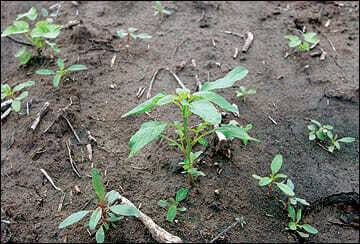
    Water hemp

    Most soil-borne pathogens strike as soon as the seed begins to take on water; others strike seedlings. Because seeds can germinate and emerge within 3 to 5 days, post-planting is an ideal time to begin scouting crops.

     Start taking field notes now on how well each particular hybrid number is emerging. Observe the uniformity of the stand across the field. There may be certain areas that show poor emergence, while the rest of the field will have a good stand.

    You may notice a difference in emergence and stands in early planted fields compared to later planted fields. Soils were warmer in early April than they were during the third week of the month. The magic temperature for corn to germinate is 50 degrees Fahrenheit. The ideal soil temperature for soybean germination is 77 degrees, but it’s usually late May or early June before soils reach those temperatures here. Instead we recommend that farmers wait until soil temperatures are about 60 degrees before planting soybeans.

    The combination of warm temperatures with gentle rains that we have received in North Central Iowa this week are just what the seeds in the ground need. Of course, this also makes ideal growing conditions for weeds! 

    water hempShortly after emergence is a good time to start looking for weeds. Monitor fields weekly through the growing season for the most effective weed management. Dr. Mike Owen, Associate Chair of Iowa State University’s Agronomy Department and Extension Weed Specialist, recommends using a soil-applied residual herbicide on all acres. He advises farmers to know what herbicides they’re using, what those herbicides control – and do not control – plus the potential for crop injury.

    Diversity of tactics is key, says Dr. Owen. Rotating crops, rotating traits and rotating pesticides is the best way to slow down the very natural process whereby pests develop resistance to products that mankind uses to protect crops.

    Today’s seed technologies, such as Genuity® SmartStax®, allow you to rotate modes of action on corn ground. Latham soybean customers this spring planted a record number of LibertyLink soybeans. In fact, farmers like Mike Albertsen produced their best yields ever in 2014 using Latham soybeans with LibertyLink technology.

    Your 2016 crop plan begins with notes taken throughout the growing season. Then talk with your local Latham representative about designing a crop plan that controls weeds and addresses other challenges you see throughout the growing season like insects and disease. For more information, feel free to contact the Latham office at 1-877-GO-LATHAM (1-877-465-2842).


    Webspec Admin

    May 7, 2015
    Agronomics, General, Insects, Weed Control
  • Latham Hi‑Tech Seeds

    Put Your Time & Money Where Your Heart Is

    11139011 1709642632596127 2992258998198103083 n

    11139011_1709642632596127_2992258998198103083_n Sunday morning before I went to church, I shared an article about Australia holding a day of prayer for the USA. It was admitted that Australia may have the same moral and spiritual bankruptcy as the U.S. but its concerned more because so many countries worldwide benefit from foreign aid from America.  The article states: “Moral and spiritual bankruptcy leads to financial and governmental bankruptcy. America is in great danger from within and from without.”

    After sharing this post, I went to church. I didn’t check my Facebook account until the church service was done, and there was a pretty charged debate taking place on my post! Everything from civil unions to a separation between church and state was being discussed. Many comments were thought-provoking, and my “friends” definitely were passionate about their beliefs.

    This online debate combined with the sermon I heard earlier that morning brought his scripture to mind, “For where your treasure is, there your heart will be also.” – Matthew 6:21

    Pastor Scott’s sermon on Sunday, as always, seemed to be directed at me. (Ok… Ok… Pastor Scott probably isn’t targeting me, but his sermons are definitely speaking to my heart!) The burning question Pastor Scott raised Sunday was, “Who or what is the king ruling over your life?”

    Are you a workaholic, who is allowing your job to take you away from church and family? Do you value material possessions, such as your house or vehicle, to separate you from what’s more important? I knew what my wife, Janice, was thinking as she listened to this sermon. After all, Janice has often threatened an intervention of my Social Media!

    While I really don’t believe agvocating has gotten in the way of church and my family, it definitely is time consuming. So many activities and jobs compete for my time. I’m more involved than ever with church activities. Serving as an Elder has been a very rewarding position. I’ve attended way more events for my grandkids than I did for my kids.

    No matter how much time I give to my church, my family or even my farm, I feel like there’s more I should be doing. My To Do List is longer than the list of projects I’ve completed. There’s landscaping to finish. My shop is going unused. There are rocks that need to be picked up from fields. The list goes on… My mind wanders to the numerous jobs on the farm that need doing as I sit writing another blog post!

    Some folks have suggested that I apply for a new award, America’s Pig Farmer of the Year for demonstrating the “We CareSM ethical principles.” I’m good at raising pigs, but I haven’t been all that successful at making money at it. Diseases like circo-virus have not helped my bank account. When my combine caught fire during harvest last fall, it made rethink farming this year. Less than breakeven grain prices makes “pushing a pencil” a must! I know there are others like me, who are thinking very hard about how to survive this round of low crop prices.

    Whether we farm or not, there are things that weigh heavily on our minds. We all have pet projects that distract us from our priorities. I thought by having some custom farming done this year, I would have more time. This may come back to bite me, but I’m going to give it a try. I’m going to fuel more energy into building my seed dealership, and I’m going to reprioritize my “Honey Do” list. Mother’s Day is this Sunday, and I want my wife to see just how much she means to me! We’ll attend church together and afterward we’ll enjoy a family dinner. I’ll be smoking pork, of course!

    What tops your list?


    Larry Sailer, Musings of a Pig Farmer

    May 5, 2015
    Agriculture, General, Industry News
  • Latham Hi‑Tech Seeds

    Latham® Seed Dealership Complements Beef and Crop Operation

    100 2033 e1430329645603
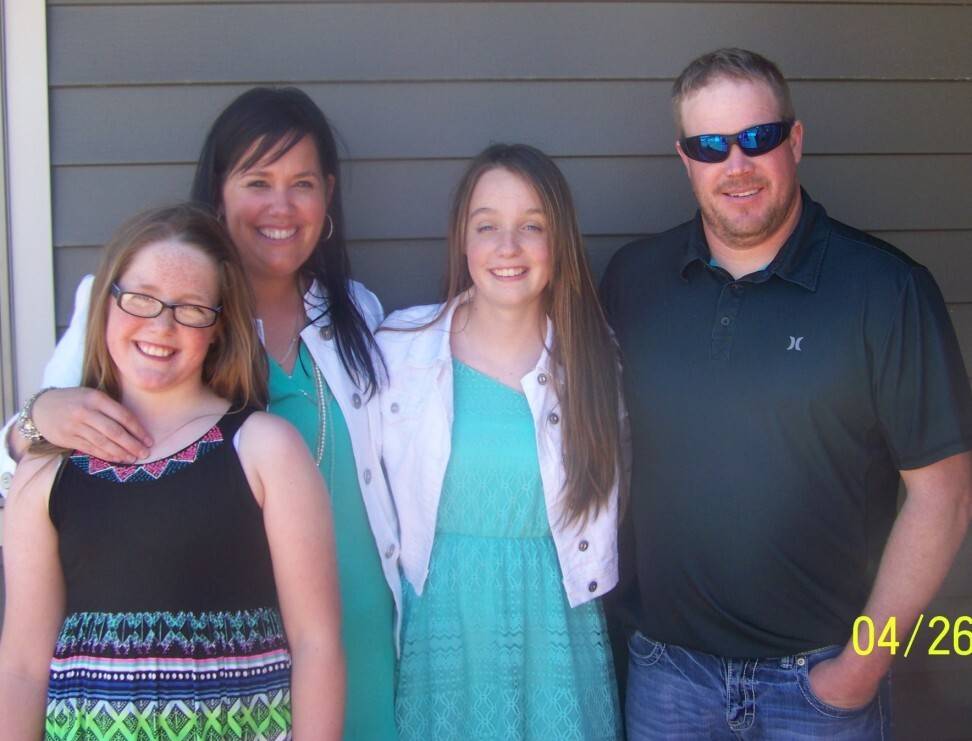
    What I like about raising the girls on the farm is there are so many learning experiences from weather and crops to raising cattle,” says Krystal Albertsen. “Our girls have hands-on experiences that most kids won’t get to do!
    What I like about raising the girls on the farm is there are so many learning experiences from weather and crops to raising cattle,” says Krystal Albertsen. “Our girls have hands-on experiences that most kids won’t get to do!

    Latham brand soybeans were top performers year after year for Albertsen Farms. When their local retail supplier went out of business in the 1990s, however, they switched to another brand. Then last winter Mike was researching LibertyLink® soybeans and came across Latham Hi‑Tech Seeds.

    Selling seed is a good complement to farming, says Mike. It allows him to earn additional income to complete projects like adding on to the shop or buying more cattle.

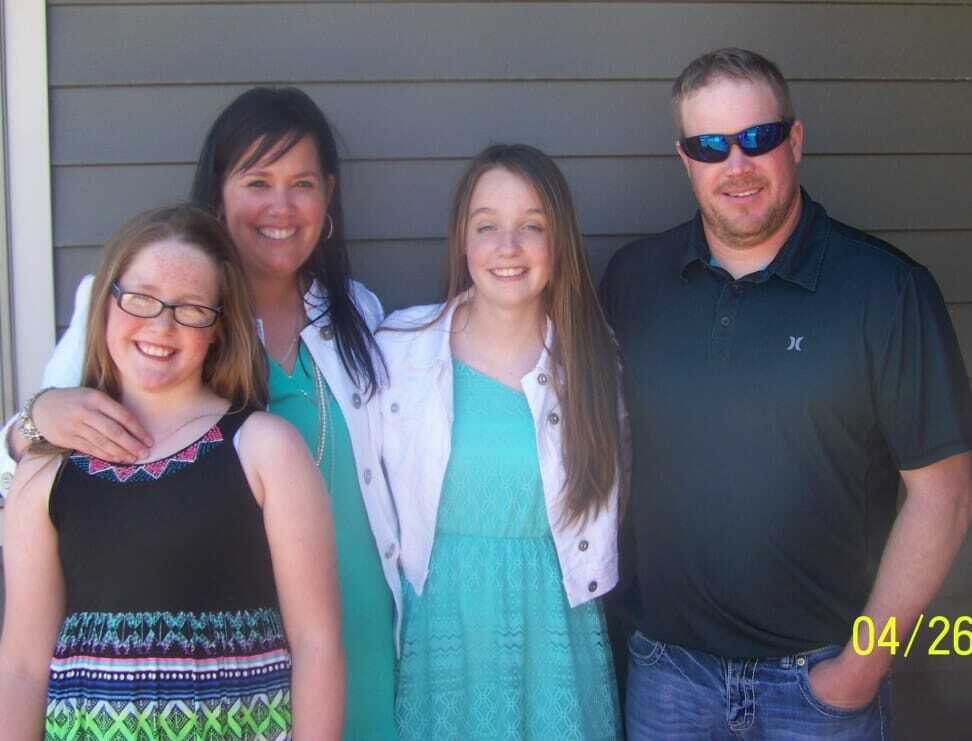
    The Albertsens raise registered Hereford and Black Angus, which they also cross to produce black and white commercial club calves. They have 60 cow-calf pairs but would like to double that because both of their girls are interested in 4-H Beef Projects. Mike and his wife, Krystal, are the proud parents of two daughters. Gracye is 14 and Sienna is 10.

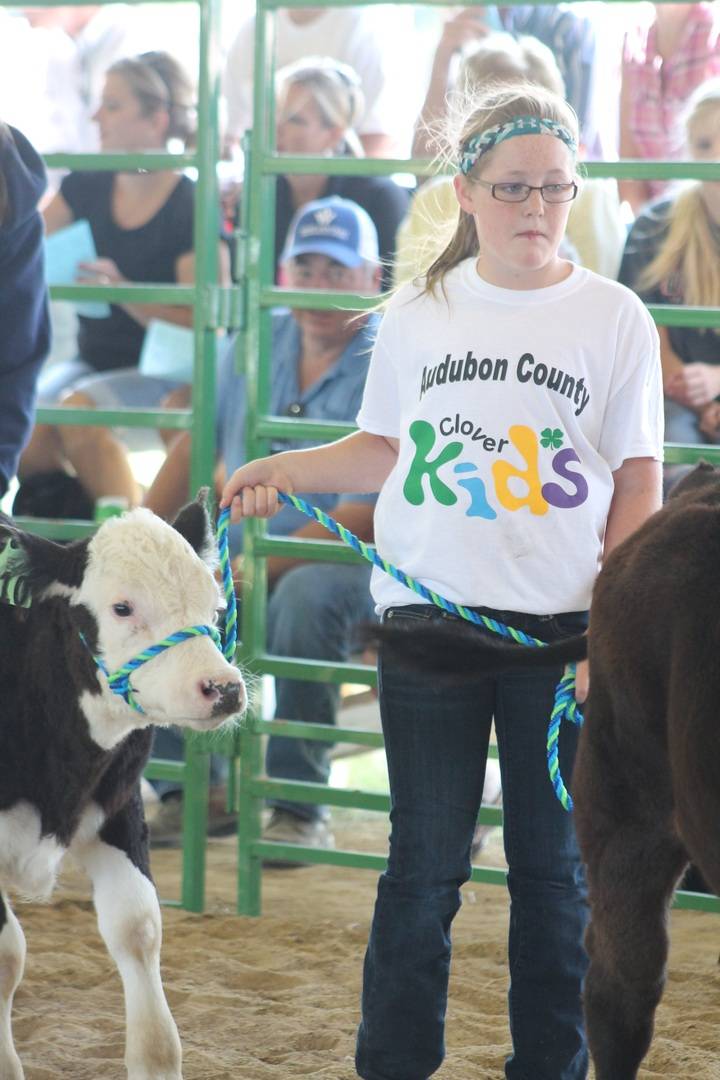
    “Our girls have learned so much about feeding the calves, and they both enjoy showing cattle at the fair” says Krystal. “Sienna got to show one of our calves that lost its mother as a bottle bucket calf (shown in picture) last year at the fair. This year she will get to show it as a Market Steer. It’s been a neat learning experience for her to be involved with the whole process of seeing this calf born, raising it on a bottle and now feeding it out.”

    100_1928

    In addition to 4-H, the girls are extremely active. Gracye is involved in volleyball, basketball, track, softball, golf, band and church youth group. Sienna is involved with softball, basketball and church kids’ choir.

    IMG_56481

    During the spring planting season and softball season, the Albertsens don’t have much time to spend cooking. That’s why Krystal appreciates quick and easy recipes that taste good, too. She says one of family’s favorites is the homemade Pizza Ring, which Krystal adapted from the blog Kiss My Apron.

    Team Latham

    May 1, 2015
    Beef, General, Recipes
  • Latham Hi‑Tech Seeds

    Set Up #Crop15 for Success

    Pic 2

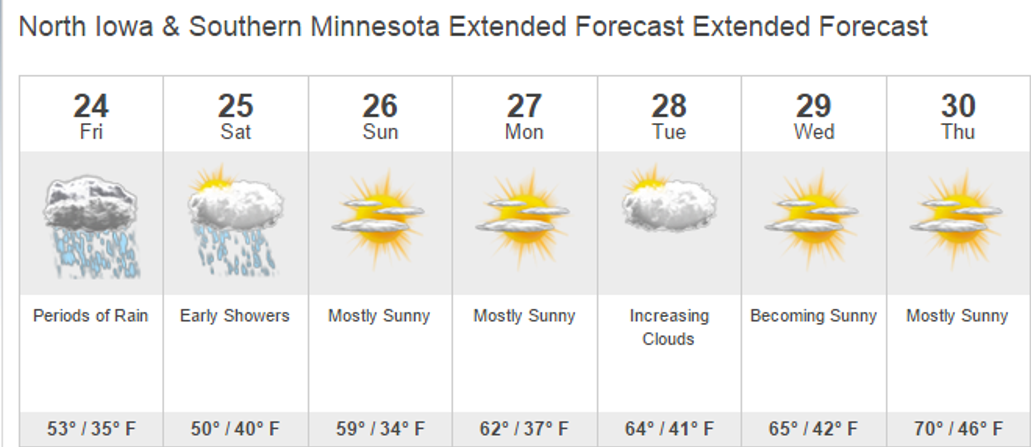
    #Plant15 is in full swing across the Midwest. With a 7-day forecast calling for nothing but sunshine and temperatures in the 70s, there’s talk that many farmers will go straight from planting corn to soybeans. We’re well within the window for achieving optimal yields for both corn and soybeans.

    Research by Iowa State University shows the optimal planting dates for soybeans – if soil conditions are suitable – in the southern 2/3 of the state is the last week of April and the first week of May for the northern 1/3 of Iowa. Seventy-nine percent of the time planting in late April or early May resulted in higher yields than soybeans planted around May 20.

    Due to the shorter growing season in the Dakotas and Minnesota, it’s important to plant soybeans early to catch more daylight. Soybean maturity is based on the length of daylight hours, and we all know the number of daylight hours decreases after June 20. Farmers must weigh the need to optimize daylight hours with the need for warmer soils.

    Experience has shown us that good yields are made when farmers hold off planting soybeans until soil temperatures reach – and maintain – temperatures of 60. Soil temperature is more critical when planting soybeans than corn because corn can more readily germinate in a soil environment of about 55 degrees.

    If the air temperature after germination hits 28 degrees Fahrenheit or less, soybean seedlings can be killed since the growing point of the plant is right at emergence. That’s why it’s also important to look at the 10-day forecast to see what temperatures will likely be when the seedlings emerge.

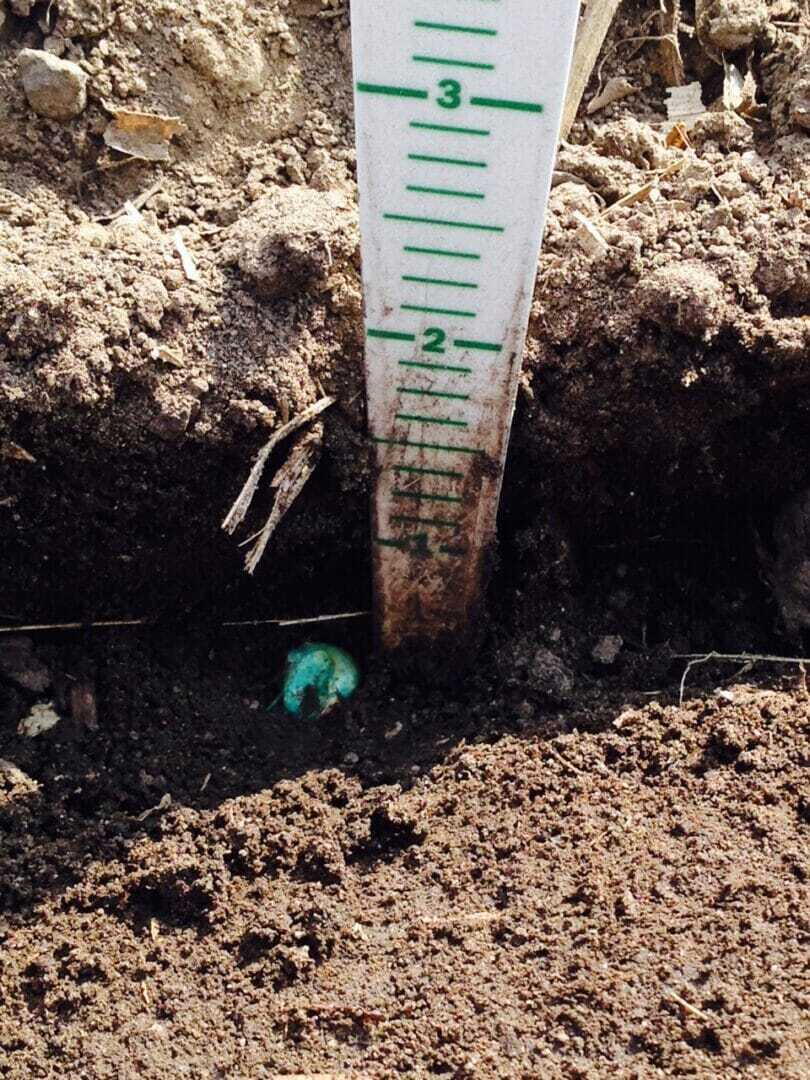
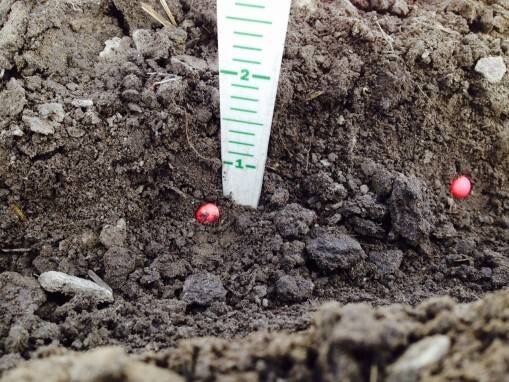
    it pays to stop the planter periodically and check (1) seed-to-soil contact; (2) planting depth and (3) seed spacing.
    it pays to stop the planter periodically and check (1) seed-to-soil contact; (2) planting depth and (3) seed spacing.

    We certainly understand a farmer’s eagerness to get seed in the ground, but we also know that it pays to take a few precautions. Get out of the cab periodically and check (1) seed-to-soil contact; (2) planting depth and (3) seed spacing. Watch for skips and doubles. Missing plants will decrease yield relative to a uniform stand. Finding too many doubles is not only a waste of seed, it can also mean that your planting units are in need of adjustment or repair.

    Inadequate planter adjustments coupled with fast planter speeds results in seeding depth variability within a row. Variable seeding depth translates into variable emergence rates which results in reduced yields. Take your time and have a safe planting season!

    Team Latham

    April 30, 2015
    Agronomics, Emergence, General
  • Latham Hi‑Tech Seeds

    Take an Intimate Look into Farmers’ Lives

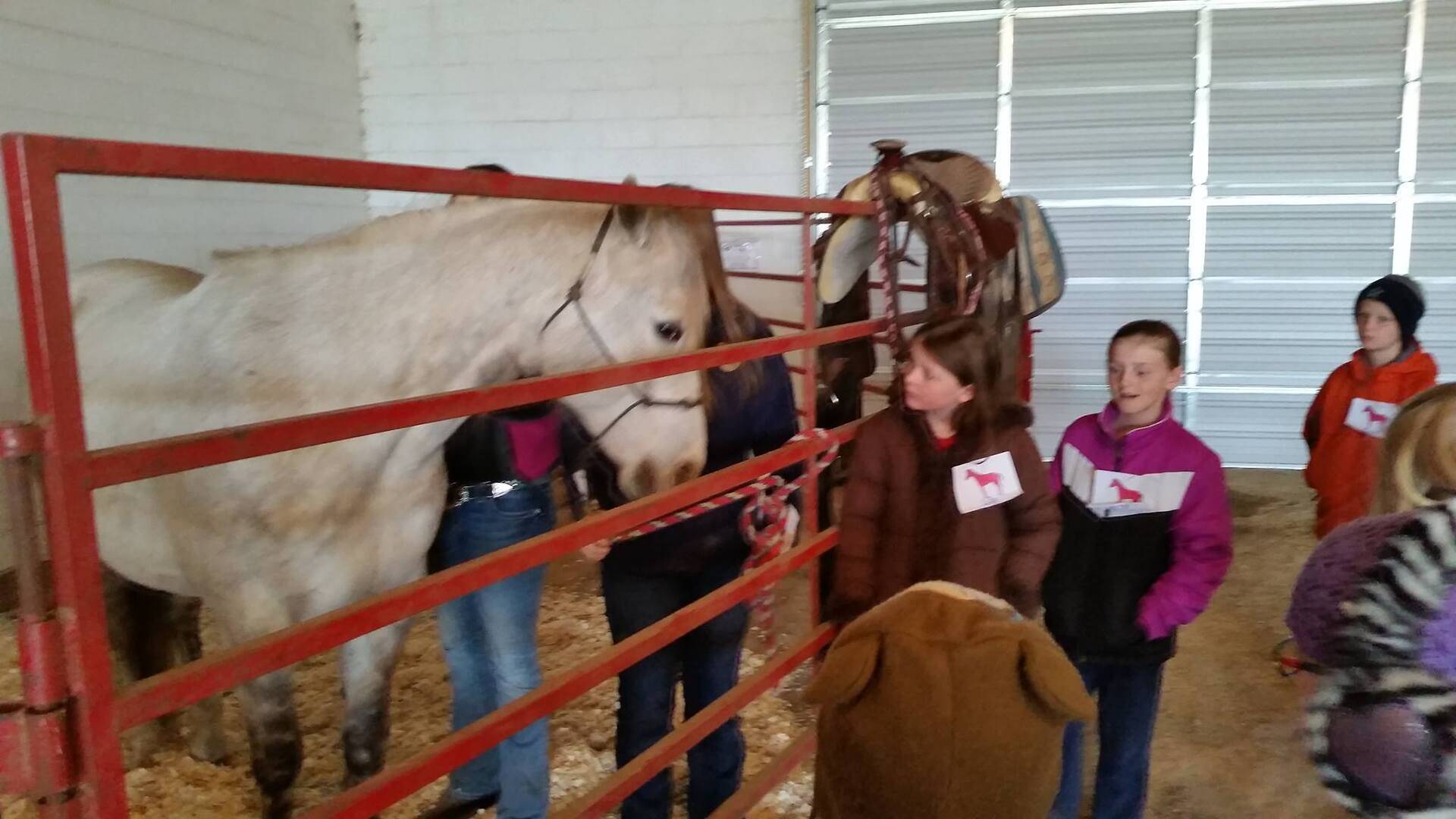
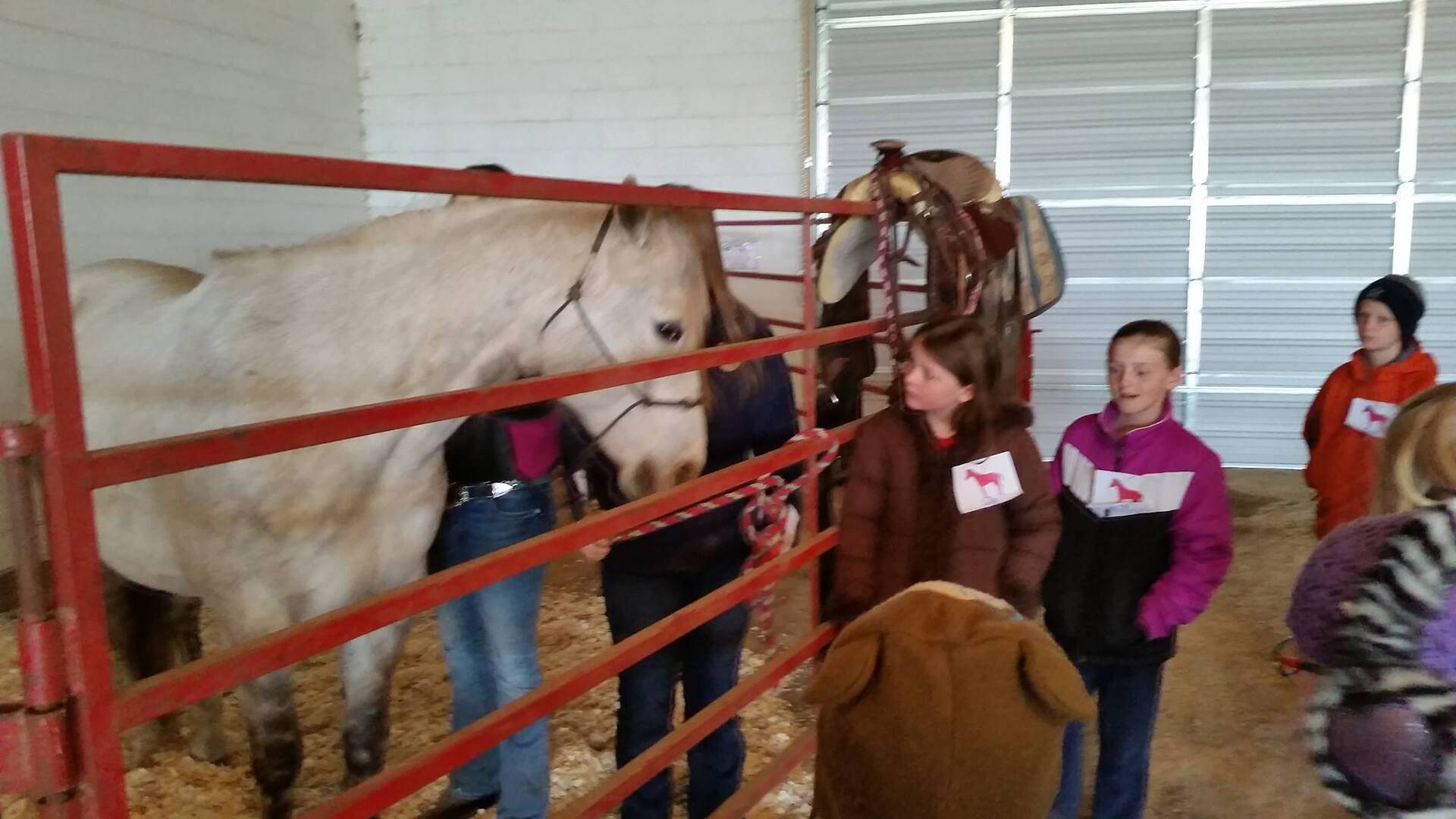
    Ag Fair

    Every April, the Franklin County Farm Bureau hosts an Ag Fair at the Franklin County Fairgrounds for the third graders throughout county. Jennifer Healy has organized this event for many years. This year was no exception, although she was fighting cancer.

    Ag FairThe Ag Fair on April 23 was bittersweet this year as Jennifer passed away one day before the event. Jennifer was as passionate as anyone about hosting this event, so kids can experience agriculture firsthand. Even in a rural county like ours, many kids don’t experience farm life.

    Thanks to the staff of North Central Iowa Ag in the Classroom for doing such a great job. These ladies provide hands-on learning experiences that are so much fun. Third graders experienced many different stations: horses, cattle, fire safety and llamas. Who knew we had so much diversity in our own county? Talk about a well-rounded farm day!

    Ag Fair safetyIt’s important for people of all ages to understand how their food is raised. That’s why I accepted an invitation to attend a screening on the Iowa State University campus last week of Farmland, followed by panel discussion. The movie is about several young farmers from across the country with very different types of operations, and the ISU panel was set up the same way. The committee did a great job of bringing together a diverse group of Iowa farmers:

    • Bill Couser raises cattle and crops.
    • Mark Kenney grows crops and seed.
    • Katie Olthoff raises turkeys.
    • Andrew Pitts is an organic farmer.
    • Mitchell Roush grows the famous Muscatine watermelons.
    • And me… a pig farmer with a small crop farm.
    Farmland Panel
    A diverse panel of Iowa farmers shared their personal ag stories with Iowa State University students, who gathered to watch the Farmland movie and to learn more about agriculture. Panelists included: Larry Sailer, pigs; Andrew Pittz, organic crops; Mitchell Roush, produce, Bill Couser, cattle; Katie Olthoff, turkey; and Mark Kenney, corn and soybeans.

    Now his is the way to find out how your food is grown… learn about farming from farmers! Our group represented six very different ways to grow food. And guess what… there wasn’t a single argument. No one put down another farmer’s way of growing food. We had a great discussion about how what we do, and we discussed how our practices are “right” for each one of our operations.

    We all grew up in different areas of the state, and we came from different backgrounds. What we have in common, however, is the desire to grow food and tell our costumers why we do what we do.

    We talked about food choice, and how Americans can buy what they want. Consumer choices also creates diverse markets for farmers.

    One member of the audience asked how consumers can find out more about food, and I believe this panel was a perfect way to do that! Special thanks to Natalina Sents for bringing together such a great event with a panel of high caliber experts to share about what they do.

    If you’re interested in learning more about your food is grown, follow some of my favorite ag bloggers including:

    • Corn, Beans, Pigs and Kids
    • Home Again Finnegan
    • On the Banks of Squaw Creek
    • Farm Eats City Streets
    • And, of course, “Musings of a Pig Farmer,” which posts every Tuesday on TheFieldPosition.com!

    Larry Sailer, Musings of a Pig Farmer

    April 28, 2015
    Agriculture, General, Industry News
  • Latham Hi‑Tech Seeds

    Mentors Inspire Generations of 4-H Champions

    4H.Judging.team

    Guest post by Darcy Maulsby

     Emerging leaders need mentors to guide them, as well as a network of peers to reassure them they are not on the journey alone. That’s how generations of the Brown family and other Franklin County 4-H members became champion livestock judges and successful business professionals.

    “This tradition goes back to the 1920s for many local families, including ours,” said Mike Brown, a former member of the Reeve Hampton Hustlers, who is now the senior director of livestock operations for Merial, a leading global animal health company.

    Mike credits his father, J. Kent Brown, with encouraging he and his brothers’ participation in 4-H. Kent attributes his involvement in 4-H to his father, J. Verald Brown, who was inducted into the Iowa 4-H Hall of Fame in 2002. J. Verald Brown joined 4-H in 1923, just five years after the first 4-H club was organized in Franklin County in 1918.

    J. Verald Brown was influenced by V.B. Hamilton, a Franklin County agent in the 1920s and 1930s who played a key role in local 4-H history. “V.B. Hamilton sparked the fire for livestock judging in this area for generations,” said J. Kent Brown, a former member of the Mott Meat Makers 4-H Club who judged swine, beef cattle, dairy cattle and sheep.

    Franklin County boasted world champions
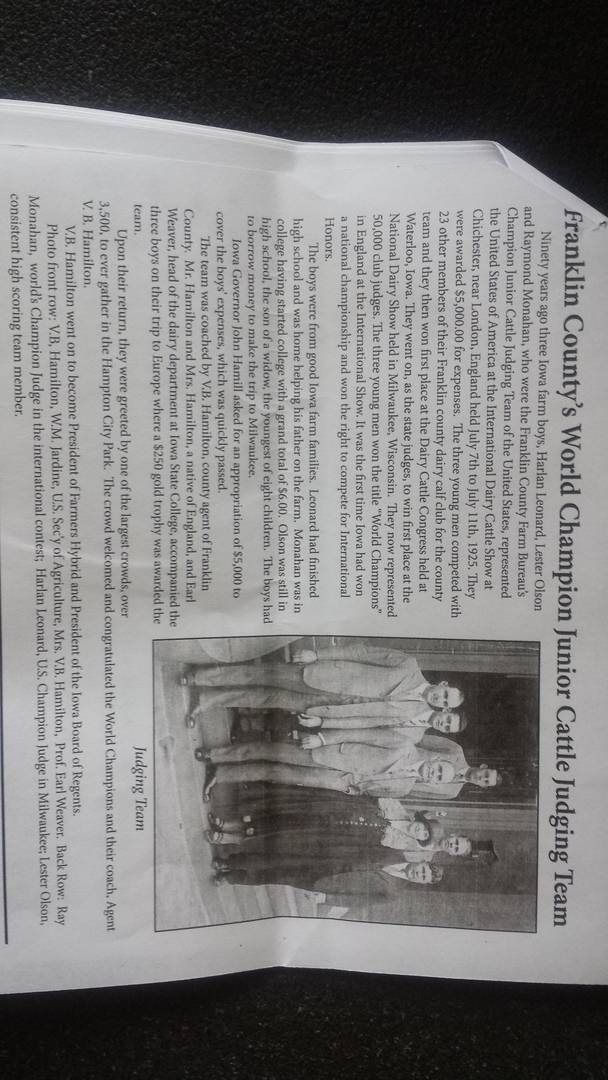
    4Hnews clipThrough the years, many Franklin County livestock judging teams won not only regional and state, but national and international competitions. In 1925, the Franklin County Farm Bureau’s Champion Junior Cattle Judging Team of the United States (coached by V.B. Hamilton) represented America at the International Dairy Cattle Show near London, England, from July 7-11, 1925.

    After winning the world champion title and a $250 gold trophy, the team of Iowa farm boys and Coach Hamilton received a hero’s welcome at home. They were greeted by 3,500 people—one of the largest crowds to ever gather in the Hampton City Park.

    This legacy of excellent carried through to the 1950s and 1960s, when livestock judging workouts were held each summer at different farms around the county. “A lot of the parents would come along with the 4-Hers so they could learn, too,” J. Kent Brown recalled.

    The 1959 Franklin County 4-H livestock judging team, which was coached by Carl Rehder (center) included (back row, left to right) Bill Dohrmann and Bob Latham, (front row, left to right) Art Wagner and Charles Akers. The team won the 4-H livestock judging contest at the 1959 Iowa State Fair and were named the national champion 4-H livestock judging team at the 1959 International Livestock Exposition in Chicago, Ill.
    The 1959 Franklin County 4-H livestock judging team, which was coached by Carl Rehder (center) included (back row, left to right) Bill Dohrmann and Bob Latham, (front row, left to right) Art Wagner and Charles Akers. The team won the 4-H livestock judging contest at the 1959 Iowa State Fair and were named the national champion 4-H livestock judging team at the 1959 International Livestock Exposition in Chicago, Ill.

    Judging teams of this era did extremely well, including the 1959 team of Bill Dohrmann, Bob Latham, Art Wagner, Charles Akers and Coach Carl Rehder. Not only did they win the 4-H livestock judging contest at the 1959 Iowa State Fair, but they were named the national champion 4-H livestock judging team at the 1959 International Livestock Exposition in Chicago, Ill.

    4-H teaches lifelong lessons
    Livestock judging challenges team members to evaluate animals’ physical characteristics and make a comparison to other animals, as well as the ideal standard of that particular class. Livestock judging through 4-H also helps young people:

    • Enhance their decision-making capabilities
    • Build character, confidence and integrity
    • Network with other people who share similar interests
    • Improve their communication abilities and public-speaking skills

    “Judging teaches you to make decisions, support your reasoning and communicate clearly,” said J. Kent Brown, who worked for the American Angus Association after college before returning to farm in Franklin County.

    The value of these lifelong skills can’t be underestimated, added Brown’s son, Layne, who runs an insurance and financial planning firm in Pleasant Hill. “Through 4-H, I learned how to set goals, track progress and work as a team. Not only did it develop my work ethic, but I met a lot of great friends, too.”

    These connections endure, added J. Kent Brown. “I’ve been fortunate to have lifelong friendships with people all over the county, state and nation, thanks to 4-H.”

    One of these friendships includes Jay Van Wert, a long-time farmer from Hampton, whose family often relied on this favorite recipe when they were busy with 4-H activities.

    Egg and Cheese Bake
    (This casserole can be prepared the night before, refrigerated and baked in the morning.)

    Ingredients:

    1 cup biscuit mix (Bisquick)
    1 ½ cups cottage cheese
    ½ pound grated cheddar cheese
    1 teaspoon dried onion or 2 teaspoons fresh onion
    1 teaspoon dried parsley flakes or 1 tablespoon fresh parsley
    ¼ teaspoon salt
    6 eggs, lightly beaten
    1 cup milk
    ¾ cup butter, melted

    Directions:

    1. Mix ingredients in order given.
    2. Melt butter in 9-inch by 13-inch by 2-inch baking dish.
    3. Pour cheese/egg mixture in dish; spread evenly.
    4. Bake at 350 degrees for 40 minutes.

    Team Latham

    April 24, 2015
    Dairy, General, Recipes
  • Latham Hi‑Tech Seeds

    Check the 10-Day Forecast Before Planting

    Picture1

    Picture1The arrival of spring weather is something every Midwest farmer anticipates. Early to mid-April brought favorable conditions for fieldwork. Many local farmers finished tilling soils while others started putting seed in the ground.

    Soil temperatures across Iowa had been above the 50-degree mark, which is usually the target for corn planting to begin. However, a cold front moved in and soil temperatures have dropped a few degrees in recent days.

    Even when soil temperatures are warm enough to plant, farmers must be certain that warmer air temperatures are in the forecast.  Warmer air temperatures are critical to protect the seedlings.  If the air temperature hits 20 degrees Fahrenheit or less after germination, the young seedling can be killed with the growing point of the plant right at emergence.

    Remember, soil temperature for soybean planting is more critical than for corn. We recommend waiting until soil temperatures in a region reach – and maintain – 60 degrees Fahrenheit before soybeans are planted. Soybeans can germinate in a soil environment of about 55 degrees Fahrenheit, but if the air temperature after germination hits 28 degrees Fahrenheit or less, the young seedling can be killed with the growing point of the plant right at emergence. Adversely for corn, the growing point stays under the surface until much later.

    One more consideration before you putting seed in the ground is to make sure soils are fit. Wet soils cause trouble from the beginning and all through the growing season. Compaction resulting from wet soil can kill root growth.

    Latham Corn Product Specialists advise farmers to “take the crumble test” before reentering fields. Grab a clump of soil and watch how easily it crumbles. If it stays in a ball, conditions are NOT right for planting. If it crumbles easily, the soil is fit for planting.

    We’re well within the optimal Iowa planting dates for corn, so take the time to let fields dry if needed. There are plenty of other uncontrollable factors that determine crop yield, so why not control the ones you can?

    Webspec Admin

    April 23, 2015
    General, Season, Spring
Previous Page
1 … 47 48 49 50 51 … 159
Next Page

Latham Hi‑Tech Seeds

131 180th Street | Alexander, IA 50420

(641) 692-3258

SIGNUP FOR OUR NEWSLETTER
  • Contact
  • Legal
  • Dealer Center
  • Seedware Login
  • Latham Gear

© 2025 Latham Hi‑Tech Seeds. All rights reserved. | Iowa Web Design by Webspec | Privacy Policy

Latham® Hi-Tech Seeds is a trademark of M.S. Technologies, L.L.C., 103 Avenue D, West Point, IA 52656.