Latham Hi-Tech Seeds

(641) 692-3258

  • Home
  • Products
    • Corn
    • Soybeans
    • Alfalfa
    • Corn Silage
    • Seed Guide
  • Performance
  • Find a Rep
  • Media
    • Blog
    • News
    • Videos
    • Podcasts
    • TECHTalk
  • About Us
    • Company History
    • Our Mission
    • Careers
    • Become a Rep
    • Sowing Seeds of Hope
  • Contact Us
  • Latham Hi‑Tech Seeds

    June is Officially Turkey Lover’s Month

    Farmfamilyhalloween2017 2

    bighealthyturkeyWhether you’re packing a deli picnic to enjoy at the lake or grabbing a Subway® sandwich on the way to a ball game, chances are you’re enjoying Iowa-raised turkey.

    “The rising popularity of sandwich chains means more Americans than ever are enjoying turkey that was produced by West Liberty Foods in West Liberty, Iowa,” explains Jared Achen of Achen Farms, a third generation Iowa turkey farmer who is a member-owner of the West Liberty Foods cooperative.

    Today 75 percent of turkey is eaten year-round, which is a significantly different trend than when Jared’s father started raising turkeys. In 1970, 50 percent of the turkey eaten in the U.S. was enjoyed during the holidays.
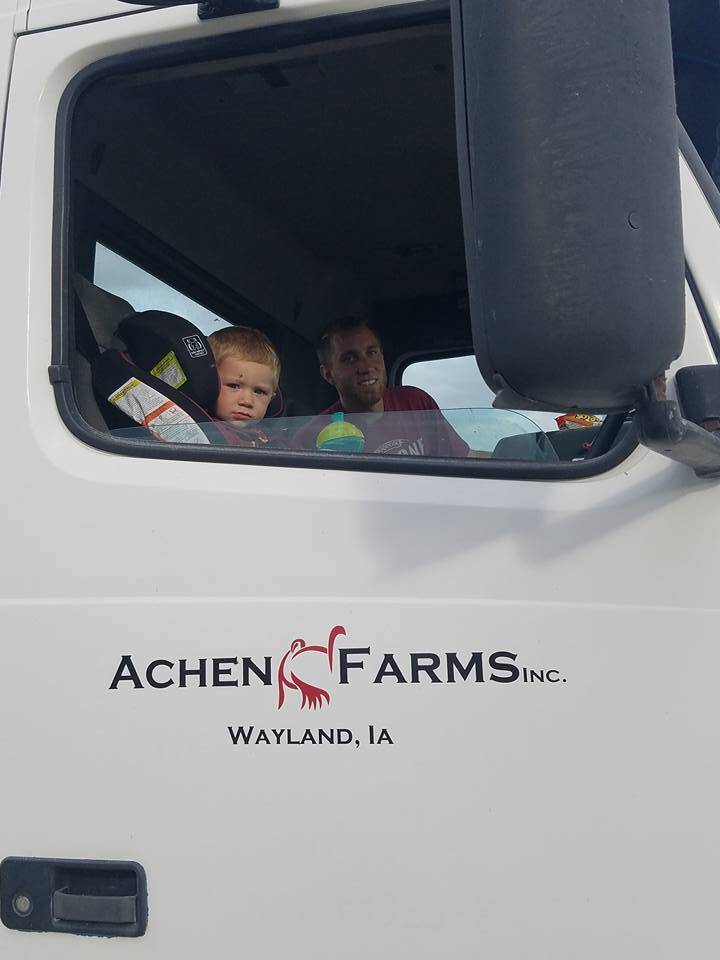
    semiwithdad“It’s gratifying to see that Americans are enjoying turkey in a variety of ways throughout the year,” says Jared, who also has a vested interest in Agri-Way Partners, a feed mill for turkey growers in Southeast Iowa. He says being involved with West Liberty Foods and Agri-Way Partners allows him to build strong relationships with other producers and others in the turkey industry. “This support is like a big family in a small industry. Producers are more than willing to share information aimed at keeping the industry strong.”

    Iowa turkey producers have learned to consistently produce turkey year-round to keep up with the rising demand. That’s good news for rural communities and the farm families who wish to keep farming the land that’s been in their family for generations. The Achen’s turkey operation plus their corn and soybean enterprises support five families.

    “We have an amazing team that helps us grow and maintain our operation. It truly takes a village to run a farm and raise a family. We’re blessed with great full-time and part-time help,” says Jared.
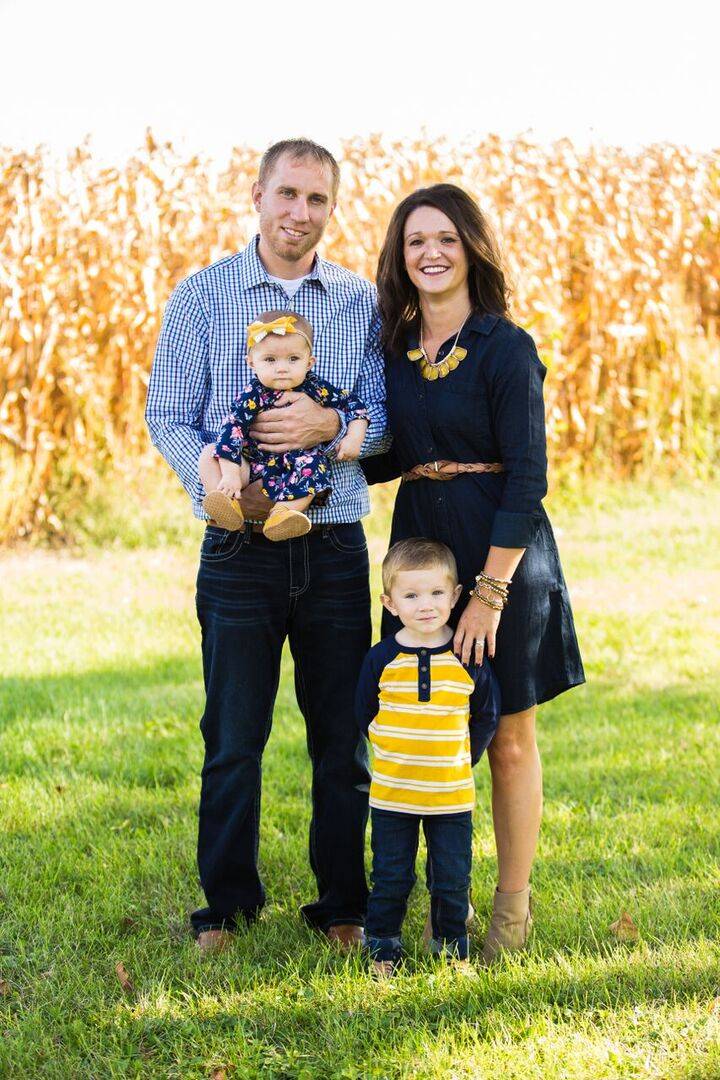
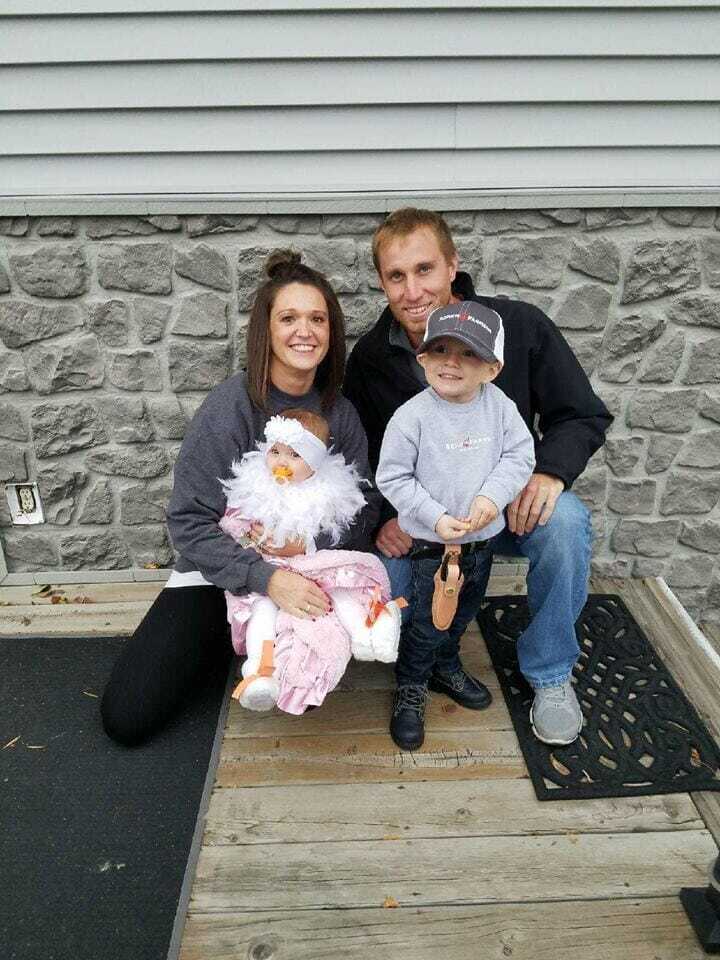
    familypicfall2017_previewAfter earning a bachelor’s degree in Ag Business from Iowa State University in 2011, Jared returned home to Henry County. He married his high school sweetheart, and they became independent turkey farmers. Jared and Tawnya feel blessed to be growing their farming operation and raising their two children, three-year-old Brecken and 1-year-old Tenley, in the beautiful rolling hills of Southeast Iowa.

    Jared and Tawnya built their first turkey farm with two barns in 2011. Then they expanded in 2015 by building one new barn. In 2017, they purchased another farm that added three barns.

    “Someday I hope to pass this operation on to the fourth generation of turkey growers, and this legacy is what keeps me motivated,” says Jared. “We enjoy farming together as a family and watching our children experience life on a family farm. It’s fun to experience farming through the eyes of my children. They really enjoy it when we get day-old poults on our farm.”

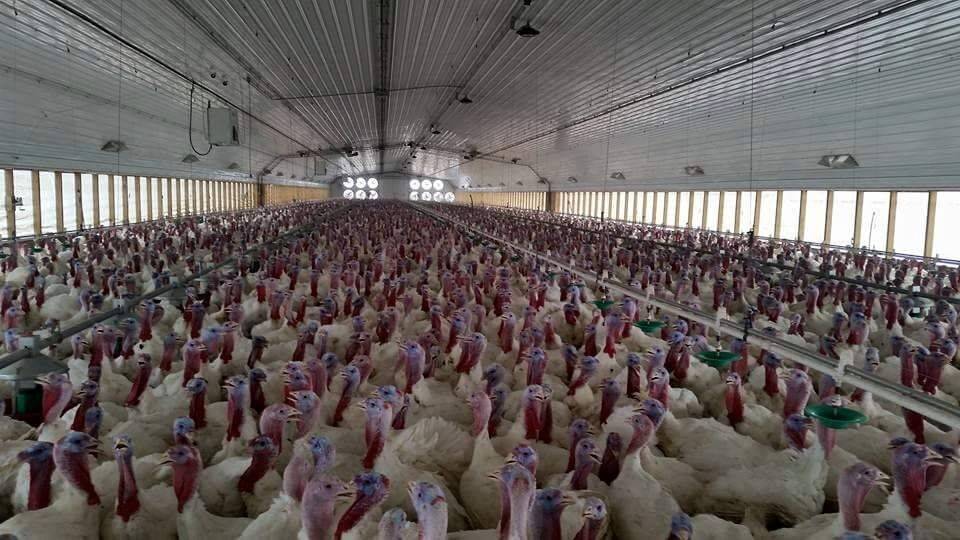
    Caring for turkeys and watching them grow is a rewarding endeavor for the Achens. Turkeys arrive when they are 1 day jammiesandturkeysold and grow quickly for 19 weeks until they are finished at about 44 pounds. Like other livestock enterprises, good management is key for turkey production. A consistent daily routine of feeding, evaluating the turkeys, checking ventilation, and applying new bedding is vital to producing top quality birds.

    Although the turkey and row crop operations keep the Achen family busy seven days a week, they still find time to be involved with their community. Jared and Tawnya hold positions within their church and volunteer at school events. Jared also is a member of the Wayland Economic Development Committee and serves on the Henry County Farm Bureau board.

    “We strive to assist our community as much as possible as it is important to us to have our small town thriving,” says Jared. “We also give farm tours. We often have community members ask to tour. Sometimes those who have moved away like to come ‘home’ and show their kids our turkeys. Bio-Security is important, but we do our best to protect our turkeys while teaching the public about turkeys.”
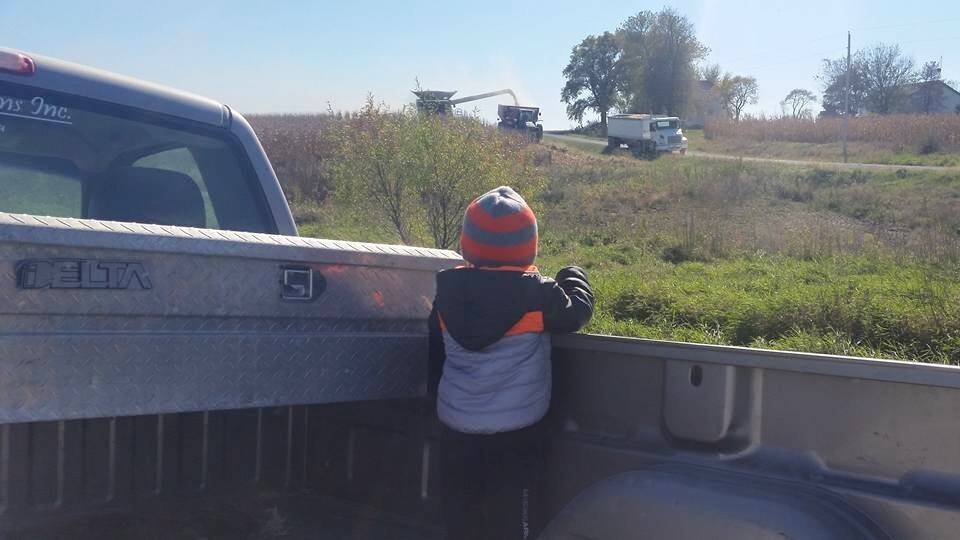
    cropfarmThe Achen family also shares their farm life by posting frequently on the Achen Farms Facebook page. Another way they connect with consumers is through the Midwest Old Threshers, which draws people to the area each Labor Day weekend. The Achens set up an turkey booth within their church tent where they serve turkey drumsticks and turkey tenderloins.

    Today the Achens are sharing with us one of their family’s favorite recipes for turkey enchiladas. Download this recipe and celebrate June Turkey Month with your family!
    Team Latham

    June 29, 2018
    General, Poultry, Recipes
  • Latham Hi‑Tech Seeds

    FB Live: Managing IDC

    Ask the Agronomist Feature Photo 01 1024x575 1024x575


    LIBSYN header 2-01

    Join us for discussion on IDC in soybeans and solutions for your field!

    FB Live Link: https://www.facebook.com/LathamSeeds/videos/10156515847767138/

    Laura Cunningham

    June 28, 2018
    #AskTheAgronomist, General
    Ask the Agronomist, From the Field, IDC, Kilah Hemesath, Latham Hi-Tech Seeds, Phil Long, Soybeans
  • Latham Hi‑Tech Seeds

    FB Live: Managing IDC

    LIBSYN header 4


    LIBSYN header 2-01

    Join us for discussion on IDC in soybeans and solutions for your field!

    FB Live Link: https://www.facebook.com/LathamSeeds/videos/10156515847767138/

    Webspec Admin

    June 28, 2018
    #AskTheAgronomist, General
  • Latham Hi‑Tech Seeds

    Tests Underway with Climate Nitrogen Advisor

    Feature Tech Tuesday 01 1024x598

    Tech Tuesday Header-01

    Nitrogen is mobile in air, water or soil. Because nitrogen moves, it’s a challenge for farmers to keep everything in balance while maintaining profitability. That’s probably why we hear so much about “precise nitrogen management.”

    It seems like everyday we hear about a different way to best manage nitrogen. Universities have moved from the long accustomed Yield Goal approach to Maximum Return to Nitrogen (MRTN), which links corn and nitrogen prices to calculate the best nitrogen rate based on years of data. The objective is to provide a yield increase that will pay for the cost of the nitrogen. Another nitrogen management method involves applying some nitrogen before planting to get the corn started. Then soil or plant tissue samples are taken to determine plant nitrogen levels and to estimate how much nitrogen will be available in the soil for the remainder of the season.

    Yet another nitrogen management tool is sensor technology, which uses artificial light to capture on-the-go leaf reflectance and translates that into values to calculate a product rate for on the-go nitrogen side-dress applications. The Nitrogen Advisor tool available through the Climate FieldView™ (CFV) platform combines extensive weather data with rainfall and temperature information to understand leaching, volatilization or other ways nitrogen may be lost based on timing of application, product being applied, and rates being applied. This sounds very familiar to the 4 R’s of nutrient management: Right Rate, Right Source, Right Placement, and Right Timing.

    The CFV Nitrogen Advisor is based on a model that has been extensively researched throughout the Midwest. Last winter the Iowa Soybean Association released its research, which included replicated trials using the CFV Nitrogen Advisor. Cooperating farmers across Iowa ran the CFV Nitrogen Advisor and used their own personal nitrogen rates as the check. They compared their rates with both adding and decreasing rates of 40 lbs/acre of nitrogen. Nitrogen Advisor topped 7 of the 10 trials, and in some of these trials, it led to $20/acre profit! Where Nitrogen Advisor wasn’t on top, it was within $10/acre in terms of profit of the top performer.

    When profit margins are tight, we’re all extremely interested in getting the best return on our investment. Nitrogen is where we spend most of our fertility budget; we’re experimenting on the Latham Research Farm with the Climate Nitrogen Advisor this season. I invite you to attend our fall field day in Alexander where you will be able to walk through the plot. We’ll also be sharing research results at our post-harvest meetings this fall.


    Phil Long

    June 26, 2018
    Agronomics, General, Precision Ag
  • Latham Hi‑Tech Seeds

    Tests Underway with Climate Nitrogen Advisor

    Feature Tech Tuesday 01

    Tech Tuesday Header-01

    Nitrogen is mobile in air, water or soil. Because nitrogen moves, it’s a challenge for farmers to keep everything in balance while maintaining profitability. That’s probably why we hear so much about “precise nitrogen management.”

    It seems like everyday we hear about a different way to best manage nitrogen. Universities have moved from the long accustomed Yield Goal approach to Maximum Return to Nitrogen (MRTN), which links corn and nitrogen prices to calculate the best nitrogen rate based on years of data. The objective is to provide a yield increase that will pay for the cost of the nitrogen. Another nitrogen management method involves applying some nitrogen before planting to get the corn started. Then soil or plant tissue samples are taken to determine plant nitrogen levels and to estimate how much nitrogen will be available in the soil for the remainder of the season.

    Yet another nitrogen management tool is sensor technology, which uses artificial light to capture on-the-go leaf reflectance and translates that into values to calculate a product rate for on the-go nitrogen side-dress applications. The Nitrogen Advisor tool available through the Climate FieldView™ (CFV) platform combines extensive weather data with rainfall and temperature information to understand leaching, volatilization or other ways nitrogen may be lost based on timing of application, product being applied, and rates being applied. This sounds very familiar to the 4 R’s of nutrient management: Right Rate, Right Source, Right Placement, and Right Timing.

    The CFV Nitrogen Advisor is based on a model that has been extensively researched throughout the Midwest. Last winter the Iowa Soybean Association released its research, which included replicated trials using the CFV Nitrogen Advisor. Cooperating farmers across Iowa ran the CFV Nitrogen Advisor and used their own personal nitrogen rates as the check. They compared their rates with both adding and decreasing rates of 40 lbs/acre of nitrogen. Nitrogen Advisor topped 7 of the 10 trials, and in some of these trials, it led to $20/acre profit! Where Nitrogen Advisor wasn’t on top, it was within $10/acre in terms of profit of the top performer.

    When profit margins are tight, we’re all extremely interested in getting the best return on our investment. Nitrogen is where we spend most of our fertility budget; we’re experimenting on the Latham Research Farm with the Climate Nitrogen Advisor this season. I invite you to attend our fall field day in Alexander where you will be able to walk through the plot. We’ll also be sharing research results at our post-harvest meetings this fall.


    Webspec Admin

    June 26, 2018
    Agronomics, General, Precision Ag
  • Latham Hi‑Tech Seeds

    Community Service is an Albert Family Tradition

    IMG 2686

    IMG_2686When farmers see a need within their community, chances are they’ll band together and offer a solution or two. That’s how the Albert family of Brandon, Iowa, became known for hosting an annual Memorial Day four-wheeler ride, a late summer sweet corn roast and a community tractor ride. The Alberts also organize the community’s Thanksgiving meal and are one of three farm families that takes turns hosting the Testicle Festival each January to raise money for cancer research.

    One of their friends was diagnosed with cancer about 10 years ago, which prompted several local cattle producers to fry Rocky Mountain oysters and other fair-type foods. About five or six years ago, Craig Albert realized many residents didn’t have anywhere to go on Thanksgiving. He and his wife, Judy, decided to change how they celebrated the holiday.

    “Now we invite the town to enjoy a Thanksgiving meal at Brandon Community Center,” says Craig. “Our son and daughter help, too. People bring in canned donations for food pantry. Free will donations go to local family or a local charity. The community really comes together. Instead of eating and running, people enjoy sticking around and talking with one another.”

    Like his father, Jordan Albert grew up knowing he wanted to farm. He lives by the lyrics to Dallas Davidson’s song “God Made a Farmer…” He gets up early and stays up late. He seeds, and feeds and weeds and breathes… bleeds, weans and rakes. He’ll spend his lifetime praying for rain and his prized possession is his good name…

    After he graduated from high school, Jordan studied Ag Business/GPS at Hawkeye Community College. When he graduated in 2006, there wasn’t room for him to join the family’s farming operation because his dad was farming with an uncle. Jordan took a job at Carson&Barron Farms had been working there for nine years when one day in February 2013 it all changed.

    That day Jordan’s dad, Craig, was admitted to the hospital for a pace maker. Jordan came home to feed the cattle and plant the crops. Then his former boss told him, “Family comes first. I will always be here to support you, but you need to go back home and farm now.” That’s when Jordan started transitioning into his family’s farming operation. Over the years, he’s taken on more day-to-day responsibilities.

    “I wasn’t forced to come back, but I’m glad I got the opportunity to do so,” says Jordan. “We don’t ever compromise friendships or family relationships with business. We agree that anything that happens outside the house is business. Anything that happens at the table is family.”

    “A farm will not work without a backbone to the operation, and my mom is ours. I don’t think we could ever replace her,” adds Jordan.

    Judy has worked off the farm at Denton Castings for 25 years. She works on the farm after work. When Craig was in the hospital, Judy would get up at 2:00 or 3:00 AM to help check cows, fill the planter, or load trucks with soybeans or corn.

    IMG_2689Jordan’s sister, Jackie, also has a passion for cattle. She and her husband have their own stock cattle, but she’s still involved with Albert Family Farms. She takes care of the cattle records, including vaccinations and rate of gain. She tracks which bulls are the most docile and which ones – Galvey, Simmental, Angus, Fleckvieh and the different crossbreds – create the most return on investment (ROI).

    “Farming is about more than the money. Farming is a passion,” says Jordan. “You put the seed in the ground or see the little calf hit the ground, and it’s so rewarding to watch it grow and develop. When you pull that calf and watch it grow up, it’s the joy of life. You see that calf take its first breath, it’s a miracle.”

    In addition to farming with his parents, Jordan is active in the Buchanan County Cattlemen’s Association. Each year group members hold an auction; funds raised support two $500 scholarships for high school 4-H and FFA members in Buchanan County. Then the two scholarship recipients help at the Cattlemen’s our food booth at the county fair. The cattlemen also grill at summer events, which Jordan says is as much fun as it is work. The grill outs help the cattlemen raise funds, as well as serves as a great way to promote beef.

    The cattlemen also grill at summer events, which Jordan says is as much fun as it is work. The grill outs help the cattlemen raise funds, as well as serves as a great way to promote beef.

    To help promote the high-quality beef he raises, today Jordan is sharing with us his tried and true recipe for Beef Brisket.

    Shannon Latham

    June 22, 2018
    Agriculture, General, Industry News
  • Latham Hi‑Tech Seeds

    FB Live: Dissecting a Corn Plant

    LIBSYN header 4

    LIBSYN header 2-01

    Tune in as we dissect a corn plant at its current stage on Ask the Agronomist!

    FB Live Video: https://www.facebook.com/LathamSeeds/videos/10156497920517138/

    Webspec Admin

    June 21, 2018
    #AskTheAgronomist, Agronomics, Corn, Crop, General, Growth Stages
  • Latham Hi‑Tech Seeds

    Quick Tips for Assessing Soybean Stands

    Feature Tech Tuesday 01

    Tech Tuesday Header-01

    The spring of 2018 will be remembered for too much rain and cold temperatures, which all contributed to one of the most challenging planting seasons in recent history. Farmers were concerned about getting their seed in the ground early enough to capture full yield potential, but one must take more than planting date into consideration. Soil conditions at the time of planting and the short-term weather forecast also play an important role in germination and emergence, as many were reminded when they saw poor emergence and weak stands.

    With this in mind, the following guidelines will help you evaluate soybean stands and determine whether re-planting is necessary:

    » PLANTING DATE: In a five-year study completed by Latham’s research team across multiple states, there was no significant yield difference between soybeans planted before May 15. We evaluated planting dates of late April and early May to mid-May. Planting on or before June 1 averaged 95% of expected yield. In fact, yields didn’t drop to the 85% and lower range until soybeans were planted after June 15. These results compare very closely to similar studies done by university researchers throughout our trade territory.

    » PLANT POPULATION: Soybean stands can suffer from a wide variety of problems that will reduce population: hail, disease, insects, cold soil temps at planting time, compaction and planter failures. The biggest problem we find is that stand reductions almost never occur evenly across the field, so farmers must be diligent in scouting their fields and take the necessary time to evaluate their stands properly.

    I recommend taking 10 stand counts in the area with the worst damage and 10 counts in the part of the field that was not affected or affected just slightly. At each point, measure off 10 feet of row and count the number of live, viable plants. You can take the average of your 10 points and compare them to the table on Page 3 to see how many plants per acre you have remaining.

    A stand of 100,000 evenly distributed plants generally gives you optimum yield. Remember that as the growing season progresses, it is much more difficult to establish a good stand of soybeans. This means you might be better off leaving a stand of 75,000 plants on July 1 rather than trying to establish a new population. A stand of 75,000 on May 15, however, seems very inadequate and would warrant replanting.

    Evaluating your stands early will help you identify concerns while there is still time to remedy the situation. If you have questions on evaluating your soybean stands, feel free to contact me or Phil Long.

    Webspec Admin

    June 19, 2018
    Agronomics, Crop, General, Growth Stages, Soybeans
  • Latham Hi‑Tech Seeds

    Young Wisconsin Dairyman is Living his Dream at Luchland Farms

    IMG 2578

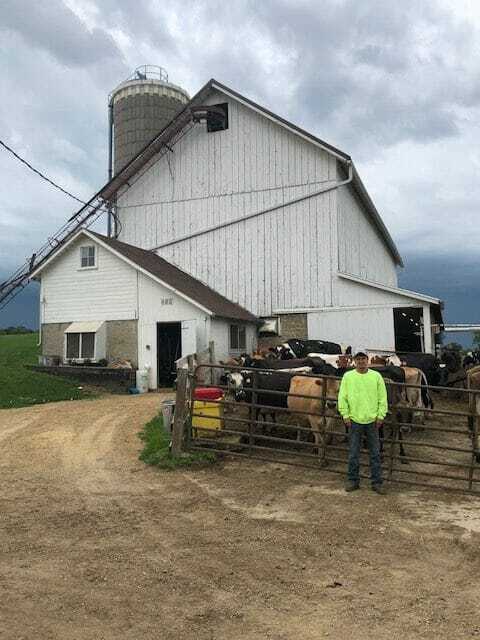
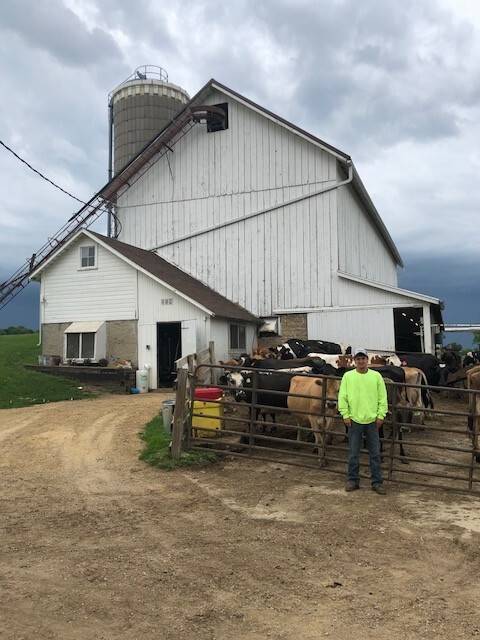
    IMG_2578He didn’t have cows. He didn’t have feed. He didn’t have equipment. But Darren Luchsinger had a dream of operating a dairy like his great grandfather and grandfather, so he went to work right after he graduated in December 2015 from Monticello High School in Monticello, Wisconsin.

    “I spent a lot of time with my grandparents on this farm, and I always enjoyed the cows,” says Darren, who says he feels blessed to live on the farm where his grandparents milked. The barn was empty for five years, and then Darren’s family purchased the farm about two years ago. “My grandpa always had Holsteins, so that’s what I started with. I’ve added some Jerseys to my herd to increase butter fat, which helps with the milk check.”

    Because his milk gets sold to family-owned and operated Klondike Cheese Company, components like butter fat are important. Another way Darren is working to increase the butter fat is by feeding high quality forage to his cows. He’s especially looking forward to harvesting his first field of Latham’s LH 9700 alfalfa, which was planted on April 28 with peas and oats.

    FullSizeRenderHis grandpa, Gene Luchsinger, enjoys spending time on the farm with Darren and helping do anything that’s related to crops or equipment at Luchland Farms (pronounced Luck-Land. He leaves all the cow care and milking responsibilities in Darren’s hands.

    In addition to his grandpa, Darren’s girlfriend helps take care of the calves. Another valuable hand is Annie the Red Heeler. Annie is responsible for bringing cows in from the pasture each morning and evening for milking.

    Darren’s short-term plans include growing his herd, which began with 50 cows and has grown to 78. He recently took on a Latham® Seeds dealership to help him reach his goal of buying more cows. He says the dealership also helps diversify his farm income, as well as provides a cost savings on the seed he needs to plant to grow feed for his cows. In fact, all the crops he planted this spring will be fed on his farm.

    “The Monticello FFA gave me lots of skills that I’m using,” says Darren, who participated in agronomy, dairy and soils judging. Skills gained in dairy judging are helping him evaluate his cows, and he’s raising all of his own stock. He just started an Angus beef herd with 15 head that he plans to sell direct.

    Image-1Although he’s working hard to make his dreams a reality, Darren also takes time to serve his community. He began serving as a firefighter in Monticello in high school and is in his third year. He said he came by it naturally because his parents were EMTs and now they’re both firefighters. In fact, his dad is the fire chief.

    When he’s not busying dairying or fighting fires, Darren enjoys golfing and hunting for deer or turkeys. He also enjoys grilling and real Wisconsin cheese.

    In honor of June Dairy Month and the summer grilling season, today we’re sharing a recipe for Brick Cheese Mexican Wrap. Also be sure to check out the Klondike Cheese Company’s website for unique recipes like the Harvarti Halftime Burger featuring dried cherries like those grown in Door County Wisconsin, and Odyssey® Feta Grilled Beef Filet with Creamed Corn.

    Shannon Latham

    June 15, 2018
    Agriculture, General, Industry News
  • Latham Hi‑Tech Seeds

    FB LIVE: Pros & Cons of Rolling

    Ask the Agronomist Feature Photo 01 1024x575 1024x575

    LIBSYN header 2-01


    Is rolling your fields the best option? Tune in to here the pros and cons of rolling.

    FB Live Link: https://www.facebook.com/LathamSeeds/videos/10156478876747138/

    Laura Cunningham

    June 14, 2018
    #AskTheAgronomist, Agronomics, Emergence, General
    Ask the Agronomist, From the Field, Rolling
Previous Page
1 … 22 23 24 25 26 … 159
Next Page

Latham Hi‑Tech Seeds

131 180th Street | Alexander, IA 50420

(641) 692-3258

SIGNUP FOR OUR NEWSLETTER
  • Contact
  • Legal
  • Dealer Center
  • Seedware Login
  • Latham Gear

© 2025 Latham Hi‑Tech Seeds. All rights reserved. | Iowa Web Design by Webspec | Privacy Policy

Latham® Hi-Tech Seeds is a trademark of M.S. Technologies, L.L.C., 103 Avenue D, West Point, IA 52656.