Latham Hi-Tech Seeds

(641) 692-3258

  • Home
  • Products
    • Corn
    • Soybeans
    • Soybean Blends
    • Alfalfa
    • Corn Silage
    • Seed Guide
  • Performance
  • Find a Rep
  • Media
    • Blog
    • News
    • Videos
    • Podcasts
    • TECHTalk
  • About Us
    • Company History
    • Our Mission
    • Careers
    • Become a Rep
    • Sowing Seeds of Hope
  • Contact Us
  • Latham Hi‑Tech Seeds

    Cake Ball Workshop: Tips, Tricks & Lessons Learned

    Cakepops1

    I’m a dreamer and a reader.  No wonder I became somewhat obsessed with cake pops after reading Wilton’s Sweets on a Stick how-to guide for making and decorating cake pops!  If you can dream it, you can bake it.  Designs range from princesses and pirates to Easter chicks and candy canes.  Certainly anything that looks so adorable must be equally as fun to make, right?

    Cake pops are fun to make but, in my opinion, they’re even more fun to eat!  This past Wednesday, about 30 ladies and I gathered for a two-hour cake ball workshop.  Each of us decorated 12 cake balls.  Those bite-sized balls of bliss were so tempting that only 9 remained in my box when I left the class.  There were 6 in the box when I reached my car, and there were only 3 in the box by the time I got home.  (Seriously, you can pop them in your mouth like popcorn.)  By bedtime, none remained!

    I’ll share with you a few tricks we learned this week in case you’d like to make your own cake balls:

    • Dough must chill at least two hours before cake balls are dipped.  Dough at room temperature literally falls off the stick.  If the dough is too cold, the dipping chocolate will crack.
    • Set your frosting in a water bath to dipping ease.  Our “baking coach” put the frosting in two, small loaf pans surrounded by warm water in a roaster on low heat.  It kept our frosting at the perfect temperature for long periods of time without the worry of overheating, which makes it stiff and unusable.
    • Dip a wooden skewer in melted chocolate or melted almond bark before placing the stick in the cake pop.  This way the frosting asks like “glue.”
    • Be sure to poke the blunt end of the skewer into the cake pop, so the pointed end can be used to hold the pops in place.
    • Styrofoam is a simple way to keep the cake pops in place while they dry.
    • Chocolate hardens quickly, so have sprinkles and candy toppings at the ready.  To make fancier designs, you can shape the cake mixture and decorate with royal icing.

    My first experience with making cake balls was so much fun that I’m considering hosting a Bake Once for a Bunch (fashioned after my Cook Once for a Bunch party).  If time permits this autumn – in between combine rides and football games – it would be fun to try my hand at making pumpkin pops.  (I’m sticking to “round designs” for now after discovering how difficult it can be to make shapes like footballs.  Maybe I’ll get more daring with more practice.)

    Should you decide to make cake pops at home, following are a few more tips and frosting recipes.

    Team Latham

    July 13, 2012
    Desserts, General, Recipes
  • Latham Hi‑Tech Seeds

    “Ban Wagon” Will Drive Food Prices Higher

    Larry Sailer1

    “Musings of a Pig Farmer”
    by Larry Sailer

    It was the week of Valentine’s Day 2012, but pork producers weren’t feeling the love.  That’s when McDonald’s announced it would begin phasing out suppliers’ use of gestational crates.  Since that time,  more restaurant chains like Cracker Barrel and food suppliers like Oscar Meyer have joined the “ban wagon.”

    “I understand the desire for people to return to the bucolic days of farming in the past, where the hogs were raised in the barnyard, but the economics of the business just don’t support that anymore,” said Howard Hill in The Des Moines Register article  published July 7.

    Hill, who will become president of the National Pork Producers Council in 2014, continues by saying: “This is the perfect example of the law of unintended consequences.  The effect of the end of gestation crates will drive up prices for pork, and it will drive producers out of business, which will have the effect of consolidating the pork-producing industry further.”

    Ironically, gestation stalls were first developed to protect the animals. They were used because sows can be vicious.  Occasionally, they kill one another. Their fights often prevent them from getting the right amount of feed and water.

    Does allowing some hogs to overeat while others are underfed sound “humane”?

    Crates have actually helped increase the number of live pigs produced by each sow.  Statistics released last week by the U.S. Department of Agriculture show that the state’s hog population is at an all-time high of 20 million although Iowa’s sow population decreased over the last year.  The number of live pigs per breeding animal has been trending upward, and the average sow now produces 10 pigs per litter.

    Even though we’re seeing positive results from modern hog production techniques, consumers (or at least those who market to consumers) are telling us to change our way of thinking. Why are pork producers the ones who need to change?  Perhaps we just need to do a better job of telling our story!

    Mike Haley, who farms with his wife and his father in Ohio, says there seems to be a lack of outreach to help answer questions about humane husbandry practices.  In a June 23 post on Feedstuffs Foodlink, he writes:

    “As HSUS and other activist groups gain momentum and credibility with food distributors and retailers, the pork industry seems to be stuck in a rut communicating the same way it always has hoping to magically end up on solid ground. Don’t get me wrong, there is some good advertising I see about the other white meat.  However, there seems to be a lack of outreach to help answer questions about humane husbandry practices, and the few that exist don’t stack up well with the marketing campaign animal rights groups have perfected.”

    Rather than regulating gestation stalls out of use, let the marketplace decide.  Do consumers really feel strongly enough to pay more for their meat?  That’s exactly what happened in England and in California! If some consumers want to purchase “crate-free” products, that’s their prerogative.  Willing consumers can pay more for these specialty products, but I don’t want them to force their values on me.  In my opinion, crate-free pork is no different than free-range chicken or organically grown vegetables.  Label it, price it and let the marketplace decide.  Just don’t legislate it.

    Larry Sailer, Musings of a Pig Farmer

    July 10, 2012
    Agriculture, General, Industry News
  • Latham Hi‑Tech Seeds

    Corn as High as an Elephant’s Eye

    RachelWithCorn1

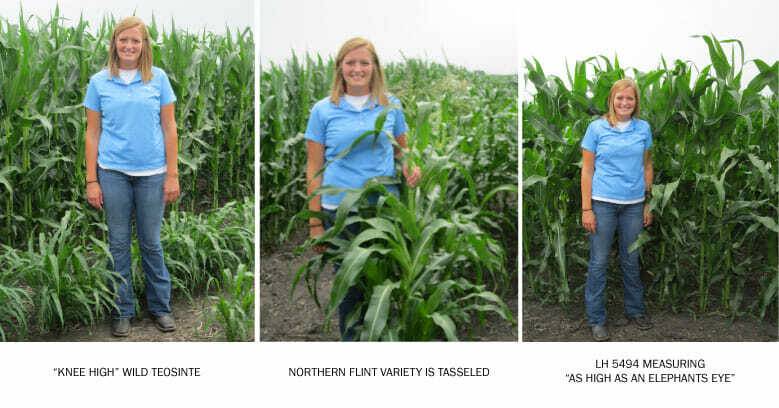
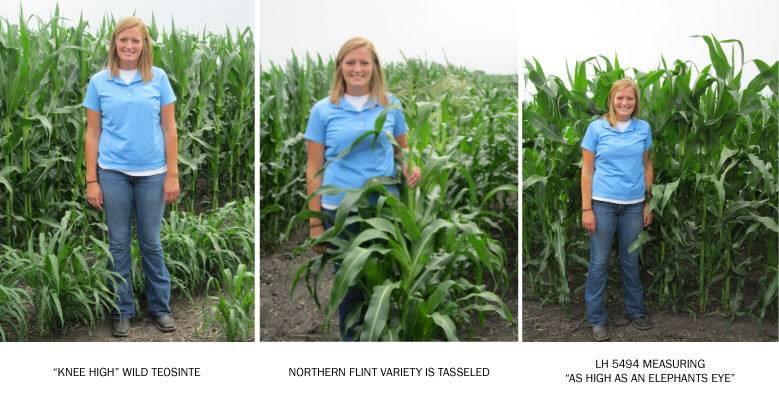
    “Knee high by the Fourth of July” was an expression used for many years by Midwest farmers, indicating their corn crop was expected to yield well if those “knee-high conditions” existed.  These days the lyrics, “The corn is as high as an elephant’s eye,” from the song Oh, What a Beautiful Morning from the 1943 musical Oklahoma! by Rodgers and Hammerstein, is more accurate.

    This year you could even describe much of the corn crop as “high as an elephant’s eye and tasseled by the Fourth of July.”  But a walk into Latham’s Genetic Garden will show you just how much corn varieties and hybrids have evolved from the 19th Century until now.

    On July 4th we saw corn plants of every size: ankle high, knee high, head high and even some that had tasseled.  Temperate teosinte, one of the first ancestors of corn, is about knee high.  Wild teosinte is measuring around knee high.  Northern flint, a red dent corn is tasseled.  Current hybrids like LH 5494 3000 GT are “as high as an elephant’s eye.”  This truly shows the evolution of hybrids at Latham Hi‑Tech Seeds.

    Many of the varieties aren’t equipped to handle the hot, humid and dry weather we have seen.  Because the weather we’ve experienced this growing season is starting to take a toll on the Genetic Garden, we’ve begun to irrigate it.

    Look to TheFieldPosition.com for continued updates on the Genetic Garden.  We’d also like to invite you to see it for yourself!  Take a walk through our “living museum of corn” on Saturday, Aug. 25, during the Latham Country Fair in Alexander, Iowa.

    Gary Geske

    July 9, 2012
    Agronomics, Corn, Crop, General
  • Latham Hi‑Tech Seeds

    Join the National Celebration with Fried Chicken, Ice Cream and Kisses

    Fried chicken

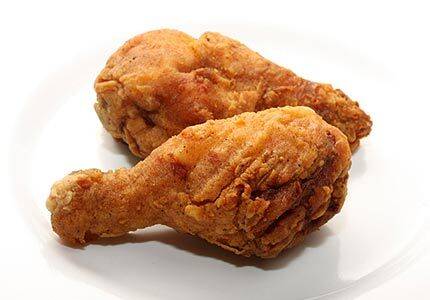
    July 6 just might be one of the most fun, non-holidays that Americans have to celebrate.  Who knew?  It’s not only National Fried Chicken Day and International Kissing Day, but it’s also National Ice Cream Month.  And just when you didn’t think the day could get any better, you realize it’s Friday to boot!

    With an intense heat wave hitting much of the Midwest for the second straight week, it makes me wonder how many Americans will actually fry chicken at home.  I’m guessing more folks will opt for the KFC drive-thru.  If your travels take you cross-country, Fox News has compiled a comprehensive guide to the best fried chicken in America.

    As much as I love fried chicken, I’m not going to stand over the stove.  I’d be more tempted to turn on the oven and bake Rice Crispy Chicken.  It’s seriously finger-lickin’ good!  Another chicken recipe that’s well suited for the season is this Slow Cooker Lemon Chicken, which was given to me several years ago when my aunt was visiting from Canada.  I think it would be refreshing served with a side of Orange and Cashew Lettuce Salad.

    The more I think about it, the more apt I am to serve Lemon Chicken for Sunday dinner and try to beat the heat today with ice cream instead!  Links to ice cream recipes previously shared on TheFieldPosition follow:

    • Ice Cream Sandwiches – a county fair ribbon-winning recipe
    • Dairy Days of Summer – Oreo® and ice cream sandwich cake
    • Buster Bar Dessert – my mom made it earlier this week for me, so all I have to do is get it from the freezer!  It definitely one of my faves.

    Stay cool!  And feel free to share your best tips to “beat the heat.”

    Team Latham

    July 6, 2012
    Desserts, General, Poultry, Recipes
  • Latham Hi‑Tech Seeds

    Let Free Market – Not Government Regs – Rule

    Larry Sailer1
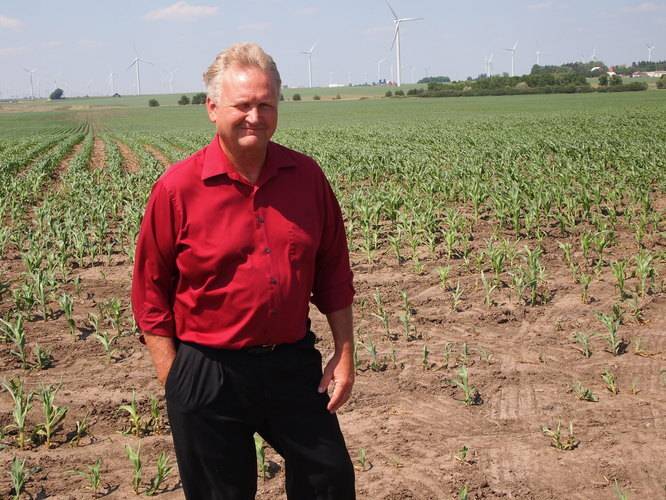
    Larry Sailer on his corn and soybean farm, just north of Iowa Falls, Iowa. – Photo Courtesy of Jonathan Ahl with NPR

    “Musings of a Pig Farmer”
    by Larry Sailer

    The eve of our country’s Independence Day seems like an especially fitting time to discuss the merits of free markets and free enterprise. It’s my belief that farmers should have the freedom to manage their own farms as they see fit.

    The whole idea of government mandates to control how farmers and ranchers operate is a bad precedent. Instead, let the free market dictate how animals are raised. If consumers feel strongly about free-range chickens or pork, they can choose to buy from producers who operate in that manner. If buyers wants organic produce, they can buy food from organic growers.

    Not everyone shares my thoughts on animal agriculture, however. Thanks (yes, I’m being sarcastic here) to groups like the Humane Society of the United States (HSUS), additional regulations for the livestock industry are being debated by Congress as part of the 2012 Farm Bill.

    Allowing groups like HSUS to dictate how livestock is produced is like inviting the proverbial fox into the hen house! Why? My friend Michele Payn-Knoper does a great job of summarizing the situation on her Gate to Plate blog:

    Best known for their cute kitten and fuzzy puppy propaganda, the Humane Society of the United States has “come out of the closet” with their emotional pleas to stop abuse of “factory farm animals.” It should now be clear that HSUS is more about driving animal agriculture out of our culture than they are about caring for abandoned pets.

    Whatever you do, please don’t misunderstand the point I’m trying to make. Animal abuse – whether pets or livestock – is indefensible. If there is abuse, it must be addressed and the guilty party charged. The last thing most farmers want is for any animal to be abused. It’s not the way we operate. However, we don’t need more rules to define “proper care” of animals. We simply need to enforce rules that are already on the books.

    There are many regulations and laws already in place to protect against animals being treated badly. New regulations and more government control won’t assure less abuse or a safer food supply. You can rest assured, however, that additional government regulations will make production costs higher for farmers and food costs more for consumers. No one wins when this happens!

    Larry Sailer, Musings of a Pig Farmer

    July 3, 2012
    Agriculture, General, Industry News
  • Latham Hi‑Tech Seeds

    Iron Chlorosis is Serious Threat to Soybeans

    Ironcholorsis

    I’ve received an unusually high number of calls this spring from people, who have noticed all the “yellow soybean fields.” These fields are exhibiting Iron Deficiency Chlorosis (IDC).

    Contrary to popular thought, IDC is not a disease as there are no pathogens, fungi or viruses that can be blamed for this condition. Rather, IDC is a function of the soil type common in the area we call the “Des Moines Lobe.” This area covers most of Central Iowa, continuing north into Minnesota and even further north and west into the Red River Valley region. These soils typically contain some areas that are poorly-drained and also have higher-than-normal pH values.

    This is one of the worst years for IDC in recent memory. Unfortunately, once IDC is noticed in a field, it’s too late to really manage it properly this season. Avoid applying chemicals on these areas that will damage the already-stunted and chlorotic plants. Then be proactive when choosing future soybean varieties for these fields.

    Iron chlorosis symptom – soybean. Photo © John E. Sawyer

    There is no such thing as complete resistance to IDC, however, some soybean brands (i.e. varieties) are better than others at handling this condition. Because Latham Hi‑Tech Seeds is headquartered right in the heart of North Central Iowa where Iron Chlorosis is a familiar challenge to us, we have always tried to choose soybean genetics that have the best possible scores against this condition.

    Latham® soybean brands like L1585R2, L1783R2, L1985R2 and L2183R2 have all demonstrated that they belong in this elite class of defensive products that are designed to give the best possible performance under some of the toughest conditions that our soybean seed customers run into. This is just one more example of our commitment to bringing the highest performing seed products with the best trait values to all of Latham Country!

    Webspec Admin

    July 2, 2012
    Agronomics, Crop, Fertility, General, Soybeans
  • Latham Hi‑Tech Seeds

    Celebrate 4th of July with "Presidential Fare"

    McCain1

    It’s no secret that one of my great loves is travel.  Nothing gets my heartbeat pumping like an opportunity to see new things, experience new adventures and taste new foods.

    Last week our family had the opportunity to do “all the above” when we traveled to Washington, D.C., for the 129th annual summer convention of the American Seed Trade Association (ASTA).  We arrived at our hotel about 7 p.m. on Monday, June 18.  We grabbed a burger at the Cadillac Grill and called it an early night.

    It’s a good thing we were well rested because “Day 1” was packed full of activities and fun memories!  We left our hotel by 6:30 a.m. for the White House, where we were scheduled for a 7:30 a.m. tour of the White House.  (Remember, this early hour felt like 5:30 a.m. since D.C. is in the Eastern Time Zone and we live in the Central Zone.)

    Our kids greatly enjoyed the White House tour and were eager to see more of the city.  Our next stop was the Newseum, or the Museum of News.  This is probably my favorite museum of all time.  As a journalism major, I could’ve spent a couple more hours there.  (Well, maybe even the day!)  This museum was fun for the whole family because it was so interactive.  We got to try our hand at reporting the news live, complete with a teleprompter and microphone.  We saw pieces of the Berlin Wall, watched an emotionally griping movie about the journalists who covered 9/11, and peeked Inside Tim Russert’s office.  Our kids greatly enjoyed the 4-D Time Travel Experience.

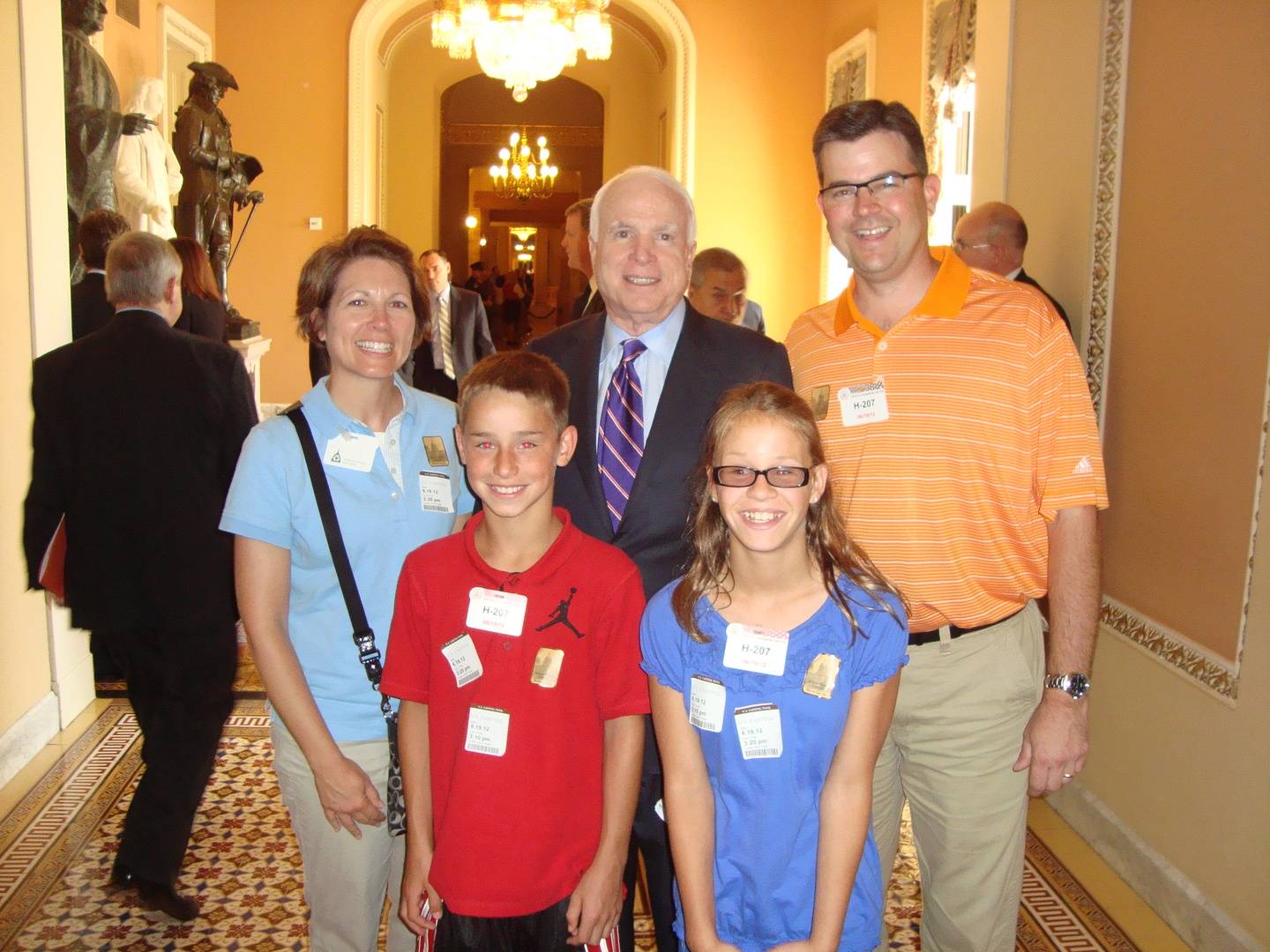
    Unfortunately, we didn’t have a chance to visit all Top 10 Things to See at the Newseum because we had scheduled a mid-afternoon tour of the U.S. Capitol.  Lucky for us, our Capitol Hill tour was filled with great suprises.  As we were walking through the halls of the Senate, The Honorable John McCain stepped through the chamber doors.  He took time to talk with us and even posed for a picture.  (This was a true “wow” experience for our 11-year-old son.)  After such an event-filled day, we spent a low-key evening in our hotel.

    “Day 2” of our trip marked the first day of the ASTA convention, so John was tied up in business meetings and general sessions all day.  I opted to “take a vacation day” and joined our kids for an ASTA-sponsored spouse’s / children’s trip to the International Spy Museum and the Smithsonian.  I’m so glad that I went on this tour as the live-action spy adventure is a must-do for anyone who meets the age requirements.  Here’s how it’s described online:

    Think of it as a live-action spy adventure. Only you’re the spy. This one-hour-adrenaline-fueled fest is no exhibit. It’s simple, really. You have to locate a missing nuclear trigger before it ends up in the wrong hands. No pressure. Just crack a few safes, decode some messages, and interrogate a suspect double agent.

    Our adrenaline was pumping.  Our imaginations were running wild. And our creative juices were flowing.  It was a fun time for our entire ASTA group.  After we “captured the double agent,” we toured the museum where we learned about buttonhole cameras and lipstick pistols.  It was crazy stuff – just perfect to hold the attention of my two pre-teens.  That afternoon we toured the National Museum of Natural History.  My kids expected it to look like scenes from A Night at the Museum.  Although it didn’t really resemble the movie, they couldn’t have had a better time looking at all the unique animals.  They had fun with the computerized cameras, one which shows how you would’ve looked as a homo sapiens in prehistoric times.  (Personally, I found my prehistoric photo to be frightening! But, I greatly enjoyed getting a glimpse of the Hope diamond.)

    “Day 3” included a water taxi ride to Mount Vernon, which includes a beautiful mansion overlooking the beautiful Potomac River.  This 50-acre estate, formerly the home of George and Martha Washington, also includes fruit and vegetable gardens, a pioneer farm site and even a distillery and gristmill.  Even though I have visited Mount Vernon at least three times previously, there is still more that I’d like to see on my next visit.  Someday I’d love to attend an Independence Day Celebration at Mount Vernon to watch as costumed staff make one of George Washington’s favorite desserts.

    To celebrate the Fourth of July “Washington style” in the Midwest, click here for Martha Washington’s Great Cake recipe.  NOTE:  This recipe makes enough to feed an army.  Other recipes are featured in the book, Dining with the Washingtons.  Someday I think it would be fun to make some of these dishes and host my own 1776 dinner party.

    IMG 5985Speaking of trying new foods…  I’d like to take a minute to share with you the sweet treat we enjoyed while visiting Georgetown area last Saturday night.  Have you heard of Georgetown Cupcakes?   You might know it better as TLC’s hit new show, DC Cupcakes.  As their site states:

    DC Cupcakes is about Georgetown Cupcake, a cupcake shop in Washington, D.C., owned by a sister duo! They traded careers in fashion to pursue something a little different. They’re both lifelong bakers inspired by their grandmothers. They opened their shop on Valentine’s Day 2008, the first cupcakery in D.C.!

    It pays to be first as these ladies literally have a corner on the market.  We waited in line for 45-minutes for a taste of these famous cupcakes, and we all thought it was worth the wait as soon as we took our first bite.  While I was surfing their site, I was drawn to the link, “Holiday Cupcake Ideas.”  Take a look at the “cool” idea I found under July 4th Cupcakes.  SnoCones and cupcakes are always a hit with kids, so I can only imagine how much my kids will delight in SnoCone Cupcakes this Fourth of July.

    Sorry, Martha Washington – You’re cake will just have to wait.  This Independence Day I’m baking up some SnoCone Cupcakes.  Click here to try a batch yourself.

    Today I’m also including a recipe for Crab Cakes with Lemon Dill Sauce because “crab cakes” are synonymous with “D.C.” in my book.  I always eat crab cakes at least once whenever I’m in Washington, but I have yet to try making them at home.  Let me know if you make this recipe.  I’d appreciate any “cook’s tips” you’re willing to offer.

    Shannon Latham

    June 29, 2012
    Agriculture, General, Industry News
  • Latham Hi‑Tech Seeds

    Potassium Deficiency is Growing Problem in Corn

    DeficiencySymptoms
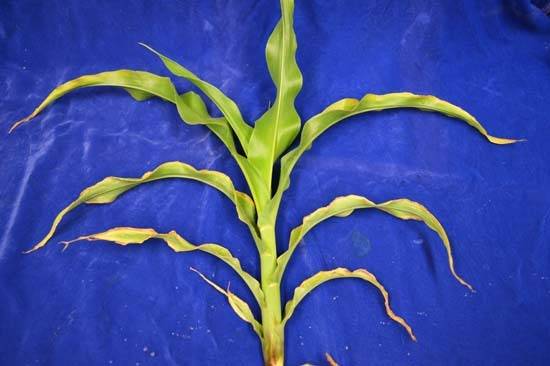
    Potassium deficiency symptoms in corn develop on the edges of older leaves, typically starting at the tip, while the new growth appears normal. (Photo courtesy of the University of Illinois Plant Clinic.)

    While walking fields recently, I’ve seen corn leaves that are yellowing around the leaf margins.  The yellowing starts at the tip of a leaf, extending along its edges to the base of the leaf.  In more severe cases, the edges are brown.

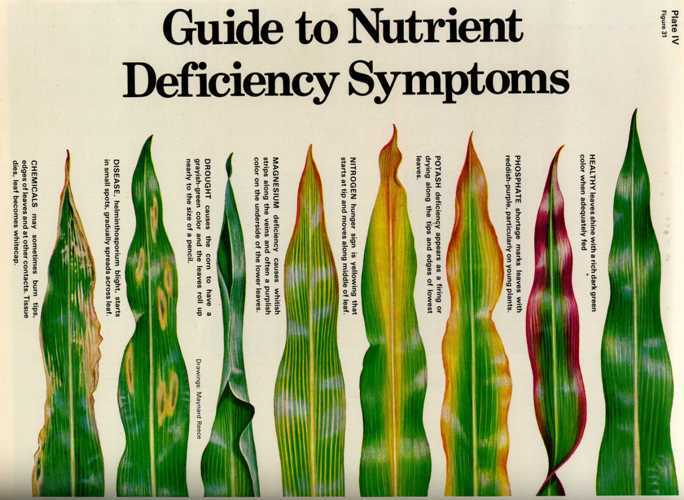
    Corn and soybeans are showing signs of potassium deficiency this growing season. Most of the potassium deficiency I’ve seen so far this season is not due to planting in too-wet soil conditions or compaction, although this certainly could be a reason in some cases.  Instead, I’m seeing more potassium deficiencies where there is an extremely dry soil surface and where root activity has been slow.  Dry conditions typically limit root growth, which explains why soils can have good levels of potassium but nutrients don’t get to the plants.  It also helps explains why, in some fields I have observed, the K deficient symptoms are occurring in the best-drained soils in the field while the more poorly drained areas look better.

    Dry surface soils express K deficiency most often.  Ridge-till, no-till situations and side wall compaction will sometimes show symptoms in dry years.  Irrigation or simply rainfall is a great way to jumpstart the root systems and help the plant develop through the K deficiency.

    It’s important to understand why if and why there is a potassium deficiency because K is an essential nutrient for plant growth that has a large impact on overall yield.  Potassium controls transpiration and respiration, as well as the uptake of certain nutrients including nitrogen and magnesium.

    Photo courtesy of www.omafra.gov.on.ca

    The type of nutrient deficiency determines soil management strategies.  Some people side-dress potash or various forms of K.  Others try foliar products.  One word of warning is that some of these products can be harmful to the plant at certain stages of growth.  A grower should select a low salt form of K and avoid anything with KCl or KSO4 for foliar applications.  A better and safer means is to address the situation by applying potassium before planting 2013.

    Walk your fields now and note where you’re seeing signs of potassium deficiency, so you can be sure to test and possible treat those areas before the 2013 crop is planted.  Another leaf tissue sample can provide helpful information, too.  You can see if there are other nutrient deficiencies in your field.  Tissue sampling is one service provided through Latham’s Seed-to-Soil program.

    Team Latham

    June 28, 2012
    Agronomics, Corn, Crop, Fertility, General
  • Latham Hi‑Tech Seeds

    The Importance of Corn

    Sailer grandkids1

    Last Friday, my 11-year-old granddaughter Carlie said she wanted to be my office manager for the day. She took over my chair and I had to find another seat! It wasn’t long before she took over my computer and began researching “corn.” I’m guessing Carlie overheard me talking about some negative remarks that others had made about corn on Facebook and decided to check it out for herself. I promise you that I did not prod Carlie to gather these facts or turn them into a blog post. It was her idea to research the facts on my computer and then write a report.

    The Importance of Corn

    Corn is the second most plentiful cereal grown for human consumption, and many cultures around the world have lived on this grain. Corn is a versatile crop, and everything on a corn plant is useable. No part of the corn is wasted. The husk of the corn is traditionally used in making tamales. The kernels are ground into food. The stalks become animal food and the corn silks are used for medicinal teas.

    Food products made from corn include corn oil, corn meal, corn syrup and even bourbon. The most important refined corn products are corn sweeteners, which last year accounted for more than 56% of the national nutritive sweeteners market. One cup of raw white corn has about 130 calories, 2 grams of fat, 5 grams of protein, 29 grams of carbohydrates and 4 grams of fiber with no cholesterol.

    These “everyday things” are made with corn: protective sealing bands, gypsum dry wall, warmish, spark plugs, adhesives, toothpaste, aspirin, diapers, coated paper products and more. Scientists continue to find more uses for corn including fuel-efficient tires, food and beverage containers, carpet tiles and candy wrappers.

    Corn Facts
    • An ear of corn averages 800 kernels in 16 rows.
    • A pound of corn consists of approximately 1,300 kernels.
    • 100 bushels of corn products approximately 7,280,000 kernels.
    • In the U.S., corn production measures more than 2 times any other crop.
    • Each year, a single U.S. farmer provides food and fiber for 129 people – 97 in the U.S. and 32 overseas
    • Over 55% of Iowa’s corn goes to foreign markets. The rest is used in other parts of the United States.

    Admittedly, I’m one proud grandpa! Carlie did a great job showing how different our world would be without corn. Her actions confirm my desire to promote what farming is truly about, especially through fact-based educational programs like Ag in the Classroom. There are too many other groups with hidden agendas spouting the wrong information.

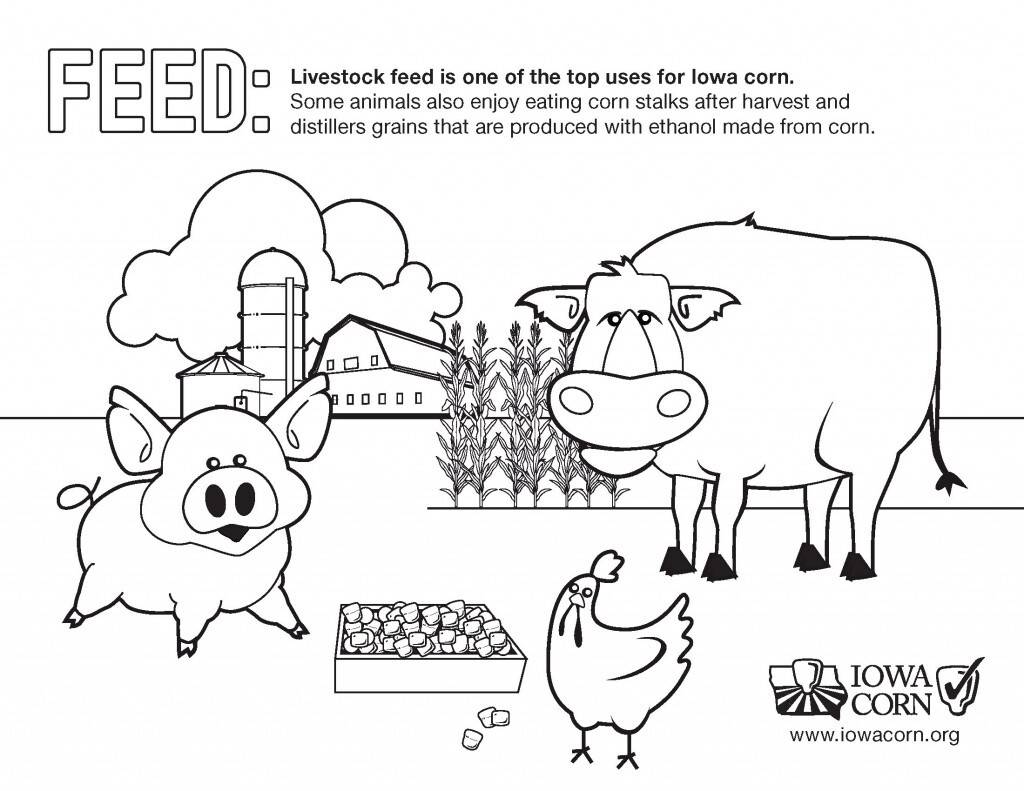
    Click the image to download this fun-to-color sheet with cool corn facts!

    Larry Sailer, Musings of a Pig Farmer

    June 26, 2012
    Agriculture, General, Industry News
  • Latham Hi‑Tech Seeds

    Corn Rootworm in Northeast Iowa

    Corn Rootworms have arrived in Northeast Iowa nearly three weeks prior to normal years. Farmers are urged to be diligent in scouting fields and monitoring pressures in the coming weeks. For more information, tune into Nick Benson’s most recent YouTube video:

    http://youtu.be/TLNYMhaw-u4

    Team Latham

    June 24, 2012
    Agronomics, Corn, Crop, General, Insects
Previous Page
1 … 104 105 106 107 108 … 159
Next Page

Latham Hi‑Tech Seeds

131 180th Street | Alexander, IA 50420

(641) 692-3258

SIGNUP FOR OUR NEWSLETTER
  • Contact
  • Legal
  • Dealer Center
  • Seedware Login
  • Latham Gear

© 2025 Latham Hi‑Tech Seeds. All rights reserved. | Iowa Web Design by Webspec | Privacy Policy

Latham® Hi-Tech Seeds is a trademark of M.S. Technologies, L.L.C., 103 Avenue D, West Point, IA 52656.