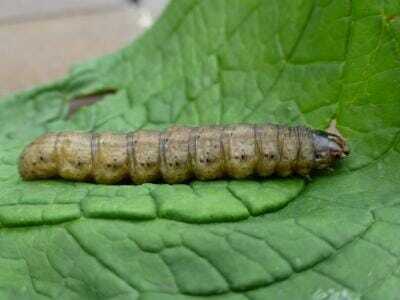
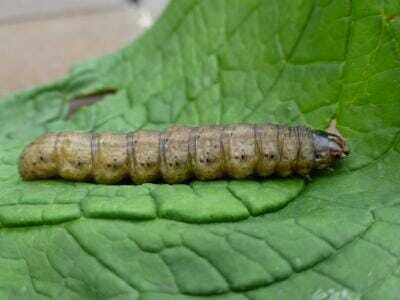
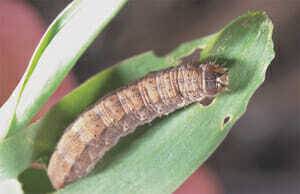
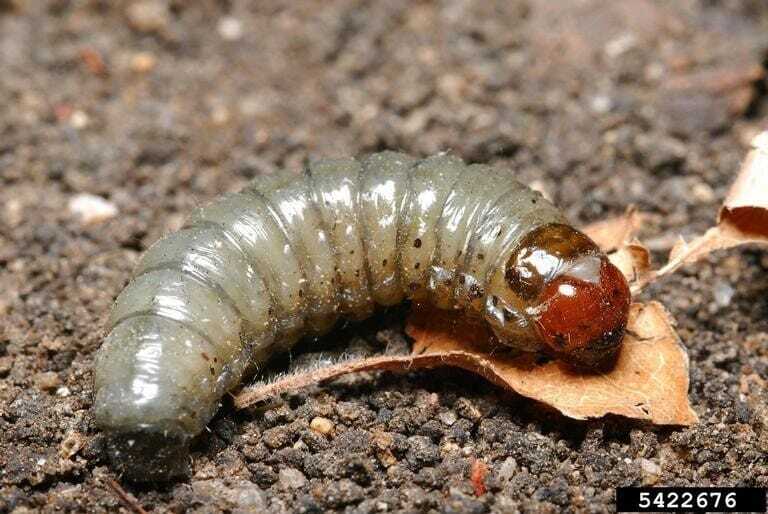
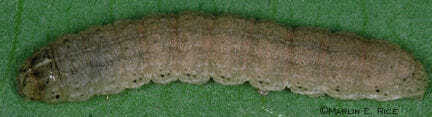
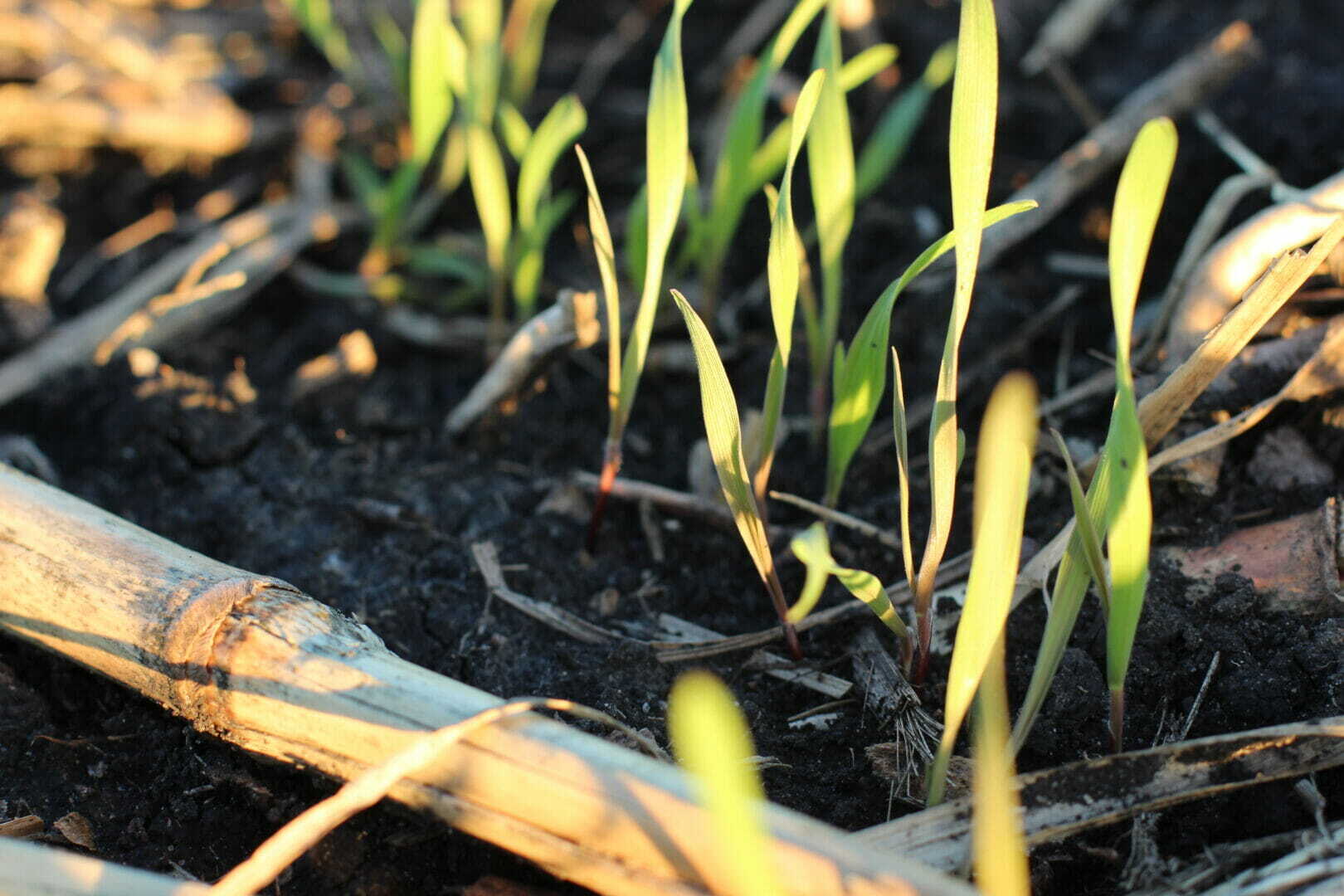
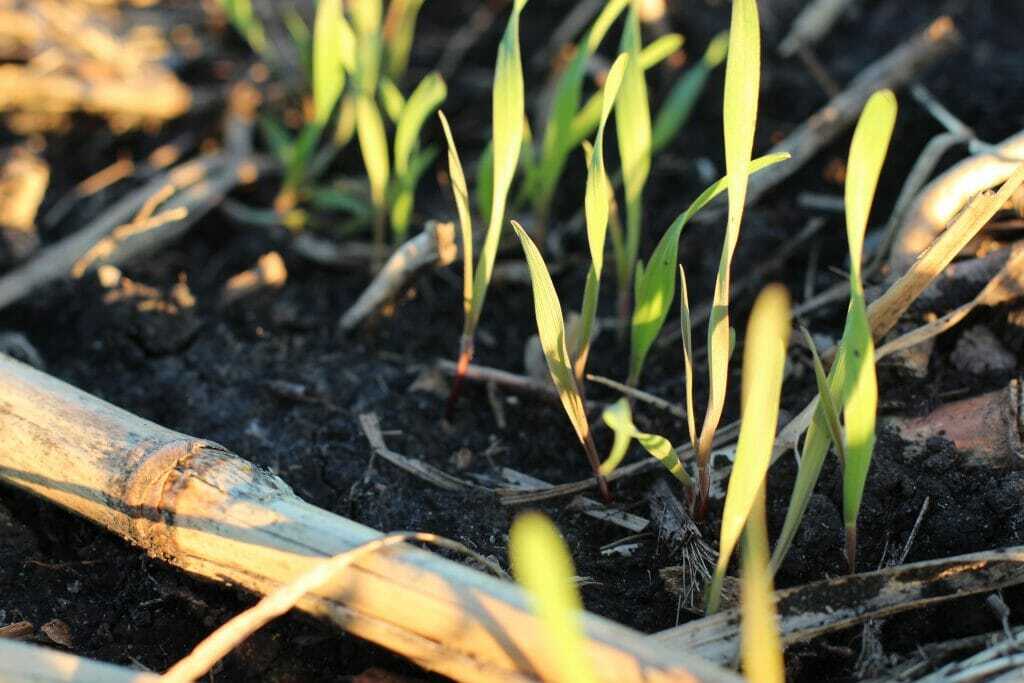
The true armyworm – not to be confused with the fall armyworm – can pose a threat to corn stands and overall yield as an early season pest. Armyworm larvae are characterized by alternating light and dark bands.
The larvae feed primarily on seedling leaves and are associated with causing defoliation. When feeding, armyworms start at the base of the corn plant and work their way up, primarily feeding on softer leaves and during the nighttime. During the day, armyworms will migrate to the whorlof the corn plant as well as inside of soil cracks.
Cool and wet weather in the springtime supports the development of armyworms and fields with a heavy presence of weeds and grasses are conducive for allowing them to thrive. Armyworm moths migrate up from the south and look for the grassy fields or areas with lush vegetation. Therefore, winter rye cover crops have been associated with a higher prevalence of armyworm infestation.That is why it is important to terminate cover crops at least two weeks prior to corn planting.
Treatment and Mitigation
Death in corn plants from armyworm is not common, but if the armyworm feeds on a budding corn plant, this can lead to poor stands and significant loss in yield. When armyworm infestation causes defoliation in more than 25% of corn plants, it is advised to begin using an insecticide. Additionally, when armyworms are still developing and larvae is only ¼ to ¾ inches in length, treatment is considered economical and is advised.
Controlling excess grass growth will prevent moths from laying eggs and will offer protection from future infestation. If herbicides are applied, the loss of a weed habitat can drive armyworms to feed predominately on corn plants.
Treating an armyworm infestation with small corn plants requires quick decision making because large populations of armyworms can spread quickly across a field. Keep an eye on those fields that have a cover crop or are close to armyworm habitat. Be prepared to act if conditions warrant treatment!
Many of our minds are already on the upcoming planting season. This week someone posed the following question, “How hard of a frost can soybeans withstand?”
It’s a great question, so I wanted to address the topic of early planting a bit, well, “earlier” than usual!
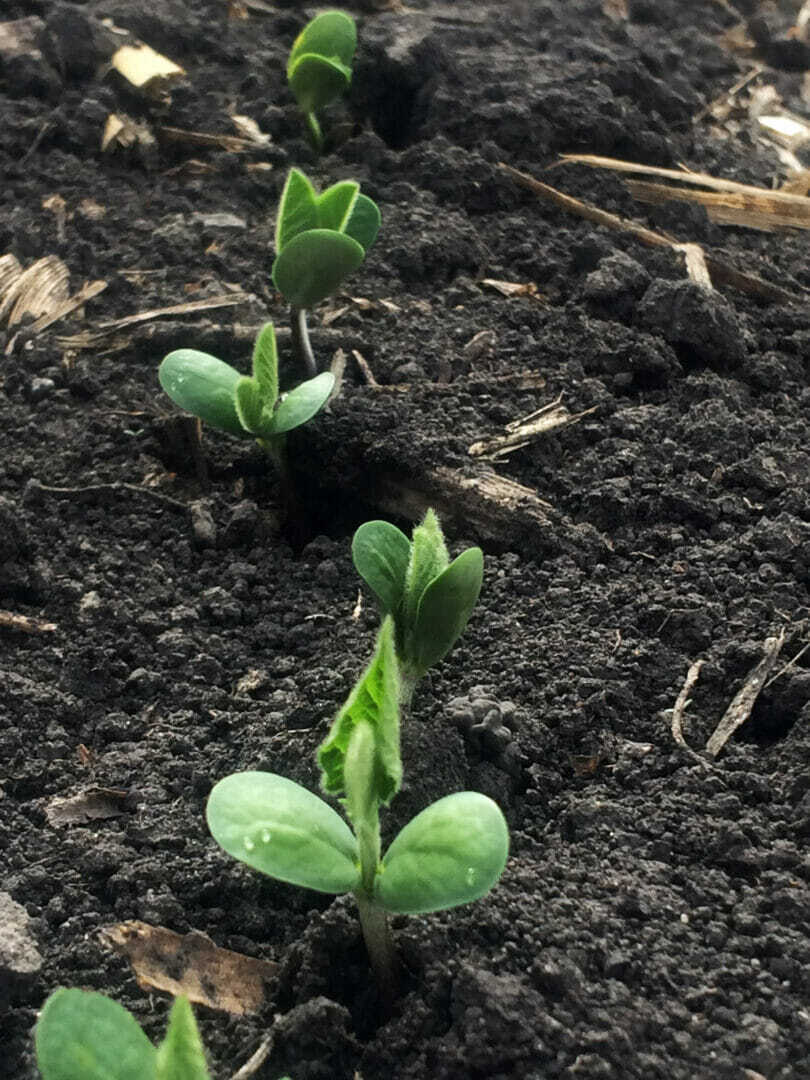
The first thing to keep in mind is that cold temperatures at or before planting can negatively affect the growing point of the plant. For corn, that growing point stays under the soil surface until the V5-V6 stage, helping protect the plant to a certain degree from colder weather spells for several weeks. For soybeans, however, the growing point comes out of the ground at emergence. Therefore, a soybean seedling is immediately vulnerable to cold weather.
Using a fungicide seed treatment will help protect young soybeans from seedling diseases at this early stage, but they are not designed to protect against cold temperatures. Soybeans typically require over 100 growing degree units (GDU’s) to accumulate before emergence, which is similar to corn that requires about 125 GDU’s. Abiding by the minimum soil temperature of 50 degrees Fahrenheit will keep you away from poor emergence and the seedling disease risk associated with soil temps below 50 degrees. That’s why I suggest watching the weather forecasts before you plant soybean seed, and do your best to ensure hard frosts (which take place at 28 degrees Fahrenheit) are no longer possible.
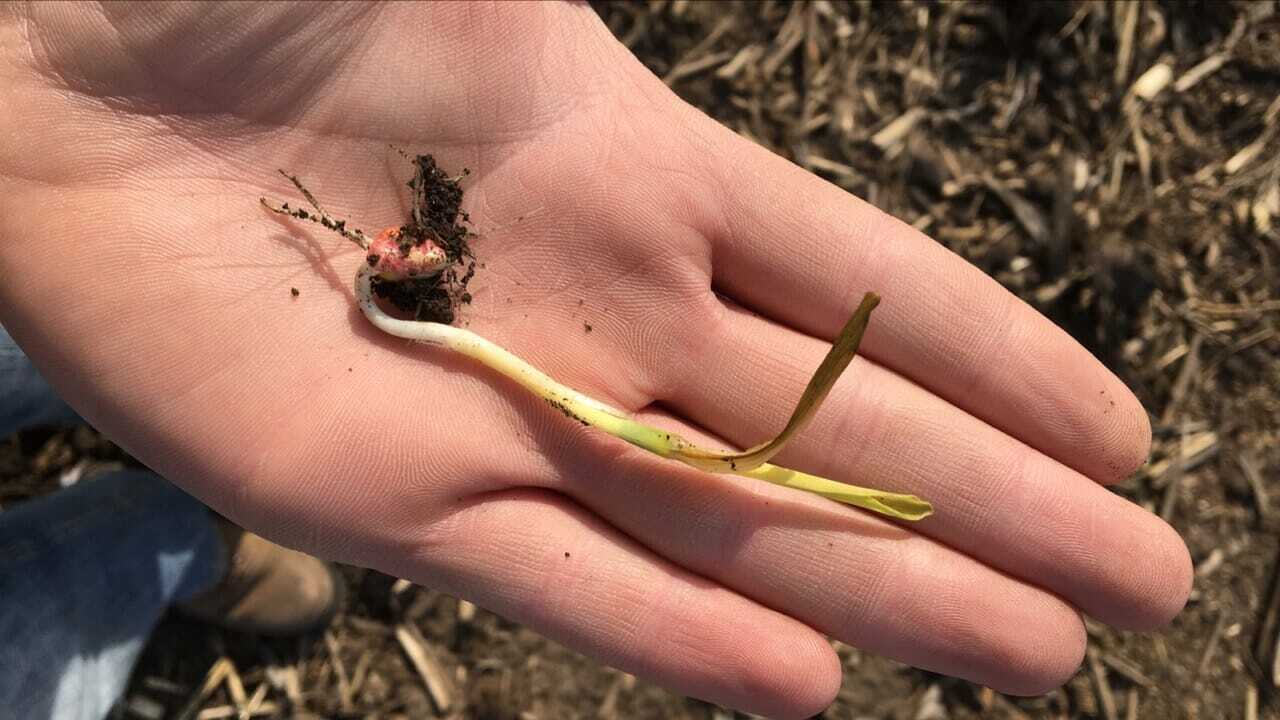
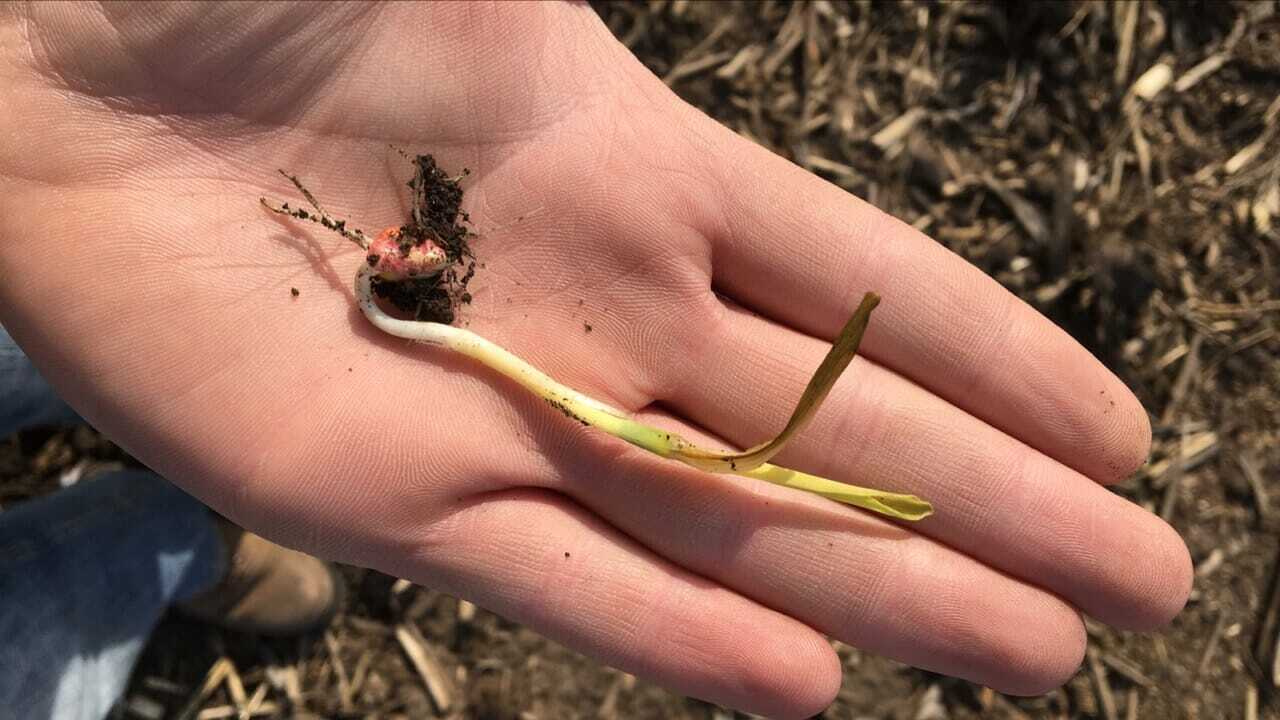
Remember, when soybeans emerge, they have a growing point at the base of each cotyledon and at the main shoot. The main shoot is the small leaves in-between the cotyledons. If you notice brown on the stem below the cotyledons, the plant will not recover. Early planting is proven to provide higher yields, but it is is fine balance between the two, so watch weather forecasts and soil temperatures so you can find the balance on your own farm.
Additional tips to keep in mind before planting:
Grab a clump of soil and watch how easily it crumbles. If it stays in a ball, conditions are NOT right for planting. If it crumbles easily, the soil is fit for planting.
Make sure your planting date is covered in your farm insurance policy – this includes your “do not plant before” dates. If you plant outside those dates, your insurance could be jeopardized.
Cutworms are insects that show up during the earliest growing stages of the season. The presence of cutworms can pose a threat to the well-being of corn plants, but their severity is highly variableand depends on the species. Delayed planting and corn plants shorter than 18 inches are most susceptible to undergoing severe damage from cutworms.
Black Cutworm
Black Cutworm
Black cutworms are the most common species found in corn throughout the Midwest. The larvae of black cutworms can be up to 1¾ inches long with their appearance characterized by a dark-gray segmented body. Black cutworms are most likely to be seen between stages VE – when the shoot first emerges from the soil and V5 – when the first five leaves exhibit visible collars. The sets of paired spots unequal in size that run along the length of the black cutworm make it distinct in appearance. Black cutworms cause damage by chewing holes in leaves and larvae will cut the lower portions of the corn plant just above the soil line. The youngest larvae will feed on leaves whereas older cutworms will feed exclusively below ground level. The first generation of black cutworm will cause the most damage, though three to four generations can be produced in a year.
The black cutworm thrives best in wet and weedy fields with poor drainage. Cover cropping can make conditions conducive for the growth of laid eggs, especially if weeds are prevalent. Insecticide is advised if cutting is evident across 2-3% of corn plantsand larvae do not exceed ¾ inch in length.
Dingy Cutworm
Dingy Cutworm
Similar to the black cutworm, dingy cutworms can form larvae up to 1¾ inches long and often emerge in fields with heavy crop residue. However, unlike black cutworms, the pairs of black dots running along the segmented back appear to be equal in size. When fully grown, dingy cutworms reach a size of one inch in length. Dingy cutworms typically only feed on leaves and do not cut plants.
Glassy, Bronzed and Sandhill Cutworms
Glassy Cutworm
These three classes of cutworms are characterized predominately by the color of their larvae. Glassy cutworms have a white, translucent segmented body with a solid orange head and cause damage primarily to seedlings.
Bronzed cutworms are colored with light orange, bronze and brown stripes running the length of their body.
Like glassy cutworms, sandhill cutworms have a translucent, light brown body that is uniform in color, including the head. Glassy cutworms are known to cause cutting damage in addition to chewing and feeding damage exhibited by other cutworms.
Sandhill CutwormBronzed Cutworm
What to Look for When Scouting
Corn plants succeeding soybeans or legumes are most susceptible to hosting cutworms. With shorter corn plants having the greatest vulnerability to cutworm damage, scouting should begin once seedlings first emerge and continue until plants achieve a height of 18 inches tall. Look for signs of cutting, wilting and irregular holes on leaves. Uneven stand or inconsistencies in cutting across rows are also signs of cutworm damage.
Cutworms gravitate toward moist soil for burrowing. When looking for signs of infestation, dig around the base of plants to look for burrows ranging in size from three to four inches. When soil is dry, digdeeper to three inches below ground to identify burrows.
Treatment
As cutworms are associated with reduced stand resulting from cutting or wilting, yield can subsequently be decreased. However, replanting is not usually necessary and is only advised if the presence of cutworms is not under control and stand has been severely impacted.
Controlling weeds can reduce overwintering and can remove an environment favorable for hosting cutworms. Tilling practices that reduce weeds and field residue will deter moths looking to lay eggs in the fall. Reduced tillage or no-till, delayed planting and overwintering cover crops are all management practices that increase chances of cutworm damage.If you see cutworm damage on 2-3% of plants and they are smaller than ¾ inch, it’s time to spray. When pre-applying insecticides to dry or crusted soils, it is advised to work the treatment into the soil so it is able to reach cutworms and burrows housed below ground.
Photo Credits
Black Cutworm: Iowa State University Extension and Outreach
Dingy Cutworm: Purdue University
Glassy Cutworm: University of Minnesota Extension
Sandhill Cutworm: Iowa State University Department of Entomology
Bronzed Cutworm: Iowa State University Department of Entomology
Frost damage occurs in corn and soybeans when plants are exposed to freezing or below-freezing temperatures. Damage can occur to the plants above and below the soil when temperatures range from 28 to 32°F and colder. Corn and soybean plants exposed to air temperatures below 28°F are often lethal and prevent plants from undergoing full recovery from injuries.The key in assessing frost damage is waiting five days to allow for any potential growth recovery or rehabilitation to occur.
Spring Frost in Soybeans
If frost damage occurs below the soybeans’ cotyledons – the first leaves that emerge above ground – the plant will mostly likely fail to recover. Wilted and dried leaves will often remain on the plant after a frost event. In recovering soybeans, new leaves will emerge at the site of cotyledons – the first pair of embryonic leaves that appear above ground. If auxiliary buds growing at the juncture of the plant’s stem and cotyledons are not frozen, the plant is on track for recovery.
Spring Frost in Corn
Since corn plants are protected by soil for a longer period of time relative to soybeans, they are less susceptible to lethal frost injury. However, temperatures below 28°F can cause damage below the soil and compromise growth, leading to poor stands. Once the growing point is above ground, corn plants exposed to 32°F for a few hours and 28°F for a few minutes can be lethal. After an initial frost, continued cool temperatures can decrease yield due to the onset of stalk rot diseases.
If frost occurs before V6, yield loss is minimal. In recovering corn plants, you should see new leaf growth emerging from whorls. Yellow-colored tissue that exists above the growing point is a sign of regeneration.
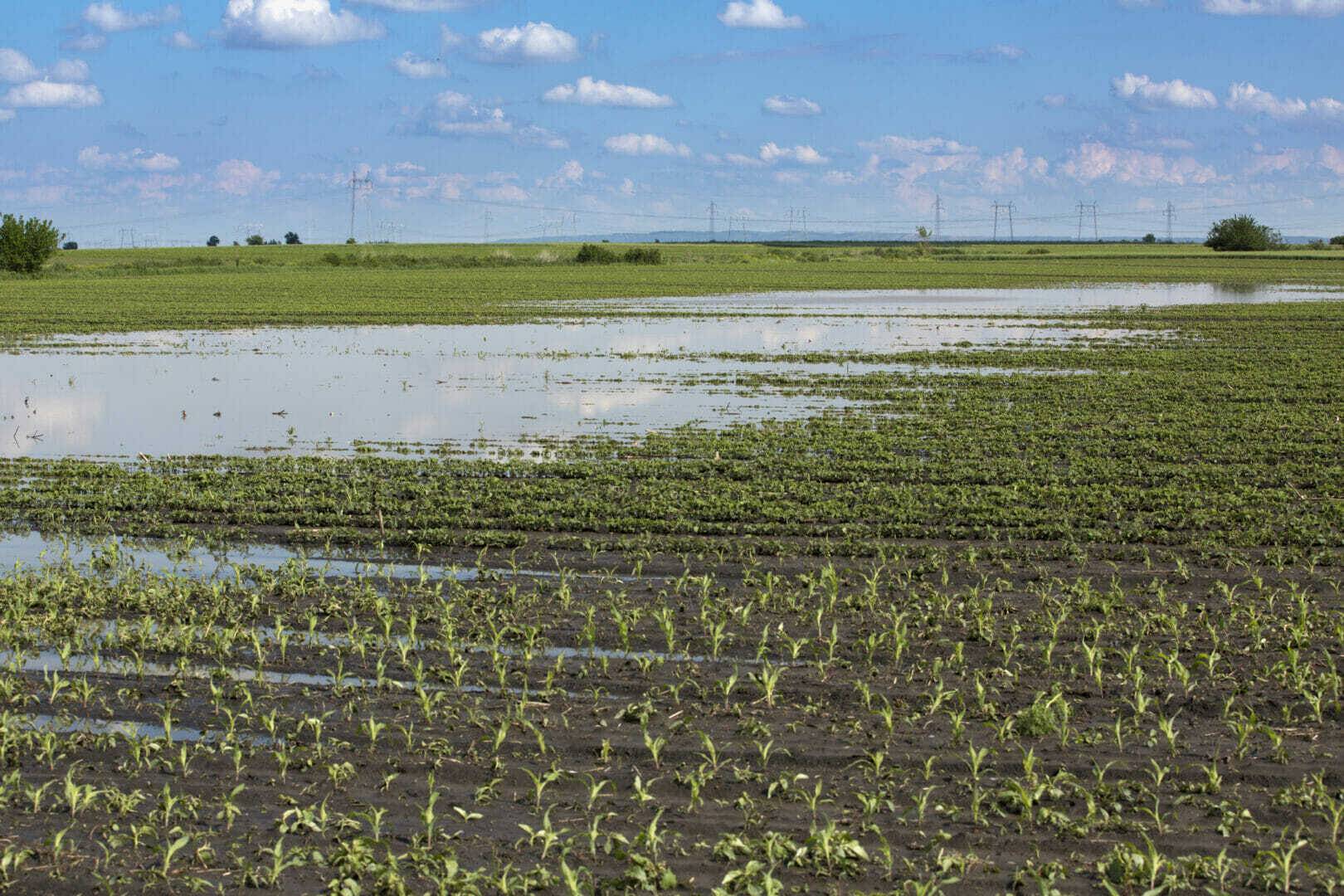
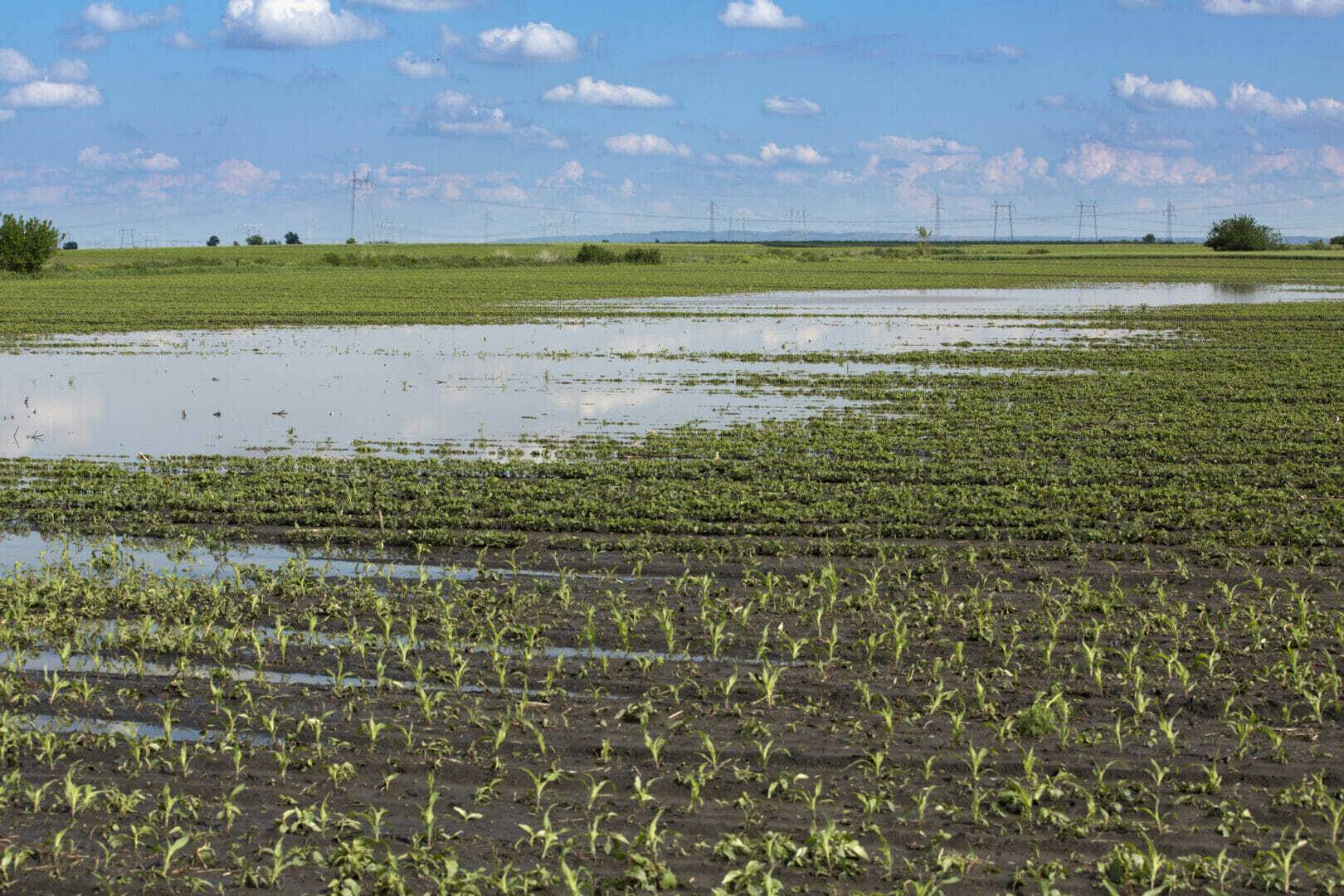
For corn and soybean plants before and after emergence, flooding and saturated soils can jeopardize yield. Germinating seedsrequire oxygen to survive. After the first 48 hours following a heavy rain or flooding event, oxygen levels in the soil will become entirely depleted and prevent seedsfrom germinating and continuing to grow.
Yield loss for corn and soybeans depends on the duration of the flooding event and at what growth stage it occurs. The longer a plantis submerged or growingin saturated soil, the less likely it is to survive. Generally, smaller seedlings with lower stamina are less likely to survive following a heavy rainfall event compared to larger seedlings.
Warmer temperatures are associated with higher growth rates, and as a result, a higher amount of oxygen is used. When temperatures exceed the mid-70° range, survival may not exceed 24 hours following the heavy rainfall event.
Effects on Corn Plants
Before V6, the growing point is below ground and damage from flooding ismore likely to impact yield or kill the plant. After V6, corn plants fair better in saturated conditions if some of the plant is out of the water. However, the higher temperatures can speed up respiration and oxygen requirements, leading to more plant damage compared to cooler temperatures during a flood event.
Nitrogen loss is another way flooding impacts corn yields. Corn consumes two-thirds of its nitrogen by the start of the reproductive stage and relies on a functional root system. If a flooding event compromises plant roots, yield can be reduced significantly. Research from Iowa State University found that a 30-inch corn plant that had been flooded for 48 hours with minimal nitrogen uptake experienced a 20% reduction in yield. Flooding can also promote seed decay, crazy top that exhibits proliferated tassels, stunted ears or completely barren plants
Impacts on Soybeans
For soybean plants at stages V2 or V3, survival is possible. However, nitrogen fixation can be restricted and reduced yield is still likely. For soybeans submerged for less than 48 hours, yield loss is rarely observed.
Once the first bloom appears at stage R1 the number of pods per node will be greatly decreased if sitting in saturated conditions. Wilting, stunting and yellow-leaves will be expressed in damaged or dying soybean plants. Further, research has found that greater yield reduction has been observed in soybean plants grown in heavy clay soils as opposed to silt loam soils.
Assessing Outcomes
Flooding and prolonged saturated soils pose the greatest threat to young plants that have yet to emerge above ground. As water recedes, any remaining residual mud on corn and soybean plants can reduce photosynthesis. For plants that survive a flooding event, they will be more vulnerable to diseases and stresses over the course of the growing season.
The survival outlook for saturated seeds and germinating plants will not exceed four days. Plants that surviveafter water levels recede will continue to grow within three to five days.
Reducing the excessive use of nutrients was the focus of presentations made recently during the annual Agribusiness Showcase and Conference in Des Moines.
Most Upper Midwest farmers are very aware of problems in the “Hypoxia Zone” of the Gulf of Mexico. This area where the Mississippi River discharges into the Gulf is negatively affected by the abundance of nitrate nitrogen (N) and phosphorus (P) found in the river water. Excess nutrients can come from many sources including: sewage treatment plants; soil erosion; deposition of atmospheric nitrogen and fertilizers used on farms; lawns; and golf courses.
The EPA in March 2011 issued a letter to encourage states bordering the Mississippi and Missouri Rivers to reduce contaminants, specifically N and P, found in lakes, rivers, streams and groundwater. Phosphorus is tightly bonded to soil particles, so erosion is the main reason it is found in water. Nitrogen, on the other hand, converts to nitrates and easily leaches down through the soil profile. This allows nitrates to infiltrate groundwater and eventually reach lakes, streams and rivers through tile systems or aquifers.
Below are a few recommendations from experts who spoke at the agribusiness conference:
Eliminate “insurance” and “build” applications of nutrients. We tend to base our fertilizer needs on soil tests and what our yield goals are, then add an extra 10-20% to make up for losses due to weather, timing, etc. We need to stop this practice.
Bioreactors at the field’s edge can lower nitrate in runoff water before it can enter a stream or tile drainage ditch.
Saturated Buffers can help reduce both erosion and nitrate runoff for farms that have a river or stream flowing alongside or through the field.
Cover Crops can greatly reduce erosion and help with more efficient nitrogen use. Cover crops are one of the few practices that may help an entire field, rather than merely an edge-of-field strategy. Long-term benefits of cover crops include managing weeds, increasing organic matter and building overall soil health.
Precision Agriculture. Programs like Climate FieldView™ and Latham’s Data Forward™ bring economics and conservation together by using your own farm data. This leads to better variety selection and crop input decisions and often better use of soil and fertilizer resources.
These are just a few of the most popular strategies, but you could visit with your local NRCS staff member for more ideas. Most state strategies are voluntary, but Minnesota is considering making some of their strategies mandatory. Fall application of nitrogen fertilizer might be the first practice banned in Minnesota.
One farmer put it very simply, “Either join the effort now and have some freedom in what practices you use or wait until it is mandatory and then be told what to do.”
Contact your Latham RSM or our Technical Agronomist Phil Long to talk about ways our cover crop portfolio or Seed-2-Soil® services can help you and our customers raise the most profitable and sustainable crops.
Taking soil samples and then implementing “3 Ps” is key to building soil health: (1) Sample; (2) Plan; (3) Plant and (4) Be Patient. The focus of my post is to provide tips for developing a plan that will leave your soil in better shape for future generations.
Sample: It is hard to now where to go, when you don’t know where you are. That’s why baseline tests are so important.
In addition to working for Latham Hi‑Tech Seeds, I also work part time in the emergency room and am a paramedic in rural Wisconsin. When a sick patient is admitted to the hospital, a blood sample test is run. Results from this CBC, or complete blood count, and other tests become the foundation on which we develop the best suited treatment plan. This is really a customized approach to treating a situation because everyone is different.
The same is true with soils. Every single soil is unique, and the state of its biological soil health is based on several factors that only soil sampling can truly reveal. Once we have soil sampling results, we have a point from which we can develop the best suited plan.
There are a lot of tests available, but I have found the most useful test is the Solvita soil test by Woods End Laboratories. This test gives an overview of the biological health of the soil. It also actually provides a recommendation of the best cover crop combination to the benefit and build the soil.
If you’re not already doing so, I encourage you this season to develop the best suited plan to start building your soil structure. Start small, so you don’t get overwhelmed. Choose a soil you believe needs the most help. NOTE: Most conventionally-tilled soils could benefit. Use the absolute best soil sampling equipment you can find. Be very diligent in collecting the sample because the data you get back is only as good as the sample the lab receives from you.
Take your time. Enjoy the experience as you embark on a journey of doing something good for humanity. – Corey Catt, Latham Forage Product Specialist
Plan: Now that you have results from soil samples, develop a plan to accomplish your goals. Sometimes it’s easier to take a small acreage out of production, and plant a green manure mix. Here are some plants to consider:
Grasses, like Latham’s PROTECTioN Cereal Rye, scavenge for excess nitrogen. Grass roots help reduce run off.
Legumes, like Latham’s FixatioN Balansa Clover produce nitrogen and help reduce run off.
Brassicas, like Latham’s Driller Daikon Radish help penetrate hard pan and provide a little fertility benefit.
If you plan to interseed cover crops into your existing corn or soybean field in mid-summer, be very mindful of what herbicide you are using because carryover can reduce your cover crop emergence and growth. In particular, the residual of Dicamba herbicide really restricts your cover crop options.
Plant: Cover crops may be drilled, broadcast seeded, ariel seeded or even seeded using a Hi-Boy. Equipment is usually a limiting factor to what cover crops get planted. Some county soil conservation offices rent equipment. They also have funding available to pay for some cover crops.
PATIENCE: Being patient is the hardest part of trying cover crops and rebuilding soil health. You must think long term rather than seek short-term gratification. When we go through the investment efforts, we would like instant results.
Fact is, you are getting results albeit they are subtle. In many cases, however, the results are exponential when you commit to the plan for years. One Indiana grower found he has increased organic matter (OM) over time. This is huge as increasing OM also increases the water holding capacity in the root zone, which correlates to more yield potential, especially during dry conditions. This grower says he’s gaining about .1% OM every year that he no-tills and uses specific cover crops.
Consider that in 10 years you could gain another 1% OM. Every 1% OM holds about 1 acre inch of rain, which is around 27,000 gallons. Every year you increase the water holding capacity, you improve your chances of higher yield.
We’re all about helping you “grow your legacy” at Latham Hi‑Tech Seeds! Feel free to call me if you’re interested in setting up an on-farm trial for cover crops this growing season. We might even be able to partner with you to try some new products or different rates / seeding studies of existing products. Also note that the 2020 Latham® Seed Product Guide will be distributed in July 2019, so be sure to check out our production offering for Fall 2019 seeding.

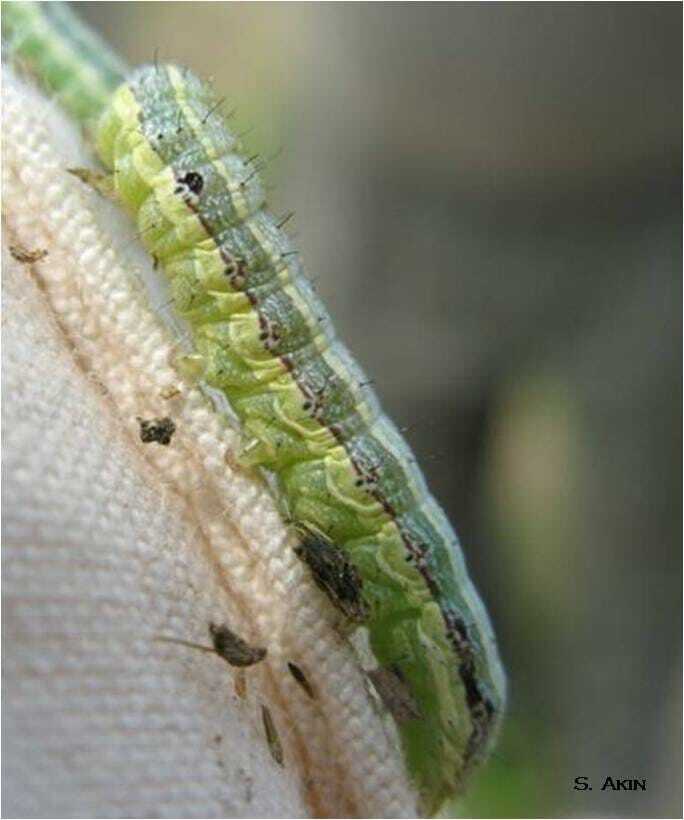
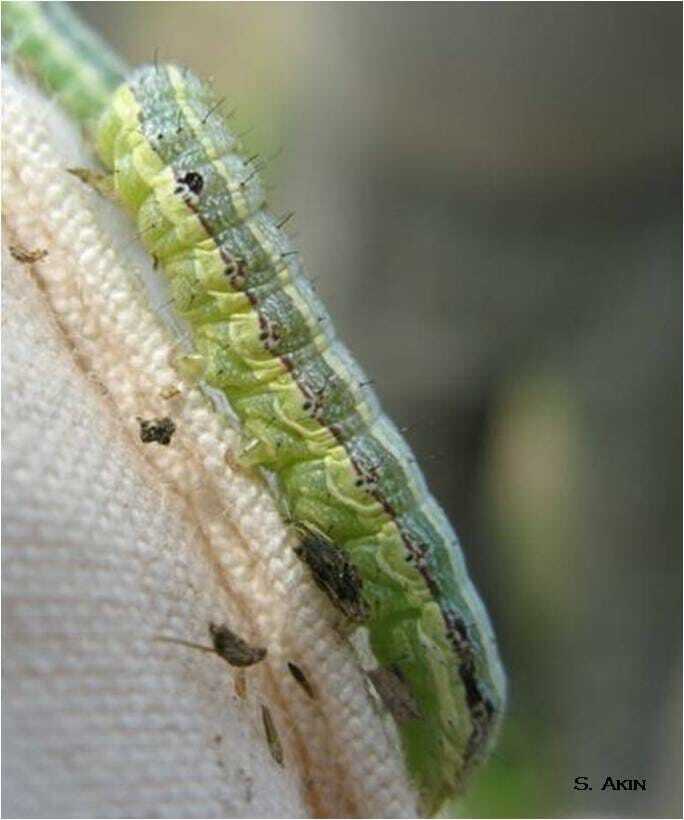 The true armyworm – not to be confused with the fall armyworm – can pose a threat to corn stands and overall yield as an early season pest. Armyworm larvae are characterized by alternating light and dark bands.