
Join us this morning as we discuss top populations for top yields! #AsktheAgronomist
https://www.facebook.com/LathamSeeds/videos/316328942324823/


Join us this morning as we discuss top populations for top yields! #AsktheAgronomist
https://www.facebook.com/LathamSeeds/videos/316328942324823/
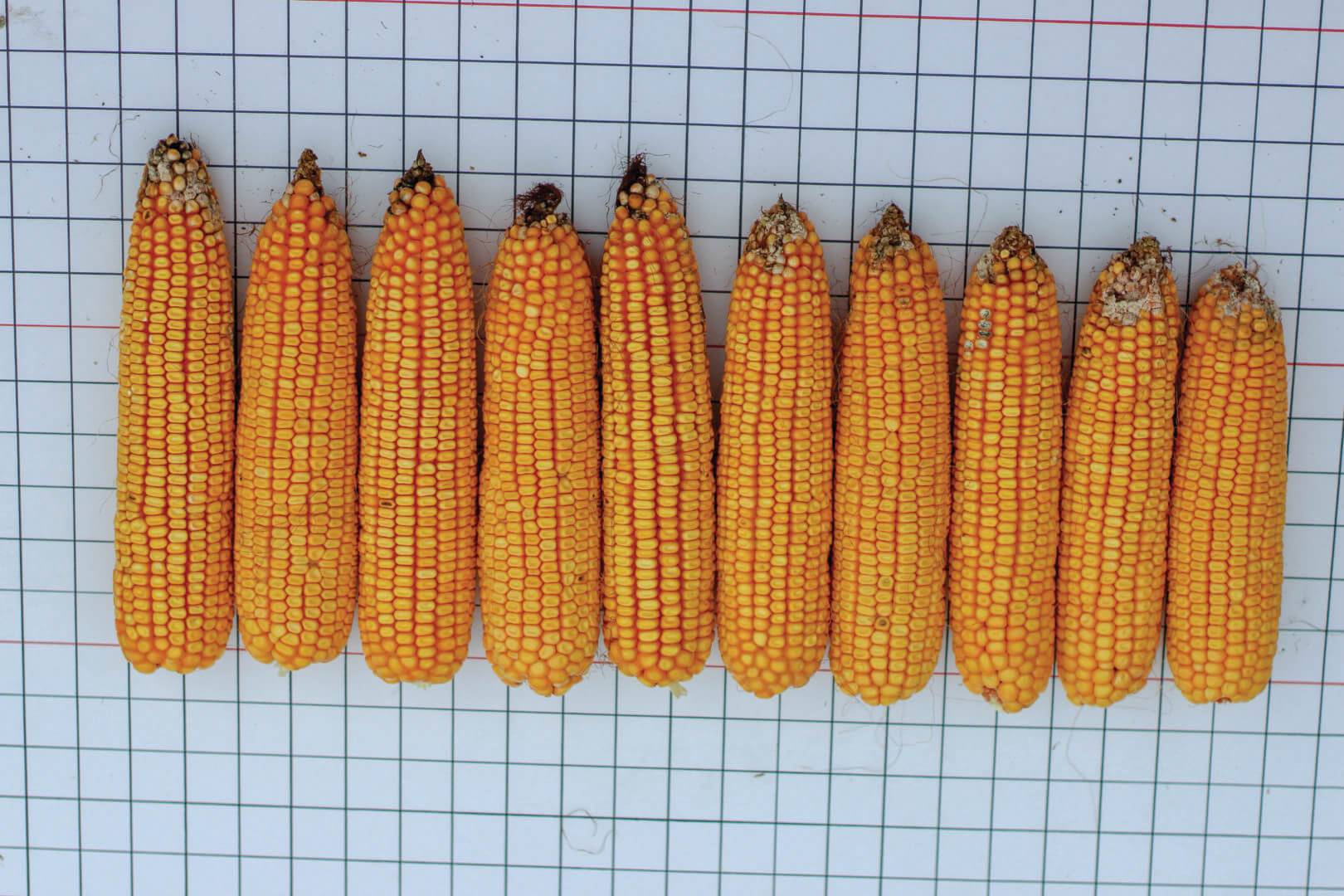
Nitrogen rates can be the most powerful yield influencer when it comes to corn inputs. Other management practices including fungicide, starter fertilizer and seeding rate also can significantly impact yield.
In a previous post, I discussed the results of our Climate FieldView (CFV) study. We compared a recommendation from Climate’s Nitrogen Advisor tool of 135 pounds per acre (lbs/A) total Nitrogen (N) to our typical yield goal (YG) approach of 170 lbs/A total N. We didn’t see significant yield differences between the two nitrogen programs. In this post, I’m going to focus on the other 10% of the
study.
Seeding rates don’t always influence yield as expected because many of our hybrids have outstanding ear flex and the plant compensates for the additional space. Our planting rates were around 31,500 and 37,500 seeds per acre in our study, but weather greatly affected this. Several severe storms hit during the early growing season, and winds of 70+ mile-per-hour hit during the period of rapid growth for most of our corn. Corn fields throughout our area saw quite a bit of greensnap; the corn we planted 10 days later had no greensnap. Unfortunately, timing was not on our side. I took stand counts before harvest. Our final plant stands were 25,000 and 29,000 plants per acre (ppa) for the low and high seeding rates. We had approximately a 4,000-plant difference between the two seeding rates, which made a significant yield difference.
Our CFV nitrogen test had 135 total lbs/A of N yielded 198 bushels per acre (bu/A) at the low seeding rate, and 210 bu/A at the high seeding rate. Our YG approach with 170 lbs/acres total nitrogen yielded 206 bu/A at the low seeding rate and 213 bu/A at the higher seeding rate. We saw both a 12 bu/A and 7 bu/A advantage with the higher seeding rates in the CFV and YG systems. After subtracting the cost for higher seeding rates, the additional yield resulted in additional revenues of $23.48/A (CFV) and $5.80/A (YG). We used LH 5245 VT2 PRO, which has a semi-flex ear. This means that even at the low seeding rate of 25,000 ppa, that hybrid had the late-season ability to flex enough in ear length and kernel depth (weight) to make up for lost bushels. The question is, “Does it pay to plant at higher rates?” It did for us in 2018, but there’s a good chance our results will differ in 2019.


Our nitrogen test didn’t show a yield difference despite the 35 additional pounds in our YG approach. Given the abnormally high amount of rainfall and above-average growing degree units (GDUs) for the season, we likely saw an increased grain-fill period and some additional loss of nitrogen through leaching. Above-average temperatures and good soil moisture means we also likely had higher mineralization rates, so the soil may have saved us because this particular soil organic matter is 5.0 percent.
All things considered, our YG approach won out in terms of revenue this year, but will it hit the mark every year? Consistency is what we want to see when trying to manage such a variable nutrient in the soil. In the future we plan to expand our research on the CFV Nitrogen Advisor tool to bring meaningful information on seeding rates to our dealers and customers.
Join us this morning on understanding your yield variability. Phil Long helps us identify the types of variability and importance of knowing the difference. #AskTheAgronomist
https://www.facebook.com/67053282137/posts/10157002779167138/

Join us as Phil Long discusses the new XTENDIMAX™ label!
https://www.facebook.com/LathamSeeds/videos/379348692818689/
Join us as John Latham goes through our F.I.R.S.T. Trials winners by state!
Video breakdown is below:
0:32 — Minnesota Wins
3:20 — South Dakota Wins
5:01 — Iowa Wins
6:32 — Wisconsin Wins
7:01 — Nebraska Wins
https://www.facebook.com/67053282137/posts/10156950437887138/
Find all of our F.I.R.S.T. Trials results on our website: https://lathamseeds.com/products/f-i-r-s-t-trial-results/
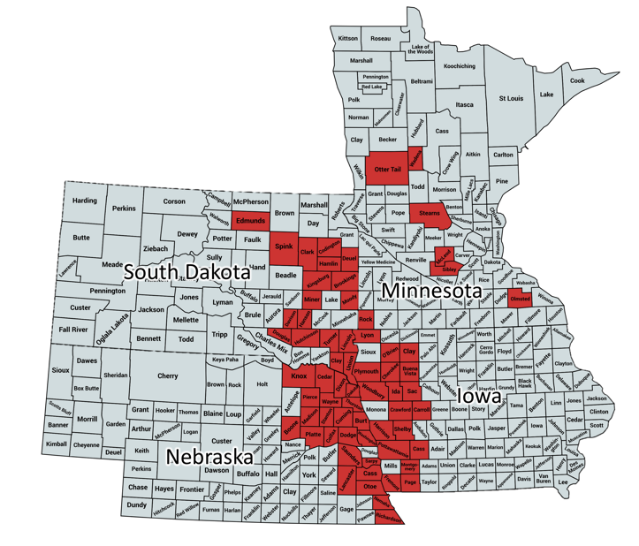
SOYBEAN GALL MIDGE: I mentioned in a previous post that a new insect had  infested fields in South Dakota, Nebraska and western Iowa. It also was present in a few Minnesota counties. Prior to 2018, no midge damage to soybeans had been reported.

This year, however, it was reported this pest caused significant yield losses in 66 counties across this four-state area. (See map.) University of Nebraska researchers captured adult midges and sent them to world-renowned experts for identification. We know the Soybean Gall Midge belongs to the genus Resseliella, which includes 55 species worldwide. This midge is about one-fourth inch long. Note its orange abdomen, as well as the black and white bands on the legs.
(The above map and photo were taken from the 11-7-18 issue of UNL CropWatch.)
More Topics. More Expertise. More Value.
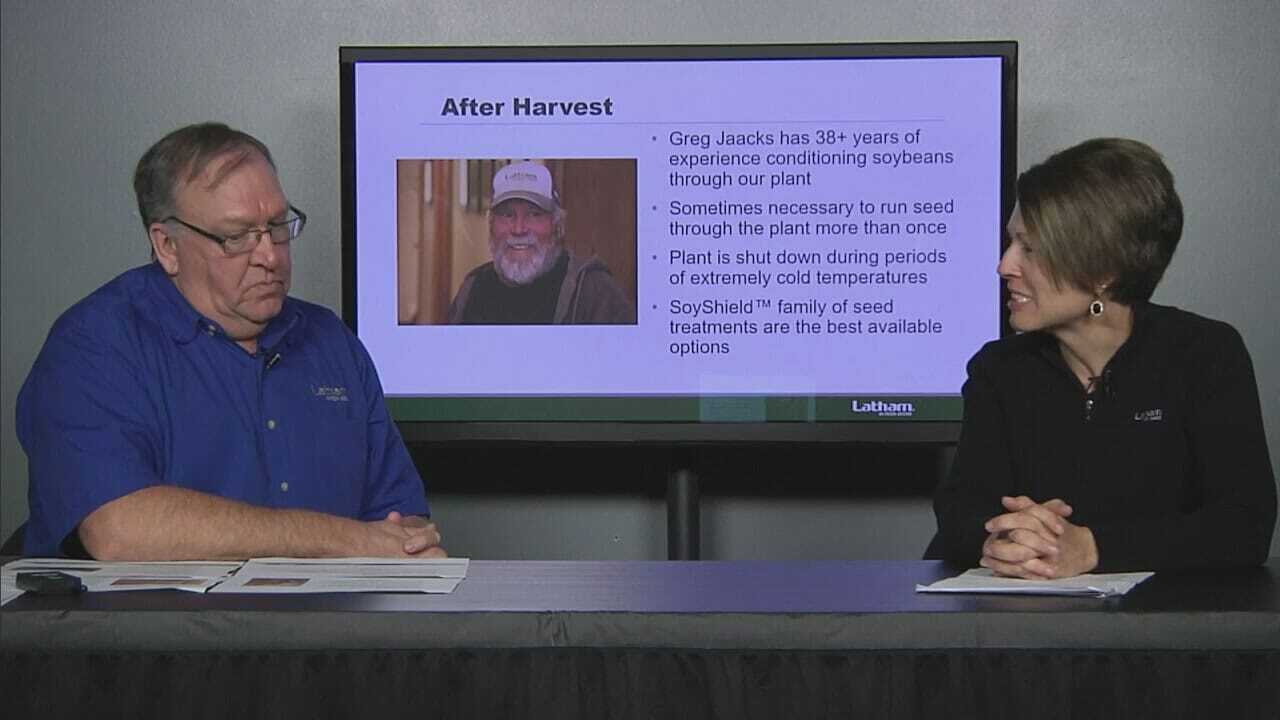
Below we have shared our 5-segment #LiveWithLatham Broadcast! We had our Agronomy & Product Teams with us to talk about the 2018 growing season, Latham® hybrids and varieties, an industry update, on-farm research and our Latham quality standards. Tune in to the segments below.
https://www.facebook.com/LathamSeeds/videos/206956050211982/
https://www.facebook.com/LathamSeeds/videos/387560941788121/
https://www.facebook.com/LathamSeeds/videos/2371959466165669/
https://www.facebook.com/LathamSeeds/videos/713236272403231/
https://www.facebook.com/LathamSeeds/videos/643567089391080/

Super tight margins have a lot of growers putting every decision they make under a microscope, from defining yield-limiting factors and remodeling old traditions to using scientific tests to improve feed efficiency. The new and evolving information has almost out-paced our ability to quickly adapt, understand and transform new ideas into production.
The overall narrative about feed quality is gaining momentum. This past season, Dairyland Labs included fatty acid profiling to its corn silage forage quality reports. Fatty Acids are another tool nutrition consultants can use to build a more efficient livestock diet that can potentially improve the quality of meat, milk and eggs produced. The following graphic is a beginner’s reference of how fatty acid measures affect dairy feed rations.

In addition to fatty acid counts, we at Latham Hi‑Tech Seeds are using a variety of measures to help select corn hybrids and corn silage hybrids for our lineup. These measures include:
Yield. Products are selected for high yield in terms of tons of dry matter per acre.
Fiber and Starch Digestibility. Because both fiber and starch are major sources of energy, we evaluate products for ease of digestibility for energy conversion.
Prolamin Zein. Prolamins are proteins solely associated with starch in all cereal grains. In corn, prolamin proteins (called prolamin zein) comprise 30 to 60% of the protein in whole corn. Research shows that corn with lower levels of prolamin zein are more easily digested. Undigestible feed turns into manure instead of milk. Latham® forage products, however, have low levels of prolamin zein and are more easily digested by cows. Our products result in more floury, opaque, high-moisture corn products.
Amino Acids. Protein, made up of amino acids such as lysine and methionine, is one of the key ingredients cows need for growth, milk component and production, overall health and immunity. An imbalance of the critical amino acids mean overall milk production and quality can suffer. Furthermore, overfeeding protein can lead to inefficiencies and high nitrogen and phosphorous levels in manure. The team at Latham Seeds selects products for our lineup based on their amino acid composition.
Forage Quality. When developing our product lineup, we look for strong genetics that will maximize yield potential and traits that will protect that potential. Traits create a healthier plant in the field, higher quality silage product at harvest and more nutritious silage for your herd.
Above all, product selection for livestock feed needs to be about creating a healthier plant in the field that, in turn, creates higher quality feed in the bunk. Our product lineup is heavily vetted for characteristics that produce the highest quality feed. Please contact me if I may be of assistance selecting a portfolio of products to meet your feed quality and production needs next season.


JOIN US! We will be #LIVEwithLATHAM on Dec. 13 at 10 a.m. on our Facebook page. Each guest will have 15 minutes, including a live interview, plus questions will be accepted throughout the broadcast. Special guests & topics include:
Do you have questions of your own? Feel free to submit in advance via PM on social media, or submit them live on Dec. 13!

Join us this morning with John Latham as he gives a highlight on how our Latham corn and soybeans are doing in the F.I.R.S.T. Trials!
https://www.facebook.com/LathamSeeds/videos/248852759141493/