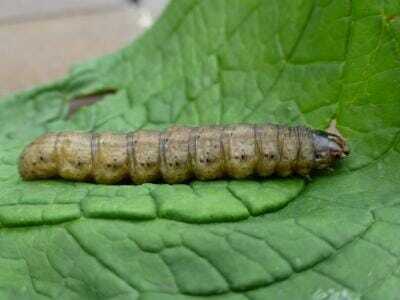
Armyworms and cutworms are known to reduce soybean stand and yield by feeding and cutting. Armyworms damage leaf tissue while cutworms clip young plants just above the soil. These worms are differentiated by their appearance.
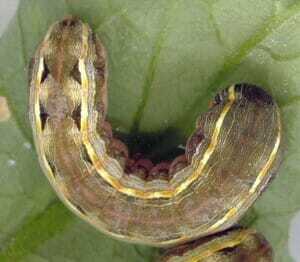
Black Cutworm (Credit: Iowa State University)
Cutworm
Soybean cutworm species include dingy cutworm, variegated cutworm and black cutworm. Cutworms begin feeding on winter weeds before moving to soybean plants. Cutworms will burrow in the soil surrounding injured plants. Smaller larvae willfeed on leaves and larger larvae will cut the plants.
Scouting and Treatment
Dingy Cutworm (Credit: Purdue University)
Begin scouting for cutwormsat emergence. The most common signs of cutworm infestation are cut plants, discoloration or wilting leaves.Reduced tillage, no-till and corn on corn rotations can make cutworm infestation more likely. Legume cover crops can alsoattractcutworms. This protective vegetation should be removed from the soil at least two weeks before planting.
Mature soybeans are the most resilient to yield loss from cutworms. As advised by researchers from Iowa State University, insecticide treatment should also be applied if more than 20% of feeding damage is observed and larvae are smaller than ¾ inch in length.
Yellowstriped Armyworm (Oklahoma State)Fall Armyworm (University of Tennessee)
Armyworm
The yellow-striped armyworm and fall armyworm are two populararmyworm species. Armyworms grow to be two inches long and feed on both soybean leaves and pods.
Scouting and Treatment
Typically, only one generation of armyworms can be produced in the Midwest due to their inability to overwinter in the cold. Armyworms like to seek shelter in winter annual weeds and grasses. Poorly drained fields can also bean attractive environment for armyworms to dwell.
Applying insecticide is recommended when armyworms are less than one inch. Once armyworms mature and exceed 1 ¼ inches in size, they willstop feeding so it is unnecessaryto apply insecticide. Contact your local Latham Representative to assess the best options for treating armyworm and cutworm infestation in your soybeans.
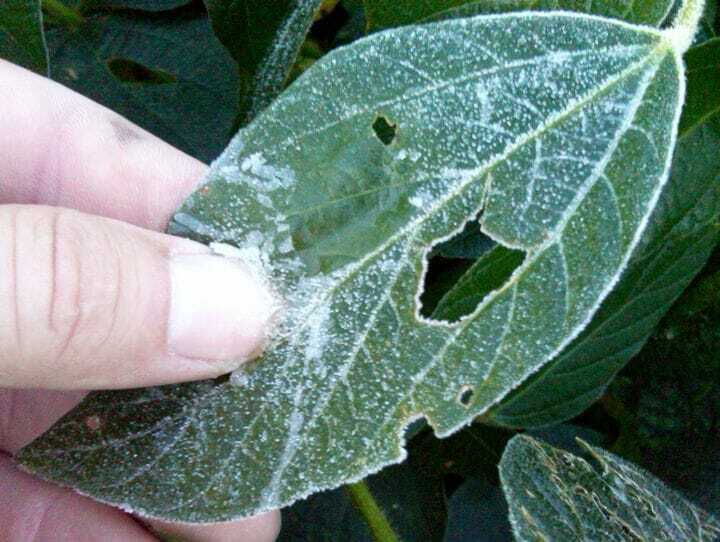
Frost damage occurs in corn and soybeans when plants are exposed to freezing or below-freezing temperatures. Damage can occur to the plants above and below the soil when temperatures range from 28 to 32°F and colder. Corn and soybean plants exposed to air temperatures below 28°F are often lethal and prevent plants from undergoing full recovery from injuries.The key in assessing frost damage is waiting five days to allow for any potential growth recovery or rehabilitation to occur.
Credit: Michigan State University
Fall Frost in Soybeans
Once soybeans begin maturity and already have developed pods, they are most often immune from frost injury. Soybeans placed in narrow rows can have more protection from freezing air temperatures in being covered by leaf canopies. Pods growing on the lower portion of the plant are less vulnerable to frost damage than those on the top part of the canopy. Injured soybeans exhibit elongated pods that shrink to smaller than normal sizes upon drying. Most yield loss occurs during the full seed maturity stage.
Soybeans damaged by frost should be dried at a temperature no higher than 130°F and may have lower oil content. Both frost damaged corn and soybeans may also have delayed dry down.
Credit: University of Minnesota
Fall Frost in Corn
Frost-damaged corn can exhibit softened kernels prone to breakage and should be dried at temperatures below 160°F and be stored at a moisture level no higher than 14%. The storage life for frost-damaged corn will be cut in half and damaged corn should be handled separately from uninjured corn.
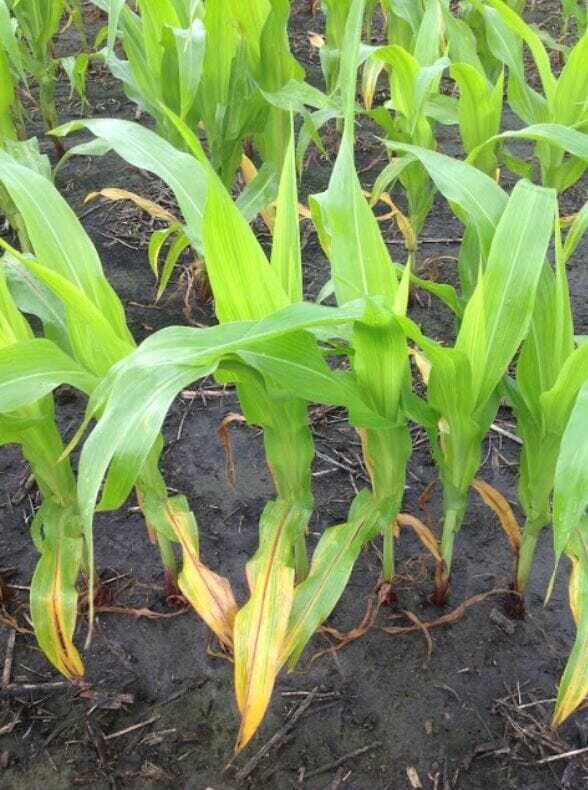
Nitrogen is an essential nutrient and its depletion can lead to severe yield loss. Nitrogen deficiency can be difficult to spot as different hybrids exhibit different symptoms. Most corn plants deficient in nitrogen will exhibit pale-yellowish leaves with a spindled appearance.
Nitrogen is a mobile nutrient and moves to the newest leaves first, leaving the oldest leaves more susceptible to deficiency. By moving from the oldest to youngest leaves, signs of yellowing will often form a “V” pattern on the plant leaf.
Causes of Nitrogen Deficiency
Cold or saturated soils are the primary causes of nitrogen deficiency in corn. Periods of heavy rainfall increase nitrogen leaching, depleting saturated soils of the vital nutrient. Aside from soil leaching, nitrogen can be lost through denitrification – where the nutrient is converted to a gas form and lost in the atmosphere.
When soil conditions are dry, sandy or poorly fertilized, early-applied nitrogen fails to be absorbed by plants. Insect diseases that injure root systems can further prevent proper absorption of nitrogen and lead to deficiency.
Other unavoidable circumstances happen later in the growing season when the increase in plant height and density can block sunlight absorption and reduce photosynthesis. This leads corn to use nutrient reserves within the plant, which will weaken stalks.
Implications
60% of the nitrogen needed to support corn growth is built-up between V4 and pollination, making this an important time to monitor for deficiency. Scouting for nitrogen deficiency should also take place after episodes of heavy rainfall.
While having negative implications on yield potential and crop quality, nitrogen deficiency can also contribute to other corn disorders including tip-dieback and kernel abortion. Plants that are nitrogen deficient will cannibalize their stalks to compensate for the nutrient loss. This makes stalks more vulnerable to lodging and pinching.
Management Options
Tissue sampling can provide insight into how severe deficiency is. When testing for nitrogen deficiency in corn, gather samples from different areas of the field to compare nitrogen levels in deficient corn with healthy plants.
Nitrogen deficient corn should be harvested early in order to prevent additional yield loss from stalk lodging. When planning for next year’s crop, avoid planting hybrids with a history of poor nitrogen uptake. Some hybrids also demand a higher level of nitrogen during grain fill than others, so it is important to consider when planning for the next crop.
Be sure to consult with your local Latham representative to determine the best plan for managing nitrogen deficiency in corn.
Colletotrichum graminicola is a fungal pathogen that causes anthracnose leaf blight.Anthracnose leaf blight is a foliar disease that appears in the early and late stages of growth in corn plants. The fungus survives in infected corn residuethat remains in the field over the winter. The disease creates elongated lesions with a dried, brown appearance across the length of the leaf blade and isbordered by a darker reddish-brown color.
In the earliest part of the season, leaf blight will impact the lower leaves of the plant and expand toward the top of the plant by late season. The upper part of the plant will begin to exhibit early senescence while the lowest part of the corn plant will remain green and healthy. This is a characteristic of the Top Dieback part of this disease.
Disease Causes
Anthracnose leaf blight developspredominately fromthe infected residue left behind in the field.No-till,reduced till and corn on corn rotations can increase the likelihood of the disease to emerge. Though no-till and reduced-till methods are critical for preventing erosion and other corn disorders, it can lead to the accumulation of corn debris that is conducive for housing the fungal pathogen.
The fungus thrives in a warm and wet environment. Moisture from rainfallwill often create black specks that appear across the lesions. Wind can also act as a transportation method for the fungus as spores can travel by air or water.
Implications and Treatment
The disease will infectat the seedling stage, causing foliar damage, and end atthe growing season, causing stalk rot. Although anthracnose leaf blight has the potential to occur later in the growing season, early signs of the infection do not guarantee that it will resurface closer to harvest. Iowa State University researchers state that because of the early-season nature of the leaf blight, impacts on yield are rarely demonstrated. The late season stalk rot phase of the disease tends to be more detrimental on yield and harvestability.
Crop rotation and the use of resistant hybrids are the best ways to combat leaf blight. Fungicides can keep anthracnose leaf blight in control, but it likely will not be effective for combatting the stalk rot phase. Further, corn hybrids that provide resistance against the earliest stages of leaf blight are not often effective for preventing the onset of late-season stalk rot.
If tillage is used, methods that bury infected corn residue can prevent leaf blight from emerging again during the next season. Crop rotation has also been deemed as an effective way to prevent the continued onset of anthracnose leaf blight. For corn that has perpetually been impacted by leaf blight, two-year rotations away from corn are also advised.
Imbibitional chilling occurs during the process by which crops absorb water prior to germinating, a phase known as imbibition. Under optimal conditions, seeds should be planted when soil temperatures are above 55°F. When seeds are planted in soils below optimal temperature, the uptake of cold water can damage cells and cause seeds to rupture. This can lead seeds to become shriveled and cause seedlings to emerge late, in a corkscrew shape, or not at all.
If an injured seed eventually develops into an emerged seedling, it can become more vulnerable to disease or damage from herbicides. The risk of imbibitional chilling especially increases when soil temperatures fall below 50°F. Imbibitional chilling or cold injury can occur within 24 to 36 hours of planting, making the relationship between planting timing and soil temperature critical.
Preventing Chilling Injury
As the injury to seedlings occurs after planting, there is little preventive action that can be taken aside from planting when soil temperature is optimal. In the best case, if enough time is afforded between planting and the drop in soil temperature, a seed is less likely to undergo chilling if it is able to absorb warm water. There are ways to determine if imbibitional chilling has occurred after planting. When scouting, look for signs of inconsistent emergence. If a plant looks to be missing, dig into the soil around the area to see if a seedling can be found. If it has a corkscrew shape, underwent leaf emergence below ground, or is missing parts, these are also signs of imbibitional chilling. Delayed emergence of a seed can be the result of reduced seed vigor that can result from imbibitional chilling.
Soil temperatures should be monitored and averaged for the week preceding the projected planting date. To determine the soil temperature on the chosen planting day, take the temperature of the soil just after sunrise – the coldest part of the subsequent 24-hour period. Soil temperature changes more slowly than air temperature, but air temperature can still be a strong indicator for what to expect with soil temperature. If it is projected that soil temperature will remain above 50°F for 24 to 48 hours after planting, imbibitional chilling can be avoided.
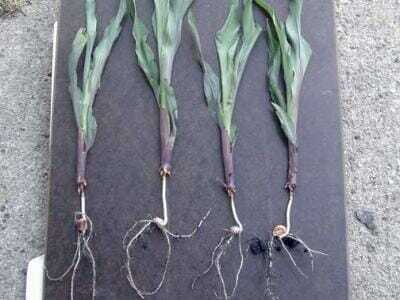
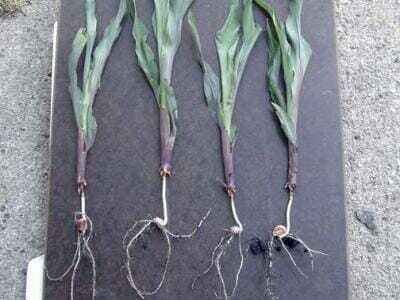
Rootless corn syndrome is a disorder, often a result of hot and dry soil surfaces and planting intodry soil. With rootless corn syndrome, the nodal roots will fail to attach to the soil. Nodal roots are essential conduits for transporting water and nutrients to corn plants. Their absence is highly consequential for the quality of stand and overall yield outcomes.
Dry soils warm more rapidly than moist soils, and combined with conventional tilling, corn plants can become susceptible to failed nodal root development. Heavy rainfall and planting when the soil is too wet can compact the soil, preventing nodal roots from extending downward.
The erosive effects of rainfall and wind combined with shallow planting depth are the primary drivers of rootless corn syndrome. In addition to weather-related causes, when corn is planted at a depth less than 1 inch below the surface, nodal root development can take place at a depth shallower than what is needed for having access to moist soil. Nodal roots should form between 1 to 1.5 inches below the surface.
What to Look for
Nodal roots first appear around the V1 and V2 stage. Rootless corn occurs in plants with poorly developed root systems and is usually observed in plants from about V3 to V8. When rootless corn syndrome is suspected, look for signs of lodged and collapsed corn plants. Corn plants may still be standing but later onthey will lose vigor and fall over. Test plants in the area of concern by tugging on them to determine whether nodal roots are established and growing down.
Preventative Action
Rootless corn can largely be prevented by ensuring that seeds are planted at least 1.5 to 2 inches below the soil surface. For corn plants whose nodal roots fail to grow, the prospects for survival are bleak. Corn nutrient and water uptake hinges on having a developed nodal root system. For plants that do survive, poor stands and low vigor will be exhibited.
Moving soil to cover roots may allow them to recover – but if an operation is following a no-till plan, this may not be viable. Further, row cultivation for bringing soil around nodal roots will be ineffective if the soil below the surface lacks moisture for supporting recovery. Adequate rainfall and the absence of drought conditions will support optimal nodal root development and prevent rootless corn syndrome.
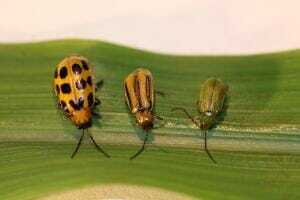
Left to Right: Southern, Western and Northern Rootworm. (Credit: Iowa State University).
Corn rootworm causesnegative impacts for farmers every year. On average, corn rootworm costs farmers $1 billion annually, with costs equating to $800 million in lost yield and $200 million in treatment expenses.
The Western, Northern and Southern corn rootworms are three variations of thisinsect.Theygrow to be ¼ of an inch long when fully mature. The larvae appear white in color with a dark brown head. After mating in the late summer months, rootworm eggs overwinter and eventually hatch in May or June of the following year.
Rootworm Causes
Rootworms develop across four stages – egg, larvae, pupa and adult. The larvae feed on roots which leads to lodging and overall poor plant stand. Adult rootworms feed primarily on corn silks which can interfere with pollination, leading to lost yield.
Rootworm Larvae (Credit: Iowa State University)
The greatest impacts on yield and quality of stand are larvae feeding on the nodal roots. Mature rootworms tunnel throughout the root system and cause significant damage or death to corn plants. Root feeding and tunneling alone can lead to a loss in yield of up to 50 percent.
While rootworms primarily feed on corn, weeds are also a food source for larvae and mature beetles. Moist soil conditions with high organic matter content create favorable conditions for females to lay their eggs.
Scouting and Treatment Options
When scouting in the spring and early summer, dig up corn plants and check for damage on the root system. Look for signs of tunneling or larvae actively feeding on roots. Placing the roots of a corn plant along with attached soil in water and waiting for larvae to float to the surface is another strategy to use. In the later stages of summer, watch for beetles feeding on corn ears and silks.
North Dakota State University found that complete loss or severe damage to a single root node can lead to a yield loss of 15 to 18 percent. Crop rotation is considered the best method for combatting continued infestation.
Below is a chart to help guide your insecticide application decision.
We have Latham® hybrids equipped with resistance to rootworm have been deemed an effective method for staving off infestation. Contact your local Latham® representative to determine which hybridswill work best for combatting corn rootworm.
The true armyworm – not to be confused with the fall armyworm – can pose a threat to corn stands and overall yield as an early season pest. Armyworm larvae are characterized by alternating light and dark bands.
The larvae feed primarily on seedling leaves and are associated with causing defoliation. When feeding, armyworms start at the base of the corn plant and work their way up, primarily feeding on softer leaves and during the nighttime. During the day, armyworms will migrate to the whorlof the corn plant as well as inside of soil cracks.
Cool and wet weather in the springtime supports the development of armyworms and fields with a heavy presence of weeds and grasses are conducive for allowing them to thrive. Armyworm moths migrate up from the south and look for the grassy fields or areas with lush vegetation. Therefore, winter rye cover crops have been associated with a higher prevalence of armyworm infestation.That is why it is important to terminate cover crops at least two weeks prior to corn planting.
Treatment and Mitigation
Death in corn plants from armyworm is not common, but if the armyworm feeds on a budding corn plant, this can lead to poor stands and significant loss in yield. When armyworm infestation causes defoliation in more than 25% of corn plants, it is advised to begin using an insecticide. Additionally, when armyworms are still developing and larvae is only ¼ to ¾ inches in length, treatment is considered economical and is advised.
Controlling excess grass growth will prevent moths from laying eggs and will offer protection from future infestation. If herbicides are applied, the loss of a weed habitat can drive armyworms to feed predominately on corn plants.
Treating an armyworm infestation with small corn plants requires quick decision making because large populations of armyworms can spread quickly across a field. Keep an eye on those fields that have a cover crop or are close to armyworm habitat. Be prepared to act if conditions warrant treatment!
Many of our minds are already on the upcoming planting season. This week someone posed the following question, “How hard of a frost can soybeans withstand?”
It’s a great question, so I wanted to address the topic of early planting a bit, well, “earlier” than usual!
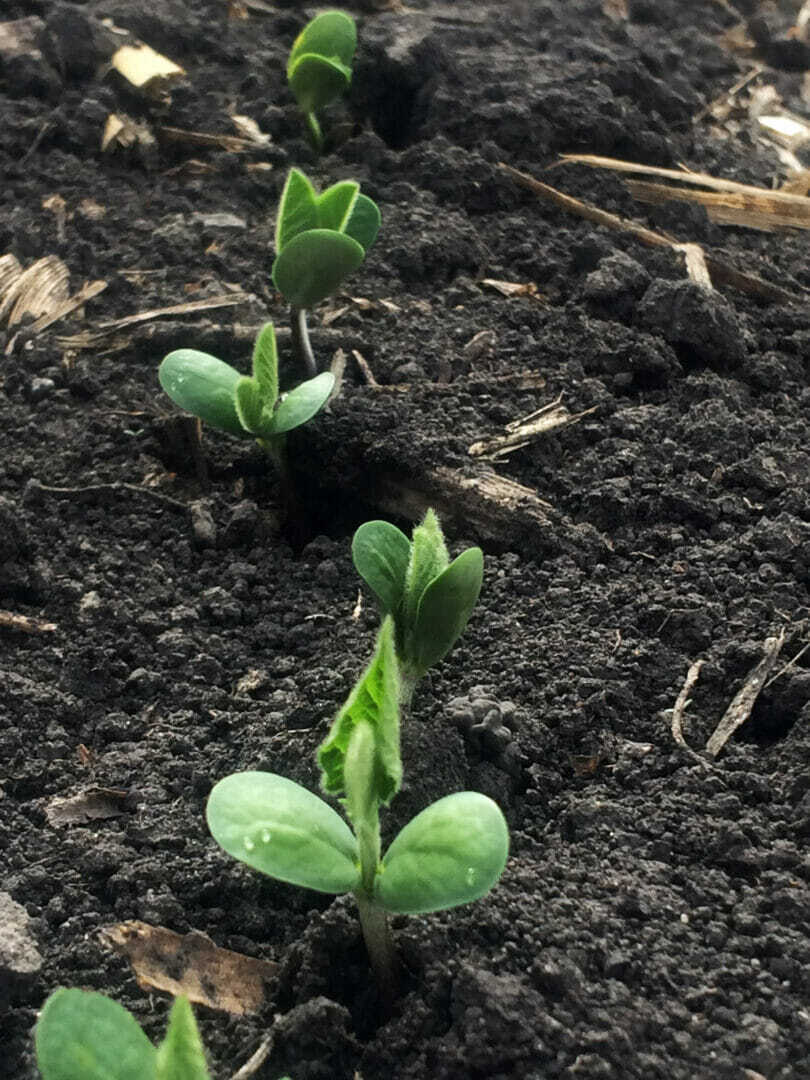
The first thing to keep in mind is that cold temperatures at or before planting can negatively affect the growing point of the plant. For corn, that growing point stays under the soil surface until the V5-V6 stage, helping protect the plant to a certain degree from colder weather spells for several weeks. For soybeans, however, the growing point comes out of the ground at emergence. Therefore, a soybean seedling is immediately vulnerable to cold weather.
Using a fungicide seed treatment will help protect young soybeans from seedling diseases at this early stage, but they are not designed to protect against cold temperatures. Soybeans typically require over 100 growing degree units (GDU’s) to accumulate before emergence, which is similar to corn that requires about 125 GDU’s. Abiding by the minimum soil temperature of 50 degrees Fahrenheit will keep you away from poor emergence and the seedling disease risk associated with soil temps below 50 degrees. That’s why I suggest watching the weather forecasts before you plant soybean seed, and do your best to ensure hard frosts (which take place at 28 degrees Fahrenheit) are no longer possible.
Remember, when soybeans emerge, they have a growing point at the base of each cotyledon and at the main shoot. The main shoot is the small leaves in-between the cotyledons. If you notice brown on the stem below the cotyledons, the plant will not recover. Early planting is proven to provide higher yields, but it is is fine balance between the two, so watch weather forecasts and soil temperatures so you can find the balance on your own farm.
Additional tips to keep in mind before planting:
Grab a clump of soil and watch how easily it crumbles. If it stays in a ball, conditions are NOT right for planting. If it crumbles easily, the soil is fit for planting.
Make sure your planting date is covered in your farm insurance policy – this includes your “do not plant before” dates. If you plant outside those dates, your insurance could be jeopardized.
Cutworms are insects that show up during the earliest growing stages of the season. The presence of cutworms can pose a threat to the well-being of corn plants, but their severity is highly variableand depends on the species. Delayed planting and corn plants shorter than 18 inches are most susceptible to undergoing severe damage from cutworms.
Black Cutworm
Black Cutworm
Black cutworms are the most common species found in corn throughout the Midwest. The larvae of black cutworms can be up to 1¾ inches long with their appearance characterized by a dark-gray segmented body. Black cutworms are most likely to be seen between stages VE – when the shoot first emerges from the soil and V5 – when the first five leaves exhibit visible collars. The sets of paired spots unequal in size that run along the length of the black cutworm make it distinct in appearance. Black cutworms cause damage by chewing holes in leaves and larvae will cut the lower portions of the corn plant just above the soil line. The youngest larvae will feed on leaves whereas older cutworms will feed exclusively below ground level. The first generation of black cutworm will cause the most damage, though three to four generations can be produced in a year.
The black cutworm thrives best in wet and weedy fields with poor drainage. Cover cropping can make conditions conducive for the growth of laid eggs, especially if weeds are prevalent. Insecticide is advised if cutting is evident across 2-3% of corn plantsand larvae do not exceed ¾ inch in length.
Dingy Cutworm
Dingy Cutworm
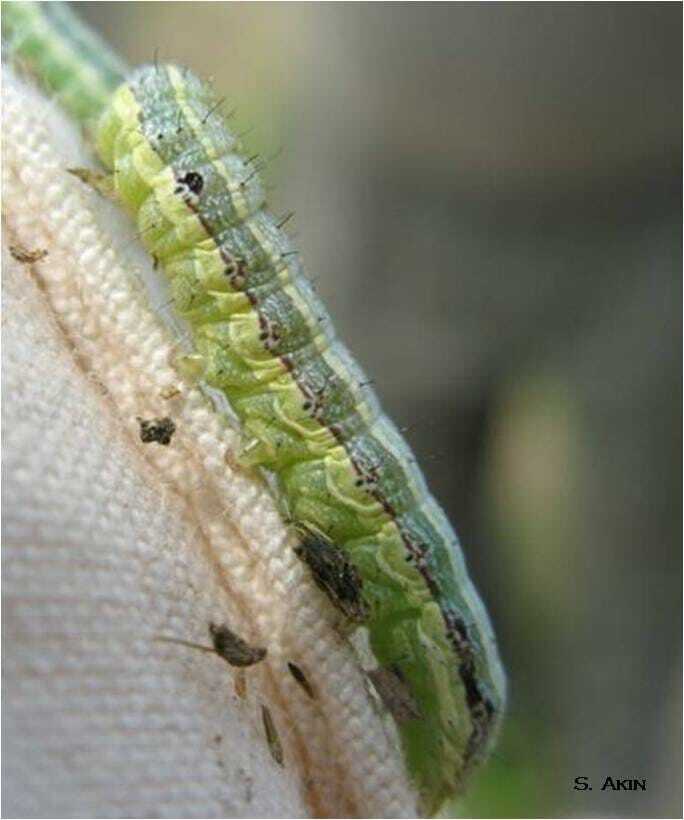
Similar to the black cutworm, dingy cutworms can form larvae up to 1¾ inches long and often emerge in fields with heavy crop residue. However, unlike black cutworms, the pairs of black dots running along the segmented back appear to be equal in size. When fully grown, dingy cutworms reach a size of one inch in length. Dingy cutworms typically only feed on leaves and do not cut plants.
Glassy, Bronzed and Sandhill Cutworms
Glassy Cutworm
These three classes of cutworms are characterized predominately by the color of their larvae. Glassy cutworms have a white, translucent segmented body with a solid orange head and cause damage primarily to seedlings.
Bronzed cutworms are colored with light orange, bronze and brown stripes running the length of their body.
Like glassy cutworms, sandhill cutworms have a translucent, light brown body that is uniform in color, including the head. Glassy cutworms are known to cause cutting damage in addition to chewing and feeding damage exhibited by other cutworms.
Sandhill CutwormBronzed Cutworm
What to Look for When Scouting
Corn plants succeeding soybeans or legumes are most susceptible to hosting cutworms. With shorter corn plants having the greatest vulnerability to cutworm damage, scouting should begin once seedlings first emerge and continue until plants achieve a height of 18 inches tall. Look for signs of cutting, wilting and irregular holes on leaves. Uneven stand or inconsistencies in cutting across rows are also signs of cutworm damage.
Cutworms gravitate toward moist soil for burrowing. When looking for signs of infestation, dig around the base of plants to look for burrows ranging in size from three to four inches. When soil is dry, digdeeper to three inches below ground to identify burrows.
Treatment
As cutworms are associated with reduced stand resulting from cutting or wilting, yield can subsequently be decreased. However, replanting is not usually necessary and is only advised if the presence of cutworms is not under control and stand has been severely impacted.
Controlling weeds can reduce overwintering and can remove an environment favorable for hosting cutworms. Tilling practices that reduce weeds and field residue will deter moths looking to lay eggs in the fall. Reduced tillage or no-till, delayed planting and overwintering cover crops are all management practices that increase chances of cutworm damage.If you see cutworm damage on 2-3% of plants and they are smaller than ¾ inch, it’s time to spray. When pre-applying insecticides to dry or crusted soils, it is advised to work the treatment into the soil so it is able to reach cutworms and burrows housed below ground.
Photo Credits
Black Cutworm: Iowa State University Extension and Outreach
Dingy Cutworm: Purdue University
Glassy Cutworm: University of Minnesota Extension
Sandhill Cutworm: Iowa State University Department of Entomology
Bronzed Cutworm: Iowa State University Department of Entomology