
Latham Hi-Tech Seeds

(641) 692-3258

  • Home
  • Products
    • Corn
    • Soybeans
    • Alfalfa
    • Corn Silage
    • Seed Guide
  • Performance
  • Find a Rep
  • Media
    • Blog
    • News
    • Videos
    • Podcasts
    • TECHTalk
  • About Us
    • Company History
    • Our Mission
    • Careers
    • Become a Rep
    • Sowing Seeds of Hope
  • Contact Us
  • Latham Hi‑Tech Seeds

    Flying the Fields with Ryan Skaug

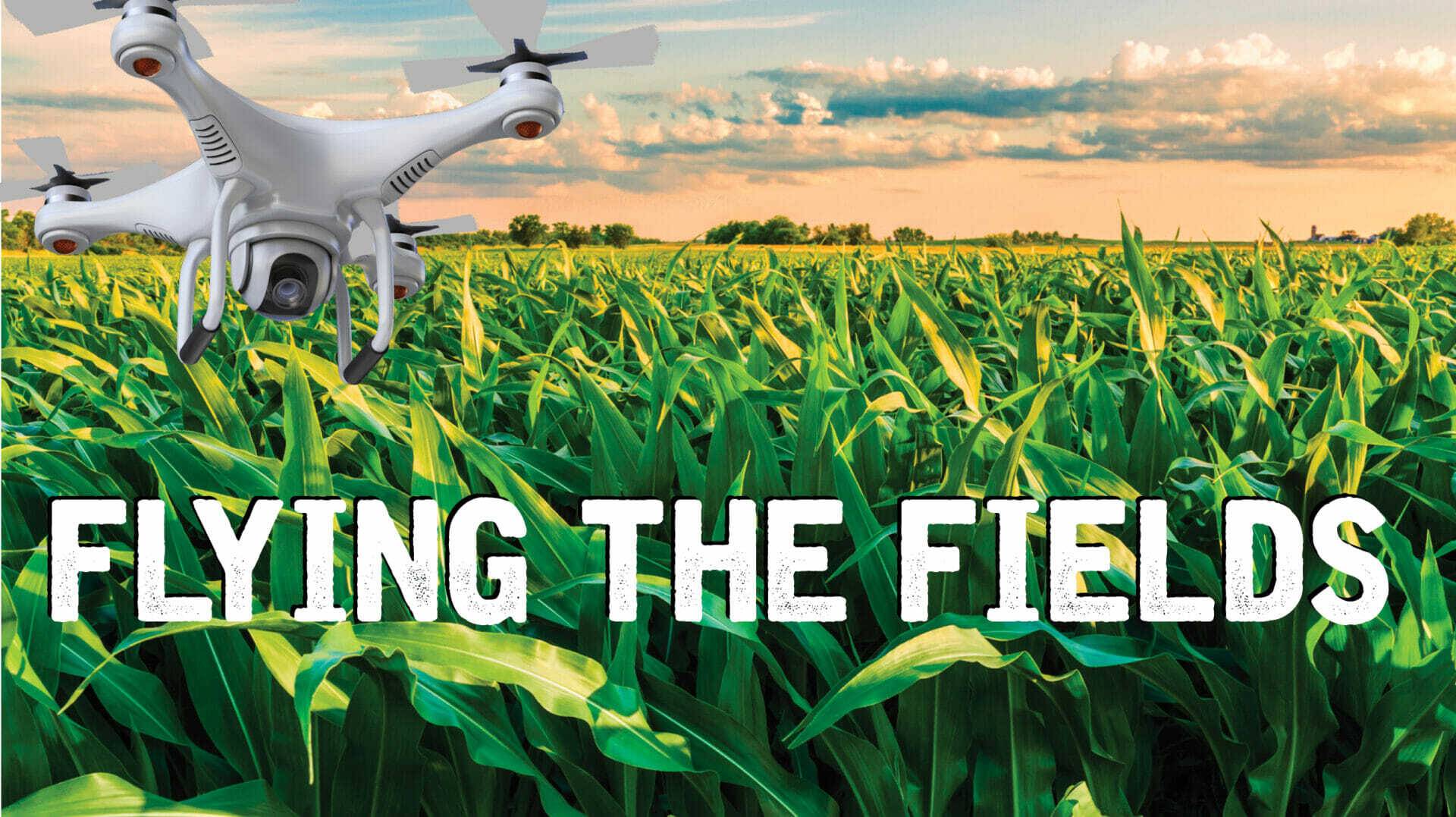
    Flying the Fields1

    flying-the-fields-masthead

    Thanks for tuning into TheFieldPosition on Thursdays! Last week we started a new eight-week series on how Upper Midwest farmers are using drones (aka unmanned aerial vehicles or UAVs) in their farming operations. They’ll be sharing tip and tricks on everything from buying a drone to flying one. If you have specific questions you’d like answered, please send them to us via Facebook Messager, tweet them to @LathamSeeds or email shannonl@lathamseeds.com.

    Flying the Fields with Ryan Skaug

    ryan-skaugKnowledge is power. That’s why this fifth generation corn/soybean farmer in northern Minnesota and in the eastern Red River Valley believes drones are very useful to a farming operation.

    “Being a young farmer and seed dealer, I like to be on the cutting edge of new technology,” says Ryan Skaug, a Latham Hi‑Tech Seeds dealer, who started flying three years ago. He purchased the DJI Phantom II because he liked its ease of use and he could get it serviced nearby.

    “The more I fly, I more uses I discover for the drone. I use my drone to look at fields all season long.”

    In early spring, Ryan likes to see where excess water is logged within field ditches or in potholes that can be connected to larger bodies of waters or mains to increase field productivity with lesser, saturated soils. The AGPS Ditch Pro gives him more accurate in-season photos. Ryan studies the ditch and slope of the ground to create more efficient water runoff.

    Later in the season after the crop has canopied, he looks for persistent water issues. Ryan likes to use the drone to take full field photos, and overlay them maps of the fields’ soil types. After harvest, he compares the full field photos (foliage) and soil type maps with yield maps.

    “I believe overlaying the maps helps me choose seed products on a field-by-field basis,” says Ryan. “We’ve been able to increase our yields in not only productive soils, but also the less productive, and more challenging soils.”

    There isn’t much drainage tile in the Skaug’s area, but they installed grid tile on a 310-acre field with 80-foot line spacing. This particular field has multiple soil types. It also has very heavy underground water pressure because this parcel is so close to the ridge of the Red River Valley. The drain tile has allowed plants in this field to develop better roots and has increased overall crop health. In adverse years, they can see where the tile lines are by flying the drone.

    With heavier soils in the Red River Valley, compaction is an ongoing battle. Drone images show the stressors of compaction.screenshot-163
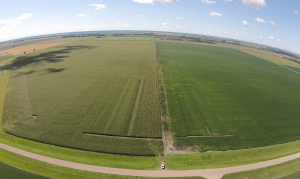
    “By flying the drone throughout the growing season, I’m able to see where some emergence may be uneven due to tillage compaction,” explains Ryan. “Compaction might results if a spring tillage pass was performed when the soil was too moist or the operator might have driven too fast or worked too deep. Some soils may allow the operator to work multiple passes before planting and not show any crop damage, while others may only allow a ‘one and done’ tactic.”

    “The more we know about our fields and crops throughout the growing season, the more successful we will be in many years to come,” adds Ryan.


     

    Team Latham

    September 15, 2016
    Agronomics, Precision Ag
  • Latham Hi‑Tech Seeds

    Flying Drones and Flaming Peaches Turn Heads on Farm Tour

    Chef Brice flame

    PhilflyingOn a mission to help consumers understand how their food is produced and to dispel food myths, last week Latham Hi‑Tech Seeds in cooperation with the Iowa Food & Family Project hosted a series of farm tours across North Iowa. A charter bus filled with people from all walks of life – farmers, life coaches, retired school administrators and even Iowa Games CEO Chuck Long – departed from Ames and traversed the countryside.

    Thursday afternoon the group stopped in Alexander where we talked about how our family-owned business produces corn and soybean seed that farmers then plant in the spring. We answered their questions about why it doesn’t pay for farmers to save their own seed and why farmers who save patented seeds get sued. We also worked to define commonly misunderstood foodie terms and to debunk common misperceptions about GMOs. While we played a riveting game of “Fact or Fiction,” the real show stopper that afternoon was Latham® seed stock grower Phil Pitzenberger’s drone demonstration. Phil deployed his drone and talked about how he’s able to make better farming decisions as a result of this “eye in the sky.”

    Photo credit to Joseph L. Murphy / Iowa Soybean Association
    Photo credit to Joseph L. Murphy / Iowa Soybean Association

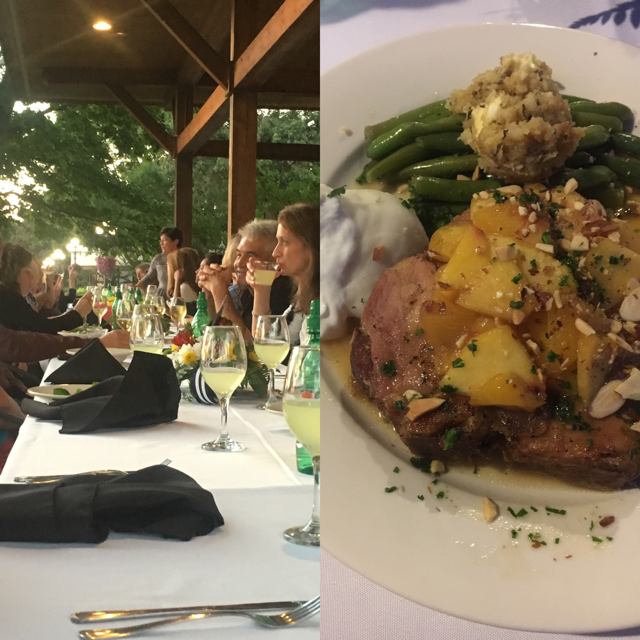
    The evening ended with a farm-to-table meal prepared by Chef Brice Peterson of The Clear Lake Supper Club. “Delicious” doesn’t do this meal justice! Honestly, this meal was something out of Bon Appétit magazine!

    Strawberry Garden Salad

    Tender Spinach, Cilantro-Butter Lettuce, Spring Mix, Ruby Red Berries, Sweet Bermuda Onions, Candied Walnuts, Crumbled Greek Almond Cheese with a Maple-Soy Vinaigrette

    Slow Roasted Smoked Pork Chop

    Old Fashioned Sage and Feta Dressing, Brandy Glazed Peaches, Sour Cream Mashies and Green Beans Almondine

    Participants in the Expedition Farm Country tour were treated to a farm-to-table meal prepared by Chef Brice Peterson at the Clear Lake Yacht Club. The meal – and the setting – were something most of us see only on the pages of magazines but never experience in real life.
    Participants in the Expedition Farm Country tour were treated to a farm-to-table meal prepared by Chef Brice Peterson at the Clear Lake Yacht Club. The meal – and the setting – were something most of us see only on the pages of magazines but never experience in real life.

    The table setting – complete with a view of Clear Lake as the sunset – also was something straight out of a magazine photo shoot. Just when you think the evening couldn’t possibly get any better, Chef Brice demonstrated the peach flambé. This flaming concoction of fresh peaches in brandy was served over the most succulent pork chop from Lewright Meats & Deli in Eagle Grove.

    The following day was equally impressive. After enjoying another great meal at the Historic Park Inn, the group once again boarded the bus and headed to farm country. Here’s an overview of the farm stops they made:

    • Wayne and Ruth Fredericks, Building Soil Health for Generations to Come
    • Scott and Julie Neiss, Building on a Foundation of Family Farming
    • Dan and Lynn Bolin, Experiencing a Great Day at New Day Dairy

    Special thanks to these North Iowa farmers for graciously opening their machine shed or cattle shed doors and giving of their time to talk with consumers. Tours like these that help bridge the gap between producers and consumers and lead to greater understanding. Here are a few excerpts of comments received from participants:

    • “I knew nothing about where my food comes from. It’s exciting to see firsthand how farmers are using technology. The Expedition helped me better understand how much farmers really care about what they’re doing and I’m very impressed by that. I only wish 100,000 people could have participated on an expedition like this!”
    • “Even though my husband is a farmer, I learned more in those two days than I have in 28 years on the farm.”
    • Wow! Thank you so much for the hospitality and the opportunity to go deep on all things Iowa, food and farming – many good facts and lessons, new friends and great memories too. And now the current plan is to get these four children out there, well fed and smartened up! I have marked August 10-20, 2017, in my calendar for the Iowa State Fair!”

    If you’d like to get a taste of what these folks experienced on Expedition Farm Country, sit down to a home-cooked meal this weekend! Cristen Clark of Food & Swine shares this recipe with us for the Best Dang Mashed Potatoes, which are similar to the “sour cream mashies” that we enjoyed during the tour.

    Team Latham

    September 2, 2016
    Agronomics, General, Precision Ag
  • Latham Hi‑Tech Seeds

    Ask the Agronomist: Latham’s Seed-2-Soil Program

    Ask the Agronomist Feature Photo 01

    Thanks for tuning into Week Seven of our “Ask the Agronomist” Audiocasts. To listen to Mark’s response to questions about Latham’s Seed-2-Soil program, play the audio file below.

    https://www.lathamseeds.com/app/uploads/2016/06/Latham-6_15.mp3


    Q: What are we seeing out in the fields this week, especially with the wet conditions we’ve had this season?

    A: We’re starting to see a lot of yellow corn show up and most corn is at the point where it’s starting the rapid growth phase where deficiencies are beginning to appear in the plants. Soils remained wet for an extended period of time and corn that’s yellow is stunted. It’s hard to tell what the cause is of some issues that are appearing. These issues could be caused by water stress or roots not being able to reach the Nitrogen. I believe a lot of it is due to the excess water and compaction issues, but some could be from lack of Nitrogen supply.

    Q: Is there anything we can do to remedy the situation?

    A: Light cultivation can help aerate the root zones that are having compacted soil problems from the rain. Side dressing with Nitrogen can help as well. With most corn entering into the rapid growth phase, now is the time to get the plant growing. Controlled release Nitrogen applications and in-season fungicide applications can be combined to create an overall fertility plan. We’re not suggesting that this is a good substitute for a soil-applied fertility program, but if you’re facing a Nitrogen-deficiency situation and you’re applying a fungicide it makes sense to combine them both. This is where the Latham Seed-2-Soil° program comes into play.

    Q: What is the Latham Seed-2-Soil° program?

    A: Seed-2-Soil is Latham’s trademark system of agronomic tools designed to help simplify crop planning and seed selection. Growers choose their desired level of involvement, and we help them maximize a particular field’s yield potential by helping them focus on four key areas offered through Seed-2-Soil:

    • Crop Planning
    • Nutrient Management
    • Seed Treatments
    • Agronomic Support

    Best of all, farmers own all data that is generated by the Seed-2-Soil program. Anything that’s given to them is theirs and theirs alone.

    Q: Can you break down those four components, one-by-one?

    A: Crop Planning. There is more to picking out seed than maturity and trait packages. This is why Latham works with farmers to understand each individual’s management style, equipment capability and practices. We pair that information with our genetic and yield research for each product that we have. The result is a tailored crop plan with accurate product placement to decrease risk, increase profits and save time.

    Q: How do you provide farmers with that agronomic information through the Seed-2-Soil program?

    A: The best way is The Field Position blog that is updated every week day. Each Wednesday it is updated with region-specific crop reports from across our six-state territory. Thursday’s we provide agronomic tips and information like how to take stand-counts or scout for pests. On our website farmers can find companion product recommendations, yield data and technology updates for every product in the Latham Line-Up.

    Q: Seed treatment is another component, and in recent years it’s become a hot topic in the industry. Why is that?

    A: Some farmers have been hesitant about spending extra money on seed treatments, especially this spring when we were expecting a dry spring. When it turned out to be wet and cool, the farmers who did invest in seed treatments were very glad their crops had extra protection. Research shows that seed treatment is the best defense against disease. Choose a treatment like Latham’s SoyShield fungicide or SoyShield Plus that is a fungicide-insecticide combination to help protect early-planted seed against the unexpected.

    Q: Nutrient Management is another topic in the Seed-2-Soil program. Can you discuss that with us?

    A: Nutrient Management has been getting a lot of attention lately, and with good reason. Research shows that fertility programs influence plant performance and yield by as much as 60%. Most farmers are already on a good pathway to production, but with a little fine-tuning we can help them continue to refine the process. Think of nutrient management as a car tire. A car can run on a low tire, but it doesn’t run as efficiently as it could.

    If you have a question about what you’re seeing in the fields, feel free to ask! Send your questions via Twitter to @LathamSeeds, in a private message on Facebook or call our office at 1-877-GO-LATHAM (1.877.465.2842).

    Also be sure to check out TheFieldPosition.com for timely agronomic information.  New articles are posted each week day on our blog.  You can even search for “topics” by simply typing key words into the search bar on the upper right-hand corner.

    Thanks for tuning in to this week’s Ask the Agronomist. We’ll be back again next week to field all of your questions during the 2016 growing season.

    Webspec Admin

    June 16, 2016
    Agronomics, General, Precision Ag
  • Latham Hi‑Tech Seeds

    Maximize Yield Potential with Latham’s Seed-2-Soil®

    Seed2soil infographic flat

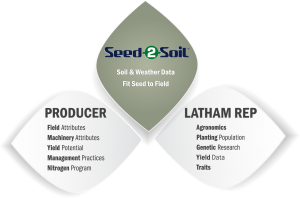
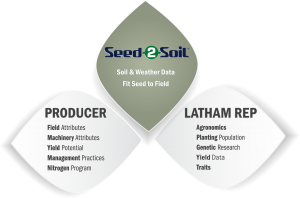
    Latham Hi‑Tech Seeds created its hallmark Seed-2-Soil® program before “right seed, right acre” became an industry buzzword. Why? Because we’re interested in simplifying the crop planning and seed selection process to help our customers maximize their yield potential.

    Research has shown that correct product placement leads to a 3-7% yield improvement. Latham’s Seed-2-Soil program utilizes the power of a partnership between grower and Latham representative to fit the right seed to every acre.

    seed2soil-infographic_flat-2Seed-2-Soil begins with a discussion with you and your seed rep about all the variables that go into your farming practices each year. Each field is considered on an individual basis, factoring all the important information the farmer holds with the product and performance information the seed rep can bring to the table. The outcome is a tailored solution focused on maximum yield and profit per acre.


    Not everyone has the same needs, so you get to choose your level of participation in the Seed-2-Soil program. Want to go beyond managing which varieties go in your field? Seed-2-Soil has another level of offerings to help measure and utilize micronutrients in your field for maximum yield per acre. Click here for more information.

    How to Enroll

    There are many variables that contribute to overall yield, so the Seed-2-Soil program helps you focus attention on those you can more easily control.  That’s why this year-long field observance and consulting program gives more meaning to grid sample data and geo-reference yield data, as well as promotes understanding about nutrients, varieties, and production practices.

    To get started, your Latham representative will want to gather any previous year data that may be of help when planning and placing products for the coming season.  This can include but is not limited to:

    • GPS yield monitor data
    • Grid soil samples
    • Variety/hybrid information from previous year
    • Basic fertilizer and chemical application records

    Seed-2-Soil provides farmers an opportunity to utilize data to help make sound management decisions in the quest for more profit per acre.  Click here to see how Seed-2-Soil can help organize data and evaluate results.

    Team Latham

    July 29, 2013
    Agronomics, General, Precision Ag
  • Latham Hi‑Tech Seeds

    Take Time to Adjust the Planter

    To help provide “picket fence stands,” corn growers must make proper planter adjustments. It’s also important to match the planter speed to field conditions and to avoid planting seeds in extremely poor soil conditions.

    Planting in soils that are too wet can lead to sidewall compaction. The under-developed root systems resulting from the compaction are often confined in a flat plane within the furrow trench. Planting in too wet of soil, especially with coulters, allows sticky soil to build up on gauge wheels resulting in planting depth differences.

    Shallow planting places seed in differing soil moisture levels and can result in differing emergence dates. Shallow planting also can lead to a shallow secondary root system. “Rootless corn” may result, or plant development may be greatly delayed compared to neighboring plants.

    Failure to close the furrow is usually caused by poor soil conditions, improper closing wheels for field conditions, incorrect down pressure, or planting in sod. Worn or improperly adjusted planter parts can cause or aggravate all the previously mentioned problems.

    Make sure your planter does all its jobs properly: open the seed furrow without sidewall compaction; place seeds at a uniform depth; and close the seed slot without compaction.  Stop the planter frequently and physically check to ensure you’re getting uniform seed depth and good seed-to-soil contact.  Although it will take a few extra minutes in the spring, you’ll be glad you did when it’s time to harvest those extra bushels come fall!

    Webspec Admin

    May 13, 2013
    Agronomics, Corn, Crop, Emergence, General, Precision Ag, Soybeans
  • Latham Hi‑Tech Seeds

    How Would You Define Technology?

    Roundup ready 2 xtend1

    tech·nol·o·gy noun tek-?nä-l?-j? 1a:> the practical application of knowledge especially in a particular area b: a capability given by the practical application of knowledge 2: a manner of accomplishing a task especially using technical processes, methods, or knowledge <new technologies for information storage> 3: the specialized aspects of a particular field of endeavor

    Despite what Webster says, every person at Latham Hi‑Tech Seeds most likely would define “technology” as it relates to his/her job.  Mention “technology” to company president John Latham and he’s apt to engage you in a conversation about Agrisure Durcade, which should receive approval soon, to fight corn rootworm.  Product Manager Mark Grundmeier might have XtendTM soybeans on his mind since new stacked brands are in the pipeline, featuring Genuity® Roundup Ready 2 Yield® technology with Dicamba resistance.

    Kathy Rogotzke, math instructor at North Iowa Area Community College, visits with Dani Young, a sophomore at CWL, during the Women in Science, Technology, Engineering and Math (STEM) Conference Friday at NIACC. PHOTO COURTESY OF MARY PIEPER/The Globe Gazette

    I hadn’t really stopped to think about how technology advancements – many that we’ve made within the last four years – have changed the way we do business until I sat down to write a speech.  I looked at our business in a different light after Dr. Kathy Rogotzke, math instructor at North Iowa Area Community College (NIACC), contacted me to be a speaker for NIACC’s WOMEN in STEM (Science, technology, engineering and math) careers event.

    My charge was to inspire high school students to consider careers in technology and to help open their eyes to career opportunities.  Instead of talking only about how new media technology has changed Latham Seeds’ approach to marketing and public relations, I decided to give high school students an idea of just how broad the technology field is and how many jobs are affected by it.

    Today I’d like to share with you, our readers, a brief overview of how technology impacts every facet of our business:

    Research / Product Development

    • 3 new soybean traits in the pipeline
    • Refuge in the Bag
    • More RIB Options for 2013 Planting

    Seed Production / Soybean Manufacturing

    • New bagging line
    • Robotic stacker

    [youtube]http://youtu.be/6IyB97uF2nI[/youtube]

    Trucking

    • GPS navigation

    Customer Service

    • New phone/ answering system
    • New computer software integrates operations

    Sales

    • iPhone / iPad / apps
    • Seed-to-Soil®
    • Webinars / conference calls
    • Remodeled conference room complete with Smartboard for training

    Marketing

    • Facebook, Twitter and blog
    • Website, blog coding and development
    • Design programs

    Farmers

    • Seed traits
    • Auto steer
    • GPS / yield monitors
    • Precision planting
    • Variable rate planting
    • Smartphones for up-to-the-minute markets and real-time weather

    Bottom line:  Even if a person wasn’t raised on a farm, chances are he or she could find a fulfilling career in a technology field that’s somehow affiliated with agriculture.  With a job placement rate of 98% for Iowa State University’s College of Agriculture graduates, it’s certainly worth considering!

    Not only are placement rates great, but starting salaries are among the highest for new grads since careers in agriculture encompass science, technology, engineering and math.  People who want jobs move to areas where there is opportunity, and today there is virtually limitless opportunity in agriculture. There’s never been a better time for young people to enter the industry!

    Team Latham

    March 25, 2013
    Agronomics, General, Precision Ag
  • Latham Hi‑Tech Seeds

    Seed Selection is Even More Critical in Dry Years

    The Iowa Legislature convened last week, and along with that, came talk that Iowa’s drought law may get a closer look this year.  “Water restrictions” isn’t a typical topic of conversation in the north, but it looks as though it might become commonplace across the Upper Midwest in 2013 if weather patterns don’t change.

    It’s safe to say we’ll be planting the 2013 crop in dry soils.  The 2012 drought caused most soils here to be depleted of moisture in the upper 7 to 8 feet, so it will take at least two growing seasons to recharge those soils.

    Seed selection will certainly be critical for 2013 due to the extremely dry conditions.  That’s why we’re recommending that most of our corn customers plant hybrids at least double- or triple-stack hybrids this spring.

    A hybrid’s genetics will be the biggest factor in whether a hybrid can handle drought.  Plot data shows that multiple-trait stacks, like Latham® hybrids with the Genuity® SmartStax® technology, can really help protect yield.  REMEMBER:  Traits protect yield.  Genetics make yield.  Seed products carrying the Latham brand name combine the industry’s best genetics with the latest traits and technologies.

    While corn genetics have come a long ways over the past decade and are much better at handling drought stress than ever, soybeans historically perform even better in dry weather.  Farmers will need to consider whether they can manage corn-on-corn in another extremely dry year or whether the economics favor soybeans.  Other factors to consider when finalizing your 2013 crop plans are outlined in this recent article posted on agriculture.com: Six Take-Home Lessons from the 2012 Drought.

    Regardless of whether you choose to plant corn, soybeans or alfalfa, Latham has the products you need! Our seed portfolio contains products that were bred specifically to thrive in specific areas of the Upper Midwest. Call your local Latham rep to learn more about the products best suited for your growing conditions, or feel free to call our office directly at 1.877.GO.LATHAM (1.877.465.2842).

    John Latham, President

    January 23, 2013
    Agronomics, Drought, General, Precision Ag, Season, Spring, Weather
  • Latham Hi‑Tech Seeds

    Choosing the “Smartest” Phone for Your Operation

    Ipad31
    Katy Flint

    Guest blog post by Katy Flint, Sales Manager / Team Leader for CellTech

    I was raised on a farm, belong to a Century Family farm, worked in the cooperative system for almost five years, and am married to an agronomist.  Now I’m putting my background and experiences to work at CellTech, a premium Verizon retailer, in Hampton, Iowa.

    I can’t count the number of times I’ve had someone say to me, “I don’t need anything fancy; I’m just a farmer”.  The first thing I think is, “JUST a farmer”?  The second thing that comes to mind is, “What makes a phone fancy?”  Is it a phone that you can only use if you’re in your Sunday best?  🙂

    What if picking a phone or tablet was about choosing something fancy?  Would you be more interested in a new phone if it could make your work easier and perhaps even make farming more profitable?

    I’ve never met a farmer who didn’t want to make more money, so let’s consider how a Smartphone or tablet could do just that!  The first place we typically look at is apps ,or applications.  While there are literally thousands to choose from, here are a few of my favorites:

    • Market Strategies by DTN will keep up-to-date on market prices.  Create a watch list based on the commodities you want to follow and the futures board on which you want to sell.  You can see both the futures and the cash bids around your area – no more having to call the co-op 4 or 5 times a day to see what the markets are doing! Get for your iPhone | Android
    • Accuweather and Weatherbug keep the weather at your fingertips.  You can also plan your day accordingly because these apps use GPS to follow your location. Get WeatherBug for your iPhone | Android. Get Accuweather for your iPhone | Android
    • Monsanto and Precision Planting recently launched a new app that is compatible with your variable rate (VR) planter.  Did you know that 90% of planters sold today have VR capabilities but only about 5% are being used because the people don’t know how to use them?  Simply plug your iPad into your VR planter.  Your planter will adjust as necessary so there isn’t any waste, which means more money in your pocket! Get for your iPhone | Android (not available)

    Technology today has never made it easier to optimize every dollar you spend.  At CellTech, we pride ourselves in being connected with farmers.  We would love an opportunity to show you how technology can help you!

    Team Latham

    December 5, 2012
    Agronomics, General, Precision Ag
  • Latham Hi‑Tech Seeds

    Kinze Has ISOBUS Electronics Capability

    KINZE Plugnplant closeup

    guest blog post by Rhett Schildroth, Product Manager at Kinze Manufacturing

    Kinze Has ISOBUS Electronics Capability
    Plug and play operation with ISOBUS-equipped tractors

    There is much confusion in the marketplace about the compatibility of monitor technology between tractors and planters of different brands. I’d like to offer some facts to farmers who have questions about compatibility.

    Kinze Manufacturing, Inc. now has ISOBUS compatibility. This capability allows easy “plug and play” operation with any ISO-compatible tractor, including those sold by John Deere with GreenStar™Displays. With this interconnectivity, farmers do not have to change monitors, displays, wiring harnesses, or electrical connectors with different implements.

    ISO monitor

    from different manufacturers. The vehicle and equipment electronics speak the same language, enabling simpler operation than ever before. With ISO compatibility, one monitor in the tractor cab can run both the planter and the tractor, saving room in the cab and money on a second monitor, not to mention the time it takes to install a second monitor.

    Kinze’s technology means any ISOBUS-equipped tractor can be quickly connected to our planters using the ISOBUS standard tractor/implement connectors. The user interface presented to the operator is the same, regardless of the brand of tractor or virtual terminal. Additionally, all planter settings are saved on the planter, so switching between tractors becomes a non-issue.

    This technology will make life easier for farmers. We understand the importance of enabling efficiency, and ISO-compatibility will make a difference in giving more time back to farmers.  We understand that electronics can be confusing, and ISO-compatibility will simplify vehicle and implement electronics.

    To find out more about this issue, please attend my presentation on Saturday, Aug. 25 at the Latham Country Fair.

    About the author:

    Rhett has been in the ag equipment industry for almost twenty years. A graduate of Iowa State University, he started his ag career as an engineering consultant with clientele that included CNH and John Deere. He joined John Deere fulltime in 1998 to help them grow their precision farming group. In 2006, Rhett left John Deere to join Topcon Positioning as their Director of Ag Engineering. Topcon is a provider of ag electronics to many large ag equipment manufacturers, including AGCO.

    Rhett Schildroth is currently the Product Manager at Kinze Manufacturing. In this role, he works closely with the Kinze management team to determine how Kinze products should evolve to meet the changing needs of farmers both in America and across the globe. As part of this work, he also leads the autonomous tractor project at Kinze.

    Team Latham

    August 20, 2012
    Agronomics, General, Precision Ag
  • Latham Hi‑Tech Seeds

    Ag Technology: Internet, Tablets & SmartPhones

    Farmers’ use of the Internet has been a hot topic of conversation recently from CNN to Wallaces Farmer. It was even researched as part of the most recent Iowa Farm and Rural Life Poll, which has been conducted every year since 1982 when it was established.

    “High speed Internet is as important to today’s young adults as electric lines and paved highways were for their parents and grandparents,” says Dr. Paul Lasley, Iowa State University sociologist, who co-directs the annual Farm and Rural Life poll.

    To further make his point, Dr. Lasley asks if I would move to an area if high speed Internet wasn’t available. I paused for a moment to truly consider his question. I realized that if I was going to be honest, I’d have to say “no.” As much as I like to escape reality by walking with my Lab through the woods or trying to land a trophy walleye from a remote lake, I wouldn’t ever want to be totally disconnected.

    More and more rural residents like me are relying on smart technology to keep them connected. Farmers like Larry Sailer are using their iPads to communicate with consumers on Facebook or Twitter while waiting in line at the elevator. And also like me, the majority of farmers today can’t imagine being tethered to an office due to a land line or a desktop computer.

    Contrast this to Dr. Lasley’s first day at Iowa State University in 1980. Lasley said he was issued a manual typewriter with a yellow pad of paper and was told to start writing! I don’t want to even think about writing a blog post or taking notes manually during a meeting. The invention of laptop computers, iPads, and SmartPhones has changed the way we all do business.

    It’s no wonder the Farm and Rural Life Poll asked respondents about the types of farming-related information they accessed via the Internet, as well as how often they accessed information from a number of agriculture-related agencies and organizations. The poll shows 84% of farmers who use the Internet get information on the weather. Most farmers who use the Internet also access market information (78%), general ag news (75%) and information about crop production (68%).

    Larry Sailer, Musings of a Pig Farmer

    February 1, 2012
    Agronomics, General, Precision Ag
Previous Page
1 … 5 6 7 8
Next Page

Latham Hi‑Tech Seeds

131 180th Street | Alexander, IA 50420

(641) 692-3258

SIGNUP FOR OUR NEWSLETTER
  • Contact
  • Legal
  • Dealer Center
  • Seedware Login
  • Latham Gear

© 2025 Latham Hi‑Tech Seeds. All rights reserved. | Iowa Web Design by Webspec | Privacy Policy

Latham® Hi-Tech Seeds is a trademark of M.S. Technologies, L.L.C., 103 Avenue D, West Point, IA 52656.