Latham Hi-Tech Seeds

(641) 692-3258

  • Home
  • Products
    • Corn
    • Soybeans
    • Alfalfa
    • Corn Silage
    • Seed Guide
  • Performance
  • Find a Rep
  • Media
    • Blog
    • News
    • Videos
    • Podcasts
    • TECHTalk
  • About Us
    • Company History
    • Our Mission
    • Careers
    • Become a Rep
    • Sowing Seeds of Hope
  • Contact Us
  • Latham Hi‑Tech Seeds

    TIPS FOR MANAGING EAR ROT

    Ear Rot Feature Image

    screenshot-33Ear rot has been present in some corn fields that were harvested this year. These diseases can reduce the quantity and quality of the corn being harvested, and they can also produce mycotoxins that might be harmful to livestock and even humans.  Lastly, they can continue to cause problems in stored grain unless it is closely monitored and maintained in the best possible condition.

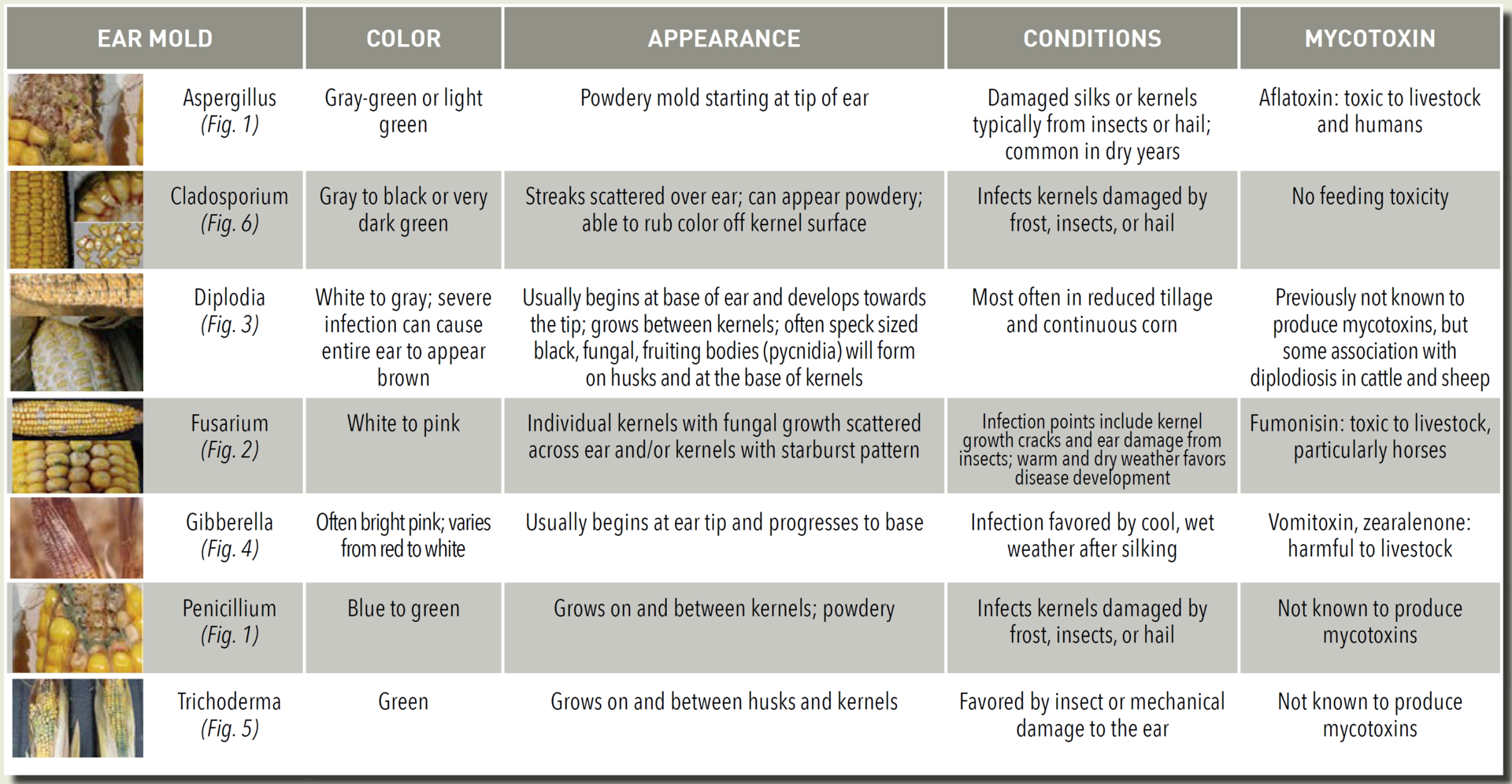
    Scouting fields prior to harvest is key to avoiding situations caused by mold. A pre-harvest field check can help farmers to determine: (1) if ear mold is present; (2) what type of mold is present; and (3) how severe the infestation is.

    One method you can use when scouting fields for ear rots is to tear back the husks on 100 plants scattered randomly throughout the field. If you find 10% or more of the ears have mold on 25% or more of the ear, then that field should be harvested immediately and dried to at least 15% moisture. (NOTE: If you plan to turn a claim in for that field to your crop insurance provider, do that before harvesting. The insurance adjuster may need to see proof of the ear rots in the field as opposed to just seeing it in the stored grain.) 

    Samples of that grain should be tested to see what mycotoxins, if any, are present. You should then consult with someone like an extension specialist or veterinarian to decide the best method of using that grain. 

    To help determine which molds might be present in your fields, check out the table below:

    screenshot-36

    Corn ear rots and molds are present every year, but the severity and type of infestation is highly weather dependent and greatly depends on the region where the farm is located. Fungal pathogens that cause ear rots will remain in the soil for several years. Crop rotation and heavy tillage may help reduce spore survival. Planting hybrids with traits that provide above-ground insect protection and reduce ear damage might also be beneficial. 

    screenshot-34If you browse online for other ear mold management practices, you will see it’s suggested to plant hybrids with known tolerance to these diseases. Unfortunately, most companies do very little screening for ear mold pathogens simply because they are so varied and the instances of severe infestations are so rare.  In the case of corn ear rots, the best offense is the best defense! Make time to scout each field for ear rots before harvest.

    Webspec Admin

    November 16, 2016
    Agronomics, Corn, Disease
  • Latham Hi‑Tech Seeds

    Flying the Fields with Kody Trampel

    Flying the Fields1

    flying-the-fields-masthead

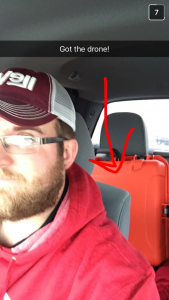
    After wanting a drone for years, Kody Trampel recently purchased a new DGI Phantom 4.

    Billed as the “smartest flying camera,” the Phantom 4 has five cameras for improved stabilization and obstacle avoidance. This is an attractive feature for new pilots worried about crashing on their first drone flight, plus it’s advantageous when shooting tight close-up shots.

    “Since I’m a rookie pilot, I chose the Phantom 4 because it has sensors on all four propellers,” says Kody, an kody-tramplagronomy specialist with MaxYield Seed. “This drone will sense an object in its flight path, ascend and fly over it, and then return to its original route. They made it virtually dummy-proof and that’s good for new pilots like me!”

    Another advantage of the Phantom 4 is that you get 25 percent more flight time due to extended battery life.

    “I decided to bite the bullet and purchase a drone because I think this drone will give me a competitive edge,” says Kody. “I also think it will make crop scouting a lot more fun. No one really wants to walk deep into a tasseled field of corn when the thermometer reads 90 degrees. Now with the drone, we can scout a 160 acres in a matter of minutes.”

    img_6956Kody believes the drone’s eye view will enhance, not replace, physically scouting fields. He plans to take photos and then return to his office where he can study those images in detail. If he pinpoints a problem area, he can then return to a particular part of a field where he can focus his scouting efforts.

    Because his drone arrived during #harvest16, Kody’s thoughts were focused on how the Phantom 4 might help him and his farmer-customers develop harvest plans.

    “Harvestability can be an issue,” says Kody. “We can keep an eye on the fields all season long and constantly monitor standability and stalk condition. I’ll be able to help my customers prioritize fields for harvest. If I see a field that looks suspect from the air, I can then walk into it and do a pinch test. I’ll also be able to take crop notes. For example, I might notice that one particular hybrid number is prone to dying back or doesn’t have good late-season intactness. That will not only help my customers develop harvest plans but it could help them with seed selection and/or product placement in future years.”

    Technology is always evolving, so it’s important to research the available products before making a purchase. Kody purchased his drone from a local dealer, who will be available to answer follow-up questions and to provide maintenance and service. The salesman was able to talk with Kody about the pros and cons of different models.

    It’s also helpful to talk with others who have experience using drones. Here are links to other Latham® dealers and sales managers who have been featured in our 8-week “Flying the Field” series:

    • Logan Shedenhelm
    • Phil Pitzenberger
    • Ryan Skaug
    • Joe Roberts
    • Titan Immel
    • James Keltgen
    • Ethan Johnson

    Team Latham

    October 27, 2016
    Agronomics, Precision Ag
  • Latham Hi‑Tech Seeds

    Flying the Fields with Titan Immel

    Flying the Fields1

    flying-the-fields-masthead

    titan-1With nearly four years of flying under his belt, Titan Immel with Upper Edge Ag sees the importance of agricultural technology and puts it to use for his operation and his customers. Titan started selling seed when he was 17-years-old and flying a drone at age 18. 

    “There have been a few major changes since I started flying a drone,” said Titan. “Aside from them becoming a lot cheaper, they have also become more user-friendly.”

    Titan has taken drone flying one step further, optimizing its capabilities to enhance his occupation on and off of the farm. He has learned to write prescription maps from his drone, which play a key role in finding every farm’s “sweet spot.” Titan acquires satellite images and takes photos from his drone to write variable rate scripts, which helps him pin point which areas he needs to adjust inputs to get the most out of his operation and customers’ fields.

    He replicates these practices for his customers, too. Titan helps farmers see how to delegate inputs across their fields, resulting in the highest yield possible for his customers.

    titan-3“I chose to purchase a drone shortly after beginning my dealership because I wanted to be there for my customers,” said Titan. “I want to help farmers become more profitable by choosing the appropriate inputs for each unique situation.”

    Titan has stayed ahead of the curve with regards to pairing his dealership with drones. He has found his drone to be especially useful when needing to scout during all seasons, because it’s not always convenient to walk through fields. He admits a drone will never replace recommendations from an agronomist or seed advisor, but it helps the farmer focus on problem areas.

    Titan flies DJI models and is currently flies the Inspire 1. He says the customer service is great and they are fast and reliable when he needs parts. He advises not spending too much money on a drone because it’s just one tool in a farmer’s toolbox.

    For more advice on how to fly your fields, click here.

    titan-2

    Webspec Admin

    October 13, 2016
    Precision Ag
  • Latham Hi‑Tech Seeds

    Flying the Fields with Logan Shedenhelm

    IMG 1439

    flying-the-fields-masthead

    img_1439 Originally from Northeast Iowa, Logan Shedenhelm has found a new tool for his family’s farming operation that yields high results. The Shedenhelm’s could now scout their field in a timely manner, learning more than they ever have.

    “My summer internship with Latham Hi‑Tech Seeds helped me see the value of having an eye in the sky over our fields,” said Logan. “From making a sales pitch to improving our own operation, I have been able to uncover many things just from a different angle.” 

    This past summer, Logan flew the Phantom 4 and admits that this would be the model to invest in someday. Between the ease-of-use and high-quality camera image, Logan found this was a durable, all-in-one drone.

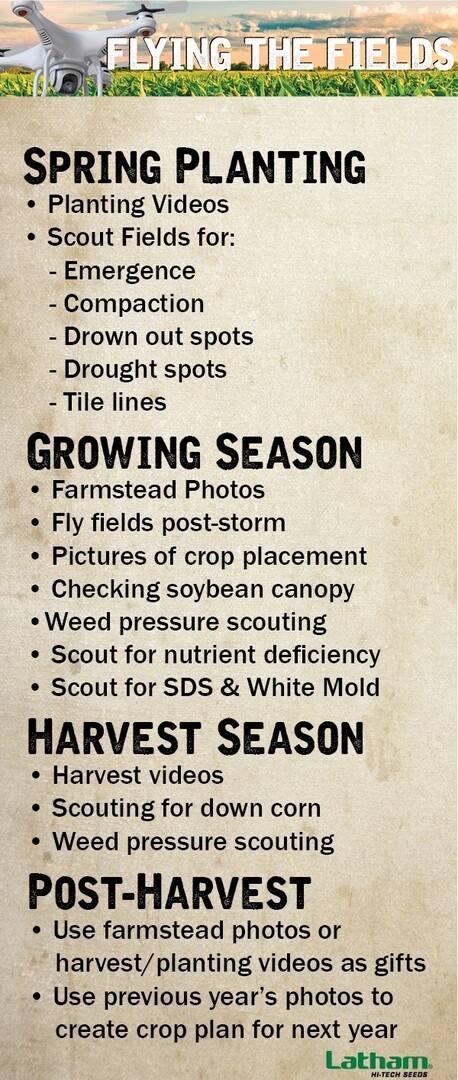
    yr-round-calander-banner“Drone technology can be beneficial to a farming operation if used properly,” Logan said. “Drones can be used to see every single acre you farm or to view livestock in the pasture in a time-effective way.”

    Logan found different uses for his drone from season to season. Starting with planting and early spring, he used the drone to look at emergence, stand and weather damage. In mid-season, he used the drone for weather damage, weed pressure and chemical injury. Coming closer to harvest, he was able to see where fields began to tassel or where disease pressure was taking over.

    Early in the season after a rain, Logan flew the drone over a field back home in Riceville, Iowa. When taking the drone up, he was able to see the wet spots in between the tile lines. He discovered dry streaks in between the wet spots were the tile lines. After taking multiple pictures and videos, they have a good representation of where their tile lines were and were they needed to add more drainage.

    Later in the season, it was easy to see compaction when flying the drone. Certain rows which look like there where from machinery, where shorter and lighter in color. These symptoms were from compaction.

    “Drones can be a great investment and pay for themselves in just one year if used properly,” Logan said. “I was able to always find a reason to check fields no matter what the season. It is a benefit to see every field from a weekly basis instead of being blindsided by something that your drone could have seen when harvesting your crops.”

    Webspec Admin

    October 6, 2016
    Agronomics, Precision Ag
  • Latham Hi‑Tech Seeds

    Flying the Fields with Ethan Johnson

    Flying the Fields1

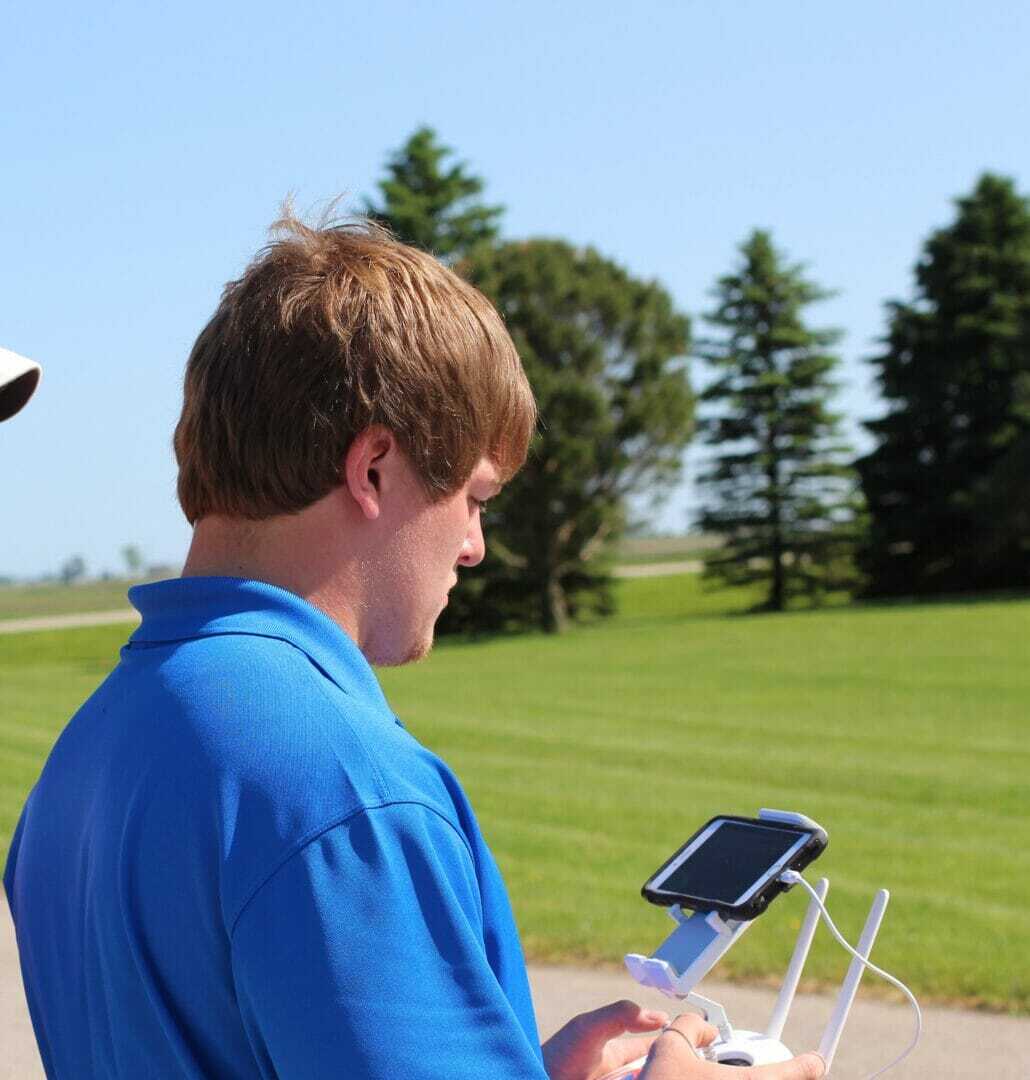
    flying-the-fields-mastheadFor more than a year, Ethan Johnson has operated a Phantom III Professional Quad Copter for Doug Abeln Seed Co. in Groton, South Dakota. He says the aerial images help them see trouble spots in fields.

    “We like to use the drone to help us with our tiling projects,” explains Ethan. “We look for trouble areas within a field that could be fixed with tile. We also like to use the drone to look at corn planter shut-offs in late spring to see if our planter is as accurate as the monitor says it is. The drone also has also been a helpful tool with crop insurance issues like spray damage or hail.

    ethan-flying-the-field-feature
    Ethan Johnson (pictured at left) operates a Phantom III Professional Quad Copter for Doug Abeln’s (pictured at right) Seed Co. in Groton, South Dakota.

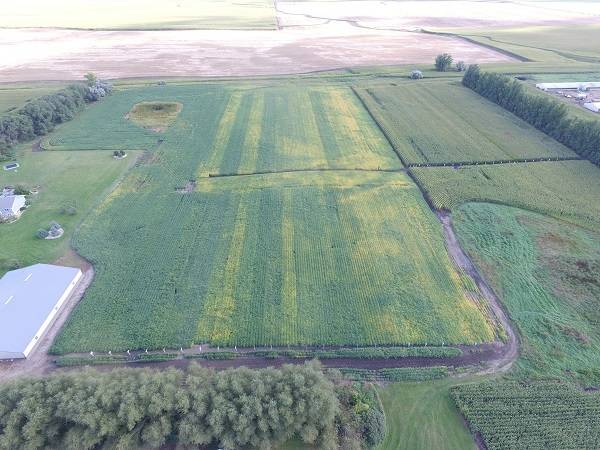
    Unfortunately, this season he discovered a new use for their drone when Goss’s Wilt was spotted across a corn field. After seeing how badly the field was affected, Ethan says the next step is to select a hybrid with a better tolerance.

    The view from a drone also allows farmers to see a different in stand between hybrids.

    “Plant health is something we like to look at from above,” says Ethan. “It really gives you a different picture, literally, than what you can see at the ground level. You can see a lot from the air, at different times of the season. It’s helpful to identify problem areas before you’re in the combine.”

    For farmers who are interested in purchasing a drone, Ethan recommends looking at the Phantom IV because it’s more up-to-date. He also advises them to consider purchasing the Sony

    “Buy your drone as a package deal with extra batteries and a carrying case to save some money,” he says. “You will need an iPad Air II because older models won’t work. Finally, always be safe always. Use common sense when flying drones, so no one gets hurt.”

    Rules require you to keep the drone in sight, and you must operate your drone at 400 feet or below. Click here for 5 things to know about the new FFA rules regarding UAVs (unmanned aerial vehicles, aka “drones”) for agricultural use.

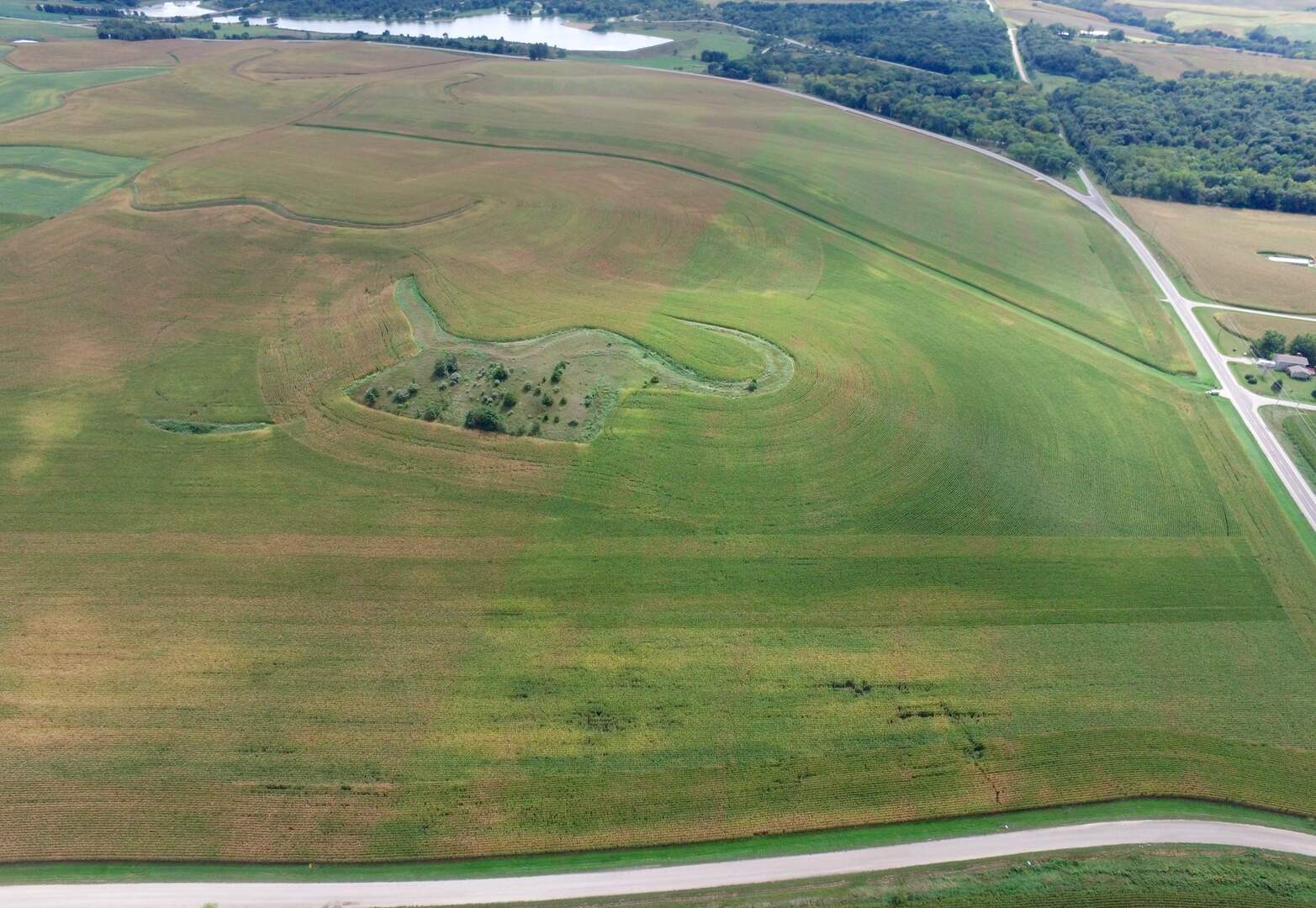
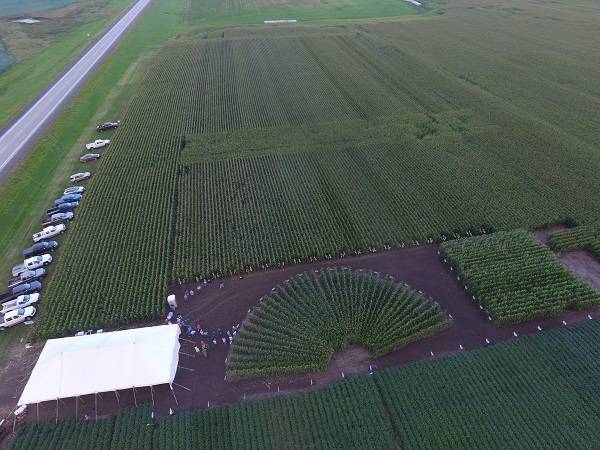
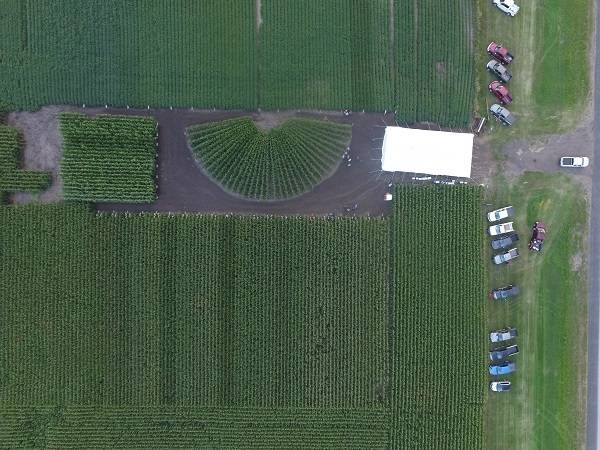
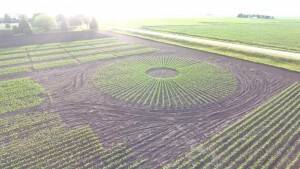
    During the Latham Hi‑Tech Seeds’ Technology Field Day near Watertown, Ethan Johnson talked with farmers about the advantages of flying UAVs over their farm fields. This photo gives an aerial view of Latham stress wheel plot, which demonstrates optimal plant population.

    DCIM100MEDIADJI_0066.JPG

    DCIM100MEDIADJI_0073.JPG

    Team Latham

    September 29, 2016
    Agronomics, Precision Ag
  • Latham Hi‑Tech Seeds

    Flying the Fields with Joe Roberts

    Flying the Fields1

    flying-the-fields-masthead

    By Joe Roberts, Latham Hi‑Tech Seeds Sales Intern

    fullsizerenderMy dad decided to buy a drone because he believed it would help making better, more informed decisions on our farm.

    A drone can lead to better management practices in so many ways. When we have wet years and get in a hurry, sometimes we plant in conditions that aren’t ideal. Throughout the growing season, we can then fly the drone over those fields and see the impact of planting in wet conditions.

    This summer, while I was flying drones as part of my internship with Latham Hi‑Tech Seeds, I could see compaction problems throughout the fields. You can identify problems like drown-out areas or high weed pressure areas. The same year you can go out and implement applications to correct that before the next growing season.

    I believe seeing those areas through the lens of a drone during the growing season and then seeing yield differences on the monitor this fall will cause us to make changes next spring.

    Flying a drone all summer long gave us the ability to “see the big picture” of an entire field. Sometimes problems occur in areas that aren’t visible from the ground or in places that aren’t easy to reach by walking a field. We were able to fly some fields that had to be assessed quickly for replant. In a few minutes, we were able to analyze every section of the field.

    One of the coolest things I saw through the drone camera this summer was the progression of the stress wheel. Flying the drone over the crops as they developed held significance since I was able to help during planting. Flying over the Latham Seeds’ test plots and SuperStrips throughout the marketing area gave both farmers and myself an arial view of the differences in hybrids along with the progression of each one. Once you see some of the amazing pictures that a drone take, I don’t think you’ll ever look at your fields the same way!

    Drones can be used at all points throughout the growing season, which really creates a good return on your investment. Early in the season, you can make notes about emergence or compaction DCIM100MEDIADJI_0117.JPGissues. When the crops emerge, you can fly fields to identify problems with fertilizer application and weed control. There’s always a use for a drone after a storm, whether you want to look for drowned-out spots or wind damage. Flying the drone makes quick work of all of these tasks, plus it’s a lot more fun! I’m looking forward to taking cool videos from planting to harvest, and then showing the photos to friends and family.

    My advice to farmers is don’t let the fear of flying prevent you from getting a drone. The process to learn how to fly the drone can be accomplished in less than a day. It just takes some practice. There are even drones available with obstacle collision, so you don’t have to worry about crashing it anymore. Additional programs may be purchased to enhance the value of your drone. At the Farm Progress Show, I talked with a company representative that had mapping software for the drones, as well as the ability to spray fungicide over portions of your field.

    As drones keep advancing, the sky’s the limit for the potential uses of your very own drone! Buying something that can have a practical use on the farm for more than one season looked to be a good investment, too.

    Gary Geske

    September 22, 2016
    Agronomics, Precision Ag
  • Latham Hi‑Tech Seeds

    Flying the Fields with Ryan Skaug

    Flying the Fields1

    flying-the-fields-masthead

    Thanks for tuning into TheFieldPosition on Thursdays! Last week we started a new eight-week series on how Upper Midwest farmers are using drones (aka unmanned aerial vehicles or UAVs) in their farming operations. They’ll be sharing tip and tricks on everything from buying a drone to flying one. If you have specific questions you’d like answered, please send them to us via Facebook Messager, tweet them to @LathamSeeds or email shannonl@lathamseeds.com.

    Flying the Fields with Ryan Skaug

    ryan-skaugKnowledge is power. That’s why this fifth generation corn/soybean farmer in northern Minnesota and in the eastern Red River Valley believes drones are very useful to a farming operation.

    “Being a young farmer and seed dealer, I like to be on the cutting edge of new technology,” says Ryan Skaug, a Latham Hi‑Tech Seeds dealer, who started flying three years ago. He purchased the DJI Phantom II because he liked its ease of use and he could get it serviced nearby.

    “The more I fly, I more uses I discover for the drone. I use my drone to look at fields all season long.”

    In early spring, Ryan likes to see where excess water is logged within field ditches or in potholes that can be connected to larger bodies of waters or mains to increase field productivity with lesser, saturated soils. The AGPS Ditch Pro gives him more accurate in-season photos. Ryan studies the ditch and slope of the ground to create more efficient water runoff.

    Later in the season after the crop has canopied, he looks for persistent water issues. Ryan likes to use the drone to take full field photos, and overlay them maps of the fields’ soil types. After harvest, he compares the full field photos (foliage) and soil type maps with yield maps.

    “I believe overlaying the maps helps me choose seed products on a field-by-field basis,” says Ryan. “We’ve been able to increase our yields in not only productive soils, but also the less productive, and more challenging soils.”

    There isn’t much drainage tile in the Skaug’s area, but they installed grid tile on a 310-acre field with 80-foot line spacing. This particular field has multiple soil types. It also has very heavy underground water pressure because this parcel is so close to the ridge of the Red River Valley. The drain tile has allowed plants in this field to develop better roots and has increased overall crop health. In adverse years, they can see where the tile lines are by flying the drone.

    With heavier soils in the Red River Valley, compaction is an ongoing battle. Drone images show the stressors of compaction.screenshot-163

    “By flying the drone throughout the growing season, I’m able to see where some emergence may be uneven due to tillage compaction,” explains Ryan. “Compaction might results if a spring tillage pass was performed when the soil was too moist or the operator might have driven too fast or worked too deep. Some soils may allow the operator to work multiple passes before planting and not show any crop damage, while others may only allow a ‘one and done’ tactic.”

    “The more we know about our fields and crops throughout the growing season, the more successful we will be in many years to come,” adds Ryan.


    Team Latham

    September 15, 2016
    Agronomics, Precision Ag
  • Latham Hi‑Tech Seeds

    Flying Drones and Flaming Peaches Turn Heads on Farm Tour

    Chef Brice flame

    PhilflyingOn a mission to help consumers understand how their food is produced and to dispel food myths, last week Latham Hi‑Tech Seeds in cooperation with the Iowa Food & Family Project hosted a series of farm tours across North Iowa. A charter bus filled with people from all walks of life – farmers, life coaches, retired school administrators and even Iowa Games CEO Chuck Long – departed from Ames and traversed the countryside.

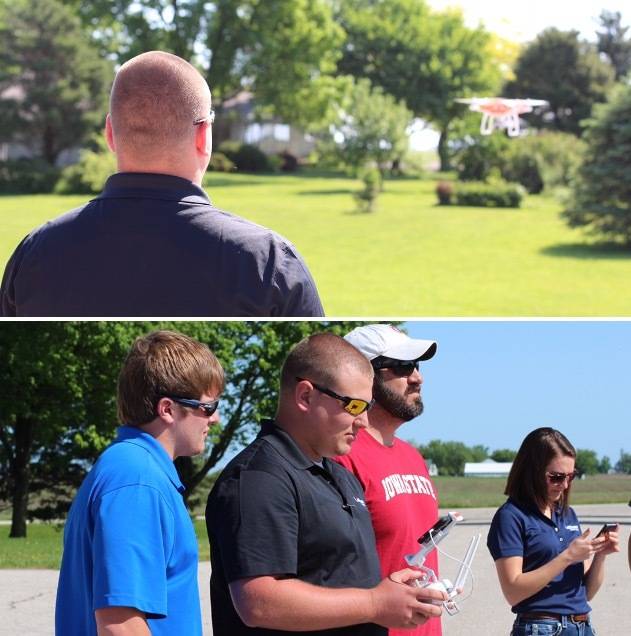
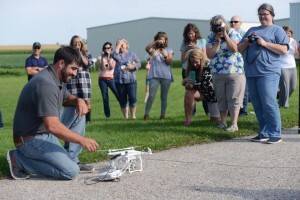
    Thursday afternoon the group stopped in Alexander where we talked about how our family-owned business produces corn and soybean seed that farmers then plant in the spring. We answered their questions about why it doesn’t pay for farmers to save their own seed and why farmers who save patented seeds get sued. We also worked to define commonly misunderstood foodie terms and to debunk common misperceptions about GMOs. While we played a riveting game of “Fact or Fiction,” the real show stopper that afternoon was Latham® seed stock grower Phil Pitzenberger’s drone demonstration. Phil deployed his drone and talked about how he’s able to make better farming decisions as a result of this “eye in the sky.”

    Photo credit to Joseph L. Murphy / Iowa Soybean Association
    Photo credit to Joseph L. Murphy / Iowa Soybean Association

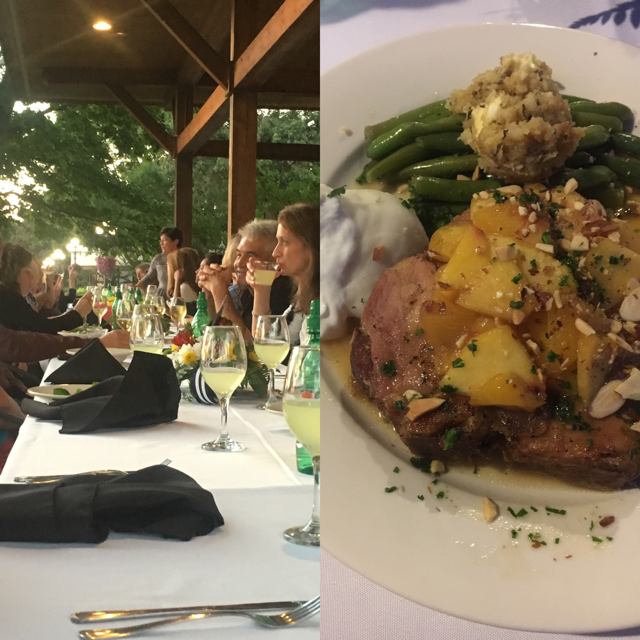
    The evening ended with a farm-to-table meal prepared by Chef Brice Peterson of The Clear Lake Supper Club. “Delicious” doesn’t do this meal justice! Honestly, this meal was something out of Bon Appétit magazine!

    Strawberry Garden Salad

    Tender Spinach, Cilantro-Butter Lettuce, Spring Mix, Ruby Red Berries, Sweet Bermuda Onions, Candied Walnuts, Crumbled Greek Almond Cheese with a Maple-Soy Vinaigrette

    Slow Roasted Smoked Pork Chop

    Old Fashioned Sage and Feta Dressing, Brandy Glazed Peaches, Sour Cream Mashies and Green Beans Almondine

    Participants in the Expedition Farm Country tour were treated to a farm-to-table meal prepared by Chef Brice Peterson at the Clear Lake Yacht Club. The meal – and the setting – were something most of us see only on the pages of magazines but never experience in real life.
    Participants in the Expedition Farm Country tour were treated to a farm-to-table meal prepared by Chef Brice Peterson at the Clear Lake Yacht Club. The meal – and the setting – were something most of us see only on the pages of magazines but never experience in real life.

    The table setting – complete with a view of Clear Lake as the sunset – also was something straight out of a magazine photo shoot. Just when you think the evening couldn’t possibly get any better, Chef Brice demonstrated the peach flambé. This flaming concoction of fresh peaches in brandy was served over the most succulent pork chop from Lewright Meats & Deli in Eagle Grove.

    The following day was equally impressive. After enjoying another great meal at the Historic Park Inn, the group once again boarded the bus and headed to farm country. Here’s an overview of the farm stops they made:

    • Wayne and Ruth Fredericks, Building Soil Health for Generations to Come
    • Scott and Julie Neiss, Building on a Foundation of Family Farming
    • Dan and Lynn Bolin, Experiencing a Great Day at New Day Dairy

    Special thanks to these North Iowa farmers for graciously opening their machine shed or cattle shed doors and giving of their time to talk with consumers. Tours like these that help bridge the gap between producers and consumers and lead to greater understanding. Here are a few excerpts of comments received from participants:

    • “I knew nothing about where my food comes from. It’s exciting to see firsthand how farmers are using technology. The Expedition helped me better understand how much farmers really care about what they’re doing and I’m very impressed by that. I only wish 100,000 people could have participated on an expedition like this!”
    • “Even though my husband is a farmer, I learned more in those two days than I have in 28 years on the farm.”
    • Wow! Thank you so much for the hospitality and the opportunity to go deep on all things Iowa, food and farming – many good facts and lessons, new friends and great memories too. And now the current plan is to get these four children out there, well fed and smartened up! I have marked August 10-20, 2017, in my calendar for the Iowa State Fair!”

    If you’d like to get a taste of what these folks experienced on Expedition Farm Country, sit down to a home-cooked meal this weekend! Cristen Clark of Food & Swine shares this recipe with us for the Best Dang Mashed Potatoes, which are similar to the “sour cream mashies” that we enjoyed during the tour.

    Team Latham

    September 2, 2016
    Agronomics, General, Precision Ag
  • Latham Hi‑Tech Seeds

    ASK THE AGRONOMIST: SEED TREATMENTS

    Ask the Agronomist Feature Photo 01

    Thanks for checking out the last week of our “Ask the Agronomist” series! Read below for Mark’s response to this week’s question about seed selection for your 2017 planting season!

    Crisp, cool mornings remind us that fall is just around the corner.  Time is of the essence!  Plan a successful harvest by scouting fields and evaluating standability.  Identify potential problem areas.  Note crop progress, as well as insect and disease pressure.  Pay particular attention to fields that were damaged by wind and hail, promoting stalk rot.

    Q: Silage harvest is going strong and soon field corn will be ready to combine. What should Upper Midwest farmers keep in mind as they’re preparing for #Harvest16?

    A: There are 3 things to keep in mind for the harvest season: (1) Assess crop progress. (2) Develop a harvest plan. (3) Make sure your equipment is ready to go.

    A good plan outlines which fields to harvest first. The main consideration when contemplating your harvest order is focusing on fields exhibiting potential for Stalk Rot and subsequent Stalk Lodging. Secondary concerns include hybrid maturity, crop residue management and logistical concerns.

    Q: Let’s talk about hybrid maturity. It looks like harvest is going to be early this fall.

    A: All of those warm summer days pushed along maturity this season. Wet, humid conditions have also created ideal conditions for leaf diseases and some stalk rots in corn, as well as Sudden Death in soybeans. In other areas of Latham’s sales territory, drought conditions will cause an early harvest. Make sure you check machinery and conduct necessary maintenance well ahead of the expected harvest date. I have witnessed farmer who, due to conditions like Stalk Rot, should have harvested a week earlier than they actually did.  They simply weren’t prepared for an earlier harvest, and as a result, they lost thousands of dollars’ worth of crops that could have been saved.

    Q: How can farmers determine which fields are in jeopardy of downed corn?

    A: Check stalk strength and integrity by pinching the lower internodes on the plant and feel for weakness.  Also, the root mass can affect the plant’s ability to stand up against late-season winds.  Roots can be more of an issue than stalks in a wet growing season like we experienced.  Saturated soils limit the growth of root hairs and brace roots, making the total root mass much smaller.  If those plants grow close to full size, that puts a lot of stress on the plant later in the year –either it may not have the ability to take up enough nutrients or the plants may lodge if there is a late-season wind or wind and rain event.

    Q: Even before this crop gets harvested, farmers are already planning for their next crop year. What advice do you have as farmers are making their seed corn decisions now?

    A: I like to recommend that a farmer chooses seed corn not only for certain plant characteristics but also by maturity. Relative maturities are just that –relative. Accumulated Growing Degree Units (GDUs) determine whether full crop maturity comes early or late in a year. Different hybrids react differently to growing conditions, too. That’s why I recommend planting 50% of one’s corn acres to the normal maturity for that area with 25% of the acres planted to an earlier maturity and 25% to a later maturity. Planting a portfolio of hybrids each year maximizes your chances of a good harvest.

    Q: I’ve noticed in your seed product guide that it lists whether hybrids move north or south out of its zone. What does this mean?

    A: Our product team spends countless hours taking field notes about hybrid characteristic, such as how it emerges and when it flowers. When you talk about moving out of zone, we look at when that hybrid flowers. If a hybrid flowers early for its relative maturity (RM), that hybrid typically moves north better than south. A hybrid that flowers late usually moves better south of its zone. A few hybrids are neutral, so they can move north or south well. Maturity is also a determining factor when corn must be replanted later because obviously the length of its growing season has been shortened.

    Q: What types of research does Latham Seeds use to determine relative maturity, as well as to select products for its lineup?

    A: As far as where do we get the info for rating our releases, we take into consider our sales representative’s recommendations along with our SuperStrips information. These SuperStrip trials split our corn lineup into maturity groups and are conducted on our home research farm in North Central Iowa, as well as on more than 70 of our dealers’ and customers’ farms throughout the Midwest.

    Q: What else would you like to add? A: Learn more about Seed Treatments, New Corn and Soybean Technologies and Corn Hybrid Stress Research at Latham’s home farm on Wednesday, Aug. 31. We’ll be giving tours of our research plots, and Latham® seed grower Phil Pitzenberger will demonstrate how Drone Technology is improving operations on his family farm. Visit LathamSeeds.com for more details!

    Webspec Admin

    September 1, 2016
    #AskTheAgronomist, Agronomics, Seed Treatment
  • Latham Hi‑Tech Seeds

    ASK THE AGRONOMIST: SEED TREATMENTS

    Ask the Agronomist Feature Photo 01

    Thanks for tuning in to our weekly “Ask the Agronomist” Audiocast! Play the audio file below to listen to Mark’s response to this week’s question about choosing seed with the right treatments for your fields.

    https://www.lathamseeds.com/app/uploads/2016/08/latham-8-23.mp3

    Q: My soybean plants are the tallest I’ve ever seen them! Should I be concerned that all of the energy is going into stems and leaves rather than into pods?

    A: This is what makes soybeans such an interesting crop!  With the weather we’ve had this growing season, it does not surprise me that plant height is taller than normal. Vegetative growth can occur through the R5 stage if moisture, temperature and nutrients are readily available. R5 is the “beginning seed” stage when seeds start to develop on one of the 4 top nodes of the plant.  We’ve even had a few varieties over the years that shot extra pods out the top of the plant after R5.

    This season I believe disease will have more impact on soybean yields than anything else.

    Q: We’ve talked in recent weeks about how Sudden Death Syndrome and Brown Stem Rot are a factor this season. Now farmers are starting to see White Mold in their soybean fields. What can be done?

    A: Cool, wet conditions this spring followed by saturated soils and high humidity this summer have been favorable for development of many diseases in both corn and soybeans.  White Mold usually shows up when we have a closed soybean canopy that traps excess moisture.  If farmers are proactive and can catch the disease in the early stages, there are some foliar fungicides that can help reduce the severity of the disease.  However, each product has different application rates and timing so contact your local chemical retailer to see what they have available to fight White Mold.  Again, the key is to scout your fields and catch the disease early.

    Q: So farmers need to scout their fields…  We’ve heard this before and it seems like good advice.  Anything else they can do to prevent outbreaks in the future?

    A: For future crops, seed selection is key to reducing risk and minimizing damage. If you notice problem areas, your Latham® rep can help you select varieties with the highest level of disease resistance. Also ask about ILeVO, the latest seed treatment to protect seedlings against SDS and soybean cyst nematode. In fact, you can learn more about ILeVO at Latham Seeds’ field day on Aug. 31.

    Q: What is ILeVO?

    A: ILeVO seed treatment from Bayer CropScience has received lots of positive press for its effectiveness against Sudden Death Syndrome (SDS). In recent years, fields stricken with the SDS disease have lost so much yield that some researchers are calling it the #2 pest affecting U.S. soybeans. It’s second only to Soybean Cyst Nematodes (SCN).  Interestingly enough, some of Bayer’s studies have shown that ILeVO may also have some effect on SCN as well as SDS. We’re researching ILeVO this season in our proprietary Latham SuperStrip research plots and you can be sure we’ll let you know if there is a correlation in our tests.

    Q: Is ILeVO a new seed treatment that Latham Seeds is testing this season. What other seed treatments are available for 2017?

    A: As an independent, family-owned seed company, Latham Hi‑Tech Seeds is all about options! New for 2017, we now have 5 different formulations available of our trademark SoyShield seed treatment:

    1. SoyShieldTM
    2. SoyShield Plus
    3. SoyShield with IleVO
    4. SoyShield Plus with ILeVO
    5. And our brand new SoyShield Select

    Q: What is SoyShield Select?

    A: SoyShield Select is Latham Seeds’ new seed treatment offering that contains a different fungicide and insecticide formulation that is more value-priced.  To qualify, customers must order a minimum of 250 units or increase their order by 100 units over 2016 purchases and these orders must be postmarked or received by August 25, 2016, to receive an additional $4/unit discount. Orders of SoyShield Select received between August 26 and October 15 will receive an additional $2/unit discount.

    Q: What else would you like to add?

    A: Learn more about Seed Treatments, New Corn and Soybean Technologies and Corn Hybrid Stress Research at Latham’s home farm on Wednesday, Aug. 31. We’ll be giving tours of our research plots, and farmer Phil Pitzenberger will demonstrate how Drone Technology is improving operations on his family farm. Visit LathamSeeds.com for more details!

    Webspec Admin

    August 25, 2016
    #AskTheAgronomist, Agronomics, Seed Treatment
Previous Page
1 … 42 43 44 45 46 … 67
Next Page

Latham Hi‑Tech Seeds

131 180th Street | Alexander, IA 50420

(641) 692-3258

SIGNUP FOR OUR NEWSLETTER
  • Contact
  • Legal
  • Dealer Center
  • Seedware Login
  • Latham Gear

© 2025 Latham Hi‑Tech Seeds. All rights reserved. | Iowa Web Design by Webspec | Privacy Policy

Latham® Hi-Tech Seeds is a trademark of M.S. Technologies, L.L.C., 103 Avenue D, West Point, IA 52656.