
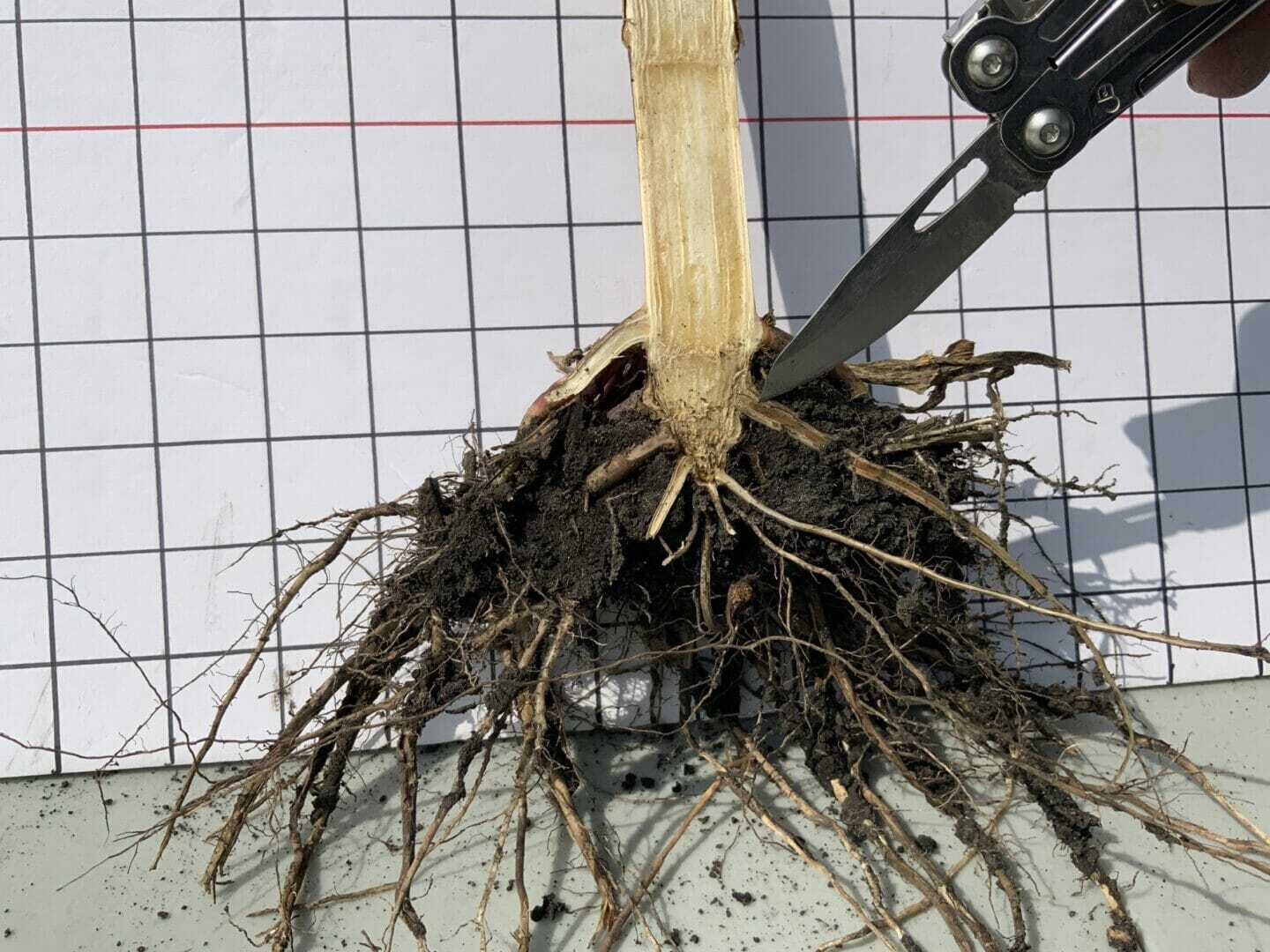
Tune in for planting depth reminders from our Corn Product Manger, Lyle Marcus! Lyle discusses three different corn planting depths: 1.5 inches, 2.5 inches and 3 inches. Watch the video and learn why planting depth matters.
-
Latham Hi‑Tech Seeds
Using XtendFlex® Soybeans in Your Weed Management Program

XtendFlex soybeans, which were approved for global sale in September 2020, will be an important tool to manage resistant weeds. The combination of tolerance to dicamba (XtendiMax®, Engenia® and Tavium®), glyphosate (Roundup®) and glufosinate (Liberty®) herbicides offers a unique triple option of choices to control a wide range of grasses and broadleaf weeds in soybean fields.
Farmers who have used Roundup Ready 2 Xtend® soybeans are generally happy with their yields but desire better weed control options. Most farmers with whom I’ve visited believe they must wait as long as possible to apply the post-emergence dicamba products with the Xtend system. This application was later than ideal, resulting in weed escapes and even off-target movement of the dicamba herbicide to neighboring soybean fields that weren’t tolerant to that herbicide.
Using the XtendFlex system will allow farmers to apply dicamba herbicide earlier. They can spray either pre-emergence or early post-emergence when weeds are at labeled heights and are most sensitive to the herbicide. This should also greatly reduce the likelihood of off-target movement of dicamba to nearby sensitive crops.
Another benefit of the XtendFlex system is that farmers can apply Liberty herbicides up to the R2 stage of growth if there are any weed escapes. It is still highly recommended that weed management programs start with a pre-plant or early pre-emergence residual herbicide like Warrant®, Authority® or Sonic®. Regardless of which herbicide you use, please read and follow all label recommendations.
At press time, Latham Hi‑Tech Seeds will have seven XtendFlex soybeans available for spring 2021 planting:
- L 0728 XF – This 0.7 maturity soybean carries the combination 3a and 1c genes for Phytophthora and Brown Stem Rot resistance with good tolerance to Iron Chlorosis.
- L 1285 XF – This medium-tall, medium-bush type plant has the C-gene for Phytophthora. It also has above-average tolerance to White Mold, Brown Stem Rot and Iron Chlorosis. Maturity is 1.2.
- L 2283 XF – Very strong emergence, excellent tolerance to Brown Stem Rot and the C-gene for Phytophthora are a few highlights of this 2.2 maturity soybean.
- L 2385 XF – This 2.3 maturity line features the C-gene for Phytophthora with very good tolerance to Brown Stem Rot. It has above-average scores for White Mold and Iron Chlorosis.
- L 2494 XF – At a 2.4 maturity, this medium-bushy plant carries the C-gene for Phytophthora with outstanding emergence and early growth.
- L 3058 XF – Excellent tolerance to Brown Stem Rot and the 3a gene for Phytophthora are highlights of this 3.0 maturity line. Its emergence and standability are outstanding.
- L 3595 XF – This soybean features the 3a + K-gene for Phytophthora, very good tolerance to Frogeye Leaf Spot and excellent overall stress tolerance. It’s a fairly tall, medium-bush plant at a 3.5 maturity.
All of these XtendFlex releases carry strong Soybean Cyst Nematode tolerance. Contact your Latham Dealer or RSM for current availabilities.
-
Latham Hi‑Tech Seeds
Ask the Agronomist: Does Corn Seed Size Matter?
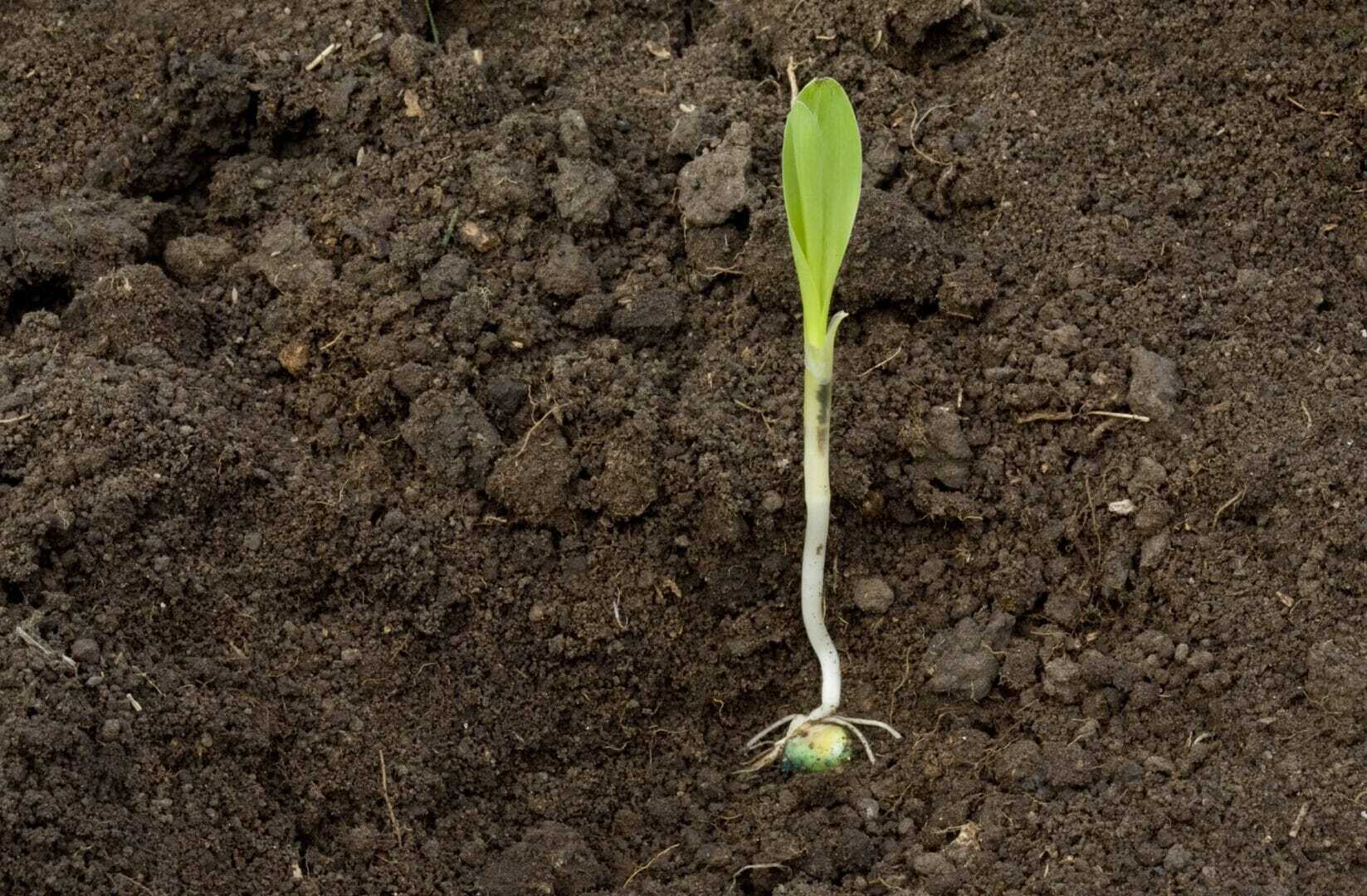
Tune in as we discuss if corn seed size matters. From germination to emergence, learn the importance of an even stand and how seed size can play a role. #LathamSeeds
:45 – Topic introduction
2:40 – Emergence & germination
5:20 – Seed placement
9:20 – Seed genetic potential
10:10 – Seed orientation
-
Latham Hi‑Tech Seeds
Ask the Agronomist: Does Soybean Seed Size Matter?

Does varying seed size can have effect germination and emergence? Tune in to find out! #AskTheAgronomist
:39 – Topic Introduction
2:05 – Local seed production
2:45 – Germination and emergence
6:15 – Planting date
10:30 – Establishing high yield
-
Latham Hi‑Tech Seeds
Think “Inside the Box” for Higher Impact
by Corey Catt, Forage Product Manager
Everyone is looking for ways to increase return on investment and to add value.
The Product and Research Team members at Latham Hi‑Tech Seeds are looking at 2020 data to evaluate silage hybrids for yield and quality. We’re comparing results from breeder and university trials with independent trials and our own research. We’re thinking about studies and research projects we want to conduct in 2021. Every livestock producer is doing the same. We’re all doing our best to generate meaningful, reliable data that can be used to make future decisions.
It seems that every business coach and motivational speaker encourages us to “think outside the box” for innovative solutions. While attending a church conference a few years ago, however, one of the speakers challenged this way of thinking. He made a comment that really resonated with me. He said, “In today’s economic climate, we should think inside the box.” Inside the box is using the resources you currently have, but modifying them to get a better result. He encouraged us to discover methods that require lower input but deliver higher impact.
After attending that conference, I started thinking about how I could get more or do better with what I already have. For example, how can I adjust my current equipment? How can I alter my existing research projects to deliver more impactful results?
It takes some planning, a lot of patience, as well as eternal optimism. In my endless pursuit to not leave any yield in the field, I have ongoing studies related to plant population and spacing. Years of data shows that we’re delivering 4 to 6 more tons per acre while improving fiber digestibility.
In 2020, we conducted another “inside the box” trial. One grower had a question about chopping height. Because I believe the most relevant data comes from your own farm, I helped him do a quick test on the spot. We raised the chopper height from 12 to 24 inches for a side-by-side test. Because most of the lignin is near the lower portion of the plant, we hoped to increase NDFD numbers with minimal sacrifice to the overall yield.
RESULT: Fiber Digestibility improved by 3.1 points. Each point equates to about one-half pound of milk per head per day, so this increase can be significant. Raising the chopping height also lowered moisture. As we removed fiber, the starch concentration of the ear increased, which dries down the corn silage. The corn became drier. It was a close comparison when comparing milk/ton, milk/acre, and DM tons/acre. However, there were great gains made in fiber digestibility.

The beginning of a new year is a time to set new goals or to try new things. It seems like a good time to think about how you can think “inside the box” during the 2021 growing season and potentially create higher impact without increasing your inputs.
-
Latham Hi‑Tech Seeds
Ask the Agronomist: Dicamba Label Updates
 How will the updated XtendiMax label affect your management practices for 2021? Tune in to learn more. #AskTheAgronomist:45 — Topic introduction2:10 – Tank mix updates5:15 – Field buffer updates6:50 – Weed management for buffered areas8:25 – Application rates10:30 – Hooded sprayer opportunity
 -
Latham Hi‑Tech Seeds
Research Plots are Key to Building Latham’s Lineup
 by Lyle Marcus, Corn Product Manager
Each December and January Latham’s Corn Product Team reviews all the yield data from the current year plots and from previous years for products that are currently in our lineup, as well as for experimental products that we are considering adding to our lineup.
We fine-tune positioning information for each product and then incorporate that into our company’s product guide and tech sheets. In addition to yield results, we review field notes about product characteristics that we took throughout the growing season.
Our RSMs provide valuable insight that comes from their experiences working directly with you, our customers. We also ask the Latham Sales Team to submit a “Needs Assessment,” so we can match our product offering to customers’ needs. Feedback from Latham® dealers also provides valuable insight.
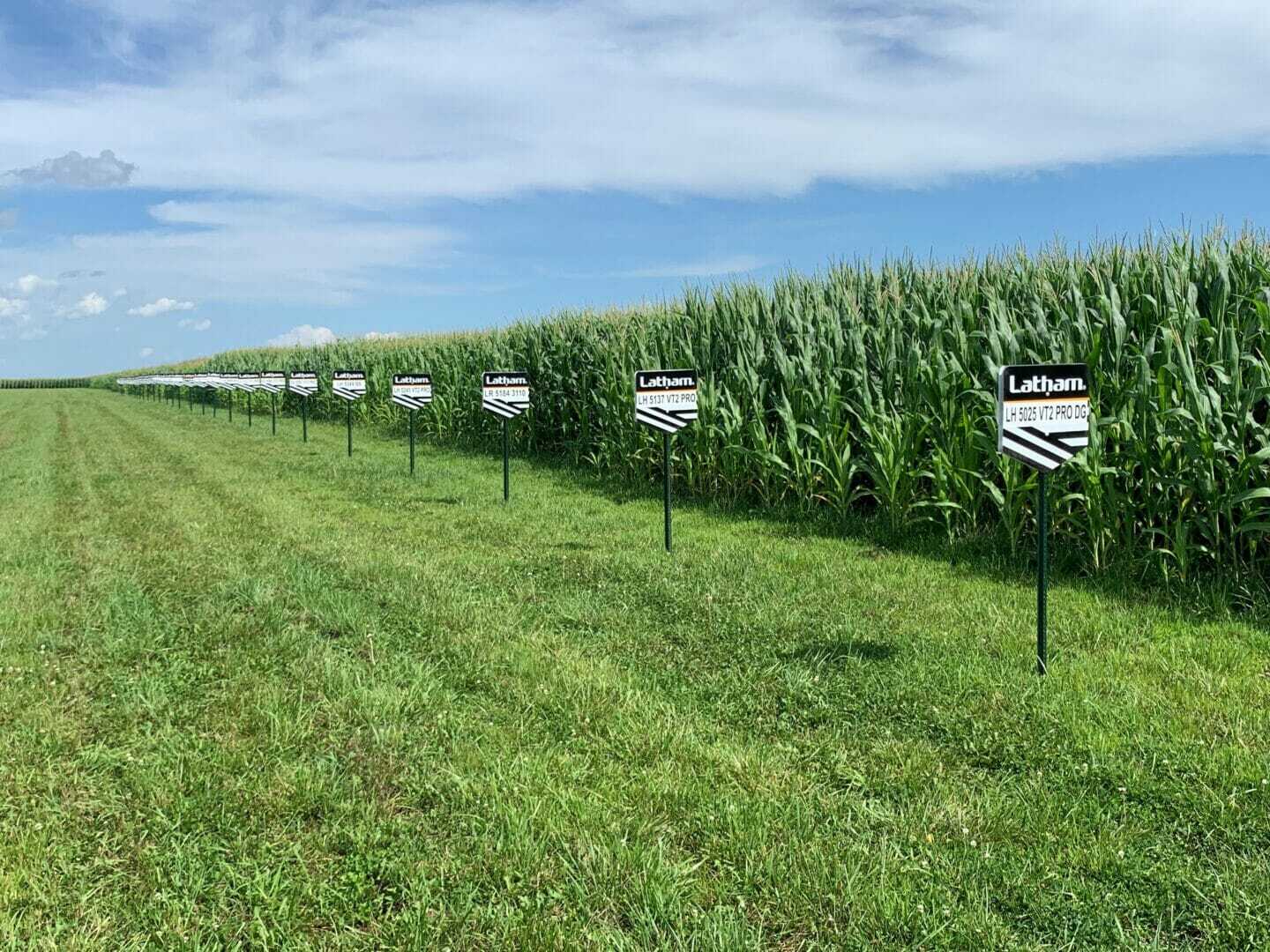
In addition to RSM and dealer input, Latham’s MiniStrip™ and SuperStrip™ plots help identify hybrids that fit identified needs. Plots planted across our marketing footprint allow us to look for hybrids that can outperform our key hybrids, so our customers can have confidence that we are continually advancing our corn lineup.
SuperStrip plots test the same group of corn hybrids on several farms during the same year. Our MiniStrip plot program allows us to contract with independent third parties to test both existing products, potential new products and experimental products in multiple locations across our footprint. Through our plot programs, we collect data on how hybrids perform by soil type and under various environmental conditions. Hybrids also are evaluated throughout the growing season for their overall characteristics and then taken to yield at harvest as a final comparison.
Research data provides us with building blocks for our crop plan. Keep in mind, what we plant in 2021 becomes the seed we will offer for farmers to plant in 2022.
Winter is really an exciting and busy time of the year for the product team!
-
Latham Hi‑Tech Seeds
Watch for Soybean Gall Midge to Spread in 2021

 by Mark Grundmeier, Soybean Product Manager
Recently, Iowa State University Extension Entomologist Dr. Erin Hodgson delivered a presentation about the spread in 2020 of Soybean Gall Midge (SGM) to 19 more counties across five Midwestern states.
To recap, SGM was identified in 2011 in soybean fields in eastern Nebraska. Then in 2015 and 2016, it was discovered in South Dakota and Iowa, respectively. Widespread damage from SGM wasn’t noted until 2018, and also that year SGM was found in Minnesota. In 2019, SGM was found in Missouri. The scientific name of Soybean Gall Midge is Resseliella maxima.
Scouting for this pest can be very difficult as it is only about 1/10 of an inch long. Focus on the edges of soybean fields, beginning in those areas where you may have seen SGM damage the previous year. Look in your earliest planted soybean fields that are at the V3 stage or later for wilted plants that at first glance look like a disease problem. Then carefully check the base of the plant, giving a slight push to the plant base to see if it will snap off. If it does, split the base of the plant with a knife and look for the orange or white larvae. If you find Soybean Gall Midge, please report this to your local Extension Agronomist. Extension personnel are very interested in tracking the spread of this significant new pest.
Because farmers in Nebraska, South Dakota, Iowa, Missouri and Minnesota have been sharing their findings of SGM, Dr. Hodgson said she and her colleagues are making observations on the insect’s life cycle. Eggs are laid in soybean fields at from 2 to 4 inches deep. These eggs overwinter and emerge as adults the following year, flying into nearby soybean fields that are at that V3 stage or later where they will mate and lay eggs in soybean plants that have a wound or opening. These eggs hatch inside the plant with a total of three instars that will develop and feed on the inside of the plant. The third instar will be the largest and will usually be orange in color. These will eventually drop off the plant and burrow into the soil to later hatch and produce adults. This entire life cycle can take just 28 to 32 days.
Managing Soybean Gall Midge has proven to be very difficult as the larva are well protected by the plant and the presence of adults is extremely widespread through out the growing season. One researcher in Nebraska noted that adults could be found anytime between six and eight weeks in fields. While insecticides will easily control SGM adults, the timing of application over that period would be costly and tedious.
If you farm in the Missouri River area, please watch closely for Soybean Gall Midge and report your findings to your local Extension personnel. I would also appreciate a “heads up,” so I can make some observations of my own.
-
Latham Hi‑Tech Seeds
Ask the Agronomist: How to Identify and Manage Goss’s Wilt
 Tune in for discussion on identifying and managing Goss’s Wilt. Learn about how this bacterial disease can grow and affect nearly up to 50% of your overall corn yield. #AskTheAgronomist1:15 – How Goss’s Wilt affects a corn plant2:38 – How to identify Goss’s Wilt5:00 – Yield impact7:00 – How to manage Goss’s Wilt
 -
Latham Hi‑Tech Seeds
Warm, Dry Winter Could Cause More Insect Pressure
 by Phil Long, Precision Agronomy Advisor
Many farmers are wondering about spring 2021 after the dry year we had in 2020 and lack of moisture so far this winter across Latham Country. Fall 2020 brought little relief in terms of additional moisture and this winter has been mild in terms of snowfall. What repercussions will we see as we head into this spring? An increase in insect pressure is one thing we will need to keep an eye out for going into spring, especially if we don’t see low enough temperatures to help winter mortality rates in those that overwinter.
Let’s begin by dividing insects into two groups:
- Survivors, or insects whose life cycle is directly affected by the weather patterns.
- Opportunists, or insects that can take advantage of warmer, drier weather pattern like we are experiencing.
Group 1 – Survivors
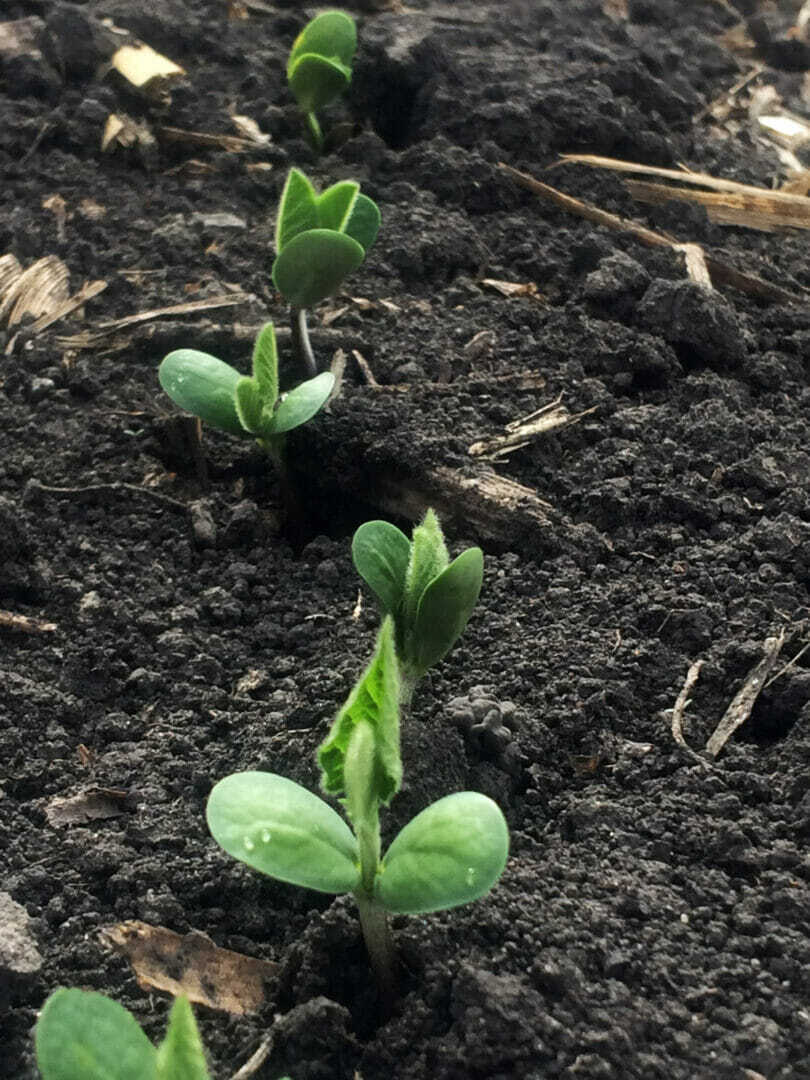
Corn Flea Beetles belong in the first group because the warmer-than-normal weather might allow for more of these pests to survive. They typically overwinter in our area, and their survival rate depends on the temperatures in December, January and February. When the mean temperatures for these three months add up to over 90 degrees Fahrenheit, then there will be a greater number of survivors that will be ready to attack corn fields in the spring.Likewise, overwintering Bean Leaf Beetles can become an economic pest in soybeans when there is a larger-than-normal percentage of survivors. Both types of beetles will feed directly on young plants just as soon as they emerge. And adding to the degree of injury, both beetles have been known to infest the young seedlings with diseases while feeding on them. Corn Flea Beetles have been known to vector Stewart’s Wilt, and Bean Leaf Beetles have been known to vector Bean Pod Mottle Virus.
Seed treatments that include an insecticide like Cruiser®, Poncho® or Gaucho® can help prevent these insects from attacking young plants and seeds. We know seed treatments prove to be a good investment during a cold, wet spring. Just because it looks to be a dry spring, don’t be fooled into thinking seed treatments won’t pay for themselves this season!
Group 2 – Opportunists
The second group of insects includes all species that can or will eventually feed on the crop. If we have a dry spring and early summer, then crops may suffer moisture stress. ANY kind of stress can be greatly enhanced by insects (or any diseases for that matter) that feed upon those plants, including, but not limited to: Corn rootworms, corn aphids, stalk borers, European corn borer, cutworms and armyworm for corn. In soybeans, there would be the 1st and 2nd generation Bean Leaf Beetles, soybean aphids, two-spotted spider mites, Japanese Beetles and Soybean Cyst Nematode (even though they are not an insect).Most of the pests mentioned above can be controlled by applications of insecticides if done at the proper time; the exceptions to this are rootworms (because they are below-ground) and SCN (also below-ground and not an insect.)
The good news is that although it takes months for evaporation and evapotranspiration to deplete our heavy prairie soils, it only takes a few weeks to replenish it. With adequate snowfall and early spring rains we should see the rest of those dry regions be back at field capacity and ready for 2021 planting. As we approach the planting season keep in mind which of your fields may be at a higher risk to insect pressure due to minimum tillage, cover crops, or past management practices, and plan ahead with seed treatments, insecticide options, or simply plan to walk your fields a little more to stay on top of insects or other pests.