-
Latham Hi‑Tech Seeds
Ask the Agronomist: How to Identify and Manage Goss’s Wilt
Tune in for discussion on identifying and managing Goss’s Wilt. Learn about how this bacterial disease can grow and affect nearly up to 50% of your overall corn yield. #AskTheAgronomist1:15 – How Goss’s Wilt affects a corn plant2:38 – How to identify Goss’s Wilt5:00 – Yield impact7:00 – How to manage Goss’s Wilt -
Latham Hi‑Tech Seeds
Warm, Dry Winter Could Cause More Insect Pressure
by Phil Long, Precision Agronomy AdvisorMany farmers are wondering about spring 2021 after the dry year we had in 2020 and lack of moisture so far this winter across Latham Country. Fall 2020 brought little relief in terms of additional moisture and this winter has been mild in terms of snowfall. What repercussions will we see as we head into this spring? An increase in insect pressure is one thing we will need to keep an eye out for going into spring, especially if we don’t see low enough temperatures to help winter mortality rates in those that overwinter.
Let’s begin by dividing insects into two groups:
- Survivors, or insects whose life cycle is directly affected by the weather patterns.
- Opportunists, or insects that can take advantage of warmer, drier weather pattern like we are experiencing.
Group 1 – Survivors
Corn Flea Beetles belong in the first group because the warmer-than-normal weather might allow for more of these pests to survive. They typically overwinter in our area, and their survival rate depends on the temperatures in December, January and February. When the mean temperatures for these three months add up to over 90 degrees Fahrenheit, then there will be a greater number of survivors that will be ready to attack corn fields in the spring.Likewise, overwintering Bean Leaf Beetles can become an economic pest in soybeans when there is a larger-than-normal percentage of survivors. Both types of beetles will feed directly on young plants just as soon as they emerge. And adding to the degree of injury, both beetles have been known to infest the young seedlings with diseases while feeding on them. Corn Flea Beetles have been known to vector Stewart’s Wilt, and Bean Leaf Beetles have been known to vector Bean Pod Mottle Virus.
Seed treatments that include an insecticide like Cruiser®, Poncho® or Gaucho® can help prevent these insects from attacking young plants and seeds. We know seed treatments prove to be a good investment during a cold, wet spring. Just because it looks to be a dry spring, don’t be fooled into thinking seed treatments won’t pay for themselves this season!
Group 2 – Opportunists
The second group of insects includes all species that can or will eventually feed on the crop. If we have a dry spring and early summer, then crops may suffer moisture stress. ANY kind of stress can be greatly enhanced by insects (or any diseases for that matter) that feed upon those plants, including, but not limited to: Corn rootworms, corn aphids, stalk borers, European corn borer, cutworms and armyworm for corn. In soybeans, there would be the 1st and 2nd generation Bean Leaf Beetles, soybean aphids, two-spotted spider mites, Japanese Beetles and Soybean Cyst Nematode (even though they are not an insect).Most of the pests mentioned above can be controlled by applications of insecticides if done at the proper time; the exceptions to this are rootworms (because they are below-ground) and SCN (also below-ground and not an insect.)
The good news is that although it takes months for evaporation and evapotranspiration to deplete our heavy prairie soils, it only takes a few weeks to replenish it. With adequate snowfall and early spring rains we should see the rest of those dry regions be back at field capacity and ready for 2021 planting. As we approach the planting season keep in mind which of your fields may be at a higher risk to insect pressure due to minimum tillage, cover crops, or past management practices, and plan ahead with seed treatments, insecticide options, or simply plan to walk your fields a little more to stay on top of insects or other pests.

-
Latham Hi‑Tech Seeds
4 Factors to Improve Efficiency in 2021

It was a beautiful, extended fall season, giving us ample time to finish tillage, fertilizer applications, tilling and other field work. Our machinery was strategically tucked away in the shed before the snow fell. Speaking of strategic placement…
Is your planter all the way in the back of the shed because you aren’t planning to touch it until March? Now is actually a good time to start thinking about your planter. New technology allows us to make our existing planter as good as – if not better than – the brand new planter on the lot at the implement dealership. One perk of working with us at Latham Hi‑Tech Seeds is using our Data ForwardSM services to help you make some unbiased decisions. Perhaps you weren’t happy with the way your corn was spaced in 2020 or maybe you noticed uneven emergence last spring. We can help you determine why this happened and fix these issues before going into 2021 planting season.
If you attended a plot tour last summer or listened online to our Corn Product Manager Lyle Marcus, you know he emphasized the importance of planting depth. It can be difficult to stay consistent across the field; controlling planter speed is one of the simplest ways to achieve optimum seed placement. We can review planter speed. We also can explore technology options for your planter, so you can monitor and control variabilities throughout a field.
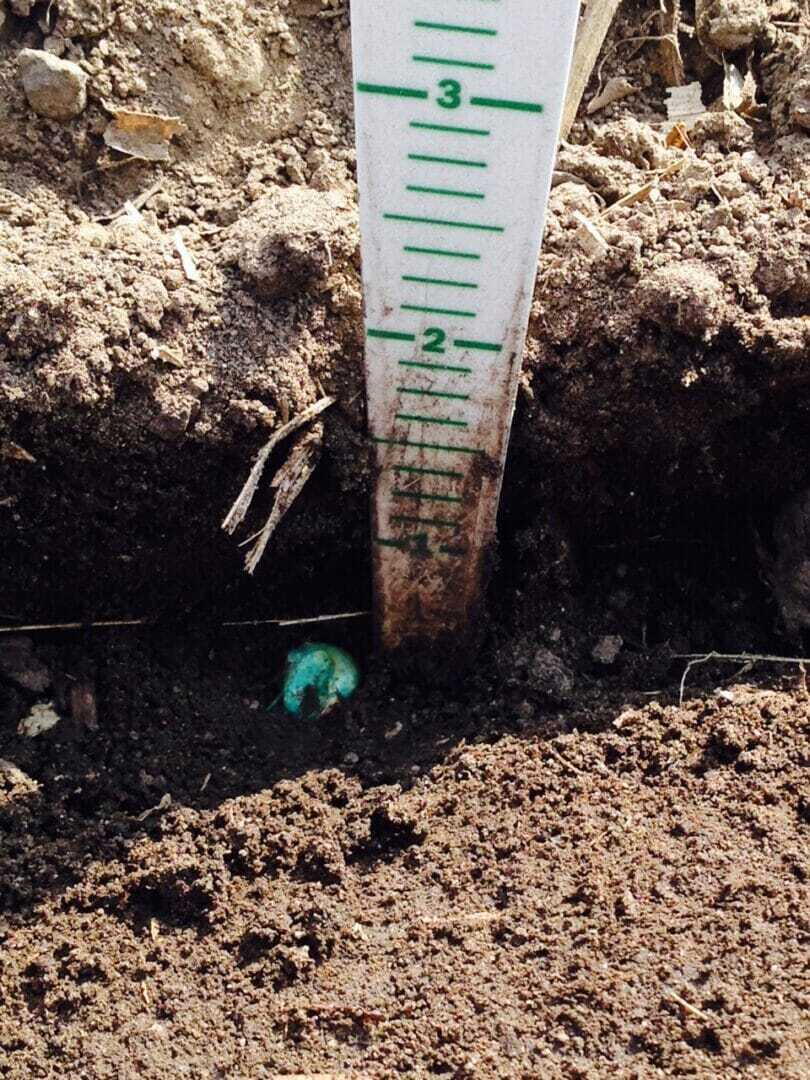
Another factor to consider is planting depth. Oftentimes, we say 2.75 inches is a safe planting depth to allow adequate moisture and growing degree units (GDUs) to attain even emergence.There is a lot of talk around two-inch planting depths. This could be optimal if there is adequate moisture. Planting at 2 inches with adequate moisture can get you better emergence due to having faster GDU adaptation. This also means that it could come out of the ground better in crusting conditions, but keep in mind that the key to shallower planting is moisture. It’s risky to rely on moisture being available at that shallower depth.
We spend a lot of time helping our Data Forward clients improve efficiency. While this can encompass many things, we focus on your planter, seed and equipment. We believe one of the most important assets to a farmer’s operation is the planter. If the planter is not equipped to place that seed where it is going to thrive, then other investments throughout the year are not going to be as valuable either.
One of our biggest challenges is helping clients achieve uniform, speedy emergence. If one plant emerges 24 to 48 hours after its neighbor, that plant will compete for the sunlight that its neighbor is already harvesting. The plant starving for sunlight will be a runt for the rest of the growing season.
Keep these four things in mind when trying to keep even heat and moisture to achieve even emergence:- Manage residue.
- Maintain planting depth.
- Achieve good seed-to-soil contact (no air pockets).
- Eliminate compaction.
If you want to improve efficiency, planter performance, and data management for 2021, it’s time to plan. Call your Latham Precision Agronomy Advisors now for unbiased recommendations to get your 2021 crop off to a better start!
-
Latham Hi‑Tech Seeds
Ask The Agronomist: Choose Planting Populations by Hybrid

Tune in for discussion on choosing planting population by hybrid. Take time this winter to make a game plan for spring! #AsktheAgronomist
Ask the Agronomist: Managing Stress & Ear Flex: https://lathamseeds.com/2020/10/ask-the-agronomist-managing-stress-ear-flex/
-
Latham Hi‑Tech Seeds
Give Alfalfa a Second Look
Alfalfa can offer one of the highest returns on a farmers’ investment, but it often gets the least amount of consideration. Growers often purchase alfalfa from the first salesperson who asks for the order, but it really pays to compare alfalfa products. You usually get what you pay for, and quality pays for itself.
Latham Hi‑Tech Seeds offers very competitive, highly productive, Olympic-style alfalfa products. Unfortunately, we tend to undersell the advantages our alfalfa line carries.
Here are three reasons why alfalfa from Latham is superior:
- Best genetics offer higher yield potential.
- Top seed quality leads to higher germination rates.
- Best seed treatment fosters emergence success.
Because most farmers only get approximately 40 chances in their careers to get a crop right, make each one count! One key to top yields is fast emergence. When you merge the best genetics with the best seed treatments, farmers can have confidence they have done all they can to manage environmental risks.
Latham’s AlfaShield seed treatment surrounds the alfalfa seed, helping it absorb soil moisture quickly to begin the germination process. AlfaShield also contains key micronutrients, as well as a growth promoter called Optimize Gold, that accelerate emergence.
New seeding mortality rates were very high, from 50 to 75% in the first year, with old seed treatments. New treatments like Stamina, however, reduce pathogen problems and manage risk. As a result, seedling mortality is lower and higher yields are possible.
Our goal is MORE LIVE PLANTS per bag, which allows you to capture more yield. Seed selection and fertility are key, so help set your crop up for success by choosing alfalfa products from Latham Seeds.
-
Latham Hi‑Tech Seeds
#AsktheAgronomist: Protect Your Investment with Seed Treatment

Join us as we discuss the importance of protecting your investment every year. How does Latham Seeds seed treatment differentiate? Tune in and find out!
-
Latham Hi‑Tech Seeds
Seed Treatment Fundamentals

Did you know up to 90% of seedling diseases are caused by 4 major fungi? These fungi kill soybean seedlings before emergence or damage the seed enough to reduce yield.
4 Major Fungi:
- Pythium
- Phytophthora
- Rhizoctonia
- Fusarium
Research shows that during the emergence stage alone 2.5 bushels of soybean yield are at risk due to seed rot and seedling blight. Latham SoyShield® brand seed treatments are best-in-class formulations designed to battle the toughest pathogens like Fusarium and Phytophthora.
Instead of viewing seed treatment as an input cost, consider it an investment – an insurance policy if you will. After all, it takes less than a bushel of soybeans to pay for the cost of treatment!
Wet, poorly drained soils favor the development of fungal pathogens that cause seedling diseases, which slow germination and plant growth. Seed treatments protect seedlings until they have a fairly well-established root system.
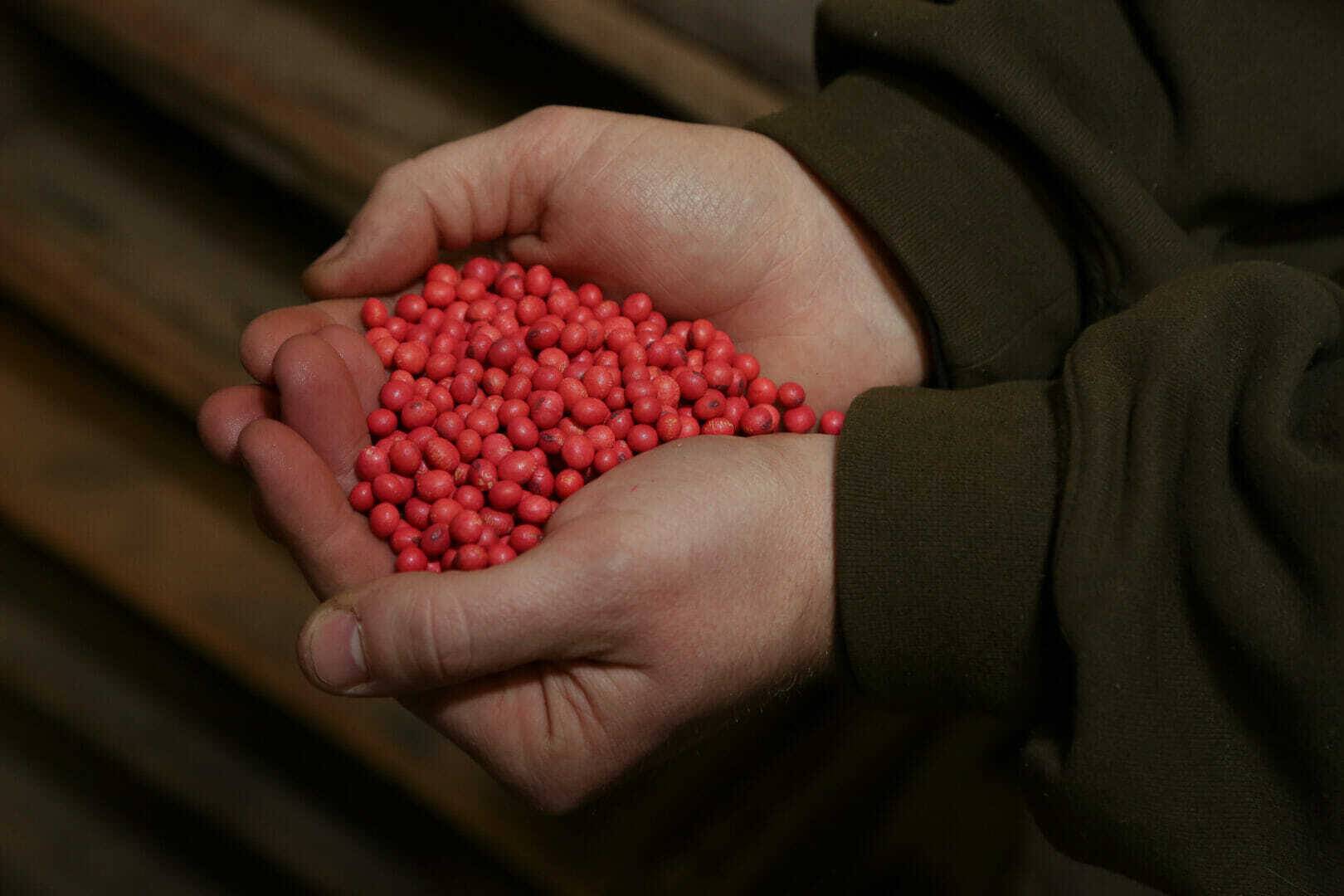
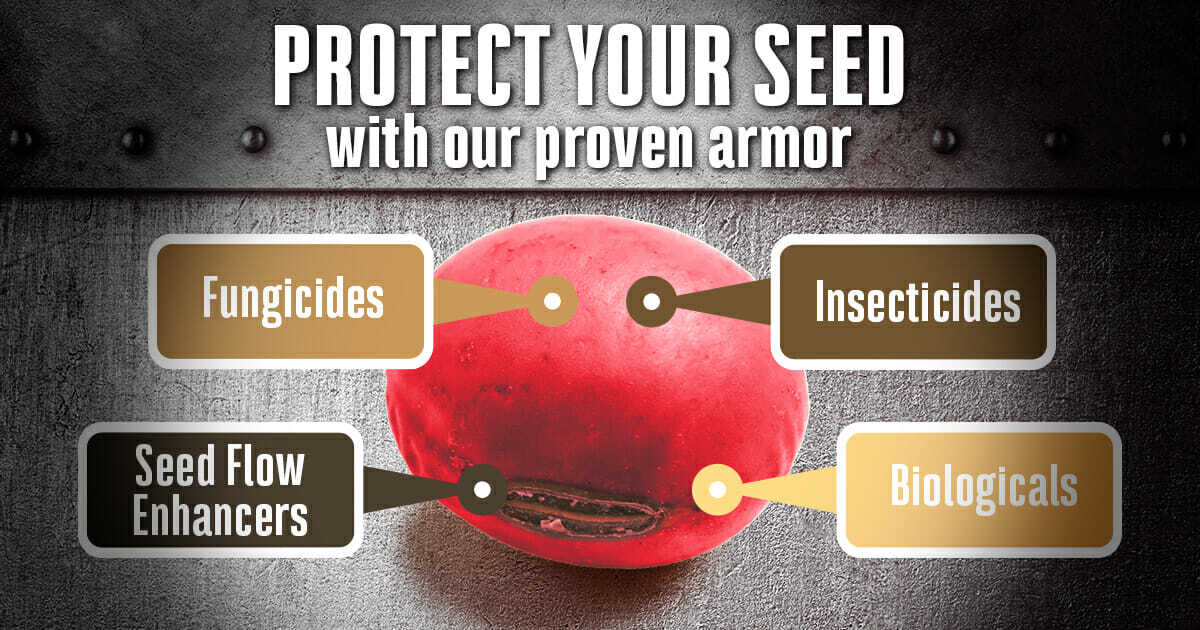
To help the seeds go through the planter better, Latham Hi‑Tech Seeds adds a proprietary blend of polymer and seed coating. Our customers say they waste less seed and see more even stands, resulting in better yield potential and ultimately an increased return on investment.
Latham Hi‑Tech Seeds’ signature SoyShieldTM, a fungicide-only package, and SoyShield PlusTM with fungicide and insecticide, protect seeds from disease and insect damage for up to 30 days. This time frame is longer than many other seed treatments and is typically an adequate window of protection.
SoyShield Plus includes an exclusive fungicide combination that provides excellent protection against seed and soil borne diseases including: Pythium, Phytophthora, Fusarium and Rhizoctonia. In addition, seed treatments can provide health benefits for more rapid and increased germination under certain conditions.
Some seed treatments also help protect against nematodes, which are becoming more prevalent. Many fully-loaded treatments may have innoculants, micronutrients or plant food. Interested in learning more? Talk to your local Latham® representative or leave your comments below. You’re also welcome to call us at 1-877-GO-LATHAM (1-877-465-2842).
-
Latham Hi‑Tech Seeds
Ask the Agronomist: How to Use Data Forward to Improve Seed Placement

Join us as we walk through the importance of seed placement and how our Data Forward program and experts can help guide these decisions. #LathamSeeds
-
Latham Hi‑Tech Seeds
How to Use Multi-Year Yield Data Effectively

Single-year data from corn test plots or even whole-field results can cause a farmer to question what hybrids to plant next spring. Because yields were especially variable across the Upper Midwest in 2020, I want to remind you how important it is to look at more than one year’s worth and more than one location’s worth of data.
Here are two ways you can use multi-year yield data effectively:
- Select individual hybrids that are consistently top performers.
- Look for groups of hybrids that, when planted together, provide top yield averages over time. In my experience, planting top-performing packages provides farmers with more uniform success. Planting packages of hybrids with top performance lessens variability.
Our 2020 plot data from F.I.R.S.T. Trials, on-farm SuperStrips with cooperating Latham® dealers, as well as our replicated MiniStrips proves again that Latham brand hybrids are top-yielding hybrids. Our wide area of testing shows very strong performance of Latham hybrids across various environments, soil types and management practices.
As I was preparing multi-year data to share during last month’s Post-Harvest Huddle meetings with Latham dealers, these top performers captured my attention. Be sure to take a closer look at these Latham brand hybrids as you finalize your 2021 crop plans:
- LH 3937 VT2 PRO RIB: This 89-day hybrid has quickly become a favorite of our early-season customers in North Dakota, Minnesota and Wisconsin. It is the anchor in packages in the 85- to 92-day group. This hybrid earned four Top 5 finishes in 2020 F.I.R.S.T. Trials and won in the 2019 F.I.R.S.T. Trials. It also earned 1st place in 2020 Latham SuperStrips plus finished 1st and 2nd in 2019 SuperStrips. Our customers have made consistent yields over time by packaging this hybrid with LH 3695 VT2 PRO RIB, LH 4097 VT2 PRO RIB and LH 4242 VT2 PRO RIB.
- LH 4937 VT2 PRO RIB: This top yielding, 99-day hybrid performs across a wide area for adaptability. We have seen great yields across Latham Country. Its accolades include 1st place and Top 5 finishes in the 2018, 2019 and 2020 F.I.R.S.T. Trials. It also topped SuperStrip plots from 2018 to 2020. Package this hybrid with LH 4454 VT2 PRO RIB, LH 4657 VT2 PRO RIB and LH 5047 VT2 PRO RIB for an outstanding group of hybrids to fit 94- to 100-day maturity.
- LH 5245 VT2 PRO RIB: Latham customers are raving about the yields they saw this year from LH 5245 VT2 PRO RIB. This hybrid’s performance during the past three seasons has made it one of the top 102-day performers across Latham Country against competitors. Package this hybrid with LH 4937 VT2 PRO RIB and LH 5047 VT2 PRO RIB for a 99- to 102-day package. In fuller season areas, pair it with LH 5377 VT2 PRO RIB and LH 5487 VT2 PRO RIB.
- LH 5725 VT2 PRO RIB: This 107-day product has the ability to move north as a full-season product. It performed well across the Southern Minnesota F.I.R.S.T. Trials locations. It has several multi-year F.I.R.S.T. Trial wins and top finishes from Nebraska, Iowa and Wisconsin. Plant this hybrid with LH 5245 VT2 PRO RIB, LH 5487 VT2 PRO RIB, LH 5635 VT2 PRO RIB, LH 5847 VT2 PRO RIB and LH 6285 VT2 PRO RIB for outstanding yield averages in different maturities.
-
Latham Hi‑Tech Seeds
#AsktheAgronomist: Weed Control post 2020
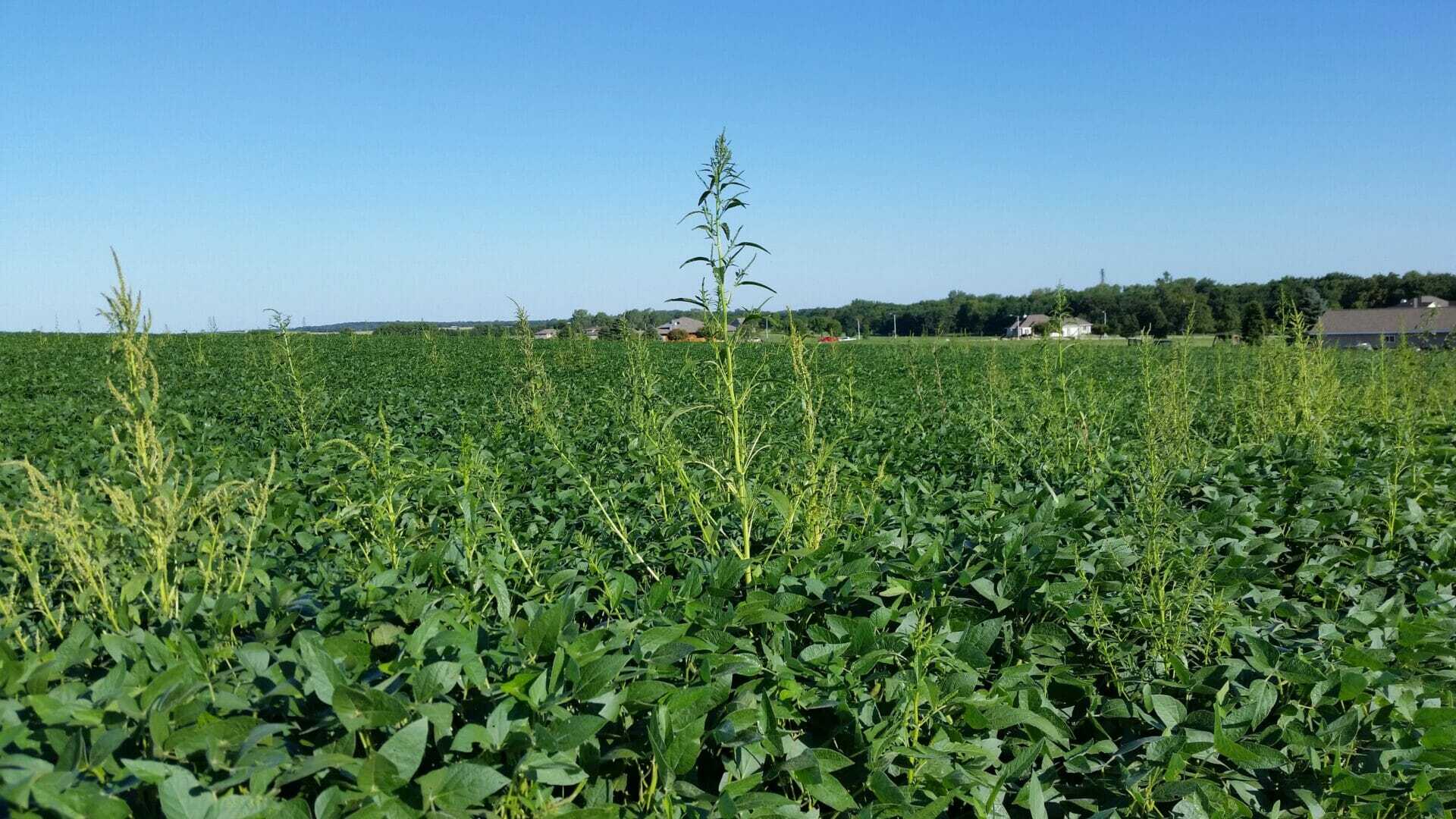
Phil Long discusses the implications of heavy weed pressure from 2020. Learn proper weed control practices regardless of seed technology. #AsktheAgronomist