Latham Hi-Tech Seeds

(641) 692-3258

  • Home
  • Products
    • Corn
    • Soybeans
    • Alfalfa
    • Corn Silage
    • Seed Guide
  • Performance
  • Find a Rep
  • Media
    • Blog
    • News
    • Videos
    • Podcasts
    • TECHTalk
  • About Us
    • Company History
    • Our Mission
    • Careers
    • Become a Rep
    • Sowing Seeds of Hope
  • Contact Us
  • Latham Hi‑Tech Seeds

    Standard Planting Guidelines Might Not Apply in 2013

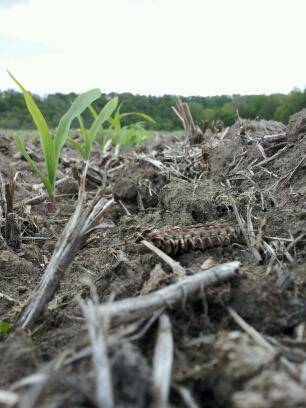
    The main objective at planting time is to provide seed with an environment that promotes rapid germination and vigorous early growth.  Corn needs water, aeration and temperature – all in the right portions – as well as seed-to-soil contact to germinate and emerge.  Obviously, soil temperature and soil moisture are key to germination.  If the soil is too dry or too cold, the seed will just lay in the ground without germinating.

    When soil moisture is at field capacity, the optimum planting depth is 2” deep for corn and 1.5” deep for soybeans.  We know current field conditions in some areas across Latham Country aren’t “optimal.”  In dry conditions, seeding depth can differ.  If we receive the rain that’s forecast in the next 10 days, however, soil moisture could be more than adequate at planting time.

    Three factors affect corn’s response to seeding depth: (1) soil texture; (2) tillage system; and (3) residue cover.  Knowing the soil texture will help dictate how deep seeds need to be placed for adequate available moisture for successful germination.  No-till fields should retain adequate soil moisture at a reasonable planting depth in most years.  Minimum-till also helps conserve moisture.

    Planting too deep just may have the opposite effect of what you’d like.  There are two major problems that can result from planting too deep: (1) delayed emergence and (2) uneven stands.  Stands may become uneven due to crusting, too.  If a hard, pounding rain falls shortly after planting, seedlings can have a very hard time breaking through crusted soils.

    Also keep in mind that planting too shallow can also provide negative results.  Corn seed planted too shallow most often results in poor root development and may affect the crop all the way to harvest.  Seeds that are planted too shallow have a tendency to develop “rootless corn syndrome,” causing plants to fall over because they lack nodal root development.

    There are “best management practices” farmers can implement this spring.  Keep the conservation of moisture in mind, and make the most of the good field conditions.  Fewer passes across the field with disks or field cultivators will help conserve moisture.  Also bear in mind how the amount of residue may affect planting conditions. Take notice of debris in the field.  Too many stalks or root balls can inhibit seed emergence.

    Related Posts:

    • Corn Seed Depth: Back to the Basics
    • Soil and Management Factors Affect Planting Depth
    • Adjusting Down Pressure
    • Soil Capillary Action
    • 4-Inch Soil Temperature Map
    • Till Less for More Water

    Webspec Admin

    April 10, 2013
    General, Season, Spring
  • Latham Hi‑Tech Seeds

    Bring On Those April Showers!

    Waf April Showers1

    The arrival of spring weather is something everyone in the Midwest awaits, especially farmers.  Now that we’ve turned our calendars to April, it seems that folks are more eager than ever for warmer temperatures – and spring rainfall.

    Farmers with whom I’ve visited recently are anxious for the spring planting season to begin, but they’re also being realistic.  It’s going to be a few weeks before field work begins.  We really need those soil temperatures to warm up before any seed goes into the ground.  It would also be great if we’d receive some rainfall.  The snowmelt will help provide moisture at planting time, but we still have a moisture deficit.

    In a recent blog post, April Hemmes said her farm in southern Franklin County received a total of 5 inches of rain between May and October 2012.  Normal annual rainfall is 23 inches, which means fields here in North Central Iowa are suffering from a moisture shortfall.  The U.S. Drought Monitor shows we’re not alone.  Conditions through many areas across the Upper Midwest range from severe to extreme drought.  Many western areas are suffering from an exceptional drought.  Bring on those April showers!

    A moist, warm seed bed really help seeds germinate since the soil serves as a blanket for the seeds.  We need soil temperatures to warm up by about 20 degrees or so.  Current soil temperatures are averaging in the mid-30s, and we need those temps to be 50 to 55 degrees at corn planting time.

    Even when the soil temperatures warm, farmers must be certain that warmer air temperatures are in the forecast.  Warmer air temperatures are especially critical to protect the seedlings.  If the air temperature hits 20 degrees Fahrenheit or less after germination, the young seedling can be killed with the growing point of the plant right at emergence.

    The good news is that time is on our side.  Research by Iowa State University shows the optimal planting date for corn is between April 12 and May 8, depending on the region where you farm.  A lot of seed can go in the ground just in two or three good days, so there’s no need for farmers to sacrifice yield by rushing Mother Nature.

    There are 3 important factors farmers should take into consideration before planting this spring:

    1. Avoid soil compaction.  Avoid planting in cold, wet soils.
    2. Monitor soil temperature.  It’s best to plant when soil temperatures are 50 degrees and those temperatures can be sustained.
    3. Be aware of crop insurance deadlines.  Check your policy and talk to your crop insurance agent to make sure you understand the possible consequences before planting that early.  Replants may not be covered.  Plus, the seed in farmers’ sheds now is most likely their first choice. If farmers have to replant, they may be planting their third or fourth choice for seed corn as supplies are tight across the industry.

    Webspec Admin

    April 3, 2013
    General, Season, Spring
  • Latham Hi‑Tech Seeds

    How Soon Can We Plant?

    Tire swing

    Literally, at this time last year, there were reports that some Iowa farmers had already planted corn.  I was busy writing a blog post answering the question, “How Early Is Too Early to Plant?”

    With late-season snowfall accumulating more than it did in December, many farmers this spring are wondering how long it will be before spring fieldwork can begin.

    Midwest weather is unpredictable, especially during the spring months.  Although we’re experiencing temperatures in the 40s this week, there’s no guarantee this warm up will continue.  An April Fool’s Day Snowstorm is no joke!  And let’s not forget what happened in April 19, 2011… rain, snow, and hail fell upon areas of Iowa, Minnesota and Wisconsin.

    We may be tired of snow, but at least we’re receiving some much needed precipitation that will provide topsoil moisture once the planters start rolling.  “We’re starting the 2013 growing season with a moisture shortfall,” says April Hemmes, who farms south of Hampton in Franklin County, Iowa.  “My farm received a total of 5 inches of rain between May and October 2012; normal annual rainfall is 23 inches. As much as I dislike late season snowfall, I’m thankful for it this year.”

    Midwest farmers are eagerly awaiting the start of the spring corn planting season, but there’s no need to fret yet about getting in “late.”  Time is on our side right now.  Years of field research by Iowa State University shows the highest yield potential is with corn planting dates between April 12 and May 8.

    For those wanting to head into the fields first this spring, consider planting some Latham® Hi‑Tech Alfalfa!  Our 2013 alfalfa lineup includes many exciting new products for disease resistance, traffic tolerance, and regrowth patterns.

    Team Latham

    March 27, 2013
    General, Season, Spring
  • Latham Hi‑Tech Seeds

    Seed Selection is Even More Critical in Dry Years

    The Iowa Legislature convened last week, and along with that, came talk that Iowa’s drought law may get a closer look this year.  “Water restrictions” isn’t a typical topic of conversation in the north, but it looks as though it might become commonplace across the Upper Midwest in 2013 if weather patterns don’t change.

    It’s safe to say we’ll be planting the 2013 crop in dry soils.  The 2012 drought caused most soils here to be depleted of moisture in the upper 7 to 8 feet, so it will take at least two growing seasons to recharge those soils.

    Seed selection will certainly be critical for 2013 due to the extremely dry conditions.  That’s why we’re recommending that most of our corn customers plant hybrids at least double- or triple-stack hybrids this spring.

    A hybrid’s genetics will be the biggest factor in whether a hybrid can handle drought.  Plot data shows that multiple-trait stacks, like Latham® hybrids with the Genuity® SmartStax® technology, can really help protect yield.  REMEMBER:  Traits protect yield.  Genetics make yield.  Seed products carrying the Latham brand name combine the industry’s best genetics with the latest traits and technologies.

    While corn genetics have come a long ways over the past decade and are much better at handling drought stress than ever, soybeans historically perform even better in dry weather.  Farmers will need to consider whether they can manage corn-on-corn in another extremely dry year or whether the economics favor soybeans.  Other factors to consider when finalizing your 2013 crop plans are outlined in this recent article posted on agriculture.com: Six Take-Home Lessons from the 2012 Drought.

    Regardless of whether you choose to plant corn, soybeans or alfalfa, Latham has the products you need! Our seed portfolio contains products that were bred specifically to thrive in specific areas of the Upper Midwest. Call your local Latham rep to learn more about the products best suited for your growing conditions, or feel free to call our office directly at 1.877.GO.LATHAM (1.877.465.2842).

    John Latham, President

    January 23, 2013
    Agronomics, Drought, General, Precision Ag, Season, Spring, Weather
  • Latham Hi‑Tech Seeds

    Time to Begin Early Crop Scouting in 2011

    Many Midwest farmers will wrap up the 2011 planting season this week, but there won’t be much rest for the weary.  As soon as seed is in the ground, it’s a good idea to start scouting fields.

    Post-planting is an ideal time to begin scouting one’s crops.  Many soilborne pathogens strike as soon as the seed begins to take on water; others strike young seedlings.  Because seeds can germinate quickly and emerge in 3 – 5 days, it’s not too soon to start walking your fields.

    Check plant populations, evaluate stands and be on the lookout for early summer diseases.  Is there a germination problem?  Do you see effects of chilling or crusting?

    Assessing your situation ASAP will allow you to formulate a plan while there’s still plenty of time to implement it.  You could replant in parts or in all of a field now, so you can attain the yields and returns you want this fall.  Information on corn replanting decisions is available from www.agronext.iastate.edu/corn. Click on the “Planting” topic, then click on the “Replant Decision Aid Calculator” tab and use that tool and related information to help make a replant decision. For a resource on soybean replanting decisions, go to www.extension.iastate.edu/publications/pm1851.pdf.

    Another benefit of evaluating current stands is to help you determine what adjustments should be made before planting next year’s crop:  Do you need to adjust your planter settings or your planting speed?

    Once you get past the mechanical issues, look at the disease pressure.  If soybeans are damping off, perhaps next season you should opt for seed-applied fungicides? Do you need to pay closer attention to a particular soybean brand or corn hybrid’s disease rating?  Seed selection is one of the most important decisions affecting yield. Click here for tips on selecting  soybean brands and selecting corn hybrids.

    Team Latham

    May 13, 2012
    General, Season, Spring
  • Latham Hi‑Tech Seeds

    Replant or Not?

    While many Midwest farmers have yet to get their corn in the ground, others are contemplating whether or not to till up their poor crop and try it again.  Poor stands have resulted in some fields where cool temperatures and wet soils put significant stress on seed germination and corn seedlings.

    There are three important steps farmers should take when deciding whether to replant:

    1. Evaluate the existing stand for population and uniformity.
    2. Compare yield potential of the existing stand with yield potential of the replant.
    3. If the decision is made to replant, consider various management practices to optimize yield by protecting your crop.

    When evaluating corn stands, only count plants that have a good chance of survival.  Observe the uniformity of the stand across the field to determine whether the entire field – or just portions of it – must be replanted.  Click here to watch Steve Bailie, Latham’s Regional Sales Manager in Wisconsin, explain how to do a stand count.  ISU Ag Economist William Edwards also has a developed a replant calculator, based on price expectations and the extra costs associated with replanting that might be helpful.

    A chart in a recent issue of Integrated Crop Management will also give you an idea of potential losses from later planting dates.  As Roger Elmore writes, however, this may be the kind of year where late planting has little or no penalty.

    Another factor to consider on replanted acres is pest management.  Most soil insecticides cannot be legally applied twice in the same growing season in the same field.  With this in mind, replanting with Latham® brand corn containing the Genuity® family of traits provides farmers with more options to combat insects.  Contact your local Latham representative or call 1-877-GO-LATHAM (1-877-465-2842) for assistance.

    Agronomic Spotlight: Assess Corn & Soybean Stands

    Webspec Admin

    May 10, 2012
    General, Season, Spring
  • Latham Hi‑Tech Seeds

    SOYBEAN PLANTING CONDITIONS ARE MARGINAL, AT BEST!

    Seed Product Manager

    It was another wet, rainy and cold weekend in North Central Iowa, and it looks to be another wet week ahead.  There is about a 50% chance of rain every day in the 5-day forecast, so chances are we won’t get back in the field any time soon.  The good news, however, is that this week’s rains looks like it will be warmer than the icy cold rains we received last week.

    Time is also on our side.  There’s no need to worry about the dates on the calendar and feel pressed for time to achieve those optimal soybean yields.  For most of Iowa, I’ve always considered the optimal soybean planting dates as the last week of April to mid-May.  That means farmers normally will not lose yield if they wait until May 15th to plant soybeans.  Plus, that extra time will give soil temperatures a chance to warm up again.

    Cooler soils tend to bring out the worst in Sudden Death Syndrome (SDS) as early-planted soybean fields are historically more prone to it.  There is also some evidence that early planted soybeans are also more prone to iron deficiency chlorosis (IDC).  To lessen the risk of IDC symptoms, delay planting soybeans by a week to 10 days on soils with a high PH or with high levels of salts.  Years of experience has proven the later you plant soybeans on some of these tougher soils, the better root system these plants will develop.  Better root systems will help ward off some of these diseases.

    Bottom line:  you will likely be better off waiting until conditions improve before planting.  Continue to work your crop plan; be vigilant about planting each hybrid and variety in the field where it was intended.  (Yes, there is still time to plant corn without worry about switching maturities or switching from corn to soybeans.)

    There’s a chance that many farmers will go straight from planting corn to soybeans this year.  But given the field conditions, no one should even consider planting soybeans now.  Current soil and weather conditions are marginal for planting soybean – at best!

    Webspec Admin

    April 30, 2012
    General, Season, Spring
  • Latham Hi‑Tech Seeds

    Watch Your Speed!

    We’re reminded to watch our speed when we’re driving down the highway and see a speed limit sign posted.  We know there are “electronic eyes” watching up in major metro areas.  (Some us unfortunately have first-hand experience with receiving a ticket by mail.)  Without question, excessive speed can be costly.

    But how often do you think about the cost of excessive speed while you’re pulling a planter and making your way across farm fields?  There is definitely a price to be paid for speeding, although you may not notice the effects until emergence or even harvest.

    Proper planting speed can have one of the biggest impacts on performance. There are 1,000 variables that plants are subject to each growing season, so why not take control of one of these variables – speed?  Below is a chart that shows the differences of seed placement when traveling 5.5 mph and 6.5 mph.

    John Latham, President

    April 12, 2012
    General, Season, Spring
  • Latham Hi‑Tech Seeds

    Planting Season 2012 Gets Underway

    Throughout Latham Country, most early spring field work has involved anhydrous and dry fertilizer application. Manure also has been hauled and some tillage has been completed.  Sunshine and above normal temperatures have pushed planting.  Farmers have been eagerly awaiting the arrival of April 11, which is the earliest planting date for full crop insurance to go into effect.  Today is the day!

    With dry – even droughty – conditions, planters will likely be rolling in force today.  It’s important that farmers remember to check planter settings.  Even new planters may not be adjusted properly.

    Select a region from the drop-down menu for crop reports across Latham Country.


    Team Latham

    April 11, 2012
    General, Season, Spring
  • Latham Hi‑Tech Seeds

    The Risks of Early Planting

    RISKS OF EARLY PLANTING
    Guest blog post by Kevin Meyer,
    Latham RSM in North Central and Eastern Iowa

    After a very mild winter, attention has turned to spring field preparation and making final planting preparations.  Tillage is complete.  Seed is in the shed, and farmers are eager to get in the fields.

    The unseasonably temperatures we’ve experienced throughout much of March and early April have many farmers asking me whether it’s Too Early to Start Planting.  Although each year is different, Iowa State University has compiled years of research data to show that optimal planting dates in Iowa:

    • April 11 – May 13   Southern Iowa
    • April 12 – May 2     Northeast Iowa
    • April 12 – May 28   Northwest and Central Iowa

    A study by Dr. Emerson Nafziger, University of Illinois, showed that corn planted in late April yielded more than corn planted in late March or early April nine out of 12 times.  In a study conducted in 2006 by Dr. Nafziger, corn planted March 30 yielded 40 bushels per acre less than corn planted on April 9.  For the duration of that study, the high temperatures in mid-May were below 50° Fahrenheit.

    Although we’ve experienced especially warm air temperatures over the last two weeks, it’s important to monitor soil temperatures as you look to start this year’s planting.  A sustained soil temperature of 50+ degrees is needed for corn to germinate.   Experience tells us that Mother Nature usually has a tendency to correct a warmer than normal March with a wet, cold April.  The return of cold weather is just one of the risks associated with planting corn before the optimum window.

    Another thing to consider this spring is that our soils are on the dry side, especially when compared to recent years.  Seedbed preparation should be done with the conservation of moisture in mind this spring to make the most of the opportunities of good field conditions we now have.  Monitor soil temperatures field by field.  Also keep in mind how the amount of residue may affect planting.  Good planter maintenance and preparation will be a benefit once we get to the field.

    Be patient and have a safe planting season!

    Team Latham

    April 4, 2012
    General, Season, Spring
Previous Page
1 … 12 13 14 15 16 … 18
Next Page

Latham Hi‑Tech Seeds

131 180th Street | Alexander, IA 50420

(641) 692-3258

SIGNUP FOR OUR NEWSLETTER
  • Contact
  • Legal
  • Dealer Center
  • Seedware Login
  • Latham Gear

© 2025 Latham Hi‑Tech Seeds. All rights reserved. | Iowa Web Design by Webspec | Privacy Policy

Latham® Hi-Tech Seeds is a trademark of M.S. Technologies, L.L.C., 103 Avenue D, West Point, IA 52656.