Latham Hi-Tech Seeds

(641) 692-3258

  • Home
  • Products
    • Corn
    • Soybeans
    • Alfalfa
    • Corn Silage
    • Seed Guide
  • Performance
  • Find a Rep
  • Media
    • Blog
    • News
    • Videos
    • Podcasts
    • TECHTalk
  • About Us
    • Company History
    • Our Mission
    • Careers
    • Become a Rep
    • Sowing Seeds of Hope
  • Contact Us
  • Latham Hi‑Tech Seeds

    Part III: Foil Curtains Help Pigs Stay Warm

    LarryBlog11

    For the past few weeks, I had to move my “pork chronicles” to the proverbial back burner while corn and soybean harvest moved to the front burner. My priorities for the past eight weeks have been doing hog chores and combining row crops. I’ve managed to eat meals and conduct a few media interviews before catching a few hours of sleep each night.  Now that our crops are in the bin, I’m making blogging a priority.

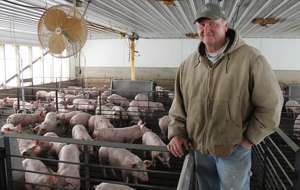
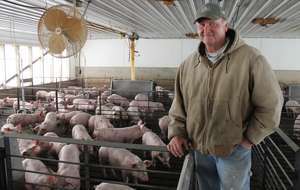
    More videos will be forthcoming.  In the meantime, I’m posting a few photos to help give you an inside view of my operation. One photo shows the “foil curtains” we put inside our hog barns as insulation. The heater provides keeps the pigs more comfortable when temperatures dip like this week when overnight lows have been below freezing. You’ll also find a photo of the controller, which coordinates all of the fans, heaters, curtains and misters that add to the pigs’ comfort.

    The temperature outside was 28° when I did chores this morning, yet our pigs were snug and warm inside. When hail hit last Friday and snow showers fell throughout the northland, our pigs didn’t notice a difference. A consistent temperature allows our pigs to be comfortable regardless of the elements, and comforts such as dry and warm conditions keep them healthy.

    The picture of the empty pen is my hospital pen. Although it’s empty right now, the hospital pen allows me to isolate a sick pig to give it special care.  Sometimes healthy animals will try to kill a sick pig; it’s nature’s way of trying to control a disease by eliminating the threat.  “Survival of the fittest” happens whether pigs are inside or not. One of the advantages of my barns is that I can closely observe my livestock and help protect the weak. Modern facilities such as these have made huge improvements in animal welfare.

    Feel free to send me any questions you have about  modern pork production.

    Related blog posts:
    • Part I: Cleanliness is Key to Good Animal Health
    • Part II: Farmers Recycled before “Green Efforts” Began

    Larry Sailer, Musings of a Pig Farmer

    October 30, 2012
    Agriculture, General, Industry News
  • Latham Hi‑Tech Seeds

    Food and Water: Our Most Basic Needs are Top of Mind

    LarryBlog 3pics1

    “Musings of a Pig Farmer” by Larry Sailer

    Weather and politics are always tops of mind for farmers and for very good reason – both greatly impact our livelihoods.  At this time, both are weighing heavily on my mind.  That’s why today I’m going to begin with a brief recap of the weather, followed by a summary of a few political issues.

    We’ve been fortunate enough to receive some rainfall over the past two weeks.  I’m looking for the silver lining here, and this is the best that I have:  “Subsoil moisture improved and is now rated 60 percent very short and 34 percent short.”  According to yesterday’s report by the Iowa Department of Agriculture & Land Stewardship (IDALS), only 6% of our soils have adequate moisture.

    “Record low precipitation totals” have been making the headlines for nearly a year now.  The 2011 harvest proceeded rapidly because there were few days when farmers had to shut down the combines due to rainfall; the same holds true for this fall.  Even the spring and summer months were dry.  A summary of the summer months shows Iowa received 6.61 inches less than normal, and now we’re behind 16 inches of rainfall!

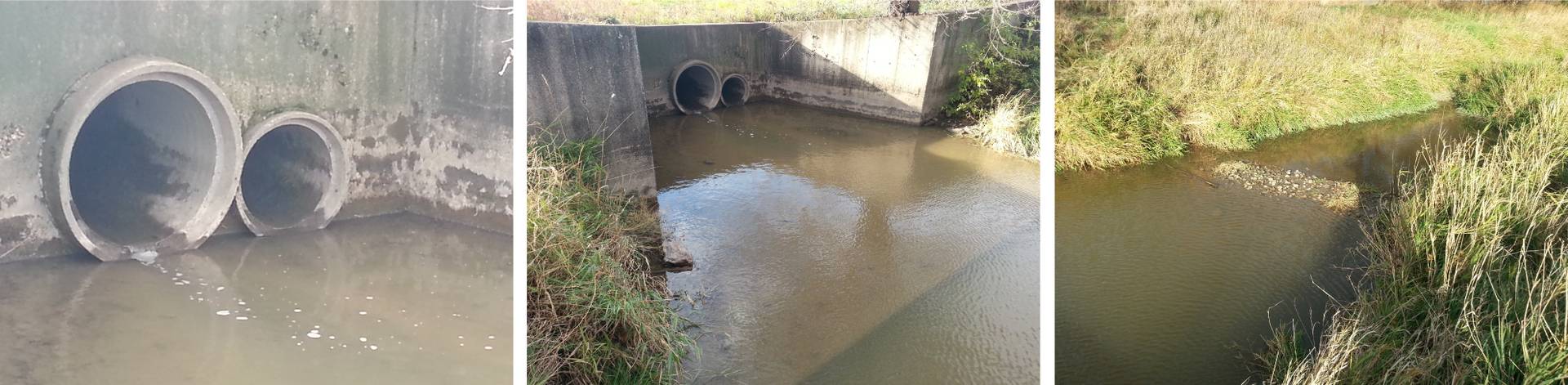
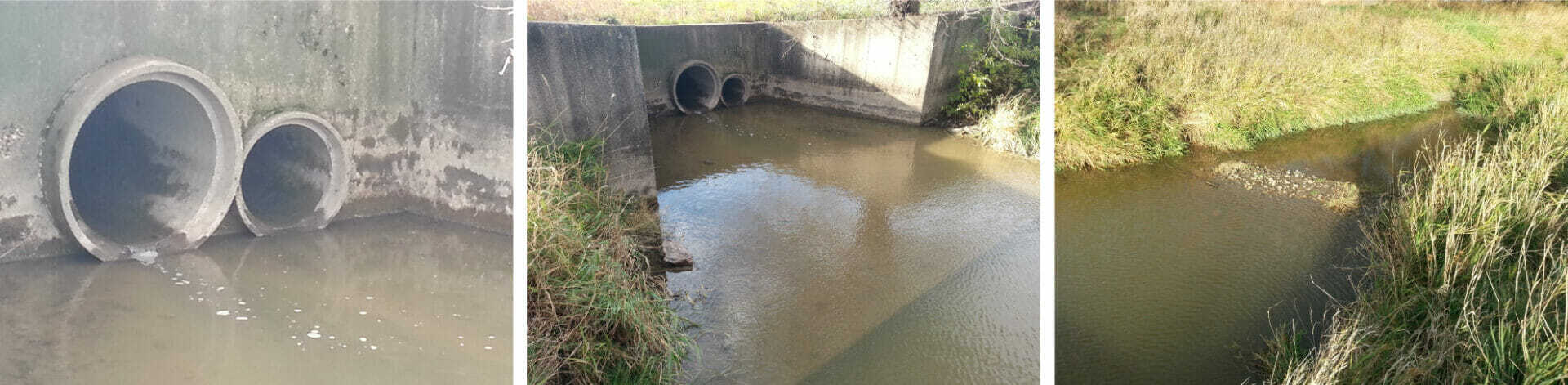
    Creeks and ponds have been drying up, but thankfully a few streams are flowing again after recent rains.  There is a trickle of water running from tile lines in my fields (see photos above), but more precipitation is needed for a good crop in 2013.  There is an 80% chance that North Central Iowa will be hit with thunderstorms tomorrow night, and I’m hoping it amounts to more than a few booms of thunder and a few flashes of lightning.  A good inch or two of steady rainfall would be greatly appreciated!

    While folks here are praying for a good rainstorm, there is another storm brewing on the political front.  Farmers must get engaged especially this election year as there are so many issues of great consequence being discussed.  The Farm Bill is one of the biggest political hurdles we face, especially as we address how to feed a growing and hungry world.

    Food security was at the forefront of discussions last week when world players gathered in Des Moines for the annual World Food Prize award and symposium.  Of course, these great leaders talked about sustainability and all the different angles that word brings with it.  Food is the most basic of the basic needs.  Wars have been fought and governments have collapsed due to food shortages.  We can all talk about conservation and sustainability, but if people do not have enough food to eat, none of the rest matters!

    It’s time to make policy with compromise… that makes sense!  Feeding the billions of people with a finite amount of resources is going to take all of the imagination, skill and technology we can imagine.

    This is an important election, so I’m encouraging all of my family members and friends to do a little homework and see where each candidate stands on important issues.  Do you know where the candidates stand on agriculture?

    Larry Sailer, Musings of a Pig Farmer

    October 23, 2012
    Agriculture, General, Industry News
  • Latham Hi‑Tech Seeds

    “Compromise” Becomes the Mantra this Season

    LarrybyIFT1
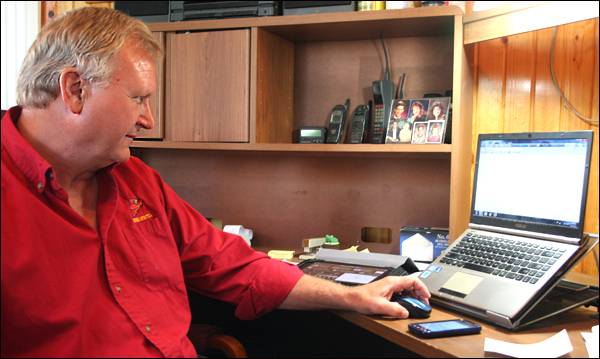
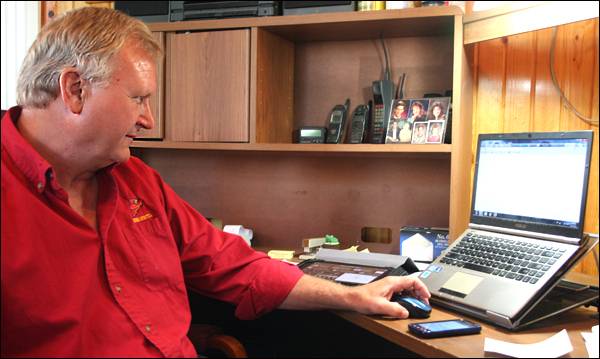
    Larry Sailer is constantly connected to ag news and market information via his smartphone, iPad, office laptop and piles of newspapers at home near Iowa Falls. Photo Courtesy of IFT Photo by Zoe Martin.

    It seems that I’ve had to do my share of compromising over the past two weeks.  I should have been focused on getting my crops harvested, but major media outlets wanted me to take time to meet with them and discuss everything from how corn is grown to how my business is affected by the Farm Bill – or lack thereof.  Just as soon as I got my combine rolling smoothly, it broke down and I lost another day of prime harvest time.  Once again, I found myself having to compromise what I wanted to get done with what the repairman could get done.

    Regardless of your profession, I’m sure you can emphasize with my situation.  There is progress to be made but you find yourself stymied by the current events.  My own corner of the world seems to be paralleling what’s happening on the national level.  Each day – as the election draws nearer – there are several news reports and advertisements reminding us of how two opposing sides are unwilling to settle and reach an agreement.

    Politics are mired in a standoff between our two main political parties.  The Left thinks we need to spend to expand the economy through more spending.  The Right thinks we need to cut spending and reduce restrictive regulations. My concern is that if the United States doesn’t get its deficit under control, it won’t matter who’s on the Left and who’s on the Right because we simply won’t be able to help the people who need it most.  Food, shelter and education for a future job should be the basic goals.  I also believe education is key to helping others help themselves.  Other folks believe cell phones should be added to the list of “basic necessities.”  It’s obvious that some compromise must be reached – and soon.

    Such issues return my thoughts to the 2012 Farm Bill and to the Food Security Act.  An article in The Des Moines Sunday Register on Oct. 14 quotes the 2001 World Food Prize Recipient as saying that “the problem is not that the world is running out of food but that many people lack access or knowledge about how to grow it.”

    Food stamp rolls have soared 18.5 million since 2008 to a record 46.7 million people, according to that same Register article.  About one in seven Americans now receives government help to buy food.  The U.S. Department of Agriculture (USDA) reported last month that Americans are having a harder time getting food than ever before as the economic downturn continues to weigh on households throughout the country.

    While it’s a challenge for Congress to pass a Farm Bill that includes food stamps and ag subsidies, one could make the case that there is a natural tie between farming and food security.  Farming, after all, produces mainly food.  Farming also produces other useful products like cotton for clothing, pig heart valves and ethanol to name just a few.  Agriculture is a huge renewable economic machine.  (“Renewable” is a key word here.)

    America needs agriculture!  That’s why it’s imperative to bring the U.S. budget under control.  Everyone loses if we hit the fiscal cliff that is getting closer and closer.  Let’s compromise and move this country forward.  It’s time to find solutions to some very big problems.  It’s time for some compromise!

    Larry Sailer, Musings of a Pig Farmer

    October 16, 2012
    Agriculture, General, Industry News
  • Latham Hi‑Tech Seeds

    Latham Offers More Refuge Hybrids for 2013 Planting

    RespectRefugeCorn1

    In early September, the EPA gave final approval for Genuity® VT Triple PRO® RIB Complete®.  Genuity VT3 PRO has been our top-selling trait, so we’re excited that it will now be much easier for farmers planting these hybrids to comply with refuge requirements.

    Latham® hybrids with VT Triple PRO RIB Complete offers farmers dual modes-of-action for protection against above-ground insects, a single mode-of-action for corn rootworm protection and herbicide tolerance. Plus, it’s extremely convenient as the single-bag solution is a blend of 90% VT Triple Pro with 10% of the corn carrying the Roundup Ready trait.

    Many farmers say they like simplicity of a single bag that has the refuge included, so we’re pleased to now offer three RIB Complete corn blend products:

    • Genuity® SmartStax® RIB Complete – a blend of 95% insect-protected and 5% refuge seed. It offers the broadest spectrum of protection against above- and below-ground insects, as well as herbicide tolerance. Latham® Hi‑Tech Hybrids with SmartStax RIB Complete has dual modes of action for full-season rootworm control and is a good fit on corn-on-corn acres that can be associated with high corn rootworm infestations.
    • Genuity® VT Triple PRO® RIB Complete – a blend of 90% insect-protected and 10% refuge seed. It contains herbicide tolerance, a single mode of action for corn rootworm control and dual modes of action for above-ground insect protection – including corn earworm, fall armyworm and European and Southwestern corn borer. It’s a great fit in geographies experiencing low to moderate rootworm pressure.
    • Genuity® VT Double PRO® RIB Complete – a blend of 95% insect-protected and 5% refuge seed. It offers herbicide tolerance and dual modes of action for above-ground insect protection – including corn earworm, fall armyworm and European and Southwestern corn borer. It’s a great choice for fields that do not have corn rootworm pressure.

    John Latham, President

    October 11, 2012
    General, Industry News, Seed Technology
  • Latham Hi‑Tech Seeds

    Proving the Power of the Internet

    12BlogTour

    “Musings of a Pig Farmer”
    by Larry Sailer

    This past week has been a whirlwind of activity. Not only am I trying to get my crops harvested, but I’ve been swamped with calls from the media for interviews. In just two days’ time, I received calls from Reuter’s, Fox News Network and a network from Japan! This is on top of the Franklin County’s Harvest Tour 2012 for bloggers.

    These media inquiries really took me by surprise and served as a real eye opener to me about the power of the Internet. A hog farmer — in the middle of farm country in North Central Iowa — is not someone or someplace that comes readily to mind as the center of media attention. Through Google and interviews and blogs, however, it’s not possible to hide on the farm any more.

    When I set out to share the story of farming and to listen to what people removed from the farm were concerned about, I didn’t really think about how exposed I would become. I have to tell you this farmer would just as soon hide in the hog barn as be in the spotlight. Yet, here I am being featured by national media outlets. Crazy!

    The first interview with Reuter’s was pretty painless. We talked on the phone for about 10 minutes, discussing the “Farm Bill”. Pretty easy stuff. I always try to talk about what I know and what affects me here in Iowa. The Farm Bill is such a complicated piece of legislation that I’m not surprised it’s so difficult to reach consensus. Not only is farming and ranching very diverse across this country, but the SNAP program and so many other issues are wrapped up in the same bill. On top of that, Congress is trying to reduce the budget. No wonder the Farm Bill has yet to pass!

    Fox News wanted to talk about the upcoming election and what I think are the most important issues. Now I know they’re going to trim what I say into about 15 or maybe 30 seconds. Believe me, that does not cover my thoughts. I can’t wait to view it this Thursday to see what Fox chose as my sound bite. They did video our soybean harvest to give viewers a farming flavor.

    The next video crew was from Japan, and they were on my farm for two full days. This will have to be a whole new blog, which I plan to post in a couple weeks.

    I do want to talk about our Franklin County Harvest Bloggers Tour, which is held (1) to showcase our county’s tourism attractions and (2) to help non-farmers understand how their food is raised. This is the second year that I’ve been involved with this event. I’m including pictures shared by Deb Brown. Pictures show the people involved much better than I can describe this tour.

    The first bloggers tour in October 2011 is the reason I blog. That and the help and patience of Shannon Latham, who lets me share a guest blog every Tuesday on TheFieldPosition.com.

    I survived last week and even harvested some crop with the help of my family. Special thanks to my wife, Janice, who kindly made food and ran after me for three days. My son Corey and grandson Devin drove combine plus daughter Charlotte helped make food and brought along more Grandkids, Darin and Carlie, to make my place a little more video friendly.

    I can understand why many farmers resist doing this type of sharing because it does take time and effort. Plus, it exposes a very personal part of our lives to the world. But if we want to have a conversation with the people who consume what we produce — and help them understand why we do what we do — then we need to be transparent. We must let them see inside our operations.

    Larry Sailer, Musings of a Pig Farmer

    October 9, 2012
    Agriculture, General, Industry News
  • Latham Hi‑Tech Seeds

    Part II: Farmers Recycled before “Green Efforts" Began

    LarrySailer AgriNews1
    Photo courtesy of AgriNews.com

    Farmers raise corn and soybeans, which make the feed for our hogs.  By feeding grain to our hogs, we add value to the raw corn and soybeans.  The process of growing pigs and producing that great tasting bacon also generates “natural fertilizer.”

    Natural fertilizer is another name for manure, and it’s not waste – it’s a valuable asset!  A grain farmer thinks of manure as a valuable asset because it’s a very effective fertilizer, which is needed to produce high-yielding crops.  The natural fertilizer that my pigs produce is in high demand by area farmers, who put down it on their farm ground to serve as plant food for next year’s crop.  You might even say that farmers were recycling manure before the rest of society started adopting green efforts.

    One advantage of recycling manure is that it helps reduce the cost of crop inputs.  Commercial fertilizer is very expensive, so using manure helps reduce crop input costs.  Using this locally produced fertilizer is a win-win deal: crop farmers need fertilizer and livestock farmers must dispose of manure in an environmentally sound manner.

    Applying manure is heavily controlled by regulations.  I’m required to file a Manure Management Plan with county officials and the Iowa Department of Natural Resources.  This plan includes soil test results, crop rotation plans, soil types and the erodibility of the soil.  Every detail you can imagine needs to be spelled out in this document!  What it all boils down to is this: it’s against the law to pollute the surface or ground waters of the State of Iowa.

    While I support efforts to protect the environment, I also believe we need to exercise some common sense.  These laws, which prompt rules, often begin with the best of intentions.  Not all regulations produce the desired outcomes, however.  For example, all of the regulations that groups like Iowa Citizens for Community Improvement (ICCI) helped pass have resulted in many smaller producers calling it quits!

    Regulations can be extremely costly to farmers, and this is one reason I’ve become so active in trying to control regulations.  Lawmakers need to hear how laws and rules will impact farmers.  The general public, which largely influences those political votes, also has a need to be in the know.  That’s why I’m inviting you to watch my video blog series to learn more about how and why I raise pork.  Please contact me with any questions you have about modern day hog production.  I’ll look forward to some online dialogue!

    Larry Sailer, Musings of a Pig Farmer

    October 2, 2012
    Agriculture, General, Industry News
  • Latham Hi‑Tech Seeds

    PART I: Cleanliness is Key to Good Animal Health

    Larry washing
    Photo courtesy of AgriNews.com

    Musings of a Pig Farmer
    by Larry Sailer

    In my September 11th column, I promised to give you an insider’s looks at modern hog production. Today I’m kicking off a blog series that will follow a group of pigs from about 50 pounds to 290 pounds. I’ll try to show just what these pigs have for shelter and what it takes for me to take care of them.

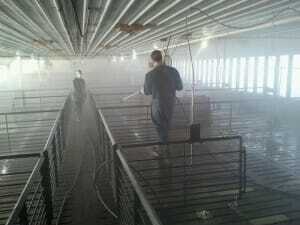
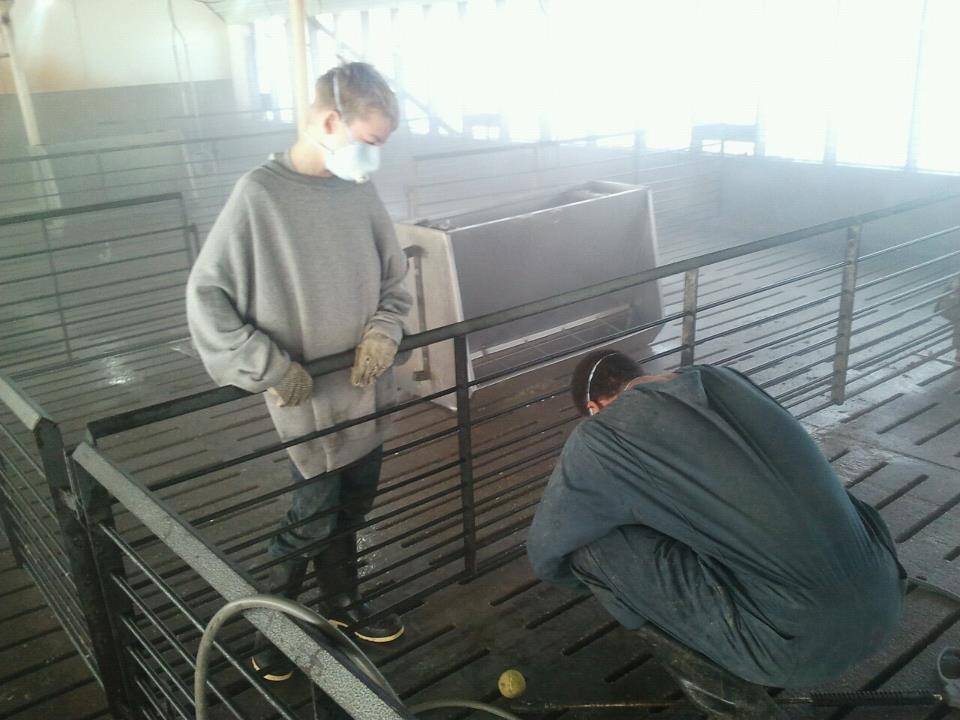
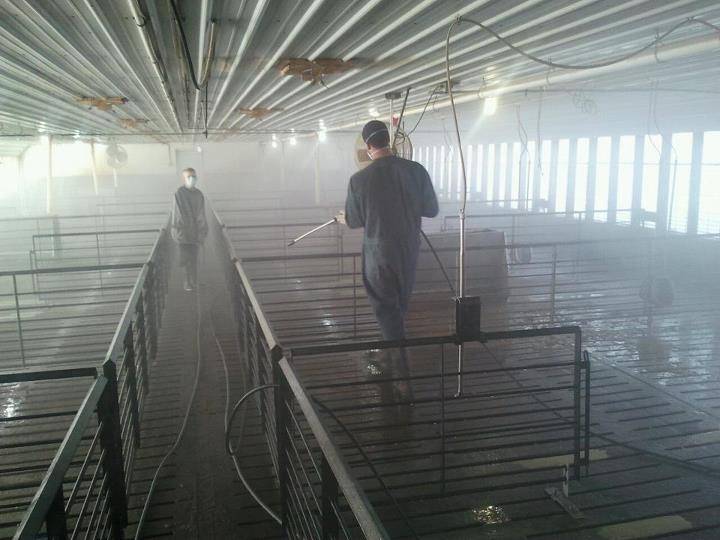
    We took delivery of our most recent group of pigs on Aug. 29.  Before they were delivered, however, we had a lot of work to do!  We get ready for a group of pigs by power washing the barns until every last speck of organic matter has been removed.  We then disinfect the barns with one of several disinfectants; we rotate the disinfectants to prevent immunity from building.

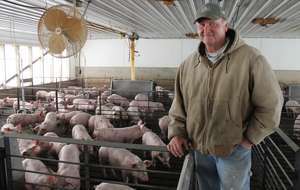
    Clean buildings are key to keeping animals as healthy as possible.  Healthy pigs grow better, reach market weight faster and require fewer vaccinations.  You can think of this process as “bringing pigs into a new world.”  When the first settlers to this country, they brought with them illnesses that were very deadly to the people already living here as they didn’t have any immunity to the new bacteria and viruses.  The same is true with animals:  We don’t want to expose pigs to anything for which they don’t have immunity.  This is why you see signs by livestock barns that read, “STAY OUT.”  Hog producers aren’t unfriendly!  They’re simply watching out for the pigs’ interests.  Limiting access to the barn is a very good way to control the health of those pigs.

    The pigs arrive at my site by semi, which is driven by a certified driver.  Truckers Quality Assurance (TQA) is a program developed by the National Pork Board to ensure that driver takes the best care of the pigs he’s delivering. Likewise, I am Pork Quality Assured (PQA) and take training courses to make sure that I understand how to best care for my animals.  There are many different ways to care for pigs, and most any system can do a good job IF there is good management.  Likewise, the very best designed system can fail if not properly managed!

    I receive the pigs from a nursery when they weigh about 50 pounds.  They are first farrowed, or born on a farm, where the sows are kept.  When the pigs are about 20 days old and weigh about 14 pounds, they’re taken to the nursery while they still have some natural immunity from the sow’s milk.  As they get older, the sow loses the ability to pass immunity through her milk.  By moving pigs to a disinfected nursery, the goal is to keep them as healthy as possible.  They stay in the nursery about seven weeks and are about 50 pounds when they are then shipped to my finish barns.  I will take care of them for about 120 days and the pigs should gain 240 pounds while I have them.

    In future blogs, I will explain about the buildings I use and why. If you have done the math, this group of pigs will be with me for about four months.  I’ll try to get into the different aspects of my operation.  If there are some questions you have, I will address them as we go along.  Please let me know what questions you have.  My goal is to help you understand how and why I do the things I do to take the very best care of these pigs.

    Related Posts:

    • Take a Walk through Time
    • Virtually Walk through Our Genetic Garden
    • Genetic Garden Shows How Different Types of Corn React to Drought
    • Corn as High as an Elephant’s Eye
    • History is growing in Alexander 

    Larry Sailer, Musings of a Pig Farmer

    September 25, 2012
    Agriculture, General, Industry News
  • Latham Hi‑Tech Seeds

    Corn Breeding: A Colorful Journey

    Through a series of weekly video blogs, Latham Forage Products Manager Corey Catt shows how corn has evolved through time. This week Corey shares how crossing dent and flint varieties has increased plant health over time. He shows how corn with purple husks and stalks is used as a marker in breeding plots, too.

    http://youtu.be/6C9cOIY3jOE

    Team Latham

    September 24, 2012
    Agriculture, Corn, Crop, General, Industry News
  • Latham Hi‑Tech Seeds

    Protect 2013 Corn Yields with Traits

    Since you can’t predict the weather, do what you can to minimize your risk.  Planting corn hybrids with a corn rootworm trait protect the corn plant’s root system better than soil insecticides do, particularly in a dry year.  It’s like having an extra insurance policy in place.  Beware, however, because not all traited hybrids are created equally!

    Genetics make yield but traits protect yield.  This season we certainly saw how different genetics handled stress from drought and wind.  Roots and stalk strength were put to the test.  That’s why genetic diversity is so important.  Plant a portfolio of 4 to 6 different Latham® numbers for added protection.

    As an independent, family-owned company, Latham Hi‑Tech Seeds is able to guarantee genetic diversity.  Our independence allows us to provide farmers with an industry-leading number of product choices from provides including:  Monsanto, Bayer, BASF, Syngenta, Dow AgroSciences and more.  In addition to planting different genetics, you can further minimize their risk by planting various maturities.

    In our 2013 product lineup, Latham Hi‑Tech Seeds offers 33 hybrid seed corn products with 6 different trait combinations for rootworm control in various maturities:

    • SmartStax, leading the industry with 2 modes of action against rootworm
    • VT Triple Pro
    • VT3
    • Herculex Xtra
    • Agrisure 3111 Viptera
    • Agrisure 3000 GT

    Not all traited products offer rootworm protection.  Herculex I, for example, has resistance/tolerance to Liberty, Roundup and corn borer.  Herc 1, however, does not protect against corn rootworm.  A person can’t just assume that a “Bt hybrid” will have rootworm protection.

    Rootworm control is a must in corn-on-corn protection.  You’ll see extended diapause in ground that has been rotated.  In an area with heavy rootworm pressure, plant Latham hybrids with Genuity® SmartStax® technology.  Look at dual modes of action and consider rotating crops in areas where rootworm pressure is extreme.

    Because corn-on-corn acres are more susceptible to challenges presented by weather, soil and pest pressure, Latham has introduced the Gladiator designation to help with 2013 seed selection.  They have the industry’s most advanced genetic foundation, offering powerful root and stalk strength and superior above- and below-ground insect protection.  Latham’s Gladiator hybrids are developed to battle your field’s continuous corn challenges and win.  Give them a try as part of your diversified 2013 crop plan!


    John Latham, President

    September 20, 2012
    General, Industry News, Seed Technology
  • Latham Hi‑Tech Seeds

    Tackling Political Correctness and Religion

    LarrybyIFT1
    Larry Sailer is constantly connected to ag news and market information via his smartphone, iPad, office laptop and piles of newspapers at home near Iowa Falls. Photo Courtesy of IFT Photo by Zoe Martin

    AgriBabe… it’s a term I did not create. I’m even questioning whether I should even use it. Since I’m not one to turn tail, I’ll go ahead and explain why this term is even in my vocabulary now.

    State Senator Sandy Greiner recently used AgriBabe in reference to an agricultural conference for women. She said, “I think Larry Sailer should come along to meet all the Agri-Babes!” Then she invited me to attend the American Agri-Women Convention in Denver, Nov. 8-10.

    I’m seriously thinking about heading West after harvest! But it might be not for the reasons you think. After all, I’m happily married to a great Agri-Babe. [Love you, Babe! :)] The reason this particular conference intrigues me is because I try to learn all that I can to carry on conversations about agriculture with difference audiences. I believe the women at this conference will be able to provide a wealth of information and insight. Let me explain…

    While traveling in various social media circles during the past three years, I’ve learned the vast majority of social media users are ladies in their twenties and thirties. I’m not sure why more of us old farmers don’t use social media more, but for one reason or other, Facebook and Twitter appear to be dominated now by women. I’ve become an active social media user because women, mainly urban consumers, are a target I’d like to reach with a pro-agriculture message. I’m trying to gain a better understanding of what’s important to them and how we as farmers can appeal to their emotions.

    Emotions and perceptions often cloud common sense. What I think is “just plain common sense” is Greek to someone else. Even though most Americans speak English, it’s often challenging for us to be understood AND to understand what others are telling or asking. Watching online conversations can be intriguing because certain words have different meanings, depending on the region of the country in which a person lives. Sometimes these colloquialisms cause others to take offense, even when they weren’t meant to be offensive. Other times words have different meanings, depending on one’s religion.

    I’ve witnessed misunderstandings as a result of miscommunication. It’s easy to see how this can happen online when people “sip” at conservations. Online communications, for the most part, can’t benefit from verbal intonation or facial expression. Emoticons may help, but they can’t replace the real thing. 😉

    While I admit that more political correctness could be used in some cases, other times people us “PC” as a crutch. It seems to me a little common sense could go a long way to solving many of today’s problems. But common sense seems to be in very short supply these days, especially when people have an agenda to push or an office to be elected to! That’s why I believe it’s our civic duty as American farmers to engage in conversations that will help educate those running for office and those who are trying to influence public officials about our livelihoods. Agvocate!

    Larry Sailer, Musings of a Pig Farmer

    September 18, 2012
    Agriculture, General, Industry News
Previous Page
1 … 61 62 63 64 65 … 95
Next Page

Latham Hi‑Tech Seeds

131 180th Street | Alexander, IA 50420

(641) 692-3258

SIGNUP FOR OUR NEWSLETTER
  • Contact
  • Legal
  • Dealer Center
  • Seedware Login
  • Latham Gear

© 2025 Latham Hi‑Tech Seeds. All rights reserved. | Iowa Web Design by Webspec | Privacy Policy

Latham® Hi-Tech Seeds is a trademark of M.S. Technologies, L.L.C., 103 Avenue D, West Point, IA 52656.