Skip to content
Latham Hi-Tech Seeds

(641) 692-3258

  • Home
  • Performance
  • Products
    • Corn
    • Soybeans
    • Alfalfa
    • Corn Silage
    • Seed Guide
  • Find a Rep
  • Media
    • Blog
    • News
    • Videos
    • Podcasts
    • TECHTalk
  • About Us
    • Company History
    • Our Mission
    • Careers
    • Become a Rep
    • Sowing Seeds of Hope
  • Contact Us
  • Latham Hi‑Tech Seeds

    Preparing for the 2012 Tailgating Season

    LathamTailgate12

    Whether you’re preparing to eat lunch in the field – like a corn field – or lunch in the parking lot – adjacent to a football field – preparations are much the same.  With a little planning, you can enjoy a delicious meal in the great outdoors with family members and friends.

    Coach Rhoads visited Latham Hi‑Tech Seeds in 2010 during our Freedom of Independence Ride in Ames. Here he is with Chris, Bill, Shannon and John Latham.

    This Saturday will be “the main event” for many Iowans, who look forward to the annual matchup between the Iowa Hawkeyes and the Iowa State Cyclones.  Kickoff is 2:30 p.m. on Saturday, Sept. 8.  If harvest keeps you away from Saturday’s Cy-Hawk game in Iowa City, you can hear the play-by-play action from a local station or Cyclone Radio Network. Remember to stay tuned following the game coverage for the Latham Hi‑Tech Seeds Locker Room Show, where analysts, players and coaches share their thoughts after the day’s game.

    In a state without a professional sports team, the Cy-Hawk Series is almost as important as the Super Bowl.  It is the Super Bowl of Iowa!

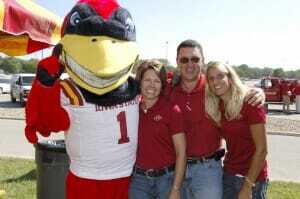
    Shannon Latham, Jim Heckman and Amy Rohe pose with Cy at the 2010 Freedom of Independence Ride.

    Choosing which team a person will cheer for even divides families.  During last night’s television news coverage, I heard about a household so divided that a couple named its firstborn Kinnick Trice.  I’m guessing the lady of that house doesn’t serve up Cardinal and Gold Cheeseburgers.  🙂

    Regardless of whether you’re cheering for the Cardinal & Gold or the Black & Gold, we’d like to help simplify your tailgating plans.  Today we’ve compiled our best tailgating recipes:

    • Beef Sundae
    • Buffalo Chicken Dip
    • Cuban Glazed Pork Loin

    I’m also including a new recipe for Tailgating Eggs, which I picked up at the Iowa State Fair.  What’s your favorite tailgating fare?  Please send your recipe to shannonl@lathamseeds.com.

    Team Latham

    September 7, 2012
    Agriculture, General, Industry News
  • Latham Hi‑Tech Seeds

    Going “Hog Wild” at Latham’s 4th Annual Ride

    FreeomRide12

    More than 100 people donned rain suits and motorcycle boots for Latham’s Fourth Freedom of Independence on Saturday, Aug. 25. Rain began to fall as the first group of riders left for Latham’s atypical field day on wheels, but no one complained after a growing season plagued by drought.

    The five-hour tour took riders across 90-miles through North Central Iowa where they visited three Latham® corn and soybean showcase plots. A walk through Latham’s “living museum of corn” demonstrated the differences between corn managed as it was in the 1930s compared to modern-day hybrids.  Tour-goers also had a chance to see kernels of all sizes and colors, plus one ear as big as a Pringle® potato chips!

    A highlight of the days was a stop at Hagie Manufacturing in Clarion where riders got a hands-on look at advanced manufacturing in Iowa. Interestingly enough, the Hagie’s family business got its start as a hybrid corn company and made history when Ray Hagie invented the world’s first self-propelled sprayer in 1947.

    The ride ended with a complimentary hog roast catered by Wholly Smoke BBQ of Dows, Iowa.  Thanks to all of the “die-hards” who made the 4th Annual Latham Freedom of Independence Ride another roaring success!

    Remember to mark your calendars for the last Saturday of August 2013. Help us celebrate Latham’s milestone 5th Annual Freedom of Independence Ride in Loess Hills, voted one of Iowa’s most scenic motorcycle routes.

    Team Latham

    September 6, 2012
    Agriculture, General, Industry News
  • Latham Hi‑Tech Seeds

    Go Ahead and Agvocate!

    LarrybyIFT1
    Larry Sailer is constantly connected to ag news and market information via his smartphone, iPad, office laptop and piles of newspapers at home near Iowa Falls. Photo Courtesy of IFT Photo by Zoe Martin

    “Musings of a Pig Farmer” by Larry Sailer

    Back in the 1980s, I became an agvocate.  The term “agvocate” had not yet been invented, and I really had no idea what I was getting into at the time.  I joined the Franklin County Pork Producers and the Franklin County Farm Bureau.

    It wasn’t long before the Farm Crisis of the 1980s hit, and I knew farmers like me needed to tell our story.  Unfortunately, I had no clue how to go about it!  My first media interview was with farm broadcaster Von Ketelsen, and in hindsight, it’s a good thing it was with someone who is so “farmer friendly.”  Most of my answers were either “yes” or “no.”

    Over the past 30+ years, I have attended as many media training sessions as time allows.  I joined the Farm Bureau Speaker Corps and Operation Main Street, a speakers’ corps for the National Pork Board.  During a Farm Bureau training session about four years ago, I was introduced to Social Media.  Our trainer, Zach Bader, explained how Twitter and Facebook could expand the number of people we could reach with our message.

    Then I discovered AgChat!  AgChat is a virtual chat room. This is a place where you can “attend” a meeting – unlimited by chair space.  It allows you to connect with people from virtually anywhere and discuss ag issues.  You can ask questions and get everyone’s opinion.  (Take notice: I used the word “opinion” instead of “answers”!)  If there’s one thing I’ve learned over the last 30 years it’s that there are a lot of opinions and not every question has a right or wrong answer.  That’s why I firmly believe those of us in agriculture must be willing to listen, too.

    The founding members of AgChat did what I think was an amazing thing.  They started having seminars to help people like me learn how to use social media to have a conversation with the people, who either are no longer connected to the farm or never have been.

    I attended the first agvocacy training session in Chicago in 2010 and was overwhelmed.  Speakers were so passionate about sharing the great message of what we have attained on the farm.  On Aug. 23-24, I attended the third AgChat training session in Kansas City.  It’s amazing how far social media has come!  This time I attended sessions on blogging, making videos (and even met the Petersen brothers) and using Pinterest.  There is really no limit to spreading your message.  Go ahead and give it a try…  our livelihood needs more agvocates!

    Larry Sailer, Musings of a Pig Farmer

    September 4, 2012
    Agriculture, General, Industry News
  • Latham Hi‑Tech Seeds

    The Quest for a “Balanced Diet": New School Lunch Regs, Part 2

    Balanced diet1

    Musings of a Pig Farmer
    by Larry Sailer

    Last week in “Musings of a Pig Farmer,” I shared how new school lunch regulations are limiting portions of certain types of food offered through the national school lunch program.  These regulations are a key component of the Healthy Hunger-Free Kids Act championed by First Lady as part of her “Let’s Move” initiative to help end childhood obesity.

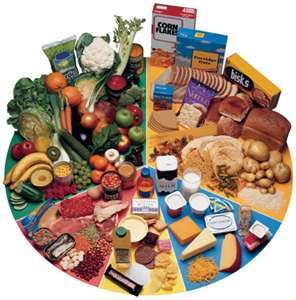
    One reason given by proponents of the new school lunch rules is the need for children to have a “balanced diet.”  Balanced means that a diet meets your nutritional needs while not providing too much of any one nutrient. To achieve a balanced diet, you must eat a variety of foods from each of the food groups.

    Given my experience feeding livestock, I understand the need for “nutritionally balanced rations”:

    • A balanced ration is one that has all the nutrients the animal needs in the right proportions and amounts.
    • A ration is the amount of feed given to an animal to meet its needs during a 24-hour period.
    • Animals need proper nutrition to efficiently produce meat, milk, eggs and wool.

    Active kids, like active animals, have different nutritional requirements.  Performance athletes, like show animals, have different feed needs.  That’s why I’m opposed to the federal government’s “one size fits all approach” to school lunches.

    Through the years, I’ve learned that you can’t remove everything animals like to eat or they will simply refuse to touch everything in the feeder.  They “go off feed.”  Animals will not eat enough to grow bigger if they do not like the diet you feed them.

    This same concept may be applied to human diets.  As a parent and a grandparent, I’ve seen kids simply refuse to eat foods they do not like.  For example, Janice and I had a rule that our kids had to at least try the different types of food served at dinner.  They couldn’t be excused from the dinner table until they tried everything on their plates.  That rule didn’t work for tomatoes – but gagging did!  To this day, we have kids who will not eat tomatoes.

    Fact is, it doesn’t matter how good the food is for them (animals or humans) if you can’t get them to eat it!  It doesn’t matter if the federal government requires school-age children in the Midwest to take a serving of black-eye peas or collard greens.  Chances are, most of those foods are going to end up in the garbage disposal.  Lean proteins, however, are appealing to many children.  By setting a maximum allowance for Meat and Meat Substitutes (verses “minimum requirements” as stated under the former regulations), the U.S. government implies that meat isn’t healthy.  There’s also a new limit set for grain servings.  New regs, however, increase the amount of fruits and vegetables served.  Well, too much fruit isn’t good for you either because there is such a thing as consuming too much natural sugar.  Too much of “good thing” is still too much!

    Larry Sailer, Musings of a Pig Farmer

    August 28, 2012
    Agriculture, General, Industry News
  • Latham Hi‑Tech Seeds

    Prevention is Key to Avoiding Harvest Fires

    Smokey bear

    Guest Blog post by Mark Hanna,
    ISU Extension agricultural engineer with responsibilities in field machinery

    Extremely warm, dry and windy harvest conditions in 2011 were credited for the above-average number of combine and field fires we experienced last fall. Hot, dry conditions all summer long – plus the likelihood of warmer than normal temperatures at harvest time due to an early harvest – mean even more sparks could ignite during the 2012 harvest season.

    Prevention is a key to avoid personal and property damage.

    • Keep the machine clean, particularly around the engine and engine compartment. Use a high pressure washer or compressed air to remove caked-on oil, grease and crop residue.
    • Check coolant and oil levels daily.
    • Check the pressurized oil supply line to the turbocharger for wear areas that rub and may start an oil leak.
    • Frequently blow leaves, chaff and plant material from the engine area with compressed air or a portable leaf blower. Remove plant materials wrapped on or near bearings, belts or other moving parts.
    • Examine exhaust or hot bearing surfaces. Repair leaking fuel or oil hoses, fittings or metal lines immediately.
    • Inspect and clean ledges or recessed areas near fuel tanks and lines.

    Preparation is also key. Carry these items with you during harvest:

    • Cell phone to call the fire department (911).
    • Two ABC-type fire extinguishers: a smaller 10-pound unit in the cab and a larger 20-pound extinguisher at ground level on the combine.
    • A shovel to throw dirt on small flames.

    Since fires can start from plant materials that have smoldered unnoticed for 15 to 30 minutes or more, it just takes a gust of wind to literally blow it out of control. Hanna advises farmers to discuss a plan for emergency tillage in the event of a fire break, so harvest crews know what to do should the need arise. Remember, personal safety is more important than harvest loss.

    For more tips, click here.

    Team Latham

    August 27, 2012
    Agriculture, General, Industry News
  • Latham Hi‑Tech Seeds

    “Place Your Chips” for the Mark Pearson Endowment

    CowChipBingo1
    Mark Pearson and I at 2011 Iowa State Fair

    Today will be bittersweet.

    “The Big Show” will be broadcasting live from Latham headquarters to cover preparations underway for our company’s 65th anniversary celebration on Saturday, Aug. 23.  Unfortunately, we’ll be doing today’s broadcast without one of the ag community’s most-loved personalities.

    But Mark Pearson, longtime host of WHO Radio’s “The Big Show” and Iowa Public Television’s “Market to Market” program, will be with us in spirit!  That’s why today through Saturday we’ll be honoring Mark’s memory in a way that’s fitting of his fun-loving spirit.

    “The Big Show’s” Bob Quinn and me on location during our 2011 WHO Radio / Latham Crop Tour

    Tune into Newsradio 1040 WHO today between 11:30 a.m. and 1:00 p.m. CST to hear the details of our Cow Chip Bingo game.  WHO listeners and Mark Pearson fans even will have an opportunity to participate “virtually” through lathamseeds.com.  Visitors to the Latham Country Fair on Saturday can participate “in person.”

    Proceeds from our Cow Chip Bingo game will benefit the Mark Pearson Endowment, a scholarship program available to junior and senior students at Iowa colleges who have chosen to major in agriculture journalism.  (Side bar: This scholarships is also near and dear to my heart since I majored in agricultural journalism at Iowa State University.)

    How to “Place Your Chips” to Benefit the Mark Pearson Scholarship Endowment
    Those attending the event will select one of 64 Bingo squares. Those who cannot attend the event are invited to pledge online by visiting www.lathamseeds.com and selecting the “Cow Chip Bingo” icon at the bottom of the page or by mailing a check to:

    WHO Radio
    c/o Janine Van Vark
    Note: Cow Chip Bingo
    2141 Grand Ave.
    Des Moines, IA 50312
    Virtual and mail pledges will be put into a drawing for prizes, including $100 worth of beef certificates from the Iowa Beef Industry Council.

    Team Latham

    August 23, 2012
    Agriculture, General, Industry News
  • Latham Hi‑Tech Seeds

    New School Lunch Regs, One “Hot Potato”!

    Superintendents1

    The national school lunch program is becoming one “hot potato” of an issue!  I deliberately chose to use the word “one” as much of the changes revolve around limiting the portion size, especially of meat, offered through the school lunch program.  In her blog post this week, Missouri pork producer Chris Chinn describes it as a One Size, Fits All Lunch Program.

    Chris is not alone in her concern.  Even school hot lunch managers are concerned.  Here’s a comment one area hot lunch manager posted on my Facebook page:

    Oh, you sure hit a sore spot with me. It just me over two weeks to formulate a menu that usually takes less than two hours, and I have Middle School and Elementary ages to go.  The meat allowance for students in grades 9-12 is 2 ounces.  I can hardly wait until some of my older kids come through the lunch line on the first day and can’t find the meat on their sub sandwich!  Our schools have always served at least 1 fruit and 1 vegetable a day. We can serve it, but we can’t make them eat it!  And now I’m adding more fruits and vegetables, but I’m sure there won’t be a rush for Garbanzo beans, black beans and kidney beans.  Get this… lettuce and dressing must fit into the calorie ranges.

    Area superintendents met recently with the Franklin County Farm Bureau board. From left to right are: Darrin Strike, West Fork; Todd Lettow, Hampton-Dumont; Dwight Widen, CAL Community; and Bob Weber, AGWSR.

    How long will a 2-ounce portion of meat satisfy a 240-pound football player, who has already been at school for hours and has to attend practice right after school?  The above-mentioned hot lunch manager goes on to write that she’s concerned about the number kids that will go hungry thanks – ironically – in part to the Healthy, Hunger-Free Kids Act.  She encourages concerned citizens and interested parents to contact their congressman.  She emphatically writes, “School cooks need all the help they can get to get back to basic cooking!!!!”

    Even school administrators are concerned about the new regulations.  Last Thursday a group of area superintendents met with the Franklin County Board of Directors.  When talking about school food, one of the supers confessed that he takes his lunch break in his office where he can use his own “secret” salt shaker.  He said the food is so bland that he couldn’t tolerate to eat it otherwise.

    Another super said that the “Food Gestapo” stopped in and checked their food last year.  His school failed the inspection, and one reason was because that particular school added too much salt to the food.  They all agreed that there will be major problems with the program.

    As classes resume, I’m sure we’ll hear even more “school lunch stories.”  You can be sure that I haven’t written my last word about it either.  To be continued…

    Larry Sailer, Musings of a Pig Farmer

    August 21, 2012
    Agriculture, General, Industry News
  • Latham Hi‑Tech Seeds

    Get a First-Hand Look at Where Food Comes From

    IASFair logo

    “Musings of a Pig Farmer”
    by Larry Sailer

    The Iowa State Fair provides many wonderful opportunities to get a first-hand look at how food is produced from Little Hands on the Farm and the Ag Magic Show in the Animal Learning Center to Farm Bureau Park and the Back to the Farmer exhibit in the Varied Industries Building.

    Take a day – pack up your whole family – and head to Des Moines.  If you visit the fairgrounds today, stop by Farm Bureau Park between 8 a.m. and noon to visit me.  (Sorry about the misprint in last week’s blog post when I mentioned that I’d be at the fair on Thursday, Aug. 16!)

    Between now and Aug. 19, will farmers like me will be talking about we do and why we do it. We’ll answer (or at least try to!) questions that people, who are unfamiliar with current farming methods ask.  Plus, visitors to Farm Bureau Park can register for drawings and even health screenings.  Games can be played to test your knowledge of agriculture.  And on particularly hot days, Farm Bureau Park is the best place to sit on a park bench in the shade!

    Just a short walk from Farm Bureau Park is the Varied Industries Building.  Enter on the building’s south side where you’ll find the Iowa Food & Family Project’s exhibit entitled, “Back to the Farmer.”  This exhibit features a very unique creation made of canned and packaged food.  Also register for chance to win Casey’s pizza for a year and a $250 Hy-Vee gift card.

    Another “must see” at the Iowa State Fair – regardless of whether you were raised on a farm – is the Animal Learning Center where you’ll find everything from newly hatched chicks to newborn pigs.  (The Animal Learning Center is conveniently located just east of the Midway between Ye Olde Mill and the Little Hands on the Farm exhibit.)  The Animal Learning Center is one of my favorite spots to interact with fairgoers as people line up for hundreds of feet, all day long, to see the farrowing display.  A two-hour shift here feels like it’s about 20 minutes long; time passes quickly because there are so many people who are enjoying themselves and asking questions.

    In addition to the newborn animals, the Ag Magic Show is a popular attraction in the Animal Learning Center. Magician Rhonda Renee Ross starts off her show by telling kids the magic words are not “abracadabra,” but instead, “Thank a farmer.”  Rhonda grew up in Chicago, the first of six generations in her family to not grow up on the farm.  Because she understands the importance of educating urban folks about agriculture, she reaches her audience in the most unexpected yet relevant ways.  For example, Rhonda holds up a tube of lipstick and explains that lipstick is creamy because of an ingredient called glycerin.  “Glycerin is made from the fat of cows, sheep and my favorite…pigs!  So the next time your mom, sister or grandma puts on lipstick, tell her she is as pretty as a pig,” she says with a laugh.

    Speaking of pork, be sure to grab a Porkchop on a Stick from the Iowa Pork Producers stand.  It’s one of the tastiest and most nutritious fair foods – and a personal favorite of mine.  Did you know you can eat three, square meals on a stick?  It’s true!  There are 50+ foods on a stick at the Iowa State Fair.

    “Square meals” reminds me of school lunch programs.  Thursday, during the Franklin County Farm Bureau Board meeting, I’ll have an opportunity to speak with area superintendents and learn more about how new regulations impacting school lunch programs.  I’ll look forward to talking about this topic in an upcoming blog, so stay tuned!

    On Friday, Aug. 17, I’ll be one of the speakers in Ames at the AgIowa 140 Conference.  It’s not too late to buy your ticket!

    Larry Sailer, Musings of a Pig Farmer

    August 14, 2012
    Agriculture, General, Industry News
  • Latham Hi‑Tech Seeds

    Genetic Garden Shows How Different Types of Corn React to Drought

    Genetic Garden Shows Drought Stress1

    by Rachel Norby, Seed-2-Soil® Summer Intern

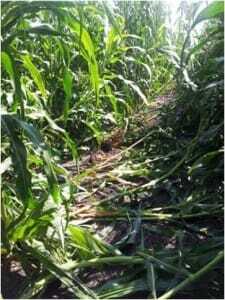
    As you drive through the countryside, it’s evident that different corn hybrids are handling the drought stress differently.  Some hybrids have stronger roots and stalks, so they’re holding up better in these dry conditions.  Other hybrids have weaker stalks and are lodging.

    Latham Hi‑Tech Seeds’ Genetic Garden shows how corn from many different eras is reacting to the drought conditions.  You can see how much better today’s hybrids can withstand the high heat and low moisture than their early ancestors.

    Genetic Garden Shows Drought Stress

    Although minimal irrigation was used to keep our “living museum of corn” alive for the Latham Country Fair on August 25, many varieties still reacted to the drought.  You’ll see lodging in many early varieties.  (NOTE:  “Early” is being used here to reference the chronological history corn of varieties, not as in the relative maturity of hybrids.)

    Open-pollinated corn varieties grown during the Dust Bowl of the 1930s didn’t pollinate then, and you’ll see the same thing happened in our Genetic Garden.  A corn variety found in the Genetic Garden from around the time of the 1988 drought is also showing signs of stress.  One of the differences in the droughts of 1988 and 2012, however, is there was less rainfall during the months of April to June in 1988 than we received in 2012.  This lack of rain during that quarter of the year meant more stress on crops during early season growth compared to this year when the majority of the stress happened around the time of pollination.

    We’d like to invite you to see the differences for yourself!  Take a walk through our “living museum of corn” on Saturday, Aug. 25, during the Latham Country Fair.  We’ll be hosting tours between 9 a.m. and 3 p.m.

    bonnie-harris

    August 13, 2012
    Agronomics, Corn, Crop, Drought, General, Industry News, Seed Technology, Weather
  • Latham Hi‑Tech Seeds

    Serving Breakfast, Dinner & Supper on a Stick (Yep. There’s an app for that!)

    Iowa state fair 20121

    Tens of thousands of people from across Iowa, the Midwest, the United States and even foreign countries will make their way to Des Moines for the 158th annual Iowa State Fair.  Some will go for the livestock shows while others will be more interested in the live concerts.  Some love the Midway, while others will be sure to check out the 4-H Exhibits and the Varied Industries buildings.

    Regardless of their interests, there is one thing all fair-goers have in common… food!

    The Iowa State Fair plays hosts more than 200 food vendors each year.  Every major livestock commodity group is represented, from the famous Hot Beef Sundaes at the Iowa Cattlemen’s Beef Quarters and Iowa chops at the Iowa Pork tent to whole-smoked turkey legs fresh off the big grill and burgers at the Lamb Stand.

    One of the more popular food trends at the State Fair is food on a stick.  While surfing the Iowa State Fair website, I recently learned they have over 50 different foods served on a stick.  I thought to myself, “I wonder if it’s possible to find three square meals (breakfast, dinner and supper) on a stick at the Iowa State Fair.”  “Square meals” might be used a little loosely, but here’s the menu I came up with:

    Breakfast

    • Griddle Stick (sausage on a stick wrapped in a pancake)
    • Fruit on a Stick with Yogurt Dipping Sauce – NEW for 2012!

    Lunch

    • Turkey Drumstick
    • Corn on the Cob
    • And for dessert, deep fried butter on a stick.  (Just kidding! I’m not brave enough to go there, but I hear it’s actually pretty good.)

    Supper

    • Salad on a Stick
    • Porkchop on a Stick
    • Carmel Apple on a Stick or Chocolate-Covered Deep-Fried Cheesecake on a Stick for dessert

    While I have my favorite “must-have” foods at the Iowa State Fair, I’m always curious about the newest “on-a-stick” trend to debut each year and where to find them on the grounds.  Now, iPhone users can download the Iowa State Fair Food Finder application.

    This app allows users to see where various food booths are located, look up nutrition facts and photos plus calculate how long it will take you to walk off those calories!  Another great feature is the events calendar that details what’s going on at the fair each day.  Looking for a more healthy food option?  The app can do that too!

    So now the burning question, what are your foods of choice at the Iowa State Fair?

    bonnie-harris

    August 10, 2012
    Agriculture, General, Industry News
Previous Page
1 … 63 64 65 66 67 … 95
Next Page

Latham Hi‑Tech Seeds

131 180th Street | Alexander, IA 50420

(641) 692-3258

SIGNUP FOR OUR NEWSLETTER
  • Contact
  • Legal
  • Seedware Login
  • Latham Gear

© 2026 Latham Hi‑Tech Seeds. All rights reserved. | Privacy Policy

Latham® Hi-Tech Seeds is a trademark of M.S. Technologies, L.L.C., 103 Avenue D, West Point, IA 52656.